Feeds:
Posts
Comments

Archive for the ‘spring’ Category

How do you capture a shot of a dragonfly perched at an angle on a fallen branch? That was my dilemma last week at Accotink Bay Wildlife Refuge when I caught a view of a flying dragonfly out of the corner of my eye and saw it land.

My first reaction was to stop and then to slowly bring my camera up to my eye to capture a shot before the dragonfly flew away. I was still a good distance away from the dragonfly but thanks to my telephoto lens I could see that it was a Stream Cruiser dragonfly (Didymops transversa). The final photo shows my initial view of the dragonfly. It is a little hard to tell, but the fallen branch was not very far off of the ground.

Stream Cruisers are long and skinny and a little tough to fit into a photo taken in landscape mode. I moved closer to the dragonfly, knelt down, and circled around a bit to capture the middle image. By getting closer to my subject and altering my shooting angle, I was able to blur out the background better. I still was not quite satisfied with the photo, though, because it conveyed the mistaken impression that the cruiser was perching horizontally.

I circled around some more and decided to take some shots in portrait mode. I held my camera at an angle, trying to match the angle at which the dragonfly was perched, in order to have its entire body in focus. This first shot below, one of the last ones I took, was my favorite. The background is blurred and almost all of the details on the cruiser are pretty sharp.

I realize that the image makes it look like the cruiser was hanging perfectly vertically, which was not exactly true, but the image looks pretty natural to me. Wildlife photographers make a whole series of creative choices that help them to create images that reflect their personal vision of  “reality” in front of their cameras, a kind of subjective reality.

One of my favorite quotations about photography comes from noted photographer Dorothea Lange, who said, “The camera is an instrument that teaches people how to see without a camera.” My photos provide some insight into the way that I view the world. Welcome to my world!

Stream Cruiser

Stream Cruiser

Stream Cruiser

© Michael Q. Powell. All rights reserved.

Read Full Post »

I am finally starting to see some male Blue Corporal dragonflies (Ladona deplanata) that are blue in color. In mid-April I started seeing Blue Corporals, but the males that I spotted at that time were all immature, like the one in the second photo below, and shared the coloration of females of the species.

The dragonfly in the first photo is a mature male. I spotted it during a recent hike along a creek in Prince William County. When you compare its feature to those of the immature male, you can see that the adult coloration is definitely bluer and the “shoulder” stripes on its thorax are a bit faded.

I really like the head-on angle that I used to photograph the Blue Corporal in the first photo. Technically only a small portion of the dragonfly is in sharp focus when you shoot from this angle, the eye-to-eye direct contact works well and draws in the viewer. As you can probably tell, I took this from a low angle, which helped to draw attention to the dragonfly’s interesting pose and to separate the subject from the somewhat cluttered background.

Blue Corporal

Blue Corporal

© Michael Q. Powell. All rights reserved.


Read Full Post »

Common Whitetails (Plathemis lydia) can be found almost everywhere and are among the first dragonflies to appear in the spring and the last to survive in the fall. I nonetheless enjoy trying to capture creative images of them, like these two that I spotted this past week.

How do wildlife photographers choose their subjects? Some of them are attracted almost exclusively to rare and/or exotic species and are always looking for something new to photograph. Their mentality is close to those of many birders, who keep “life lists” of all the birds they have seen and are always lookin got add another one to the “list.”

Other photographers, like me, are content to photograph a more limited selection of subjects over and over again, hoping to capture something new and different, finding the extraordinary in the ordinary. The first photo is one such example—I love the prominent specular highlights in the image and the unusual pose of this female Common Whitetail with one of her legs extended.

At other times, I am simply trying to compose an image creatively, as in the second photo below. There is nothing super special about this shot of a male Common Whitetail, but I tried to add some visual interest by including some of the vegetation at the base of its perch and a portion of the lily pads in the distance. It is not a prize-winner by any standards, but I like the overall “feel” of the pleasant little image.

Female Common Whitetail

Male Common Whitetail

© Michael Q. Powell. All rights reserved.


Read Full Post »

I was a bit surprised to spot this North American Beaver (Castor canadensis) swimming in Accotink Creek yesterday afternoon and managed to capture this image before it sensed my presence and disappeared under the water. Beavers are primarily nocturnal, so most of my beaver sightings in the past have been at dusk or dawn. I am not sure why this beaver was active in the early afternoon on a bright sunny day. Perhaps it was looking for food to feed a newborn beaver baby. Who knows?

Accotink Creek is part of the Accotink Bay Wildlife Refuge, a nature preserve mostly on the grounds of the U.S. Army installation Fort Belvoir in Fairfax County, Virginia, where I live. However, parts of the refuge, including the areas that I visited yesterday, are open to the public and do not require entry onto the military installation.

I am including a photo of a suspension bridge across Accotink Creek that is currently closed. The stairs from the two banks of the creek to the bridge are gone and I do not know if they were removed intentionally or were washed away in a flood. The photo gives you the relative sense of the size of the creek and the overall habitat in which I spotted the swimming beaver.

North American Beaver

Accotink Creek suspension bridge

© Michael Q. Powell. All rights reserved.

Read Full Post »

What is the most difficult subject that you try to photograph? Quite often my biggest concern is the composition of a photograph, i.e. can I capture a shot that will be visually pleasing. Sometimes that means waiting for a particular expression or wing position or moment of action, but if I am patient enough, I have a pretty good chance of getting some decent shots.

Each year, though, I try try to challenge myself to capture some “impossible shots” of dragonflies in flight. Of course, such shots are not actually impossible, but they are really difficult to pull off. Some really high-end modern mirrorless cameras have focusing systems that are so good that they can lock focus on a moving dragonfly, but I mostly use cameras with technology that is over a decade old. Usually I will try to track a dragonfly through the viewfinder of my camera and focus on it manually. It’s a little easier when the dragonfly is flying a somewhat predictable path over the water and ideally hovering a bit.

This past Monday I had my first experience this season with in-flight photography when I spotted several Common Baskettail dragonflies (Epitheca cynosura) patrolling over the water of a small pond at Occoquan Regional Park. I managed to get a decent number of shots in frame, but most of them were out of focus—clearly I am a little rusty and need more practice to regain the necessary hand-to-eye coordination. The first shot below is cropped quite a bit, but is one of my best shots from my little session.

Common Baskettail dragonflies, which are only about 1.6 inches (41 mm) in length, spend a lot of their time in the air, but on that day I was fortunate when one of them decided to take a break and perched for a few moments low in the nearby vegetation. The second and third shots below provide a good side view of this beautiful little dragonfly, including its distinctive terminal appendages (the tip of its “tail”).

It’s a fun challenge for my patience and skills as a photographer to attempt to capture shots of dragonflies in flight and luck certainly plays a big part in achieving any success whatsoever. I can just about guarantee that I will be featuring a few more in-flight dragonfly photos in the upcoming months as the insects and I become more active outdoors.

Common Baskettail

Common Baskettail

Common Baskettail

© Michael Q. Powell. All rights reserved.


Read Full Post »

Yesterday I decided to visit Occoquan Regional Park in nearby Lorton, Virginia to search for some dragonflies. Some of you know that the place that I visit most frequently is Occoquan Bay National Wildlife Refuge, so you may be a little confused, because they both have “Occoquan” in their names. The Wildlife Refuge is run by the U.S. Fish and Wildlife Service, whereas the Regional Park is run by Fairfax County.

The locations are only a few miles apart, but their habitats are different enough that I tend to see some different dragonfly species at each spot. I was hoping to see some Spiketail dragonflies, but came up empty-handed. As I was nearing the end of my adventure, however, a large dragonfly flew overhead. I did not get a very good look at it, but its size, shape, and flight profile suggested to me that it was from the Darner family.

A short while later, I spotted another large dragonfly (possibly the same one) flying around some vegetation and was thrilled when it landed. At the precise moment that it landed, my vision was partially blocked by some branches, but I had a good idea of where I hoped the dragonfly was perched. I moved a few steps slowly and silent to get an unobstructed view of the dragonfly.

I held my breath when I saw that it was a Swamp Darner (Epiaeschna heros), the largest dragonfly in my area at about 3.5 inches (89 mm) in length. Wow! Judging from its terminal appendages (the tip of the “tail”), I am pretty sure that this is a female. I took the second photo below initially, afraid to move closer for fear of spooking the dragonfly.

I then stepped a little closer and moved up and down as I tried to get a better shot. My options were limited, because the dragonfly was perched about 10 feet up (about 3 meters) and was surrounded by intertwined vines and branches. I think that the first shot below is a marginal improvement on my first shot and encourage you to click on it to get a better look at the Swamp Darners beautiful markings, including its spectacular eyes.

I suspect that this park will be in my regular rotation of places to visit as additional dragonfly species continue to emerge.

Swamp Darner

Swamp Darner

© Michael Q. Powell. All rights reserved.

Read Full Post »

Last week I spotted this Northern Water Snake (Nerodia sipedon) alongside a creek during a hike in Prince William Forest Park in Triangle, Virginia. Water Snakes are not venomous, but I remember reading that their saliva contains an anti-coagulant, so I am reluctant to get so close to one that I risk getting bitten.

Most of the Northern Water Snakes that I have previously seen have been a uniform dark color, but this snake has a beautiful striped pattern on its underside that is visible in this photo. This snake seemed to be simply sunning itself, absorbing the warmth of the spring sunshine.

Northern Water Snake

© Michael Q. Powell. All rights reserved.

Read Full Post »
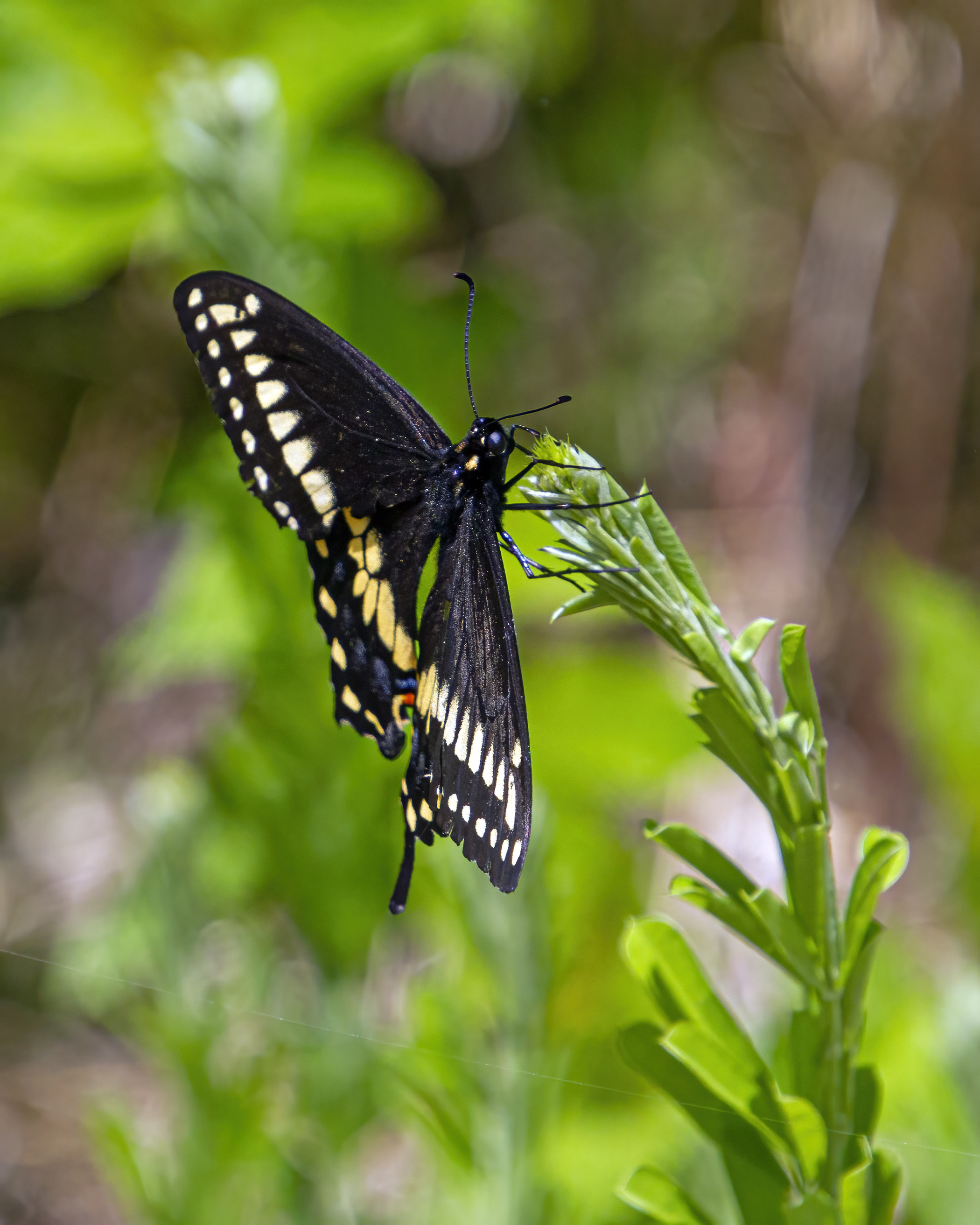
This Eastern Tiger Swallowtail butterfly (Papilio glaucus) was sipping from a wet area at the edge of a forest creek (and maybe ingesting other nutrients) when I photographed it on 23 April at Prince William Forest Park in Triangle,Virginia. I used to associate this species of butterfly with gardens, because that is where I tended to spot them in the past. However, over the last few years, I have spent a lot of time in the spring in forested areas and have spotted Eastern Tiger Swallowtails regularly there, both individually and in small groups.
Check out my 2021 posting called “A Kaleidoscope of butterflies” to see a photograph of Eastern Tiger Swallowtails “puddling,” i.e. congregating together on wet sand and mud to drink water and extract minerals from puddles.
Eastern Tiger Swallowtail
© Michael Q. Powell. All rights reserved.

Read Full Post »

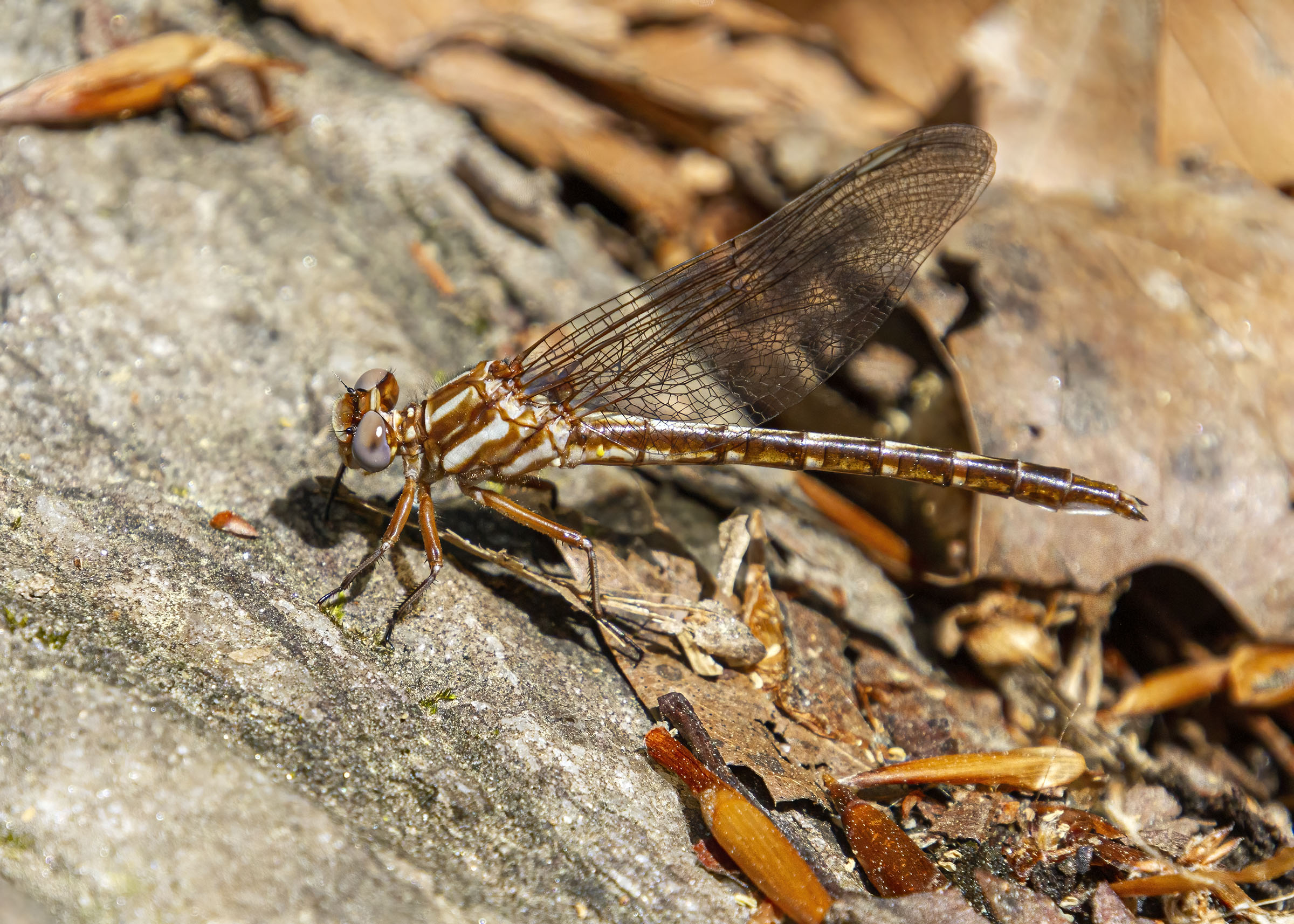
Dragonfly season has definitely begun. I spotted several Stream Cruiser dragonflies (Didymops transversa) on Wednesday this week while I was exploring several creeks in Prince William Park here in Virginia. Stream Cruisers are pretty easy to identify, with a single stripe on their thoraxes, pale-colored tips of their abdomens, and long, thin legs. They tend to perch at an angle or to hang vertically.

Stream Cruisers are one of the earliest dragonfly species to appear each spring and it was exciting to spot them. They tend to be habitat specialists and are generally found near forest streams with good flow and rocks.

Stream Cruiser

Stream Cruiser

Stream Cruiser

© Michael Q. Powell. All rights reserved.


Read Full Post »

The weather has warmed up considerably and I have started to see many of the spring dragonflies and even some of those that will remain with us through the summer. Last Friday I spotted numerous Ashy Clubtail dragonflies (Phanogomphus lividus), many of which appeared to have emerged recently, judging from their very shiny wings and pale coloration, as you can see in the first photo. Getting shots of them was tough, because they perch on the ground in the vegetation, are only about 2 inches in length (50 mm), and are often very skittish.

Kevin Munroe described well the challenges of finding early spring dragonflies in his wonderful Dragonflies of Northern Virginia website, “Searching for dragonflies in spring is a wholly different endeavor than finding them in July and August. Most summer dragonflies spend their time at sunny ponds or open fields, and engage in showy displays and aerial battles – they are, in a word, visible. The majority belong to the showy and successful skimmer family, along with a few darners and emeralds. The spring dragonfly community is more diverse, and has a very different M.O. They are for the most part, habitat specialists, with low population numbers, secretive habits, and denizens of woodland streams, not sunny ponds. Spiketails, Petaltails, Clubtails, Darners and Emeralds are all out and about in spring. To find these species in April and May, one must spend many hours searching forest edges, woodland clearings, and the banks of springs, streams and creeks.”

In fact, I photographed these Ashy Clubtails in the vegetation near a creek in Prince William County and I can testify to the fact that I walked about for hours searching for them. I am pretty happy with the photos that I was able to take. I especially like the second photo that has some really cool shadows that seem to magnify the number of legs and wings of the dragonfly.

The final two photos were taken only a few seconds apart and show the wings in very different positions. The penultimate photo shows the wings in a typical outstretched pose, while the final photo shows the wings clasped together over the dragonfly’s body, similar to the way that damselflies hold their wings when perched. In my experience recently emerged dragonflies sometimes flex their wings this way as fluid is pumped into the wings and the wings are hardening.

Ashy Clubtail

Ashy Clubtail

Ashy Clubtail

Ashy Clubtail

© Michael Q. Powell. All rights reserved.


Read Full Post »

When this little butterfly flew by me last Friday at Prince William Forest Park, it looked like a nondescript brown moth. Fortunately it landed on some nearby vegetation and I was able to zoom in on it. Wow—what an amazing variety of colors, textures, and markings on this tiny butterfly. I was able to determine that it was a Henry’s Elfin butterfly (Callophrys henrici).

I was pretty sure that I had never seen a butterfly like this until I searched my blog and discovered that I had seen one last spring on almost the same date. I don’t think that I’m losing my memory yet, but I keep filling my head with so much information that it is almost inevitable that I will forget some things.

There is something so whimsical about the word “elfin” that I can’t help but smile whenever I use it. I love the idea of magical creatures like elves and nymphs, drawn from the works of Shakespeare or perhaps from Tolkien’s Lord of the Rings.  These creatures blend in so well with their surroundings that you have to look carefully to spot them and I should warn you that you may become blissfully enchanted by them.

Henry's Elfin

© Michael Q. Powell. All rights reserved.


Read Full Post »

I was delighted to finally spot my first Uhler’s Sundragon (Helocordulia uhleri) of the year on 18 April near a small pond in Prince William County, Virginia. I went searching for these dragonflies, which are usually the first ones I see in the spring, on several occasions in late March and early April, but came up empty-handed. Uhler’s Sundragons are usually around for only about a month, soI was fearful that I might miss them this season.

I have a pretty good idea of the type of habitat that this early season dragonfly prefers and tend to begin my searches by returning to spots where I have photographed them in the past and then begin to widen my search. Quite often this means that I spend a lot of time walking and watching, trying to remain alert to any movement in the air or on the ground.

As you can see in the first photo, Uhler’s Sundragons often hang from a perch, rather than perch horizontally, which makes it a little easier to get a detailed shot. When the dragonfly perches low to the ground, as in the second photo when it hung from the stem of a fallen leaf, I end up doing some improvised acrobatics to capture an image.

Uhler's Sundragon

Uhler's Sundragon

© Michael Q. Powell. All rights reserved.

Read Full Post »

I am a little late in finding my first dragonflies of 2025, but on Wednesday (15 April) I finally spotted some Blue Corporals (Ladona deplanata) at Occoquan Bay National Wildlife Refuge. As an added bonus, the first image also shows a metallic-green Six-spotted Tiger Beetle (Cicindela sexguttata) that was crawling past the dragonfly.

Blue Corporals, one of the first dragonflies to emerge in the spring, are relatively easy to identify because they have two stripes of their shoulders—two stripes is the traditional marking for the rank of corporal in the armed forces. When they first emerge, males and females have similar colorations, but the males turn blue as they mature. Judging from the shape of their terminal appendages, I believe that the dragonflies in the first two images are females and the one in the final photo is an immature male.

Blue Corporal

Blue Corporal

Blue Corporal

© Michael Q. Powell. All rights reserved.

Read Full Post »
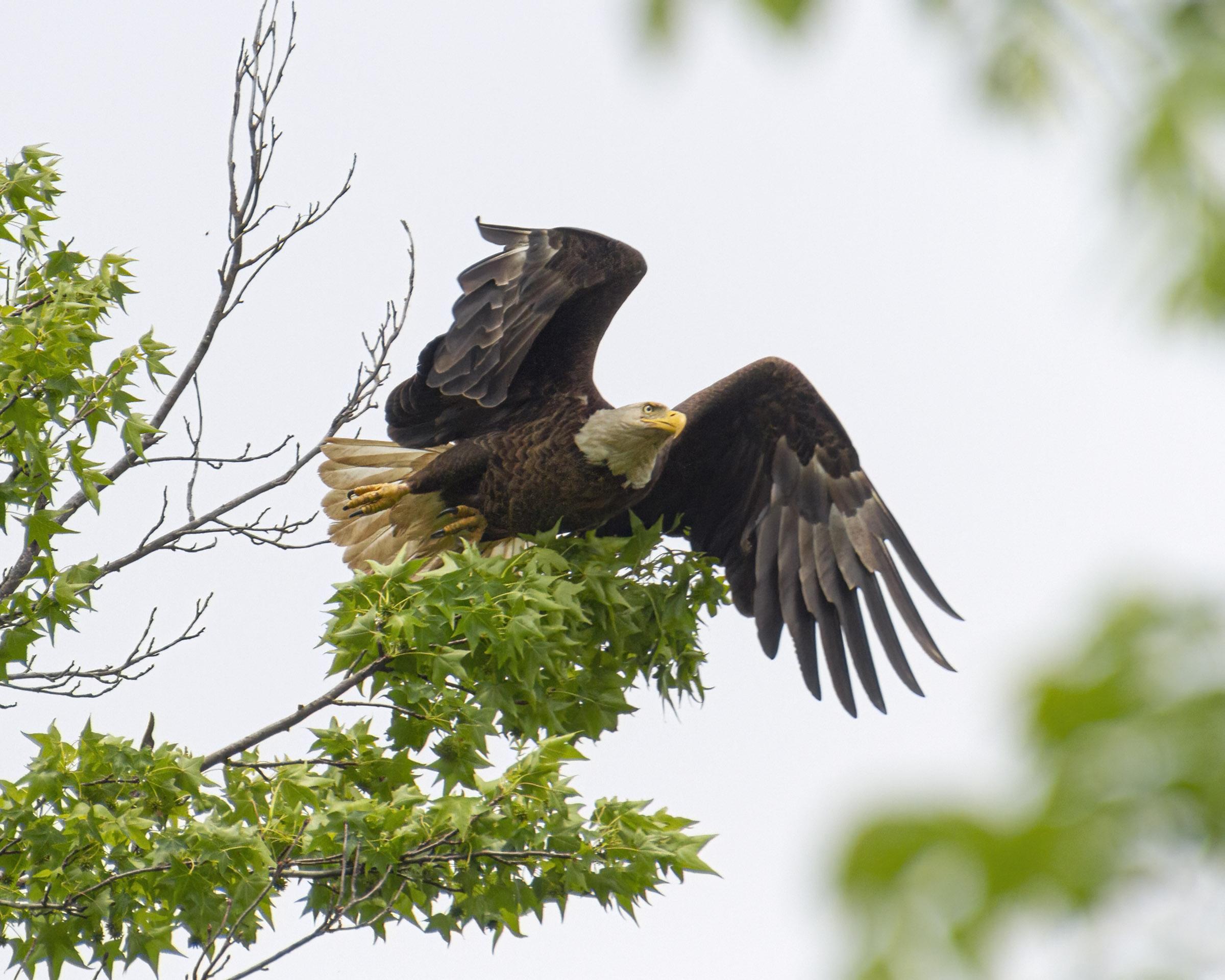
Earlier this season, it looked like a pair of Bald Eagles had occupied a large nest at Occoquan Bay National Wildlife Refuge. Each time that I visited the refuge, I would check the nesting site to look for indications that an eagle was sitting on eggs. Unfortunately, the nest is so deep and so high up that it is almost impossible to tell if an eagle is inside of the nest.

Last week, I watched a pair of Ospreys (Pandion haliaetus) fly into the nest and seize it and captured this shot of them doing so. Generally ospreys use much smaller, thrown-together nests, but I guess that this pair decided to advantage of what I assume is a currently unoccupied eagle nest.

As I watched the two ospreys approach the nest with dangled legs, I couldn’t help but think of the scenes from the Wizard of Oz movie in which the flying monkeys seized Dorothy. The mind works in strange ways.

osprey

© Michael Q. Powell. All rights reserved.


Read Full Post »

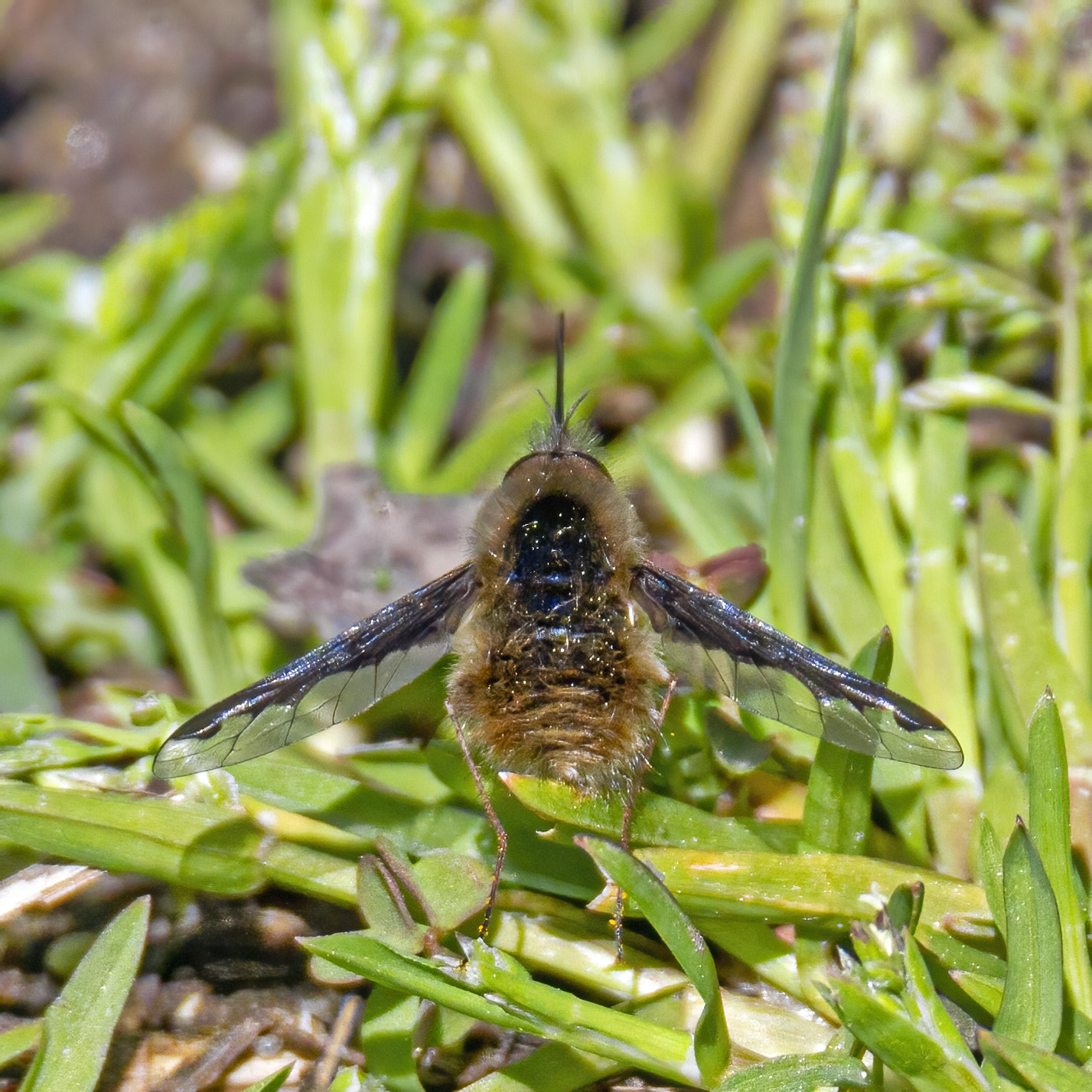
Is it a bee? Is it a fly? Well, it has a fuzzy body like a bumblebee and has a long, rigid proboscis that looks like a stinger, but its patterned wings and long legs look more like those of a fly. In actuality, it is a Greater Bee Fly (Bombylius major), a parasitic bee mimic that is one of the earliest spring pollinators of wildflowers. I photographed this bee fly last week at Occoquan Bay National Wildlife Refuge.

I was quite happy to be able to capture so many of the details of this curious creature, including its long proboscis, spindly legs, patterned wings, and fuzzy body. In case you are curious, the body of one of these bee flies is about six-tenths of an inch (15mm) in length and its wing span is about one inch (25mm). I recommend that you double-click on the image to get a better look at the little details of this bee fly.

If you would like to learn more about these fascinating little bee flies, including their parasitic behavior, check out this article on the US Forest Service website by Beatriz Moisset entitled “A Pollinator with a Bad Reputation.

Bee Fly

© Michael Q. Powell. All rights reserved.

Read Full Post »

I was absolutely thrilled last week to spot this Zebra Swallowtail butterfly (Eurytides marcellus) at Occoquan Bay National Wildlife Refuge. Zebra Swallowtails overwinter winter in the chrysalis (cocoon) stage before emerging as adult butterflies in the spring. A second brood is born later in the year and they are the ones that lay the eggs that develop into the caterpillars that will enter into cocoons and hibernate throughout the winter.

I love the beautiful colors of this butterfly, with its zebra-like stripes and pops of red and blue—I often think of the Zebra Swallowtail as a “patriotic” butterfly, because of its red, white, and blur coloration..

Zebra Swallowtail

© Michael Q. Powell. All rights reserved.


Read Full Post »

This Yellow-throated Warbler (Setophaga dominica) was pretty far away when I spotted its little patch of bright yellow feathers this past Tuesday at Occoquan Bay National Wildlife Refuge. I doubted that I would be able to get a recognizable shot of it, but decided to take a chance, given that it was the first warbler that I had seen this spring. The resulting shot won’t win any contest, but I am happy that I was able to document my sighting.

Warblers pass through my area each spring at about the same time as the leaves begin to appear on the trees. It can be a bit frustrating for me to be able to hear some of these little birds without being able to see them when they are hidden in the foliage. It is a little game of hide-and-see that I play every year and this time I was able to capture a shot of one of my colorful fellow players.

Yellow-throated Warbler

© Michael Q. Powell. All rights reserved.

Read Full Post »

I was surprised and delighted to spot this Cabbage White butterfly (Pieris rapae) as it was feeding on a newly sprouted dandelion on Tuesday at Occoquan Bay National Wildlife Refuge. I love chasing these elusive little butterflies that I used to think were moths.

Gardeners consider Cabbage Whites to be pests, because their caterpillars can do significant damage to plants, including cabbage, broccoli, cauliflower, and collard greens, but I find them to be beautiful. In that respect I guess I am a kind of dreamer who prefers to focus more on form than on function.

Cabbage White

© Michael Q. Powell. All rights reserved.

Read Full Post »

Long telephoto lenses tend to distort your depth perception. On Tuesday I watched this North American Snapping Turtle (Chelydra serpentina) swimming about in a pond at Occoquan Bay National Wildlife Refuge. I was a bit creepy as the turtle got bigger and bigger in my viewfinder when it began to swim directly towards me. One part of my brain objectively knew that the turtle was still a long way off, but it was nonetheless a bit disconcerting when the snapping turtle’s dinosaur-like eyes appeared to be staring right at me.

Spring is here, though the weather has been cool recently and there were some local frost warnings last night, and all kinds of creatures are waking up. I’m still looking for my first dragonfly of the year and will probably continue my quest later today.

snapping turtle

© Michael Q. Powell. All rights reserved.

Read Full Post »
I have been hearing a lot of Red-winged Blackbirds (Agelaius phoeniceus) during recent visits to Occoquan Bay National Wildlife Refuge and was delighted to finally capture a shot of one last week that shows the distinctive yellow and red shoulder patch of the males of his species.

I was hoping that the blackbird would fly to some lower branches, but he seemed content to perch high above me in a tree. I was pleased, though, to be able to capture this fun little portrait—it is tough to convince birds to pose for me.

Red-winged Blackbird

© Michael Q. Powell. All rights reserved.


Read Full Post »

Most of the time when I am out in nature, I am focused on wildlife and often neglect to take landscape photos. Last week, though, was a notable exception when I went for a hike in Prince William Forest Park, an installation administered by the National Park Service located about 25 miles from where I live.

Most of the park is forested and hilly and there was not much wildlife to observe, so I enjoyed the natural beauty that surrounded me. My iPhone tracks the number of steps that I take and it shows that I walked about 12 thousand steps that day. That may not sound like a lot of steps, but the statistics also indicated that I climbed the equivalent of 37 flights of stairs.

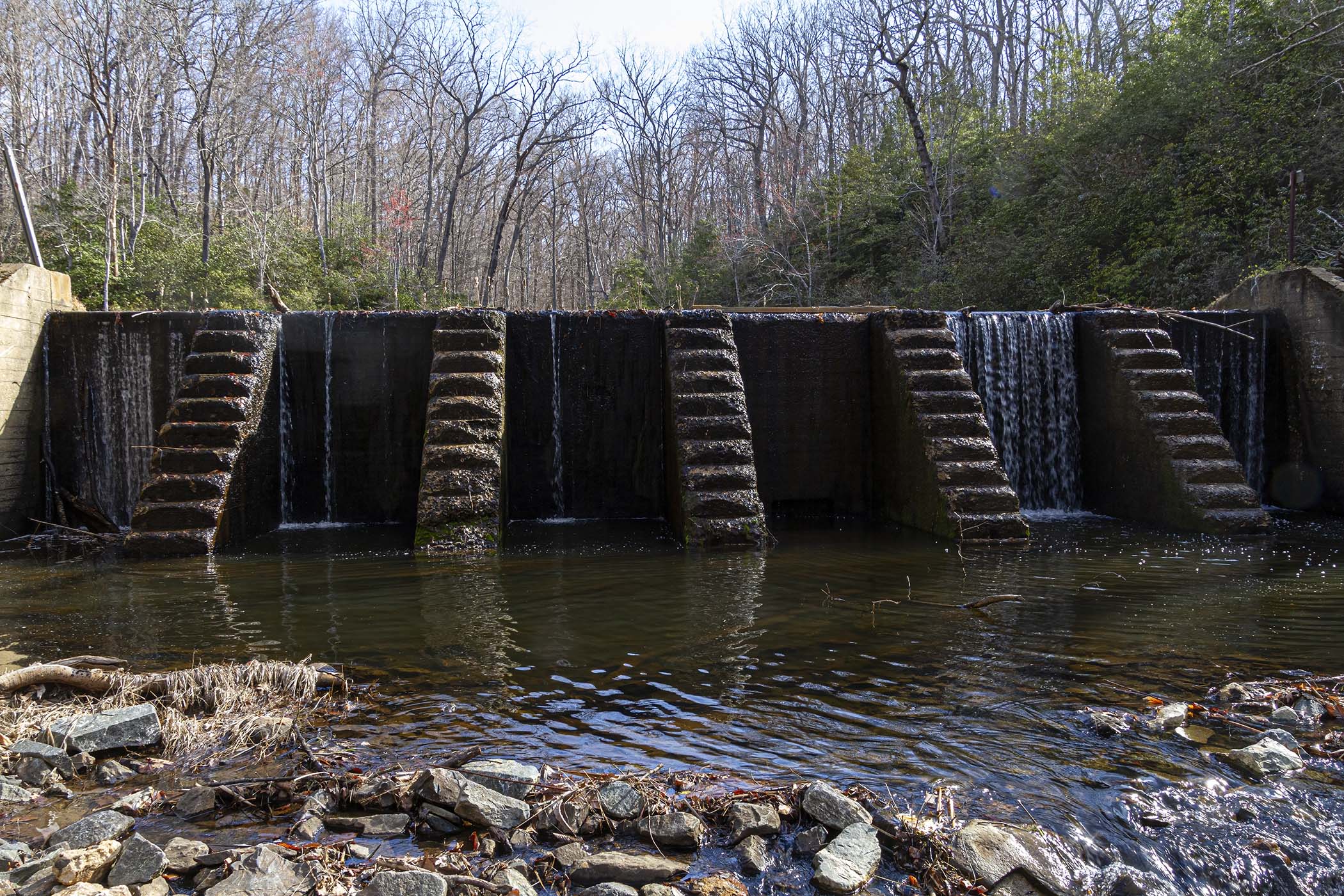
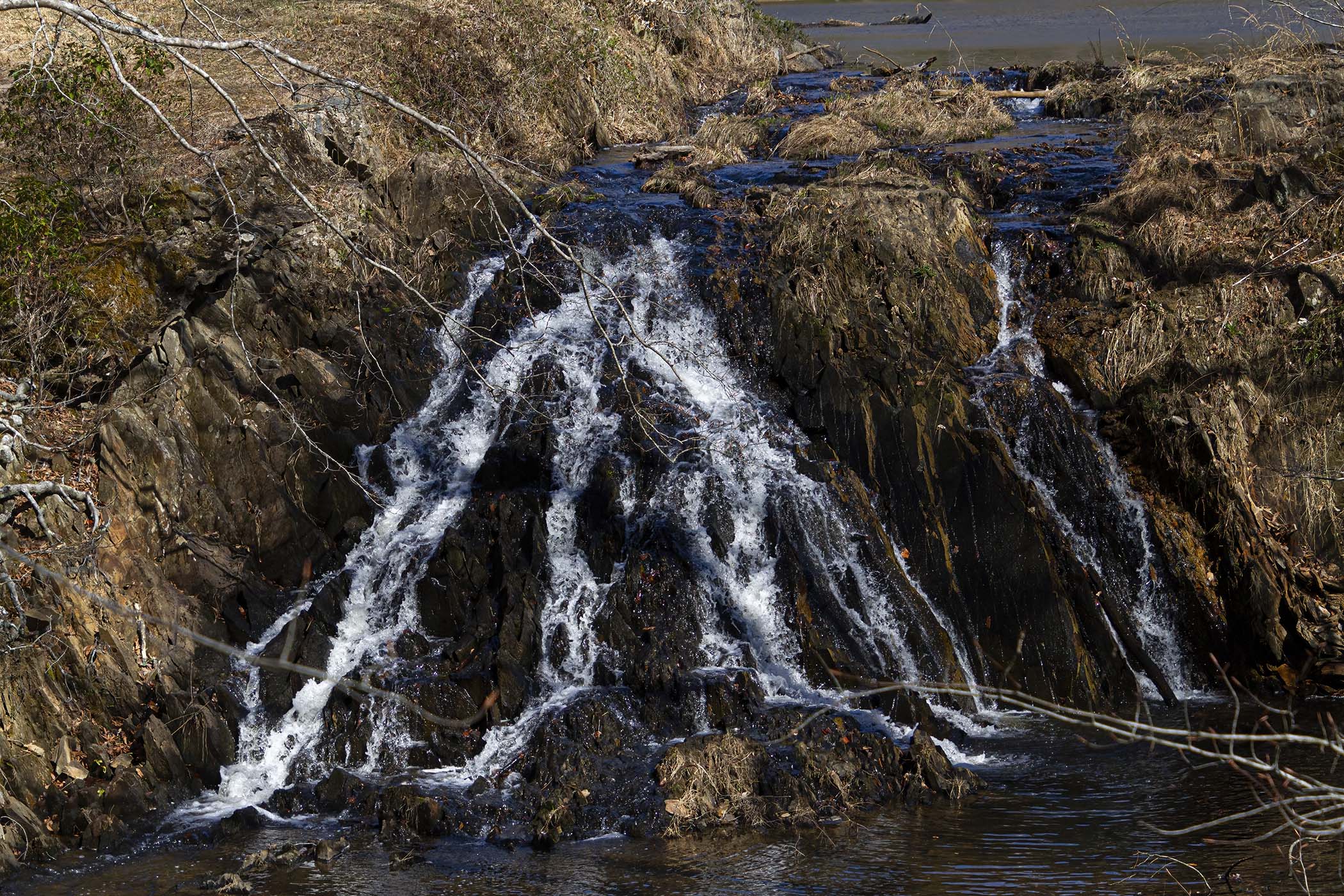
One of the highlights of my hike was walking along Quantico Creek that runs through a portion of the park—I love the sound of rushing water. At several places along the creek there are dams, as you can see in several photos below, that tend to slow the flow of the water.

It was a wonderful way to spend the day and I left the park physically tired, but mentally refreshed and rejuvenated.

Prince William Forest Park

Prince William Forest Park

Prince William Forest Park

Prince William Forest Park

© Michael Q. Powell. All rights reserved.

Read Full Post »

Spring is definitely here. I spotted my first Spring Beauty wildflower (Claytonia virginica) on 26 March during a hike at Prince William Forest Park in Triangle, Virginia. Before long I am sure that I will see large numbers of them in the forest, though they tend to be ephemeral and don’t bloom for very long.

The Spring Beauty plants have tiny underground tubers that Native Americans reportedly prepared and ate like potatoes, though I suspect that you would have to collect a lot of them to make a meal.

Spring Beauty

© Michael Q. Powell. All rights reserved.


Read Full Post »

Springtime has definitely arrived in Northern Virginia. All kinds of trees are starting to put out buds and leaves and Washington D.C.’s famous cherry trees are now in full bloom.

On Wednesday I explored a creek in Prince William County, hoping to find some early dragonflies. I was not successful in my quest, but I was quite happy to capture this image of a female Northern Cardinal (Cardinalis cardinalis) with some of the bright spring colors that have recently emerged. The subdued coloration of the female Cardinal does not stand out quite as much as that of her male counterpart, but I find it her more refined colors to be even more beautiful than those of the male.

Northern Cardinal

© Michael Q. Powell. All rights reserved.

Read Full Post »

In some locations the reappearance of Eastern Phoebes (Sayornis phoebe) is one of the first indications that spring is returning. I am not sure if Eastern Phoebes are with us year round in Northern Virginia, but I know that it as been quite a few months since I last saw one.

On Tuesday I spotted this phoebe in a tree at Occoquan Bay National Wildlife Refuge. Branches were partially blocking my view of the bird, but I managed to find get a clear view of its face (and most importantly of its eye) by making small adjustments to my shooting position.

Eastern Phoebe

© Michael Q. Powell. All rights reserved.


Read Full Post »

I was delighted to spot this Brown Thrasher (Toxostoma rufum) last week at Occoquan Bay National Wildlife Refuge. I had to move around a lot to get a clear view of its head, though I was pretty sure it was a thrasher when I caught a glimpse of its bright yellow eye and long tail. The Cornell Lab of Ornithology did a great job in describing the challenges of spotting this species, “It can be tricky to glimpse a Brown Thrasher in a tangled mass of shrubbery, and once you do you may wonder how such a boldly patterned, gangly bird could stay so hidden.”

Brown Thrashers are present year round in the southern portions of Virginia, but I think they move north into my area of Northern Virginia during the breeding season. Before long we should have lot of other birds, including warblers, migrating through our area and, of course, dragonflies and other insects will soon reappear. Yesterday  i noted a posting in Facebook with photos of dragonflies that were recently taken in central Virginia. I will probably venture out later today to see if I can spot any dragonflies myself.

Brown Thrasher

© Michael Q. Powell. All rights reserved.

Read Full Post »

Osprey (Pandion haliaetus) are very opportunistic birds—they will make a nest almost anywhere there is a bit of space. Last week I spotted an osprey perched on the roof of a duck blind in the water and captured this cool little image.

These little shack-like structures on stilts have been built in the waters off of Occoquan Bay National Wildlife Refuge and are used a few weeks a year during duck hunting season. It is a little disconcerting during that time to hear shotguns being fired only a short distance away, but the money collected for hunting licenses is used for waterfowl habitat improvement and restoration in Virginia.

Osprey

© Michael Q. Powell. All rights reserved.

Read Full Post »

Buds are beginning to grow on many of the trees in my area as we welcome the beginning of spring.  However, it looks like this little Carolina Chickadee (Poecile carolinensis) that I spotted on Tuesday at Occoquan Bay National Wildlife Refuge was impatient and chose to nibble on a tender young bud that had barely started to develop.

The lighting conditions were not optimal, but I like the way that I was able to capture the way that the chickadee used its tiny bill to poke into the underdeveloped bud. It may not seem like much, but I suspect that the chickadee welcomed the taste of the tender spring bud after a long winter of gnawing on hard, wizened seeds.


Carolina Chickadee

© Michael Q. Powell. All rights reserved.

Read Full Post »

Something attracted the attention of this Osprey (Pandion haliaetus) on Tuesday at Occoquan Bay National Wildlife Refuge and it kept looking down at the ground. At first I thought that the osprey had caught a fish that it was trying to protect from competitors, but when I zoomed in, I did not see any fish.

Perhaps the osprey was looking for its mate or was merely curious to observe all the things that were going on. I don’t think that the osprey had spotted me when I took these shots, but that is also a possibility.

Osprey

Osprey

© Michael Q. Powell. All rights reserved.

Read Full Post »
When Great Blue Herons (Ardea herodias) take off from the water, they really stretch out and usually I cut off part of their bodies when trying to photograph them in action. Last week, though, my timing was good and I captured this little sequence of images as a heron took to the air, flew for a short distance, and “stuck” its landing in the water.

I was really happy with the way that I was able to capture so many details, from the arc of the water droplets as the heron rose out of the water to the bird’s different-colored feathers. In the final photo, the spread wings, wind-blown “hair,” and the wonderful reflection combine to create a really cool mood in the image.

Great Blue Heron

Great Blue Heron

Great Blue Heron

© Michael Q. Powell. All rights reserved.

Read Full Post »

When I spotted this Gray Petaltail dragonfly (Tachopteryx thoreyi) on Monday at Occoquan Regional Park, I could see that it was feasting on some kind of insect that it had caught, but I could not get close enough to identify the prey. Dragonflies are fierce predators that feed on a wide variety of insects, sometimes including other dragonflies or damselflies.

When I examine the image carefully I can just make out the wings and legs and possibly an eye of the victim, but that does not help me to identify it. The dragonfly was perched high on the trunk of the tree and when I tried to move closer to get a better shot, the sharp angle made it even harder to see what was going on. I was happy enough to capture this profile view of the Gray Petaltail, which would otherwise have been pretty well camouflaged by the rough bark of the tree.

Gray Petaltail

© Michael Q. Powell. All rights reserved.

Read Full Post »

Many dragonflies have transparent wings that seem to disappear when they are flying, making them look even smaller and hard to detect. Male Widow Skimmer dragonflies (Libellula luctuosa), however, have such large bi-colored patches on their wings that they look almost like butterflies when in flight, an impression heightened by the fluttering way that they fly.

I was thrilled when I spotted this male Widow Skimmer—the females of this species do not have the white wing patches—on Monday at Occoquan Regional Park. The dragonfly flew by me numerous times and I watched and waiting, hoping that it would land.  My patience eventually paid off and I was able to capture this shot that shows off its wings beautifully. This may not be the most artistic image that I have ever captured, but it is a good one to use for the purpose of identification.

One of the coolest things about photography is that it can be both scientific and artistic, allowing me to be as geeky as I want in either domain.

Widow Skimmer

© Michael Q. Powell. All rights reserved.

Read Full Post »

« Newer Posts - Older Posts »