Feeds:
Posts
Comments

Archive for the ‘Portraits’ Category

Taking advantage of yesterday’s gorgeous springtime weather, this little Eastern Gray Squirrel (Sciurus carolinensis) took a break from his chores to enjoy a snack and to bask in the warmth of the sun for a few moments.

squirrel2_spring_blogsquirrel1_spring_blog

© Michael Q. Powell. All rights reserved


Read Full Post »

Despite the rain yesterday, the male Red-winged Blackbirds (Agelaius phoeniceus) were singing up a storm. It seemed like their entire bodieswould expand as they prepared to call out loudly. I didn’t see any female blackbirds respond to the calls—in fact, I didn’t see any at all.

blackbird_singing2_blogblackbird_singing1_blogblackbird_singing3_blog

© Michael Q. Powell. All rights reserved

Read Full Post »

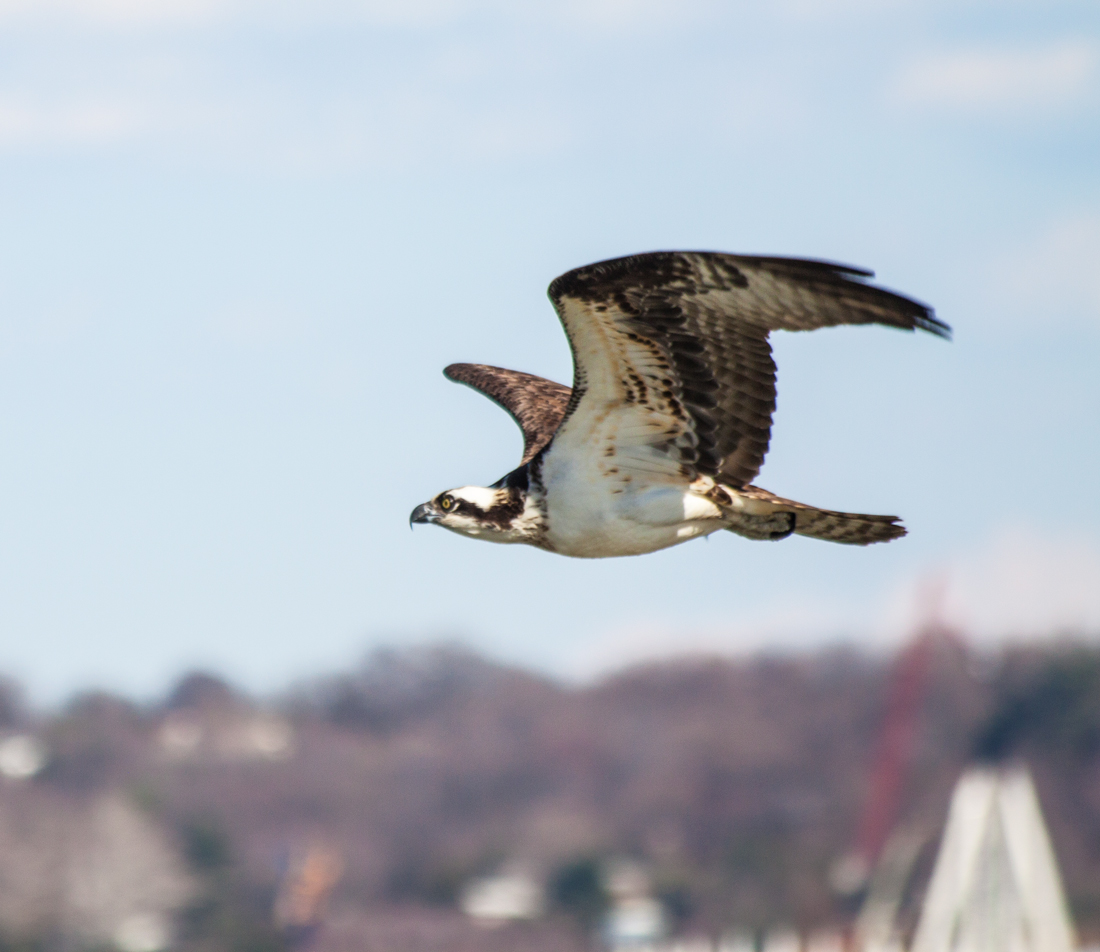
Soaring high above the earth, this Osprey (Pandion haliaetus) seemed to be relaxing, enjoying a moment of peace before getting back to the pressing  job of rebuilding the nest.

osprey_soar_blog

© Michael Q. Powell. All rights reserved

Read Full Post »

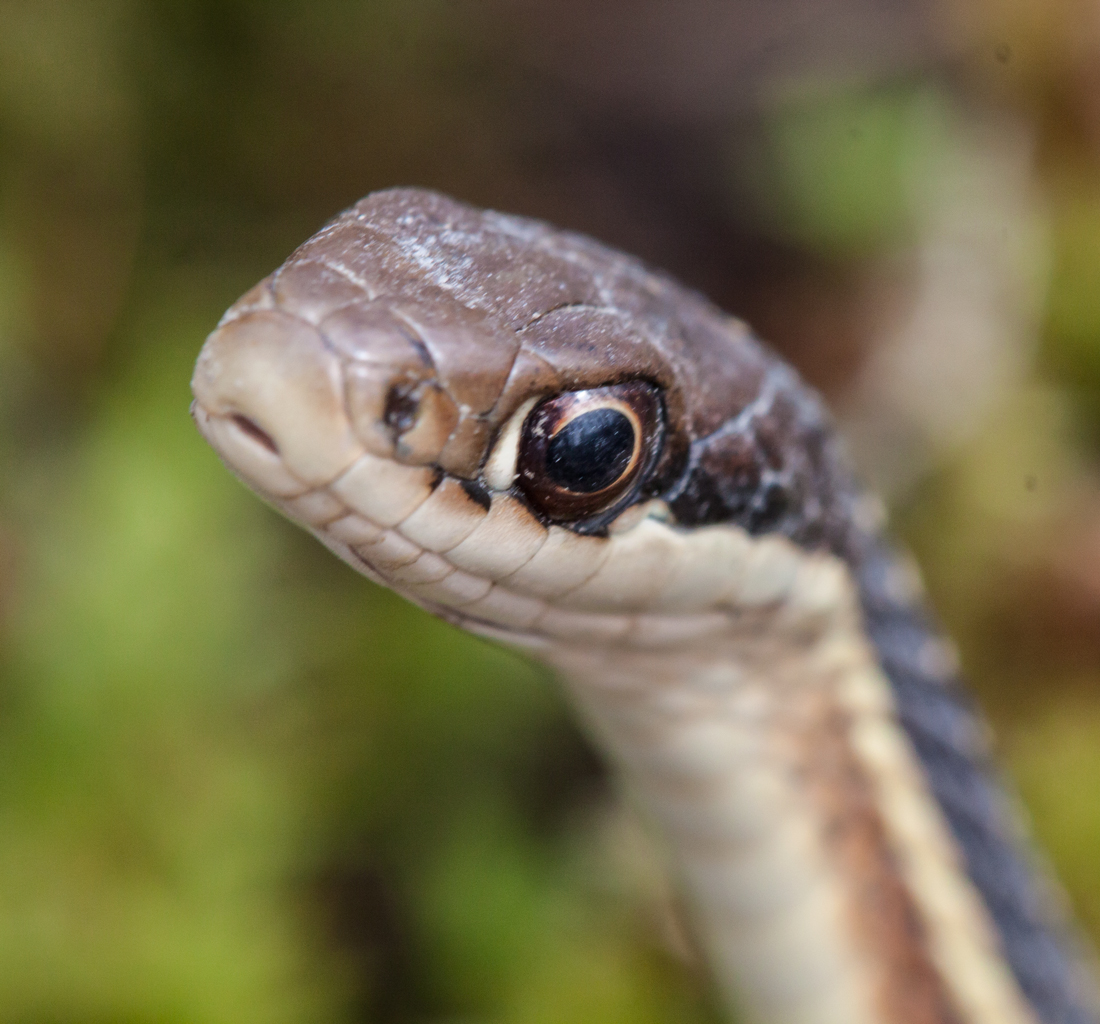
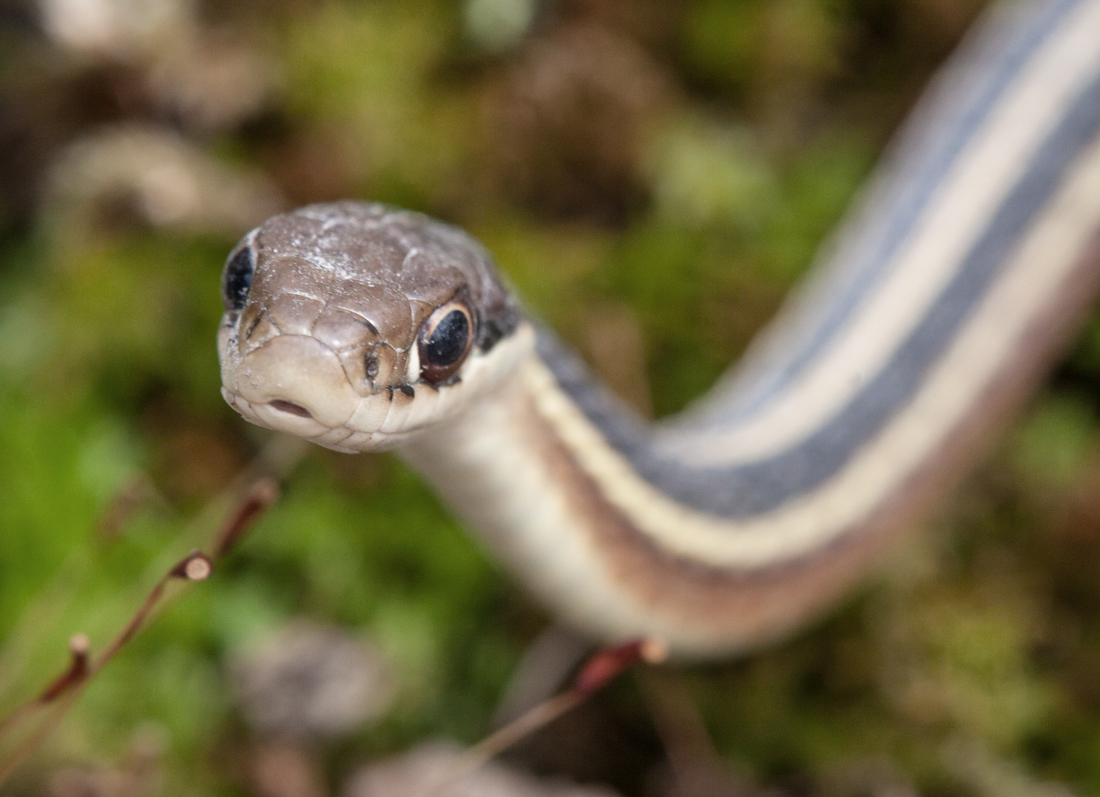
Can snakes whistle? It sure looks like this Common Ribbonsnake (Thamnophis sauritus) is trying hard to whistle as he purses his lips and seems to be blowing air in this series of shots. Who knew that snakes had lips? This snake has lips that rival those of Mick Jagger and look a bit like they were enhanced with collagen.

When you shoot subjects, how close do you get to them? My general rule for wildlife subjects is to shoot them from a distance (so I can be sure of getting a shot) and then move slowly closer and closer. I was amazed at how close this snake let me approach—this first shot was not cropped very much at all.

I like the head-and-shoulders look of the first image (taking into account the fact that snakes don’t really have shoulders), which draws attention to the snake’s eye. At times, though, I prefer the shots that show more of the snake’s body and my favorite of this group is probably the third shot. I really like the curve of the snake’s body and the tilt of its head. It’s hard to see in this reduced-size image, but two little tips of the snake’s forked tongue are visible in its partially open mouth.

snake3_march_blogsnake2a_march_blogsnake4_march_blog

© Michael Q. Powell. All rights reserved

Read Full Post »

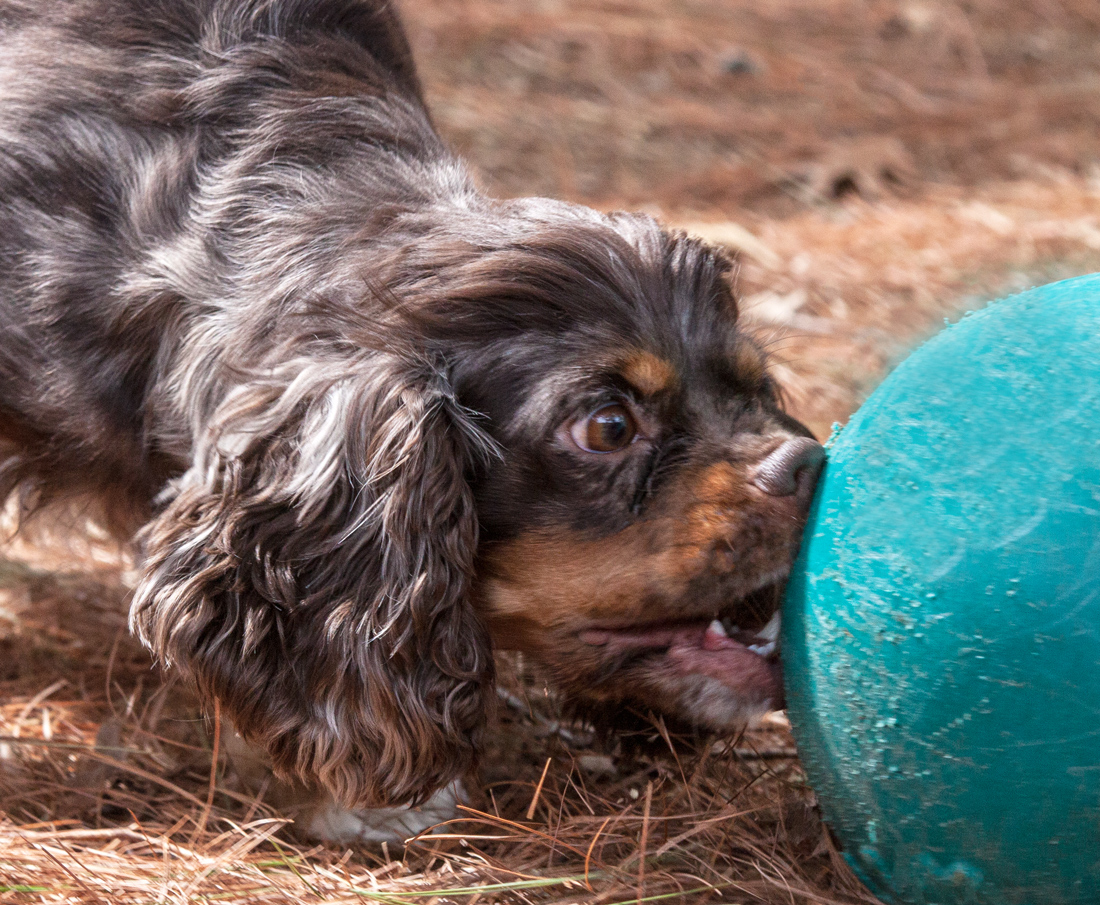
Anyone who had ever played sports has undoubtedly been told, “You have to keep your eye on the ball.” Apparently that is true for dogs too.

I took this shot of Freckles, a friend’s year-old Cocker Spaniel, as she chased a large ball in my back yard yesterday. I love the intensity of her focus, as reflected in her eyes and the expression on her entire face.

freckles_ball_blog

© Michael Q. Powell. All rights reserved

Read Full Post »

Now that it is spring, I have started carrying around my macro lens, which I was able to use to get this really close-up shot today of an Eastern Garter snake (Thamnophis sirtalis) at Huntley Meadows Park, my favorite local spot for nature photography. The snake was curled up in a mossy area and seemed to be a little sluggish. Consequently, he did not slither away when I got down low and moved in close to take this photo.

CORRECTION: Fellow photographer and blogger Walter Sanford, who is much more of an expert in snakes than I am, has identified this snake as a Common Ribbonsnake (Thamnophis sauritus sauritus), not an Eastern Garter snake.

snake1_march_blog

© Michael Q. Powell. All rights reserved

Read Full Post »

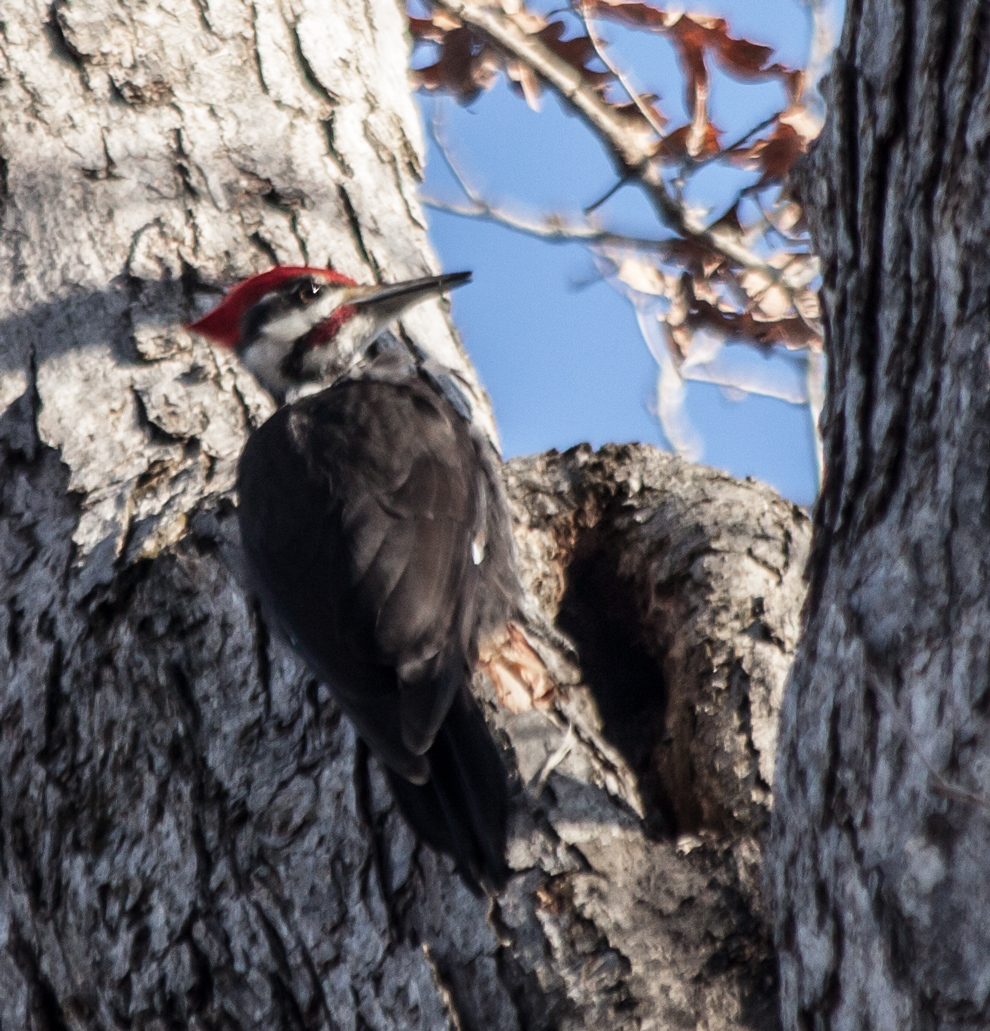
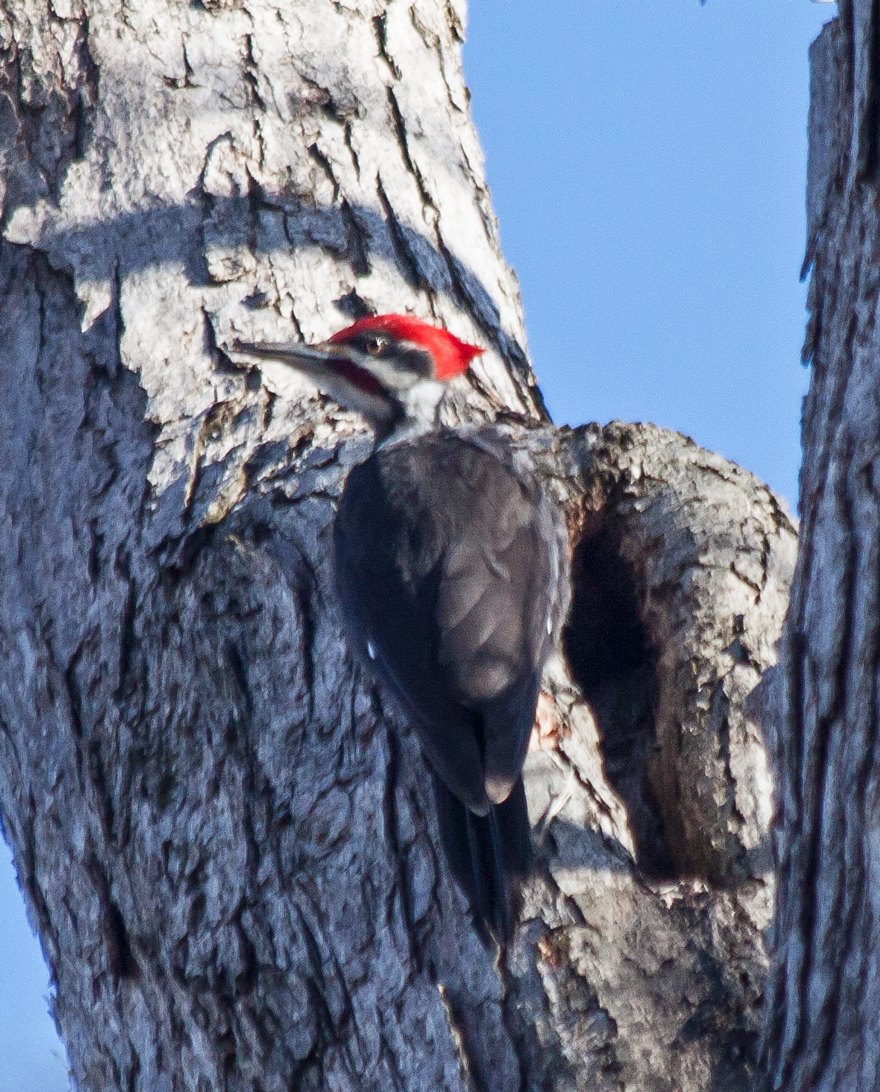
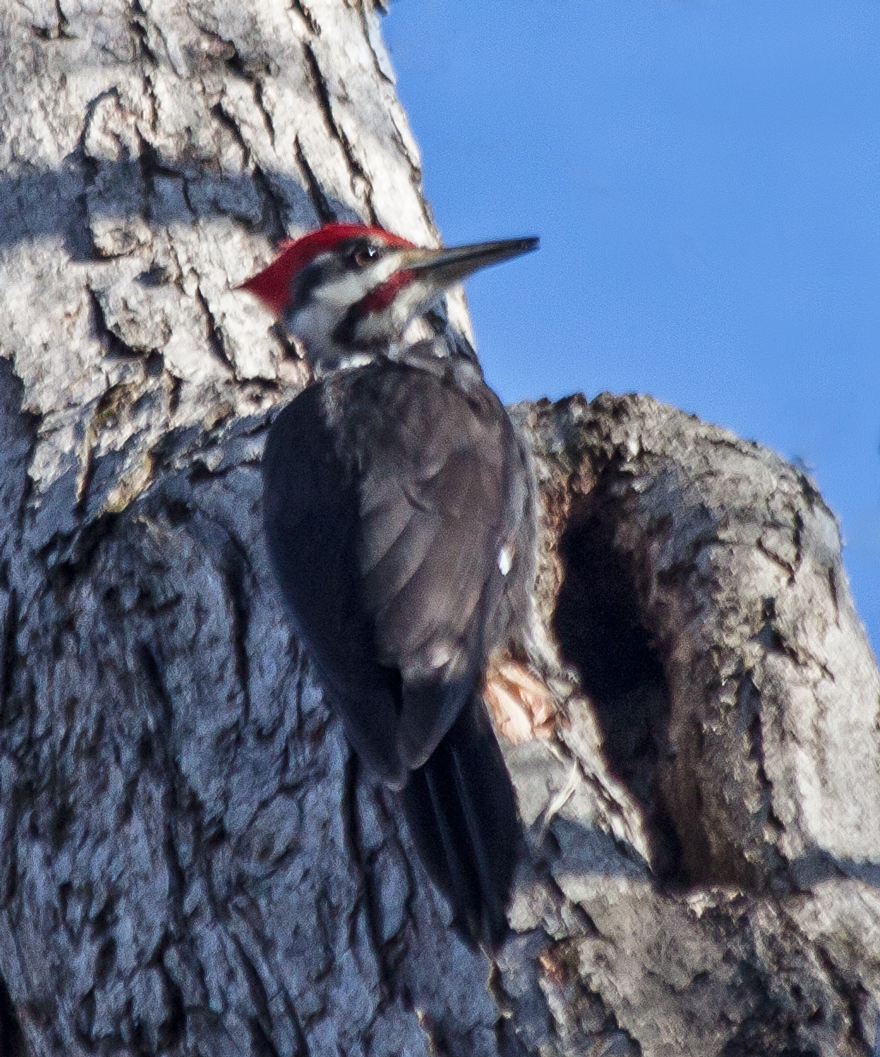
Do woodpeckers smile?

Earlier this month, I spent some time observing a Pileated Woodpecker (Dryocopus pileatus) at work, high in a tree at my local marshland park. The woodpecker would peck away for a while and then stop for a break.  As the big bird turned his head to one side or to the other, it seemed to me that its face would light up in a self-satisfied smile.

What do you think, is the woodpecker smiling or is it just my imagination, running away with me? (Sorry, I just couldn’t resist the temptations to throw in a line from a song.)

pileated4_march_blogpileated1_march_blogpileated2_march_blogpileated3_march_blog

© Michael Q. Powell. All rights reserved

Read Full Post »

Direct sunlight and harsh shadows in the middle of the day make it challenging to take portraits without somehow diffusing the light. During the spring and summer, I will usually carry a collapsible diffuser that I use when photographing flowers (and occasionally people), but it would have been tough to get into position to use such a diffuser on this Great Blue Heron (Ardea herodias) that I spotted on the shore of the Potomac River last Saturday, when I was visiting Dyke Marsh Wildlife Preserve.

As I observed the heron, I was standing on a raised boardwalk, looking downward at the heron though some bushes. In order to get an unobstructed shot, I zoomed in, focusing primarily on the head and neck. The heron moved its head about a lot as it searched the shallow waters and looked through the debris at the shore’s edge, moving in out of the shadows.

I took a lot of photos of the heron and this is one of my favorites. I like the way that I was able to capture some of the details of the plumage and the sinuous curve of the heron’s neck. I would love to be able to capture a similar image early in the day or late in the day, but, as every wildlife photographer knows, you can never tell when you will have another opportunity to photograph a subject again.

heron1_march_blog

© Michael Q. Powell. All rights reserved

Read Full Post »

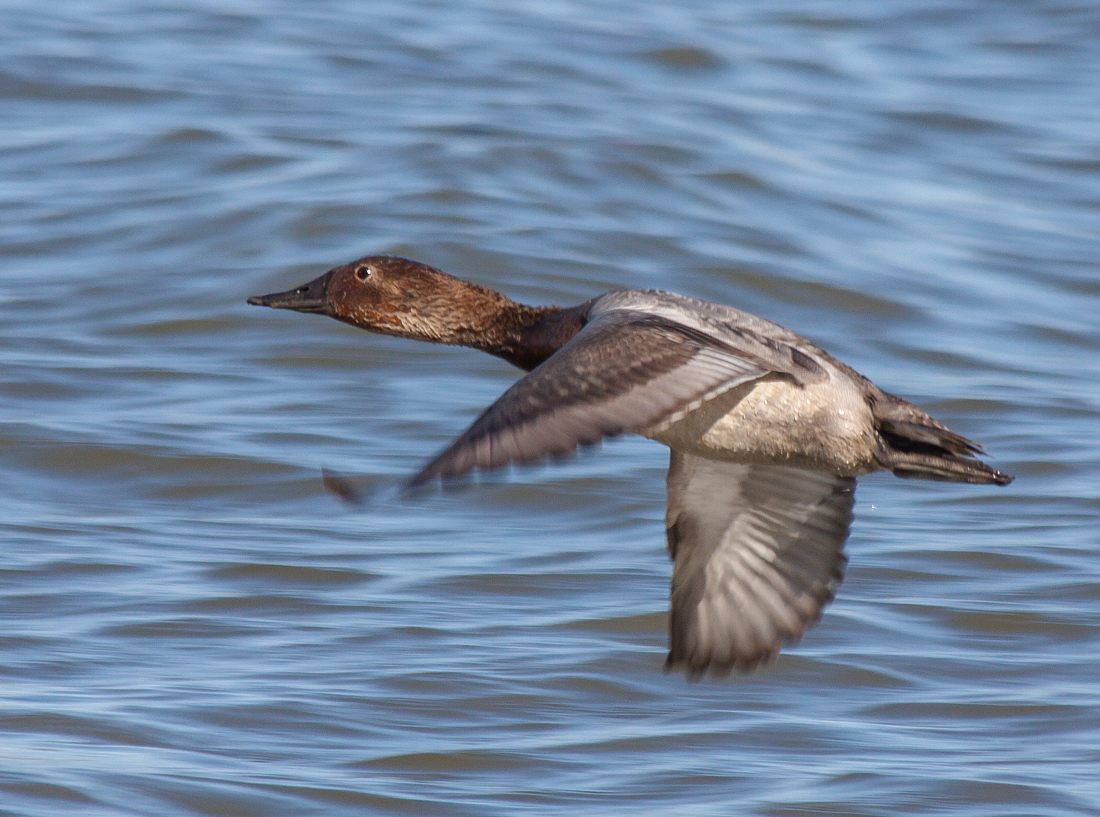
As I was observing the osprey couple on the Potomac River this past weekend, I spotted an unusual-looking duck of a species that I had never seen before. One of my fellow photographers said that he was pretty sure that it was a Canvasback duck (Aythya valisineria) and I couldn’t disagree, having no idea what a Canvasback duck looked like.

The duck was a pretty good distance away and I was looking through my telephoto lens when it decided to take off from the water. I don’t think that the duck was aware of our presence, for it initially flew toward us and parallel to the shore before veering off into the center of the river. I was able to track the duck pretty well and got some in-flight shots, including my two favorites that I am posting.

I am not one hundred percent sure of the identification and would welcome a confirmation or correction, as appropriate, from someone with more experience in identifying bird species.

canvasback_flight_blog canvasback_flight2_blog

© Michael Q. Powell. All rights reserved

Read Full Post »

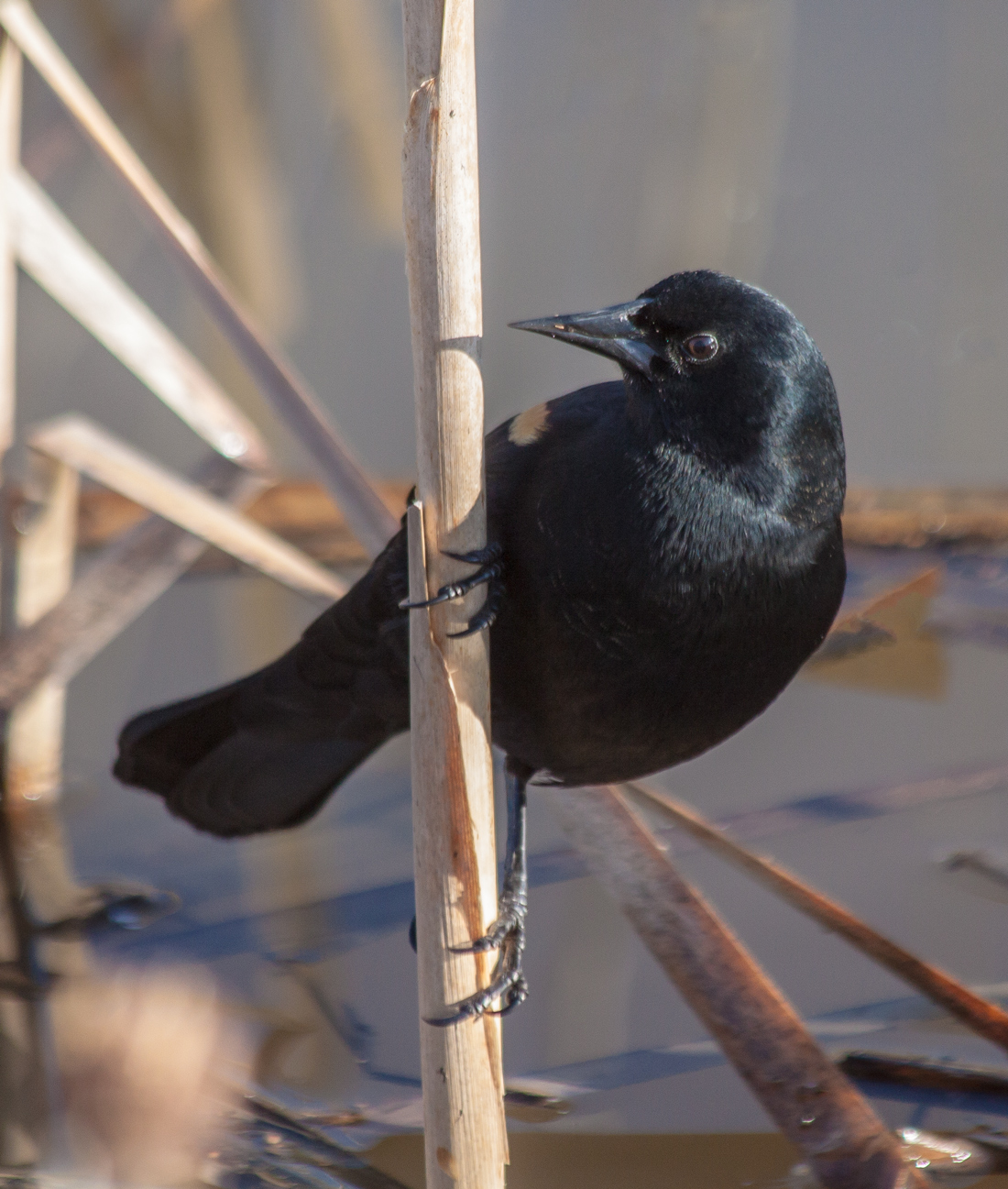
Usually I spot male Red-winged Blackbirds (Agelaius phoeniceus) perched on the top of the cattails stalks, loudly calling out, but this one decided to perch himself sidewards. It looked a little awkward, but he seemed to manage well enough as he struck a pose for me.

blackbird_hanging_blog

© Michael Q. Powell. All rights reserved

Read Full Post »

Every time that I see the outlandishly long bill and bright colors of a male Northern Shoveler (Anas clypeata), I can’t help but think that this is a cartoon duck, created by Walt Disney for a Technicolor movie. Of course, these ducks are real and the bills serve a useful function in helping them to strain the water for food.

The male shoveler is easier to spot, because of its more distinctive coloration, but I was happy to be able to get some shots of a female too as this couple moved in and out of the reeds in one of the ponds at my local marsh. According to the Cornell Lab of Ornithology, Northern Shoveler pairs are monogamous and remain together longer than pairs of other dabbling duck species.

One of the interesting things that I noted is that the feathers on the male’s head are not the solid green that I am used to seeing. They seem mottled and I wonder if this is some kind of transitional plumage as breeding season approaches.

shoveler_male_blogshoveler_female_blog

© Michael Q. Powell. All rights reserved

Read Full Post »

Judging from the distance between them and the awkwardness of their poses, these Northern Pintail ducks (Anas acuta) this morning at my local marsh looked like they were on a first date, getting to know each other.

pintail_couple_blog

© Michael Q. Powell. All rights reserved

Read Full Post »

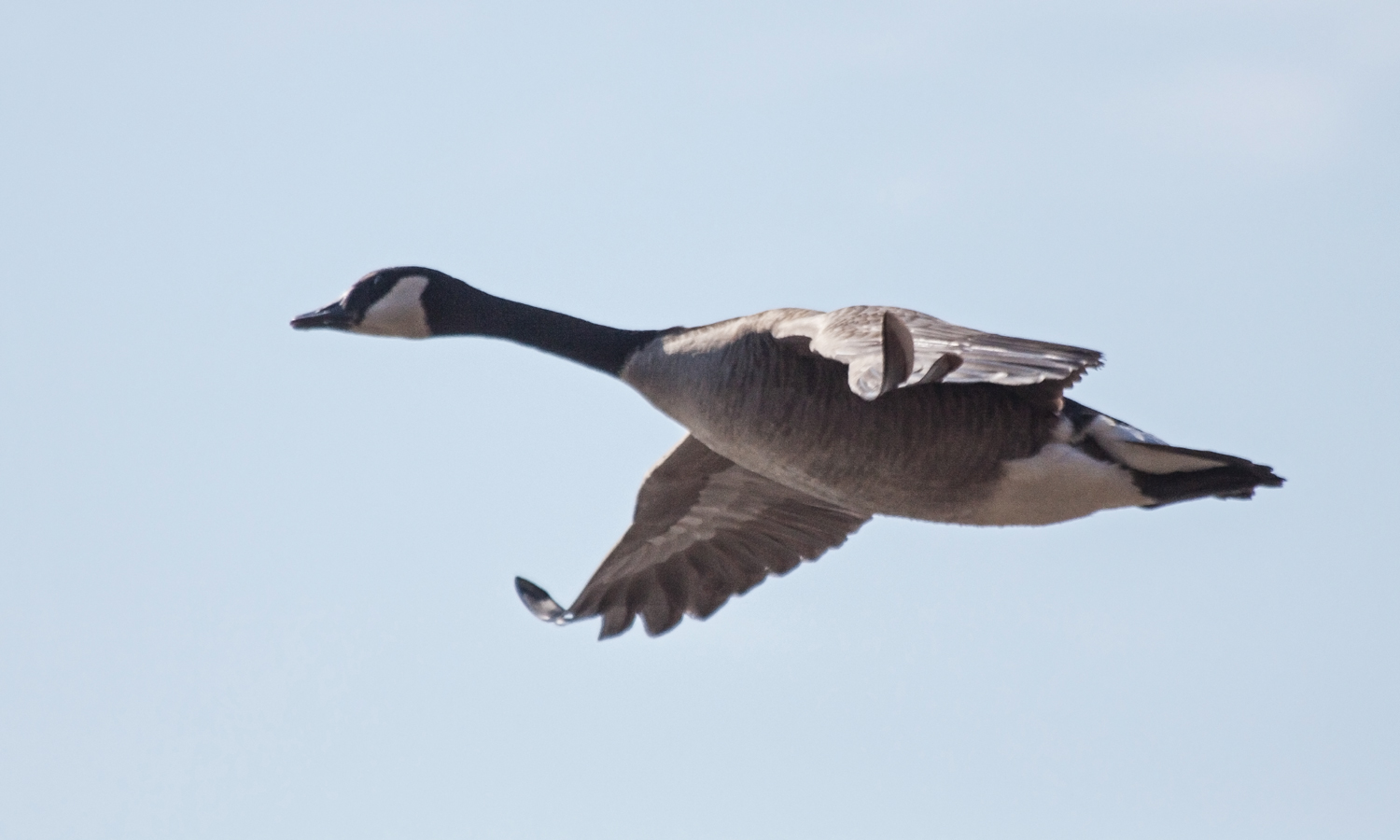
What it would be like to fly like a bird? When I look at this photo I took recently of a Canada Goose (Branta canadensis) in flight, I feel almost like I am flying in formation with a gaggle of geese and have glanced over to look at one of my flying companions. The sad reality, of course, was that my feet were firmly planted on the ground and this goose flew by me at a relatively low altitude.

I’d still like to fly—perhaps in my dreams I can take flight.

goose_flying_blog

© Michael Q. Powell. All rights reserved

Read Full Post »

At this time of the year especially, I can usually depend on seeing ducks, geese, and sparrows at my local marsh—other birds may or may not be present, but these three species are my constant companions. The ducks and the geese are often loud and occasionally obnoxious, but when the sparrows sing, it’s generally a more melodious song. The ducks and geese will often fly away when I approach, but the sparrows will just take a hop or two and continue to forage for food.

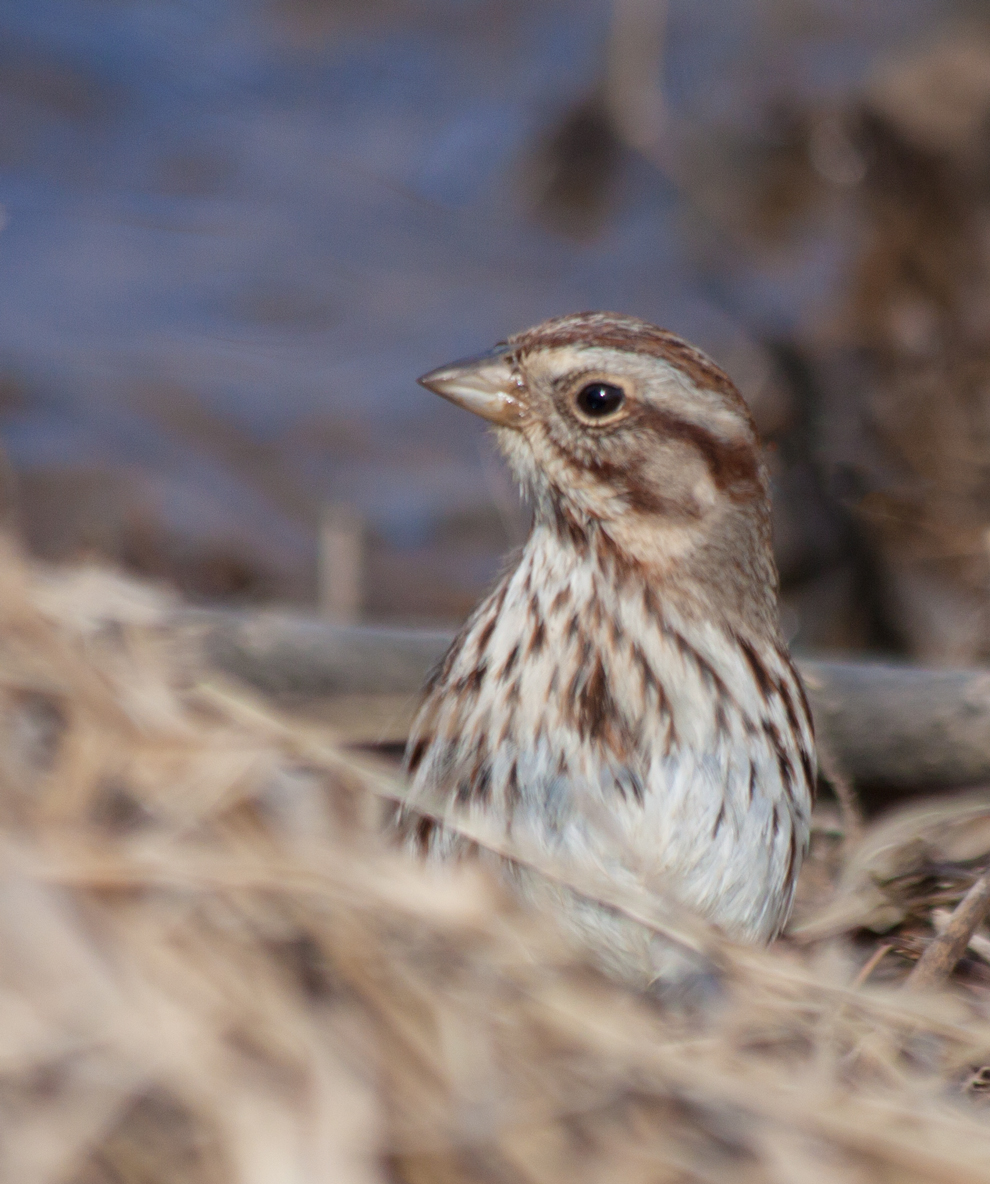
I take lots of photos of sparrows. They are usually within range and have a surprising amount of personality. Yesterday, on a cold and windy day, I captured this image of what I think is a Song Sparrow (Melospiza melodia). The light was pretty good and the sparrow cooperated by lifting its head without turning, resulting in a pleasant little portrait of this pretty little bird.

CORRECTION: A number of more experience bird watchers have noted that this is a Swamp Sparrow (Melospiza georgiana), not a Song Sparrow. Sorry for any confusion—this is not the first time I have misidentified a species, and certainly not the last.

sparrow_shadow_28Feb

© Michael Q. Powell. All rights reserved

Read Full Post »

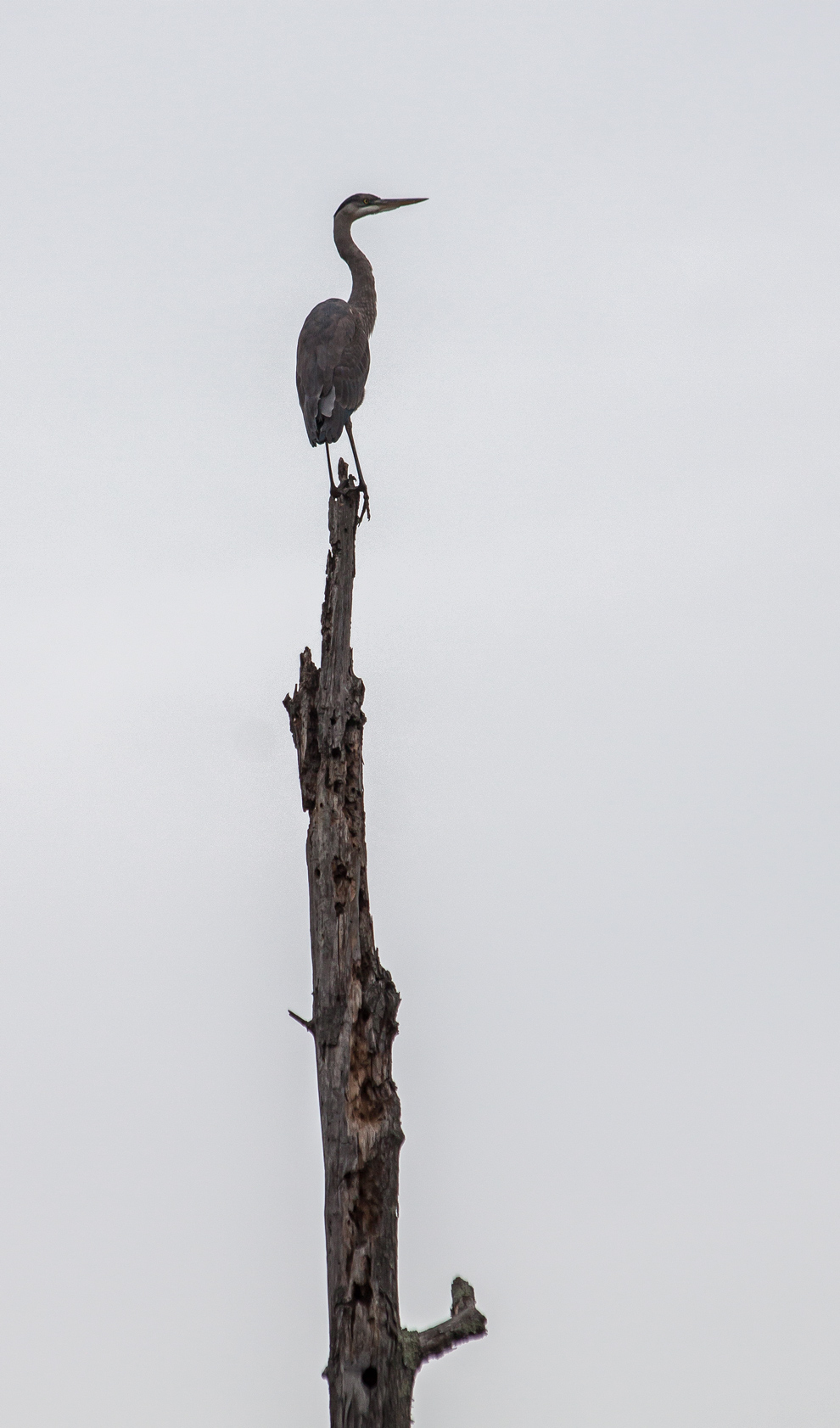
When the Great Blue Heron landed high in a limbless, skinny tree, I suspected he would not be there long—it was like he was perched on top of a flagpole. I managed to capture of series of action shots as he pushed off from the tree and launched himself into a dive.

heron_takeoff4_blogThe shot below give you an idea of the height of the tree in which he was perched. It looked to be dead and mostly rotted and was in the center of a marshy field. It was early in the morning and there was heavy cloud cover, which is why the sky looks so white. The photos were mostly silhouetted, but I tried to lighten the shadows a bit to reveal some details.

heron_takeoff3_blog

The next shot shows the Great Blue Heron (Ardea herodias) a split second before he took off. He has extended his wings and is leaning forward. Obviously he had received the call from the control tower that he was cleared for takeoff.

heron_takeoff1_blog

This final shot suggests that the heron propelled himself forward with his legs before using his wings, ending up in a somewhat unusual position.heron_takeoff2_blog

I was able to track the heron until he disappeared into the trees, which let the buffer in my camera catch up with me—as you might suspect, I was shooting as fast as my camera would fire.

© Michael Q. Powell. All rights reserved

Read Full Post »

Snow sometimes causes me stress. I worry about the safety of the road conditions and how long it will take for me to get to work. I feel anxious as I shovel out my car and the sidewalk in front of my townhouse.

This statue in the garden of one of my neighbors is a visual reminder that I can adopt a different mindset. I can remain calm on the inside and indifferent to the cares of the world. The snow will melt and spring will come when it is time.

buddha_blog

© Michael Q. Powell. All rights reserved

Read Full Post »

As many of you know from my posting last week, I recently came upon a dead body of a Great Blue Heron (Ardea herodias)  and several of us who regularly visit this marsh have wondered if perhaps this was the young blue heron who hung around the boardwalk throughout the fall and early winter. We had previously noted that this heron was not very proficient at catching food and worried that it seemed to lack basic survival skills.

I took a lot of photos of that young heron, whom I encountered repeatedly during my early morning visits to the marsh, and decided to post a few photographs from late December and early January. I’ll never know for sure if this heron survived the winter, but these images help remind me of some of the special moments that we shared.

heron_mem3_blogheron_mem3a_blogheron_mem2_blog

© Michael Q. Powell. All rights reserved

Read Full Post »

There may not have been a lot of seeds in the dried-out marsh plants, but this little chickadee, which I am pretty sure is a Carolina Chickadee (Poecile carolinensis), seemed determined to get every last one.

chickadee_feeding_blog

© Michael Q. Powell. All rights reserved

Read Full Post »

Sometimes the birds play games with me as I try to photograph them—usually it is “hide and seek.” This little Song Sparrow (Melospiza melodia), though, seemed to be playing “peekaboo,” as the bird would hide its head and then pop up and look at me, as if to announce, “Here I am.”

peekaboo1_blogpeekaboo2_blog

© Michael Q. Powell. All rights reserved

Read Full Post »

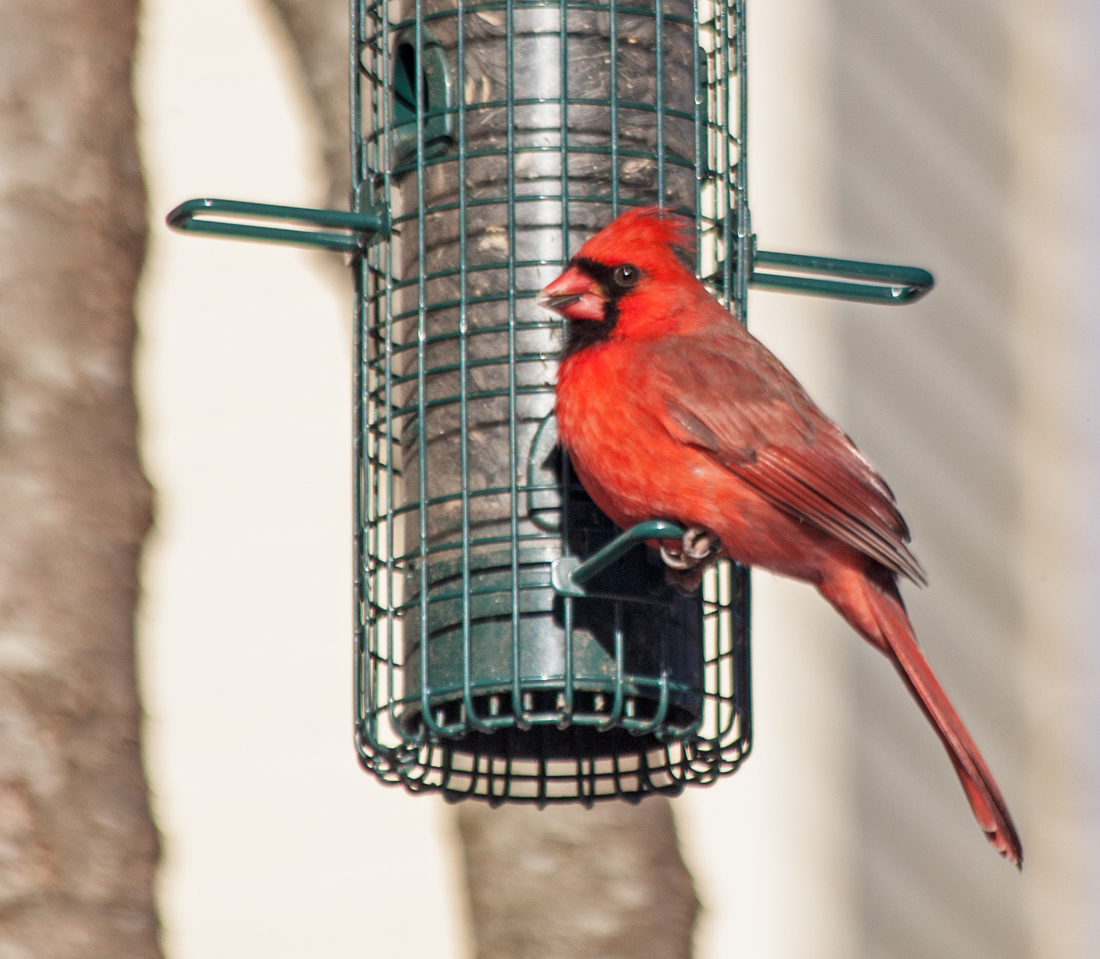
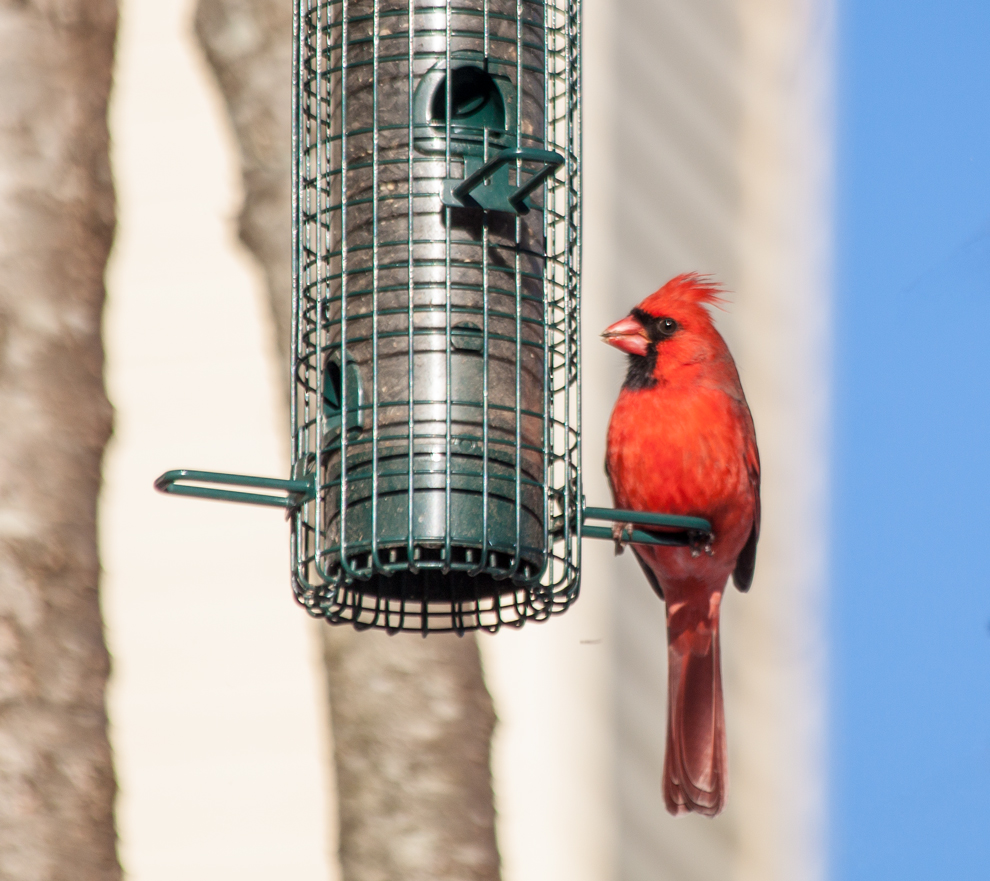
As I was walking through the snow in a wooded area behind some of the townhouses in my neighborhood, a flash or bright red caught my eye and I knew immediately that it was a male Northern Cardinal (Cardinalis cardinalis), one of my favorite birds.

I stalked him as he moved from tree to tree until he eventually landed on this feeder that was hanging from the second-story deck of one of my neighbors. I really like the industrial look of the feeder and think it adds a nice contrast to softer, less distinct feathers of the cardinal.

cardinal_feeder2_blogcardinal_feeder1_blog

© Michael Q. Powell. All rights reserved

Read Full Post »

The window sills in my kitchen are just the right height for Freckles, a year-old Cocker Spaniel, to stand on her back legs and monitor the parking spot, waiting and hoping for her owner to return from work. The light streaming in the windows this afternoon illuminated Freckle’s face beautifully, permitting me to take this rather formal-looking portrait of her. Someday I’ll try a similar lighting situation with a human subject, but somehow it’s easier with a dog, even if it’s hit-or-miss getting her to pose for me.

freckles_window_blog

© Michael Q. Powell. All rights reserved

Read Full Post »

For the second time in two weeks I spotted a muskrat (Ondatra zibethicus) at my local marshland park this past Monday and I was able to get some shots at even closer range that the last time.  (At my closest, I was well within ten feet (three meters) of the little muskrat). I was on a boardwalk above the level of the water and I hung over the edge in an effort to get some shots at close to eye level.

The muskrat was a really small one and paid very little attention to me. It concentrated in pulling some of the vegetation out of the plants at water’s edge and them chewing on them while in the water. Once again, I was amazed at the dexterity of the front paws, which functioned as hands to get the food into the muskrat’s mouth.

muskrat_close1_blogmuskrat_close2_blogmuskrat_close3_blog

© Michael Q. Powell. All rights reserved

Read Full Post »

As I was observing some mallard ducks paddling around the shallow waters of a former beaver pond yesterday, I noticed one much smaller duck in their midst that looked out of place—it was a male Green-winged Teal (Anas crecca). The little duck was acting just like the mallards, foraging for food in the water and occasionally on land as well. Had the Green-winged Teal been adopted by this group of mallards or was he merely lost and separated from his own group?

I couldn’t help but notice that most of the mallards were paired off, but the Green-winged Teal seemed to be all alone. He’s going to have to act quickly if he wants to find a sweetheart before Valentine’s Day later this week.

green-winged1_feb_blog

green-winged2_feb_blog

© Michael Q. Powell. All rights reserved

Read Full Post »

Have sparrows become my favorite bird? This winter, I’ve spent more time with them than with any other birds and I’ve featured them repeatedly in my blog postings. I tend to be more at ease with the familiar and the comfortable, rather than the exotic and extreme. and sparrows fit well into my world, like this Song Sparrow (Melospiza melodia) in the snow.

Photographing these small birds is a challenge, though, because it is unusually tough to isolate them from their often cluttered background and they are in constant motion. I like the way that I was able to capture this sparrow, with the small patch of exposed grass amidst the snow. The light was pretty strong and blew out a few details in the chest feathers, but if cast an interesting shadow.

Perhaps sparrows are not my favorite birds, but we are good friends who spend a lot of time together.

sparrow_shadow_blog

© Michael Q. Powell. All rights reserved

Read Full Post »

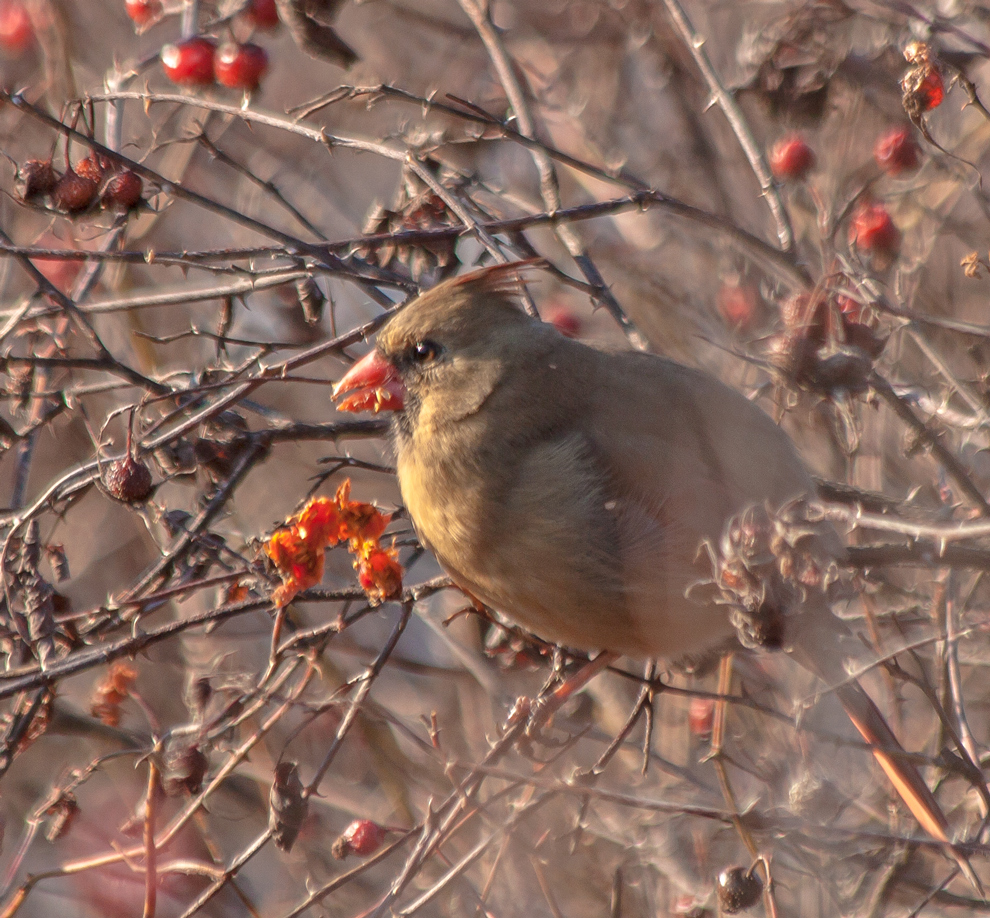
If berries/fruits are still around on a bush in February, I have to believe that they are not a bird’s favorite food. If you are hungry, enough, I guess you make do with what is there, as this female Northern Cardinal (Cardinalis cardinalis) was doing yesterday when I took this photo.

I am not certain, but I think that the red berries may be rose hips and the cardinal was trying to get to the seeds in the center, as the evidence on her bill suggests.  Although I have heard that rose hips are a great source of Vitamin C, I doubt that they provide much nourishment to the birds.

I really like the way that this female cardinal almost disappears into the background in this image—the colors of her body and her bill are almost a perfect match for her surroundings.

cardinal_feb_blog

© Michael Q. Powell. All rights reserved

Read Full Post »

As promised, here are some additional images of the muskrat (Ondatra zibethicus) that I was able to observe one day last weekend at dusk, as it was foraging for food. I posted one photo in an initial blog entry entitle Muskrat at dusk—preview, but I knew that there were other shots that I wanted to share.

The muskrat would dig around a bit in the cattails and marsh grass and then would drag its food into the water to gnaw on it. I was struck by the muskrat’s dexterity and the way that it used its front paws, which looked remarkably like little hands. In some shots, the muskrat might be mistaken for a beaver, but in other shots you can clearly see the tail, which lets you know immediately that it is not a beaver.

muskrat2_feb_blogmuskrat4_feb_blogmuskrat3_feb_blogmuskrat5_feb_blog

© Michael Q. Powell. All rights reserved

Read Full Post »

A Turkey Vulture (Cathartes aura) will never look as fierce as a hawk or an eagle and I am pretty sure that “Eye of the Vulture” won’t ever be a featured song in a Rocky movie, but there is still something disconcerting when a vulture circles close overhead, staring down in your direction.

In most of my previous shots of a Turkey Vulture, the eyes have not been visible, but on a recent sunny day, the light was good enough and the vulture came close enough for me to see the eyes, which look a little creepy. Click on the photo to see a higher resolution view of this big bird, with an impressive wingspan.

vulture_look_blog

© Michael Q. Powell. All rights reserved

Read Full Post »

At dusk yesterday as I was preparing to leave Huntley Meadows Park, my local marshland park, I stumbled upon this muskrat enjoying its dinner. The sun was setting, but it provided just enough warm light for me to capture some images of this elusive little animal.

Muskrats (Ondatra zibethicus) generally are skittish and the most common view that I get of them is when they are swimming away from me. I was fortunate that this muskrat was concentrating on feeding, so its guard might have been down a little, and I was able to approach it without startling it.

I was snapping away in an effort to take advantage of the disappearing light and my moment of solitude with the muskrat, when my camera alerted me that my memory card was full. I backed away slowly and surprisingly was able to change memory cards and resume shooting.

Suddenly I started to feel vibrations in the boardwalk on which I was kneeling and I realized that I was not alone. I tried to concentrate as much as I could, knowing that my time was limited as I felt and heard the approach of a young family with both a stroller and a toddler. The noise and movement was too much for the muskrat and after a bit of hesitation, it scrambled under the ice and swam away.

I haven’t yet downloaded and looked through all of my shots, but wanted to share an initial image. I really like that the last rays of sunlight were able illuminate the muskrat’s fur and add a little catch light in the eyes. (As you can probably tell, the light was coming from camera right and shining right on the muskrat.)  Stay tuned, as I am sure that I will post at least a few more photos of my encounter with this little muskrat.

muskrat1_jan_blog

© Michael Q. Powell. All rights reserved

Read Full Post »

I finally made it out to my local marsh this past weekend to check out the wildlife activity following our recent snowstorm and protracted period of cold weather. The boardwalks are still mostly slippery and covered with packed snow and almost all of the water in the ponds is frozen solid, which means that most of the geese and ducks have relocated. The cold spell is forecast to continue this week, so I don’t expect to see the water fowl returning any time soon.

The sparrows seemed even more active than normal, though, in constant motion as they moved from one set of vegetation to another. Often it seemed that they chose to hop from place to place, rather than fly, and I caught this Song Sparrow (Melospiza melodia) in mid-hop. (It looked like they would extend their wings a bit when they would hop down from a higher point on a plant to a lower spot).

sparrow_hopping_blog

© Michael Q. Powell. All rights reserved

Read Full Post »

Another unexpected bird that I sighted during a recent walk around my neighborhood was this American Goldfinch (Spinus tristis). I don’t think that I have seen one before during the winter—during the spring and the summer the goldfinch’s bright yellow plumage makes it easier to spot one.

I guess I need to pay more attention to the birds of the neighborhood, for it appears that more of them overwinter than I originally thought. What else is out there, waiting to be seen and photographed?

goldfinch1_blog

© Michael Q. Powell. All rights reserved

Read Full Post »

I didn’t think that there were many birds in my suburban neighborhood at this time of the year, so I was pleasantly surprised to see a number of different species during a post-snowstorm walk, including this White-breasted Nuthatch (Sitta carolinensis). For most of hte time that I was observing it, the nuthatch was in the typical head-down position, but it finally turned its head to the side and I got this shot.

nuthatch1_blog

© Michael Q. Powell. All rights reserved

Read Full Post »

« Newer Posts - Older Posts »