Feeds:
Posts
Comments

Archive for the ‘Macro Photography’ Category

There are not very many insects that could be mistaken for a dragonfly, but the color and pattern on the abdomen of this crane fly made me do a double take when I spotted it from a distance on Monday in Prince William County. At that time I had not yet seen my first dragonfly of the year and was anxious to see one. An expert in a Facebook group identified this as a Crane Fly (Tipula noveboracensis).

The first image is a cropped version of the photo that allows you to focus on the wonderful patterns on the wings and the body. If you click on the image, you can see that the crane fly has antennae. The second shot is much less cropped and gives you an idea of the length of the extremely long legs of this insect.

When I am out in the winter looking for birds, I sometimes end up taking photos of odd branches or clumps of leaves, because their shapes make me think that they might be birds. I have the same “problem” with dragonflies—I am likely to photograph anything that remotely resembles a dragonfly, knowing that later I will be able to sort the images and remove the oddball results. Sometimes, as was the case here, my strange results are worth posting.

Crane Fly

Crane Fly

© Michael Q. Powell. All rights reserved.


Read Full Post »

I was delighted to spot some Virginia Bluebells (Mertensia virginica) during a trip last week to Lewis Ginter Botanical Garden. This spring ephemeral plant has beautiful bell-shaped sky-blue flowers and is native to eastern North America. The bees seemed to be equally excited to see these flowers. My photos suggest that the bees, which appear to be Carpenter Bees, were getting to the nectar through the tube of the flowers rather than through the bell.

I really like the varied shades of blues and pinks in the bluebells in different shades of development. The colors work well together, sometimes even combining to produce a lovely shade of violet.

Virginia Bluebells

Virginia Bluebells

Virginia Bluebells

© Michael Q. Powell. All rights reserved.

Read Full Post »

Some people speak figuratively about a “snake in the grass,” but that is literally what I encountered last Friday at Lewis Ginter Botanical Garden in Richmond, Virginia. The Northern Water Snake (Nerodia sipedon) was moving about in a grass patch at the edge of a small stream when I first spotted it.

When the snake raised its head to look around, I got down low and moved closer. How close was I? I was using a relatively long macro lens, which makes it look like I was closer than I actually was, but I was close enough that you can see my reflection in the snake’s eye. The second image image is merely a cropped version of the first image that lets you focus more closely on the eye.

Photographically, though, I prefer the first image. I like the way that I was able to capture blurry grass in both the foreground and the background. The rocky area at the bottom of the image helps to ground the snake and provides a sense of the environment.

I recognize that some people find snakes to be creepy, but I am fascinated by them. It was interesting to note that as I was moving closer to the snake when I saw it, others were moving farther away from it.

Northern Water Snake

Northern Water Snake

© Michael Q. Powell. All rights reserved.

Read Full Post »

Yesterday I travelled with fellow photographer Cindy Dyer to Lewis Ginter Botanical Garden in Richmond, Virginia. While Cindy focused on the numerous tulips and other spring flowers that were in bloom, I immediately headed for the ponds in search of frogs, turtles, snakes, and dragonflies.

On one of my trips around a small pond I finally encounter my first damselfly of the season—a male Fragile Forktail damselfly (Ischnura posita). Most damselflies are hard to identify, but Fragile Forktails of both sexes are pretty easy to identify because both sexes have interrupted pale should stripes that look like exclamation points.

Eventually I spotted several other Fragile Forktails and was able to get some decent shots of them, despite their small size—they are a very small species with a body length of only 0.8 to 1.1 inches (21-29 mm). I was hoping to get some shots of the damselflies perched on vegetation, but in all of the photos I managed to get the damselflies were perched on rocks.

I was happy later in the to spot a Common Green Darner dragonfly in flight, but was not able to get a shot of it. From my perspective, my first dragonfly of the season does not “count” unless I am able to capture a photo of it. So this week I will be out in the wild again, seeking to capture my first dragonfly shot of the season.

Fragile Forktail

Fragile Forktail

Fragile Forktail

© Michael Q. Powell. All rights reserved.

Read Full Post »

The ground in the forest is covered with fallen leaves at this time of the year, making it really easy to spot a Six-spotted Tiger Beetle (Cicindela sexguttata). The metallic green of their bodies shines so brightly that it is almost impossible to miss them as they scurry in and out of the underbrush.

I spotted this little beauty on Monday as I searched for dragonflies in Prince William County, Virginia. After months of photographing birds, often at a great distance, my eyes are gradually readjusting to searching for small subjects at close range. In the springtime I switch to using a macro lens most of the time rather than the long telephoto zoom lens that has been my constant companion throughout the cold, dark days of winter.

I also tend to slow down my pace as I search for tiny insects, scanning for changes in colors and patterns and, most importantly, for movement. In this style of photography, I cannot afford to be in a hurry and often my patience are persistence are rewarded.

Six-spotted Tiger Beetle


Six-spotted Tiger Beetle

© Michael Q. Powell. All rights reserved.

Read Full Post »

For a brief period each spring, tiny wildflowers spring up from the forest floor, giving the forest a magical feel. Some are colorful and some are pure white, but the wildflowers are all beautiful.

I spotted these little flowers on Monday as I was searching for dragonflies in Prince William County, Virginia. I came up empty-handed that day and am still searching for my first dragonfly of the season. However, I had an enjoyable day, covering almost six miles (9.6 km) on hilly trails through the forest.

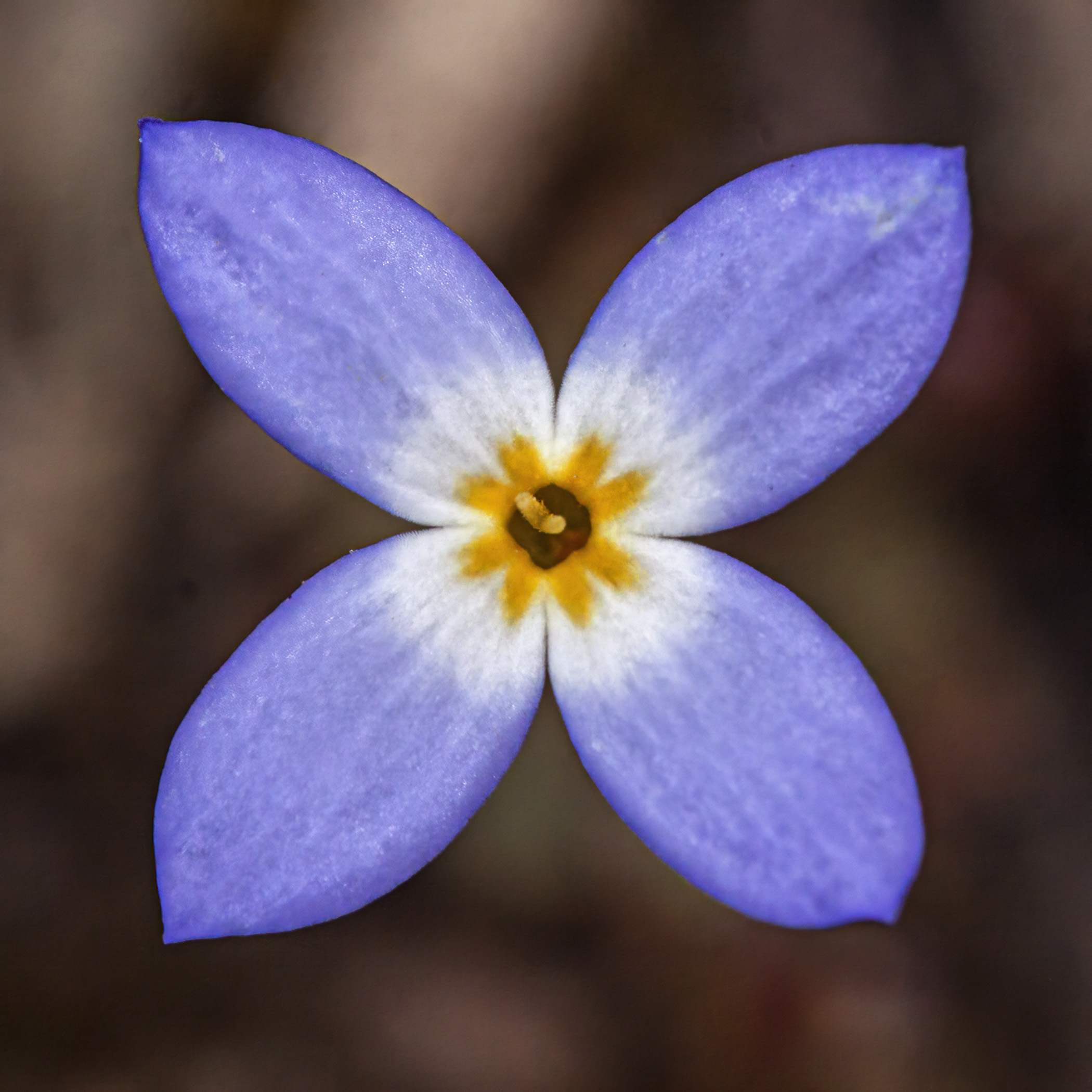
The first photo shows a bluet (Houstonia caerulea), a species that is sometimes referred to as a “Quaker Lady,” because its shape is reportedly similar to that of the hats once worn regularly by women of the Quaker faith. The flower in the second shot is a Star Chickweed (Stellaria pubera), I believe. The flower in the final photo is probably a wild violet (Viola sororia).

As you can readily see, I got really close to the flowers and used a macro lens. I love the detailed views of their shapes, patterns, and colors and encourage you to click on each image to immerse yourself more deeply in their beauty. In these troubled times, nature continues to serve as a balm to my soul.

bluet

star chickweed

wild violet

© Michael Q. Powell. All rights reserved.

Read Full Post »

As we move deeper into spring, more and more flowers are popping up in the garden of my neighbor, fellow photographer Cindy Dyer. It is a fun adventure to walk over to the garden every few days to see what new bits of beauty have sprung forth out of the earth.

One of my favorites that I look forward to seeing each spring is the Lady Jane tulip (Tulipa clusiana var. ‘Lady Jane’), featured in the first photo below. It is a small tulip with pointed petals and a delicate pink and white coloration.

The red tulips are a bit more traditional in terms of their shape and coloration. I love to explore them from all angles and their bright, cheery color is a joy to behold.

Some more tulip buds are beginning to mature and it looks like there may be yellow tulips next. Spring is such a beautiful season.

Lady Jane tulip

tulip

tulip

© Michael Q. Powell. All rights reserved.


Read Full Post »

Now that it is spring, it is time for the crawling critters to reappear, like this little spider that I spotted last week while exploring in Prince William County. Some spiders overwinter as adults, so this spider may have just awoken from a long winter’s sleep. If so, the spider may have decided to go back to bed, because temperatures have dropped the last couple of days and it is currently about 25 degrees outside (minus 4 C)—it was 70 degrees (21 degrees C) when I photographed the spider last week.

UPDATE:  Initial indications from an expert at bugguide.net suggest that this is a wolf spider.

spider

© Michael Q. Powell. All rights reserved.

Read Full Post »

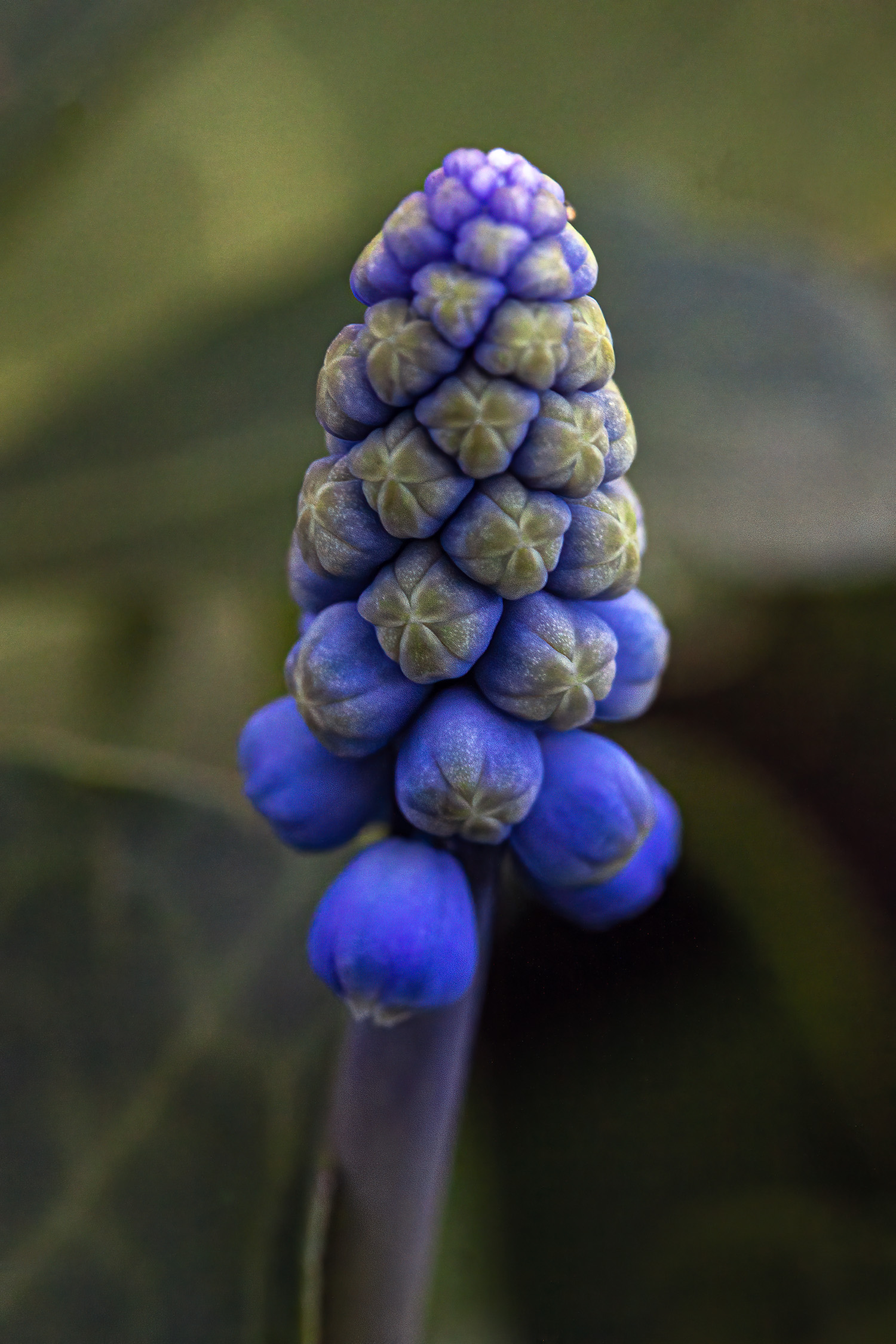
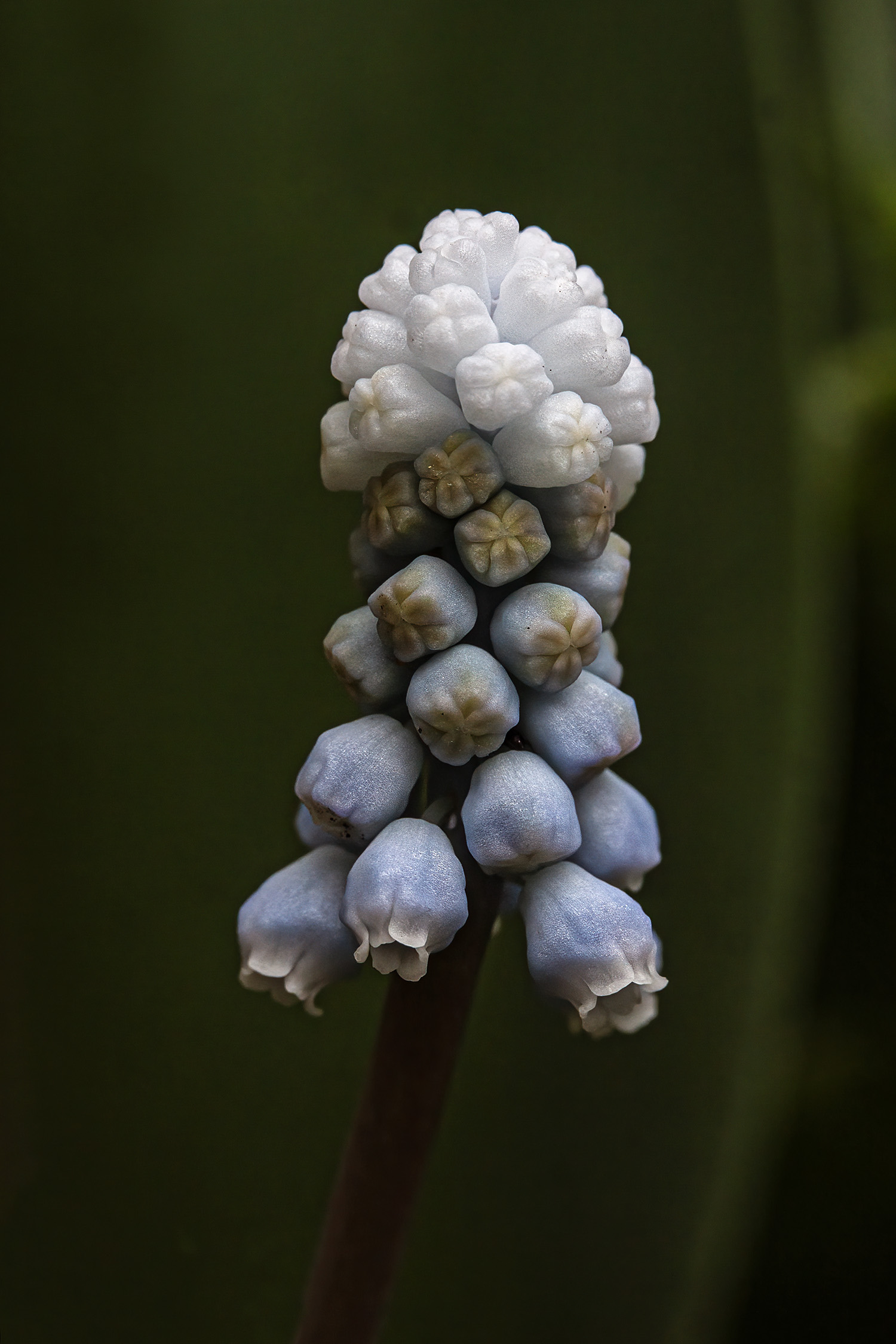
One of the early signs of spring is the emergency of the tiny stalks of Grape Hyacinths (g. Muscari). As their name suggest, these spiky little flowers look a bit like bunches of grapes. Most of the time grape hyacinths are bluish in color, but they come in other colors too and sometimes, as you can see in the second photo, there may be multiple colors on the same flower stalk.

I captured these images in the garden of my dear friend and neighbor Cindy Dyer. Cindy is used to seeing me skulking about in her garden and I usually am able to keep her informed about what is blooming in her own garden.

Using my short macro lens, I was able to capture some of the interesting patterns of these grape hyacinths. In the first image you can see how the little “grapes” grow in a spiral pattern. The second image shows how the “grapes” open up at their ends as they mature. I really like the way that both images feature the raised three-petalled impression on so many of the grapes—the shape looks almost like it was embossed.

Grape Hyacinth

Grape Hyacinth

© Michael Q. Powell. All rights reserved.

Read Full Post »

As I was scanning my neighbor’s garden for new growth yesterday, a small bit of bright orange caught my eye. I moved closer to see what it was and was shocked to find a tiny ladybug crawling around one of the plants.

The ladybug was pretty active, moving up and down the leaf, so it was challenging to get a shot of it. Eventually, though, my patience paid off and I was able to capture this image. Later in the year photos like this will become more commonplace, but during the month of March I am overjoyed whenever I have a chance to photograph an insect.

I did not get a good look at the face of this insect, so I cannot tell if it is an Asian Lady Beetle (Harmonia axyridis) or one of the native ladybugs, which are less common in most areas. Whatever the case, there is something whimsical about ladybugs that makes me smile, so I was happy to spot this one.

ladybug

© Michael Q. Powell. All rights reserved.

Read Full Post »

It was sunny and warm on Monday, so I went off in search of dragonflies. There has already been at least one sighting of a dragonfly this month in Virginia, but it realistically is still a bit early for any to appear in the northern part of the state where I live. I searched diligently at a pond and at several small streams in Prince William County, but did not find any dragonflies or damselflies.

I was happy, however, to spot several Eastern Cricket Frogs (Acris crepitans crepitans). These frogs are tiny, with a length of about 5/8 to 1-3/8 inches (16-35 mm). One of the most distinctive things about this species is the male mating call that resembles the sound of two stones being hit together or perhaps is similar to the sound of a cricket.

According to the Virginia Herpetological Society, “This species prefers grassy margins of ponds, ditches and wetlands. Permanent bodies of water with emergent or shoreline vegetation and exposure to the sun are preferred habitat,” a perfect description of the locations where I spotted these frogs.

Each year I am confused when researching this species, because I see references to Eastern Cricket Frogs and Northern Cricket Frogs used almost interchangeably. If I understand it correctly Northern Cricket Frog (Acris crepitans) is the species name and Eastern Cricket Frog (Acris crepitans crepitans) is one of the subspecies.

As you can see from these images, cricket frogs blend in really well with their surroundings. If I had not seen these frogs jump to their new locations, I am pretty sure that I would not have seen them. I walked around all day with my 180mm macro lens attached to my camera and it served me well to capture some of the details on the bodies of the little frogs. I attempted to get as low as I could and to shoot from the side in order to get as much of the frog in focus as I could, so muddy knees were inevitably one of the “benefits” of getting these shots.

cricket frog

cricket frog

© Michael Q. Powell. All rights reserved.


Read Full Post »

I spotted this tiny red tulip yesterday morning in the garden of my dear friend and photography mentor Cindy Dyer, my first tulip sighting of the year. One of Cindy’s passions is gardening and she deliberately plants a lot of flowers that she believes will be photogenic.

Last fall she planted bulbs for some large, frilly, multi-colored tulips that she hopes will bloom later this year. (See my posting from last spring entitled Fire-breathing dragon to see an example of one of those crazy-looking parrot tulips.) I will be looking for those exotic flowers, but I have to say that am often drawn more to the simple, spare elegance of a single bloom, like today’s tulip.

When I first started to get serious about my photography almost ten years ago, I imitated the type of photographs that Cindy was taking, with a lot of emphasis on macro shots of flowers. Cindy taught me a lot about photography during those early days, lessons that have stuck with me as I have ventured into other areas of photography.

One of those lessons was about the value of a well-composed, graphic image, like today’s simple shot. Anyone, in theory, could have taken this shot, but they would have had to be willing to get on their hands and knees in the dirt to do so, another one of Cindy’s lessons. (If you want to see more of Cindy’s tips, check out her article How to Grow Your Garden Photography Skills that was featured several years ago on the NikonUSA.com website.)

tulip

© Michael Q. Powell. All rights reserved.

Read Full Post »

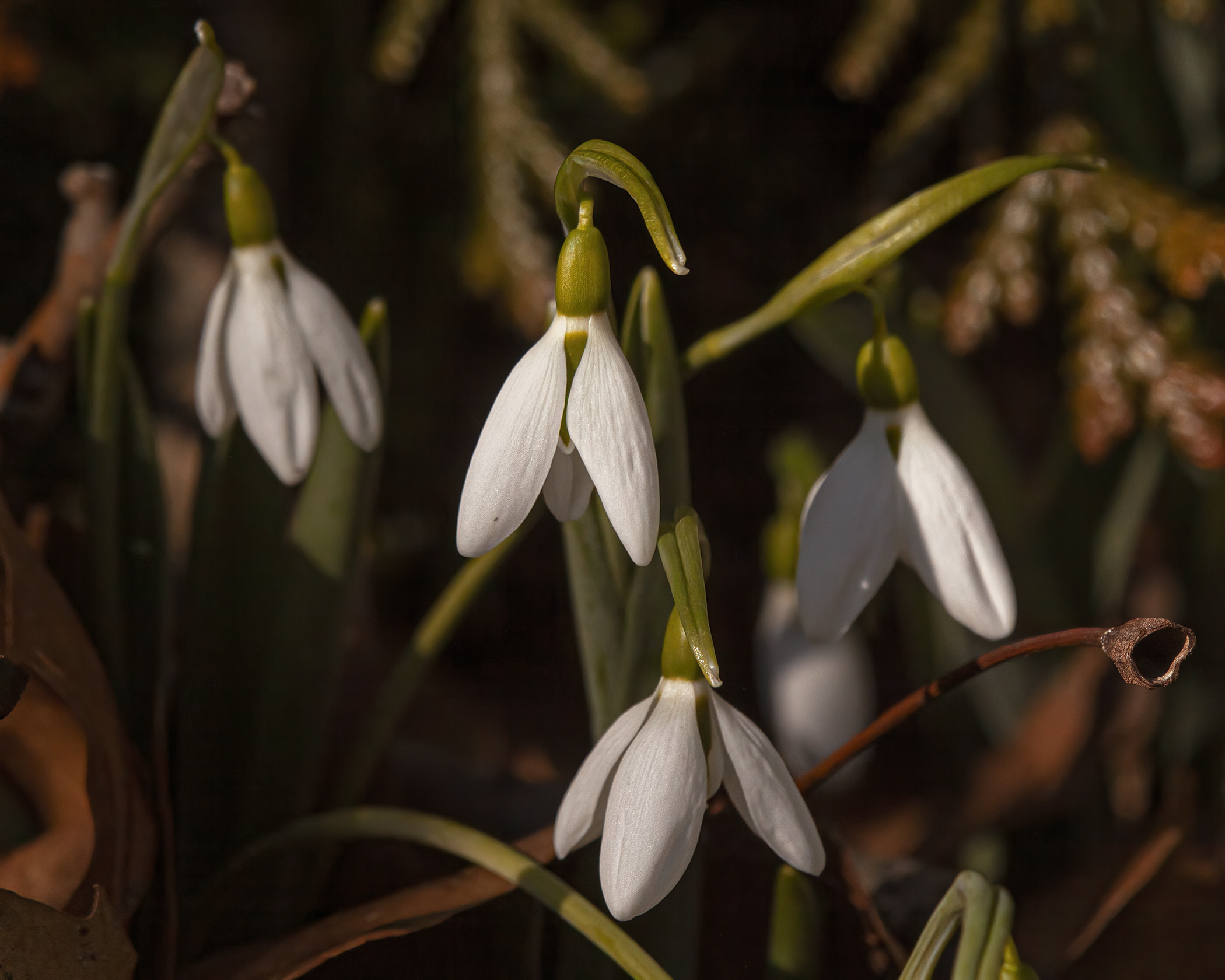
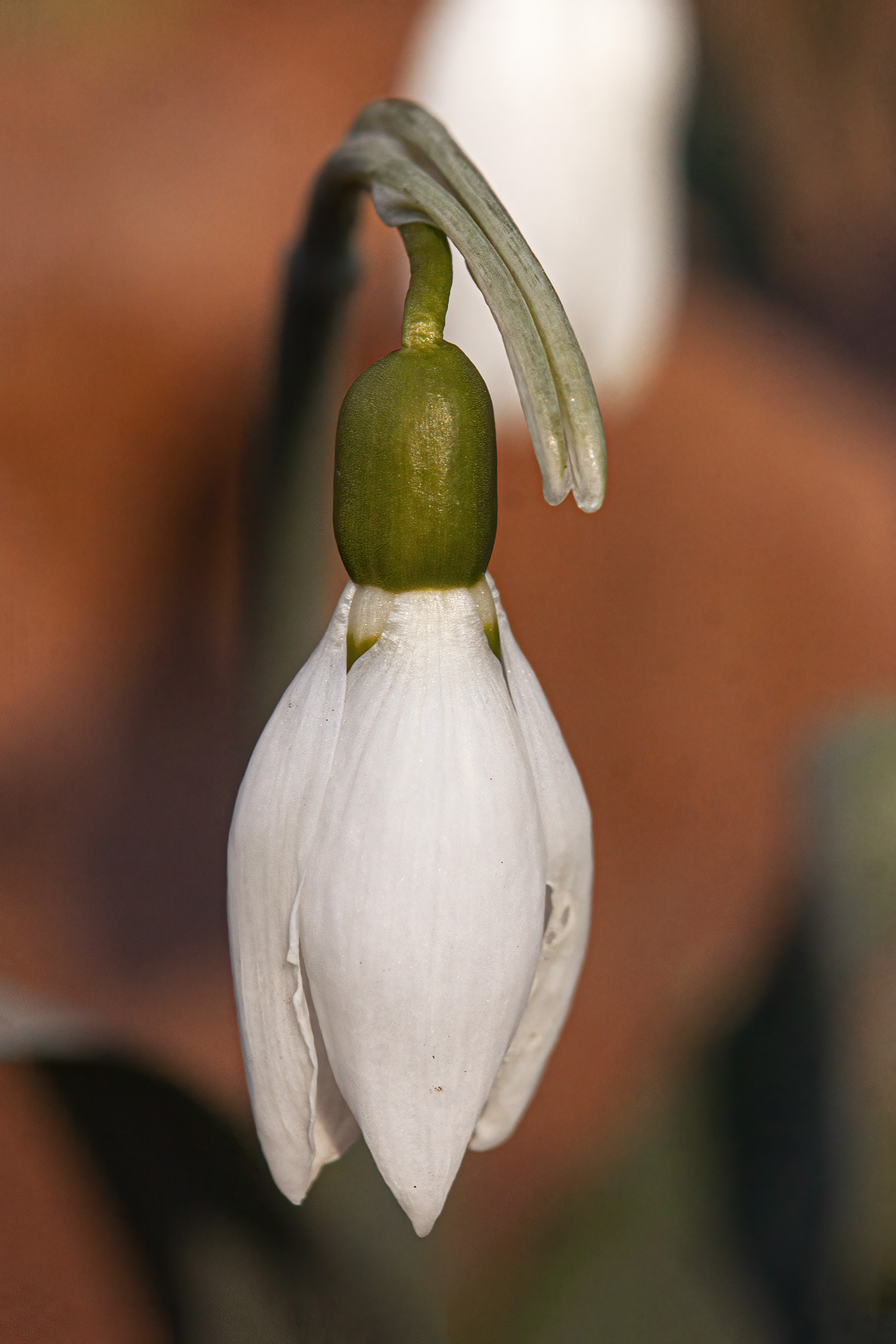
In the deepest darkest days of winter, there is still new growth, like these snowdrop flowers (g. Galanthus) that I spotted yesterday at Green Spring Gardens, a county-run historic garden not far from where I live.

I decided to mix things up a bit and put my macro lens on my camera for the first time in months, hoping that I might find flowers in bloom. What can I possibly find that would be flowering in late January? We have had over a foot (30 cm) of snow already this month and some frigid temperatures, a harsher winter than in recent years. I knew from past experience, though, that there was a good chance that some snowdrop flowers would be in bloom—my challenge was to find them.

I searched in vain in flowerbed after flowerbed, until finally I found several small patches of these pretty white flowers. The words to the song Edelweiss from The Sound of Music, one of my favorite musicals, came to mind. Although edelweiss is a completely different flower, the words of the song seemed to fit my snowdrops so well.

“Every morning you greet me
Small and white, clean and bright
You look happy to meet me
Blossom of snow, may you bloom and grow
Bloom and grow forever.”

snowdrops

snowdrop

snowdrop

© Michael Q. Powell. All rights reserved.

Read Full Post »

I really do not expect to find any damselflies this late in the season, so I was both surprised and delighted to spot several Familiar Bluets (Enallagma civile) last Thursday at Occoquan Bay National Wildlife Refuge. As many of you may recall, damselflies are the smaller “cousins” of dragonflies—together they make up the order of insects known as odonata. Damselflies have eyes farther apart than dragonflies and generally perch with their wings held closed above them, unlike dragonflies that extend their wings when perching.

The damselfly in the first photo is a female Familiar Bluet. The brown, nondescript color is fairly typical for female damselflies, which tend to be less colorful than their male counterparts. In order to determine the species, I have to look at the pattern of stripes on the thorax (the “shoulders”) and the abdomen (the “tail”) and the color and size of the eye spots.

The damselfly in the second photo is a male Familiar Bluet. Like most other male bluets, this damselfly’s body is covered in patterns of black and blue. I often have trouble distinguishing between the different species of bluets, but once again the eye spots, shoulder stripes, and the specific color pattern are key factors that I look for in trying to come up with an identification.

I am not sure if these damselflies are unusually late or if I simply was not looking for them as hard in previous years. At this time of the year I spend a lot of time looking up at the distant trees for indications of bird activity and I may not have been paying as much attention to the vegetation at my feet.

Temperatures have dropped close to the freezing mark the last couple of nights and I fear that the frosty weather may hasten the demise of these beautiful little creatures. If so, these may well be the last damselflies that I will see until next spring. Au revoir, mes petits amis.

Familiar Bluet

Familiar Bluet

© Michael Q. Powell. All rights reserved.


Read Full Post »

Autumn has officially arrived, but I continue to see damselflies at Occoquan Bay National Wildlife Refuge, albeit in ever-decreasing numbers. The damselfly in the first photo is a female Familiar Bluet (Enallagma civile) and the one in the second image is a male Big Bluet (Enallagma durum).

I like the way that I was able to capture hints of the changing season in the images, with the reddish autumn tones in the first shot and the gnawed leaf in the second one.

Familiar Bluet

Big Bluet

© Michael Q. Powell. All rights reserved.

Read Full Post »

Life can be a risky proposition when you are relatively low on the food chain, like a damselfly. Some larger insects may hunt you down while you are flying—see my recent post called Predator that shows an Eastern Pondhawk dragonfly consuming a damselfly. Other creatures may try to trap you and then immobilize you.

Several times this past week during visits to Occoquan Bay National Wildlife Refuge I have encountered Black and Yellow Garden Orbweaver spiders (Argiope aurantia) that had captured a damselfly. I did not see the actual capture, but the spider in the first photo was in the process of wrapping up the damselfly when I spotted.

Spiders can produce variety of types of silk. In cases like this, the silk (known as aciniform silk) comes out in sheets that look like a gauze bandage and the spider spins around the prey as it wraps it up. If you want to get a better look at how the spider emits these sheets of silk, check out a 2014 posting called Wrapping up a meal. If you have every wrapped presents at Christmas time, you know how difficult it is to wrap an irregularly shaped object. The spider has done an amazing job in making a compact package of the long skinny body and wings of the hapless damselfly—I encourage you to click on the image to see the details of the trapped damselfly.

In the case of the second photo, the spider was content to do a looser wrap, which lets us see the damselfly a little better. I think this damselfly and the one in the first photo are Big Bluets (Enallagma durum), though it is difficult to be certain of the identification.

spider

Big Bluet damselfly

© Michael Q. Powell. All rights reserved.


Read Full Post »

I was excited to stumble across a cluster of Large Milkweed Bugs (Oncopeltus fasciatus) last Friday as I was exploring at Occoquan Bay National Wildlife Refuge. It had been several years since I had last seen these colorful little bugs that not surprisingly were gathered together on milkweed pods. There are so many cool insects that are associated with milkweeds that I often stop to examine the plants whenever I come upon them.

A little over nine years ago, I studied these bugs  pretty closely and documented their stages of development in a posting that I called Life phases of the large milkweed beetle. Be sure to check it out for more information and fascinating photos of these colorful little bugs.

The short version is that as a “true” bug, milkweed bugs undergo incomplete metamorphosis. They go through a series of nymph stages, known as instars—the large milkweed bug has five instars. At each stage, the bug is covered by an inflexible exoskeleton that constrains its growth. Periodically it bursts out of the exoskeleton and can grow to twice his size as the new exoskeleton develops and hardens.

If you look closely the image, you will see that there are milkweed bugs at various stages of development. The youngest ones are smaller and are completely red. In some of the older ones you can see the development of tiny black wing pads. The orange and black one at the top of the group appears to be an adult.

Every time that I see this combination of bright red and green, my mind immediately thinks of Christmas. However, I doubt that anyone would choose to feature this image on their annual Christmas card.

large milkweed bugs

© Michael Q. Powell. All rights reserved.


Read Full Post »

Dragonflies are really fierce predators and will eat almost any insect that they can catch. Some dragonfly species will consume mosquitoes or other small insects while in flight, while others will hunt larger larger insect prey and, if successful, will perch at ground-level in order to enjoy a more leisurely meal.

Although they are not all that big in size, Eastern Pondhawks (Erythemis simplicicollis) are the species that I most often encounter with a large victim, often another dragonfly or a damselfly. I spotted this female Eastern Pondhawk last Wednesday at Occoquan Bay National Wildlife Refuge as she was feasting on a hapless Big Bluet damselfly (Enallagma durum).

I apologize if the image is too gruesome for some viewers, but I have grown accustomed to the “circle of life” in nature and recognize that all creatures have to eat. As for today’s predator, the Eastern Pondhawk, she could easily become tomorrow’s prey and be captured by a bird or a larger dragonfly.

Eastern Pondhawk

© Michael Q. Powell. All rights reserved.
Read Full Post »

The number of dragonflies of certain species seems to be dropping as we approach autumn, but there seem to be plenty of Big Bluet damselflies (Enallagma durum) still around at Occoquan Bay National Wildlife Refuge. Their bright blue coloration and relatively large size—about 1.3 – 1.7 inches (34 to 44 mm) in length—makes the Big Bluets easy to spot in the vegetation along a trail that runs parallel to the waters of the bay.

One of the big challenges when photographing dragonflies and damselflies is getting the entire subject in focus—their bodies are long and narrow and are often pointing in a direction that makes it impossible to get sufficient depth of field. This male Big Bluet cooperated by perching in a way that allowed me to photograph him from the side. The damselfly is nicely in focus, while the leafy background is mostly out of focus and does not distract the viewer’s eyes from the primary subject.

Yes, the dragonflies and damselflies are still hanging on in my area. I think I will continue to see and photograph them for at least another month or two before I gradually begin to shift my focus towards birds, which will again become my main focus during the colder months of the year.

Big Bluet

© Michael Q. Powell. All rights reserved.
Read Full Post »

As I glanced down at the dark waters of the pond last Thursday at Huntley Meadows Park, a damselfly couple (Orange Bluets (Enallagma signatum), I think) flew by in tandem and I snapped this shot. I love how it looks like we are peering into a night sky, watching the damselflies fly past the celestial bodies of the Milky Way.

I couldn’t help but think about the opening title sequence from the Star Wars movies that begins with the words, “A long time ago in a galaxy far, far away….”

Orange Bluet

© Michael Q. Powell. All rights reserved.

Read Full Post »

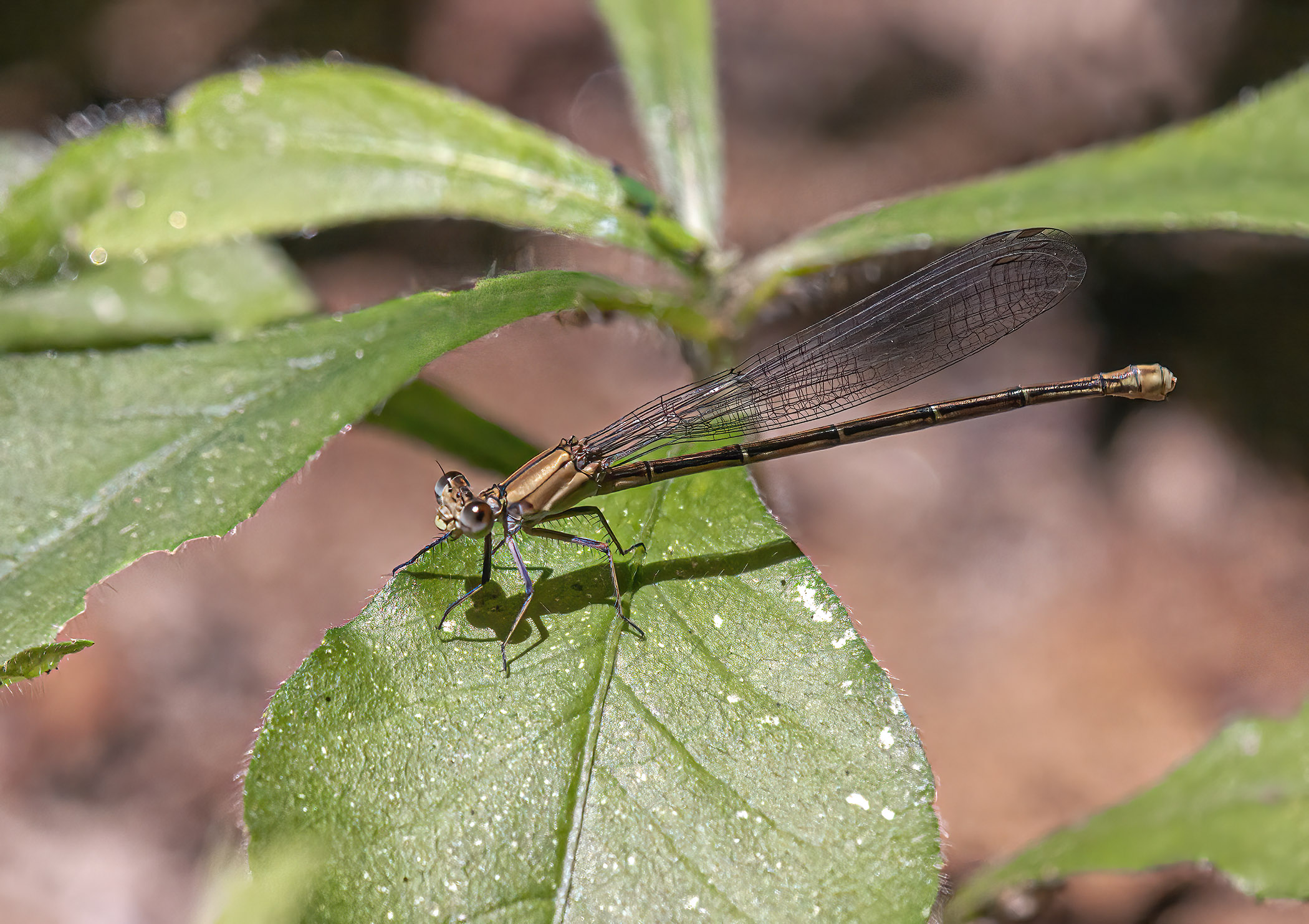
Compared to the brightly-colored male damselflies, females damselflies often seem dull-colored and less striking in appearance. This female Powdered Dancer damselfly (Argia moesta) that I spotted in early August alongside a stream in Prince William County is a notable exception to that general rule.

If you click on the photo, you will note the elegant shades of brown on her body that glisten in the sunlight. Her beautiful two-toned eyes are amazing and seem to draw in the viewer. It is hard to be sure, but she almost seems to be smiling or maybe even winking at me.

It takes some effort to see and to photograph such tiny insects, but it is definitely worth it for me to be able to share the beauty of nature with all of you.

Powdered Dancer

© Michael Q. Powell. All rights reserved.


Read Full Post »

Within the bird and insect kingdoms, species tend to be named on the basis of the appearance of the male and not of the female. This can be incredibly confusing, especially for a neophyte who is trying to identify an individual.

I remember be utterly baffled years ago when someone explained to me that the sparrow-looking bird in front of me was a female Red-winged Blackbird. What? How could that be? The “blackbird” was not black at all, and as for the “red wings,” there were none.

Over time I have become more familiar with the birds and the bees and some of the intricacies of sexual differentiation within species. I do not give too much thought that this pretty little female Eastern Amberwing dragonfly (Perithemis tenera) that I spotted last week at Green Spring Gardens has wings that are not completely amber-colored like those of her male counterpart.

Eastern Amberwings are the smallest dragonflies in our area at less than an inch (20-25 mm) in length. It is hard to miss the males as they buzz about low over the waters of ponds, but females tend to be much more elusive and often hunt far from the water. In the case of the one in the photo, she was perched on some vegetation in a bed of flowers a long way from the pond.

According to the Dragonflies of Northern Virginia website, “Amberwings are reported to have the most intricate courtship of any dragonfly. After the male selects several possible egg-laying sites for a mate, he flies off to find a female and leads her back to his potential nursery. To attract her, he sways back and forth, and hovers with his abdomen raised. Mating only occurs if the females approves—making this one of the few dragonflies where females choose the males.”

Eastern Amberwing

© Michael Q. Powell. All rights reserved.

Read Full Post »

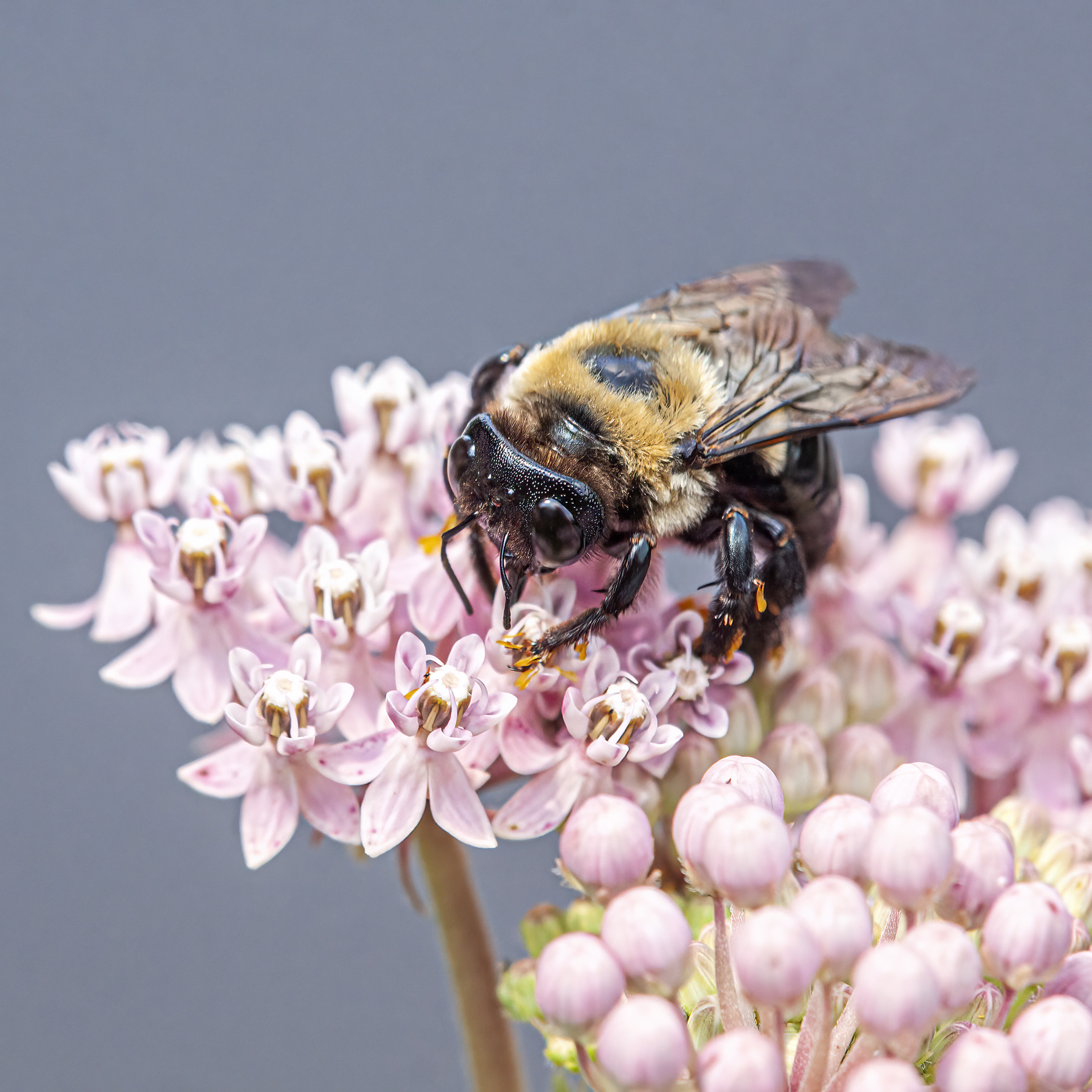
I was hoping to find a Monarch butterfly when I checked out some patches of milkweed last week at Jackson Miles Abbott Wetland Refuge, but ended up instead with some action shots of an Eastern Carpenter Bee (Xylocopa virginica). The bee was quite distracted while feeding, so I was able to get really close to it for these shots.

I like the way that I was able to capture some wonderful details of the bee as well as those of the beautiful pink milkweed.

carpenter bee

carpenter bee

© Michael Q. Powell. All rights reserved.


Read Full Post »

At first glance you might think that the insect in this photo is a dragonfly, especially if you know how much I like dragonflies. If you look a little more closely, you will see that the wings are completely different from those of a dragonfly. This is actually a Red-footed Cannibalfly (Promachus rufipes), one of the coolest and creepiest insects that you can encounter in the wild.

Red-footed Cannibalflies, a type of robber fly, usually feed on other insects, but they reportedly are capable of taking down a hummingbird. Thankfully I have never seen that happen, since I really like hummingbirds, but several years ago I did photograph a Red-footed Cannibalfly with a large Hummingbird Moth that it had captured (see my 2017 posting Demise of a hummingbird moth).

I have a special relationship with this insect with the macabre moniker. In August 2013 I did a posting with the fairly basic title of Red-footed Cannibalfly. The posting was a modest success and had 61 views in 2013. Since that time, though, the posting has generated a lot of interest, primarily as a result of internet searches,  and the total number of views has risen to 2,842, which makes it the second most viewed posting of my more than four thousand postings to date. Yikes!

I spotted this Red-footed Cannibalfly last Thursday as I was exploring a small pond in Prince William County, Virginia. I am always amazed at the relative bulkiness of this insect compared to the average dragonfly and thought that it might have captured a prey. A closer examination of the Red-footed Cannibalfly showed that it was empty-handed or maybe I should more properly say empty-footed.

In the back of my mind I hear the words of the Wikipedia description of a robber fly attack that I included in the 2013 posting, “The fly attacks its prey by stabbing it with its short, strong proboscis  injecting the victim with saliva containing neurotoxic and proteolytic enzymes which very rapidly paralyze the victim and soon digest the insides; the fly then sucks the liquefied material through the proboscis.” It is enough to give a person nightmares.

Red-footed Cannibalfly

© Michael Q. Powell. All rights reserved.
Read Full Post »

I am fond of challenging myself by photographing difficult subjects like tiny spiders and dragonflies in flight. However, I find equal joy in capturing the beauty of more common subjects in simple portraits, like this image of a male Big Bluet damselfly (Enallagma durum) that I spotted on a recent trip to Occoquan Bay National Wildlife Refuge.

Beauty is everywhere.

Big Bluet

© Michael Q. Powell. All rights reserved.


Read Full Post »

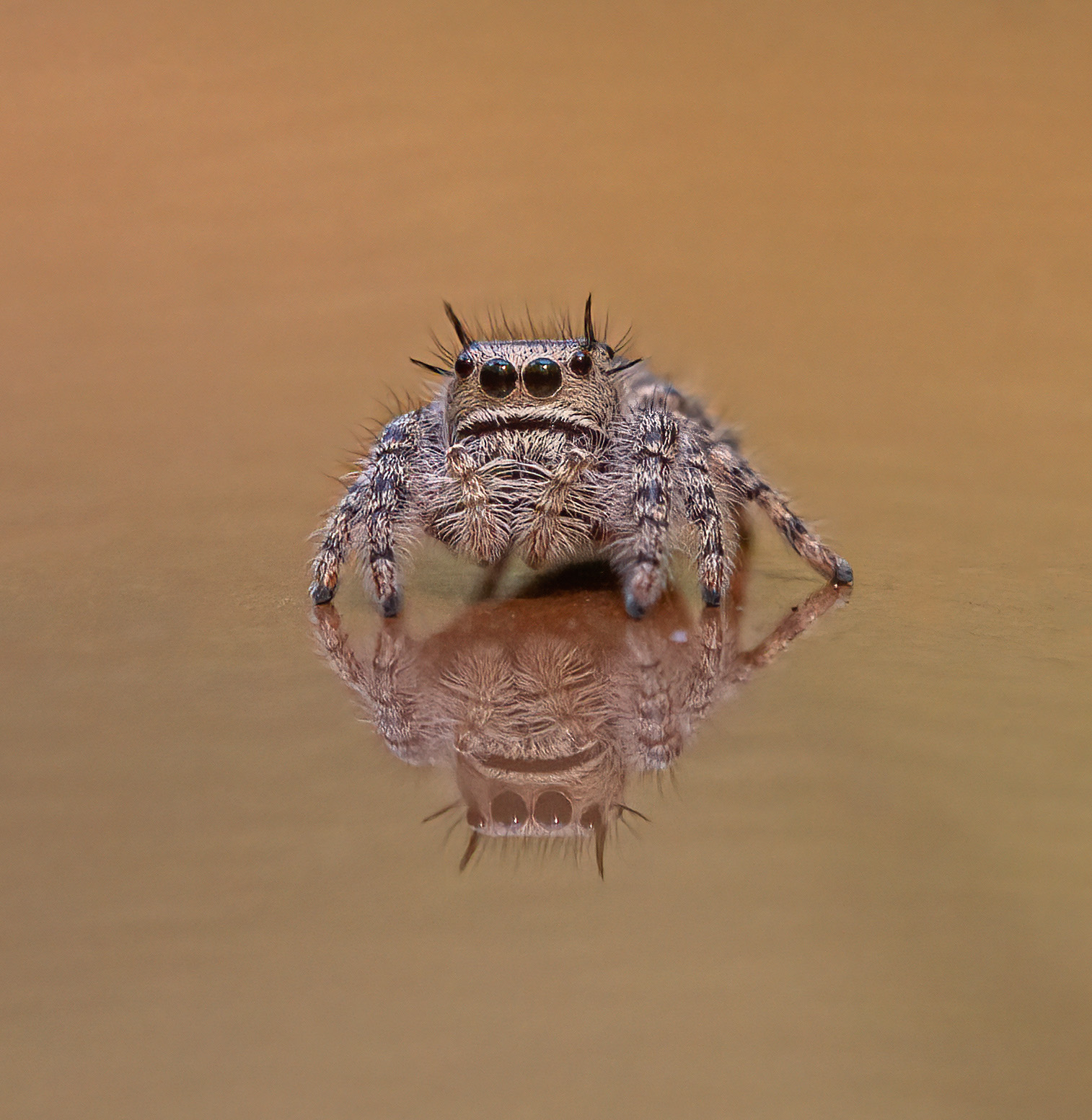
Sometimes I manage to take capture shots of wild creatures in really unusual locations. I spotted this jumping spider yesterday on the roof of my car when I was reaching inside the car to grab my camera and begin a search for dragonflies. This was a case when I happened to have the right tool in my hand at the right moment—my macro lens helped me to capture some wonderful close-up shots.

The spider was tiny—I’d estimate that it was less than half in inch (12 mm) as I faced it. My body position was awkward as I stood in the door opening and tried to balance my elbows on the roof of the car and look through the viewfinder. Fortunately I was able to place the lens on the roof, which helped me to keep it stable.

The spider did not appear to be at all frightened by my presence and in fact seemed quite curious. These three shots show some of the spider’s poses as we conducted an impromptu portrait session that highlighted the spider’s engaging personality. If you click on the images, you can see reflections of the sky in many of the spider’s eyes and the reflection of the entire spider on the car was a nice bonus.

The spiky tufts on the spider’s head helped me in trying to identify the spider and I am relatively sure that it is a Putnam’s Jumping Spider (Phidippus putnami). However, there are a huge number of species of jumping spiders, so I defer to others who have more expertise with spiders.

Jumping spiders are amazing. They do not use webs but instead rely on their speed and agility—they can reportedly jump over 50 times their own body length. A number of years ago I shot a series of photos of a Bold Jumping Spider that had captured a much larger dragonfly. I encourage you to check out that 2014 posting called Spider captures dragonfly—the story to see some images that are both startling and fascinating and to learn more details of that encounter.

In case you are curious, I drive a coppery-colored KIA Soul that is technically “Ignition Orange.” This distinctive color made a wonderful background for this beautiful spider. Apparently, spiders like my car. As I researched my own blog, I came across a posting from March 2014 entitled Spider on my car that also featured a jumping spider and one from September 2017 entitled Tiny Hitchhiker that featured a small crab spider.

Putnam's Jumping Spider

Putnam's Jumping Spider

Putnam's Jumping Spider

© Michael Q. Powell. All rights reserved.

Read Full Post »

Our weather recently has been hazy, hot, and humid and we have even had some smog that prompted an air quality alert yesterday as a result of fires in the western part of the United States. From a dragonfly perspective, we are in a kind of summer doldrums period, where the summer dragonflies have been buzzing around for quite some time, and it is too early for the autumn species to appear.

On Tuesday I went exploring in Prince William County and was delighted to spot this handsome Dusky Dancer damselfly (Argia translata) alongside a small stream. I think that this is only the second time that I have managed to photograph this species. Although many damselflies have touches of blue, the dark body and the distinctive markings near the tip of the abdomen (the “tail”) make this pretty easy to identify as a Dusky Dancer.

The rock on which the damselfly was perching is not a great background, but at least it draws the viewer’s eyes to the damselfly and is not at all distracting. Be sure to click on the image to see the wonderful details of the damselfly, including the blue markings on its body and its entrancing eyes.

Dusky Dancer

© Michael Q. Powell. All rights reserved.

Read Full Post »

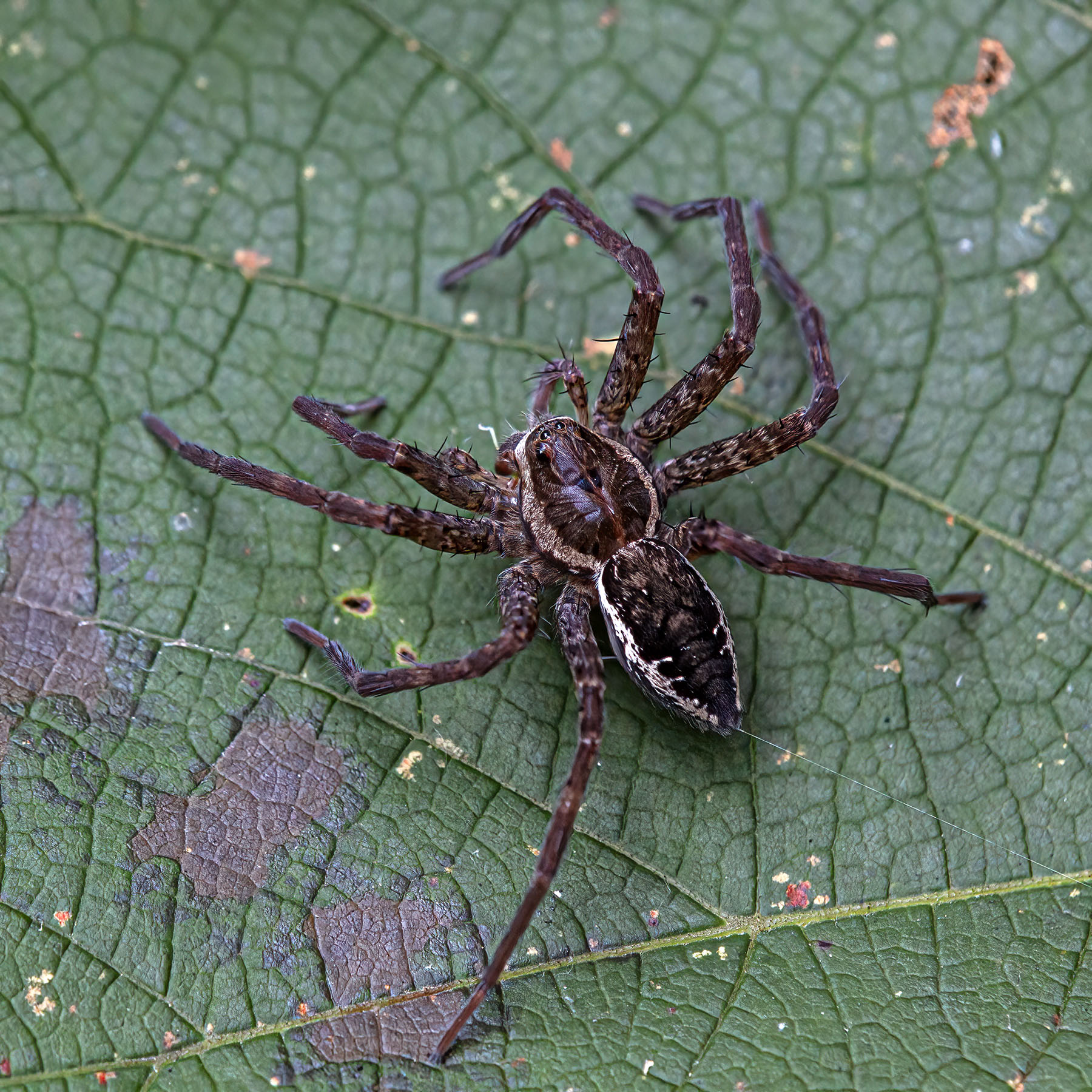
I spotted this large spider last Thursday at Occoquan Regional Park perched atop some leafy vegetation and watched as it captured a small moth that made the mistake of landing on the same leaf. The spider assumed a defiant pose when I started to photograph it—obviously it did not want to share its lunch with me—and I captured the first photo as I stared straight into its multiple eyes.

I initially thought that this was a fishing spider because of its large size and overall shape, but I am beginning to wonder if it might actually be a wolf spider. Most of the fishing spiders that I have seen have been in the water and this one was a foot (30 cm) in the air, although it was overhanging the edge of a small stream. I included a shot of its body that shows its markings, in case any of you are expert enough to identify its species.

I know that people have mixed reactions to spiders, but I encourage those of you who do not find them to be totally creepy to click on the first photo. Doing so will allow you so see some wonderful details of the spider, especially its eyes, and the remains of the hapless moth.

spider

spider

© Michael Q. Powell. All rights reserved.


Read Full Post »

I was feeling a little “artsy” on Saturday morning when I composed this close-up image of one of day lilies now growing in the garden of my dear friend and neighbor Cindy Dyer. Over the last nine years of so Cindy has served as my photographic mentor and muse.  I remember how liberated I felt when she first told me it was ok to photograph parts of a flower and not just the whole thing—it opened my eyes to all kinds of new creative possibilities that went way beyond merely documenting “reality.”

Beauty is everywhere!

day lily

© Michael Q. Powell. All rights reserved.

Read Full Post »

Some of you may remember my excitement from my blog posting a week ago when I photographed an Eastern Least Clubtail dragonfly (Stylogomphus albistylus) for the first time in my life. Yesterday I returned to the same location in Fairfax County and explored several branches of the stream in which I had previously seen the Eastern Clubtail perched on a rock.

I mostly paid attention to the sunny spots in the stream and to the stones in the middle of them, which they are supposed to prefer, but came up empty-handed. Eastern Least Clubtails are only 1.2 to 1.4 inches (31-36 mm) in length, so it was a bit like looking for a needle in a haystack. I returned several times to the exact location where I previously photographed the dragonfly—I can actually identify the precise rock on which he perched—and on one of those occasions I visually tracked a dragonfly as it landed in some nearby vegetation.

Imagine my shock when I realized that the dragonfly perched only a few feet away was a male Eastern Least Clubtail—the shapes and brightness of the appendages at the tip of the abdomen (the “tail”) are unmistakeable. I captured a few images before the dragonfly flew off again and I was able to resume my breathing. I am not sure what kind of vegetation this is, but it made for a cool-looking landing pad for this handsome dragonfly.

According to the Dragonflies of Northern Virginia website, this species should be around until almost the end of July, so I will probably return a few more time to this spot to see if I can spot this tiny dragonfly again and, with some luck, will manage to spot a female—both of the Eastern Least Clubtails that I have photographed have been males.

Eastern Least Clubtail

© Michael Q. Powell. All rights reserved.


Read Full Post »

It was pretty early this morning when I walked over to the garden of my dear friend and neighbor Cindy Dyer, but a bee was already busy on one of her lavender plants. A shot like this is easy to get with my 180mm macro lens, which lets me stand back farther from my subject. However, I happened to have a much shorter 60mm macro lens on my camera, which meant that I had to be almost on top of the bee. The bee was focused on the flower and did not seem to be bothered by my presence.

bee

© Michael Q. Powell. All rights reserved.

Read Full Post »

« Newer Posts - Older Posts »