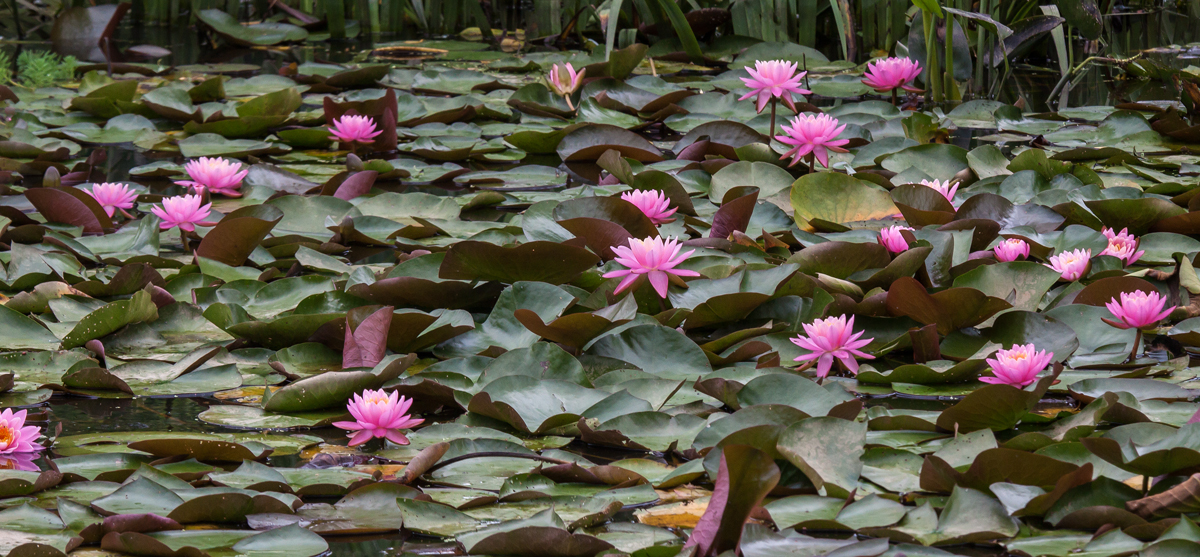
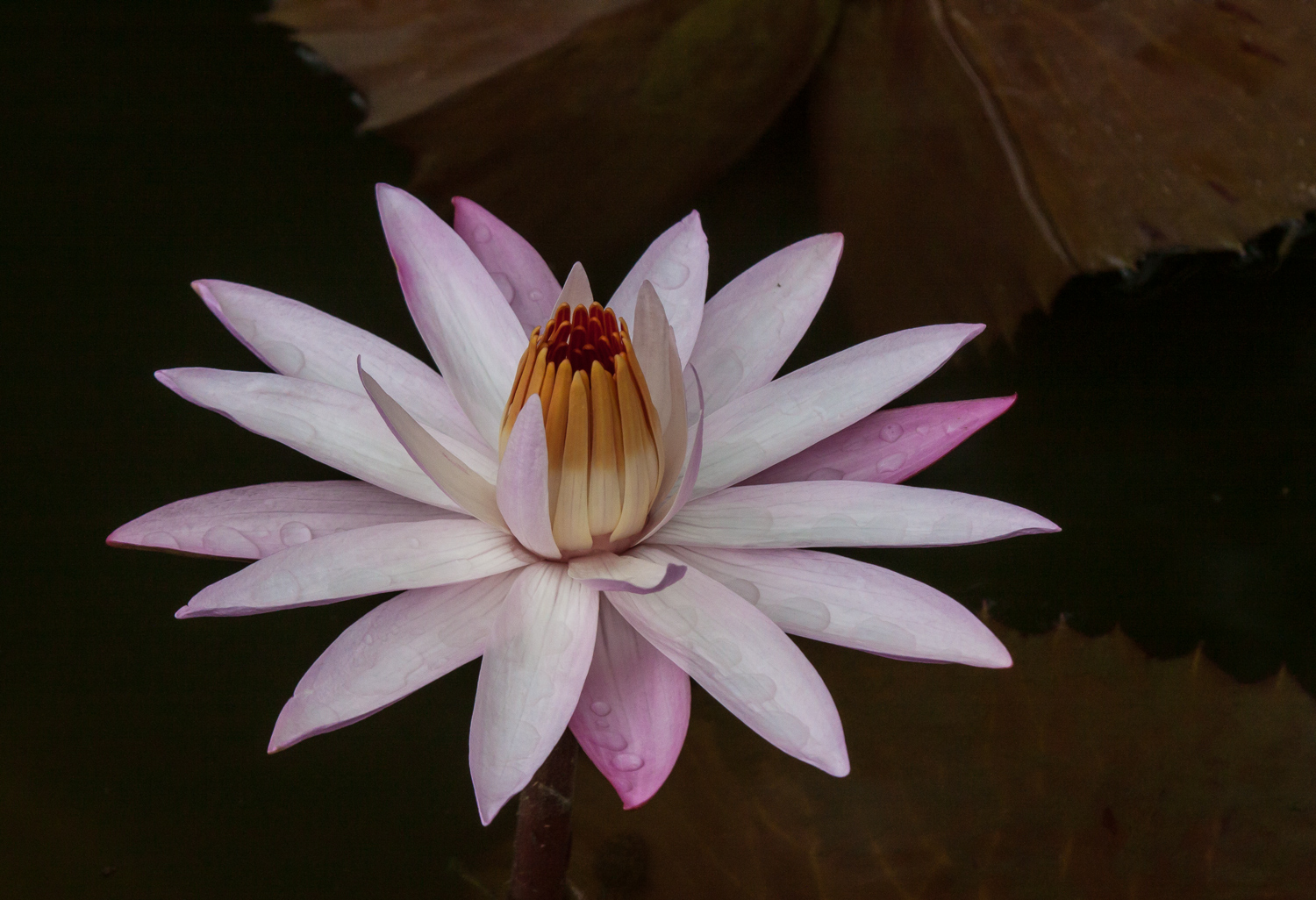
Normally I try to move in really close to my subjects using a telephoto or macro lens. Yesterday, however, I decided to try to “see” the world differently by using a wider lens (24-105mm) during a quick trip with my photography mentor Cindy Dyer to Kenilworth Park and Aquatic Gardens in the Anacostia area of Washington D.C. to check out the water lilies and lotus flowers.
The trip was a spur-of-the-moment decision while we were eating lunch, so we knew that we would miss out on the soft early morning light that we both prefer. However, the weather was beautiful, with the temperatures and humidity less oppressive than in recent weeks, so we decided to brave the Washington D.C. area traffic to check out the park.
Cindy is no stranger to the park. Last year four of her images of water lilies from the park appeared on US postage stamps, which were so popular that half a billion were printed. Check out this link to see information about these stamps. Earlier this year, one of Cindy’s images of Sacred Lotuses at the park was on one of the 16 postage stamps issued to commemorate the centennial of the National Park Service. Check out this link for more information about that stamp.
Here are some of my images of Sacred Lotuses (Nelumbo nucifera) from yesterday as I tried to step back a bit and see the flowers as part of a larger landscape. Initially I struggled a bit as I kept focusing on details, but my mind and my eye grew accustomed to the idea that the lens was not going to let me get in close. Gradually I started to see things differently and to frame my photos accordingly.
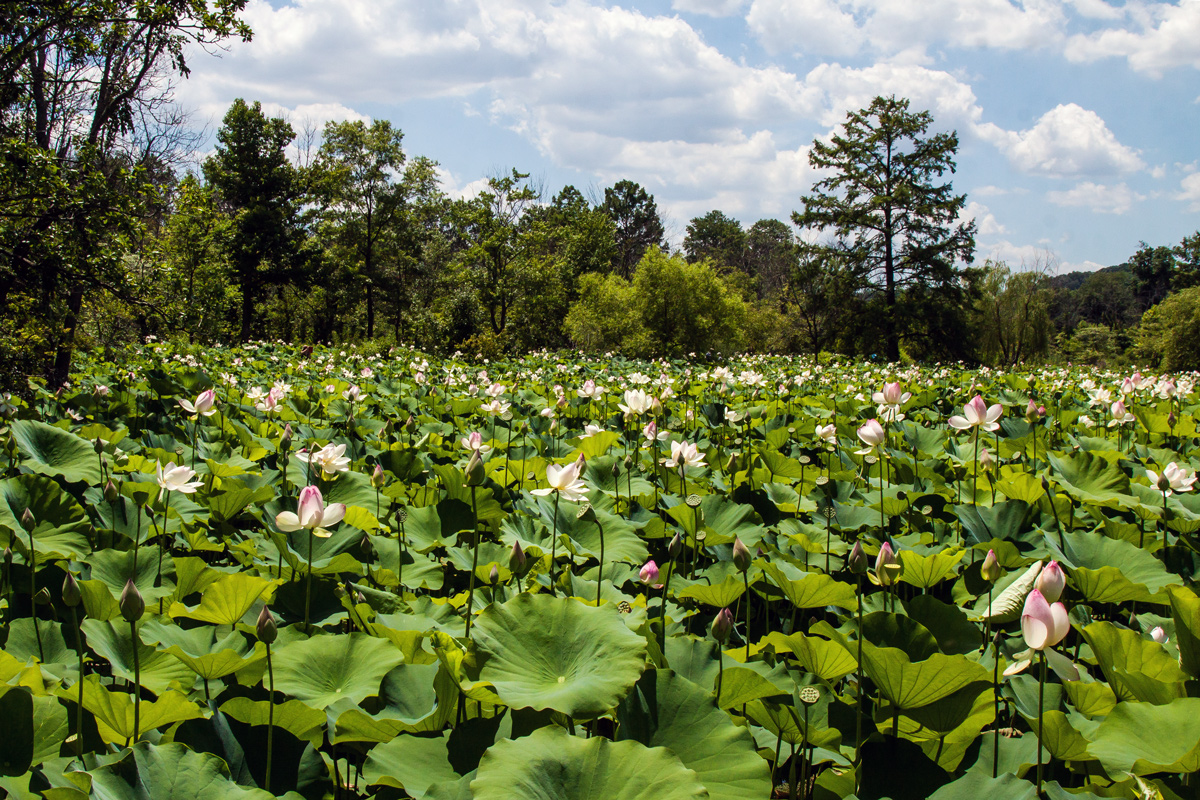
Acres and acres of lotuses

Lotuses fading into the distance

Lotus and seed pod
© Michael Q. Powell. All rights reserved.





















 Mike Powell
Screwed
Posted in commentary, Landscape, Nature, Photography, Winter, tagged Alexandria VA, auger, Canon 50D, Huntley Meadows Park, screw, screwed, Tamron 150-600mm telephoto on February 12, 2015| 9 Comments »
For months I have observed this large screw-like tool partially buried in the ground at my local marshland park and gradually rusting with the passage of time. Was it deliberately abandoned during a construction project? Was it accidentally left behind? Will it be used in the spring to bore more holes into the earth?
Is it a symbol of abandoned hopes and plans, of dreams that never came to fruition? I leave the interpretation to others.
© Michael Q. Powell. All rights reserved.
Share this:
Read Full Post »