Feeds:
Posts
Comments

Archive for the ‘Landscape’ Category

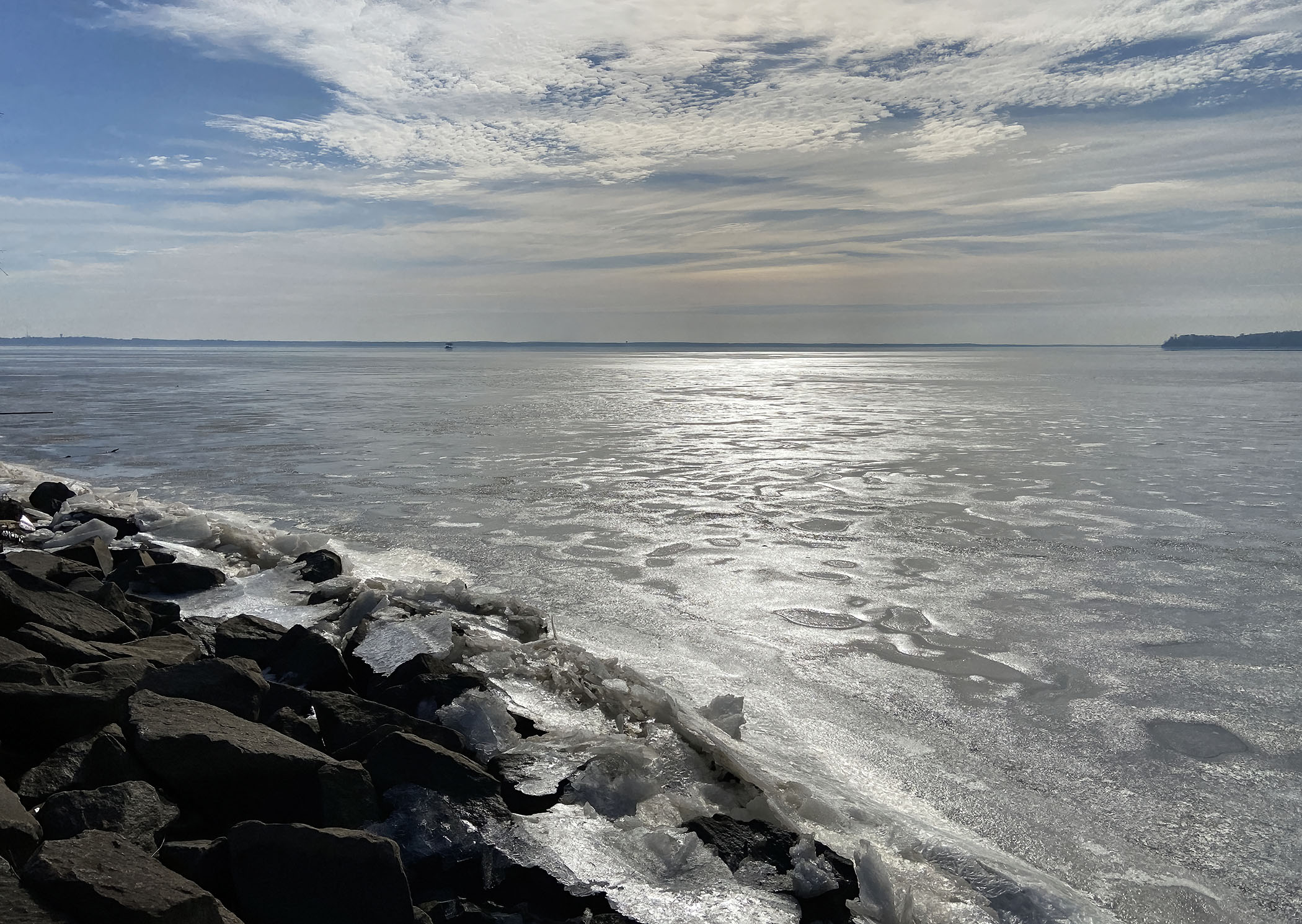
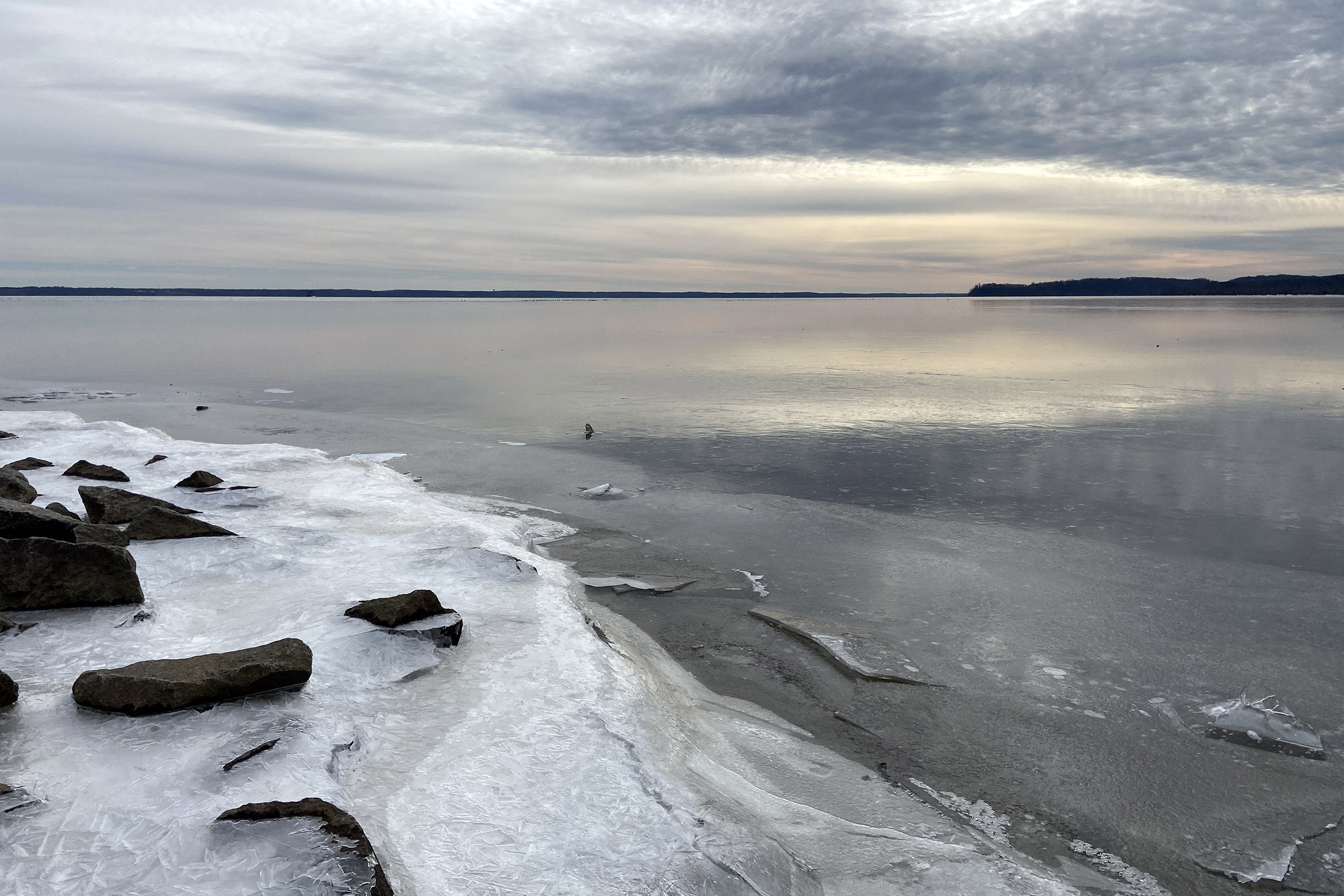
Although the weather was a bit warmer yesterday (18 December), there was still plenty of ice in the frigid waters off of the shores of Occoquan Bay National Wildlife Refuge. For many of us here in the United States, winter does not officially begin until this Sunday, the 21st of December, but we have already had two snow storms with measurable accumulation and some periods of sub-freezing temperatures.

With rain in the forecast for the following couple of days, I ventured out yesterday to my favorite local wildlife refuge with my camera, looking primarily for birds.I did not have a huge amount of success in capturing images of these birds, but it was enjoyable nonetheless to be outdoors in the relatively comfortable temperatures of a beautiful December day.

I was happy that I remembered to take some landscape style shots with my iPhone to document the day—when I am carrying around my camera with a long telephoto zoom lens, I often forget to take some wide-angle shots like these ones.

frozen waters

frozen waters

© Michael Q. Powell. All rights reserved.


Read Full Post »

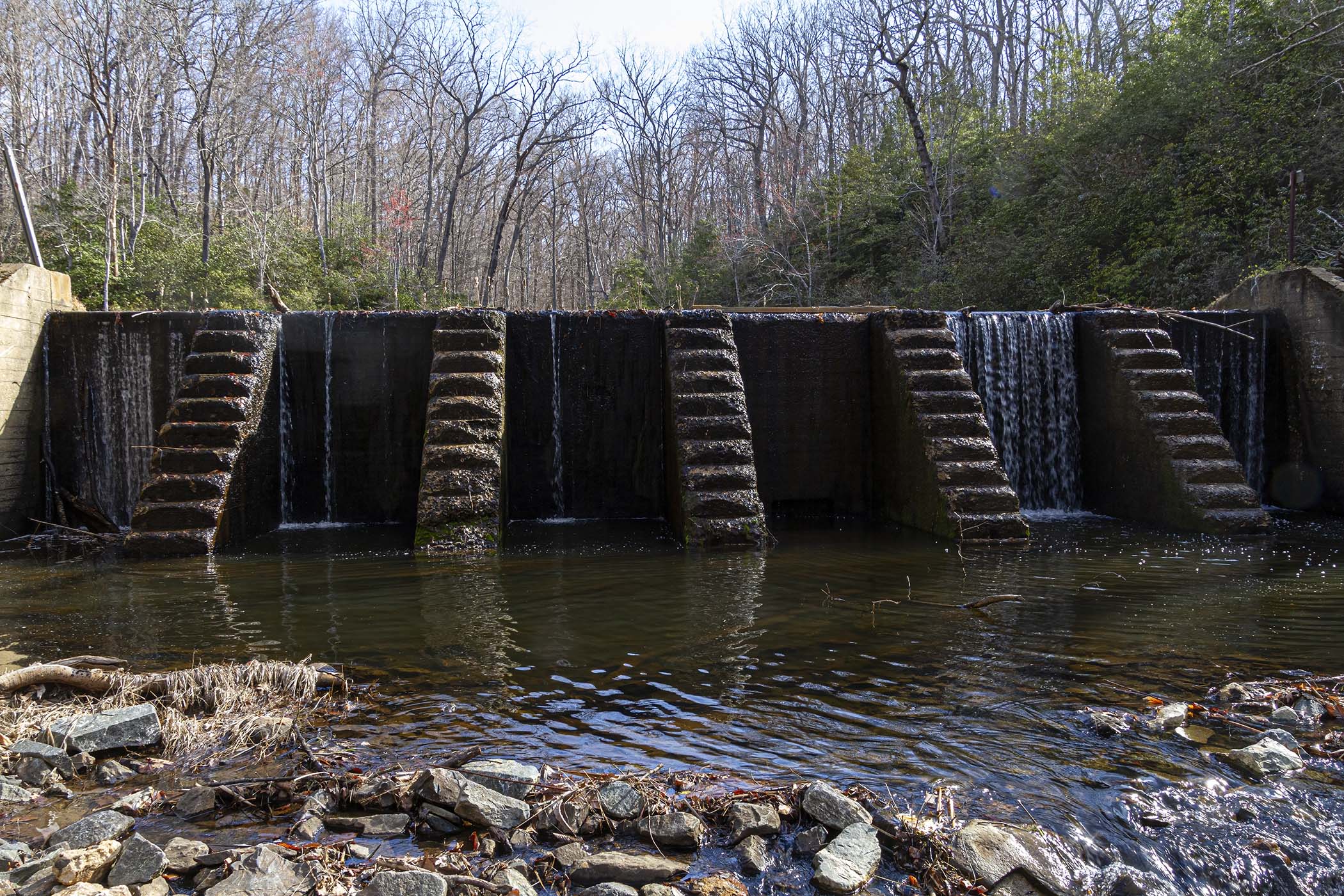
Most of the time when I am out in nature, I am focused on wildlife and often neglect to take landscape photos. Last week, though, was a notable exception when I went for a hike in Prince William Forest Park, an installation administered by the National Park Service located about 25 miles from where I live.

Most of the park is forested and hilly and there was not much wildlife to observe, so I enjoyed the natural beauty that surrounded me. My iPhone tracks the number of steps that I take and it shows that I walked about 12 thousand steps that day. That may not sound like a lot of steps, but the statistics also indicated that I climbed the equivalent of 37 flights of stairs.

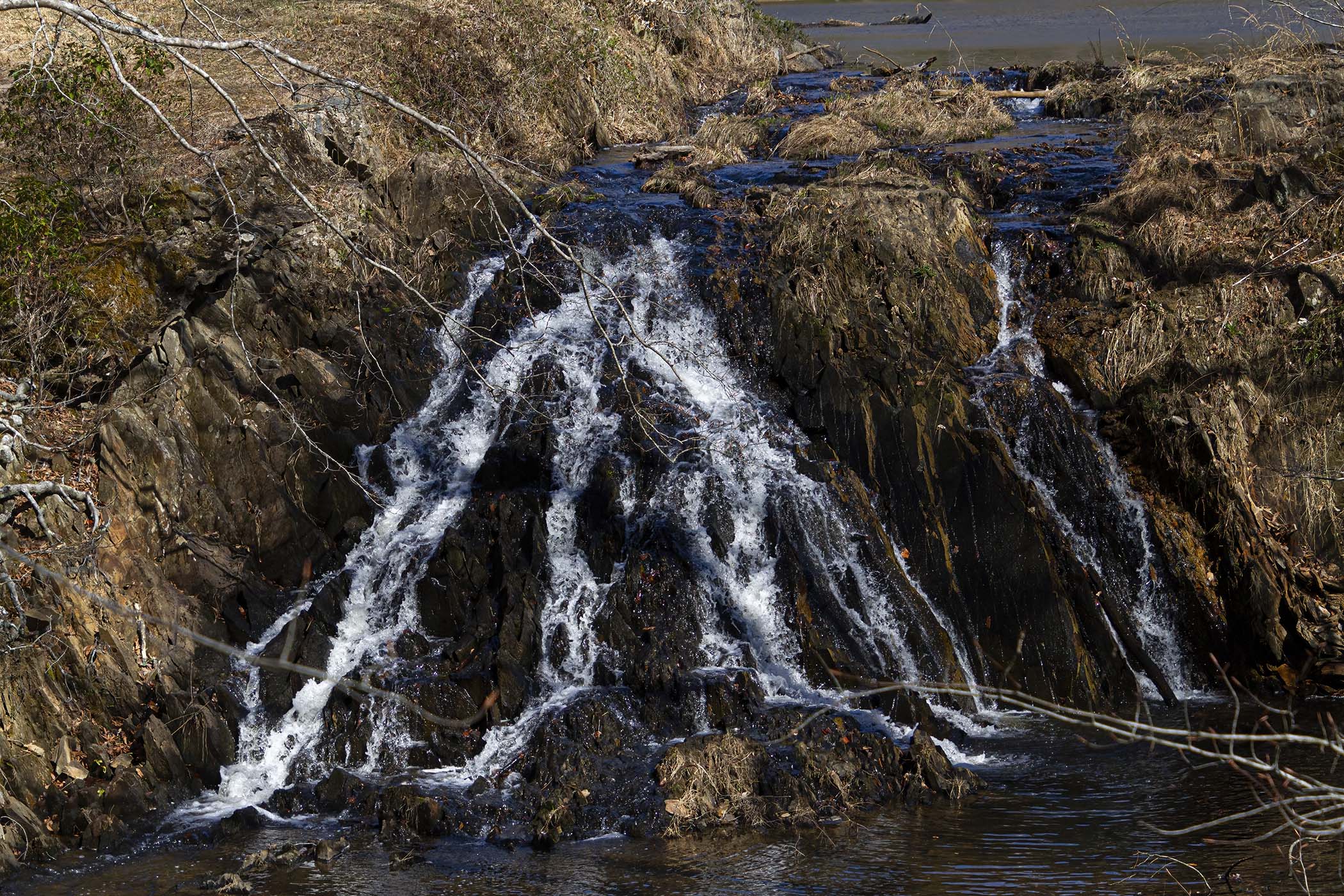
One of the highlights of my hike was walking along Quantico Creek that runs through a portion of the park—I love the sound of rushing water. At several places along the creek there are dams, as you can see in several photos below, that tend to slow the flow of the water.

It was a wonderful way to spend the day and I left the park physically tired, but mentally refreshed and rejuvenated.

Prince William Forest Park

Prince William Forest Park

Prince William Forest Park

Prince William Forest Park

© Michael Q. Powell. All rights reserved.

Read Full Post »

When I visited Occoquan Bay National Wildlife Refuge last week, the sky was mostly blue, with patches of clouds to add additional visual interest to the landscape photos that I captured. The first photo shows one of the ponds at the refuge that is fed by the tides of the Potomac River.

In other parts of the refuge, though, the ice covering the waters of the bay on the shore served as a stark reminder that winter is far from over. Today, for example, the temperature is currently 18 degrees (minus 8 degrees C) and it may be even colder tomorrow. Yikes!

winter landscape

winter landscape

© Michael Q. Powell. All rights reserved.

Read Full Post »

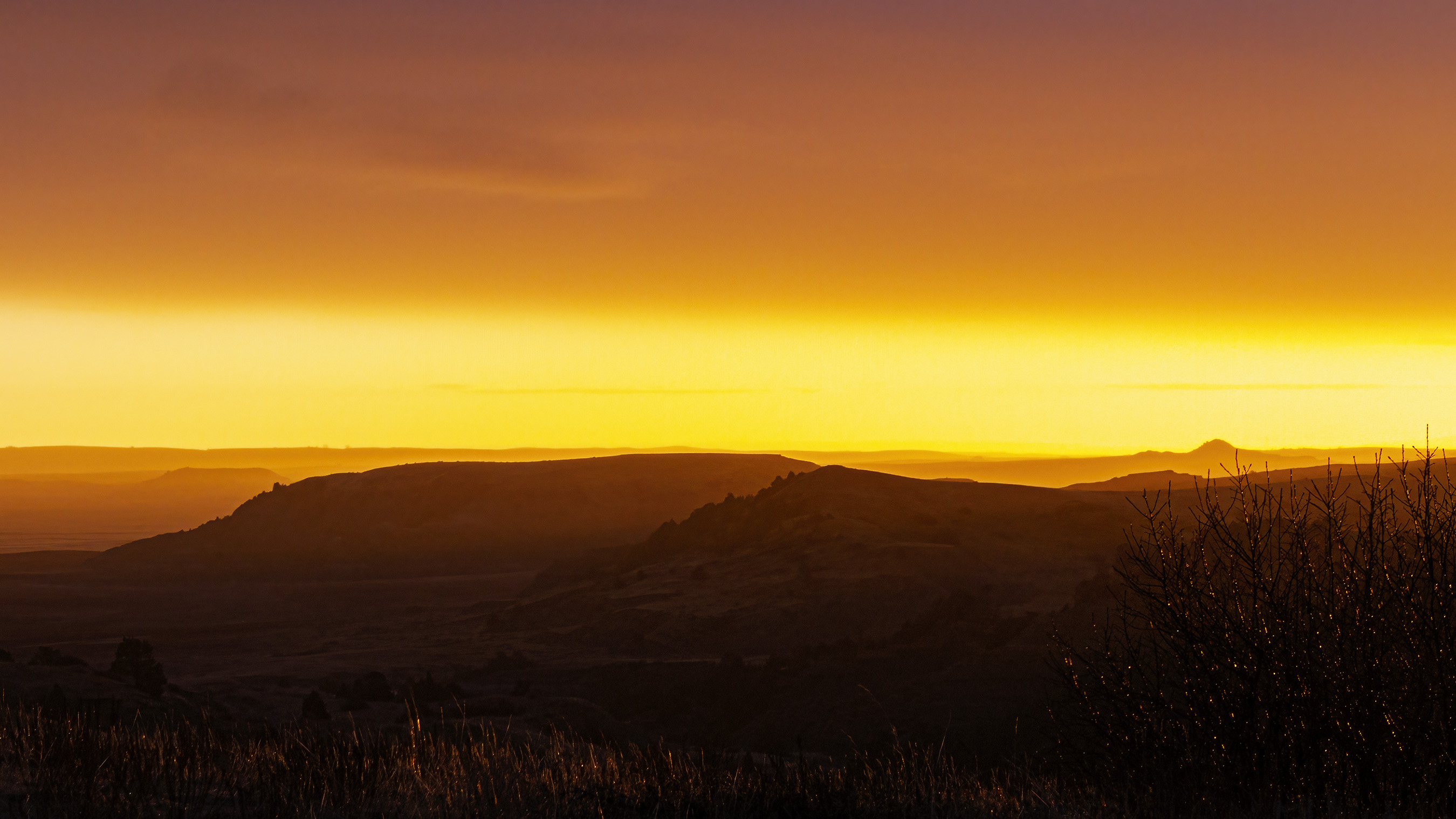
I am finally more or less caught up with my photos from my road trip to Seattle and back. Here are a couple of my favorite shots of the trip, when I captured the sunrise on 5 November at Theodore Roosevelt National Park in Medora, North Dakota. It was dark and cold when I crawled out of my sleeping bag that morning, but I really wanted to try to see the sunrise.

The sun rises and sets each day, but each one is unique, affected by a whole host of uncontrollable factors, including meteorological conditions and the landscape. Sometimes the sun arrives slowly and subtly and sometimes it explodes into view. Professional landscape photographers scout locations in advance and figure out the optimal locations to catch the sunrise. I simply got into my car and began to drive slowly on the road through the park.

As I was driving I came upon this view as I rounded a corner just as the sun was rising over the horizon. Results are unpredictable when you point your camera directly at the sun, but somehow I managed to get it almost right in the first shot below—well at least I got a cool image that I like. When I moved the camera to the side a little so the sun was no longer in the frame, I was able to capture the final photo. I really like the sort of layering in the background, as the sun painted the various land features.

I am not sure if I will do a posting tomorrow, when those of us in the United States will be celebrating Thanksgiving. In case there is posting tomorrow, let me thank all of you now who pause for a moment to look at my photos or read my rambling prose. Thanks for all of your support and encouragement over the years.

sunrise

sunrise

© Michael Q. Powell. All rights reserved.

Read Full Post »

After a frigid night camping at Theodore Roosevelt National Park in North Dakota, I awoke early Tuesday morning to catch the sunrise. It was not super spectacular, but I was able to capture some of the color as the sun rose over the mountains.

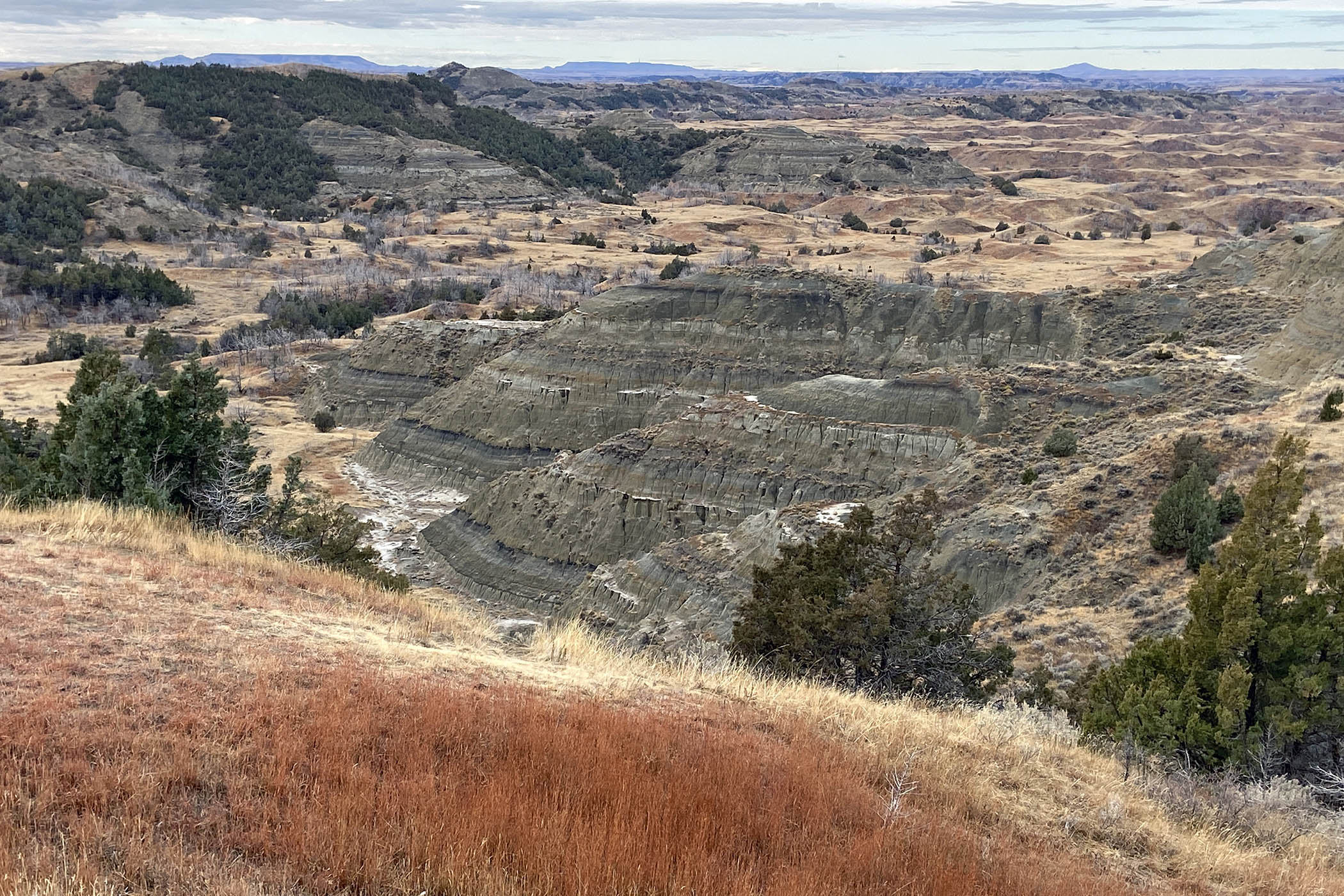
When the sun was a little higher in the sky, I was able to get a better view of the spectacular landscape with incredible rock formations, as you can see in the final photo. I encourage you to click on that photo to get an enlarged view of the details of the landscape. In this part of the country, these terrain features are referred to as “buttes,” though it is not always clear exactly what make a “butte” a “butte,” rather than a “hill” or “mountain.” No matter what you call them, these terrain features are breath-taking.

sunrise in North Dakota

sunrise in North Dakota

buttes in North Dakota

© Michael Q. Powell. All rights reserved.

Read Full Post »

The Little Missouri River runs through Theodore Roosevelt National Park in North Dakota and I was delighted to capture these shots of it during a recent visit there. There were some indications of autumn colors in the foliage and vegetation and especially in the reflections in the water, as you can see in the second photo below.

Little Missouri River

Little Missouri River

© Michael Q. Powell. All rights reserved.


Read Full Post »

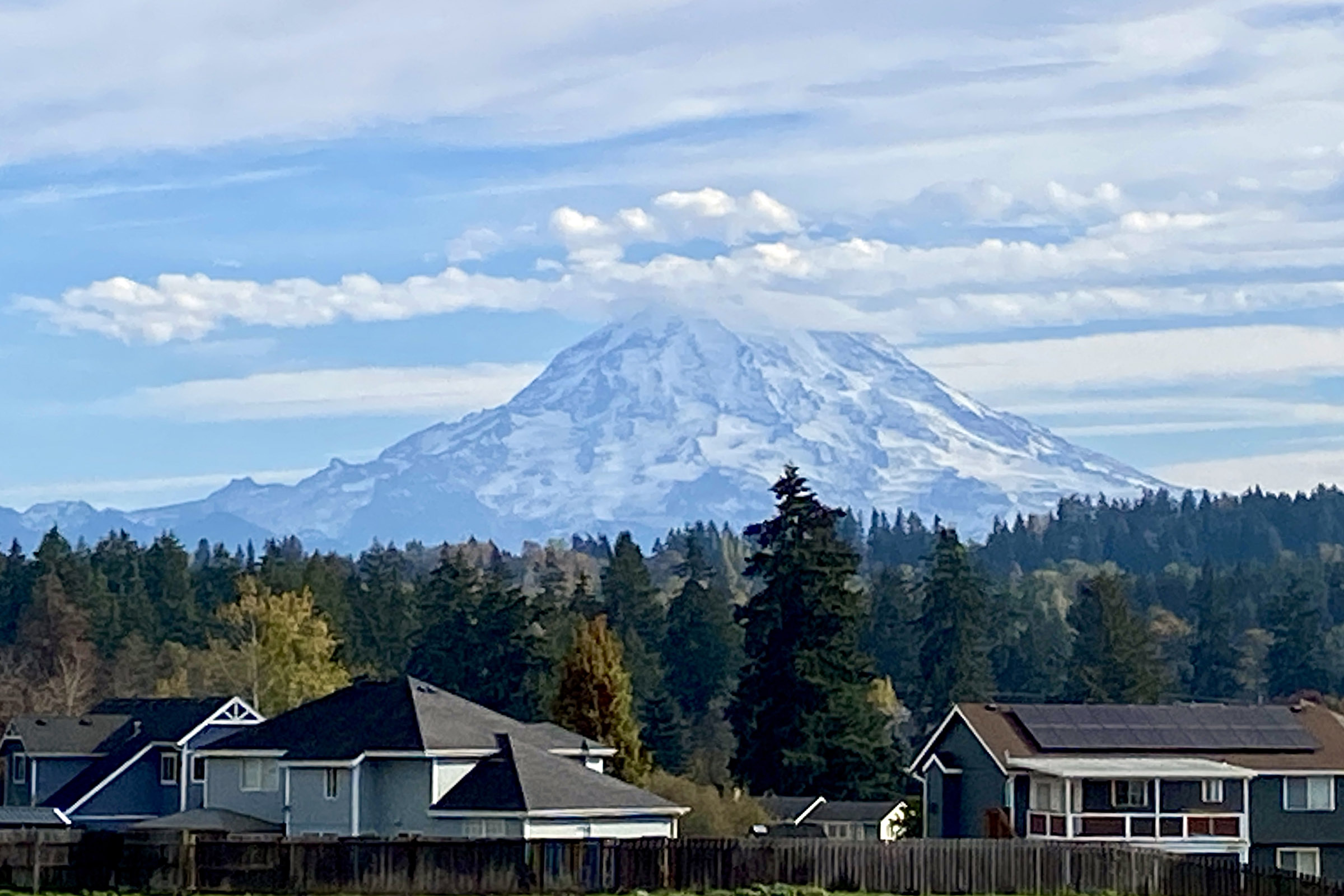
After making my way last week through Montana and the panhandle of Idaho, it felt good to finally reach the state of Washington. There were still a few hours of driving to go, including the mountain pass at Snoqualmie Pass at 3022 feet (921 meters), but I felt like I was on the home stretch of my cross-country drive.

The views were breathtaking as I made my way through the mountains and occasionally I would catch a glimpse of the glacier-capped peak of Mount Rainier. Even through there was a lot of haze, I was able to get a decent shot of the mountain from one of the rest areas along the highway.

With an officially recognized summit elevation of 14,410 ft (4392 meters), Mount Rainier, also known as Tahoma, is the highest mountain in the state of Washington. When conditions are good, the mountain is visible from almost the entire the Seattle/Tacoma area.

Mount Rainier

© Michael Q. Powell. All rights reserved.

Read Full Post »

I got up early to catch the sunrise at Theodore Roosevelt National Park in South Dakota on 13 October during a road trip to visit family. I had spent the previous night tent camping in the park where temperatures dropped down into the 20’s (about minus 3 degrees C). I was warm enough in my little tent, though its outer surface was covered with frost when I first woke up.

It was dark when I started to drive slowly along the roads in the national park, but gradually the rising sun began to illuminate the spectacular landscape with its warm light. Here a couple of images that I was able to capture with my iPhone 11, which did a good job in somewhat difficult lighting conditions.

sunrise in South Dakota

© Michael Q. Powell. All rights reserved.


Read Full Post »

The Potomac River is affected by the tides and, as a result, the levels of water off of Occoquan Bay National Wildlife Refuge are also affected. Some of the trails at the refuge run parallel to the water and when tidal levels are unusually high, those trails are sometimes flooded.

This past Wednesday I visited the refuge. We had had some rainstorms recently, but I did not anticipated that I would encounter so much water on the trails. There were signs at several locations that warned of potential flooding, but they have been there before when there has been little, if any, flooding.

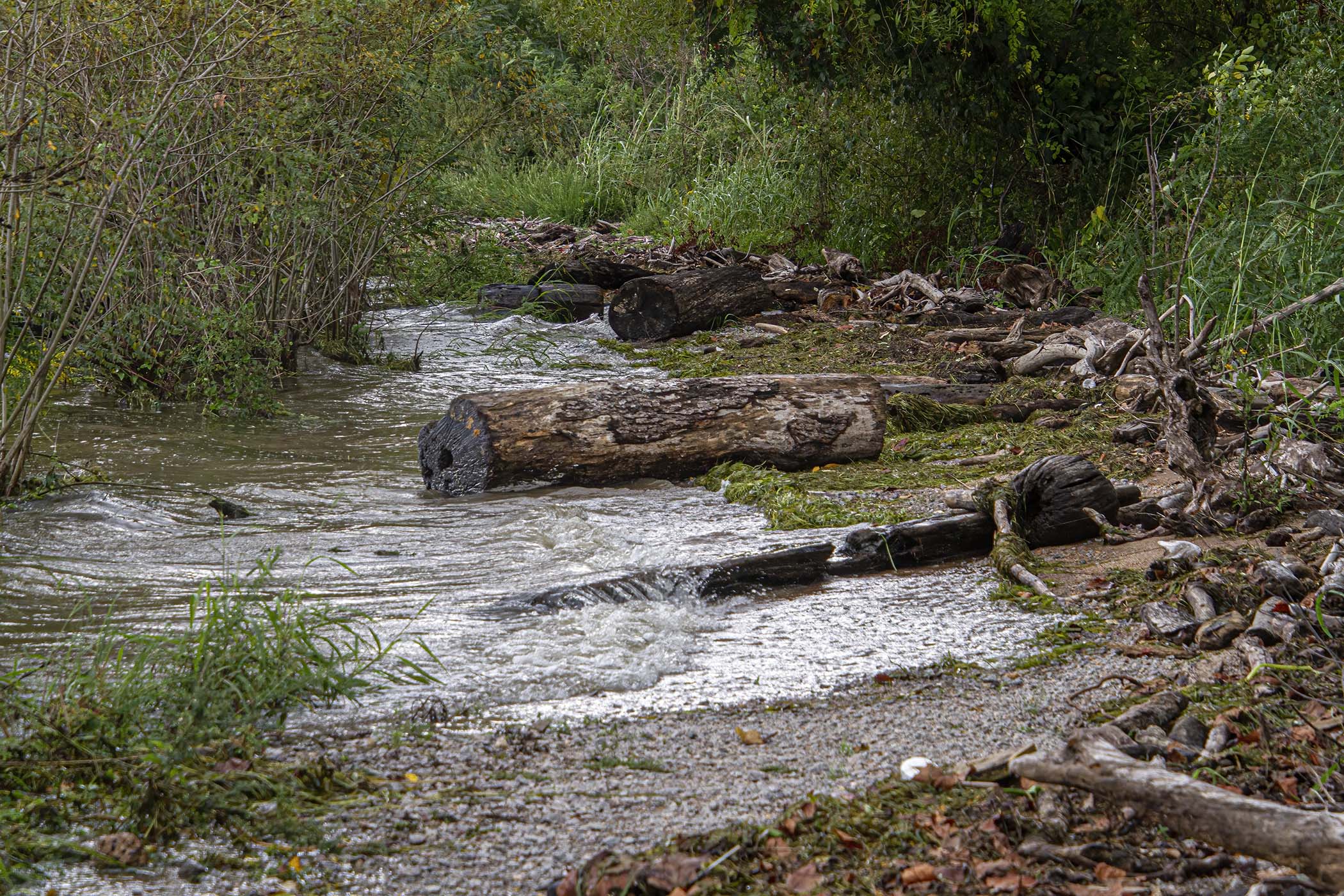
This time, however, there was a significant amount of flooding. In some cases, there was standing water on the trail, but in other cases, as you can see in the second photo below, the waves were washing onto the trail. There was a lot of debris on the trail as well, complicating my passage. I thought the water might be ankle-deep, but in a number of places, it reached my lower calf.

I was wearing boots that were somewhat waterproof, though they were inundated when the water levels were higher than the top of the boots. Fortunately, only about a third of the length of the trail was covered with water, so I was able to make my way down the trail without having to turn back. Needless to say, I did not see too many birds or dragonflies as I sloshed my way through the water, but strangely enough it was pleasant to experience to see these familiar trails in a different way.

We were mostly spared from the effects of Hurricane Helene, but I suspect that the water levels are still high in the Potomac River today. We had a fair amount of rain the last couple of day, but the sun appears to be shining right now, possibly encouraging me to go out with my camera today, though usually I avoid doing so on the weekends when the wildlife refuge is more likely to be crowded.

Occoquan Bay National Wildlife Refuge

Occoquan Bay National Wildlife Refuge

Occoquan Bay National Wildlife Refuge

© Michael Q. Powell. All rights reserved.

Read Full Post »

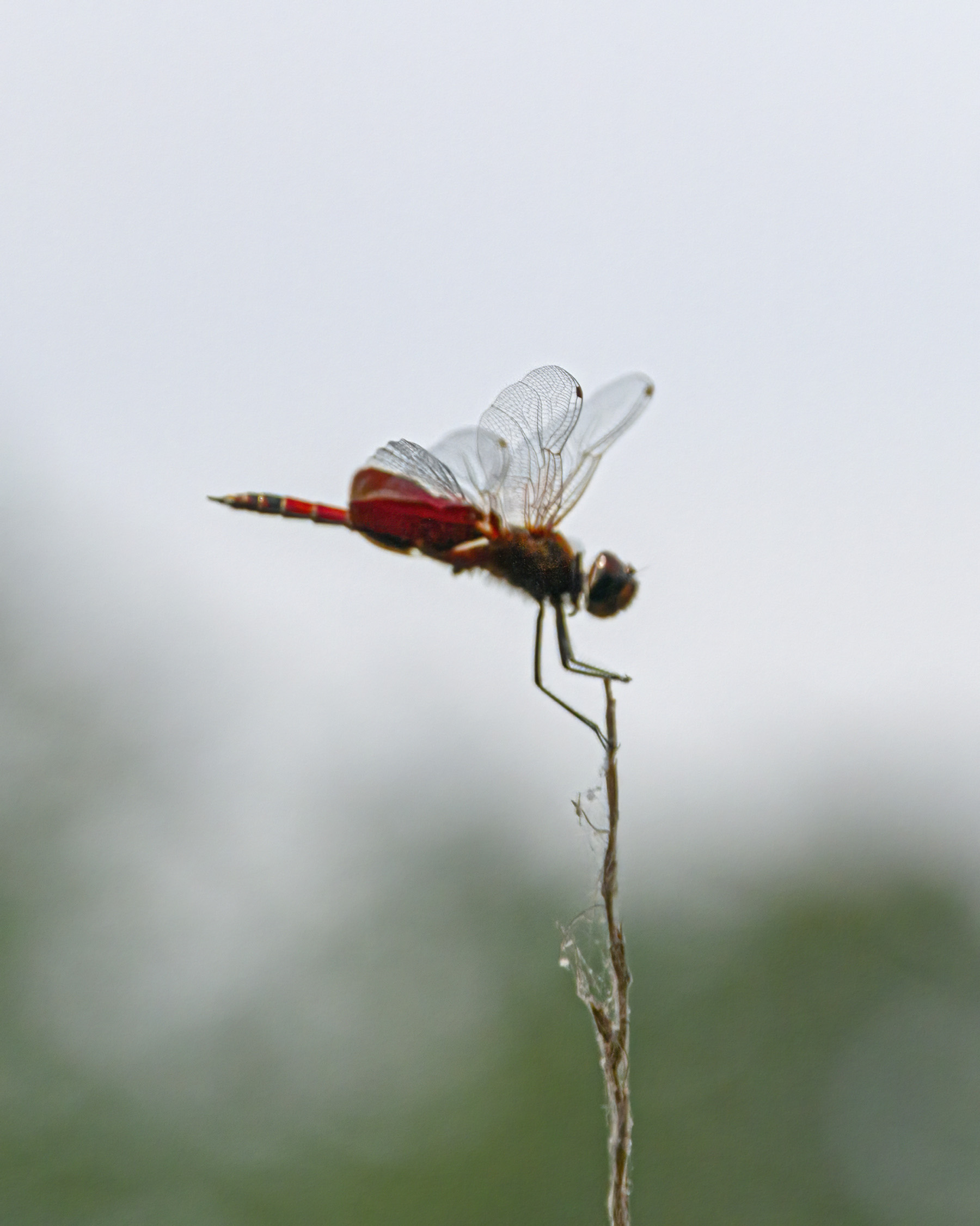
I do not see Carolina Saddlebags dragonflies (Tramea carolina) very often and when I am lucky enough to spot one, it is almost always in flight. According to the Dragonflies of Northern Virginia website, “Carolina Saddlebags appear to stick to shallow, thickly vegetated ponds and marshlands,” which is a pretty good description of the place where I spotted this one last Tuesday at Occoquan Bay National Wildlife Refuge. The same website described the Carolina Saddlebag’s flight tendencies as “Strong flier, often high, rarely perches.”

I spent some time that day watching several male Calico Pennant dragonflies, which are red and has patterned wings, as they flew around over the pond—check out yesterday’s posting to see a photo of a perched male Calico Pennant.  Suddenly a larger red dragonfly flew into view—Calico Pennants are approximately 1.3 inches (33 mm) in length, while Carolina Saddlebags are 2.0 inches (51 mm). I visually tracked the Carolina Saddlebags for a while and was able to follow it as it perched high on a stalk of vegetation in an adjacent field.

I was shooting into the light and at a sharp upward angle, which meant that I risked creating a silhouetted image of the back side of the dragonfly. I crouched a little to create a sky/trees background and waited for the dragonfly to give me a profile view. For a brief moment, my wishes came true and I captured the image below.

The image is far from perfect, but I like the way that it turned out. The focus on the dragonfly is a little soft, but I think it works well with the blurred background, creating an aesthetically pleasing little image.

Carolina Saddlebags

© Michael Q. Powell. All rights reserved.

Read Full Post »

Most of the time when I go out with my camera, I am focused on taking pictures. I have a general idea of which subjects I want to photograph and choose locations where I am likely to encounter them.

Sometimes, though, I am much less goal-oriented and I will visit a place primarily to experience nature. Oh, I will have my camera with me, but I am likely to take significantly fewer photos and to log a lot more steps in between photos. Usually I will have my Tamron 18-400mm lens on my camera that provides me with the greatest flexibility in capturing both wide-angle and telephoto shots.

That was certainly the case last week when I visited Prince William Forest Park, a wildlife area administered by the National Park Service. I did not see a lot of wildlife and the images that I capture tended to focus on the landscape. The first photo shows you one of the larger trails in the park that is wide enough for a vehicle and is used as an emergency route. Most of the other trails in the park are narrow and winding and accessible only on foot.

The second photos shows one of the dams along Quantico Creek. I really like the step-like shape of this dam. As you can see, some logs have accumulated along the top of the dam. They do not interfere much with the flow of the water, however, so I am not sure if the park authorities will eventually remove them.

My iPhone records my steps and I noticed recently that I tend to log the most steps each year in April, when spring is in full bloom. Last year, for example, I averaged over 6500 steps a day over the entire month of April versus an average step count of about 4000 steps for the whole year. I feel a kind of resurgence in energy in the spring, a sense of new life after the long gray days of winter.

Prince William Forest Park

Prince William Forest Park

© Michael Q. Powell. All rights reserved.

Read Full Post »

Most of the photos in my most recent blog postings were captured during my hike last week at Prince William Forest Park, which was a break from my usual wildlife-focused images. It is time to hit the trails again after this brief respite, but I thought I would conclude this mini-series with a final photo from the hike.

Many of you know that I love shadows and I was really struck by the tree shadows falling across the trail during the early stages of the hike. The photo gives you an idea of the size and density of the forest in which I was immersed. This trail was wide enough to serve as an emergency access route, but the majority of the trails that I traversed later in the day were significantly more narrow. The trails were pretty well defined and there were painted blazes on the trees, which were particularly useful when trails crisscrossed each other.

I grew up in New England and memorized a number of poems by Robert Frost. One of his most famous poems is entitled “The Road Not Taken.” Somehow the opening words of that poem always come to mind when I am hiking on forest trails, “Two roads diverged in a yellow wood, and sorry I could not travel both and be one traveler, long I stood and looked down one as far as I could to where it bent in the undergrowth…”

In this case, however, the pictured road is the road that was taken. That day, I stuck to a familiar path, though I am prone to wander and love to explore. Who knows what I might discover beyond the next twist of the road.

trees

© Michael Q. Powell. All rights reserved.


Read Full Post »

Prince William Forest Park is the largest protected natural area in the Washington D.C. metropolitan region  at over 13,000 acres (53 sq km). As its name suggests, it is is a heavily wooded area that is criss-crossed by numerous streams and creeks, most notably Quantico Creek.

There are over 37 miles of hiking trails in the park and this past Tuesday I walked a little over 6 miles (10 km) along some of my favorite trails. I knew that I would not see very much wildlife, but I really wanted to stretch my legs on a beautiful, sunny winter day. Occoquan Bay National Wildlife Refuge, where I most frequently go to photograph wildlife, is part of a flat, coastal plain, but Prince William Forest Park is hilly—according to my iPhone I climbed the equivalent of 19 flights of stairs that day.

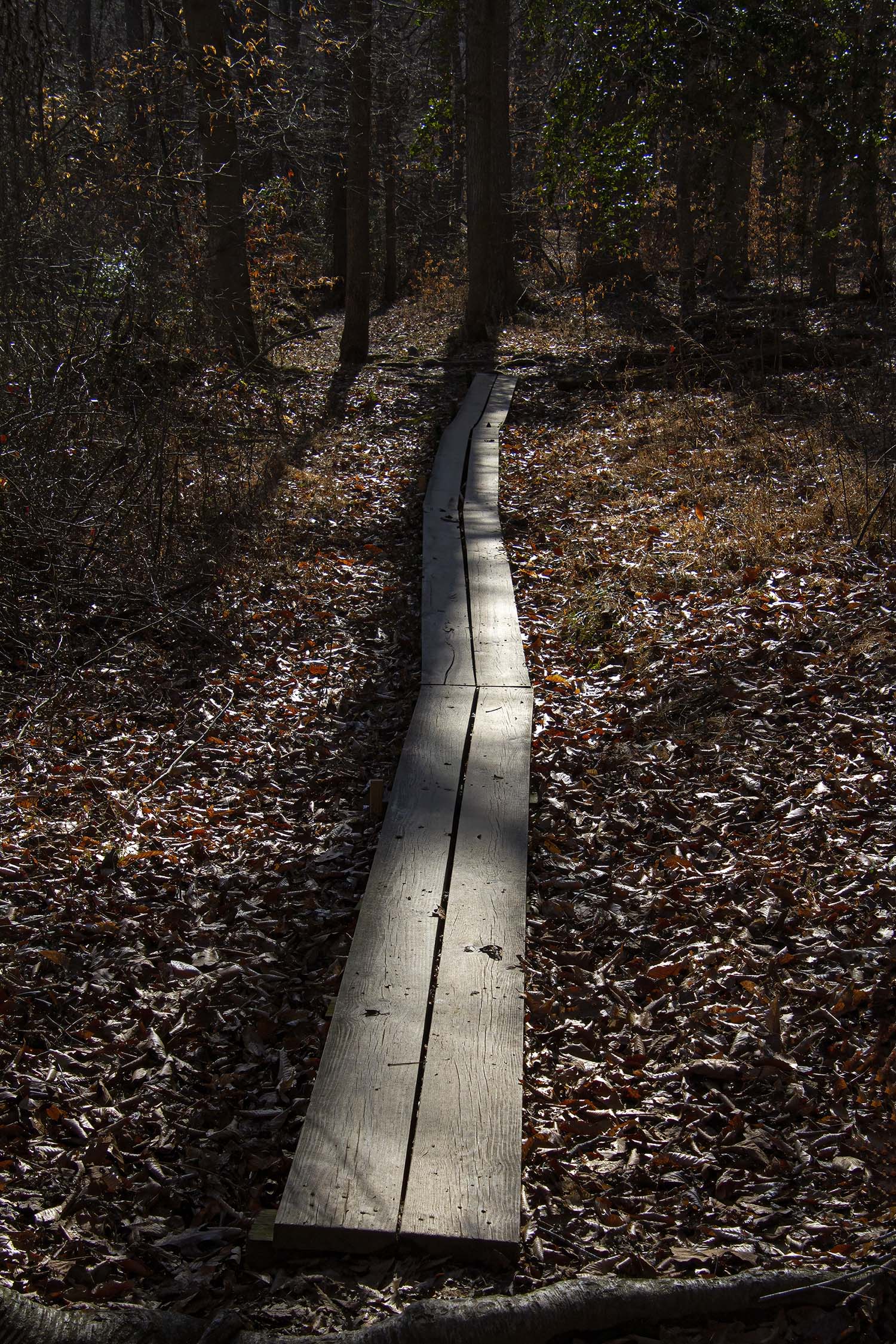
Some of the trails at Prince William Forest Park get mucky after a rain and I encountered two-board walkways like the ones in the first and last photos below at several spots while wandering about in the park on Tuesday. There were also some small bridges across streams (see second photo) and one larger bridge across Quantico Creek (see third photo). It really enjoyed checking out all of the different means that were in place to assist hikers in crossing wet areas and photographing subjects that are not my “usual” ones.

Prince William Forest Park is administered by the National Park Service and is wonderfully maintained. The trails are kept clear and are well-marked. I visit it most often in the spring, when wild flowers begin to appear on the forest floor and dragonflies start to emerge. If my memory serves me well, the earliest that I have seen dragonflies in my area was around the beginning of April, so I am waiting patiently for that time to come as we move through winter.

bridge

bridge

two-board bridge

© Michael Q. Powell. All rights reserved.

Read Full Post »

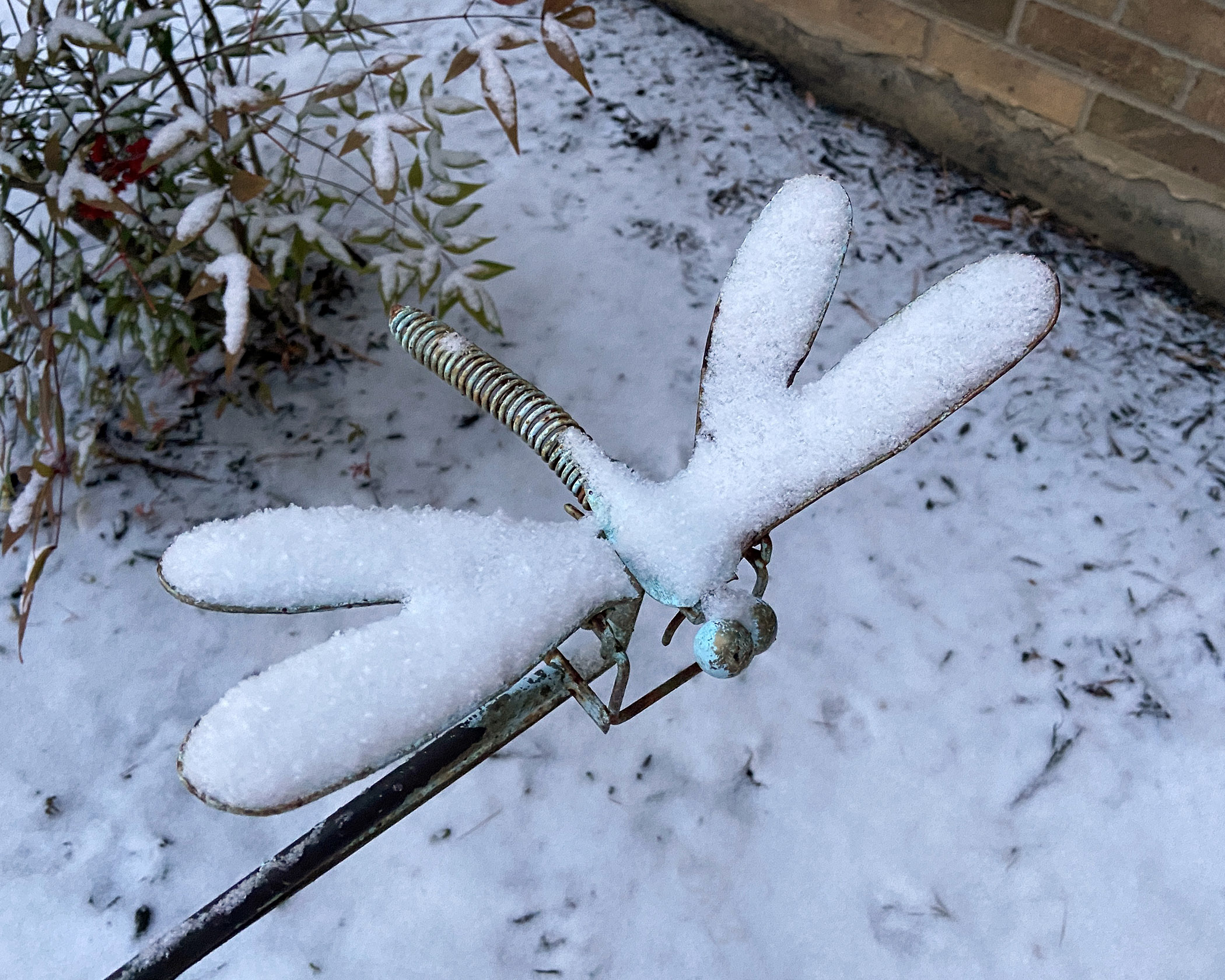
I have not been paying much attention to weather forecasts, so I was pleasantly surprised this morning to wake up to world covered with a dusting of snow. Normally this small amount of snow would not be newsworthy, but we have been in a snow drought for quite some time in my area. It has been two years since we last had an accumulation of two inches (50 mm) of snow in a single storm and for the entire winter last year we had a total of only about a half an inch (13 mm).

I probably did not need to do so, but I got out my snow shovel and cleared my steps and the sidewalk in front of my house.  I don’t really plan to drive anywhere, but I brushed the snow off of my car to keep it from freezing into any icy crust. Many of you know that I drive an orange KIA Soul and the final photo shows my BLESS MY license plate inside of a frame that says SOUL. I like this positive message and frequently get thumbs-up signs of approval from my fellow drivers.

Weather forecasters predict that we could get another 2 to 4 inches (50-100 mm) later today. I grew up in New England and that amount of snow would be a minor annoyance, but here in the Washington D.C. area, it will paralyze the area, undoubtedly resulting in numerous accidents and delayed school openings or even closures tomorrow. Some of the effects may be mitigated by the fact that today is a federal holiday, Martin Luther King Jr. Day, so traffic congestion should be lighter than usual, which will allow road crews to more effective clear and treat the roads.

Snowy dragonfly

Snowy lamppost

Snowy soul

© Michael Q. Powell. All rights reserved.


Read Full Post »

I consider myself to be primarily a wildlife photographer, but sometimes I enjoy taking photos that do not include an animate subject. That was certainly the case last Saturday, when I travelled to Occoquan Bay National Wildlife Refuge just before sunrise. I have already posted a few photos of the sunrise that I took with my iPhone, but decided it was worthwhile sharing a few images captured with my DSLT.

When the sun first appears its light is so intense that it is difficult to capture a shot when staring right at it. As you can see in the first image, I had to underexpose the image to get a decent shot of the sun. For that reason, I like to take photos of portions of the early morning sky in which the sun is not in the frame, like the second image below that shows the pale orange color of the sky and some of the details of the distant trees.

The moon was almost full that morning and I managed to capture a detailed shot of it by once again underexposing the shot. If I had let the camera choose the exposure, I would have ended with with a bright while circle with no details. The moon was present throughout most of the morning, as shown in the final photo that I took later in the day. The daytime shot of the moon does not show as much contrast and detail as the shot in the dark, but I like the way that I was able to capture the blue sky and the clouds.

I am sure that I will be back to featuring wildlife subjects soon, but it was fun to play around with some different subjects and approaches for a change.

sunrise

sunrise

moon

moon

© Michael Q. Powell. All rights reserved.

Read Full Post »

WordPress is great at keeping statistics. Although it provides lots of data about my blog, I don’t really pay much attention to the numbers. For me, this blog has been primarily a vehicle for expressing myself creatively through my words and my photos. That was my original goal in July 2012, when I wrote my first posting, and I have remained pretty faithful to that approach.

As we begin a new year, though, it is interesting to review some of the statistics for 2023. During the year I published 359 posts with a total of 69,520 words. The blog had 43,575 views that included many views of postings from previous years—out of the 20 most-viewed postings of 2023, only one was published that year.

To give you a sense of context, since 2012 my blog has had a total of 4,995 postings with 427,759 views. The totals may seem impressive, but they actually are quite modest. I have never really aspired to attract a huge audience and am quite pleased with the success that I have achieved. Thanks so much to so many of you who have supported and encouraged me over the years.

I will probably be continuing my “normal” approach during this new year, but hope to venture a bit more into recording videos. I have a small YouTube channel that has languished a bit that I hope to reinvigorate this year.

Many of you know that I love long shadows. I captured the image below early in the morning on 30 December 2023 at Occoquan Bay National Wildlife Refuge. The image is a symbolic representation of my view of this new year that is full of promise and possibilities. Happy New Year!

long shadow

© Michael Q. Powell. All rights reserved.


Read Full Post »

Yesterday I welcomed the sunrise at Occoquan Bay National Wildlife Refuge, the first time that I have tried to photograph a sunrise in a long time. There are electric gates at this refuge and I arrived at 7:00 a.m., just after they had slid open. Sunrise was officially at 7:26, so I had to hustle to make it down to the water’s edge in time to see the sun begin to move above the horizon. It was cold, only 37 degrees (3 degrees C), so I made sure to zip up my coat and raise its hood.

I arrived in time and played around with the panorama feature on my iPhone to capture the second image below before the sun was visible. My panning was not quite steady, but I like the wide view that I was able to capture.

The first shot, also taken with my iPhone, shows the sun just after it had risen above the water. I really like the reflection of the sunlight in the water and the movement of the water that is visible in the image.

sunrise

sunrise

© Michael Q. Powell. All rights reserved.

Read Full Post »

I trudged the trails at Occoquan Bay National Wildlife Refuge yesterday for quite some time—my iPhone indicates that I walked 12,213 steps. The weather was cool and there was partial sunshine, so it was quite pleasant. I was able to take a lot of photos, but have not had a chance to sort through them yet to see how they came out. I might have gotten decent shots of a pair of eagles and maybe of two chattering kingfishers.

Today, though, I am in a reflective, somewhat mood, so rather than post a wildlife photo, I decided to post a landscape (or may more accurately it is a seascape) photo that I captured late in the afternoon, when the skies clouded over. It was still well before sunset, but there was a little color in the sky. I love the texture of the clouds and the reflections of the light in the water and the images does a pretty good job in capturing the mood of the moment.

As most of you know, I do not take landscape photos very often, but I am trying more and more to shoot a variety of shots that reflect not only what is going on in front of the lens, but also what is going on around me and in my head.

winter sky

© Michael Q. Powell. All rights reserved.

Read Full Post »

The sun was so low at 3:15 in the afternoon last Friday that I cast a really long shadow as I wandered the trails at Occoquan Bay National Wildlife Refuge with my camera and telephoto zoom lens attached to a monopod. This is my favorite type of selfie, a genre of photos that I do not feel compelled to share daily, unlike several of my younger friends.

Happy Solstice Day! Astronomically speaking, today marks the beginning of winter in the northern hemisphere and of summer in the southern hemisphere. In the north, it is the shortest day and the longest night of the year while in the south it is the longest day and the shortest night of the year. Time moves slowly at this time of the year—the time of sunrise doesn’t change much over the next month, but gradually the time of sunset gets a tiny bit later.

I look forward to days when I see long shadows, for it means the sun is shining. For much of winter the sky is grey here, so moments of light are a welcome reprieve.

shadow

© Michael Q. Powell. All rights reserved.

Read Full Post »

Most of the time my photos have a well-defined subject. Some of the time, though, I am so interested in trying to capture the mood of the moment that the “subject” occupies only a small part of the frame.

Last Friday, I spotted a large bird perched on a skeletal tree at Occoquan Bay National Wildlife Refuge. I thought at first that it might be a Bald Eagle, but when I zoomed in a bit I could see that it was a Turkey Vulture. I really like the starkness of the bare trees and the way that they give an abstract feel to the landscape. As I was preparing to take a shot, a small flock of Canada Geese flew into the frame and I captured several of them in the photo below.

The resulting image is mostly monochromatic, though you can see occasional glimpses of a warmish brown on some of the broken edges of the trees. If you look really closely at the vulture’s head, you can see a touch of red.

I do not know if this image “works” in conveying the mood of that monochromatic moment, but I thought it might be interesting to share with you my thought process as I experimented in capturing an image that is quite different from my normal wildlife shots.

monochromatic

© Michael Q. Powell. All rights reserved.

Read Full Post »

I live in a suburban townhouse community, which means that the scenery is not particularly photogenic if I walk around at dawn. This weekend, however, I attended a church retreat at Shrine Mont, a facility owned by the Episcopal Diocese of Virginia. Shrine Mont is located in the Shenandoah Valley near the border with West Virginia, in the tiny village of Orkney Springs.

I stayed in a small cottage with some other members of my church and when I woke up in the pre-dawn hours, I was able to grab some coffee and begin to walk down the road. One of my favorite buildings in the area is the post office for the village. I love the quaintness of the structure, with the chairs on the covered porch and the Coca-Cola signs. I was happy that I was able to capture the lighting provided by various sources inside and outside the building.

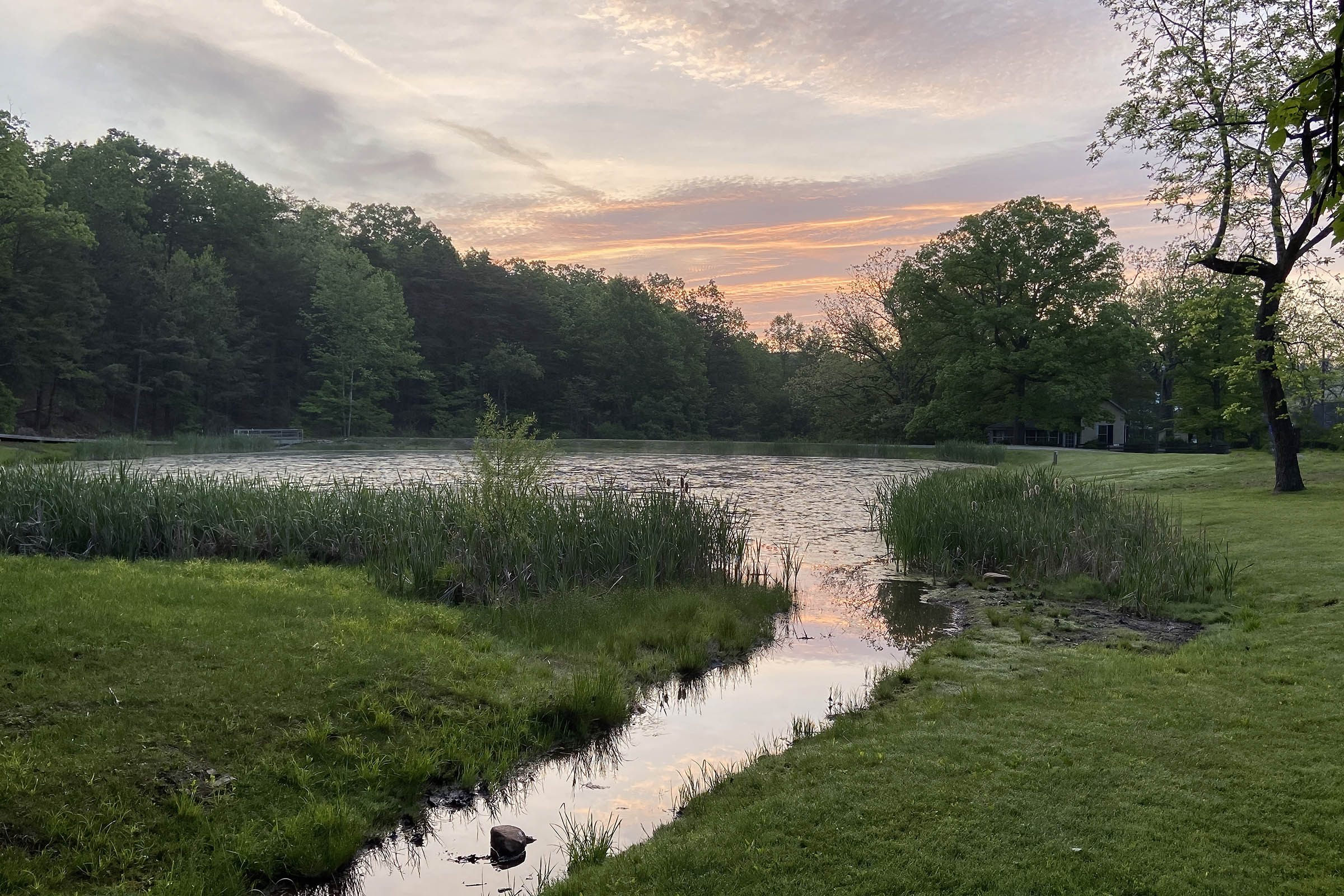
There was not very much color in the sky, but I was able to capture a bit of it in the sky and its reflection in the waters of a small pond that I passed. The final shot shows several of the main buildings of Shrine Mont. The large building, now called Virginia House, used to be the Orkney Spring Hotel and was privately owned until it was purchased by the Diocese of Virginia in 1979. According to Wikipedia, the Virginia House is believed to be the largest wooden structure in Virginia—it dates to the 1870s and is on the National Historical Register.

I love to capture the moments when the sky is beginning to lighten, but the electric lights are still on. It is a beautiful and peaceful period and a wonderful way to start the day.

Orkney Springs Post Office

Shrine Mont Pond

Virginia House, Shrine Mont

© Michael Q. Powell. All rights reserved.


Read Full Post »

The water in our rivers in Northern Virginia does not freeze over very often, but late in December we had a spell of really cold weather. When I arrived at Occoquan Bay National Wildlife Refuge the temperature was well below freezing, but I was bundled up pretty well so it did not bother me much. The landscape seemed particularly stark in the early morning light as I captured several different images, concentrating on showing the icy waters.

These are definitely not the typical kind of shots that I normally shoot, but decided that it was worthwhile to capture the feel of that frigid winter morning.

winter landscape

winter landscape

winter landscape

© Michael Q. Powell. All rights reserved.


Read Full Post »

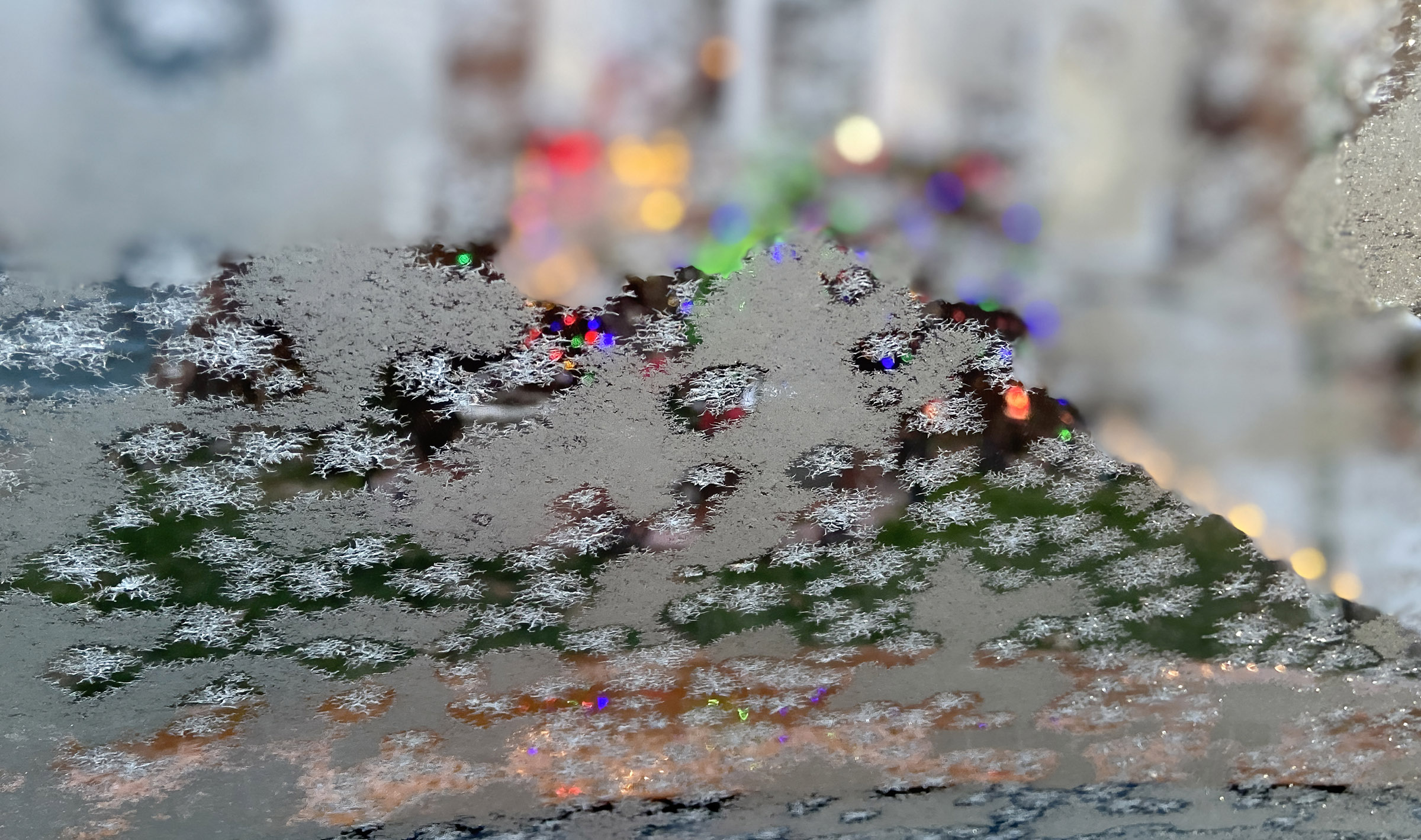
Early yesterday morning, my car’s windshield was covered with starbursts of frost. As I sat in the driver’s seat, I had this magical view of the Christmas lights on my neighbor’s house. I captured the moment with my iPhone—then I cleared the windshield.

Today is the day of the solstice, the day that some of us in the Northern Hemisphere count as the first day of winter. According to the Farmer’s Almanac, “It’s the astronomical moment when the Sun reaches the Tropic of Capricorn, we have our shortest day and longest night of the year in the Northern Hemisphere in terms of daylight.” Like much of the United States, we are in for a spell of frigid weather, though I doubt that we will see any snow before Christmas.

It felt appropriate to mark this day with this frosty image. I was preparing to head out to my favorite Wildlife Refuge yesterday morning when I took this shot and will be featuring some of the birds that I encountered once I have finished reviewing my shots.

frost

© Michael Q. Powell. All rights reserved.

Read Full Post »

I began my drive to Texas a couple of weeks ago by traveling the entire 105 mile (170 km) length of Skyline Drive in Shenandoah National Park during the early morning hours and was treated to scenes like these when the fog was hanging low in some of the valleys. The maximum speed limit on this road is 35 mph (56 kph), so I was able to enjoy the scenery as I drove along the crest of the Blue Ridge Mountains. There were also numerous viewing areas, where I could pull off the road and capture some shots before resuming my drive.

I tried to time my drive so that I would be there for the actual sunrise, but I arrived a bit too late. Fortunately there was still some color in the sky, so I was able to capture some of the beauty of the early morning.

Skyline Drive

Skyline Drive

Skyline Drive

© Michael Q. Powell. All rights reserved.

Read Full Post »

On Thursday I visited Shenandoah National Park with a friend and we drove a section of Skyline Drive to see the colorful fall foliage. I love the patchwork pattern of colors that we observed on the slopes of the  mountains. The predominant color seemed to be a bright rusty orange, with only small patches of bright yellow and red. In some directions, the sky was hazy, so the successive layers of mountains gradually faded out, as you can see in the final photo.

My blog posting schedule will be a little erratic during the next two to three weeks. I will be driving from Virginia to Texas for a wedding and don’t expect that I will be doing any posting on the days when I will be traveling. I hope that I will be able to do a few postings while I am in Texas—I will be just outside of Austin for about a week or maybe a little longer.

Shenandoah National Park

Shenandoah National Park

Shenandoah National Park

© Michael Q. Powell. All rights reserved.


Read Full Post »

Usually when I am taking a photograph, I have a specific subject. Sometimes, though, I try to capture something that is harder to describe, like the effects of light or of an atmospheric condition.

Last Monday I visited Occoquan Bay National Wildlife Refuge in the early morning and was fascinated by the mist hanging over the water that was gradually starting to dissipate as the sun rose higher in the sky. I really like the way that the first image turned out when I pointed my camera towards the water and the land forms in the distance.

Looking in another direction, I saw some Canada Geese, most of which appear to be sleeping and were partially shrouded by the mist. In the distance I could see a bit of fall color, which was reflected in the water.

Turning to the land, I couldn’t help but notice the beautiful rays of early morning light that were piercing through the foliage and the mist. It was tough to capture the effect, but hopefully the final photo gives you a sense of what I was seeing and feeling.

These are definitely not the typical kinds of photos that I take, but I was inspired by the conditions of the moment to try some different approaches and am content with the results.

misty morning

misty morning

misty morning

© Michael Q. Powell. All rights reserved.

Read Full Post »

The colors of the fall foliage in my area of Northern Virginia are not very impressive. Generally we fade gradually from green to brown and then the leaves fall off of the trees. Fortunately, though, pops of bright color periodically remind me of the colors that I would see when I was growing up in New England.

It is still a bit early for those colors to appear, but I did notice a few traces of autumn color when I was out with my camera this week. Mostly it was individual colorful leaves, but I did notice a few trees as I gazed across the pond at Huntley Meadows Park that had jumped ahead of their compatriots and were already showing their blazing red autumn color.

Autumn is my favorite time of the year, especially the early days of autumn.

autumn color

autumn color

autumn color

© Michael Q. Powell. All rights reserved.

Read Full Post »

As many of you probably realize, I generally do not spend much time photographing landscapes and focus primarily on insects, in the warmer months, and birds, in the colder months. This past Wednesday, however, I was absolutely captivated by the clouds and tried to capture them in both landscape and seascape images at Occoquan Bay National Wildlife Refuge. I used my Canon 7D for the first two images and shot the panorama in the final shot with my iPhone 11.

As I look at these images, I can’t help but think that I should keep my eyes open more often for opportunities to take landscape shots. Last year I managed to capture some of the fall foliage in Virginia when I traveled to Shenandoah National Park and I may try to do so again later this month. There is a chance, though, that I will miss the peak color, because I will be driving to Austin, Texas near the end of the month for a wedding.

Occoquan Bay National Wildlife Refuge

Occoquan Bay National Wildlife Refuge

Occoquan Bay National Wildlife Refuge

© Michael Q. Powell. All rights reserved.

Read Full Post »

When I tell people that I camped for several nights at Theodore Roosevelt National Park in Medora, North Dakota during my recently completed road trip, they have widely varying mental pictures about what that looked like. Some imagine that I was towing a recreational vehicle (RV) filled with all of the comforts of home and that I used hookups for electricity and water.

The truth, though, was that my form of camping was more akin to backpacking than to RV life. I carried with me a very small tent that I have owned for more than 30 years and more or less slept on the ground. I initially used the tent when I did some bike camping when I was stationed in South Korea in the late 1980’s during my service in the US Army. Before I left for my trip, I practiced setting the tent up in front of my house to reacquaint myself with it and to make sure I still had all of the component pieces.

Cottonwood Campground lies within the confines of the South Unit of this national park—there are two parts of the park that are separated by 75 miles (120 km)—and has relatively primitive campsites. RV’s are permitted, but most of the sites are pretty small and there are no hookups. Seasonally there are flush toilets available, a welcome surprise for me, and vault toilets during the off-season. There are no showers, but potable water is available. Because I have the lifetime Senior National Parks Pass, I had to pay only $7.00 per night for my site and I stayed two nights each time that I was there.

Half of the sites are by reservation while all remaining sites are first come, first served. I showed up without reservations on both my westward and eastward legs of the trip and was able to find a site both times without problem in the tenting area of the campground. In fact, I stayed in the exact same spot each time. I liked this spot because it was at the end of a row of spots, so I had a neighbor on only one side.

The first photo shows my view looking out from inside of my tent, with some buttes visible in the distance. The second image gives you a better view of the tent itself. It is taller at the front and has a vestibule area where I could store some gear. Importantly, there is netting to help keep the bugs out. I was not bothered by mosquitos, but there were a lot of grasshoppers and some flies from time to time.

The third shot shows the rest of my site that included a picnic table and a grill. In the photo you can see that I had a small cooler and I also had a water jug that held six gallons (23 liters)—many parts of the United States had been experiencing heat waves and I wanted to make sure that I had plenty of water in case I was stranded. You can also see my orange KIA Soul. I think that this was the only KIA Soul that I spotted when driving through North Dakota and Montana—most of the local folks seemed to be driving pickup trucks or large SUV’s.

I did not have a proper sleeping mat, but used a thick yoga mat, which did provide some cushioning from the hard ground. I had a blanket, sheet and pillow with me too and a sleeping bag. I did not think that I would need the sleeping bag, but the first night that I camped out, temperatures dropped to 44 degrees (7 degrees C), and I was able to snuggle up inside the sleeping bag.

In terms of cooking, I used a little camp stove with a propane/butane canister. The fourth photo shows my little setup as I boiled water to make instant oatmeal and instant coffee for breakfast one morning. I also had several boxes of granola bars on which I snacked throughout the day.

The final two photos shows views from the campsite. On the morning when it was cold, fog and mist were hanging over the Little Missouri River, which flowed very close to our location, and the surrounding area. The final shots shows the glow of the moon, which was almost full, just before it rose over the buttes in the distance. The lights in the right hand side of the image came from a row of cars that were heading in the direction of the park’s exit.

I hope you enjoyed my little tour of my modest camping setup. When I began my trip, I had no specific plans for camping, but brought along the gear so that I could do so if the right situation presented itself. I was really happy to find this gem of a National Park and would gladly return there in the future.

Camping in North Dakota

Camping in North Dakota

Camping in North Dakota

Camping in North Dakota

Camping in North Dakota

Camping in North Dakota

© Michael Q. Powell. All rights reserved.

Read Full Post »
What is the best way to convey a sense of the massive expanse of the badlands in North Dakota? That was the dilemma that faced me last week as I stood at the Skyline Vista observation point in Theodore Roosevelt National Park. Would a single photo suffice? What about a panorama shot? Perhaps a video might work?

An informational sign at Skyline Vista noted that, “They may look like mountains, but landforms in the badlands are buttes. Mountains form when land is thrust upwards. This process has not taken place in the badlands. Buttes form as erosion removes surrounding material. Rainwater, creeks, and the river are constantly eroding the badlands, leaving behind fantastically shaped buttes.”

My initial instincts pushed me to try a couple of traditional approaches. In the first image, I composed a shot with the flowers in the foreground to add some visual interest, rather then focusing attention simply on the buttes. In the second image, I tried to use the curving highway as a compositional element.

I then switched to considering methods that took advantage of the capabilities of the iPhone 11 with which I was shooting at that moment. I used the iPhone’s pano mode to create the third image and really liked the wide view that it provided of the badlands. In my final attempt, I filmed a short video in which I panned across the horizon, holding my phone vertically that I posted to YouTube (https://www.youtube.com/shorts/mTxPxVPlQVE) and have embedded below. The video provides an even wider view than the panoramic shot.

Is there a “best” way to show this rugged landscape? I would be hard pressed to say that any of the methods that I used was the “best”—each shows a slightly difference sense of what it was like for me to be at that observation point. Many of the other people that I observed simply took a single shot and returned to their cars and drove away. I personally think it is much more enjoyable to “work” a subject and look for creative ways to capture its beauty.

Skyline Vista

Skyline Vista

Skyline Vista

© Michael Q. Powell. All rights reserved.


Read Full Post »
Older Posts »