Feeds:
Posts
Comments

Archive for the ‘Insects’ Category

Is the best image of a butterfly only one in which its wings are fully open so that you can see all of the beautiful colors and patterns? Generally that is the angle that most of us seek to shoot. This past Wednesday I was observing an Eastern Tiger Swallowtail (Papilio glaucus) at Jackson Miles Abbott Wetland Refuge when it struck me that the butterfly was “attacking” the flower from all kinds of different angles, even hanging upside down. Why shouldn’t I take the same approach with the butterfly (minus the hanging upside down part)?

I like the way in which the three shots below capture some of the activity of the butterfly and not merely its beauty. At times it seems like beauty and function are at odds with each other, that beauty is best captured in controlled settings like in a studio, where portraits are often taken.

I fully accept that the natural world in which I like to work is chaotic and out of my control, but in the midst of it I still find incredible beauty, a beauty that may be imperfect by some standards. I encourage you to look at your world from a different angle at least from time to time and you may be amazed by the way that a change of perspective can cause you to see things in a totally different way.


Eastern Tiger Swallowtail

Eastern Tiger Swallowtail

Eastern Tiger Swallowtail

© Michael Q. Powell. All rights reserved.

Read Full Post »

Yesterday I spotted this male Swift Setwing dragonfly (Dythemis velox) at Jackson Miles Abbott Wetland Refuge. Unlike most dragonflies that hold their wings straight out to the side, this species pulls its wings forward and adopts a ready-set-go position when perching.

This species is really special to me. A few years ago I had the first documented sighting of a Swift Setwing in the county in which I live and each year I am thrilled to see them again. Late in June I saw my first one this year, but was not able to capture any decent images, so these are my first successful Swift Setwing shots this season.

Swift Setwings like to perch on the end of vegetation overhanging the water and are always almost facing the water, which makes it tough to get shots without getting wet. One of the cool things about their perching patterns is that it usually allows me to get uncluttered backgrounds in the shots that I am able to take. In both of these images, the water forms a neutral background that almost makes them look like they were shot in a studio setting.

Swift Setwing

Swift Setwing

© Michael Q. Powell. All rights reserved.

Read Full Post »

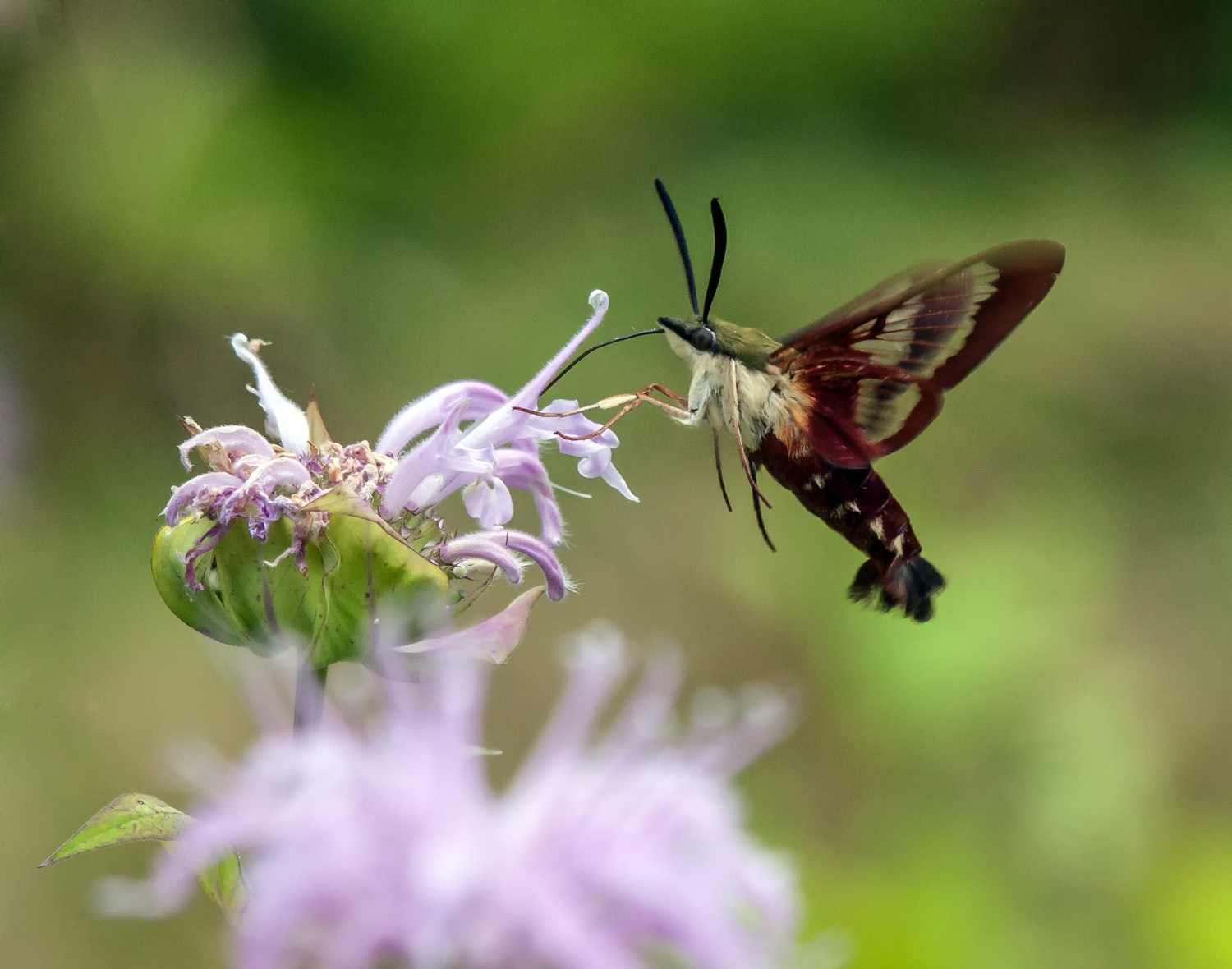
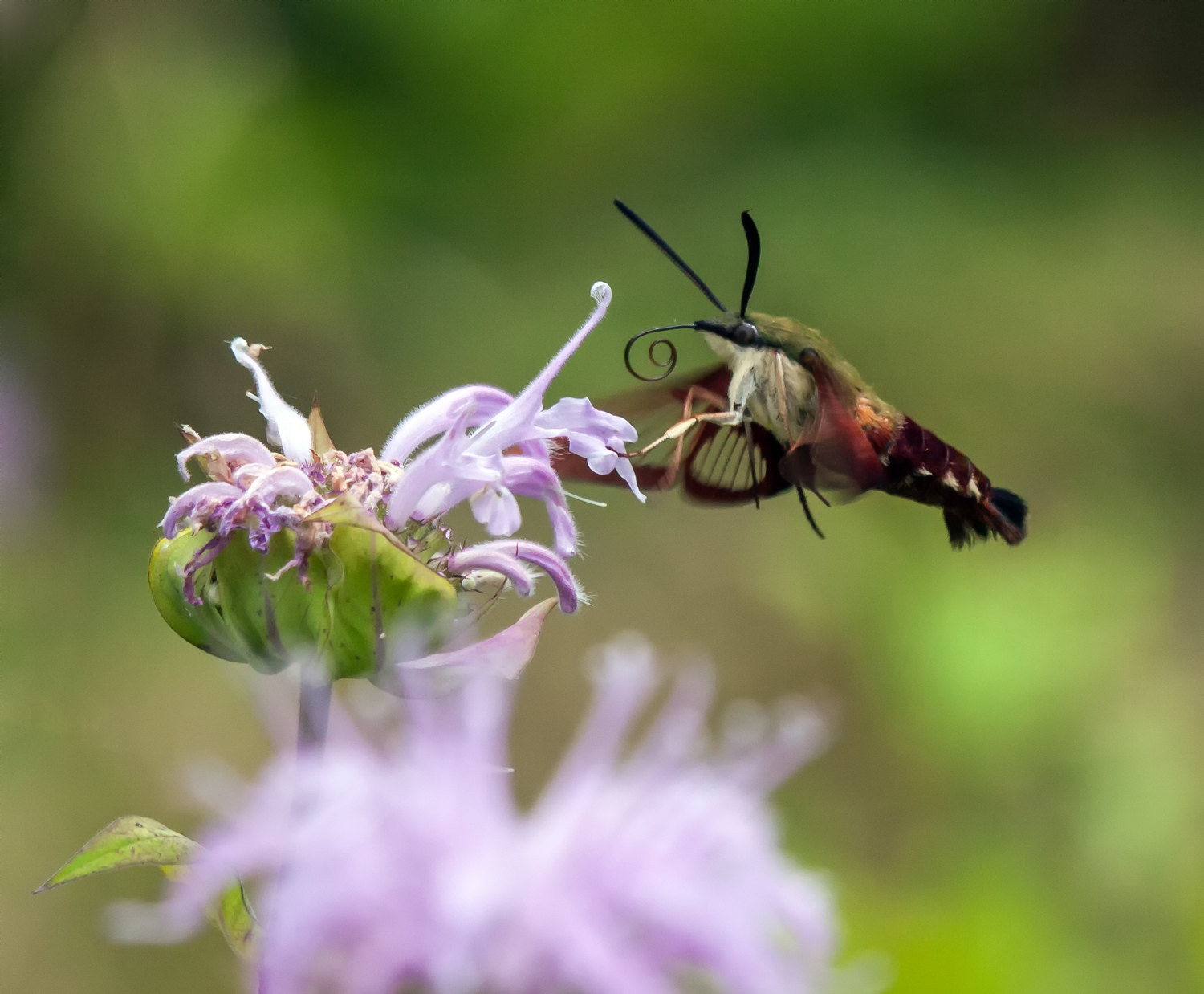
I love to photograph birds and I love to photograph insects, so what could possibly be better than photographing an insect that looks and acts like a bird? Last week I was observing a patch of flowers at Jackson Miles Abbott Wetland Refuge when I spotted what looked like a large bee. As I got closer, I realized that it was a Hummingbird Clearwing Moth (Hemaris thysbe).

Like a hummingbird, this insect hovers as it gathers nectar from flowers. Instead of a long skinny beak, though, the Hummingbird Clearwing Moth uses its long proboscis to get to the nectar. As the second photo shows, the moth curls up its proboscis when it is not in use—in this case, the moth was preparing to fly off to another flower.

Hummingbird Clearwing Moth

Hummingbird Clearwing Moth

© Michael Q. Powell. All rights reserved.

Read Full Post »

During a brief trip to Massachusetts last weekend, I photographed this beautiful damselfly, which I believe is an immature female Eastern Forktail damselfly (Ischnura verticalis), while exploring Horn Pond in Woburn.

When I looked at the range map for this species, it looked like it is not present in my home area of Northern Virginia. However, when I did a search of my blog postings, I was surprised to discover that I had previously photographed an orange Eastern Forktail at one of my favorite local spots. Obviously I am not someone who keeps a “life list” of all the species that I have seen and photographed. 🙂

Eastern Forktail

© Michael Q. Powell. All rights reserved.


Read Full Post »

Last Tuesday as I was exploring Occoquan Bay National Wildlife Refuge I spotted this handsome male Calico Pennant dragonfly (Celithemis elisa). Unlike some species that perch close to the ground and are hard to see, Calico Pennants perch on the uttermost tips of vegetation. Although they are visible, they are often hard to photograph, because their precarious perches start to sway at the slightest hint of a breeze.

Calico Pennant

© Michael Q. Powell. All rights reserved.

Read Full Post »

On Monday I spotted this small patch of Butterfly Weed (Asclepias tuberosa) at Jackson Miles Abbott Wetland Refuge. True to its name, the Butterfly Weed had attracted several butterflies, which I think are Pearl Crescent butterflies (Phyciodes tharos), as well as several metallic green sweat bees (genus Agapostemon). The insects seemed to love the plant’s nectar and the scene provided a visual feast for viewers like me.

butterfly weed

© Michael Q. Powell. All rights reserved.


Read Full Post »

Although I love seeing my old familiar dragonfly friends, it is always exciting to observe new species. Last week while I was exploring in Prince William County, Virginia with fellow dragonfly enthusiast Walter Sanford, I spotted this dragonfly perched on a small tree. I really liked the pose and moved closer for some shots.

I initially thought it was a Needham’s Skimmer, a fairly common species in our area, but the more I looked at my photos afterwards on my computer screen, the more I began to note some differences in the colors and patterns on wings and the body. After consultations with some dragonfly experts on Facebook, I learned that it is a Yellow-sided Skimmer (Libellula flavida).

As far as I know, this is the first time that I have seen a Yellow-sided Skimmer. There is a possibility that I have unwittingly seen one in the past and dismissed it as “only” a common species.  I try not to do that, because this is not the first time that I have photographed something new without realizing until later that it was in fact new.


Yellow-sided Skimmer

© Michael Q. Powell. All rights reserved.


Read Full Post »

Dragonhunter dragonflies (Hagenius brevistylus) love to perch and wait for their prey to come by and then use their powerful back legs to snag that prey, which is often another dragonfly. Those legs are so long and ungainly, though, that Dragonhunters’ poses often seem awkward when they are perched—they remind me of teenage males who have undergone a recent growth spurt and haven’t gotten used to their longer limbs.

Last Friday as I was exploring a stream at Prince William Forest Park with fellow blogger and dragonfly enthusiast Walter Sanford, he spotted this female Dragonhunter perched at the edge of the water. I was walking toward him when I spotted the Dragonhunter on the rocks that I featured yesterday and was delayed in getting to see this dragonfly. Fortunately, she was relatively tolerant of our presence and remained in place long enough for me to get some shots.

All of the images that I captured show a side view of the Dragonhunter, because she was facing toward the water and I was trying not to get wet. Walter, however, wanted more of a frontal view  and waded into the water to get that shot. Check out today’s posting on his blog and you can compare the results of our different approaches.

dragonhunter

© Michael Q. Powell. All rights reserved.


Read Full Post »

Dragonfly on the rocks? It sounds like a summertime beverage, but it accurately describes what I saw last Friday while exploring a stream in Prince William County, Virginia with fellow dragonfly enthusiast Walter Sanford. I think it is a Dragonhunter dragonfly (Hagenius brevistylus), but the unusual angle makes it tough to made a definitive determination of the species, because I am not able to see critical portions of the dragonfly’s anatomy.

In the past when I have spotted Dragonhunters, they have been perched on branches overhanging the water and that is where I expect to find them. This encounter is a good reminder for me to stay alert at all times—my subjects may not have read the identification guides about how they are supposed to behave.

dragonhunter

© Michael Q. Powell. All rights reserved.

Read Full Post »

When the weather gets hot, some dragonflies will raise their abdomens (the “tail”) in what is believed to be an attempt at thermoregulation. I can’t say for sure if it works, but the theory is that in this position, sometimes referred to as the “obelisk,” dragonflies are able to stay cooler by reducing the amount of their bodies subject to direct sunlight.

Earlier this week I spotted this male Eastern Amberwing dragonfly (Perithemis tenera) in a modest obelisk position at Jackson Miles Abbott Wetland Refuge. I characterized the position as “modest,” because sometimes a dragonfly will elevated its abdomen until is almost vertical.Eastern Amberwing

© Michael Q. Powell. All rights reserved.


Read Full Post »

When I spotted a small patch of milkweed while exploring Occoquan Bay National Wildlife Refuge earlier this month, I stopped and waited. I knew that numerous butterflies are attracted to this plant. Before long, several butterflies in fact appeared.

Here are photos of two of them, both swallowtail butterflies. The first one, a Spicebush Swallowtail (Papilio troilus), appears to be in perfect condition. Its wings and “tails” are intact and its colors are vibrant. By contrast the second butterfly, a Zebra Swallowtail (Protographium marcellus), is clearly a veteran. There are chunks missing from its wings and its long beautiful swallowtails are gone.

Do you find one of the butterflies to be more inherently beautiful than the other? Here in the United States, we tend to worship beauty and a standard of supposed perfection. We are daily bombarded with advertising messages that tell us we can look young again, that we can cover up our imperfections. The current focus on selfies and dating apps that allow you to judge others with a swipe encourages a kind of narcissism and attention to superficial appearances that I personally find to be unhealthy.

I remember watching a video several years ago about photographing nature. The photographer encouraged viewers to photograph only perfect specimens of flowers and insects, following the lead of those who say that in order to create beautiful photographs, you need beautiful subjects.

The photos here are my response to that kind of thinking. There is an incredible beauty to be discovered in the ordinary, everyday subjects that surround us, full of imperfections and blemishes. Take a moment today to slow down and truly experience that beauty.

Spicebush Swallowtail

Zebra Swallowtail

© Michael Q. Powell. All rights reserved.

Read Full Post »
Most of the times that I have observed a Common Sanddragon dragonfly (Progomphus obscurus) it has been perched directly on the sand, which makes sense, given its name. Last week, however, I spotted this Common Sanddragon perched in some vegetation overhanging the water of a stream in Prince William County, Virginia.

I like the way that the dragonfly almost looks like he is flying, because I managed to take the photograph from almost directly overhead, causing the perch almost to disappear. I also really like the look of rocky portion of the stream that makes up most of the background of this image.

Common Sanddragon

© Michael Q. Powell. All rights reserved.

Read Full Post »
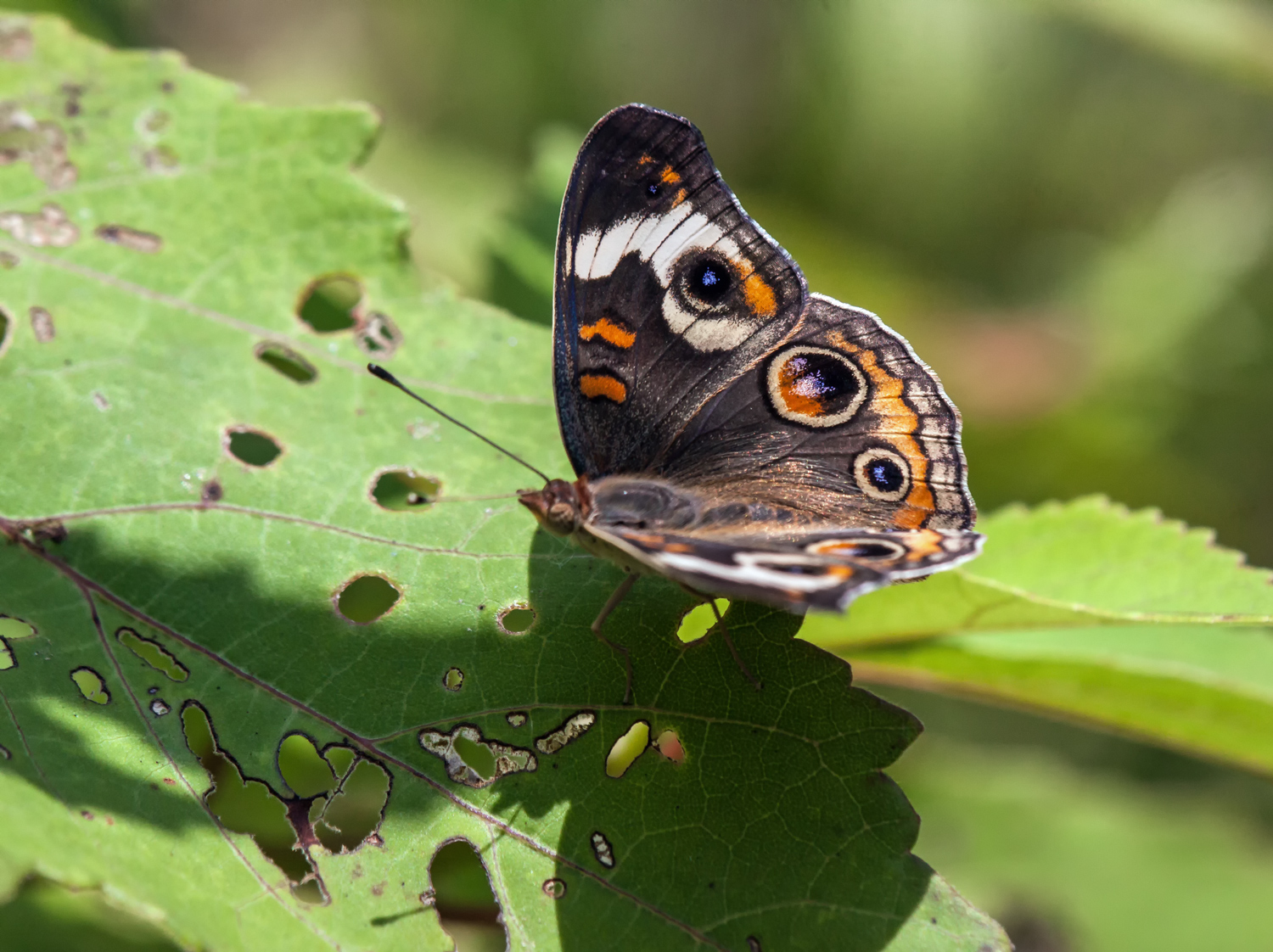
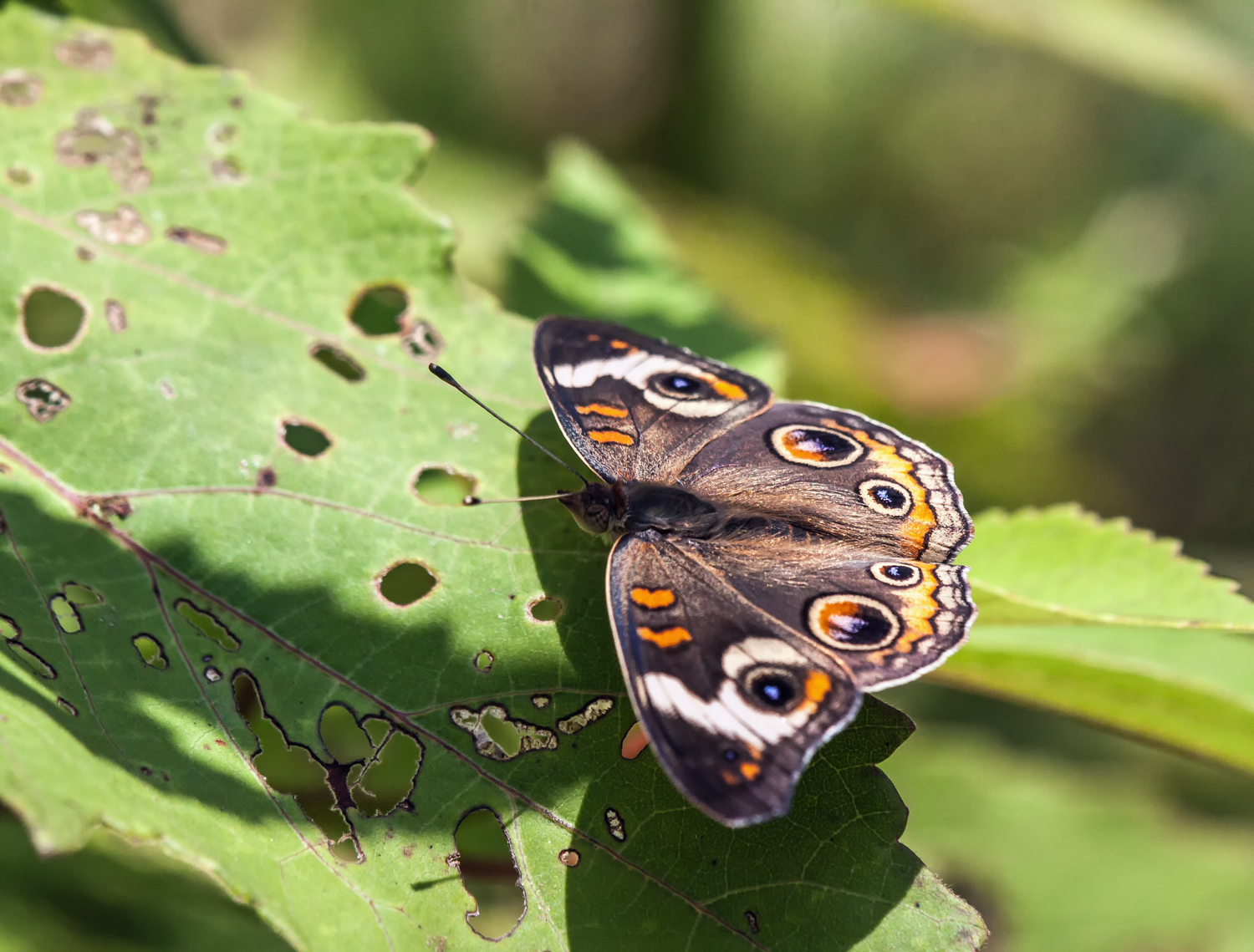
I have not yet spotted any Monarch butterflies this season, but last week at Occoquan Bay National Wildlife Refuge I did see a number of the similarly-colored Viceroy butterflies (Limenitis archippus). Viceroy butterflies are smaller than Monarchs, but the main visual difference between the two is the black line across the hind wings that is present with Viceroys, but not with Monarchs.

I chased after one Viceroy last week for quite some time and eventually managed to get these shots.

Viceroy

Viceroy

Viceroy

© Michael Q. Powell. All rights reserved.

Read Full Post »

Last week as I was exploring Prince William County, I encountered this large dragonfly  perched in a tree overhanging a fairly large stream. When I captured these images, I was not sure what kind of dragonfly it was. After consultations with some experienced dragonfly experts, I learned that this is a female Dragonhunter dragonfly (Hagenius brevistylus).

Dragonhunters are among the largest dragonflies in our area. Unlike darners, another group of large dragonflies that fly almost continuously as they seek prey, dragonhunters prefer to perch and wait patiently before they strike. As their name suggests, they specialize in hunting other dragonflies, reportedly including members of their own species.

Dragonhunter

Dragonhunter

Dragonhunter

© Michael Q. Powell. All rights reserved.


Read Full Post »

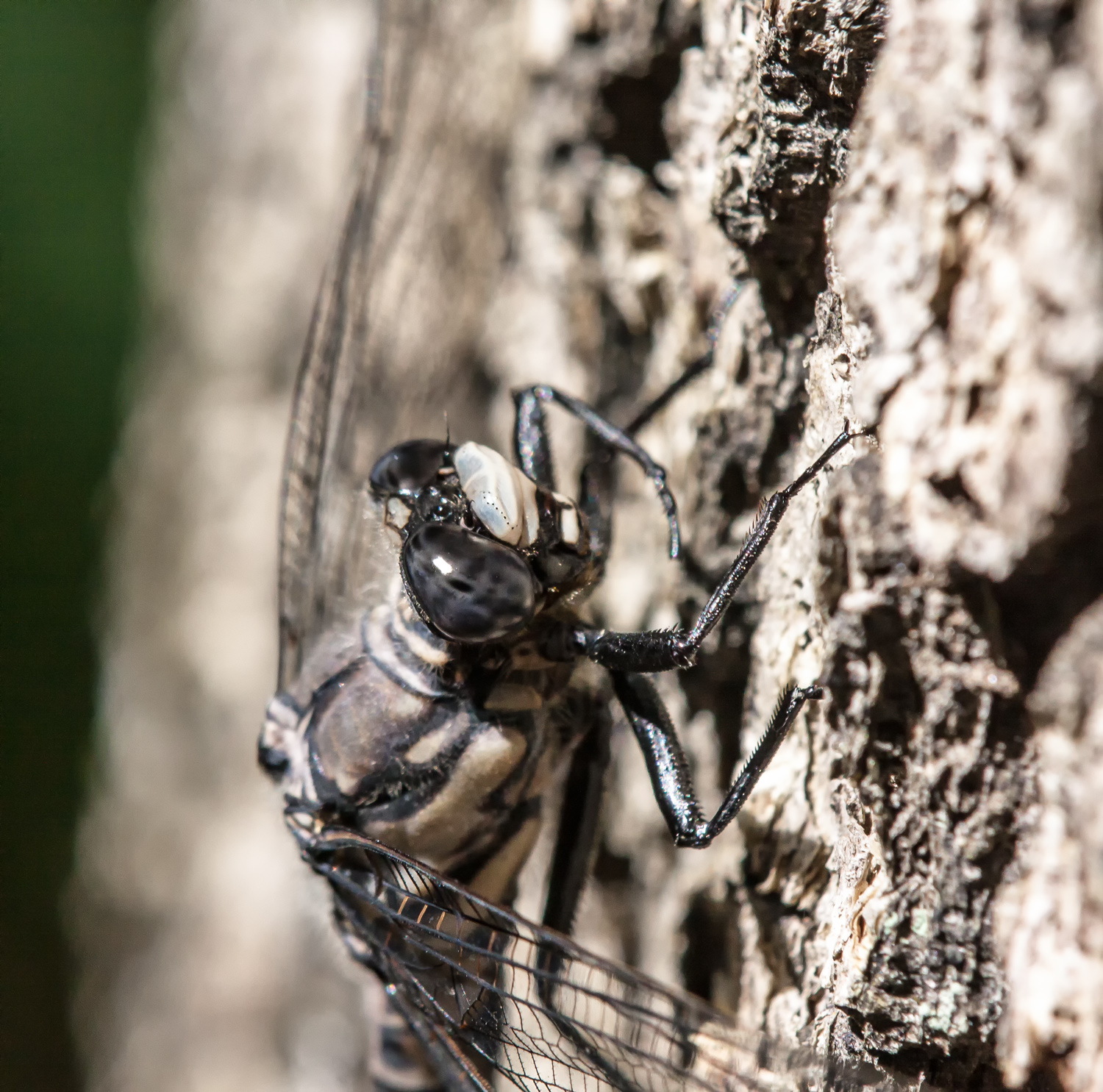
This past Wednesday I encountered a really cooperative Gray Petaltail dragonfly (Tachopteryx thoreyi) as I explored nearby Prince William County and was able to capture this tight head shot. I simply love this dragonfly’s beautiful gray eyes, which are a perfect for the monochromatic palette of the rest of its body and give this dragonfly a more sophisticated look than many of its more gaudily-clad brethren. (The coloration also helps this dragonfly to almost disappear from view when it is perched on a tree like this one.)

Gray Petaltail

© Michael Q. Powell. All rights reserved.

Read Full Post »

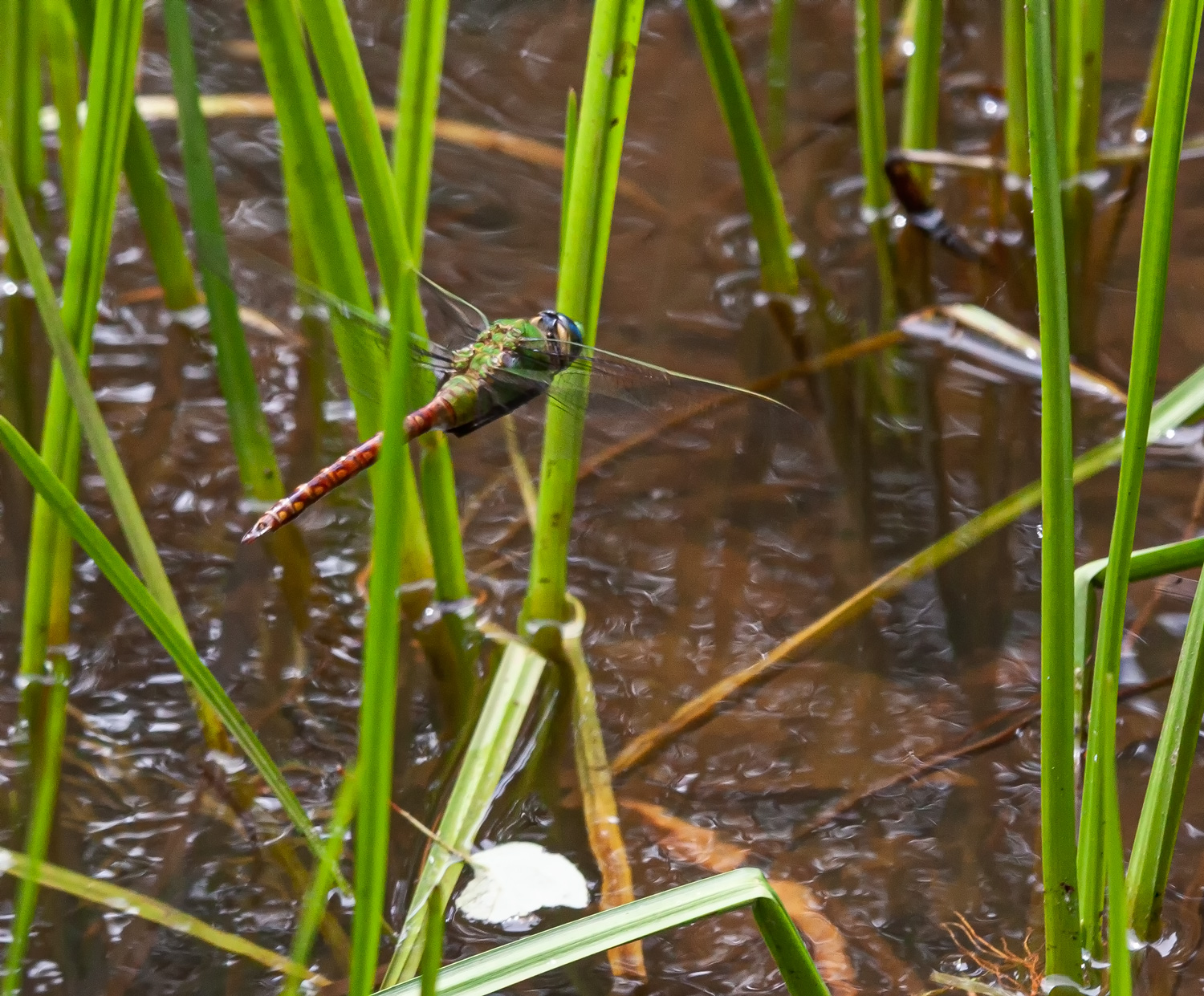
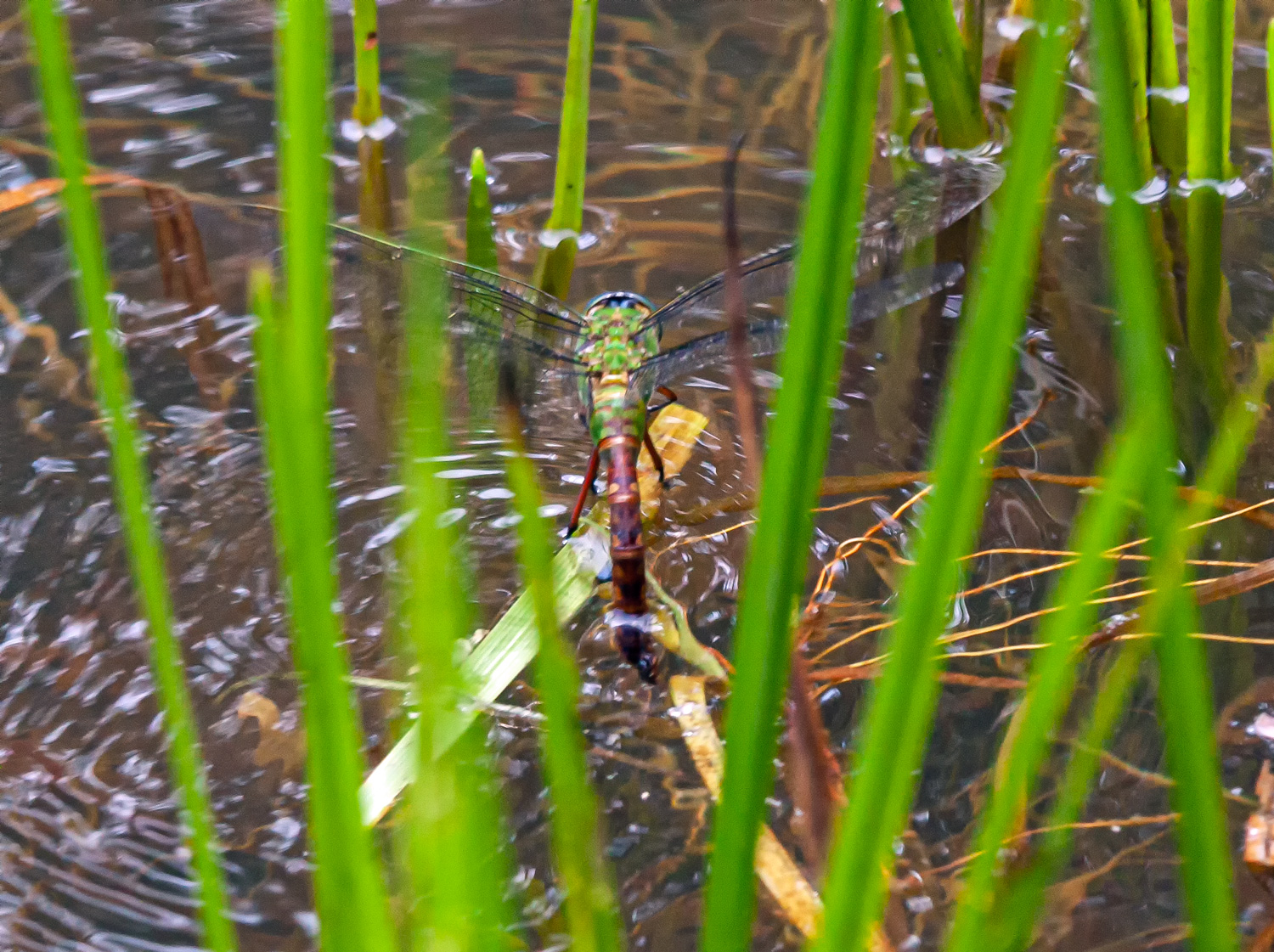
I have often thought that Comet Darner dragonflies (Anax longipes) are appropriately named for they have always been beautiful objects speeding by that I have been forced to admire from a distance. It is hard to miss a Comet Darner when they are around because they are very large and the red color on their bodies is so bright that it seems to glow. They generally patrol near the center of the ponds where I have seen them and I have never seen one stop to perch. According to the Dragonflies of Northern Virginia website, “Comets have expansive territories that may cover several miles and a network of small, shallow, forest-edged ponds. They’ll visit your pond, leave for 30 minutes to patrol other sites, then return.”

On Wednesday, I spotted a Comet Darner while I was at a small pond and started to track it in my camera’s viewfinder. Strangely this dragonfly was flying in and out of the vegetation growing in the shallow water, as you can see in the first shot. As I was trying to figure out what was going on, the Comet Darner dipped her abdomen in the water and began to deposit her eggs. If you look closely at the second image, it looks like she may actually have the tip of her abdomen submerged as she oviposited. I didn’t have a completely unobstructed view of this beautiful dragonfly, but I actually like the effect of the vegetation in the foreground—it helps to convey the sense that we are sharing a private moment.

Comet Darner

Comet Darner

© Michael Q. Powell. All rights reserved.

Read Full Post »

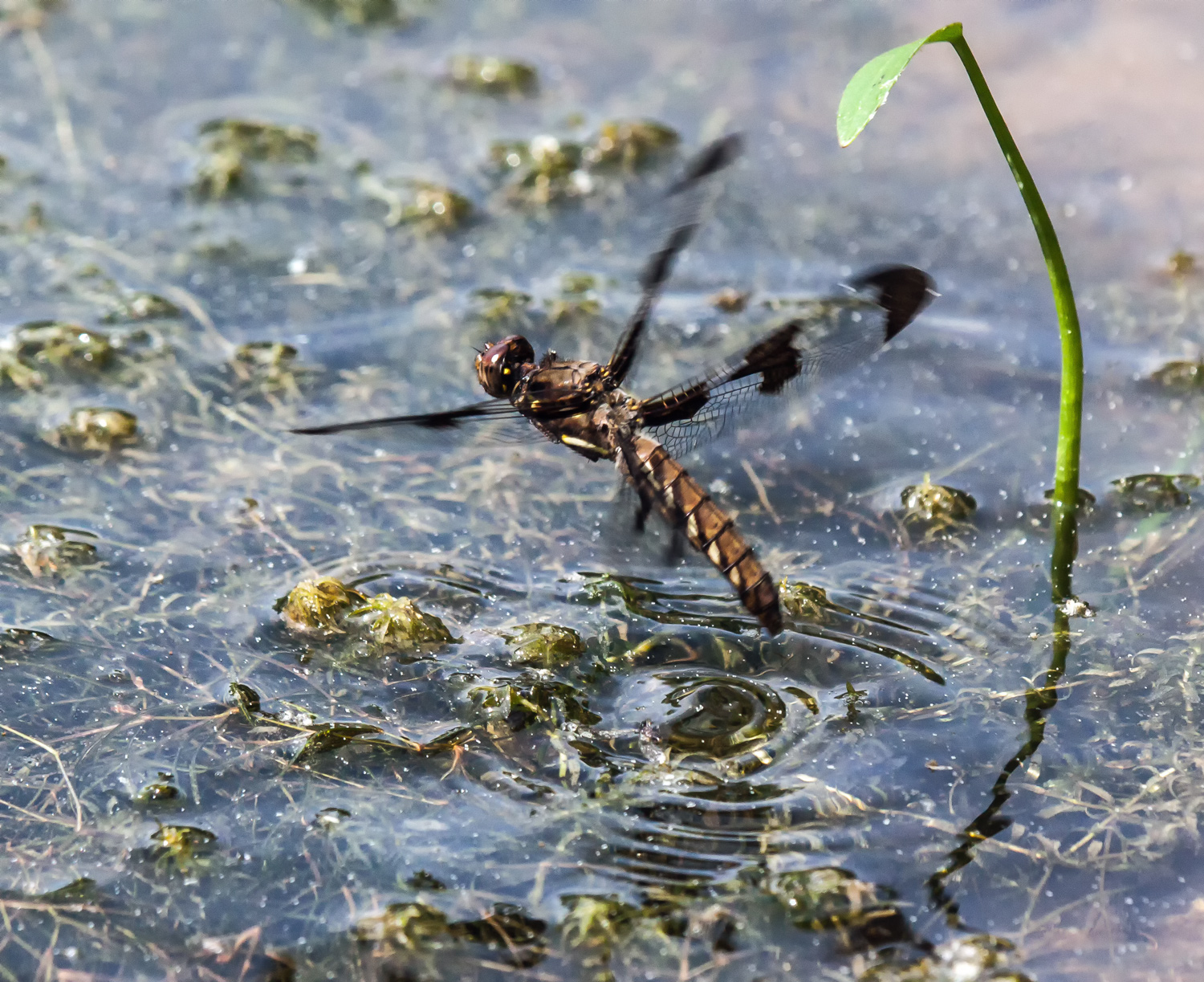
When it comes to photography, how do you balance its creative and technical components, how do you mix art and science? In the uncontrolled natural environment in which I take my photographs, I often have to be content with merely capturing an image, any image, of my subject before it disappears.

Sometimes, though, I can make minor adjustments on the fly that have a major impact on the final shot. Last week I was at Occoquan Regional Park, observing dragonflies as they zigged and zagged over the surface of the water. Most of them were common, readily identifiable species. Suddenly I spotted one that was different. I suspected, and later confirmed, that it was a female Unicorn Clubtail (Arigomphus villosipes) and knew that it was pretty rare to spot the female of this species.

The dragonfly began to dip the tip of her abdomen down in the water to deposit eggs and I sprung into action. She was not far from the shore and I snapped off a few shots looking down at her. Those images simply did not have any impact. Instinctively I dropped to my knees, which brought me closer to my subject. More importantly, it gave me a new perspective. I was closer to being at eye level with my subject and I was able to capture a more interesting background with the ripples in the water created by her actions.

This image, for me, is close to being an optimal mix of the technical and creative components of photography. It was challenging to shoot and simultaneously allowed me to express myself artistically. It is my response to the occasional naysayers who assert that photography is merely about capturing reality.


Unicorn Clubtail

© Michael Q. Powell. All rights reserved.

Read Full Post »

Last week at Occoquan Regional Park, I spotted a pair of Carolina Saddlebags dragonflies (Tramea carolina) flying in tandem.  I managed to capture this sequence of shots as the male released the female so she could deposit eggs in the water (ovipositing). Once she was done, he grabbed her again and they went on to the next spot.

After mating, male dragonflies and damselflies are concerned about protecting their reproductive efforts, lest a rival intervene and dislodge their sperm. Some males will circle overhead to fight off potential rivals while the female oviposits; some will hang onto her during the entire process; and a few will use the “catch and release” method illustrated in these images.

If you are interested in additional information about dragonflies and mating, I recommend an article on ThoughtCo.com entitled “How Dragonflies Mate–A Rough-and-Tumble Affair.” Some of you may be worried that this is some kind of scientific treatise, but it is not. To allay your fears and entice you to read the article, here is the opening paragraph of the article.

“Dragonfly sex is a rough-and-tumble affair. If you’ve ever seen a pair of mating dragonflies in the act, you know that their sexual coupling requires the flexibility and acrobatic skill of a “Cirque de Soleil” performer. Females get bitten, males get scratched, and sperm winds up everywhere. These strange mating habits have survived millions of years of evolution, so the dragonflies must know what they’re doing, right? Let’s take a closer look at how dragonflies mate.”

Carolina Saddlebags

Carolina Saddlebags

Carolina Saddlebags

© Michael Q. Powell. All rights reserved.


Read Full Post »

Frequent viewers of this blog have probably noticed that I am doing a little series of postings featuring common dragonflies that at first glance might look similar. Today’s “star” is a mature male Eastern Pondhawk (Erythemis simplicicollis). Like several other dragonflies in recent postings, the Eastern Pondhawk has a primarily blue body, but several characteristics make it possible to distinguish this species from others.

Both the male and female Eastern Pondhawks have green faces and the male has distinctive white terminal appendages, i.e. those little protrusions at the end of the abdomen (the “tail). Dragonfly specialists spend a lot of time focusing on those appendages, because immature males often have the same coloration as females. In this case, an immature male Eastern Pondhawk would be green with black bands on the abdomen. For the sake of comparison, I am including a photo I took on the same day of a female Eastern Pondhawk. If you compare the tips of the “tails” of the male and the female, you should be able to see the anatomical differences between the genders.

Although it doesn’t help in identifying them, I can’t help but note that Eastern Pondhawks are voracious predators. I think that I have captured more photos of Eastern Pondhawks feeding on other insects that of any other species. When I captured this image last week, I had no idea that the dragonfly was devouring a damselfly. If you click on the image to enlarge it and look just to the left of the dragonfly’s head, you will notice a set of small wings. As you look more closely, you can see the damselfly’s body hanging vertically just below the dragonfly’s head. Yikes!

Eastern Pondhawk

Eastern Ponndhawk


© Michael Q. Powell. All rights reserved.

Read Full Post »

Most dragonflies have clear wings, so I am happy when I see one with dark patches on its wings. It is even more exciting to see one with both brown and white patches, like this male Widow Skimmer dragonfly (Libellula luctuosa) that I spotted on Saturday at Occoquan Regional Park in nearby Lorton, Virginia.

When it comes to identifying dragonfly species, I have learned to focus not only on the colors of the wing patterns, but also on the number of such patches and their shapes. In the case of the Widow Skimmer, for example, both the males and females have the brown patches on the portion of the wings nearest the body.

Why are they called “Widow Skimmers?” Someone apparently thought the dark patches looked like the mourning crepe that historically widows wore. Even the Latin name “luctuosa” means “sorrowful.”

I used to be confused by the use of a female-associated word like “widow” with males, but I have gotten used to it. In fact, I no longer give a second thought to the idea of male damselflies, though I don’t have a clue about how that label affects their self-image.

Widow Skimmer

Widow Skimmer

© Michael Q. Powell. All rights reserved.


Read Full Post »

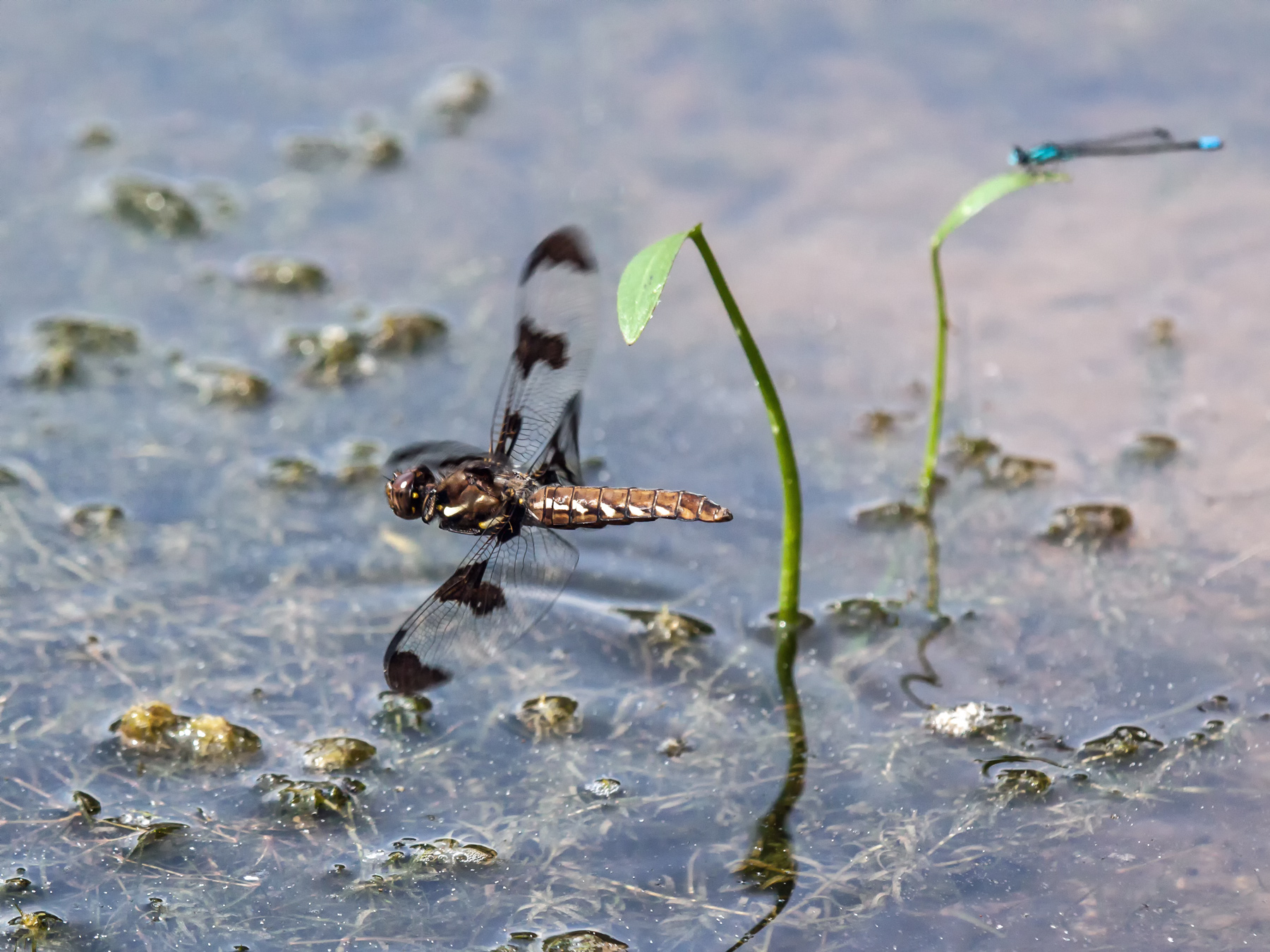
Yesterday at Occoquan Regional Park I spotted this female Common Whitetail dragonfly (Plathemis lydia) as she was depositing eggs into the water. I managed to capture a short series of shots that help to illustrate what she was doing.

She would fly low over the water as in the first shot and then hover over what she determined was a good spot. When she was ready, she dipped the tip of her abdomen into the water, creating the circular ripples that you see in the second image. Immediately she returned to her starting position as the ripples began to spread. Sometimes she would repeat this sequence several times at the same spot, while other times she would move on to another spot.

What was the male doing at this time? A male Common Whitetail dragonfly, which I assume was the one with which she had just mated, patrolled a few feet directly over her as she was depositing the eggs. I am pretty sure that he was there to deter or fight off potential rivals that might try to interfere with the perpetuation of his genes.

Common Whitetail

Common Whitetail

common whitetail

© Michael Q. Powell. All rights reserved.

Read Full Post »

Most of the dragonflies that I see at this time of the year—and there are a lot of them—are members of the skimmer family. This is the largest family of odonates (the insect order of dragonflies and damselflies) and includes the species most likely to be seen by a casual  dragonfly observer.

When I first started getting interested in dragonflies, I focused primarily on colors—there were blue dragonflies, white dragonflies, red dragonflies, and so on. Over time I began to notice more and more differences between somewhat similar species.

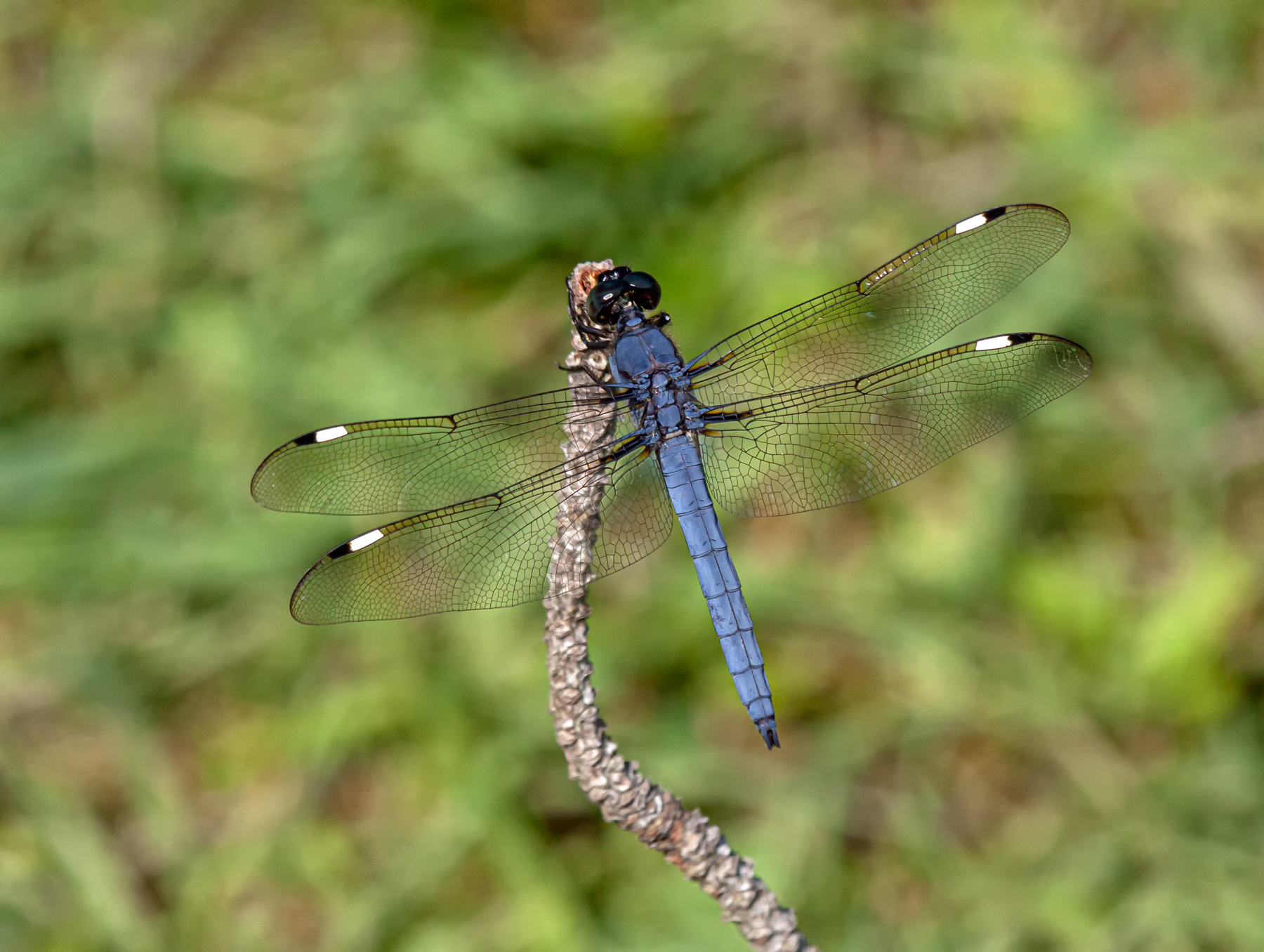
Today I decided to feature photos of two dragonflies that I spotted on Thursday at Jackson Miles Abbott Wetland Refuge. Both are male, both are blue, and both are perched in a similar position. The first one is a Spangled Skimmer (Libellula cyanea).  Even though it shares its blue coloration with several other species, the little white patches on the edge of the wings, known as “stigma,” are both distinctive and diagnostic. The second one is a Slaty Skimmer (Libellula incesta). It is probably the darkest colored dragonfly in our area in terms of both its body and its eyes, which sometimes appear to be almost black.

Do you see these two dragonfly species in your area? I encourage you to look closely at the ones that you happen to see and see if you can identify some of the differences. You may find yourself being drawn more deeply, as I have been, into the wonderful world of dragonflies.

Spangled Skimmer

Slaty Skimmer

© Michael Q. Powell. All rights reserved.

Read Full Post »
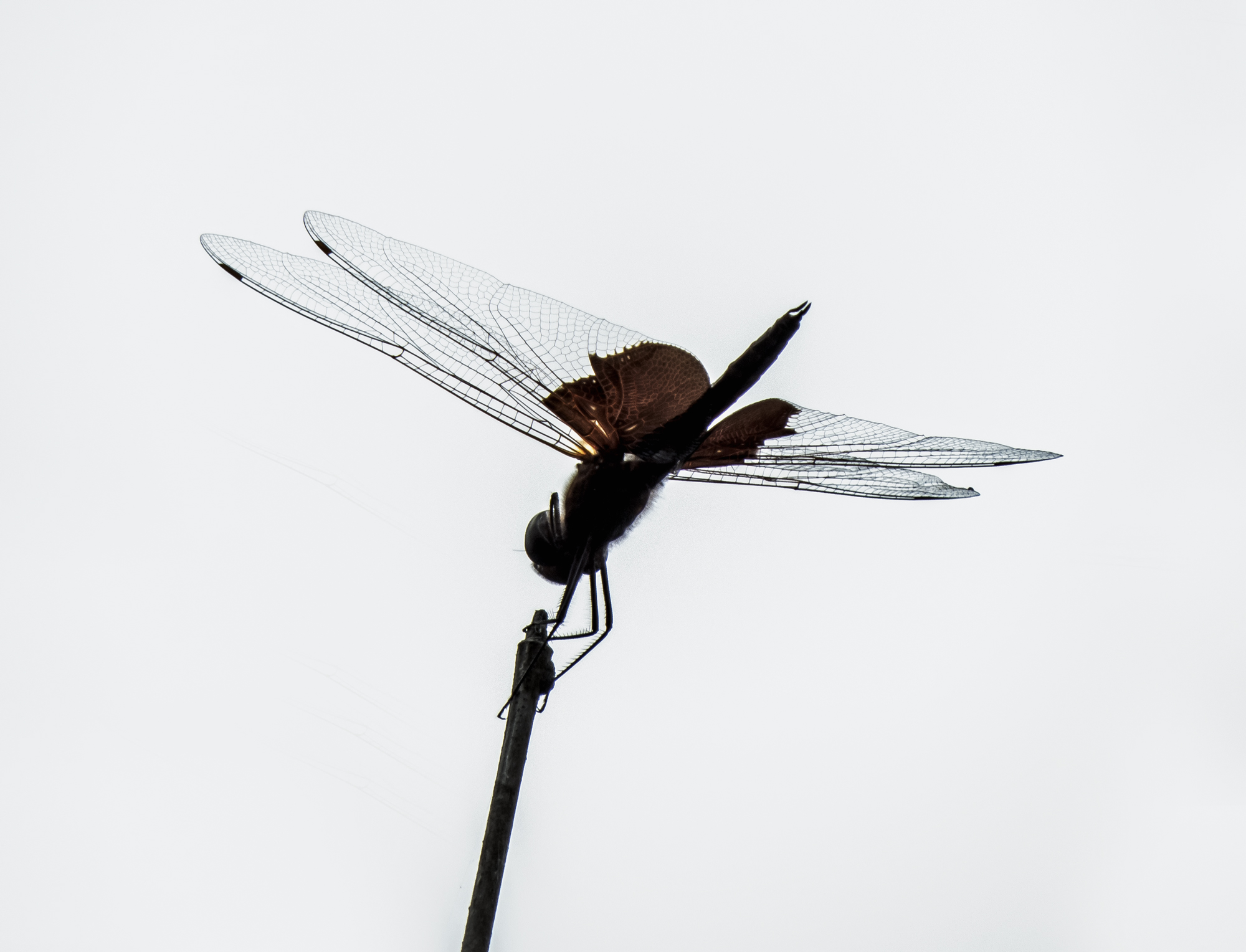
As I was exploring Mason Neck West Park in nearby Lorton, Virginia last Saturday, fellow dragonfly enthusiast Walter Sanford pointed to a dragonfly perched at the top of a tree and said it would make a good “artsy” shot. He was right. Although some details are lost in the shadows, the simplified silhouetted view lets you focus on the essence of the dragonfly.

The patches on the inner wings indicate that it is one of the saddlebags dragonflies. I think it might be a Carolina Saddlebags (Tramea carolina), but there is also a chance that it could be a Black Saddlebags (Tramea lacerata).

Carolina Saddlebags

© Michael Q. Powell. All rights reserved.

Read Full Post »
I am not sure if Blue-fronted Dancer damselflies (Argia apicalis) are always happy, but the ones that I spotted yesterday at Jackson Miles Abbott Wetland Refuge seemed to be smiling at me.

The beautiful light blue color on their upper bodies and their striking blue eyes make Blue-fronted Dancers relatively easy to spot and to identify.

Blue-fronted Dancer

Blue-fronted Dancer

Blue-fronted Dancer

© Michael Q. Powell. All rights reserved.

Read Full Post »

This past Saturday I was thrilled to spot this mating pair of Ebony Jewelwing damselflies (Calopteryx maculata). No, I am not a peeping Tom, but I do enjoy being able to see the male and female of a species together, so that I can compare their coloration and markings.

When it comes to damselflies, I just love the sidewards heart that their bodies create when they are in this mating position. I have been told that the process is somewhat brutal, but I like to think of it as romantic, two hearts joined as one.

Ebony Jewelwing

© Michael Q. Powell. All rights reserved.

Read Full Post »

I have always been fascinated by shadows and reflections, which often lend an additional element of interest to a more straightforward shot. When a recently emerged dragonfly, probably a Lancet Clubtail (Gomphus exilis), flew into a nearby tree, I was utterly mesmerized by the shadow that it cast onto the leaves of the tree. The shapes and patterns of the green leaves create an almost abstract backdrop for the scene that really drew me in.

Most of my images are detailed, realistic portraits of my wildlife subjects, but at certain moment I love to attempt to capture more “artsy” images like this one.

Lancet Clubtail

© Michael Q. Powell. All rights reserved.

Read Full Post »

We are now in prime dragonfly season and many familiar species are reappearing, like this beautiful Needham’s Skimmer dragonfly (Libellula needhami) that I spotted on Wednesday at Occoquan Bay National Wildlife Refuge.

I love the beautiful orange-gold color on the leading edges of the wings of this species, a color that really sparkles in the sunlight. I was fortunate to capture this dragonfly in a way that blurred the background. Depth of field is always an issue in situations like this and you can probably see that the tips of the wings are not in sharp focus, but I am ok with that and think it helps draw the viewer’s eyes to the dragonfly’s main body and, in particular, to its wonderful eyes.

Needham's Skimmer

© Michael Q. Powell. All rights reserved.


Read Full Post »
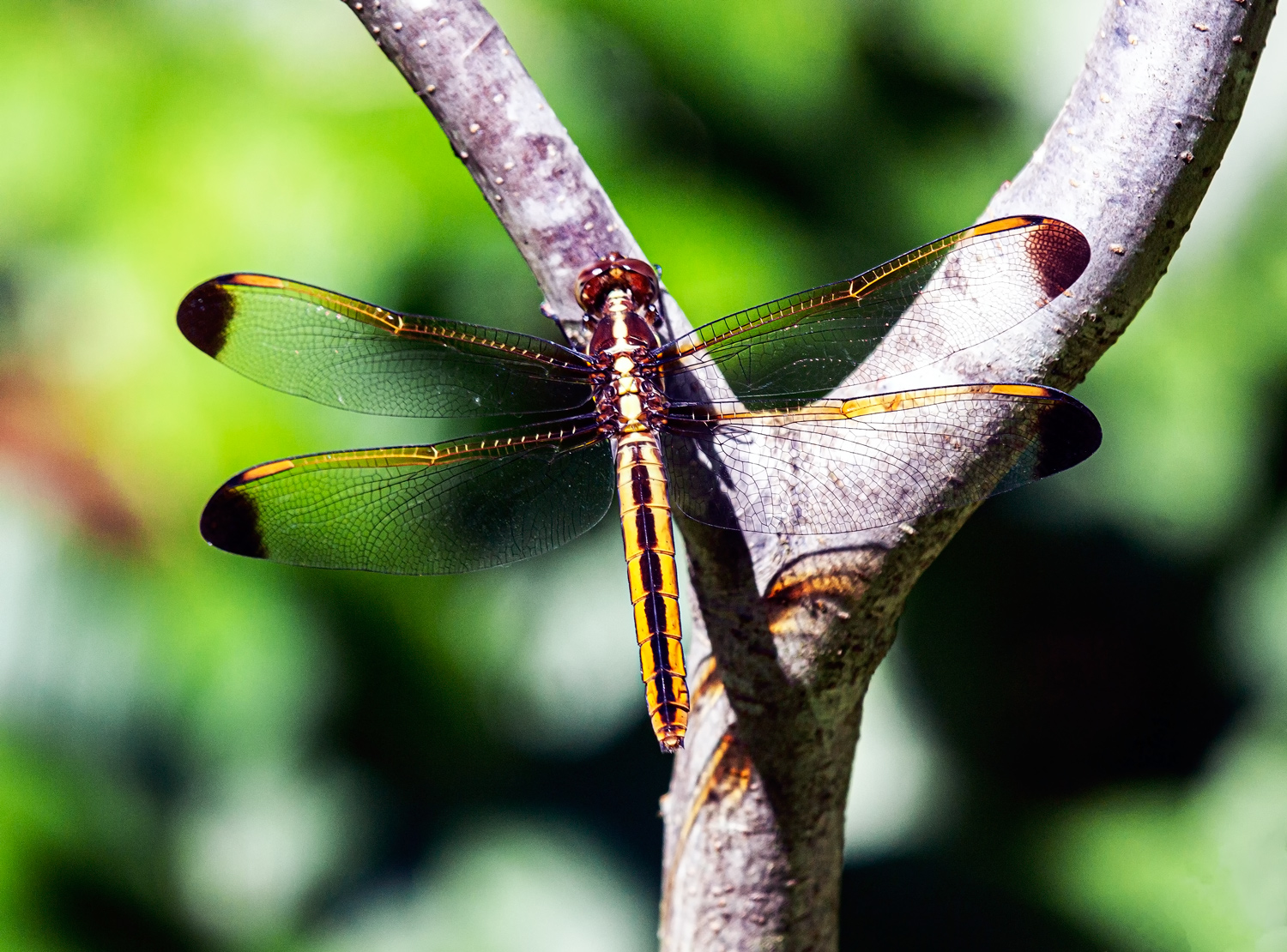
Earlier this week I did a posting that described the Eastern Amberwing dragonfly as “unmistakable.” When it comes to damselflies, that title almost certainly belongs to the very distinctive Ebony Jewelwing damselfly (Calopteryx maculata). There is no other damselfly in our area that has completely dark wings like the Ebony Jewelwing.

I spotted this handsome male Ebony Jewelwing on Monday at Occoquan Regional Park. How do I know it is a male? Well, the female has a conspicuous little white patch on her wings that is technically known as a “pseudostigma,” which this damselfly in lacking. Additionally, the little hoop-like appendage at the end of this damselfly indicates that it is a male.

These little damselflies like to spend a lot of time in the semi-darkness of shaded forest streams, like the location at which I photographed this Ebony Jewelwing.

Ebony Jewelwing

© Michael Q. Powell. All rights reserved.


Read Full Post »

Throughout the month of May I have struggled to identify the dragonflies and damselflies that I have photographed. So many of the species seem so similar that I have had to defer to experts for help. Over the years I have learned that the best way to get help on a Facebook forum is to misidentify a subject—some experts, who might not respond to a request for help, feel compelled to correct you and demonstrate their superior knowledge.

This past Friday at Jackson Miles Abbott Wetland Refuge, it was nice to spot a familiar dragonfly species that was immediately identifiable—there is simply no other dragonfly in our area the looks like an Eastern Amberwing (Perithemis tenera). Even the name is helpful in drawing attention to the key identification feature, the distinctive amber wings.

These dragonflies are among the smallest ones in our area, but they tend to perch on low vegetation overhanging the water (especially males like this one), so they are relatively easy to spot. Although they tend to be a little skittish, if you are patient and persistent you can snag some shots that show the beautiful details of the Eastern Amberwing dragonfly.

Eastern Amberwing

© Michael Q. Powell. All rights reserved.

Read Full Post »
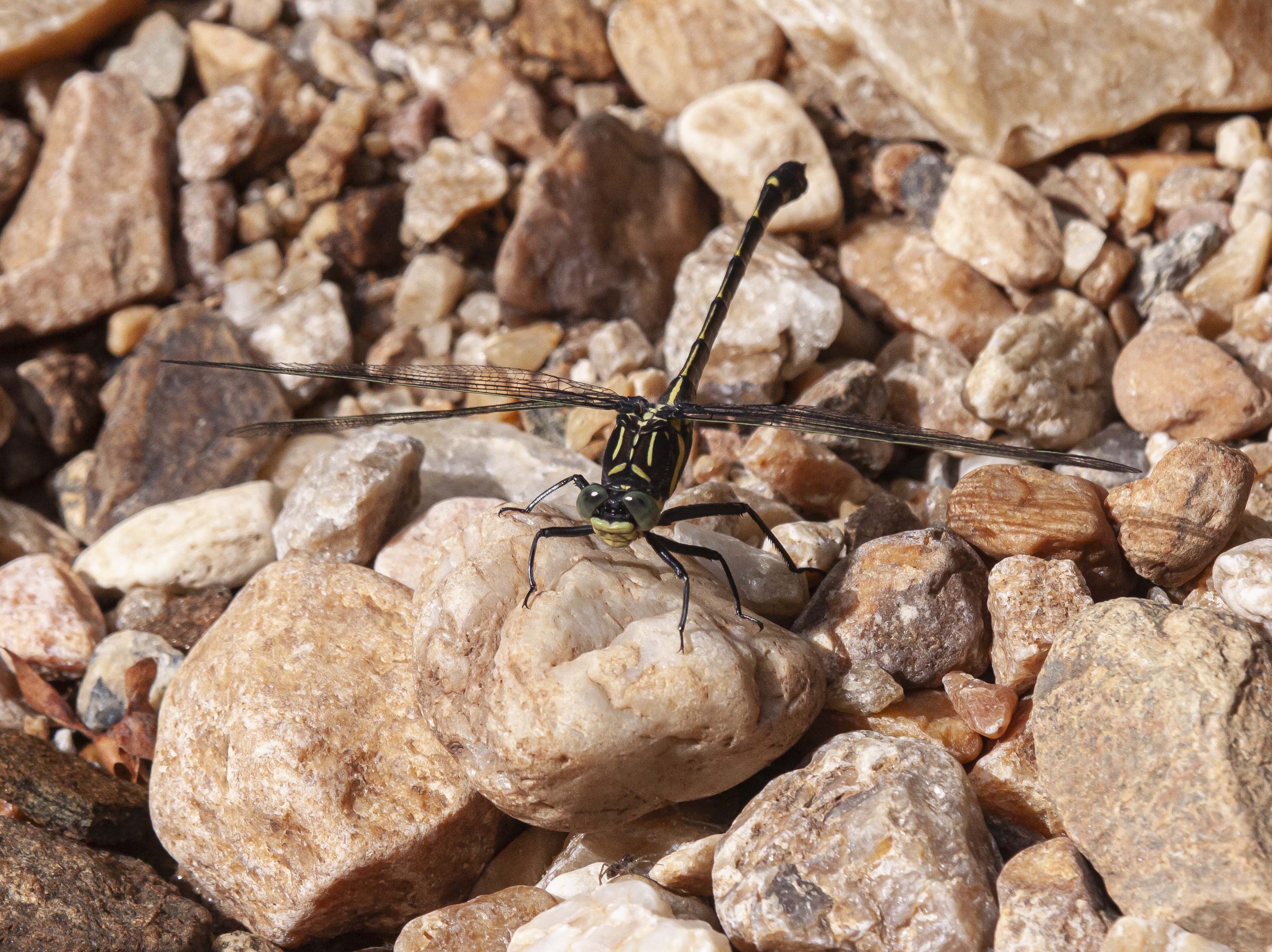
I was exploring a small creek in Prince William County, Virginia last week with fellow dragonfly enthusiast Walter Sanford when suddenly I spotted a dragonfly hanging almost vertically from a branch not far above the ground. It is always a good sign when a dragonfly is hanging vertically, because many of the uncommon species perch in this way. My initial thought was that it was a clubtail and I informed Walter, who was searching another part of the stream, that it had two yellow stripes on its thorax. He reminded me that most clubtails have two yellow stripes, but was interested enough to move closer to me.

Walter has a lot more experience with dragonflies than I do and he grew visibly excited when he looked at the dragonfly though his camera. It was not a clubtail at all, but a relatively uncommon Arrowhead Spiketail dragonfly (Cordulegaster obliqua). Not only was it an Arrowhead Spiketail, it was a female and females tend to be harder to find than males. As I got closer, I could see the “spike” protruding from the tip of the abdomen, which showed it was a female, and the telltale arrow shaped markings all the way down the abdomen. We believe that this was the first documented sighting of an Arrowhead Spiketail in Virginia this year.

The dragonfly was unusually cooperative and both Walter and I were able to take lots of shots without disturbing her. In fact, she was still on the same perch when we left, though she was absent when we returned an hour or so later.

In situations like this, Walter and I like to do companion blog postings independently. Our photography styles and personal backgrounds color the way in which we produce our blog postings and they help to give our readers different perspectives on the same subjects and situations.

I have provided an assortment of images that show the female Arrowhead Spiketail from different distances and angles. I decided to do them in a gallery style—if you want to see them in a larger format slide show, which I recommend doing, just click on any one of them and then click the arrows. You probably notice that some of the images are intended to help you to identify the dragonfly and others are more “artsy.”

Be sure to check out Walter’s companion posting. I will include a link to it after I have published this article and have a chance to check out Walter’s posting.

UPDATE: Walter’s posting is wonderful. In addition to some excellent photos of the dragonfly, Walter provides a lot of contextual information about the location at which we found it and additional information about the species. Click here to see his posting.

© Michael Q. Powell. All rights reserved.

Read Full Post »

Survival in the wild is challenging even when you are able-bodied. The difficulties are multiplied when you have a major deformity, like this Gray Petaltail dragonfly (Tachopteryx thoreyi) that I spotted on Friday at Occoquan Regional Park.

I not sure what caused the sharp bend in the abdominal region of this dragonfly, but I observed that it was able to fly and to perch. Perhaps it is able to capture prey, but mating seems out of the question. I admire that the fact that it appears to be fighting for its survival.

For the sake of contrast, I am including a photo of another Gray Petaltail dragonfly that I observed the same day at the park.

Gray Petaltail

Gray Petaltail

© Michael Q. Powell. All rights reserved.

Read Full Post »

« Newer Posts - Older Posts »