Feeds:
Posts
Comments

Archive for the ‘Insects’ Category

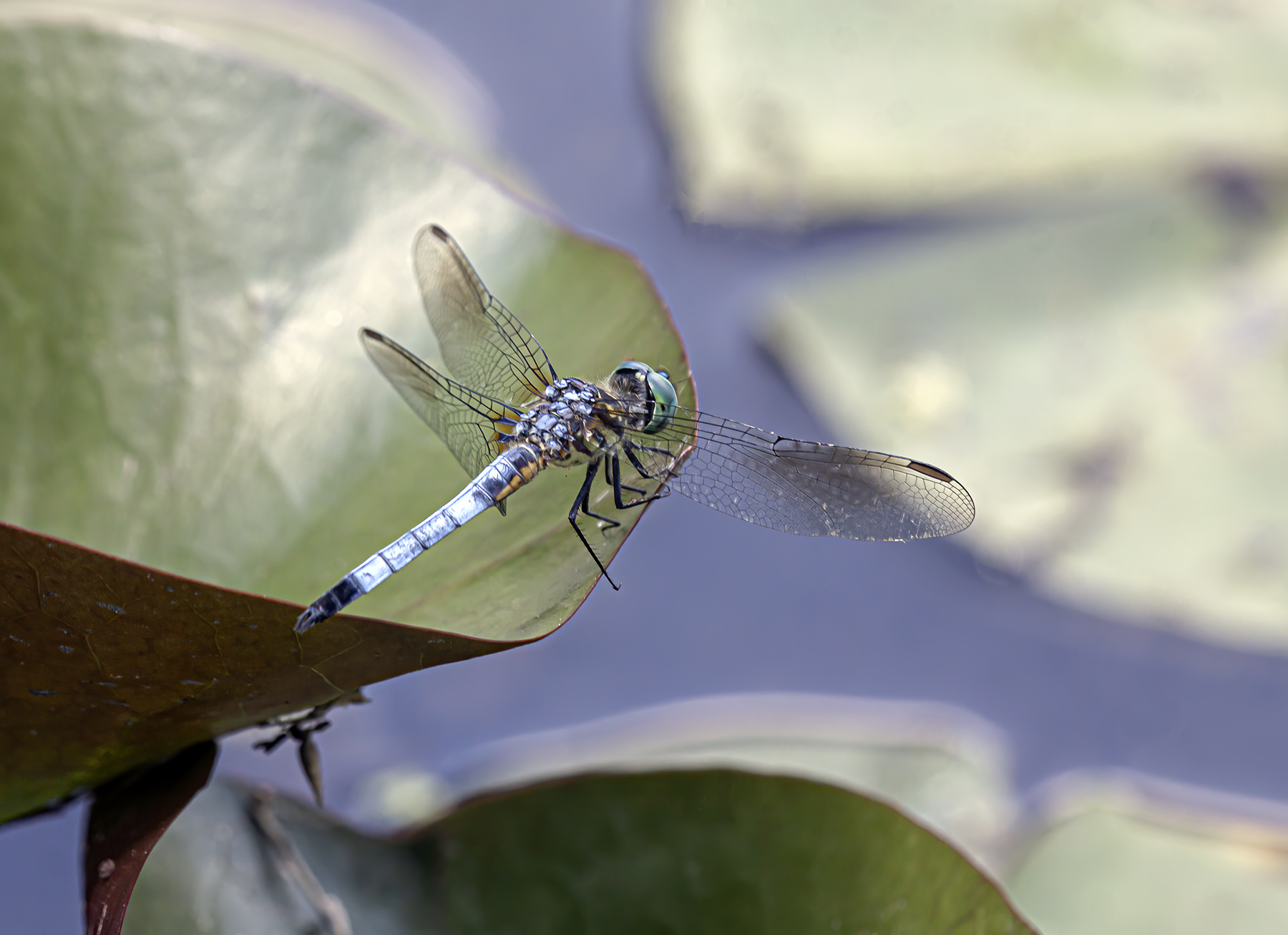
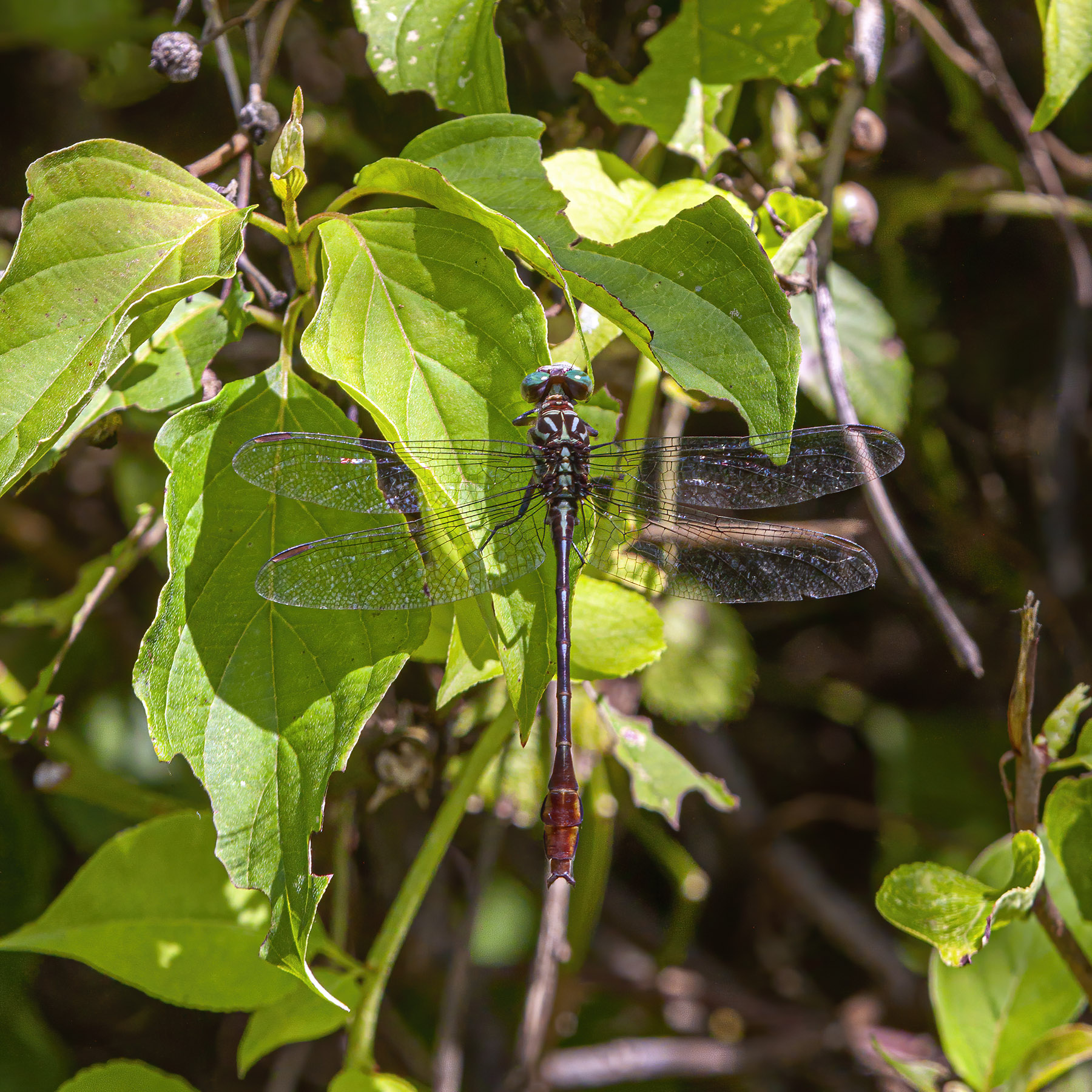
This week I made three visits to Jackson Miles Abbott Wetland Refuge and I was excited to spot a male Russet-tipped Clubtail dragonfly (Stylurus plagiatus) during two of those trips. Some of you may recall that I spotted a female Russet-tipped Clubtail earlier this month, which I documented in a posting entitled “Russet-tipped Clubtail in August,” but my sightings this week were the first males that I have seen this season.

Some species of dragonflies are so widespread that I will see dozens or even hundreds of members of that species in a single day. Other species, like the Russet-tipped Clubtail, have such a low population density that I can walk about for several hours and consider myself lucky to spot a single one, even when I know that I am in an area where they can be found.

Russet-tipped Clubtails belong to the genus Stylurus, a group often referred to as “hanging clubtails” from their tendency to hang nearly vertically when they perch, as in the second photo below that I captured on Tuesday during a photowalk with fellow dragonfly enthusiast Walter Sanford. On rare occasions you can find one perched horizontally atop a leaf, as in the first image below that I captured yesterday.

If you compare these photos of the male Russet-tipped clubtails with those of the female in the previous posting, you will see many physical similarities, including the long, thin abdomen and the stunning green eyes. The most notable differences between the two genders are the much larger “clubtail” on the male and the different-shaped terminal appendages at the tip of the abdomen.

Many summer dragonfly species are still hanging on and several more late-summer/early autumn species should be emerging soon, so I hope to continue to include a healthy dose of dragonflies in my postings, along with more of the beautiful butterflies that seem to have had a summer resurgence.

 

Russet-tipped Clubtail

Russet-tipped Clubtail

© Michael Q. Powell. All rights reserved.
 

Read Full Post »

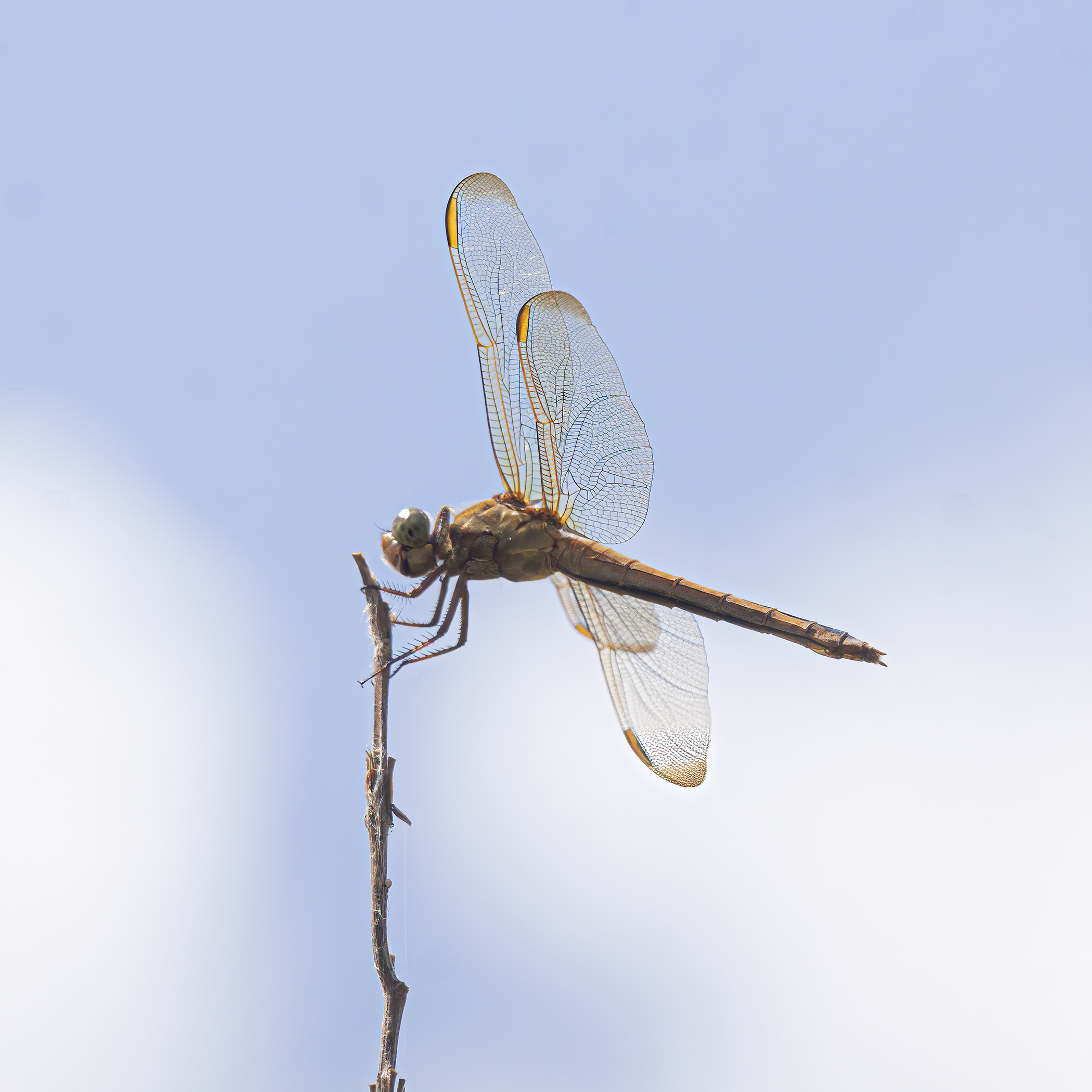
Some dragonflies seems to seek the highest possible perch and I love photographing them with the sky and the clouds as the simple backdrop.  I spotted this female Needham’s Skimmer dragonfly (Libellula needhami) last week at Occoquan Bay National Wildlife Refuge.

I was thrilled that I was able to maneuver myself into a shooting position almost directly below the dragonfly and shoot upwards at a sharp angle. I was also happy to capture the beautiful golden markings near the leading edges of the wings, one of the most distinctive characteristics of this species that is quite common where I live.


Needham's Skimmer

© Michael Q. Powell. All rights reserved.
Read Full Post »

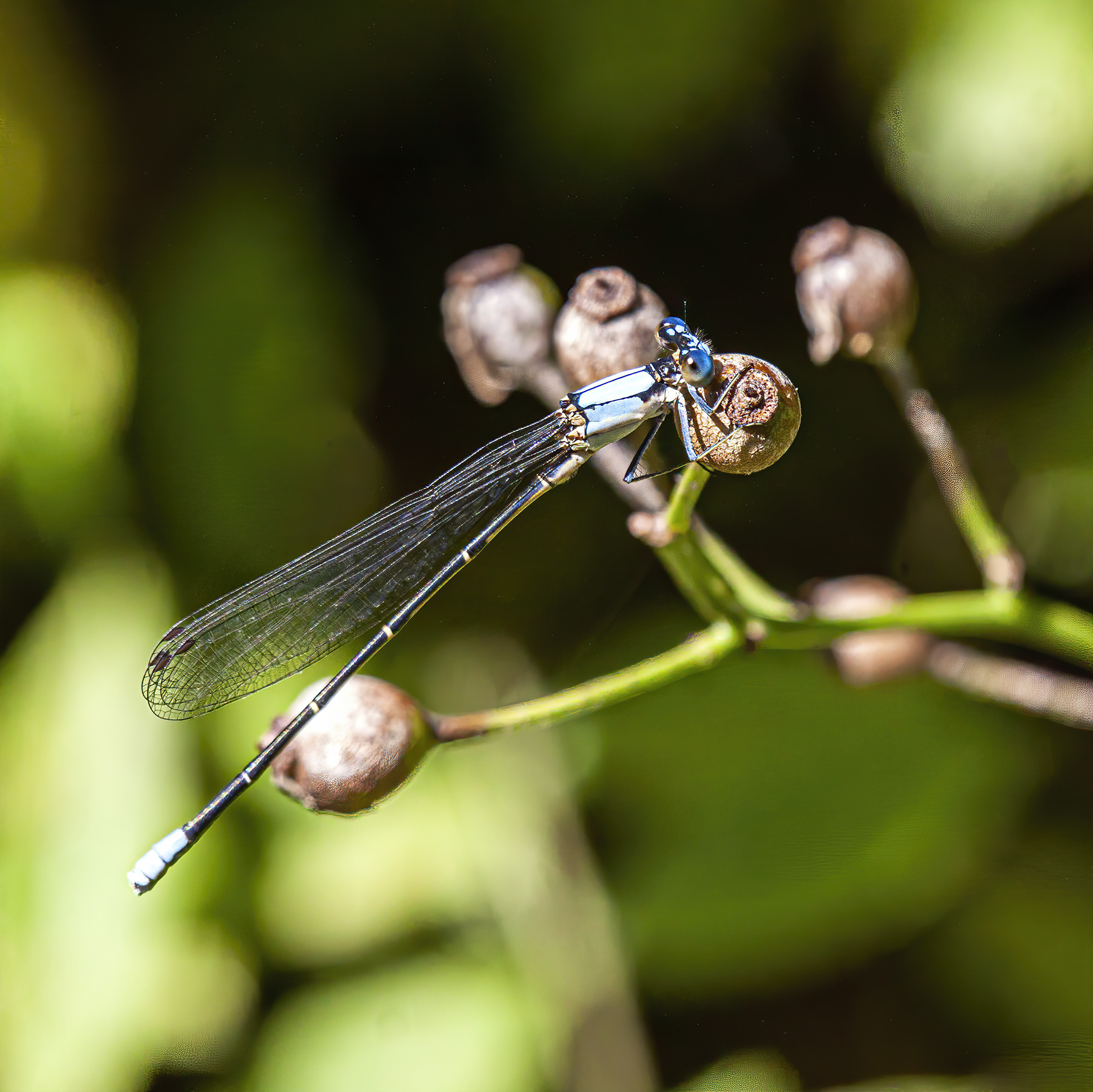
I love the stunning eyes of this handsome male Blue-fronted Dancer damselfly (Argia apicalis) that I spotted yesterday during a visit to Jackson Miles Abbott Wetland Refuge with fellow odonata enthusiast Walter Sanford. Normally these little guys perch on or near the ground, but I was fortunate when this damselfly chose to perch on some vegetation at almost eye level, which made it a lot easier to get a clear shot of its amazing eyes.

Blue-fronted Dancer

© Michael Q. Powell. All rights reserved.


Read Full Post »

Male dragonflies are often territorial and spend a lot of their time chasing off intruders, like these rival male Eastern Amberwing dragonflies (Perithemis tenera) that I spotted earlier this month at Jackson Miles Abbott Wetland Refuge. Although Eastern Amberwing dragonflies are quite small (one inch (25 mm) or less in length), they tend to hover a bit when they are flying, which makes them a little easier to photograph in flight than most other dragonfly species.

Eastern Amberwing

© Michael Q. Powell. All rights reserved.

Read Full Post »

I love butterflies and am thrilled that I am finally beginning to see them more regularly after a slow start to this season. I spotted this beautiful female Eastern Tiger Swallowtail (Papilio glaucus) last week at Jackson Miles Abbott Wetland Refuge perched high in a patch of what looks like Joe Pye weed (Eutrochium purpureum).

Eastern Tiger Swallowtail

© Michael Q. Powell. All rights reserved.


Read Full Post »

Some of the dragonfly species that I search for are around for only a few weeks, while other species have a flight season of multiple months. Calico Pennants (Celithemis elisa) are in the latter category. I photographed some Calico Pennants in the middle of June and spotted this colorful immature male this past Tuesday—I am happy to see that they are still around.

Calico Pennants are so small—about 1.3 inches (33 mm) in length—that many viewers have probably never seen one. I love their bright colors and multi-colored wing markings. Adult males are red while females and immature males, like this one, are yellow. I can tell that this one is a male because of the distinctive appendages at the tip of the abdomen.

If you want to see photos of a female Calico Pennant and an adult male, be sure to check out the earlier posting entitled “Calico Pennant dragonflies in June.”


Calico Pennant

© Michael Q. Powell. All rights reserved.

Read Full Post »

It has obviously been a rough summer for this female Halloween Pennant dragonfly (Celithemis eponina). Her tattered wings are testaments to her struggle to survive. We can only speculate about what caused all of that damage, for only she truly knows what experiences led to those ragged edges. Somehow it seems appropriate that the perch that she chose is equally full of rough and jagged edges.

This summer has been difficult for many of us too and I suspect that a lot of us feel as frazzled and beat-up as this beautiful little dragonfly, even though we may not show it on the outside. Be gentle with yourself and with others that you encounter. You never know how fragile they may be or what struggles they are going though—we all have ragged edges.

Halloween Pennant


© Michael Q. Powell. All rights reserved.

Read Full Post »

Do you photograph the same subjects over and over again? I know that I do, hoping that each new opportunity might provide something different—perhaps a new pose, an unusual angle of view, or different lighting conditions.

That is why I was chasing after this male Eastern Amberwing dragonfly (Perithemis tenera) last week at Jackson Miles Abbott Wetland Refuge. Usually I find the males of this common species buzzing around at water’s edge or perched on vegetation overhanging or growing out of the water. This individual, however, was flying over a grassy patch adjacent to the pond, periodically pausing to perch only a few inches above the ground.

I took this shot from almost directly above the little dragonfly—Eastern Amberwings are less than an inch (25 mm) in length—and that angle helped me to capture the entire body in relatively sharp focus. Sharpness, though is only one of the factors that I use in evaluating my photos and often it is not the most important one. In this case, I really like the angled pose of the dragonfly and I the dominant colors in the image. I absolutely love the way that the beautiful warm brown colors of the dragonfly contrast with the cool greens in the background.

Sometimes we grow so comfortable with our familiar surroundings that we take them for granted. I strive to look at the world with optimism and fresh eyes each day, confident that I will discover beauty almost anywhere that I find myself.

Eastern Amberwing

© Michael Q. Powell. All rights reserved.

Read Full Post »

In a recent posting featuring my first Monarch butterfly (Danaus plexippus) of the year, I lamented the scarcity of Monarchs this summer. A few days later, I was delighted to spot several more Monarchs during a visit to Jackson Miles Abbott Wetland Refuge. The Monarchs moved about quite a bit and I ended up sweaty and out of breath after chasing them all over, but I was more than happy with the results.

The Monarchs concentrated most of their efforts on several patches of swamp milkweed at the edge of a small pond. I moved quickly as I tried to compose shots with both a good background and a photogenic wing position, which often was easier said than done.

In the first shot you get a view of some of the vegetation growing in the pond and the lighting from that angle really made the colors pop. The second shot gives you a wide view of the largest patch of swamp milkweed that the Monarch was sharing with some much smaller Pearl Crescent butterflies. I captured the final image in an adjacent field. The dominant green of the vegetation and the vertical lines of the stalks of the vegetation give this image a much different feel that the other two images. I think the three images work well together as a little collection.

I continue to remain hopeful that I will continue to see more Monarchs (and other butterflies too) as we move deeper into summer.

Monarch butterfly

Monarch butterfly

Monarch butterfly

© Michael Q. Powell. All rights reserved.

Read Full Post »

Having recently photographic some hummingbirds in flight, I couldn’t help but think of them when I first spotted several Snowberry Clearwing Moths (Hemaris diffinis) last week at Occoquan Regional Park. The fight characteristics are quite similar as they hover in mid-air and extract nectar from flowers. Unlike hummingbirds that have a skinny bill and a tongue, clearwing moths use a long proboscis to reach into the flowers.

In our area we have two similar species of clearwing moths, the Snowberry Clearwing and the Hummingbird Clearwing (Hemaris thysbe). They are similar in appearance and behavior, but generally the Hummingbird Clearwing Moth is redder in appearance, so I believe these are all Snowberrys.

The clearwing moths seem to be very attracted to several small patches of swamp milkweed. Other insects had a similar attraction and if you look in the center of the milkweed in the second photo, you will note an orange insect that I can’t see well enough to identify.

Snowberry Clearwing Moth

Snowberry Clearwing Moth

Snowberry Clearwing Moth

© Michael Q. Powell. All rights reserved.

Read Full Post »

When it comes to damselflies, you often have to look closely for identifying marks, because so many of them are colored with variations of blue and black. I really could not identify the species of this little damselfly when I took this photo on Wednesday while exploring a creek in Prince William County. I decided that if he was willing to pose for me on a leaf, I was more than willing to take his picture.

When I pulled up the image on my computer, I immediately noticed some distinctive blue markings near the tip of the abdomen. Those markings helped me to  identify it as a male Dusky Dancer (Argia translata), a species that I had never before photographed.

We are still in a kind of summer doldrums period, where the summer dragonflies have been buzzing around for quite some time, and it is too early for the autumn species to appear. It is therefore pretty exciting for me to photograph a new species—I might have seen a Dusky Dancer in the past, but I am pretty sure that I was not able to capture an image, so in my mind it did not “count.”

Be sure to click on the image if you want to get a closer view of the distinctive markings and beautiful eyes of this cool-looking Dusky Dancer damselfly.

Dusky Dancer

© Michael Q. Powell. All rights reserved.

Read Full Post »

What do you think of when you hear the word “common?” Although this term can refer simply to the frequency with which something is seen or experienced, it often has a derogatory connotation of inferiority. For that reason, I am often uncomfortable with the use of the word “common” in the name of many species.

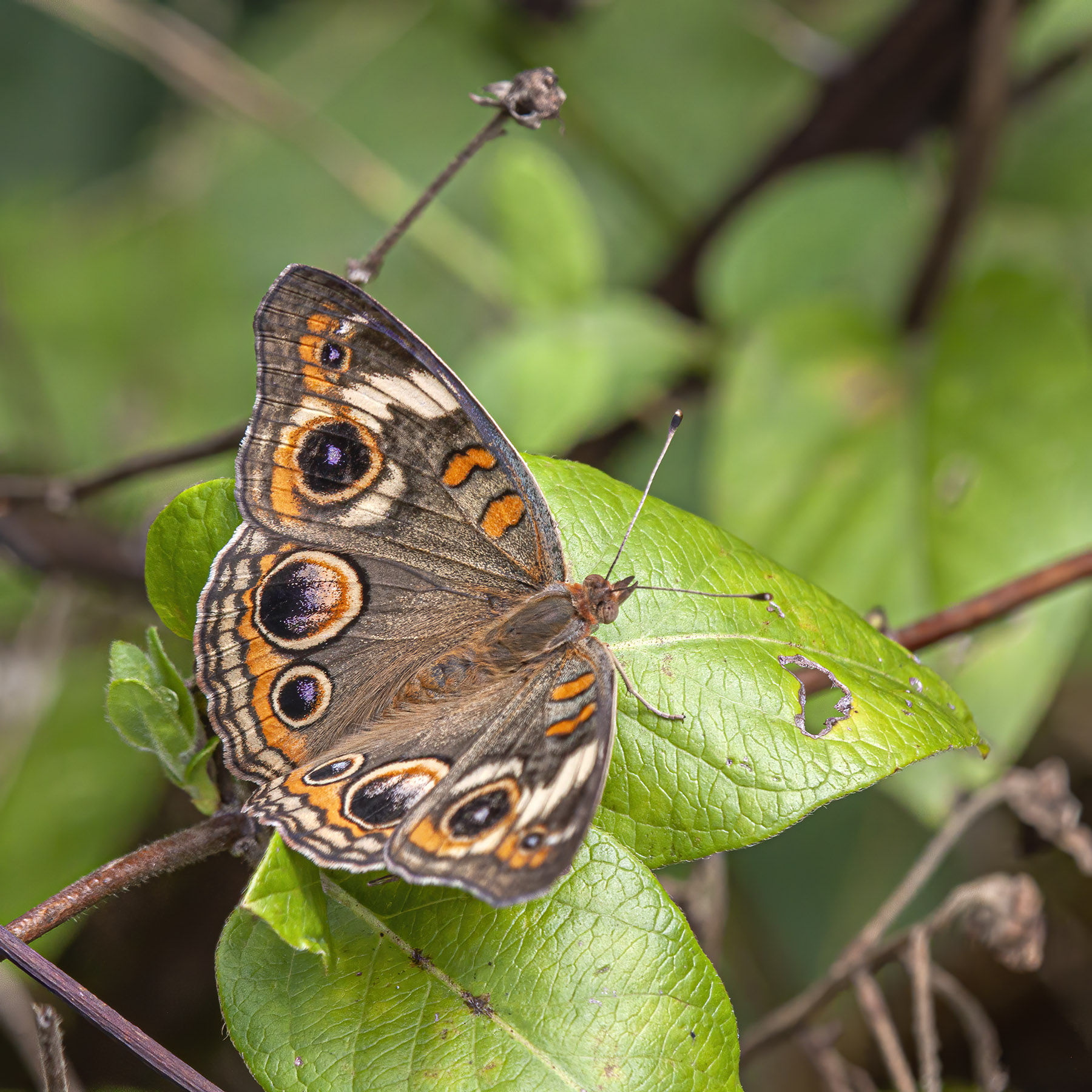
I could easily argue, for example, that this Common Buckeye butterfly (Junonia coenia) that I spotted on Tuesday at Jackson Miles Abbott Wetland Refuge is uncommonly beautiful. The orange markings and wonderfully-colored eyespots make this a stunning butterfly. Yes, I see this species quite often, but its distinctive beauty never fails to take my breath away.

Common Buckeye

© Michael Q. Powell. All rights reserved.


Read Full Post »

Do you chase wildlife or do you wait for it to come to you? I tend to be in the former group and will sometimes walk for hours and hours in search of suitable subjects.

On Wednesday, however, the action came to me. I was returning from a walk along a stream hunting for dragonflies and was shocked as I approached my car to see a pair of Red-footed Cannibalflies (Promachus rufipes) mating on my car. I watched in fascination as they moved from one part of the car’s exterior to another, locked in the peculiar tail-to-tail position that robber flies use for mating. (Even before this incident, I knew that I needed to wash my car, as you can readily see in the second photo.)

I must confess that I have long had a fascination with this insect species—there is something really cool and slightly horrifying about the macabre moniker ‘Red-footed Cannibalfly.’ They are fierce predators who reported have been able to take down a hummingbird. They inject their victims with a toxin that paralyzes them and liquifies their insides so that the cannibalfly can more easily ingest their innards. If you are not totally creeped out by now, you might agree that cannibalflies are cool insects.

I have written over 3500 blog postings over the past eight years and my most-viewed regular posting is one that I published in August 2013 with the simple title of “Red-footed Cannibalfly,” with 2595 views. Yes, a lot of people seem to be interested in this insect and somehow find their way to that blog posting each year. It is a good posting, I think, but neither the prose nor the photos are great, but sometimes that doesn’t matter for popularity in this digital world. (You can judge for yourself by clicking on the title of the posting that I linked to the original posting.)

Some of you may have noted that I used the term “regular posting” in describing my posting on the red-footed cannibalfly. In November 2014 I was fortunate to be at a local nature park during the rescue of an injured bald eagle by the animal control officers of the local police department and documented it in a blog posting entitled “Rescue of an injured Bald Eagle.”

Several news outlets picked up the story including the Washington Post , some local radio and television stations, including WTOP, and the Fairfax County Police Department News. A number of them included a link to my blog posting, which had over 3000 views in a couple of days, but has had relatively few views since that time. I had authorized the Police Department to use my posting and photos and as a result of that exposure I was contacted by a number of media organizations asking permission to use my photos, which I agreed to, requesting that they give attribution and, if possible, a link to my blog.

A small number of media organizations, including the Washington Post, used my photos without asking for permission, though the Washington Post did at least give attribution. When I contacted the reporter, he said that he had “assumed” it was ok, because he had obtained the photos through the Police Department site. I have not had to deal with the media since, but know now to be a bit careful in doing so.

Red-footed Cannibalfly

Red-footed Cannibalfly

© Michael Q. Powell. All rights reserved.

Read Full Post »

There were so many butterflies concentrated in a small patch of swamp milkweed (Asclepias incarnata) that they looked like a bouquet of orange flowers when I first spotted them on Tuesday at Jackson Miles Abbott Wetland Refuge. I believe that they are all Pearl Crescent butterflies (Phyciodes tharos), though there is also a chance that they might be the similar-looking Silvery Checkerspot butterfly (Chlosyne nycteis).

pearl crescent

© Michael Q. Powell. All rights reserved.

Read Full Post »

Some of our smallest butterflies are among our prettiest, like this tiny Banded Hairstreak butterfly (Satyrium calanus) that I spotted on Tuesday at Jackson Miles Abbott Wetland Refuge. I always check out a patch of wildflowers in one corner of this small refuge and once again it paid dividends.

I was able to photograph this butterfly as it nectared on one of the many black-eyed susans that are now in bloom. Actually I am not entirely certain if these flowers are black-eyed susans, but they are the same shape and color and may be part of the larger rudbeckia flower family.

UPDATE: A friend of mine on Facebook who is more experienced than I am with butterflies tells me that this is probably a Gray Hairstreak butterfly (Strymon melinus), not a Banded Hairstreak. The difference is so subtle that I am not sure I can see it and certainly cannot explain it. At least the beauty is undeniable.

Banded Hairstreak

© Michael Q. Powell. All rights reserved.
 

Read Full Post »

Most folks who live in the Eastern part of the United States can probably identify an Eastern Tiger Swallowtail butterfly (Papilio glaucus) when they see one. Eastern Tiger Swallowtails are large and have a distinctive pattern of bright yellow and black on their wings. However, not all Eastern Tiger Swallowtail butterflies are yellow—females come in two distinctly different variants, black and yellow.

The yellow morph looks a lot like a male, but with a conspicuous band of blue spots along the hindwings that the males do not have. The dark morph female has similar markings, but most of its body color is black, like the one below that I spotted last week at Green Spring Gardens. The perfect condition of its wings this late in the season suggests to me that this is a newly emerged butterfly.

So why do the females come in two colors? I read an interesting on-line article about this subject entitled “Why are you that color? The strange case of the dark phase tiger swallowtail.” The author speculates that the dark morph is an evolutionary attempt to mimic a similar-looking Pipevine Swallowtail butterfly that predators know is toxic, a practice known as Batesian mimicry. So, in theory the dark morph would have a better chance of survival. For unknown reasons, however, the males do not seem to be as attracted to the dark morph females, “These guys are apparently traditionalists and prefer the good ol’ yellow and black that their species is known for.” So the genes that might benefit species survival are not always passed on.

Eastern Tiger Swallowtail

© Michael Q. Powell. All rights reserved.


Read Full Post »

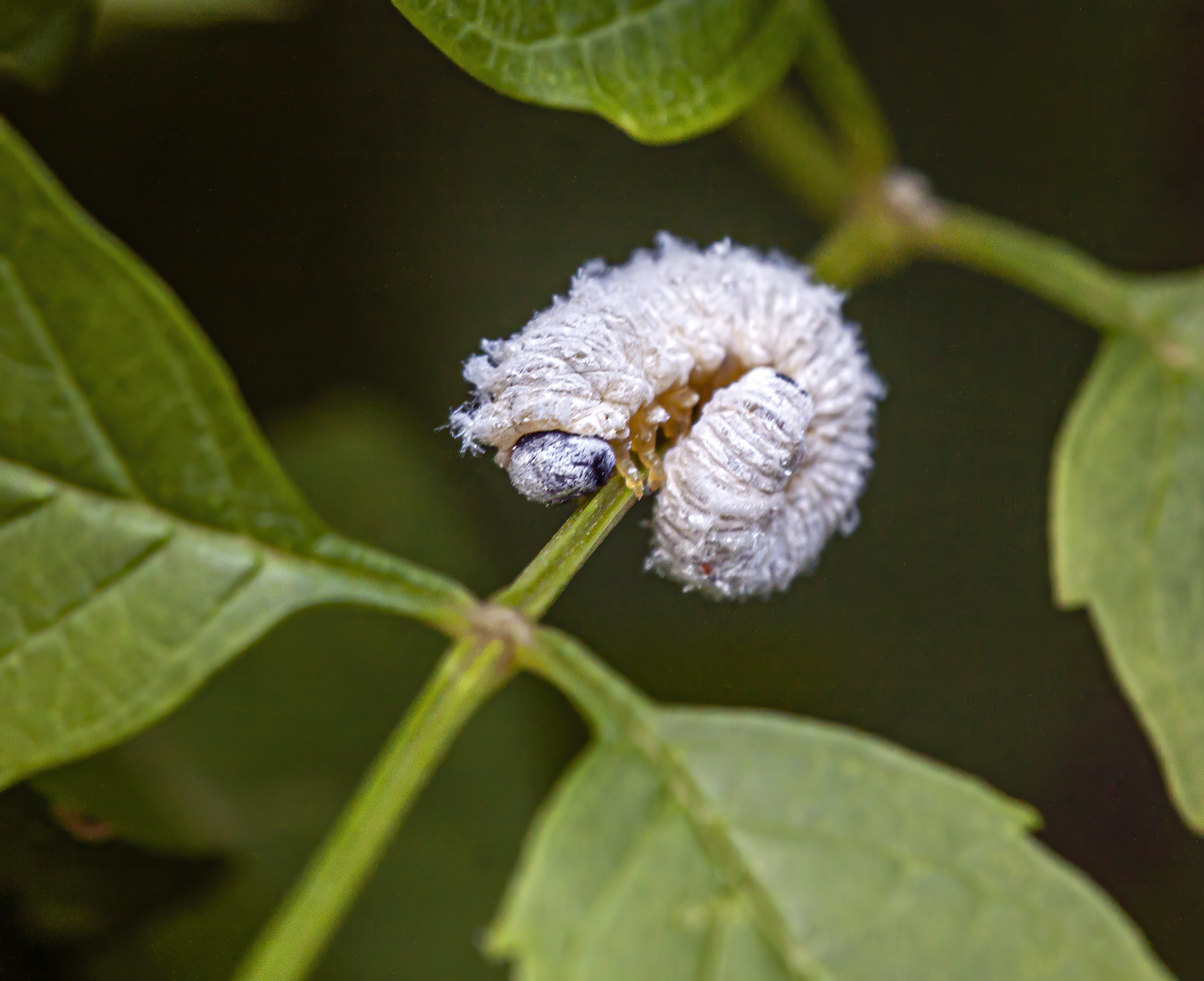
Last week when I was exploring Jackson Miles Abbott Wetland Refuge, I spotted this very strange looking caterpillar in one of the trees. It was quite small and was in motion, so getting a photo was somewhat of a challenge. As I was doing research, I was a little shocked to discover that this is actual the larval stage of a Dogwood Sawfly (Macremphytus tarsatus), a wasp-like insect. The larvae go through a number of different phases of development and this looks to middle-instar stage.

No matter how many times I return to a location, there always seems to be something new and different to see, as long as I take the time to look slowly and carefully.


Dogwood Sawfly larva

© Michael Q. Powell. All rights reserved.

Read Full Post »

This butterfly had its choice of flowers as I chased after it last week at Green Spring Gardens, but it chose instead to grab some nectar from a lowly clover plant. Still, I can’t complain—it was my first sighting of a Monarch Butterfly (Danaus plexippus) this season.

Monarch Butterfly

© Michael Q. Powell. All rights reserved.

Read Full Post »

I had forgotten how small Fragile Forktail damselflies (Ischnura posita) are until I spotted one perched in some vegetation last week while I was exploring at Jackson Miles Abbott Wetland Refuge. Even by damselfly standards, Fragile Forktails are tiny at only .8 to 1.1 inches (21-29 mm) in length. The good news is that they are relatively easy to identify, because they have pale interrupted shoulder stripes that look like exclamation points.

I love how the green of the damselfly’s thorax and in its eyes match the soft green palette of the rest of the image. For me, there is something really soothing about this simple portrait of a tiny damselfly.

Fragile Forktail

© Michael Q. Powell. All rights reserved.

Read Full Post »

It love it when dragonflies cooperate and choose particularly photogenic perches, as these female Eastern Amberwing dragonflies (Perithemis tenera) did on Tuesday at Green Spring Gardens in Alexandria, Virginia, not far from where I live. The males of this species, whose wings are a solid amber in color, mostly seemed to be hanging out at a pond at the bottom of a hill, while the females were flitting about among the flowers in the gardens at the top—the gender separation reminded me of the awkwardness of junior high dances when I was growing up.

As many of you may recall, dragonflies and damselflies are part of the Odonata order of flying insects. My friend and fellow dragonfly enthusiast Walter Sanford has coined the term “odonart” to refer to artsy-style photos that we manage to capture of our favorite aerial acrobats. I think that both of these images qualify to fit into that self-created category, given the beauty of the dragonflies and their particularly photogenic perches.

Eastern Amberwing

Eastern Amberwing

© Michael Q. Powell. All rights reserved.

Read Full Post »

In one corner of Jackson Miles Wetland Refuge there is a patch of wildflowers that I love to explore whenever I visit the refuge. In the past I have spotted bird, butterflies, and dragonflies amidst the flowers. Black-eyed Susans are now in bloom in that patch and I was thrilled on Saturday to capture this image of a Silvery Checkerspot butterfly (Chlosyne nycteis) feeding on one of the flowers. As I noted in an earlier posting, I have not seen many large butterflies this season, so it is especially nice to see the smaller ones.

I am pretty sure that this is a Silvery Checkerspot butterfly, though I have sometimes had troubles in the past distinguishing between Silvery Checkerspots and the somewhat similar Pearl Crescent butterflies (Phyciodes tharos).

Silvery Checkerspot

© Michael Q. Powell. All rights reserved.
Read Full Post »

Dragonflies are carnivorous—they feed on other live insects. Most of their diet consists of gnats, mosquitoes, and other small insects, but they also prey upon bees, butterflies, damselflies, and even on other dragonflies.

When I first spotted this male Eastern Pondhawk dragonfly (Erythemis simplicicollis) on Saturday at Jackson Miles Abbott Wetland Refuge, it had just perched on a stalk of vegetation. As I moved a little closer, the dragonfly changed its position, looking almost like it was trying to hide behind the stalk. What I did not realize at the time was that the dragonfly had just snagged a damselfly and was preparing to eat his lunch. Obviously he did not want to share it with me.

Almost all of the times that I have seen dragonflies with prey, they been Eastern Pondhawks, which seem to be particularly fierce predators. Some dragonflies eat their prey in mid-air and I never see them do so. It may also be the case that some other dragonflies fly up into the trees and consume their prey out of sight, while the Eastern Pondhawk is content to eat in public.

It is often difficult to judge the relative size of dragonflies and damselflies. This images lets you see how much smaller and thinner damselflies are than dragonflies. An Eastern Pondhawk is about 1.7 inches (43 mm) in length and the unidentified damselfly looks to a bit over an inch (25 mm) in length.

Eastern Pondhawk

© Michael Q. Powell. All rights reserved.

Read Full Post »

It seems like I have seen fewer butterflies this year than in previous years, so I was especially thrilled to spot this Eastern Tiger Swallowtail butterfly (Papilio glaucus) last week during a trip to Green Spring Gardens with my photography mentor Cindy Dyer. Normally by this time of the year I have seen lots of Monarchs and Eastern Tiger Swallowtails, but I have not seen a single Monarch yet and only a few swallowtails. This butterfly was the only large butterfly that I saw that day—all of the others that I spotted were the much smaller skipper butterflies.

Generally I prefer to have a natural background when photographing wild subjects, but that was not possible in this case. The blurred background is part of the welcome center of the gardens. The bands of color at the bottom of the image add some visual interest without being distracting, so I am not all that dissatisfied with the way the shot turned out.

Eastern Tiger Swallowtail

© Michael Q. Powell. All rights reserved.

Read Full Post »

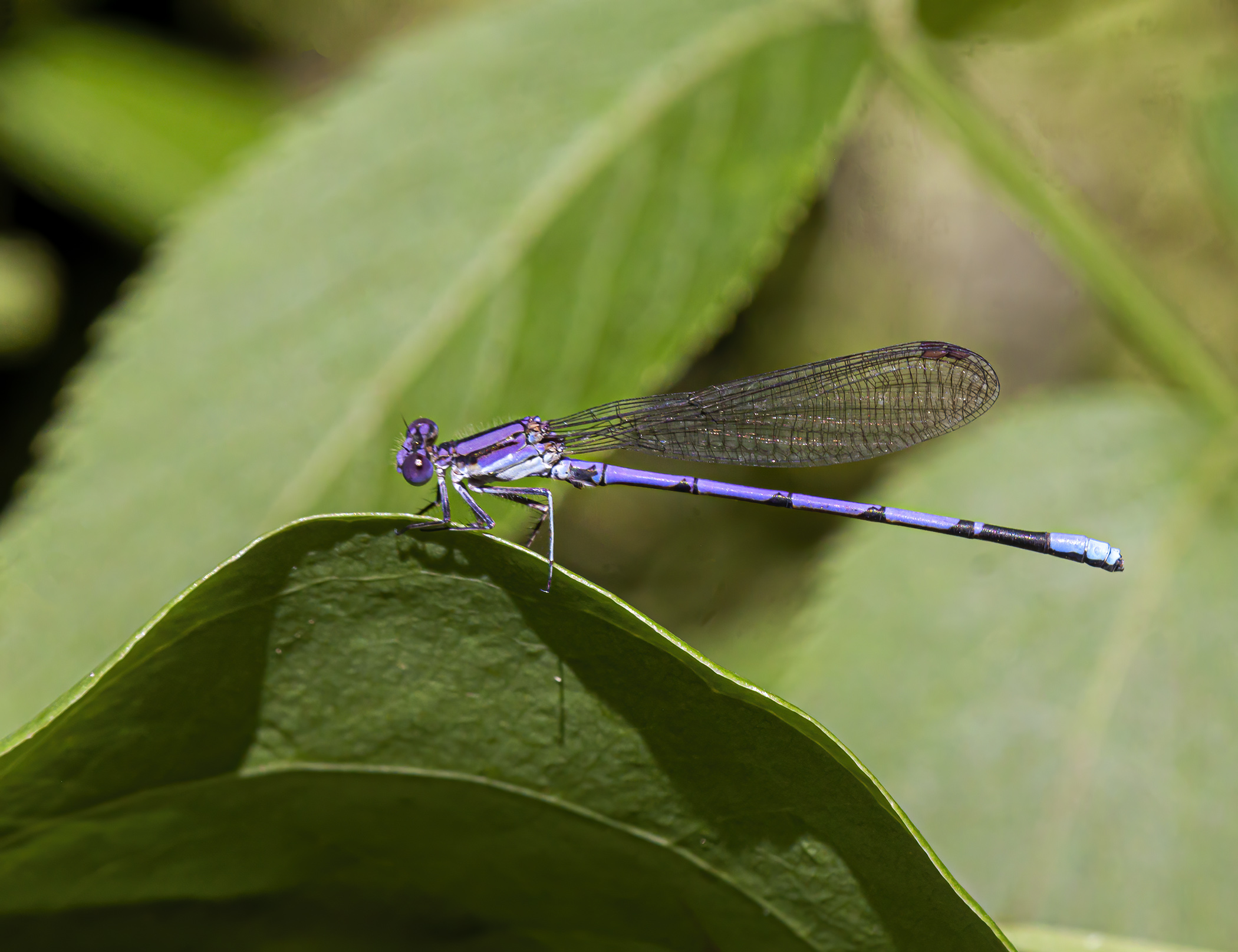
This stunning Variable Dancer damselfly (Argia fumipennis) was living life on the edge when I spotted him amidst the leaves last week during a trip to Green Spring Gardens with my good friend Cindy Dyer. Many of you probably realize that this violet-colored beauty is one of my favorites, given that my most frequently used banner image for this blog is a photo of a Variable Dancer. Perhaps there are other insects that are this color, but none come to mind.

As for the title of this post, consider it to be a sign of the times—the content could easily have gone in multiple directions.

variable dancer

© Michael Q. Powell. All rights reserved.

Read Full Post »

We are definitely in the summer doldrums, with day after day of oppressive heat and humidity. This week has been a bit different only because we have had some violent thunder storms. In terms of dragonflies, the common skimmer species are flying about in great numbers. In my area, that means that on a trip Tuesday to Occoquan Bay National Wildlife Refuge, I saw lots of Common Whitetails, Eastern Pondhawks, Needham’s Skimmers, Blue Dashers, and Great Blue Skimmers.

Although I have photographed these species many times, I still chase after them, trying to capture new behavior or interesting portraits, perches, or backgrounds. That is why I was able to capture this image of this smiling female Great Blue Skimmer dragonfly (Libellula vibrans) as she perched on some stalks of Eastern Gammagrass (Tripsacum dactyloides). I do not know vegetation very well, but I remember my friend Walter Sanford identifying this type of grass to me a few years ago and somehow the name has stuck with me.

In many ways, this photograph is indicative of my favorite approach to wildlife photography. Although I will sometimes look for rare species to photograph, I especially enjoy photographing common species and highlighting their uncommon beauty. Beauty is everywhere.

Great Blue Skimmer

© Michael Q. Powell. All rights reserved.


Read Full Post »

I ventured out into the heat for a couple of hours yesterday and was rewarded for my efforts by this beautiful female Halloween Pennant dragonfly (Celithemis eponina) that I spotted at Occoquan Bay National Wildlife Refuge.

What makes a portrait perfect? For me, an optimal portrait captures an interesting subject in a dynamic pose with good lighting and a complementary background. I think that this images ticks all of those boxes. Why, then, do I call it “almost” perfect in the title? I guess that there is a part of me that is never completely satisfied, that is steadfastly convinced that I can do better. That is why I was out walking the trails yesterday when temperatures soared above 95 degrees (35 degrees C). Don’t worry, I stayed in the shade, carried lots of water, and took it slowly. The good news was that social distancing was a breeze—I saw only one other crazy person walking about in the midday heat.

Halloween Pennant

© Michael Q. Powell. All rights reserved.


Read Full Post »

Blue Dashers (Pachydiplax longipennis) are one of our most common dragonflies and were an early favorite when I started to get more serious about my photography eight years ago. I still enjoy capturing images of them, especially when the lighting is as interesting as it was last Tuesday during a visit to Green Spring Gardens with my friend and photography mentor Cindy Dyer.

I had a lot of fun trying to track the male Blue Dasher dragonflies as they flew among the lotuses and water lilies at a small pond. Most of the time they would perch on distant plants, out of range of my macro lens, but on a few occasions they came closer. The first image shows one perched on the broken-off stalk of a lotus, partially in the shadow of other lotuses. The second image shows a Blue Dasher perched in the light, atop what I believe is one of the lily pads, though there is a slight chance that it might be a lotus leaf.

Yes, Blue Dashers are still among my favorites, even after all of these years.

Blue Dasher

Blue Dasher

© Michael Q. Powell. All rights reserved.


Read Full Post »

I tend to associate dragonflies primarily with marshes and ponds, but a few dragonflies also like sandy beaches. Most of the times that I have observed Common Sanddragon dragonflies (Progomphus obscurus) they have been perched directly on the sandy edges of forest streams, which makes sense, given their name. On Monday I was thrilled to spot some Common Sanddragons at Wickford Park, a small park adjacent to Huntley Meadows Park, a marshland refuge where I used to do a lot of shooting before it became too popular.

Although the dragonfly in the first image may look like he was perched on the ground, he was actually on the slanted side of a concrete drainage ditch. Normally I try to avoid man-made backgrounds for my subjects, but this shot provided a good overall view of the entire body of the Common Sanddragon. It might be my imagination, but it looks to me like this little guy was glancing up at me and smiling. Double-click on the image and see what you think.

In many ways I prefer the second shot, with the Common Sanddragon dragonfly perched amidst the rocks at the edge of the stream. I love the different colors, shapes, and textures of the rocks and don’t mind that the dragonfly itself is harder to spot. I consider the image to be a kind of environmental portrait.


Common Sanddragon

Common Sanddragon

© Michael Q. Powell. All rights reserved.

Read Full Post »

As I was exploring the banks of a creek yesterday hunting for dragonflies with my friend, Walter Sanford, I stumbled upon a really cool-looking caterpillar. I love fuzzy white caterpillars and apparently I am not the only one—an August 2013 posting that I entitled “Fuzzy White Caterpillar” is my third most-viewed posting ever, with over 1820 views. The photos in that posting are definitely not among my best ever, but somehow people find their way to that posting when doing Google searches.

I was immediately struck by the bright red head and the “horns” and the front and back end of the caterpillar. Those characteristics made it easy to identify the caterpillar as a Sycamore Tussock Moth caterpillar (Halysidota harrisii). I do not know trees very well, so I cannot tell if the fallen log that the caterpillar was exploring was a sycamore, but perhaps one of my viewers can identify it for me.

Be sure to double-click on the images if your would like to get a closer view at the wonderful details of this unusual-looking caterpillar.

Sycamore Tussock caterpillar

Sycamore Tussock caterpillar

© Michael Q. Powell. All rights reserved.
 

Read Full Post »

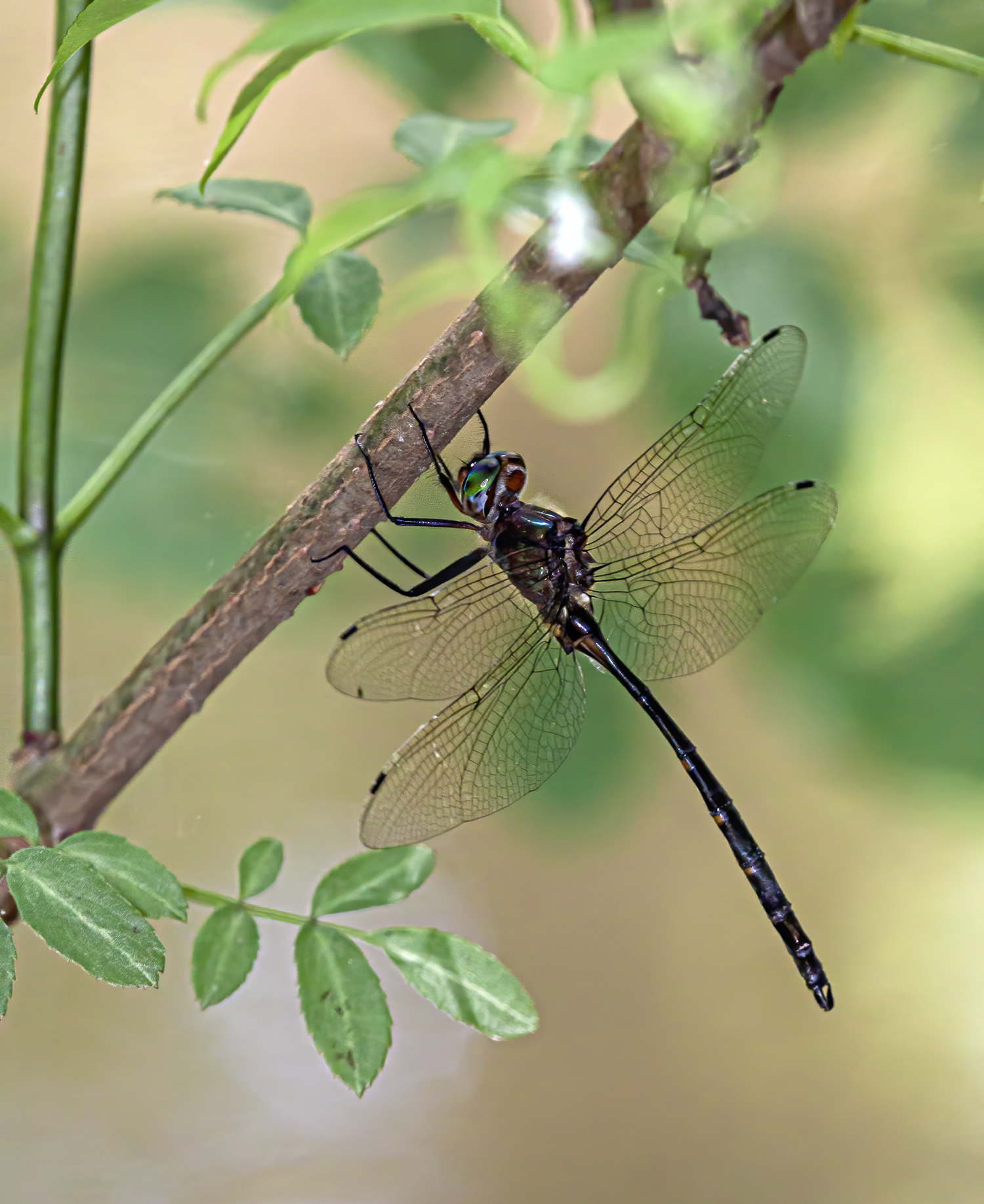
It has been a few years since I last saw a Mocha Emerald dragonfly (Somatochlora linearis), so I was excited when I spotted one yesterday while exploring at Huntley Meadows Park. The male Mocha Emerald was patrolling along above a small stream in a way that is typical, but infuriating—he would fly a bit and then hover, but before I could focus on him, he would fly some more, each time moving again before I could catch up to him. Fortunately, Mocha Emeralds perch pretty often and I was absolutely thrilled when this one chose a perch within sight of where I was standing.

As you look at the photos, you cannot help but notice that the dragonfly’s body long, dark, and skinny body, although you eyes may well be drawn first to his brilliant emerald eyes. You may also note that he does not really perch, but instead hangs from the branch to relax. The position reminds me of the one what I assume when I am doing pull-ups and definitely would not be my preferred position for resting.

I am often surprised by the amazing diversity in the dragonfly world. When I first started to focus on dragonflies, it was obvious that they came in different colors. As I have learned more about dragonflies and photographed them, I have grown more attuned to body shapes, behavior, and habitats. Yes, I am somewhat obsessed with these beautiful creatures and enjoy searching for hours for little jewels like this Mocha Emerald.


Mocha Emerald

Mocha Emerald


© Michael Q. Powell. All rights reserved.


Read Full Post »

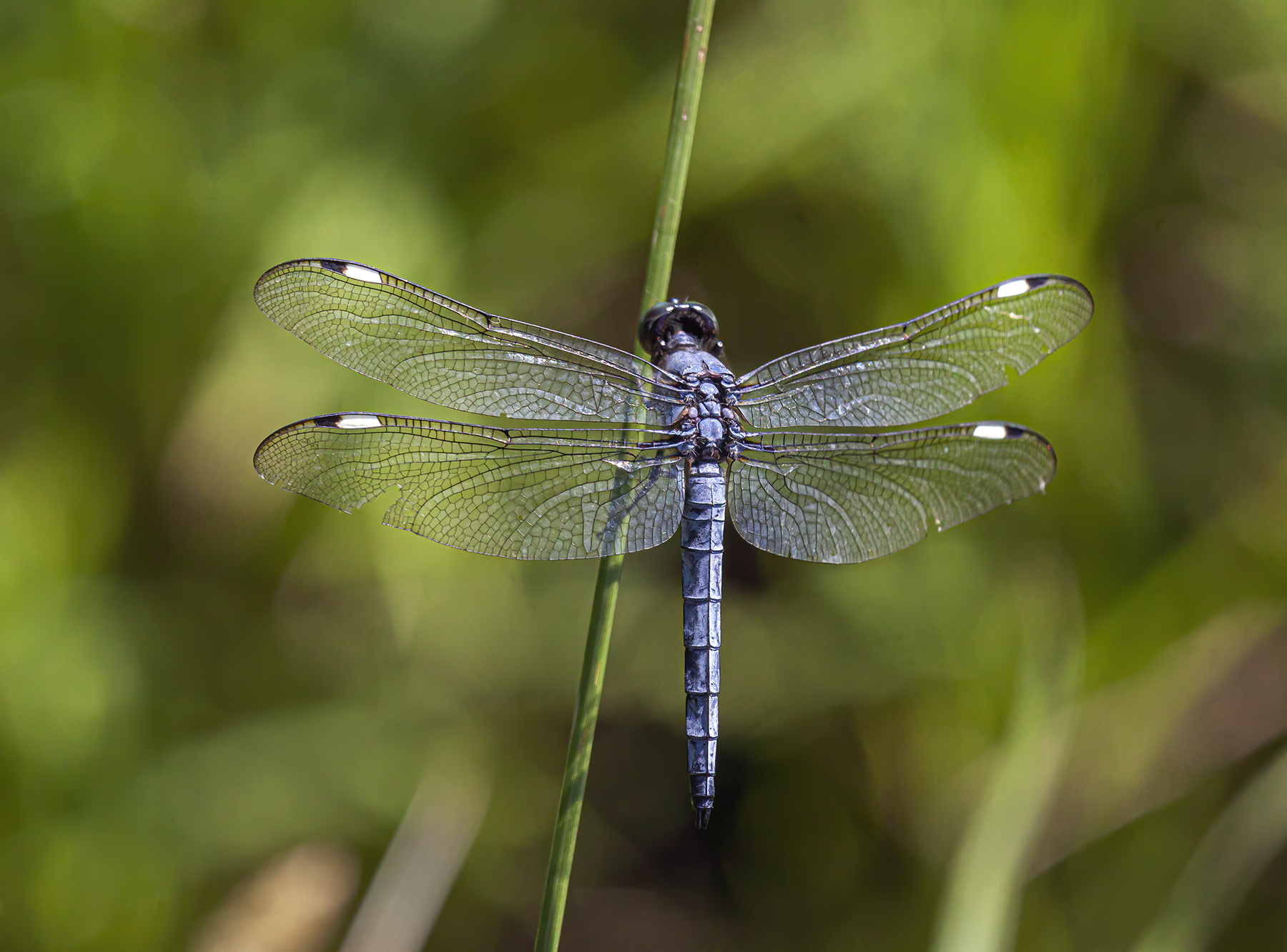
As summer progress, the once pristine wings of dragonflies and butterflies become increasingly tattered and torn. When I spotted this handsome Spangled Skimmer dragonfly (Libellula cyanea) last week at Occoquan Regional Park, I couldn’t help but notice that he has varying degrees of damage on the trailing edge of all of his wings. Comparatively speaking, the damage is minor and did not seem to inhibit his activity in any way—I have seen dragonflies with much more severe damage that were still able to fly.

How did his wings get damaged? Predators such as birds or even other dragonflies could inflict damage as could vegetation with sharp branches and thorns. When I looked closely at this dragonfly’s abdomen, I also noticed scratches there, which made me think of another potential source of some of the damage. It is now the prime season for mating and like most male dragonflies, this dragonfly is vigorously trying to do his part to perpetuate the species.

Dragonfly mating can be rough and could be the source of some of the visible damage. The final photo shows a mating pair of Spangled Skimmer dragonflies and, judging from the locations of the damage to its wings, the male in the first photo appears to be one of the participants.

In case you are curious about identifying this dragonfly species, the white “stigmata” on the trailing edge both male and female Spangled Skimmers, i.e. the “spangles” responsible for its common name, make this species an easy one to identify.

Spangled Skimmer

Mating Spangled Skimmers

© Michael Q. Powell. All rights reserved.

Read Full Post »

« Newer Posts - Older Posts »