Feeds:
Posts
Comments

Archive for the ‘Humor’ Category

“You don’t look at all like your profile photo,” said one flamboyant duck to the other during the awkward first moments of a meet-up arranged through the internet dating site quack.com. Duck dating has moved into the 21st century.

For the record, the duck on the left is a male Green-winged Teal (Anas carolinensis) and the one on the right a male Northern Shoveler (Anas clypeata).

I welcome other suggestions for a caption for this photo as well as general wise quacks.

duck dating

© Michael Q. Powell. All rights reserved.


Read Full Post »

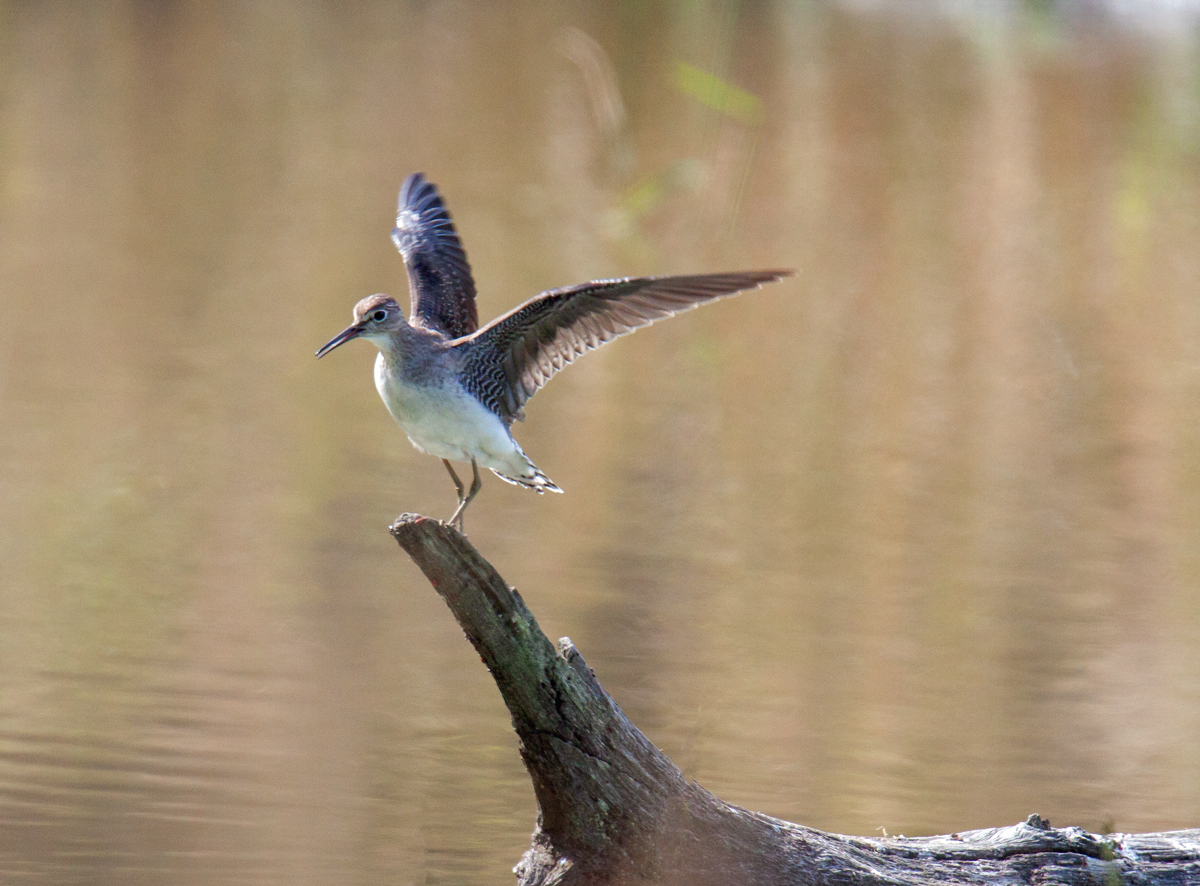
With Celine Dion’s voice echoing in his head, this Solitary Sandpiper (Tringa solitaria) reenacts a scene from his favorite movie and loudly exclaims, “I’m the king of the world.”

Solitary Sandpiper

Despite believing that his heart will go on, this sandpiper is still feeling very solitary. Imagine how different that the movie “Titanic” would have been if Jack Dawson had followed the lead of this little bird and jumped from his perch.

Solitary Sandpiper

In the interest of full disclosure, I’m not completely sure that this is a Solitary Sandpiper, but I didn’t want to let accuracy get in the way of a good story. Please let me know if my identification is incorrect.

© Michael Q. Powell. All rights reserved.

Read Full Post »

What do adventurous young grasshoppers do for fun? Hopping may be ok for the average grasshopper, but this little guy prefers the adrenaline rush he feels when he scales the sheer face of a rocky cliff with no ropes or other climbing gear.

grasshopper

The truth is a little less exciting than my fiction. The angle was not as steep as it looks in the shot and the “rock” is actually a rotten log.

I still choose to believe that grasshoppers like a little adventure in their lives. Who knows what they do when we are not watching?

© Michael Q. Powell. All rights reserved

Read Full Post »

I probably watched too many horror movies as a child, because I couldn’t help but think of Count Dracula when I first saw the posture of this male Red-winged Blackbird (Agelaius phoeniceus) at my local marshland park. The blackbird seemed to have assumed the traditional bat-like Dracula pose and appeared to be getting ready to swoop in and suck my blood. Involuntarily, my neck began to twitch a little.

Fortunately, the blackbird flew off in another direction and, at least for now, I have not been turned into a vampire.

Red-winged Blackbird

Michael Q. Powell. All rights reserved.

Read Full Post »

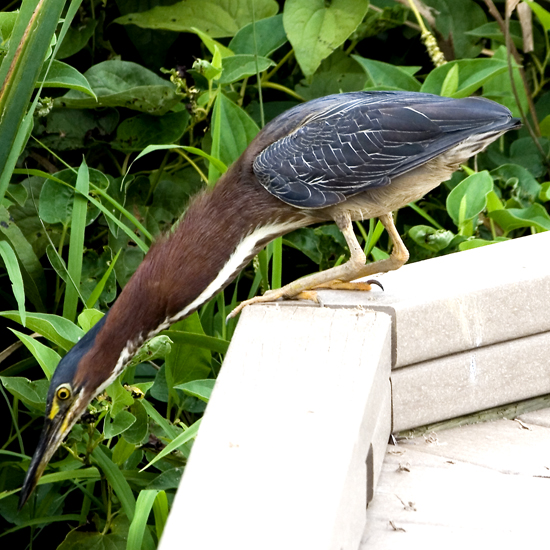
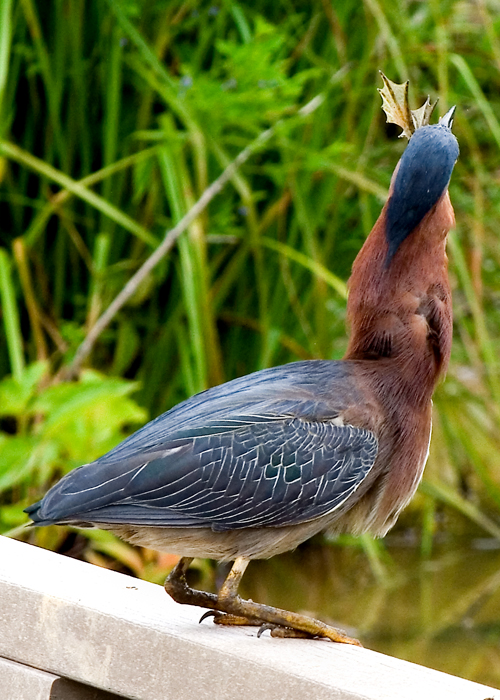
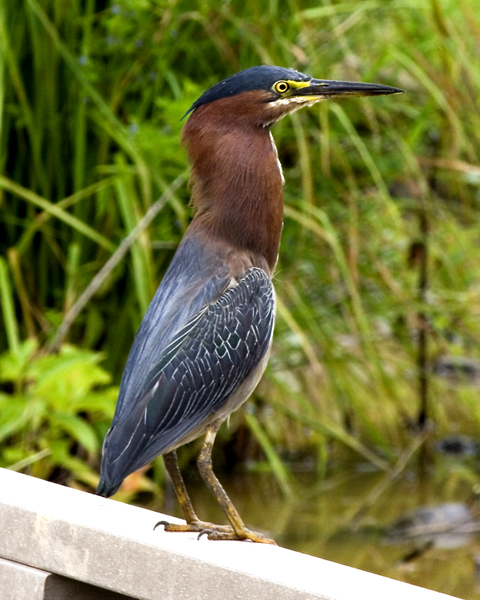
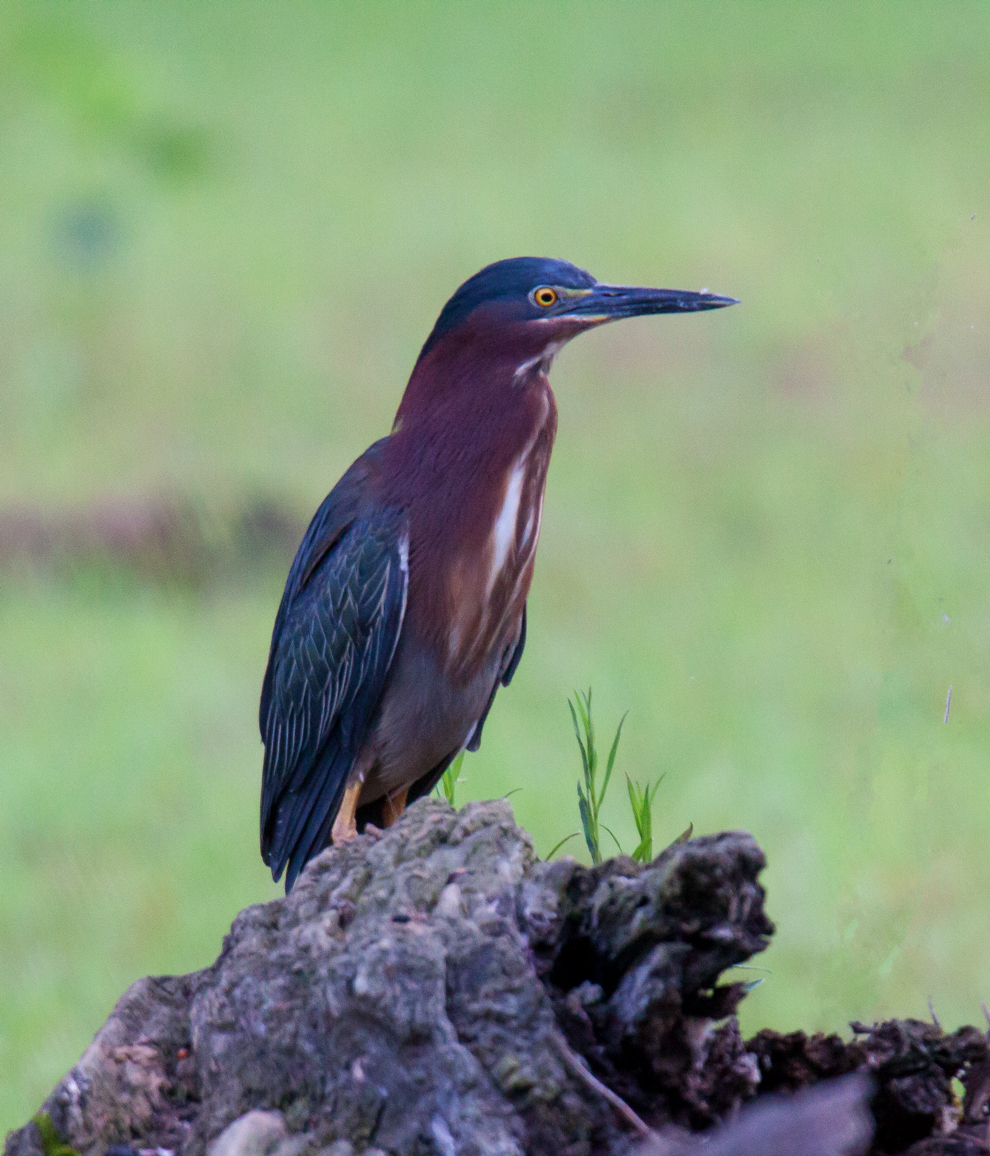
Green Herons seem so intense most the time when I seem them, standing motionless in one spot, ready for a strike.  What do they for relaxation or for fun?

Early this Monday, I caught a Green Heron (Butorides virescens) in some unguarded moments and learned some of its secrets. Who knew that Green Herons like to dance and to sing? They also appear to meditate, centering themselves as they start their days.

It’s not easy being green.

Green Heron

Practicing for a part in Riverdance

Green Heron

Anyone want to join me for show tunes?

Green Heron

Early morning reverie

© Michael Q. Powell. All rights reserved.

Read Full Post »

I don’t take photos of people very often but it seems like there are some informal rules including not photographing a subject who is eating and not photographing someone who is bending over. Fortunately those “rules” do not apply when photographing wildlife.

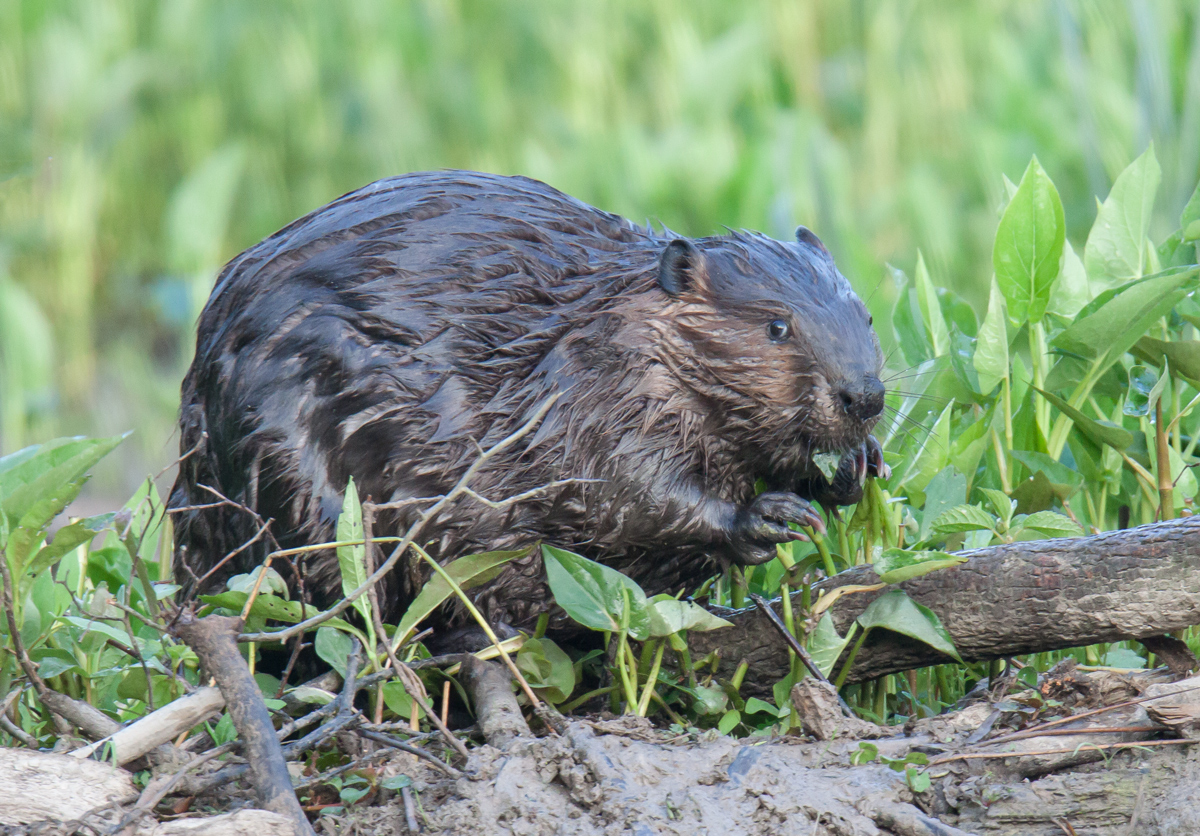
In the first shot, the North American Beaver (Castor canadensis) at my local marsh seemed to be glancing up at me mid-chew, having sensed my presence. I can’t tell if the beaver is shy or irritated, but I am happy that I was able to capture some of the details of the beaver’s “hands.” The beaver probably was aware that he had some leaves stuck between his teeth, but, as a friend, I probably would have mentioned it to him if he was going to go out in public.

In the second shot, the beaver’s posterior is facing the camera and I don’t want to be indelicate, but that part of the beaver’s anatomy looks huge. I can’t imagine what I would have said if the beaver had turned to me and asked, “Does this pose make my butt look big?” Perhaps I could have responded honestly to the question, but most guys know that is best not to respond at all if a female human poses that same question.

If you take wildlife photos, you too probably have a collection of “butt shots” of animals and birds that were running or flying away or simply sending an unsubtle message that they did not want to be bothered by a photographer. One of my favorite photographers and bloggers, Lyle Krahn, periodically does an entire humorous posting of wildlife shots devoted to this genre. Be sure to check out his The Inauguaral Butt Collection.

North American Beaver

North American Beaver

© Michael Q. Powell. All rights reserved.

Read Full Post »

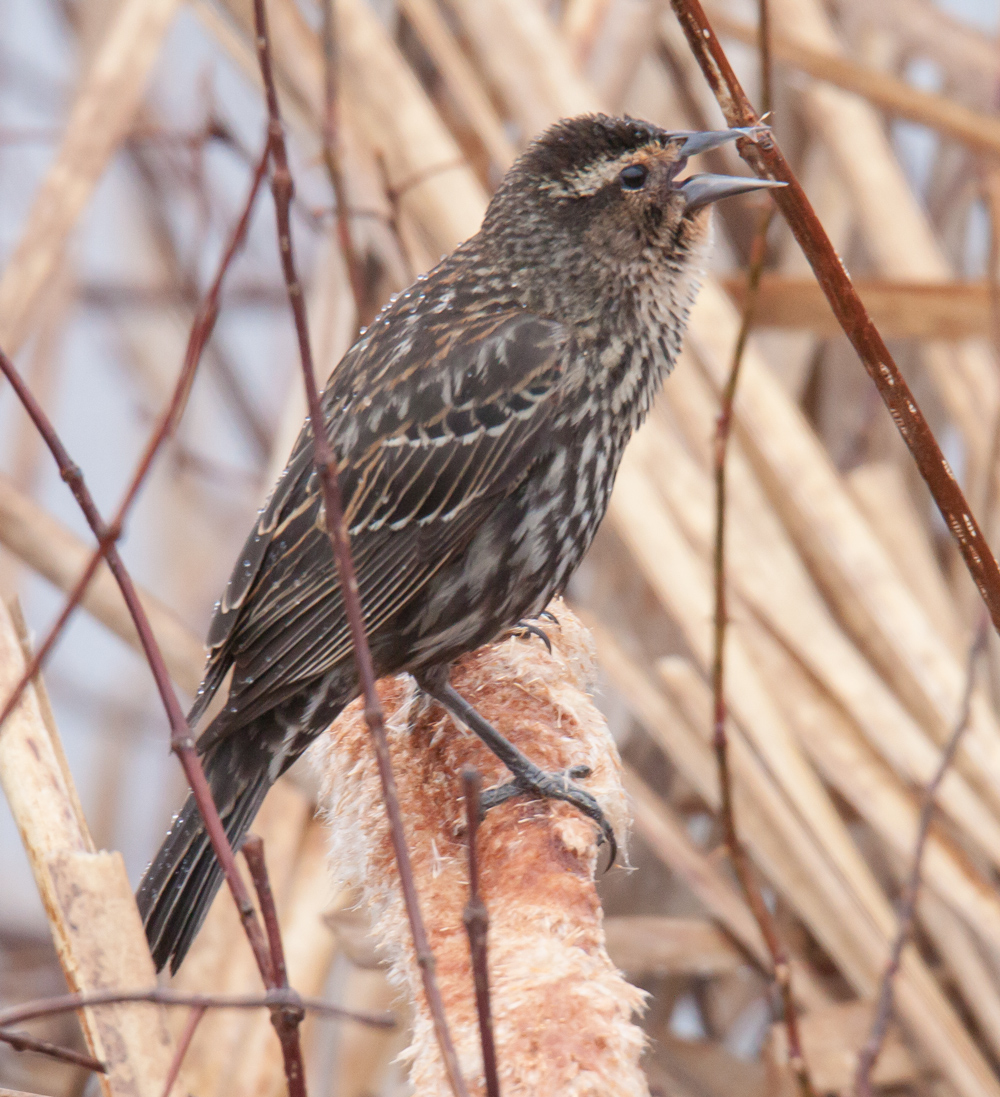
My life was much simpler before I started to photograph birds. I naively assumed that all Red-winged Blackbirds were black and had red wings. There is no way in the world that I would have even guessed that the bird in this photograph is a female Red-winged Blackbird, but I know now that’s what it is.

With experience comes wisdom, perhaps, but I generally feel more confused than wise when it comes to identifying birds. There are so many variables to consider, including the geographic location, the time of the year, the age of the bird, and, of course, its gender. Sure, there are lots of resources available over which to pore, but I’m often left with a certain degree of uncertainty about a bird’s identification. Apparently I am not alone, because I have overheard heated discussions among experience birds trying to identify a distant bird that they can barely see in their spotting scopes.

Female Red-winged Blackbirds (Agelaius phoeniceus) are amazingly beautiful and I would love to feature them more often in this blog, but I find them to be unusually difficult to photograph. Unlike their male counterparts, who are visible and vocal to the point of being a bit obnoxious, the females tend to spend their time pecking about industriously in the undergrowth, rarely coming out into the open.

I was pleased to be able to get this mostly unobstructed shot of this female blackbird recently as she was singing in the rain. If you look closely, you can see a series of raindrops beading up on her back. Other birds may have been seeking shelter from the rain, but she kept working.

As the foliage reappears on the trees and bushes, it’s going to get tougher and tougher for me to spot birds. I’ll still be trying to photograph them for a while longer until I switch to macro mode and focus more on insects and flowers, which have their own identification challenges.

Red-winged Blackbird

© Michael Q. Powell. All rights reserved.

Read Full Post »

Love is in the air and this female Hooded Merganser duck (Lophodytes cucullatus) chose to chase after her male suitors rather than wait for them to come to her.

She’s looks to be a feminist duck of the 21st century, determined to upend the traditional gender roles of the past. Who says you have to wait for the guy to make the first move?

Hooded Merganserchase1_blog

© Michael Q. Powell. All rights reserved.

Read Full Post »

This is clearly a male Mallard duck (Anas platyrhynchos), but the unusual coloration of its head makes me wonder if it might be a hybrid, or perhaps is simply not yet mature. I have read on the internet that Mallards will sometimes mate with American Black Ducks, but this one doesn’t really look like any of the photos that I saw of the resulting hybrid ducks.

As I was pondering this question, the duck started to laugh, or so it seemed. Judging from the second photo, do you think that the duck may be laughing at one of his own wise quacks? I have a low tolerance for jokes, so I confess that it quacked me up completely.

Mallard

Mallard

© Michael Q. Powell. All rights reserved.


Read Full Post »

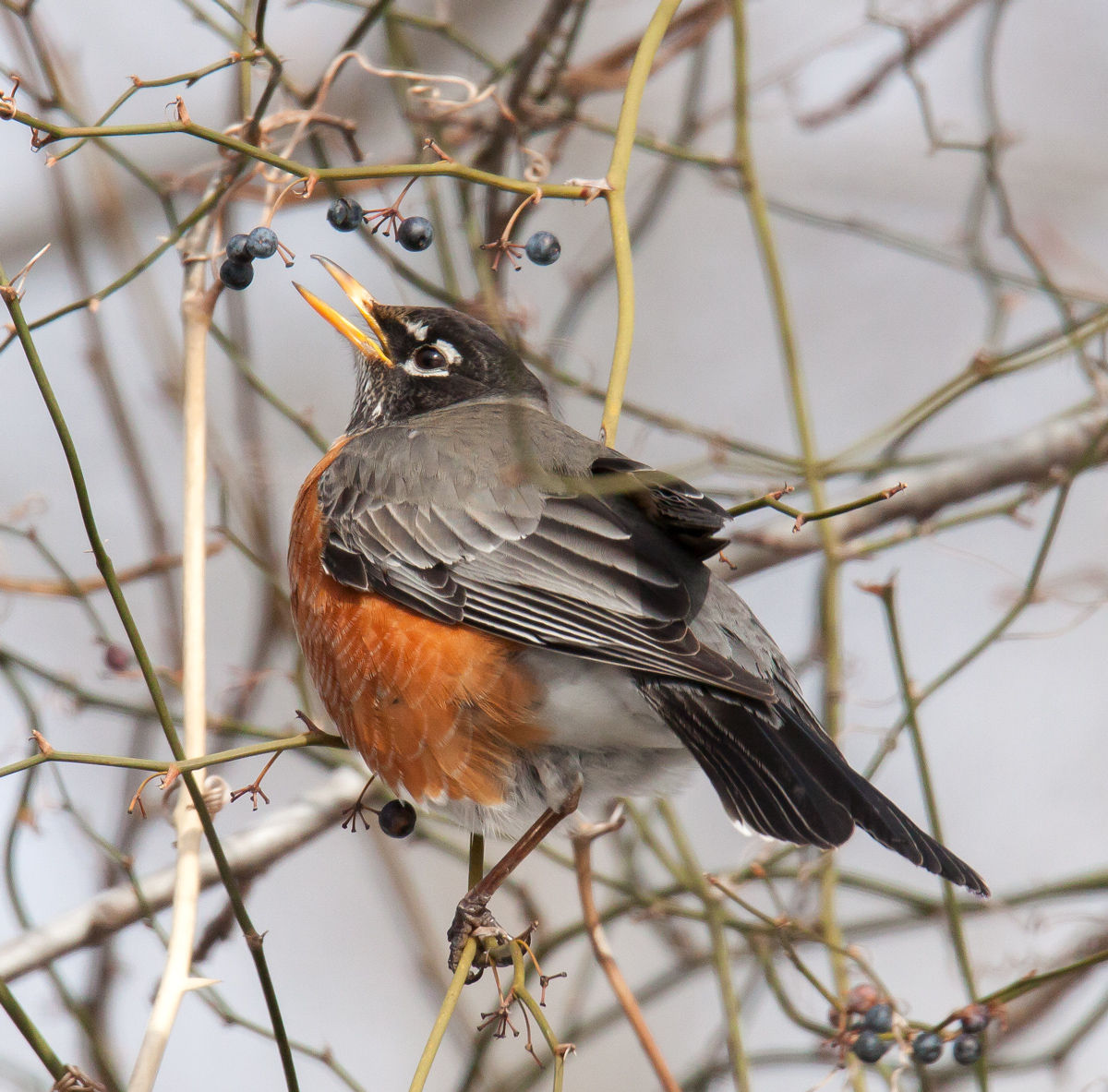
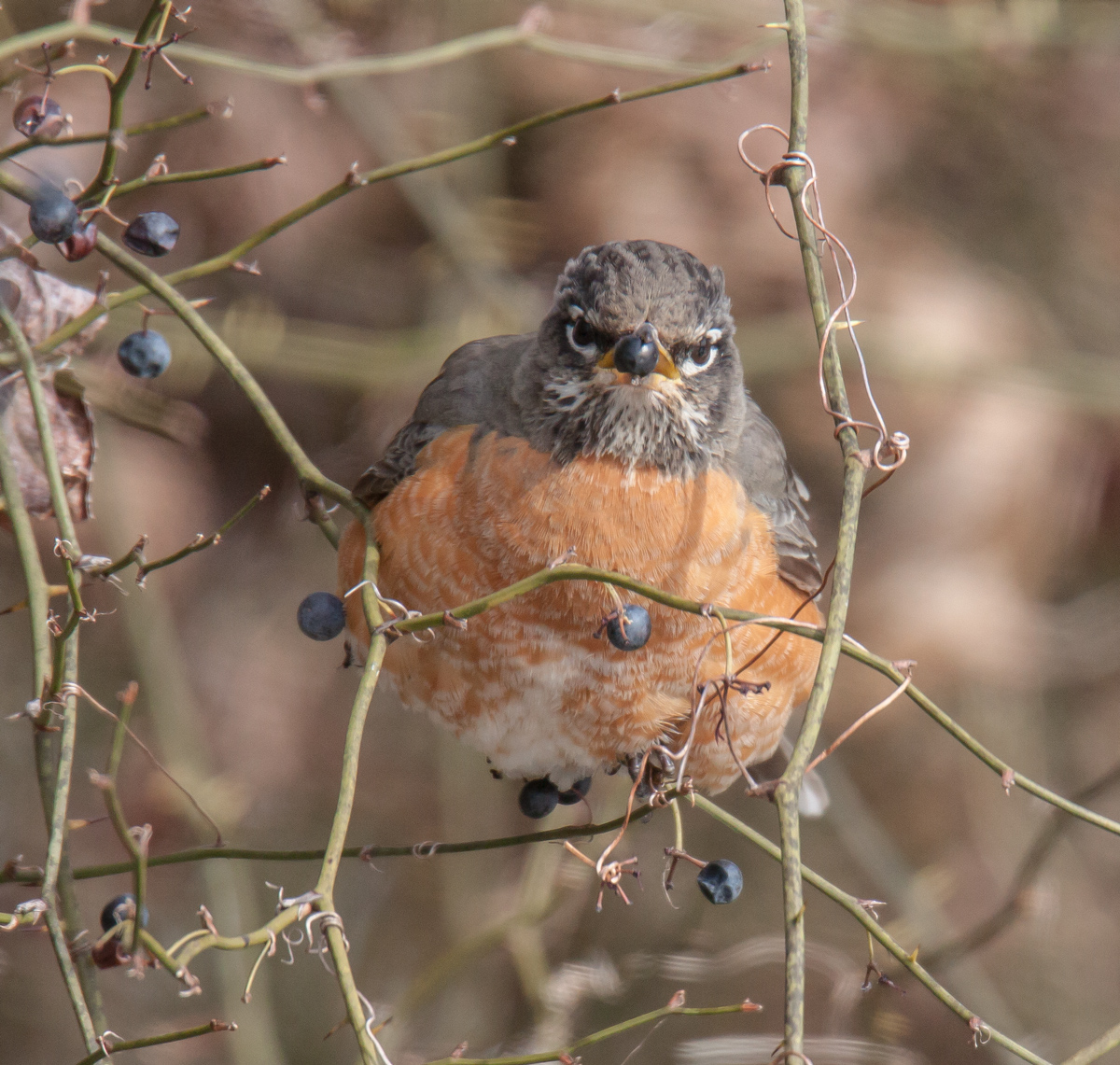
During the winter, the American Robins (Turdus migratorius) in my area switch to eating berries rather than worms and this robin seemed happy to have found a nice patch. As you can see in the second shot, however, the robin gave me some pretty strong indications that it did not want to be bothered.

American RobinAmerican Robin

© Michael Q. Powell. All rights reserved.

Read Full Post »

What’s going on here? Normally, it’s the male Hooded Merganser duck (Lophodytes cucullatus) that engages in courting behavior to attract a female, but in this case it looks like the situation was reversed. The female seems to be trying to get the attention of the male, who is playing hard to get and ignoring her antics.

Hooded Merganser

I took these shots this past Friday at my local marshland park. After a week of several snowstorms and frigid temperatures, there was not much open water for the water birds. I managed to find an area where a small number of them, mostly mallards and Canada Geese, were congregated and moved forward toward them, painfully aware that the crusty snow was crunching under my feet. I was thrilled when I saw that a pair of Hooded Mergansera mixed in with the other, bigger birds.

As a few snow flurries started falling, I was able to get some individual shots of the Hooded Mergansers, as well as the opening shot of them swimming together.

Hooded Merganser

Hooded Merganser

The first photo seems to be calling out for a clever caption and I welcome any creative ideas from readers. I used the title of a Toby Keith song as the title of the posting, imaging the female duck was trying to impress the male, who had ignored her in the past. (Check out this video from Vevo if you are not familiar with the song.)

What scenario do you imagine when you see the initial photo?

© Michael Q. Powell. All rights reserved.

Read Full Post »

Angry bird? I don’t know for sure if this American Robin (Turdus migratorius) was angry, but it sure did not look happy when I started walking toward it on the boardwalk this morning at Huntley Meadows Park.

American Robin

© Michael Q. Powell. All rights reserved.

Read Full Post »

Whenever I am walking through beautiful cities in Europe, I spend a lot of time with my eyes pointed upward, marveling at the amazing architecture. I’ve learned the hard way, though, that it is also important to look downward in order to avoid potentially unpleasant situations.

down1_blog

Dogs seem to be welcomed in many places in Europe and it is not rare for me to see them on public transportation and even in restaurants. Unfortunately, the dogs have to periodically answer the call of nature and not all owners seem to fulfill their civic responsibility to clean up after their dogs.

I ran across this sign in one section of pavement here in Brussels near the Bourse (Stock Exchange). I am sometimes confused by signs without words and often hesitate when confronted by symbols on public bathroom doors representing genders. In this case, I think it means that dogs should do their business elsewhere, though I suppose it could also be a warning that there are guard dogs present or that dogs should not even be in that area.

One other reason to look down from time to time is that there are sometimes beautiful things to be seen, like this artistic grate in one of the streets near the Grand-Place, the main square of Brussels. I don’t know the background of this little piece of art, but I am always happy to rediscover it each time that I return to Brussels.

down2_blog

© Michael Q. Powell. All rights reserved.

Read Full Post »

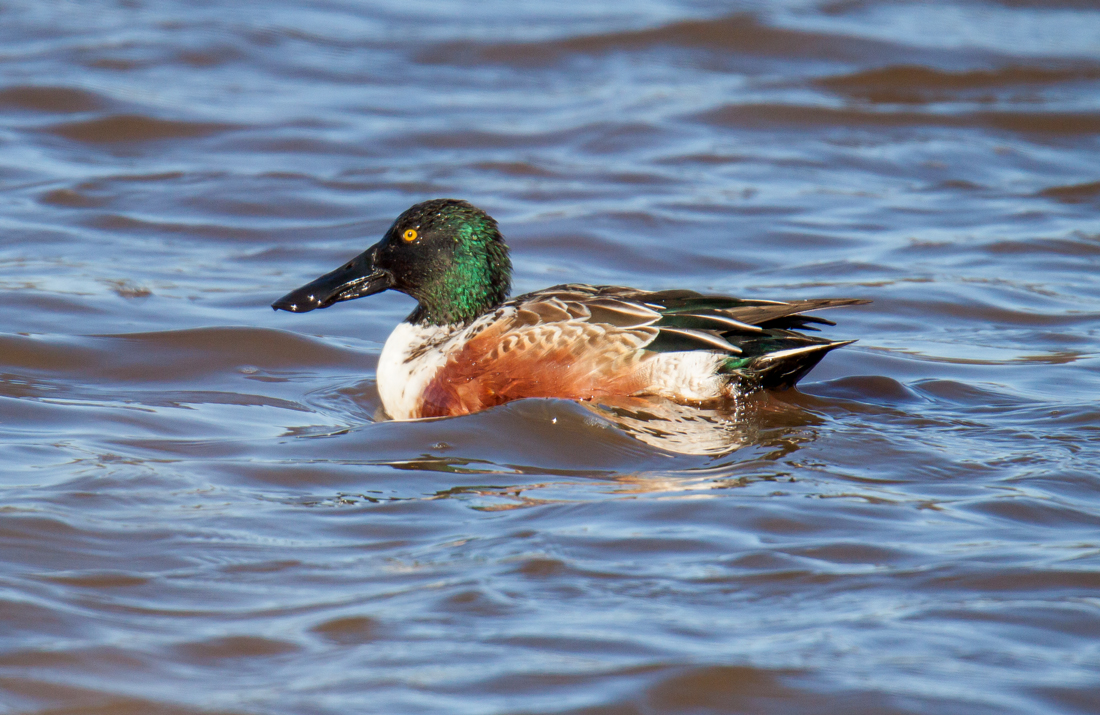
No, this is not a commentary on overindulgence during the holidays. Instead it is a response to one viewer’s comments on a recent posting that showed a pair of foraging Northern Shovelers with their heads almost buried in the weeds. The viewer preferred one photo over the other simply because it showed this bird’s unusual bill.

On Monday, a day that was sunny, cold, and windy, I observed another pair of Northern Shovelers (Anas clypeata) and took some shots that show their bills in all of their oversized glory.

I can still remember my surprise at the length of the bills when I saw these birds for the first time. Initially I thought it was an optical illusion, but it became clear pretty quickly that the bill was unusually long. According to the Cornell Lab of Ornithology, the Northern Shoveler’s bill has has about 110 fine projections (called lamellae) along the edges that help in straining food from water.

Northern Shoveler

female Northern Shoveler

© Michael Q. Powell. All rights reserved.

Read Full Post »

One of the Great Blue Herons (Ardea herodias) that has been hanging around the boardwalk at my local marshland park was amazingly cooperative yesterday morning and posed for this portrait. I think the white background was caused by the very cloudy sky—it makes the shot look almost like it was taken in a studio setting.

I really like the way that you can see the wispy feathers on the top of the heron’s head. I can’t help but notice, though, that this heron has the same kind of growth pattern on the top of his head as I do.

I wonder if he would consider shaving his head (and I really hope that he does not opt for a comb-over hairstyle a bit later in life).

Is there a Hair Club for herons?

Great Blue Heron

© Michael Q. Powell. All rights reserved.

Read Full Post »

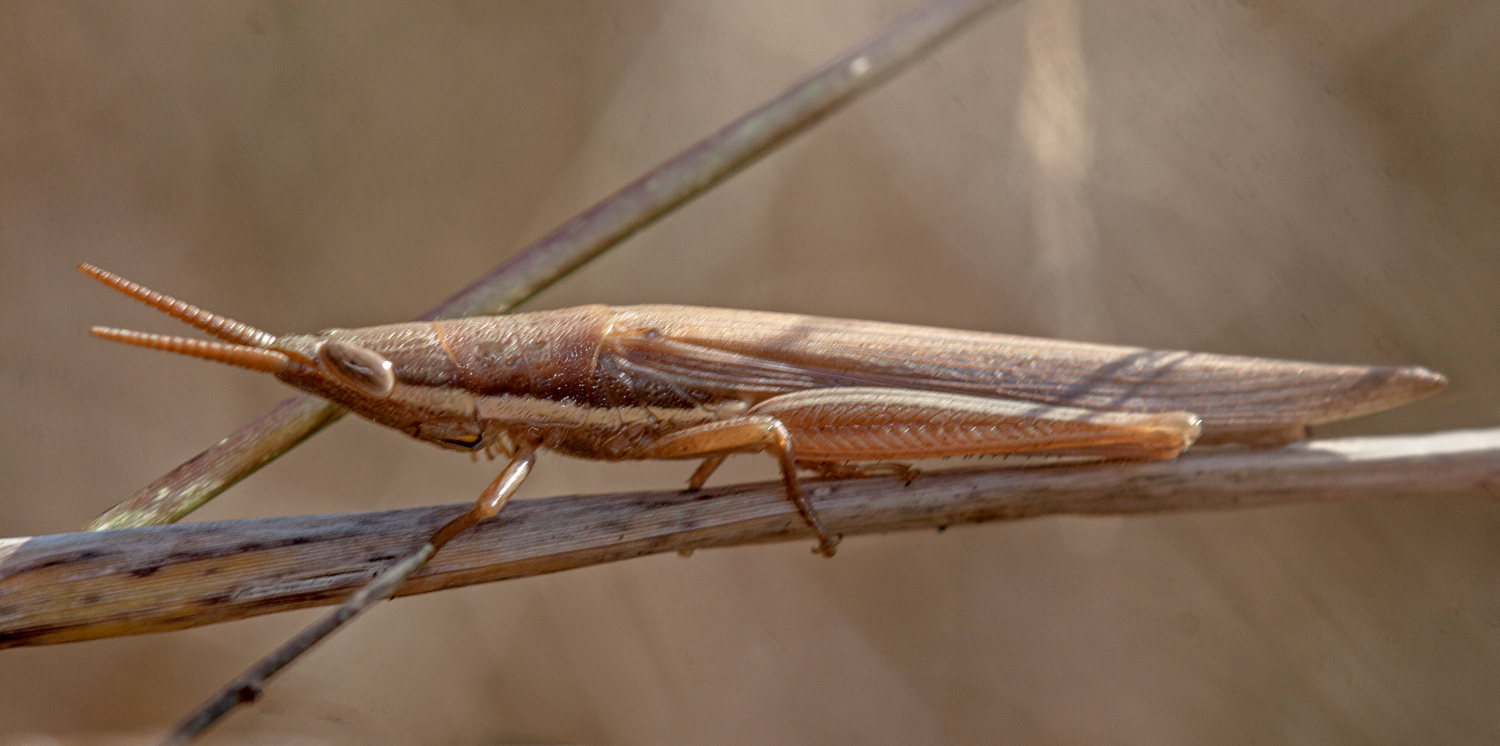
As I looked through my macro lens, I felt for a moment like a matador. The grasshopper in my viewfinder had lowered its head and was preparing to charge me, trying its best to gore me with its fearsome fluted horns. I wasn’t dressed for the part and had no little red cape to bravely wave at the charging grasshopper.

In reality, I am not sure what kind of a grasshopper this is. It looks a little like a Slant-faced Grasshopper, but I have never before seen one with such unusual, horn-shaped antennae. This grasshopper hopped up onto this stalk of grass as I was searching for dragonflies this past weekend. I don’t know much about the developmental cycle of grasshoppers and wonder if this might be a nymph.

In the absence of any scientific information, I think I’ll informally call this the Dual-unicorn Grasshopper, because the shape and pattern of the antennae remind me of so many of the depictions I have seen of the mythical unicorn.


charge_blogcharge2_blog

© Michael Q. Powell. All rights reserved.

Read Full Post »

Do you post photos of only one particular genre or type of subject? Do you feel that you have to be specialized as a photographer? Are you afraid to post a photo that might be viewed as a cliché or hackneyed image?

This past weekend I was catsitting for a photographer friend, Cindy Dyer, who has two male cats named Pixel and Lobo. As she tells the story, she wanted to name them Pixel and JPEG, but her husband refused to let her name the cat JPEG, so she settled on Lobo.

Since I was going to be spending some quality time with the cats, I decided to take along my camera and see if I could capture a few shots of them. I quickly learned that cats are not very cooperative subjects—you can’t get them to pose when and where and how you want. I suspect that most of the best shots of cats are taken when someone catches them doing something they were doing anyways.

It was gray and overcast the day that I tried to photograph the cats, so natural light was pretty limited in the townhouse where they live. The pop-up flash was not really an option, because it produced the animal equivalent of red-eye in the one shot I attempted. I cranked up the ISO to 1600 and shot almost wide open, but even so the shutter speeds were below 1/30 of a second and many shots were blurred. In retrospect, I probably should have chosen a different lens for the task. I used my 180mm macro lens and often couldn’t get enough distance to capture even the entire head. Needless to say, I had no trouble filling the frame with my subjects.

Eventually I got some images I liked of Pixel, the striped cat, and Lobo, the gray one. I posted these images to Facebook so that Cindy and her husband could view them from Texas, where they were attending a photo workshop. In doing so, I added to the deluge of cat photos on the internet.

One of my fellow nature photographers, Walter Sanford, responded to the images with the comment, “If you persist in posting cat photos, then I’ll have to recommend the Society of Amateur Wildlife Photographers revoke your membership and ban you for life!” I’m pretty sure he was kidding, but it prompted me to think about the questions with which I opened this posting.

For me, I am on a journey into photography and I want to be free to explore and to share the results of my exploration. I don’t want to overspecialize and I don’t want to feel constrained to posting only “perfect’ images. I have no fear in posting imperfect images and have to come to appreciate the creative power of what others might view as inferior images.

So here, at last, are my shots of Lobo and Pixel—embrace the cliché and feel free to post pictures of your cats.

Lobopixel_oct_web

© Michael Q. Powell. All rights reserved.

Read Full Post »

I never realized that I was surrounded by cannibals. No, I did not discover a pile of skulls or a string of shrunken heads, but almost every time recently that I have gone out into my local marsh, I have spotted Red-footed Cannibalflies (Promachus rufipes).

These insects are big and they buzz as they fly by me, so they are hard to miss. I have read that they are vicious predators, but I had never caught one red-handed with prey (or perhaps I should say red-footed) until yesterday. I can’t quite identify the prey, but it looks like it might be some kind of small bee. If so, it wouldn’t bee too surprising, given that one of the nicknames for this species in the “Bee Panther.”

I know that I shouldn’t be worried about these cannibals, but a slight chill went through me yesterday when one of these insects landed on the lenshood of my camera and looked up at me, looking very much like he was sizing me up

Red-footed Cannibalfly

© Michael Q. Powell. All rights reserved.

Read Full Post »
I know that damselflies come in many colors, but my brain wanted to cramp up when I was told that this stunning orange damselfly was a bluet. An orange bluet? Aren’t bluets blue?

Apparently that is not always the case, and this little beauty is in fact a male Orange Bluet damselfly (Enallagma signatum). This shot looks like it was done with flash, but I double checked the EXIF data and confirmed that it was simply an effect caused simply by using exposure compensation and metering carefully on the subject. Normally, I am not a big fan of a black background, which can be caused when the light from the flash overpowers the ambient light, but I think that it works well in this shot, which looks almost like it was shot in a studio.

In the second shot, the brown color of the muddy water shows through in a way that is a little more natural. I took this shot when the damselfly was farther away than in the first shot and I like the way that it shows a bit more of the environment than in the first image.

One of the advantages of shooting in bright light and on a tripod was that I was able to shoot at ISO 100 and at f/11, which gave me images that were a lot cleaner than I often get.

orange1_blogorange2_blog

© Michael Q. Powell. All rights reserved.


Read Full Post »

Chasing a nymph through the woods–it may sound like I was living out some fantasy as a character in Shakespeare’s A Midsummer Night’s Dream, but I was only running after a butterfly, a Common Wood Nymph (Cercyonis pegala).

As is usually the case, I had never seen this “Common” butterfly before, but the large, yellow-ringed eyespots on the forewings make it pretty distinctive and I had no trouble finding it in an on-line identification guide.

I chased after the butterfly for quite some time before it finally came to a stop and perched on a tree. I am not sure why, but the butterfly chose to perch upside down. When I processed my images, I couldn’t decided if I should flip the image 180 degrees or not. Ultimately I decided that the flipped image, which is the first one, looked more “normal.”

Which one do you think works better, the flipped image, i.e. the first one, or the one with the original perspective, i.e. the second one?

nymph1A_blognymph1_blog

© Michael Q. Powell. All rights reserved

Read Full Post »

Am I the only one who remembers a poster from the 1970’s featuring the slogan “Fly United” and depicting two ducks mating in mid-air?

That’s what immediately came to mind earlier this week when a pair of Great Blue Skimmer dragonflies (Libellula vibrans) flew by me at my local marsh. Anyone who has ever watched dragonflies mate knows that it is an acrobatic endeavor, requiring tremendous flexibility by both parties. Imagine trying to fly while still in the “wheel” position. Amazingly all of the wings seemed to able to move freely, though I didn’t notice if they were both using their wings for propulsion.

I was able to snap off these shots as the pair flew toward me over the water of a pond, which reflected wonderfully the blue sky and the clouds up above us.

wheel1_blogwheel2_blog

© Michael Q. Powell. All rights reserved

Read Full Post »

One of my fellow photographers pointed out this cool little crab spider on some Queen Anne’s Lace (Daucus carota) during a photo jaunt to Meadowlark Botanical Gardens in nearby Vienna, Virginia this past Saturday.

In this first shot, my favorite, the spider seemed to be expressing frustration that his prey had escaped his grasp (or simply wanted to show me his awesome biceps pose). Who knew that spiders have biceps?

crab spider

Initially I tried to photograph the spider looking down at it, but I had trouble maintaining a steady pose and my shots were blurry. I decided to kneel down and get at eye level with the spider, looking across the plane of the flower, and that seemed to work a bit better. These shots look like they were done with flash, but the EXIF data shows a shutter speed of 1/320, which is higher than the synch speed of my flash, so these were actually done with natural light, with some exposure compensation dialed in.

The second shot, which preceded the first one in time, shows the spider trying to capture a small insect (I think).

crab2_blog

The little insect starts to run away.

crab3_web

In vain, the spider crawled after the small insect, but it was too late. When I left the spider, it was at the edge of the flower, looking off into the distance, pondering perhaps what might have been, thinking about the one that got away.

crab4_blog

© Michael Q. Powell. All rights reserved

Read Full Post »

The light reflecting off the water in the background was really bright, creating these disco ball highlights when I took these shots of a male Blue Dasher dragonfly (Pachydiplax longipennis) recently at Green Spring Gardens. Normally I try to avoid distinctive specular highlights, but in this case I decided to embrace them.

Why do I suddenly feel an irresistible urge to watch Saturday Night Fever?

disco1_blogdisco2_blog

© Michael Q. Powell. All rights reserved

Read Full Post »

Two years ago in a posting, I confessed to being obsessed with photographing Red milkweed beetles (Tetraopes tetraophthalmus). Inexorably I kept finding myself being drawn back to these bright red beetles.

I thought I had outgrown my obsession, until I encountered several of my little red friend this past weekend at Green Spring Gardens. I immediately reverted to my old behavior and began to stalk them like a paparazzo, trying to get a good shot or any shot at all.

My obsession continues.

Red Milkweed BeetleRed Milkweed BeetleRed Milkweed Beetle

© Michael Q. Powell. All rights reserved


Read Full Post »

A dragonfly perching on a heron? In real life it’s highly unlikely that you would see such a thing, but a male Blue Dasher dragonfly (Pachydiplax longipennis) decided that the metal silhouette of a Great Blue Heron (Ardea herodias) in a pond at Green Spring Gardens made a good spot to rest.

Click on any of the tiled images to see all of them full-sized in slide show mode.

Blue Dasher

© Michael Q. Powell. All rights reserved.


Read Full Post »

It may sound like a new summer beverage sensation, but the title is meant to be literal. I encountered this tiny Eastern Amberwing dragonfly (Perithemis tenera) sunning itself on a rock in a small, muddy creek in the back area of my local marshland park.

It was a bit unusual for me to see a dragonfly on a rock (usually they perch on vegetation or on the ground) and I think the texture of the rock adds visual interest to the shot without being distracting the eye. I was pleased to capture so much beautiful detail of this cool little dragonfly and was particularly happy to see how well the amber wings turned out.

drag1_rocks_blog

© Michael Q. Powell. All rights reserved.

Read Full Post »

Do your mix humor with your photography? I enjoy playing with words (and especially puns) and love looking for opportunities  to inject humor into my blog postings. One of my favorite bloggers, Lyle Krahn at Krahnpix, is a real master at mixing his incredible wildlife shots with a kindred kind of humor (or perhaps he might say “humour.)

This past Monday was my blog’s second anniversary and I am taking a brief pause from posting new photos to think about the blog and my photographic journey over the last two years. During this period I am re-posting some of my favorite postings.

The re-posting today of an encounter between a Green Heron (Butorides virescens) and a frog was one of my earliest attempts to add humor, from the title all the way down to the last line of the posting, and is one of my favorites over the past two years. Here’s a link to the original posting or you can read it in its entirety below.

Full text of blog posting on 24 July 2012 that I entitled “Not Seeing Eye to Eye”:

One can only imagine what is going through the frog’s mind as he looks into the crazed eyes of the green heron who has just speared him. Is he looking for mercy? Is he resigned to his fate?

I watched the prelude to this moment unfold this afternoon at Huntley Meadows Park, a marshland park here in Virginia. The green heron was intently scanning the water from the edge of a boardwalk that runs through the march. Periodically he would extend his neck down toward the water.

Several times we heard an excited “eeep” sound followed by a splash, indicating another frog had escaped. After a few more minutes, however, the heron dived into the water and reappeared on the boardwalk with the speared frog you see in the first photo.

When you look at the comparative size of the heron’s mouth and the frog, it hardly seems possible that the green heron could swallow the entire frog. The heron took his time shifting the position of the frog and then all at once he turned his head, bent his neck back a little, and down went the frog. It happened so quickly that I was able to snap only a single photo that shows the frog’s webbed feet as the only remaining parts that have not yet been swallowed.

In this final photo the heron no longer has a slim neck. I have no idea how long it will take for the frog to reach the heron’s stomach but I am pretty sure he was not yet there when I took this photo.

And don’t try to talk with the heron during this period. Why not? Read the caption of the last photo!

I can’t talk now. I have a frog in my throat.

© Michael Q. Powell. All rights reserved.


Read Full Post »

What adds drama to a photo? Sometimes it is the lighting of a scene or the positioning of a subject. These recent shots of Blue Dasher dragonflies (Pachydiplax longipennis) seem to have a bit more drama and are more “artsy” than many of my typical images.

Should I start wearing a beret now when I am shooting?

dramatic_blog dramatic2_blog dramatic3_blog

© Michael Q. Powell. All rights reserved.

Read Full Post »

I couldn’t help but laugh when I spotted this sign outside of the town hall in Exeter, New Hampshire, where I attended a wedding this past weekend.  I can’t tell if the message is to be careful when you are smoking, lest you be caught, or that non-smoking could be a punishable offense.

It reminds me a bit of a parental admonition, “Don’t let me catch you doing that again,” and the teenager’s response, “Don’t worry, you won’t catch me again.”

smoking_web

© Michael Q. Powell. All rights reserved.

Read Full Post »
If I want to eat a lobster, I need lots of tools (and a bib). This Great Blue Heron (Ardea herodias) at my local marsh had to try a different technique and seemed to be trying to crack the crayfish’s shell with its bill (or was hoping the crayfish would simply crawl down its throat).

heron2_crayfish_blog

© Michael Q. Powell. All rights reserved.

About these ads

Read Full Post »

What do you think about when you hear the word “dasher?”  From my early childhood days, the word meant only one thing—it was the name of one of Santa’s reindeer.

Many of us grew up hearing these familiar words from the poem “Twas the Night Before Christmas” (“A Visit From St. Nicholas“) by Clement Clarke Moore:

More rapid than eagles his coursers they came,

And he whistled, and shouted, and called them by name;

“Now, Dasher! now, Dancer! now, Prancer and Vixen!

On, Comet! on, Cupid! on, Donder and Blitzen!

To the top of the porch! to the top of the wall!

Now dash away! dash away! dash away all!”

So, every time I see a Blue Dasher dragonfly (Pachydiplax longipennis), like this beautiful male that I photographed this weekend, I can’t help but have a little thought of Christmas, even on the hottest days of summer.

But Santa, some may complain, didn’t have a blue Dasher. That’s true, of course, but Elvis had no problem singing of a Blue Christmas, the perfect setting for a Blue Dasher. (Click here to watch a You Tube video of Elvis singing this signature tune.)

dasher1_june_blog

© Michael Q. Powell. All rights reserved.

Read Full Post »
« Newer Posts - Older Posts »