Feeds:
Posts
Comments

Archive for the ‘Flowers’ Category

It doesn’t get much simpler than this—light shining through this leaf from behind created a graphic image that stands out from its blurry background. The color palette is mostly just shades of green. The suggestions of lines in the background help to add some visual interest.

The image is both striking and soothing to me, an interesting combination of reactions.

leaf2_blog

Michael Q. Powell. All rights reserved

Read Full Post »

I am going to have to brush up on my insect identification skills, but I think that this cool-looking insect is a larval form of a ladybug.

I don’t have a garden of my own, but one of my neighbors, fellow blogger and photographer Cindy Dyer, has a wonderful garden that is always full of colorful flowers and insects. I photographed this insect in her garden this afternoon.

The sunlight was a little too direct and the shadows are too harsh. I am happy, though, that I was able to pick up many of the insect’s details with my macro lens. In case you are curious, the bright red in the background is a group of tulips that are in full bloom.

As always, I welcome corrections or clarifications about my identification of my subject—there are lots of folks on-line with greater knowledge and experience in all of the subject areas in which I shoot.

insect_blog

Michael Q. Powell. All rights reserved

Read Full Post »

This is another close-up, pseudo-macro image that I shot with my telephoto zoom lens and I really like the way that the yellow in the center of the white flower seems to glow. Controlling depth of field was especially challenging when shooting something like this with my lens set a little over 300mm. I wanted the background to be as green as I could get it, which is tough at this time of year, so I had to bend low to get this angle. I achieved that goal partially,  though I was not able to blur out the background very well.

I guess it’s finally time to pull out the macro lens.

glow_blog

Michael Q. Powell. All rights reserved

Read Full Post »

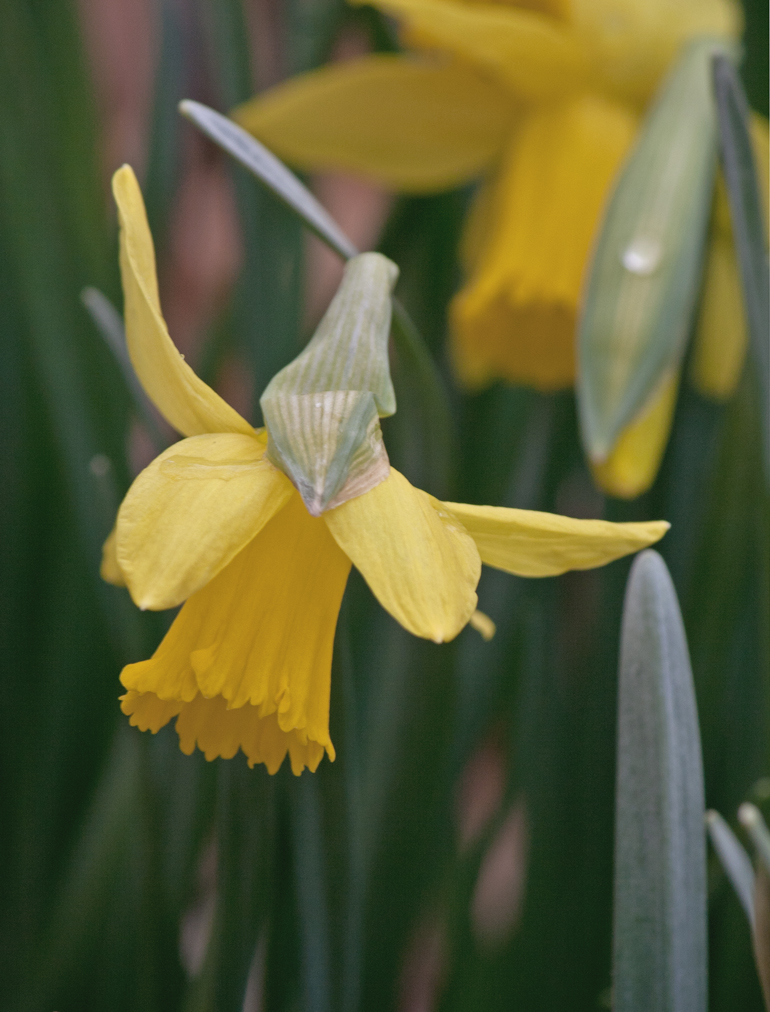
The sun was almost directly in front of me, a situation that is usually not optimal for photographs, but I really liked the interplay of the light and the shadows on this white and yellow daffodil.

It’s definitely a side of the daffodil that is not featured very often, but it is a lesson for me of the value of looking for new perspectives. I like image that I managed to get by looking at the flower from the other side.

daffodil1_blog

Michael Q. Powell. All rights reserved

Read Full Post »

It may sound like an oxymoron, but I think that this pretty little flower really is called a Summer Snowflake (Leucojum aestivum).

Yesterday was a beautiful, sunny day and I took the opportunity to visit Green Spring Gardens, a local county-run local historical and horticultural center. It is still a little early in the season for most of the showy blossoms, but I came across several patches of the snowflake flower. Apparently there are two varieties of snowflakes—spring and summer—and, strange as it sounds, these are blooming so late that they are probably Summer Snowflakes.

My mind is still geared on photographing birds, so I was carrying around my camera with the 135-400mm telephoto lens. I had my macro lens in the bag I was carrying and probably should have changed lenses when I took some shots of this flower, but I guess the warmth of the sun made me feel a little lazy.

I took this shot at 400mm, which is equivalent to a 640mm on a 35mm camera, because of my crop-sensor camera. The shot is a little soft, but it is clear enough to show that I may have captured an additional subject. If you look closely at the top of the green stem, you will see what I think is a tiny spider. My fellow blogger and photography mentor, Cindy Dyer, likes to call these “bonus bugs.” You shoot check out her blog for some great shots of snowflake flowers and lots of other flowers too.

As insects and flowers return, I will have to retrain my eyes to focus on close-in details, rather than looking out into the distance, as I have during much of the winter when I was photographing a lot of birds. I look forward to the challenge.

snowflake1_blog

Michael Q. Powell. All rights reserved

Read Full Post »

Progress toward spring seems to have slowed down and frost has reappeared in the morning, though we have been spared the heavy snows that have fallen in other parts of the country.

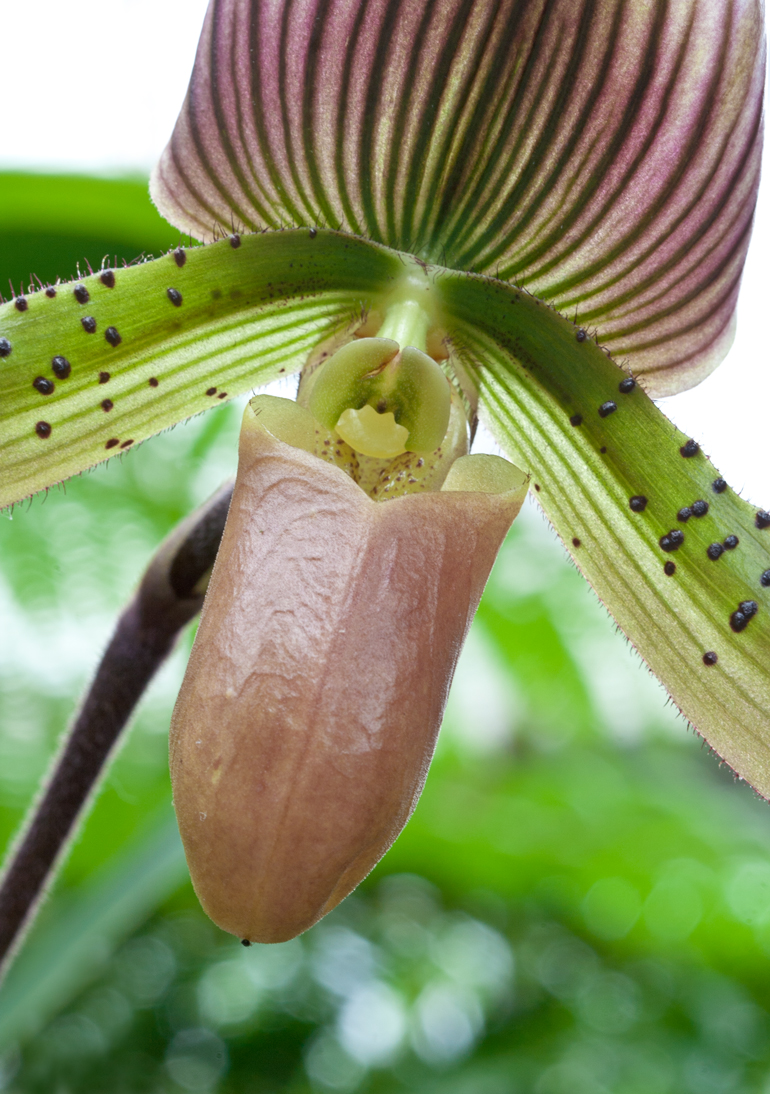
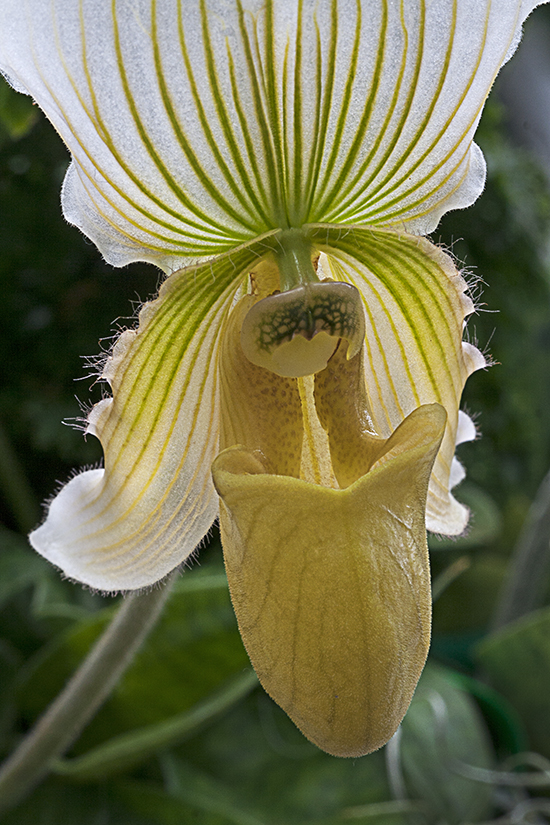
As a reminder of the colorful growth that is to come, I decided to share a few images of one of my favorite orchids—a Lady’s Slipper orchid—from the orchid exhibition that I visited at Lewis Ginter Botanical Gardens in Richmond, VA earlier this month. I was really intrigued by the “pouch” portion of the flower and tried to highlight it in close-up photos, which I took with my camera on a tripod and settings of ISO 100, f16, and .6 seconds.

As I think about spring, I feel like a little kid on a trip, who keeps asking his parents, “Are we there yet?” Despite what the calendar may indicate, we are not there yet, and the answer to the question “When?” is likely to be the indefinite “Soon” that parents are wont to use in a response to the child.

Slipper1_blogslipper2_blog

Michael Q. Powell. All rights reserved
Read Full Post »

This past weekend, I made another trip to the orchid exhibit at Lewis Ginter Botanical Gardens in Richmond, VA, in part to hone my macro-shooting skills that have atrophied during the winter months.

I have grown accustomed to photographing birds and small mammals at the far end of my telephoto range in situations in which I don’t have much time for decision-making. If I am lucky, I am able to quickly check the direction of the light and adjust my camera’s settings, but sometimes there is insufficient time for even those rudimentary checks.

When I am shooting with my macro lens, my camera is usually attached to my tripod and, if I remember to do so, I have time to think about the exposure, the settings, and the angle before the shot. More importantly, I can look at the results and take a second shot. Birds and animals rarely give me a second chance.

Here are shots of a couple of the orchids that at the exhibition. I don’t know the names of the orchids, but one of my Facebook friends told me that the red one is from the Cymbidium genus. As I was working on the images, I noticed that I photographed both of them from almost the same angle. Perhaps I liked that angle, but most likely I was desperately trying to get an uncluttered background and this view allowed me to minimize distractions.

I can tell I need to retrain my eyes a bit to look at the tiny details as I prepare for the insect and flower season. Baseball is not the only activity that requires spring training.

orchid_red_blog

yellow_orchid_blog

© Michael Q. Powell. All rights reserved

Read Full Post »

I’m finally finishing up with the shots from my trip last weekend to see the orchid exhibition and thought I’d post a couple of abstract images.

The first shot is a close-up of an elephant ear plant. I like the way its veins pop out, like a bodybuilder with a heavy weight. The image is somewhat symmetrical, but the two sides are not mirror images.

The second shot is a close-up of an orchid. Is it just me, or does it look like the flower contains a pink Darth Vader helmet?

ElephantEarCloseupDarthVadarPinkHelmet

© Michael Q. Powell. All rights reserved

Read Full Post »

My challenge this weekend was to capture the delicate beauty of a wide variety of orchids and I decided that the best way to do so was to look at them closely, very closely and to use my macro lens.

I took these photos at an orchid exhibition at Lewis Ginter Botanical Gardens in Richmond, VA, about 90 minutes from where I live. The orchids were displayed in a glassed-in conservatory at varying heights in many different ways at varying heights—sometimes as single plants and sometimes in groups. It would have been amusing to make a video of my body’s contorted positions as I struggled to frame the photos and to look through the viewfinder of my camera, which was on a tripod most of the time.

In some of these images, like the first one, I tried to increase the depth of field to show more details and in other cases, like the last image, I intentionally limited the depth of field to capture one element. In some photos, I was most interested in the lines and colors.

If forced to choose a favorite, I’d probably select the first image, because of the interesting shapes, which are set off by the white petals. Do you have a preference?

White Orchid closeupPinkWhiteYellow OrchidAbstract Pink Orchid

SpecklePurpleOrchidGreen

© Michael Q. Powell. All rights reserved

Read Full Post »

Here is a splash of color to start the work week—a close-up shot of the inside of a deep purple tulip called Negrita.  I photographed this flower while visiting an orchid exhibit at the Lewis Ginter Botanical Gardens in Richmond, Virginia this past weekend.

Tulip Negrita

© Michael Q. Powell. All rights reserved

Read Full Post »

In an effort to chase away the dullness of another gray winter day, I traveled yesterday with some friends to Lewis Ginter Botanical Gardens in Richmond, VA to see a spectacular display of orchids.

There was an amazing variety of orchids of all sizes and color, displayed in several areas of a large indoor glass conservatory. I know very little about orchids, but my eyes were especially drawn to a variety called Lady’s Slippers that are in the sub-family Cypripedioideae. According to Wikipedia, orchids of this type are characterized by slipper-shaped pouches that traps insects so they are forced to climb up past the staminode, behind which they collect or deposit pollen, thus fertilizing the flower.

Here is a front view of a green-and-yellow Lady’s Slipper. Although the orchids were amazingly beautiful, it was often difficult to get good backgrounds for images of the flowers, because of visual clutter. I dealt with the issue by using my macro lens and concentrating on small elements of individual flowers.

My friend and photography mentor, Cindy Dyer, however, was better prepared for this by carrying along a piece of white cardboard to help isolate the flowers and simplify the background. (You should check out her blog for beautiful photos of orchids and other flowers and insects).

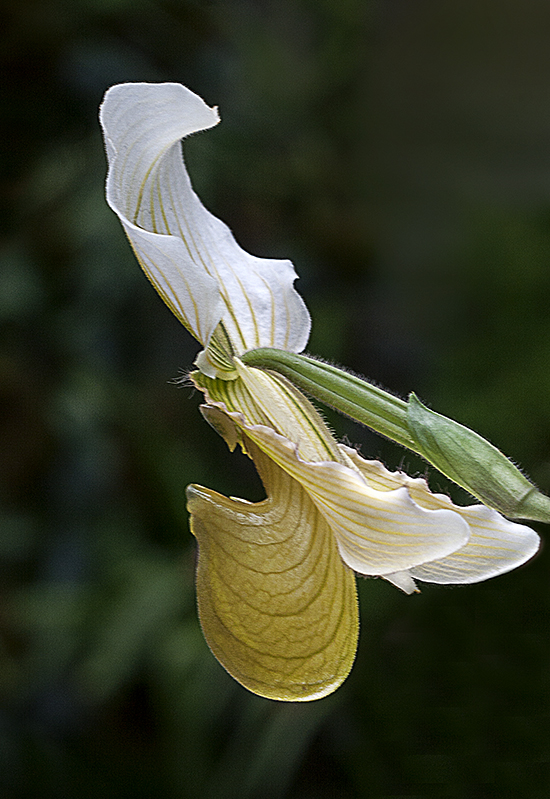
The second and third images, which provide a side view of the Lady’s Slipper, were taken with a few seconds of each other, one with the existing background and one using Cindy’s white cardboard. In many ways, I like the look of the white background—it reminds me a little of a botanical print, but it is definitely unnatural.

Which version of the side view do you prefer?

GreenYellowSlipperFront

Slipper Side ViewYellowGreenSlipperOrchid

© Michael Q. Powell. All rights reserved

Read Full Post »

Yesterday while I was walking  in Washington D.C. along a path through Rock Creek Park, I came across a small cluster of daffodils that are already blooming. The day was cold and gray and eventually we had a small ice storm, but these hardy, bright yellow flowers remind me that spring is not very far away.

daffodil1_blog

© Michael Q. Powell. All rights reserved

Read Full Post »

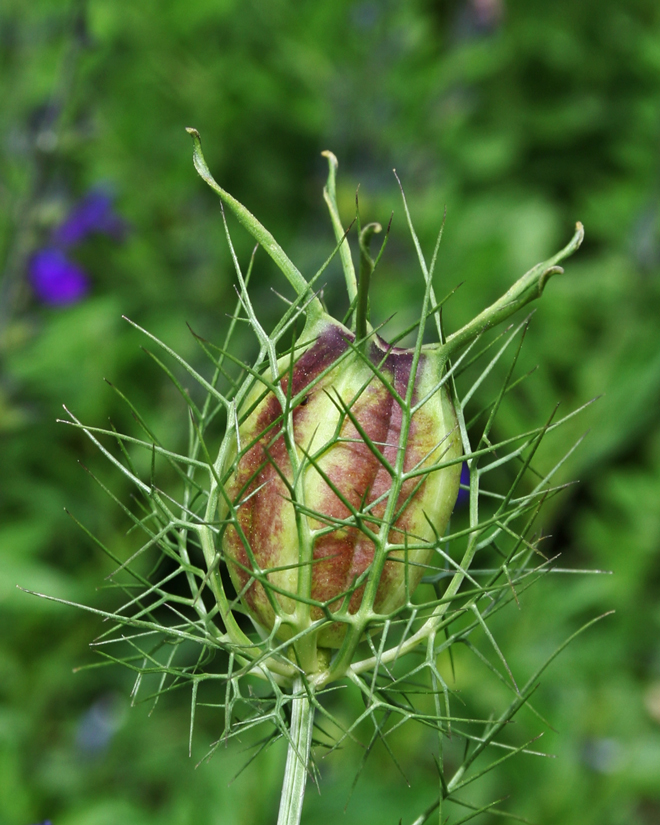
Feeling almost compelled to post a photo about love on Valentine’s Day, I thought I’d post some photos from last May (before I started this blog) of a really cool flower called Love-in-a-mist (Nigella damascena). It is extraordinarily beautiful both as a flower and as a seed pod, although the seed pod looks a bit like an alien life form. Special thanks to Cindy Dyer, my photography mentor and fellow blogger, for introducing me to Love-in-a-mist—you should check out her blog photos of this amazing flower by clicking on her name.

Love1Love2love3

© Michael Q. Powell. All rights reserved

Read Full Post »

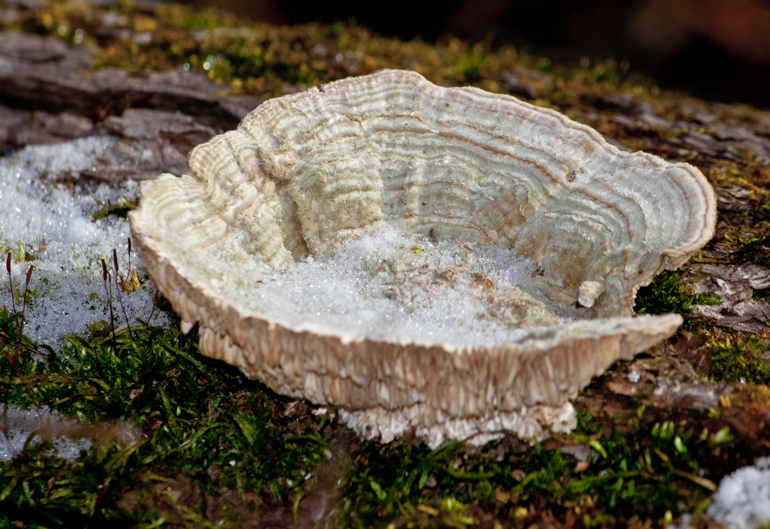
Walking through the woods yesterday, I stumbled across this mushroom bowl on a mossy log—so beautiful that I might call it “super,” but  probably need expensive market rights to call it a “super bowl.”

Seriously, though, I really do like the color and texture of the mushroom itself and the little splashes of yellow and green in the foreground. The snow in the bowl and to the side also adds a nice touch. If I remember correctly, this may have been one of the images when I used my camera’s built-in flash to throw a little light into the center of the mushroom bowl.

Until spring comes, I will probably look for more of these flower-like fungi to satisfy my desire to photograph beautiful inanimate objects (it takes more than birds and beasts to keep me satisfied).

winter_bowl_blog

© Michael Q. Powell. All rights reserved

Read Full Post »

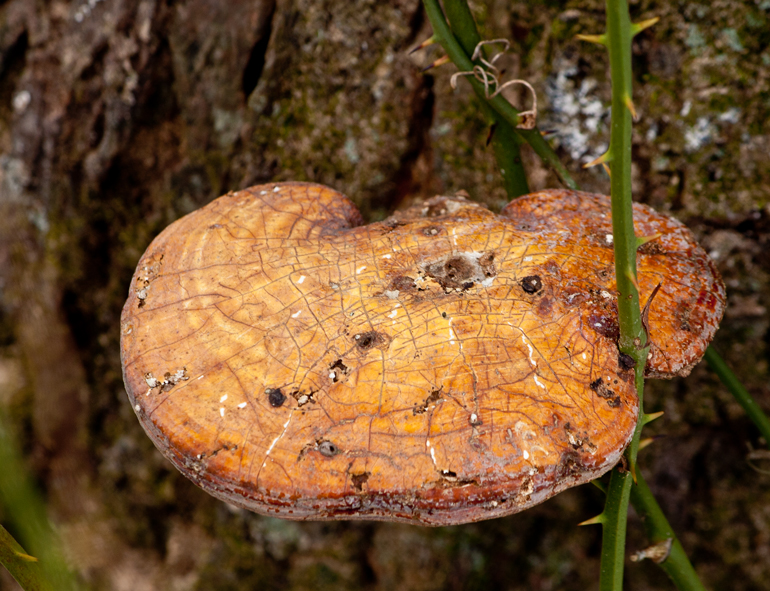
Inspired by the marvelous posts of fellow blogger Allen of N.H. Garden Solutions, I decided to keep my eyes open for mushrooms and other such growths when I made my forays into the woods last weekend. Allen always seems to discover a veritable cornucopia of vegetation, mushrooms, lichens, and slime molds, but my “catch” was much more modest (and I can’t even really identify the items I saw).

The first photo depicts what I think is a somewhat weathered mushroom that was growing on a tree mostly surrounded by green vines with very sharp thorns. I really like the texture of the surface of the mushroom and its coloration.

fungus2_blog

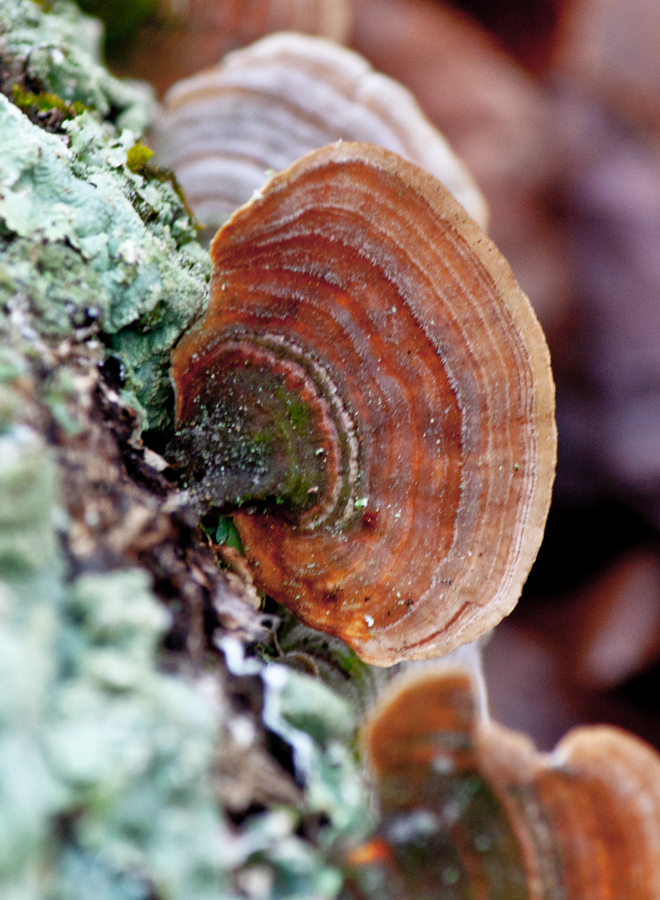
The second photo shows some kind of mushroom, possibly a kind of turkey tail mushroom. I like the concentric multi-color pattern, which reminds me of the growth rings of a tree.

fungusblogIn many ways these mushrooms are as beautiful and as colorful as the flowers that will be coming up in a few short months—I will have to keep my eyes even more wide open when I am outdoors now.

© Michael Q. Powell. All rights reserved
Read Full Post »

The tall plants in the marsh have withered and faded, but they are still standing, defiantly displaying their interesting shapes and textures against a snow-covered backdrop. Two pods are standing together and one is apart, three others are bent over in the center. The bits of orange add a touch of color and the silken strands to the left add a different texture. In a few months, brighter colors will return, but for now this serves as a reminder that there is still life in the winter.

still_life_blog

Click on the photo to see more details.

© Michael Q. Powell. All rights reserved

Read Full Post »

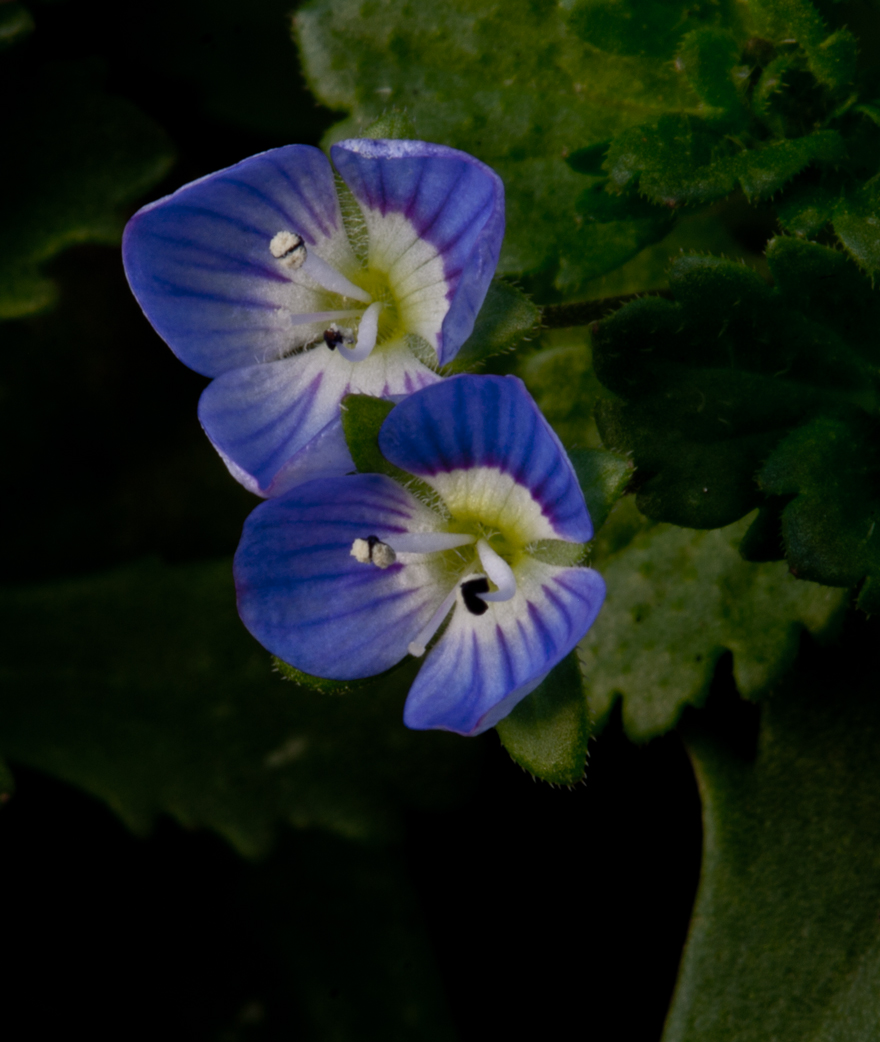
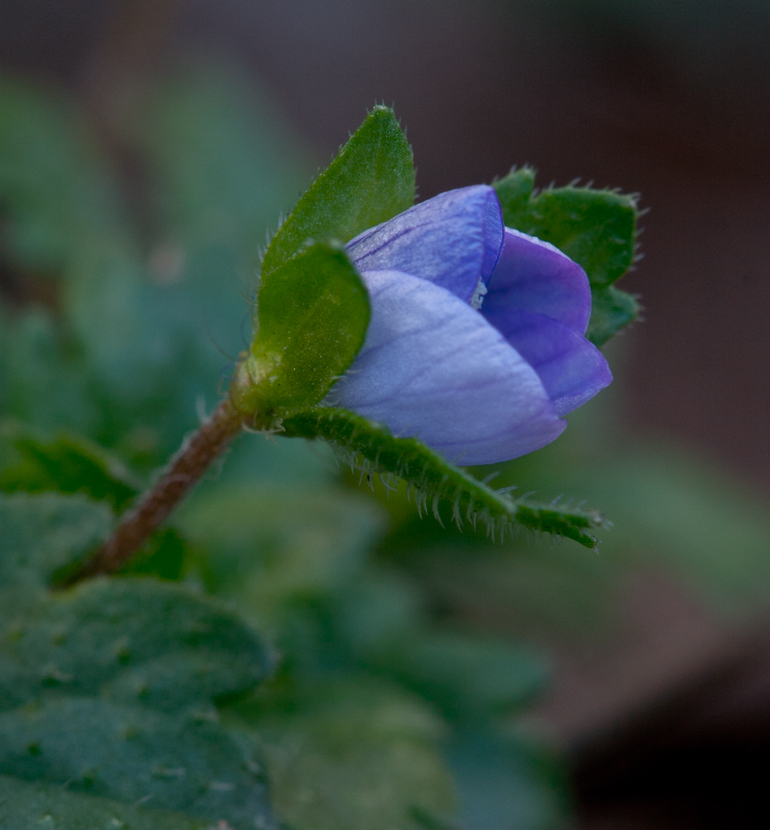
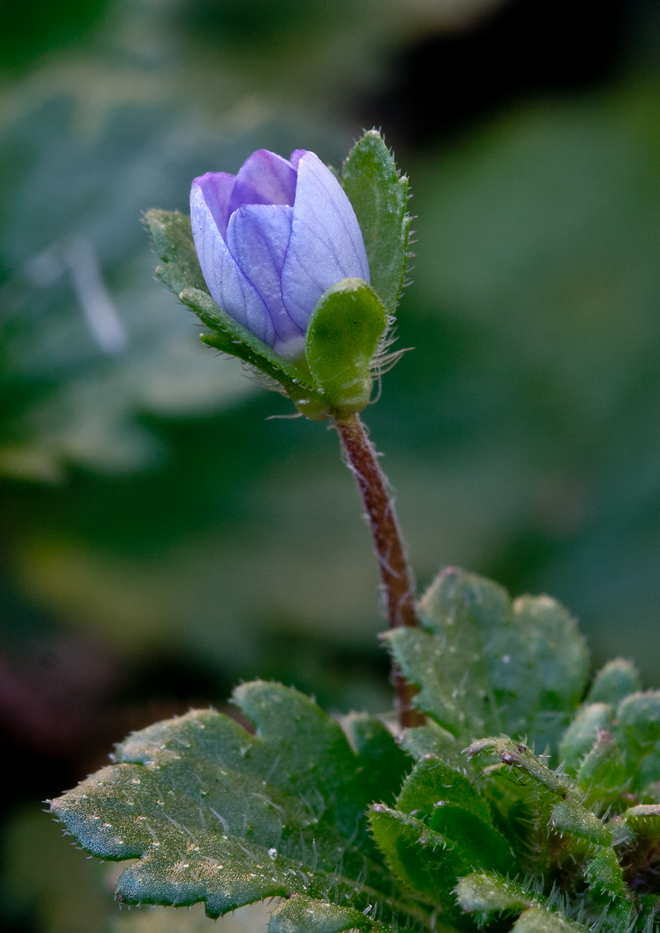
We have had a strange winter here in Northern Virginia, with some unseasonably warm days. Today, for example, it was over 50 degrees (10 degrees Celsius). As a result, some flowers may be starting to bloom earlier than normal. My neighbor and photography mentor Cindy Dyer has a wonderful garden and I noticed today that she has a whole lot of little blue flowers that are in the process of blooming.

I can’t identify what kind of flowers they are, but they are really pretty. I put my macro lens on my camera, put the camera on a tripod, and attempted to use the techniques that Cindy taught me for photographing flowers. I shot the first photo with an aperture setting of f20 in an attempt to capture the details of the flowers. The second and third images were shot at about f9, which let me blur the background a little. I like the way in which the buds look like little roses.

Temperatures are supposed to drop way below freezing during this coming week and I hope these little flowers are hardy enough to endure the cold.

flowers1_blogflowers2_blogflowers3_blog

© Michael Q. Powell. All rights reserved
Read Full Post »

Brussels is still blanketed with a light coating of snow. The outdoor areas of the restaurants on the Grand-Place, the old city square, are deserted, but they continue to be surrounded by flowerboxes full of hardy flowers, like this little pansy. My eyes were drawn to this splash of color in a sea of grayness.

The little point-and-shoot Canon that I have with me has a limited zoom range, but it does have a macro mode that lets me get pretty close to my subject. I have tried to capture simultaneously the colors of the flower and the sense of winter. I did find the ice to be particularly difficult to render in a realistic way, probably because of its reflectiveness.

pansy1pansy2

© Michael Q. Powell. All rights reserved
Read Full Post »

My neighbor, noted blogger and photographer Cindy Dyer, has a really cool garden on the side of her townhouse. Earlier this year I took a lot of photos of flowers and insects there, including one of my most popular postings on a mysterious creature on the lavender plant.

I hadn’t checked out the garden in a month or so and was surprised to see that some of the flowers were still blooming yesterday. I was especially drawn to a flower that looks a little bit like a sunflower—I am not sure exactly what it is. I tried to shoot different blooms from different angles to capture a sense of the depth of the flower. I don’t usually use flash with flowers, but I made some attempts with my built-in flash cranked down low,which I think accounts for the black background in some images.

Here are some of my favorite images of these flowers. They look like they might have been shot with a macro lens, but I was actually using a telephoto lens.

flower6_blogflower3_blog flower5_blog

© Michael Q. Powell. All rights reserved

Read Full Post »

As I have mentioned in some other posts, the local gardens are looking awfully bleak and colorless. I did manage to find some new growth and posted some photos of blooming snowdrop flowers yesterday morning.  I had to search even harder, though, to find some small splashes of color in the midst of all of the brown, shriveled vegetation.

I found two plants that still had some color, though I have no idea what kind they are. One is pink and has some kind of berries and the other is red and has small spikey flowers on it.

The plants are modest and the colors muted, but they will help to tide me over as I await the return of the glorious colors of spring.

pink_blogred_blog

© Michael Q. Powell. All rights reserved
Read Full Post »

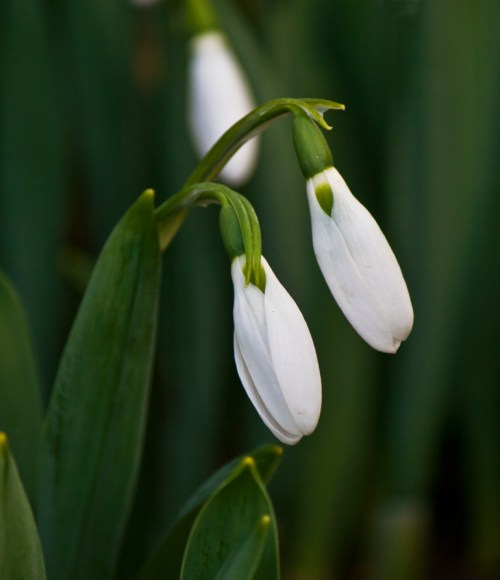
When I visited a county-run garden last week, the last thing that I expected to find was new growth. As I described in an earlier posting about a mockingbird, the landscape was bleak and desolate, largely bereft of color. From a distance I spotted a small patch of green. Moving closer to investigate, I discovered several small groupings of small white flowers that were starting to bloom.

A sign near one of the groupings indicated that the flower is a Giant Snowdrop (Galanthus elwesii), native to Turkey and from Greece to Ukraine. I don’t know flowers very well, but the information that I find on-line suggests that these little beauties are blooming several months earlier than usual.

My skills at taking flower photos have gotten a little rusty from disuse these last few months.  Following some early advice of my photography mentor, Cindy Dyer, an expert in photographing flowers, I got down down in the dirt to try to shoot these little flowers from a low angle. Cindy usually strives to have a beautiful green background for flowers, but that was largely impossible at this time of the year, with dominant shades of gray and brown. It was also a real challenge to get any kind of depth and definition with the pure white flowers.

Typically we have to wait until spring for signs of new growth and renewal—this winter I got an early reminder and an advance preview.

drops2_blog

drops3_blogdrops4_blogtiny_blog

© Michael Q. Powell. All rights reserved

Read Full Post »

This past weekend I visited my local garden, the site of many of my photos during the spring and summer, when I was concentrating my photographic efforts on flowers and insects. I was not surprised to observe that many of my favorite flowers were no longer blooming. Without these bursts of color to distract me, my eyes were drawn to simple elements, like the shapes of the branches that were now visible.

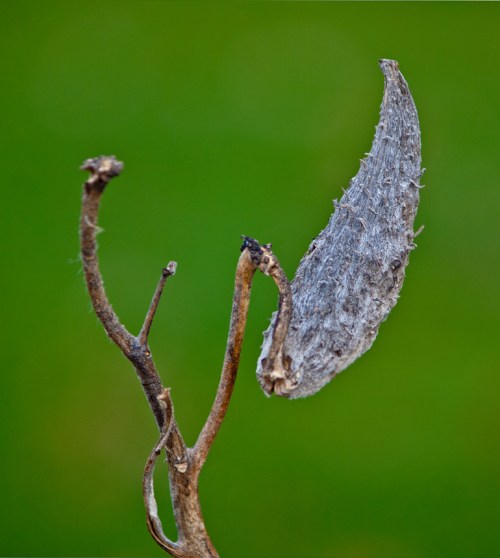
I really liked the color and texture of a particular pod—a milkweed pod, I believe—that was the sole survivor on its plant. I like the texture of the pod and its color, which is a nice contrast with the green of the background. Even the background turned out pretty well, with a few blotches of yellow helping to break up the solid green.

The composition is simple, like several of my recent photos. Maybe I’m going through a phase, but all I know is that I find simple compositions exceptionally appealing at the moment.

Pod composition

Pod composition

© Michael Q. Powell. All rights reserved.

Read Full Post »

One early morning recently I was walking through the marsh, lamenting that spectacular spider webs of the summer and early fall had disappeared. Suddenly I noticed that some of the plants were covered in a silky, web-like material. It was almost abstract in its construction and I wondered (and still wonder) about its purpose. This photo captures pretty well—in a minimalist set of colors and tone—the mysterious moodiness of that morning moment.

Natural abstract

© Michael Q. Powell. All rights reserved.

Read Full Post »

This bumblebee seems to be cleaning or adjusting one of his antennae and it caused me to wonder why. What are the antennae used for? Bumblebee.org had the answer—the antennae are used for smelling and touching. Taste and smell are conveyed to the bee through tiny hairs on the antennae.

Amazingly, bumblebees have a built-in antenna cleaner on each front leg, a notch between the metatarsus and the tibia. As bumblebee.org describes it, “The antenna is inserted into the notch then the metatarsus is bent enclosing the antenna. The antenna is then pulled through the notch and any debris or pollen is caught on the comb fringing the notch.” That site has lots more great information on the bumblebee, including electron microscope photos of the bee and a diagram of the antenna cleaner.

Bumblebee grooming an antenna

© Michael Q. Powell. All rights reserved.

Read Full Post »

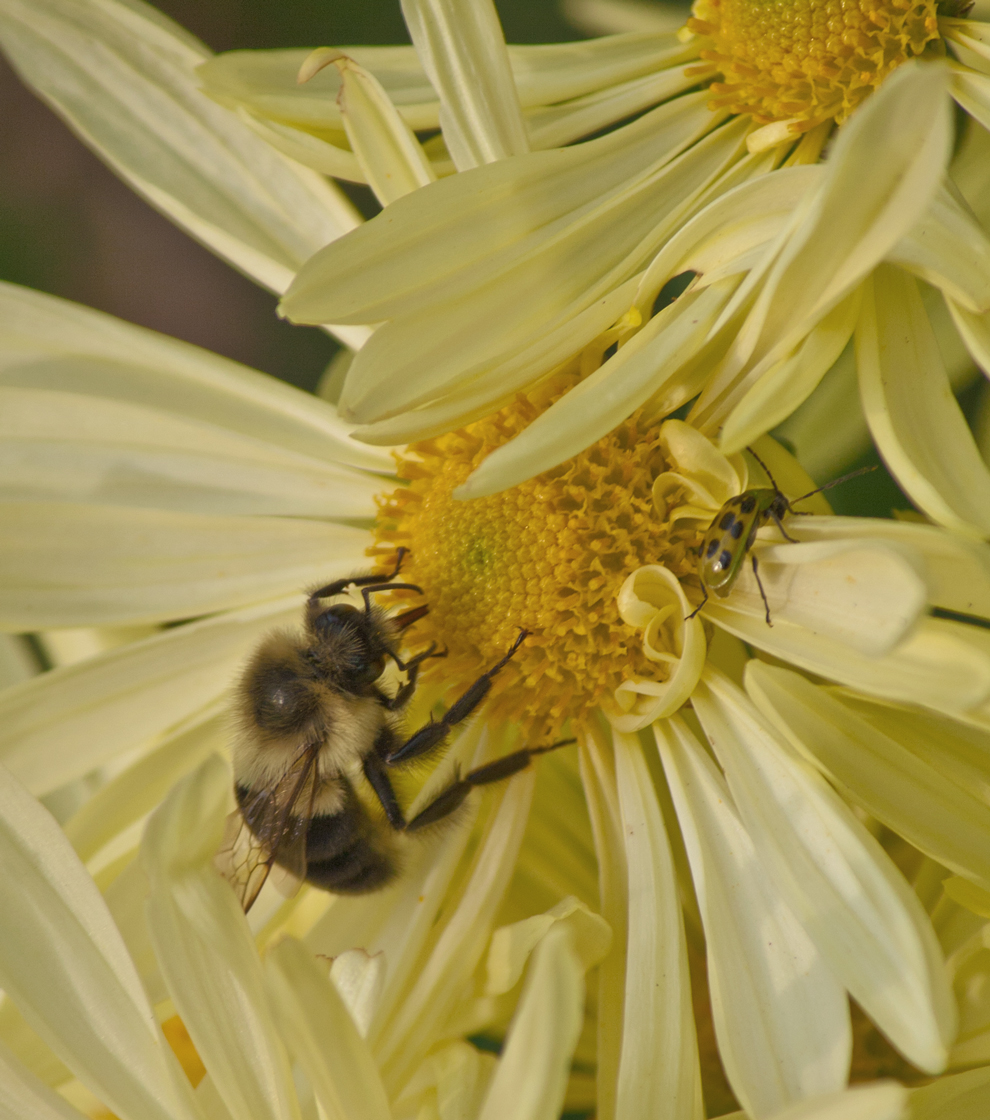
Yesterday I did a posting on a couple of interactions between birds of two species, a heron and a goose. Continuing on the same theme, here is a photo from last weekend of an interaction between insects of two species, a bumblebee and a Spotted Cucumber beetle (Diabrotica undecimpunctata). The beetle was already on the flower when the bumblebee arrived. Looking at the size of the invader, the beetle seems to have decided that a strategic retreat was the best course of action.

Interesting insect interaction

© Michael Q. Powell. All rights reserved.

Read Full Post »

Last weekend was warm and sunny and the bees were very active again after a period of cold weather and little activity. In a short period of time I was able to see (and photograph) several different varieties of bees. In addition to the familiar honeybees and bumblebees, I encountered what I thought was a new kind of bee.

Well, actually, it looked more like a hover fly (or flower fly), but the coloration was different. (Check out one of my earlier postings to see a photo of a hover fly.)  The unknown insect, featured in the third photograph below, acted a lot like a bee, buzzing from flower to flower feeding on nectar or pollen. I am still not completely certain about its identification, but it looks like it might be a Yellowjacket Hover Fly (Milesia virginiensis), a mimic for the Southern Yellowjacket (Vespula squamosa), according to information at Bugguide.

The weather has turned cold again and I may not see these insects again until spring, but it was nice to have an encore performance before the show is closed for the season.

Honeybee in November

Bumblebee in November

Yellowjacket Hover Fly in November

© Michael Q. Powell. All rights reserved.

Read Full Post »

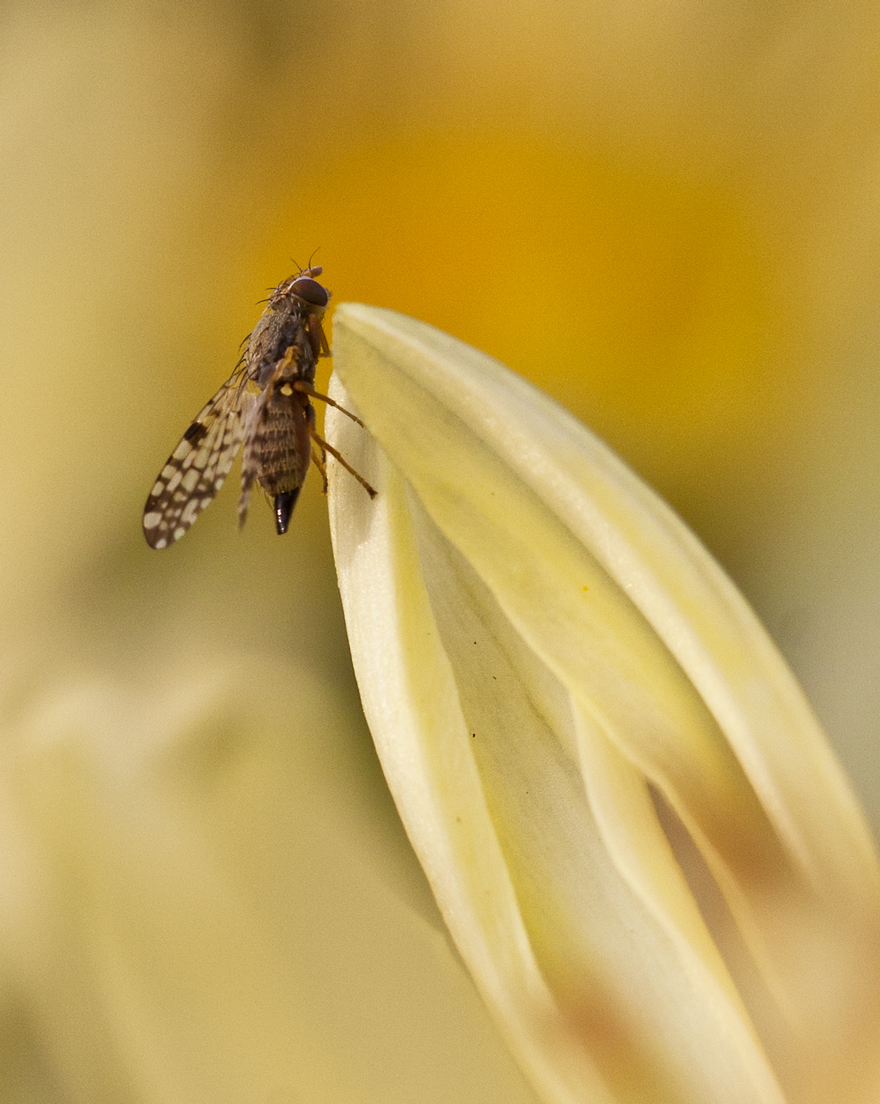
We had a few warm days this past weekend and there were a lot more insects around the still-flowering plants than there had been the week before. I focused a lot of my attention on some white flowers, where bees were active (I may post some bee photos later), but my eyes were especially drawn to a tiny fly with red eyes, clear and black patterned wings and a shaggy-looking body. Despite his diminutive stature, I managed to get a pretty clear shot of him. If you click on the photo, you can even see the hairs on his head. I searched the internet and couldn’t seem to find and identification of my little fly. His wings look a little like a scorpion fly, but the tail is all wrong.

The other photo is a spotted cucumber beetle (Diabrotica undecimpunctata), a photogenic insect whose photo I’ve posted several times already. I especially like the pose of the beetle as he is climbing up the flower. The photo also gives you an idea of the size differential between this beetle and the tiny fly.

Tiny fly on a white flower

Ain’t no mountain high enough…

© Michael Q. Powell. All rights reserved.

Read Full Post »

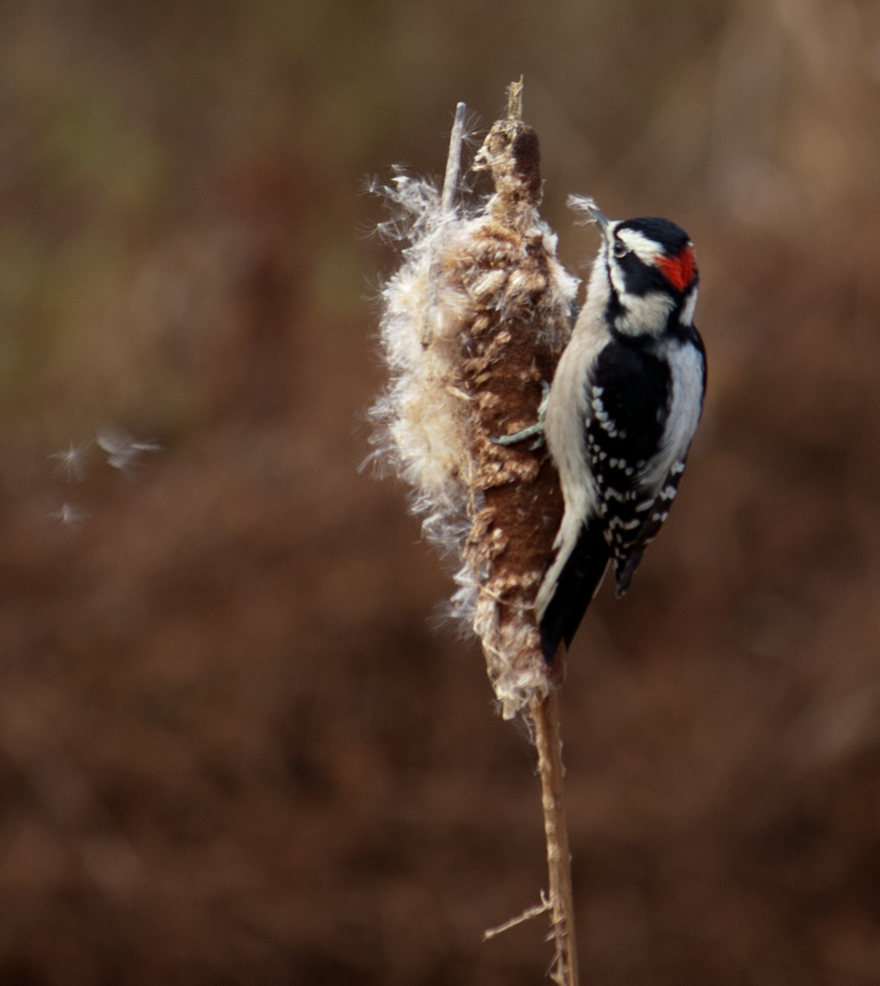
If I were a woodpecker, I would want to be a male Downy woodpecker (Picoides pubescens) and slam my head into something soft as a pillow—like this cattail—and not always into solid wood. Of course, you can end up with a mouthful of cattail fibers, and not just a tasty bug.

Downy woodpecker with mouthful of cattail

Downy woodpecker on cattail

More seriously, scientists are doing research to figure out why woodpeckers don’t end up with concussions, given that they can slam their heads into wood with the force of 1,000 times that of gravity, according to an article on livescience.com. By comparison, humans can survive a force of up to G’s, according to Air Force research, though there are reports of race car drivers surviving a force of over 100 G’s. According to the article, Chinese researchers are studying the microscopic structure of the bones surrounding the brain and also the beak to try to understand how the woodpecker’s brain is protected. If you are interested in the research, an article on a website called Inkfish explains in layman’s terms the research methodology and some of the preliminary conclusions.

© Michael Q. Powell. All rights reserved.

Read Full Post »

After a frosty start, today was the warmest it’s been in a while, partly sunny with highs above 60 degrees F (about 16 degrees C). As the sun was starting to set, I decided to be a little creative and see if I could highlight a single leaf with the colorful sky in the background. I found a suitable tree without too much problem, but finding a leaf at the right height with an unobstructed background was a little tricky. I happened to have my 100mm macro lens on the camera and decided to go with that. I knew that I would need to use a little flash on the leaf to keep it from getting lost in the shadows. I used settings of ISO 100, F32, and 8/10 sec to get the effect and tweaked the image slightly in Photoshop Elements, though I chose not to crop at all. Here’s a couple of shots of my experiment. (In case you are curious, the leaf is still attached to the tree, even though it looks like I am merely holding it in from of the lens.)

© Michael Q. Powell. All rights reserved.

Read Full Post »

When I first saw this insect, my initial thought was to wonder about its identification—I still don’t have an answer to that quandary. My second thought was that it would be cool to try to take a photo looking into the flower from just over the edge of one row of  petals, which were standing almost straight up. I’m still a relative neophyte with my macro lens, and depth of field and critical focus are sometimes real problems.

I am pretty happy with the results I achieved in capturing images consistent with my mental picture.  The first photo is the closest to what I had in mind, but I also like the position of the insect in the second photo.


© Michael Q. Powell. All rights reserved.

Read Full Post »

Sometimes my eye is drawn to the shapes and colors and textures of objects more than to the objects themselves. The result can be a somewhat abstract looking photo, which is very different from what I usually shot. Here are couple of photos of that ilk from a trip last week to a local garden.

The first was taken looking through a ground-level weathered weathervane and the framing of the shot is just as it came out of the camera. I like the contrast between the light and the shadows and between the rust and the blurry natural colors in the background.

The second is a shot of a feathery looking yellow plant in which I narrowed the depth of field to isolated a few of the yellow needles and the reddish branch. I like the variations of color in the photo and the blurry repetitions of the foreground shapes and colors that can be found in the background.

Weathered weathervane

Abstract yellow

© Michael Q. Powell. All rights reserved.

Read Full Post »

« Newer Posts - Older Posts »