Feeds:
Posts
Comments

Archive for the ‘Flowers’ Category

When I get the urge to take some photos and don’t have much time, I like to walk over to a neighbor’s house and take photos of the bees that are usually buzzing around the lavender plants there.

A little over a week ago, I did a posting that had a super close-up shot of a bee. Today’s shot was taken from farther away and has the blurry background that I really like, with the bee still in pretty sharp focus in the foreground.  I like the way that the image shows the way the lavender droops a little from the weight of the bee and I also like the the second stalk of lavender standing tall in the mid-range area of the shot.

It’s a pretty simple composition, but the result is a pleasing image of a bee happily at work.

double_blog

© Michael Q. Powell. All rights reserved

Read Full Post »

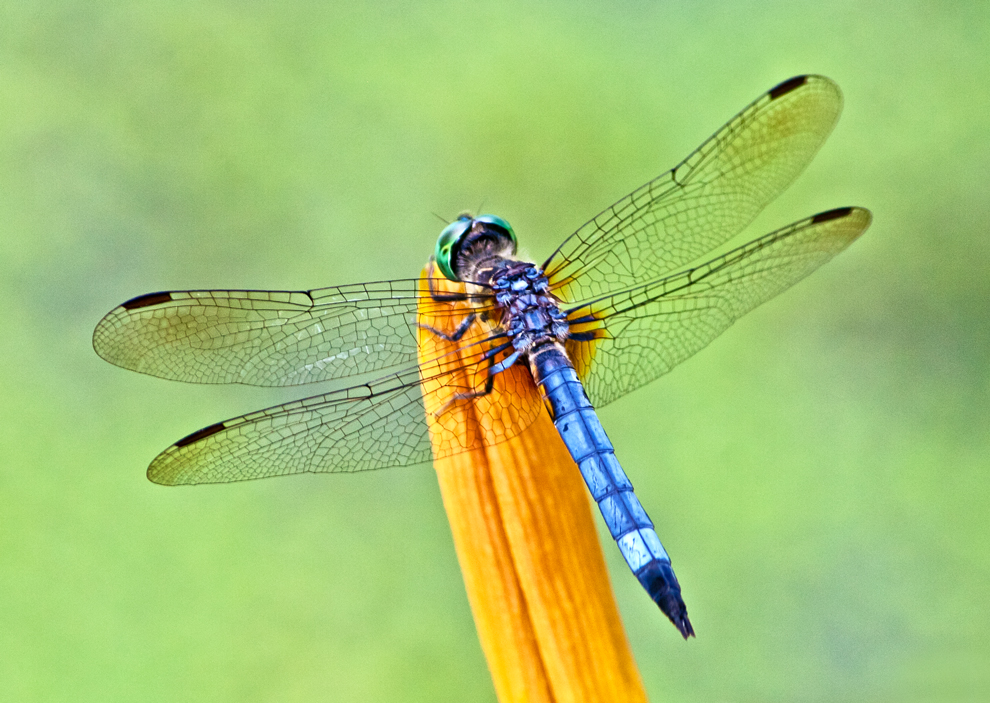
I couldn’t believe my luck when this male Blue Dasher dragonfly (Pachydiplax longipennis) perched on one of the orange lilies at the edge of the pond.

The lily had not yet bloomed, making it a perfect place for the dragonfly to land, and I had positioned myself to take this shot, but I was a little doubtful that a dragonfly would cooperate.

The green of the background complements the blues of the dragonfly, but it is the orange that makes this image pop for me.

I am happy with the image.

lily1_blog© Michael Q. Powell. All rights reserved
Read Full Post »

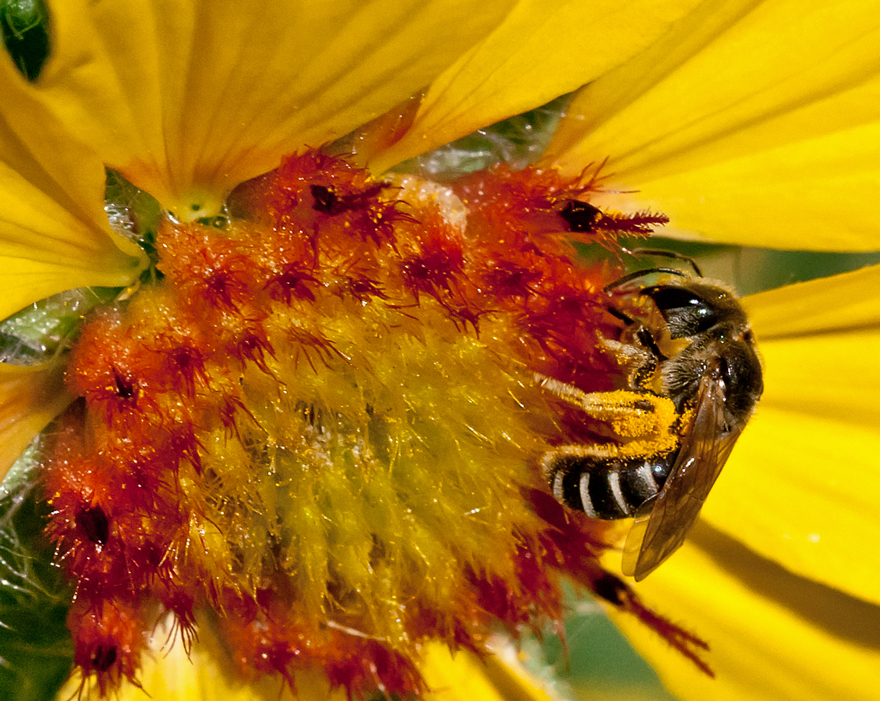
Some bees seem to be really tidy when they are gathering pollen, but this bee was a total mess, with pollen sticking all over its legs and underside. The bee looks to be some kind of honey bee, although the striped markings on its lower body seem a little unusual.

Often when I am shooting a macro shot, I am so worried about the technical aspects of the shot that I forget that photography is also an art. This image helps remind me that photography remains a creative pursuit, a fusion of art and science.

pollen_1a_blog

© Michael Q. Powell. All rights reserved
Read Full Post »

Do you have a favorite insect? I realize that’s a strange question and, if pressed, most people would respond with the name of a beautiful butterfly or perhaps a ladybug, but my favorite is a very special katydid.

Last summer, though, I fell in love with a multi-colored grasshopper-like insect called the Handsome Meadow Katydid (Orchelimum pulchellum). I was absolutely thrilled yesterday to encounter and photograph a tiny insect that is almost certainly one a juvenile Handsome Meadow Katydid.

Although its colors are pretty distinctive, it’s the blue eyes that make it really stand out. The eyes really draw me in, even if they do look a little cartoonish.

Each time I visit the marsh, I will now be on the lookout for these insects, which actually grow more handsome as they age. If you want to see what they look like as adults check out my previous postings called Neon-colored grasshopper; More Handsome Meadow Katydids; and Ol’ Blue Eyes is Back.

Be forewarned, though, that you too may fall in love and end up with a new favorite insect.

katy1_blog

Michael Q. Powell. All rights reserved

Read Full Post »

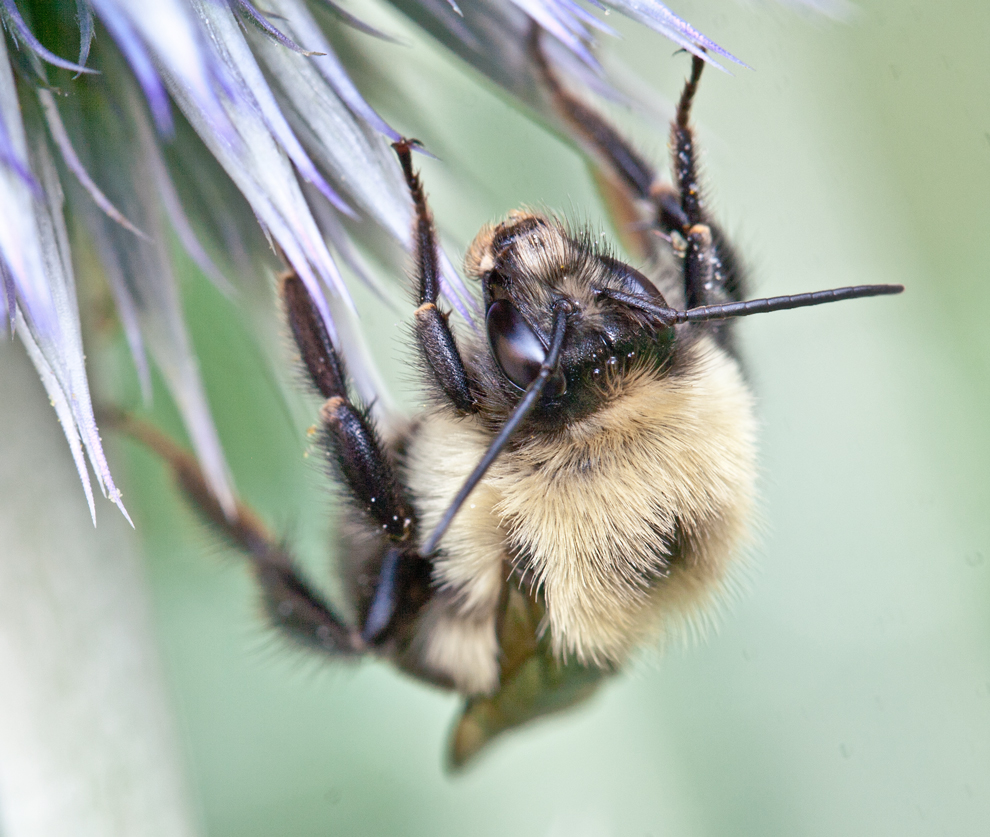
Before going out to the marsh park to shoot this morning, I decided to check out my neighbor’s garden and came across this bumblebee, hanging from the side of a a beautiful Small Globe Thistle (Echinops ritro).

I took some initial shots and then began to wonder if the bee was still alive, because it was not moving at all. When I blew gently on its face, however, it moved a little, so I figure that it was probably just sleeping. I carefully set up my tripod and got as close as my lens would let me get, which caused the bee to fill a substantial part of the frame.

I managed to capture some details that normally I do not see, like the little lines on the antennae and the hairs on the bee’s face. The bee was still sleeping when I departed—I didn’t want to risk the possibility that bees get angry if you wake them up prematurely.

close-up_bee1_blog

Michael Q. Powell. All rights reserved
Read Full Post »

As you walk through certain areas of my local marsh, the air is filled with the fragrance of the wild roses, probably Virginia Roses (Rosa virginiana), which, according to Wikipedia, are native to eastern North America.

I stooped down closer to draw in the perfumed air and my eyes were attracted to the bold pattern of a beetle that was gathering nectar from the flower.  It appears to be a kind of Flower Longhorn beetle,  which I have tentatively identified as a member of the species Strangalia luteicornis. 

Check out the entry in Bugguide, one of my favorite on-line sources of information on insects, if your want additional information on this species.

long_beetle1_blog

Michael Q. Powell. All rights reserved

Read Full Post »

The little skipper butterfly found a dandelion to be particularly appealing and I like this simple image that captured their brief encounter.

dandy_skipperA_blog

Michael Q. Powell. All rights reserved

Read Full Post »

One of the first rules of photography that I learned was the importance of keeping a subject’s eye in focus and I managed to accomplish that with this bee that I photographed yesterday. However, the depth of field turned out to be so shallow that only a few other parts of the bee are as precisely focused as the eye.

I was hand-holding my macro lens, which is not image-stabilized, and the sky was overcast, so I had to open up the aperture and keep the shutter speed fairly high to get a decent shot (f/6.3, 1/100 sec, ISO400). The bee was moving all around a patch of lavender in a neighbor’s garden, gathering nectar with its tongue, which is visible in the photo.

I stalked the bee for quite a while and a lot of my shots turned out to be blurry, but I ended up with a few that were ok. This is my favorite of the bunch and I think that the shallow depth of field, which is a shortcoming in many situations, is the primary reason that I like it.

lavender1_blog

Michael Q. Powell. All rights reserved

Read Full Post »

As we move through spring, I am finally starting to see more hover flies and bees, busily at work collecting food and pollinating the flowers.

The insect in the first photo is, I believe, an American Hover Fly (Eupeodes americanus). A year ago, I would almost certainly have called it a bee, but I have learned a lot about insects since then, thanks to my photography.

The second photo feature a beautiful variegated flower and what looks to be a honey bee, though it’s a little difficult to make a positive identification, because of the angle.

It’s early in the season, so I am having to recall some lessons from last year, like the need to pay attention to my distance. In my desire to get closer, I have already managed a few times to bump the flower and scare off the bee, forgetting that the lens hood on my macro lens is pretty big.

hover1_blogbee1_blog

Michael Q. Powell. All rights reserved

Read Full Post »

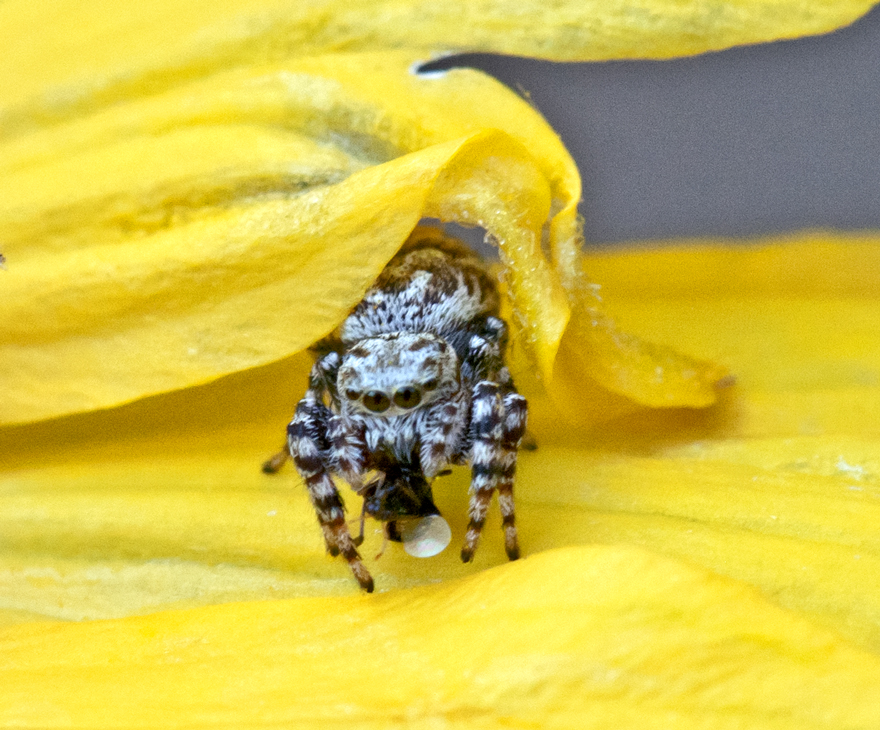
As I was checking out the flowers in my neighbors’ garden yesterday afternoon, I came across this little spider, sitting on top of a flower. There was no web anywhere in the vicinity, so I suspected that I might have a jumping spider.

Last month, I encountered a tiny, fuzzy spider that turned out to me a jumping spider, so I am a little more attuned to looking for them now. This one is definitely not the same kind, though, with completely different colors and markings. You can compare the two by checking out the photos in my previous posting.you

When I first saw the spider, it had just captured some kind of insect as you can see in the second photo. It then moved under the shade of a petal of the flower to enjoy its freshly caught dinner. I showed this moment in the first and third shots. The first one was taken a little closer and shows a lot of detail, but I really like the context that the third one provides and it is probably my favorite one. The final shot gives you an overall view of the spider.

I love the color and pattern of the spider and was happy that I was able to capture some of the details. The spider was not very big and I had trouble placing my tripod on the uneven ground to get a sharp shot. I am really happy with the results, however, and will definitely keep looking for these spiders with eyes that I find to be simply irresistible.

jumping3_blog

jumping2_blogjumping1_blogjumping4_blog

Michael Q. Powell. All rights reserved

Read Full Post »

One of my neighbors, fellow blogger Cindy Dyer, now has lavender blooming in her garden. It smells wonderful and this Cabbage White butterfly (Pieris rapae) seemed to be really enjoying it earlier this afternoon.

cabbage1_blog

Michael Q. Powell. All rights reserved
Read Full Post »

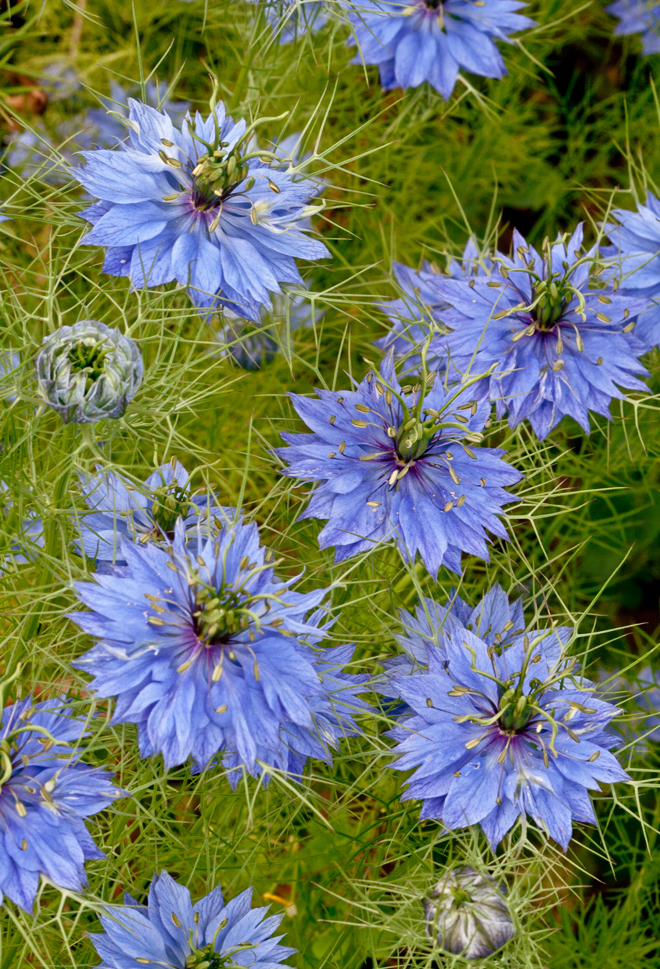
Love-in-a-mist (Nigella damascena) is one of those rare flowers that looks as good (or even better) after it has finished blooming and has turned into a seed pod. If you need to remind yourself of the striking blue blooms of this remarkable flower, check out my posting from last week that I called Whole Lotta Love.

I was a little surprised to that these ones at Brookside Gardens in Wheaton, Maryland had already moved to this stage of development, but was quick to jump on the chance to photograph them yesterday. I like the way that the spiky portions of the plant are in sharp focus and how the background looks almost misty, as befits the name of the flower. As always, though, the plant looks vaguely alien to me, like it came from outer space.

Love is always beautiful and comes in many forms, whether in the mist on in a pod.

Love1_blog

Michael Q. Powell. All rights reserved

Read Full Post »

This cluster of Love-in-a-mist (Nigella damascena), one of my favorite flowers, was so striking that I decided to try to capture the grouping, even though usually when I take photos of flowers, I focus on a single blossom.

Framing the shot was a challenge, as I struggled to find a plane and camera settings that would keep most of the flowers in focus. I’m pretty happy with the result and I did only a slight amount of cropping to get this final image.

I grew up in the era of what is known now as classic rock-and-roll and it seemed natural to borrow the title of a Led Zeppelin song for this posting. I can’t say that I remember too many of the lyrics, excepted the chorus of repeated “Wanna whole lotta love,” but some of the guitar playing was really memorable.

lofoflove_blog

Click on the photo for a higher resolution view.

Michael Q. Powell. All rights reserved

Read Full Post »

Like Paul Revere’s call in 1775, the cry went out in early May, “The cicadas are coming, the cicadas are coming.” After 17 years in the ground, the cicadas of Brood II  (Magicicada septendecim) were coming back in force. The Washington Post ran a story with the sensationalist headline of Bug-phobic dread the looming swarm of Brood II cicadas” and hysteric anticipation gripped the metro D.C. area.

Like most of the snowstorms forecast in this area, the invasion of the cicadas has been underwhelming. I had not seen a single cicada until I traveled to Manssas, VA for a cookout and the got to see and hear a large number of these scarey-looking insects. Apparently we are past the peak moments, but the noise in some places was just short of deafening and there were some bushes that were covered with the giant insects.

I was struck by the contrast between the fierce look of this cicada and the delicate beauty of the purple iris on which he was perched.

beast1_blog

Michael Q. Powell. All rights reserved

Read Full Post »

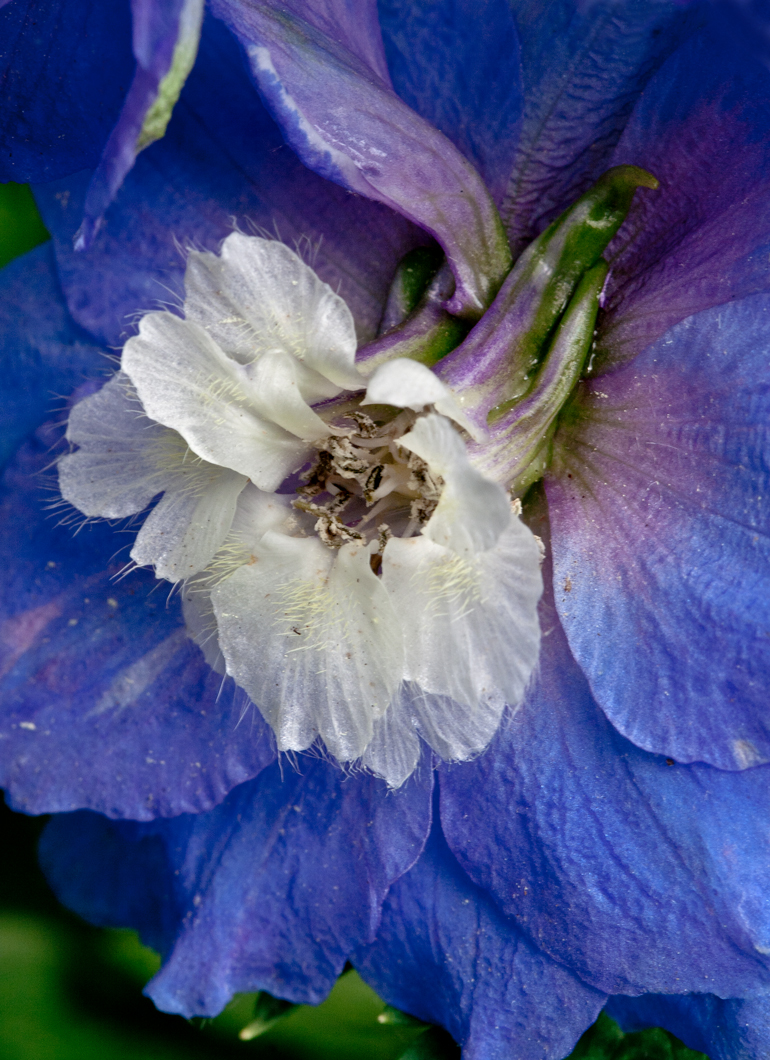
Whenever my neighbor has new flowers popping up in her garden, she invariably invites me to come and photograph them, and this close-up shot of a blue delphinium is my newest capture.

The neighbor in question is Cindy Dyer, a noted flower photographer and fellow blogger, and I thinks she almost always chooses photogenic flower species to plant. Check out her blog to see some gorgeous shots of all kinds of flowers. (She also is the one who got me started shooting regularly and has been an endless source of inspiration and encouragement for my photography.)

I love the beautiful color of this flower, which is pretty small, and the different textures that you can see in this shot.

delphinium_closeup_blog

Michael Q. Powell. All rights reserved

Read Full Post »

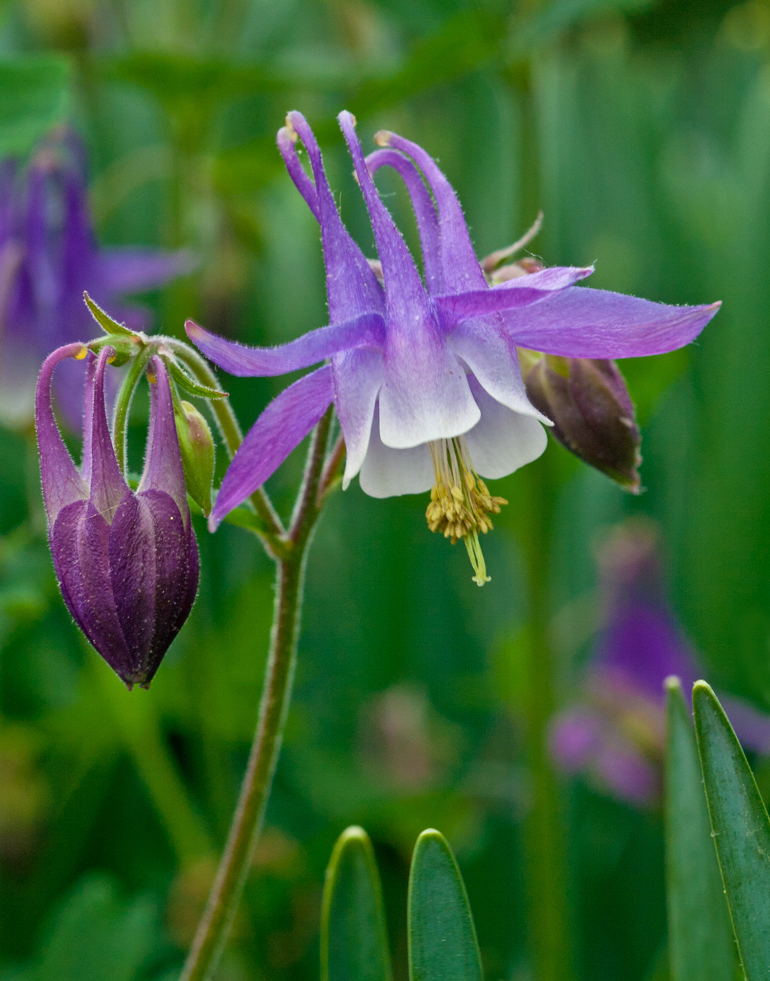
There are a lot of columbines blooming now at a local garden and I can’t keep from photographing them every time that I am there.

I especially like this shot because it shows blooms at various stages of development on the same stem. It’s fascinating for me to be able to see how the shape and color of the flower change as the blooms mature.

purple_blog

Michael Q. Powell. All rights reserved

Read Full Post »

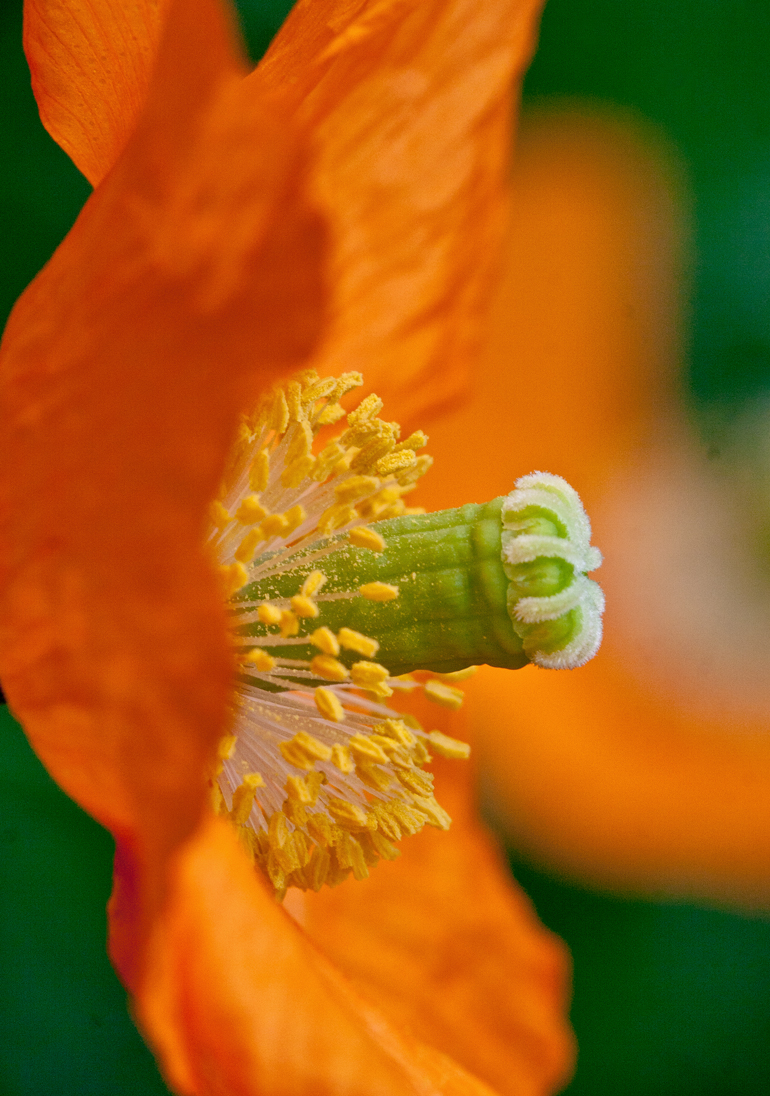
Vibrant colors surrounded me this past weekend, when I visited a local garden, and this morning I felt like highlighting the beautiful pink and yellow of a pair of peonies and the contrasting orange and green in a close-up shot of an orange poppy.

peonies_blog

orange_poppy_blog

Michael Q. Powell. All rights reserved
Read Full Post »

I don’t know much about the Clematis flower, but I found these purple ones to be amazingly beautiful this past weekend at Green Spring Gardens, a county-run horticultural center. I can’t decide if I like them better in a group, as in the first photo, or individually, as in the second photo.

clematis2_blogclematis1_blog

Michael Q. Powell. All rights reserved

Read Full Post »

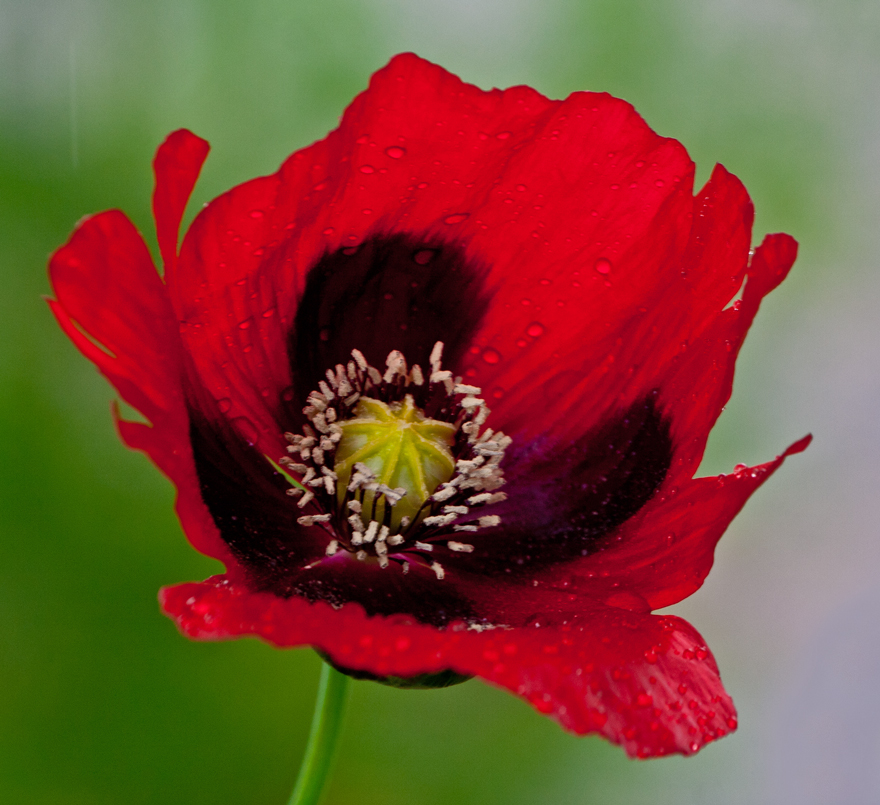
Despite the intermittent rain yesterday afternoon, I went with my camera in one hand and my umbrella in the other to a local garden and captured this image of a beautiful red poppy. I am not very good with flower identifications, but I think that it is a kind of oriental poppy.  I really like the combinations of shapes, colors, and textures that make up this flower and the visible raindrops on the petals was a bonus.

redpoppy1_blog

Michael Q. Powell. All rights reserved
Read Full Post »

Looking at this plant from the side, all you notice are the tall, straw-like spikes that radiate from the center, but from above, it’s like looking into a kaleidoscope. I love the repetition of the colors and patterns in a wide circle around the center blossom.

I don’t have any idea what kind of flower this is, so I’ll make up my own name for it and call it the Kaleidoscope flower.

circle_blog

Michael Q. Powell. All rights reserved
Read Full Post »

I was pleasantly surprised to come across a group of irises in one of the marshy areas of Huntley Meadows Park, the nature center where I do a lot of my shooting.

It probably reveals my ignorance about flowers, but I had no idea that irises could grow in such moist conditions. Although the irises were smaller and less showy than many of the cultivated ones that I see, they were no less beautiful.

It had been raining intermittently the morning that I took this photo and you can see drops of water on some of the petals. I tried very carefully to frame this image and am pretty happy with the way that it turned out, with the blurry image of a second iris in the background repeating the shape and color of the iris in the foreground.

swamp_iris_blog

Michael Q. Powell. All rights reserved

Read Full Post »

I have been taking photos of a lot of flowers in a lot of different places and thought I would post a few of my favorites.

The first one is of a plant called Lily of the Valley that was growing in the back yard of one of my neighbors. It was pretty small and close to the ground, so I have to create a makeshift bean bag to support my camera, using cushions for lawn furniture

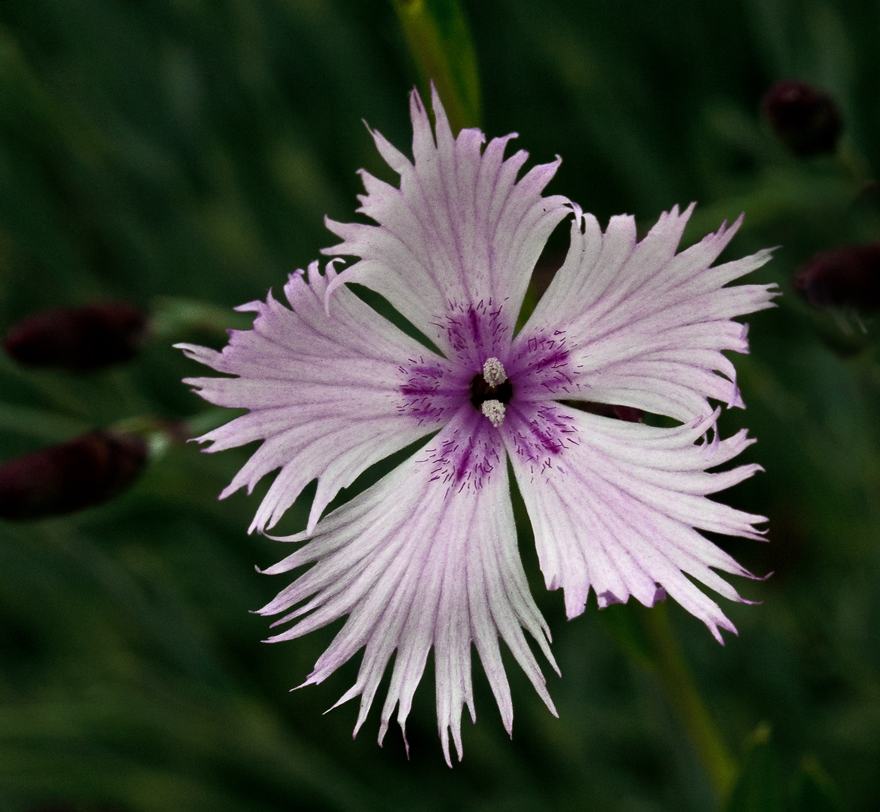
I really don’t know what the second flower is called, but I really liked the shape of its petals and the slight pinkish-purple tinge of color .

The final shot is a small plant that was growing in the rock garden of a county-run historical garden that I love to visit. From a distance, the flower looked like it was in the shape of a cube.

lily_blogflake_blogsquare_blog

Michael Q. Powell. All rights reserved
Read Full Post »

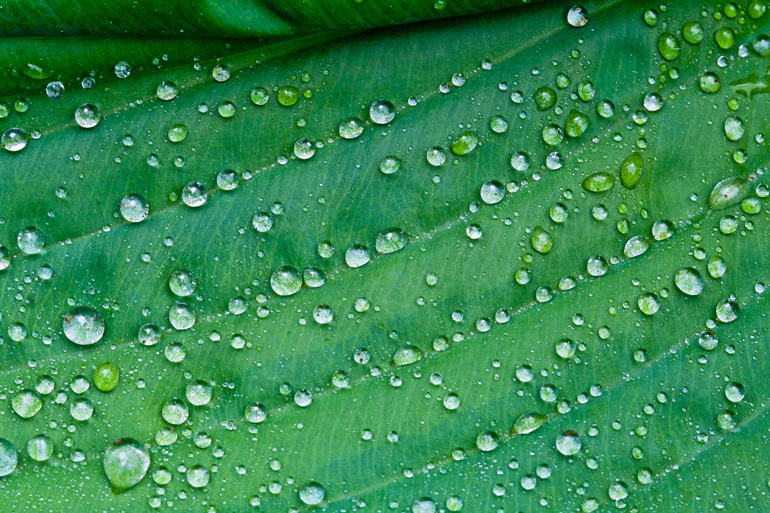
I love to photograph raindrops, normally focusing on a single drop, but I was really attracted this weekend to the rows of water drops on a single leaf of this Hosta plant. Many of them formed perfect little spheres of water, like tiny jewels or little water pearls.

Sometimes it’s easiest to find real beauty in simplicity, with no need for bright colors or ornate details.

drops1_blog

Michael Q. Powell. All rights reserved

Read Full Post »

Love-in-a-mist (Nigella damascena) is a flower that looks like it came from outer space, with wild tendrils shooting out of its middle and green spikes surrounding it.

I was surprised this past weekend to see some of the plants putting out blossoms this early at a local garden that I like to visit. I had never seen Love-in-a-mist (I love saying the flower’s name) in its early stage of growth and really like the look of the bud in the last photo, surrounded by the soft green spikes, as the flower is at all stages of growth.

Before long, entire patches of this garden will be covered with this remarkable flower—we can always use more Love, whether it is in a mist or not.

love1a_bloglove3_bloglove2_blog

Michael Q. Powell. All rights reserved

Read Full Post »

Columbines come in a variety of colors and they have sharp angles as well as soft curves—these are a few of the reasons that columbines are among my favorite spring flowers.

purple_columbine_blogdown_blog

Michael Q. Powell. All rights reserved
Read Full Post »

One of my favorite spring flowers is the columbine (genus Aquilegia) and I especially like its distinctive shape. Yesterday I took this photo at Green Spring Gardens, a county-run historical garden, one of my favorite spots for photographing flowers.

The flower was growing at an unusual angle and I tried hard to capture the details of the flower, as well as the beautiful colors in the background. I’m pretty happy with the result.

pink_columbine_blog

Michael Q. Powell. All rights reserved

Read Full Post »

In my neighbors’ garden facing the street, a beautiful purple bearded iris has a position of prominence, but unseen by most, a more modest, but equally beautiful purple flower grows amidst the vines in a corner of the back yard.

This iris is a showy flower, with deep, rich colors, frilly petals, and the colorful accent of the beard. How can you not like such a flower? It is the first iris to bloom and doesn’t have to share its glory.

Yet I am just as attracted to the geometric simplicity of the little purple flower in the back yard. The owner, Cindy Dyer, who posts amazing flower photos on her blog, told me the name of the flower (or perhaps it is considered a weed), but it didn’t stick in my memory.

Spring offers such a bounty of flowers, that there are bound to be some that appeal to your tastes and moods and sensitivities—it is definitely worth slowing down to smell the roses (and taking in the beauty of the other flowers too).

Iris_blogpurple_blog

Michael Q. Powell. All rights reserved

Read Full Post »

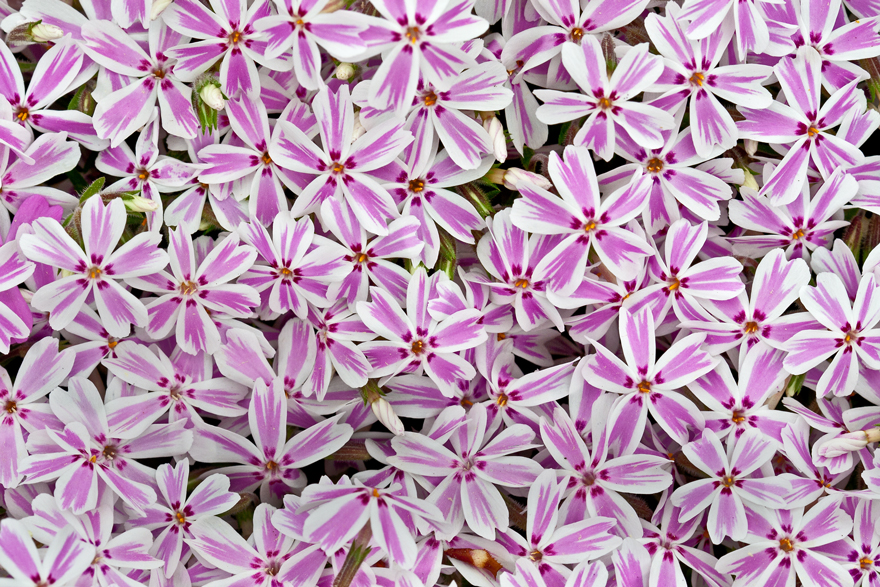
Here is a shot of the beautiful Creeping Phlox (Phlox stolonifera) that covered one whole area of the rock garden at one of the local gardens that I like to visit.

phlox_blog

Michael Q. Powell. All rights reserved

Read Full Post »

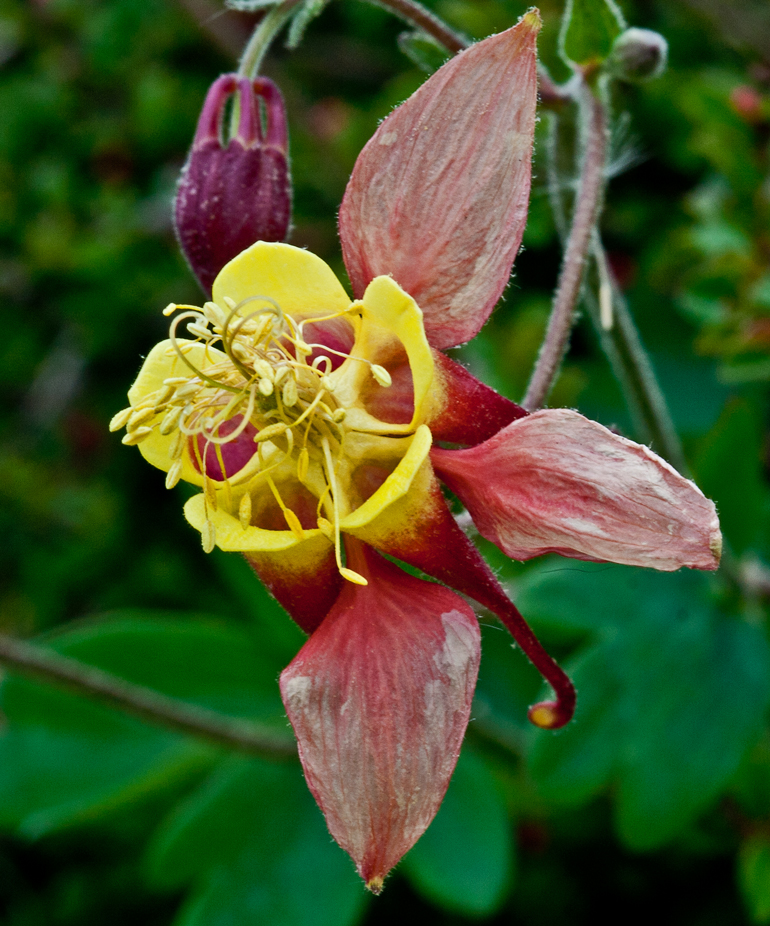
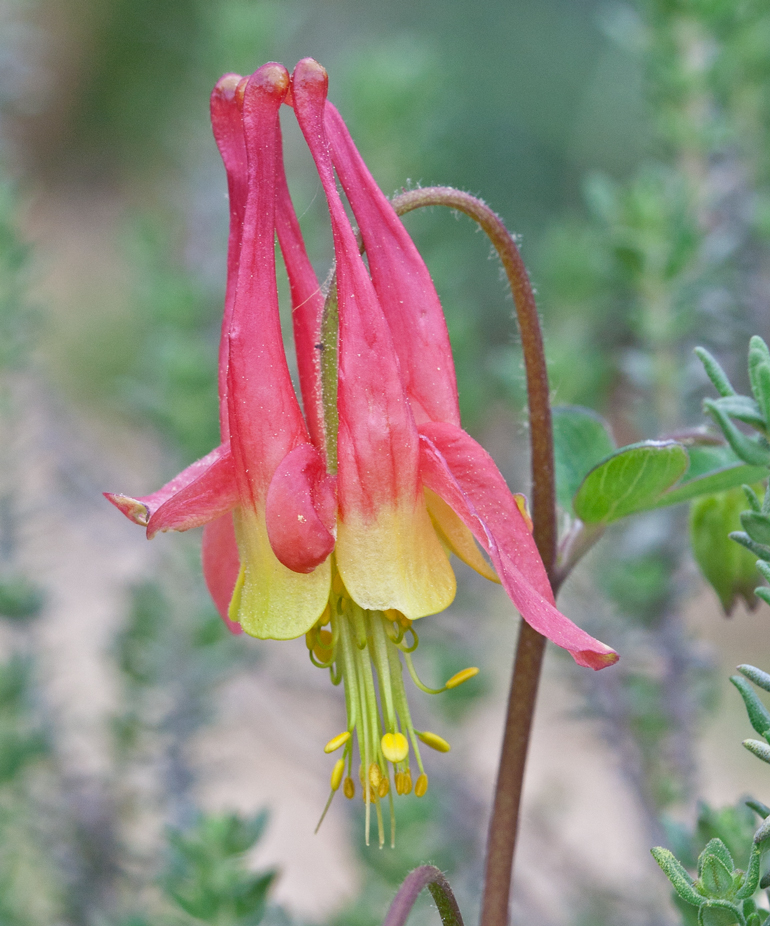
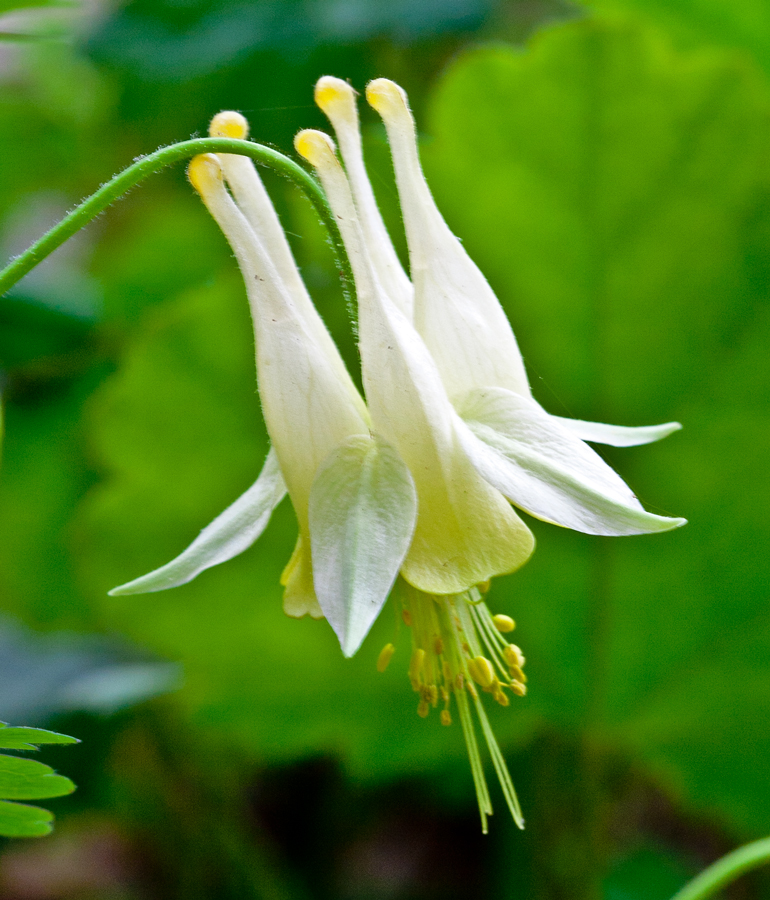
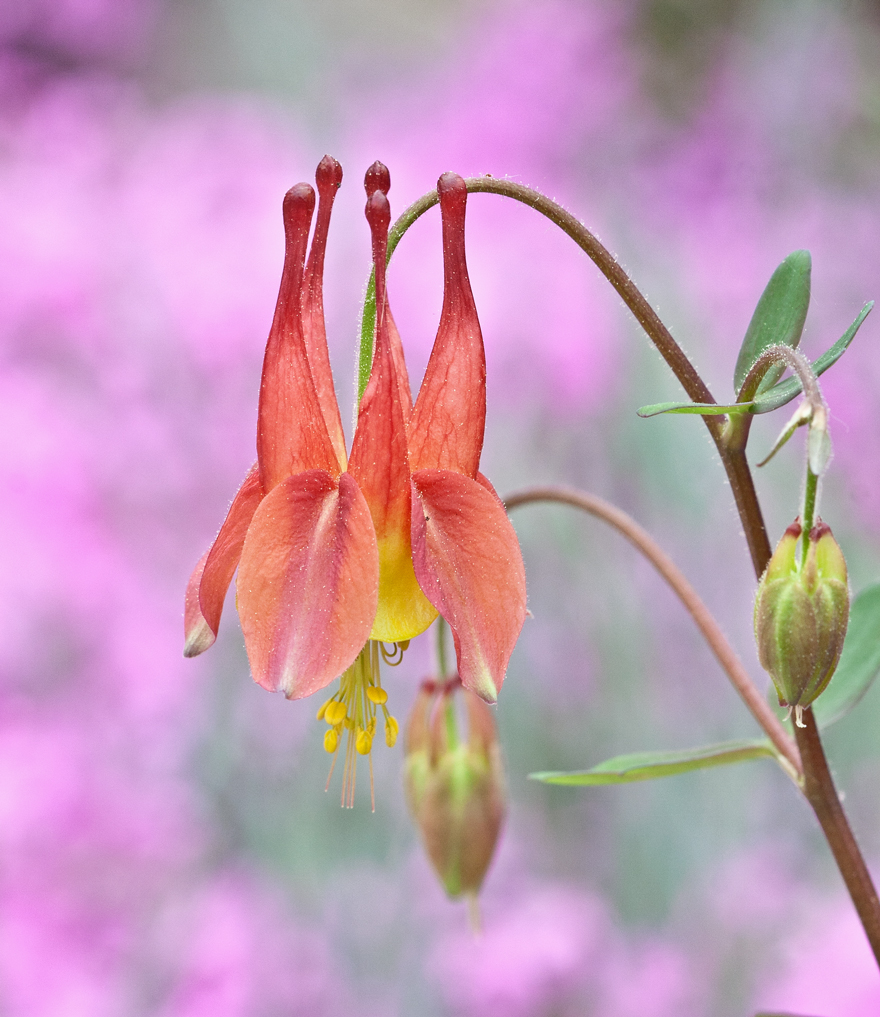
After first getting introduced to these pretty little flowers last spring, the Columbine (genus Aquilegia) rapidly became one of my favorites. They come in a lot of different colors, although the only ones blooming in the county-run garden that I visited this weekend were red-and-yellow ones and white ones.

Normally it’s not that difficult to get decent shots of these flowers, but the day was windy and that made it tough to control the depth of field (which normally requires a slower shutter speed) and stop the movement caused by the wind.

The pretty pink in the background of the final photo came from a patch of phlox that blanked a large area of a rock garden. I think I got some pretty good  photos of the phlox, so you may see them in another posting later.

columbine2_blogcolumbine1_blogcolumbine3_blog

Michael Q. Powell. All rights reserved
Read Full Post »

I like backlighting a lot, especially when the light shines through and illuminates beautiful colors, like those of this tulip in a neighbor’s garden.

backlit_tulip1_blog

Michael Q. Powell. All rights reserved

Read Full Post »

As I was admiring the beautiful tulips in my neighbors’ garden, I noticed this fly perched on the edge of one of them. In a different setting he might have gone unnoticed, but here the details of the fly provide a nice contrast with the wonderful primary colors of the tulips in the background.

With spring here in full force, I am reacquainting myself with my macro lens, causing me to look more closely at details like the red compound eyes of this fly and his hairy back legs.  It’s fun too to note the details of his tiny little feet.

I am now remembering how much I have to pay attention to lighting, depth of field, and shutter speed when shooting macro shots, particularly because my macro lens is not image stabilized. Very minor problems can really be magnified when I try to get in this close, especially with an animate subject.

fly_tulip_blog

Michael Q. Powell. All rights reserved
Read Full Post »
« Newer Posts - Older Posts »