Feeds:
Posts
Comments

Archive for the ‘Butterflies’ Category

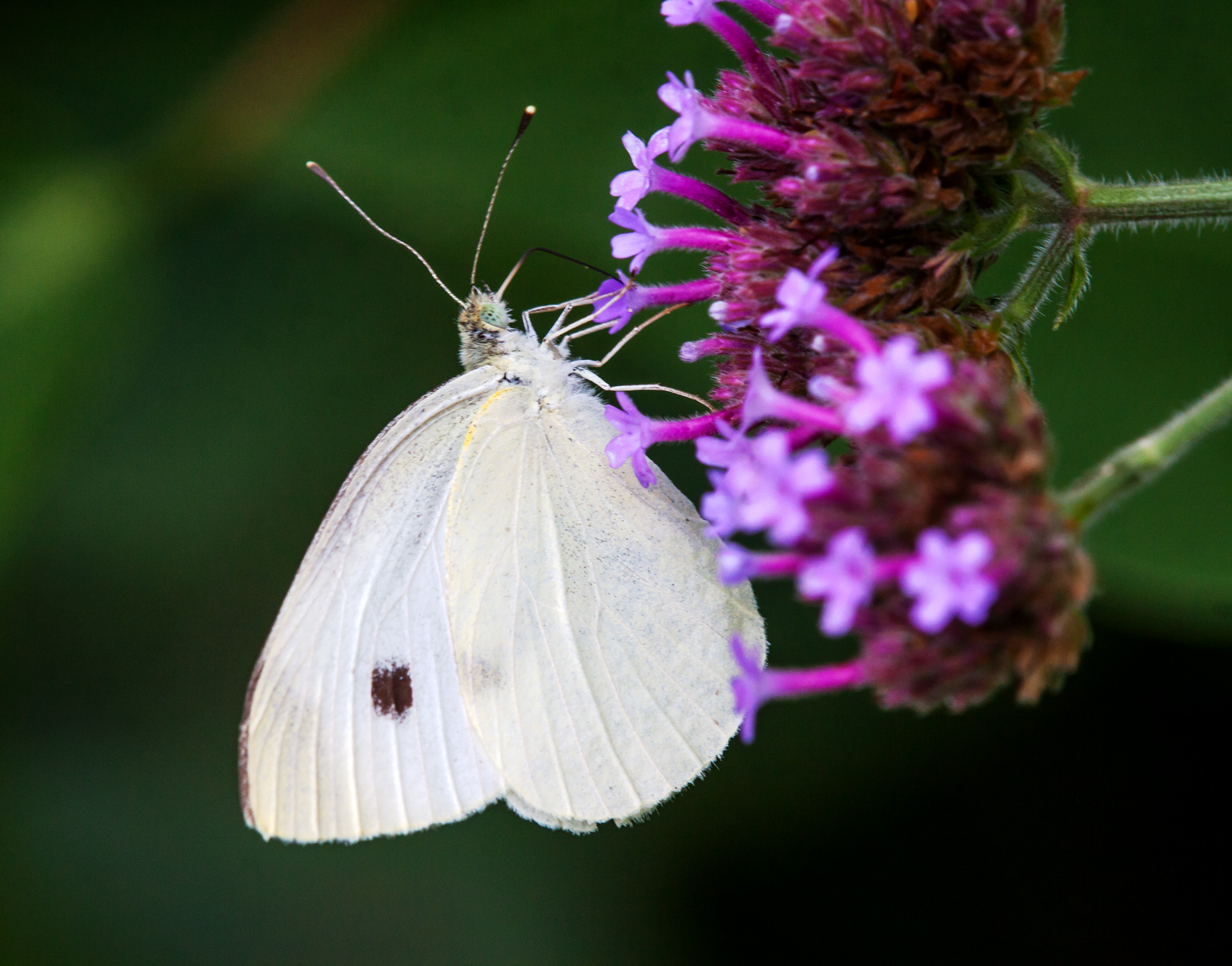
Cabbage White butterflies (Pieris rapae) are small and skittish and you probably don’t pay much attention to them—you might even think that they are merely moths. If you look closely, though, you’ll discover that they have beautiful, speckled green eyes.

I love the way that a macro lens reveals amazing details that are there, but that we never see or simply take for granted. I took these photos yesterday during a brief trip to Green Spring Gardens, a wonderful, county-run historic garden not far from where I live.

Cabbage White


Cabbage White

© Michael Q. Powell. All rights reserved

Read Full Post »

There is not denying that it is exciting to capture unusual moments, like a snake swallowing a catfish, or to photograph a new species, as I have done recently with dragonflies. For me, though, there is something equally satisfying about returning to a familiar location and observing ordinary subjects. It is a different kind of challenge to present the ordinary in an extraordinary way, in a way that makes people stop and realize that natural beauty surrounds them every single day.

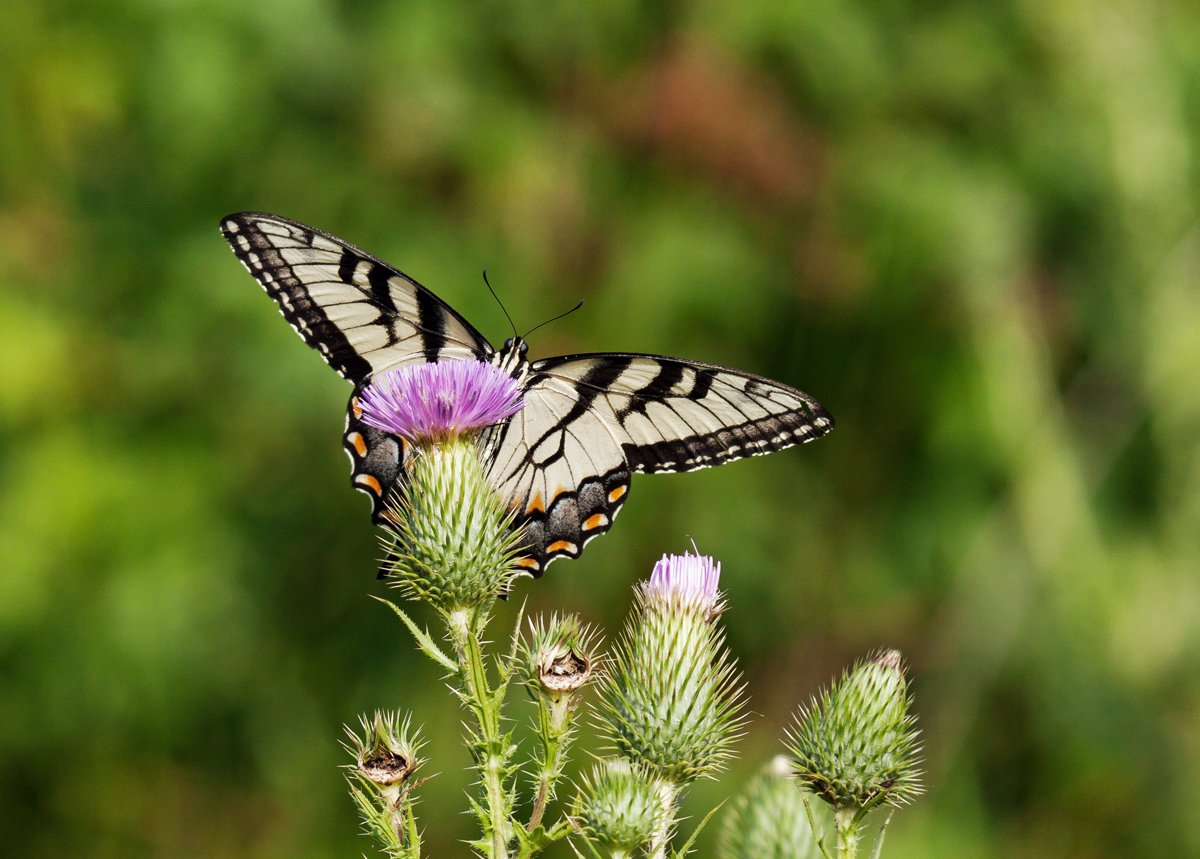
Last week, butterflies were really active at Huntley Meadows Park.  When I am in a garden, it is easier for me to guess where a butterfly will fly next, but in the wild, butterfly behavior is a little more unpredictable. When I noticed that a stand of what looks to be some kind of thistle was beginning to open, I hoped that the Eastern Tiger Swallowtail (Papilio glaucus) that was flying about would be attracted to it. Eventually it flew to the thistle and I was able to capture this image.

Spectacular? No, not really. Beautiful? I’d say so. The image works for me, because it has just enough stopping power to cause views to recall how beautiful ordinary butterflies can be, to rekindle the childhood memories of being excited by butterflies, and to remember how exciting it was abandon caution and simply and joyfully chase after butterflies.

Eastern Tiger Swallowtail

© Michael Q. Powell. All rights reserved

Read Full Post »

When the Eastern Tiger Swallowtail butterfly (Papilio glaucus) that I was chasing at Riverbend Park flew into some vegetation, I thought that I had lost it. Suddenly and almost magically the butterfly’s shadow was revealed on a large leaf as it moved about. I was thrilled to be able to capture the swallowtail shadow as well as a small portion of the butterfly itself.

It’s usually best to shoot with the sun at your back, but it worked out well in this case for me to violate that “rule.”

Eastern Tiger Swallowtail

© Michael Q. Powell. All rights reserved

Read Full Post »
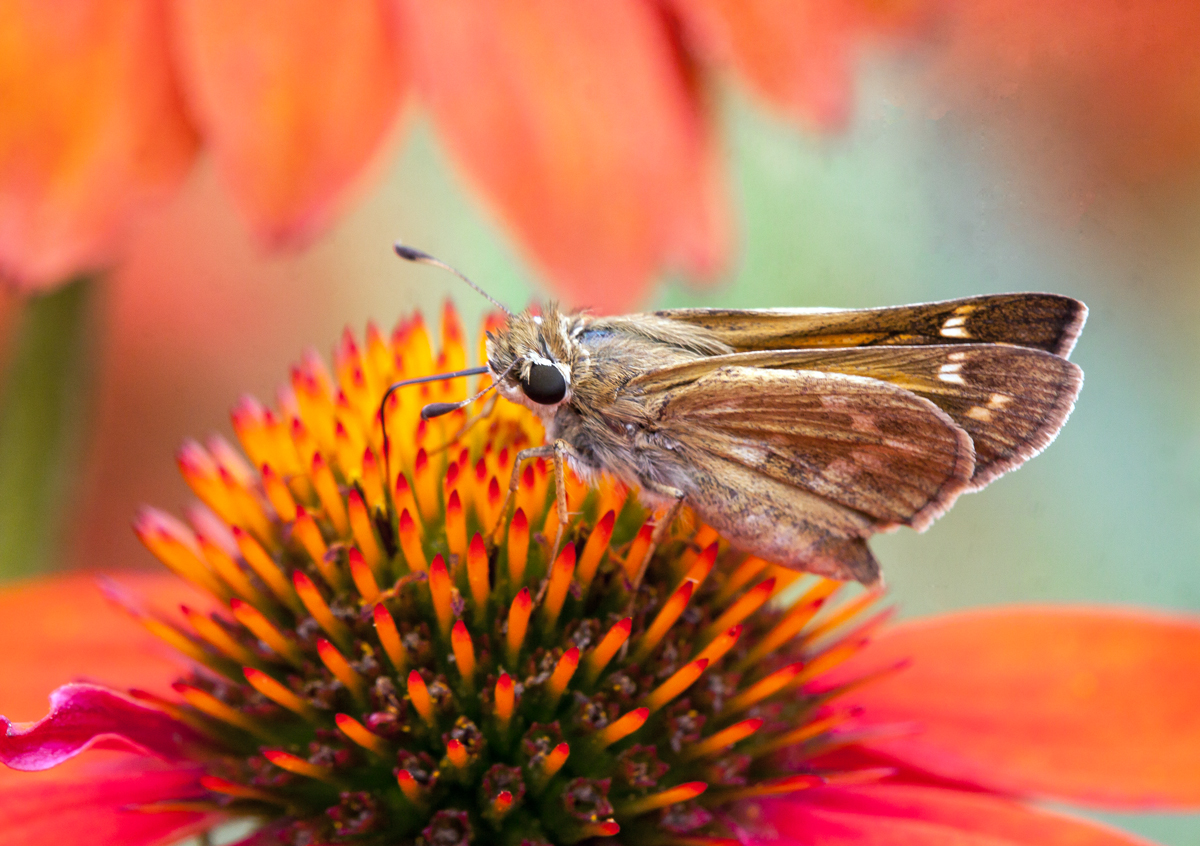
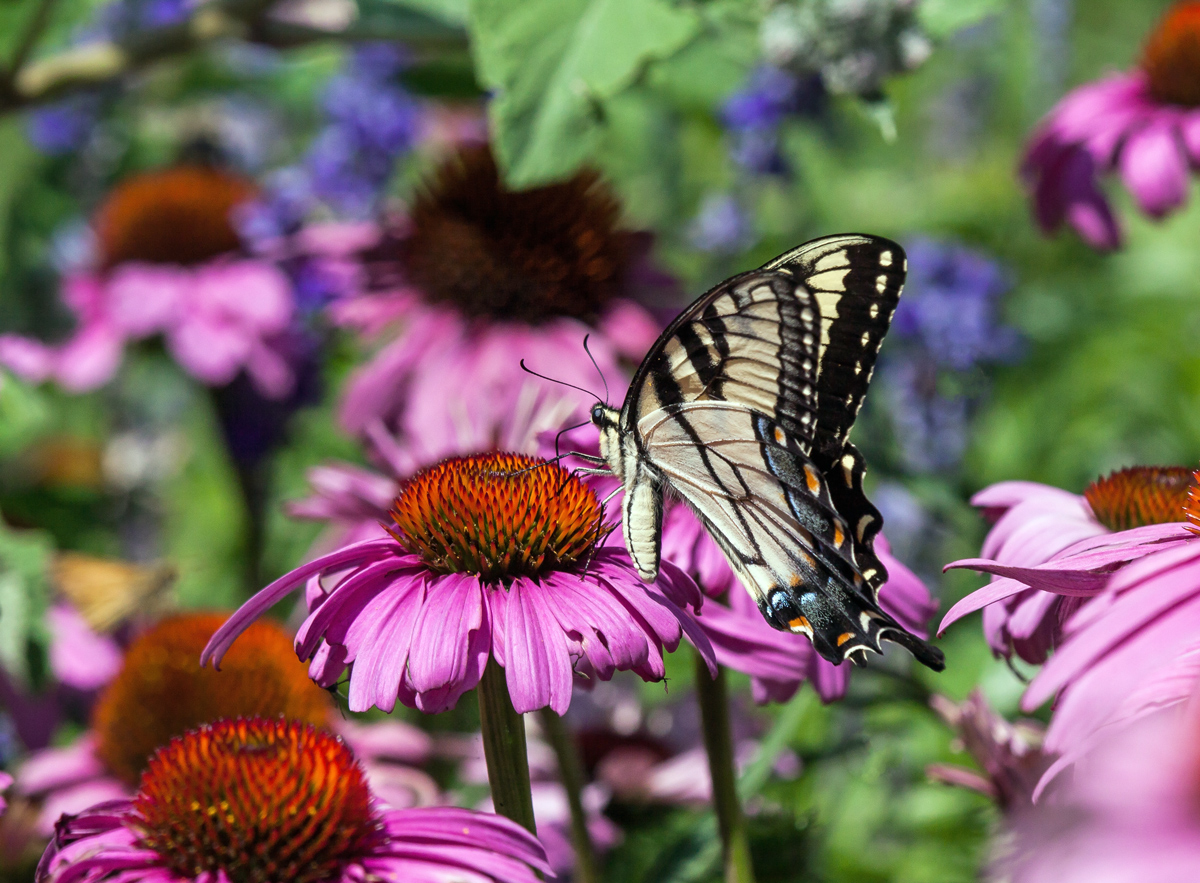
Brightly-colored flowers and butterflies—-what a wonderful combination for a summer’s day. I spotted these beauties this past weekend at Meadowlark Botanical Gardens in Vienna, Virginia.

The first shot features a little skipper butterfly on a spectacular, orange-red coneflower. The other two shots highlight the beauty of an Eastern Tiger Swallowtail (Papilio glaucus) in a patch of the more frequently observed purple coneflowers.

skipper on a coneflower

Eastern Tiger SwallowtailEastern Tiger Swallowtail

© Michael Q. Powell. All rights reserved

Read Full Post »

The last few years it has been pretty rare for me to see a Monarch Butterfly (Danaus plexippus). Most of the time when I thought I had spotted one, it turned out to be a similar-looking Viceroy Butterfly.

I was therefore really excited when I spotted a Monarch Butterfly fluttering about in a clump of what I think is some kind of milkweed during a brief trip to Kenilworth Aquatic Garden this past weekend. The butterfly seemed to be unusually skittish—it would perch for only a split second and then take off again. When it would decide to perch for a slightly longer period of time, inevitably it would bury itself among the vegetation, making a clear shot almost impossible.

I waited and waited and finally was able to get this almost unobstructed shot of the spectacular butterfly. Even in America we celebrate this kind of Monarch.

Monarch Butterfly

© Michael Q. Powell. All rights reserved.

Read Full Post »

There were crowds of people at Huntley Meadows Park on Monday, a  holiday in the United States, but I managed to find some moments of serenity and solitude as I contemplated this skipper butterfly perched on a faded iris at the edge of a vernal pool off of the beaten path.

I may be a little selfish, I suppose, but I enjoy nature most when I don’t have to share it with others.


Skipper on iris

© Michael Q. Powell. All rights reserved

Read Full Post »
The butterflies were really active today at Huntley Meadows Park and I nearly wore myself out chasing after them. Fortunately one of them would occasionally perch, like this Great Spangled Fritillary (Speyeria cybele), whose image I was able to capture from an unusual perspective.

Happy Memorial Day. Let us never forget the brave men and women who sacrificed so much for our freedom.

Great Spangled Fritillary

© Michael Q. Powell. All rights reserved

Read Full Post »

Every spring I seem to have the same problem—I see small brown skipper butterflies and can’t seem to identify them. Wikipedia notes that there are over 3500 species recognized worldwide, so I don’t feel too bad about my poor identification skills. I spotted this particular one during a recent trip to Meadowlark Botanical Gardens in Vienna, Virginia as it was feeding on what looks to be some variety of salvia flower—there are a lot of types of salvia flowers too.

As I looked through internet photos of possible matches for my skipper, I considered that it might be a Peck’s Skipper or possibly a Fiery Skipper, but none of them is a perfect match. I’m hoping that it turns out to be a Zabulon Skipper (Poanes zabulon). Why? More than anything else, I think “Zabulon” is a cool name.

skipper

© Michael Q. Powell. All rights reserved

Read Full Post »
It has rained almost continuously for several days since my return from a brief overseas trip to Vienna, Austria. After a week spent mostly in the city, I was itching to get out into the wild again. The rain finally let up in middle of this morning, so I went out exploring with my camera at Jackson Miles Abbott Wetland Refuge.

The wetland was really wet and it was cool and cloudy, so not much was stirring, except this little butterfly. I think I disturbed its sleep, for it was motionless with its wings spread wide until I was almost on top of it. Suddenly it took to the air and flew away. I am not sure what type of butterfly this is, but I was so happy to be in my “natural” environment again, that I am content to simply marvel in its delicate beauty.

UPDATE: In a Facebook insect identification group, my pretty little butterfly has been identified as a Crocus Geometer moth (sp. Xanthotype) or possibly a False Crocus Geometer moth.

butterfly

© Michael Q. Powell. All rights reserved

Read Full Post »

As I wandered through the Donau-Auen National Park in Vienna, Austria this past weekend I did not see any large butterflies, but I did spend quite some time chasing several smaller ones.  The butterfly species appear to be somewhat similar to the ones that I see in Northern Virginia, but not identical, as was the case with the damselflies that I featured yesterday.

butterfly in Vienna

butterfly in Vienna

butterfly in Vienna

© Michael Q. Powell. All rights reserved

Read Full Post »
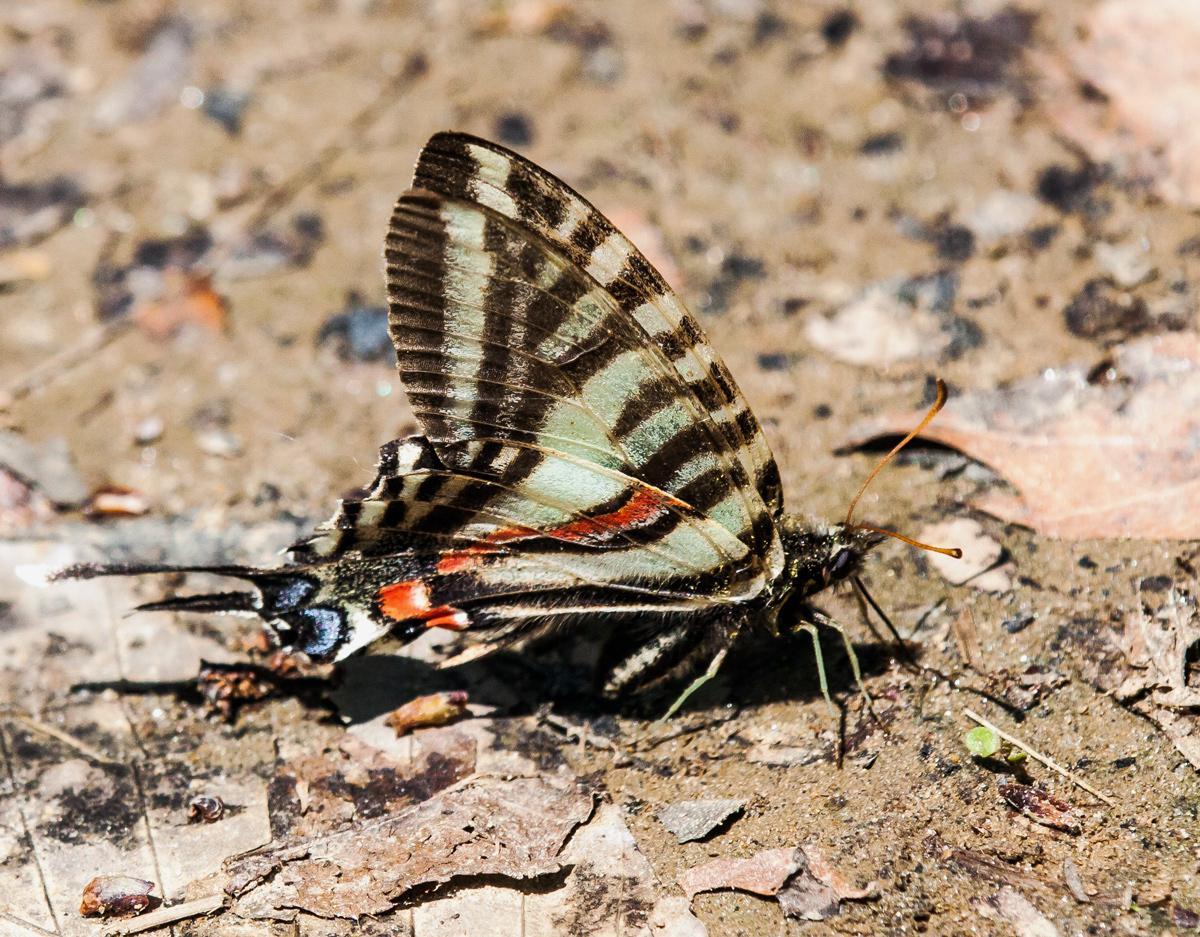
As I was exploring Accotink Bay Wildlife Refuge yesterday afternoon, Zebra Swallowtail butterflies (Protographium marcellus) kept fluttering by me. Occasionally one would perch for a moment  within range and I was able to get a few shots.

I really love the coloration and the shape of this beautiful butterfly that I rarely see. Although this butterfly is often associated with pawpaw trees, the ones that I saw perched mostly on the ground and seem to be obtaining either water or minerals.

Zebra Swallowtail

Zebra Swallowtail

Zebra Swallowtail

© Michael Q. Powell. All rights reserved

Read Full Post »

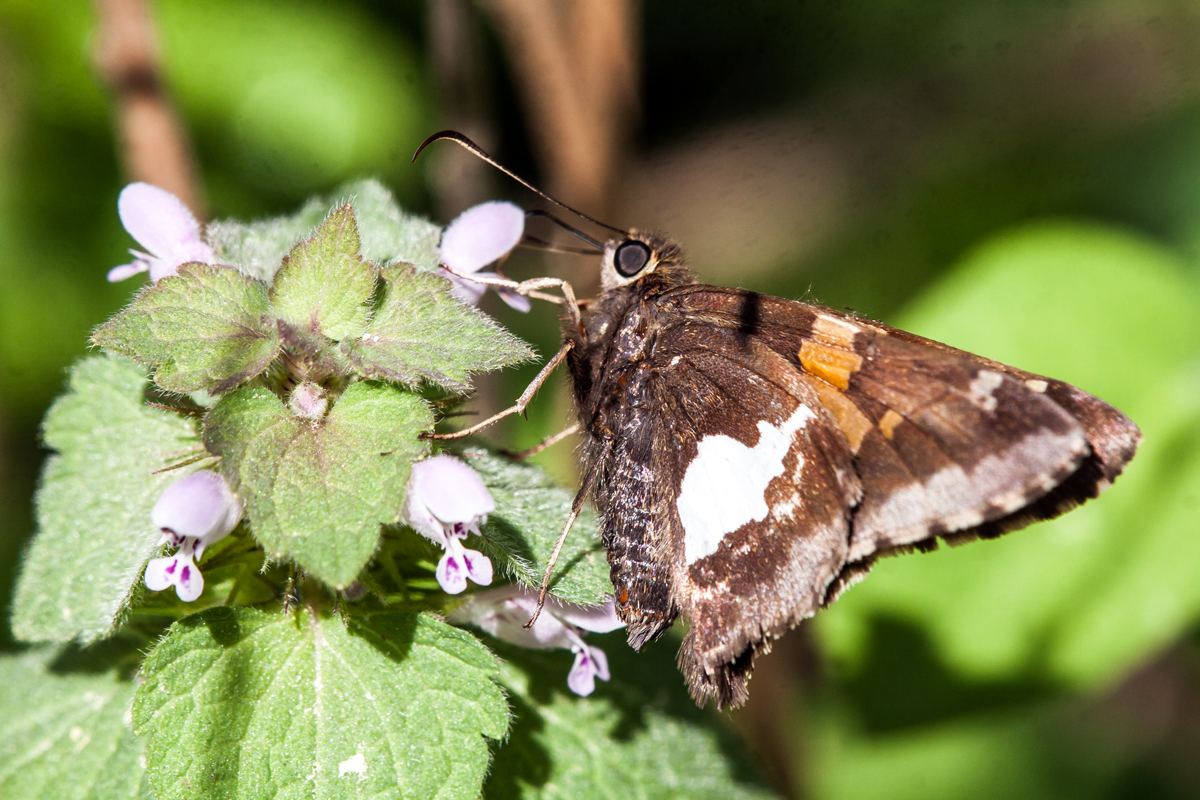
Out of the more than 3500 different species of skipper butterflies worldwide, according to Wikipedia, there is really only one that I can reliably identify—the Silver-spotted Skipper (Epargyreus clarus). I spotted this beautiful little butterfly this past weekend at Jackson Miles Abbott Wetland Refuge. The skipper was so intent on feeding that it let me get pretty close to it. As a result, this image is one of the rare cases when I didn’t feel a need or desire to crop at all. I am not very good at plant identification, but I really like the tiny flowers of the plant in this image.

Silver-spotted Skipper

© Michael Q. Powell. All rights reserved

Read Full Post »

It’s springtime and love is in the air. So many creatures seem to be searching for mates and some of them have obviously found one, like this pair of Pearl Crescent butterflies (Phyciodes tharos) that I spotted in flagrante delicto at Jackson Miles Abbott Wetland Refuge in Northern Virginia this past Friday.

I am no expert in butterfly anatomy and have no idea how this works, but there is a real beauty in the position, which appropriately looks  to me like a double heart. What can I say, I am a romantic at heart.

Pearl Crescent

© Michael Q. Powell. All rights reserved

Read Full Post »

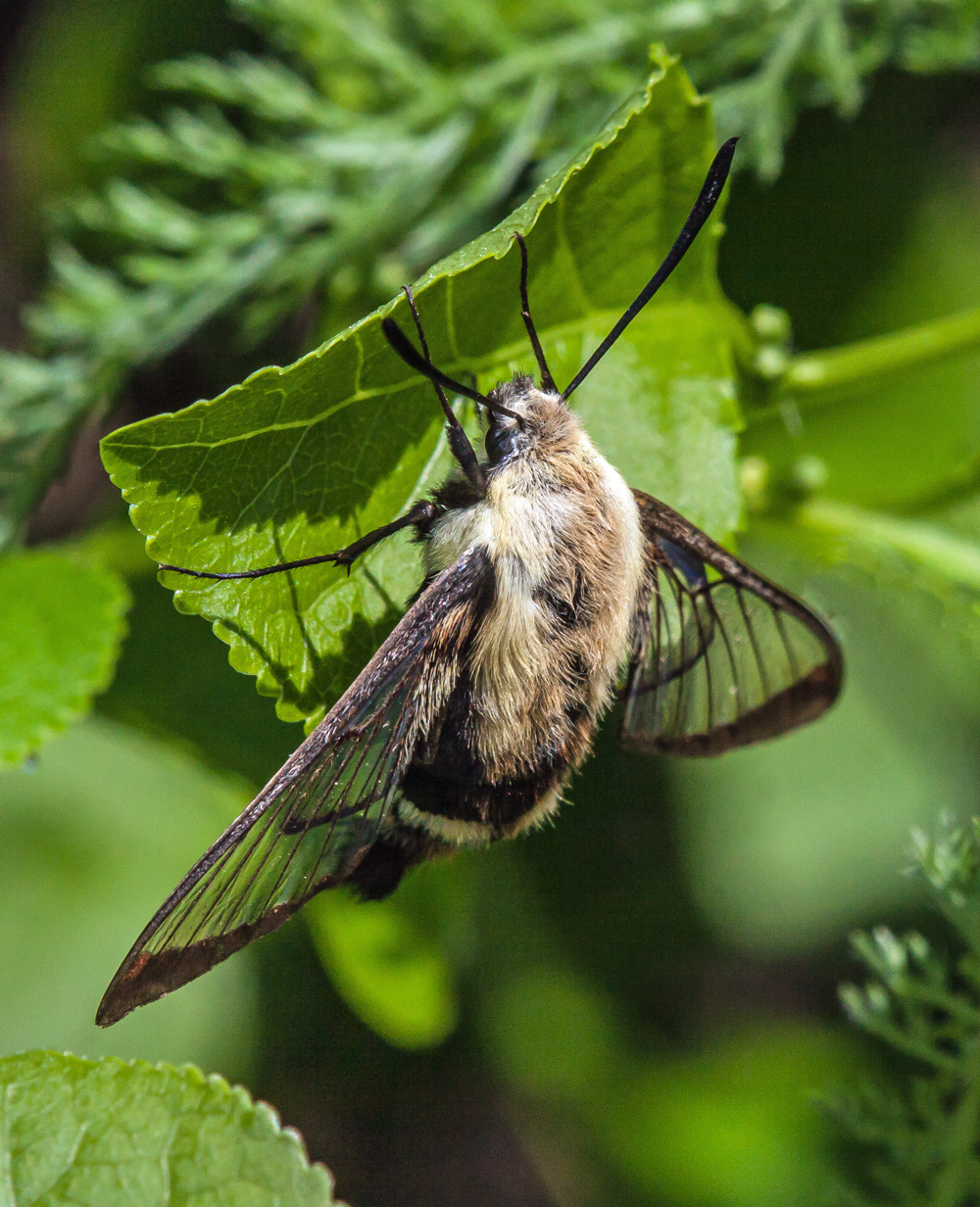
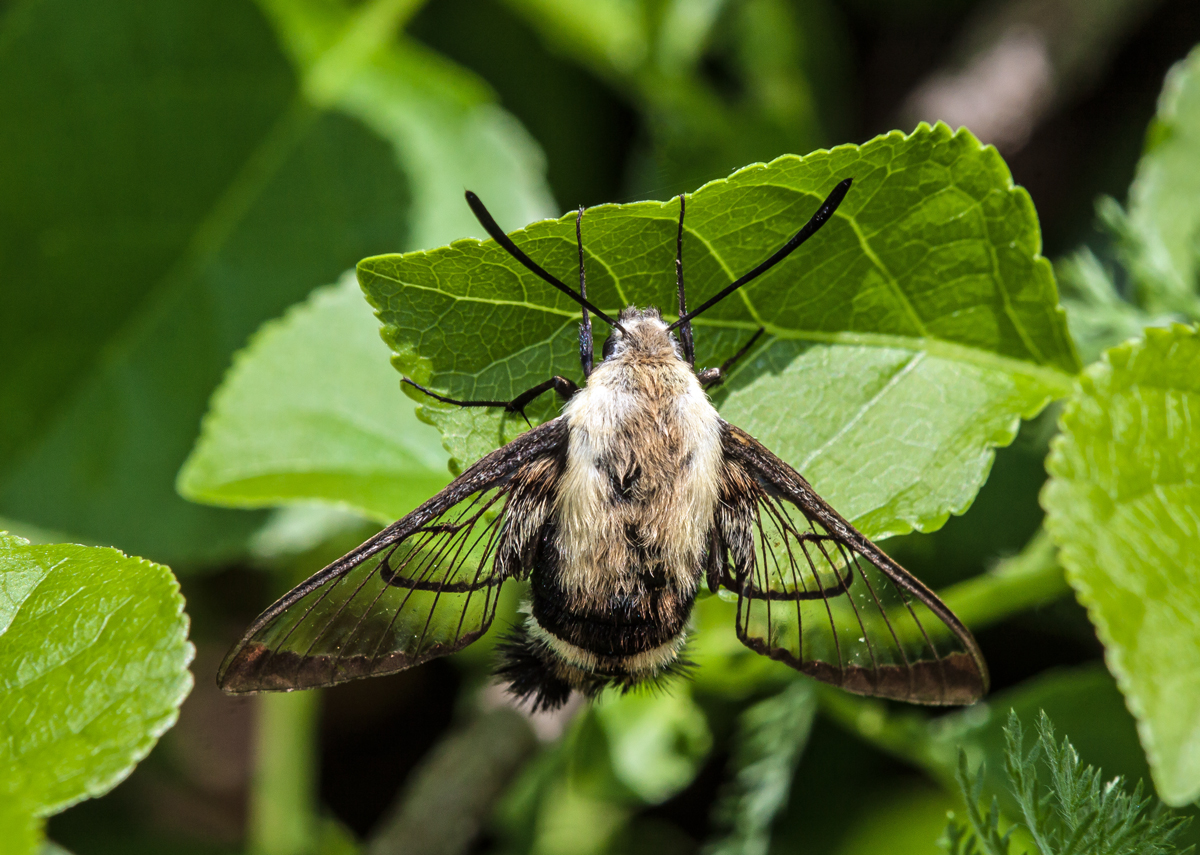
As I was searching for dragonflies yesterday at Jackson Miles Abbott Wetland Refuge, I noticed an unusually large bumblebee and started to give chase. When it landed and I moved in close, it became clear that it was not a bumblebee after all—it was a clearwing moth.

I have seen clearwing moths in the past of the the variety commonly known as Hummingbird Clearwing Moths (Hemaris thysbe), but they have generally been hovering like a hummingbird rather than perching like this one and their wings were outlined in red, not black. It took only a few minutes of internet research to discover that this is a Snowberry Clearwing Moth (Hemaris diffinis).

Snowberry Clearwing moth

Snowberry Clearwing moth

© Michael Q. Powell. All rights reserved

Read Full Post »

This delicate little butterfly was facing away from me, but I love the way that you can see the beautiful markings on the inside of its wings. I believe it is an Eastern Tailed-Blue butterfly (Cupido comyntas), a kind of hairstreak butterfly with an average wingspan of only about one inch (25mm).

I chased after a number of these butterflies earlier this week when I was exploring Jackson Miles Abbott Wetland Refuge at Fort Belvoir, Virginia. They don’t fly very fast, but their flight path is unpredictable and close to the ground and they usually don’t perch for long in one spot.

I suspect that if someone had been observing me from a distance, they would have been hard-pressed to figure out what I was trying to photograph and might have concluded that I was merely another crazy wildlife photographer. We are a peculiar breed, aren’t we?

Eastern-tailed Blue

© Michael Q. Powell. All rights reserved


Read Full Post »

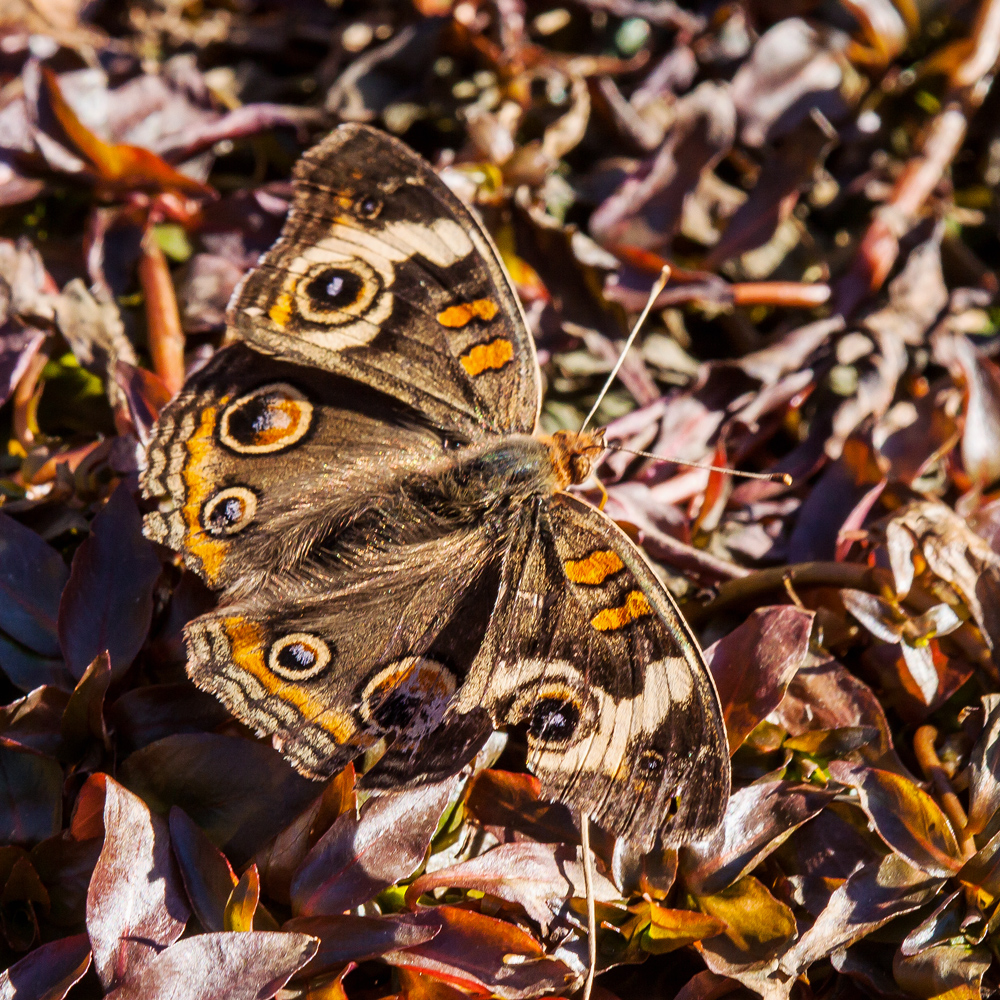
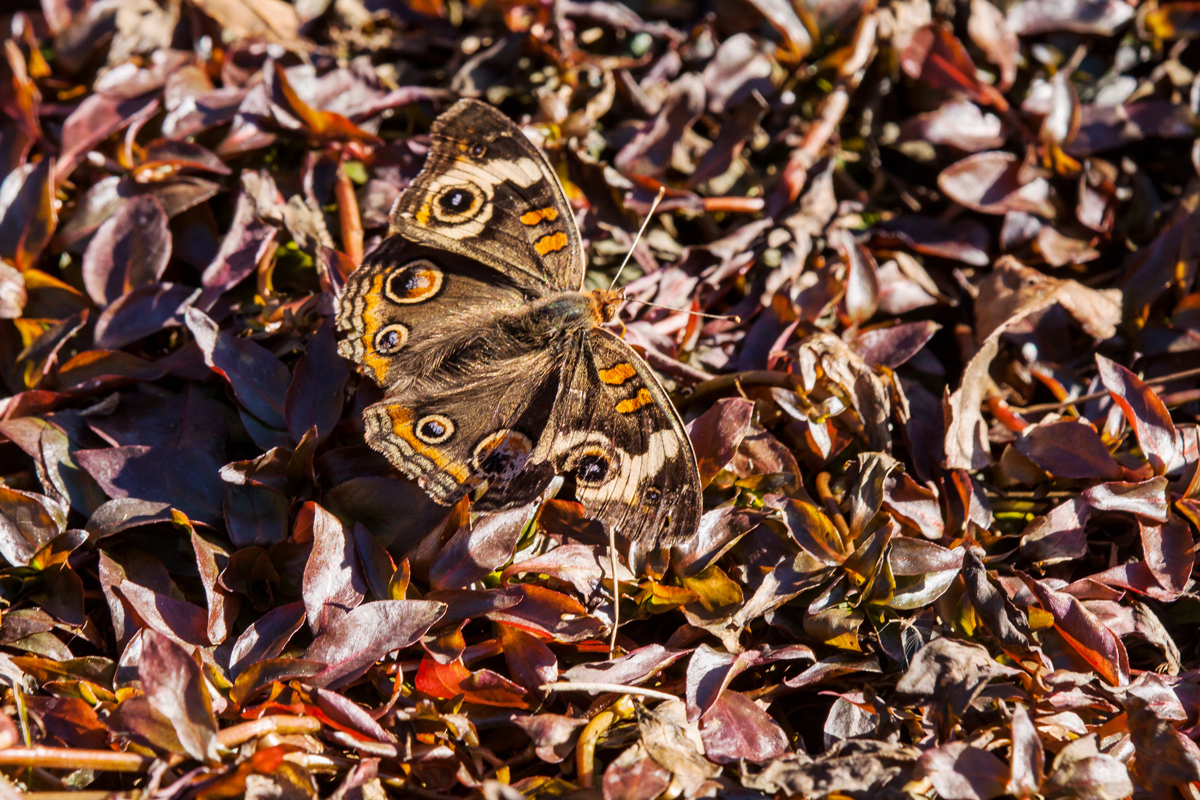
If it hadn’t been moving, I am pretty sure that I would not have spotted this Common Buckeye butterfly (Junonia coenia) on Friday at Huntley Meadows Park. The butterfly was perfectly camouflaged among all of the fallen leaves and even in this cropped image you have to look hard to see it.

Common Buckeye

I am also including a copy of the original image, in which the butterfly is even harder to find. The image reminds me of some of the complicated jigsaw puzzles that my Mom used to like to do when I was a child. I remember one puzzle that was a circular one depicting a plate of spaghetti. Needless to say, my Mom had a lot of patience and persistence.

Common Buckeye

© Michael Q. Powell. All rights reserved.

Read Full Post »

The beautiful orange and brown colors of this Eastern Comma butterfly (Polygonia comma) that I recently spotted at Huntley Meadows Park make it a perfect symbol of this autumn season. This species seems to like to perch on trees, sometimes facing downward, as was the case this time.

Not long ago I did a posting that featured a Question Mark butterflya species that closely resembles this one, but the relatively clear white marking on the hind wing make me think this is an Eastern Comma butterfly. My recent record in correctly identifying butterflies has not been great, however, so I welcome a correction if my identification is incorrect.

It is not immediately apparent from this image, but Eastern Comma butterflies blend in really well with the bark of the trees. The sun was shining through the wings from behind, making the orange color of the inner wings much more prominent than usual, allowing us to see both the colors and the shape of this beautiful butterfly.

Eastern Comma

© Michael Q. Powell. All rights reserved.

Read Full Post »

Earlier this week I chased after this beautiful little butterfly at Green Spring Gardens, in Alexandria, Virginia. I am pretty sure that it’s a Clouded Sulphur butterfly (Colias philodice), but have no idea of the identity of the flower on which it is feeding. Although at first glance it may look like I used flash for this image, a close examination of the shadows shows the direction of the bright sunlight. I was using spot metering for this light-colored subject, which meant that the background was significantly underexposed when getting a proper exposure of the primary subject.

Clouded Sulphur

© Michael Q. Powell. All rights reserved.

Read Full Post »

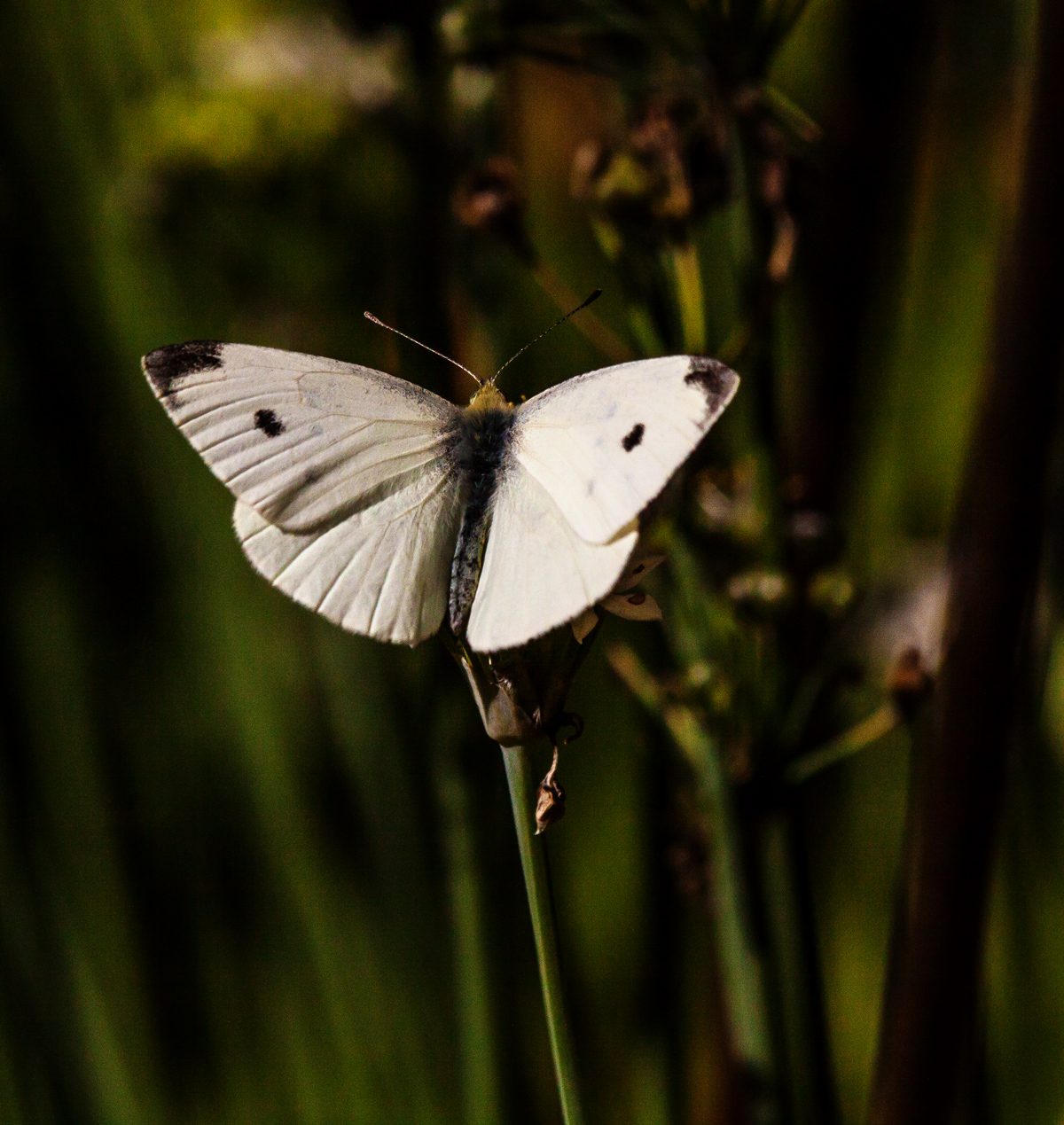
Cabbage White butterflies (Pieris rapae) are quite common, but many people ignore them, assuming they are “only” moths. I find real beauty in their simple elegance, like this one I spotted last weekend in the garden of my friend Cindy Dyer.

The butterfly was already white and black, so I decided to play around and remove color from the rest of the image too. I like the look of the black-and-white image, but decided to include the color version so that you can decide for yourself which one you prefer.

Cabbage White

Cabbage White

© Michael Q. Powell. All rights reserved.

Read Full Post »

There are a lot of fallen leaves scattered all about my neighborhood and at first I thought this butterfly was merely one of them. Then it opened its wings, revealing its inner beauty. Wow!

I am pretty sure this is a Question Mark butterfly (Polygonia interrogationis), though there is also a chance that it might be an Eastern Comma butterfly (Polygonia comma). Yes, there are butterflies named after punctuation marks.

How do you tell them apart? Well. there is a little white marking on the wings and if it has a single part, it’s a comma, and if it has two parts, it’s a question mark. My challenge in this case was that the marking was not very distinctive. I looked through a lot of material and photos on the internet and the wing shape and coloration started to push me toward the Question Mark, but I still had questions. I came across a posting by TrekOhio.com that illustrated the differences in the spots on the inner wings and I convinced myself the spots in the second photo look like those of a Question Mark.

Whatever the case, the butterfly’s resemblance to a fallen leaf and its beautiful orange color are reminders to me that autumn is surely here, my favorite time of the year.

Question Mark butterfly

Question Mark butterfly

© Michael Q. Powell. All rights reserved.

Read Full Post »

The leaves are speckled with blemishes and the Red-spotted Purple butterfly (Limenitis arthemis) is faded and tattered, but there is real beauty in the imperfection of autumn. Photographed this past weekend at Jackson Miles Abbott Wetlands Refuge in Fort Belvoir, Virginia.

Red-spotted Purple

© Michael Q. Powell. All rights reserved.

Read Full Post »

Despite the “common” in their name, I don’t see Common Wood Nymphs (Cercyonis pegala) very often. I was therefore pretty excited to spot one this past weekend at Huntley Meadows Park.
I’m pretty sure, though, that my excitement does not qualify as nymphomania.
Common Wood Nymph

© Michael Q. Powell. All rights reserved

Read Full Post »

I can identify most of the large butterflies here in Northern Virginia, but the tiny ones continue to confound me. This past weekend I was able to get some shots of some tiny beauties with my macro lens, but I am not really confident in my identification of any of them.

The first image, I think, may be an Eastern Tailed-blue butterfly (Blue Everes comyntas) or it could be some kind of hairstreak butterfly. The second one looks to be a sulphur, but I can’t decide if it is clouded, cloudless, or some other kind of sulphur butterfly. As for the final shot, I don’t even have a guess.

Despite my confusion about identification, I can’t help but be overwhelmed by the delicate beauty of this tiny creatures.

Eastern Tailed-blue

sulphur butterfly

tiny butterfly

© Michael Q. Powell. All rights reserved

Read Full Post »

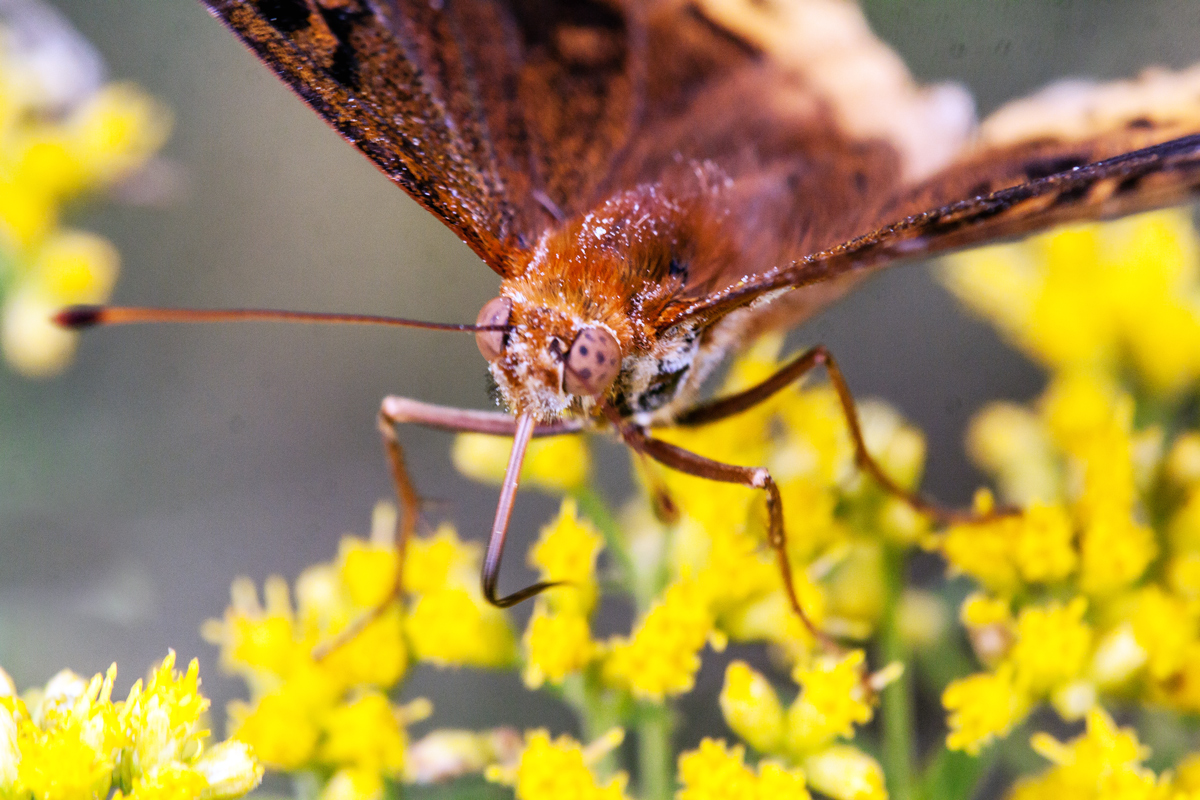
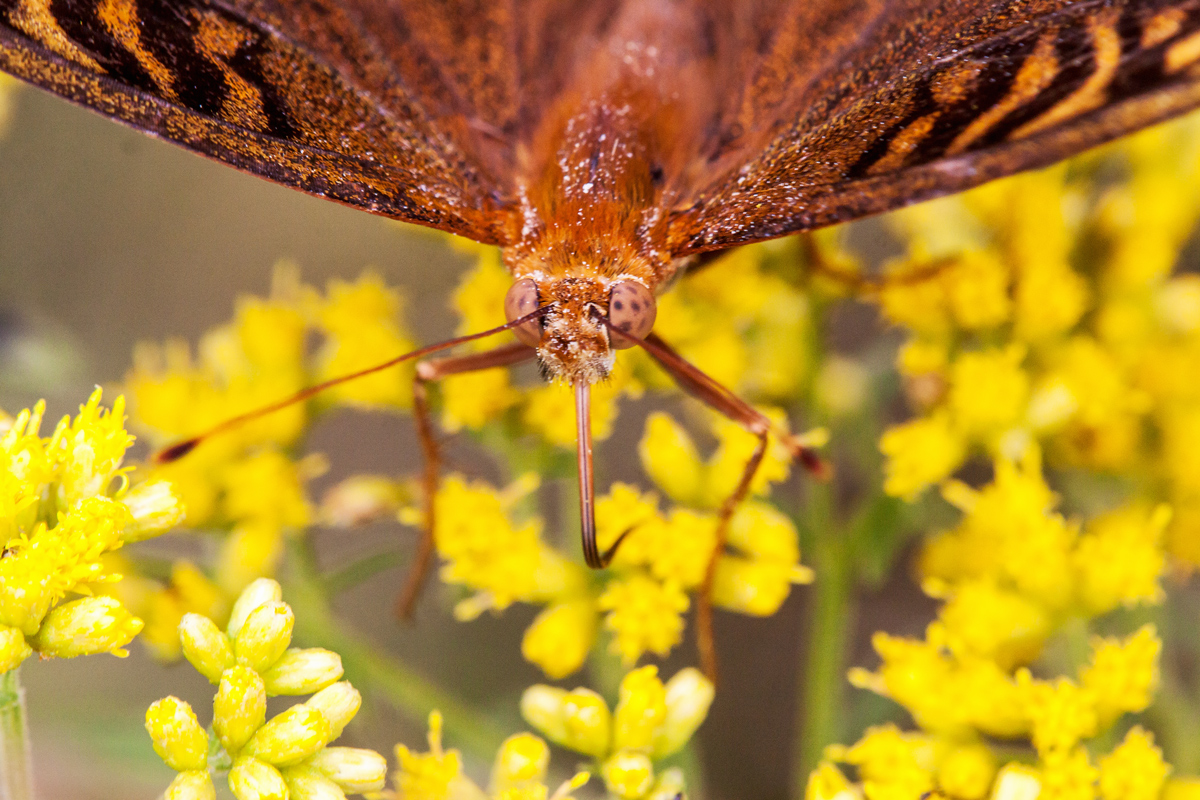
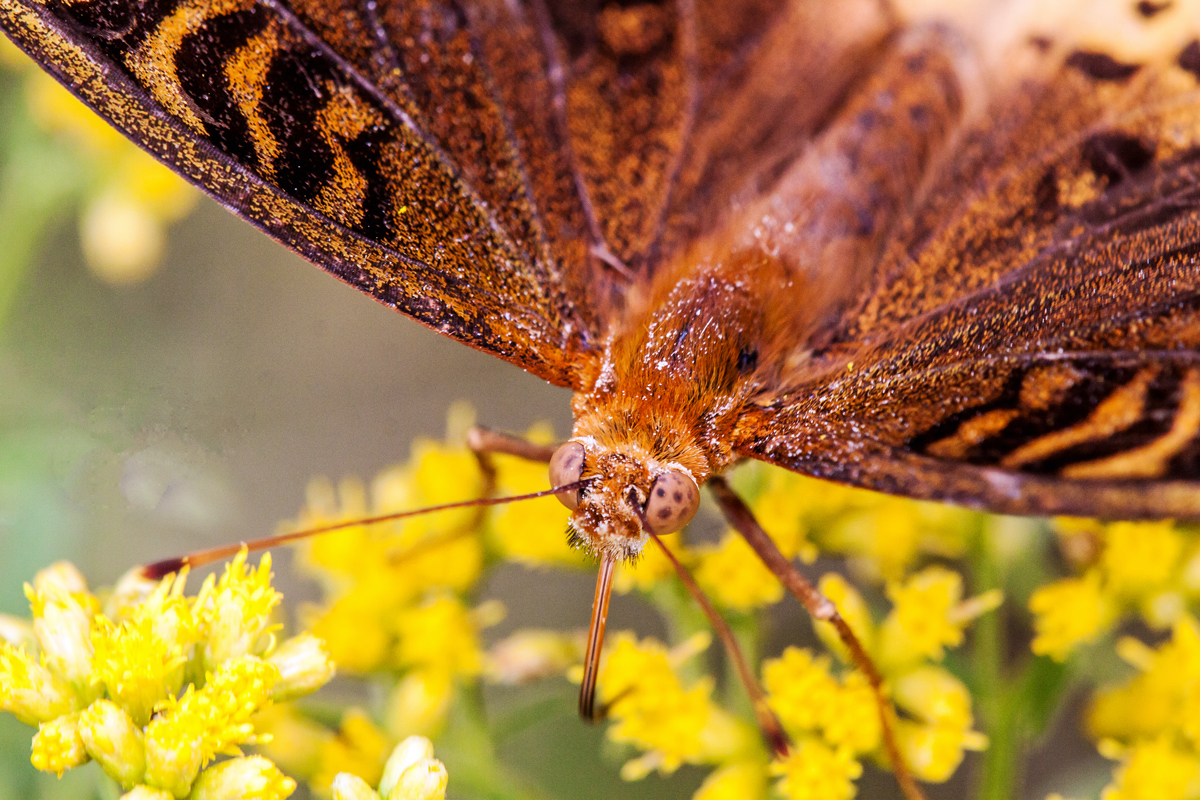
Have you ever gone eye-to-eye with a butterfly? Yesterday at Huntley Meadows Park this Great Spangled Fritillary butterfly (Speyeria Cybele) was so focused on feeding that it let me get pretty close, close enough to see its cool speckled eyes and its extended proboscis.

Great Spangled Fritillary

Great Spangled Fritillary

Great Spangled Fritillary

© Michael Q. Powell. All rights reserved

Read Full Post »

It doesn’t really matter where I am—if I see a butterfly, I am almost certainly going to chase after it with the hope of capturing an image. That was certainly the case last week in Brussels when I spotted this tiny butterfly and managed to take this shot of it.

As some of you may recall, I am now using a superzoom Canon SX50 when I am travelling. I haven’t used it very often, so I am still learning its capabilities and limitations. I am pretty happy with the way the camera was able to capture some of the small details of this butterfly, including its extended proboscis, and the way that it rendered the out of focus flowers in the background. I am not ready to give up my DSLR, but I will certain consider taking the SX50 with me on those occasions when I just don’t feel like hauling my DSLR and multiple lenses.

butterfly in Brussels

© Michael Q. Powell. All rights reserved

Read Full Post »

I am not sure why, but this Red-spotted Purple butterfly (Limenitis arthemis) decided to perch upside-down in the vegetation when I accidently spooked it recently at Jackson Miles Abbot Wetlands Refuge.
Please don’t ask me why “purple” is part of the butterfly’s name—I don’t see any purple either and for that matter,
© Michael Q. Powell. All rights reservedthe red doesn’t really look like spots either. Who makes up these names anyways?
Red-spotted Purple
© Michael Q. Powell. All rights reserved

Read Full Post »

I’ll often try to get shots of butterflies with their wings wide open, but when they turn sideward, you can sometimes get an equally spectacular view of them slowly sipping nectar. I can’t identify the flower, but the butterfly definitely is an Eastern Tiger Swallowtail (Papilio glaucus) that I chased about this past weekend at Green Spring Gardens.

Eastern Tiger Swallowtail

© Michael Q. Powell. All rights reserved

Read Full Post »
Butterflies are always beautiful no matter what their condition, but there is something really special about seeing a perfect specimen with its wings wide open, like this Eastern Tiger Swallowtail (Papilio glaucus) that I spotted this past weekend at Green Spring Gardens.

Eastern Tiger Swallowtail

© Michael Q. Powell. All rights reserved

Read Full Post »
The sun was shining through the wings of this Monarch butterfly (Danaus plexippus) from behind, making the butterfly glow like a stained glass window on Friday at Green Spring Gardens.
Monarch butterfly

© Michael Q. Powell. All rights reserved

Read Full Post »

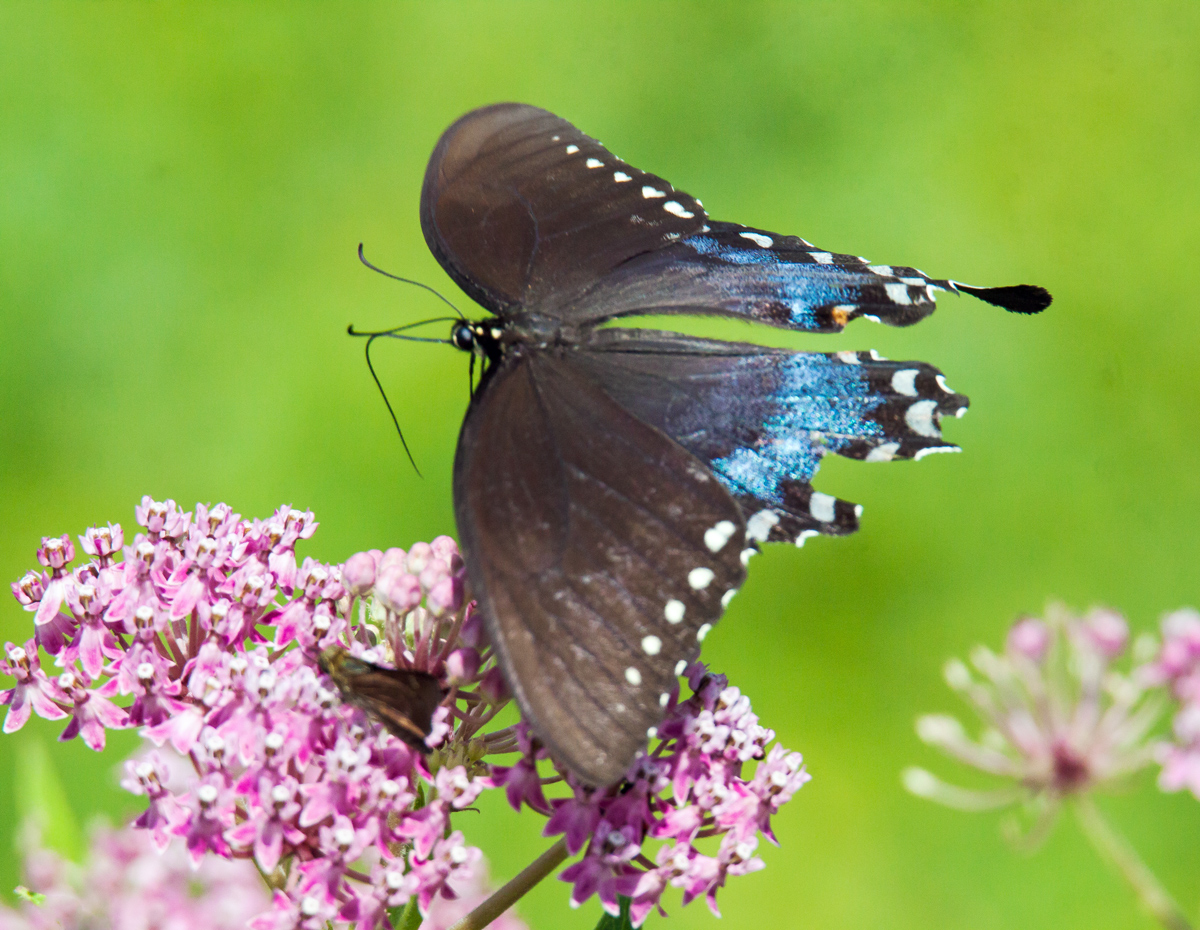
Butterflies fly so expertly that I often can’t tell that they have severe wing damage until I look closely. That was certainly the case this past weekend when I was observing a dark swallowtail at Huntley Meadows Park.

I didn’t get an absolutely clear look at it, but I think it might be a Spice Bush Swallowtail butterfly (Papilio troilus), judging from its colors and patterns. In the first photo, you can see only minor damage, but when the butterfly changed position, the extent of the damage became much more apparent.

I consider flight to be somewhat of a mystery in any case, but it is even more of a mystery how a butterfly can fly so well when one of its wings is almost completely detached from its body,

Spicebush Swallowtail

Spicebush Swallowtail


© Michael Q. Powell. All rights reserved

Read Full Post »
Here’s a shot of another one of the colorful butterflies of Huntley Meadows Park. I spotted this Red Admiral (Vanessa atalanta) there this past Friday morning as it perched in a tree. What was the butterfly doing in the tree? It seemed to me that it was simply resting, though I suppose that it might also have been trying to attract a mate.

From a photography perspective, I really like the way that the background is divided into two separate colors, creating a kind of yin-yang effect.

Red Admiral

© Michael Q. Powell. All rights reserved

Read Full Post »
« Newer Posts - Older Posts »