Feeds:
Posts
Comments

Archive for the ‘Birds’ Category

Do your mix humor with your photography? I enjoy playing with words (and especially puns) and love looking for opportunities  to inject humor into my blog postings. One of my favorite bloggers, Lyle Krahn at Krahnpix, is a real master at mixing his incredible wildlife shots with a kindred kind of humor (or perhaps he might say “humour.)

This past Monday was my blog’s second anniversary and I am taking a brief pause from posting new photos to think about the blog and my photographic journey over the last two years. During this period I am re-posting some of my favorite postings.

The re-posting today of an encounter between a Green Heron (Butorides virescens) and a frog was one of my earliest attempts to add humor, from the title all the way down to the last line of the posting, and is one of my favorites over the past two years. Here’s a link to the original posting or you can read it in its entirety below.

Full text of blog posting on 24 July 2012 that I entitled “Not Seeing Eye to Eye”:

One can only imagine what is going through the frog’s mind as he looks into the crazed eyes of the green heron who has just speared him. Is he looking for mercy? Is he resigned to his fate?

I watched the prelude to this moment unfold this afternoon at Huntley Meadows Park, a marshland park here in Virginia. The green heron was intently scanning the water from the edge of a boardwalk that runs through the march. Periodically he would extend his neck down toward the water.
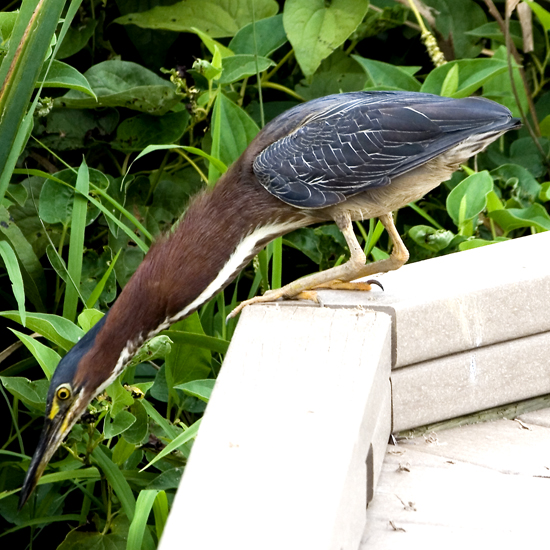
Several times we heard an excited “eeep” sound followed by a splash, indicating another frog had escaped. After a few more minutes, however, the heron dived into the water and reappeared on the boardwalk with the speared frog you see in the first photo.

When you look at the comparative size of the heron’s mouth and the frog, it hardly seems possible that the green heron could swallow the entire frog. The heron took his time shifting the position of the frog and then all at once he turned his head, bent his neck back a little, and down went the frog. It happened so quickly that I was able to snap only a single photo that shows the frog’s webbed feet as the only remaining parts that have not yet been swallowed.
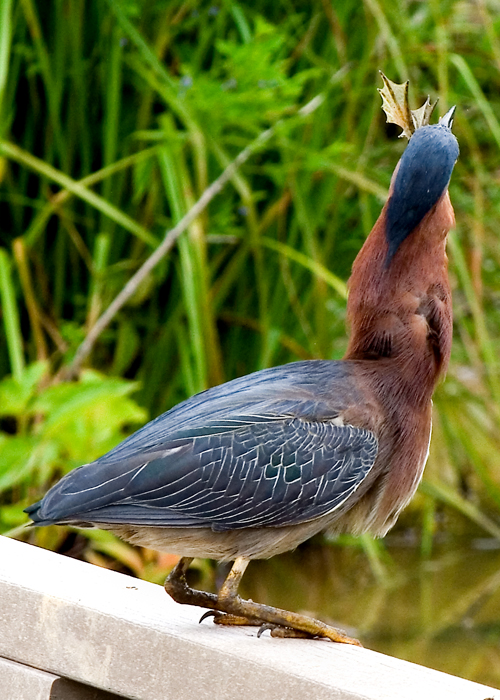
In this final photo the heron no longer has a slim neck. I have no idea how long it will take for the frog to reach the heron’s stomach but I am pretty sure he was not yet there when I took this photo.

And don’t try to talk with the heron during this period. Why not? Read the caption of the last photo!
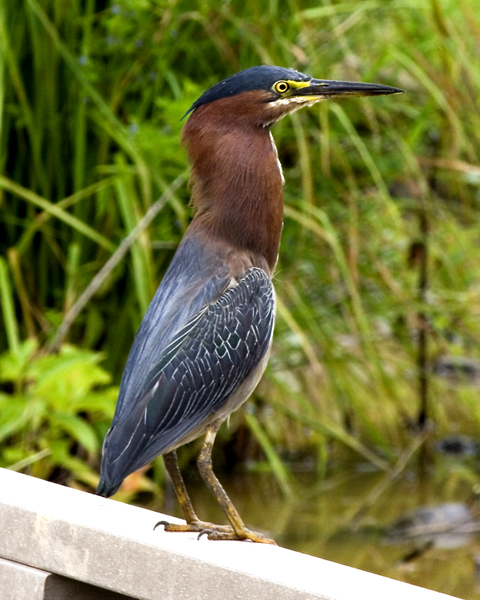
I can’t talk now. I have a frog in my throat.

© Michael Q. Powell. All rights reserved.


Read Full Post »

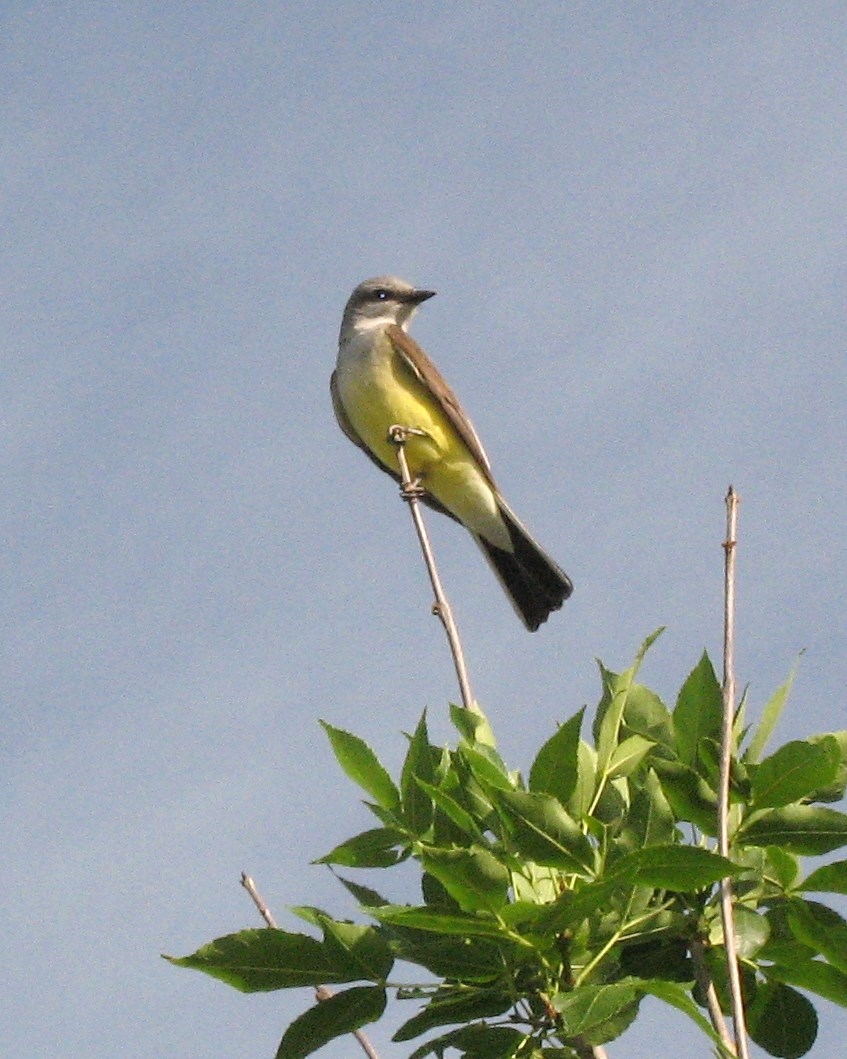
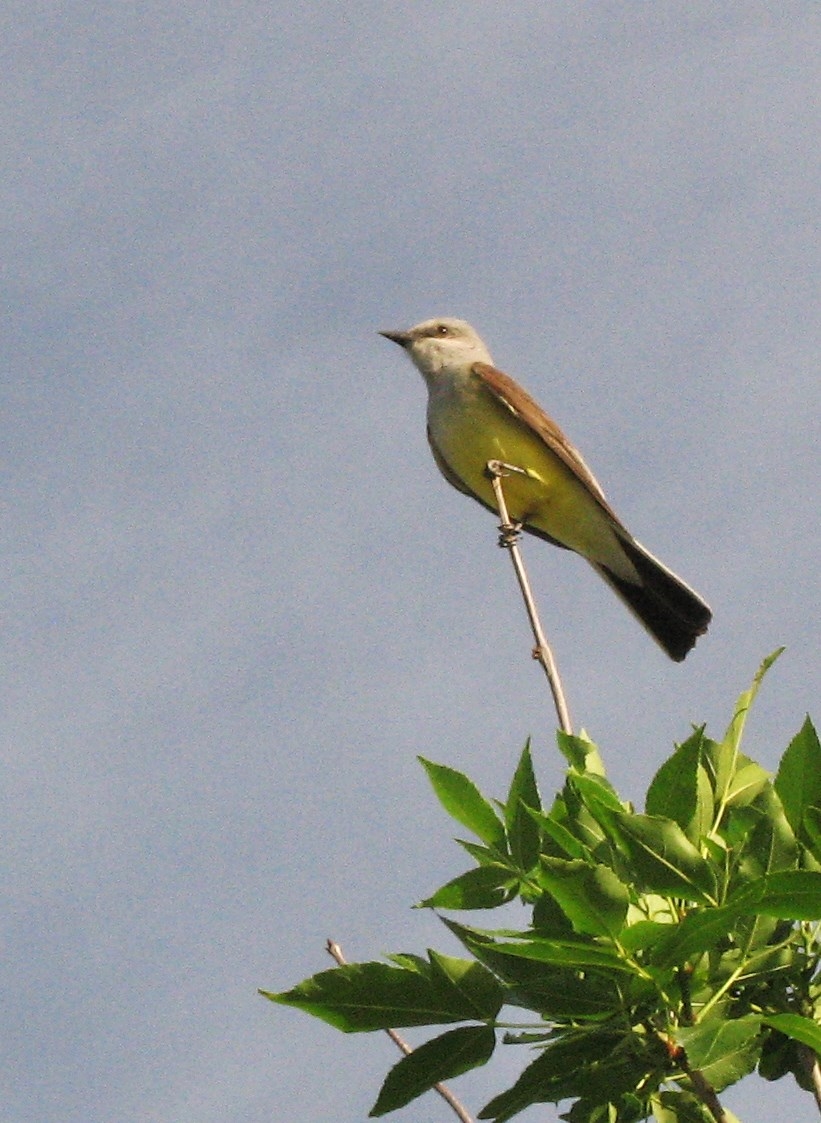
Walking along the sidewalk outside my hotel in Denver, Colorado, I caught sight of a beautiful shade of yellow on the breast of a bird that flew by me. I watched as it came to rest in a nearby tree, but couldn’t identify it.

Like the Black-billed Magpie that I featured yesterday, this bird, which I am pretty sure is a Western Kingbird (Tyrannus verticalis), is not found in Northern Virginia where I live.

As I watched, this bird flew off several times, presumably in search of insects, but returned to the same perch each time at the top of a tree. I would have liked to have watched this beautiful bird for a while longer, but duty called—this is a business trip after all.

kingbird1_blogkingbird2_blogkingbird3_blog

© Michael Q. Powell. All rights reserved.
Read Full Post »

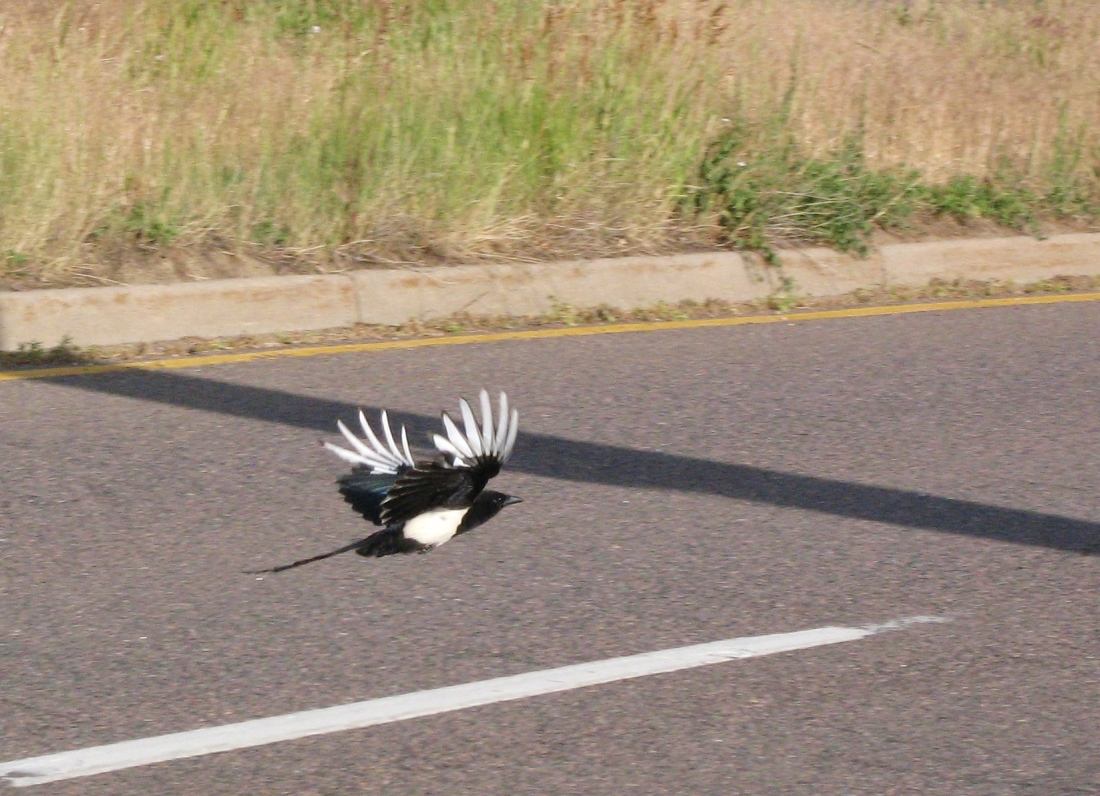
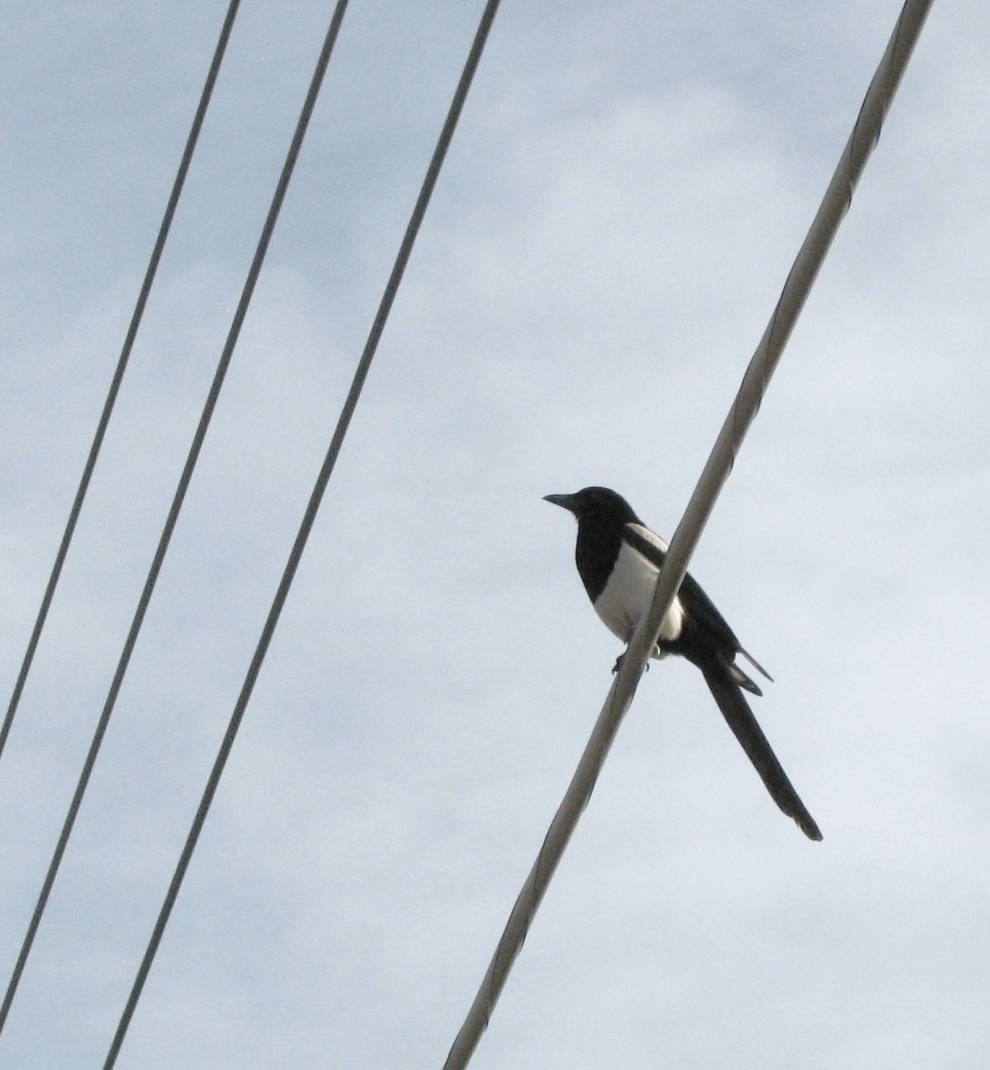
I couldn’t help but notice Black-billed Magpies (Pica hudsonia) here in Denver, Colorado, which I am visiting on a short business trip. The magpies are loud and boisterous, even in the area of my hotel just off of a major road.

It’s particularly nice to encounter these attractive birds because we don’t see them at all in Virginia. As is usually the case when I am travelling for business, I took these photos with a little Canon point-and-shoot and not my regular DSLR.

magpie1_blogmagpie2_blog

© Michael Q. Powell. All rights reserved.
Read Full Post »

If I want to eat a lobster, I need lots of tools (and a bib). This Great Blue Heron (Ardea herodias) at my local marsh had to try a different technique and seemed to be trying to crack the crayfish’s shell with its bill (or was hoping the crayfish would simply crawl down its throat).

heron2_crayfish_blog

© Michael Q. Powell. All rights reserved.
About these ads

Read Full Post »

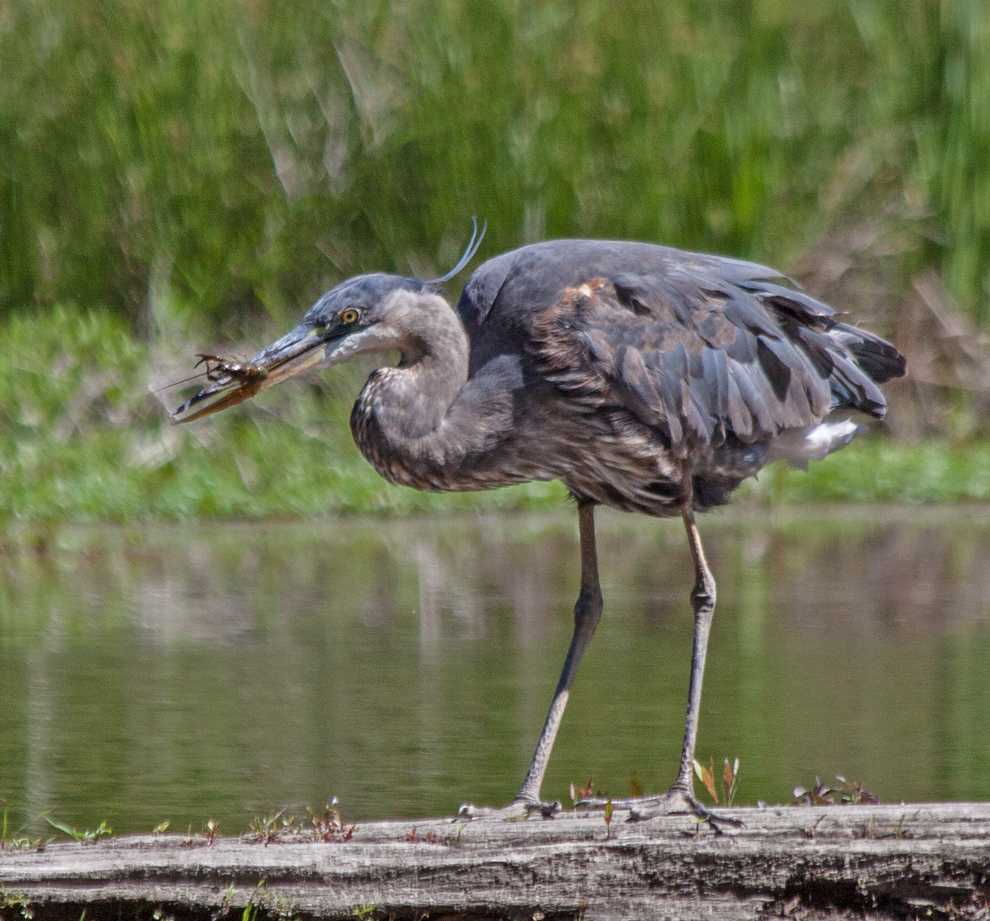
Getting to the tastiest parts of crabs and lobsters is an awful lot of work, even when you have the proper implements.  Imagine how tough it was for this Great Blue Heron (Ardea herodias) to figure out what to do with this crayfish that it caught at my local marsh.

Great Blue Herons generally swallow the frogs and fish that they catch after just a few adjustments to get it to slide down the throat, but the heron seemed to spend a long time with this catch, moving it back and forth in its bill. I was a bit too far away to tell if the heron eventually swallowed the crayfish whole or somehow was able to crack the shell. In either case, I’m impressed with the digestive system of this beautiful bird.

heron_crayfish_blog

© Michael Q. Powell. All rights reserved.
Read Full Post »

Green Herons (Butorides virescens) are once again hanging out at my local marshland park. Unlike Great Blue Herons (Ardea herodias), which fish while wading in the water, these smaller herons usually wait at water’s edge or on vegetation, which normally makes them tough to spot. This Green Heron, though, decided to perch on a log in plain view, which allowed to take this rather formal looking portrait shot.


heron_green_blog

© Michael Q. Powell. All rights reserved.

Read Full Post »

Yesterday I decided to take a break from insects and went walking along the biking trail at Cameron Run, a tributary of the Potomac River in Alexandria, Virginia, where I encountered this Black-crowned Night-Heron (Nycticorax nycticorax). As its name suggests, this species is usually most active at night or at dusk, so I was surprised to see one in the middle of the day.

As I was headed down to the water’s edge, I flushed the bird, which took off for some nearby rocks and perched on one of them. I got a couple of shots of the initial action, which gives you an idea of my initial view of the night heron.

In this the first and last shots, I think the heron was scratching an itch, which is a little tough when you are perched one-legged on a pointed rock. Eventually the itch was satisfied and the night heron flew off into the cooler confines of a leafy tree, probably to take a siesta until it was time to fish for dinner.

heron4_night_blogheron1_night_blogheron2_night_blogheron3_night_blog

© Michael Q. Powell. All rights reserved.
Read Full Post »

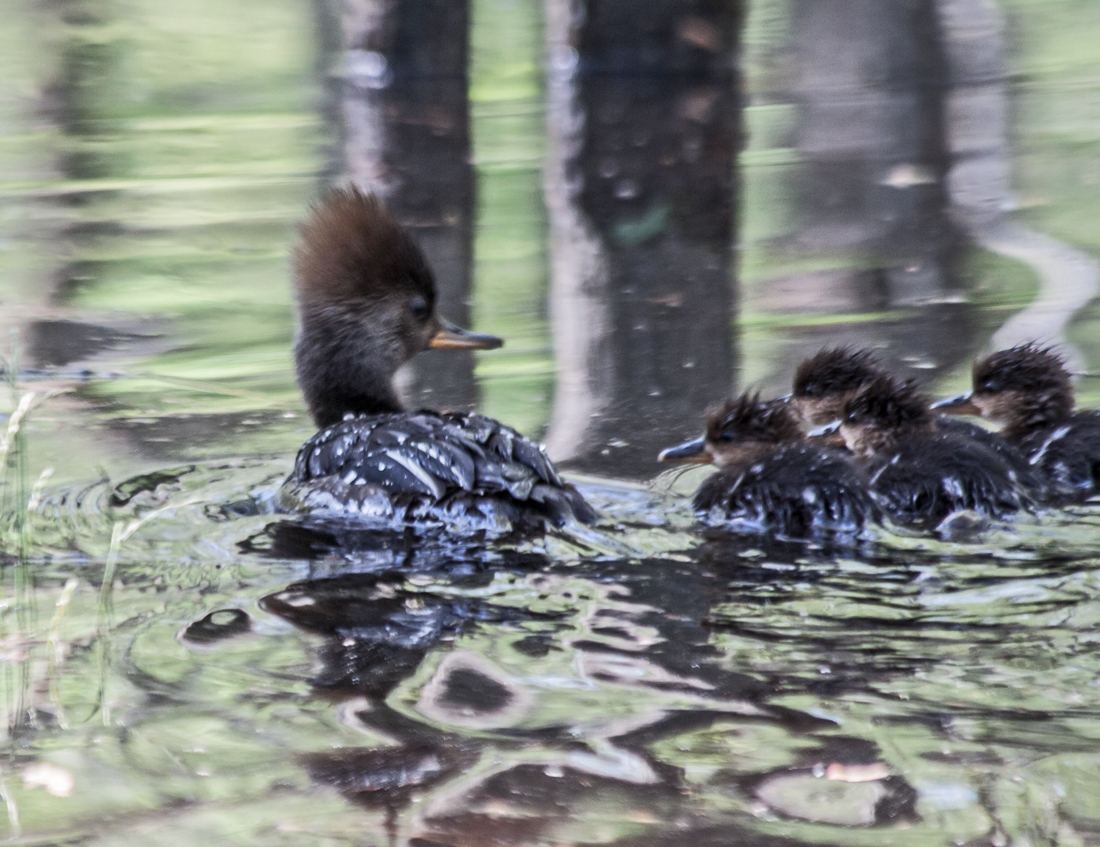
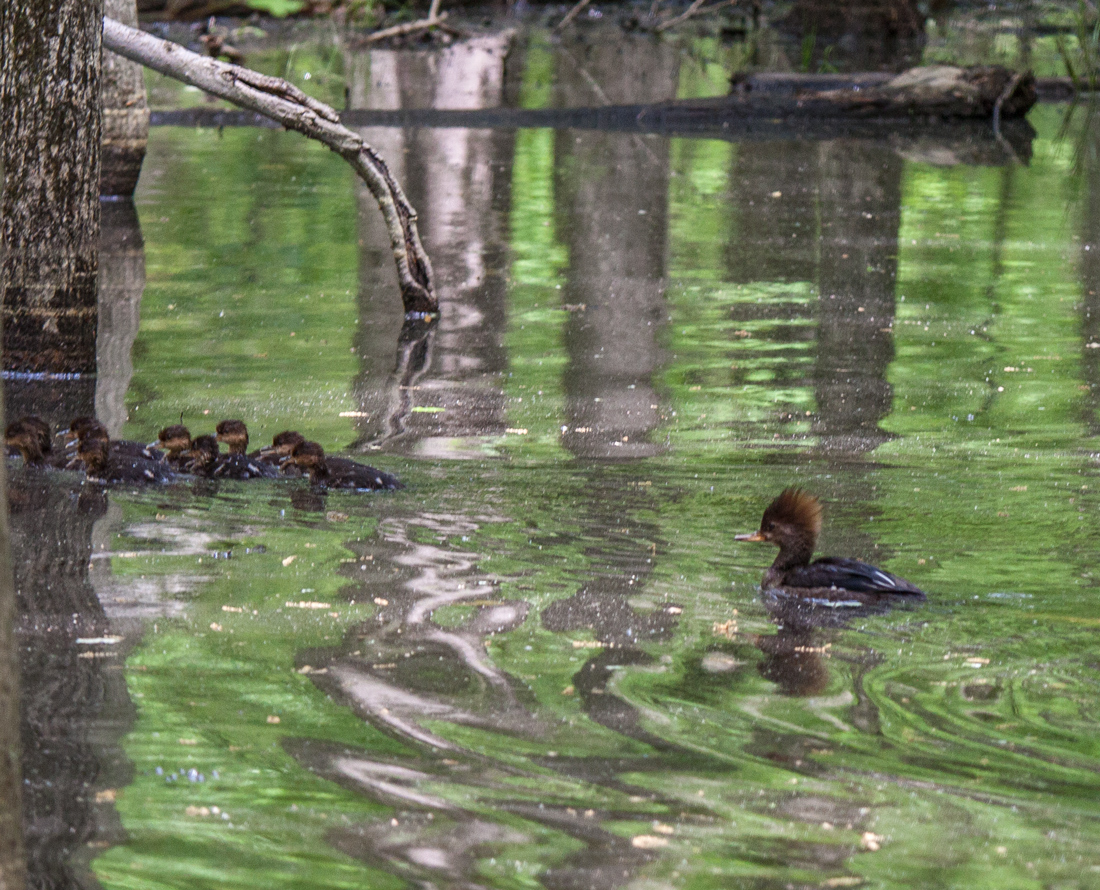
Several weeks after I first spotted a family of Hooded Merganser ducks (Lophodytes cucullatus) at my local marsh, I continue run into this single mother and her adorable ducklings. (Click here to see the original posting.)

The ducks seem to hang out a lot in one flooded, shady area of the marsh that is relatively shallow and doesn’t seem to have the snapping turtles that plagued similar families last year. The light is limited and the ducks start moving as soon as they sense my presence, so getting photos has been a challenge. Here’s a selection of some of my favorite shots to date of this cute little family.

mama_swamp4_blog

Mama duck gives a reminder to the ducklings to stay together and follow her.

mama_swamp3_blog

Trying to move out, but some of the ducklings want to look back toward me.

Mama duck takes up a rear position to ensure there are no stragglers.

Mama duck takes up a rear position to ensure there are no stragglers.

Grainy close-up shot that shows some of the personality of the ducklings.

Grainy close-up shot that shows some of the personality of the ducklings.

© Michael Q. Powell. All rights reserved.

Read Full Post »

Although I wake up to the sound of birds loudly chirping at this time of the year, it is getting increasingly difficult to see most of them as the trees regain their thick covering of leaves. The male Red-winged Blackbird (Agelaius phoeniceus) is a notable exception, because he does not hide behind the foliage. Instead, he seems to choose the highest point in the open from which to boldly make his loud calls—there is not timidity or shyness in this bird.

The blackbird puts so much energy into his “singing” that at times his perch becomes precarious. I captured this blackbird in one such moment, when his position seems so awkward and distorted that looks like a cartoon to me.

blackbird_cartoon_blog

© Michael Q. Powell. All rights reserved.

Read Full Post »

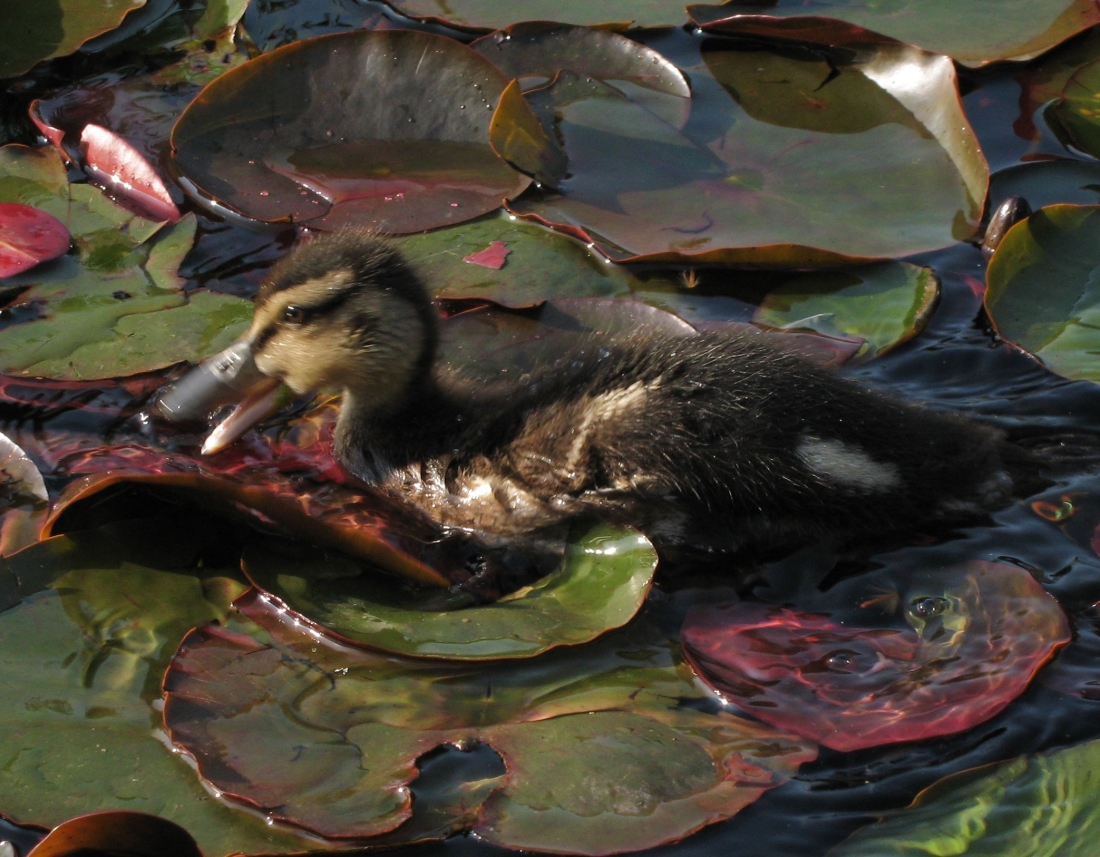
As I was walking through the Volksgarten in Vienna, I was a bit surprised to encounter three ducklings, living in a fountain along with two male adult Mallards. The city had constructed a ramp so that the ducks could enter and exit the fountain and a couple of plywood platforms, where the ducklings would rest and play.

Obviously there was a mother duck involved in giving birth to these ducklings, which were no longer babies, but I did not see her at all during any of my three visits to see the ducks.

Although I had only a point-and-shoot camera with a small zoom lens, the fountain limited the movement of the ducklings and I was able to move in close for some pretty good shots, which show the personality of the little ducklings.

Vienna_duck4_blogVienna_duck5_blog

Vienna_duck6_blog


Vienna_duck1_blog

Vienna_duck3_blogVienna_duck2_blog

© Michael Q. Powell. All rights reserved

Read Full Post »

Some subjects are so awe-inspiring that I get excited just seeing them, even if they are too far away for a good photo—like this Bald Eagle (Haliaeetus leucocephalus) that I saw Monday at my local marsh. The eagle seemed to sense my presence and took off before I could get closer, but I managed to capture an image of its final preparations for takeoff from the branch.

eagle_takeoff1_blogWhen I am walking through the woods at this time of the year, I have to keep my eyes in constant motion. Leaves are still sparse enough on the trees that I am still able to spot some birds in the trees.  However, insects are starting to appear too, so I have to scan the leaves and branches on the ground for these little creatures.

On early Monday morning, as I looked through a break in the trees, I caught sight of a large bird in the distance, sitting on the end of a branch. I immediately stopped, having learned from experience that even a single step forward would be likely to spook the bird. The light was not great, but the shape suggested to me that it was probably a bald eagle.

The eagle looked around for a few seconds and then took off. At that moment, I was absolutely certain that it was a bald eagle. I was not so certain that I had captured any useable images, but I was content just to have experienced the sight of that majestic bird in flight.

eagle_takeoff2_blog

© Michael Q. Powell. All rights reserved

Read Full Post »

Tree Swallows have been flying about for several weeks, but it was only this weekend that I finally observed one of their multi-colored brethren, the Barn Swallow (Hirundo rustica). Last year, the Barn Swallows built a nest underneath a raised observation platform of the boardwalk at my local marsh, and it looks like they are doing the same thing this year.

I was able to photograph this swallow as it perched on a small branch coming out of the water directly opposite the platform. The sky was mostly overcast during the day, which caused the reflections in the water to look mostly white. As I made a few adjustments to the image, the background essentially disappeared, resulting in a photo that looks almost like it was shot in a studio.

I really like the swallow’s serious pose and the fact that I was able to capture its signature swallow tail. It won’t be long before I see swallowtails on some of my favorite butterflies.

barn_swallow1_blog

© Michael Q. Powell. All rights reserved

Read Full Post »

Female Hooded Merganser ducks (Lophodytes cucullatus) raise their ducklings as single Moms, which must be pretty tough when you have so many offspring to look after. According to the Cornell Lab of Ornithology, the male Hooded Merganser duck abandons his mate once she begins incubating eggs and it’s not known if they reunite the following season.

Last year, when the level of water at my local marsh was pretty low and there seemed to be lots of snapping turtles, most of the ducklings did not survive. After a lot of construction at the marsh, water levels are higher and I am hoping that things will be a little easier on the duck families.

I don’t know how old these ducklings are, but they appear to be tiny—even adult Hooded Mergansers are pretty small. A family of Hooded Mergansers was spotted earlier this week and I suspect that this is the same one, so they may be a week or so old.

I was not able to get very close to the ducks and the conscientious Mama duck started swimming away as soon as she sensed my presence early yesterday morning. You can see details in the first two shots, which are cropped a fair amount, but I included a final shot, which shows more of the setting, because I love the beautiful ripples in the water.

mama_duck1_blogmama_duck2_blogmama_duck3_blog

© Michael Q. Powell. All rights reserved

Read Full Post »

Folks may have mixed emotions about adult Canada Geese (Branta canadensis) and many consider them a nuisance, but I think that just about everyone agrees that goslings are really cute.

gosling2_bloggosling1_blog

© Michael Q. Powell. All rights reserved

Read Full Post »

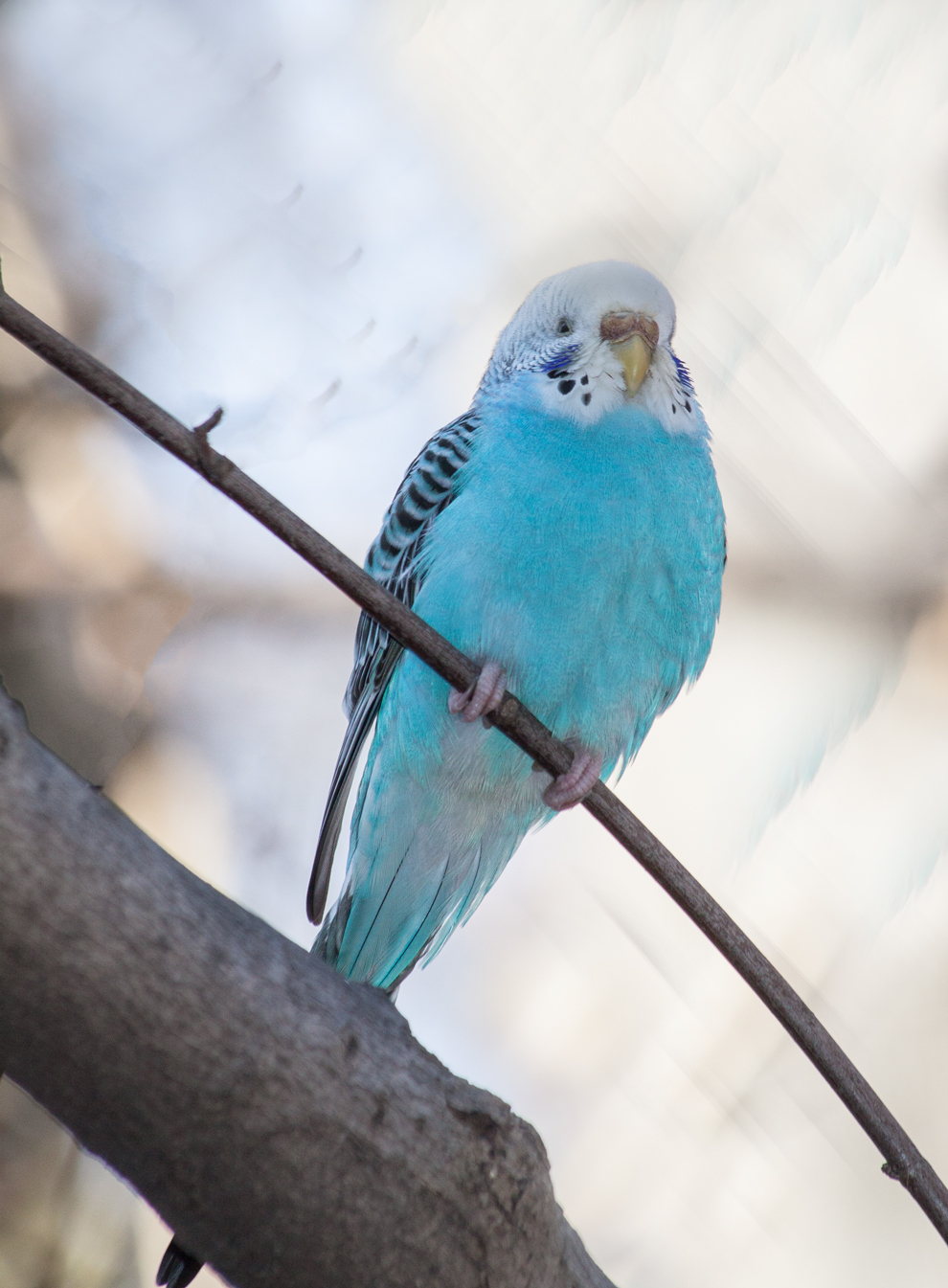
Yesterday afternoon, I again observed a blue parakeet (which is also known as a budgerigar) in the trees in my suburban townhouse neighborhood, two weeks after I first spotted it in the “wild.”

Since that first spotting, we’ve had some heavy rain and the temperature has dipped down to the freezing level.  Somehow, though, the parakeet (Melopsittacus undulatus) has managed to find shelter and food and avoid predators.  The parakeet seems to stay in the same general location, not far from several bird feeders on the back decks of nearby houses.

The general consensus seems to be that this is an escaped pet. I worry about its long-term survival, but so far it appears to be adapting pretty well to the outdoor environment.

parakeet_21_April_blog

© Michael Q. Powell. All rights reserved


Read Full Post »

This brightly colored American goldfinch (Spinus tristis) reminds me of the marshmallow Peeps that I grew up with and the brightly colored spring outfits that people would wear to church to celebrate Easter (including some pretty outrageous hats).  Best wishes to all for a Happy Easter, no matter how you choose to celebrate it.

Finch and Blossoms web

© Michael Q. Powell. All rights reserved


Read Full Post »

Unlike the Great Blue Herons that stay in Northern Virginia all winter, Great Egrets (Ardea alba) depart for warmer locations during the winter. I was happy to note this past weekend that the egrets are now back at my local marsh, where I took these shots of one coming in for a landing.

The wing span of this bird is impressive and I love the way that it points its toes as it comes in for the landing. As is often the case, I had challenges getting a proper exposure—I try to expose for the brilliant white body, but often blow out the highlights. I am pleased that I was able to capture some of the details of the wings in these images, though the shadows caused much of the plumage to look gray, rather than white.

egret2_april_blogegret1_april_blogegret3_april_blog

© Michael Q. Powell. All rights reserved


Read Full Post »

At first I thought that the black and orange birds rooting about in the fallen leaves were American Robins (Turdus migratorius), but a closer look through the undergrowth revealed that there was white on their breasts and that their eyes were red.

It turns out that they are Eastern Towhees (Pipilo erythrophthalmus), a strikingly marked oversized sparrow. It was quite a challenge to get somewhat unobstructed shots of these birds. They seemed to be in constant motion, hopping about and rummaging through the leaves—I had to chase them around for quite some time to get these modest shots.

towhee2_blogtowhee1_blog

© Michael Q. Powell. All rights reserved

Read Full Post »

What kind of birds do you have in your neighborhood? I live in the suburbs of Washington D.C. in a townhouse community in Northern Virginia. There are quite a few trees and some green spaces, so I am able to find birds to photograph when I walk through the neighborhood, though the birds tend to be small and elusive.

This past weekend, I encountered a reasonably cooperative Carolina Chickadee (Poecile carolinensis) that remained perched in a tree in a fenced backyard as I desperately sought to compose the shot. I was hoping to have the sky as the background, because I was shooting upward, but the branches of the tree made it impossible to get that shot. I quickly realized that my only hope for an uncluttered background was to use the white siding of the townhouse as the backdrop. As I moved from side to side, I noticed that the blue shutters of the townhouse kept creeping into the frame and decided to incorporate them as an element of the image.

I really like the final result, a pleasing portrait of a little chickadee with a simple, almost minimalist composition.

chickadee1_april_blog

© Michael Q. Powell. All rights reserved

Read Full Post »

As I strolled through my suburban neighborhood on a sunny Sunday afternoon, I expected to see cardinals, chickadees, sparrows, and goldfinches in the trees—I had no idea that I would also encounter a brightly colored tropical bird.

I first saw the bird as a flash of brilliant blue, when it flew from a bird feeder on a back porch to a nearby tree. I love the blue colors of the Eastern Bluebirds, but this was an entirely different shade of blue. Initially the bird was in the shade and I tried to figure out what it was from its shadowy shape, but I was stumped, because it didn’t seem to have a bill.

When I circled around and got a better look, I could see that it was a blue parakeet. What was a parakeet doing outdoors in Northern Virginia? Had it recently escaped from one of the nearby townhouses? Can it survive for long outside?

I did a little research on the internet and learned that the birds we know as parakeets are more technically known as Budgerigars (Melopsittacus undulatus). In the wild, they live in parts of Australia and are naturally green and yellow. In captivity, they have been bred to have different colors, like the electric blue of this one. Judging from the brown color of the cere (the waxy structure that covers the base of the bill), this appears to be a female.

I’ll keep my eyes open to see if I can spot this beautiful bird again. Meanwhile, I will post the photos in the Facebook group of my homeowners’ association and see if I can learn from others how long this bird has been living in the wild.


parakeet1_blogparakeet2_blog

© Michael Q. Powell. All rights reserved

Read Full Post »

Some folks complain a lot about Canada Geese, but I enjoy trying to photograph them, especially when they are taking off and landing. It seems like the number of them has dwindled somewhat at my local marsh recently–perhaps some of them have migrated north.

Yesterday, this goose began to sound the alarm as soon as it became aware of my presence and took off a short time later, still crying out with its tongue extended. I managed to track the bird as it was taking off and to shoot a series of shots. The sky was pretty heavily overcast yesterday, so I had raised my ISO to 320 and figured that I would have enough speed to capture the action. What I didn’t realize at the time, though, was that my aperture was still set at f/11, because I had been shooting some landscapes just prior to these shots. I was in aperture priority mode and my camera chose a shutter speed of 1/1oo of a second.

In the first shot, the goose is relatively sharp and there is little motion blur, except for the background, which is blurred, I think, because I was panning as I tracked the goose. In the second shot, though, which preceded the first in time, the wings and the feet have some motion blur, which accentuates the feeling of the goose scrambling to get into the air.

I keep going back and forth in trying to decide which of this two photos I like better. The technical side of my brain wants to vote for the first one, but the artistic side prefers the second image. What do you think?

goose_alarm goose_alarm2_blog

© Michael Q. Powell. All rights reserved


Read Full Post »

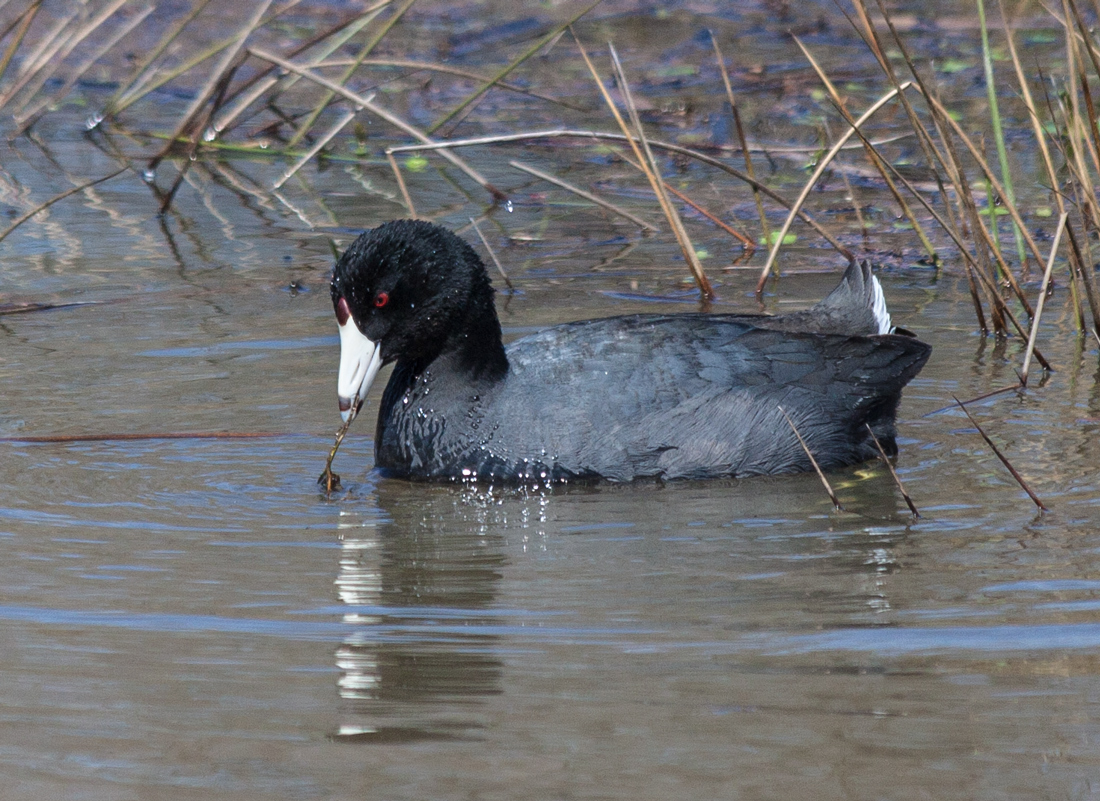
Another coot? Yes, as I was going over my recent shots of an American Coot (Fulica americana) at my local marsh one more time, I decided that I liked this image even more than the one I posted yesterday. The coot has a kind of determined look in its eye and the tilted head gives it a sense of tension, like it is exerting effort to pull that plant out of the water. Besides, I seem to be attracted to birds and animals with unusually colored eyes.

I find it tough at times to choose the best shot quickly when I have shot a series of images. Probably I need to take a little more time in reviewing the images, but I am often in too much of a hurry to find an image (or images) to post. A year ago, I felt compelled to attempt to post every single day, but I have backed off slightly and miss a day now from time to time.

Nonetheless, I still like to post images that appeal to me, which are often, but not always, my “best” shots. Sometimes the photos will merely document the experience that I want to share with readers and may not be technically great images. It’s a little selfish, perhaps, but I shoot mostly for me. Fortunately, I sense that my skills are improving and hope that the quality of the images I post tend to reflect that improvement.

coot_redeye_blog

© Michael Q. Powell. All rights reserved

Read Full Post »

Thanks to some recent rains and a major wetland restoration project at my local marsh, we seem to have a lot more American Coots (Fulica americana) than last year. Most of the time they seem to like to keep their distance. This past Monday, though, one of them drifted toward an area relatively close to where I was standing and I managed to get this shot of the coot feeding on some of the vegetation growing out of the water.coot_hungry_blog© Michael Q. Powell. All rights reserved

Read Full Post »

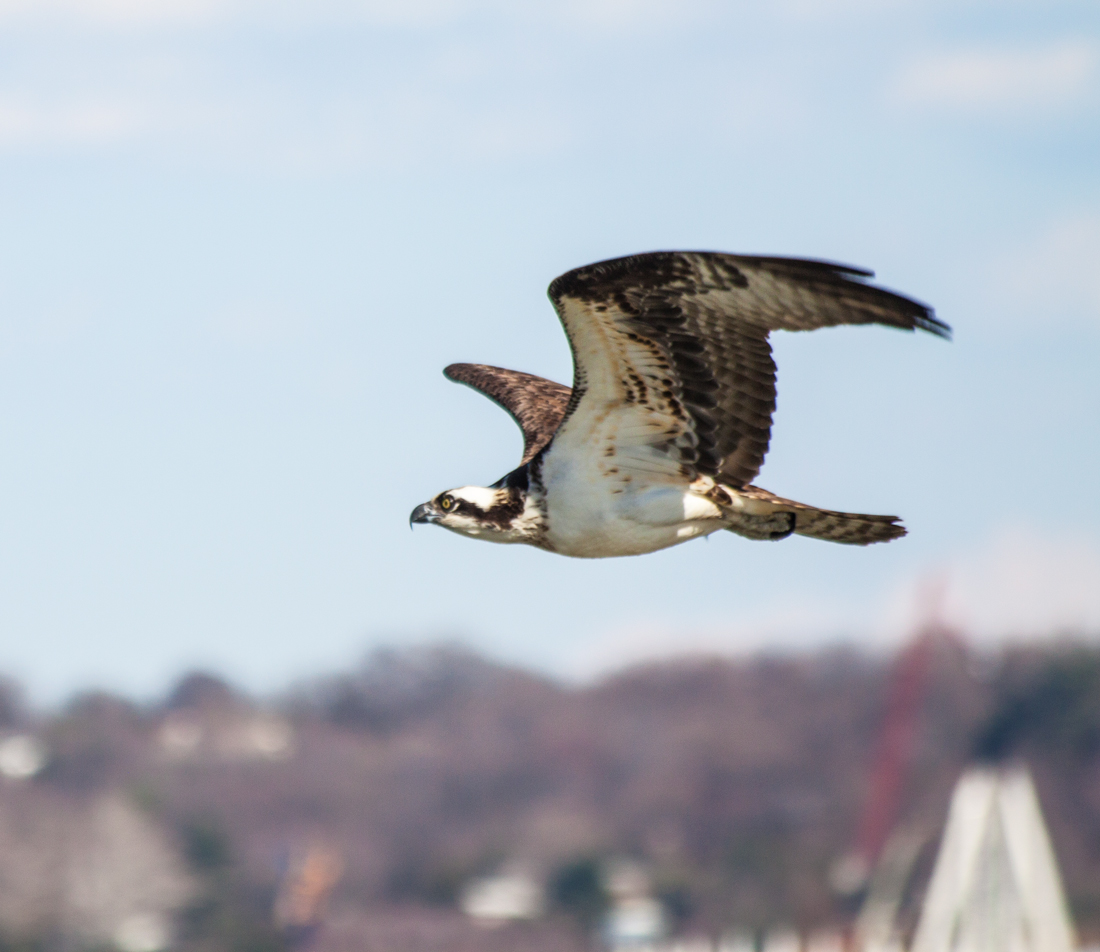
Hoping to capture a shot of an osprey  (Pandion haliaetus) snagging a fish earlier this month, I started firing my camera each time the osprey dove toward the surface of the water with talons extended, but, unlike the bird, I came up empty-handed. The osprey, it turns out, was not fishing for food—it was gathering building materials for its nest. It was impressive nonetheless to watch an osprey fly up into the sky with a pretty large branch in its grasp.

Click on the photos if you want to see a higher resolution view of the images. (I am always amazed by the osprey’s yellow eyes.)

osprey_fishing1_blogosprey_fishing2_blog

© Michael Q. Powell. All rights reserved

Read Full Post »

Despite the rain yesterday, the male Red-winged Blackbirds (Agelaius phoeniceus) were singing up a storm. It seemed like their entire bodieswould expand as they prepared to call out loudly. I didn’t see any female blackbirds respond to the calls—in fact, I didn’t see any at all.

blackbird_singing2_blogblackbird_singing1_blogblackbird_singing3_blog

© Michael Q. Powell. All rights reserved

Read Full Post »

It’s springtime and love is in the air. Two tree swallows (Tachycineta bicolor) seemed intent on getting to know each other better, but kept getting buzzed by a third swallow. A couple of times, one of the swallows, which I suspect was the male, took off and chased away the potential rival.

swalow_couple2_blogswallow_couple1_blogswallow_couple3_blog

© Michael Q. Powell. All rights reserved

Read Full Post »

Like the dried-up leaves on this branch, winter is tenaciously hanging on, refusing to give way to spring. March is almost over, yet I look out the window and see that the ground is still covered with snow.

Soon the monochromatic tones of winter will be replaced by the pastel colors of spring. Starved for bright colors, my senses rejoice when I am greeted by bright colors, like those of this male Northern Cardinal (Cardinal cardinalis) that I observed this past weekend.

cardinal_march_blog

© Michael Q. Powell. All rights reserved

Read Full Post »

Soaring high above the earth, this Osprey (Pandion haliaetus) seemed to be relaxing, enjoying a moment of peace before getting back to the pressing  job of rebuilding the nest.

osprey_soar_blog

© Michael Q. Powell. All rights reserved

Read Full Post »

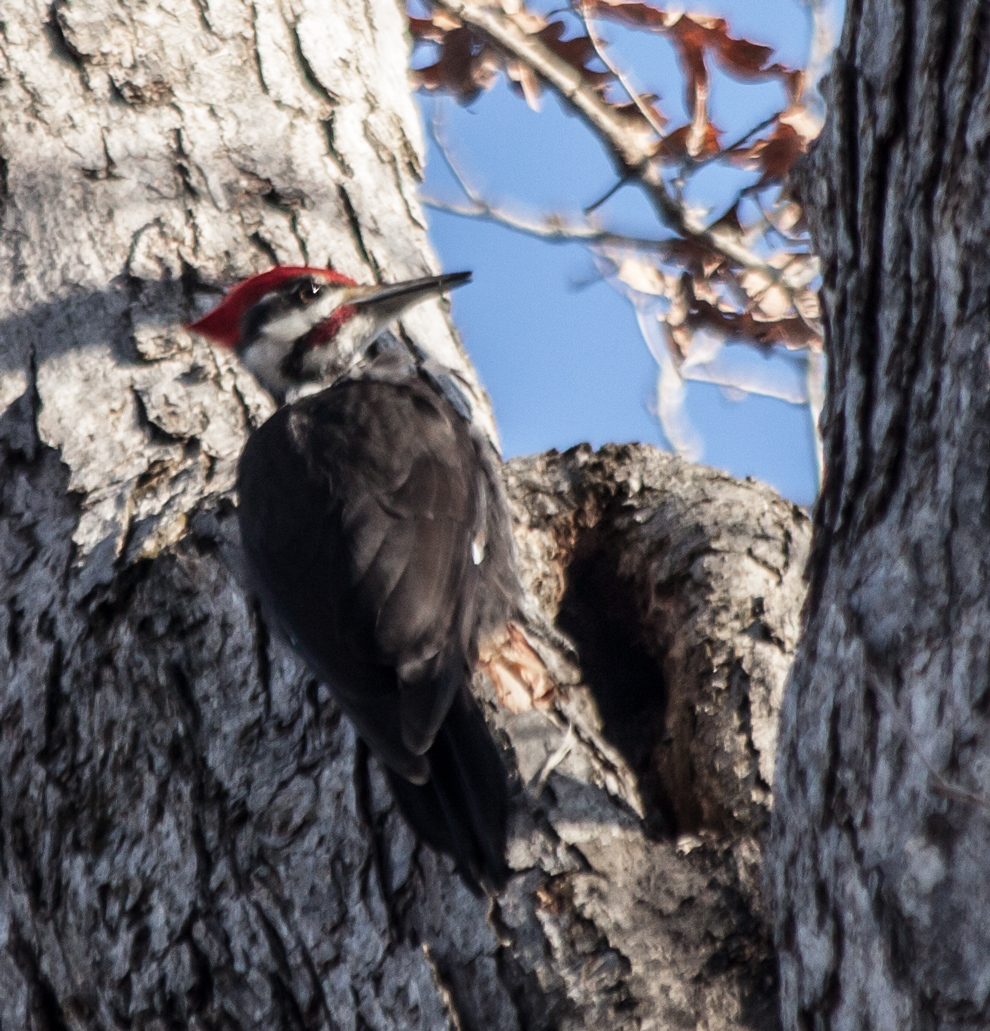
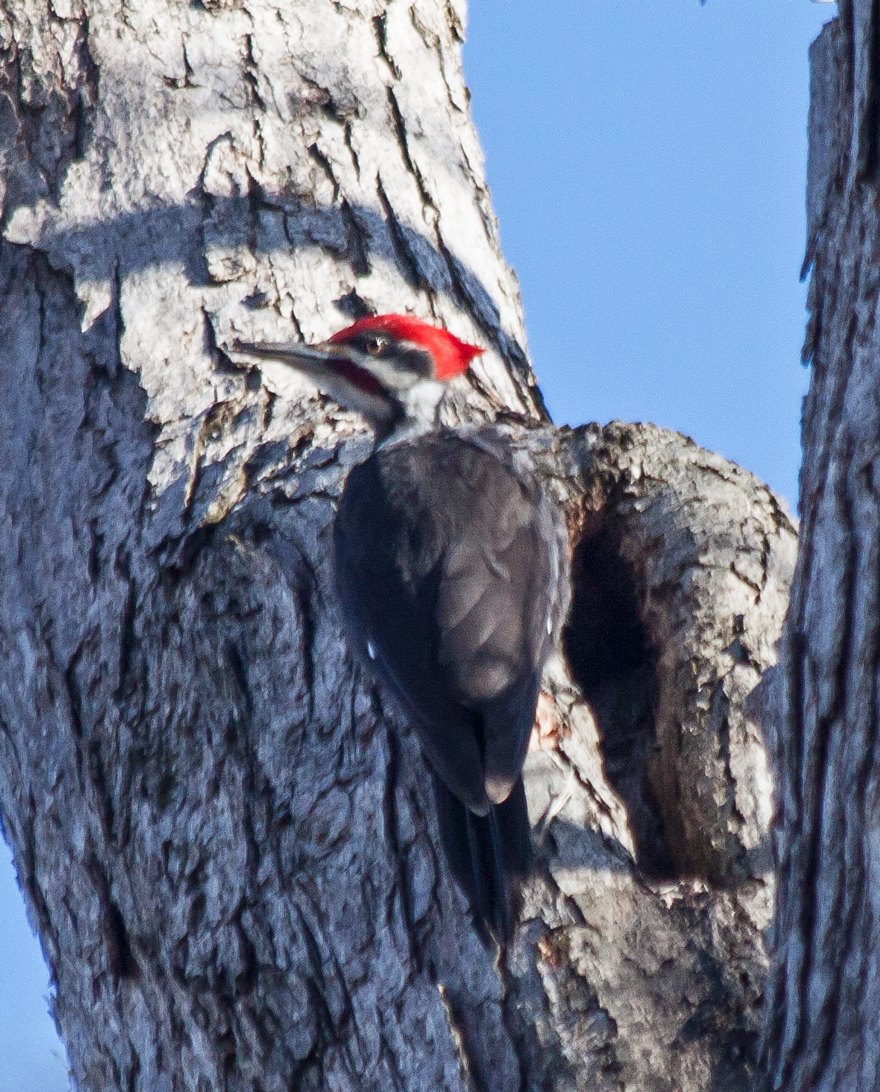
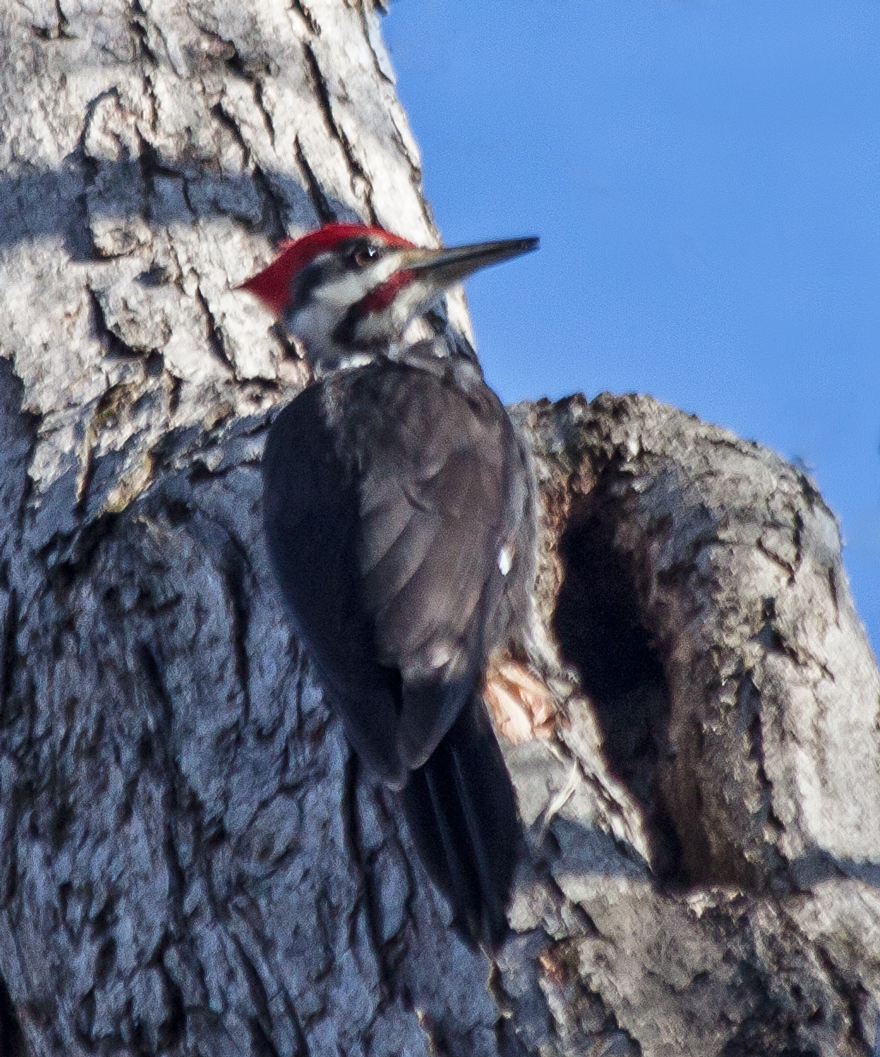
Do woodpeckers smile?

Earlier this month, I spent some time observing a Pileated Woodpecker (Dryocopus pileatus) at work, high in a tree at my local marshland park. The woodpecker would peck away for a while and then stop for a break.  As the big bird turned his head to one side or to the other, it seemed to me that its face would light up in a self-satisfied smile.

What do you think, is the woodpecker smiling or is it just my imagination, running away with me? (Sorry, I just couldn’t resist the temptations to throw in a line from a song.)

pileated4_march_blogpileated1_march_blogpileated2_march_blogpileated3_march_blog

© Michael Q. Powell. All rights reserved

Read Full Post »

Direct sunlight and harsh shadows in the middle of the day make it challenging to take portraits without somehow diffusing the light. During the spring and summer, I will usually carry a collapsible diffuser that I use when photographing flowers (and occasionally people), but it would have been tough to get into position to use such a diffuser on this Great Blue Heron (Ardea herodias) that I spotted on the shore of the Potomac River last Saturday, when I was visiting Dyke Marsh Wildlife Preserve.

As I observed the heron, I was standing on a raised boardwalk, looking downward at the heron though some bushes. In order to get an unobstructed shot, I zoomed in, focusing primarily on the head and neck. The heron moved its head about a lot as it searched the shallow waters and looked through the debris at the shore’s edge, moving in out of the shadows.

I took a lot of photos of the heron and this is one of my favorites. I like the way that I was able to capture some of the details of the plumage and the sinuous curve of the heron’s neck. I would love to be able to capture a similar image early in the day or late in the day, but, as every wildlife photographer knows, you can never tell when you will have another opportunity to photograph a subject again.

heron1_march_blog

© Michael Q. Powell. All rights reserved

Read Full Post »

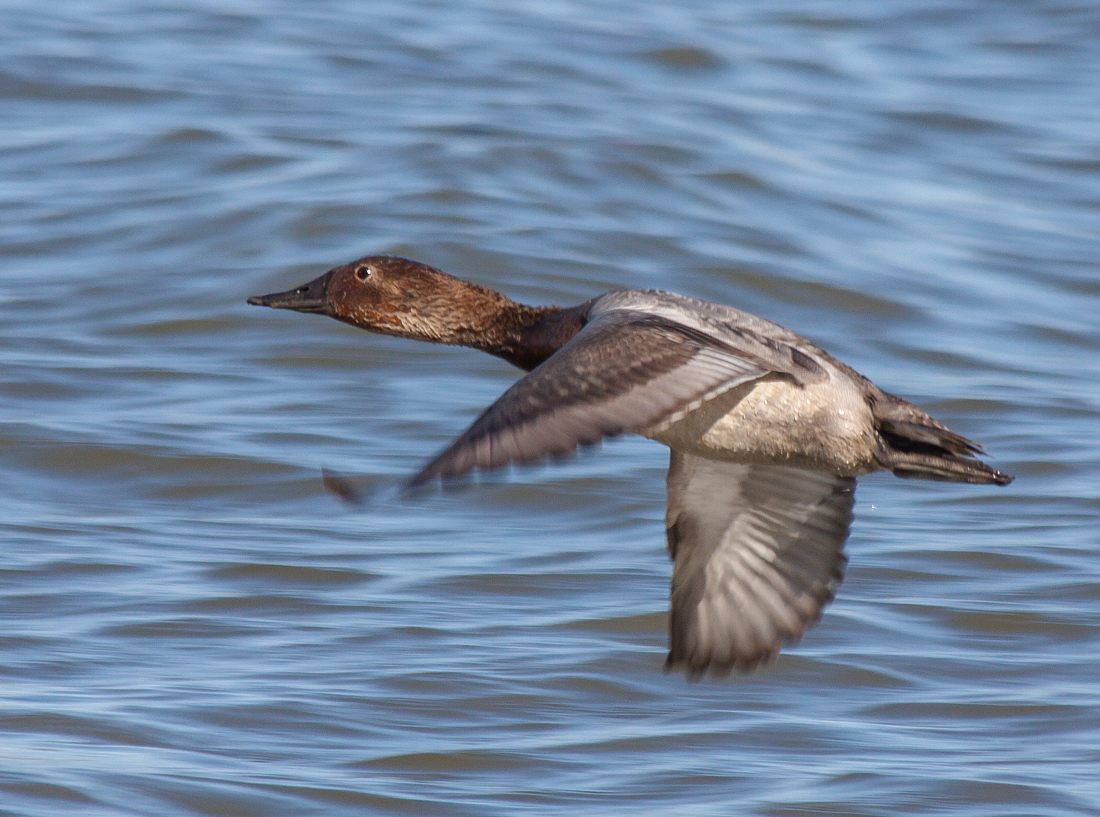
As I was observing the osprey couple on the Potomac River this past weekend, I spotted an unusual-looking duck of a species that I had never seen before. One of my fellow photographers said that he was pretty sure that it was a Canvasback duck (Aythya valisineria) and I couldn’t disagree, having no idea what a Canvasback duck looked like.

The duck was a pretty good distance away and I was looking through my telephoto lens when it decided to take off from the water. I don’t think that the duck was aware of our presence, for it initially flew toward us and parallel to the shore before veering off into the center of the river. I was able to track the duck pretty well and got some in-flight shots, including my two favorites that I am posting.

I am not one hundred percent sure of the identification and would welcome a confirmation or correction, as appropriate, from someone with more experience in identifying bird species.

canvasback_flight_blog canvasback_flight2_blog

© Michael Q. Powell. All rights reserved

Read Full Post »

« Newer Posts - Older Posts »