Feeds:
Posts
Comments

Archive for the ‘Birds’ Category

A flock of noisy, black-colored birds was active this past weekend at Occoquan Bay National Wildlife Refuge. I initially thought they were blackbirds or grackles, but a closer look showed them to be European Starlings (Sturnus vulgaris), a species introduced into the US from Europe by Shakespeare enthusiasts late in the nineteenth century.

I was intrigued when I saw the reference to Shakespeare and learned the following information about the history of starlings in the United States from the Cornell Lab of Ornithology website:

“All the European Starlings in North America descended from 100 birds set loose in New York’s Central Park in the early 1890s. The birds were intentionally released by a group who wanted America to have all the birds that Shakespeare ever mentioned. It took several tries, but eventually the population took off. Today, more than 200 million European Starlings range from Alaska to Mexico, and many people consider them pests.”

To be or not to be? Whether you like them or not, it looks like European Starlings are here to stay. As for me, I find the dotted pattern on these birds to be quite attractive.


European Starling

European Starling

© Michael Q. Powell. All rights reserved.


Read Full Post »

This past Friday I was thrilled to spot a Northern Harrier (Circus hudsonius) at Occoquan Bay National Wildlife Refuge. I had never seen one in action before and it was cool to watch it patrol low over a field at the refuge. Harriers, unlike other hawks,  rely on their sense of hearing to help capture prey, which is why they stay so close to the ground. If you want to learn more about Northern Harriers, check out the Cornell Lab of Ornithology website, one of my favorite sources of information about birds.

It was exciting to see this bird, but it sure was a challenge getting any decent shots. The harrier was a good distance away and seemed to vary its altitude in an unpredictable way. When it zoomed low, my camera wanted to focus on the ground vegetation and when it flew a bit higher, the camera sought to focus on the more distant trees, rather than on the bird that filled only a small part of the frame.

The two images below were the best that I took before the harrier disappeared from sight and show some of the features of this awesome raptor pretty well, including the face that guides sometimes describe as owl-like. It is always exciting to photograph a new species, but an inner desire to get more and better images of a new subject is sufficient motivation for me to go out again and again with my camera.

Northern Harrier

Northern Harrier

© Michael Q. Powell. All rights reserved.


Read Full Post »

As I zoomed in on a bright white splotch of color in a distant tree at Occoquan Bay National Wildlife Refuge on Friday, I realized it was a Bald Eagle (Haliaeetus leucocephalus). almost hidden in the autumn foliage. The eagle reacted quickly to my presence and took to the air, but I was able to capture a few images of this majestic bird.

Photographing a bald eagle is always a challenge. One of the biggest issues is the contrast between its bright white head and dark body, making it tough to get a good exposure. In this case, if I had had a little more time to check my exposure, I might have been able to avoid blowing out the details in the eagle’s head. Time, though is something that I usually don’t have. The eagle’s vision and reaction time are so far superior to mine that I have to react immediately when I spot an eagle, usually with the settings that already dialed into the camera. On multiple occasions I have missed opportunities as I scrambled to make adjustments to my camera.

Finally, it is often hard to predict an eagle’s actions and the direction in which it will choose to fly. This was a somewhat unusual situation in that the eagle initially flew right at me. You have to have really steady hands and a lot of luck to maintain focus when a bird is coming at you that fast. I didn’t quite nail the focus on the eagle’s eyes in the final shot, but am happy at the way that I was able to capture its fully extended wings.

This situation reinforces in me the continuing applicability of the Boy Scout motto that was drilled into me as a youth—”Be Prepared.” You never know when you might stumble upon a Bald Eagle.


Bald Eagle

Bald Eagle

Bald Eagle

© Michael Q. Powell. All rights reserved.

Read Full Post »

I am not sure why, but I have seen more warblers this autumn that I have ever seen before. In past years they always remained elusive, hidden behind the foliage, heard but not seen. This year I have seen them, especially Yellow-rumped Warblers (Setophaga coronata) at several locations and on several occasions.

Here are several of my favorite warbler shots from this past weekend at Huntley Meadows Park. The first image, my favorite, is one of those lucky shots that occur when a bird takes off just as I press the camera’s shutter button. Normally that results in a bird that is out of focus or partially out of the frame, but this bird took off slowly and in a direction parallel to where I was focusing. Sometimes it is better to be lucky than to be good.

Yellow-rumped Warbler

Yellow-rumped Warbler

Yellow-rumped Warbler


© Michael Q. Powell. All rights reserved.

Read Full Post »

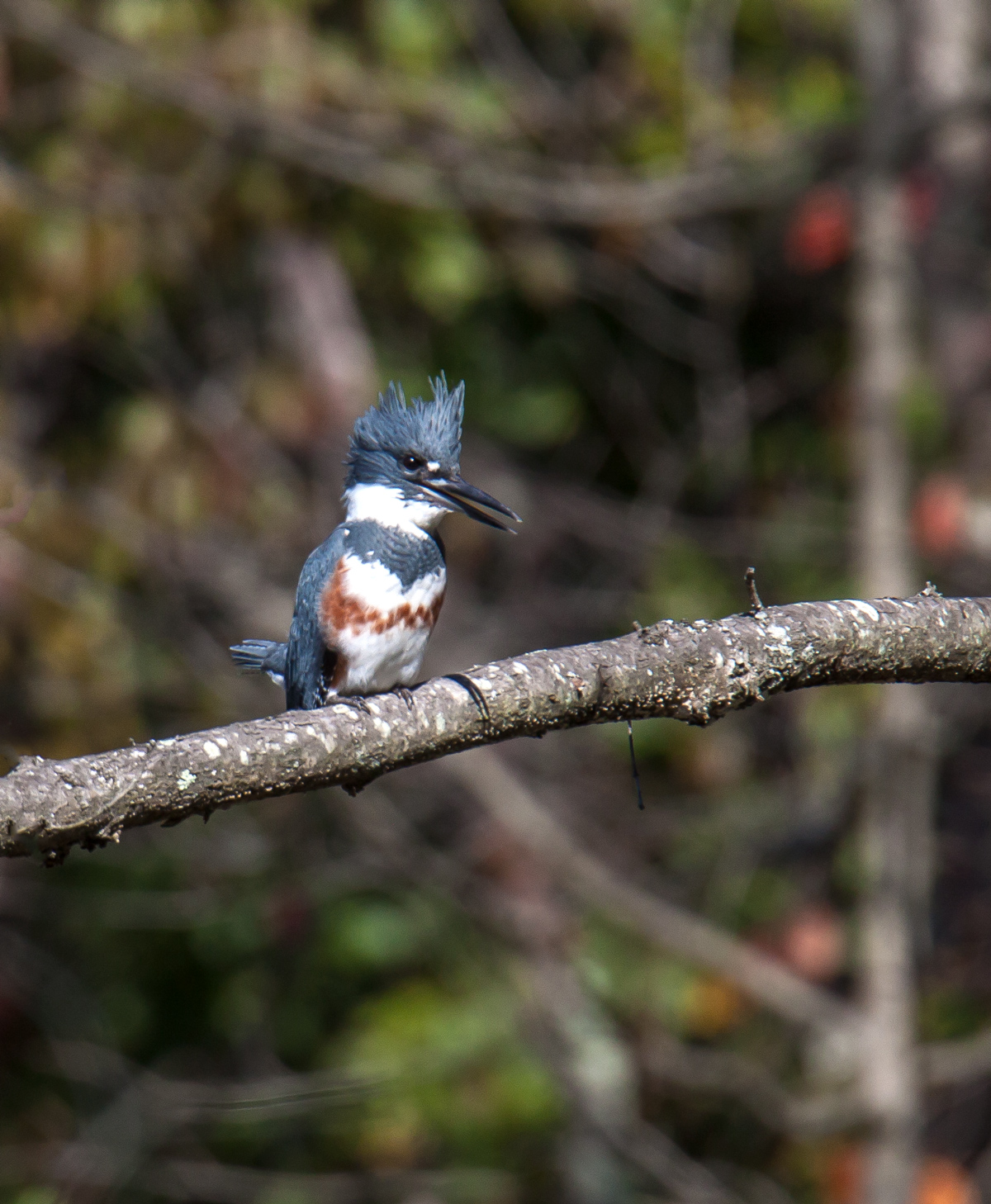
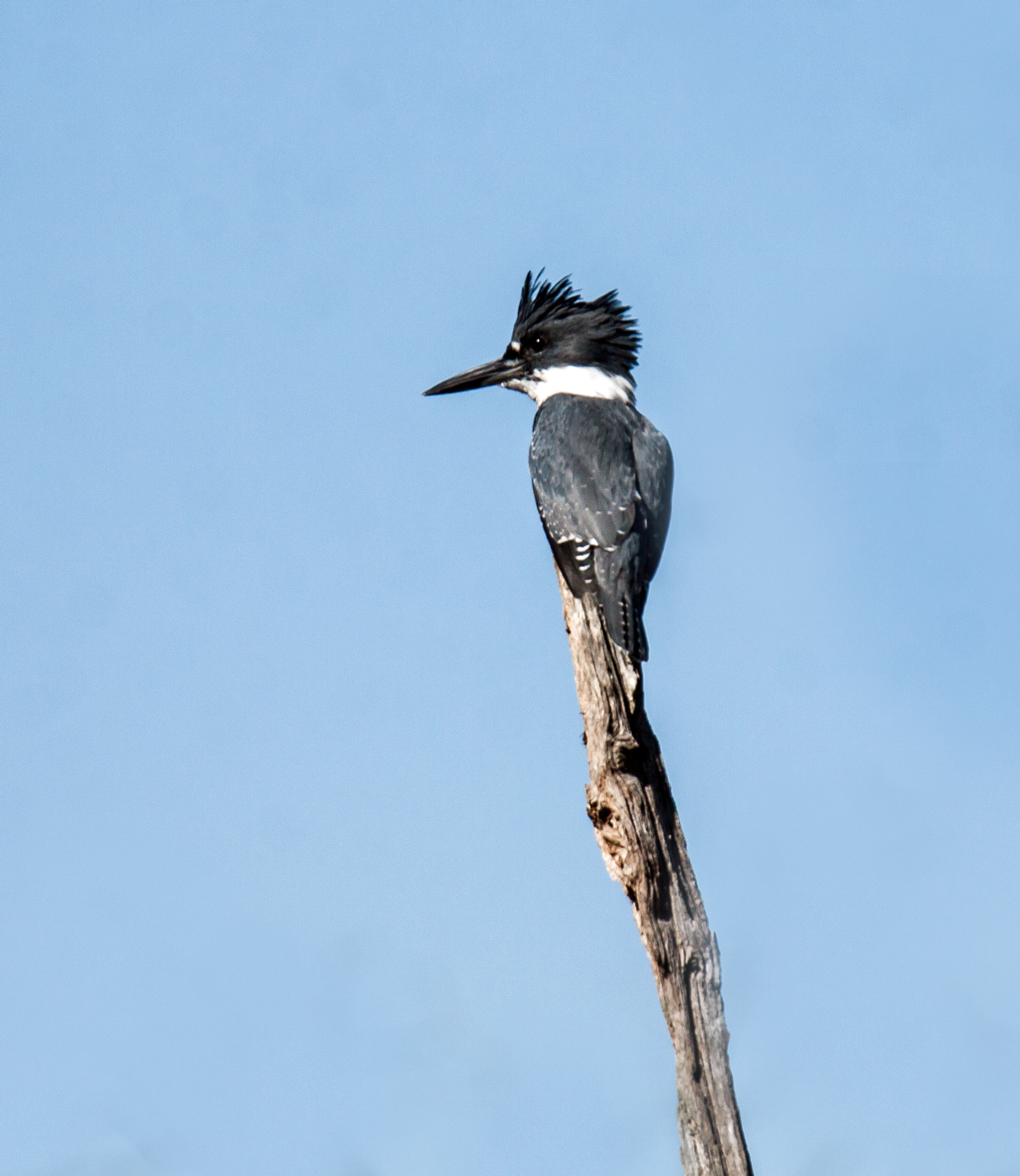
Belted Kingfishers (Megaceryle alcyon) are normally very skittish and it seems like they always choose to perch in distant trees. This past weekend, however, a female Belted Kingfisher flew to some trees that were a lot closer than usual and I was able to capture these shot. The images don’t exactly fill they frame, but they do show a lot of the cool details that make the kingfisher so special. In case you are curious, it is really easy to identify the gender of Belted Kingfishers—only the females have the rust-colored stripes on the chest, one of the few cases in which a female of a bird species is more colorful than the male.

Belted Kingfisher

Belted Kingfisher

Belted Kingfisher

© Michael Q. Powell. All rights reserved.

Read Full Post »

A Belted Kingfisher (Megaceryle alcyon) and a Red-headed Woodpecker (Melanerpes erythrocephalus) seemed to be eyeing each other with intense curiosity this past Friday at Huntley Meadows Park when they both chose to occupy the same tree at the same time.

Redheads have a mysterious attraction, it seems, in the bird world as well as in the human world.

Belted Kingfisher and Red-headed Woodpecker

© Michael Q. Powell. All rights reserved.

Read Full Post »

Eastern Bluebirds (Sialia sialis) were quite active yesterday at Huntley Meadows Park, including one that was investigating tree cavities. I am not sure if the bluebird was checking out potential nesting spots for next year or was merely searching for insects. Whatever the case, it was definitely cool when the bird climbed inside the cavity and poked its head out. I was particularly happy that the sun was shining brightly, which made the bluebirds’ brilliant blue really pop.

Eastern Bluebird

Eastern Bluebird

Eastern Bluebird

© Michael Q. Powell. All rights reserved.

Read Full Post »

As I turned the corner of a trail at Occoquan Bay National Wildlife Refuge on Monday, I spotted a large bird perched high in a tree. It didn’t immediately fly away, so I figured it wasn’t an eagle. Zooming in, I realized I was wrong—it was a Bald Eagle (Haliaeetus leucocephalus) facing in the opposite direction.

I got lots of photos of the back of the eagle’s head, but decided that I wouldn’t share any of them. I knew that eventually the eagle would turn its head and tried to get ready. I snapped off a few photos, including the first one below, when the eagle turned its head and surveyed the area.

I don’t know if it was the noise of the shutter or if it detected motion, but the eagle spotted me and I was able to capture the second shot as it was preparing to take flight. I was thrilled, because this was the closest encounter that I had had with a bald eagle in a long time.

I continued down the trail and a short while later made a turn onto another trail. As I glanced to my left, I saw a perched eagle. I don’t know if it was the same one that I had just observed, but I managed to snap off a few more shots, including the third shot below. I like the way that I was able to capture a bit of the feel of autumn with the red leaves.

Bald Eagle

Bald Eagle

Bald Eagle

© Michael Q. Powell. All rights reserved.

Read Full Post »

When I spotted this bird on Monday at Occoquan Bay National Wildlife Refuge, it was facing away from me and I couldn’t immediately identify it. It had fluffed up its feathers and appeared to be basking in the sunlight.

When it finally turned its head slightly, I caught a glimpse of its red eyes and realized that it was probably an Eastern Towhee (Pipilo erythrophthalmus). All of the other times that I have seen towhees in the past, they have been foraging in the cluttered undergrowth, so it was a real treat to see one more or less in the open. As a bonus, the light coming from the left helped to illuminate some of the details of the bird’s beautiful feathers and the bird’s pose is quite different from that of a typical perched bird .

Eastern Towhee

© Michael Q. Powell. All rights reserved.
Read Full Post »

When I heard loud singing coming from the top of a tree, I glanced up and saw a shape that reminded me of a mockingbird. Looking more closely, I realized that the colors looked more like those of a female Red-winged Blackbird, but the shape of the body and behavior were not those of a blackbird. Although I was pretty far away, I noticed that the bird had startlingly light-colored eyes. What was this bird?

Thanks to its physical characteristics, it was not hard to locate this bird in my identification book when I got home—it is a Brown Thrasher (Toxostoma rufum).  According to the Cornell Lab of Ornithology, “Brown Thrashers are exuberant singers, with one of the largest repertoires of any North American songbird.” The same article notes that some early naturalists thought that the Brown Thrasher’s musical abilities are underappreciated, as compared with the mockingbird, which has received greater acclaim. “Brown Thrasher”  somehow sounds to me like it should be associated more with a heavy metal band than with this pretty bird. Maybe this bird needs a better marketing strategy and a public relations campaign.

The sky was heavily overcast the day I took these shots. Normally I don’t like the look of the washed-out skies, but in this case I really like the effect. One of my Facebook viewers commented that it made the photo that I posted (the first one below) look like an Audubon print.

Brown Thrasher

Brown Thrasher

Brown Thrasher

© Michael Q. Powell. All rights reserved.
Read Full Post »

Recently at Occoquan Bay National Wildlife Refuge, the only views I have gotten of Bald Eagles (Haliaeetus leucocephalus) have been of them flying away from me. Yesterday I got lucky and caught a glimpse through the foliage of one sitting in a distant tree in what appears to be a nest. Earlier this year, several roads in the refuge were closed after two eaglets were born. I don’t know if this was the nesting site, but suspect it might have been.

I was a long way away, but had a small visual tunnel through the trees that gave me a mostly unobstructed view of the eagle. I tried to move slowly, although I figured that the eagle was unaware of my presence. Apparently I underestimated the sharpness of the eagle’s vision, because it took off from the nest not long after I began shooting.

As I have said in the past, however, any day that I am able to see and photograph a Bald Eagle is a wonderful day.

Bald Eagle

Bald Eagle

Bald Eagle

© Michael Q. Powell. All rights reserved.

Read Full Post »

It was cool, wet, and a little breezy yesterday, not exactly a perfect day for photography, but I made a trip anyways to Occoquan Bay National Wildlife Refuge.  My persistence was rewarded when I was able to capture some images of several cute little Yellow-rumped Warblers (Setophaga coronata).

When it comes to warblers, I generally have two big problems. Warblers seem to like to perch in the center of clusters of branches and it is often virtually impossible to get unobstructed shots of them. Even if I am able to get a clear shot, I am faced with the equally daunting challenge of identifying the bird. There appear to be a large number of warblers with similar patterns and colors and there are innumerable variations based on season, age, gender, and region.

I was pretty confident that the birds in these images were Yellow-rumped Warblers, but for reassurance I checked with some experts on a Facebook birding forum. One of them humorously noted that this bird is often informally referred to as “Butterbutt.”

Yellow-rumped Warbler

Yellow-rumped Warbler

Yellow-rumped Warbler

© Michael Q. Powell. All rights reserved.


Read Full Post »

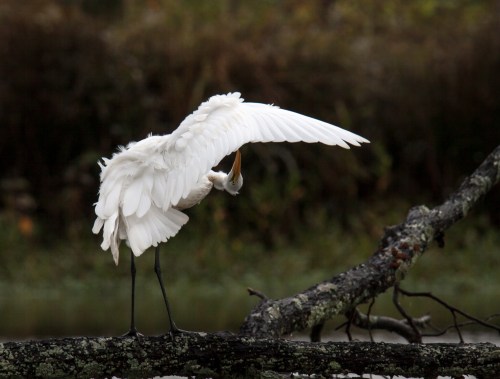
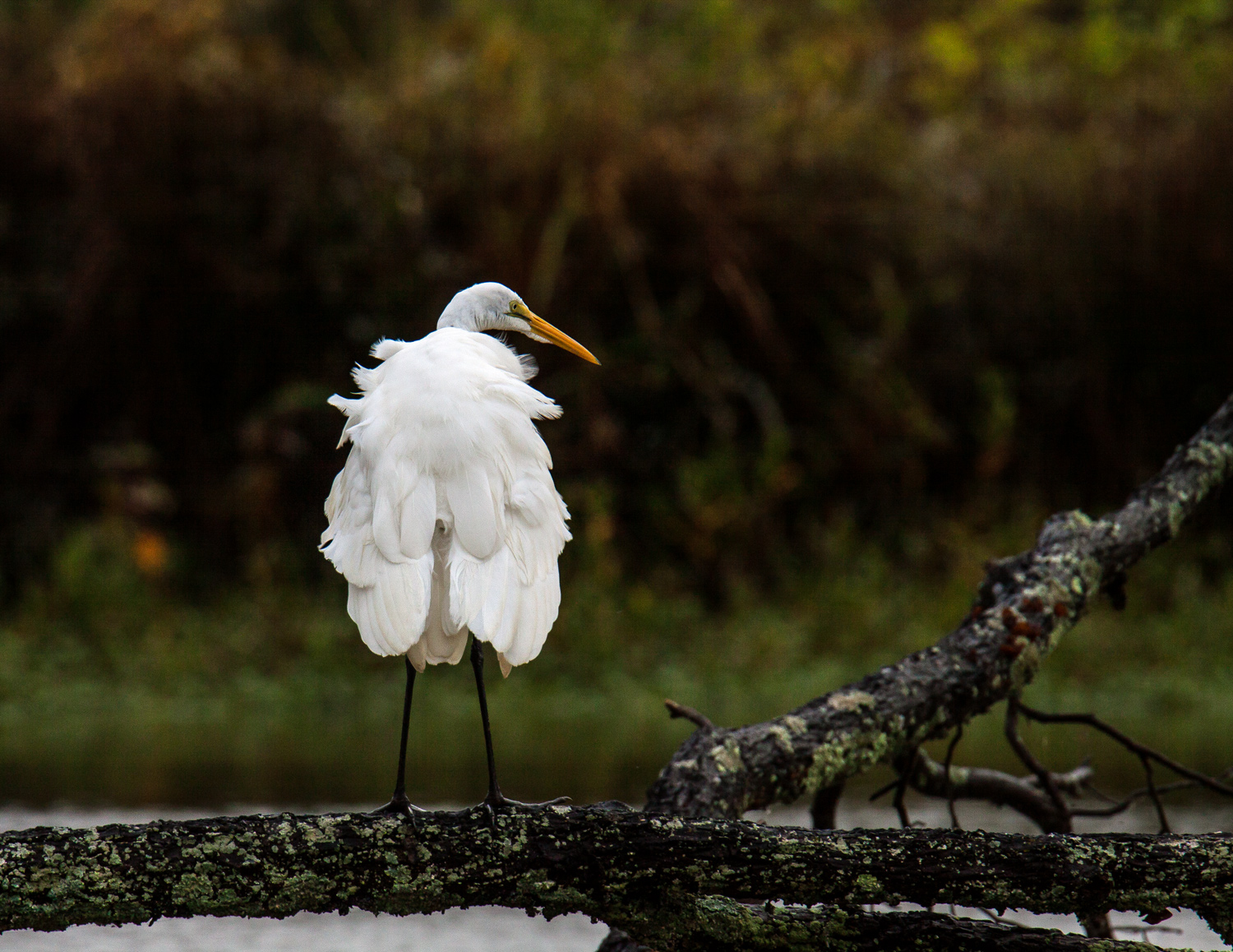
This Great Egret (Ardea alba) showed great balance and flexibility as it meticulously preened its feathers on Monday at Huntley Meadows Park. I would definitely need to see a chiropractor if I tried to imitate the position in the first image, assuming I did not completely fall over.

Great Egrets are relatively common in this park during the warmer months of the year, though they will soon depart for the winter. The Great Blue Herons, however, stay with us throughout the entire winter. I enjoy watching these large wading birds, never knowing when I will catch them in an unusual position or exhibiting an unusual behavior. The first shot is my clear favorite, because of the unusual body position, but I have included a couple of additional shots to show you various moments during the preening process.


Great Egret

Great Egret

Great Egret

© Michael Q. Powell. All rights reserved.

Read Full Post »


Read Full Post »

The heavy clouds and intermittent rain on Monday morning at Huntley Meadows Park limited the light and muted the colors, but in my eyes the beauty of this Eastern Bluebird (Sialia sialis) was in no way diminished.

The bluebird perched in a marshy area with lots of trees, so it was tough for me to get a clear shot. I was happy to find at last a gap between two lichen-covered trees that let me capture this image. A blue sky would have been nice, but I had to settle for the almost pure white sky that you see in the shot.

Eastern Bluebird

© Michael Q. Powell. All rights reserved.


Read Full Post »

It was dark and overcast yesterday morning at Huntley Meadows Park and became more eerie when a Turkey Vulture (Cathartes aura) started to circle lower and lower around me. Eventually it landed on the broken tip of a nearby tree.

After closing its wings initially, the vulture suddenly opened them wide and left them open for an extended period of time, perhaps to let them dry—it had been raining earlier in the morning. The wing position reminded me of the Double-crested Cormorants that I occasionally see with wings extended to dry them after an underwater dive.

Turkey Vulture

Turkey Vulture

Turkey Vulture

© Michael Q. Powell. All rights reserved.

Read Full Post »

A small flock of wild turkeys yesterday at Occoquan Bay National Wildlife Refuge moved off of the trail and into the woods as I approached. Peering through the vegetation a few seconds later, I was able to catch a glimpse of one of them that may have though it was well hidden.

It would be hard for me to say that Wild Turkeys (Meleagris gallopavo) are beautiful, but they sure do have a distinctive look.

wild turkey

© Michael Q. Powell. All rights reserved.

Read Full Post »

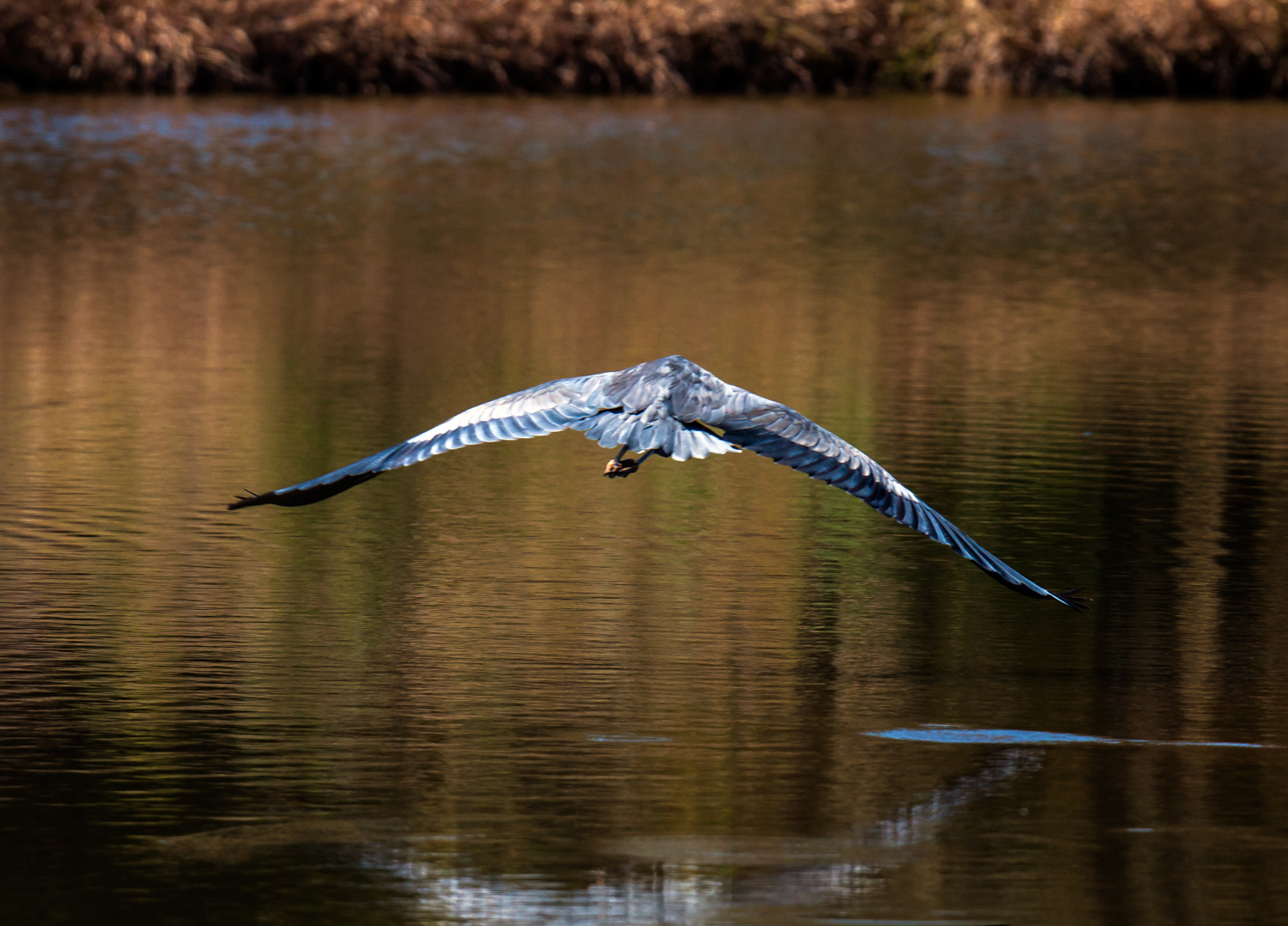
This Great Blue Heron (Ardea herodias) looked to me like a stealth aircraft as it flew low over the water from one side of a small pond to the other on Monday at Occoquan Bay National Wildlife Refuge.

 Great Blue Heron
© Michael Q. Powell. All rights reserved.

Read Full Post »

The early morning light was soft and beautiful, allowing me to capture these images of a young Turkey Vulture (Cathartes aura) on Saturday at Occoquan Bay National Wildlife Refuge. I am not sure I have ever seen a vulture look so handsome (and maybe even a little cute in the second photo).

Turkey Vulture

Turkey Vulture

© Michael Q. Powell. All rights reserved.

Read Full Post »

As I looked down one of the trails yesterday morning at Occoquan Bay National Wildlife Refuge, I spotted a group of large birds sprawled across the entire width of the trail. Having seen Wild Turkeys (Meleagris gallopavo) a couple of times at this refuge, I correctly identified them, but I couldn’t figure out what they were doing. I later learned from the website of the National Wild Turkey Federation that wild turkeys use dust baths as part of their preening and plumage maintenance.

wild turkey

I tried to be stealthy and moved quietly forward, but the trail was wide and clear and the turkeys became aware of my presence. The flock slowly moved away— several of the turkeys flapped their wings to get a little additional momentum. I was uncertain if wild turkeys can fly and was surprised to learn from one internet source that wild turkeys can fly swiftly, with a maximum speed of 55 miles per hour (88 kph) and can run up to 25 mph (40 kph).

wild turkey

After a brief period of frantic movement, the birds settled down and began to forage. They seemed a little confused and looked around in different directions. When I got a bit closer, they eventually decided to move into the woods and did so in a rather leisurely fashion.

wild turkey

I could not tell for certain, but it looked to me that this flock of turkeys was made up of females and juveniles—I did not see any of the turkeys that look like the stereotypical male turkeys that are featured in the run-up to Thanksgiving. I will be alert for any sign of those males during future trips to this wildlife refuge.

© Michael Q. Powell. All rights reserved.

Read Full Post »

The red leaves surrounding this Common Yellowthroat (Geothlypis trichas) that I spotted in a distant tree recently at Jackson Miles Abbot Wetland Refuge serve as a reminder that the autumn has begun. Leaves are starting to fall from many of the trees and some of them are starting to change colors, though the colors never seen so bright and vibrant as the trees in my native New England.

Initially I was not going to post this photo, because I was not able to get a detailed shot of the bird, but the more I look at the image, the more I like the environmental surroundings of the beautiful little bird.

Common Yellowthroat

© Michael Q. Powell. All rights reserved.

Read Full Post »

As soon as I saw the flash of yellow, I knew that these little birds were almost certainly warblers and not sparrows. When it comes to most warbler species, that’s the full extent of my identification skills. Most years when the warblers come through our area in the spring and in the fall, I can hear the warblers in the trees, but I rarely see them.

I initially thought that the bird in the first shot was a Yellow-rumped Warbler, but it turns out that my knowledge of bird anatomy is lacking. The area that is yellow on this bird is the undertail area and not the rump, which is more on the top. So what are these birds? A helpful birder in a Facebook forum identified them to me as Palm Warblers. (Setophaga palmarum).

With a little luck, I’ll get some more shots of warblers in the coming weeks and will undoubtedly have to rely on others to assist me in identifying them, though I need no help in appreciating their beauty.

Palm Warbler

Palm Warbler

Palm Warbler

© Michael Q. Powell. All rights reserved.

Read Full Post »

I never know what I will see when I go out with my camera. This morning at Occoquan Bay National Wildlife Refuge I spotted a small flock of Wild Turkeys (Meleagris gallopavo). They disappeared into the brush as soon as they became aware of my presence, but I did manage to capture a few images. I pretty sure that the turkey in both of these shots is a female.

Wild Turkey

Wild Turkey

© Michael Q. Powell. All rights reserved.

Read Full Post »

Peering through the vegetation at Occoquan Bay National Wildlife Refuge this past Monday, I spotted several large birds at the edge of the water. I thought they might be eagles or ospreys, but they turned out to be Black Vultures (Coragyps atratus) that appeared to be foraging as the tide was going out.

Black Vulture

Black Vulture

Black Vulture

© Michael Q. Powell. All rights reserved.

Read Full Post »

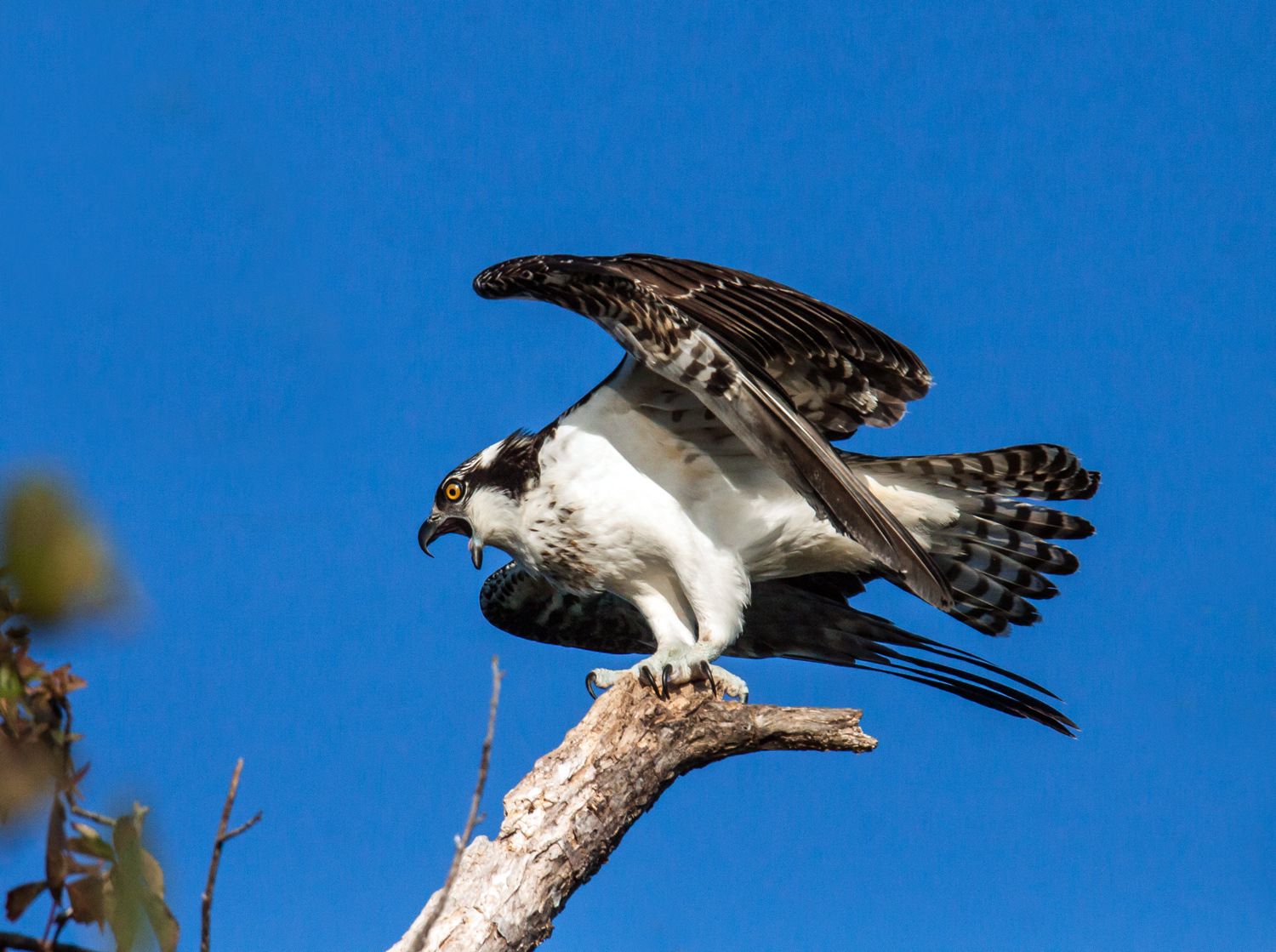
The loud cries of an osprey (Pandion haliaetus) echoed though the early morning air yesterday at Occoquan Bay National Wildlife Refuge. I was never able to figure out what was bothering the clearly unhappy osprey, but did manage to capture this image of the screaming bird just before it flew away.

screaming osprey

© Michael Q. Powell. All rights reserved.

Read Full Post »

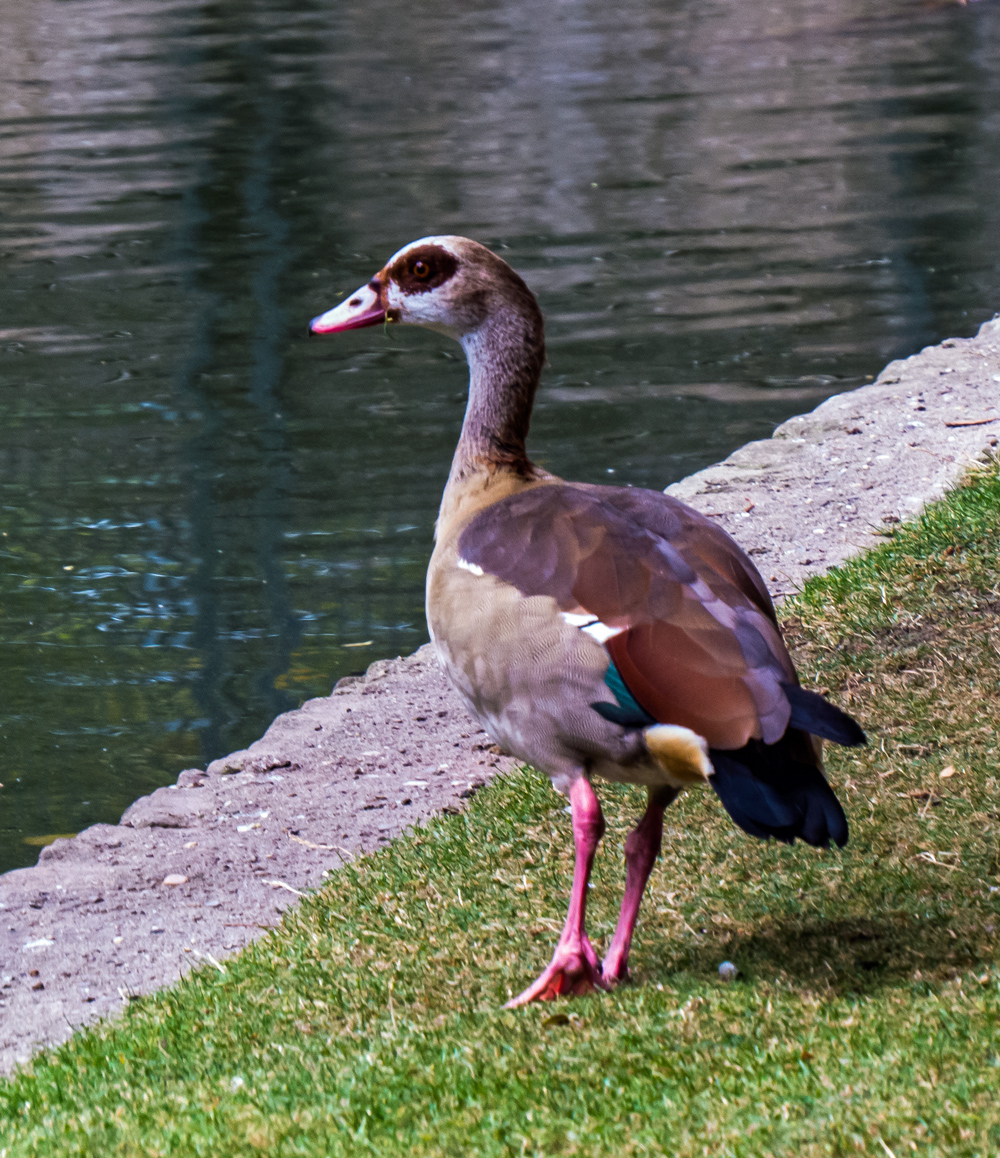
When I spotted this odd-looking bird yesterday at the Botanical Garden in Brussels, I couldn’t make my mind up if it was a duck or a goose. It seemed too big to be a duck, but its markings seemed too colorful for a goose.

After a lot of searching on the internet, I have concluded this is probably an Egyptian Goose (Alopochen aegyptiaca). As its name suggests, this species is native to Africa south of the Sahara and the Nile Valley and is an introduced species in Europe, according to Wikipedia. There are in excess of 250 breeding pairs in Belgium, primarily around Brussels and the Flanders area, according to a posting on birdforum.net.

This bird did not hang around for very long, so I did not have a chance to see if, as The Bangles famously sang, it walked like an Egyptian (https://www.youtube.com/watch?v=Cv6tuzHUuuk).

Egyptian Goose

Egyptian Goose

Egyptian Goose

© Michael Q. Powell. All rights reserved

Read Full Post »

When is a cluttered background so distracting that it draws attention away from the primary subject? When I have the luxury of time, I will normally attempt to compose my shots so that the background fades into the background as a creamy blur. As a wildlife photographer, though, I am often photographing live subjects that are likely to flee as soon as they become aware of my presence. Frequently I barely have time to bring the camera up to my eye and am forced to react rapidly and instinctively—I just don’t have time to think about the background.

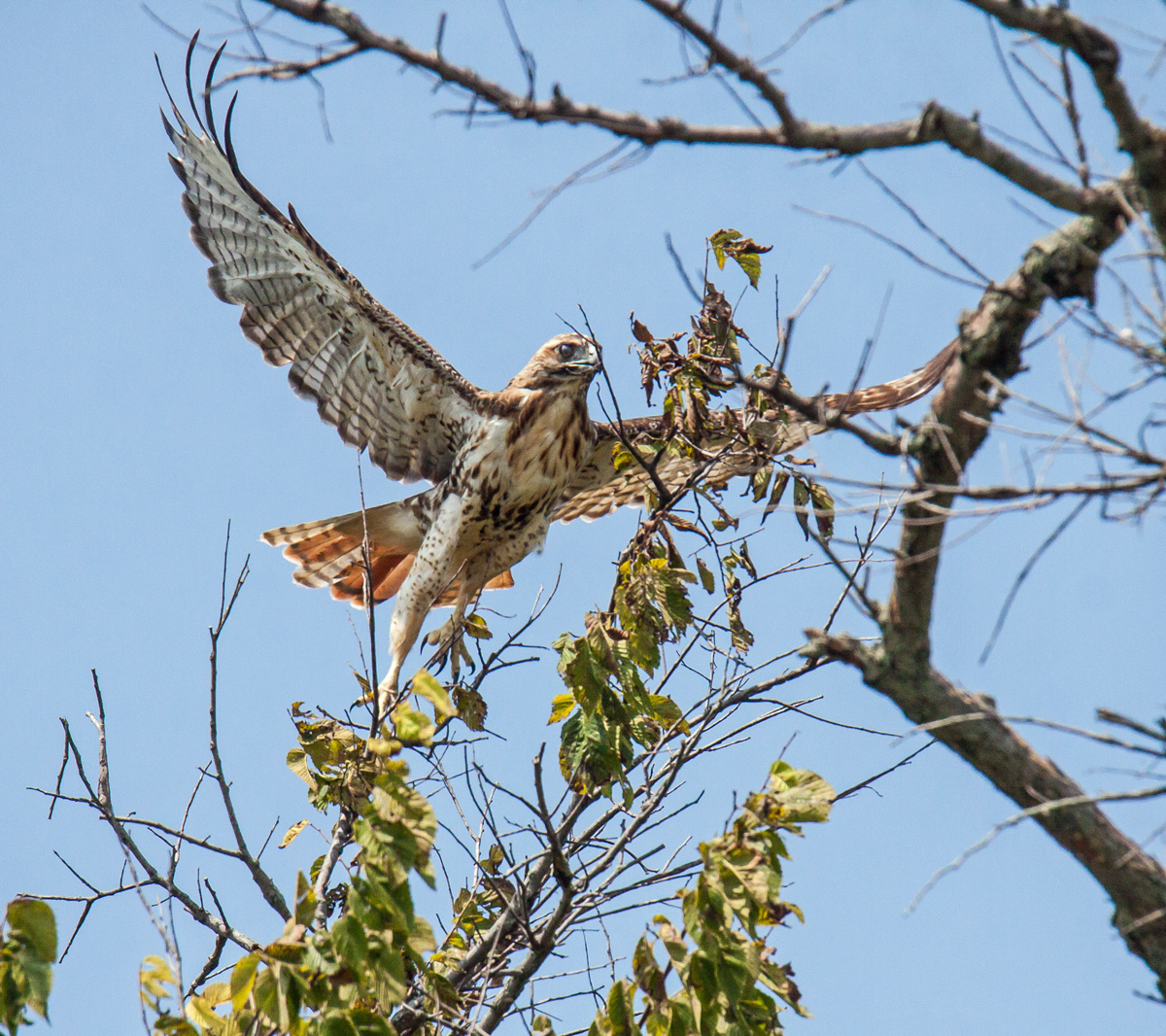
Yesterday as I was walking along the Mount Vernon Trail in Alexandria, Virginia parallel to the Potomac River, I spotted a bird at the very top of a distant tree. Earlier in the day I had seen an osprey in a similar position, so I initially assumed it was another osprey. I had just zoomed in on the bird when it exploded out of the tree into the air. From the way that it was flying, I realized that it was probably an eagle or a hawk. I tracked the bird, which I believe is a Red-tailed Hawk (Buteo jamaicensis) as it flew behind some trees and eventually into the clear blue skies.

Here are my three favorite shots of the encounter. Two of them are cluttered and one has a plain blue background. Which one do you like most? I am not bothered by the branches in the first two shots and like the way that they help to give a sense of context to the action that is depicted. The third shot shows some of the wonderful details of the beautiful hawk, but it seems a bit more sterile to me. (For the record, the first shot is probably my favorite of the three images.)

Are cluttered backgrounds ok? Like so many factors in photography, the correct response appears to be that it depends on the specific circumstances.

Red-tailed Hawk

Red-tailed Hawk

Red-taile Hawk

© Michael Q. Powell. All rights reserved

Read Full Post »

I spent a considerable amount of time one morning earlier this month at Huntley Meadows Park trying to get some shots of this skittish female Belted Kingfisher (Megaceryle alcyon). It was almost impossible to get really close, so I had to rely on my long telephoto zoom lens.

Belted Kingfisher

Belted Kingfisher

Belted Kingfisher

© Michael Q. Powell. All rights reserved

Read Full Post »

I didn’t see the Green Heron (Butorides virescens) actually catch his breakfast last Friday morning at Huntley Meadows Park, but when he climbed up onto a protruding branch he gave me a quick look at the fish before swallowing it.

Green Heron

© Michael Q. Powell. All rights reserved

Read Full Post »

This majestic osprey (Pandion haliaetus) was keeping a close watch on a fellow photographer and me as we pointed our long lenses in its direction as it perched high in a tree early one morning this weekend at Huntley Meadows Park.

osprey

© Michael Q. Powell. All rights reserved

Read Full Post »

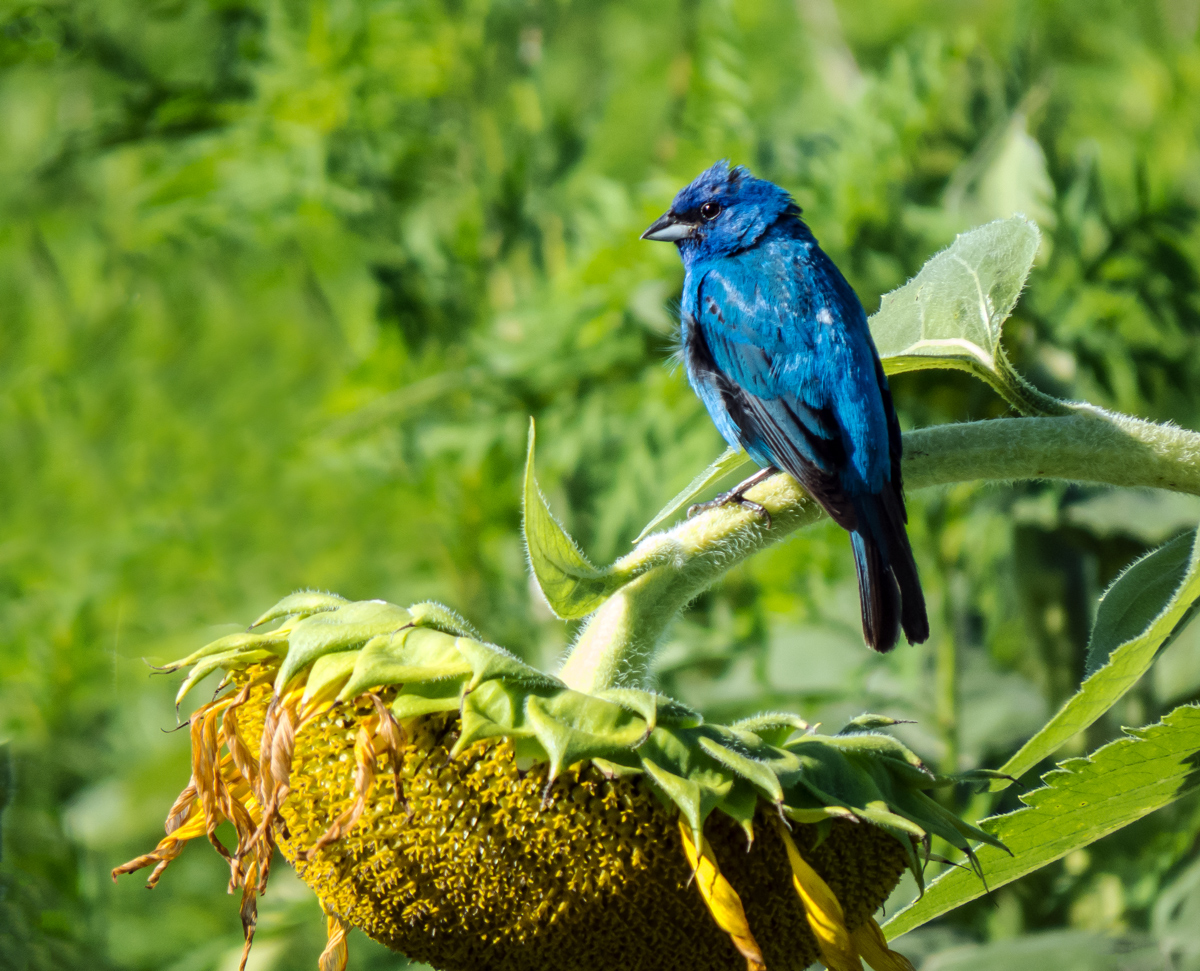
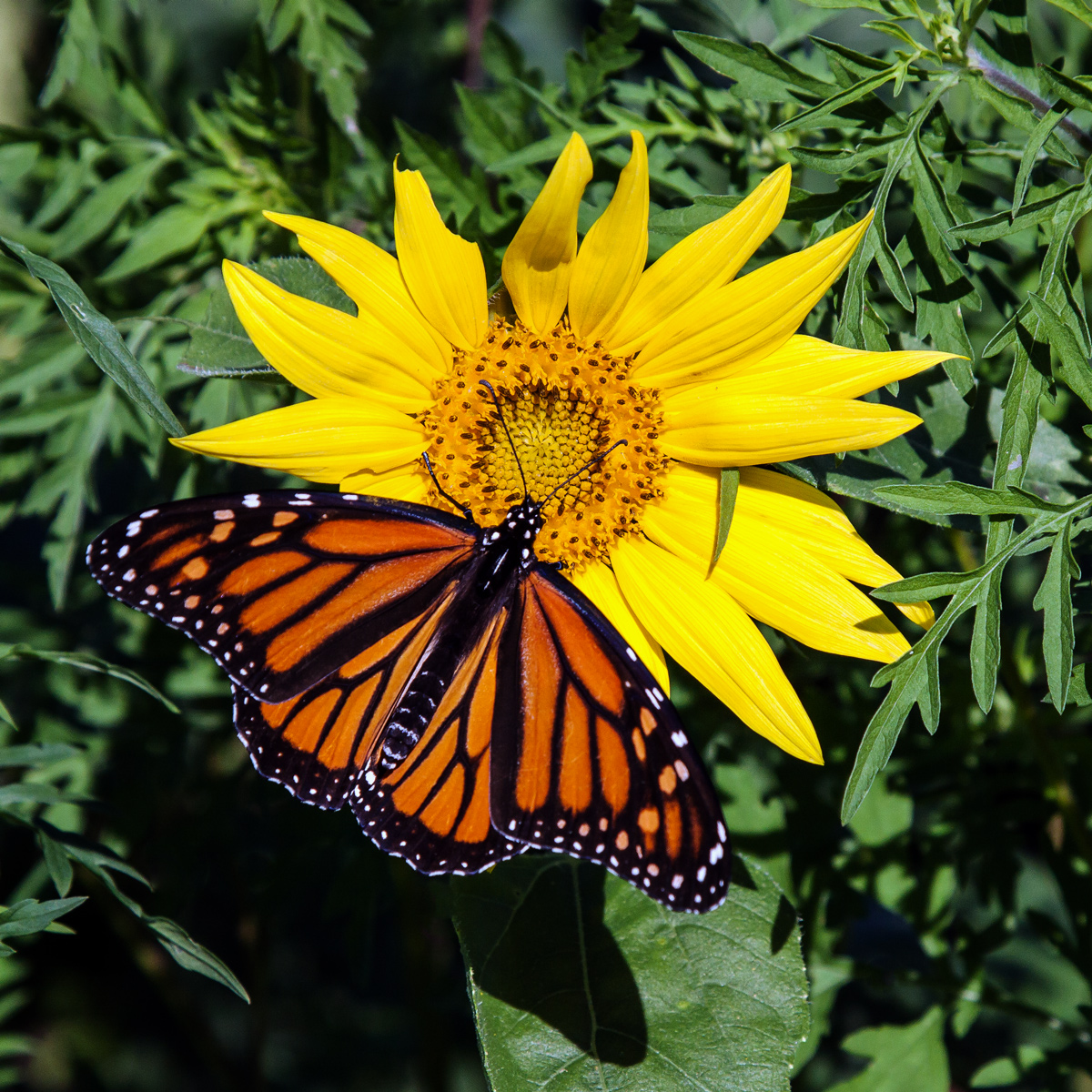
In the first sunflower field that we visited yesterday morning at McKee-Beshers Wildlife Management Area, many of the sunflowers were drooping because of the weight of their seeds. They may not have been very photogenic, but the birds and butterflies seemed to love them, like this Indigo Bunting (Passerina cyanea) and this Monarch butterfly (Danaus plexippus) that I spotted among the sunflowers.

Several photographer friends and I made the trip to the sunflower fields in Poolesville, Maryland, hoping to see endless rows of tall sunflowers. According to its website, McKee-Beshers has 30 acres of sunflowers planted in nine different fields. I think that the sunflowers may have been a little past their prime and appeared to be a little stunted in size, compared to some past years.

It was tricky to figure out what kind of gear to bring on a trek like this. I ended up using my super zoom Canon SX50 to photograph the Indigo Bunting, which was a first sighting for me of this beautiful bird, and my Canon 24-105mm lens on my normal Canon 50D DSLR for the butterfly. I had both of the cameras with me at all times, which gave me a pretty good amount of flexibility. I’ve seen some photographers walk around with two DSLR bodies, but that seems like a lot of weight to carry around, especially when you are moving through vegetation as I was doing as I waded through the rows of sunflowers.

I did take shot shots of the sunflowers  and I’ll post some of them eventually. Folks who know me, though, are probably not surprised that my first instinct was to post images of birds and butterflies, rather than ones of the flowers alone.

Indigo Bunting

Monarch butterfly

© Michael Q. Powell. All rights reserved

Read Full Post »

« Newer Posts - Older Posts »