Feeds:
Posts
Comments

Archive for the ‘Birds’ Category

I read the newspaper this morning before I looked at the photos I took yesterday. This image of a Mourning Dove (Zenaida macroura) at Occoquan Bay National Wildlife Refuge seems to reflect my innermost feelings at this moment about the senseless slaughter of innocents in Pittsburgh.

My heart goes out to all of those mourning their losses.

Mourning Dove

© Michael Q. Powell. All rights reserved.

Read Full Post »

It’s hard to ignore a red head. No matter whether it is on a human or a woodpecker, it simply attracts your eyes. I spotted this handsome male Red-bellied Woodpecker (Melanerpes carolinus) last week at Occoquan Bay National Wildlife Refuge.

You might wonder why this woodpecker is not called a Red-headed Woodpecker. That name is reserved for a woodpecker that has a completely red head. For comparison purposes, I am attaching an image from 2016 of a Red-headed Woodpecker. If you’d like to see more shots of the Red-headed Woodpecker, check out the 2016 posting Red-headed Woodpecker in late January.

Red-bellied Woodpecker

Red-headed Woodpecker

© Michael Q. Powell. All rights reserved.

Read Full Post »

If its head feathers were not so white, I probably would not have spotted this Bald Eagle (Haliaeetus leucocephalus) amidst all of the leaves still on the trees at Occoquan Bay National Wildlife Refuge earlier this week.

Bald Eagle

A short while later, I spotted a second bald eagle, possibly the same one, in a different leafy perch near the top of some trees.

Bald Eagle

It is rare for me to have the chance to photograph a perched bald eagle at what qualifies as close up (though I was shooting at the long end of my 150-600mm lens) and I was incredibly thankful to have two separate opportunities to do so in a single day.


© Michael Q. Powell. All rights reserved.

Read Full Post »

It has been quite a while since I last got a shot of a Bald Eagle (Haliaeetus leucocephalus), so I was really happy when I saw this young one in the distance earlier this week at Occoquan Bay National Wildlife Refuge. Experienced birders can tell the age of a Bald Eagle by its coloration. All I know for sure that it is less that five years old, the age at which the head feathers turn white, though I have the impression that it is pretty young.

As is often the case, the eagle spotted me right afterwards and took to the air, but I managed to get a shot as the eagle flew off. When it comes to eagles, it is always a challenge to get a shot, because the eagle’s eyesight is so much better than mine and its reaction time so much quicker.  I therefore have to react almost instantly when I see one and then hope that luck is on my side.

Bald Eagle

Bald Eagle

© Michael Q. Powell. All rights reserved.


Read Full Post »

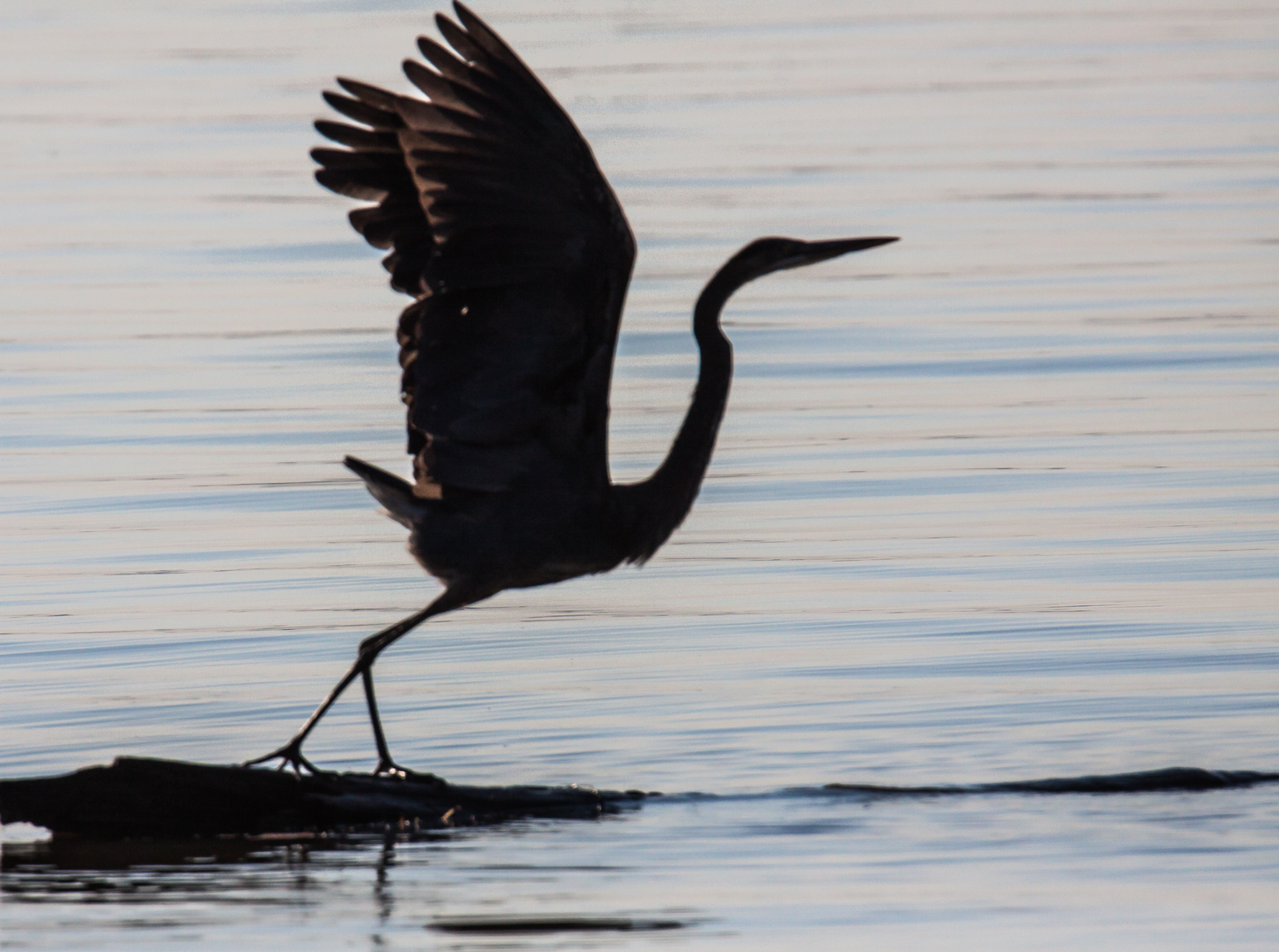
I suspected that this Great Blue Heron (Ardea herodias) at Occoquan Bay National Wildlife Refuge would be silhouetted because I was shooting into the light. I was going to make some adjustments to my camera settings, but it took off before I could do so and I captured a cool series of images.

Great Blue Heron

Great Blue Heron

Great Blue Heron

I liked the way that a few details of the feathers were visible in the images and the pink and blue streaks in the background were a nice touch. I decided, however, to play around with one of the images and opened the second shot in SIlver Efex Pro 2, a black and white conversion software program that is part of the Nik Collection.

One of the filters turned the heron into a completely black silhouette—with some birds, identification would be a problem, but the shape of the heron is unmistakable here. Another filter created the effect of a pinhole camera and you can see the result in the final images. There is something about that final image that really appeals to me.

I tend to strive for realism in my photos and normally do only a minimal amount of post-processing. I had so much fun, though, playing around with the different effects you can achieve with software that I suspect I will consider doing so again in the future.

Great Blue Heron

Great Blue Heron

© Michael Q. Powell. All rights reserved.

Read Full Post »

I spotted this large Wild Turkey (Meleagris gallopavo) strutting about at Occoquan Bay National Wildlife Refuge this past weekend with about a dozen of his close friends. It was hard to get a group shot, so I focused instead on the largest turkey in the group and captured this image.

Wild Turkey

© Michael Q. Powell. All rights reserved.

Read Full Post »

Initially I couldn’t figure out what large insect this Eastern Bluebird (Sialia sialis) had captured on Friday at Occoquan Bay National Wildlife Refuge. When the bluebird turned to the side, however, I realized that it was a Handsome Meadow Katydid (Orchelimum pulchellum), one of my favorite insects. The bluebird beat the insect against the log on which it was perched, presumably to subdue the katydid or to break open its hard shell, before consuming it.

It is hard to truly appreciate the beauty of the multi-colored katydid from a distance, so I am including a close-up photo of a Handsome Meadow Katydid from a posting that I did in August 2013 that was entitled “Rainbow grasshopper.” Check out my thoughts and feelings in that post about one of my initial encounters with such a katydid.

Still, bluebirds have to eat too, so I experienced only a brief moment of sorrow at the demise of this beautiful little creature.

Eastern Bluebird

Handsome Meadow Katydid

© Michael Q. Powell. All rights reserved.

Read Full Post »

Every monarch needs a crown and this female Belted Kingfisher (Megaceryle alcyon) seemed to be wearing a leafy one yesterday at Occoquan Bay National Wildlife Refuge.

Maybe I should be calling her a Belted Queenfisher. 🙂

Belted Kingfisher

© Michael Q. Powell. All rights reserved.


Read Full Post »

Yellow-rumped Warblers (Setophaga coronata) eat mostly insects in the summer, but when the weather gets colder they switch to seeds and berries. This past week at Occoquan Bay National Wildlife Refuge I captured a number of shots of Yellow-rumped Warblers as they munched on what I think are poison ivy berries.

In the past, I have seen birds eating these berries only during the coldest days of the winter, leading me to think they were the only available food source. Who knows, maybe poison ivy berries are a real delicacy—though I am not will to try them to see if that is true.


Yellow-rumped Warbler

Yellow-rumped Warbler

Yellow-rumped Warbler

© Michael Q. Powell. All rights reserved.

Read Full Post »

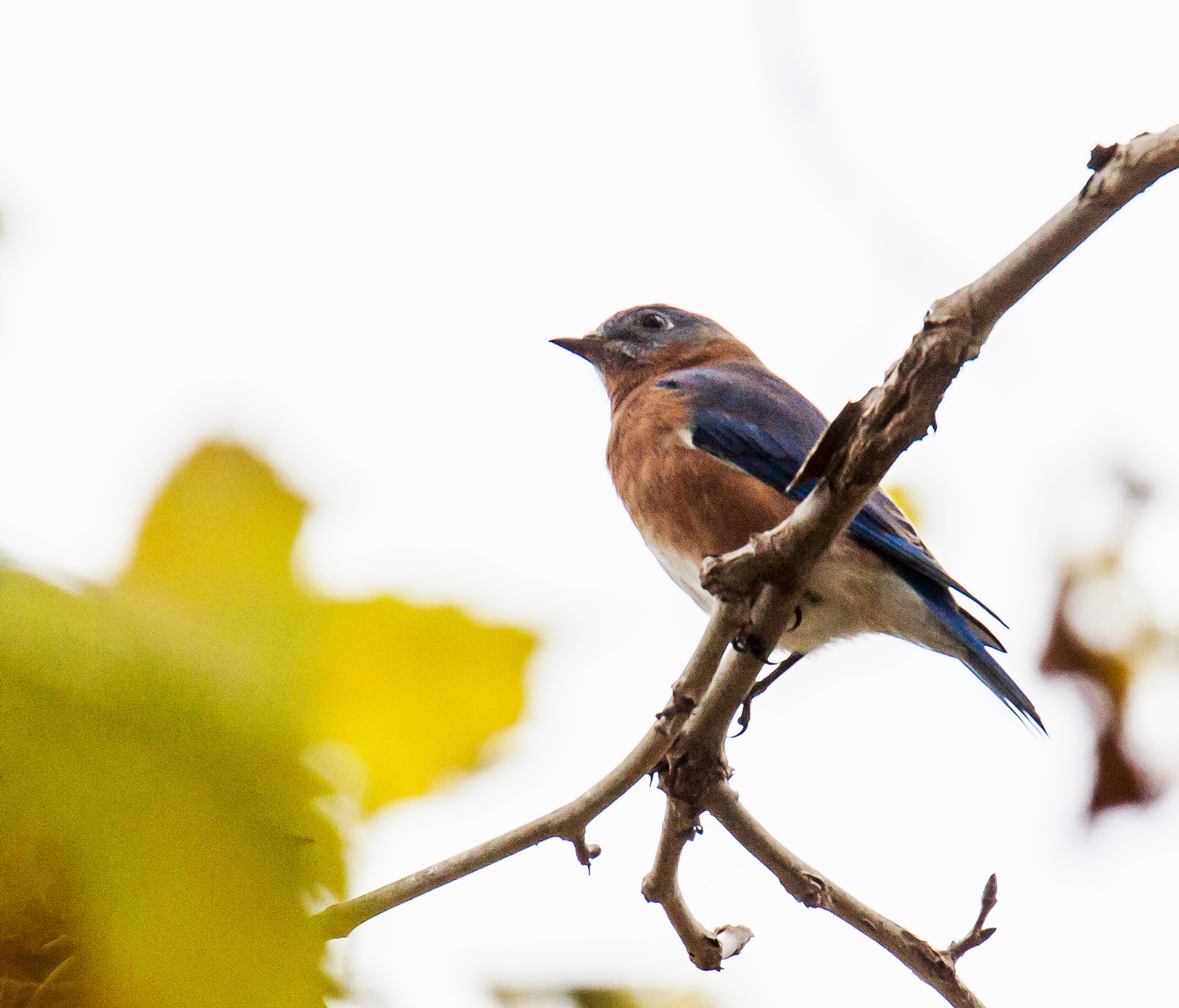
When the lighting is perfect, the blue and orange colors of an Eastern Bluebird (Sialia sialis) are incredibly saturated and beautiful. Alas, lighting conditions were far from ideal when I spotted three bluebirds earlier this week at Occoquan Bay National Wildlife Refuge and the bluebirds were elusive.

I was able to capture some images that give at least a hint of the beauty of the bluebirds, a species that I am always happy to see.

Eastern Bluebird

Eastern Bluebird

Eastern Bluebird

© Michael Q. Powell. All rights reserved.

Read Full Post »

I spotted this little family of Double-crested Cormorants (Phalacrocorax auritus) in the waters off of Occoquan Bay National Wildlife Refuge this past Monday. The adult seemed bothered by something and initIally cried out before finally taking off, leaving the younger cormorants temporarily by themselves.

I am not actually completely certain that this is a family unit, but I think it is a pretty safe assumption when I look at the way that the smaller ones are paying attention to the larger cormorant. It also appears to me that the the adult was potentially reacting to a perceived threat and flew off as a way of protecting the younger ones.

Double-crested Cormorant

Double-crested Cormorant

Double-crested Cormorant

© Michael Q. Powell. All rights reserved.

Read Full Post »

At this time of the year Yellow-rumped Warblers (Setophaga coronata) are probably the most numerous warblers in our area. You can often seem them in constant motion flitting about high in the trees. They rarely stay still for more than a moment and it is unusual to get a clear view of the entire body of one.

I have spent a lot of time this week patiently tracking these little birds at several locations at Occoquan Bay National Wildlife  Refuge and managed to get a few shots that I really like. The first image shows a Yellow-rumped Warbler perched at ground level on the trunk of a tree that had fallen across the road and had been cut up and moved to the side. I particularly like that it shows the tiny feet of this bird that is about 5 inches in length (13 cm). The little yellow streaks just under the wings help to identify this as a Yellow-rumped Warbler.

The second image, possibly my favorite, shows the yellow patch on the bird’s rump that is responsible for its name. The intense focus of the warbler as it looks upward help to give this image a dynamic element that is absent in many images of perched birds.

The final image has a studio-like feel to it, because the sky was completely overcast and turned white as I was processing the image. I had tracked the bird when it entered into the vegetation and managed to get this shot when it finally popped up at the top of the tree and stretched its neck to look around.

Yellow-rumped Warbler

Yellow-rumped Warbler

Yellow-rumped Warbler

© Michael Q. Powell. All rights reserved.

Read Full Post »

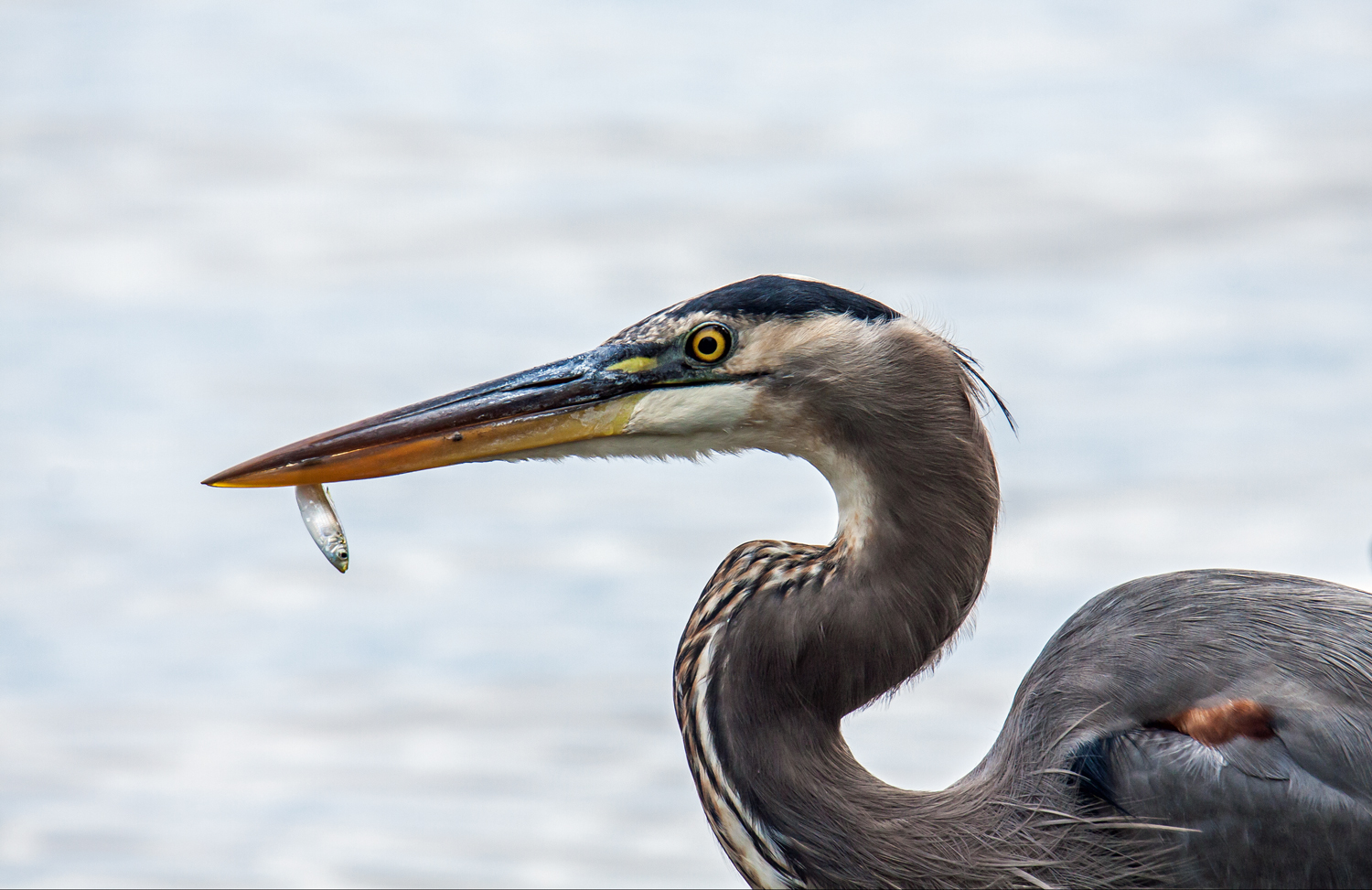
I have seen Great Blue Herons (Ardea herodias) catch fish so big that I was sure that they would not be able to swallow them, but I don’t think I have ever seen one catch fish as small as the ones this heron was pulling out of the water yesterday at Occoquan Bay National Wildlife Refuge.

The Great Blue Heron was standing on the shore rather than in deeper water. As I watched,  the heron periodically would catch and swallow one of these tiny fish and then return to scanning the water. It struck me that it would need to catch a lot of these little fish to make a satisfying meal.

Great Blue Heron

© Michael Q. Powell. All rights reserved.

Read Full Post »

In the autumn, various species of warblers fly through our area as they migrate south and I spent a large amount of time this past Friday trying to get shots of what I believe were mostly Palm Warblers (Setophaga palmarum). Warblers in general are tough for me to identify, even in the spring when the colors and patterns on the birds are bright and distinctive. At this time of the year, however, all of the colors and patterns are muted and many species look really similar to me.

Palm Warblers are a little easier to spot than most warblers to identify, because they often can be found pecking away on the ground rather than in trees, as you can see in the second shot. Although I usually strive to get unobstructed shots of my subject, the first image is my clear favorite of the three in this posting. The branch in the foreground that partially blocks the bird helps in the composition, I think, and reinforces the sense of the elusiveness and caution of this little warbler.

Palm Warbler

Palm Warbler

Palm Warbler

© Michael Q. Powell. All rights reserved.

Read Full Post »

I am always shocked by the length of the tails of Yellow-billed Cuckoos (Coccyzus americanus), like this one that I spotted on Friday morning at Occoquan Bay National Wildlife Refuge. It is pretty rare for me to get an almost unobstructed view of a cuckoo—usually they either fly away as I approach or are hidden in the foliage.

In the second shot, the cuckoo had shifted its body and the the new perspective has the effect of making the tail look a bit shorter and the body a bit chunkier.

Yellow-billed Cuckoo

Yellow-billed Cuckoo

© Michael Q. Powell. All rights reserved.

Read Full Post »

It seems like we are at a time in the year when the number of birds has increased. I can hear them everywhere when I walk along the wooded trails of Occoquan Bay National Wildlife Refuge. The problem, though, is that most the leaves are still on the trees, so I am having huge problems spotting the birds and if I can’t see them, I can’t photograph them.

Earlier this week, I heard the familiar knocking sound of a woodpecker at work. I could see some movement in a tree amidst the foliage. I tracked the movement until suddenly the woodpecker popped into the open for a brief moment as it reached the top of the dead tree. I was able to capture this one shot of what appears to be a male Downy Woodpecker (Picoides pubescens)—only males have the red patch of feathers on the back of their heads. (The Hairy Woodpecker is similar in appearance to the Downy Woodpecker, but is larger and has a longer bill—the angle of this shot makes it tough for me to be absolutely certain of my identification.)

Downy Woodpeckers are the smallest woodpeckers in Northern America, but what they lack in size, they seem to make up in energy. They always seem to be super energetic and industrious and are one of the birds that I am able to spot throughout most the entire year.

downy woodpecker

© Michael Q. Powell. All rights reserved.

Read Full Post »

I spotted this little Ruddy Duck (Oxyura jamaicensis) all by itself on Wednesday morning at the far end of Painted Turtle Pond at Occoquan Bay National Wildlife Refuge. He must have been feeling a little lonely, however, and tried to strike up a conversation with the mallard decoy that is a permanent feature at this pond. The mallard remained silent.

I was trying to capture a shot of the Ruddy Duck by itself, as in the second image, but I like the eye contact in the first image so much that I decided to make it my lead photo for the posting. The shot simply makes me smile.

Have a wonderful Friday.

Ruddy Duck

Ruddy Duck

© Michael Q. Powell. All rights reserved.

Read Full Post »

The muted tones of this Great Blue Heron (Ardea herodias) seemed to be a perfect match for the gray water and skies this past weekend at Occoquan Bay National Wildlife Refuge. The heron almost seemed to be playing hopscotch as it made its way along a series of posts and then extended its wings for balance when it reached the final post.

If you closely at the water you can see a lot of floating debris, caused by runoff and tidal surges from recent heavy rains—we have had well over double the normal amount of rainfall during the month of September.

Great Blue Heron

© Michael Q. Powell. All rights reserved.

Read Full Post »

Despite the light rain that was falling, I decided to go on a photo walk yesterday morning at Occoquan Bay National Wildlife Refuge. Most of the smaller birds seemed to have taken shelter in the trees, but I was thrilled to catch a glimpse of a couple of raptors that were perched prominently in the open. It was an interesting contrast to spot an American Kestrel (Falco sparverius), one of the smallest raptors in our area, and a Bald Eagle (Haliaeetus leucocephalus), one of the largest.

The sky was really overcast, so there was not enough light to reveal all of the wonderful detail of these powerful birds. Still, it was nice to be able to capture some images of birds.

Before too long the number of insects will start to diminish and my blog will become increasingly populated by birds. I figure that for another month or so, though, insects will continue to be featured most often, which is good news for some viewers and bad news for others.

American Kestrel

Bald Eagle

© Michael Q. Powell. All rights reserved


Read Full Post »

Normally I don’t do consecutive blog posts of the same subject, but I got such an overwhelmingly positive response yesterday to my images of Ruby-throated Hummingbirds (Archilochus colubris) that I decided to post a few more. All of these hummingbirds, the only species found in the eastern part of the US, will probably depart soon to winter in a warmer climate, so I figure I better take advantage of this opportunity while I have it.

The best chance to snap a photo of a hummingbird is when it hovers to gather nectar (or when it is perched), but I managed to capture the first image as the hummingbird was zooming on by. I love its body position.

From an artistic perspective, the second image is my favorite. The background is simplified and less cluttered than in other images and the bright color of the flowers really grabs the viewer’s eyes. The slightly blurred wings are in a wonderful position and help to emphasize the sense that the hummingbird is in motion.

The final shot was taken with a different camera. As I noted yesterday, I was shooting with my 180mm macro lens, but I also had my Canon SX50 superzoom camera with me. It has a long reach, but doesn’t handle fast action very well, so it mostly stayed in the camera bag. When one of the hummingbirds perched in a distant tree, however, I was able to pull it out and use it for this static portrait.


Ruby-throated Hummingbird

Ruby-throated Hummingbird

Ruby-throated Hummingbird

© Michael Q. Powell. All rights reserved

Read Full Post »

It was cloudy and there was intermittent rain, but some Ruby-throated Hummingbirds (Archilochus colubris) were active at Green Spring Gardens yesterday. My macro lens might not have been the optimal choice for photographing them, but it is what I had on my camera and I was pleasantly surprised by the results.

As I have noted many times before, I really like my macro lens, a Tamron 180mm lens. Because of the crop sensor of my Canon 50D DSLR, the lens has an equivalent field of view of 288mm, which lets me use if as a telephoto lens in a pinch. The only down side of the lens is that it does not have any image stabilization so I have to pay attention to my shutter speed and/or use a monopod as I was doing yesterday.

I noted that the hummingbirds seemed to like a particular kind of flower, so I planted myself in front of a patch of them and waited. The hummingbirds returned several times and I was able to decent shots. As I was waiting, it began to rain a bit, so I opened my umbrella and kept shooting—the hummingbirds did not seem to mind the light rain. It must have been quite a sight to see me with my umbrella in one hand and my camera on the monopod in the other.

For those of you who are interested in camera settings, I was shooting at ISO 1600 in aperture-preferred mode with an aperture setting of f/5. The relatively poor lighting meant that my shutter speed generally was 1/500 or slower, which was not fast enough to freeze the motion of the wings, but did allow me to capture the body fairly well when the hummingbird hovered.

I have a few more hummingbird shots that I may use in another posting, but wanted to share these initially.

Ruby-throated Hummingbird

Ruby-throated Hummingbird

Ruby-throated Hummingbird

© Michael Q. Powell. All rights reserved


Read Full Post »

I am back now in the USA, but thought I’d post one last image from my recent trip to Brussels. I spotted this young Common Moorhen (Gallinula chloropus) swimming around in the small pond at the botanical garden. There were several other moorhens, but they all stayed in the reeds and I was not able to get a good shot of them. I really like the spiky feathers of young moorhens. When they become adults, their feathers appear to be much smoother in appearance.

Common Moorhen

© Michael Q. Powell. All rights reserved

Read Full Post »

The vegetation at Occoquan Bay National Wildlife Refuge was so high recently that these two foraging wild turkeys (Meleagris gallopavo) disappeared from view each time they leaned forward. It was like a game trying to figure out where they would pop up next. I played the game for for quite some time before I was able to capture them both in a single frame with their eyes visible—in most of the other shots the turkeys were looking away from me.

wild turkeys

© Michael Q. Powell. All rights reserved.


Read Full Post »

It was wonderful to travel to Meadowlark Botanical Gardens in nearby Vienna, Virginia with some friends this past weekend. Although I really enjoy going back repeatedly to familiar spots, sometimes it’s nice to move outside of the “box” and see something different, or at least in a different environment.

One of my favorite subjects of our little photo trip was this delightful Green Heron (Butorides virescens) that I spotted at one of the small ponds at the park. Green Herons are a lot lower to the ground than Great Blue Herons and are often difficult to find. I was lucky to see this one from a distance as I was circling the pond and managed to carefully creep close enough to have a low shooting angle and an unobstructed view.

green heron

© Michael Q. Powell. All rights reserved.

Read Full Post »

This past Monday I spotted this Wild Turkey (Meleagris gallopavo) at Occoquan Bay National Wildlife Refuge as it basked in the warmth of the early morning sunlight. Earlier this year I would see turkeys regularly as I walked the trails at the wildlife refuge, but the last couple of months such sightings have been rare.

wild turkey

© Michael Q. Powell. All rights reserved.

Read Full Post »

I’m a real beginner in watercolors and probably should stick to exercises and simple subjects, but that is not what I want to paint. I’ll look at some of my wildlife photos and think, “I’d like to try to paint that,” knowing full well that I don’t really have the skills to do so. I figure, though, that I’ll learn as I go along, seeing what works and doesn’t work. So yesterday evening I decided to have a go at painting an immature Cooper’s Hawk (Accipiter cooperii) that I photographed recently.

I figured the best chance I had at making something recognizable was to simplify things, especially smaller, less important elements, like the leaves in the branches surrounding the hawk. I decided that I was not going to worry about making them realistic. I also realized that it would be tough for me to capture the fine details of the feathers, so I went for a more stylized approach. I decided to simplify my color palette too and used only three colors—lemon yellow, ultramarine blue, and burnt sienna.

So what happened? You can see and judge the results yourself. Some parts of the painting came out pretty well and other parts could use a lot of improvement.

I learned a lot in the process of doing this painting, most notably that I really enjoy mixing colors. It was rare that I used one of the three colors straight out of the pan, with one exception being the yellow eye. I paid a lot of attention to trying to vary my colors, especially in areas like the feathers.

I realize now that painting details is really tough—I’m hoping that practice will help me improve my control of the brushes. The biggest thing, perhaps, that I need to work on is controlling the amount of water that is on the brush and on the paper. I was blindsided a couple of times when the result I was expecting did not happen, most often when I had too much water in my brush. (I also need a whole lot of practice with sketching.)

I didn’t really try to copy my photo, but thought you might enjoy seeing the photograph that served as a general reference for me as I painted.

Thanks to the many readers who have encouraged me to keep painting. It is a little humbling to see how crude my initial efforts are, but it really is a lot of fun creating something from scratch—there is definitely something therapeutic about playing with paints.

watercolor hawk

Cooper's Hawk

© Michael Q. Powell. All rights reserved.


Read Full Post »
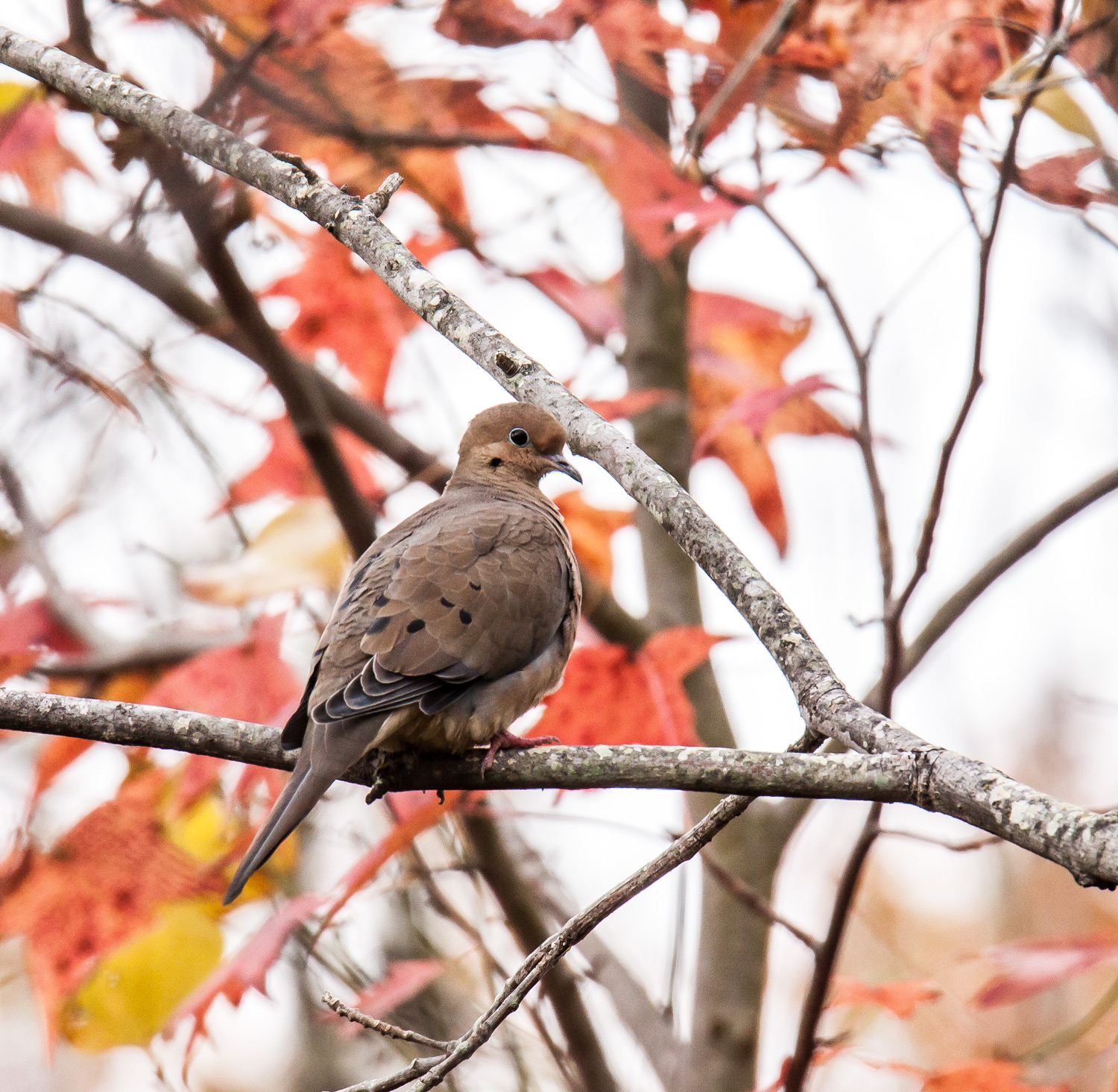
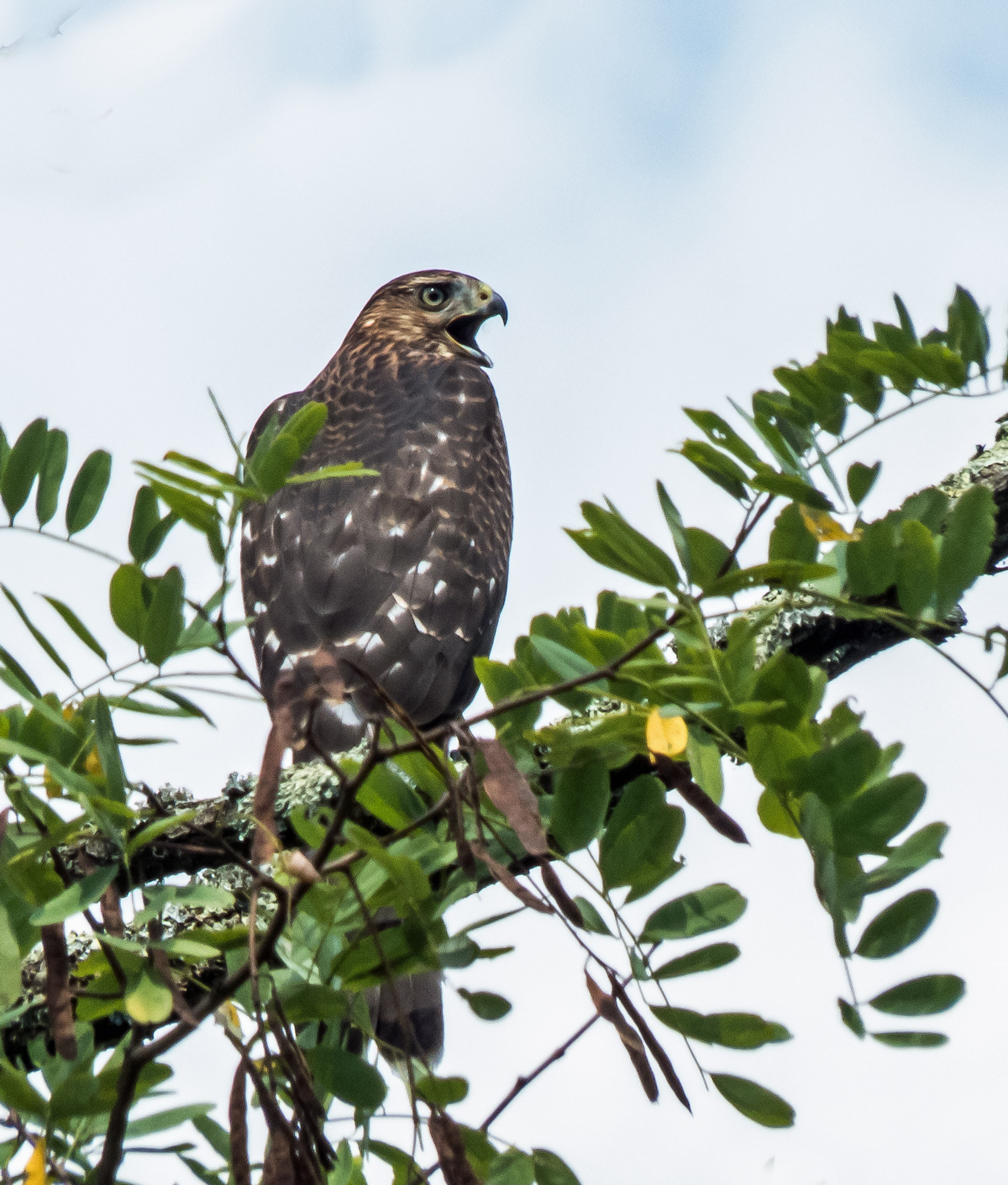
At this time of the year it’s tough for me to photograph birds—often when I spot them, they are mostly hidden in the foliage. This hawk, however, cooperated by perching out in the open this past Saturday at Jackson Miles Abbott Wetland Refuge. I was uncertain about the identification, so I checked with the experts in several Facebook birding groups and they indicated that this is an immature Cooper’s Hawk (Accipiter cooperii).

Cooper’s Hawks belong to the group of hawks called accipiters, also known as bird hawks. Accipiters have short rounded wings and a long tail and are better adapted to hunting in the woodlands that most other hawks.

Cooper's Hawk

© Michael Q. Powell. All rights reserved.

Read Full Post »

Technically speaking, “great” is not a part of the name of the Green Heron (Butorides virescens), but I would argue that this diminutive bundle of personality is just as deserving of the honor as the more common Great Blue Heron.

I was thrilled to see my first Green Heron in quite some time on Saturday at Occoquan Bay National Wildlife Refuge. The little heron was perched on some vegetation growing out of the marshy, duckweed-covered water as it took a break from fishing to do a bit of preening. While the heron was grooming itself, it often had its head tucked out of view, so I had to wait for quite some time to capture this pose, a pose that highlights the beautiful colors and patterns of this great Green Heron

Green Heron

© Michael Q. Powell. All rights reserved.

Read Full Post »

Six years ago today my photography mentor Cindy Dyer sat me down and told me that I was going to start a blog. She showed me the basics of WordPress editing and navigation and helped me set up my initial pages. I don’t think that either of us anticipated the degree to which I would grow to love the process of blogging, a process that has allowed me to express myself creatively in both words and images

WordPress data show that I have published 2768 posts and have had approximately 170800 views. Those posts have included 429649 words (about 155 words per posting) and well over 3000 photos.

The importance of my blog, though, cannot be expressed merely in numbers. More significantly the blog has helped me to develop relationships with a lot of different viewers, to share with you the different steps on my meandering journey into photography. Thanks to all of you for helping me along the way and sharing your comments, suggestions, and recommendations. I especially owe a debt of gratitude to Cindy Dyer for motivating me throughout this entire period, for pushing me at times when I was hesitant, and for serving as my museThanks, Cindy.

To celebrate this anniversary, I thought I would reprise a few of my favorite photos. These are not necessarily my most popular images or my “best” images, but they are ones that are particularly memorable to me. I am also including links to the original postings so you can read the accompanying text and additional commentary about the circumstances under which they were captured.

Links to original postings: Visible Song (8 March 2016); Fox on a frozen pond (31 January 2016); and Rescue of an injured Bald Eagle (4 November 2014).

Thanks again for all of your support and encouragement over these past six years. The journey continues onward.

Visible song

fox on frozen pond

eagle resuce

© Michael Q. Powell. All rights reserved.


Read Full Post »

As I was exploring Riverbend Park yesterday, I looked out into the Potomac River and spotted a Great Blue Heron (Ardea herodias) standing on a small, rocky island in the middle of the river. Although I see Great Blue Herons pretty regularly, I invariably stop to observe them. This heron seemed to be particularly cheerful and appeared to have a smile of its face or maybe it was singing to greet the new day.

Great Blue Heron

© Michael Q. Powell. All rights reserved.


Read Full Post »

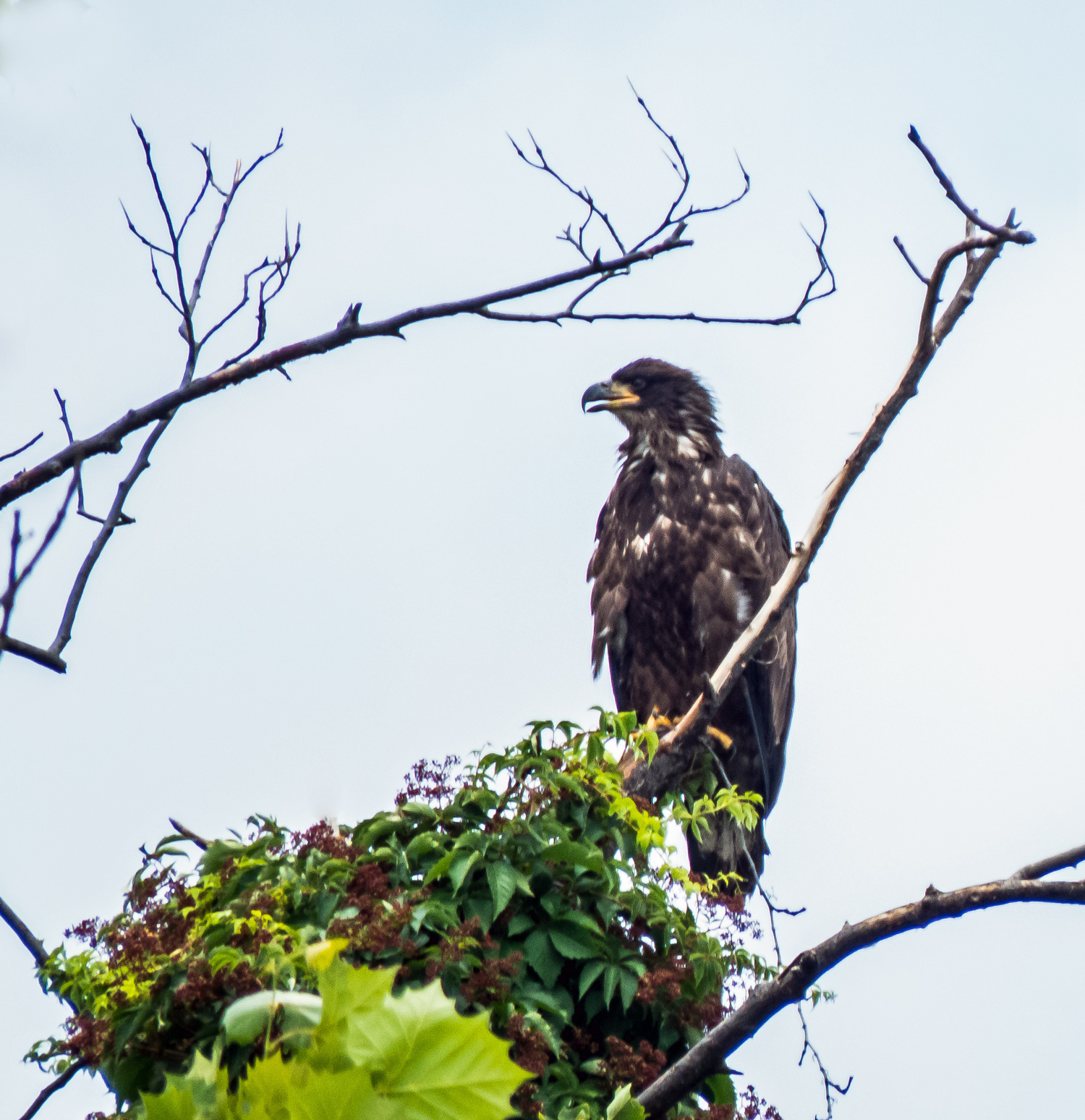
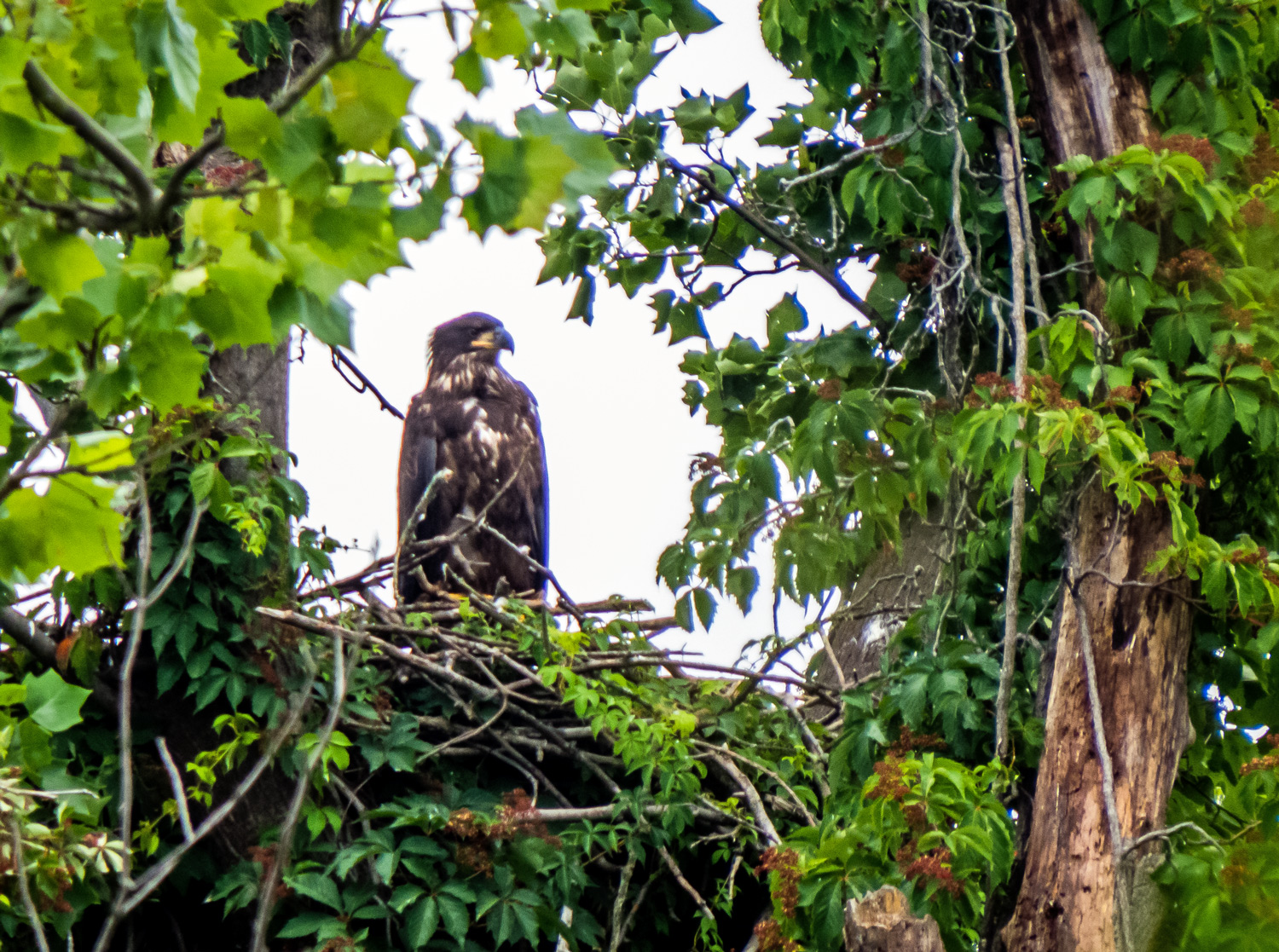
Even from a distance it is easy to see that the eaglets in one of nests at Occoquan Bay National Wildlife Refuge are no longer babies. When I saw them this past weekend, one of them was still hanging around in the nest, but the other had ventured out to a higher limb. I am posting an image of each of the two eaglets as well as a shot that shows their relative positions. As you can see, there are now a lot of leaves on the trees and I suspect that most folks walking by on the trail are not even aware of the presence of the nest.

The little eagles are still mostly brown in color—it will take almost five years for them to acquire the white feathers on their heads and on their tails that we associate with adult Bald Eagles (Haliaeetus leucocephalus).

Bald Eagle

Bald Eagle

Bald Eagle

© Michael Q. Powell. All rights reserved.

Read Full Post »

« Newer Posts - Older Posts »