Feeds:
Posts
Comments

Archive for the ‘Birds’ Category

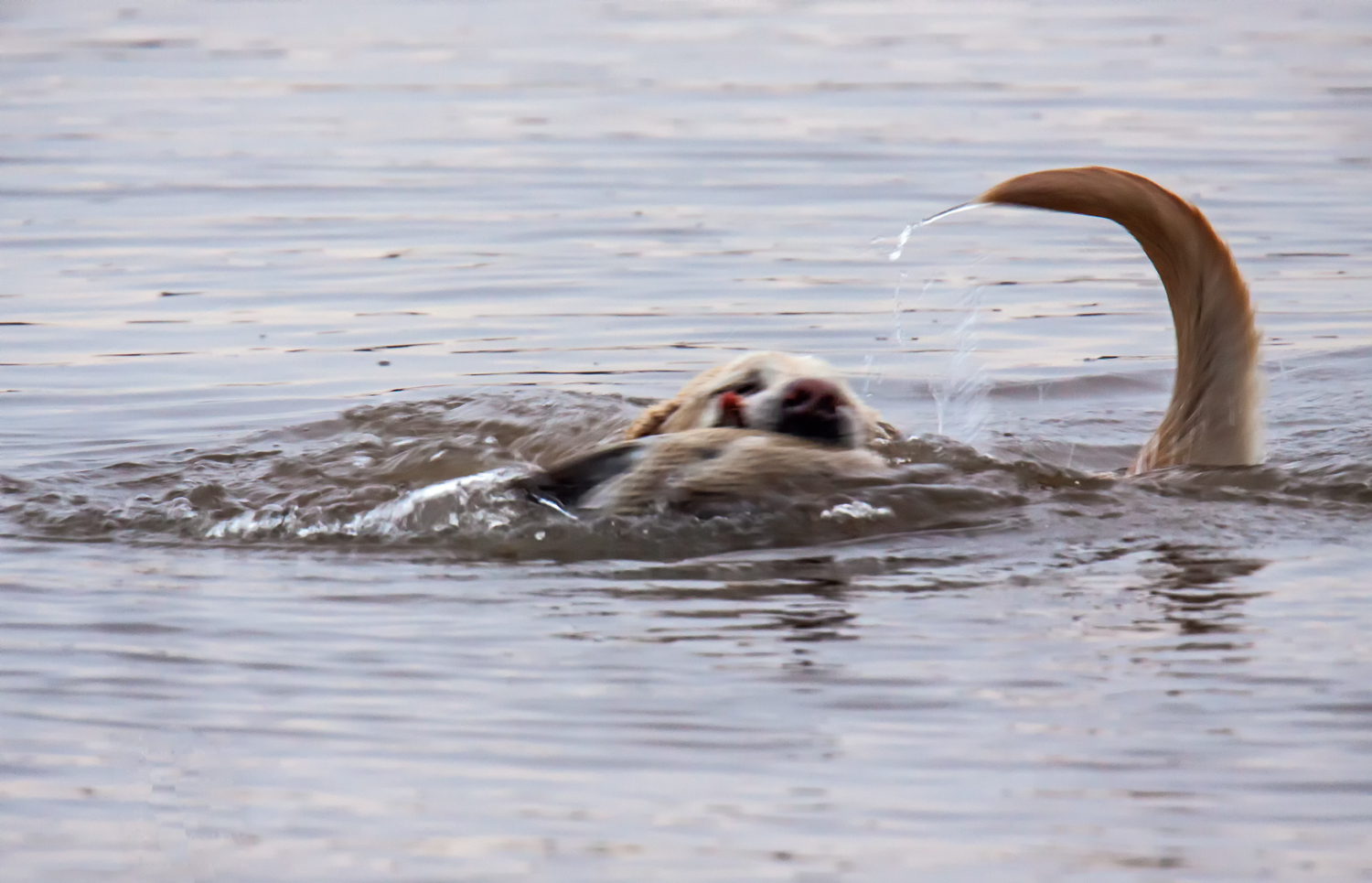
Passing by one of the duck blinds in the waters of Occoquan Bay this past Saturday, I saw a larger number of decoys set out and realized it was occupied. Consequently I braced myself when I heard the sound of approaching ducks and sure enough shots rang out. A few seconds later, I saw a duck hit the water not far from where I was standing.

I was focusing on the flailing duck with my telephoto lens when suddenly a dog swam into the frame. The dog, which appears to be a Labrador Retriever, approached the duck, circled around it so it would be heading in the right direction, and then swam back to the blind with the duck in its mouth.

I am not a hunter and prefer to do my shooting with a camera. However, I can appreciate the skill of both the hunter and the retriever in securing the duck that will probably make a tasty meal.


retriever

retriever

retriever

© Michael Q. Powell. All rights reserved.

Read Full Post »

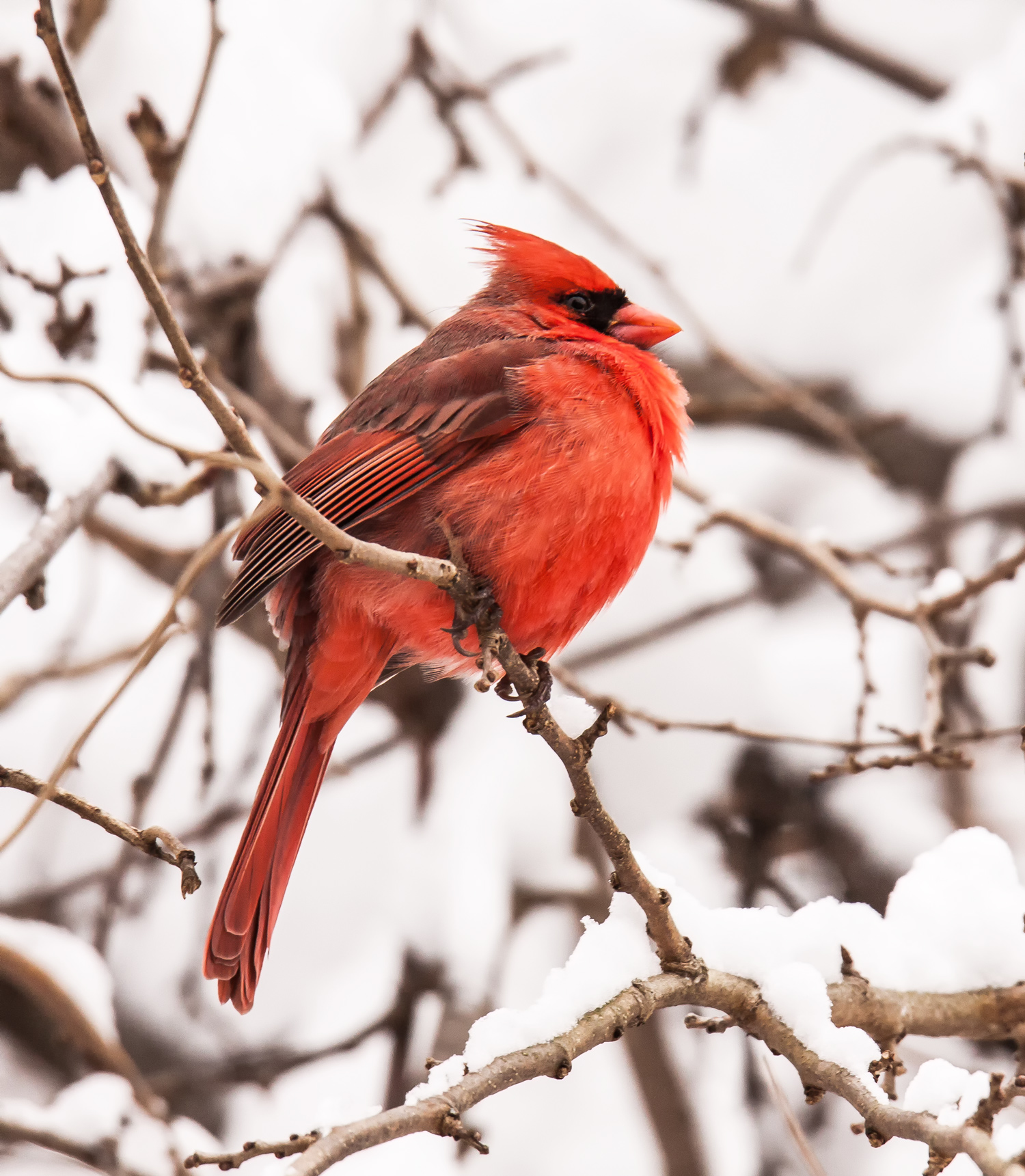
I love male Northern Cardinals in the winter. They add such a wonderful pop of bright color on a cloudy day, like yesterday when I took this shot, or on a snowy day like today (when I hope to see one in my neighborhood).

I spotted this Northern Cardinal (Cardinalis cardinalis) while exploring Occoquan Bay National Wildlife Refuge, my current favorite spot for walking about with my camera. We have already had about 6 inches (10 cm) of snow and more is falling, so I probably will not make it out of the neighborhood today. The streets are not yet clear and people in this area tend to drive even more crazily than normal when there is snow.

I took a number of shots of the cardinal while he was perched in a distant tree. Although he remained relatively stationary, he kept changing his tail position, so I decided to include shots with different “poses.”

Northern cardinal

Northern Cardinal

Northern Cardinal

© Michael Q. Powell. All rights reserved.

Read Full Post »

Do eagles kiss? I am not sure if they do, but these two Bald Eagles (Haliaeetus leucocephalus) were definitely beak-to-beak this morning at Occoquan Bay National Wildlife Refuge.

After a week in the urban confines of Brussels, Belgium, it was nice to get out in the wild again, though I must confess that I was still somewhat jet-lagged. Not long ago I posted a photo of an eagle couple on this same perch and I suspect that this is the same pair. Earlier I had seen another eagle couple near another nesting site. Last year I was thrilled to get a peek at some young eaglets and I am hoping to be able to do the same this year.

kissing eagles

© Michael Q. Powell. All rights reserved.

Read Full Post »

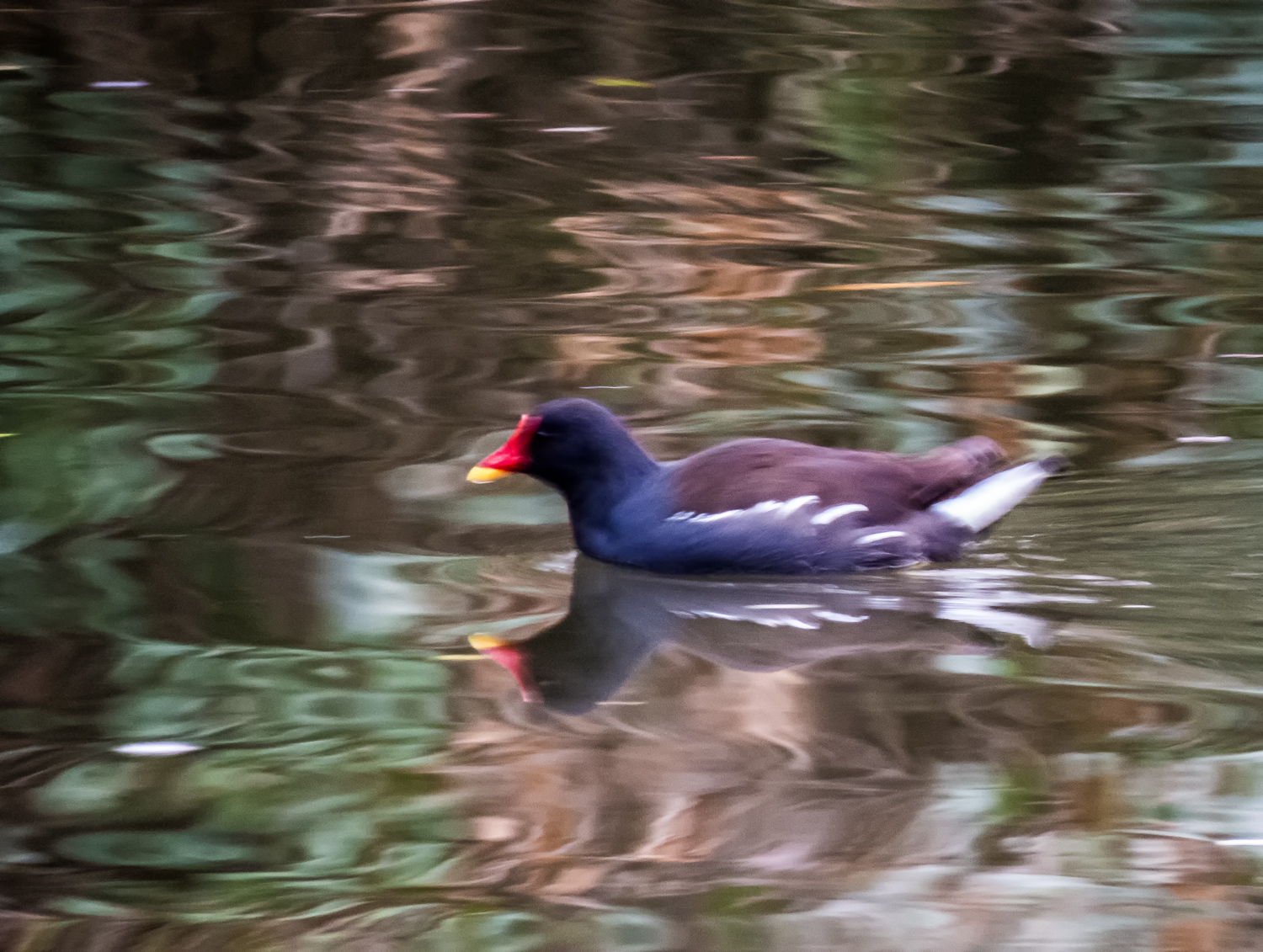
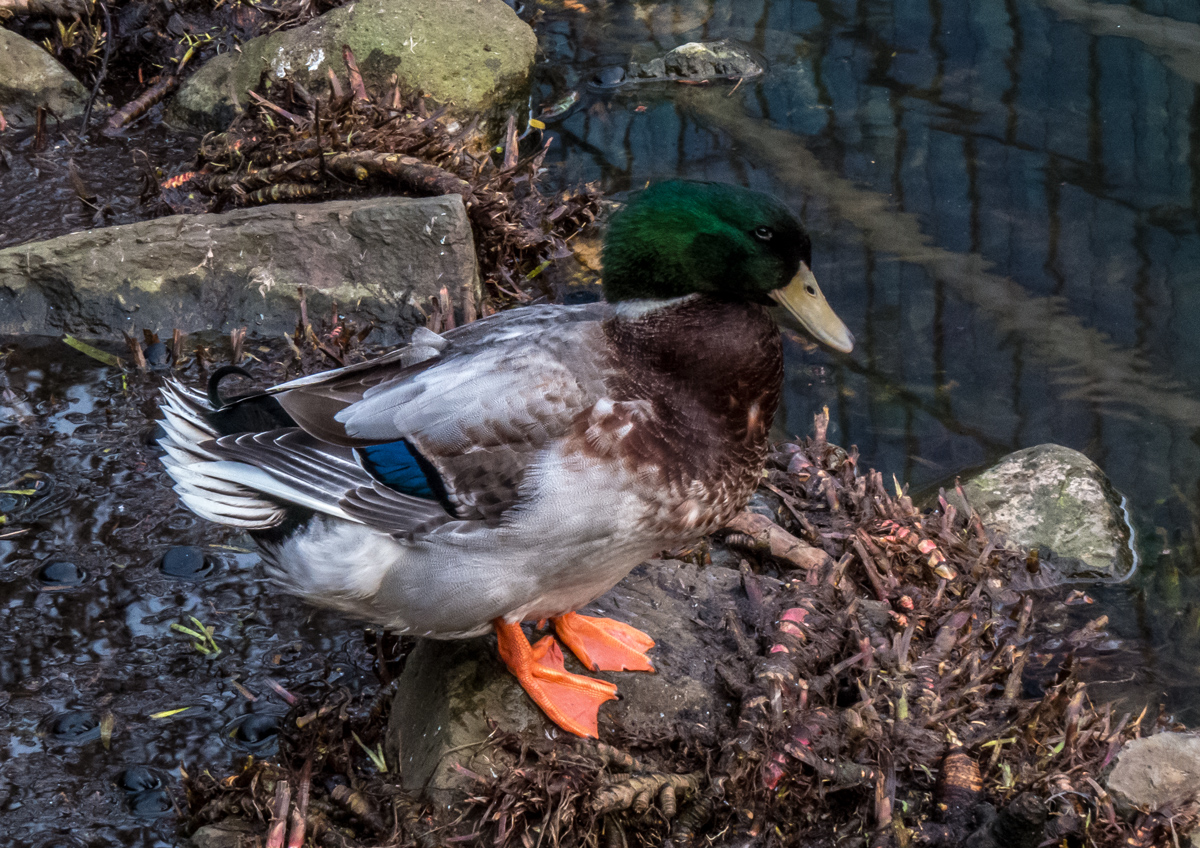
Finding wildlife to photograph in early January in Brussels, Belgium is pretty tough. There are very few hours of daylight at this time of the year and the skies are mostly covered with gray clouds during the day (when it is not actually raining). During a quick trip to the botanical gardens in Brussels this morning, I spotted a few birds and was able to capture shots of a Common Moorhen (Gallinula chloropus) and a male Mallard duck (Anas platyrhynchos).

The moorhen was swimming and my camera took the shot at 1/13 of a second, which means that the focus is not super sharp, but I like the soft, impressionist feel of the image. The mallard was more or less stationary as he groomed himself at the edge of the pond, but seemed to be keeping an eye on me.

I am here in Brussels for a brief business trip and as is usually the case on such trips, I like to try to fit in a little wildlife photography, even in the center of a city.

Common Moorhen

mallard

© Michael Q. Powell. All rights reserved.

Read Full Post »

Most of the year I tend to see individual Bald Eagles (Haliaeetus leucocephalus), but recently I have been seeing them in pairs, like this couple that I spotted last week perched on a nesting platform for ospreys at Occoquan Bay National Wildlife Refuge. It will soon be time to occupy a nearby nest.

If you look closely at the two eagles, you will notice that one that the one on the left is smaller in size—I believe that is the male. I do not know if this is the same couple, but an eagle couple successfully raised two eaglets in a nest in a tree that is not that far away from this platform, which housed an active osprey nest last year.

bald eagles

© Michael Q. Powell. All rights reserved.


Read Full Post »

At this time of the year my peaceful pursuit of photos is often punctuated with the sound of shotgun blasts as I walk along the trails parallel to the water at Occoquan Bay National Wildlife Refuge—it is duck hunting season. As you might suspect, duck hunting is not permitted on the territory of the wildlife refuge itself, but there is a series of duck blinds not far from the shore.

Some hunters simply take their boats and occupy the blinds, while others take the additional step of putting out duck decoys. In previous years I was fooled into taking photos of the decoys, thinking they were real ducks, but my decoy identification skills seem to have improved.

Here are a couple of photos of one of the blinds to give you an idea of what they look out and how close they are to the shore. I took the final shot of a group of hunters as they slowly motored by me. I don’t know the hunting rules, but I don’t think that they can hunt from a moving boat.

I am not against hunting per se, but I am definitely a bit edgy when I hear shots fired not far from where I am walking and will definitely welcome the eventual end of the hunting season.

duck blind

duck blind

duck hunting

© Michael Q. Powell. All rights reserved.

Read Full Post »

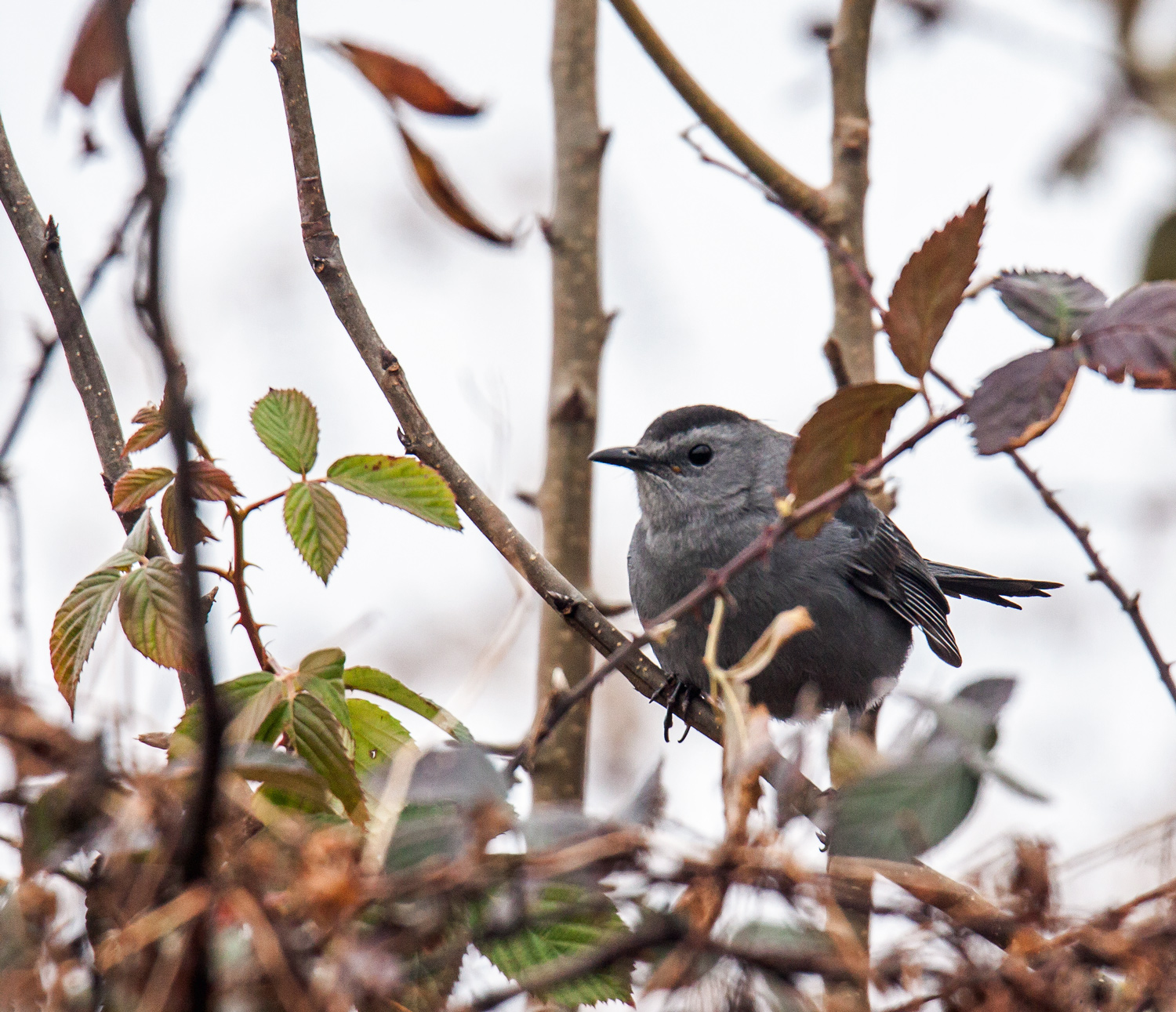
I’ve read that a Gray Catbird (Dumetella carolinensis) makes a distinctive cat-like mewing sound, but I don’t recall ever having heard a catbird make any sound whatsoever. According to the Cornell Lab of Ornithology, Gray Catbirds can also copy the sounds of other species and string them together to make their own song that can last as long as ten minutes.

Even without hearing its song, I was able to spot this Gray Catbird earlier this week at Occoquan Bay National Wildlife Refuge. As is most often the case with catbirds, this one was in thick vegetation, but I did manage to get a relatively clear shot of its head and body.

Gray Catbird

© Michael Q. Powell. All rights reserved.


Read Full Post »

The long sloping shape of the bills of these ducks in the waters off of Occoquan Bay National Wildlife Refuge indicated to me that they are Canvasbacks ducks (Aythya valisineria). Most of the time I rely primarily on colors when trying to identify birds, but during the non-breeding season, many ducks share the same subdued colors, especially when viewed from a distance. This was a rare case when a single distinctive characteristic—in this case the bill—was enough for me to identify the birds with a reasonable degree of confidence.

According to Wikipedia, the duck’s common name is based on early European inhabitants of North America’s assertion that its back was a canvas-like color. In other languages it is just a white-backed duck; for example in French, morillon à dos blanc, or in Spanish, pato lomo blanco.

canvasback

© Michael Q. Powell. All rights reserved.

Read Full Post »

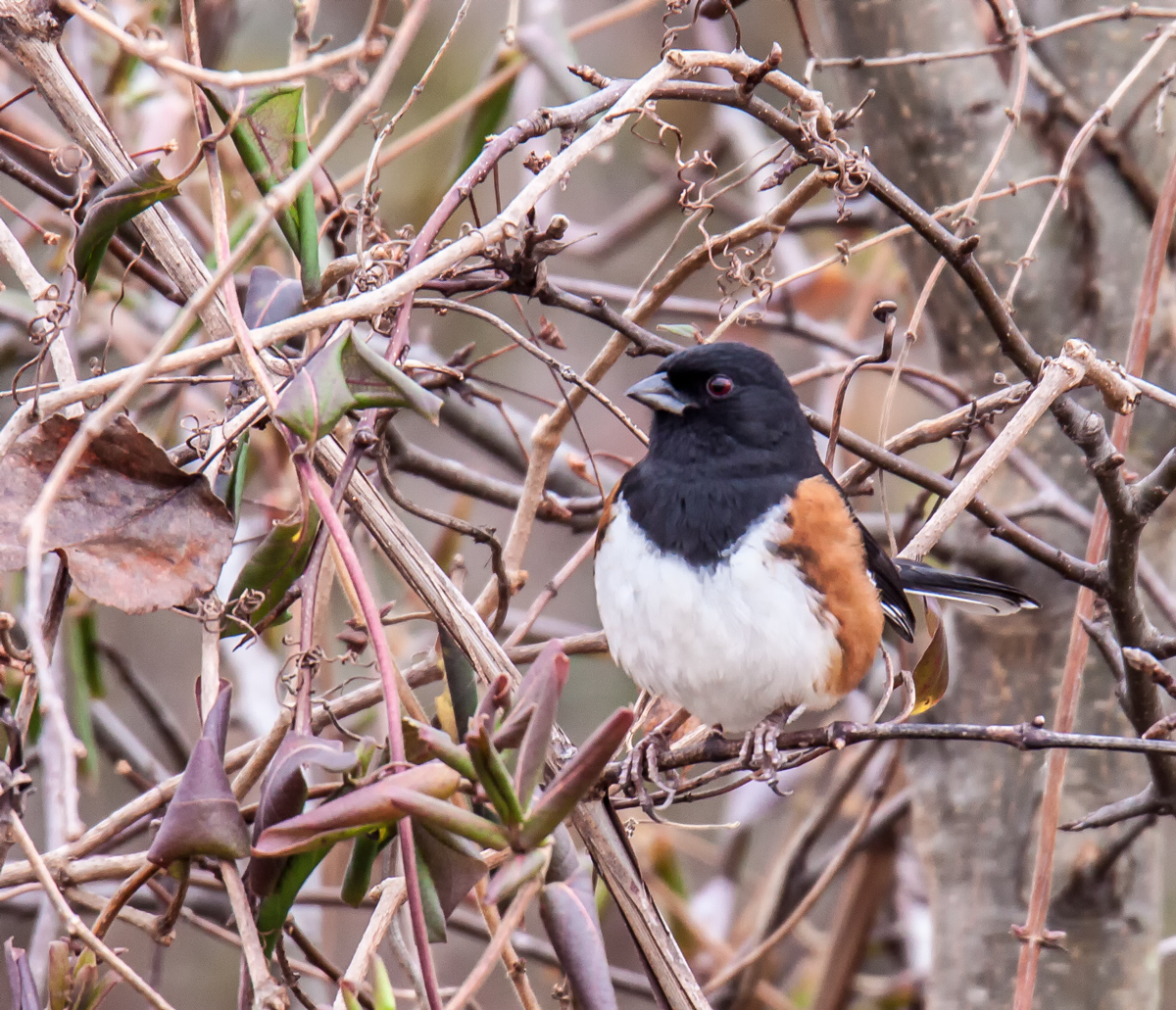
During the winter months you sometimes have to search a little harder to find birds, but they are definitely still with us. When I caught a glimpse of this bird’s rust-colored feathers earlier this week at Occoquan Bay National Wildlife Refuge, I assumed it was an American Robin.

When I zoomed in, however, I was thrilled to see like that the bird was an Eastern Towhee (Pipilo erythrophthalmus). Towhees share many of the same colors with the robins, but they are arranged in a completely different way. I think that towhees are supposed to be relatively common, although I personally do not see them very often.

I love to play with words and “towhee” for some reason is fun to say out loud. Try it yourself—it is virtually guaranteed to put a smile on your face.

Eastern Towhee

© Michael Q. Powell. All rights reserved.


Read Full Post »

Many of you know that I normally post every day—in 2018 I think that I missed only 12 days.  I used to be really obsessive about this and would get anxious if I didn’t have an image to post. Over time, though,I have mellowed a bit and so I am not at all concerned that I write a posting on New Year’s Day.

I have been in a contemplative mood ever since I did the retrospective look at some of my favorite photos from last year. As I looked back I simultaneously looked forward. I have never been a big fan of New Year’s resolutions, but my hopes and plans for this new year can be summed up in two words “more” and “better.”

Those two words are non-specific and subjective, but for me, that is the nature of my approach to photography. I strive to spend as much time as I can in the wild, opportunistically looking for subjects. When situations present themselves, I try to react as quickly and creatively as I can.

That was the case earlier today when I visited Occoquan Bay National Wildlife Refuge. Despite the partial federal government shutdown, the wildlife refuge is still open. It was a cool and gray day, and there was not too much activity. I was therefore thrilled when I spotted this Red-bellied Woodpecker (Melanerpes carolinus) feverishly pecking away at a distant tree.

The woodpecker kept its head down as it circled the branch, but finally paused for a moment when it was upright and I was able to capture this shot. Although the woodpecker is relatively common, the organic shapes of the branches really caught my eye.

I’m ok with shooting familiar subjects over and over again. What about you? Some people like to live “widely,” seeing lots of different things in different places, while others prefer to live “deeply,” seeing the same places in different ways and in different seasons. I tend to be in the latter group, but recognize that each person has his/her own comfort zone.

Red-bellied Woodpecker

© Michael Q. Powell. All rights reserved.

Read Full Post »
As another year in my journey through photography comes to a close, I decided to share a few of my favorite photos of the past year. I initially planned to choose one image for each month and that was doable for the first few months of the year. Once I moved into the prime seasons for shooting, though, there were so many good photos I couldn’t select a single one, so I chose multiples for those months and ended up with these thirty photos.

If you want to see the images in a larger size, all you need to do is click on one of them and they will then be displayed in a slide show format.

Thanks so much to all of you who have followed my blog postings and supported and encouraged me in so many ways. It has been a wonderful year and I look forward to more photos and new adventures in the upcoming new year.

Happy New Year to you all and best wishes for a blessed 2019.


© Michael Q. Powell. All rights reserved.

Read Full Post »

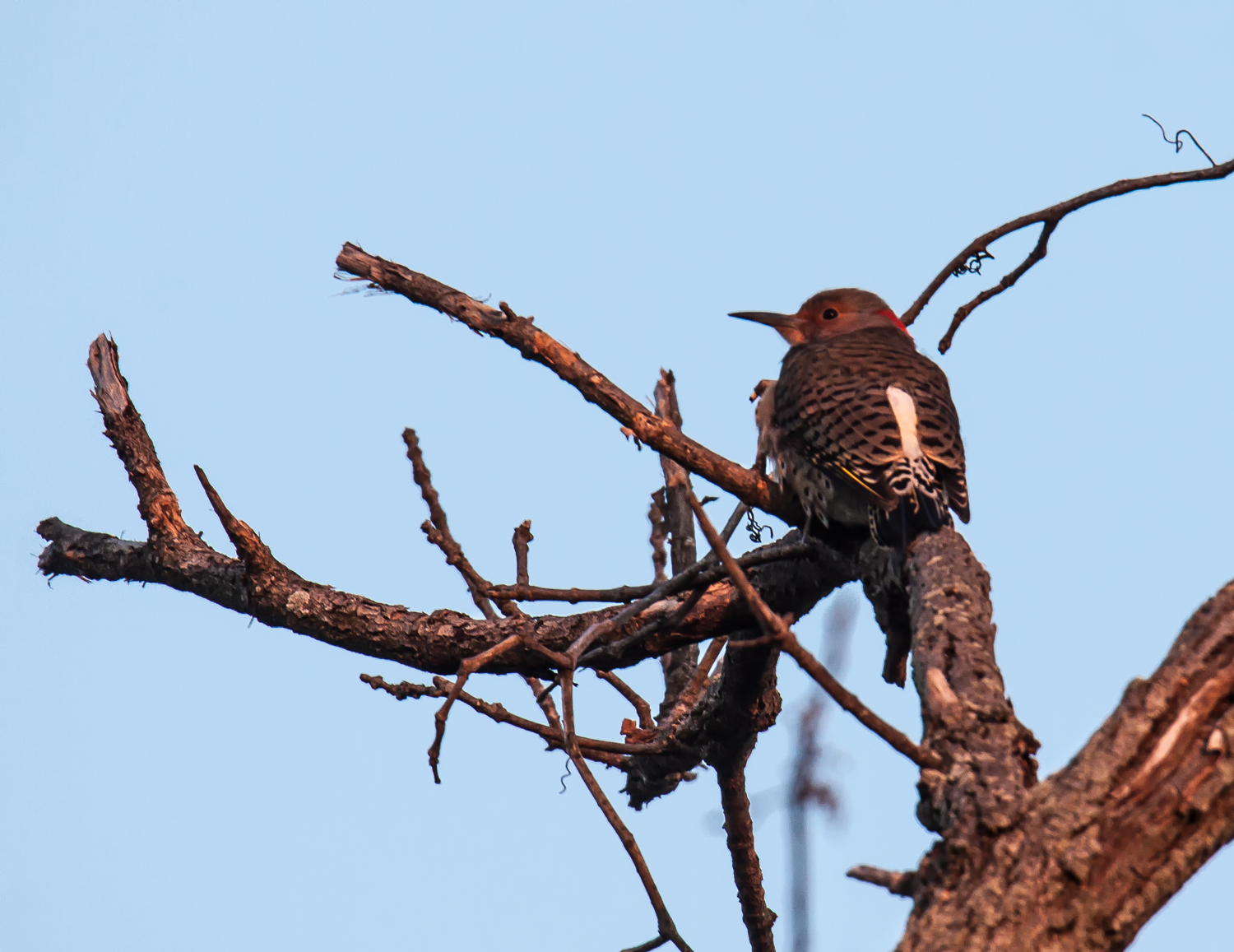
Northern Flickers (Colaptes auratus) have very distinctive patterns and colors, but in the early morning light this one blended in well with the bark and branches of the tree on which it was perched earlier this week at Occoquan Bay National Wildlife Refuge.

I was able to detect the bird’s presence only when it moved its head a bit from side to side. Some of my friends are able to spot birds in the trees on the basis of their shapes, but for the most part I need some movement to be able to do so.

Northern Flicker

© Michael Q. Powell. All rights reserved.


Read Full Post »

White-throated Sparrows (Zonotrichia albicollis) always remind me of Santa Claus because of their white “beards.” The effect was magnified on a recent frigid morning at Occoquan Bay National Wildlife Refuge, when a White-throated Sparrow had fluffed up its feathers to retain heat and looked even chubbier than normal.

White-throated Sparrow

© Michael Q. Powell. All rights reserved.

Read Full Post »

From a distance I spotted a flash of white, high in the uppermost branches of a tree. It was vaguely bird-shaped, but I had to move closer to know for sure—I am often fooled by misshapen branches or clumps of leaves. Eventually I was able to determine that what I had seen were the white breast feathers of an Eastern Bluebird (Sialia sialis) grooming itself in the early morning sunshine.

I love bluebirds and they invariably bring a smile to my face, especially when I recall the words of Benjamin, a young viewer of my blog, who remarked that these birds should be called “orange bluebirds,” because they have as much orange as they do blue.

Eastern Bluebird

© Michael Q. Powell. All rights reserved.

Read Full Post »

As the waves washed over the Double-crested Cormorant (Phalacrocorax auritus) perched on a floating remnant of a tree, the solo bird looked like a shipwrecked sailor, adrift on a swamped, semi-submerged sailboat. My mind conjured up scenes from different movies with this theme.

A short time later, I encountered a basketball dashing up against the shore with each successive wave. As the ball slowly turned I caught sight of its faded lettering. Like Tom Hank’s companion in the movie Cast Away, the ball was labelled “Wilson.” Perhaps the shipwrecked cormorant had been engaging in lengthy conversations with this Wilson, as Tom Hanks did during the movie.

double-crested cormorant

Wilson

© Michael Q. Powell. All rights reserved.

Read Full Post »

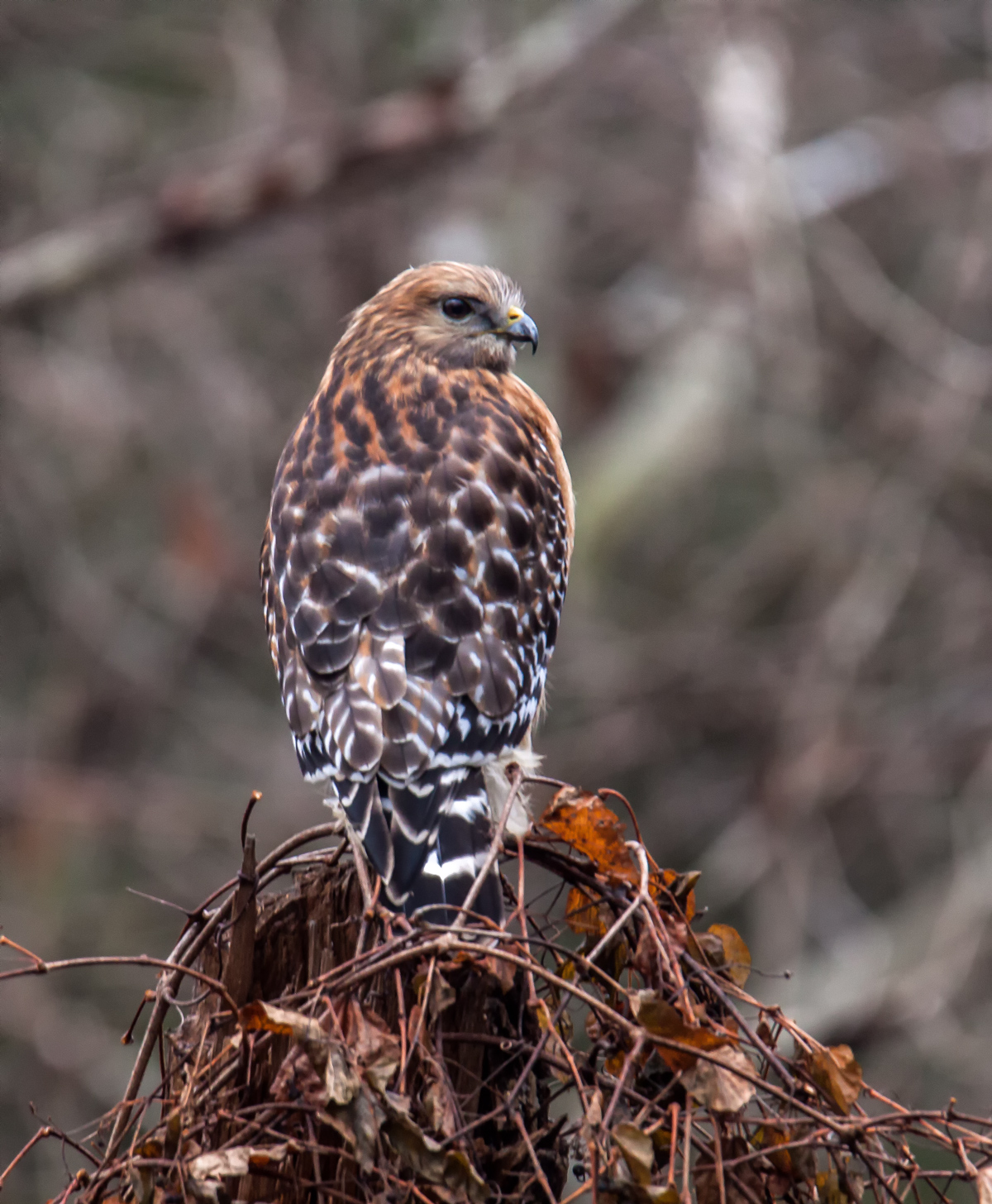
I didn’t have to go far to find this Red-shouldered Hawk (Buteo lineatus)—I spotted it while walking a friend’s Cocker Spaniel in my suburban townhouse neighborhood. I rushed home to get my camera and was thrilled when I returned to find that the hawk was still perched on a broken-off tree in a small marshy area.

Red-shouldered Hawk

Red-shouldered Hawk

© Michael Q. Powell. All rights reserved.

Read Full Post »

In theory, it is easier to spot a Bald Eagle (Haliaeetus leucocephalus) now that the leaves have fallen from the trees. In reality, however, the eagles often seem to like to perch in locations where they are at least partially hidden by branches.

That was certainly the case this past Monday when I spotted this bald eagle at Occoquan Bay National Wildlife Refuge. There was a lot of tangled vegetation between me and the eagle, so there was no way that I could get any closer. I was happy that I was able to find a shooting angle that allowed me to get a clear view of the eagle’s head and tail.

Bald Eagle

© Michael Q. Powell. All rights reserved.

Read Full Post »

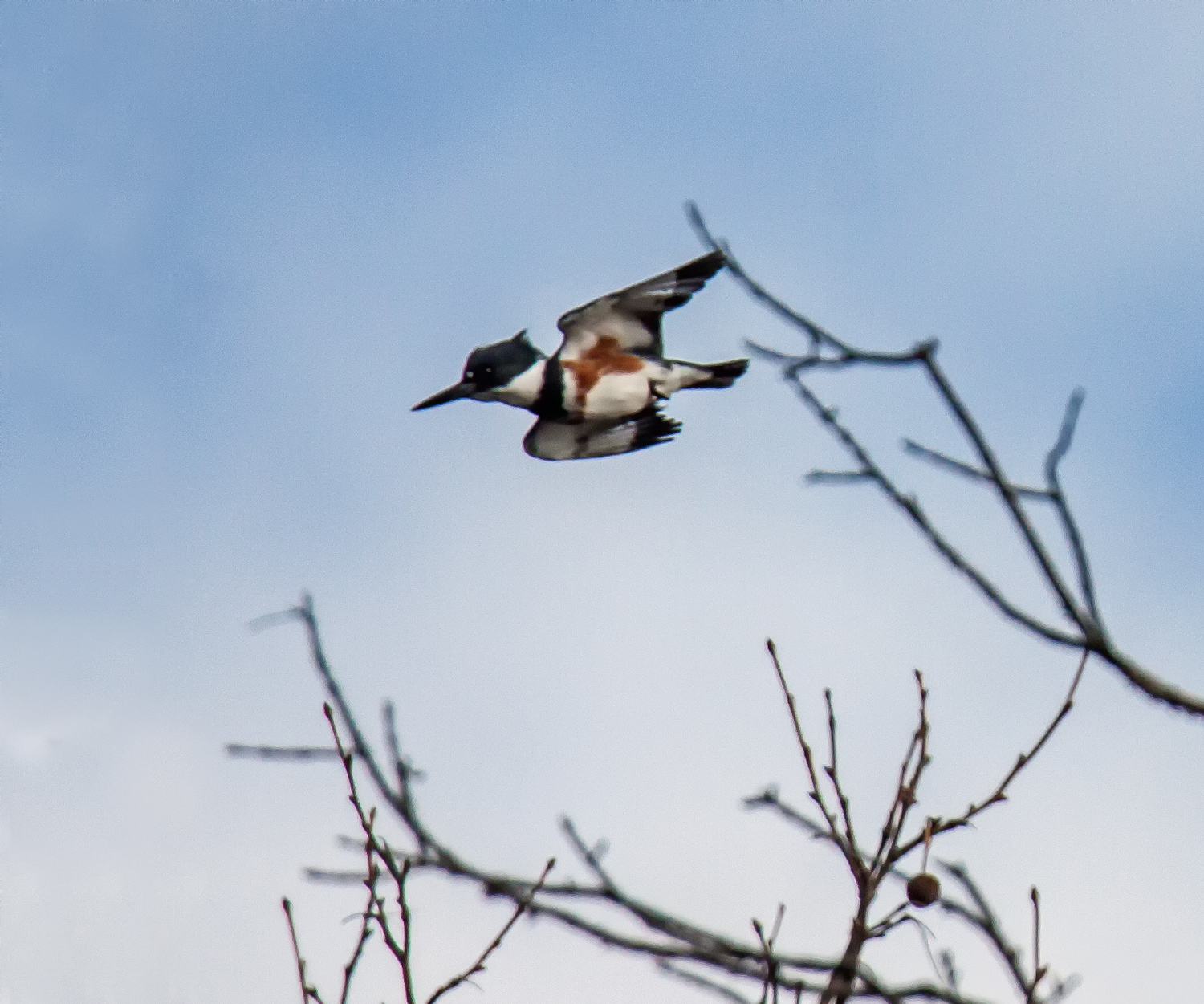
It often feels like Belted Kingfishers (Megaceryle alcyon) are taunting me. They boldly advertise their presence with a distinctive rattling call, but keep their distance or fly away quickly before I can spot them. I dream of spotting one at close range and getting some shots before it is aware of my presence.

Well, my dream did not not come true this past Monday, but I did manage to get some shots of a female Belted Kingfisher in flight while exploring Occoquan Bay National Wildlife Refuge. I took the shots at pretty long range as the kingfisher was moving from perch to perch in the distant trees.

Belted Kingfisher

Belted Kingfisher

Belted Kingfisher

© Michael Q. Powell. All rights reserved.


Read Full Post »

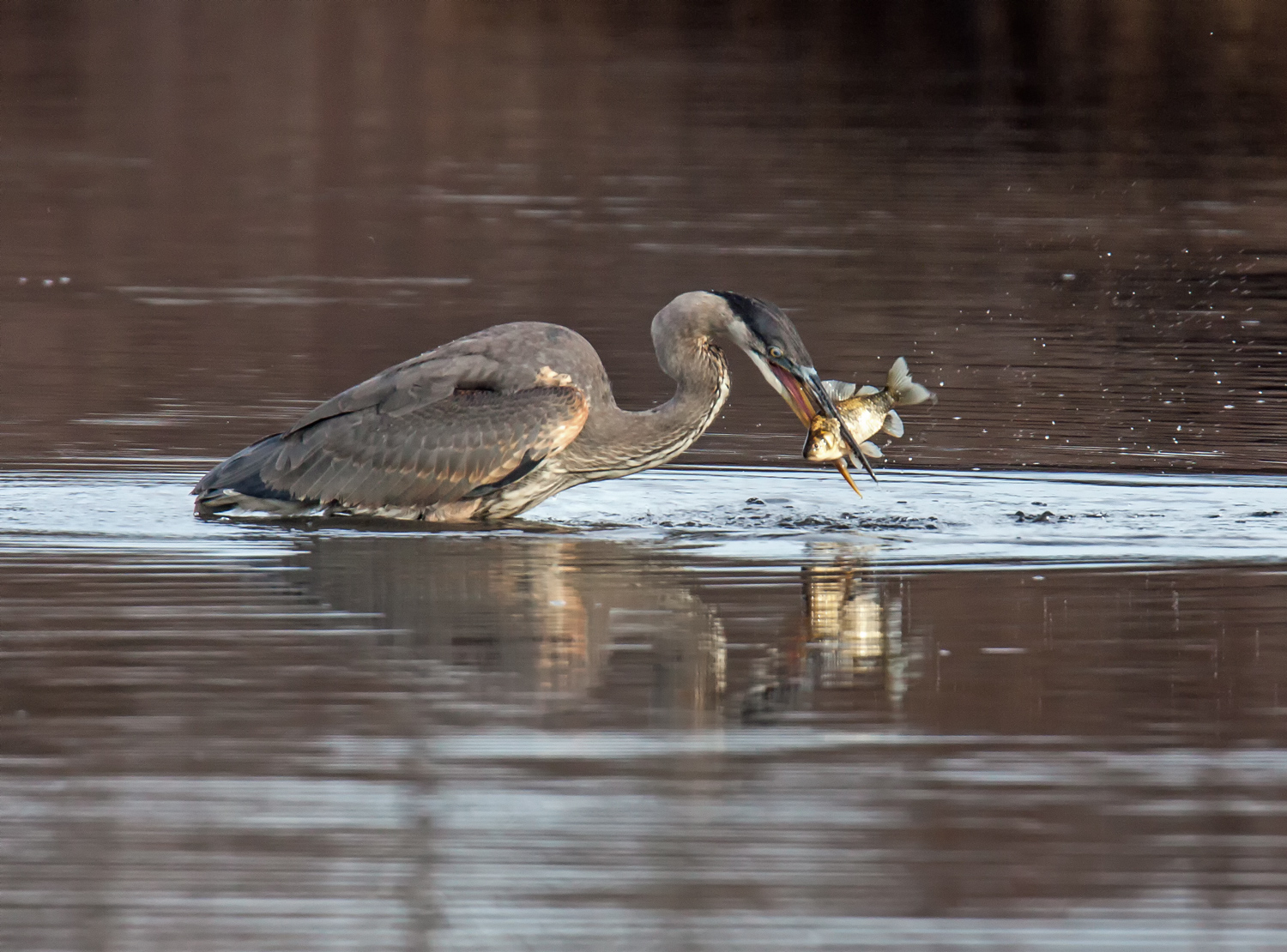
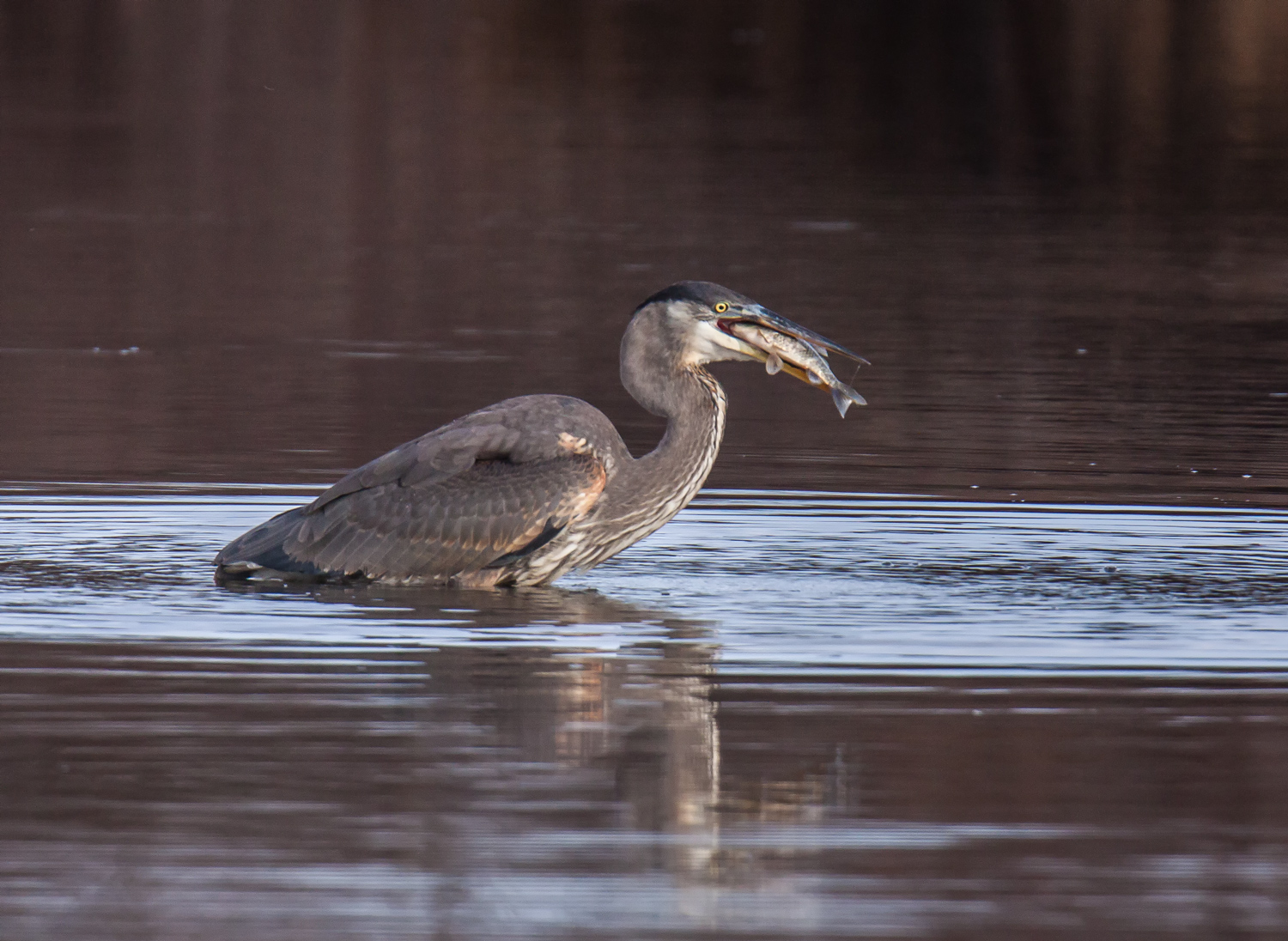
After several unsuccessful attempts, this Great Blue Heron (Ardea herodias) pulled a good-sized fish out of the waters of a small pond on Monday at Occoquan Bay National Wildlife Refuge. A few second later the heron had the fish correctly positioned and swallowed in a single big gulp. I thought the heron would take a break to digest his meal, but it returned immediately to fishing.

Great Blue Herons have an amazing amount of patience. They will stand immobile for extended periods of time and then strike forcefully into the water without any notice. When I am observing a heron, it is always a challenge to remain alert and ready. Often the heron’s patience exceeds my own, but fortunately that was not the case on this particular day. I was lucky too that the heron did not turn away after it had caught the fish, which allowed me to capture some of the action.

Great Blue Heron

Great Blue Heron

© Michael Q. Powell. All rights reserved.

Read Full Post »

For the first time in a while, a male Bufflehead (Bucephala albeola) ventured close enough for me to get some shots yesterday when I was exploring Occoquan Bay National Wildlife Refuge. I have posted some photos of buffleheads fairly recently, but they have all been of females (or possibly immature males).

The shape and colors of these little water birds, especially the males, always strike me as cartoonish—like they were drawn by Disney artists.

Bufflehead

Bufflehead

© Michael Q. Powell. All rights reserved.

Read Full Post »
Whenever I am traveling for work I try to find some local wildlife to photograph. I am currently in Vienna, Austria and yesterday morning I went for a short walk in the Stadtpark, a park in central Vienna that is not far from my hotel. In the small pond there I found mostly mallard ducks (Anas platyrhynchos), a species with which I am quite familiar.  One duck, however, really stood out because it had such unusual markings.

I focused my attention and my camera on this particular duck. Its shape looked to be similar to that of normal mallards and I wonder if this might be some kind of hybrid. I suppose that it could be another species altogether, though it did not look like any of the species in the photographic list I found on-line of the birds of Austria.

Whatever the case, this bird struck me as being a bit of an odd duck.

duck in Vienna

duck in Vienna

© Michael Q. Powell. All rights reserved.

Read Full Post »
Over the past few months I have repeatedly heard the screaming of hawks in the distance, but it has been rare for me to actually catch sight of one. I was thrilled therefore when I spotted this Red-tailed Hawk (Buteo jamaicensis) last week at Occoquan Bay National Wildlife Refuge. The hawk soared almost directly over me, providing me with a wonderful view of its fully extended wings and red tail.

This was one of the few cases when it was not an advantage to have my camera attached to a monopod. I ended up taking this shot with the camera held at a high angle with monopod sticking straight out, almost parallel to the ground.

Red-tailed Hawk

© Michael Q. Powell. All rights reserved.

Read Full Post »

When I am watching water birds, it is hard for me to predict when they will decide to take to the air. Often they give no visible warning. Some species, though, need to dance across the water to gain momentum before they can lift off, like this pair of female Buffleheads (Bucephala albeola) that I observed last week at Occoquan Bay National Wildlife Refuge.

The one in the back had already started its takeoff maneuvers when I captured this image and a second later the second bufflehead was also skipping across the water.

bufflehead

© Michael Q. Powell. All rights reserved.

Read Full Post »

Recently I served as the assistant for a fellow photographer Cindy Dyer as she shot some portraits in her studio. I had never before participated in that kind of a venture and I was a little shocked by the amount of coaching that the subject needed to ensure a proper head position, body position, and expression. Apparently most of us do not know how to act “naturally” in a way that will yield a goof portrait.

Fortunately many birds do not require these instructions. On Monday of this week, this Cedar Waxwing (Bombycilla cedrorum) took a break from its foraging and seemed to be posing for me.  The bird decided that a profile shot would be good to show of its distinctive eye mask and that any hint of a double chin could be eliminated by slightly elongating its neck. Although the Cedar Waxwing tried to maintain a serious expression, I think I detect the beginning of a tiny smile.

Cedar Waxwing

© Michael Q. Powell. All rights reserved.

Read Full Post »

Despite his diminutive size, this male Golden-crowned Kinglet (Regulus satrapa) seemed to have plenty of attitude when I spotted him on Monday at Occoquan Bay National Wildlife Refuge.

Size is relative, of course, but by almost any standard Golden-crowned Kinglets are tiny. The are about 3-4 inches (8 to 10 cm) in length and weigh only 0.1 to 0.3 ounces (4 to 8 gm). Their small size and hyperactivity make them a fun challenge to photograph.

I particularly like this bird’s combative stance and the way that it provides us with such a good view of its bright yellow “crown.” It is one of the rare occasions when I got an unobstructed shot of a kinglet—normally there are branches blocking at least part of the view.

Golden-crowned Kinglet

© Michael Q. Powell. All rights reserved.

Read Full Post »

I was quite excited on Monday at Occoquan Bay National Wildife Refuge when this Brown Creeper (Certhia americana) finally let me get a relatively unobstructed shot of it. I had spent quite a while trying to track it as it climbed up and around several trees in a kind of corkscrew pattern.

In the past I have seen this elusive little bird several times, but as far as I know, this is the first time that I have ever gotten a shot of one. The Brown Creeper moves in a pattern that is not at all like any other bird that I have observed. The Cornell Lab of Ornithology website provides the following description of this behavior:

“The Brown Creeper spends most of its time spiraling up tree trunks in search of insects. It holds its short legs on either side of its body, with the long, curved claws hooking into the bark, and braces itself with its long, stiff tail. Both feet hop at the same time, making the bird’s head duck after each hop. Because of its specialized anatomy, the Brown Creeper rarely climbs downward: once high in a tree, it flies down to begin a new ascent at the base of a nearby tree.”

I am happy with this shot, though I must confess that I get a little dizzy if I look at it too long.

Brown Creeper

© Michael Q. Powell. All rights reserved.


Read Full Post »

The gentle paddling of this Pied-billed Grebe (Podilymbus podiceps) produced such wonderful patterns in the water that it was easy to fight the temptation to crop this image more closely. This is another one of the waterbirds that appeared recently at a pond in a nearby suburban neighborhood.

Virtually all of the visiting birds are skittish enough that they will swim away toward the center of the pond as I approach. Fortunately for me they swim a lot more slowly than they fly, so I generally have a chance to track them as they swim, hoping they will turn their heads periodically to the side.

Pied-billed Grebe

© Michael Q. Powell. All rights reserved.

Read Full Post »

This male Ruddy Duck (Oxyura jamaicensis) and I spotted each other at almost the same time and we both immediately sprung into action. As I was bringing my camera up to my eye, the duck was swimming away. I thought that I had lost the photo opportunity when suddenly the duck turned his head to the side and I was able to capture this image.

This Ruddy Duck, like the Hooded Merganser duck that I featured yesterday, has taken up residence in a small pond in a suburban neighborhood not far from where I live. I am thrilled, because it gives me a place where I can experience wildlife without having to travel too far. Things can get busy sometimes, especially at this time of the year, and I cannot always spend hours on end in the wild with my camera as I prefer to do.

Ruddy Duck

© Michael Q. Powell. All rights reserved.

Read Full Post »

I have occasionally been described as a bit of an “odd duck,” which Wiktionary defines as “an unusual person, especially an individual with an idiosyncratic personality or peculiar behavioral characteristics.” That definition certainly fits me (and most other wildlife photographers too, I suspect).

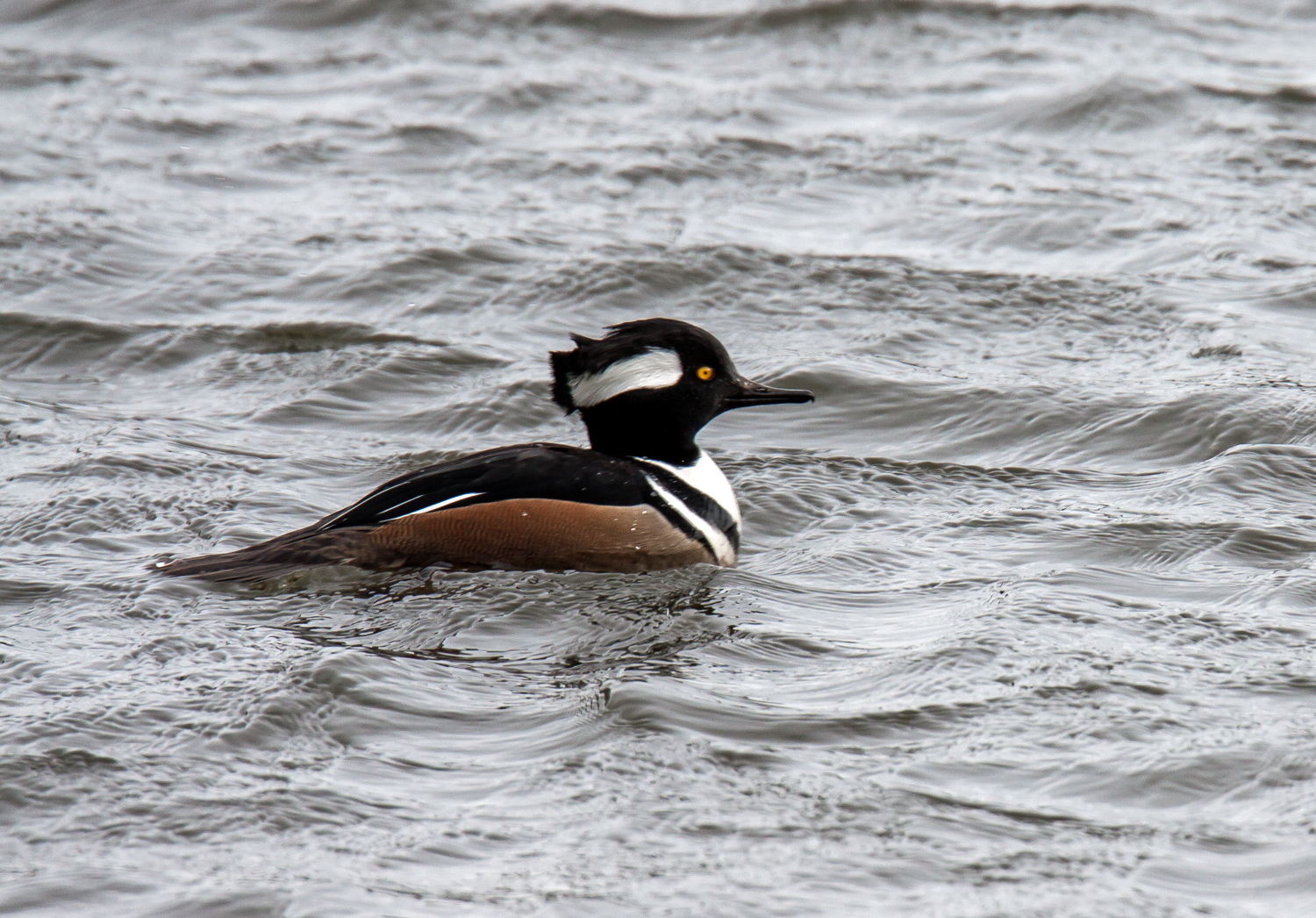
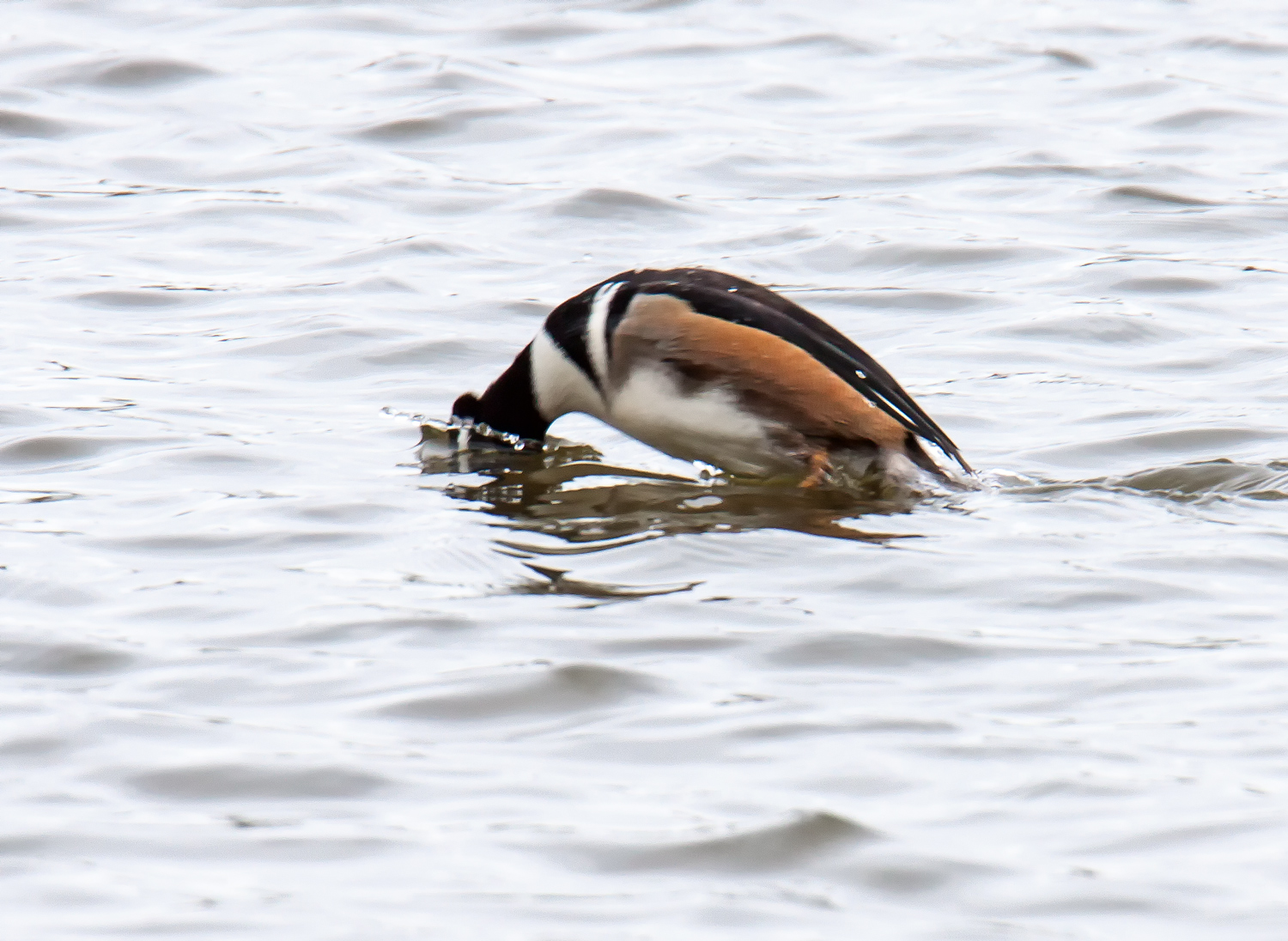
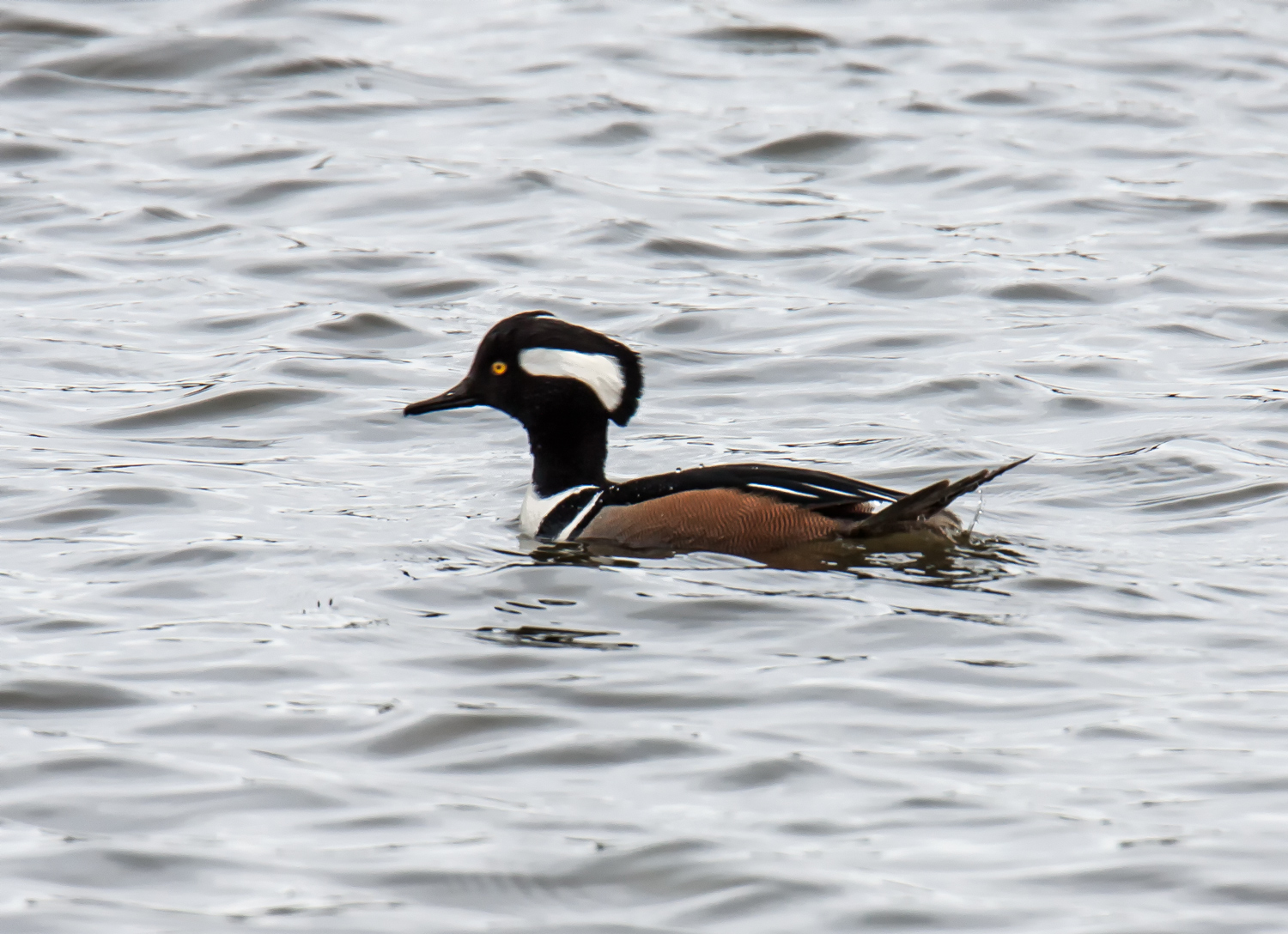
In a more literal sense, “odd duck” is a great way to describe the unusual-looking Hooded Merganser duck (Lophodytes cucullatus). There are no other ducks in my area that look anything like these ducks, so identification is never a problem. Getting good photographs of one, though, can be a problem, because Hooded Mergansers are small and often skittish.

I spotted this handsome male Hooded Merganser yesterday at a suburban pond not far from where I live in Northern Virginia. He was part of a group of about a dozen or so Hooded Mergansers. Most of the members of the group were out in the middle of the pond, but this one hanging out nearer the shore and I was able to get off a few shots before he swam away to link up with the rest of his group.

hooded merganser

© Michael Q. Powell. All rights reserved.

Read Full Post »

Sunshine and bright colors have been in short supply during the month of November. We have already broken the all-time record for rainfall in November in our area and will break the record for rainfall in a year if we have one more inch (25mm) of rain by 31 December.

I was therefore absolutely thrilled when I spotted this bright red male Northern Cardinal (Cardinalis cardinalis) high in a tree at Occoquan Bay National Wildlife Refuge earlier this week. Unlike so many other birds that try to blend in with their surroundings, the cardinal seems bold and self-assured—it is not at all hard to spot them, though they often bury themselves in the middle of bushes, so getting an unobstructed shot can be quite a challenge.

Comparatively speaking, this cardinal was cooperative and posed for a short while before finally taking off. His head was in constant motion, but eventually I was able to capture an image with the head in a decent position. Even with human subjects, I find it tough to shoot a portrait in which the head and eyes are in a natural and pleasing pose.

Northern Cardinal

© Michael Q. Powell. All rights reserved.

Read Full Post »

Most of the time that I see a Great Blue Heron (Ardea herodias), it is standing stationary in the water or is flying away from me. Yesterday, however, I saw herons in slightly more unusual places. One was crouching slightly as it perched on a low branch overhanging a path at Occoquan Bay National Wildlife Refuge and the other was huddled in a field adjacent to a small pond, half-hidden from view.

The first image is an obvious one to feature in a posting, but I also really like the way that I captured the heron’s surroundings in the second image and the heron’s yellow eye that seems to be peering out at me though the reeds.

Great Blue Heron

Great Blue Heron

© Michael Q. Powell. All rights reserved.

Read Full Post »

« Newer Posts - Older Posts »