Feeds:
Posts
Comments

Archive for the ‘Art’ Category

The weather this week has been mostly gray and dreary and I felt the need for a burst of bright colors, so I am posting this image from last week of a two Eastern Tiger Swallowtail butterflies (Papilio glaucus) feeding on an unidentified flower against the backdrop of a brilliant blue sky. The butterflies were even cooperative enough to place themselves at different angles to add  visual interest to the shot.

swallowtails_blog

© Michael Q. Powell. All rights reserved

Read Full Post »

When I am chasing after little butterflies, it’s rare that I manage to get a shot of them with their wings open—I am lucky if I can get a side view.

This little brown butterfly, which I think is an Appalachian Brown (Satyrodes appalachia), perched in a location, however, which allowed me to shoot downward, catching its wings wide open. The muddy, brown water of the marsh normally would not be optimal for an image, but seem to work well here, almost matching the colors of the butterfly.

I also was able to get a shot from the side, the second image, showing the butterfly’s beautiful brown eyes. There was intermittent rain the day that I was shooting and you can see a few raindrops on the leaves of the plant on which the butterfly is perched.

brown_butterfly1_blogbrown_butterfly2_blog

© Michael Q. Powell. All rights reserved

Read Full Post »

Let me introduce you to the coolest-looking insect I have ever encountered, the Handsome Meadow Katydid (Orchelimum pulchellum), an insect that I photographed this past weekend at my local marsh. The name just seems to fit the insect perfectly, unlike so many other insects that seem to have been named almost randomly.

I still recall the first time that I encountered a Handsome Meadow Katydid last summer and the resulting double take—I could not believe what my eyes were seeing. The bright colors of the body were astonishing and seemed so unreal that one of my friends wondered if I had colorized the photo.

It’s the eyes, though, that make this insect so attractive for me. There is just something so alluring about those blue eyes, eyes that I don’t expect to see in an insect.

I got some pretty good shots of Handsome Meadow Katydids last year, but was growing concerned that I would not see many this year (you can tell it’s a katydid, in part, because of the length of the antennae). I actually heard this katydid before I saw it. I was passing by a small bush and hear a kind of vibrating sound. I put my ear closer and closer to the plant and finally spotted the source.

I had to go pretty wide in cropping the shot, because the katydid was stretched out along the small branch. Click on the image if you want see a higher resolution view of the photo, including those amazing eyes.

rainbow1_blog

© Michael Q. Powell. All rights reserved

Read Full Post »

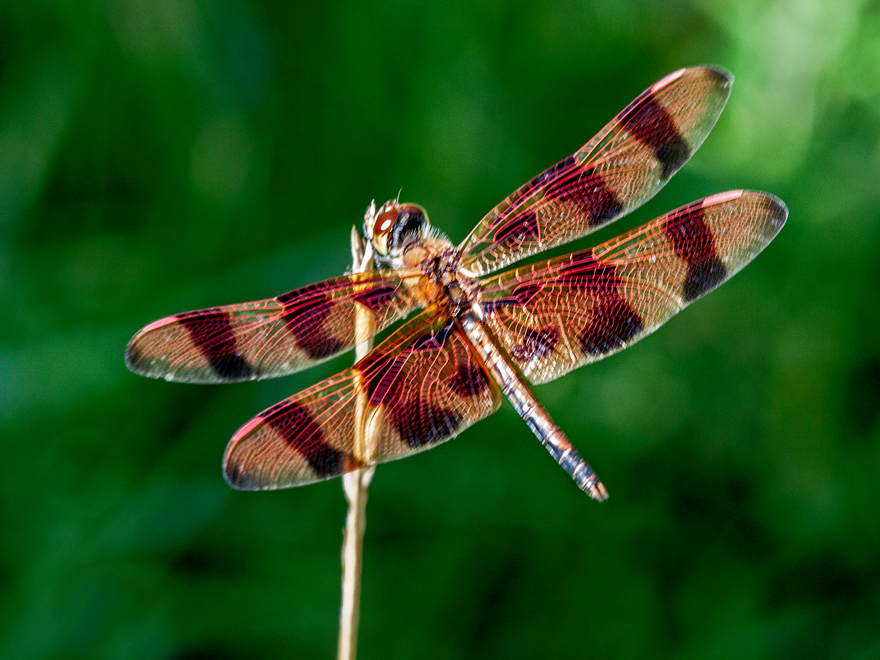
Yesterday I was happy to get some shots of my favorite dragonfly, the Halloween Pennant dragonfly (Celithemis eponina), at Meadowlark Botanical Gardens in Vienna, Virginia.

I don’t see this dragonfly at all at most of the usual places where I take photographs, so I was really excited when I caught sight of a couple of them yesterday. I chased them around for well over an hour and attempted to take a couple of hundred shots using a wide range of camera settings.

Why did I take so many photos? The dragonfly gets the “pennant”  part of its name because it likes to perch on the very tip of a weed stalk and waves in the breeze like a pennant. Yesterday, in fact, was breezy and it was quite an adventure trying to keep the dragonfly in focus, particularly because I was trying to fill the frame with the dragonfly.

The dragonflies that I photographed were reasonably cooperative and I was able to attempt shots from the side, from above, and even from below (fortunately the insects in the grass did not bite very often).

I have not been able to go through the shot to pick the best ones, but thought it would be nice to post one now, especially for those readers who may not be familiar with this beautiful dragonfly. I suspect that I will eventually post at least a couple more images in future postings.

Halloween1_blog

© Michael Q. Powell. All rights reserved

Read Full Post »

As the beautiful afternoon light illuminated the wings of this Eastern Tiger Swallowtail butterfly (Papilio glaucus) from behind, I couldn’t help but think of a stained glass window. I love backlighting and these subjects seemed perfect to showcase the effect—I didn’t even have to worry about using fill flash to avoid shadows, because of the translucency of the wings.

I took this image yesterday at Meadowlark Botanical Gardens in Vienna, Virginia, yet another wonderful local spot for photographing flowers and insects.

stained_glass_butterfly_blog

© Michael Q. Powell. All rights reserved

Read Full Post »

Praying mantises blend in so well with their surroundings that it is extremely rare for me to see one. This past weekend I spotted one as I was scanning the undergrowth while I was walking along the boardwalk in my local marsh.

The challenge for me was to figure out how to get a good shot of the praying mantis, which was sitting among some green leaves just about level with the boardwalk itself. I first tried shooting from directly above the insect, but I didn’t like the results very much, because I could not seem to make the praying mantis stand out from the background.

The second basic approach that I tried was to shoot at eye level with the insect. This produced some good results, like the second photo below, because I was able to capture a lot of details of the mantis and the shadows add interest to the shot.

I got my favorite image, the first one, when I shot from below the level of the insect, by hanging over the edge of the boardwalk. Framing the shot was a bit tricky because I had to place myself in the middle of the vegetation without disturbing the praying mantis (you should never disturb an insect when it is praying). I also had to shoot from an awkward angle in which it was difficult to steady the camera, so many of my shots were blurry.

Why is the first image my favorite? I like the simplicity of the color palette in the image−mostly green and black—and the pose of the praying mantis staring into the shadows from the edge of the leaf, which has wonderful details. (If you click on the image you can see a higher resolution view, which includes some details of insect’s head.)

praying2_blogpraying1_blog

© Michael Q. Powell. All rights reserved

Read Full Post »

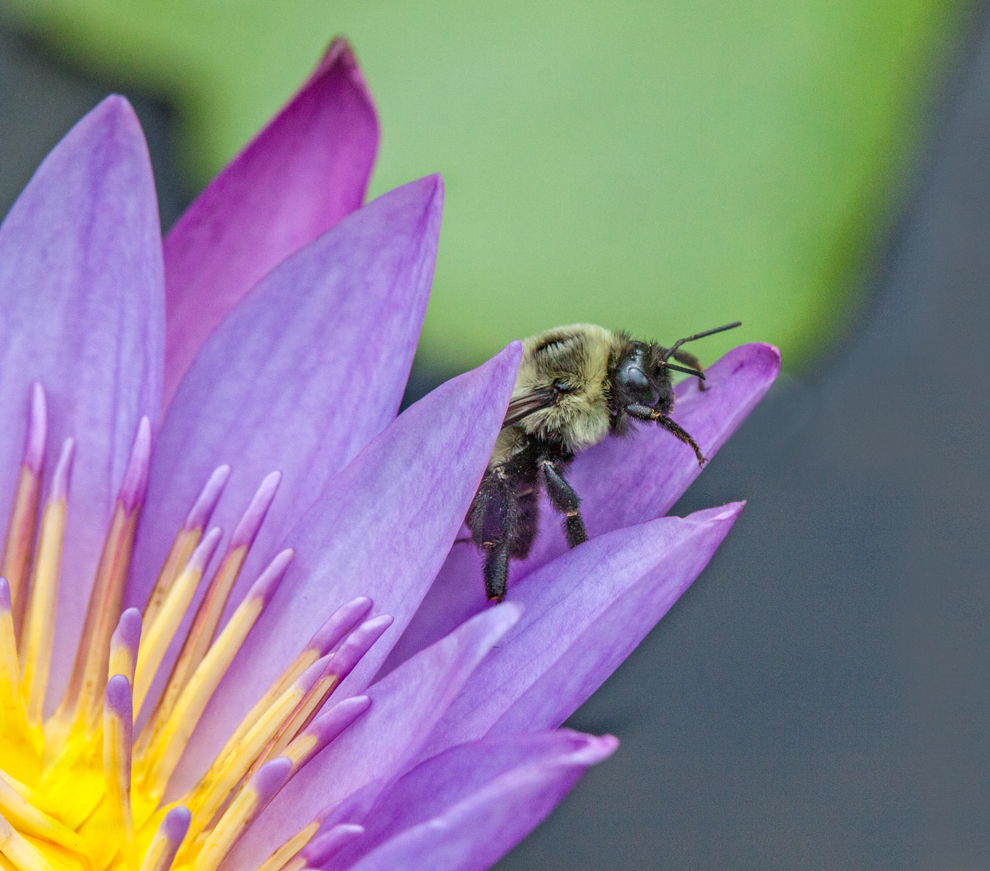
A bee landed on a petal of this purple water lily and, rather than heading for the center of the flower, the obvious source for pollen, decided to crawl down in between the petals.

I followed his movements and, after a short time, those movements ceased—I think he was stuck. Eventually the plant began to move again, this time more violently. Slowly the bee reemerged, crawling slowly up the petal, and I took this shot.

I find the tones of this image to be very soothing and purple is one of my favorite colors. If you too like purple, check out today’s postings called Violetta at Calee Photography, one of my favorite blogs.

crawling_out_blog

© Michael Q. Powell. All rights reserved

Read Full Post »

As I waited outside my neighbors’ townhouse so that we could travel to an indoor butterfly exhibit, I tried out my new macro lens in their garden and ended up with of my best butterfly shots of the day.

Cabbage White butterflies (Pieris rapae) are very common, but they are elusive when you try to photograph them. I managed to squeeze off only two shots before the butterfly flew away, but this shot illustrates why I love my 180mm macro so much. The small butterfly filled up much of the frame without me having to get right on top of it. The lens also captured a pretty good amount of detail too. If you click on the image, you can see some of the details of the butterfly’s green eye, for example.

Almost exactly a year ago, my photography mentor and muse,  Cindy Dyer, in whose garden I photographed this butterfly, challenged me to get a good image of a Cabbage White butterfly. A year later, I feel pretty confident in saying that I have met that particular challenge.

cabbage_yellow_blog© Michael Q. Powell. All rights reserved

Read Full Post »

Is photography an art or a science? One of the reasons why I enjoy photography so much is that it engages me on both levels—it speaks to my inner artist and to my inner geek.

Growing up, I remember watching Olympic figure skating and I was struck by the fact that the skaters received two sets of scores, one for “artistic impression” and one for “technical merit.” In many ways, I use a similar internal scoring system for my photographs.

Some of my photographs rate high on one scale, but fall short on the other. Every now and then, though, one of my images stands out, with high marks all around, like this shot of a Hummingbird Clearwing Moth (Hemaris thysbe).

I posted an earlier photo of this remarkable insect and I thought it was really cool that I was able to get a close-up with the wings open and frozen in action, a somewhat impressive technical feat. This image, shot from a bit farther away, gives a better view of the moth in action and is a more interesting pose. The background, which I recall was evergreen bushes, is uncluttered. Even the flower cooperated by following the “odd rule” of composition, with three clusters of tiny flowers.

It’s hard to be objective when analyzing my own work, but I know that I like this image a lot.

clearwing2_blog

© Michael Q. Powell. All rights reserved

Read Full Post »

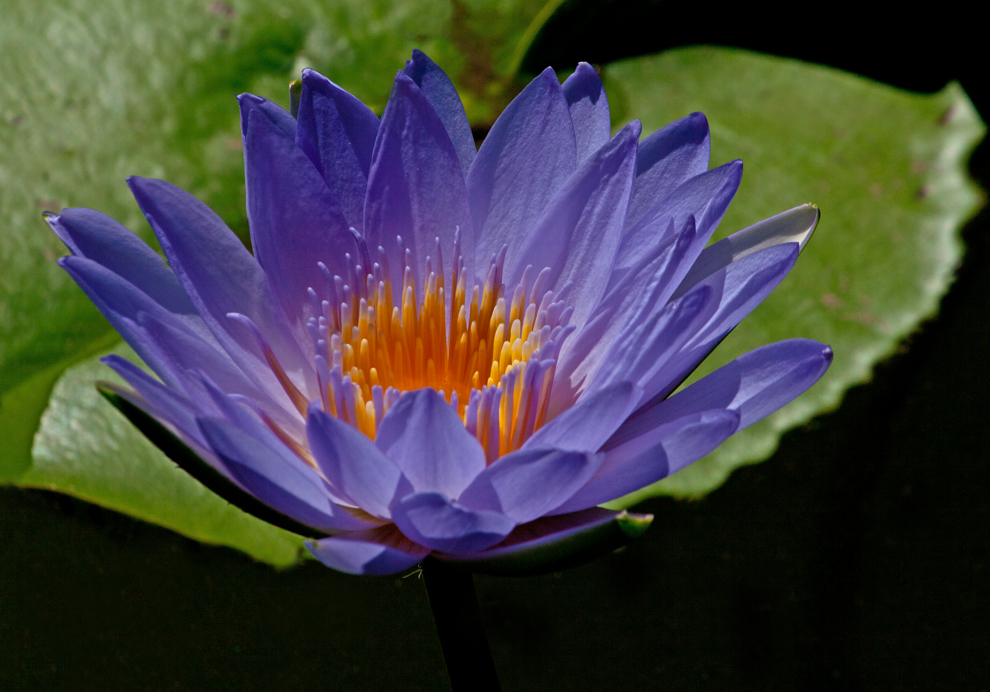
Have you noticed that I really like purple water lilies? I was so struck by their beauty the first time that I saw one last year that a purple water lily appears at the top of my blog most of the time.

Earlier this week, as I was visiting Brookside Gardens in Wheaton, Maryland,  I came across an area in which two types of purple, tropical water lilies were growing. My photography mentor, Cindy Dyer, always recommends photographing the little signs that identify flowers and other plants and these water lilies were called “Panama Pacific” and “Blue Beauty.”

As I was photographing one of the waterlilies—I think it was a Panama Pacific—a bee dove headfirst into the center of the flower. Even before the bee arrived, I had noticed that the center of the water lily seemed to be glowing and that was what I was trying to capture by underexposing the shot. If you click on the photo, you can see a higher resolution view of the image, which shows an almost three-dimensional view of the flower’s center.

diving_blog© Michael Q. Powell. All rights reserved

Read Full Post »

Yesterday was my first chance to try out my new lens, a Tamron 180mm macro, and I managed to get some shots of a Hummingbird Clearwing Moth (Hemaris thysbe) at Brookside Gardens in Wheaton, Maryland.

Clearwing1_blog

This was my first encounter with this moth, which I have admired in the photos of others, and I took a lot of photos of it, using a variety of settings. I think that I got my best shots when I set the ISO to 800 and underexposed a bit, which kept the shutter speed up pretty high, although the images are a little grainy. I still have a lot of photos to go through, so don’t be surprised if I come up with an even better image to post. However, I am so happy with this image that I want to share my excitement.

I had previously used the Nikon version of this lens with a friend’s camera and was impressed enough that I eventually decided to get one for my Canon. The lens does not have any built-in image stabilization, so it probably gives optimal results when used on a tripod or when there is a lot of light. However, I was impatient to use it, so I shot handheld when shooting this moth and probably need to work a bit more on my technique for steadier shooting.

I am pretty sure that I’ll be posting many more macro shots from this lens in the future—I plan on having a lot of fun with it.

© Michael Q. Powell. All rights reserved

Read Full Post »

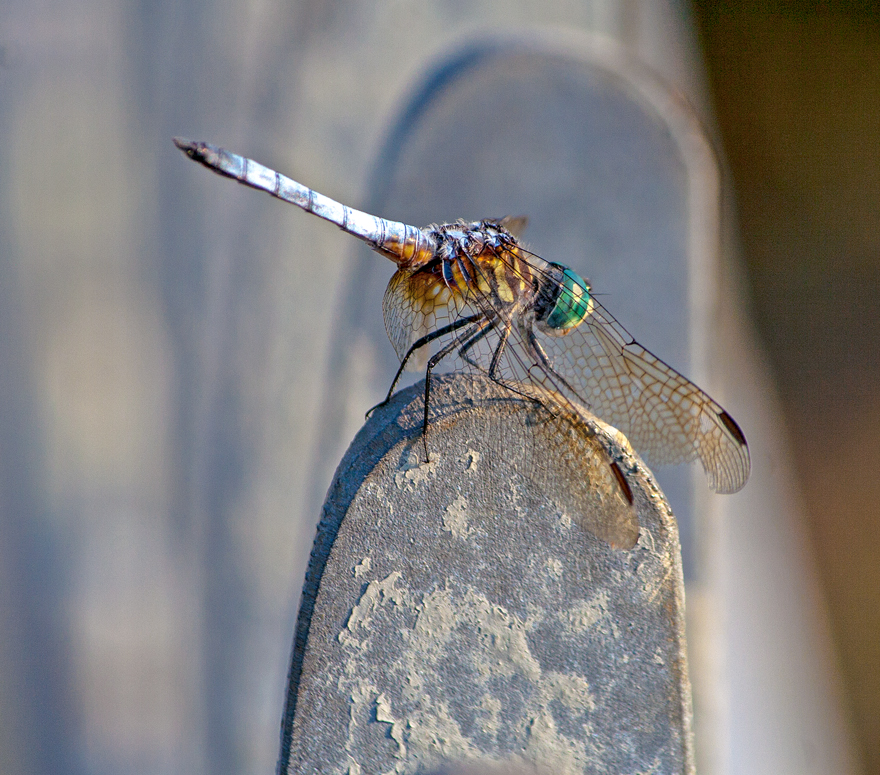
What do you do when the wildlife subject that you are attempting to photograph puts itself in a man-made setting, rather than a more natural environment? That was my dilemma when a Blue Dasher dragonfly (Pachydiplax longipennis) landed on one of the slats of a railing surrounding part of the boardwalk at Huntley Meadows Park, the local marshland where I take a lot of my photographs.

As I looked down the railing at the dragonfly, my eye was attracted to the repeating pattern of the slats, and I decided to try a creative approach to an image using that pattern. I chose camera settings that would give me a relatively shallow depth of field. Then I carefully composed the shot so that some other slats would appear in the background in a blurry form, but the one on which the dragonfly perched would be in sharp focus.

Although I generally prefer a more natural setting for my wildlife subjects, I think I managed to achieve a pretty cool effect that was relatively close to what I had in mind. I especially like the detail that I was able to capture of the weathered metal slat in the foreground (click on the photo to see a higher resolution view).

railing_blog

© Michael Q. Powell. All rights reserved

Read Full Post »

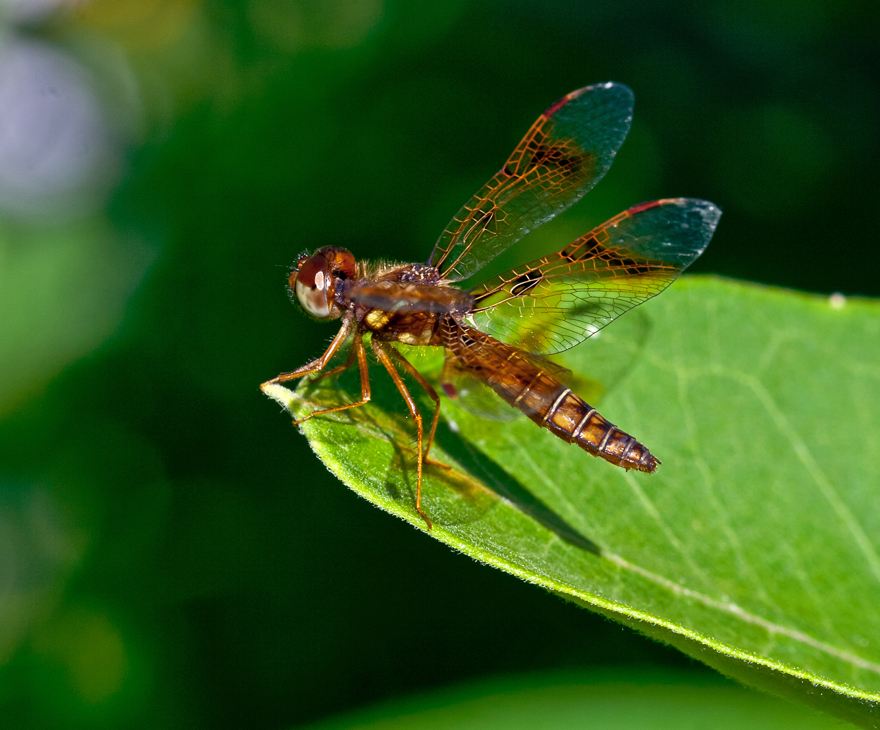
Only a tiny, lightweight dragonfly, like this Eastern Amberwing (Perithemis tenera), could assume this pose and hold it for an extended period of time. I have watched other dragonflies land near the end of a leaf like this, but gravity forced them to quickly give up their perch.

I was able to take a lot of photos of this dragonfly and this is one of my favorites, because its abdomen is raised, its wings are spread, and its head is cocked a little to the side—a near perfect pose.

amber_grass_blog

© Michael Q. Powell. All rights reserved

Read Full Post »

Although I tend to use either my macro or my shorter telephoto zoom lens most at this time of the year, yesterday I decided to walk around with my longest zoom (135-400mm) and was happy about that decision when I encountered this juvenile Hooded Merganser duck (Lophodytes cucullatus).

When I first saw it, the duck was sitting on a semi-submerged log  in the beaver pond of my local marshland pond, basking in the sun. I expected for the duck to be part of a group, but it appeared to be alone.

Merganser1_blog

I guess that I got a little too close, because the juvenile duck then slipped quietly off the log into the brown, muddy water of the pond and swam away a short distance. I like the concentric ripples in this shot of the duck slowly paddling away.

Merganser2_blog

I backed off and continued to observe the young duck, which decided to take advantage of being in the water to do a little grooming. After submerging itself, the duck rose up out of the water to dry off. The duck flapped its wings and I clicked my shutter and got this shot.

Merganser3_blog

There is a kind of playful feel to this shot that I really like. Somehow the duck reminds me of a friendly little dragon in this shot, with its feathers looking almost like scales and its wings and tail in an unusual position. I almost expected it to breathe a tiny burst of fire.

Maybe I should name the little duck “Puff.”

© Michael Q. Powell. All rights reserved

Read Full Post »

How do you capture a field of sunflowers in a single image? That was my challenge yesterday, when I visited McKee-Beshers Wildlife Management Area in Montgomery County in Maryland, where there are 48 acres of sunflowers in a total of seven fields.

I am still going through my photos from yesterday, not sure if any single image captured the feeling of the endless rows of sunflowers. I am happy, though, that I was able to capture this iconic (or perhaps cliché) image of a single sunflower isolated against the sky.

BlueSkySunflower lorez

It should have been a simple shot to take, but initially the sky was overcast and white—good for most kinds of photos, except for this kind of image. I was taking photos with some friends and we joked about having to Photoshop in the sky, but eventually the clouds broke up a little and enough blue showed in the sky that I was able to get this shot.

© Michael Q. Powell. All rights reserved

Read Full Post »

All of the photos that I have posted this year of the Eastern Pondhawk dragonfly (Erythemis simplicicollis) have been of females, which are a beautiful emerald green, but I think that you will agree that the male in this photo is equally stunning. I love the mixture of blue and green on its body and was particularly happy to capture this one perched on a colorful flower.

This is a shot from couple of weeks ago, when I was able to borrow my friend’s Nikon D7000 and Tamron 180mm macro lens for a little while while we were shooting at Kenilworth Aquatic Gardens in the District of Columbia. Every time that I look over the images that I shot, I am impressed by the results that I was able to achieve with a “foreign” camera—normally I shoot with a Canon.

Pondhawk lorez

© Michael Q. Powell. All rights reserved

Read Full Post »

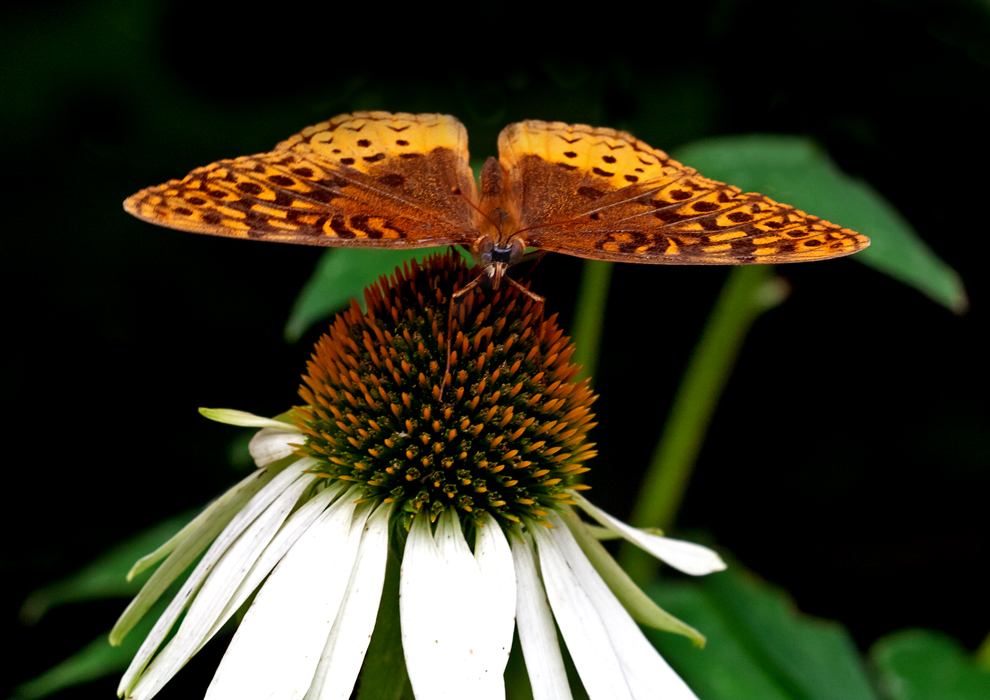
This Great Spangled Fritillary butterfly (Speyeria cybele) was so cooperative that I was able to get amazingly close to it with my 100mm macro lens and photograph it from some unusual angles.

This is the third (and final) posting from this session with the Fritilary (I love saying the butterfly’s name) and I realize that I have moved in a kind of progression. My first posting showed the butterfly from a “normal” perspective. Then I shifted to a somewhat unusual perspective in the second posting by shooting from below the butterfly.

In these final shots, I tried to get eye-to-eye with the fritillary. In the first image, I was almost directly over the butterfly and managed to capture some wonderful details. Who knew the butterfly would be so hairy? In the second shot, I tried to put myself on the same level as the Fritillary as it got nectar from a beautiful white cone flower. If you want to see the photos in greater resolution, click on the images.

fritillary5A_blogfritillary6_blog

© Michael Q. Powell. All rights reserved

Read Full Post »

It was fun chasing this Great Spangled Fritillary butterfly (Speyeria cybele) around my neighbors’ garden as it moved from flower to flower. I tried to capture it from different perspectives and got some artsy looking shots that I really like.

fritillary1_blog

fritillary3_blog

© Michael Q. Powell. All rights reserved

Read Full Post »

I continue to be amazed at the insects that visit my neighbors’ garden and yesterday I was thrilled to see this Great Spangled Fritillary butterfly (Speyeria cybele). The beautiful butterfly moved around a lot among the flowers and even returned after flying away, which gave me time to change lenses.

I took this shot of the butterfly on a cone flower with my 100mm macro lens. I wanted take the photograph at eye-level with the butterfly, but initially the background was too cluttered and there was too much light coming from the back, which caused the butterfly to be shadowy.  I decided to use my pop-up flash, suspecting that the background would go black and the detail of the butterfly would be revealed, which is what happened.

The result looks a little bit artificial, but I like the effect that I managed to achieve. I am working on a couple more images of the butterfly taken in natural light, so you may see it again soon.

fritillary2_crop_blog

© Michael Q. Powell. All rights reserved

Read Full Post »

I love the coloration of this male Slaty Skimmer dragonfly (Libellula incesta) that I photographed last weekend at Kenilworth Aquatic Gardens in the District of Columbia.  Somehow I was able to get both an interesting perch and a blurred background—all too often I get one or the other.

Black Dragonfly lorezB

© Michael Q. Powell. All rights reserved

Read Full Post »

When I first spotted this dragonfly, I thought it was a wasp—it was that small. As I continued to observe it, however, I realized that it was a tiny dragonfly.

Its wings reminded me a little of a Halloween Pennant dragonfly (Celithemis eponina), one of the most exotic-looking dragonflies that I have ever photographed, but it was far too small. (Check out this previous posting for a look at the Halloween Pennant.)

This dragonfly seemed even smaller than the Eastern Amberwing dragonfly (Perithemis tenera), the smallest dragonfly that I had encountered, and I figured it couldn’t be an Eastern Amberwing, because it did not have amber wings. I was wrong. Once again I had allowed myself to be misled by the name of a species. It turns out that this is almost certainly a female Eastern Amberwing, and females have clear wings with brown spots, not amber wings.

I continue to be amazed at the dragonfly’s diminutive size. According to the Field Station at the University of Wisconsin at Milwaukee, Eastern Amberwings are considered to be wasp mimics, because of their coloring, their rapid, erratic flight, and the way they twitch their wings and abdomens when at rest. The Latin name tenera means “tender” or “delicate,” a description that seems to fit this little dragonfly quite well. If you want to learn more about the Eastern Amberwing, you should check out the Field Station website.

Large or small, at rest or in motion, dragonflies are one of my favorite photographic subjects at this time of the year. Their beautiful colors and incredible agility never cease to amaze me.

tiny1_blog

© Michael Q. Powell. All rights reserved

Read Full Post »

I have not yet seen many colorful butterflies this summer, so I was thrilled this past weekend when I observed a female Eastern Tiger Swallowtail butterfly (Papilio glaucus) feeding on a Buttonbush (Cephalanthus occidentalis) and managed to get a couple of good shots.

The first image has a dreamy quality and a softness that I like, with a background that is almost pastel. The body of the butterfly is clearly visible, with its proboscis fully extended.

In the second shot, the colors are more vivid and the butterfly’s head is obscured. However, the wings are open wide and in a beautiful position.

My favorite is the first one. Is there one that you prefer?

swallowtail_blogswallowtail2_blog

© Michael Q. Powell. All rights reserved

Read Full Post »

I love all water lilies, but somehow the pink ones had a special attraction for me this past weekend, when I visited Kenilworth Aquatic Gardens, a wonderful treasure in the District of Columbia administered by the National Park Service. The surrounding lily pads and the duckweed in the foreground really help to showcase the delicate beauty of this flower.

pink_lily_crop_blog

© Michael Q. Powell. All rights reserved

Read Full Post »

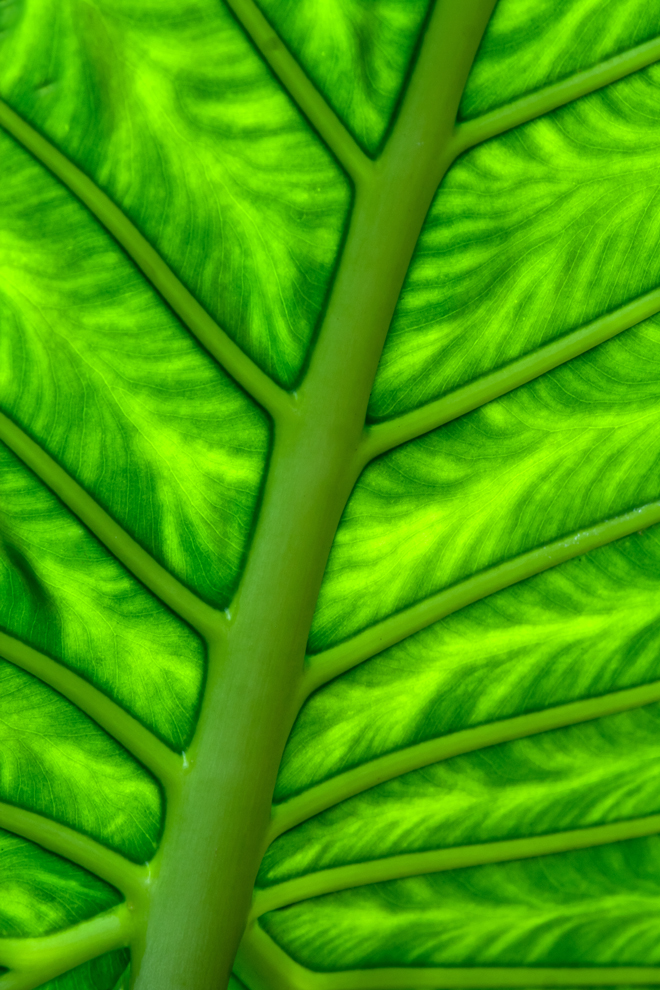
I love back lighting and I was really struck by the beauty of the light coming though the giant leaves of an Elephant Ear plant this past weekend, highlighting the details of the plant. The veins are very prominent and the colors and patterns are gorgeous.

This image is more abstract than my usual photos, but sometimes it’s nice to shoot something a little different.

ear_blog

© Michael Q. Powell. All rights reserved

Read Full Post »

Although it was hot and steamy this morning when I traveled to Kenilworh Aquatic Gardens in the District of Columbia with some friends, the gorgeous lotuses and water lilies in bloom made the trip worthwhile.

Most of the water lilies were white or pink, but in one area they had these especially beautiful purple water lilies. This photo is the first installment of several postings that I plan to do of the dragonflies and flowers that I managed to photograph today.

purple_lily1_crop_blog

© Michael Q. Powell. All rights reserved

Read Full Post »
Sometimes an insect or a spider is so small that it seems almost impossible to get a clear shot of it, which was the case the this morning with this tiny crab spider.It was located in a place where a tripod was not feasible and the spider kept changing its position.

I kept shooting and got this image that is kind of artsy. The spider ended up as merely one element of the composition. I especially like the limited color palette and the different shades of green and brown that are present in the image.

crab_blog

© Michael Q. Powell. All rights reserved

Read Full Post »

I have encountered some cool-looking spiders in the past, but I think that this Bold Jumping spider (Phidippus audax) just leaped to number one on my personal list.

I was checking out my neighbor’s garden (fellow blogger and photographer Cindy Dyer) this past weekend, when I saw a little movement among the flowers. The first thing that i noticed was the fuzzy body and I suspected that I had a jumping spider in front of me. It crawled all around a couple of different plants and most of the time it had its back to be. I tried to be patient as I waited for it to turn toward me, so that I could get a shot of its amazing eyes.

It is equally remarkable that the Bold (also known as Daring) Jumping spider has iridescent blue-green mouth parts that are technically known as chelicerae. At first, I thought the spider was eating something brightly colored that really made it stand out—you can’t really camouflage yourself when you have a color that distinctive.

This is the third species of jumping spider that I have now seen in this one little garden. I am not sure what attracts the spiders to it, but the garden has an equal attraction for me.

Jumping_spider_A_blogjumping_spiderB_blog

© Michael Q. Powell. All rights reserved

Read Full Post »

The water lilies at one of my local gardens seem to be blooming a little late this year, but two of them finally were in bloom yesterday. Here’s a shot one of them and if you look closely you’ll notice a damselfly perched on the water lily. The image is not in his style, but water lilies always remind me of Monet, one of my favorite painters.

water_lily_blog

© Michael Q. Powell. All rights reserved

Read Full Post »

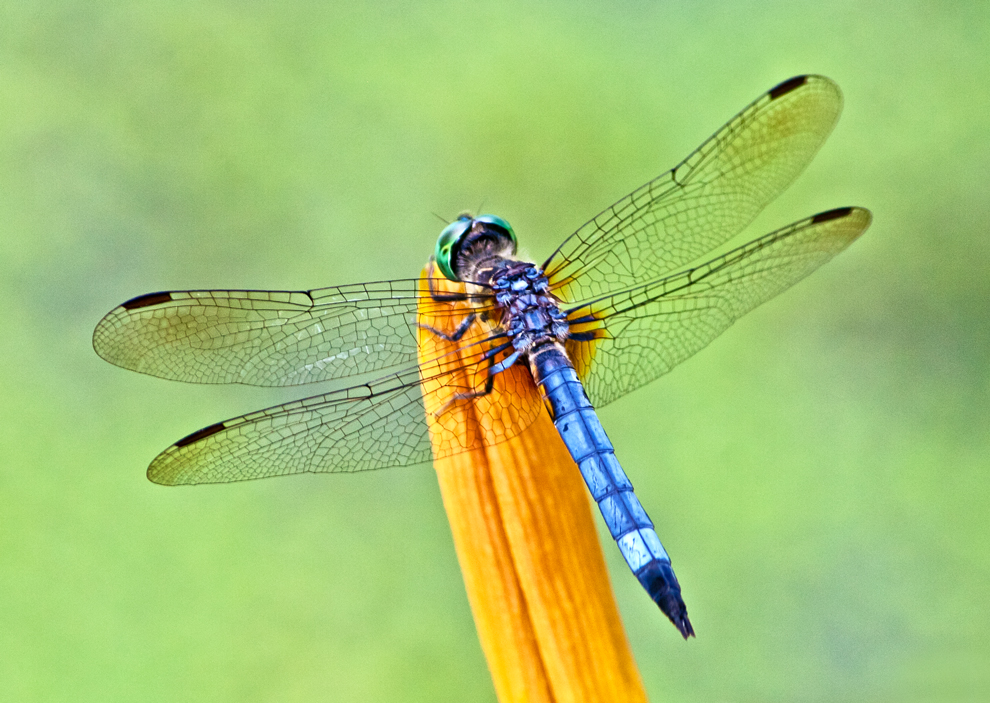
My normal instinct is to move in really close to my subject, whether it is physical movement with my macro lens or virtual movement with my telephoto zoom, but when I saw this dragonfly, I consciously pulled back in order to bring more of the stalk of the lily into the image.

This is a new species of dragonfly for me and I think it is probably a Slaty Skimmer (Libellula incesta). I love the contrast between the dark blue color of the dragonfly’s body and the orange shade of the lily.  This dragonfly’s muted colors give it a somewhat more sophisticated look that the more garishly colored Blue Dasher (Pachydiplax longipennis) that I also photographed that day. (Check out my previous posting to see the contrast between the images of the two dragonflies in similar positions.)

In addition to the colors, I like the composition of the image and the water in the background blurred out pretty nicely too. In the next few weeks, I’ll be off trying to catch some shots of dragonflies on lotus flowers and waterlilies—it’s that time of the year again.

slaty_orange1a_blog

© Michael Q. Powell. All rights reserved

Read Full Post »
I couldn’t believe my luck when this male Blue Dasher dragonfly (Pachydiplax longipennis) perched on one of the orange lilies at the edge of the pond.

The lily had not yet bloomed, making it a perfect place for the dragonfly to land, and I had positioned myself to take this shot, but I was a little doubtful that a dragonfly would cooperate.

The green of the background complements the blues of the dragonfly, but it is the orange that makes this image pop for me.

I am happy with the image.

lily1_blog© Michael Q. Powell. All rights reserved

Read Full Post »

Do you have a favorite insect? I realize that’s a strange question and, if pressed, most people would respond with the name of a beautiful butterfly or perhaps a ladybug, but my favorite is a very special katydid.

Last summer, though, I fell in love with a multi-colored grasshopper-like insect called the Handsome Meadow Katydid (Orchelimum pulchellum). I was absolutely thrilled yesterday to encounter and photograph a tiny insect that is almost certainly one a juvenile Handsome Meadow Katydid.

Although its colors are pretty distinctive, it’s the blue eyes that make it really stand out. The eyes really draw me in, even if they do look a little cartoonish.

Each time I visit the marsh, I will now be on the lookout for these insects, which actually grow more handsome as they age. If you want to see what they look like as adults check out my previous postings called Neon-colored grasshopper; More Handsome Meadow Katydids; and Ol’ Blue Eyes is Back.

Be forewarned, though, that you too may fall in love and end up with a new favorite insect.

katy1_blog

Michael Q. Powell. All rights reserved

Read Full Post »

« Newer Posts - Older Posts »