Feeds:
Posts
Comments

Archive for November, 2014

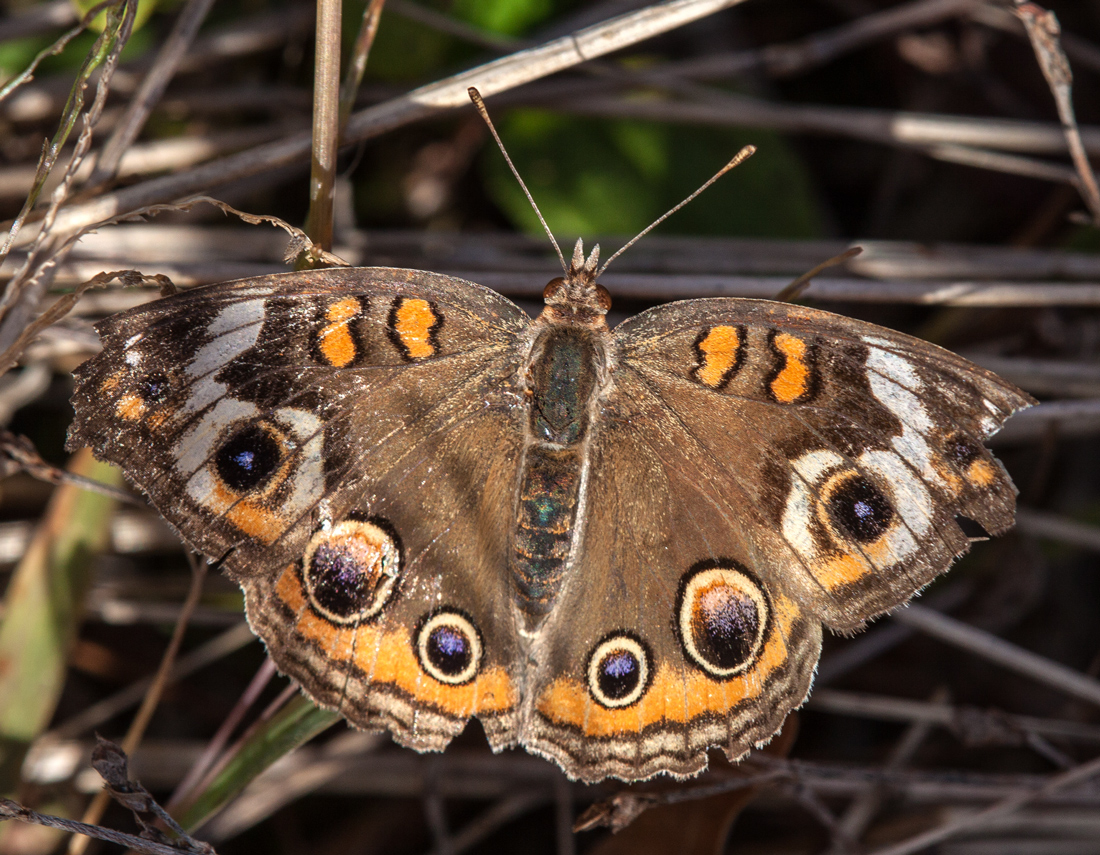
Butterflies in November? I didn’t really expect to see any, so it was a pleasant surprise when I came upon this Common Buckeye (Junonia coenia) on Monday at my local marsh. The butterfly is beat-up and bedraggled, but its beauty beams brightly—uncommon beauty at an unexpected time.

buckeye_nov_blog

© Michael Q. Powell. All rights reserved.

Read Full Post »

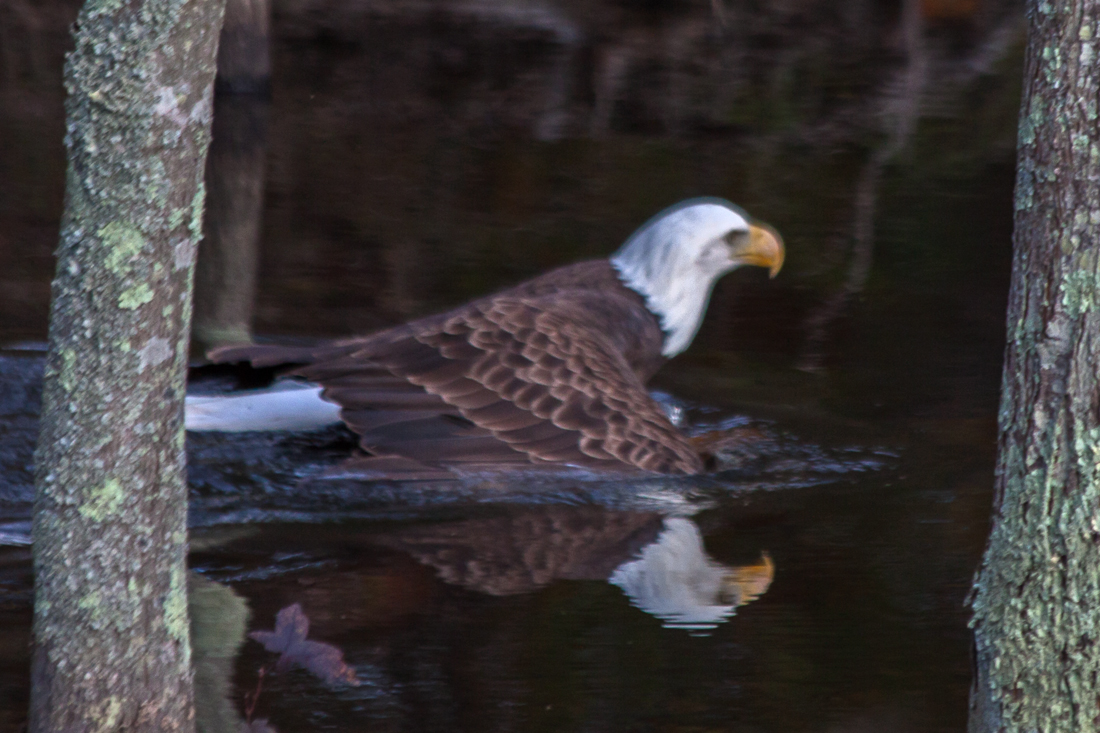
I received an update from the Animal Control Officer who rescued the Bald Eagle (Haliaeetus leucocephalus) featured in yesterday’s posting and the prognosis looks positive.

The eagle had a low heart rate, according to the attending veterinarian, likely from pesticide poisoning, and they treated it with atropine. The eagle, an 8 pound (3.6 kg) female, also had a dislocated joint in one wing, which is treatable as well. It is likely they will be able to release her after some rehabilitation at a specialized facility in southern VA, which I assume is The Wildlife Center of Virginia in Waynesboro, Virginia.

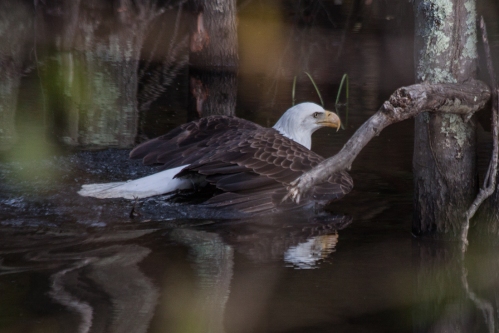
I took the first photo when the eagle was trying to swim away while being rescued. The image is not quite as sharp as the photos from yesterday, but I just love the reflection of the eagle in the water as it struggles to swim. This was in a wooded area of Huntley Meadows Park, my favorite venue for photography, that is now flooded as part of a wetland restoration project. The second photo shows the eagle as it was when I first came upon it, perched on a pile of brush, unable to fly away.

Bald Eagle

Bald Eagle

© Michael Q. Powell. All rights reserved.

Read Full Post »

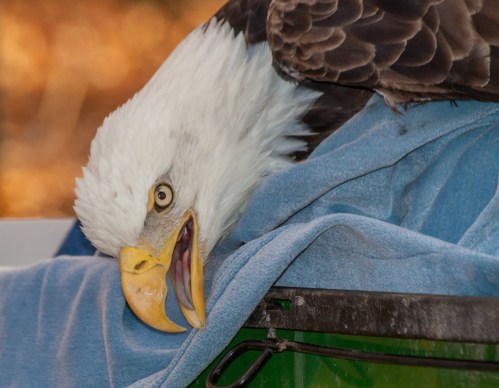
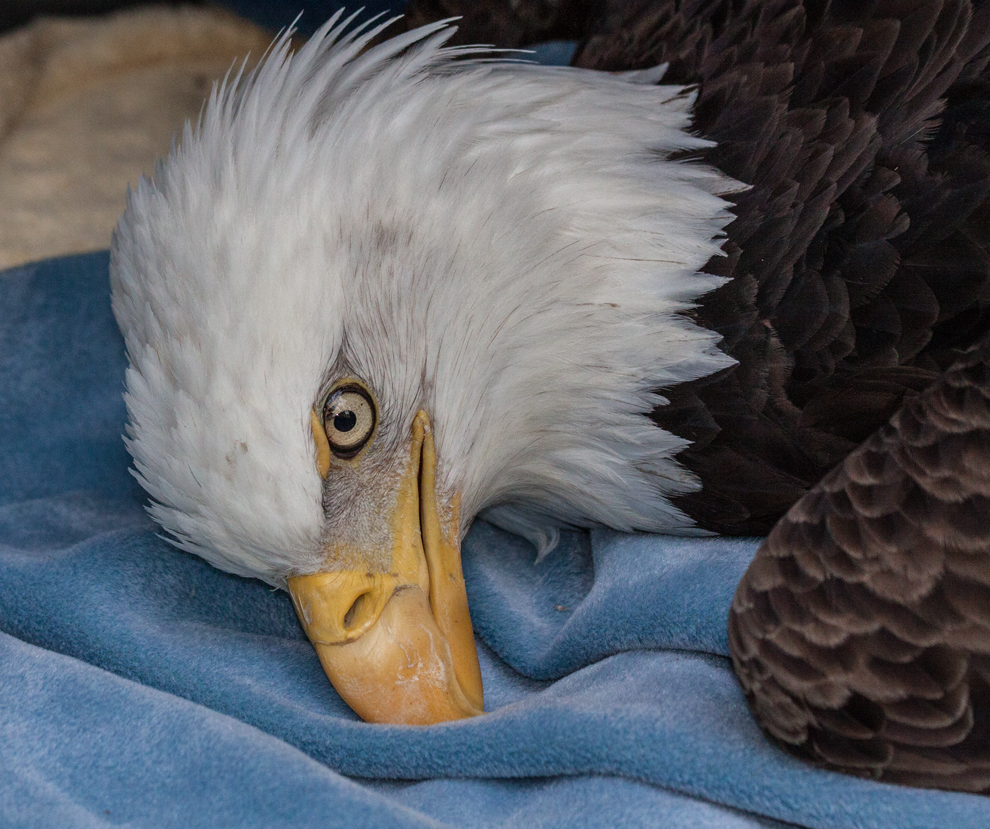
Would you be willing to chase an injured adult Bald Eagle (Haliaeetus leucocephalus) with nothing more than a blanket in your hands? Yesterday, I was privileged to observe a very brave officer of the Fairfax County Animal Control Services capture an injured eagle at my local marshland park.

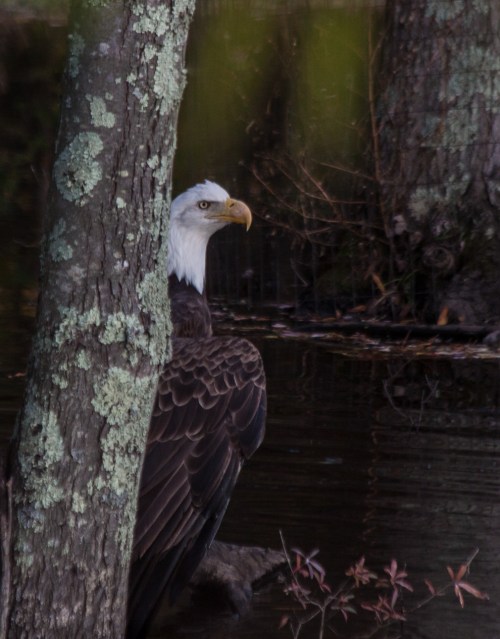
The eagle was perched on a brush pile in a flooded forest area of the marsh. From time to time it would hop to a new position, but did not seem able to fly away. Several parkgoers had alerted the park authorities of the situation and I came upon the situation shortly before the animal control officer arrived.

When the officer began to chase it, the eagle hopped away and then tried to swim away, stopping for a moment to look in my direction from behind a tree. Eventually, when an unidentified parkgoer helped to block a potential exit route for the eagle, the officer was able to capture the eagle.

As the officer was carrying the eagle, wrapped up in a blanket, to a small vehicle, I circled around on the path as fast as I could, hoping to get a closer look at the eagle. The officer was accommodating and briefly unwrapped the blanket and I got an amazing close-up look at this majestic bird. She was also willing to pose for me and I took a photo that I sent to her to help her remember her amazing actions.

I managed to get a final look at the eagle after it had been transferred to the animal control vehicle. The officer unwrapped the eagle so that the man who had assisted in the rescue could get a look at it. The eagle seemed to have settled down a bit and appeared to be resting comfortably. It was impossible to determine the cause and the extent of the eagle’s injuries, but the officer assured me that the county has excellent rehabilitation facilities for injured raptors. If I am able to get progress reports on the eagle’s recovery, I’ll be sure to keep you all informed.
Bald Eagle

Bald EagleBald Eagle rescueBald Eagle rescueBald Eagle rescue

© Michael Q. Powell. All rights reserved.

Read Full Post »
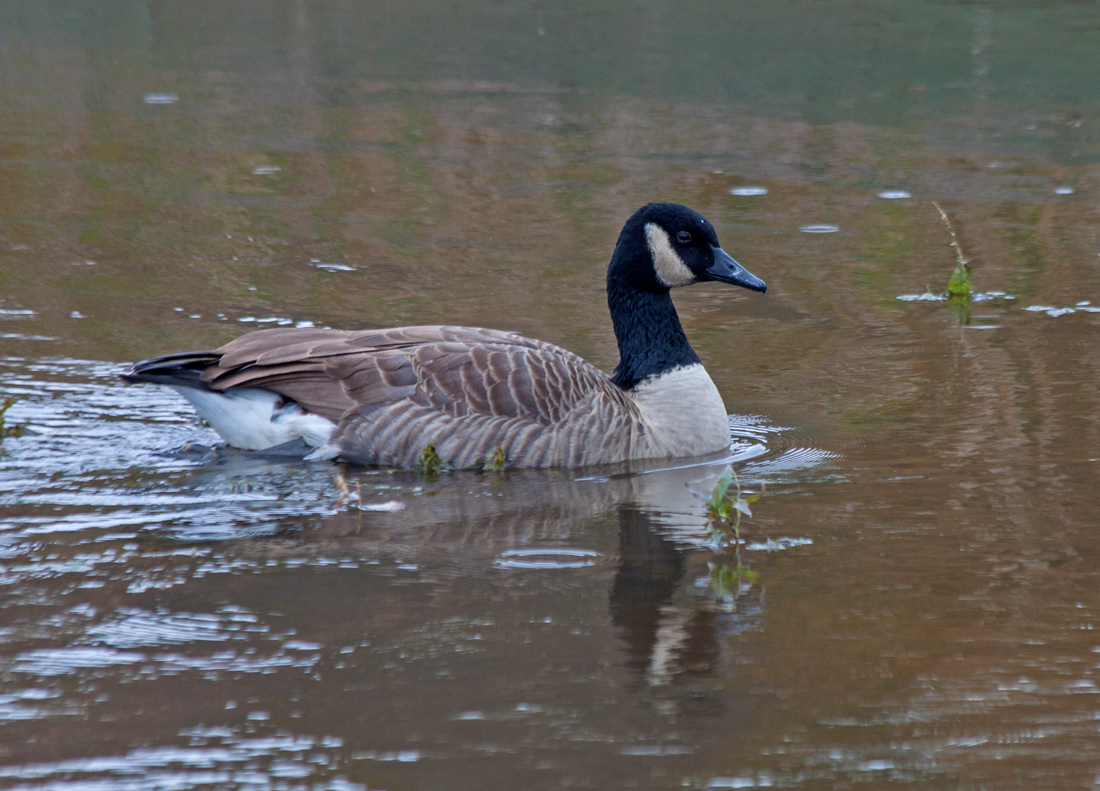
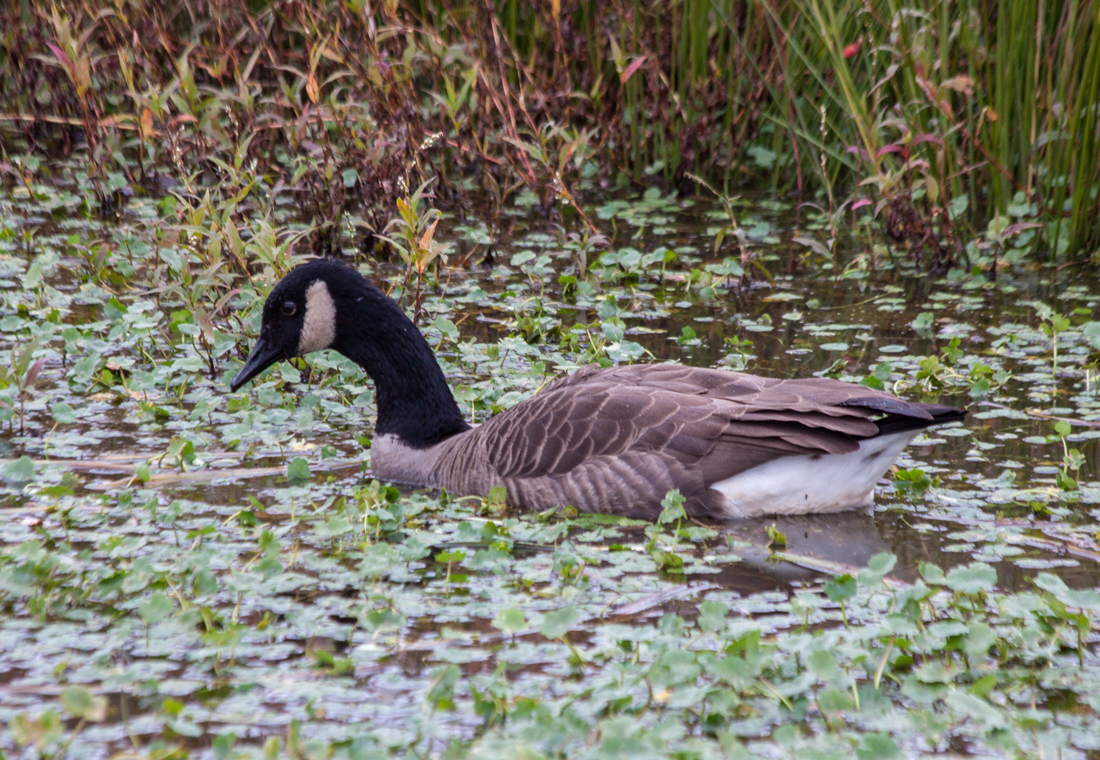
Some people love them and some people hate them, but there is no question that the arrival of Canada Geese (Branta canadensis) signals the transition to a new season.

Yes, they are loud and often obnoxious. Yes, they are numerous and sometimes crowd out other species. Yes, their droppings are nasty and slippery. Despite all of that, I enjoy watching and photographing Canada Geese in the air and on the water.

There were only a dozen or so geese at my local marsh this past weekend, but I am well aware of the fact that this is only an advance party for the hundreds of geese that will move through this area, with some of them choosing to remain here for extended periods of time.  From the perspective of my blog, this is the first posting of the season dedicated to Canada Geese, but certainly not the last.

Canada GooseCanada Goose

© Michael Q. Powell. All rights reserved.


Read Full Post »
A new month started quietly, with few animals, birds, or insects visible on a cold. overcast day. I walked around my local marsh for a couple of hours and experienced nature in a series of small encounters, signs of the changing season.

A lone swallow sang softly in a tree; (CORRECTION: A sharp-eyed reader noted this is a female or immature Red-winged Blackbird)

A mallow flower bloomed unexpectedly in the water;

A squirrel peeked out from behind some branches;

The trees showcased their muted autumn colors; and

An advance party of Canada Geese came in for a landing.

© Michael Q. Powell. All rights reserved.

Read Full Post »

November arrived as a cold, overcast, windy day and there was not much wildlife moving around (and no insects at all). All around me I noticed signs of autumn and I decided to try to capture the feeling of the changing season at my local marsh. I took lots of photos of the fall foliage, but somehow I liked this image best as a graphic depiction of autumn at my favorite marsh.

autumn cattail

© Michael Q. Powell. All rights reserved.

Read Full Post »

I am looking for some background information—do you generally prefer creamy smooth backgrounds in your photos or do like there to have some elements of texture?  This is a ridiculous question, of course, and it’s a bit like asking me if I like chocolate or strawberry ice cream. I like them both, but in certain situations I may prefer one over the other.

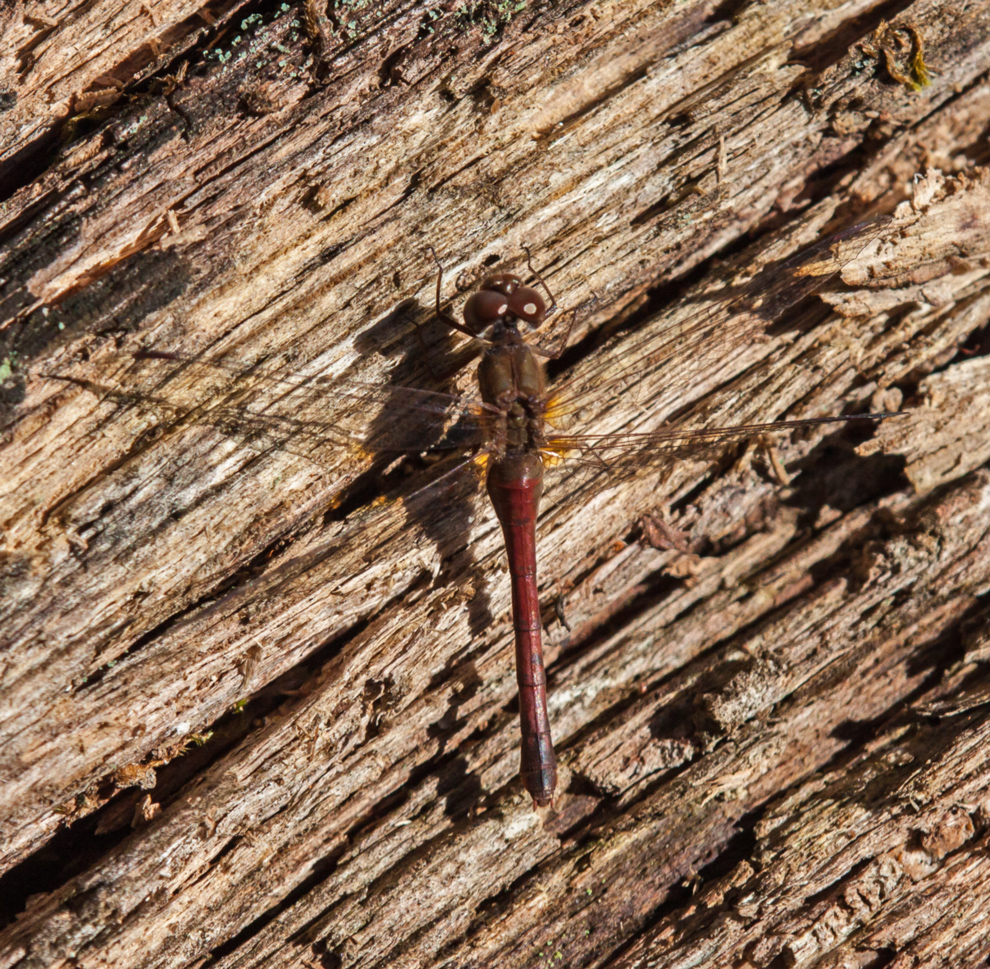
These musings came to mind when I was reviewing the some photos I took this past week of Autumn Meadownhawk dragonflies (Sympetrum vicinum). These little red dragonflies are perennially the last species to disappear in our area and I am likely to see them well into November and sometimes into early December.

The first image below shows a male Autumn Meadowhawk with the kind of background that I usually try to shoot, blurred and uncluttered. The thorn on the green stem adds an unexpected bit of additional interest for me.

The background of the second image with a female Autumn Meadowhawk is completely different—the lines and texture of the decaying log are very evident. Sometimes when I look at the image I think that the background is too distracting, because I have to look hard to see the details of the dragonfly. At other times, I am drawn in by the organic feel of the wood in the background and I really like the diagonal lines and rough texture.

These two images work well for me in tandem, juxtaposing as they do different genders, very different backgrounds, and radically different angles of view. These kinds of sharp contrasts often prompt me to stop and think as I consider the images—and that is generally a good thing.


male Autumn Meadowhawkfemale Autumn Meadowhawk

© Michael Q. Powell. All rights reserved.

Read Full Post »

« Newer Posts