Feeds:
Posts
Comments

Archive for January, 2014

This past weekend I caught a glimpse of a fox in motion at Huntley Meadows Park—I’m pretty sure it was doing the foxtrot. I was staring across a mostly frozen beaver pond, when suddenly this red fox (Vulpes vulpes) burst into my field of view. It was running slowly around one edge of the pond, heading in the direction of a wooded area.

I didn’t have much time to react, so I had to make do with the existing camera settings. The exposure was dialed in about right and the shutter speed was fast enough. What I didn’t realize at that moment, though, was that I was in servo mode, because I had been shooting some geese in flight, so I was happy that I somehow managed to lock the focus on the moving fox pretty well. I was a little chagrined after the fact to realize that my zoom lens had not been fully extended—the images were shot at about 200mm on a 70-300mm lens.

I did get some action shots of the fox, but the first image is my favorite. The fox had paused for a split second and was looking back in the direction from which it had come and there is a lot of facial detail.

It’s especially fascinating for me to see the position of the bushy tail when the fox was moving. Often it seems like the tail is parallel to the ground. It’s cool too that I was able to catch the fox in mid-jump, with its feet almost entirely in the air. The snow is mostly gone from the ground today, so I am particularly thankful that I was able to capture some images of this brief encounter with the fox in a wintery scene.

fox_looking_back_blog fox_trot1_blogfox_trot2_blog

fox_trot3_blog© Michael Q. Powell. All rights reserved
Read Full Post »

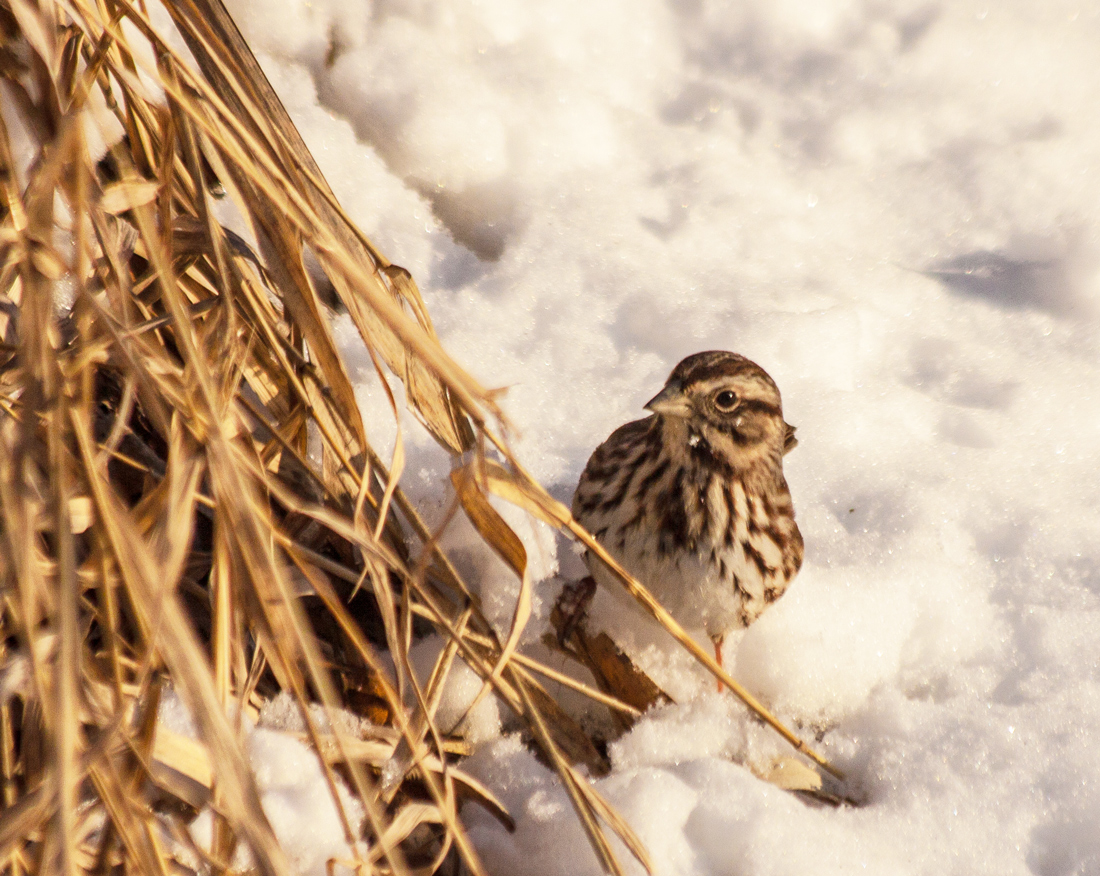
Although I already posted a photo earlier today of a Song Sparrow (Melospiza melodia) in the snow, I came across one I liked even more as I was going through yesterday’s images. This sparrow (and I am never certain of my sparrow identifications) seemed to be posing for me. Somehow I was able to capture details in its eyes that I have never seen before.

After our brief portrait session, the sparrow hurried back to work.

sparrow_snow2_blog

© Michael Q. Powell. All rights reserved
Read Full Post »

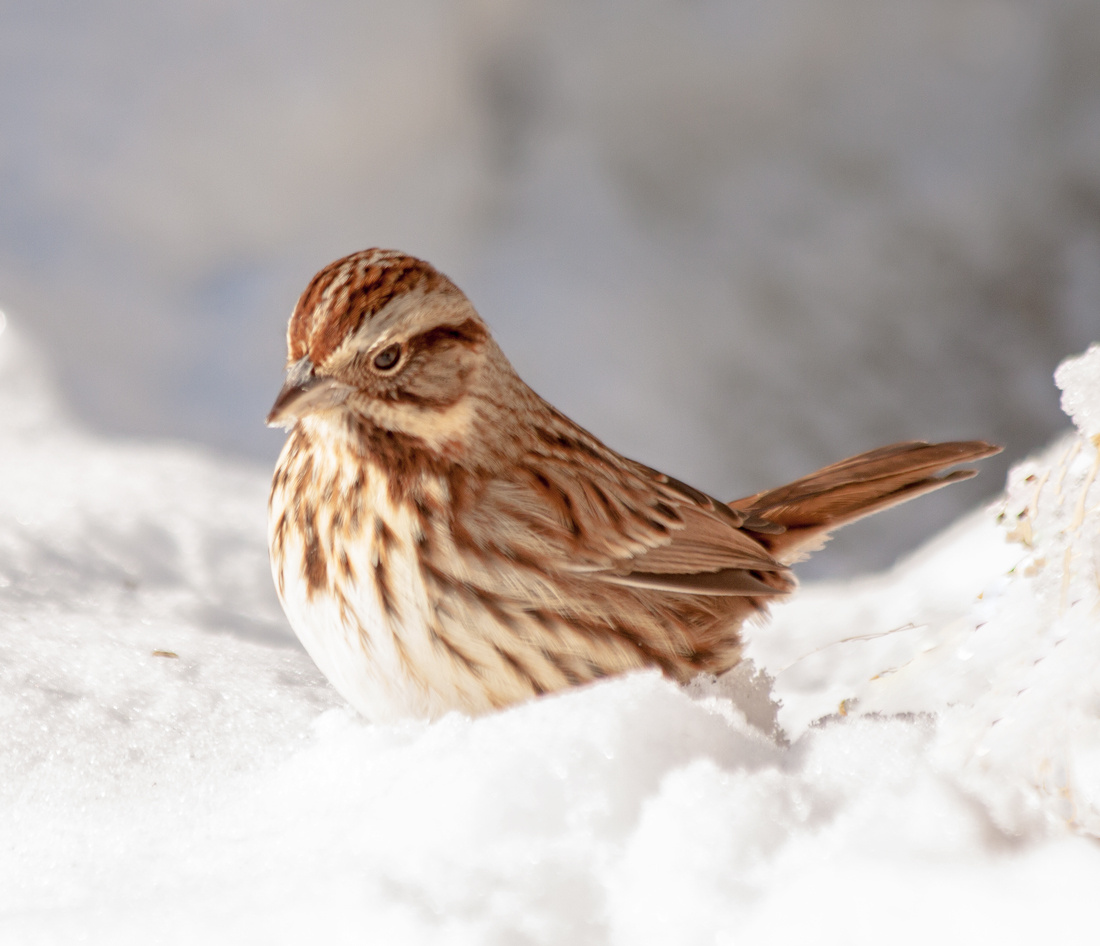
We don’t get much snow here is Northern Virginia, so I was really excited to visit my marshland park yesterday to see what birds and animals were active. There were lots of crows and Canada Geese, but I was mostly attracted by the frenetic activity of the sparrows.

The sparrows moved around quickly in the snow and on the ice, foraging for food in the dried out vegetation in the cattail field. This little sparrow, which I think is a Song Sparrow (Melospiza melodia), paused for a split second and lifted its head, which made it possible for me to get this shot. (Most of my other shots have the sparrow’s head in the shadows or buried in the vegetation).

sparrow_snow_blog

© Michael Q. Powell. All rights reserved

Read Full Post »

Although the sun was shining brightly yesterday, it seemed to be generating little heat and the gusts of wind made staying outdoors uncomfortable after a short while. Even the birds in the neighborhood seemed to have taken shelter, with the exception of this Northern Mockingbird (Mimus polyglottos) that I was able to photograph as it foraged for food.

At other times of the year, the cheerful, energetic calls of the mockingbird announce its presence long before my eyes detect it. This mockingbird, however, was completely silent and seemed to be minimizing its expenditure of energy as it sought to sustain itself in the frigid temperatures.

Returning indoors to the warmth of my house, I pondered anew the question of how these fragile creatures are able to survive during the winter. (It’s about 13 degrees outside (minus 10 C) as I make this posting.)

mockingbird_jan_blog

© Michael Q. Powell. All rights reserved

Read Full Post »

The weathermen thought the snowstorm that is now dumping a lot of snow on the Northeast would skirt around us, but they were wrong—I ended up shoveling a couple of inches of the white stuff yesterday evening and this morning. So, I decided to post this photo of a male Northern Shoveler (Anas clypeata) that I took on New Year’s Day, in honor of all of the shovelers in the north that will be busy today.

I remember well the first time I saw a Northern Shoveler last winter. At first I thought it was a Mallard, but then I got a look at the elongated bill, which still seems cartoonish to me. In this image, I really like the way that you can see the shape of the duck’s bill in the reflection in the water.

Our storm started out with rain and then turned to snow and everything is now frozen solid. With strong gusts of wind and a current temperature of 18 degrees (about minus 8 C), I may stick close to home today, but hope to get some shots of the snow.

shoveler1_blog

© Michael Q. Powell. All rights reserved

Read Full Post »

The title for this visual pun immediately came to mind when I first saw the photo—I can’t help myself when it comes to puns.

For the record, the colorful duck in the foreground is a male Northern Shoveler (Anas clypeata) and the two in the background are male Green-Winged Teals (Anas carolinensis).

As the new year begins, should I be getting my ducks in a row?

ducks_row_blog

© Michael Q. Powell. All rights reserved

Read Full Post »

Some birds (and some people I know) really like to make an entrance. This Canada Goose (Branta canadensis) made a big splashy arrival in the marsh that seemed to be intended to catch the attention of the spectators already there.

They did not seem to be impressed.

spectators_blog

Click on the photo to see a higher resolution view.

© Michael Q. Powell. All rights reserved
Read Full Post »

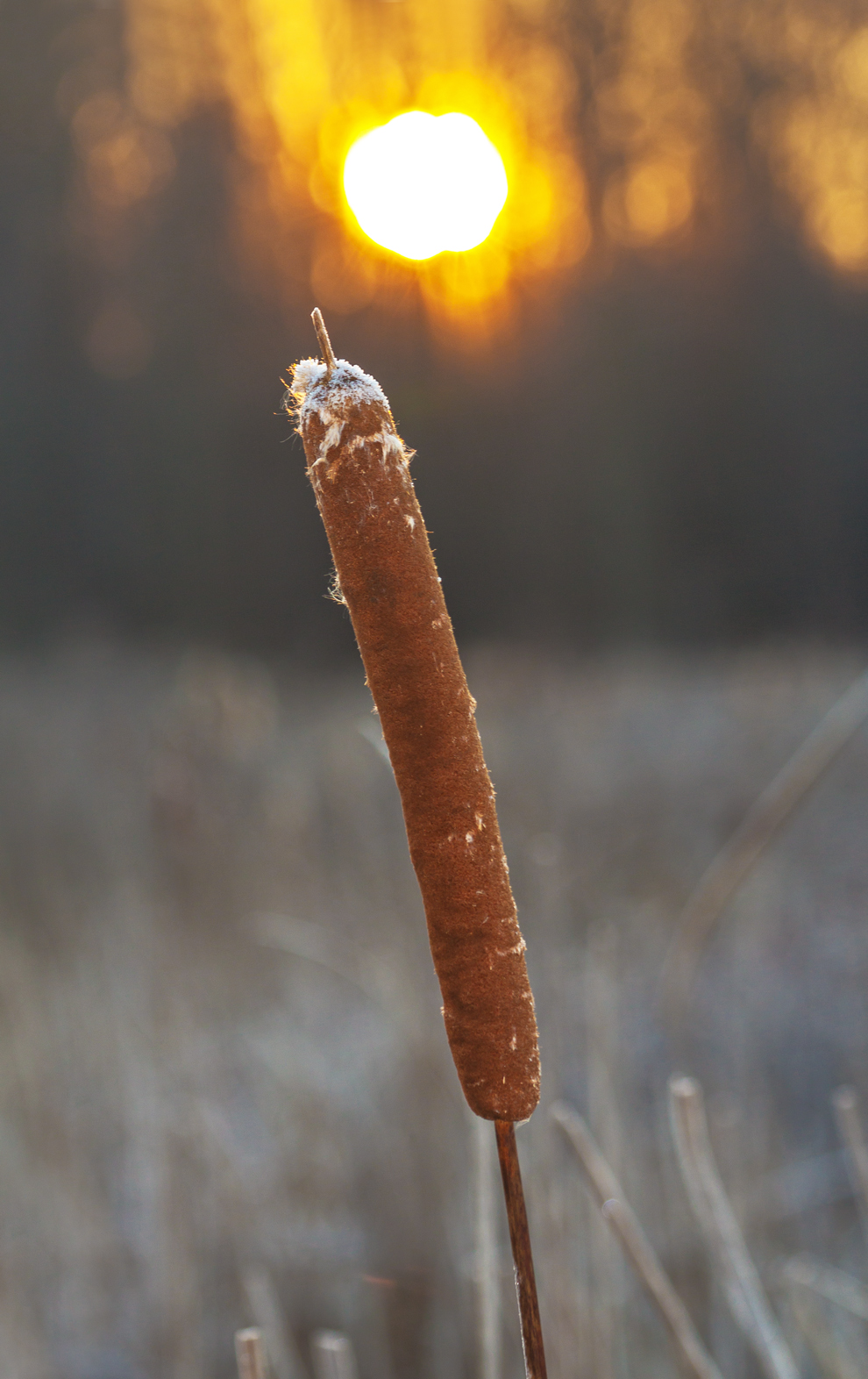
As the new year dawns, it seems appropriate to post this photo I took last weekend at my local marsh, as the early morning sun peeked through the trees and cast its first rays of light onto the cattails.

Best wishes to all for a happy, safe, and blessed 2014.

cattail_dawn_blog

© Michael Q. Powell. All rights reserved

Read Full Post »

« Newer Posts