Feeds:
Posts
Comments

Posts Tagged ‘warbler’

Leaves are now falling from the trees, making my walks though the woods increasingly crunchy. I feel like I am announcing my presence to all of the birds as I approach them. This little Yellow-rumped Warbler (Setophaga coronata) lifted its head for a moment to check me out, then returned to its foraging among the fallen leaves, probably having decided that I did not represent a threat.

Yellow-rumped Warbler

© Michael Q. Powell. All rights reserved.

Read Full Post »

At this time of the year Yellow-rumped Warblers (Setophaga coronata) are probably the most numerous warblers in our area. You can often seem them in constant motion flitting about high in the trees. They rarely stay still for more than a moment and it is unusual to get a clear view of the entire body of one.

I have spent a lot of time this week patiently tracking these little birds at several locations at Occoquan Bay National Wildlife  Refuge and managed to get a few shots that I really like. The first image shows a Yellow-rumped Warbler perched at ground level on the trunk of a tree that had fallen across the road and had been cut up and moved to the side. I particularly like that it shows the tiny feet of this bird that is about 5 inches in length (13 cm). The little yellow streaks just under the wings help to identify this as a Yellow-rumped Warbler.

The second image, possibly my favorite, shows the yellow patch on the bird’s rump that is responsible for its name. The intense focus of the warbler as it looks upward help to give this image a dynamic element that is absent in many images of perched birds.

The final image has a studio-like feel to it, because the sky was completely overcast and turned white as I was processing the image. I had tracked the bird when it entered into the vegetation and managed to get this shot when it finally popped up at the top of the tree and stretched its neck to look around.

Yellow-rumped Warbler

Yellow-rumped Warbler

Yellow-rumped Warbler

© Michael Q. Powell. All rights reserved.

Read Full Post »

In the autumn, various species of warblers fly through our area as they migrate south and I spent a large amount of time this past Friday trying to get shots of what I believe were mostly Palm Warblers (Setophaga palmarum). Warblers in general are tough for me to identify, even in the spring when the colors and patterns on the birds are bright and distinctive. At this time of the year, however, all of the colors and patterns are muted and many species look really similar to me.

Palm Warblers are a little easier to spot than most warblers to identify, because they often can be found pecking away on the ground rather than in trees, as you can see in the second shot. Although I usually strive to get unobstructed shots of my subject, the first image is my clear favorite of the three in this posting. The branch in the foreground that partially blocks the bird helps in the composition, I think, and reinforces the sense of the elusiveness and caution of this little warbler.

Palm Warbler

Palm Warbler

Palm Warbler

© Michael Q. Powell. All rights reserved.

Read Full Post »

“You look like an angel…” I am not sure what was so special about that particular spot on that specific tree, but this Yellow-rumped Warbler (Setophaga coronata) used all of its aerial and acrobatic skills to peck away at it on Monday at Occoquan Bay National Wildlife Refuge. From what I could tell, the warbler held on to the branch with its feet and used its outspread wings for balance. In the second image, it looks like the warbler was using a pendulum-like motion to generate momentum.

The bird’s body positions remind me of artistic portrays of angelic beings that I have a seen in multiple museums and books and I felt blessed to have had the chance to see this relatively common bird in an unusual way.

Yellow-rumped Warbler

Yellow-rumped Warbler

© Michael Q. Powell. All rights reserved.


Read Full Post »

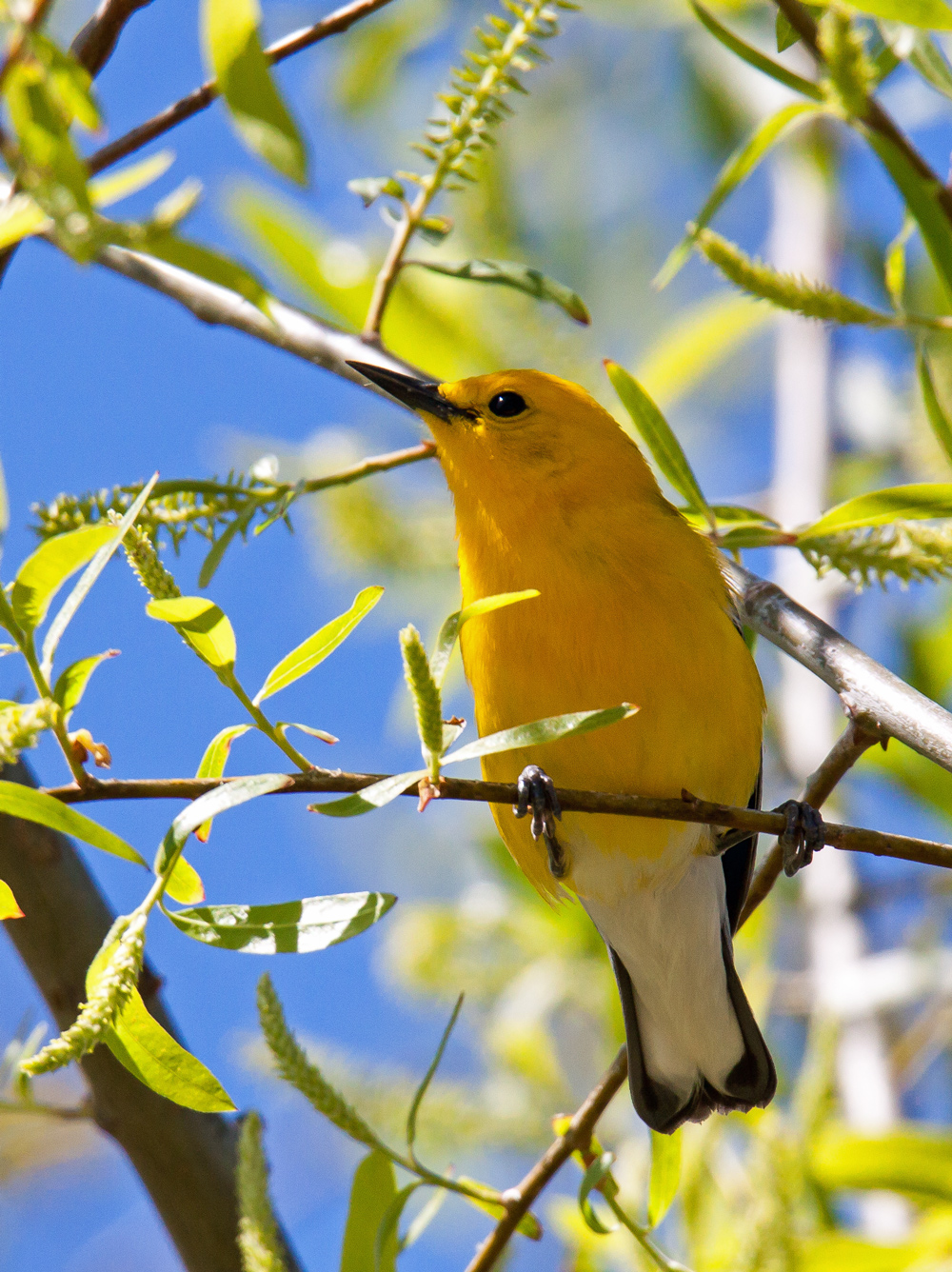
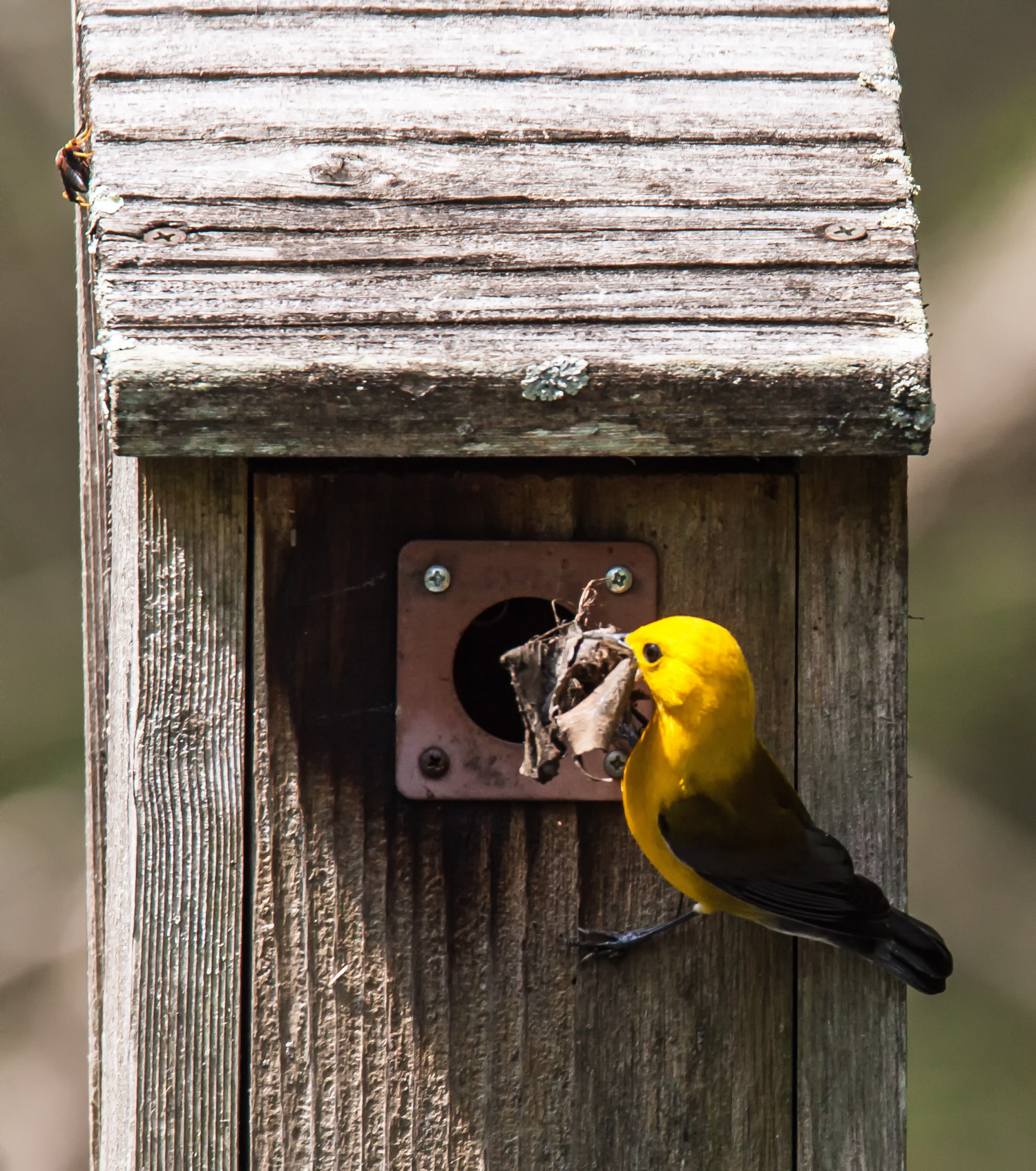
Most warblers seem to have some yellow on their bodies, but I had never before seen one with as much yellow as the Prothonotary Warbler (Protonotaria citrea) that I spotted on Monday at Occoquan Bay National Wildlife Refuge. The yellow coloration helped me in tracking the bird, although it stayed high in a tree and was in almost constant motion. Now that there are leaves on many of the trees, I’m finding it to be harder and harder to get unobstructed shots of birds.

I will definitely be trying to get some more shots of this spectacular bird, hopefully in the near future.

Prothonotary Warbler

Prothonotary Warbler

Prothonotary Warbler

© Michael Q. Powell. All rights reserved.

Read Full Post »

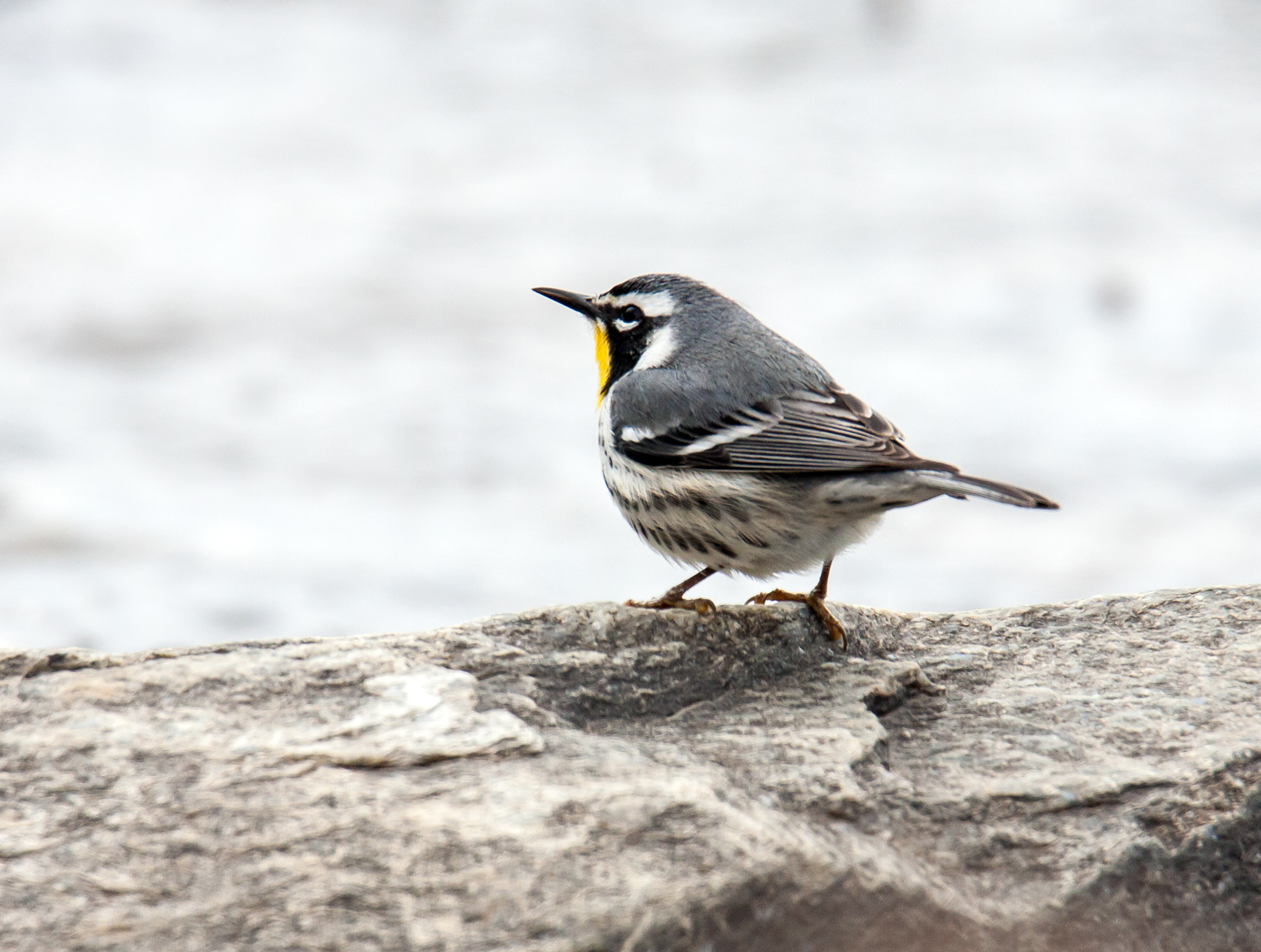
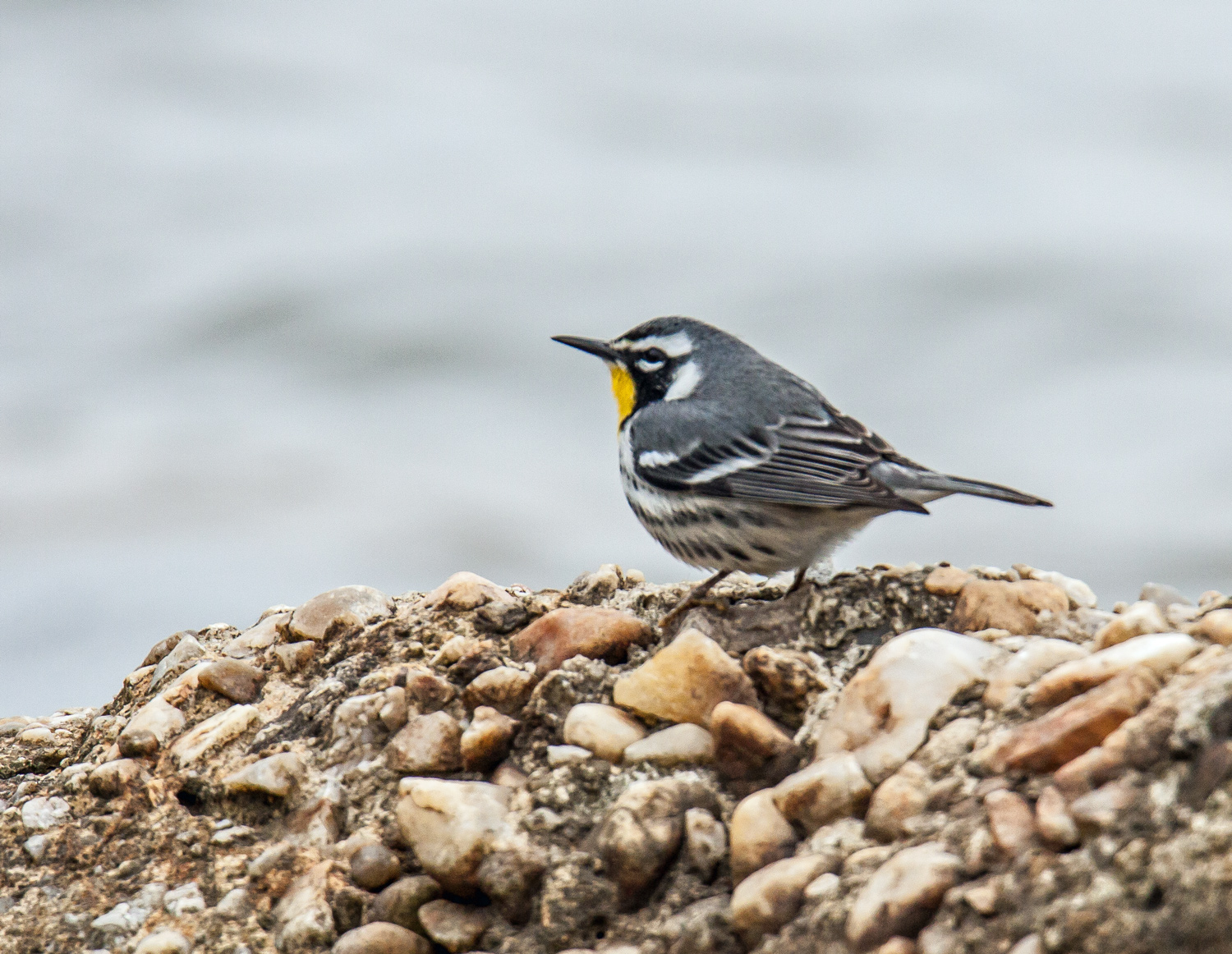
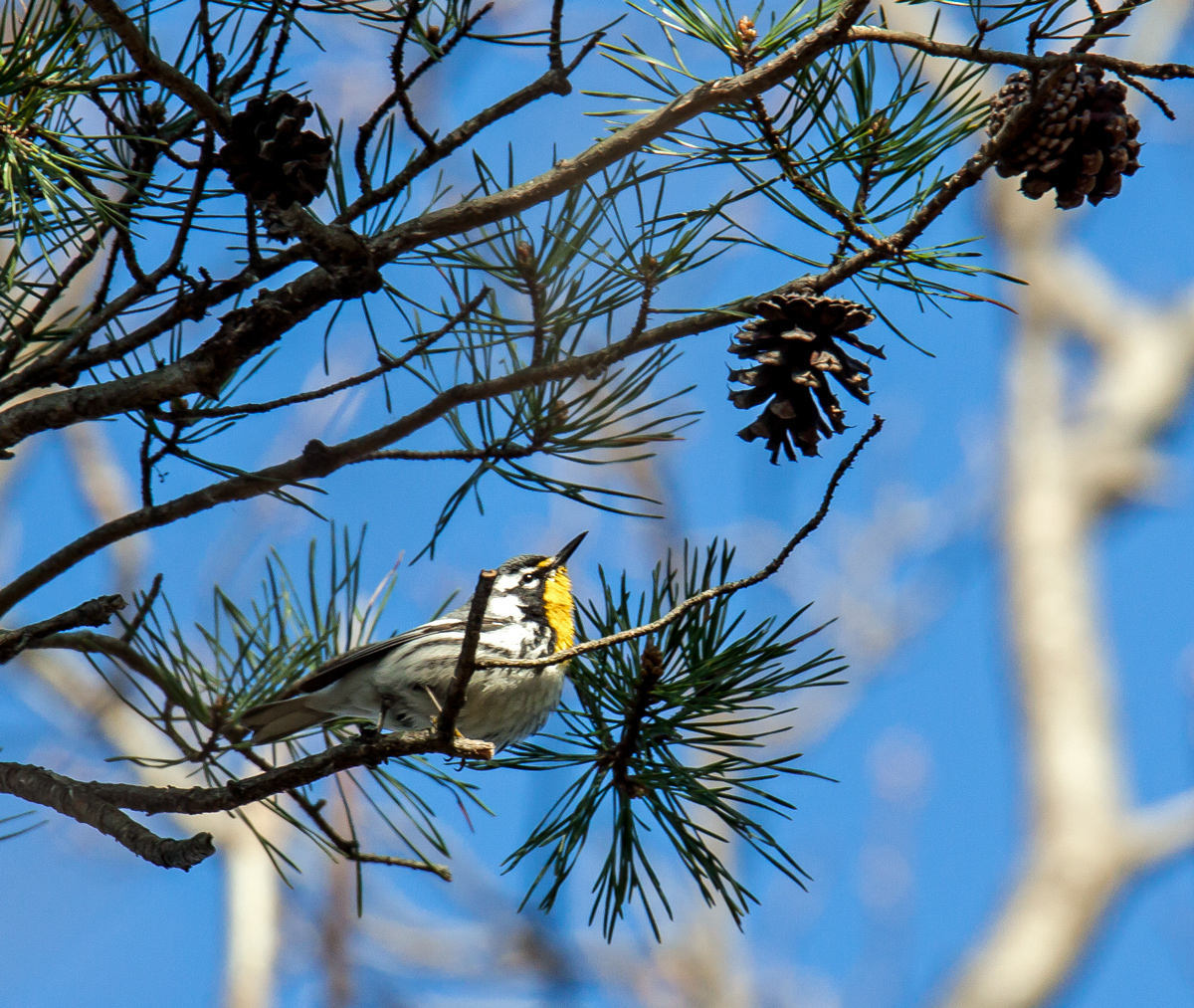
I was a little shocked (and really happy) to see this Yellow-throated Warbler (Setophaga dominica) at the edge of the water rather than high in a tree yesterday at Occoquan Bay National Wildlife Refuge, allowing me to capture some of the bird’s beautiful markings.

A couple of weeks ago I caught a glimpse of a Yellow-throated Warbler for the first time, but that bird was high in a pine tree and too far away for me to appreciate fully its beauty. When I read about the species, I learned that it likes to spend its time near the top of the pines. So when I spotted a bird hopping along the rocks at the water’s edge yesterday, I was not expecting to see a Yellow-throated Warbler.

It was a cold, cloudy day and all of the colors seemed subdued—most of nature is still clothed in its monochromatic winter gard. My heart rate jumped when I saw a flash of bright yellow as I gazed at the little bird through my telephoto lens. It didn’t completely register on my mind that this was a Yellow-throated Warbler, but I knew for sure that it was a warbler.

When it comes to small, hyperactive birds, seeing them is one thing—getting a photo is an entirely different matter. One of the biggest challenges about using a long telephoto lens is locating the subject quickly when looking through the lens. It is a skill that improves with practice, but there were numerous times yesterday when I would locate the bird and it would move away as I was trying to acquire focus.

I followed after the bird, trying to keep it in sight as it moved down the shoreline. I was on a trail that paralleled the water, but there was often a strip of vegetation that separated me from the water and the warbler. Eventually I was able to get a few photos of the beautiful little bird before it disappeared from sight.

Whenever I see a new species, I am excited to get any shot of it, but then I seek to improve on those initial images. That was certainly the case with the Yellow-throated Warbler and I am hoping that I will be able to repeat this cycle with a few more warbler species this season.


Yellow-throated Warbler

Yellow-throated Warbler

© Michael Q. Powell. All rights reserved.

Read Full Post »

I photographed this Yellow-throated Warbler (Setophaga dominica) really high in a pine tree yesterday morning at Occoquan Bay National Wildlife Refuge. A helpful birder pointed out the bird to me, but it took quite a while before the bird revealed itself enough for me to get a shot.

Birders in my area are starting to get really excited because it is warbler season. In theory, that means there will be all kinds of birds around with varying patterns of yellow. I have very little experience with spring warblers, but suspect that many of the warblers will hang out at the top of the trees and will be tough to photograph. In past years I have concentrated on ducks at this time of the year, but I think I may try to devote some attention to warblers this spring.

On a totally unrelated note, I spotted some Common Green Darner dragonflies yesterday, the first dragonflies that I have seen this season. Hopefully it won’t be too long before dragonfly photos show up in a posting.

Happy Easter to all those who are celebrating Easter today.

Yellow-throated Warbler

© Michael Q. Powell. All rights reserved.

Read Full Post »

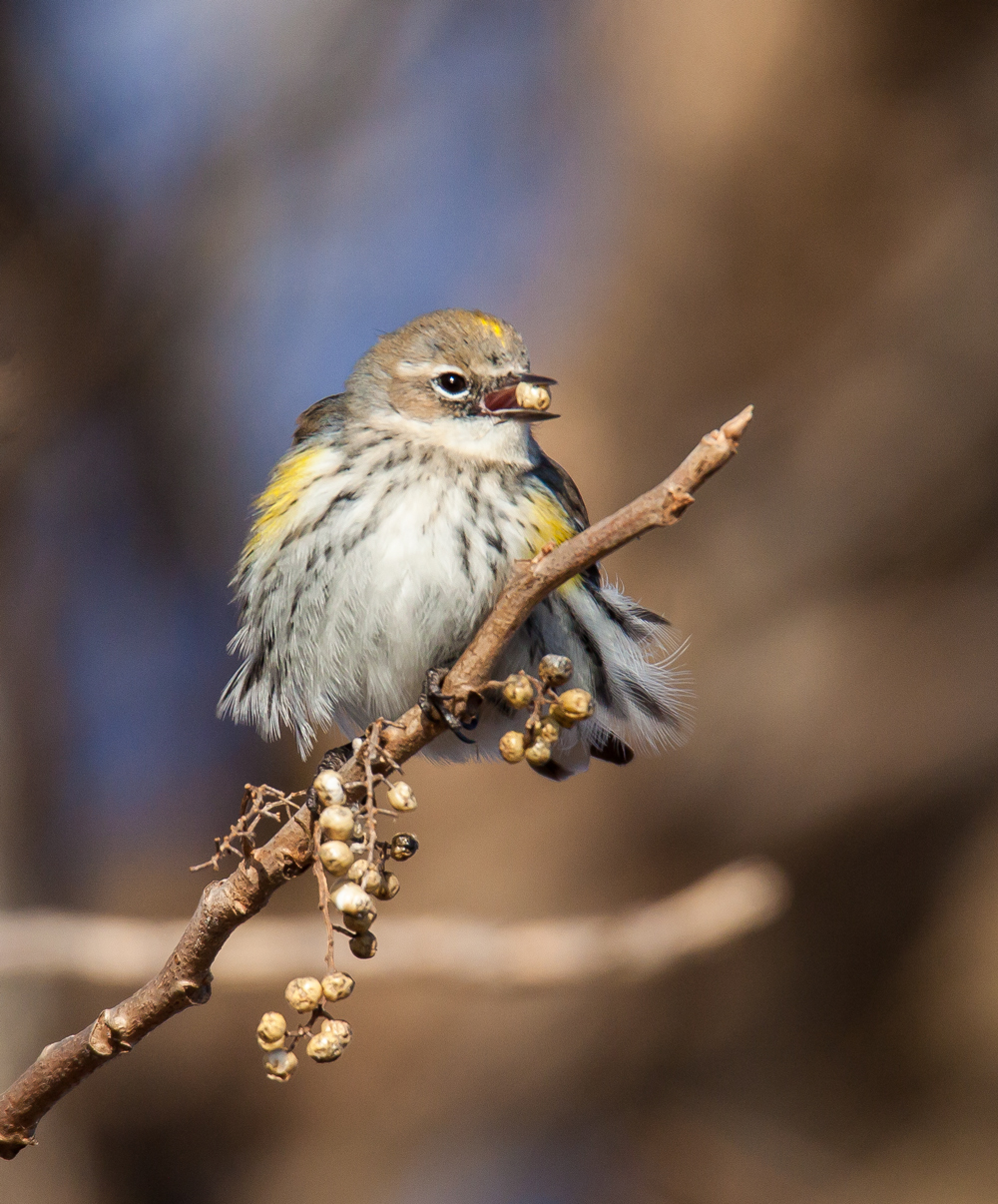
A Yellow-rumped Warbler (Setophaga coronata) really seemed to be enjoying the poison ivy berries that it managed to find on a frigid morning earlier this month at Occoquan Bay National Wildlife Refuge.

This little bird was so focused on finding food that it was not disturbed by my presence, which allowed me to capture a series of images.

Yellow-rumped Warbler

Yellow-rumped Warbler

Yellow-rumped Warbler

© Michael Q. Powell. All rights reserved.


Read Full Post »

It was cold and windy on Christmas morning, but I nonetheless spent some time trekking about at Occoquan Bay National Wildlife Refuge and captured this shot of a beautiful little Yellow-rumped Warbler (Setophaga coronata). One of my Facebook viewers has posited that the berries the warbler is eating are poison ivy, though I cannot confirm that identification.

In my church, Christmas day marks the beginning of the twelve days of Christmas (many of you may be familiar with the song), so I am continuing to think about Christmas. I am saddened each year when I see Christmas trees confined to the curb the day after Christmas—I am not ready to move on.

Merry Christmas to all and best wishes for a blessed new year.

Yellow-rumped Warbler

© Michael Q. Powell. All rights reserved.


Read Full Post »

Until I had a conversation with a birder last week, I never realized that Yellow-rumped Warblers (Setophaga coronata) spend their winters in my area. Somehow I thought that they were merely passing through, migrating to some more distant southern location,

This past Friday, I spent quite a bit of time trying to get shots of some Yellow-rumped Warblers. Like the Golden-crowned Kinglet that I featured yesterday, these little birds seemed to spend most of their time hidden from me in the branches, periodically exposing a body part as if to tease me.

Here are a couple of my favorite shots of the day. I never did manage to get very close, but I like the way that the fall foliage helps to establish an environmental backdrop to the images.

Yellow-rumped Warbler

Yellow-rumped Warbler

© Michael Q. Powell. All rights reserved.


Read Full Post »

I am not sure why, but I have seen more warblers this autumn that I have ever seen before. In past years they always remained elusive, hidden behind the foliage, heard but not seen. This year I have seen them, especially Yellow-rumped Warblers (Setophaga coronata) at several locations and on several occasions.

Here are several of my favorite warbler shots from this past weekend at Huntley Meadows Park. The first image, my favorite, is one of those lucky shots that occur when a bird takes off just as I press the camera’s shutter button. Normally that results in a bird that is out of focus or partially out of the frame, but this bird took off slowly and in a direction parallel to where I was focusing. Sometimes it is better to be lucky than to be good.

Yellow-rumped Warbler

Yellow-rumped Warbler

Yellow-rumped Warbler


© Michael Q. Powell. All rights reserved.

Read Full Post »

It was cool, wet, and a little breezy yesterday, not exactly a perfect day for photography, but I made a trip anyways to Occoquan Bay National Wildlife Refuge.  My persistence was rewarded when I was able to capture some images of several cute little Yellow-rumped Warblers (Setophaga coronata).

When it comes to warblers, I generally have two big problems. Warblers seem to like to perch in the center of clusters of branches and it is often virtually impossible to get unobstructed shots of them. Even if I am able to get a clear shot, I am faced with the equally daunting challenge of identifying the bird. There appear to be a large number of warblers with similar patterns and colors and there are innumerable variations based on season, age, gender, and region.

I was pretty confident that the birds in these images were Yellow-rumped Warblers, but for reassurance I checked with some experts on a Facebook birding forum. One of them humorously noted that this bird is often informally referred to as “Butterbutt.”

Yellow-rumped Warbler

Yellow-rumped Warbler

Yellow-rumped Warbler

© Michael Q. Powell. All rights reserved.


Read Full Post »

As soon as I saw the flash of yellow, I knew that these little birds were almost certainly warblers and not sparrows. When it comes to most warbler species, that’s the full extent of my identification skills. Most years when the warblers come through our area in the spring and in the fall, I can hear the warblers in the trees, but I rarely see them.

I initially thought that the bird in the first shot was a Yellow-rumped Warbler, but it turns out that my knowledge of bird anatomy is lacking. The area that is yellow on this bird is the undertail area and not the rump, which is more on the top. So what are these birds? A helpful birder in a Facebook forum identified them to me as Palm Warblers. (Setophaga palmarum).

With a little luck, I’ll get some more shots of warblers in the coming weeks and will undoubtedly have to rely on others to assist me in identifying them, though I need no help in appreciating their beauty.

Palm Warbler

Palm Warbler

Palm Warbler

© Michael Q. Powell. All rights reserved.

Read Full Post »

Periodically I’d catch a glimpse of a warbler in the trees of Huntley Meadows Park last Friday, but they mostly remained hidden deep within the branches. This Yellow-rumped Warbler (Setophaga coronata), however, ventured out of the shadows just enough that I was able to get this long-distance shot of it.

Yellow-rumped Warbler

© Michael Q. Powell. All rights reserved.

Read Full Post »

Warblers are so small and hide so well in the trees that I almost never see any. This past week, however, I spotted a flash of yellow in the distance and I was able to capture some shots of what I have been told is a Palm Warbler (Setophaga palmarum), though it is hard for me to confirm the identification, considering how much many warbler species look almost alike.

I took these three shots from the same spot on the boardwalk at my local marshland park as I looked across a field of cattail and other vegetation. It’s interesting to note how much the feel of the photos changed as the warbler moved from perch to perch.

Normally I try to get close-up shots of my subjects, but I decided not to crop in on the first image, which reminds me of a Japanese ink painting with its sparse use of color and emphasis on lines and shapes. The background was so interesting in the second image, that once again I did only a minor crop. In the third image, my favorite element is the warbler’s tail.

Palm Warbler

Palm Warbler

Palm Warbler

© Michael Q. Powell. All rights reserved.

Read Full Post »

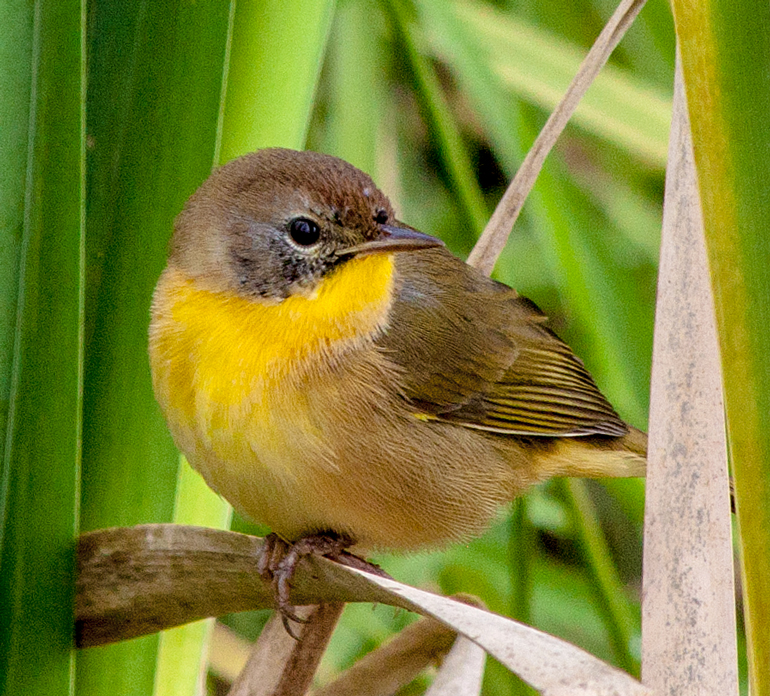
Glancing into the cattails, I caught sight of a flash of color and then gradually a bright yellow bird came into view. The tail was partially concealed by the cattails, accentuating the bird’s circular body shape (and everyone knows that the camera adds pounds to subjects).

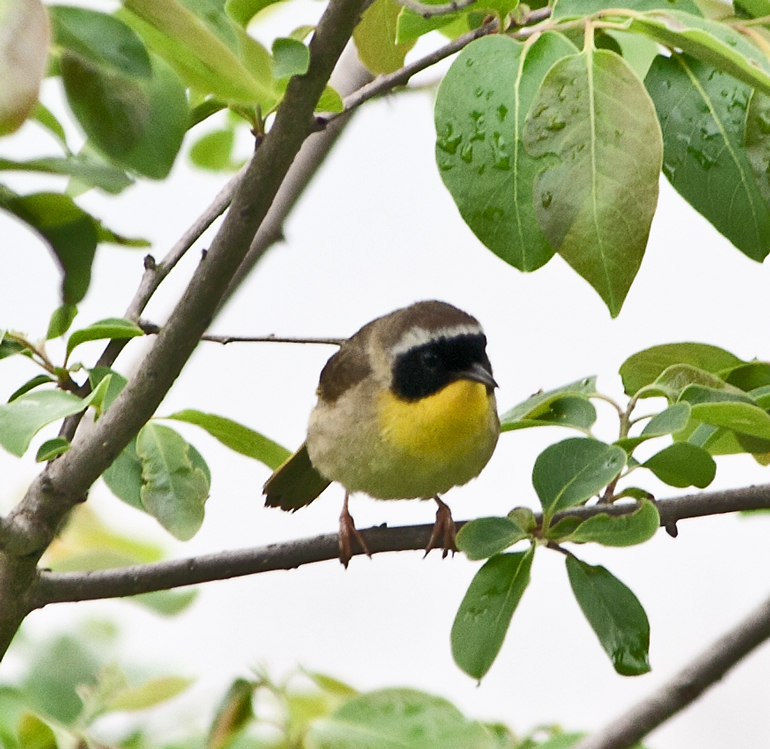
I have done some internet searches and concluded that this is probably an immature male Common Yellowthroat (Geothlypis trichas). Adult male Yellowthroats are really easy to identify, because they have a prominent black mask. Like many bird species, however, young male Yellowthroats look a lot like the females, but gradually develop the mask. It looks to me that this bird may have the first traces of such a mask.

The lighting and camera settings combined to produce images that I really like, with colors that are beautifully saturated. I need to figure out how to replicate this look.

yellowbird_blogyellowbird2_blog

© Michael Q. Powell. All rights reserved

Read Full Post »

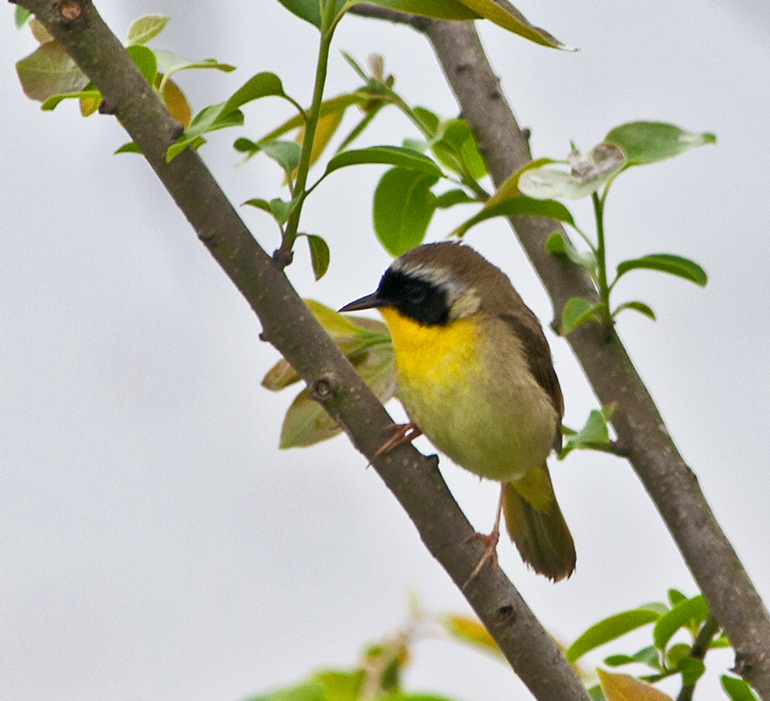
I have been hearing the calls of this little warbler for several weeks, but today was the first day that I got some clear shots of the male Common Yellowthroat (Geothlypis trichas).

I was fortunate that the foliage was not too dense when I initially spotted the bird and even when he moved to a second spot in the same tree, I had a relatively unobstructed view. Birders at my local marshland tell me that the male comes north before the female and that soon the females, which are not so brightly colored, will arrive.

warbler1_blog warbler2_blog

Michael Q. Powell. All rights reserved

Read Full Post »

Birders, I’m finding out, are an excitable breed. Sometimes they travel in flocks and sometimes alone. You can often identify them by their binoculars and spotting scopes and sometimes their cameras with enormous camouflaged lenses. They have special apps on their smartphones and frequently can be observed with their heads buried in one of the numerous identification guides they may be carrying.

I encountered a very excited member of this species as I passed by the bird feeders at my local marshland park this past weekend. He had his camera—with a large lens and flash—set up on a tripod pointed at the feeder.  Crouching in the shadows with a remote release in his hand, he was obviously waiting for something.

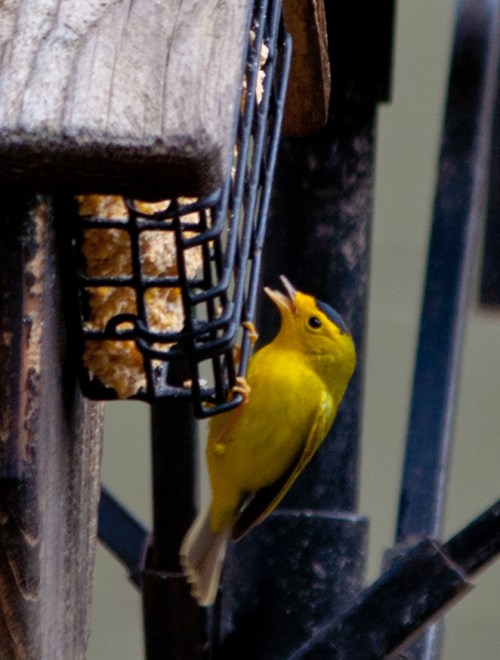
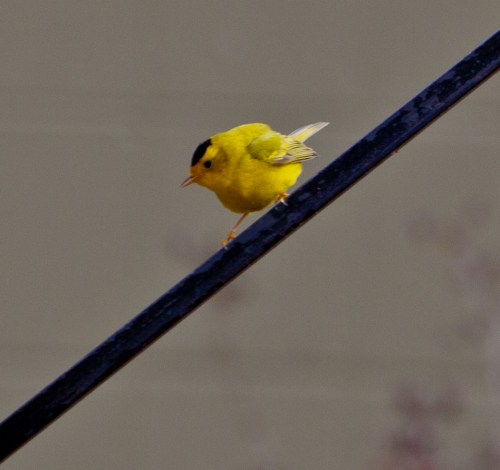
Before I could pose the obvious question, he asked me in a whisper if I also was there to photograph the Wilson’s Warbler. He must have mistaken me for one of his own kind, probably because I had a camera with a telephoto lens around my neck. I got the impression that this bird was rarely seen here and that word had circulated in birding circles of this find. Suddenly he snapped a few photos and went rushing off into the underbrush, saying that a fellow birders had alerted him that the bird had also been seen near one of the benches in the park. His closing words to me were that the warbler had been timed as coming back to the feeder every four to five minutes.

Caught up in the excitement, I waited near the feeder with my camera. The only problem was that I did not have a clue what a Wilson’s Warbler looked like. How was I going to photograph it if I couldn’t identify it? An assortment of Downy Woodpeckers and nuthatches arrived and departed at the feeder and I was beginning to despair that I would see this elusive bird, when all of the sudden I saw a flash of bright yellow. It was a small yellow bird, a welcome sight on a gray late December day, and over the course of the next fifteen minutes or so I attempted to take his picture.

When I arrived home, looked at my photographs on my computer, and did a little research, I realized that I had photographed a Wilson’s Warbler (Wilsonia pusilla or Cardellina pusilla). Judging from the range maps on the Cornell Lab of Ornithology website, Virginia is on the migratory path for these birds, which breed in the northern and western parts of North American and winter in the tropics.

I am not used to photographing birds at a feeder, but managed to get a few interesting shots of the Wilson’s Warbler. To avoid scaring off the bird, I was at a pretty good distance from the feeder,  so I had to crop the images quite a bit. I am quite content, though, that I have managed to capture some of the essence of this happy little bird.
Wilson's Warbler Walking

Wilson’s Warbler Walking

Wilson's Warbler Hovering

Wilson’s Warbler Hovering

Wilson's Warbler Feeding

Wilson’s Warbler Feeding

© Michael Q. Powell. All rights reserved

Read Full Post »
« Newer Posts