Feeds:
Posts
Comments

Posts Tagged ‘Triangle VA’

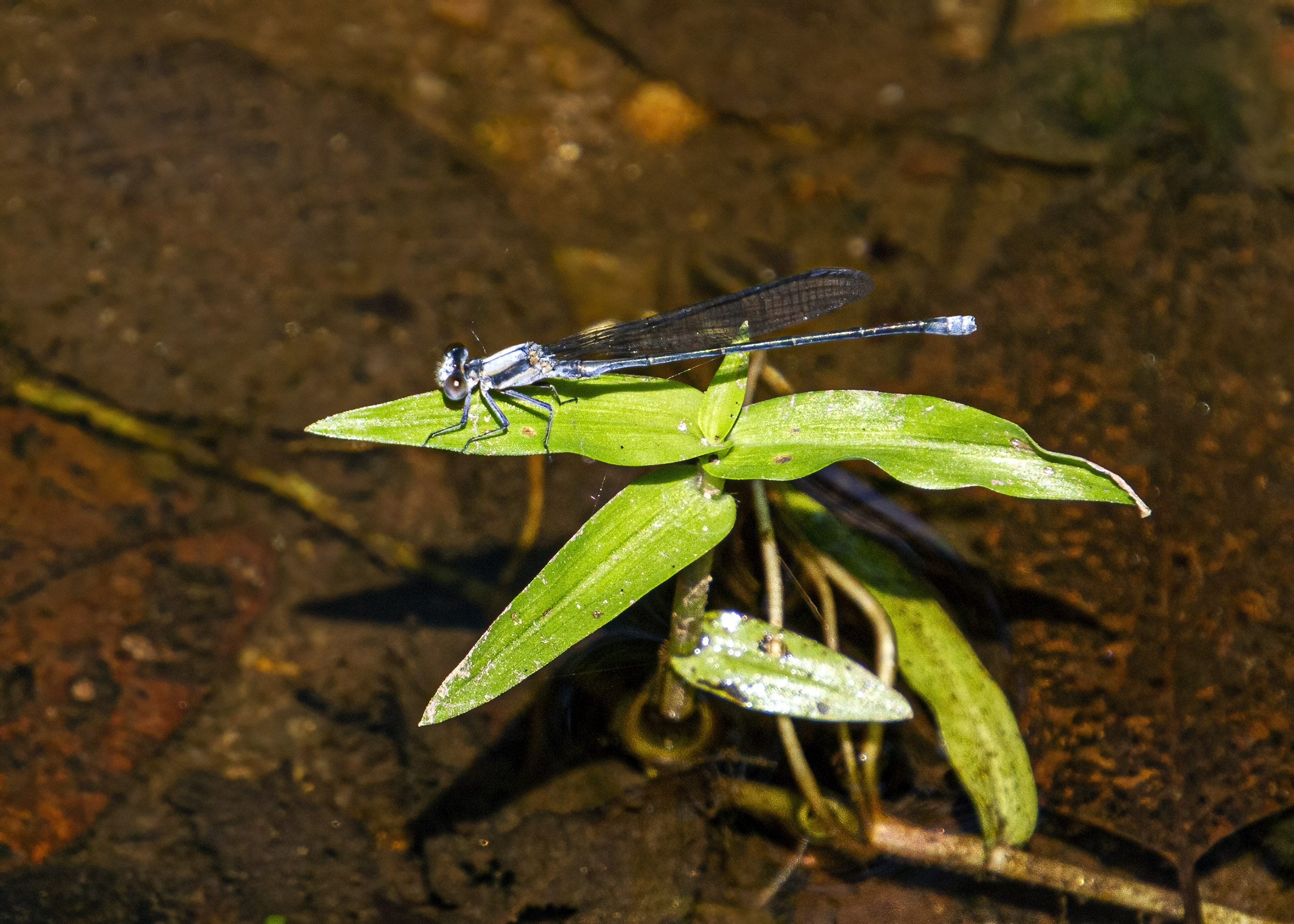
It has taken a little while, but I am starting to see damselflies during my searches for dragonflies. As many of you know, damselflies and dragonflies are “cousins” in the sense that they are both members of the order Odonata. Generally speaking, dragonflies have thicker, shorter bodies and hold their wings out to the sides when resting, while damselflies are slender with wings often folded together. The eyes of dragonflies often touch each other, while those of damselflies tend to be more widely separated.

The first photo below shows a Fragile Forktail damselfly (Ischnura posita), a very common species where I live. The interrupted shoulder stripes look like exclamation marks, which makes them pretty easy to identify.  The second photo shows what I am pretty certain is a female Eastern Forktail damselfly (Ischnura verticalis). Female damselflies of a number of species are similar in appearance, so I am a bit less confident that I have correctly identified this individual.

More damselflies will continue to appear as I shift my attention almost exclusively from birds to insects. As a result of recent rains, the trees in my area are now covered with leaves, which means that I am increasingly having trouble seeing the birds that I can hear singing.

Fragile Forktail

Eastern Forktail

© Michael Q. Powell. All rights reserved.

Read Full Post »

Last week I spotted this Northern Water Snake (Nerodia sipedon) alongside a creek during a hike in Prince William Forest Park in Triangle, Virginia. Water Snakes are not venomous, but I remember reading that their saliva contains an anti-coagulant, so I am reluctant to get so close to one that I risk getting bitten.

Most of the Northern Water Snakes that I have previously seen have been a uniform dark color, but this snake has a beautiful striped pattern on its underside that is visible in this photo. This snake seemed to be simply sunning itself, absorbing the warmth of the spring sunshine.

Northern Water Snake

© Michael Q. Powell. All rights reserved.

Read Full Post »

This Eastern Tiger Swallowtail butterfly (Papilio glaucus) was sipping from a wet area at the edge of a forest creek (and maybe ingesting other nutrients) when I photographed it on 23 April at Prince William Forest Park in Triangle,Virginia. I used to associate this species of butterfly with gardens, because that is where I tended to spot them in the past. However, over the last few years, I have spent a lot of time in the spring in forested areas and have spotted Eastern Tiger Swallowtails regularly there, both individually and in small groups.
Check out my 2021 posting called “A Kaleidoscope of butterflies” to see a photograph of Eastern Tiger Swallowtails “puddling,” i.e. congregating together on wet sand and mud to drink water and extract minerals from puddles.
Eastern Tiger Swallowtail
© Michael Q. Powell. All rights reserved.

Read Full Post »

When this little butterfly flew by me last Friday at Prince William Forest Park, it looked like a nondescript brown moth. Fortunately it landed on some nearby vegetation and I was able to zoom in on it. Wow—what an amazing variety of colors, textures, and markings on this tiny butterfly. I was able to determine that it was a Henry’s Elfin butterfly (Callophrys henrici).

I was pretty sure that I had never seen a butterfly like this until I searched my blog and discovered that I had seen one last spring on almost the same date. I don’t think that I’m losing my memory yet, but I keep filling my head with so much information that it is almost inevitable that I will forget some things.

There is something so whimsical about the word “elfin” that I can’t help but smile whenever I use it. I love the idea of magical creatures like elves and nymphs, drawn from the works of Shakespeare or perhaps from Tolkien’s Lord of the Rings.  These creatures blend in so well with their surroundings that you have to look carefully to spot them and I should warn you that you may become blissfully enchanted by them.

Henry's Elfin

© Michael Q. Powell. All rights reserved.


Read Full Post »

Most of the time when I am out in nature, I am focused on wildlife and often neglect to take landscape photos. Last week, though, was a notable exception when I went for a hike in Prince William Forest Park, an installation administered by the National Park Service located about 25 miles from where I live.

Most of the park is forested and hilly and there was not much wildlife to observe, so I enjoyed the natural beauty that surrounded me. My iPhone tracks the number of steps that I take and it shows that I walked about 12 thousand steps that day. That may not sound like a lot of steps, but the statistics also indicated that I climbed the equivalent of 37 flights of stairs.

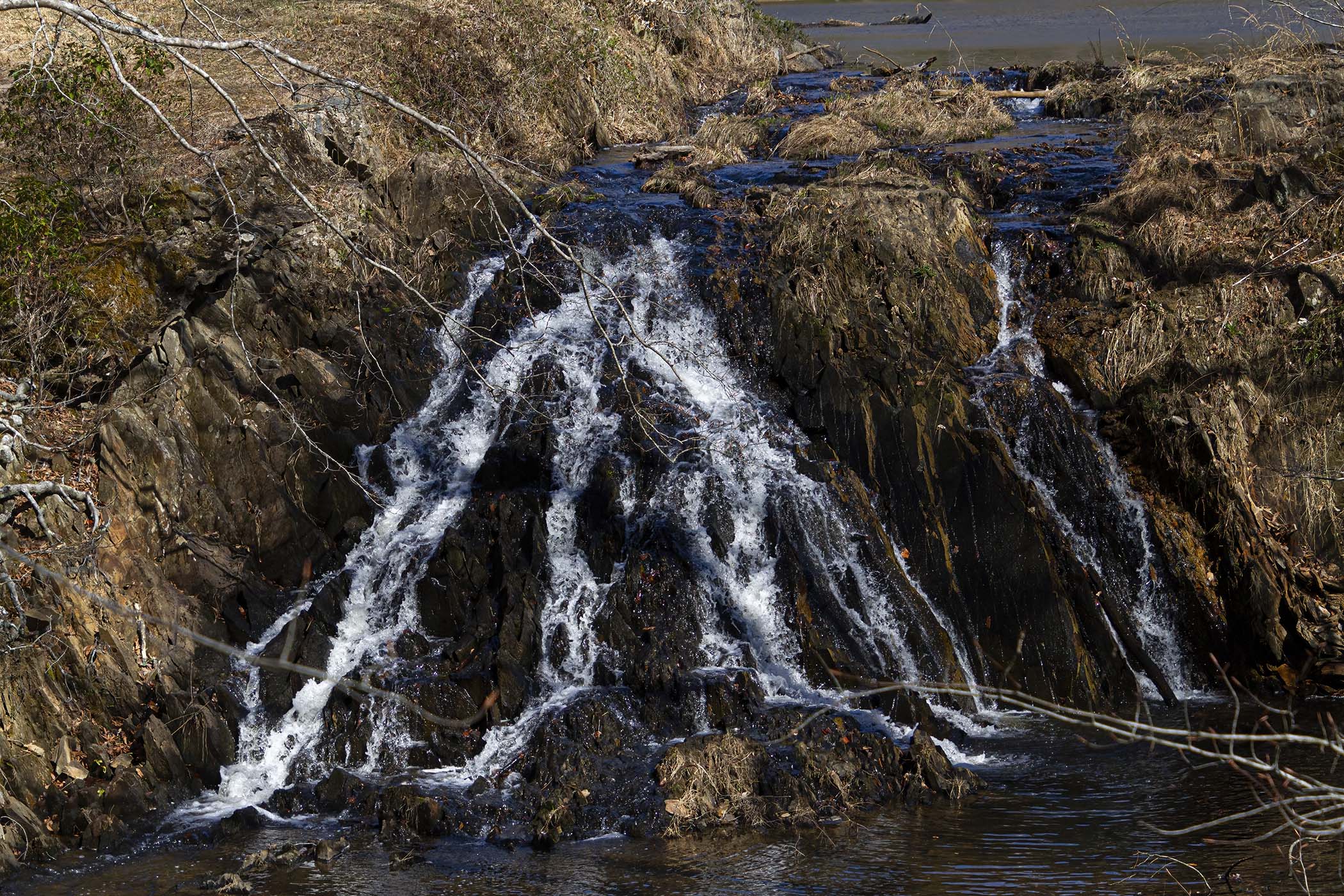
One of the highlights of my hike was walking along Quantico Creek that runs through a portion of the park—I love the sound of rushing water. At several places along the creek there are dams, as you can see in several photos below, that tend to slow the flow of the water.

It was a wonderful way to spend the day and I left the park physically tired, but mentally refreshed and rejuvenated.

Prince William Forest Park

Prince William Forest Park

Prince William Forest Park

Prince William Forest Park

© Michael Q. Powell. All rights reserved.

Read Full Post »

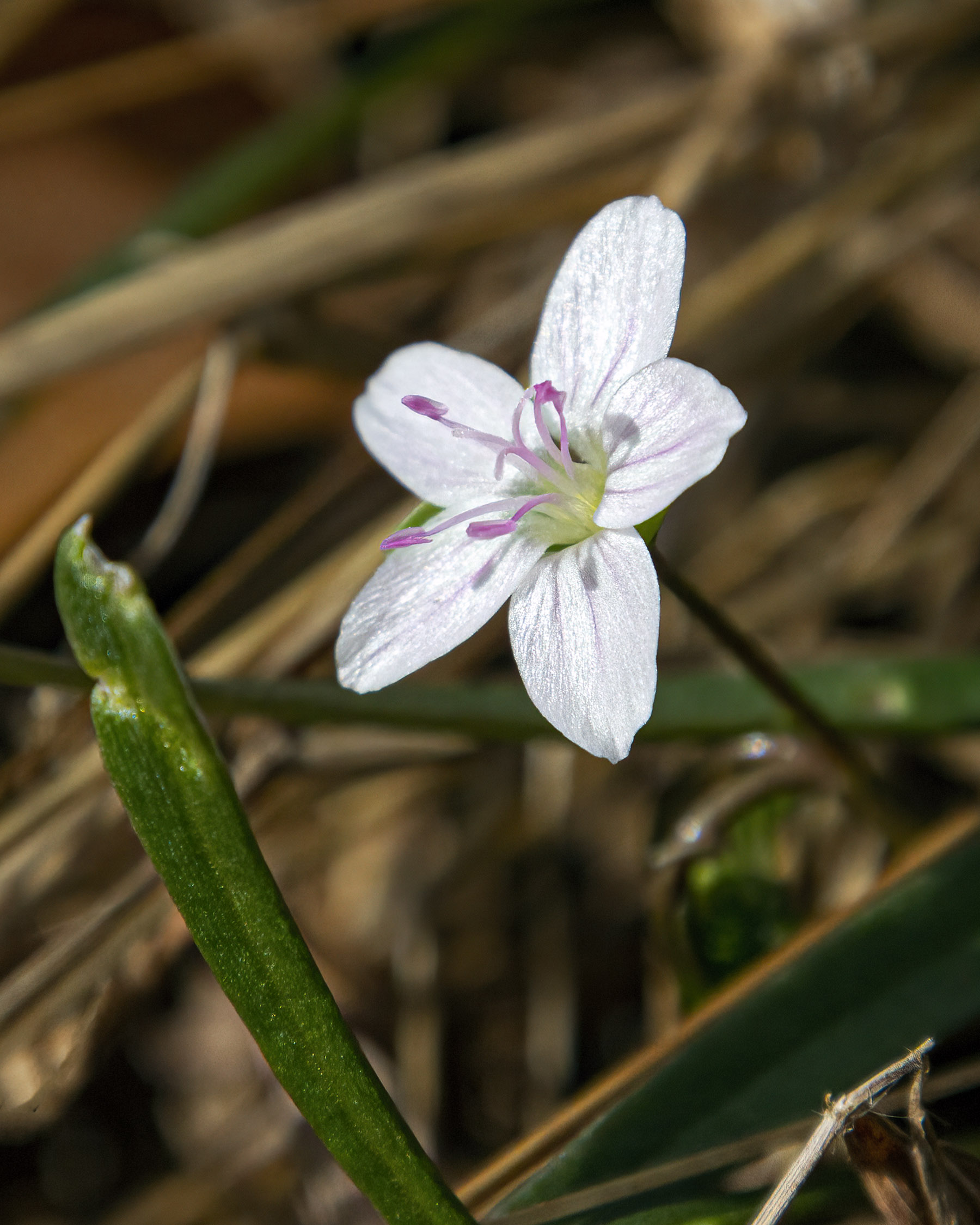
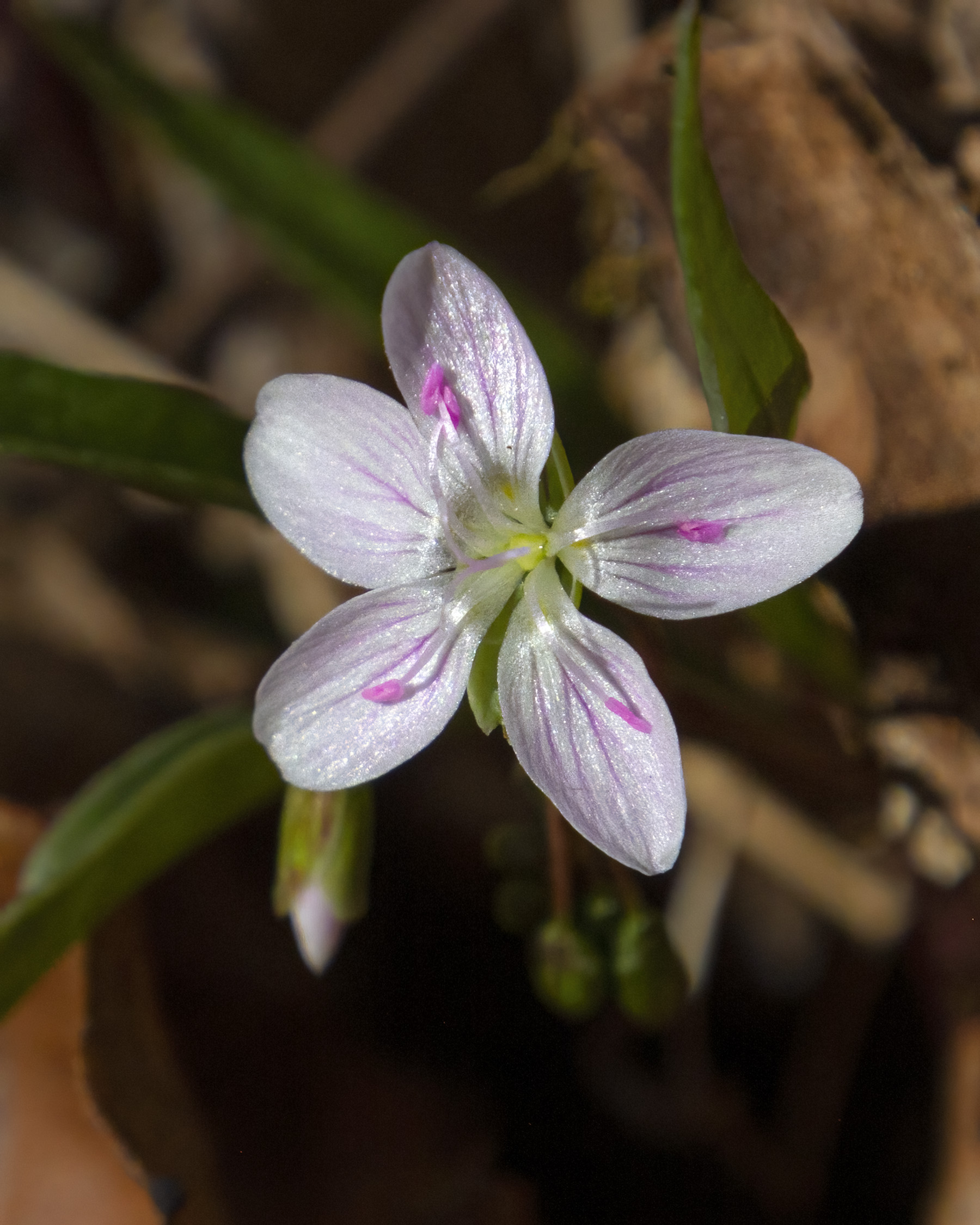
Spring is definitely here. I spotted my first Spring Beauty wildflower (Claytonia virginica) on 26 March during a hike at Prince William Forest Park in Triangle, Virginia. Before long I am sure that I will see large numbers of them in the forest, though they tend to be ephemeral and don’t bloom for very long.

The Spring Beauty plants have tiny underground tubers that Native Americans reportedly prepared and ate like potatoes, though I suspect that you would have to collect a lot of them to make a meal.

Spring Beauty

© Michael Q. Powell. All rights reserved.


Read Full Post »

Last Wednesday I went on a hike in Prince William Forest Park, a National Park Service site in nearby Triangle, Virginia. Unlike the coastal plains and marshes where I spent a lot of my time in nature, Prince William Forest Park, as its name suggests, is a forested area that is full of hills and valleys with numerous creeks.

One of the highlights of my hike was seeing my first Eastern Cricket Frogs (Acris crepitans crepitans) of the season. Cricket frogs of the genus Acris are quite small (about one inch (25 mm) in length) and I often spot them at the edge of the creeks in the park. On this occasion I spotted the frog when it hopped right in front of me, though most often I hear the frogs before I see them. Cricket frogs have a distinctive call that sounds like two pebbles being clicked against each other—some scientist thought it sounded like a cricket, which accounts for the common name for the species .

Eastern Cricket Frog

© Michael Q. Powell. All rights reserved.
Read Full Post »

I was happy to spot these male Powdered Dancer damselflies (Argia moesta) on Monday at a creek in Prince William County, Virginia. Most of the damselflies that I see regularly are found at small ponds and marshy areas, but this species prefers rocky streams and rivers. Sometimes Powdered Dancers will perch in the streamside vegetation, but often they will perch flat on rocks in the water, as you can see in several of these shots.

The thoraxes of Male Powdered Dancers are mostly white due to pruinosity, i.e. they are covered by minute waxy dust particles that makes them look frosted or powdered. This phenomenon is present in some dragonflies too, most notably the male Common Whitetail dragonflies.

Powdered Dancer

Powdered Dancer

Powdered Dancer

© Michael Q. Powell. All rights reserved.
 

Read Full Post »

At first glance this insect looks a bit like a dragonfly, but if you look more closely you may notice that its wings and eyes are different from those of a dragonfly and its body is a lot hairier. I spotted this robber fly, a species commonly known as a Red-footed Cannibalfly (Promachus rufipes), on Monday while exploring a creek in Prince William County, Virginia. Red-footed Cannibalflies, as their name suggests, usually feed on other insects, but they reportedly are capable of taking down a hummingbird. Yikes!

A posting that I did in 2013 entitled “Red-footed Cannibalfly” amazingly has been among my most popular postings ever, with 3360 views to date. Apparently more people search for information about Red-footed Cannibalflies that I would have anticipated.

In case you are curious, my current most viewed blog posting is one from August 2013 entitled “Fuzzy White Caterpillar,” with over 6800 views, including 3219 views in 2024 alone. I do not consider that posting to be one of my best nor are the photos in it particularly good, but somehow the Google search algorithm likes it and I continue to get lots of views of that posting. In general, I do not put much stock in the number of views and/or likes of my posts and do not really give them much weight when considering the “success” of any of my posts.

Red-footed Cannibalfly

© Michael Q. Powell. All rights reserved.


Read Full Post »

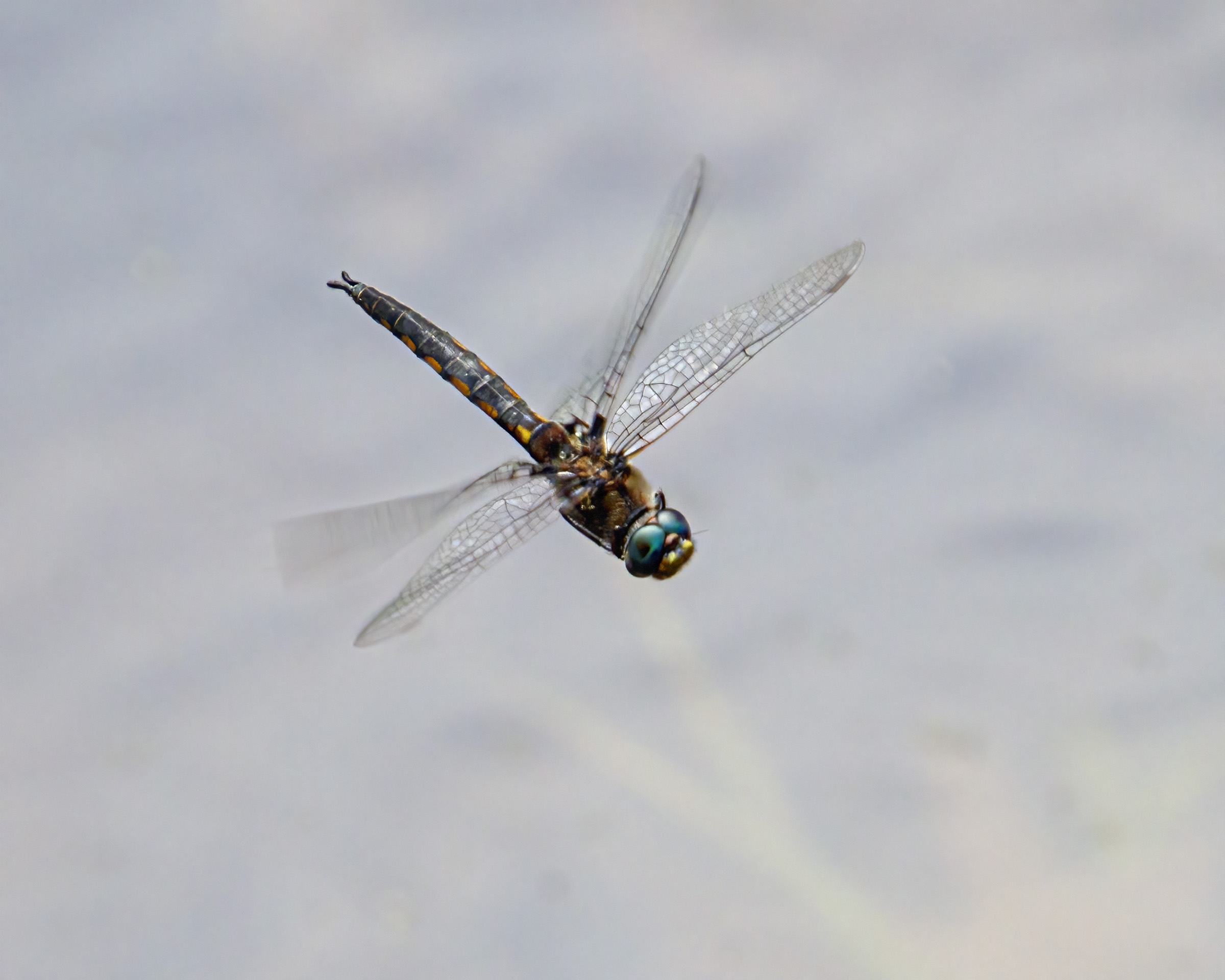
Some of the species of birds and dragonflies with the word “common” in their names are quite rare in my area. However, Common Baskettail dragonflies (Epitheca cynosura) have been quite common this month and I have seen them at a number of different locations, most notably at the small ponds that I like to visit. At these ponds, I usually spot the Common Baskettails as they conducted repeated low patrols over the surface of the water and I can never resist the chance to photograph them while they are in flight.

As I have noted in the past, it is very challenging to photograph a dragonfly while it is flight. Sometimes the dragonflies will hover a bit, giving me a better chance of getting them in focus, but often they whiz on by and I try to track them in my viewfinder. Occasionally I will manage to use auto-focus, but often I resort to manual focus, which, of course, is tough with a moving subject. I try to determine the flight track they are using and identify likely areas that they will pass through and then pre-focus on that area and wait for them to come by. Needless to say, you have to be very patient and persistent if you want to try this kind of photography.

I captured the first two shots at a small pond in Prince William County and was quite pleased with the images. The two shots were taken as part of a sequence and are quite similar with the exception of the position of the wings. Normally I am so thrilled to get a sharp shot that I am not concerned about the wing position, but in this case I had the luxury of having several variants of essentially the same shot.

The final two shots were taken at the pond at Jackson Miles Abbott Wetland Refuge. There was vegetation surrounding the water at the spot where I was standing and it sometimes would obstruct my view as I tried to track the dragonfly. In the third photo, I used one of the offending pieces of vegetation as a compositional element that makes it look like the dragonfly was approaching a finish line tape.

I included the final photo to give you a sense of the habitat. In several areas of the pond there were patches of lily pads and I tried to capture shots of the dragonfly flying over the lily pads. I was largely unsuccessful, but the photo gives you an idea of what I was trying to accomplish. (If this were a shot of a bird, it would definitely qualify as “butt shot,”but I am not sure that you can really say that a dragonfly has a “butt.”)

Common Baskettail

Common Baskettail

Common Baskettail

Common Baskettail

© Michael Q. Powell. All rights reserved.

Read Full Post »

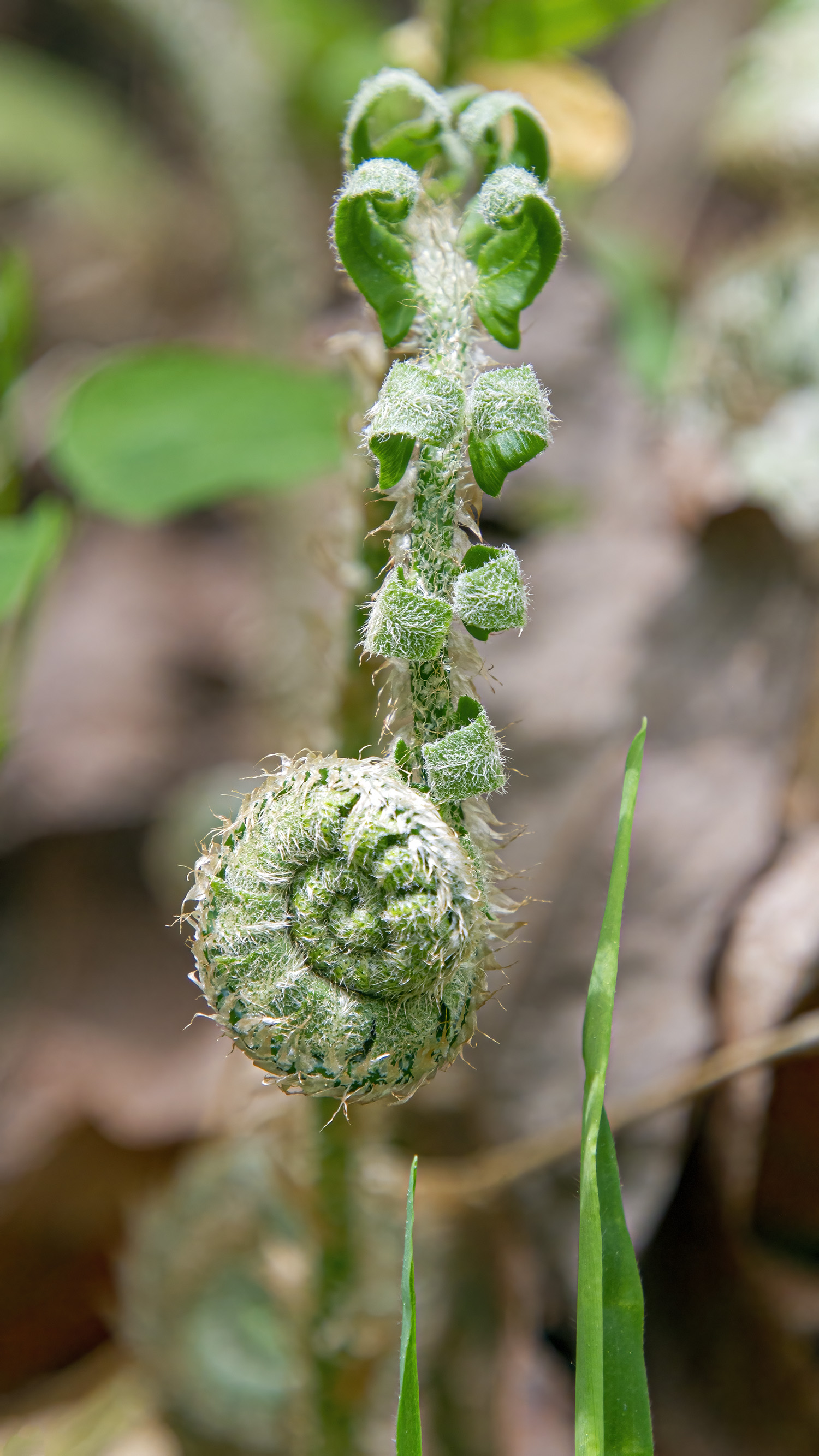
I love the spiral shape of fiddleheads, the furled fronds of fledging ferns, like these ones that I spotted last week at Prince William Forest Park. I have been told that fiddleheads are quite tasty when sautéed with garlic, olive oil, and lemon, but I have not yet tasted a fiddlehead.

fiddlehead

fiddlehead

fiddlehead

© Michael Q. Powell. All rights reserved.
Read Full Post »

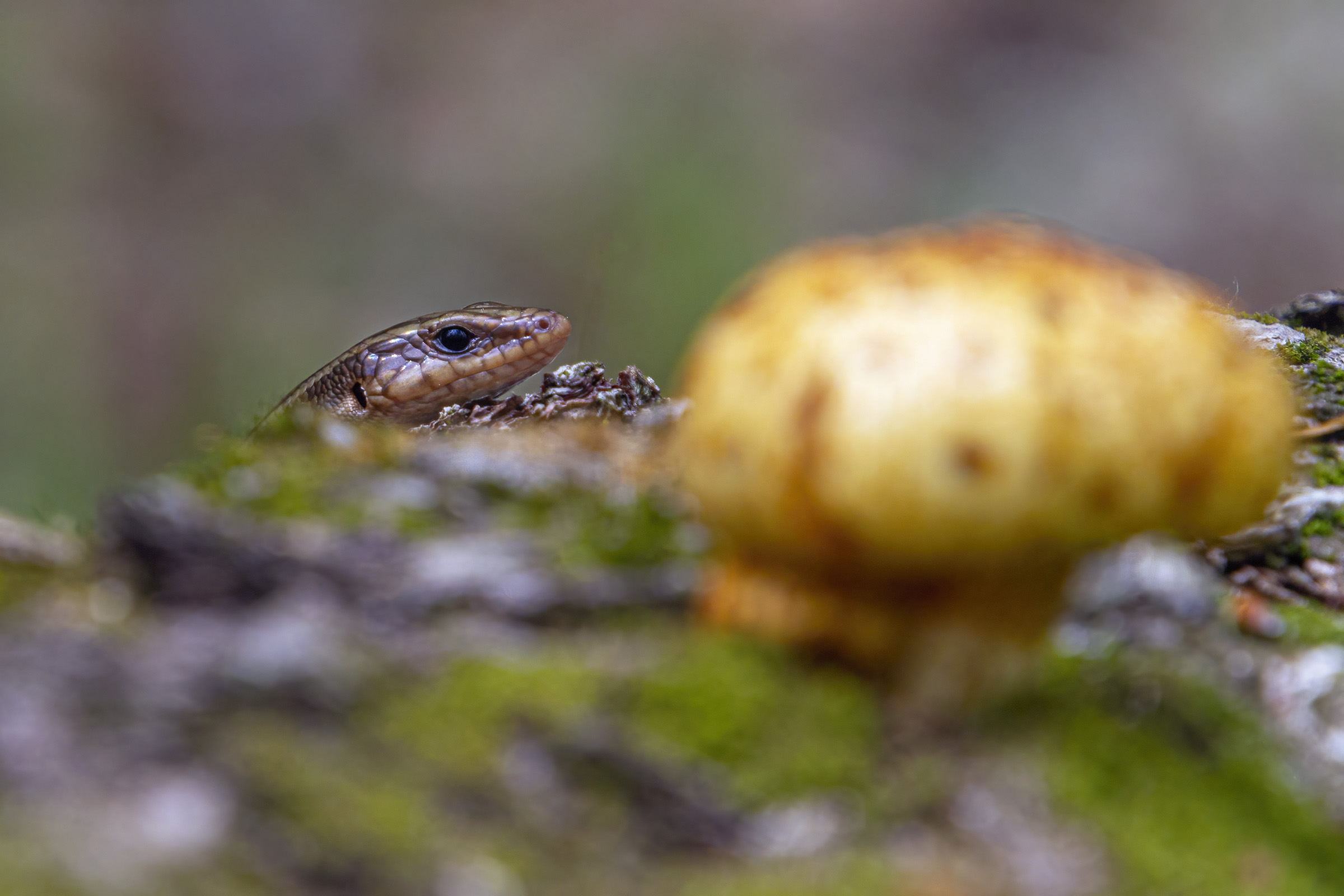
As I was hiking last Thursday in Prince William Forest Park, I spotted a cool-looking mushroom on a moss-covered fallen tree. I crouched low to the ground so that I could capture an eye-level shot of the mushroom. While I was carefully composing a few shots in the camera’s viewfinder, my eyes detected some movement in the corner of the frame and I was a bit shocked to see the head of a Five-lined Skink (Plestiodon fasciatus), one of the few lizard species in Virginia.

Skinks are generally very skittish, so I froze in place and slowly changed the focus point from the mushroom (first photo) to the skink (second photo). Once I knew that I had captured those shots, I moved slightly to the side to see if I could get a better angle on the skink.

I never could not see the skink’s entire body, but really like the final shot that shows a lot of the details of the skink. I am not sure what the skink was doing, but it seemed to be focusing intently on something. Perhaps it was so focused on a potential prey that it was less aware of me than it might otherwise have been.

A small change in focus made a big difference in the final results. Maybe that’s true in other aspects of our lives.

mushroom

Five-lined Skink

Five-lined Skink

© Michael Q. Powell. All rights reserved.

Read Full Post »

When this little butterfly flew by me last week at Prince William Forest Park, it looked a bit like a nondescript brown moth. However, when it landed on the ground and I was able to zoom in on it, I was amazed by its variety of colors, textures, and markings. I was pretty sure that I had never seen one like this. When I returned home, I did some searching on the internet and concluded that this is a Henry’s Elfin butterfly (Callophrys henrici).

Every time I use the butterfly’s name, I smile, because there is just something whimsical about the word “elfin.” I love the idea of magical woodland creatures that blend in so well with their surroundings that you have to look carefully to spot them.

I encourage you to click on the image to see all of this creature’s wonderful markings, including the little white stripes on its antennae and legs and the beautiful scalloped edges of its wings.

Keep your eyes open today and you too may spot some magically whimsical creatures.

Henry's Elfin

© Michael Q. Powell. All rights reserved.


Read Full Post »

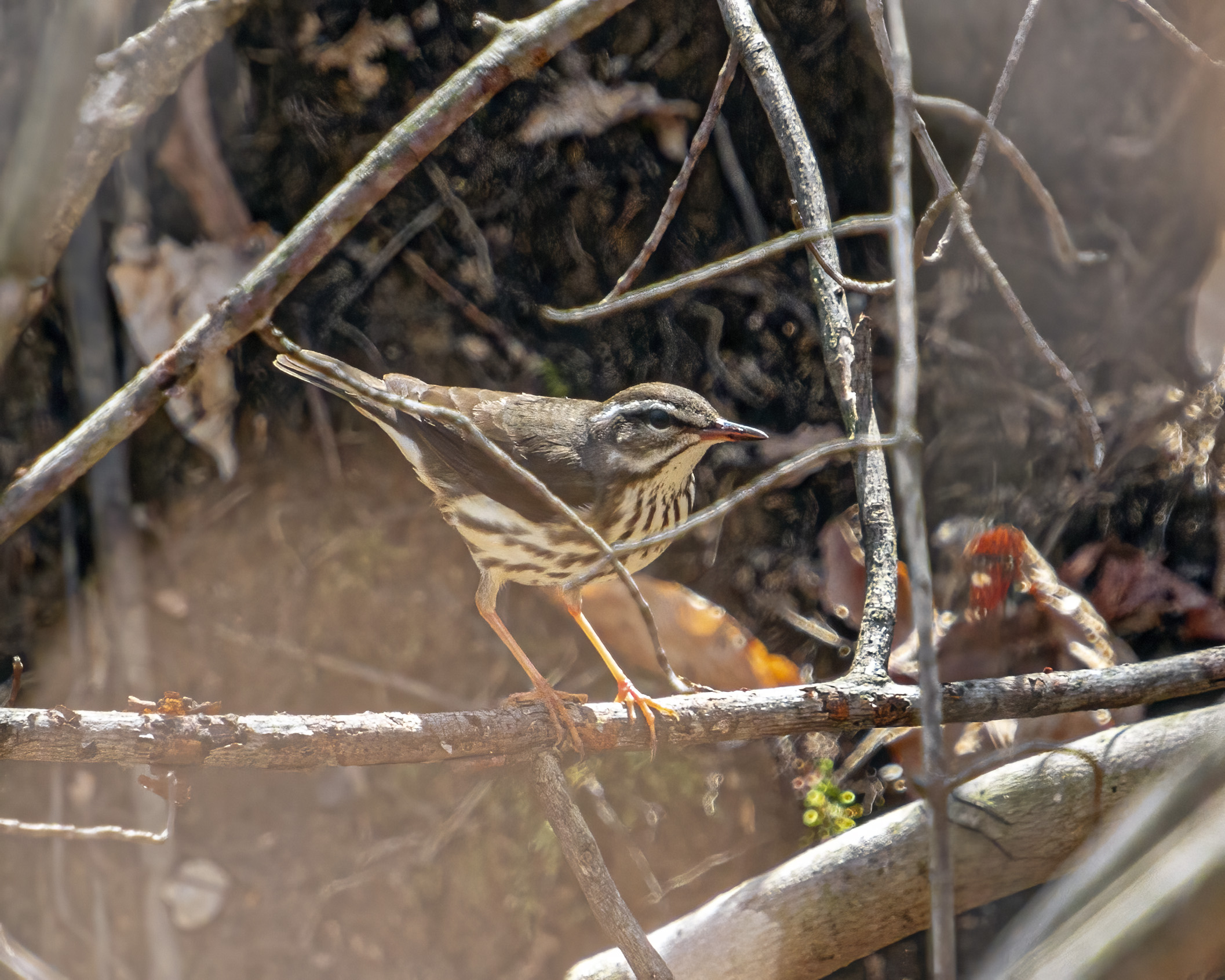
Last week I spotted this bird hopping about in a small creek in Prince William Forest Park. The bird was in constant motion and I could not get close to it, so I was was not able to get a really good shot of it. I vaguely remembered seeing a similar bird a few years ago in the same location, so I checked my old blog entries and determined that it might be a Louisiana Waterthrush (Parkesia motacilla). Several more experienced birders confirmed my tentative identification in a Facebook group for birding forum.

Despite its name, a Louisiana Waterthrush is actually a warbler, not a thrush. The Cornell Lab of Ornithology website provides the following overall description of the species:

“The ringing song of the Louisiana Waterthrush, in cadence so like the rushing streams that are its home, is one of the first signs of spring in eastern North America. Its brown plumage and bold streaking help explain why this member of the warbler family has the word “thrush” in its name. At all seasons, this species stays close to moving water—especially forested streams and creeks—and bobs its rear end almost constantly. In both spring and fall, Louisiana Waterthrushes are among the earliest migrant warblers.”

Several local photographers have started posting photos of more colorful warblers, so I will be keeping my eyes open for them. Leaves are starting to cover the trees, so I will probably have my usual problem of not being able to spot the little birds even when I can hear them singing.

Louisiana Waterthrush

Louisiana Waterthrush

© Michael Q. Powell. All rights reserved.
Read Full Post »

Most of the insects that I have observed feeding on Virginia Spring Beauty wildflowers (Claytonia virginica) have been equally small in size. I was a bit shocked, therefore, earlier this week to spot a large Eastern Carpenter Bee (Xylocopa virginica) gathering nectar and/or pollen from a small patch of Spring Beauties at Prince William Forest Park. The bee looked to be at least twice as large as each tiny flower. Wow!

The lighting was quite good and the bee was a bit distracted, so I was able to zoom in close and capture a lot of the details of the bee. I particularly like the speckled green eyes that look like they were carved out of a semiprecious stone. You can also see the bee’s tiny feet as it grasped the edges of the flower. I encourage you to click on the photos, especially the first one, to get a better look at the bee.

carpenter bee and spring beauty

carpenter bee and spring beauty

© Michael Q. Powell. All rights reserved.

Read Full Post »

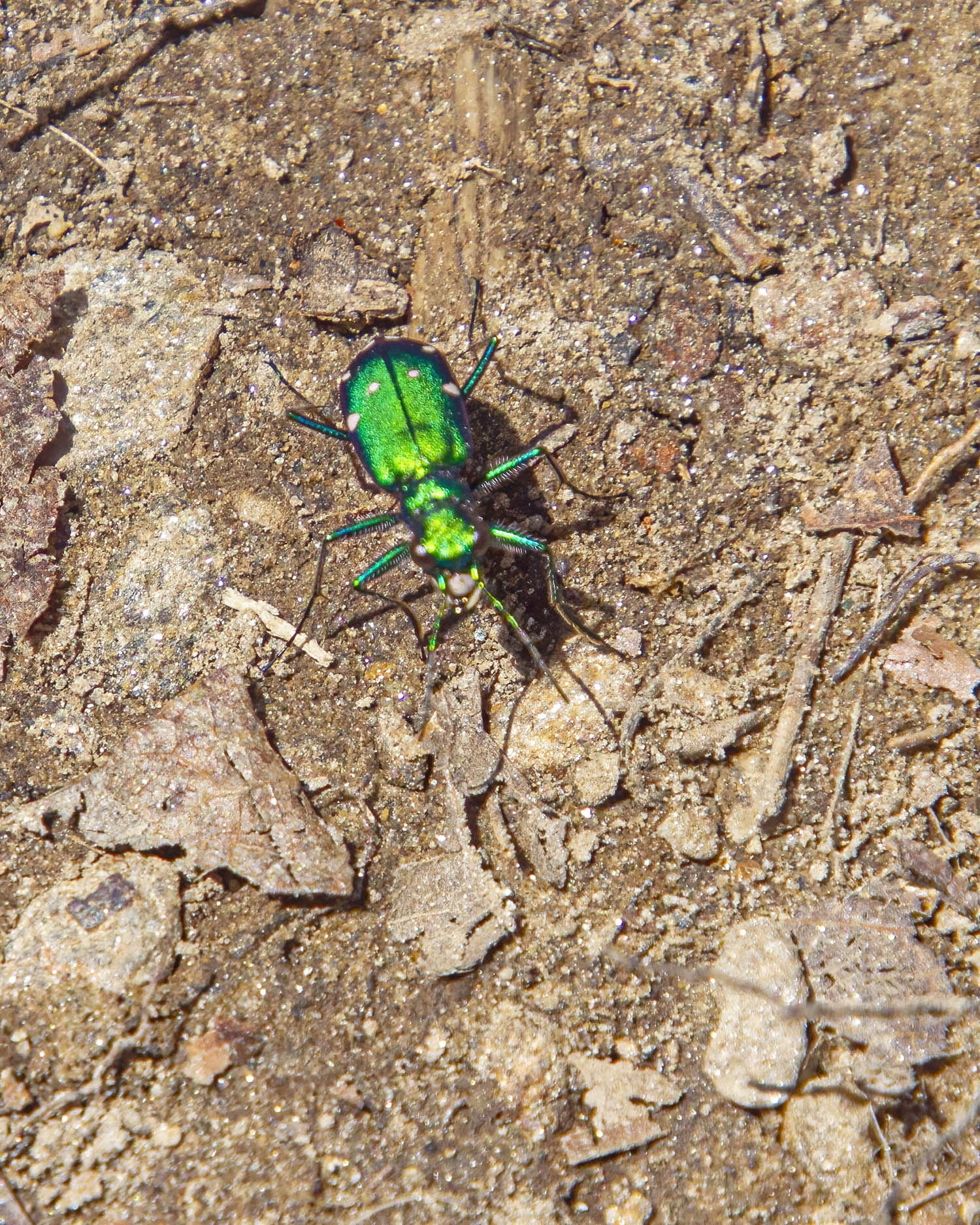
Many beetles are dark-colored and go about their business in the underbrush, unseen by human eyes. Six-spotted Tiger Beetles (Cicindela sexguttata), on the other hand, are hard to miss—their metallic-green bodies sparkle as they perch in the open, like this one that I spotted on Monday in the middle of a sun-lit forest trail in Prince William Forest Park.

The beetle’s common name refers to the six small white spots on the beetle’s metallic-green elytra (the beetle’s hardened wing cases), although the number of spots is somewhat variable. I think that I can see six spots on this beetle, but have sometimes seen as many as eight spots in the past.

As I was doing a bit of research a few years ago, I recall stumbling upon the fact that elytra is the plural form of elytron, following the the same pattern as “criterion” and its plural form “criteria.” For what it is worth, spell-check highlights elytron as an unknown word. English is a strange language.

Yesterday I came across this fun fact about tiger beetles at the University of Minnesota Department of Entomology website. “Tiger beetles’ long legs allow them to dart across the ground at high speeds. In fact, they can run so fast that their eyes can’t keep up, rendering them momentarily blind. This is why they only run short distances at a time.” Wow!

Six-spotted Tiger Beetle

© Michael Q. Powell. All rights reserved.

Read Full Post »

I’ve been really busy preparing for multiple church services this Holy Week—I help to lead singing during the worship services—so I have not been able to go out as often this week as I would have liked. So today, I am featuring another tiny forest wildflower that I spotted on Monday at Prince William Forest Park.

I think that this one is a Wood Anemone (Anemone quinquefolia), though there is a similar-looking wildflower called a Rue Anemone (Thalictrum thalictroides) and I am not sure how to tell the two of them apart. According to the Lady Bird Johnson Wildflower Center website, “Since Anemones are usually slender-stalked and tremble in the breeze, they have been called “Wind Flowers.””

I used to think that all of the white spring wildflowers looked the same but gradually I am beginning to see the differences in the number and shape of the petals and in the different types of stamens. However, I am far from being an expert in plant identification, so you should take all of them with a grain of salt.

Wood Anenome

© Michael Q. Powell. All rights reserved.


Read Full Post »

Each time I venture out into the forested trails of Prince William Forest Park at this time of the year I encounter different wildflowers, most of which are present for only a short period of time. This past Monday, for example, I spotted some Bloodroot plants (Sanguinaria canadensis) in bloom, my first of the season. These white flowers are a bit bigger than many of the other wildflowers that I see.

According to the Missouri Botanical Garden website, “Each [bloodroot] flower stalk produces a solitary, 2″ (50 mm) wide, 8-10 petaled, 1.5″ (38 mm) diameter, white flower with numerous yellow center stamens. Flowers open up in sun but close at night, and are very short-lived (1-2 days). Leaves continue to grow in size after bloom (sometimes to as much as 9″ (228 mm) across) and remain attractive until mid to late summer when the plant goes dormant.”

The forest floor was quite cluttered, so I decided to take this photo from directly above the bloodroot flower. I like the way that the shot emphasizes the geometric shape of the petals in an almost abstract way.

bloodroot

© Michael Q. Powell. All rights reserved.

Read Full Post »

Early spring wildflowers, like the Virginia Spring Beauty (Claytonia virginica), are an important source of food for a host of small bees and other insects. Many insects gather pollen from these flowers and in doing so help to pollinate the plants. One species, the Spring Beauty Miner Bee (Andrena erigeniae), is so specialized that it reportedly feeds only on this ephemeral flower.

According to the Bug of the Week website that featured this species in an article, “Using jaws and legs the female bees excavates a gallery in the soil, leaving a small pile of dirt near the entrance hole. This gallery can be as long as 15 centimeters and contain numerous lateral brood chambers. During the daytime she forages for pollen on flowers of spring beauties, which apparently are the sole source of food for her brood. Pollen from these blossoms is formed into balls and placed into brood chambers…As brood chambers are built and provisioned with pollen, the bee deposits a single egg on a pollen cake. During spring and early summer developing larvae consume the pollen, and later in summer they will form pupa. By late autumn development of the adult is complete and winter is spent in the adult stage within the brood chambers. Newly minted adults emerge each spring coincident with the appearance of spring beauty’s’ blossoms.” Wow!

On Monday I was fortunate to capture a shot of a Spring Beauty Miner Bee in action gathering pollen. If you look closely at the image, you will see how the tiny bee has collected pollen on its back legs.

Last year I posted an image of a Cuckoo Bee on the same kind of flower. That bee does not collect pollen. Instead it enters the nests of a host and lay eggs there, stealing resources that the host has already collected. From what I understand the cuckoo bee waits for the miner bee to leave its burrow and then lays its egg there. The offspring of the cuckoo bee eats the pollen in the burrow and then eats the larva of the miner bee. Yikes!

Spring Beauty Miner Bee

© Michael Q. Powell. All rights reserved.


Read Full Post »

As I was walking along a creek on Monday at Prince William Forest Park, several tiny frogs unexpectedly jumped out of my way. I was able to visually track one of those frogs and saw where it landed. After a single leap, the frog froze in place and I was able to slowly maneuver myself into position to capture this image.

I am pretty sure that this is a Northern Cricket Frog (Acris crepitans). A bit later in the season, I will be able to hear the cricket frog’s distinctive call, which sounds to me like two marbles being clicked together, but the frogs that I encountered that day were silent.

According to the Virginia Department of Wildlife Resources, the Northern Cricket Frog is one of the smallest frogs in Virginia, ranging from .87 inches to 1.14 inches (22-29 mm) in length. Their typical life span is four to twelve months, though sometimes they can live as long as three years. Cricket frogs hatch from their eggs in 29-90 days between July and August and metamorphosize into adults in late summer. In early autumn, the frogs burrow into the soil to hibernate until spring comes.

I was quite pleased with the amount of detail that I was able to capture in this image, from the bumpy warts of the frog’s back to the stripes on its tiny toes. My Tamron 18-400mm lens is quite versatile and is capable of providing macro-like capability in certain circumstances. I encourage you to click on this image to get a better look at the tiny cricket frog.

Northern Cricket Frog

© Michael Q. Powell. All rights reserved.
Read Full Post »

I went on a pretty long hike yesterday in Prince William Forest Park—just over 18,000 steps (7.1 miles or 11 km) according to my iPhone—and was delighted to spot this beautiful Eastern Tiger Swallowtail butterfly (Papilio glaucus), my first of the season.

When I first spotted the butterfly, it appeared to be sucking moisture and minerals from the wet soil, as you can see in the first photo. The butterfly flew to a nearby location and resumed its efforts and I was able to maneuver around to get the second image that shows the markings of the butterfly a bit better.

Personally I prefer the first photo that is more dynamic and gives a better sense of the activity of the butterfly. From a purely scientific perspective, the second one might be preferable because it shows more of the butterfly’s identification features. I am more of an artist than a scientist, though, so capturing all of the details with clinical precision is not as important to me.


Eastern Tiger Swallowtail

Eastern Tiger Swallowtail

© Michael Q. Powell. All rights reserved.

Read Full Post »

Most of the time when I go out with my camera, I am focused on taking pictures. I have a general idea of which subjects I want to photograph and choose locations where I am likely to encounter them.

Sometimes, though, I am much less goal-oriented and I will visit a place primarily to experience nature. Oh, I will have my camera with me, but I am likely to take significantly fewer photos and to log a lot more steps in between photos. Usually I will have my Tamron 18-400mm lens on my camera that provides me with the greatest flexibility in capturing both wide-angle and telephoto shots.

That was certainly the case last week when I visited Prince William Forest Park, a wildlife area administered by the National Park Service. I did not see a lot of wildlife and the images that I capture tended to focus on the landscape. The first photo shows you one of the larger trails in the park that is wide enough for a vehicle and is used as an emergency route. Most of the other trails in the park are narrow and winding and accessible only on foot.

The second photos shows one of the dams along Quantico Creek. I really like the step-like shape of this dam. As you can see, some logs have accumulated along the top of the dam. They do not interfere much with the flow of the water, however, so I am not sure if the park authorities will eventually remove them.

My iPhone records my steps and I noticed recently that I tend to log the most steps each year in April, when spring is in full bloom. Last year, for example, I averaged over 6500 steps a day over the entire month of April versus an average step count of about 4000 steps for the whole year. I feel a kind of resurgence in energy in the spring, a sense of new life after the long gray days of winter.

Prince William Forest Park

Prince William Forest Park

© Michael Q. Powell. All rights reserved.
Read Full Post »

When the weather is sunny, turtles at local ponds often bask in the sun in large groups. Sometimes the turtles are packed in so tightly that it looks like a mall parking lot at Christmas time. The turtles seem to have no concept of “personal space and often are leaning against each other.

I spotted a few turtles on Wednesday at Prince William Forest Park and was struck by the fact that all seemed to have chosen solitude over solidarity—they were perched by themselves.

The first one, a small Painted Turtle (Chrysemys picta) was perched on a small log in the shallow part of a marshy area. I really like the limited color palette of this image, made up of mostly earth tone. If you look carefully, though, you can spot a few red markings on the turtle’s neck.

The second turtle, a much larger Painted Turtle, had crawled entirely out of the water and appeared to be napping on dry land. The greenery in this image gives it a much more lively feel than the first image and the bright red markings on the turtle’s neck are much easier to see.

Like these two turtles, I tend to avoid crowds and like to be myself when I am pursuing my photography. Go with the crowd? No, I will leave that to others.

Painted Turtle

Painted Turtle

© Michael Q. Powell. All rights reserved.

Read Full Post »

For a brief period in the spring, the forest floor is carpeted with wildflowers. It is still a little early for most of the wildflowers to appear but on Wednesday I spotted a few early blooming ones during a hike in Prince William Forest Park in Northern Virginia.

The little wild flower in the first photo is the appropriately named Virginia Spring Beauty (Claytonia virginica). I love the pops of pink in this flower, especially the stamens. According to Wikipedia, “The individual flowers bloom for three days, although the five stamens on each flower are only active for a single day.” Yikes! I guess the Spring Beauties qualify as being “ephemeral.”

The flower in the second photo is often referred to as a Quaker Lady Bluet (Houstonia caerulea)—it is also known as the Azure Bluet. Later in the spring I am certain to encounter large clusters of this cool little flower, but on this occasion there were only a few of them. I love the simple geometric pattern of the petals that someone decided resembled the traditional hats worn by Quaker ladies.

Virginia Spring Beauty

Quaker Lady Bluet

© Michael Q. Powell. All rights reserved.

Read Full Post »

Yesterday I went on a hike at Prince William Forest Park, the largest protected natural area in the Washington D.C. area at over 13,000 acres (53 square kilometers), that is located about 27 miles (43 km) from my home. Unlike the wildlife refuge that I usually visit, which is on a coastal plain, Prince William Forest Park, as its name suggests, is heavily wooded and it is quite hilly. I love to walk along the many creeks and streams that crisscross the park—the sound of the flowing water always has a therapeutic effect on me.

I was thrilled to spot this beautiful Question Mark butterfly (Polygonia interrogationis) as it perched on some leaves in a marshy area adjacent to one of the creeks. I could not tell for sure, but it looked like this butterfly was sipping water, possibly gathering nutrients from the soil. Question Mark butterflies and their punctuation “cousins,” the Eastern Commas, overwinter as adults, so they are among the earliest appearing butterflies in the spring.

Question Mark and Eastern Comma butterflies are quite similar in appearance. When the wings are fully open, as in the photo below, you can see a brown dash near the top of the upper wings that is not present on the wings of Eastern Comma butterflies.

Question Mark butterfly

© Michael Q. Powell. All rights reserved.

Read Full Post »

Most of the photos in my most recent blog postings were captured during my hike last week at Prince William Forest Park, which was a break from my usual wildlife-focused images. It is time to hit the trails again after this brief respite, but I thought I would conclude this mini-series with a final photo from the hike.

Many of you know that I love shadows and I was really struck by the tree shadows falling across the trail during the early stages of the hike. The photo gives you an idea of the size and density of the forest in which I was immersed. This trail was wide enough to serve as an emergency access route, but the majority of the trails that I traversed later in the day were significantly more narrow. The trails were pretty well defined and there were painted blazes on the trees, which were particularly useful when trails crisscrossed each other.

I grew up in New England and memorized a number of poems by Robert Frost. One of his most famous poems is entitled “The Road Not Taken.” Somehow the opening words of that poem always come to mind when I am hiking on forest trails, “Two roads diverged in a yellow wood, and sorry I could not travel both and be one traveler, long I stood and looked down one as far as I could to where it bent in the undergrowth…”

In this case, however, the pictured road is the road that was taken. That day, I stuck to a familiar path, though I am prone to wander and love to explore. Who knows what I might discover beyond the next twist of the road.

trees

© Michael Q. Powell. All rights reserved.
 

Read Full Post »

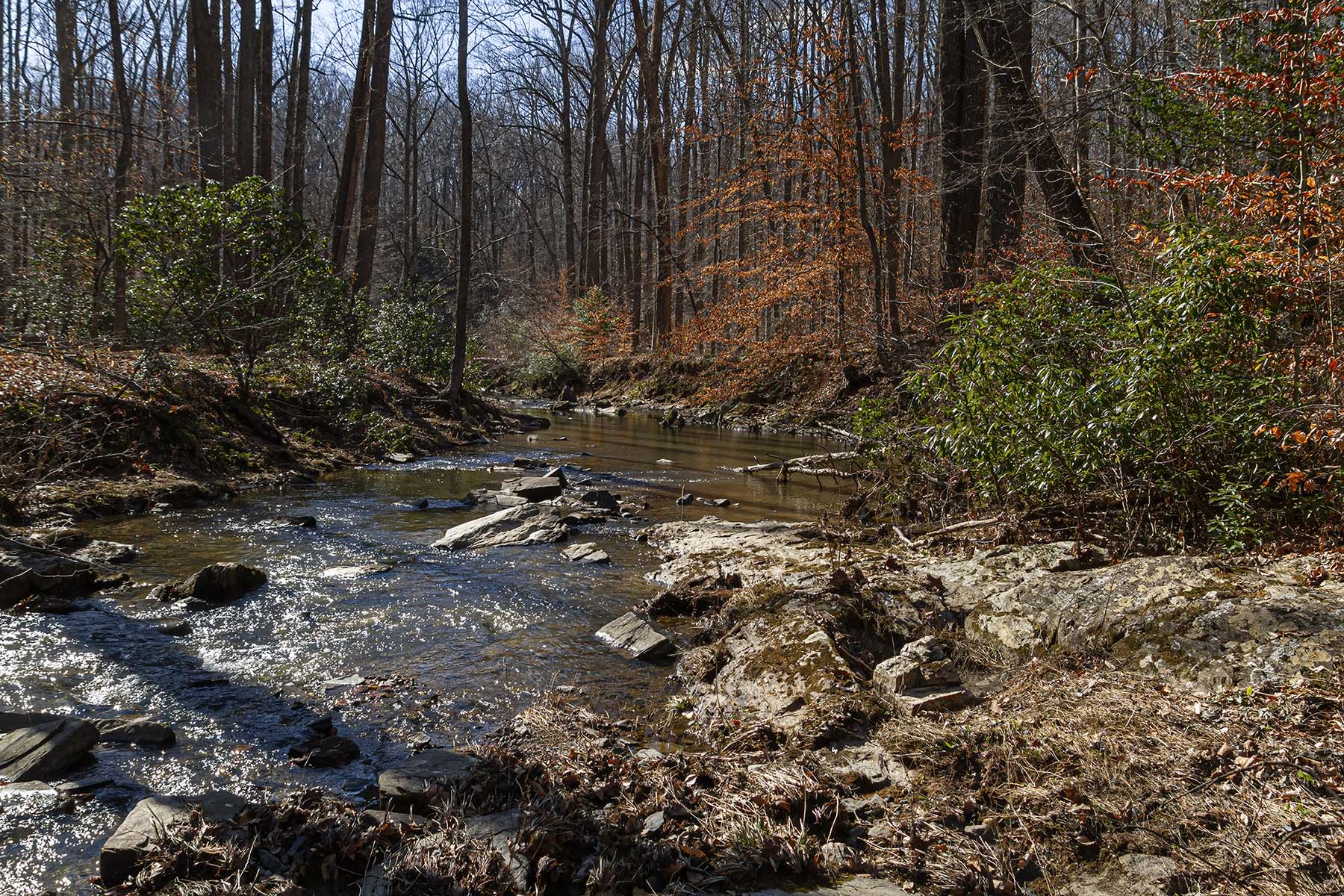
There is something special and soothing about the sound of flowing water. During my hike last week in Prince William Forest Park, I spent much of my time following  Quantico Creek and listening to the different noises that it made as it moved through the varying landscapes.

The terrain I traversed was hilly and the elevation diagram below from my GPS software shows the ups and downs of my hike. From the area where I parked my car I had a rather steep descent to the creek. The first photo was my first view of the creek and gives you an idea of its size. Although the water appears quite still, it was moving towards the dam shown in the second photo that was only a short distance downstream.

To get to the next section of the creek, I had to climb up and over a ridge before beginning a long descent to a series of small cascades, one of which is shown in the penultimate photo. I followed the creek for a while as it continued to flow downhill, gradually flattening out a bit and giving me views like the one in the final photo.

Eventually, I turned around and headed back toward my car, partially retracing my steps and then taking a more direct and steeper route. During the three hours or so that I was on the trails I did not see another person. It is a little selfish, I know, but I prefer not to share my nature experiences with others. I like to proceed at my own pace, stopping whenever I choose, immersing myself in the beauty of nature, reviving and refreshing my soul.

Quantico Creek

Quantico Creek

Quantico Creek

Quantico Creek

© Michael Q. Powell. All rights reserved.


Read Full Post »

I had low expectations for capturing images of birds when I set out for a hike this past Tuesday at Prince William Forest Park. I knew from past experience that I was unlikely to see very many birds as I walked up and down then hill at the park and alongside the streams. The birds that I was lucky enough to see or hear were likely to be hidden high in the trees, outside of the reach of the lens that I was carrying. Normally I shoot with a 150-600mm lens, but it is a bit heavy to tote around for hours on end and instead I carried my 18-400mm lens, a lighter and more flexible lens that allows me to take wide-angle and telephoto shots.

I did manage to capture a few photos that I am sharing here. The first one shows a Golden-crowned Kinglet (Regulus satrapa), an elusive species that is one of the smallest birds in our area. I tried to track this bird as it moved about and was happy to get a shot when it poked its head between some branches.

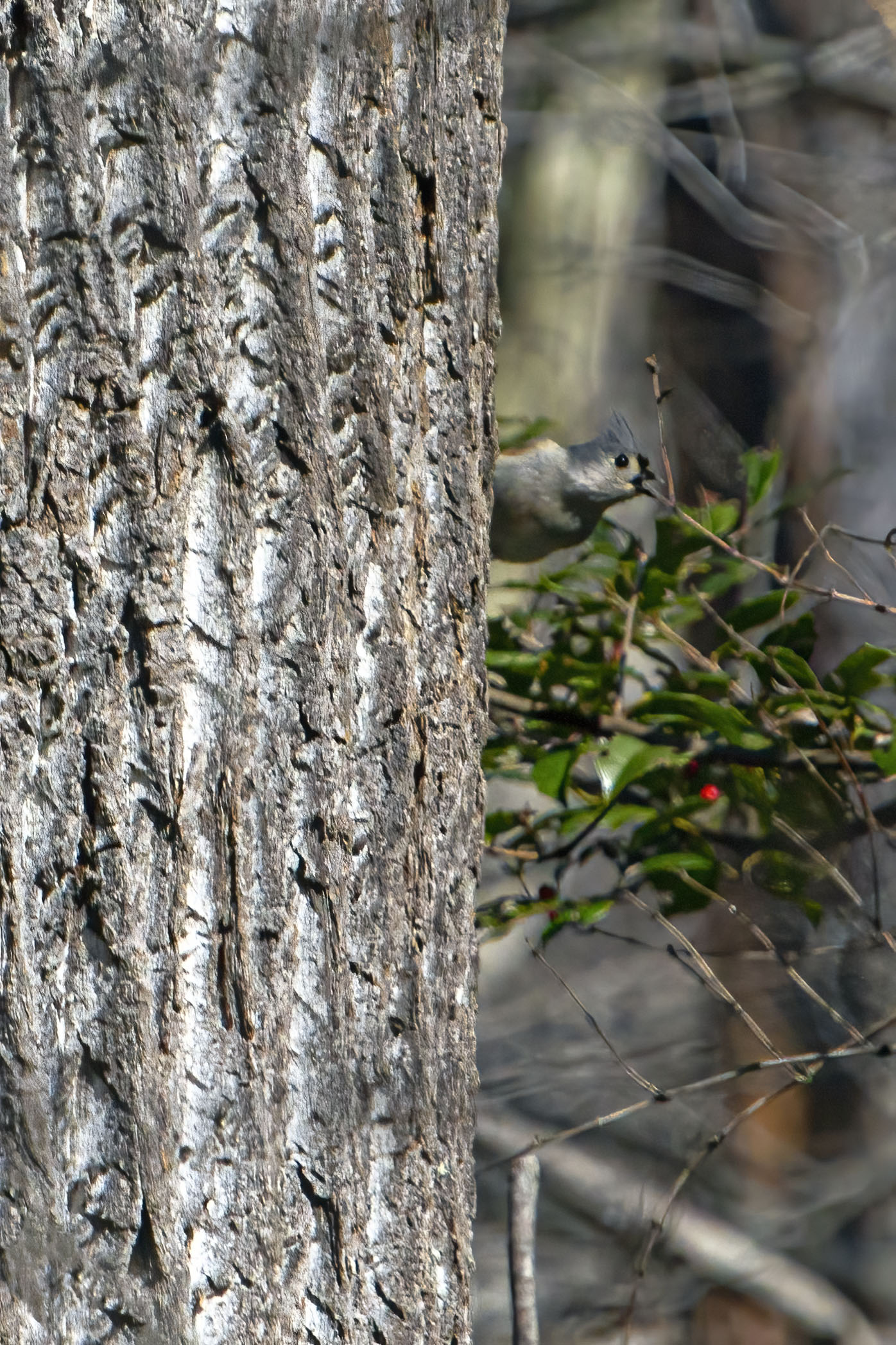
A Tufted Titmouse (Baeolophus bicolor) was also playing a combination of hide-and-seek and peekaboo with me. I captured the second photo below when the titmouse poked its head out from behind a tree trunk.

The final photo shows a Carolina Chickadee (Poecile carolinensis) that perched briefly almost directly overhead. This image has the cleanest composition of the three shots, but does not really give you a sense of the environment in which I found the little bird.

Some days it is nice just to commune with nature, to hear the sound of the rustling leaves and the babbling brooks, to observe the light and the shadows. Any photos that I do manage to capture are simply a bonus.

Golden-crowned Kinglet

Tufted Titmouse

Carolina Chickadee

© Michael Q. Powell. All rights reserved.

Read Full Post »

Prince William Forest Park is the largest protected natural area in the Washington D.C. metropolitan region  at over 13,000 acres (53 sq km). As its name suggests, it is is a heavily wooded area that is criss-crossed by numerous streams and creeks, most notably Quantico Creek.

There are over 37 miles of hiking trails in the park and this past Tuesday I walked a little over 6 miles (10 km) along some of my favorite trails. I knew that I would not see very much wildlife, but I really wanted to stretch my legs on a beautiful, sunny winter day. Occoquan Bay National Wildlife Refuge, where I most frequently go to photograph wildlife, is part of a flat, coastal plain, but Prince William Forest Park is hilly—according to my iPhone I climbed the equivalent of 19 flights of stairs that day.

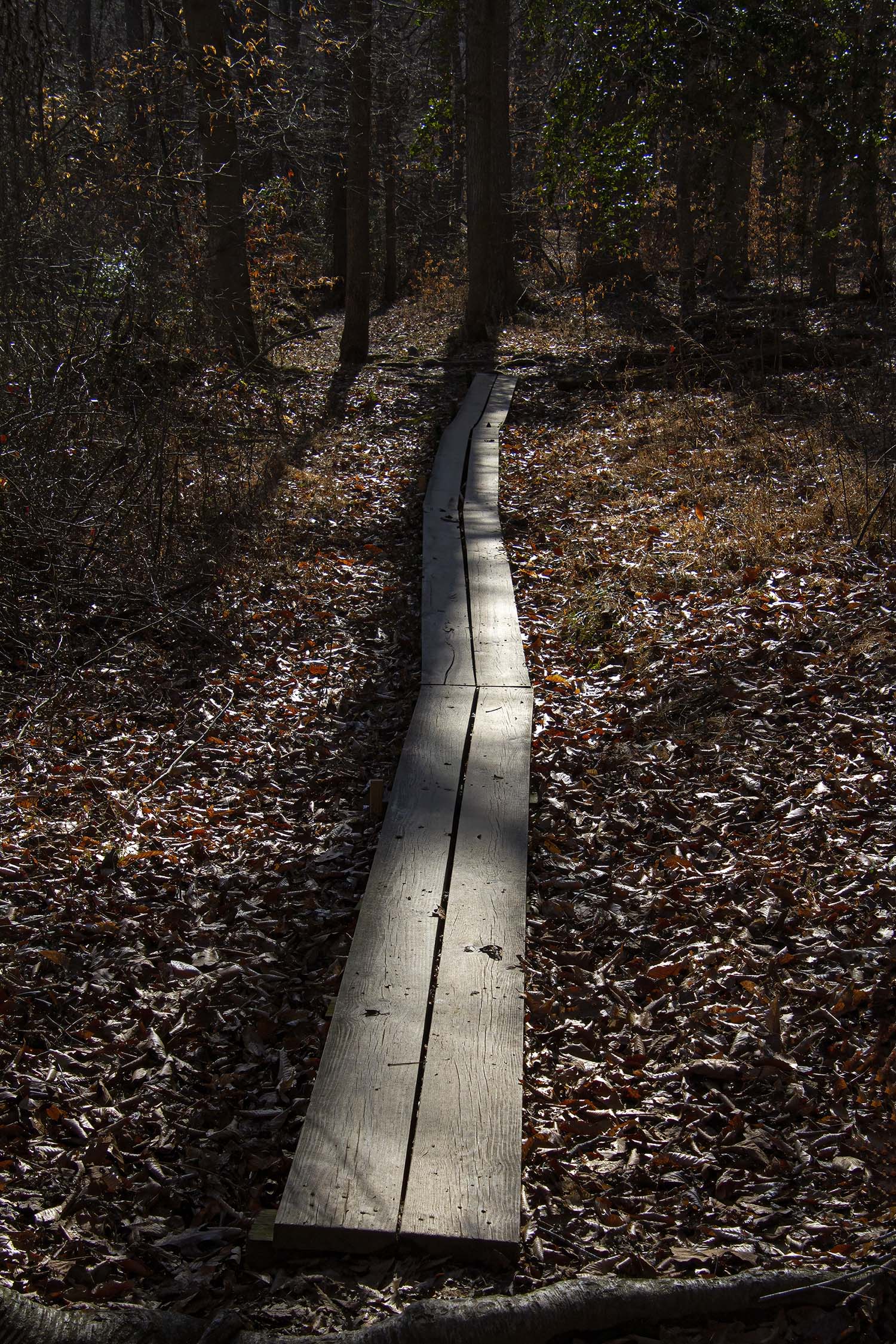
Some of the trails at Prince William Forest Park get mucky after a rain and I encountered two-board walkways like the ones in the first and last photos below at several spots while wandering about in the park on Tuesday. There were also some small bridges across streams (see second photo) and one larger bridge across Quantico Creek (see third photo). It really enjoyed checking out all of the different means that were in place to assist hikers in crossing wet areas and photographing subjects that are not my “usual” ones.

Prince William Forest Park is administered by the National Park Service and is wonderfully maintained. The trails are kept clear and are well-marked. I visit it most often in the spring, when wild flowers begin to appear on the forest floor and dragonflies start to emerge. If my memory serves me well, the earliest that I have seen dragonflies in my area was around the beginning of April, so I am waiting patiently for that time to come as we move through winter.

bridge

bridge

two-board bridge

© Michael Q. Powell. All rights reserved.
Read Full Post »

How do birds decide where they will perch? As I was reviewing my photos from a little hiking trip on Tuesday to Prince William Forest Park, I was shocked to see that a White-throated Sparrow (Zonotrichia albicollis) was perched in some prickly vegetation and was almost literally  surrounded by thorns. I had encountered similar thorns earlier in the day and can attest to the fact that they are sharp.

I could not help but notice how closely the claws on the bird’s tiny feet resembled those thorny protrusions.

White-throated Sparrow

© Michael Q. Powell. All rights reserved.

Read Full Post »

Although Eastern Pondhawks (Erythemis simplicicollis) are among the most common dragonflies in my area, I never fail to be startled by the brilliant emerald green color of the females and immature males. Their matching green faces and the striped pattern on their abdomen makes for a stylishly stunning look.

In many ways, however, I am even more drawn to the less flashy, two-toned look of the transitional males as shown in the second image. Males start out with the same look as the females, but eventually transition to become entirely blue, though they retain their green faces and eyes. I love the way the blue gradually fades into green during the intermediate phase of a male Eastern Pondhawk.

So what about you? Are you drawn more to the colors of the dragonfly in the first photo or the one in the second photo? If I am truthful in answering my own question, I’d have to say that my personal preference varies, depending on a number of factors including my mood and the weather.

Eastern Pondhawk

Eastern Pondhawk

© Michael Q. Powell. All rights reserved.


Read Full Post »

Older Posts »