Feeds:
Posts
Comments

Posts Tagged ‘Prince William County VA’

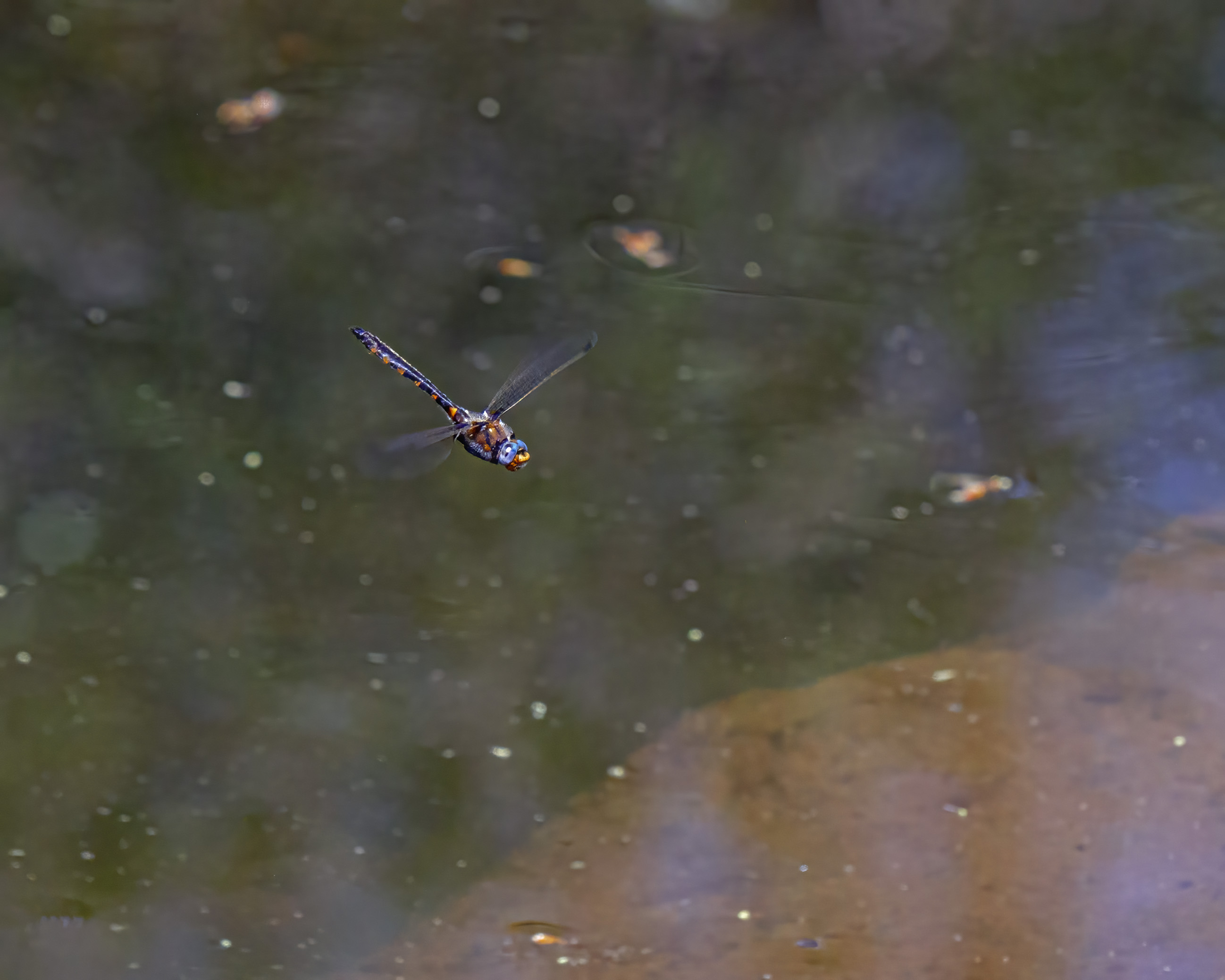
It is almost impossible, but I can’t help but try to capture images of dragonflies in flight. It is arguably the most difficult challenge of my ability to use my camera and also of my patience. None of the dragonflies in these photos flew close to the shores of the streams that I was exploring in Prince William County, Virginia, and I was using only a modest telephoto lens that I was focusing manually—the autofocus on my Tamron 180mm macro lens is relatively slow and could not focus on the dragonflies as they zoomed on by.

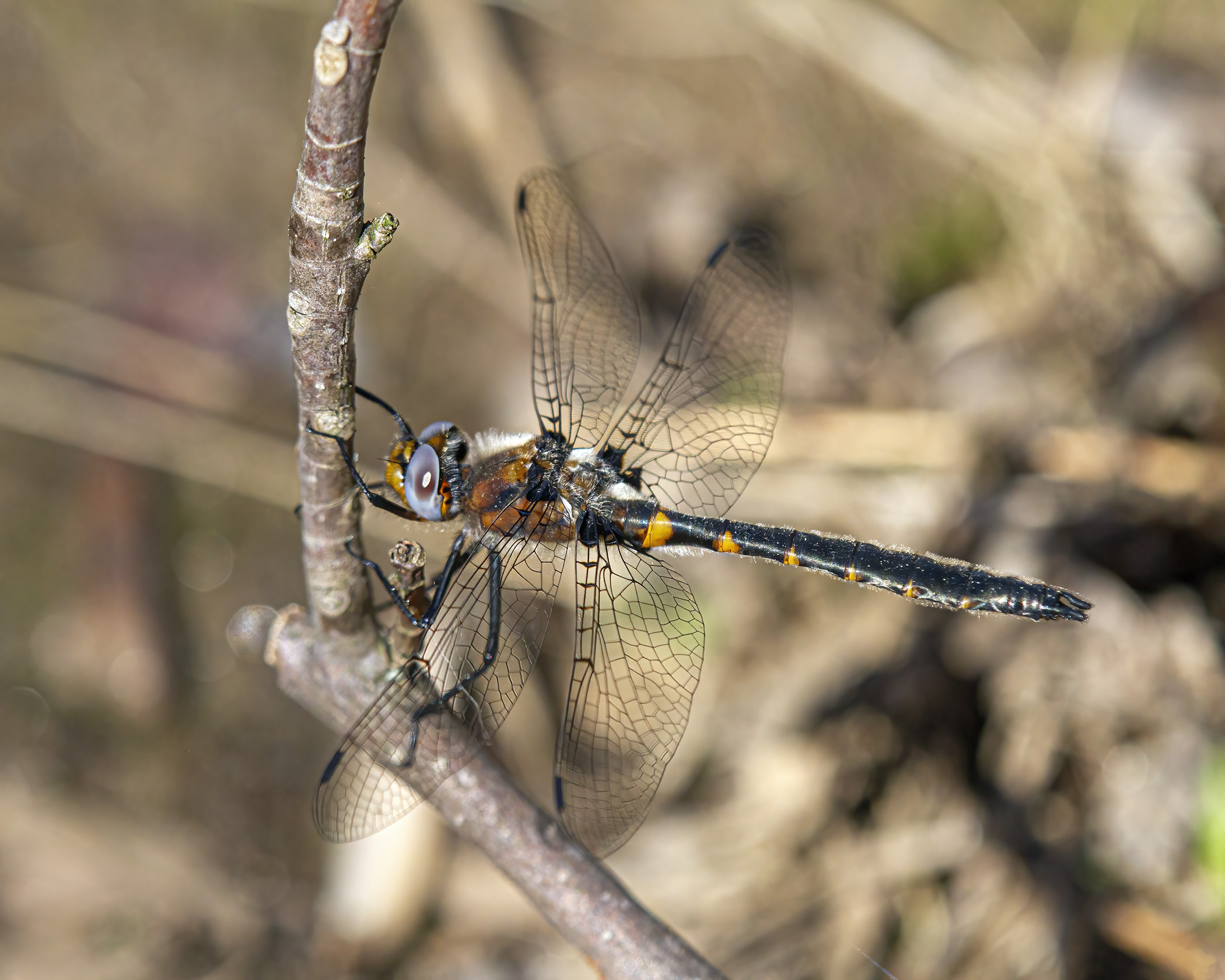
Last Wednesday I photographed the dragonfly in the first photo as it was patrolling over a creek. I believe that it is a Uhler’s Sundragon dragonfly (Helocordulia uhleri), which is about 1.8 inches (46 mm) in length. The dragonfly was not exactly following a pattern, but I was able to track it as it flew all around a small section of the creek.

The dragonfly in the second image may also be a Uhler’s Sundragon, though I am less confident of this identification. I really like the fact that the eyes of the dragonfly are in shart focus. It is probably just my imagination, but this dragonfly seemed to glance up at me and smile as it flew on by. In this photo, as in the first one, you really have a sense of the environment in which I found the dragonfly.

I captured the final image on Friday as I was exploring a different creek in Prince William County. The dragonfly in this photo was much larger than the ones in the other photos and was flying much faster and seemed to be conducting patrols over a much longer stretch of the creek. All the image was not completely sharp, I captured enough details to be able to identify it as male Stream Cruiser (Didymops transversa) dragonfly, a species that is about 2.2 inches (56 mm) in length.

Last year I did a short video on YouTube called Impossible Shots? Dragonflies in Flight in which I talked about one of my forays into the field and highlighted my approach to photographing dragonflies. Check it out if you want to see some more shots of dragonflies in flight or if you simply want to hear my voice and see my face. I included a link to the video in the title of the video (which should appear in color and underlined) and am also going to try to paste it into the end of posting, so you don’t have to go to YouTube to watch it. I am still just dabbling in video, but want to try to do more of it this year.

Uhler's Sundragon

Uhler's Sundragon

Stream Cruiser

© Michael Q. Powell. All rights reserved.
Read Full Post »

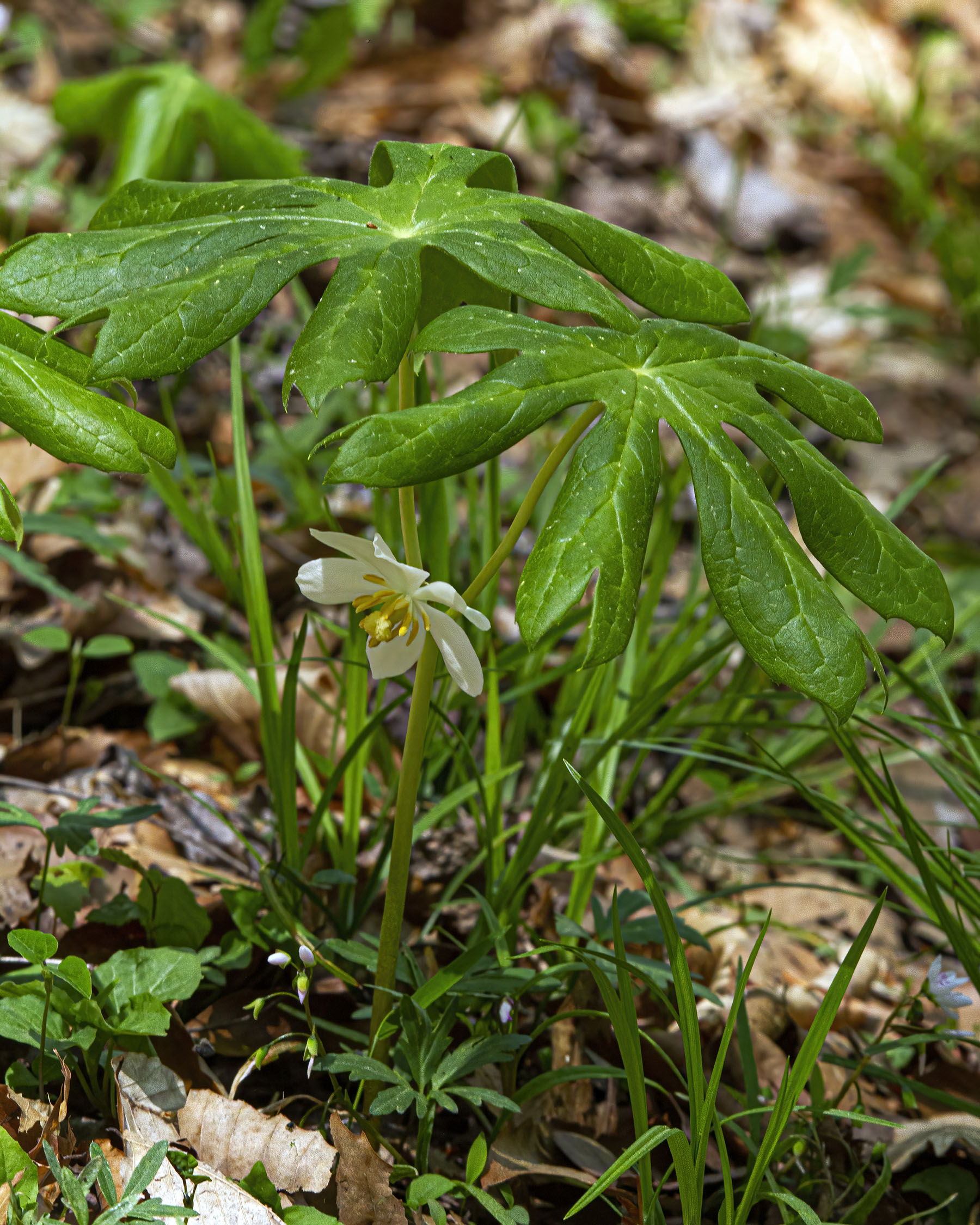
Mayapples (Podophyllum peltatum) are strange plants. Most of the time they grow in colonies and each plant has a stalk and a single umbrella-shaped leaf. Occasionally, though, the stem will branch off and there will be two leaves. In those cases, a single flower may emerge at the intersection of the two branches of the stem.

According to the Wisconsin Horticulture website, “The nodding, white to rose-colored flowers appear in April or May. Each flower is 2-3 inches wide, with 6 light green sepals, 6 to 9 waxy petals, and twice as many stamens with white filaments and yellow anthers. Although the flowers are quite showy, they are short-lived and usually hidden by the leaves. The flowers are fragrant, variously described as pleasant to putrid and are visited by bumblebees and other long-tongued bees.”

Yesterday I spotted a flowering Mayapple plant as I was exploring the area surrounding a creek in Prince William County, Virginia. I have been seeing Mayapple plants for the last couple of weeks as I have been searching for dragonflies, but this is the first one that I have seen in bloom this spring. You have to get pretty low to the ground to spot the flowers, and it was a bit of a challenge getting this shot.

There is something whimsical about a flower that has its own dual umbrella to provide it with shade—I can’t help but smile whenever I spot a Mayapple in bloom.

Mayapple

© Michael Q. Powell. All rights reserved.
Read Full Post »

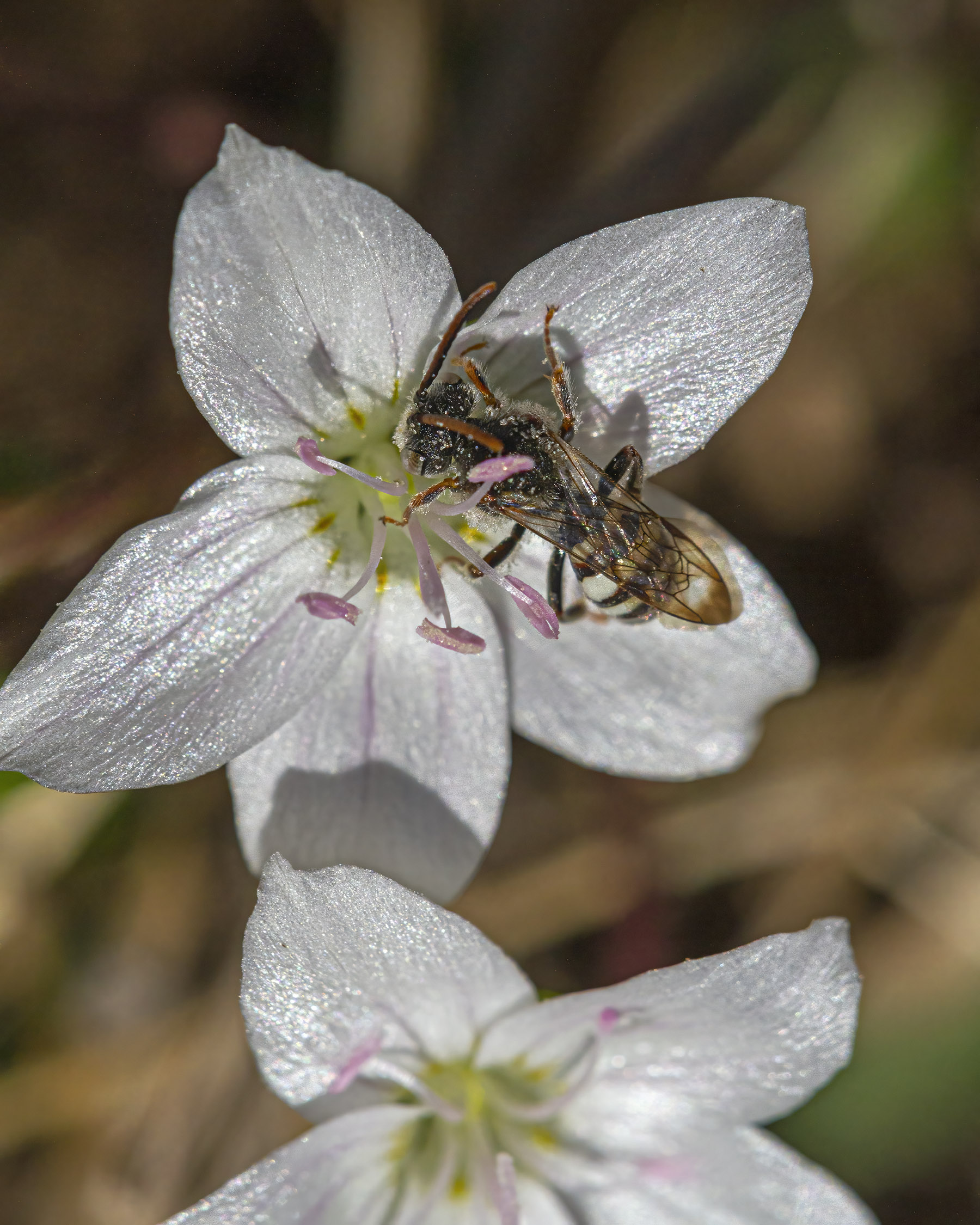
Early spring wildflowers, like the Virginia Spring Beauty (Claytonia virginica), are an important source of food for a host of small bees and other insects. Many insects gather pollen from these flowers and in doing so help to pollinate the plants.

Some species of bees, though, lack  scopa (the pollen-collecting hairs) and do not collect pollen to feed their offspring. The genus Nomada, according to Wikipedia, is the largest genus of kleptoparasitic bees sometimes referred to as “cuckoo bees.” Kleptoparasitic bees are so named because they enter the nests of a host and lay eggs there, stealing resources that the host has already collected.

It is a little hard to see the body of the bee in the photo below, but if you look closely you can see its striped abdomen, which is wasp-like in appearance. I was not sure of the type of bee, so I posted it to BugGuide, a useful resource for insect identification, and one of the experts there identified the bee as belonging to the genus Nomada.

cuckoo

© Michael Q. Powell. All rights reserved.

Read Full Post »

Have you ever looked closely at a dragonfly’s legs? A dragonfly has six legs that are attached in pairs to its thorax. The main parts of the leg are the upper leg or femur, the lower leg or tibia, and the foot or tarsus, which is made up of three segments and ends with a pair of claws. The legs are covered with spiky hairs and fulfill a variety of functions, including perching, catching and holding onto prey, and cleaning its mouth and eyes.

The first photo is a close-up view of a Uhler’s Sundragon (Helocordulia uhleri) that I spotted on 4 April near a creek in Prince William County, Virginia. You get a really good view of one of the middle legs of the dragonfly, including the way that it bends at two joints and the way the tiny claws are used to hold onto the perch. I can’t be sure, but I believe that the dragonfly may be using one of its front legs to wipe its large compound eye. If you click on the photo, you can see some of the thousands of ommatidia, the faceted optical units that allow a dragonfly to see in almost 360 degrees around itself.

In the second photo, you can see that the sets of legs are of different lengths. The back legs, which are the longest, are the ones that are most often used to catch and subdue prey. The front leg nearest us, does not seem to be used and the moment for perching and the “elbow” appears to be touching the eye. At first I thought that this was merely an awkward perch, but the more I look at the photo, the more I think that the dragonfly is cleaning its eye.

The final photo, which was actually the first of these photos that I took, shows the entire body of the Uhler’s Sundragon. The Uhler’s Sundragon is visually similar to the Selys’s Sundragon, the first dragonfly that I spotted this year, with the notable difference that the Uhler’s Sundragon has little orange patches at the base of its wings, as you can see in the photo, that are not present with the Selys’s Sundragon. If you look at the front legs, it appears to me that the dragonfly was using both of them initially for perching—its “elbow” does not appear to bent as it was in the middle photo.

This post was a little more “geeky” than usual, delving deeper into dragonfly anatomy than I usually do. I think it is fascinating to try to observe and understand the behavior that I see in my subjects and hope that you may also find these details to be somewhat interesting.

Uhler's Sundragon

Uhler's Sundragon

Uhler's Sundragon

© Michael Q. Powell. All rights reserved.

Read Full Post »

As I was exploring the edge of the same small pond where I photographed the newt featured in yesterday’s blog posting, I spotted my first damselfly of the season. Damselflies and dragonflies both belong to the order of flying insects known as Odonata. Damselflies tend to be smaller and slimmer that dragonflies and most damselflies hold their wings above their bodies when at rest, unlike dragonflies that perch with wings extended.

Identification of this damselfly was somewhat difficult for me. On the one hand, I saw the broken shoulder stripe that looks like an exclamation point, which suggests that this is a Fragile Forktail damselfly (Ischnura posita). On the other hand, my identification guide states that there is no blue at the tip of the abdomen (the “tail”) of the Fragile Forktail, making me think it might be an Eastern Forktail.

I posted the photo to a Facebook forum called Virginia Odonata and one of the experts there made the following comment, “This is quite an unusual Forktail. Easterns rarely have the split shoulder stripe, but I am still inclined toward Fragile even though the amount of blue on S9 is unusual.”  For your information, naturalists divide the abdomen of a dragonfly into ten segments and you start counting from the thorax area (the upper body), so S9 is the penultimate segment.

When it comes to identifying birds and insects, I have grown accustomed to living with some degree of uncertainty. Even experts will sometimes disagree, particularly if there is only a photo from a single angle, which was the case with this damselfly.

For me, the precision of my identification is not critically important—I can enjoy the beauty of this little damselfly without knowing its name. For the second day in a row, I am reminded of Shakespeare, who famously wrote in Romeo and Juliet, “What’s in a name? That which we call a rose, by any other name would smell as sweet.”


Fragile Forktail

© Michael Q. Powell. All rights reserved.


Read Full Post »

As I was exploring the edges of a small pond in Prince William County in Virginia on Tuesday, I spotted a lizard-like creature walking along the pond bottom underwater. I had no idea what this was, but had the presence of mind to snap a photo. The water was clear enough that I was able to capture a decent amount of detail.

I did some research and learned that this is the adult aquatic form of an Eastern Red-spotted Newt (Notophthalmus viridescens). That set me off on another series of internet searches, because I am not sure what a newt is. When I hear the word “newt” I immediately think of the three witches in Shakespeare’s Macbeth. As they stirred their cauldrons, they described the contents of the potion that included a newt, although it turns out that the witches were using codes words to refer to various plants.

Eye of newt and toe of frog,
Wool of bat and tongue of dog,
Adder’s fork and blind-worm’s sting,
Lizard’s leg and howlet’s wing,
For a charm of powerful trouble,
Like a hell-broth boil and bubble.”

Newts are a kind of salamander and are considered to be amphibians, not reptiles. Eastern Red-spotted Newts have an amazing life cycle, according to an article by the University of Virginia Mountain Lake Biological Station. They hatch from eggs and then spend the next 2-5 months of their lives living in the sediment and debris at the bottom of the pond, breathing through gills.

When they metamorphose into terrestrial red efts, the juvenile form of the aquatic newt, they acquire a pair of lungs which they use for the rest of their life. After 2-7 years as terrestrial efts, the newts return to the water to breed. They can live for up to 15 years in total, sometimes spending the entirety of their adulthood as aquatic newts.

Eastern Red-spotted Newt

© Michael Q. Powell. All rights reserved.

Read Full Post »

Yesterday was an unusually warm spring day, with temperatures soaring to 82 degrees (28 C). I suspected that I might find some early season dragonflies and I was right. Last week I saw my first dragonfly of 2023, but it does not really count for me, because I was not able to get a photograph of it.

My first “official” dragonfly of 2023 turned out to be an uncommon one, a Selys’s Sundragon (Helocordulia selysii). According to the Maryland Biodiversity Project, “Selys’s Sundragon is an uncommon, early-season corduliid which breeds in small streams in wooded areas through much of the southeast.” Corduliidae, also known as the emeralds, emerald dragonflies, or green-eyed skimmers, is the family of dragonflies to which the Selys’s Sundragons belong.

As far as I can recall, I have seen this species only twice in the past, both times in 2021. Check my 16 April 2021 blog posting entitled Selys’s Sundragon Dragonfly for details about my first encounter, including some photos that compare the Selys’s Sundragon with the very similar-looking Uhler’s Sundragon.

As many of you know, dragonflies are my favorite subjects to photograph during the warmer months. There is something almost magical about this beautiful aerial acrobats that inspires me. I love the challenge of spotting and photographing these tiny creatures—the Selys’s Sundragon in these photos, for example, is only about 1.7 inches (43 mm) in length.

During the summer, many common dragonfly species can be seen in a variety of habitats, but the early season dragonflies tend to be habitat specialists and have very brief flight season, often less than a month. For that reason, I usually try to go out with my camera as often as I can during the month of April.

Selys's Sundragon

Selys's Sundragon

© Michael Q. Powell. All rights reserved.

Read Full Post »

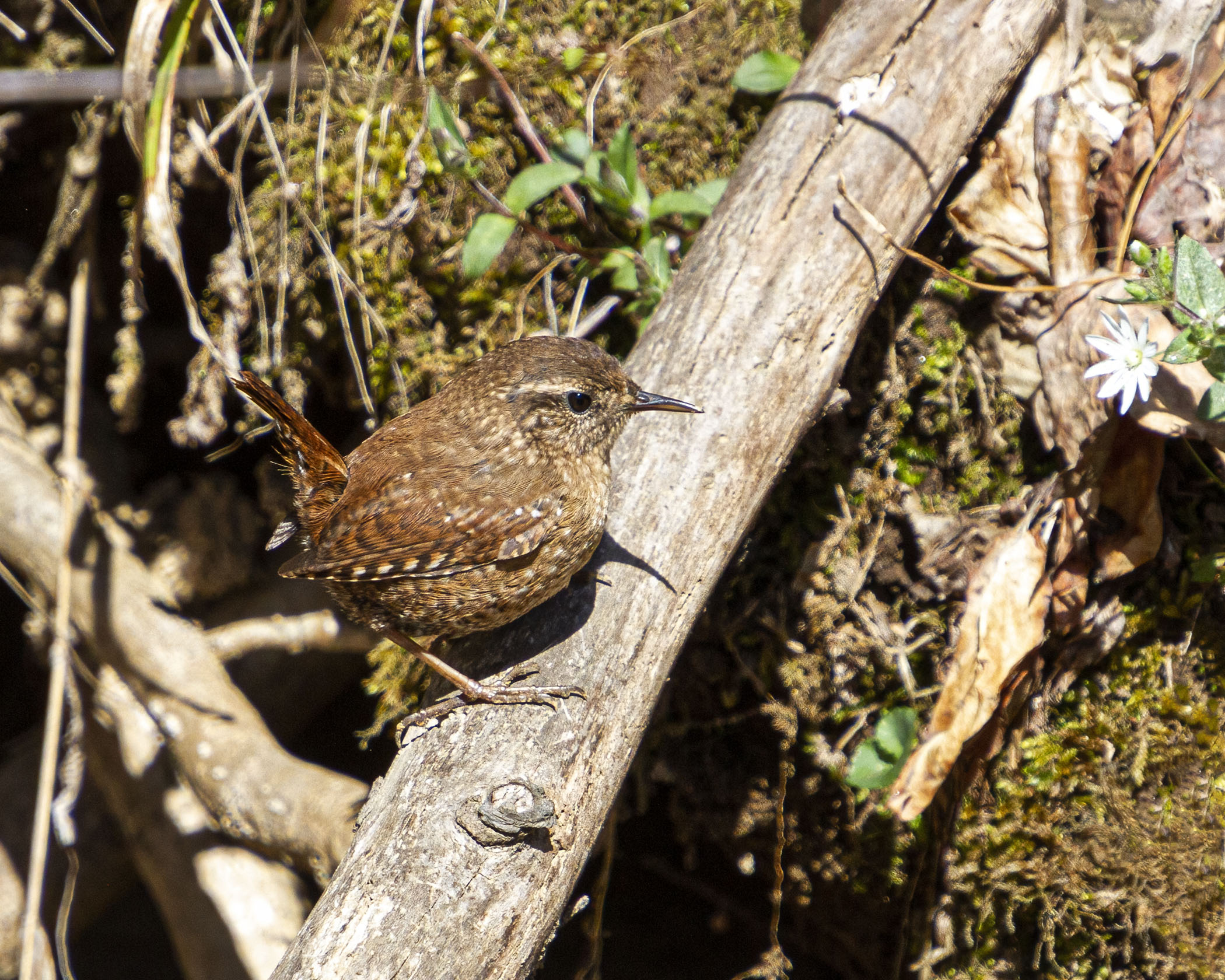
Throughout the winter I searched in vain for a Winter Wren (Troglodytes hiemalis), but finally managed to spot one last Thursday as I was exploring a stream in Prince William County, Virginia on a sunny spring day. According to the Audubon Field Guide, the Winter Wren is “A secretive little bird of dense woods. It often creeps about among fallen logs and dense tangles, behaving more like a mouse than a bird, remaining out of sight but giving an occasional kimp-kimp callnote.”

When I took these photos, I was standing in a dried-up stream bed, so I was almost at eye-level with this tiny bird. This angle of view allowed me to get much better shots that I would have gotten if I had been shooting downwards at the subject. I recommend that you click on the images to get a closer look at the beautiful details on this wren, including its speckled feathers, upturned tail, large feet, and sharp bill.

Winter Wren

Winter Wren

© Michael Q. Powell. All rights reserved.

Read Full Post »

Recently I did a posting featuring a beautiful Violet Dancer (Argia fumipennis violacea), the uniquely purple damselfly that is featured in the banner of my blog. Today I thought that I would give equal time to several of the other dancers in my life. Damselflies in the genus Argia are known by the whimsical name of dancers, because of the distinctive jerky form of flight they use which contrasts with the straightforward direct flight of bluets, forktails, and other pond damselflies.

The damselfly in the first photo is a male Powdered Dancer (Argia moesta) that I spotted perched on a rock in the water while I was exploring a stream in Prince William County. I can tell that this is a rather young male, because he still has a lot of color on his thorax. Mature males turn whitish in color—you can see the powdery coating beginning at the tip of its abdomen.

The next two photos show a male Blue-fronted Dancer (Argia tibialis) that I found in the vegetation next to a small pond at Jackson Miles Abbot Wetland Refuge. This species is quite distinctive because the thorax is almost completely blue, with only hairline black stripes on its shoulders and the middle of its back.

One of the things that I particularly enjoy about photographing nature is the incredible diversity that I encounter. Even within a single species, I can spot unique beauty in each individual that I encounter, especially when I slow down and look closely. The same thing is true about people—we should celebrate and respect our diversity and engage with people who may look or act or think differently. As the Lee Ann Womack country music song says, if you get the choice to sit it out or dance, I hope you dance.


Powdered Dancer

Blue-fronted Dancer

Blue-fronted Dancer

© Michael Q. Powell. All rights reserved.
Read Full Post »

Last week I was excited to capture this image of a beautiful Turquoise Bluet damselfly (Enallagma divagans) as I explored the edge of a small pond in Prince William County, Virginia. The damselfly was conducting short patrols over the water and then would perch on the vegetation sticking out of the water.

I got low to the ground and squatted as close to the water’s edge as I dared, doing my best to avoid falling into the water as I leaned forward. I managed to stay dry as I waited patiently. Eventually the Turquoise Bluet perched within range of my lens and I was able to capture a pretty detailed image of the little bluet, which was about 1.4 inches (35 mm) in length.

Turquoise Bluet

© Michael Q. Powell. All rights reserved.
Read Full Post »

One of the coolest, most colorful damselflies in our area is the violet subspecies of the Variable Dancer (Argia fumipennis) that is often called the Violet Dancer (Argia fumipennis violacea). I spotted these handsome male damselflies last Thursday in Prince William County and love the way I was able to capture some of the texture of their environment, especially in the first photo.

Some of you may have noticed that I have had a photo of a Violet Dancer as the banner for this blog for quite a number of years. This coloration of this damselfly is so strikingly different from the various shades of blue of most damselflies that it made an immediate impression on me the first time that I photographed one.

I need to update many aspects of my blog page format, including the information in the “About Me” section, but I am still pretty comfortable with having a Violet Dancer being the first image that viewers see when they access my page.

Variable Dancer

Variable Dancer

© Michael Q. Powell. All rights reserved.

Read Full Post »

I was delighted to spot this female Lancet Clubtail dragonfly (Phanogomphus exilis) on Thursday in Prince William County, the first member of this species that I have seen this season. She seemed to be glancing upwards at me as she smiled and posed for me.

When I was doing some research on this species, I got a little confused, because sometimes the Latin name for the species was given as Phanogomphus exilis and sometimes as Gomphus exilis. As far as I can understand it, the Lancet Clubtail used to be included in Gomphus genus. However, according to Wikipedia, “As a result of phylogenetic studies, Gomphus subgenera Gomphurus, Hylogomphus, Phanogomphus, and Stenogomphus were elevated in rank to genus in 2017. With the removal of their member species, Gomphus ended up with 11 of its previous 54 species, none of which are found in the Western Hemisphere.” Yikes!

Lancet Clubtail

Lancet Clubtail

© Michael Q. Powell. All rights reserved.

Read Full Post »

Last Tuesday I spotted several beautiful Bar-winged Skimmer dragonflies (Libellula axilena) while I was exploring a small pond in Prince William County, Virginia. The dragonflies kept choosing beautiful, but flimsy perches, so I did not have much time snag shots of them before they flew away.

According to the Dragonflies of Northern Virginia website, Bar-winged Skimmers have relatively specific habitat needs and consequently are one of the less common skimmers in our area. “It prefers very shallow marshy pools in the full sun. If there’s enough water for fish, it’s too deep for Bar-winged Skimmers. And of course shallow pools in the full sun tend to quickly evaporate and dry up, so stable populations in Northern Virginia are few and far between.”

I really like the backgrounds that I was able to capture in these shots—they are colorful, but not at all distracting. If you look closely at the leading edges of the wings, you can see the black spots and stripes that give rise to the name of this species.

Bar-winged Skimmer

Bar-winged Skimmer

Bar-winged Skimmer

© Michael Q. Powell. All rights reserved.

Read Full Post »

Although “treehugger” is a term that is sometimes used for environmentalists, it is even more applicable to Gray Petaltail dragonflies (Tachopteryx thoreyi), like these ones that I spotted last Tuesday in Prince William County. Gray Petaltails love to perch on the trunks of trees, where they blend in almost perfectly with the bark, as you can see especially well (or almost not see) in the second photo.

I have been told that Gray Petaltails especially like the color gray and a number of times one has perched on me when I was deliberately wearing a gray shirt. Fellow dragonfly enthusiast Walter Sanford capture that phenomenon in 2019 in one of his blog postings that he called “You look like a tree to me!

I drove up to Massachusetts this past weekend for the celebration of my 50th high school reunion at Northfield Mount Heron School, the private college preparatory boarding school that I attended for three years. I disconnected from the internet during that time there, which is why I have not posted in several days—my apologies to those of you who may be used to a daily “fix.”

It was fascinating to reconnect with high school friends, often for the first time in 50 years, and to meet some classmates for the first time. Northfield was founded as a girls school in 1879 by evangelist Dwight L. Moody and two years he established Mount Hermon as a boy school. In 1971 the two schools formally merged and those of us in the class of 1972, my class, were the first to graduate from Northfield Mount Hermon School. At that time there were close to 1300 students divided between the two campuses, which made it difficult to know everyone—in recent years the school consolidated onto the Mount Hermon campus and it currently has a student body of about 700 students.

Gray Petaltail

Gray Petaltail

© Michael Q. Powell. All rights reserved.


Read Full Post »

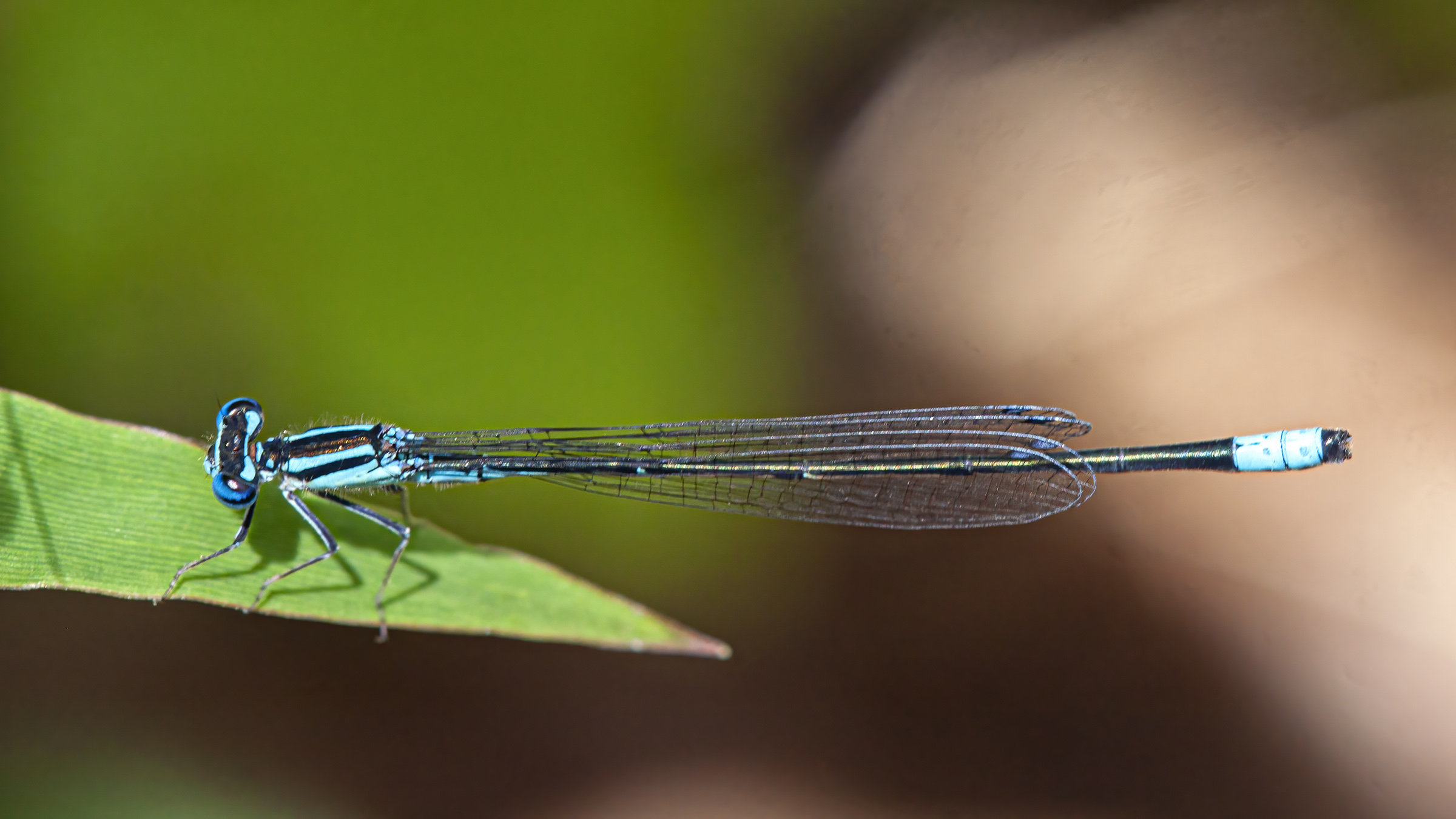
On Tuesday I was thrilled to spot this male Brown Spiketail dragonfly (Cordulegaster bilineata) while I was exploring a marshy area in Prince William County, Virginia. Spiketail dragonflies are quite rare in our area and this was the first one that I have spotted this year.

Brown Spiketails are found only in a specific type of habitat. According to the Dragonflies of Northern Virginia website, Brown Spiketails prefer “clean, small, sunlit, forest streams and seepages” and “perch often and low on grasses and shrubs in clearings, meadow edges and sunny forest edges.” As you can see from the background in these two images, the location where I found this dragonfly was full of ferns.

In case you are curious, spiketail dragonflies are so named because the long ovipositor of the female extends beyond the tip of the abdomen. The females lay their eggs by hovering over shallow water and driving the long ovipositor vertically into the shoreline mud or stream bottom in a fashion reminiscent of a sewing machine. Since these photos show a male, there is no “spike” to see for this spiketail.

I love the striking eyes of this dragonfly and the colorful markings his entire body and was happy to be able to capture such a detailed look at his beauty.


Brown Spiketail

Brown Spiketail

© Michael Q. Powell. All rights reserved.
Read Full Post »

It is getting late in the season for Uhler’s Sundragon dragonflies (Helocordulia uhleri), so I was particularly happy when I spotted several of them last week while I was exploring a creek in Prince William County. Uhler’s Sundragons appear in early April and their flight period lasts for only a month or so, so it is always a challenge to find them and photograph them for the season.

Both of the dragonflies in the photos are males, judging by the appendages at the tips of their abdomens and their indented hind wings. I think that they are two separate individuals, but cannot be sure, since I spotted them in the same general area.

Some of you may have noticed that I did not do postings on Saturday and Sunday. I try to do a posting every day and during the past year “missed” only four days. I spent this past weekend in the mountains of Virginia at a church retreat and disconnected myself from the internet during that time. I had a wonderful time and feel uplifted emotionally and spiritually. After all of the covid-related travel limitations of the past two years, it felt good to get away and break out of my normal routine.

Uhler's Sundragon

Uhler's Sundragon

© Michael Q. Powell. All rights reserved.


Read Full Post »

Every year I challenge myself by attempting to capture images of dragonflies in flight. Some dragonfly species help out by flying in somewhat predictable patterns or by hovering a bit, but it is still pretty tough to capture a tiny moving subject like a dragonfly.

This week I managed to photograph Common Baskettail dragonflies (Epitheca cynosura) in flight on two consecutive days at different locations using different lenses and techniques. Male Common Baskettails often patrol around the edges of small ponds in fairly limited areas. If you observe them long enough, you can get a general sense of the track that they are following.

For the first photo, I extended my Tamron 150-600mm lens to its maximum length and pre-focused on an open area that appeared to be part of the patrol route at a small pond at Occoquan Bay National Wildlife Refuge. My camera was on a monopod and when the dragonfly entered the target area, I would attempt to track it and focus the lens manually. It sounds pretty straightforward, but the hand-to-eye coordination required makes this approach quite daunting. However, as you can see in the first photo, it is possible to get a decent shot. If you click on the image, you can see lots of cool details, including the way that the dragonfly has folded up its legs under its thorax.

The next day I was exploring a small pond in Prince William County when I spotted a patrolling dragonfly—it was another male Common Baskettail. I had my Tamron 180mm macro lens on my camera and was not using a monopod. I was able to track the dragonfly a bit more freely with this lighter lens, which proved to be beneficial when the dragonfly deviated from its flight path. Once again I focused manually and was thrilled with the results I got in the second and third images below. I particularly like the way that I was able to capture some of the pond environment in the second shot, while managing to get the dragonfly in sharp focus.

Why do I use manual focus? My Canon 50D is a long in the tooth and has a relatively primitive focusing system with only nine focus points, which means that my camera can’t focus fast enough or accurately enough to shoot a dragonfly in mid-air. More modern camera have much faster and more sophisticated focusing systems and theoretically can produce better results. I saw a video recently, for example, in which a photographer was able to use animal eye focus on a moving dragonfly. Yikes! You pay a real premium, though, for that advanced technology, with camera bodies costing up to $5,000 and lenses up to $12,000.

I am not all that impressed by fancy camera gear and would rather focus on mastering the more modest gear that I have and spending as much time as I can out in the wild. In my mind, that recipe sets me up best to take advantage of the opportunities that arise as I wander about in nature.

Common Baskettail

Common Baskettail

Common Baskettail

© Michael Q. Powell. All rights reserved.


Read Full Post »

Orchids are rare and beautiful and it is amazing to find them growing in the wild. Last Thursday I went on a hike in a hilly forested area of Prince William County in Virginia. It was cool and overcast, less than idea circumstances for finding the dragonflies that I was seeking. After coming up empty-handed at my favorite dragonfly spots, I decided to switch to Plan B.

I vaguely remembered where in previous years I had seen some Pink Lady’s Slippers (Cypripedium acaule), a beautiful wild orchid that is native to North America, and decided to go off on a quest to find these treasures. I noticed that a lot of trees had fallen over the past year. Although workers at this national park had cleared the trails themselves, the limbs from the fallen trees obstructed my view in my target areas.

Orchids are pretty fragile and require specific habitats and I was worried that those habitats might have been damaged or destroyed. I walked very slowly, scanning the forest floor for hints of red or pink, wondering if I had come too early or too late. Eventually I found one small patch and then a second one a bit later (as shown in the final photo).

Pink Lady’s Slippers are sometimes called “moccasin flowers.” According to the New England Today website, “Native American folklore tells the story of a young maiden who ran barefoot in the snow in search of medicine to save her tribe, but was found collapsed on the way back from her mission with swollen, frozen feet. As a result, beautiful lady slipper flowers then grew where her feet had been as a reminder of her bravery.”

As I did a bit more research I learned more about this delightful flowers, including the specific requirements for them to grow that include a particular type of fungus. According to the U.S. Forest Service, “In order to survive and reproduce, pink lady’s slipper interacts with a fungus in the soil from the Rhizoctonia genus. Generally, orchid seeds do not have food supplies inside them like most other kinds of seeds. Pink lady’s slipper seeds require threads of the fungus to break open the seed and attach them to it. The fungus will pass on food and nutrients to the pink lady’s slipper seed. When the lady’s slipper plant is older and producing most of its own nutrients, the fungus will extract nutrients from the orchid roots. This mutually beneficial relationship between the orchid and the fungus is known as “symbiosis” and is typical of almost all orchid species.”

In a recent posting about Bleeding Hearts, I commented that I really liked heart-shaped flowers. At that time I was referring to the stylized shape that we associate with love. In the case of these Lady’s Slippers, I have always found that they look like actual human hearts, at least as I have seen them in movies that included open-heart surgery. Wow!

Depending on your angle of view, I also find that Pink Lady’s Slippers look like angels. I have tried to show you what I mean in the second photo, in which I have focused on a single flower. Do you see the hovering angel?

The final photo is one that I snapped with my iPhone. It gives you a sense of the habitat in which I found these beautiful little flowers. I feel blessed to have found them again this year and hope to see them again in future springs. According to the U.S. Forest Service article cited above, Pink’s Lady Slippers can live to be twenty years old or more.

Pink Lady's Slipper

Pink Lady's Slipper

Pink Lady's Slipper

© Michael Q. Powell. All rights reserved.

Read Full Post »

When the dragonfly season first starts, I am content to get a record shot of each species, which is to say that I am looking primarily to document the species and am not all that concerned about the quality of the initial images or their artistic merits. After the first excitement dies down, I try to get better and better images and one of the things that I often try to do is to photograph males and females of each species.

How do you tell the gender of a dragonfly? In some dragonfly species, the mature males and females have different colors and are easy to tell apart. However, quite often immature males have the same coloration as the females, so color alone is rarely a reliable marker. I have found that the best way to determine the gender is to look at the tips of the abdomen (the “tail”)—I won’t go into the details of dragonfly anatomy, but suffice it to say that the males and females have different shapes in this area so they can fit together for mating.

Over the last two weeks I have had several encounters with Uhler’s Sundragon dragonflies (Helocordulia uhleri) and was able to get shots of both a male and a female. The dragonfly in the first image is a female. I can tell its gender by the shape of the “terminal appendages” and also by the curved shape of the hind wings where they join the body.

If you look closely at the second image, which is a shot of a male, you can see that the lower portion of the abdomen is slightly enlarged—the abdomen is more uniformly shaped with a female—and the shape of the tip of the abdomen is different. You might also notice that the shape of the hind wings is “indented” where they meet the body, unlike the smooth curves of the female.

With some species, you can find the males and the females in the same area, so it is not hard to get shots of both genders. However, with other species, the females hang out in separate areas and do not mingle with the males until the females decide it is time for mating, which forces me to search a much wider area to photograph males and females.

I apologize if I got a little “geeky” in this posting. I am a little obsessed with dragonflies and am endlessly fascinated by them, so it is easy for me to get a little lost in the details.

female Uhler's Sundragon

male Uhler's Sundragon

© Michael Q. Powell. All rights reserved.

Read Full Post »

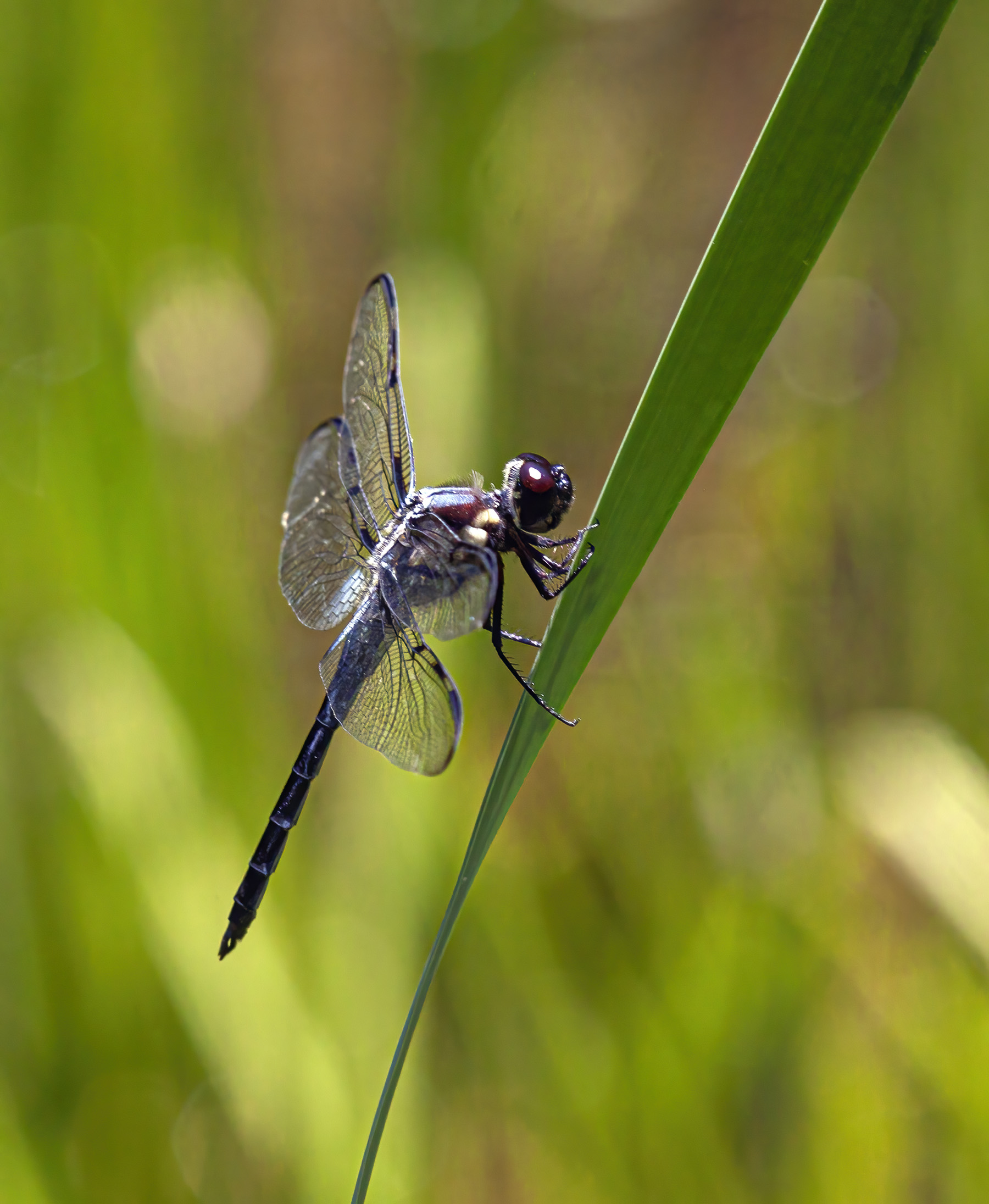
As I was wandering about on Friday in Prince William County, a dragonfly zoomed by me and perched on some nearby vegetation. At the time I took the shots, I had no idea what it was because of the poor lighting. I was able to capture a few images and when I opened them on my computer I was delighted to discover that I had photographed a beautiful female Stream Cruiser dragonfly (Didymops transversa).

This was the first live Stream Cruiser dragonfly that I have photographed this spring. A week earlier I stumbled upon a Stream Cruiser that had had some unspecified problem in emerging and was dead, as shown in the second photo. Dragonflies are extremely vulnerable when they are emerging and unfavorable weather conditions and predators  almost certainly lower their survival rate. Given the magnitude of their remarkable metamorphosis, it seems remarkable to me that any of them can survive.

My experience with the Stream Cruiser in the first photo reminds me of the importance of being constantly vigilant. I was walking down a hill, headed towards a stream, when I glanced to the side and saw the flying dragonfly. I made a quick 180 degree turn and tracked the dragonfly as it landed. I took two steps forward and and had time to snap off only a few photos and that was it.

Fortunately I had my camera settings were somewhat appropriate and I was able to react quickly. As is often the case with wildlife photography, those two factors were key to capturing a shot. If the circumstances had been different, I might have been able to get a better image, but I am pretty happy with the image I captured. Needless to say, success is not guaranteed—I have plenty of stories from that day of the ones that got away.

Stream Cruiser

Stream Cruiser

© Michael Q. Powell. All rights reserved.
Read Full Post »

Ashy Clubtail dragonflies (Phanogomphus lividus) like to perch on the ground, which makes them really difficult to spot. Fortunately I saw these two dragonflies land last Friday during separate encounters in Prince William County and was able to get close enough and low enough to photograph them. If I had not seen them move, I probably would not have been able to detect them.

Both dragonflies had really shiny wings, an indication that they had emerged fairly recently. Initially the wings are fragile when a dragonfly emerges and they are folded above its head. The dragonfly gradually pumps fluid through the veins of the wings and they progressively harden and pop open into the normal outstretched resting position. Sometimes, as you can see in the final photo, a dragonfly will temporarily hold its wings closed over its head in their former position.

Dragonfly metamorphosis is a fascinating phenomenon, a remarkable transformation of a water-dwelling larva into an incredible aerial acrobat. Several years ago I managed to witness the entire process with a Common Sanddragon dragonfly and documented the thirty-minute process in a blog posting entitled Metamorphosis of a dragonfly. Be sure to check out that posting to see photos of the different stages of the amazing transformation.

Ashy Clubtail

Ashy Clubtail

Ashy Clubtail

© Michael Q. Powell. All rights reserved.

Read Full Post »

Recently I did a posting that featured Eastern Tiger Swallowtail butterflies (Papilio glaucus)—see Swallowtails in the forest.  None of those butterflies seemed to be involved in searching for nectar and seemed content to take in minerals and water.

Last Friday I returned to that same location in Prince William County, Virginia and discovered that the butterflies were taking advantage of the few small flowers that were blooming. In the first photo, an Eastern Tiger Swallowtail was nectaring on the small bluets (Houstonia caerulea) that are sometimes referred to as Quaker Ladies. The butterfly was so low to the ground that it looked like it was dragging its “tails.”

The butterfly in the second image is a dark morph Eastern Tiger Swallowtail female. Females of this species are dimorphic—there is a yellow variant that looks like the one in the first photo and a dark variant that looks like the one in the second image. The dark morph female was almost flat on the ground as she gathered nectar from a very short dandelion.

As more flowers begin to bloom, I am sure these butterflies will have a better selection of sources of nourishment, but the early arrivers have to make do with a really limited menu of choices.

Eastern Tiger Swallowtail

Eastern Tiger Swallowtail

© Michael Q. Powell. All rights reserved.

Read Full Post »

Have you ever taken a close-up look at a dragonfly’s amazing compound eyes? Dragonflies have the largest compound eyes of any insect; each containing up to 30,000 facets, and the eyes cover most of the insect’s head, resembling a motorcycle helmet. According to a wonderful article by GrrlScientist, “each facet within the compound eye points in a slightly different direction and perceives light emanating from only one particular direction in space, creating a mosaic of partially overlapping images.”

How exactly does that work? Scientists are still not sure how this visual mosaic is integrated in the dragonfly’s brain. If you can get close enough for a shot, you can actually see the individual facets, technically known as ommatidia. The first image below is a cropped image of an unusually cooperative Uhler’s Sundragon (Helocordulia uhleri) that I encountered last Friday while exploring a stream in Prince William County. If you click on the image, you can see the pattern of facets in the eyes.

The second image is an uncropped version of the first photo. I like the way that I as able to capture so many details of the dragonfly as it perched, like the spiky hairs on its legs and the stubble on its face as well as the pollen on its body.

The dragonfly in the third shot is another Uhler’s Sundragon that I spotted later in the day. From this angle, you can see the dragonfly’s tiny feet as it grasps the dried stalk of vegetation.

I love close-up images and will often try to capture them after I have taken some initial shots. When I am at close range, the angle of view is particularly important, because the depth of field is so shallow—some legs of the dragonfly, for example, will inevitably be out of focus, so I have to choose carefully what I want to be in focus.

Hand-holding and breathing techniques are also really important, because any movement will cause the fine details to be blurred. This is a bit of a challenge with the 180mm macro lens that I use because it does not have any built-in image stabilization.

Uhler's Sundragon

Uhler's Sundragon

Uhler's Sundragon

© Michael Q. Powell. All rights reserved.

Read Full Post »

On Monday I saw a surprisingly large number of Eastern Tiger Swallowtail butterflies (Papilio glaucus) as I explored a stream in Prince William County, Virginia. I used to associate these butterflies with gardens, because that is where I had previously seen them most of the time. Over the past years, though, as I have searched for early spring dragonflies, I have gotten used to seeing these colorful butterflies alongside the streams, often congregating in groups to drink and extract minerals from puddles (see my blog post from last year called A kaleidoscope of butterflies for more information and a photo of this phenomenon).

These swallowtails seemed content to fly about continuously, searching and exploring, but rarely perching. When they did come to the ground, they often landed in patches of fallen leaves, as you can see in the second and third images. I was happy when one of the butterflies opted to perch on a fern, which made it a little easier for me to photograph it.

Eastern Tiger Swallowtail

Eastern Tiger Swallowtail

Eastern Tiger Swallowtail

© Michael Q. Powell. All rights reserved.

Read Full Post »

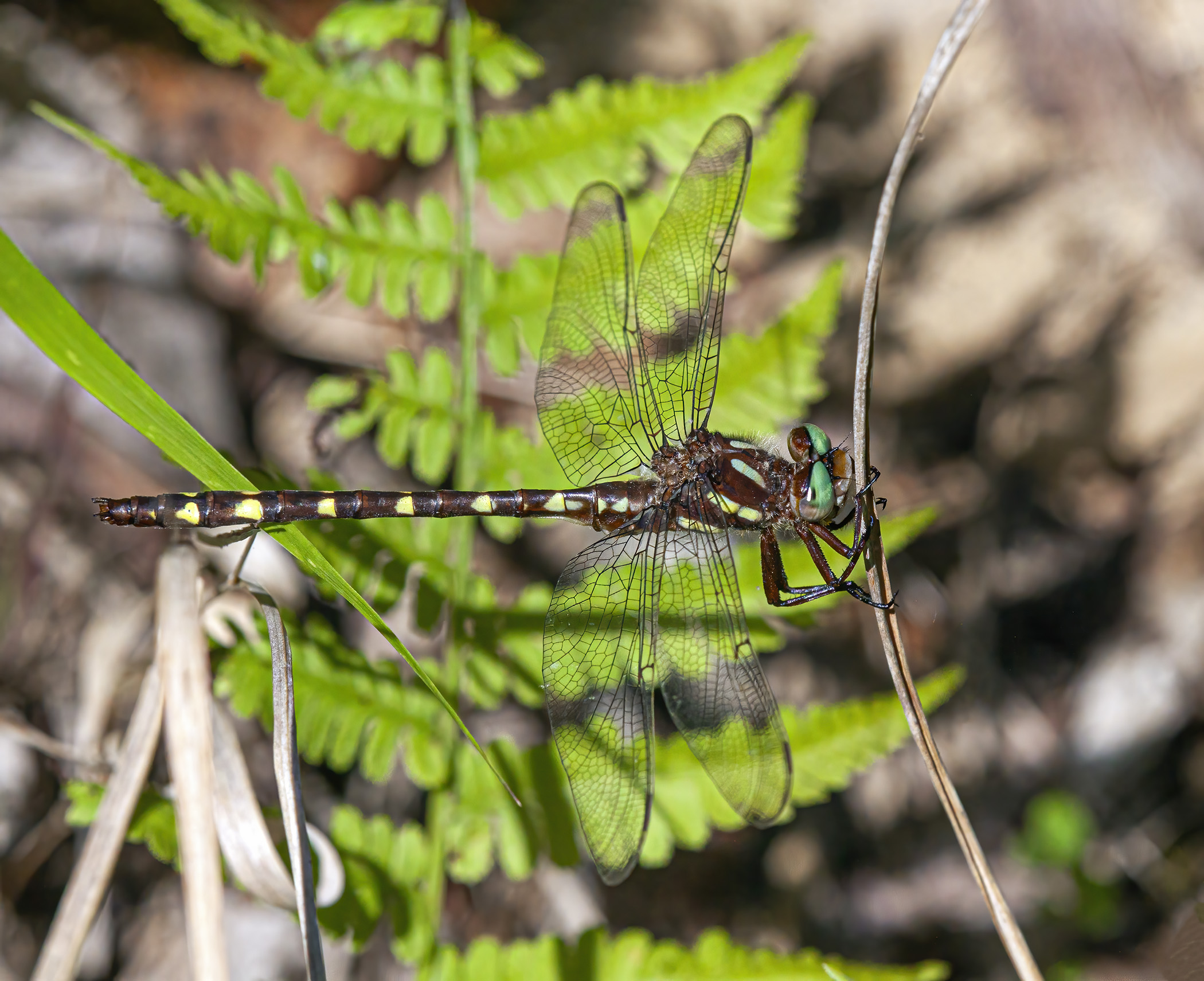
There are not very many insects that could be mistaken for a dragonfly, but the color and pattern on the abdomen of this crane fly made me do a double take when I spotted it from a distance on Monday in Prince William County. At that time I had not yet seen my first dragonfly of the year and was anxious to see one. An expert in a Facebook group identified this as a Crane Fly (Tipula noveboracensis).

The first image is a cropped version of the photo that allows you to focus on the wonderful patterns on the wings and the body. If you click on the image, you can see that the crane fly has antennae. The second shot is much less cropped and gives you an idea of the length of the extremely long legs of this insect.

When I am out in the winter looking for birds, I sometimes end up taking photos of odd branches or clumps of leaves, because their shapes make me think that they might be birds. I have the same “problem” with dragonflies—I am likely to photograph anything that remotely resembles a dragonfly, knowing that later I will be able to sort the images and remove the oddball results. Sometimes, as was the case here, my strange results are worth posting.

Crane Fly

Crane Fly

© Michael Q. Powell. All rights reserved.
 

Read Full Post »

I finally found my first dragonfly of the season yesterday—a female Uhler’s Sundragon—while I was exploring a stream in Prince William County. Uhler’s Sundragons (Helocordulia uhleri) are considered to be rare in our area. This species requires a very specific type of habitat and has an early and very brief flight period.

So where would you find one? According to the wonderful Dragonflies of Northern Virginia website, “Uhler’s need clean, small to medium, rocky forest streams with gravelly and/or sandy substrate, and a decent flow. They can be found in sunny clearings and forest edges near their streams.”

Fortunately I have found this species at a particular stream the last several years, so that is where I headed yesterday. I searched the spots where I had found Uhler’s Sundragons in the past, but came up empty-handed. I walked along extended lengths of the stream and eventually found the one in the photograph below—it was the only dragonfly that I spotted all day.

My hike yesterday lasted 4 hours and 42 minutes and covered 7.18 miles (11.55 km), according to my GPS app. My pace was pretty slow, partly because I was scanning for dragonflies, but also because the terrain was full of ups and downs. I pasted in a chart from the GPS readout to give you an idea of the type of terrain that I covered. According to my iPhone, I walked up the equivalent of 21 floors, which explains why my legs are a little sore this morning.

As many of you know, dragonflies are my favorite subjects during the warm months—there is something almost magical about these beautiful aerial acrobats. I am therefore super excited that the 2022 dragonfly season has officially started for me.

Uhler's Sundragon

Hike 11 April 2022

© Michael Q. Powell. All rights reserved.

Read Full Post »

The ground in the forest is covered with fallen leaves at this time of the year, making it really easy to spot a Six-spotted Tiger Beetle (Cicindela sexguttata). The metallic green of their bodies shines so brightly that it is almost impossible to miss them as they scurry in and out of the underbrush.

I spotted this little beauty on Monday as I searched for dragonflies in Prince William County, Virginia. After months of photographing birds, often at a great distance, my eyes are gradually readjusting to searching for small subjects at close range. In the springtime I switch to using a macro lens most of the time rather than the long telephoto zoom lens that has been my constant companion throughout the cold, dark days of winter.

I also tend to slow down my pace as I search for tiny insects, scanning for changes in colors and patterns and, most importantly, for movement. In this style of photography, I cannot afford to be in a hurry and often my patience are persistence are rewarded.

Six-spotted Tiger Beetle


Six-spotted Tiger Beetle

© Michael Q. Powell. All rights reserved.

Read Full Post »

For a brief period each spring, tiny wildflowers spring up from the forest floor, giving the forest a magical feel. Some are colorful and some are pure white, but the wildflowers are all beautiful.

I spotted these little flowers on Monday as I was searching for dragonflies in Prince William County, Virginia. I came up empty-handed that day and am still searching for my first dragonfly of the season. However, I had an enjoyable day, covering almost six miles (9.6 km) on hilly trails through the forest.

The first photo shows a bluet (Houstonia caerulea), a species that is sometimes referred to as a “Quaker Lady,” because its shape is reportedly similar to that of the hats once worn regularly by women of the Quaker faith. The flower in the second shot is a Star Chickweed (Stellaria pubera), I believe. The flower in the final photo is probably a wild violet (Viola sororia).

As you can readily see, I got really close to the flowers and used a macro lens. I love the detailed views of their shapes, patterns, and colors and encourage you to click on each image to immerse yourself more deeply in their beauty. In these troubled times, nature continues to serve as a balm to my soul.

bluet

star chickweed

wild violet

© Michael Q. Powell. All rights reserved.

Read Full Post »

Now that it is spring, it is time for the crawling critters to reappear, like this little spider that I spotted last week while exploring in Prince William County. Some spiders overwinter as adults, so this spider may have just awoken from a long winter’s sleep. If so, the spider may have decided to go back to bed, because temperatures have dropped the last couple of days and it is currently about 25 degrees outside (minus 4 C)—it was 70 degrees (21 degrees C) when I photographed the spider last week.

UPDATE:  Initial indications from an expert at bugguide.net suggest that this is a wolf spider.

spider

© Michael Q. Powell. All rights reserved.

Read Full Post »

I note the transition to spring in small ways, quite often in the reappearance of familiar species of plants, insects, and other living creatures. I was delighted on Monday to discover that tiny Virginia Spring Beauty wildflowers (Claytonia virginica) have already started to push their way up from the forest floor in Prince William County. According to Wikipedia, the individual flowers bloom for three days, although the five stamens on each flower are only active for a single day.

On the same day, I spotted an Eastern Comma butterfly (Polygonia comma), the first full-sized butterfly that I have been able to photograph this year. I was not able to get very close to the butterfly, but you can see the beautiful orange pattern of its inner wings in the middle shot below.

The final image shows a Spotted Turtle (Clemmys guttata) that I spotted last week. This species seems to be found only in shallow marshy areas and I rarely encounter one, so it was exciting to be able to photograph it.

We all celebrate different signs of spring at this time of the year (or of autumn if you live in the Southern Hemisphere). What indications do you look for that signal the change of the season?

Spring Beauty

Eastern Comma

spotted turtle

© Michael Q. Powell. All rights reserved.


Read Full Post »

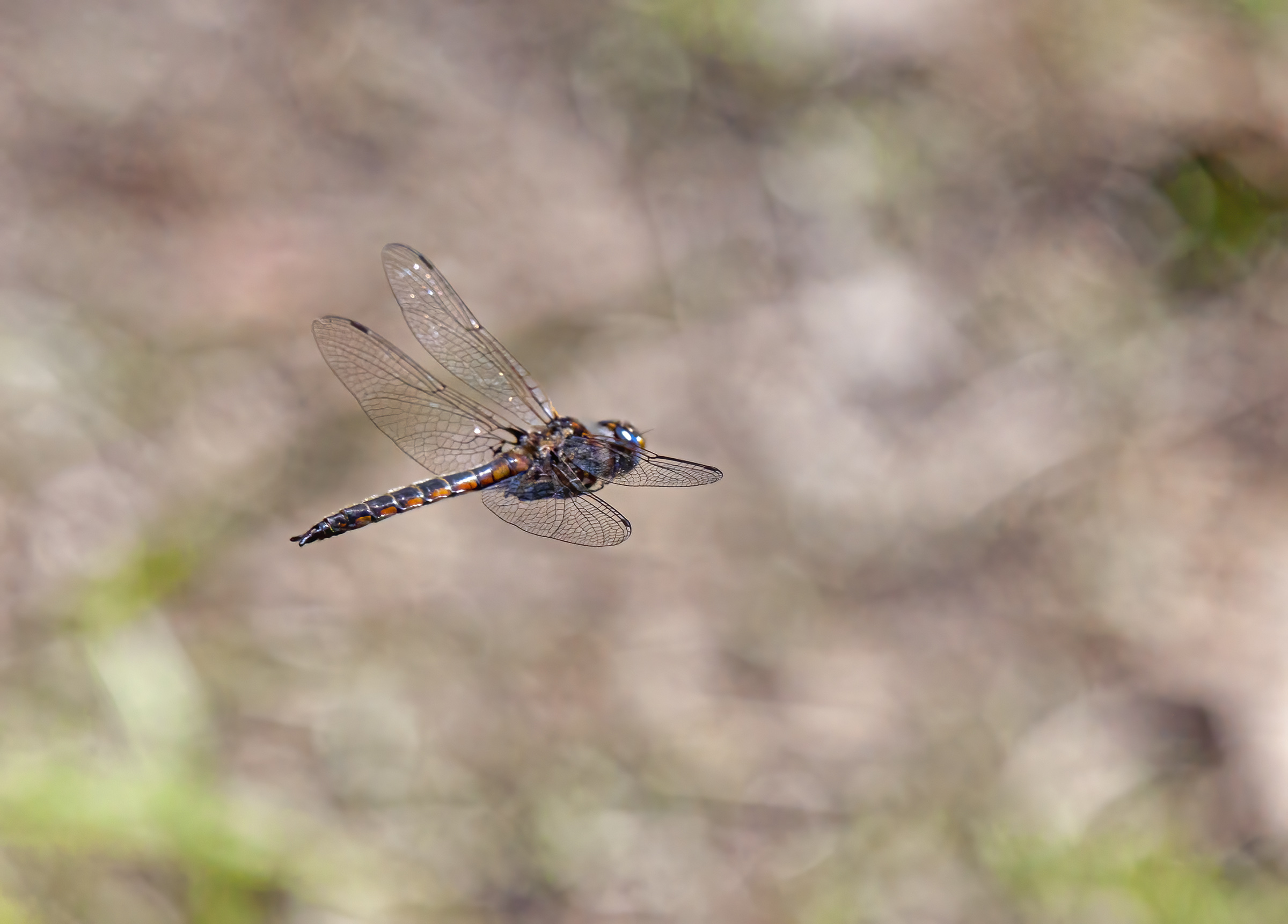
I was happy on Monday to photograph my first butterfly of the year, which appears to be the appropriately named Spring Azure butterfly (Celastrina ladon). Earlier this season I have spotted several Mourning Cloak butterflies, but was not able to get a shot of any of them.

The Spring Azure butterfly is only about an inch (25 mm) in size, but has some wonderful details that I was able to capture. It is fairly nondescript in color until it opens its wings and reveals a beautiful shade of blue—you get a small glimpse of that wonderful blue in the second image.

I had to pursue this butterfly for quite a while before it finally landed. An outside observer might have have wondered what it the world I was doing, but chasing butterflies always makes me feel like a child again.

It won’t be long before I see much bigger and more colorful butterflies, but this one is special to me as the first butterfly of the spring that I was able to photograph.

Spring Azure

Spring Azure

Spring Azure

© Michael Q. Powell. All rights reserved.
 

Read Full Post »

« Newer Posts - Older Posts »