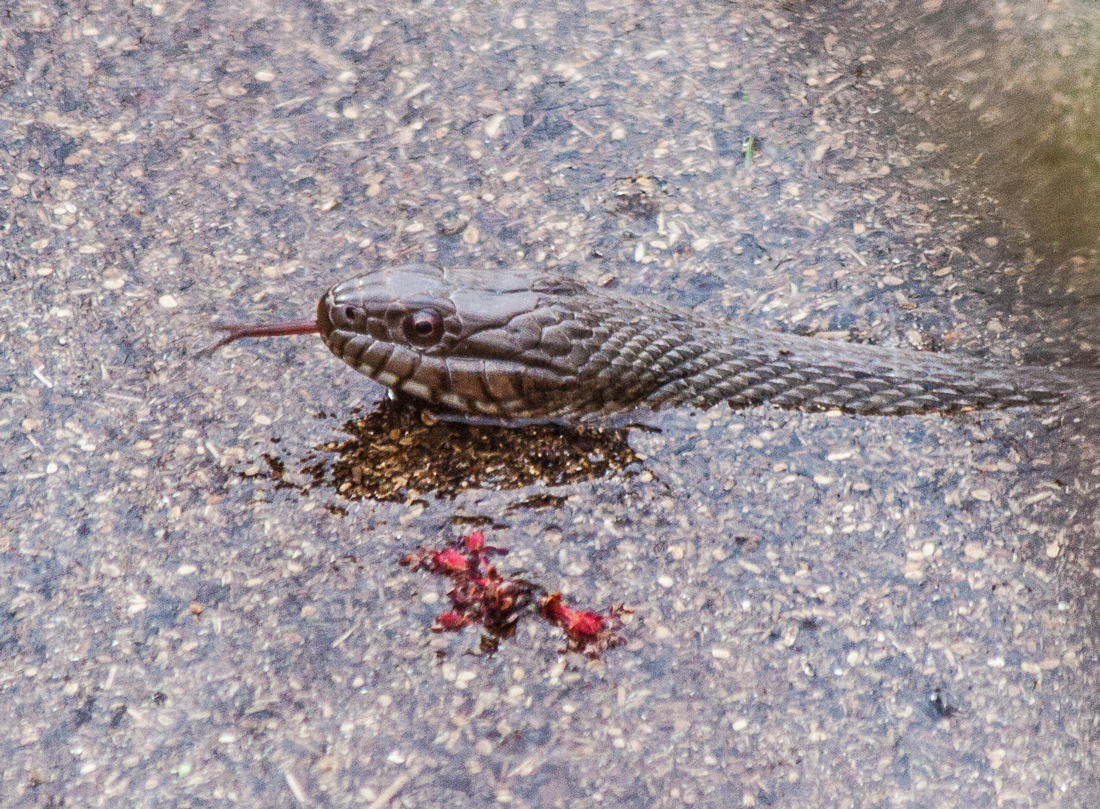
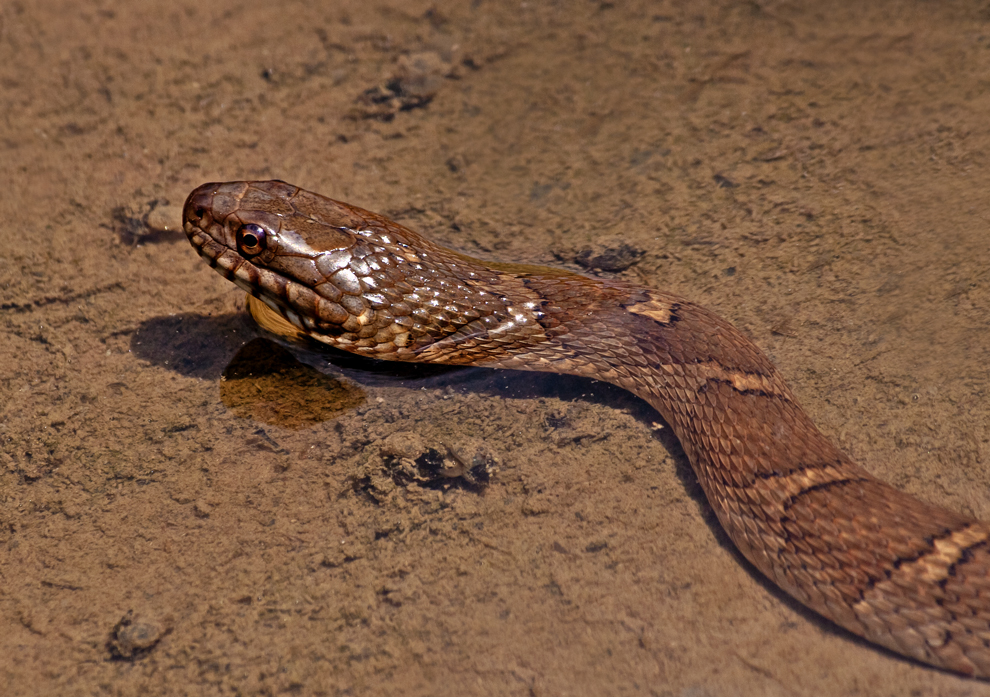
Throughout this dry summer, the water level in the marsh area of Huntley Meadows Park has continued to drop. I was shocked to see how low the levels were today. In an area where the water had previously been deep enough to support large snapping turtles (an open area outside of a beaver lodge), I now saw snakes, at least four or five of them. They were swimming in the shallow water and even burrowing into the soft mud in search of food. I am pretty sure they were all Northern Water snakes (Nerodia sipedon), a fairly large, non-venomous snake.
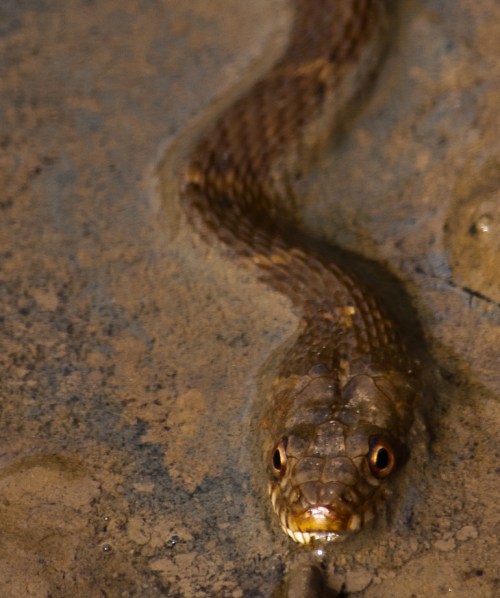
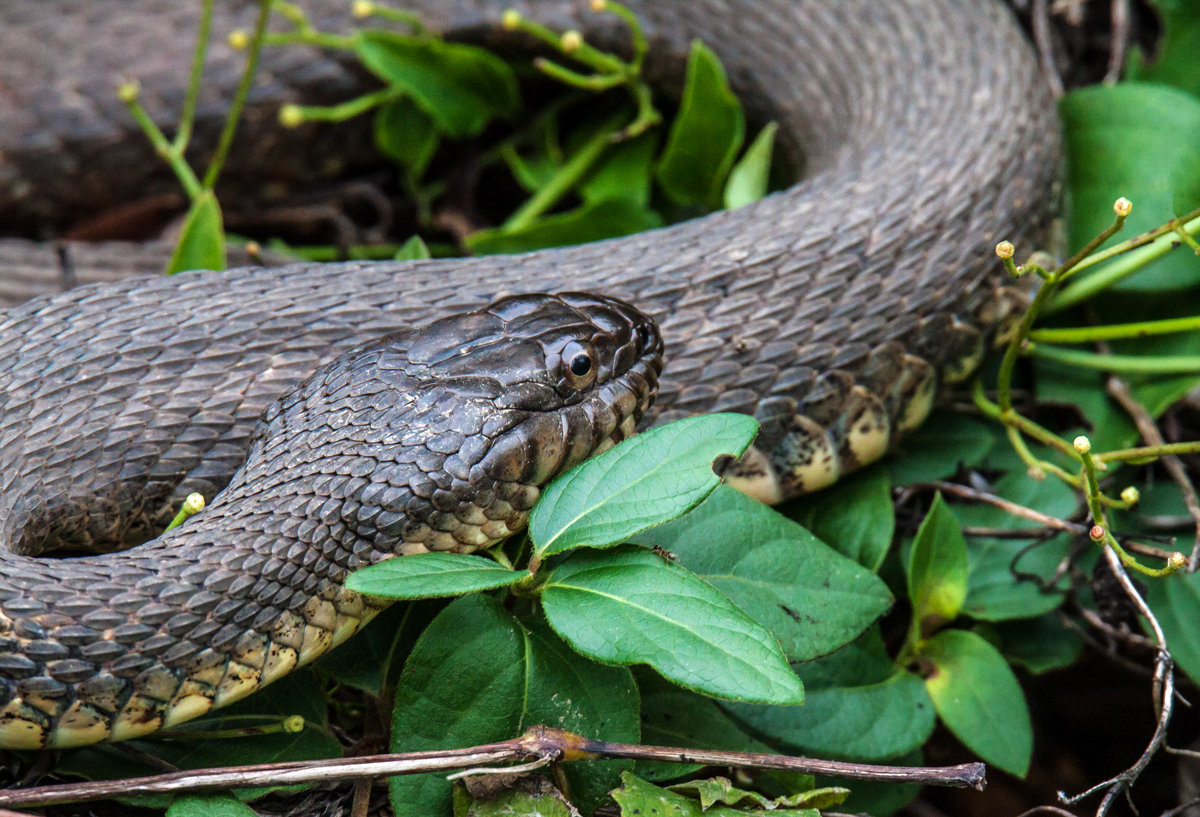
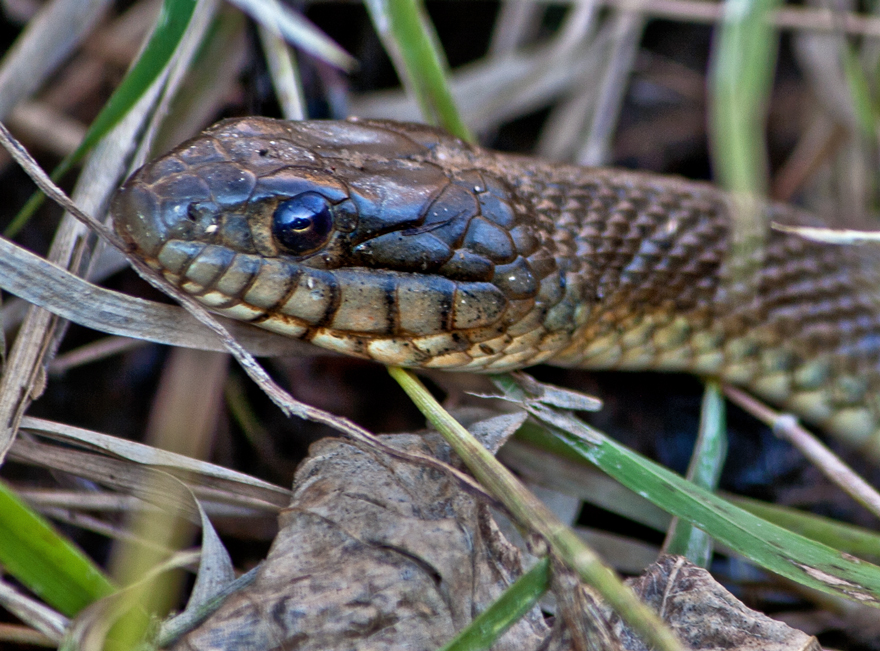
Face-to-face with a Northern Water snake
As I was watching the snakes, a couple came by and they said that they sometimes like to pick up these kind of snakes, examine them, and then release them. In passing, they mentioned that the snakes will bite hard and will release musk when handled. I don’t know why they thought I wanted to play with the snakes (trust me, I had no such desire), but they warned me not to be surprised if the bite wound bled a lot. According to the Wikipedia article on Northern Water snakes, the snake’s saliva contains a mild anticoagulant.
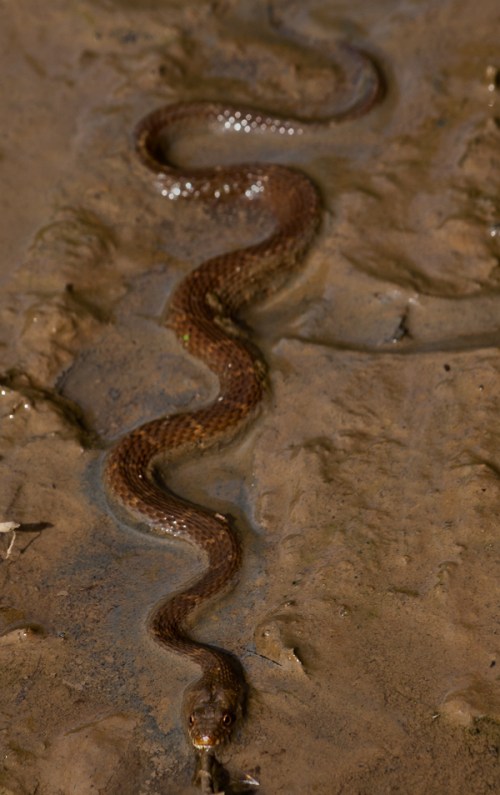
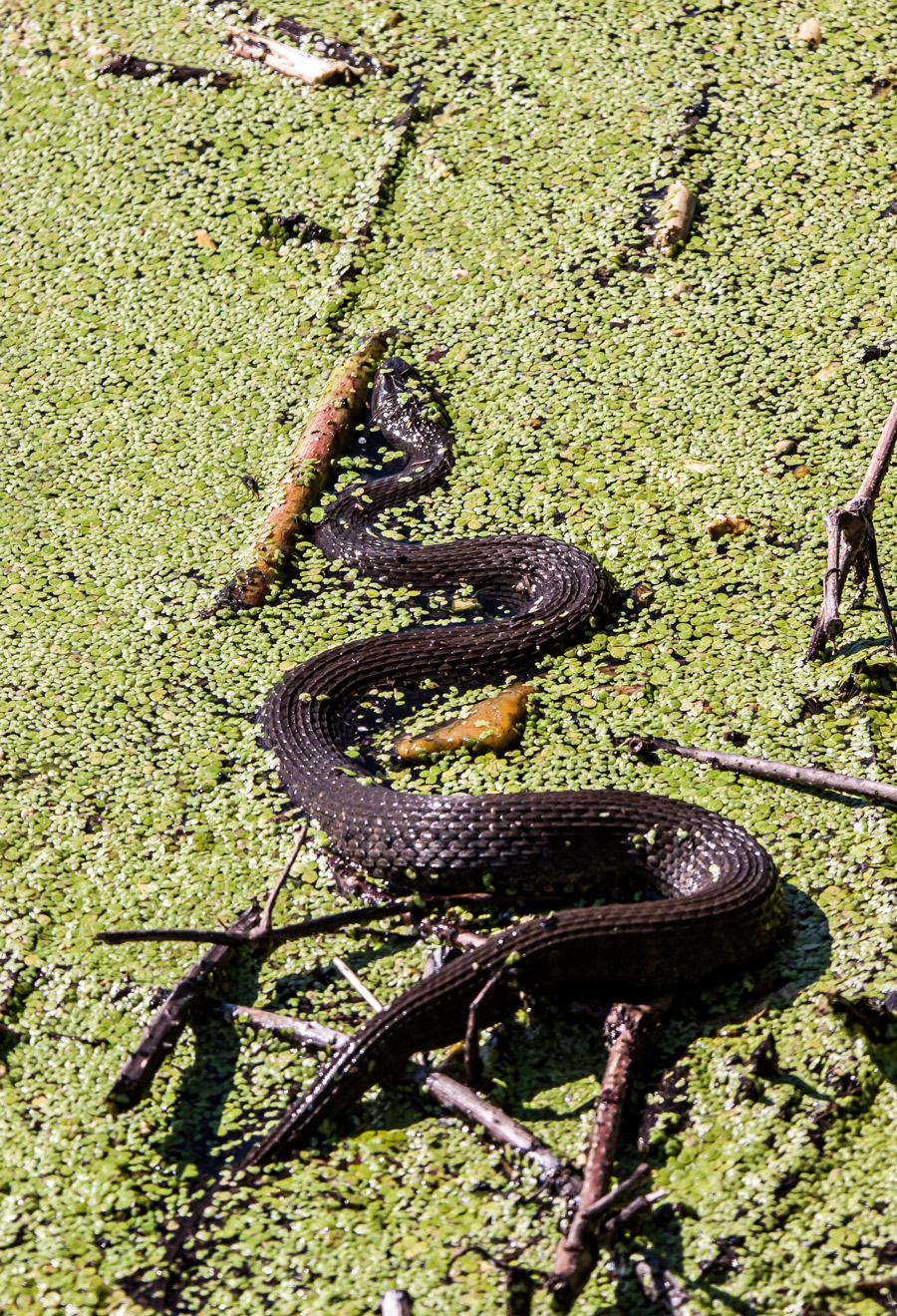
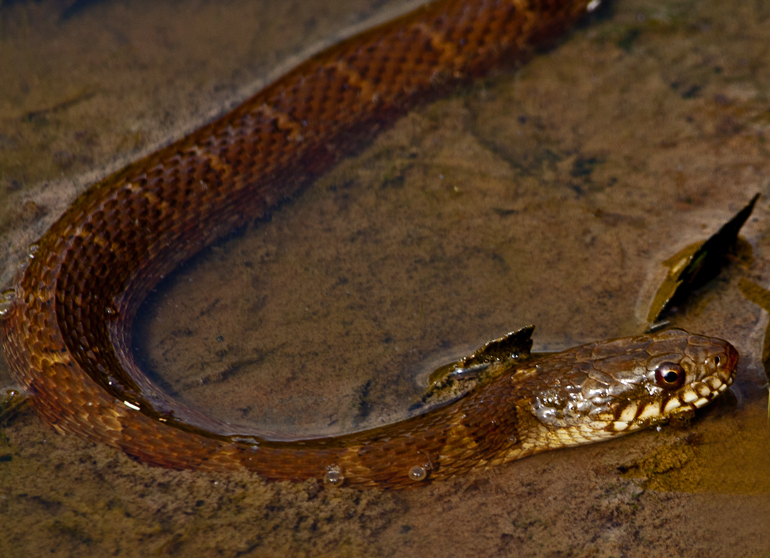
Northern Water snake, full-body shot
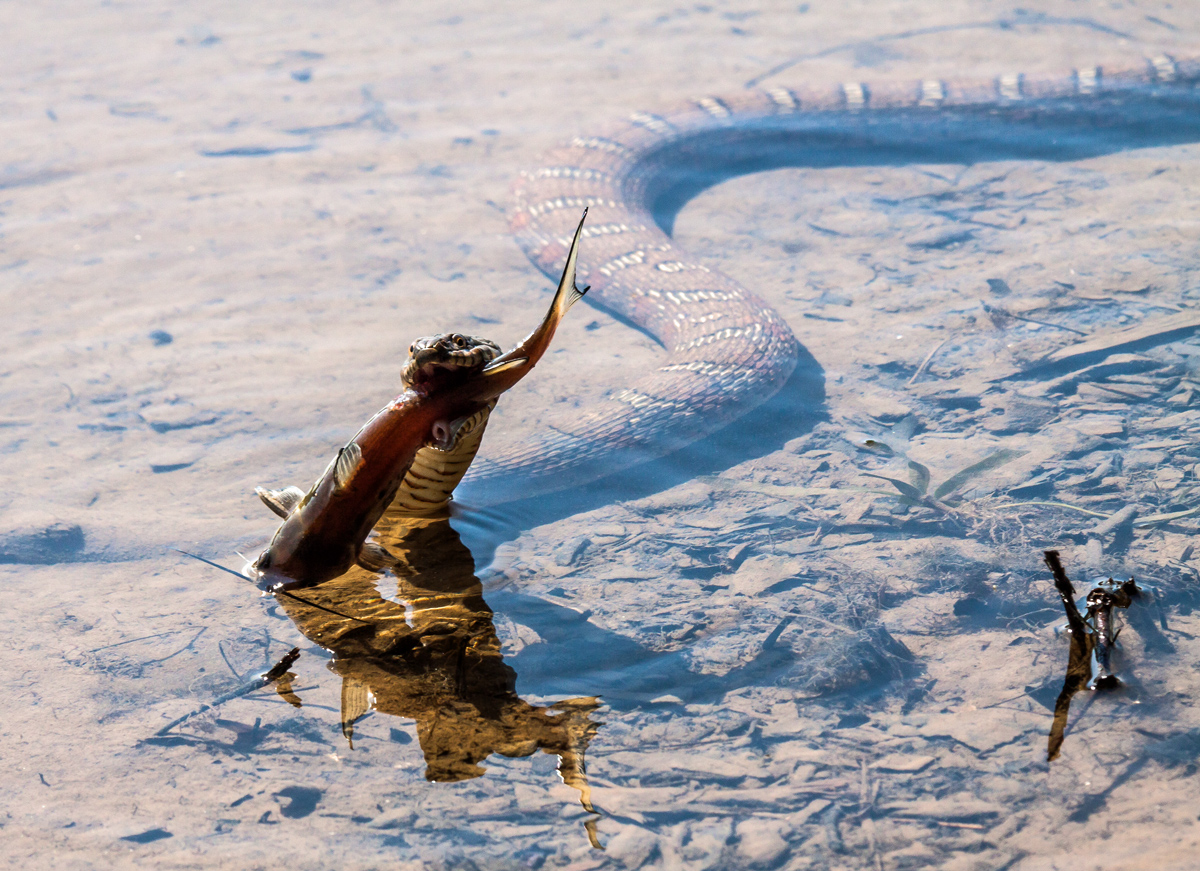
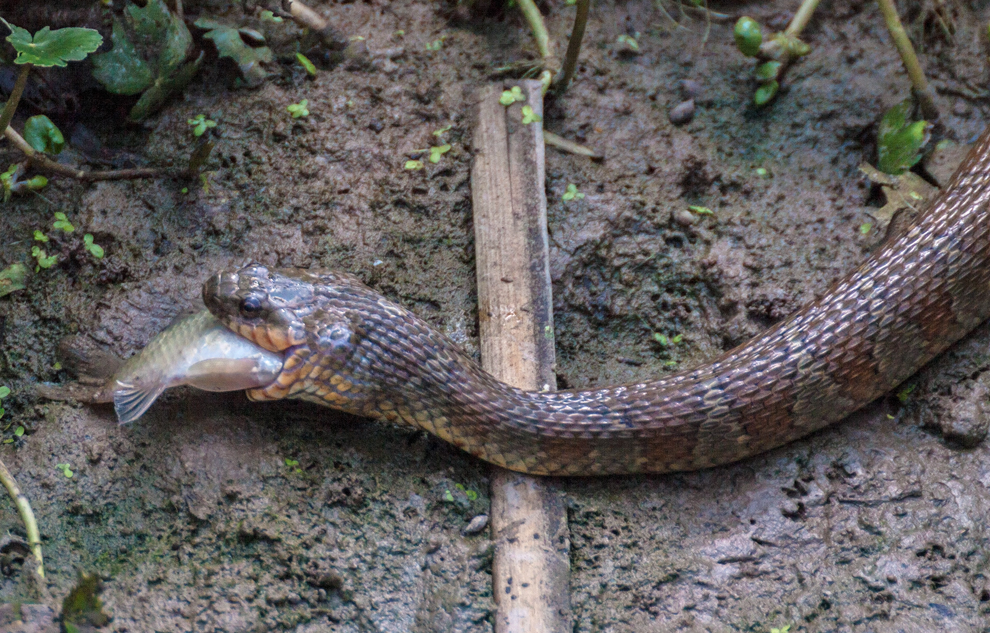
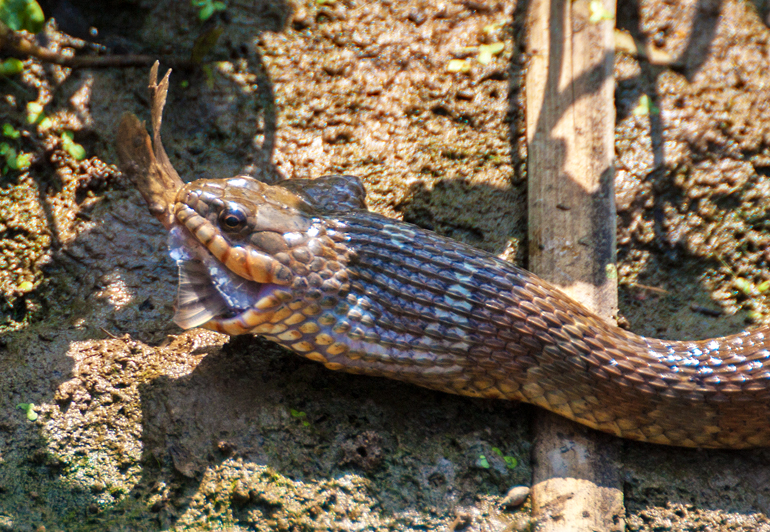
I did not see the snakes catch any prey, but the Wikipedia article states that during the day they hunt among plants at the water’s edge, looking for small fish, frogs, worms, leeches, crayfish, salamanders, birds, and small mammals. At night, they concentrate on minnows and other small fish sleeping in shallow water.
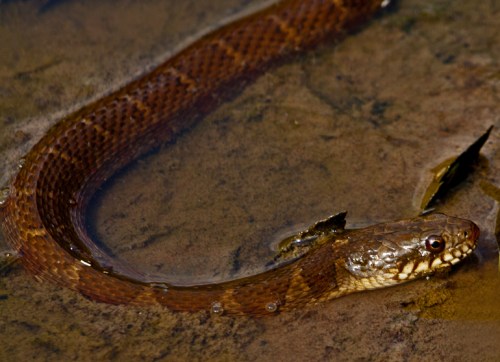
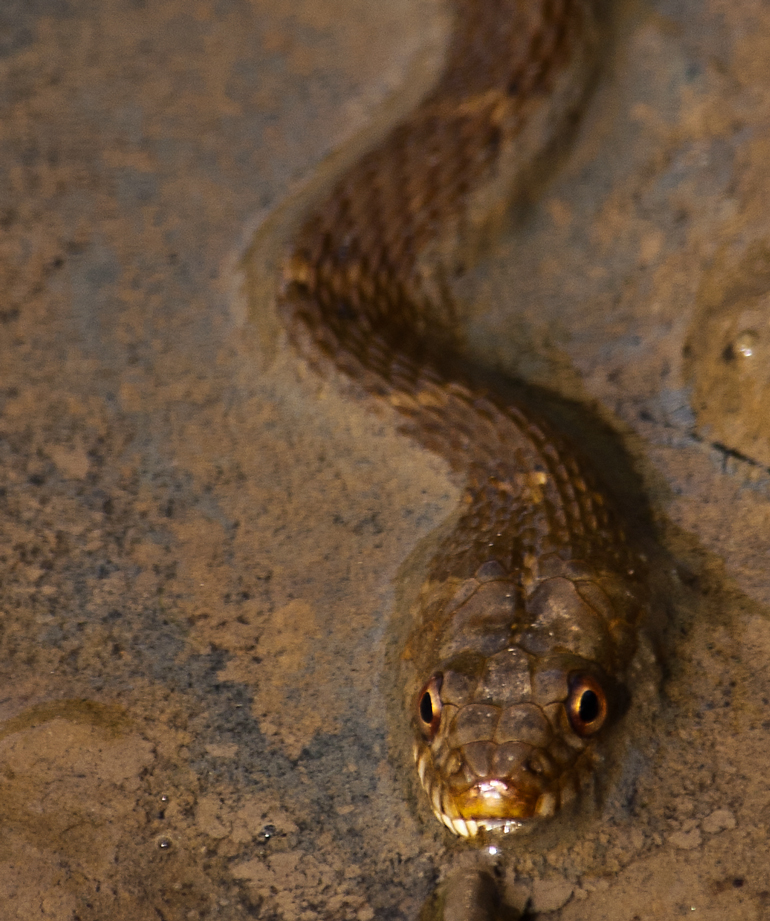
Northern Water snake focusing on a potential prey
One other interesting fact about the Northern Water snake is that—unlike many other snakes—they do not lay eggs. According to one academic article, the mother carries the eggs inside her body for three to five months and, on average, gives birth to 26 babies, each about 7-9 inches long. Once they are born, the babies are on their own; the mother does not care for them at all.
© Michael Q. Powell. All rights reserved.
Read Full Post »

















 Mike Powell