Feeds:
Posts
Comments

Posts Tagged ‘Needham’s Skimmer’

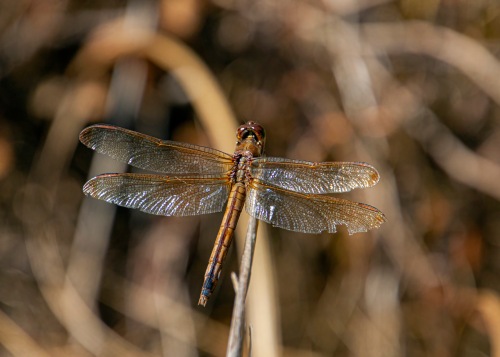
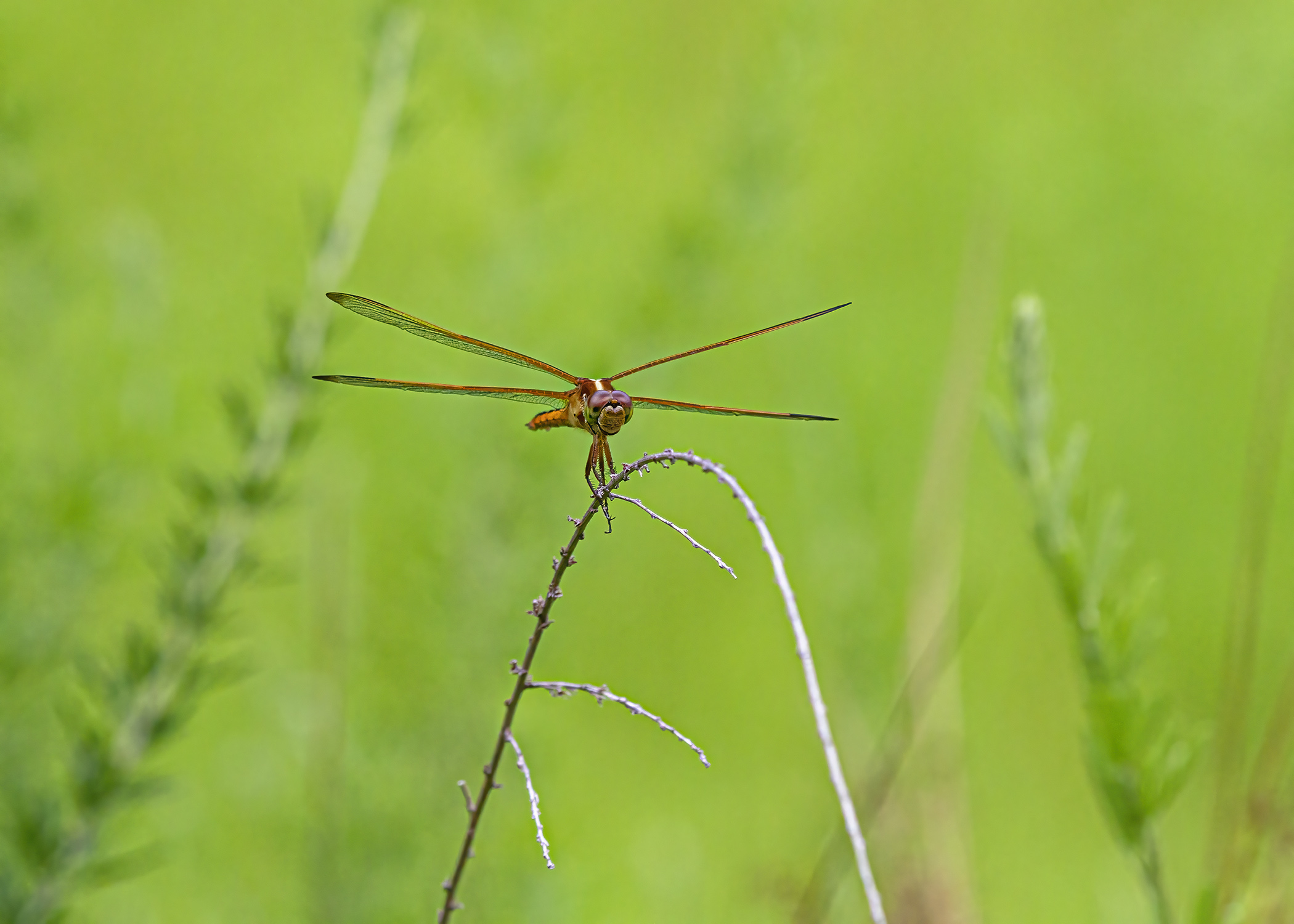
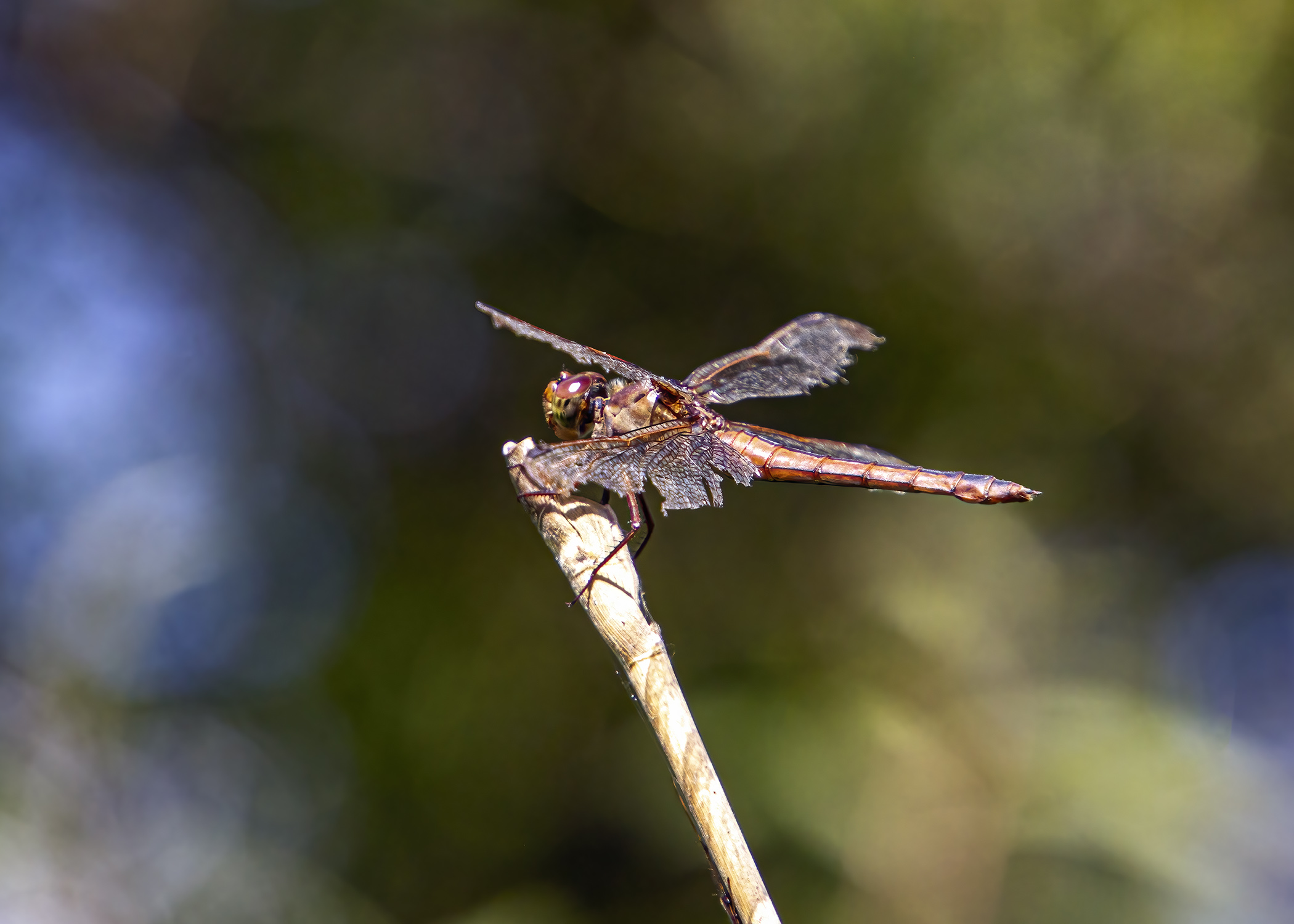
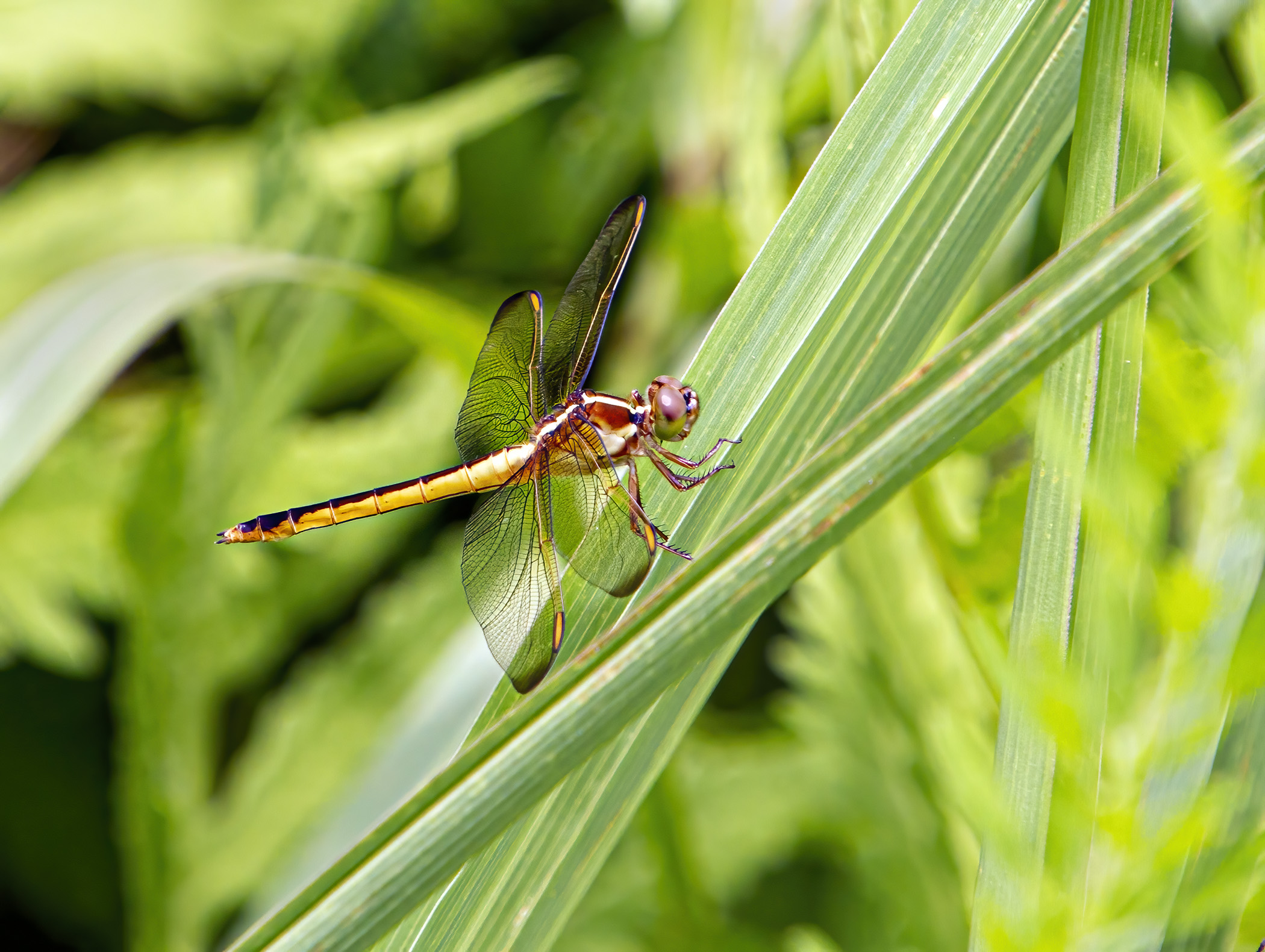
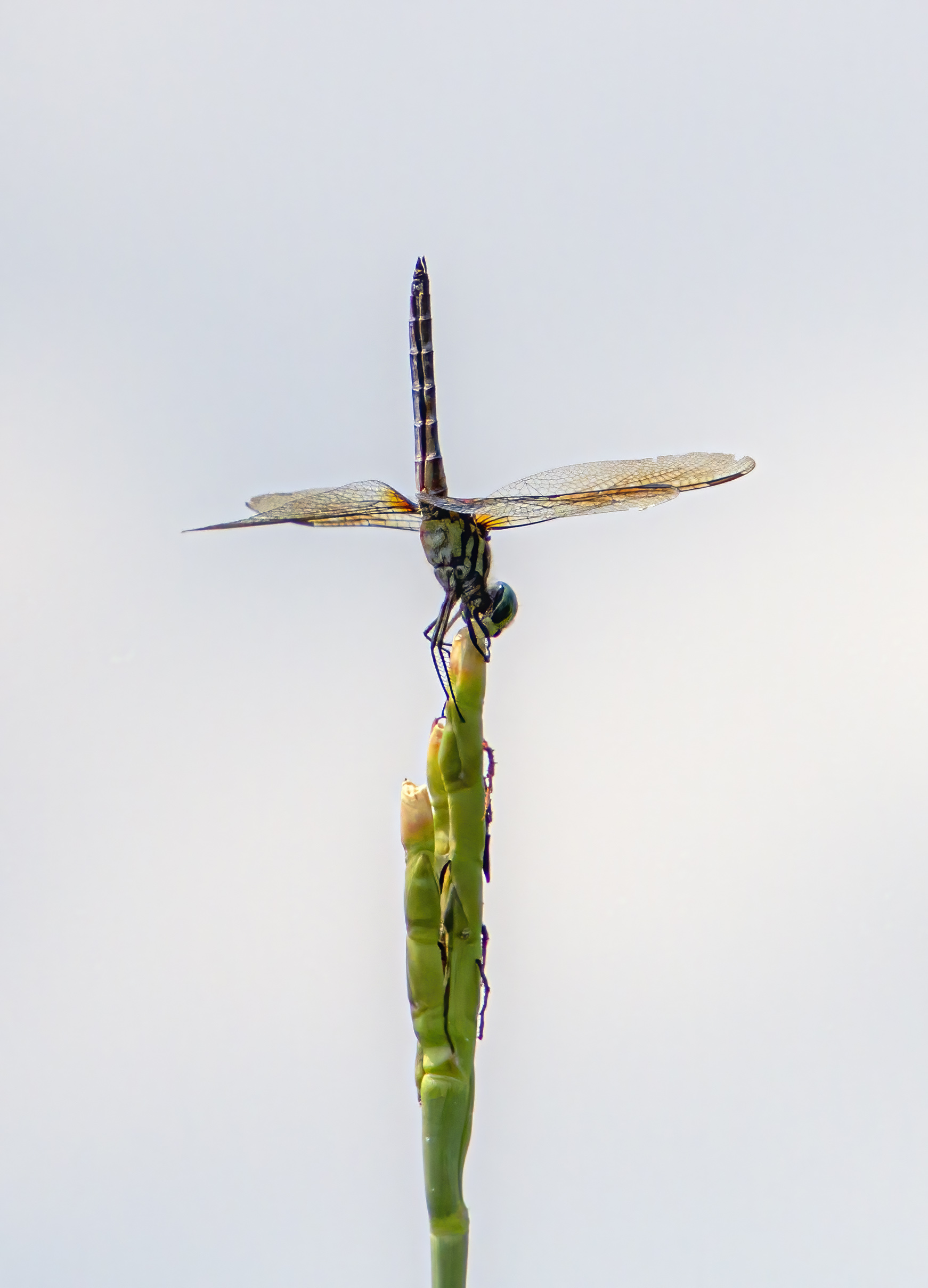
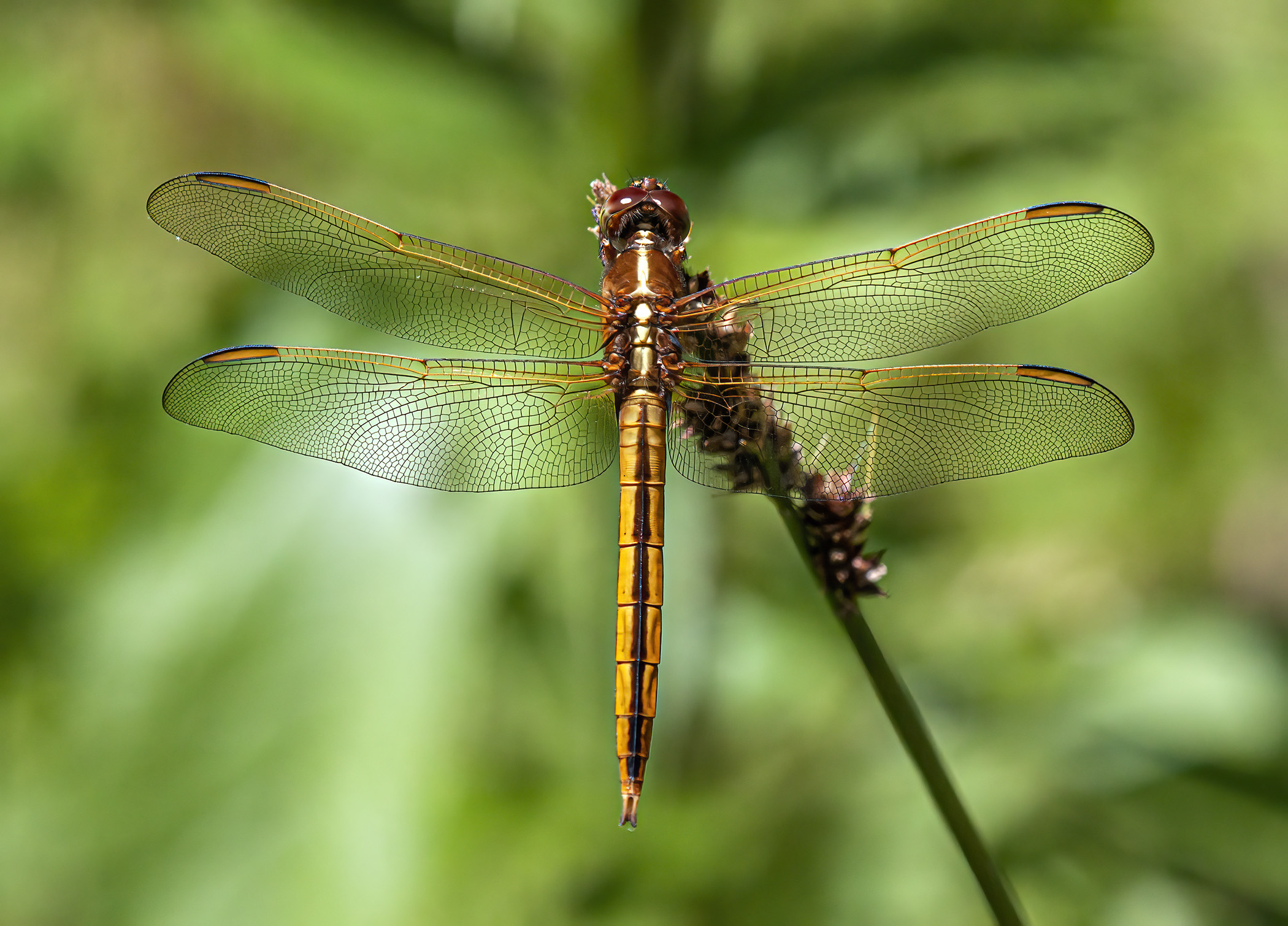
Earlier in the summer Needham’s Skimmers (Libellula needhami) were one of the most common dragonflies that I would encounter at Occoquan Bay National Wildlife Refuge, but over the past month their numbers have dropped significantly as their flight season draws to a close. I was therefore quite pleased to spot this mature female Needham’s Skimmer on Monday at the wildlife refuge.

The dragonfly’s colors seemed a bit faded, but otherwise she appeared to be in good shape. I am not sure if the stalk of vegetation on which she was perching was comfortable, but it helped me to isolate her from the background and its pointy protrusions add visual interest to the image.

Needham's Skimmer

© Michael Q. Powell. All rights reserved.

Read Full Post »

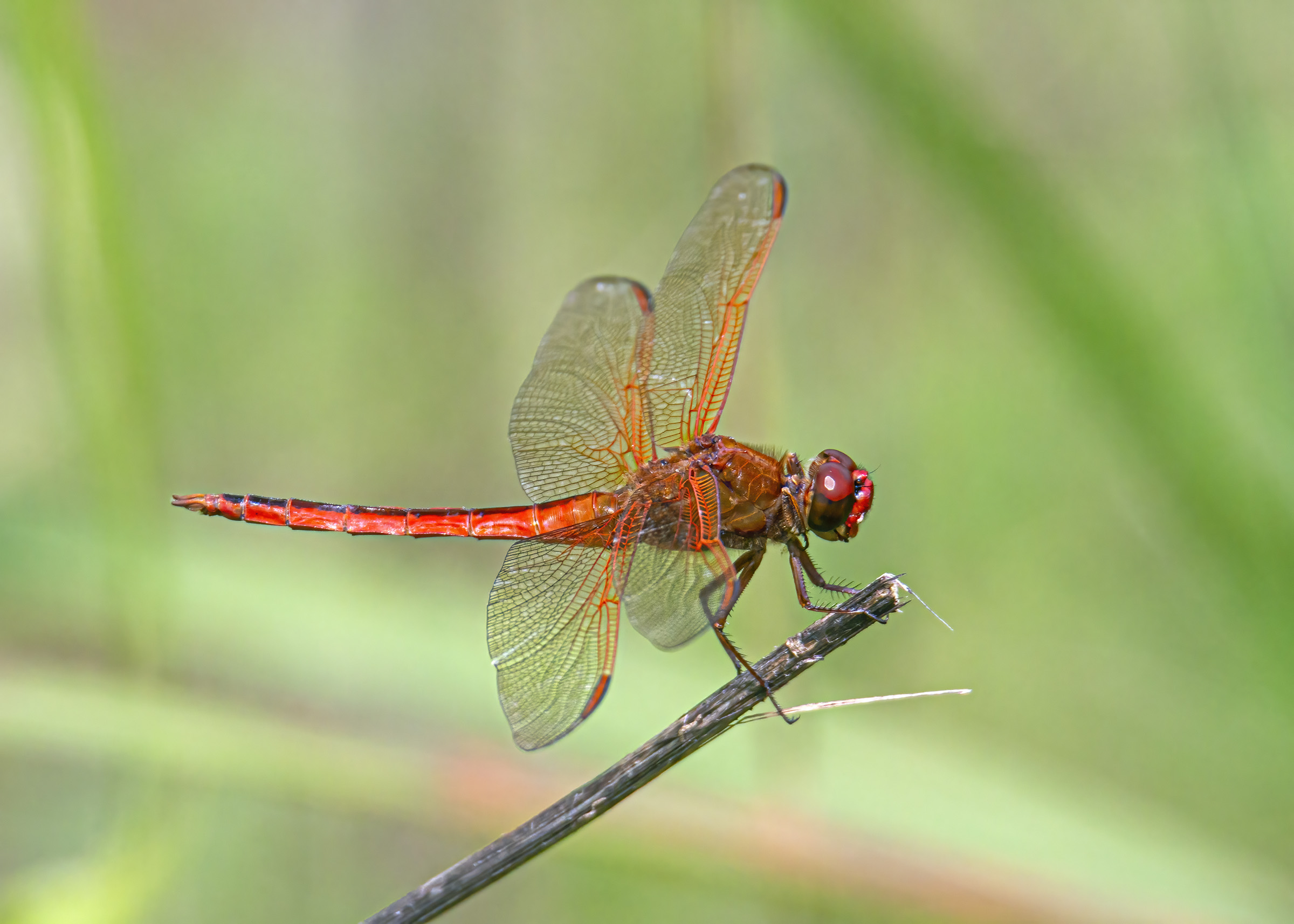
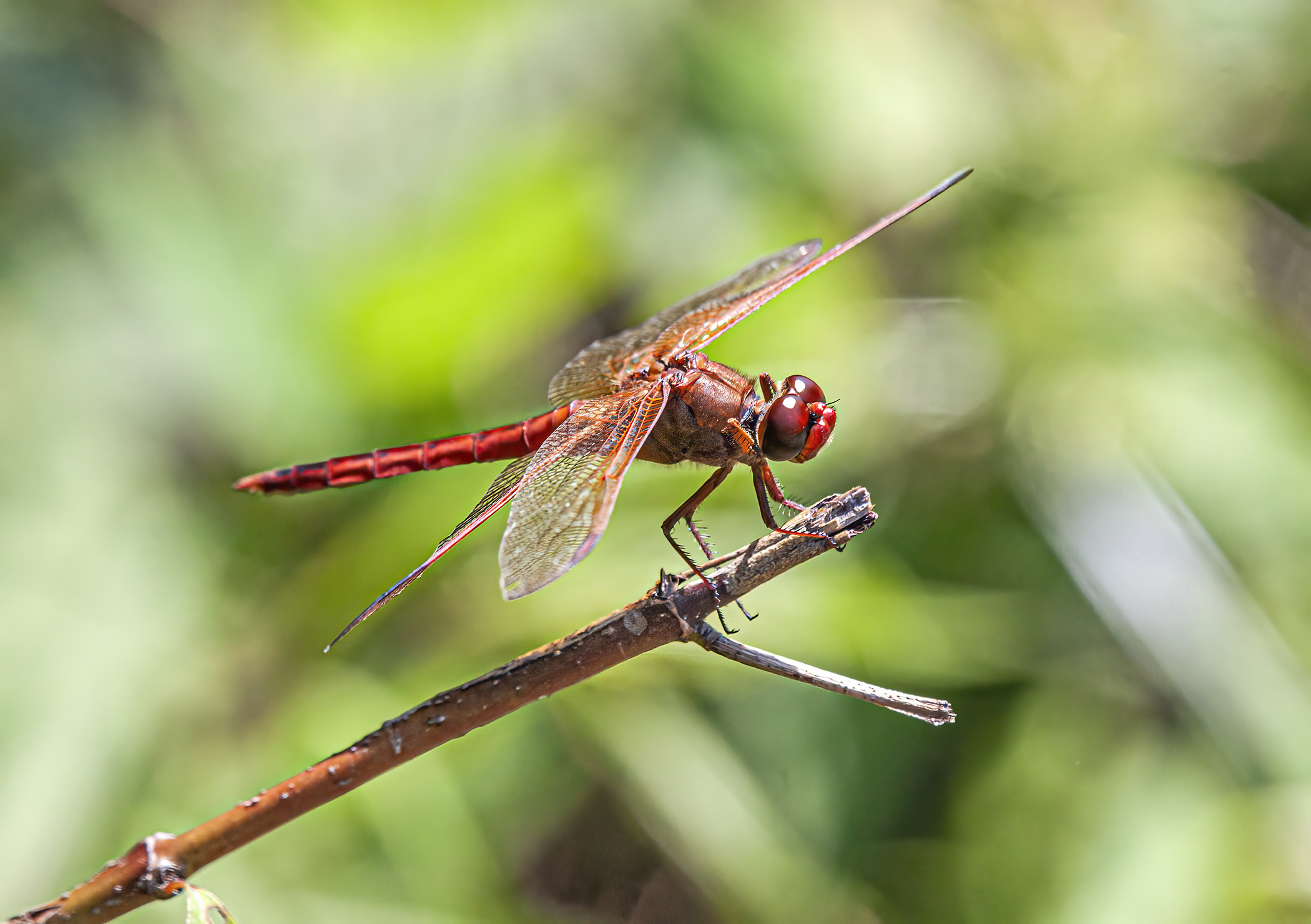
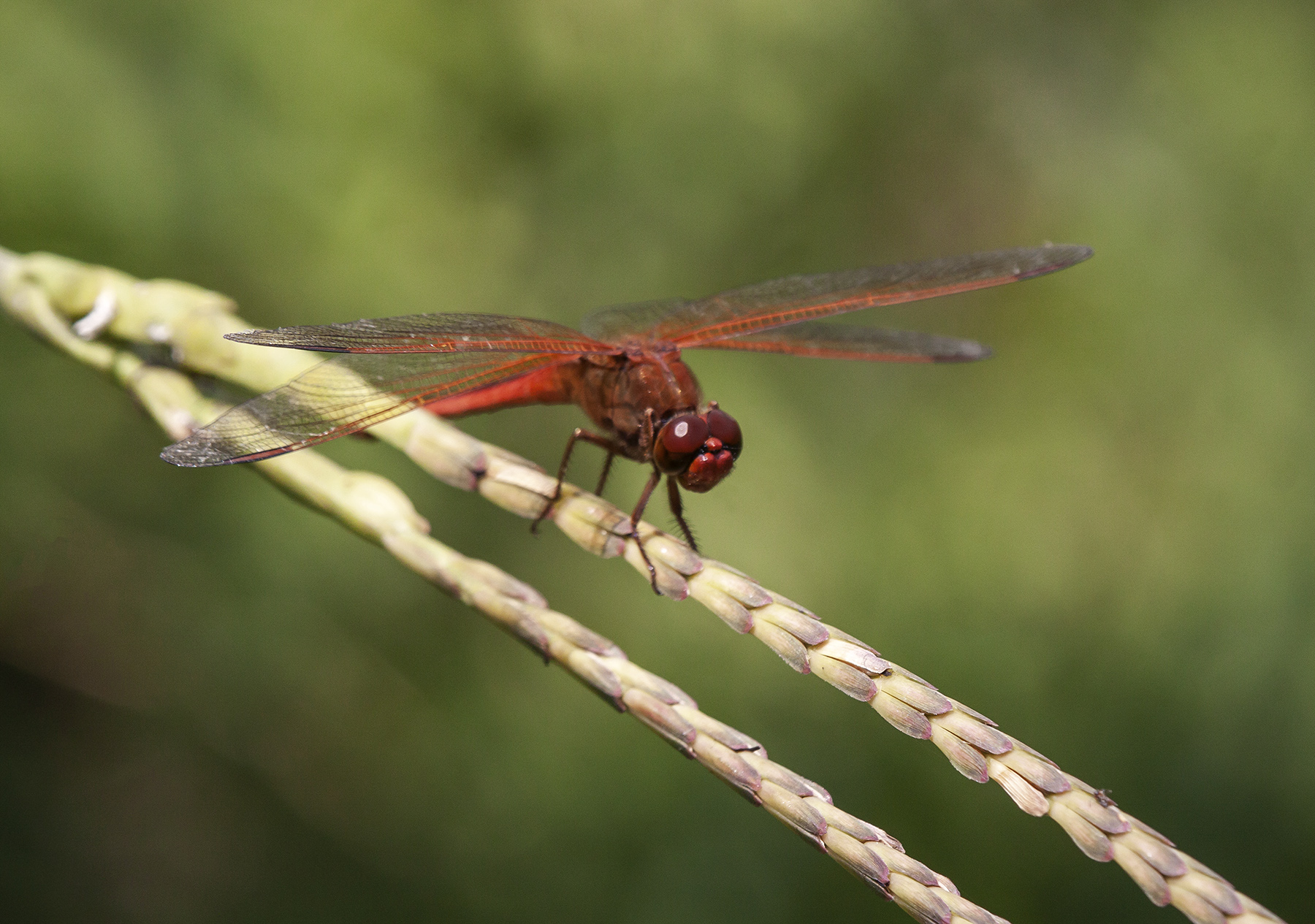
During a recent visit to Occoquan Bay National Wildlife Refuge I was delighted to spot some bright red male Needham’s Skimmer dragonflies (Libellula needhami). The combination of the golden accents on the edges of their wings with that reddish-orange coloration makes these dragonflies visually stunning. The Needham’s Skimmers often were skittish, flying away as I approached, I managed to capture a few shots of them when they perched momentarily within range of my telephoto lens.

At this moment, Needham’s Skimmers are one of the most common dragonfly species that I encounter at this wildlife refuge, along with Common Whitetails. Some of the species that were present in the spring have disappeared and the autumn species have not yet taken their place. In that sense, we are in the midst of the summer doldrums, when the air is heavy with heat and humidity and new activity has slowed down to a snail’s pace.

Needham's Skimmer

Needham's Skimmer

© Michael Q. Powell. All rights reserved.


Read Full Post »

I have spent a lot more time indoors this past month than I normally, as a result of our unusually warm and stormy weather. On Saturday I finally made it out to Occoquan Bay National Wildlife Refuge, my favorite place to explore with my camera, and was greeted by an abundance of dragonflies.

Many of the dragonflies I encountered were Needham’s Skimmers that were often perched at the tops of vegetation that seems to have grown a lot recently. A lot of other flies were common too and they pestered me incessantly by buzzing around my ears, but fortunately they did not appear to be interested in biting me.

I was delighted that many dragonflies seemed be smiling at me, like this cool-looking Needhams’s Skimmer (Libellula needhami). I also really like that I able to capture the beauty of the beautiful two-toned, speckled eyes.

Needham's Skimmer

© Michael Q. Powell. All rights reserved.

Read Full Post »

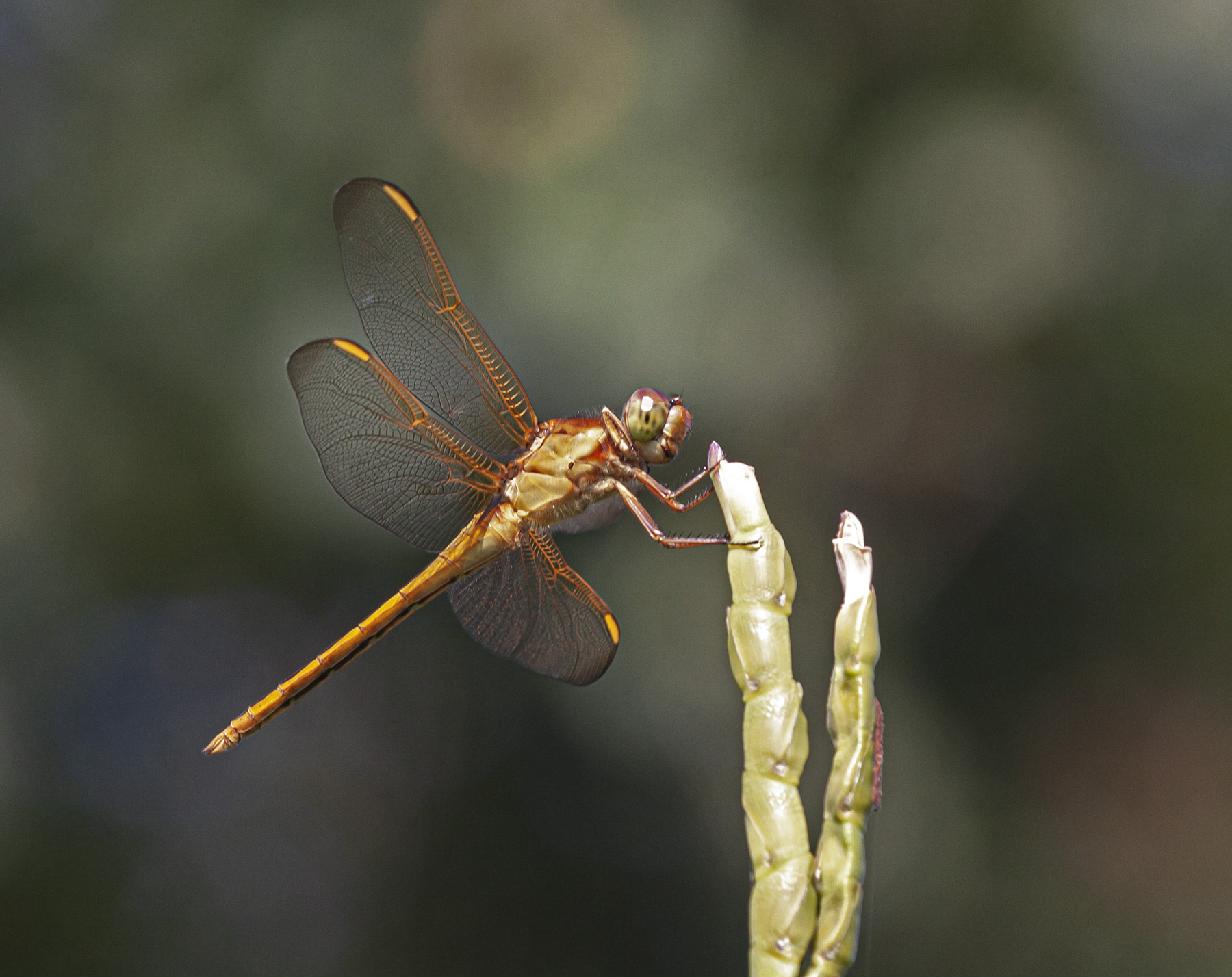
I was delighted yesterday during a visit to Occoquan Bay National Wildlife Refuge to spot this beautiful female Needham’s Skimmer dragonfly (Libellula needhami), my first of the year. Later in the year, Needham’s Skimmers will become the most frequent dragonfly that I will encounter at this location but the dragonfly in the photo below was the only one that I saw yesterday.

Needham’s Skimmers are quite distinctive in appearance. Mature males are reddish-orange in color and stand out from the males of other species. Females and immature males have a body coloration that is shared with some other species, but the golden yellow veins at the leading edges of their wings distinguishes them from the others.

Needham's Skimmer

© Michael Q. Powell. All rights reserved.


Read Full Post »

Earlier this summer Needham’s Skimmer dragonflies (Libellula needhami) were among the most common dragonflies that I would see at Occoquan Bay National Wildlife Refuge. The last month or so, however, their numbers have declined significantly and they are now quite hard to find. I was delighted, therefore, to photograph this slightly tattered female Needham’s Skimmer on Tuesday morning.

Our weather has cooled off this week, with early morning temperatures in the 50’s (10 degrees C) and daytime highs struggling to get to 80 degrees (27 degrees C). I looked at the 10-day weather forecast and see that temperatures are not predicted to hit the 90’s (33 degrees C). Now it would be premature to declare that summer is over and we may well have some hot days in store for us, but the seasons are definitely changing.

So I will continue to search for remaining dragonflies while again, hopeful that I will spot some of the autumn species, like the Autumn Meadowhawks and Blue-faced Meadowhawks that should be appearing soon. Personally, autumn is my favorite time of the year, with cool nights and warm, sunny days, but I am not yet ready to bid farewell to the summer.

Needham's Skimmer

© Michael Q. Powell. All rights reserved.

Read Full Post »

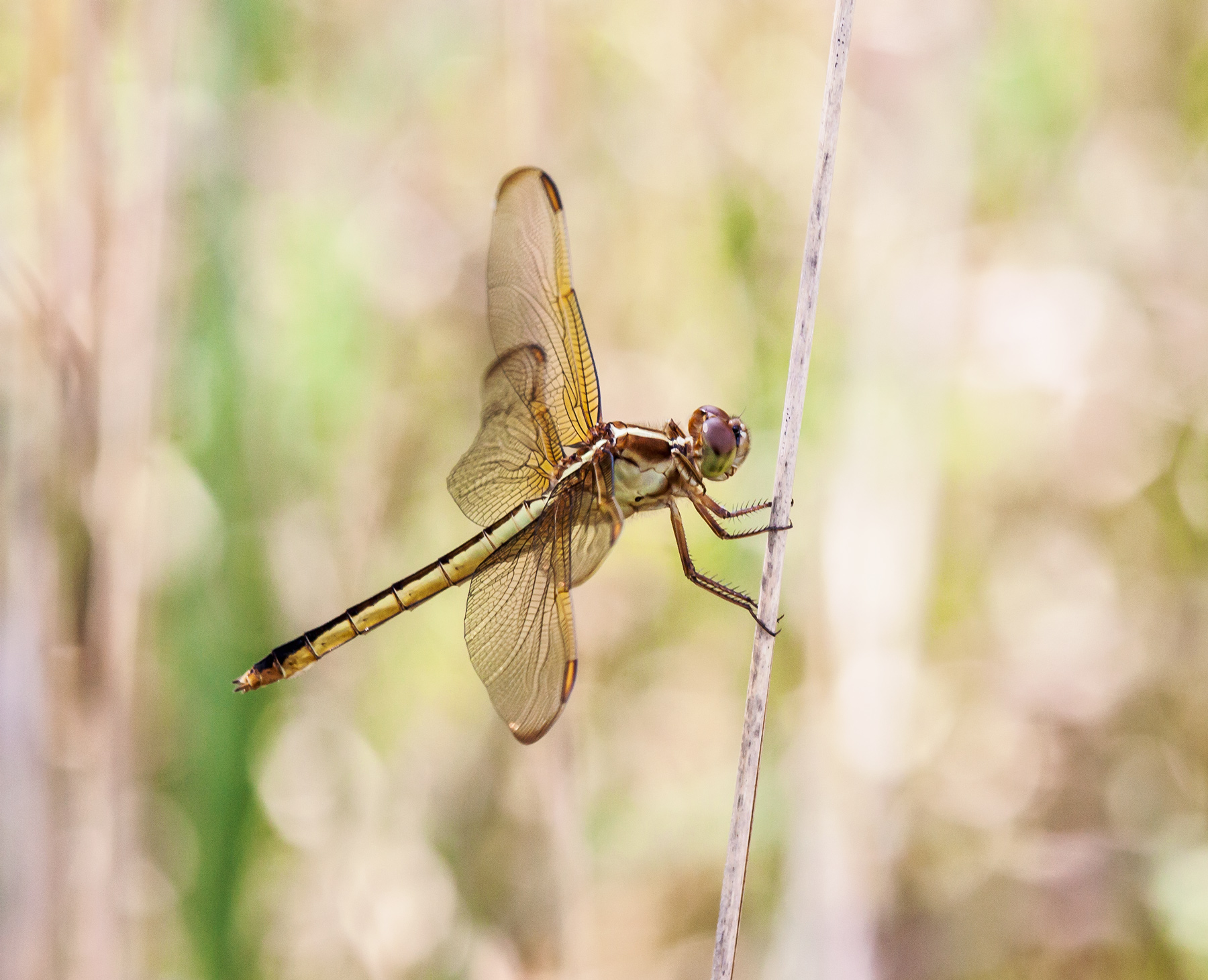
Early in the summer, Needham’s Skimmers (Libellula needhami) were among the most common dragonflies at Occoquan Bay National Wildlife Refuge. As the dragonfly season begins to wind down, their population size has been noticeably dwindling. I am still likely to see some of them, but I have to search a lot harder than I did a month or two ago.

Yesterday I captured this image of a female Needham’s Skimmer. She is in pretty good shape overall, with only a small portion of her wings looking a little tattered.

I like the way that this image shows the bright yellow veining near the leading edges of her wings, one of the distinctive identifying features of this dragonfly species. (The mature males are bright orange or red in coloration, making them even easier to identify.)

Needham's Skimmer

© Michael Q. Powell. All rights reserved.

Read Full Post »

Immature male Needham’s Skimmer (Libellula needhami) dragonflies are yellow and black in color, like the females of the species, but gradually turn into a wonderful shade of reddish-orange as the season progresses. I was delighted to spot this mature male Needham’s Skimmer last Thursday at Occoquan Bay National Wildlife Refuge and captured this image as he perched on a stalk of what appears to be Eastern Gamagrass.

Needham's Skimmer

© Michael Q. Powell. All rights reserved.


Read Full Post »

Simple photographic compositions are often the most effective ones, like this image of a male Needham’s Skimmer (Libellula needhami) dragonfly that I captured last week at Occoquan Regional Park in Lorton, Virginia. All that is present in the frame is the dragonfly, the stem of the vegetation on which he is perched, and a blurred background—there is nothing extraneous or distracting. The limited color palette and the angled pose help to make the subject “pop.”

Sometimes photography can seem so complicated, but at other times it seems natural and intuitive and I am able to capture the beauty of nature without having to think consciously about what I am doing.

Needham's Skimmer

© Michael Q. Powell. All rights reserved.

Read Full Post »

There has been a recent explosion of dragonflies at Occoquan Bay National Wildlife Refuge, my favorite location for photographing these beautiful aerial acrobats. I spotted hundreds and hundreds of dragonflies this past Tuesday as I explored the trails at the refuge.

One of the species that I encountered most frequently that day was the Needham’s Skimmer (Libellula needhami). The Dragonflies of Northern Virginia website provided a wonderful description of the Needham’s Skimmer. “This dashing summer dragonfly, a member of the king skimmer genus, makes quite a splash at the shallow, marshy wetlands it prefers. Relatively skittish, it spends more time on the wing and less time perching than other king skimmers.”

At this time of the year the males and females have a similar coloration, but as they mature the males will turn reddish-orange. The dragonfly in this photo is a female—it is easy to tell from the terminal appendages at the end of the abdomen. I love the bright yellow vein on the wings of this dragonfly, a feature that is shared by the males as well as the females of the species.

Needham's Skimmer

© Michael Q. Powell. All rights reserved.

Read Full Post »

The weather this past week has been cool, cloudy, and rainy, with high temperatures struggling to reach 65 degrees (18 degrees C). I fear that many dragonflies will not survive and so I celebrate each sighting of a dragonfly species, conscious that it could be the last one that I see this season.

Last Thursday I spotted this Needham’s Skimmer dragonfly (Libellula needhami) while I was visiting Occoquan Bay National Wildlife Refuge. Its wings are tattered and its colors have faded, but it was still active.

Autumn often makes me pensive and I become more aware of the passage of time. Our lives are just as fragile and limited as those of the beautiful little insects that I am so fond of photographing. May we all find beauty, meaning, and love as we live our lives.

Needham's Skimmer

© Michael Q. Powell. All rights reserved.

Read Full Post »

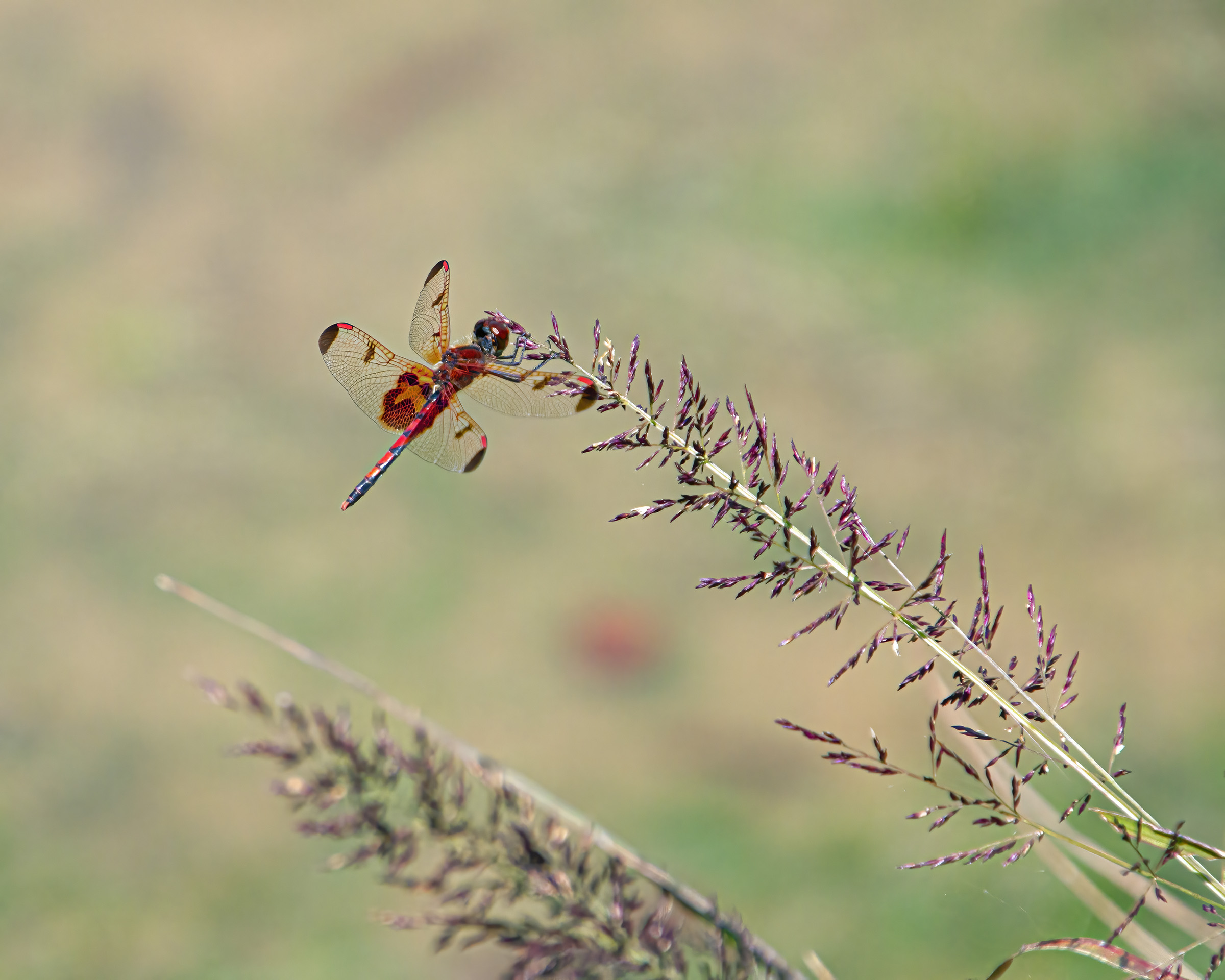
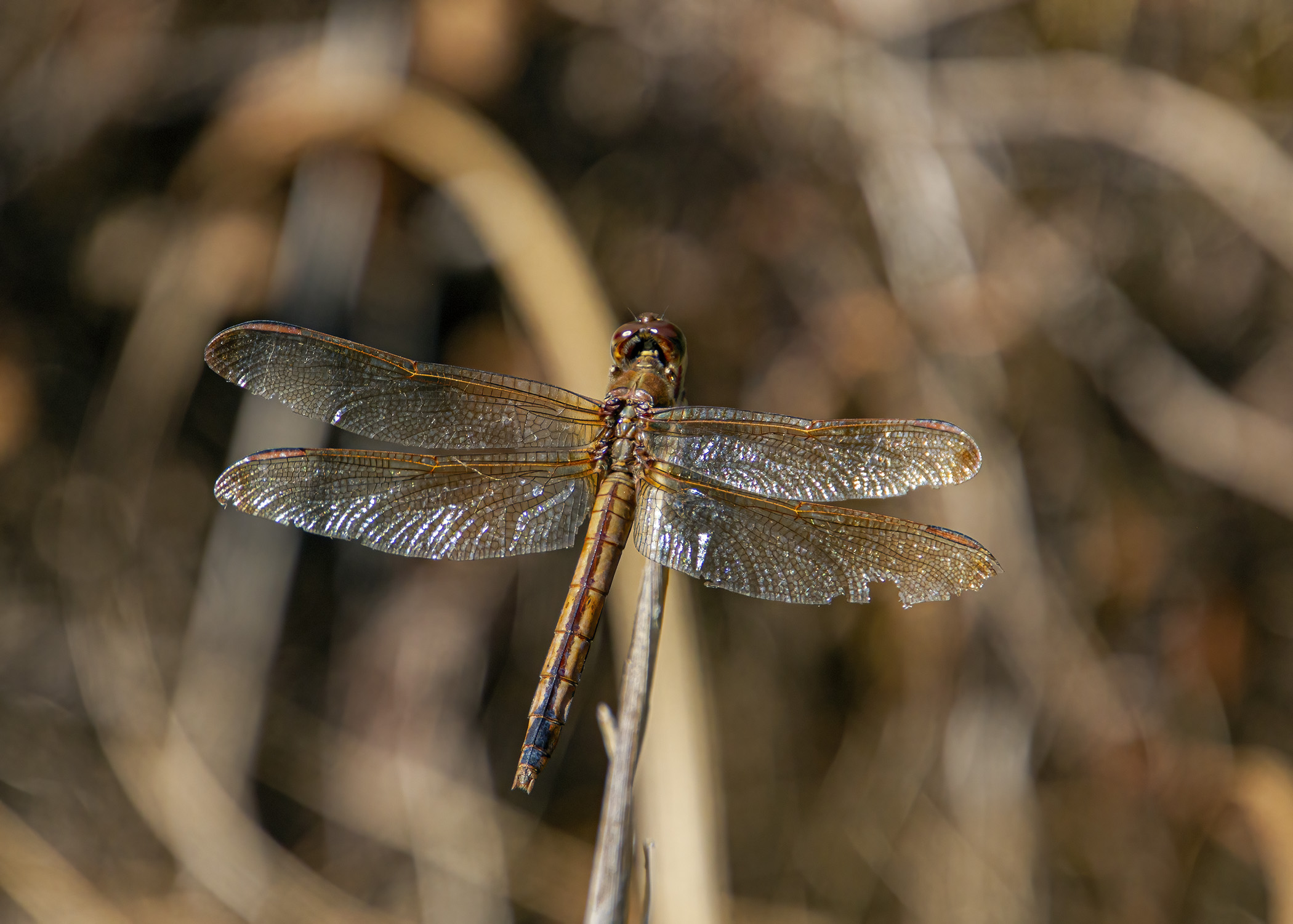
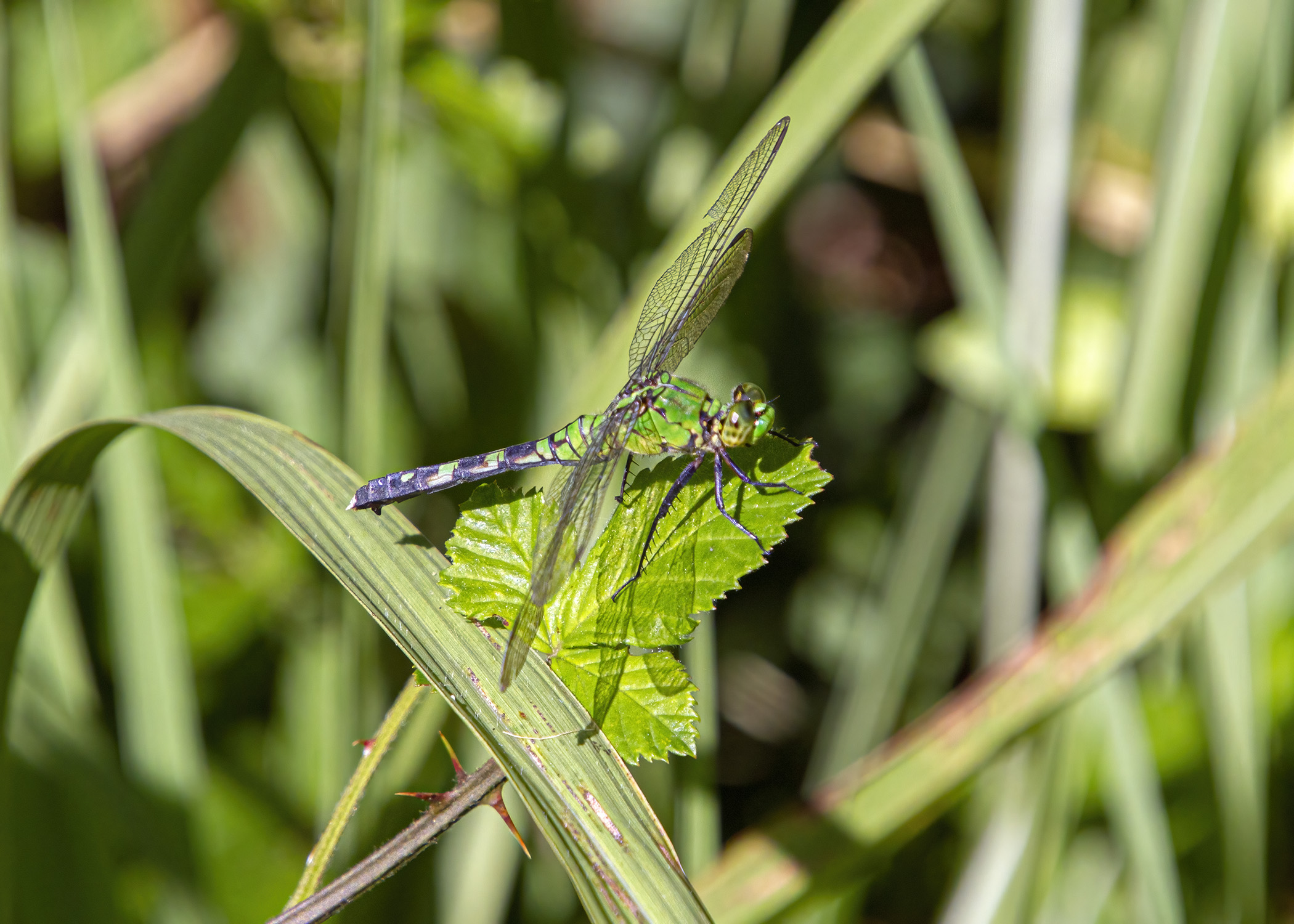
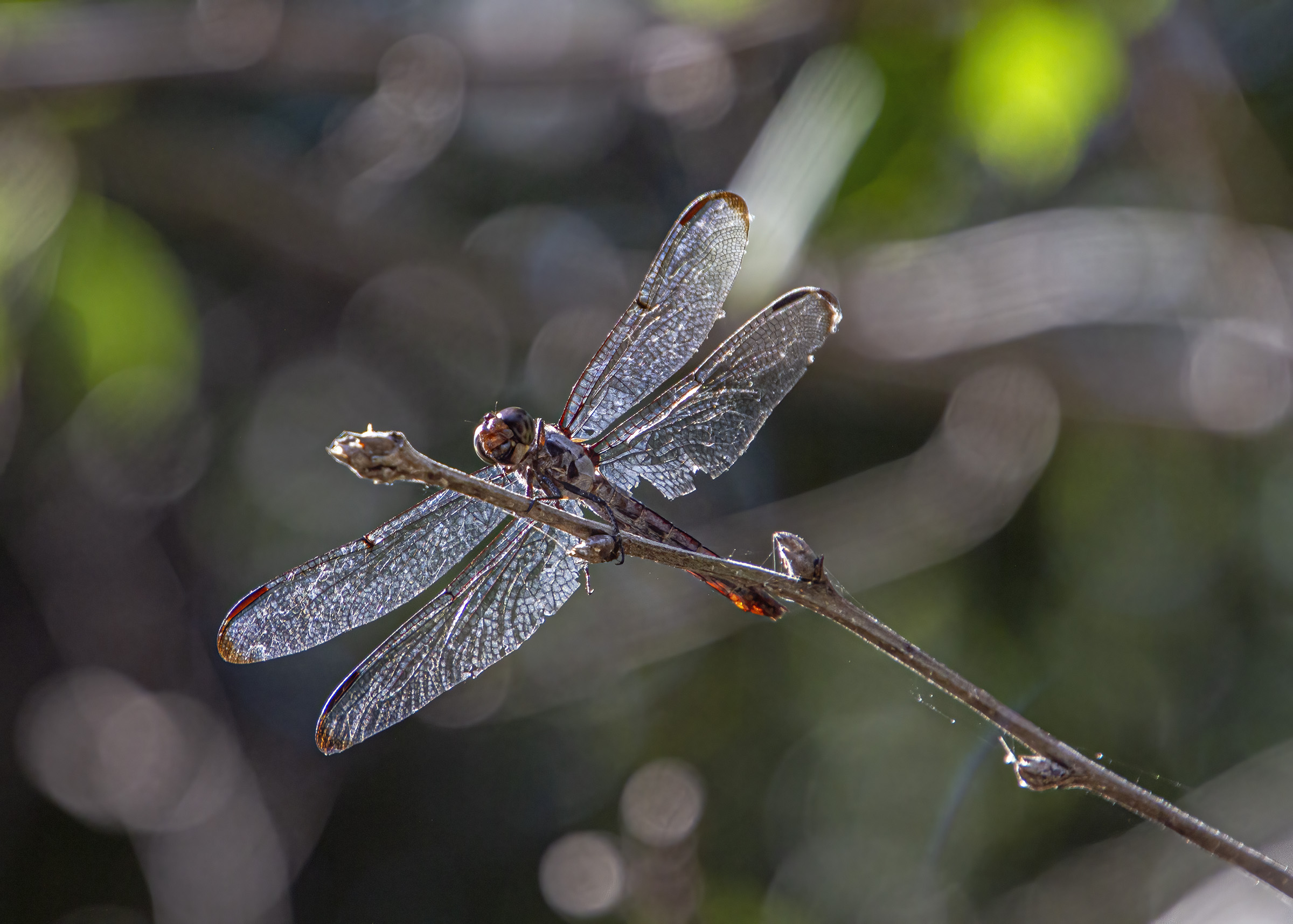
In many of my blog postings, I concentrate on a single species of dragonflies, but today I want to celebrate the diversity of species that I have been seeing during the month of September. Despite my warnings in some earlier postings about the decreasing numbers of dragonflies, I continue to see a variety of species—Northern Virginia, where I live, is blessed to have an abundance of different dragonflies and damselflies.

The first photo shows a female Eastern Amberwing (Perithemis tenera), the smallest dragonfly in our area.  Males of this species hang out at ponds, but the females, which do not have amber wings like the males, are usually found in vegetation some distance from the water.

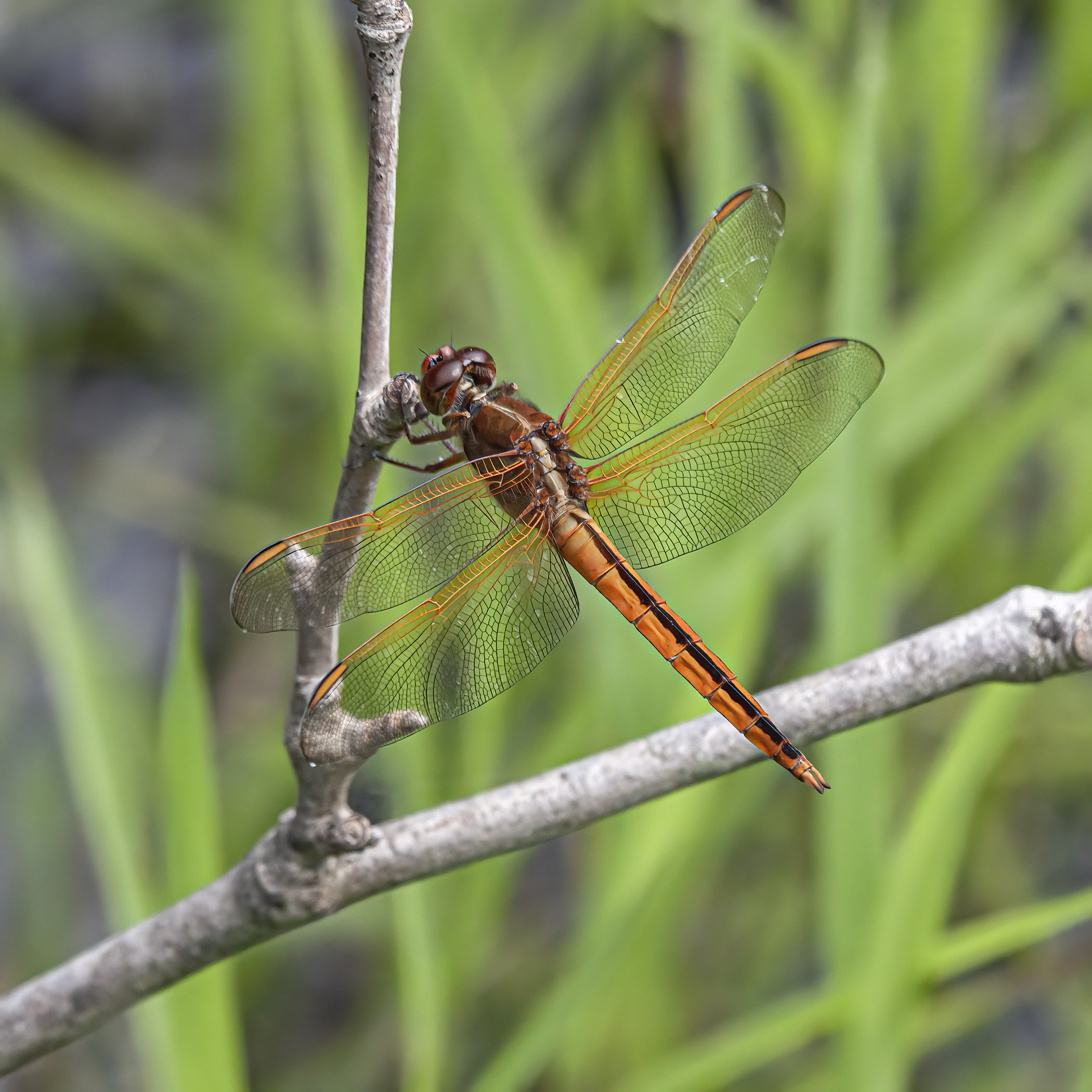
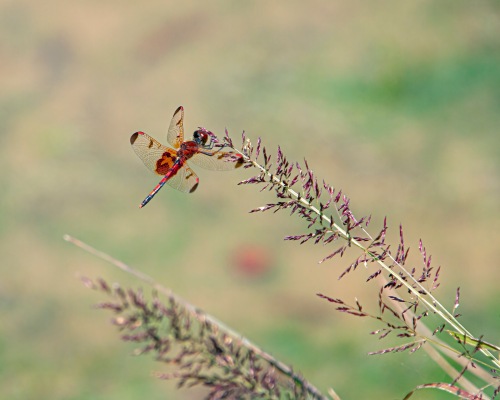
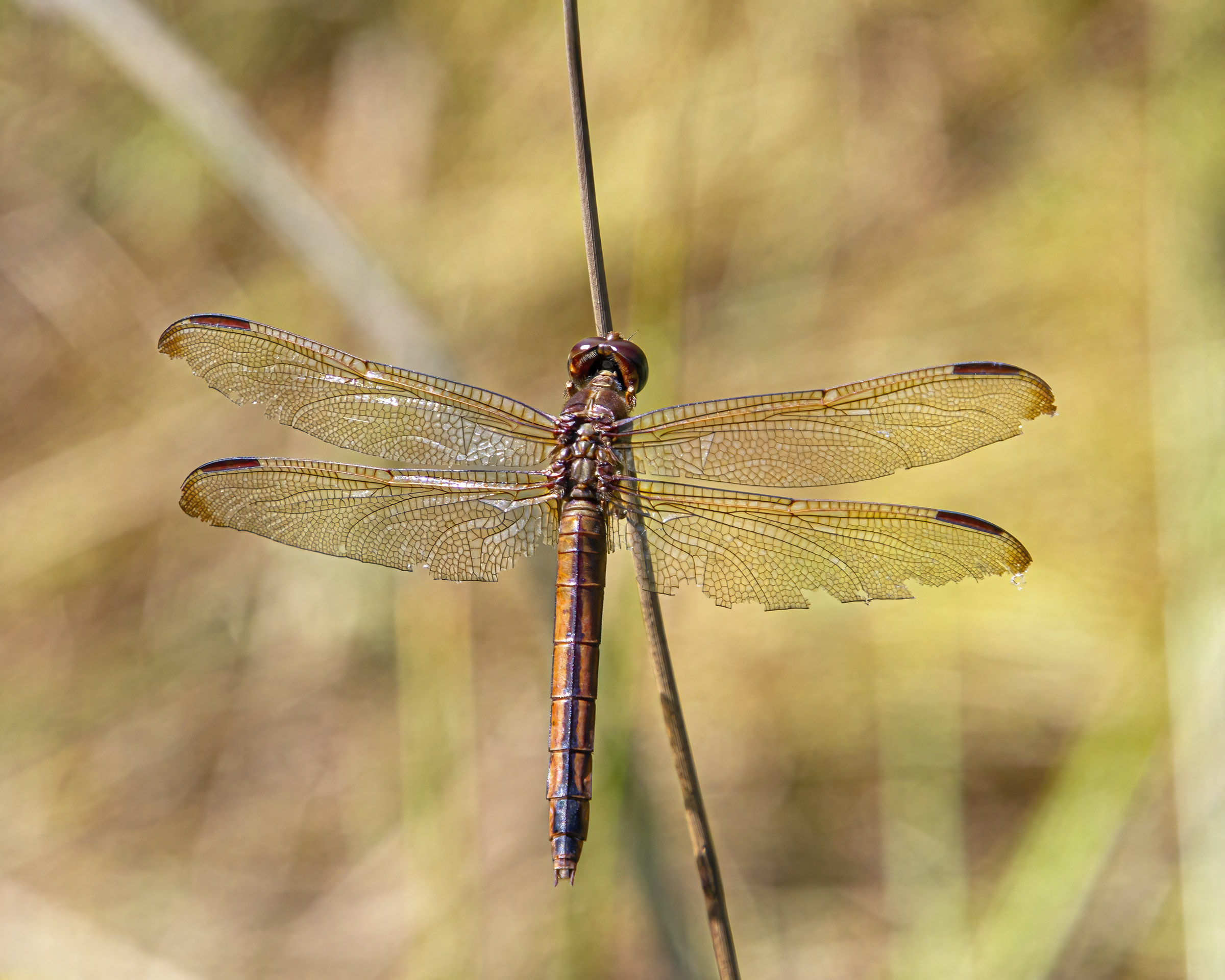
The second image shows a male Calico Pennant (Celithemis elisa), a beautifully colored dragonfly with distinctive patterns on its wings. The third image shows a mature female Needham’s Skimmer (Libellula needhami). Her wings show some damage and her color has fades, but she is still beautiful and the golden strands on the front edges of her wings were sparkling in the sunlight when I captured this image.

The fourth image shows a female Eastern Pondhawk (Erythemis simplicicollis), one of the most common dragonfly species in my area. I love the brilliant emerald color of the females (and immature males) of this species and the black markings on the abdomen.

The dragonfly in the last photo was the toughest one for me to identify. It had flown up into a tree and I was looking into the sun when I captured the image. However, I am pretty sure that it is a female Great Blue Skimmer (Libellula vibrans).

All of these dragonflies belong to the Skimmer family, the largest dragonfly family that includes the species most likely to be seen by a casual dragonfly watcher. The other families, which are generally harder to find, include Clubtails, Cruisers, Darners, Emeralds, Petaltails, and Spiketails. If I remember correctly, I have managed this season to photograph at least one dragonfly in all seven of these dragonfly families.
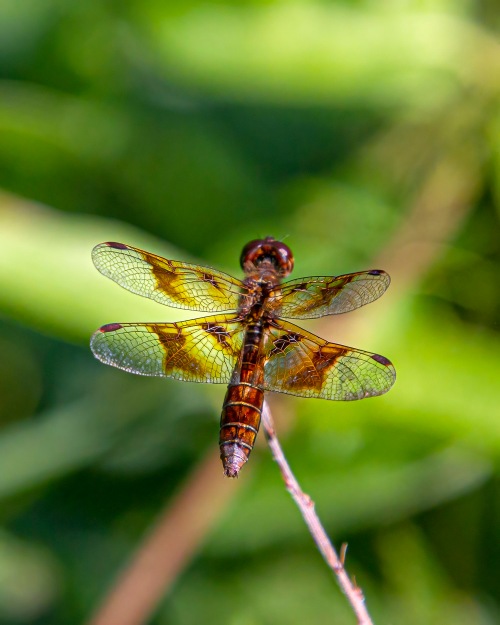
Eastern Amberwing

Calico Pennant

Needham's Skimmer

Eastern Pondhawk

Great Blue Skimmer

© Michael Q. Powell. All rights reserved.


Read Full Post »
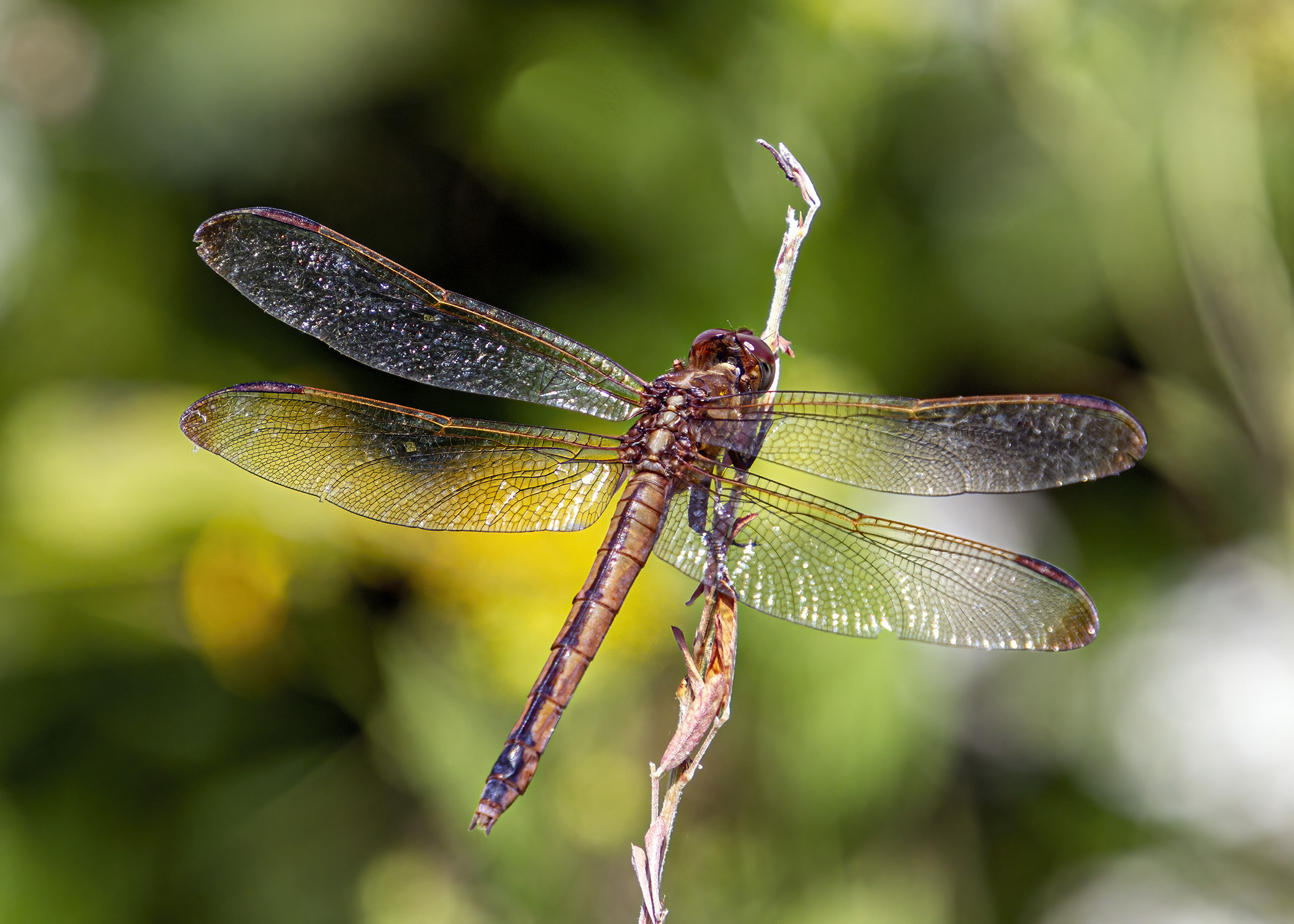
For those of us in the northern hemisphere who use the astronomical calendar, tomorrow (23 September) marks the beginning of the autumn season. In so many of the photos that I have taken during the past few weeks, I have noted signs of the changing seasons.

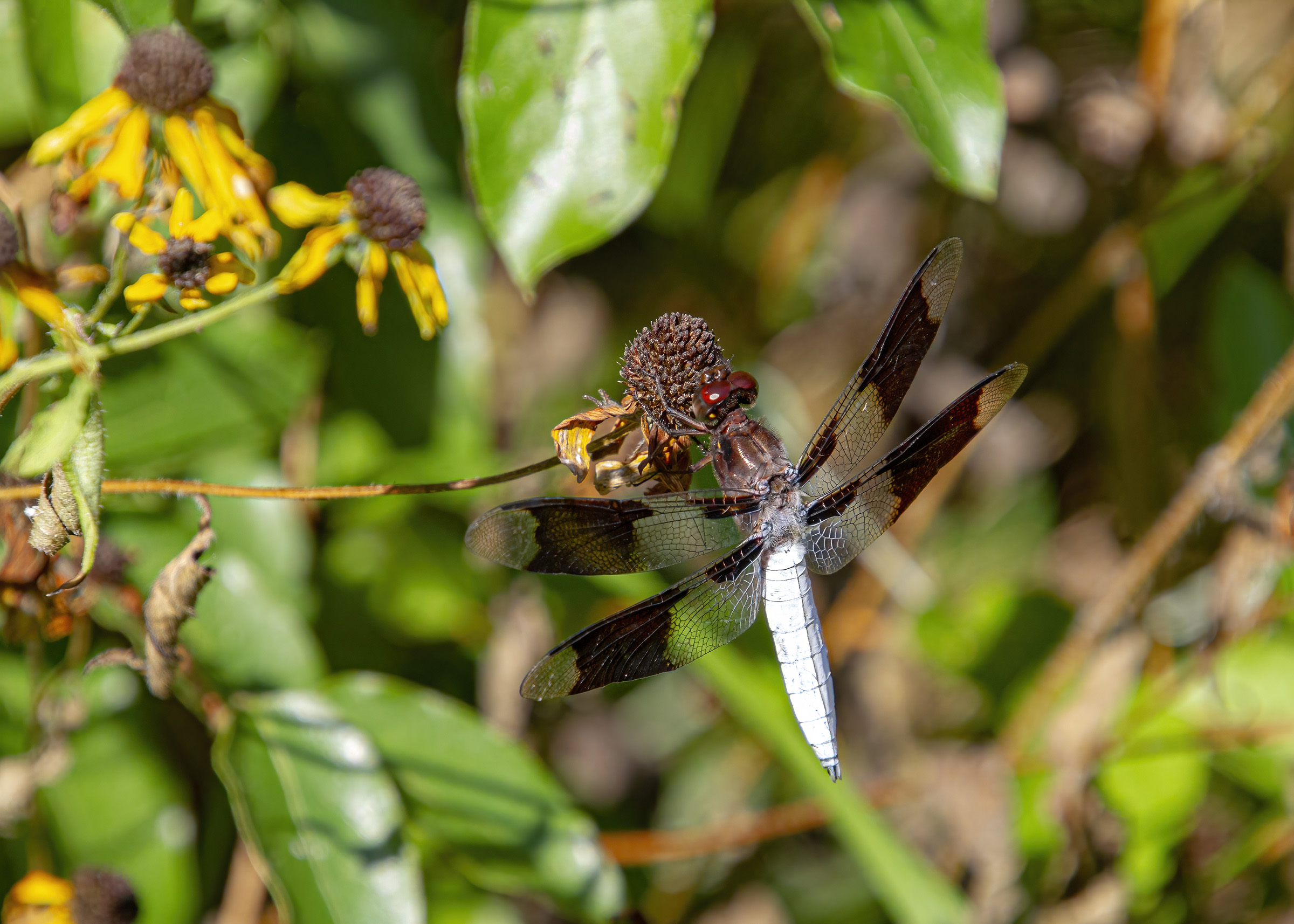
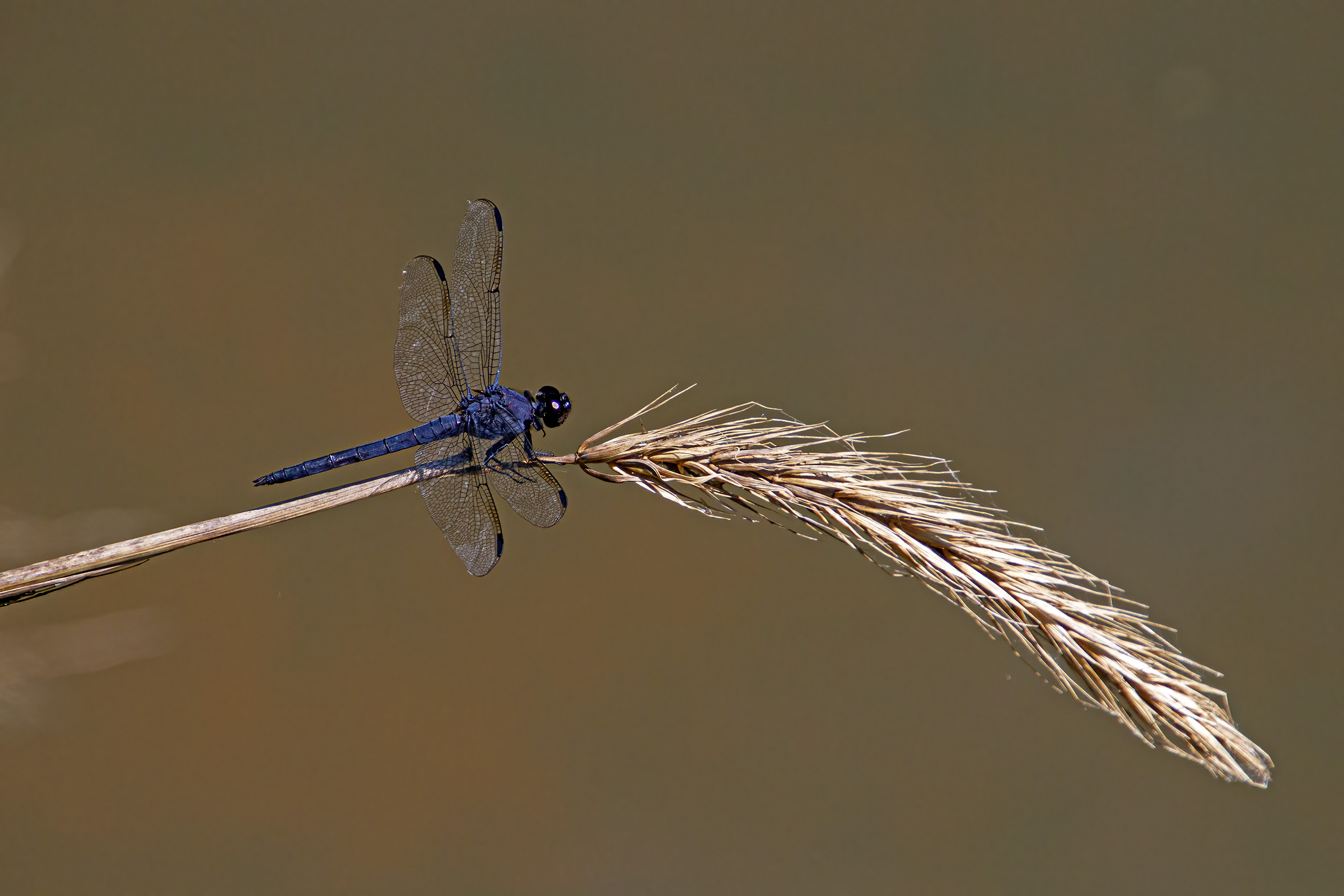
The warm orange tones in this shot of a female Needham’s Skimmer dragonfly (Libellula needhami) remind me of pumpkins and autumn leaves. The fading flowers in the photo of a male Common Whitetail dragonfly (Plathemis lydia) remind us that the growing season is coming to an end. The dryness of the stalk on which the Slaty Skimmer (Libellula incesta) dragonfly perch brings to mind the droughts and extreme weather that many have experience during this summer.

Embrace the new season and the opportunities is provides, whether it be autumn in the northern hemisphere or spring for those in the southern hemisphere.

Needham's Skimmer

Common Whitetail

Slaty Skimmer

© Michael Q. Powell. All rights reserved.


Read Full Post »
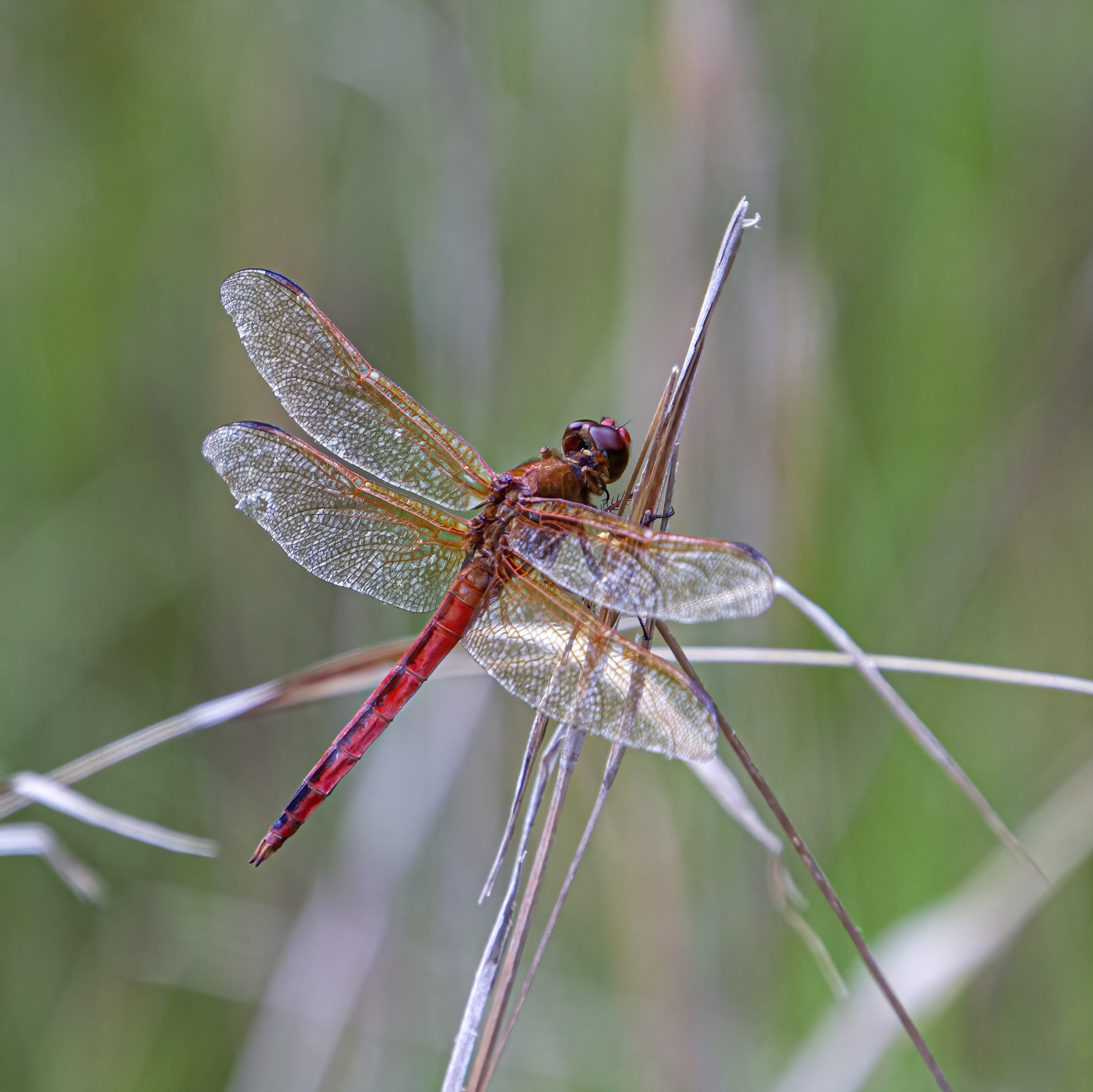
Last Saturday morning at Occoquan Bay National Wildlife Refuge I was delighted to spot this male Needham’s Skimmer (Libellula needhami), one of the most brightly colored dragonflies in our area. In addition to its beautiful reddish-orange color, this dragonfly has stunning gold accents on the front edges of each of its wings.

Needham's Skimmer

© Michael Q. Powell. All rights reserved.

Read Full Post »
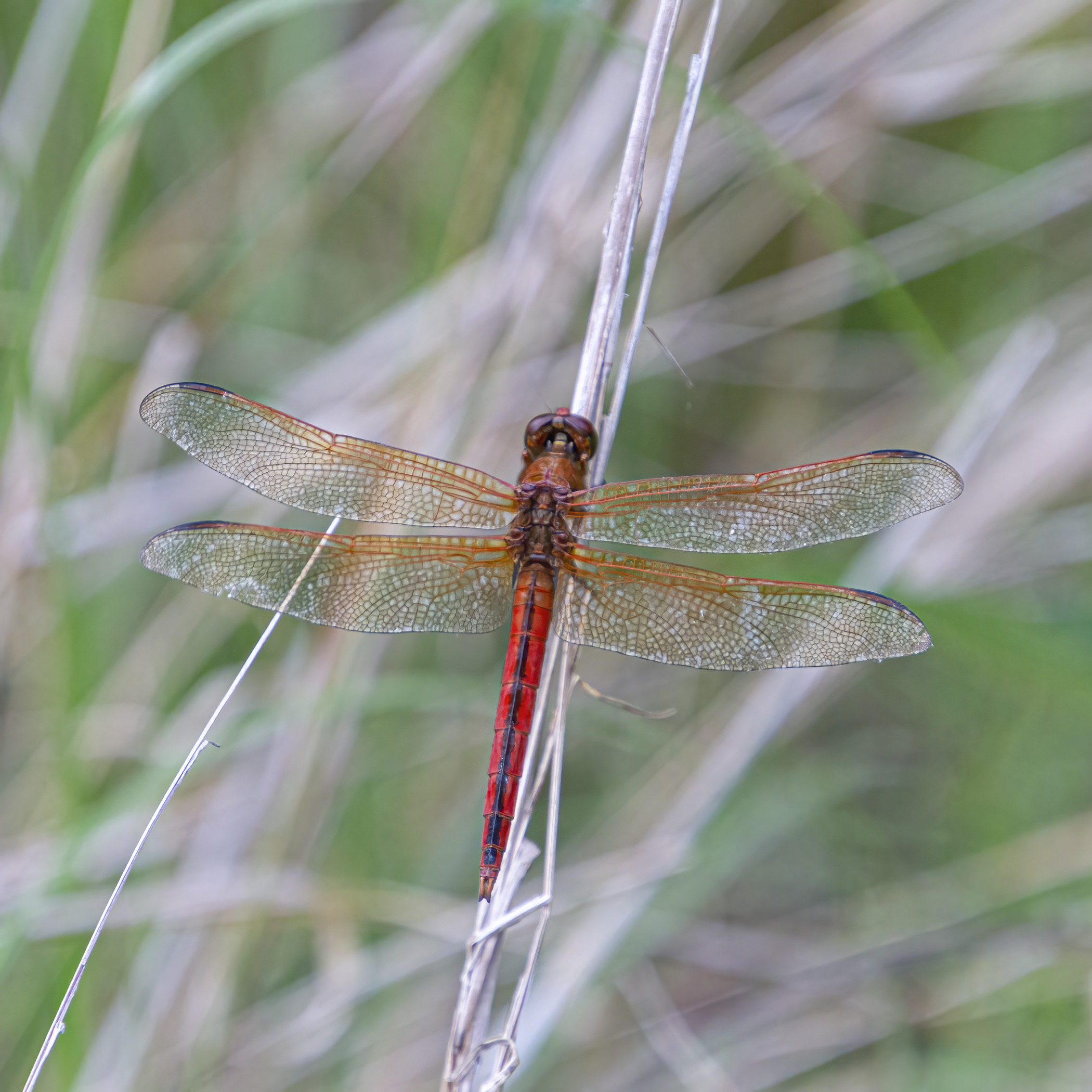
I love the abstract feel of this image that I captured last week at Occoquan Regional Park. The shapes and colors in the photo are much more important than the details of the subject, which I think is a Needham’s Skimmer dragonfly (Libellula needhami). From this angle, dragonflies often remind me of the biplanes of World War One, like the Sopwith Camel that was sometimes featured in Snoopy comic strips.

Photography allows for such a wide range of approaches to express myself creatively. I can be geeky and technical, as I usually am, striving to capture the minute details of my often tiny subjects or I can be as “artsy” as I choose, focusing on capturing and creating moods or feelings with the basic elements of light and darkness, of colors, lines, and shapes.

Professional photographer’s are sometimes advised to create a signature style and to stick with it. I am proudly an amateur, who captures images for love—the root word in “amateur”—and I defiantly refuse to stick to a single style. My photos and words help you to see the world through my eyes and hopefully my unbounded curiosity and enthusiasm about the world are evident in my postings. If you meet me in person, you’ll see that the “me” in my postings is not a social media persona—it is genuinely who I am.

Needham's Skimmer

© Michael Q. Powell. All rights reserved.

Read Full Post »
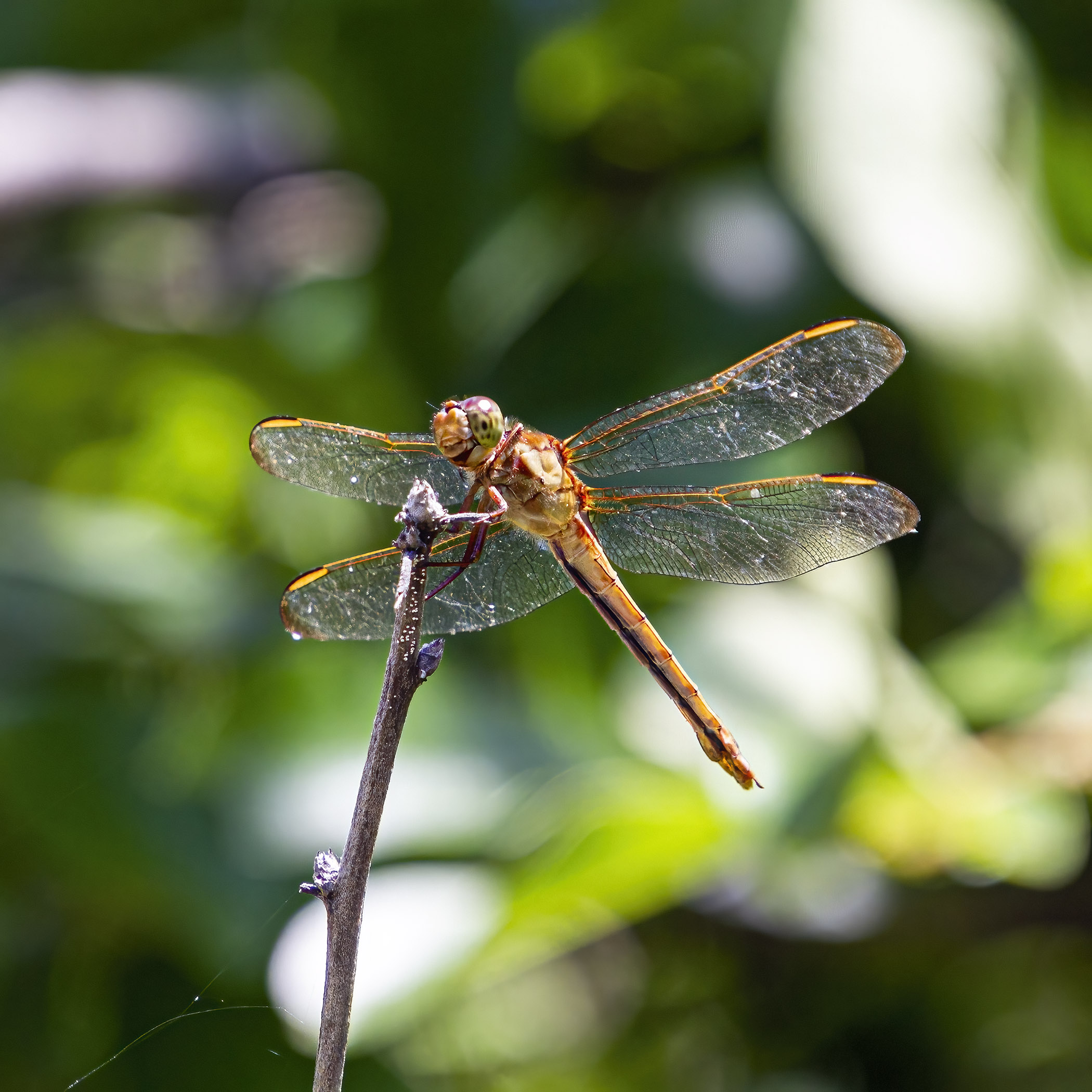
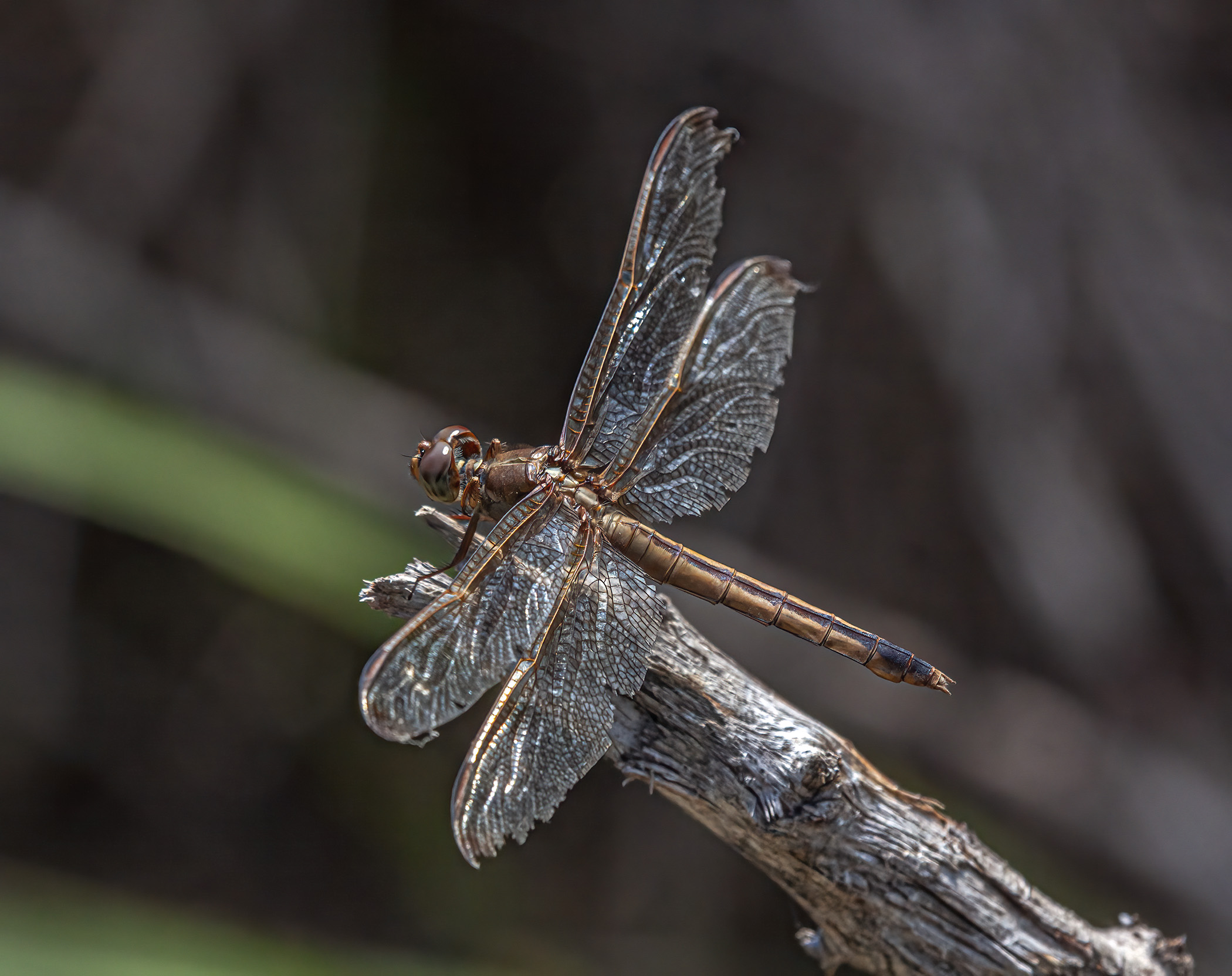
The season has ended for many dragonflies—many of the species that were present a month ago are now gone. From time to time, though, I will see a few strong survivors who are hanging on, like this female Needham’s Skimmer (Libellula needhami) that I spotted last week at Occoquan Bay National Wildlife Refuge. Though her wings are almost completely shredded, she still manage to fly, when necessary.

She somehow seemed to be content to turn to the light and enjoy the warmth of the sunlight, determined to enjoy life’s simple pleasures in her remaining days.

Needham's Skimmer

© Michael Q. Powell. All rights reserved.

Read Full Post »
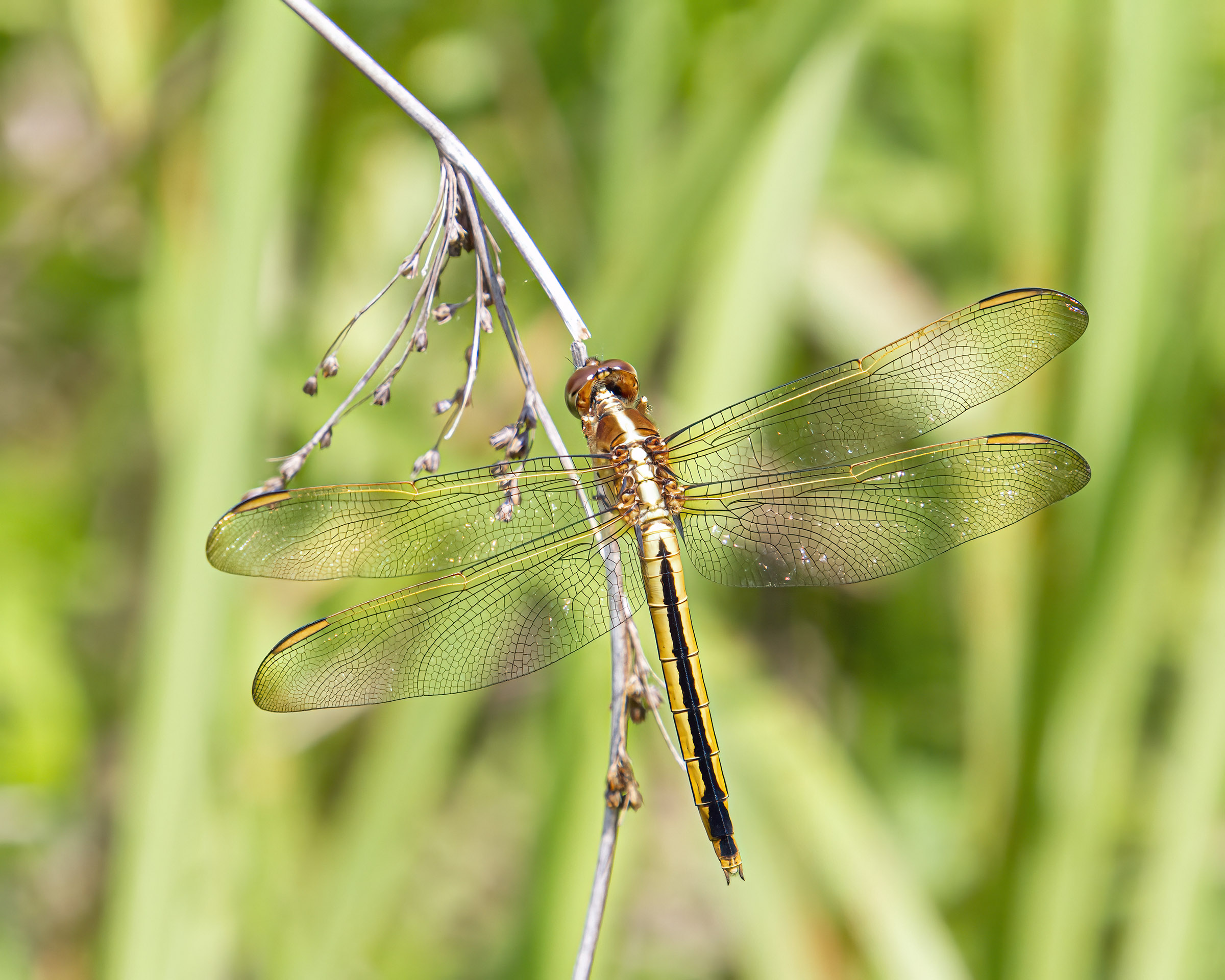
Dragonflies perch in many different ways and in many different places. Here are some simple shots of three dragonflies that I encountered last Thursday at Occoquan Bay National Wildlife Refuge.

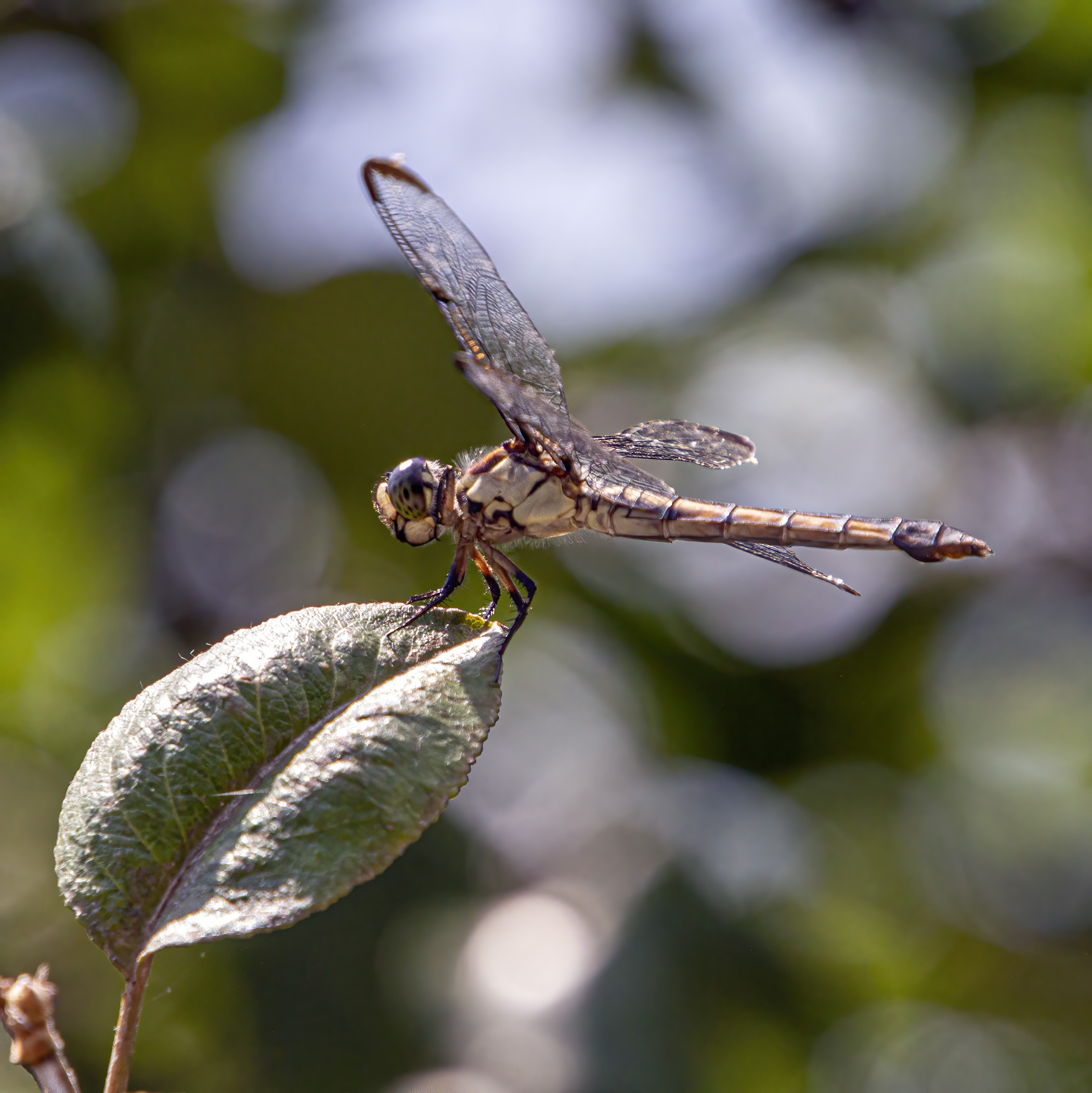
The first one is a Needham’s Skimmer (Libellula needhami) and I love the way that its coloration contrasts so well with the sea of green vegetation in which it is perched. The dragonfly in the second photo, my personal favorite of the three images, is a Blue Dasher (Pachydiplax longipennis). When it’s hot outside, some dragonflies, like this one, like to assume a handstand-like pose, often called the “obelisk” position, to reduce their exposure to the direct sunlight. The final photo shows a Great Blue Skimmer (Libellula vibrans) perched on the tip of a leaf.

Each of these shots represents my efforts to isolate a dragonfly a bit from its surroundings and to highlight its beauty and its behavior. None of theme is spectacular or award-worthy, but they are pleasing little portraits of some of my summer companions.

Needham's Skimmer

Blue Dasher

Great Blue Skimmer

© Michael Q. Powell. All rights reserved.

Read Full Post »

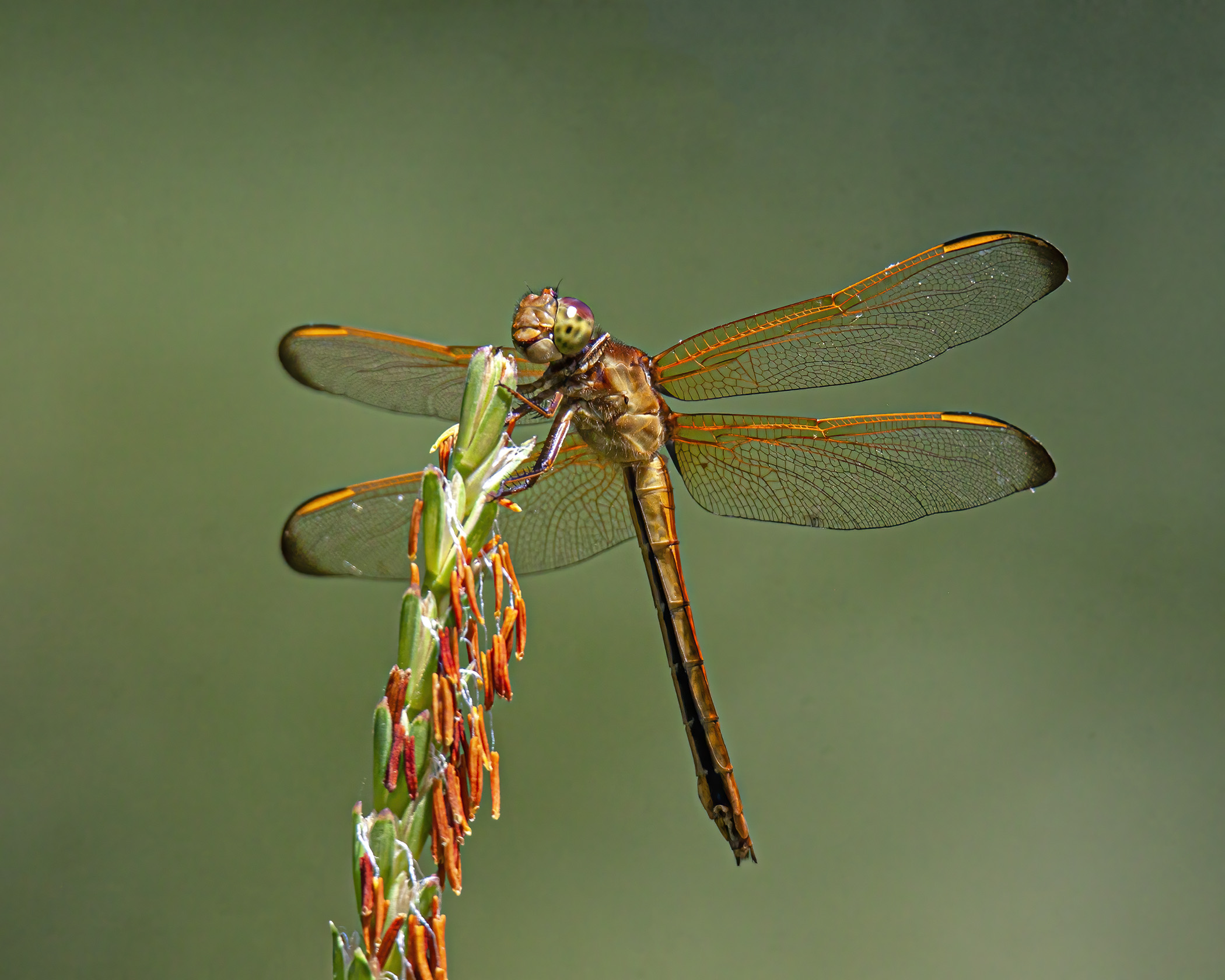
Numerous Needham’s Skimmer dragonflies (Libellula needhami)) have recently emerged at Occoquan Bay National Wildlife Refuge. Yay! I just love the golden leading edges on the wings of this species. Male Needham’s Skimmers eventually turn reddish-orange in color, but initially have the same yellow and black coloration as the females.

In the first shot, I was thrilled to photograph a beautiful female as she perched on some colorful Eastern Gamagrass (Tripsacum dactyloides).  I cannot identify very many plants, but this one is distinctive enough that it has stuck in my memory. I love the expression on the dragonfly’s face–she seems to be either smiling at me or sticking out her tongue at me.

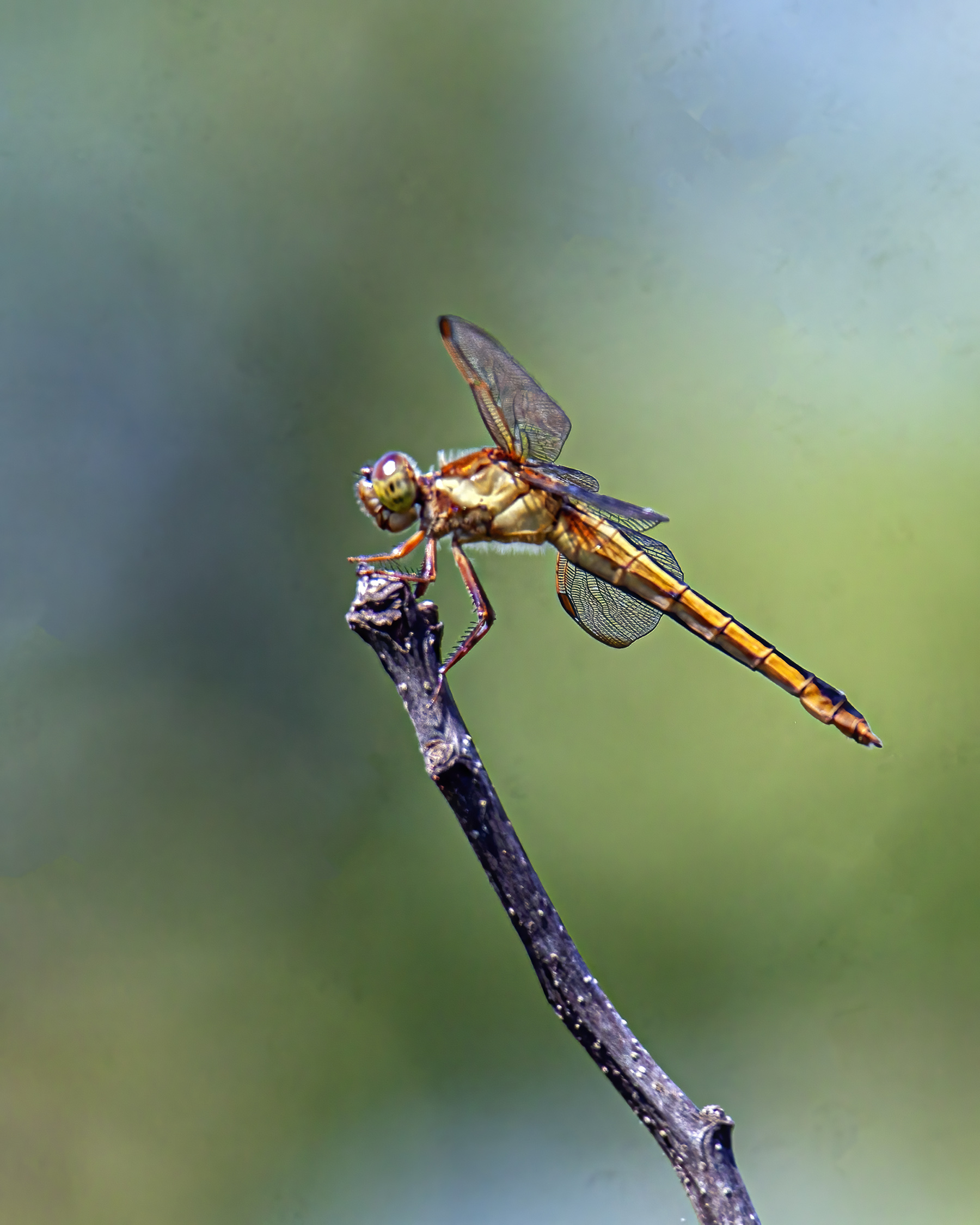
The Needham’s Skimmer in the second image also seems to be smiling. I think that it is a male, but cannot be certain from this angle of view.

Have a wonderful weekend. Needham's Skimmer

Needham's Skimmer

© Michael Q. Powell. All rights reserved.


Read Full Post »
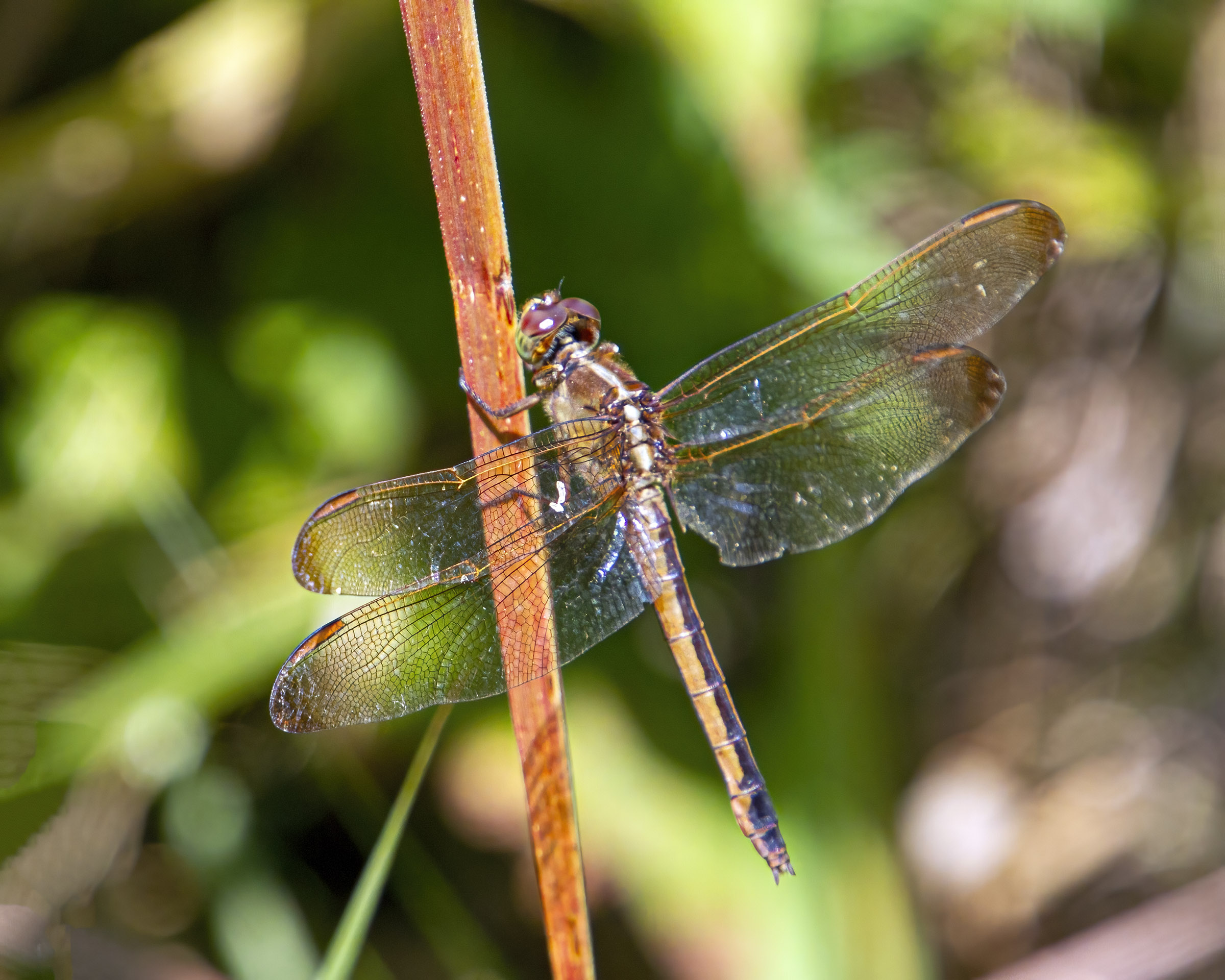
Her colors were faded and her wings were tattered, but the simple beauty and elegance of this mature female Needham’s Skimmer dragonfly (Libellula needhami) were still very much in evidence when I encountered her on Wednesday at Occoquan Bay National Wildlife Refuge. In fact, the coppery-gold veins near the leading edges of her wings seemed to glow from the inside with a radiant light.

So often our society tells us that we should equate beauty with a youthful appearance, but I would argue that beauty can be found at all ages. Beauty for me is not so much about matching up to some standard of perfection—it can be found in the midst of all of our wrinkles, scars, and blemishes. Our uniqueness as individuals in and of itself makes us beautiful if you look closely and deeply enough.

Needham's Skimmer

© Michael Q. Powell. All rights reserved.

Read Full Post »
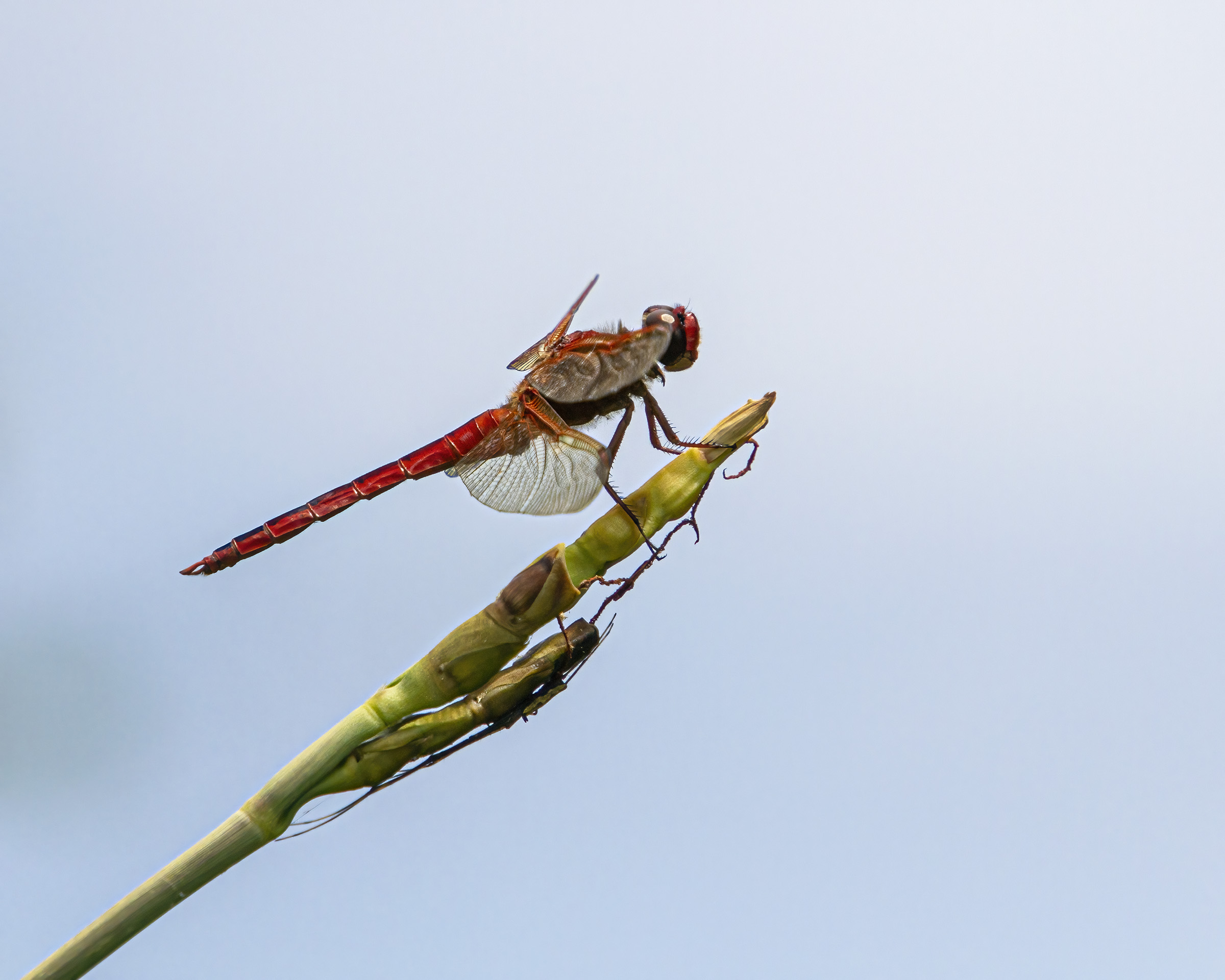
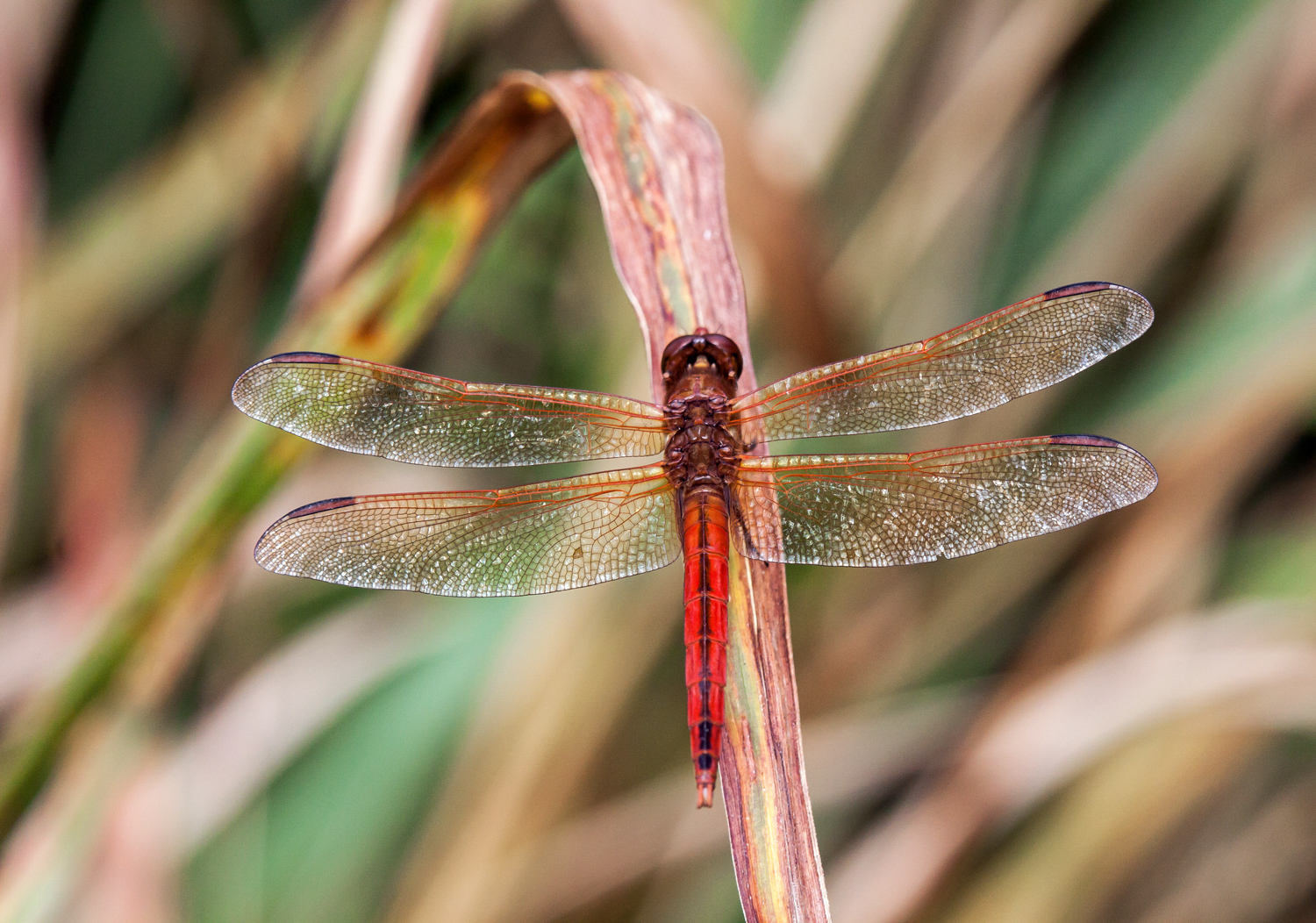
I was happy to finally photograph a mature male Needham’s Skimmer dragonfly (Libellula needhami) on Wednesday at Occoquan Bay National Wildlife Refuge. Earlier this season all of the ones I shot were immature and did not have the reddish-orange/brown tones that remind me that autumn is on the way.

Here in the northern hemisphere, autumn will begin in just a few days for those using the meteorological calendar, though many of us won’t start the season until the autumnal equinox on 22 September, according to the astronomical calendar. On the other side of the globe, spring is about to begin and new life is bursting forth in places like New Zealand and Australia, where some of my most devoted readers live. For them, the September equinox is the vernal equinox, and not the autumnal equinox and I look forward to seeing their photos of daffodils, crocuses, and other spring flowers.

Needham's Skimmer

© Michael Q. Powell. All rights reserved.

Read Full Post »

Have you even examined dragonfly wings really closely? I tend to think of dragonfly wings as being made up lots of individual “cells” that are uniform in size and shape, like the squares on piece of graph paper. The reality, however, is that the wings are incredibly complex and are full of intricate designs and shapes that presumably help the dragonfly to maneuver its way so masterfully through the air.

Last week I captured this image of an immature male Needham’s Skimmer (Libellula needhami) while I was exploring in Occoquan Regional Park. I managed to position my camera so that I was almost perfectly parallel to the plane of the wings that are consequently in sharp focus. I highly encourage you to click on the image to see the breathtaking wing details that form such complex mosaic-like patterns. Wow!

It is no wonder that it is so hard for me to draw or paint dragonfly wings that look realistic.

Needham's Skimmer

© Michael Q. Powell. All rights reserved.

Read Full Post »

How do you stand out from the crowd? A touch of gold always adds a bit of bling, especially if you are a dragonfly. I spotted this young male Needham’s Skimmer dragonfly (Libellula needhami) yesterday while exploring a small pond in Fairfax County.

At the moment this juvenile male Needham’s Skimmer has the same colors as a female, but eventually his abdomen will turn an orange-red in color, but retain the black stripe down the middle. It is still a bit early in the season, though, for me to see an adult, as Needham’s Skimmers are a summer species that is just now starting to emerge—this is my first sighting of one this year.


Needham's Skimmer

© Michael Q. Powell. All rights reserved.


Read Full Post »
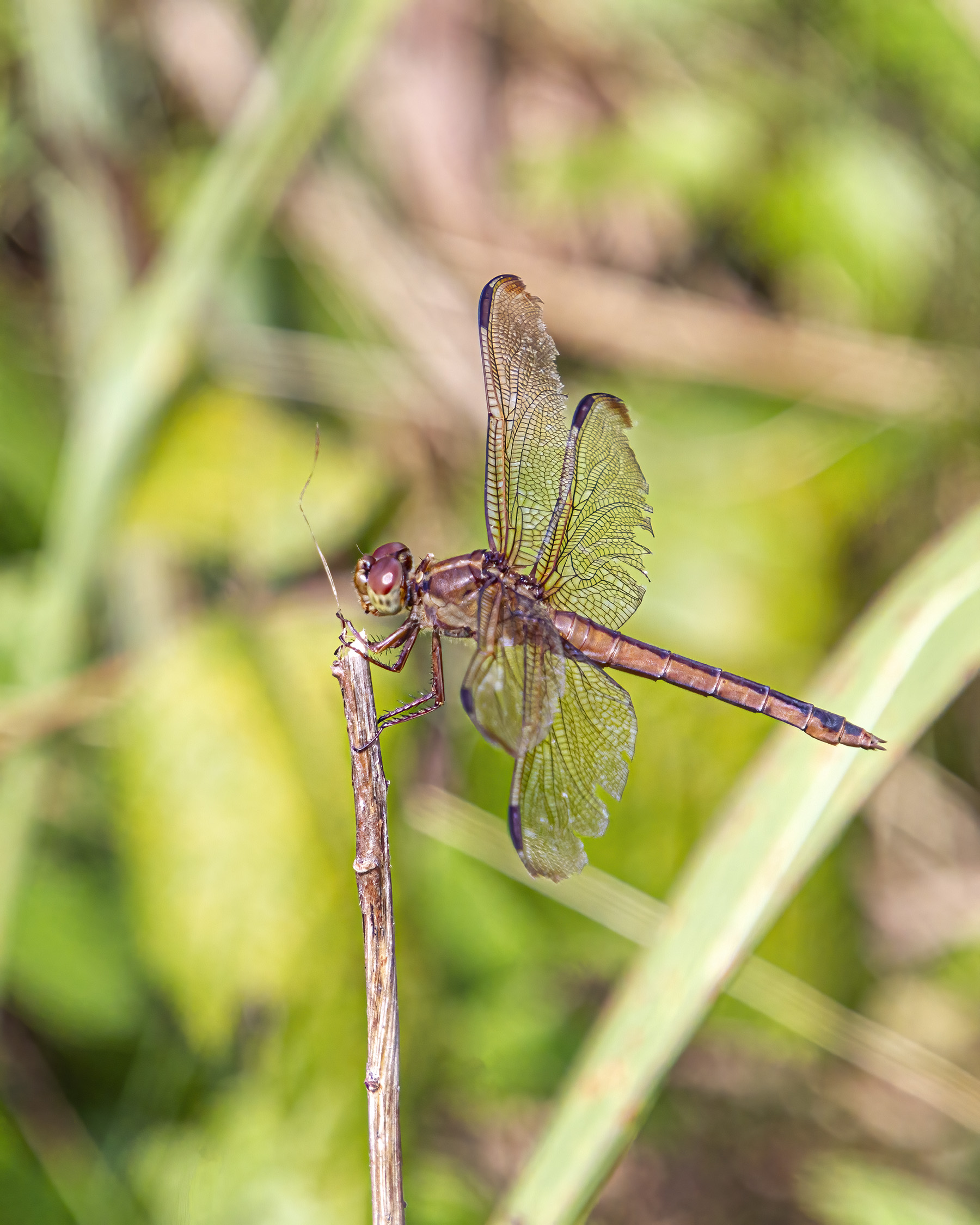
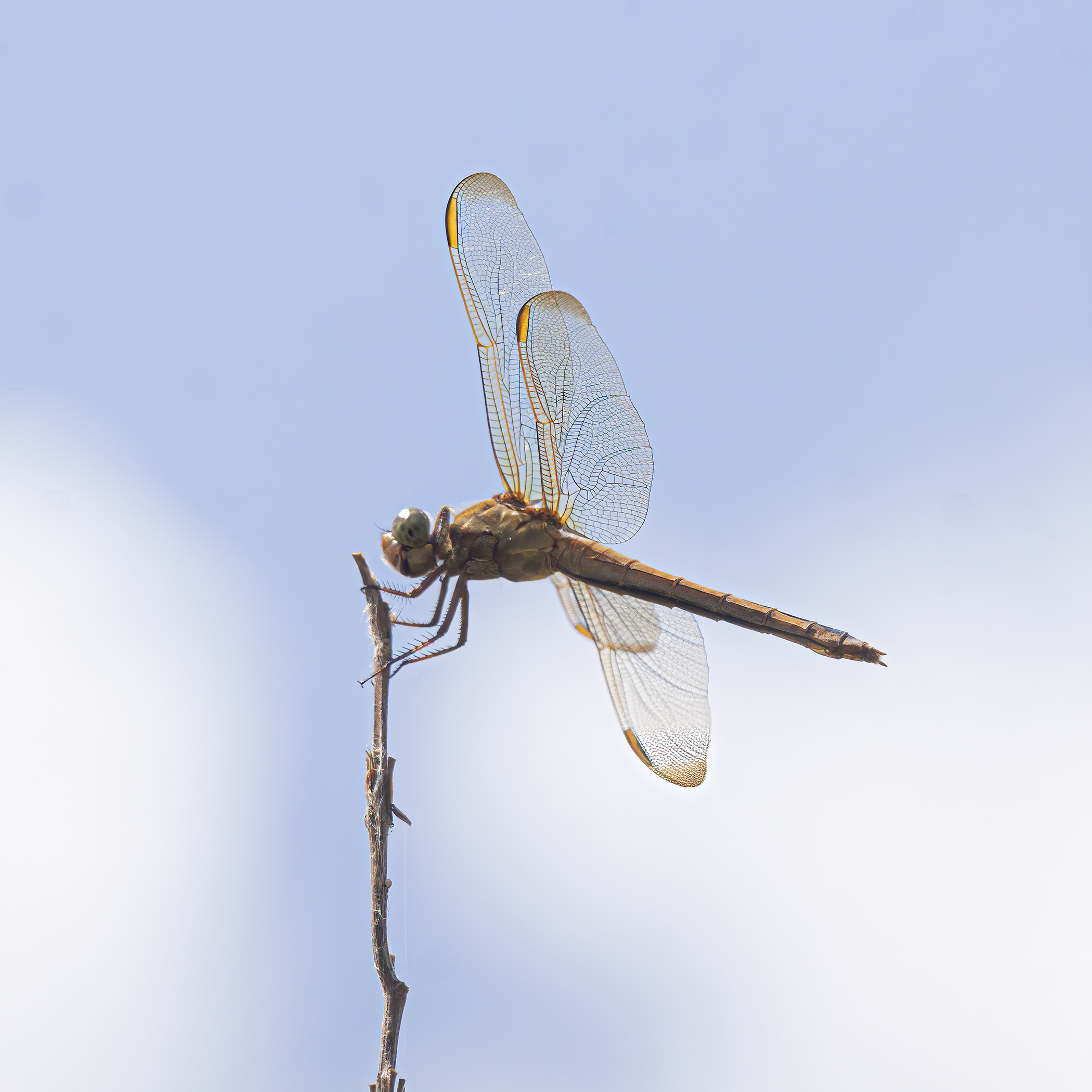
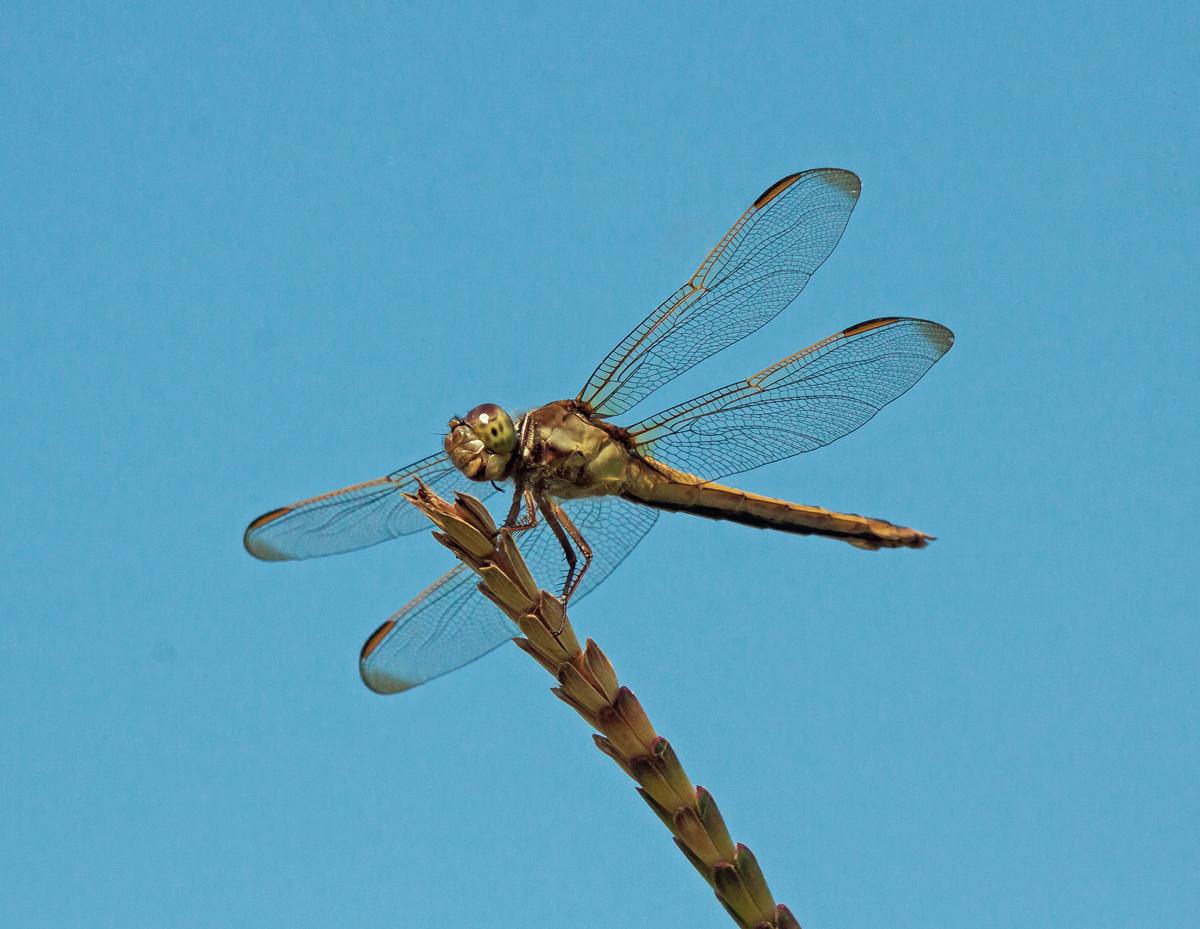
Some dragonflies seems to seek the highest possible perch and I love photographing them with the sky and the clouds as the simple backdrop.  I spotted this female Needham’s Skimmer dragonfly (Libellula needhami) last week at Occoquan Bay National Wildlife Refuge.

I was thrilled that I was able to maneuver myself into a shooting position almost directly below the dragonfly and shoot upwards at a sharp angle. I was also happy to capture the beautiful golden markings near the leading edges of the wings, one of the most distinctive characteristics of this species that is quite common where I live.


Needham's Skimmer

© Michael Q. Powell. All rights reserved.

Read Full Post »
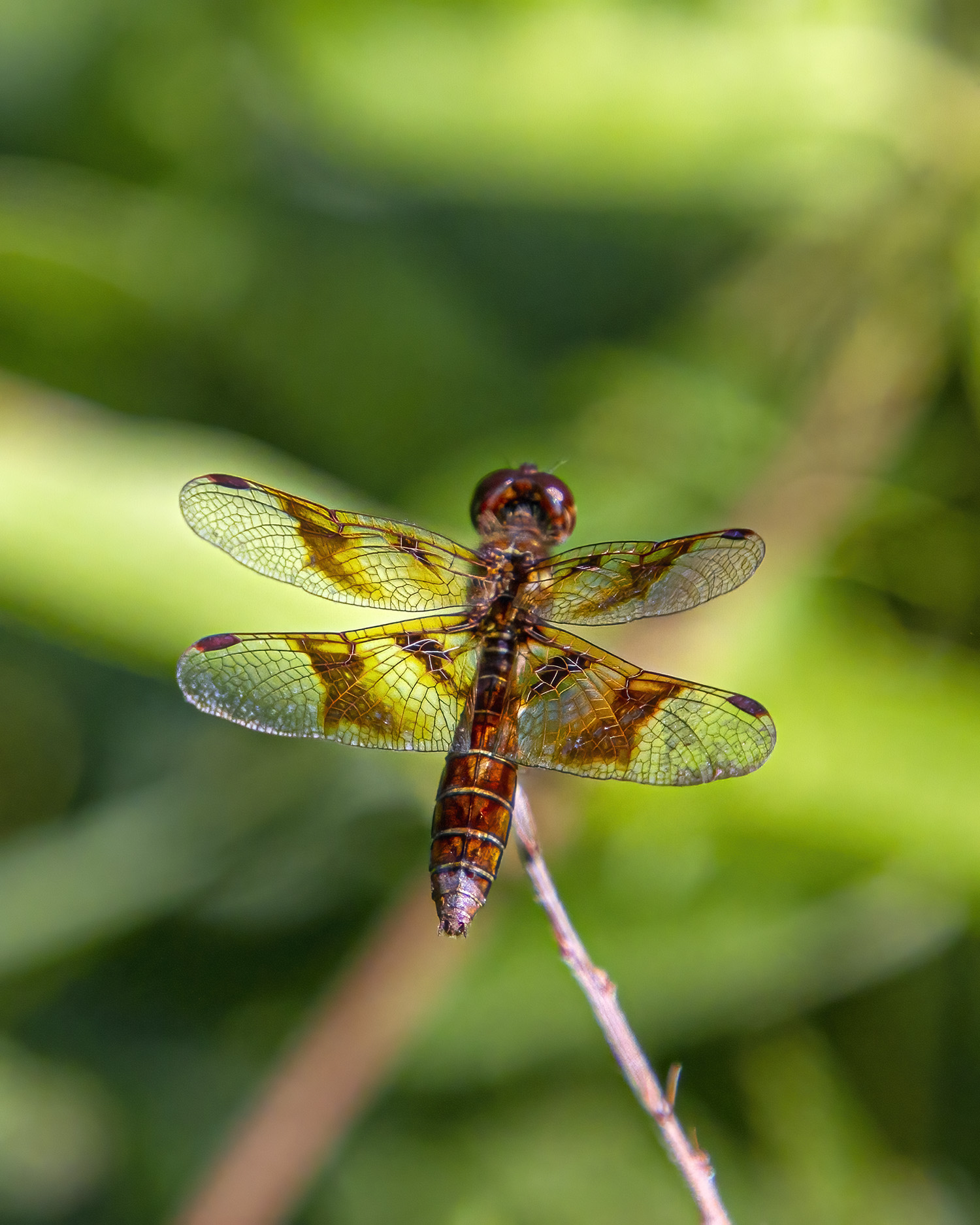
Does you mood affect how you react to images? When I am reviewing images that I have captured, most of the time I use an analytical approach. I seek to identify the species of my subject and then look at the technical aspects of the photo, such as the sharpness of the focus. Finally I will see if I can improve the composition by cropping the image.

For some images, though, I respond initially with my heart and not my head. I don’t worry about “what” it is and simply enjoy the beauty of the shapes and colors that make up the image. That was the case with this shot of a male Needham’s Skimmer dragonfly (Libellula needhami) that I captured during a recent visit to Occoquan Bay National Wildlife Refuge.

I love the contrast between the orangish-red of the dragonfly’s body and the green background. The shape and texture of the vegetation, which I believe is Eastern Gamagrass (Tripsacum dactyloides), also really grabbed my eye (in part because I missed focus a little and the sharpest part of the image is the grass in front of the dragonfly). The composition is simple and straightforward and is pretty much the way I shot it.

We all like what we like. Most often we don’t even ask ourselves why we like something. I personally find it beneficial to try to articulate why I like something. Words fail me quite often when attempting to describe with words what is primarily an emotional reaction, but I think that the effort itself makes the process worthwhile.

Needham's Skimmer

© Michael Q. Powell. All rights reserved.

Read Full Post »
Last week I spotted this female Needham’s Skimmer dragonfly (Libellula needhami) at Occoquan Bay National Wildlife Refuge. The direct sunlight was a little harsh, but the high perch of the dragonfly allowed me to capture a beautiful, uncluttered background.

I love the golden edges of the wings of this species and the wonderful two-toned eyes of the females like this one. It was an additional bonus that she seemed to be smiling for her moment in the spotlight.

Needham's Skimmer

© Michael Q. Powell. All rights reserved.

Read Full Post »
We are now in prime dragonfly season and many familiar species are reappearing, like this beautiful Needham’s Skimmer dragonfly (Libellula needhami) that I spotted on Wednesday at Occoquan Bay National Wildlife Refuge.

I love the beautiful orange-gold color on the leading edges of the wings of this species, a color that really sparkles in the sunlight. I was fortunate to capture this dragonfly in a way that blurred the background. Depth of field is always an issue in situations like this and you can probably see that the tips of the wings are not in sharp focus, but I am ok with that and think it helps draw the viewer’s eyes to the dragonfly’s main body and, in particular, to its wonderful eyes.

Needham's Skimmer

© Michael Q. Powell. All rights reserved.


Read Full Post »
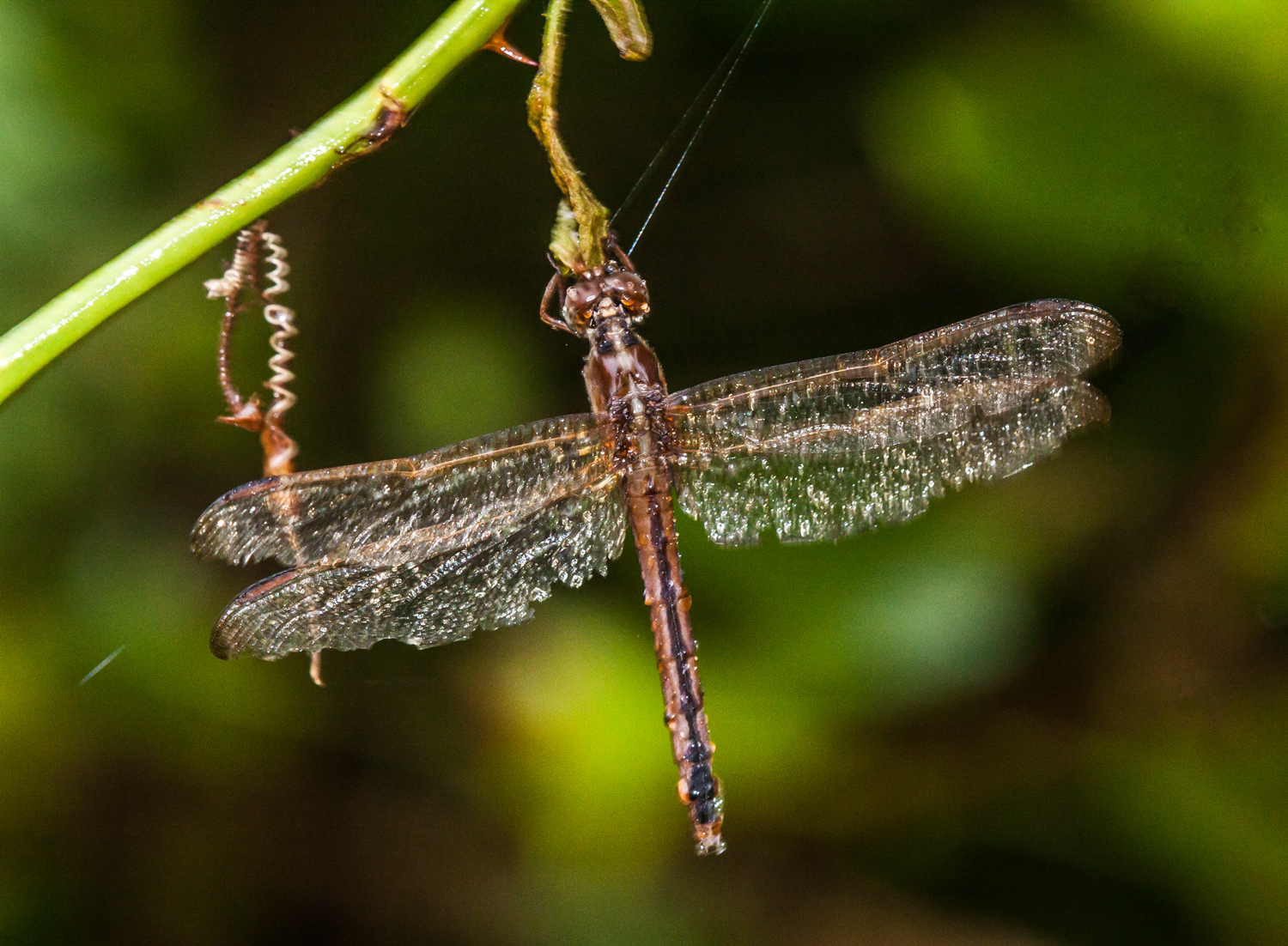
I don’t expect to see dragonflies flying in the rain, so I was a little shocked to see this one in the air this past weekend at Occoquan Bay National Wildlife Refuge. I captured this shot when it landed and hung vertically in the vegetation in an apparent attempt to drip dry.

I not certain of the identification of this dragonfly, but think it might be a Needham’s Skimmer (Libellula needhami), judging from the markings. Normally Needham’s Skimmers perch horizontally rather than vertically, but the unusual perching behavior might have merely been a consequence of the rainy conditions.

If you click on the image, you can see it in slightly higher resolution, including the tiny drops of water at the lower end of the abdomen (the “tail”).

Needham's Skimmer

© Michael Q. Powell. All rights reserved.


Read Full Post »
Two different colored dragonflies, a Needham’s Skimmer (Libellula needhami) and a Great Blue Skimmer (Libellula vibrans), were peacefully sharing a prime perch on Monday at Occoquan Bay National Wildlife Refuge.

Why is it so hard for us to peacefully coexist with one another?

peaceful co-existence

© Michael Q. Powell. All rights reserved

Read Full Post »

I love the stunning red-orange coloration of a male Needham’s Skimmer dragonfly (Libellula needhami), especially when the sunlight dances across its gold-tinged wings, as it did on Monday morning at Occoquan Bay National Wildlife Refuge.

Generally I prefer an uncluttered background for my subjects, but in this case I think the soft patterns of the grasses in the background enhance the image more than would have been the case with a uniform single color.

Needham's Skimmer

© Michael Q. Powell. All rights reserved.


Read Full Post »
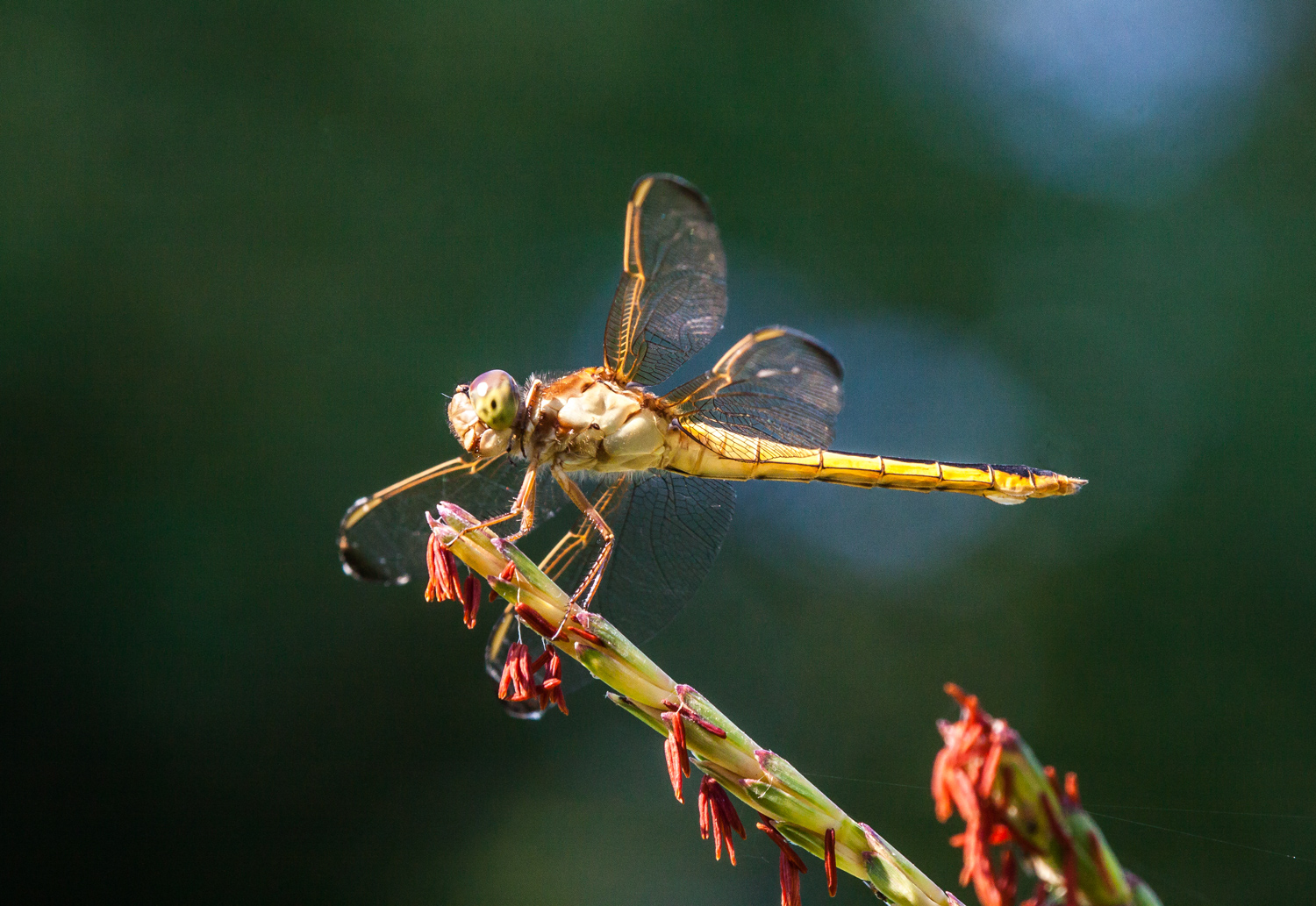
What a difference a background makes. Recently I have been seeing a lot of beautiful female Needham’s Skimmer dragonflies (Libellula needhami) at Occoquan Bay National Wildlife Refuge. It is often a challenge to try to separate them from the background vegetation so that you can focus in on the dragonfly’s wonderful details, like its gorgeous speckled green eyes.

Here are two images that I was able to capture with uncluttered backdrops, one with sky and one with vegetation. I tend to like the first shot a little bit more because of the beautiful blue sky, though I like the lighting and the wonderful Eastern gamagrass in the second shot.

It is fascinating to see what a different feel the background gives to images of similar subjects. Do you prefer one image over the other?

Needham's Skimmer

Needham's Skimmer

© Michael Q. Powell. All rights reserved.

Read Full Post »
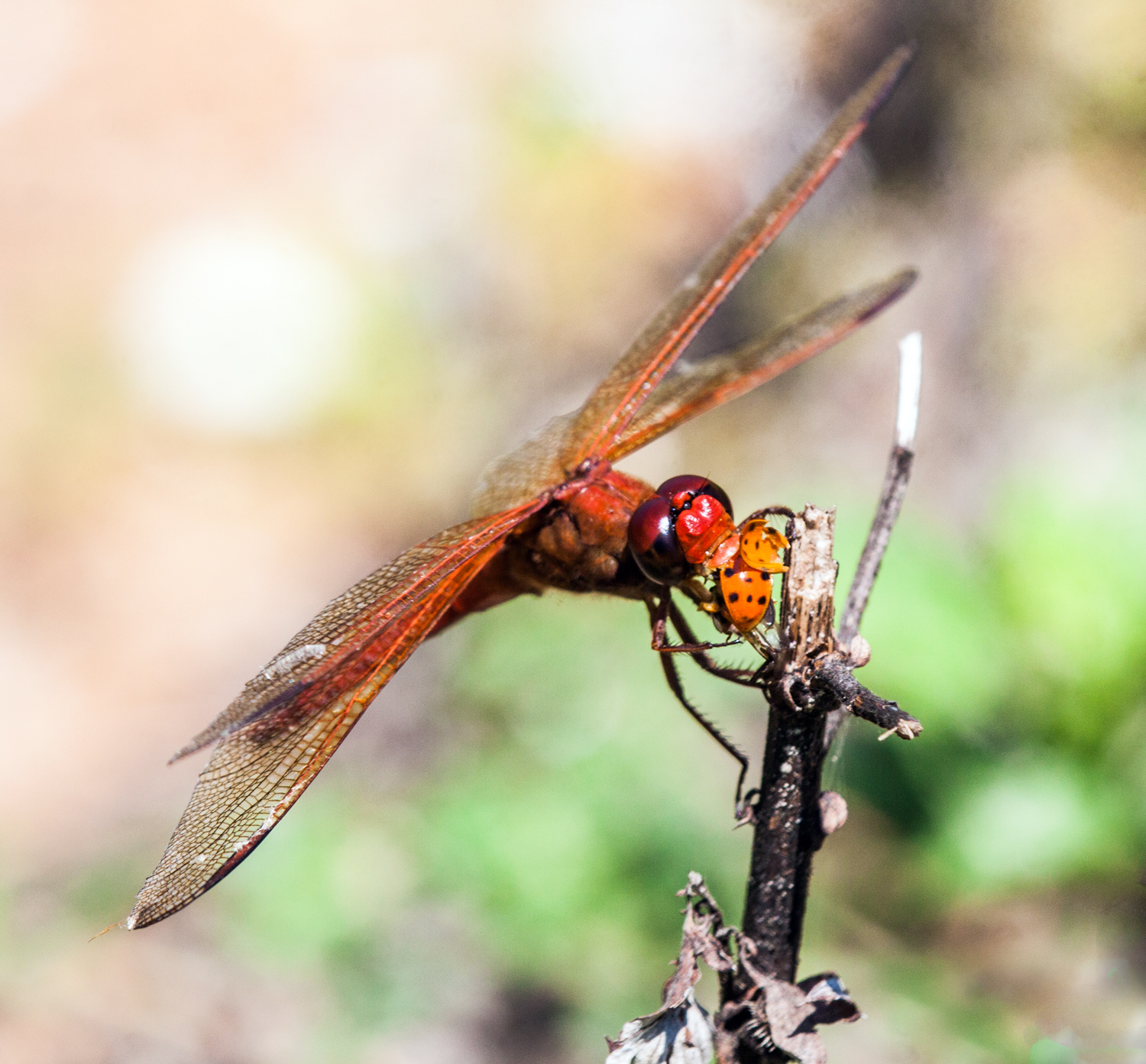
Dragonflies have to eat too, but I was a little shocked when I stumbled upon this Needham’s Skimmer dragonfly (Libellula needhami) munching on a ladybug or two yesterday at Occoquan Bay National Wildlife Refuge in Woodbridge, Virginia. Although I know that dragonflies are fearsome predators, I guess that I am not used to thinking of ladybugs as prey—they are usually depicted as cute, which is why they are seen so often on children’s clothing and furnishings.

dragonfly and ladybug

© Michael Q. Powell. All rights reserved

Read Full Post »

Two weeks ago, during the waning days of summer, I captured this image of a beautiful Needham’s Skimmer dragonfly (Libellula needhami) at Huntley Meadows Park, the local marshland where I do a lot of my shooting. The vivid red of its body made it really stand out—camouflage did not seem to be a viable option.

Although this dragonfly species is pretty common, I only saw a couple of them this season and this was the only one that I managed to photograph. The dragonfly was perched on a dried stalk in a field and it was tough to try to get any kind of clear background, particularly because I did not want to move too much and risk scaring away the dragonfly.

In these two images, you can see two slightly different approaches that I used. In the first one, I was not worried that there were some horizontal stalks in the background. In fact, I actually like the repetition of the horizontal line and don’t find them distracting, given how blurred they are. In the second image, I tried to get as uncluttered a background as I could, which isolates the dragonfly a little better. I tend to like the first image a little more, but I welcome any thoughts about which image you prefer.

Needham's SkimmerNeedham's Skimmer

© Michael Q. Powell. All rights reserved.


Read Full Post »
Older Posts »