Feeds:
Posts
Comments

Posts Tagged ‘male Northern Cardinal’

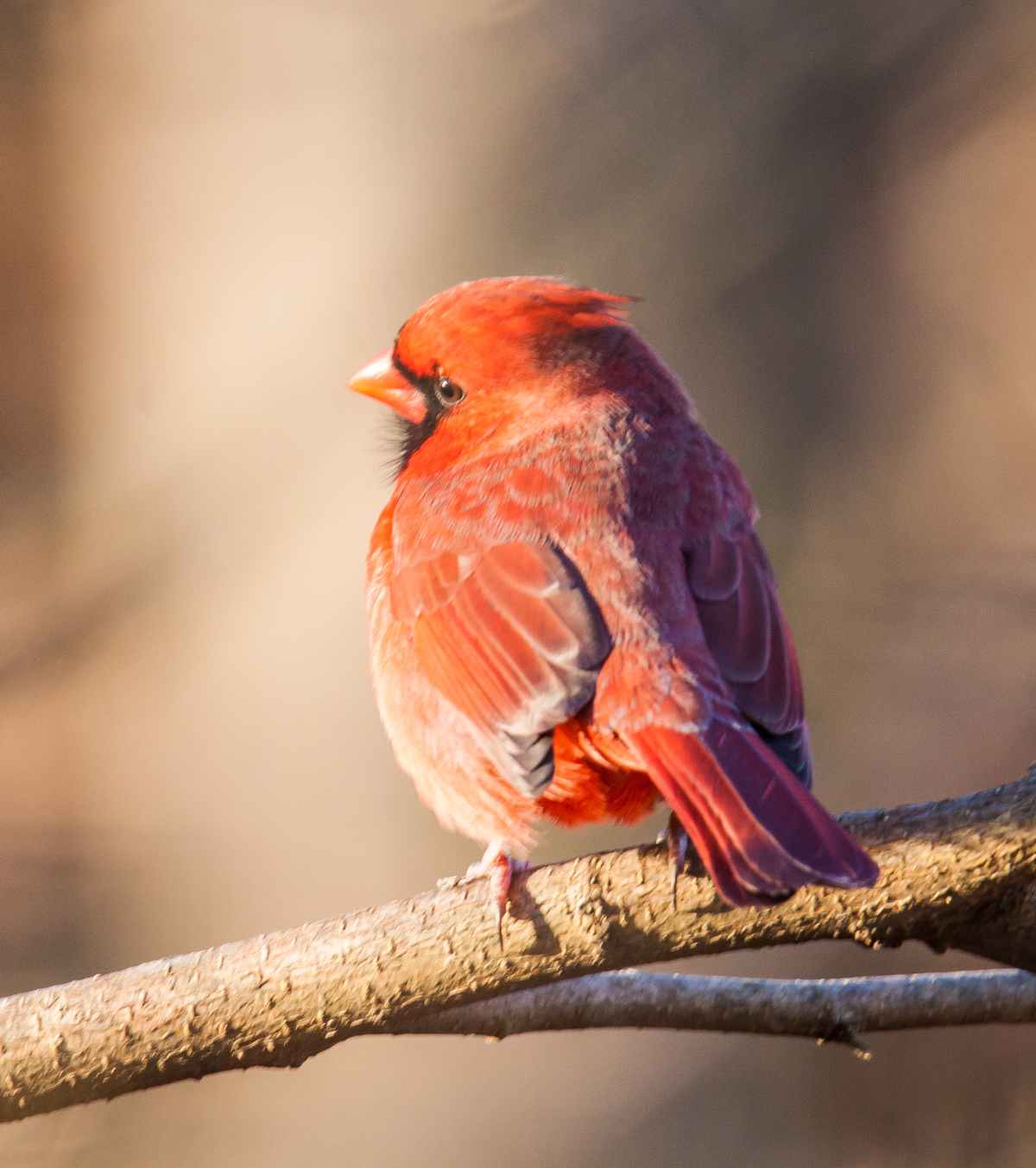
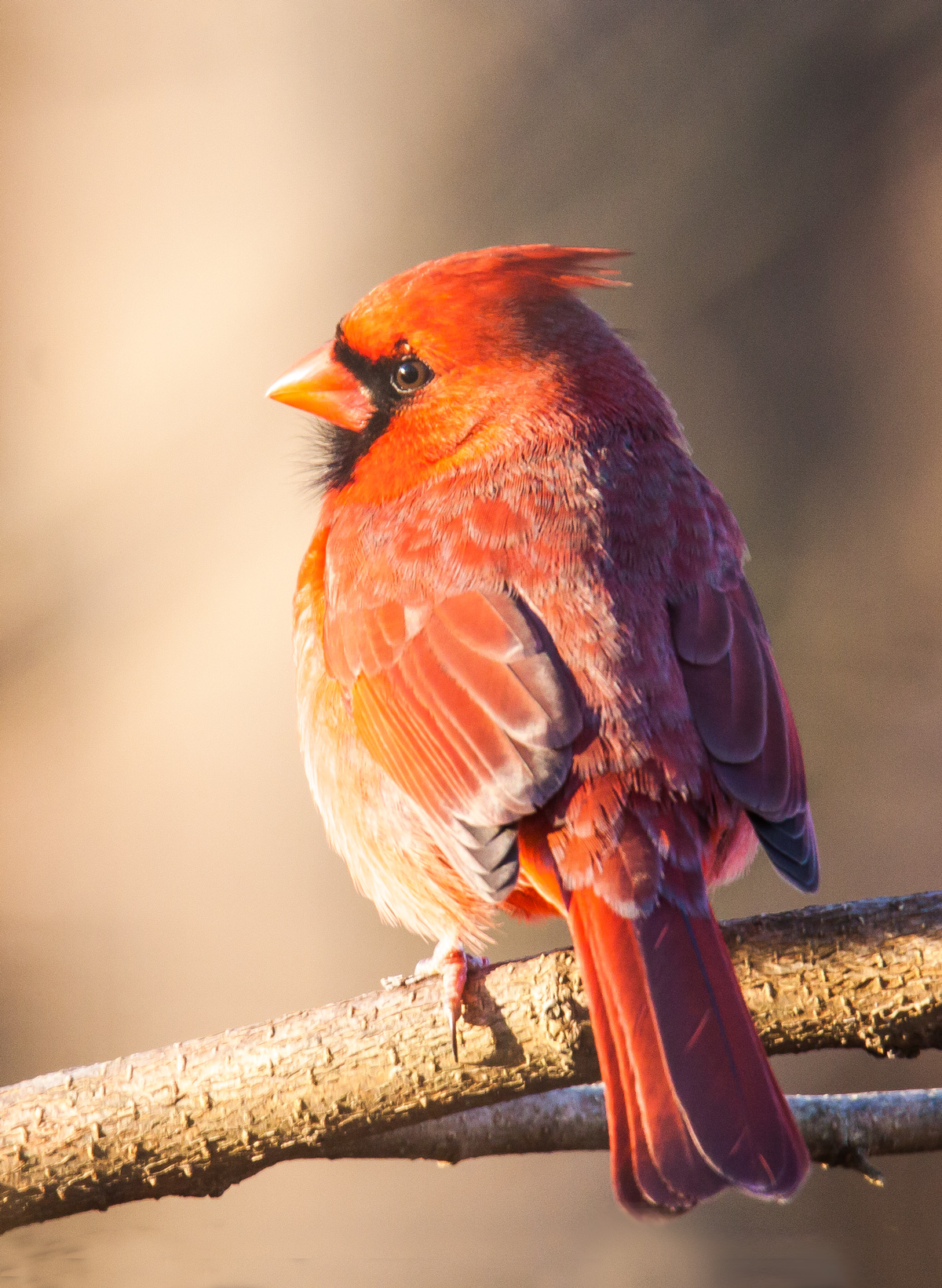
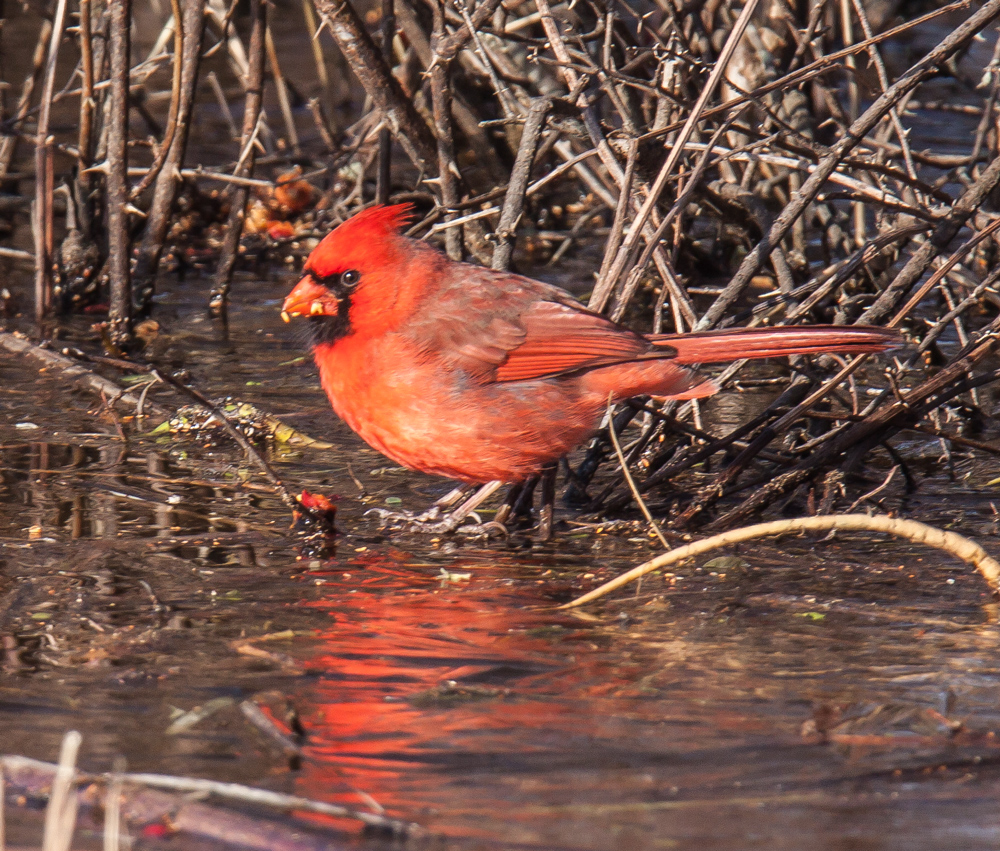
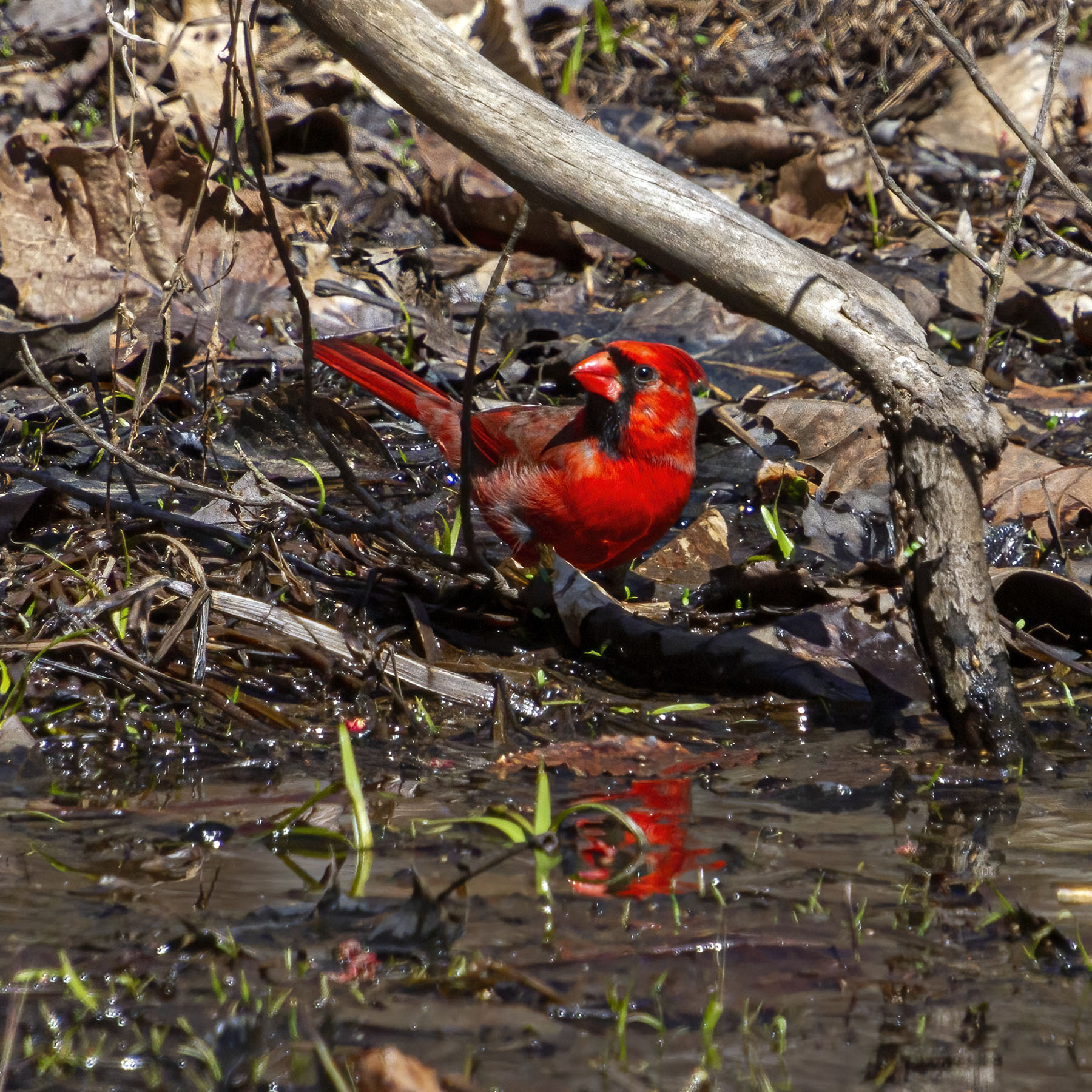
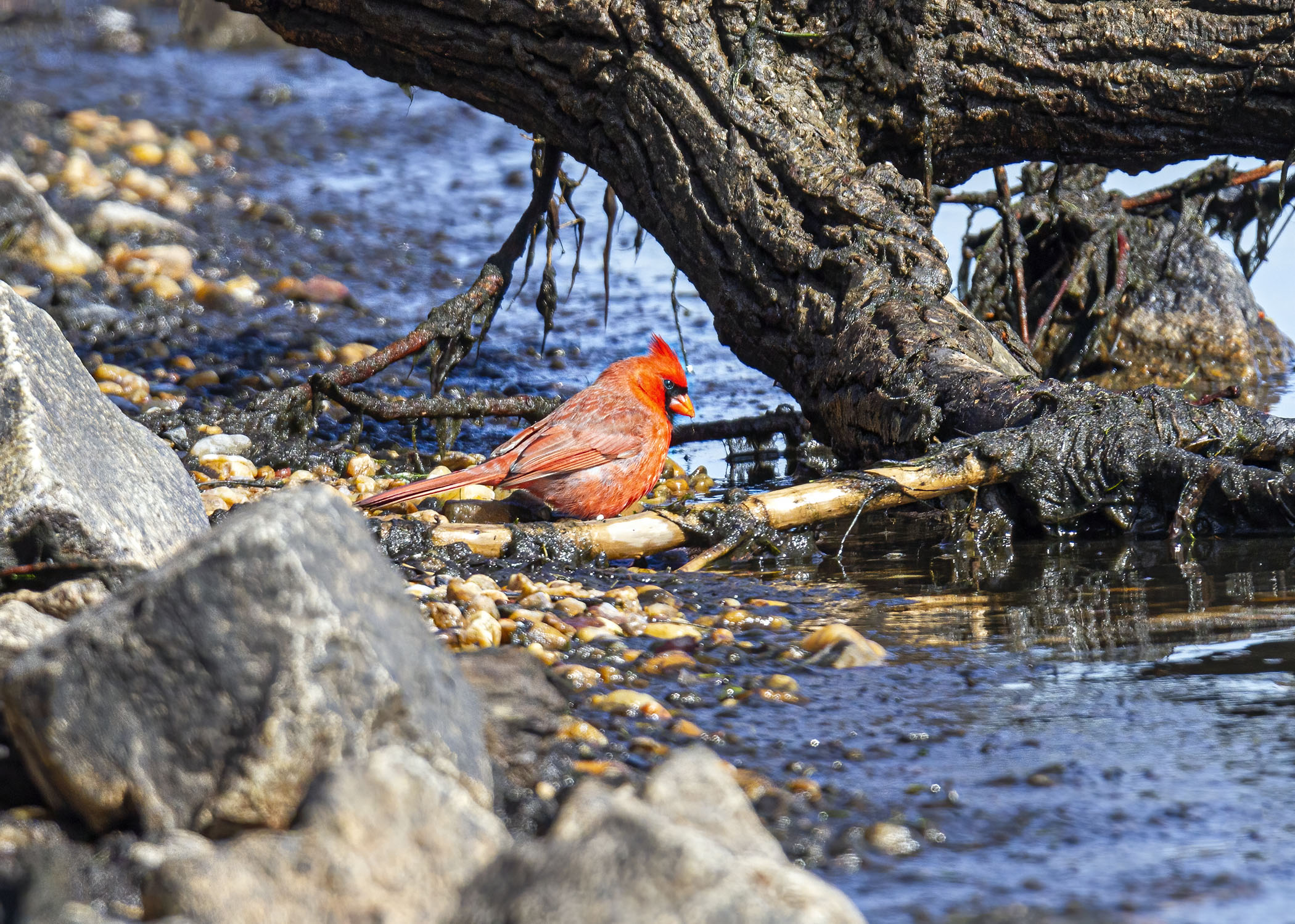
I spotted this male Northern Cardinal (Cardinalis cardinalis) as he was hopping around on the ground near a stream last week in Prince William County, Virginia. I was delighted when the cardinal bent over and drank briefly from the shallow water. In the first photo, I captured the moment when the cardinal lifted his head and dribbled a few drops of water from his mouth.

It seemed like the cardinal suddenly became aware of my presence and realized that my previous photo might not have been very flattering, which is usually the case when you snap a shot of someone eating or drinking. He then struck a profile pose for me to show his better side. Note the slight tilt of the head that helps to present a slimmer neck—clearly this cardinal had some previous experience as a model.

Northern Cardinal

Northern Cardinal

© Michael Q. Powell. All rights reserved.
Read Full Post »

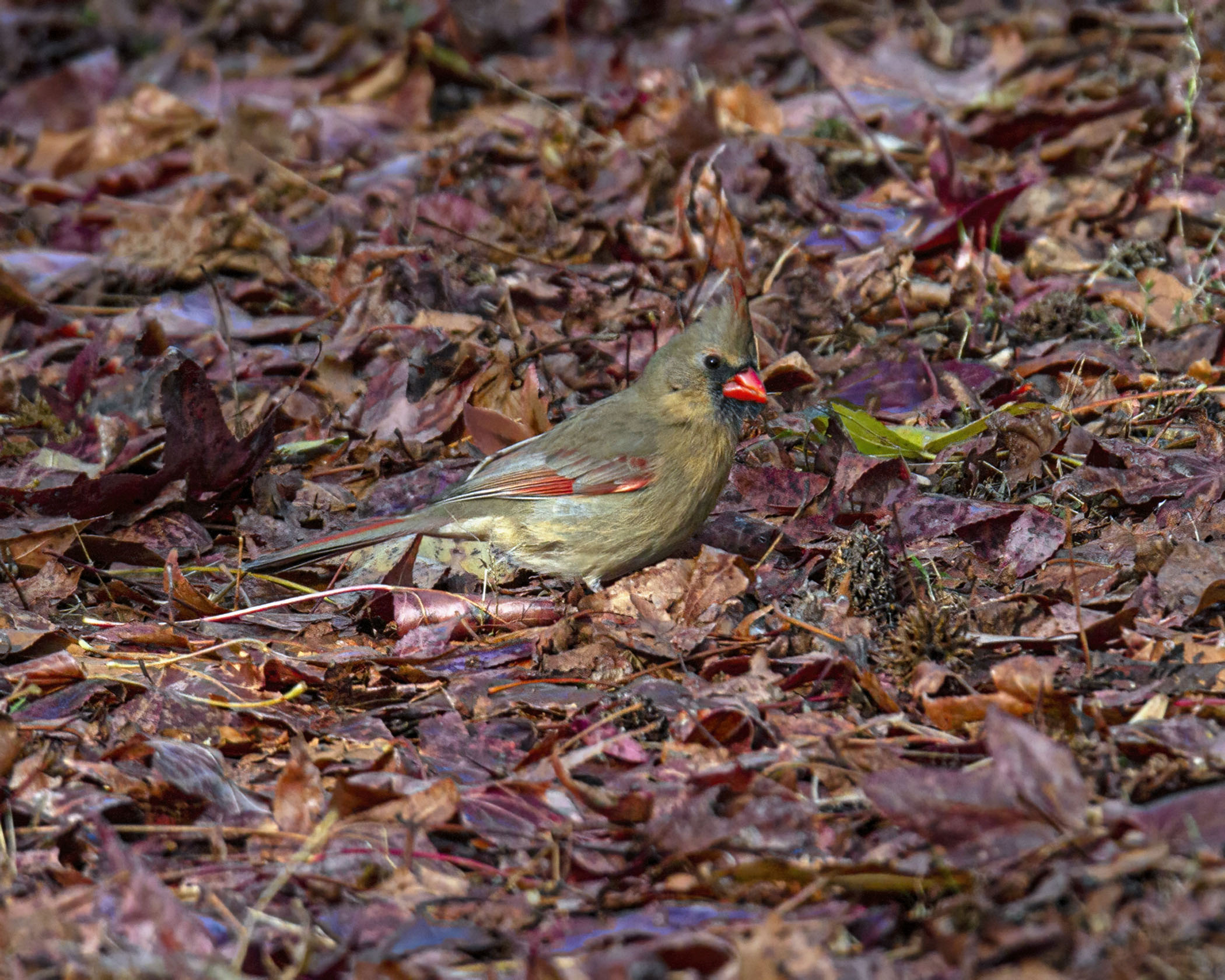
Most of the leaves have fallen from the trees by mid-December and the remaining birds have to work a lot harder to find food than in the warmer months. During a visit on Thursday to Occoquan Bay National Wildlife Refuge, I spotted a small group of Northern Cardinals (Cardinalis cardinalis) foraging among the colorful fallen leaves.

Unlike many other colorful birds that migrate out of our area, cardinals remain with us throughout the year, providing a pop of color in an often monochromatic winter landscape. Although the males, like the one in the final photo, are easier to spot, I often prefer the more subdued beauty of the females, like the one in the first photo.

female Northern Cardinal

Northern Cardinal

© Michael Q. Powell. All rights reserved.

Read Full Post »

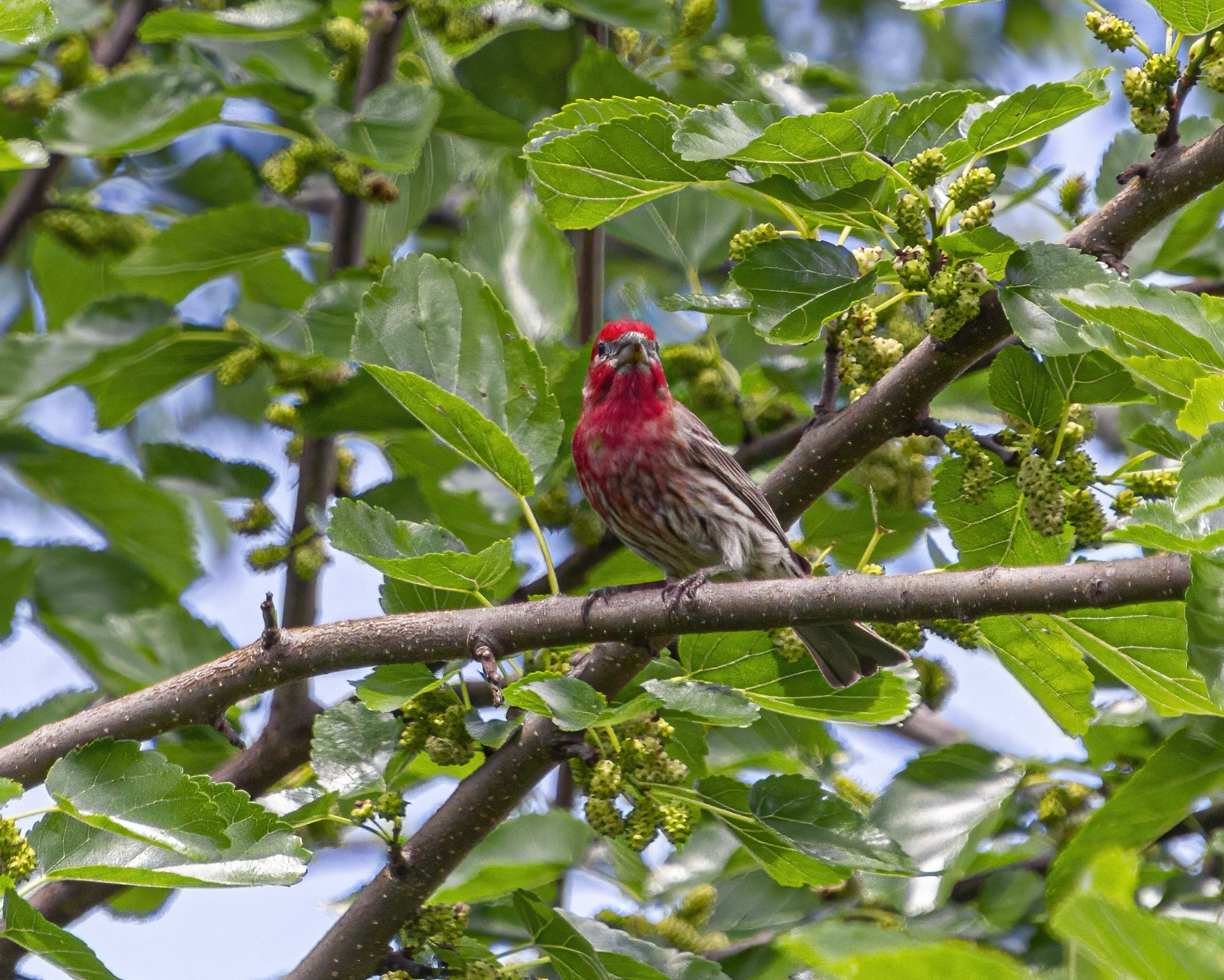
The bright red color of this male House Finch (Haemorhous mexicanus) really caught my eye last week at Occoquan Bay National Wildlife Refuge. For a split second I thought it was a cardinal until I looked more closely at the bird, it was clear that it was a different species.

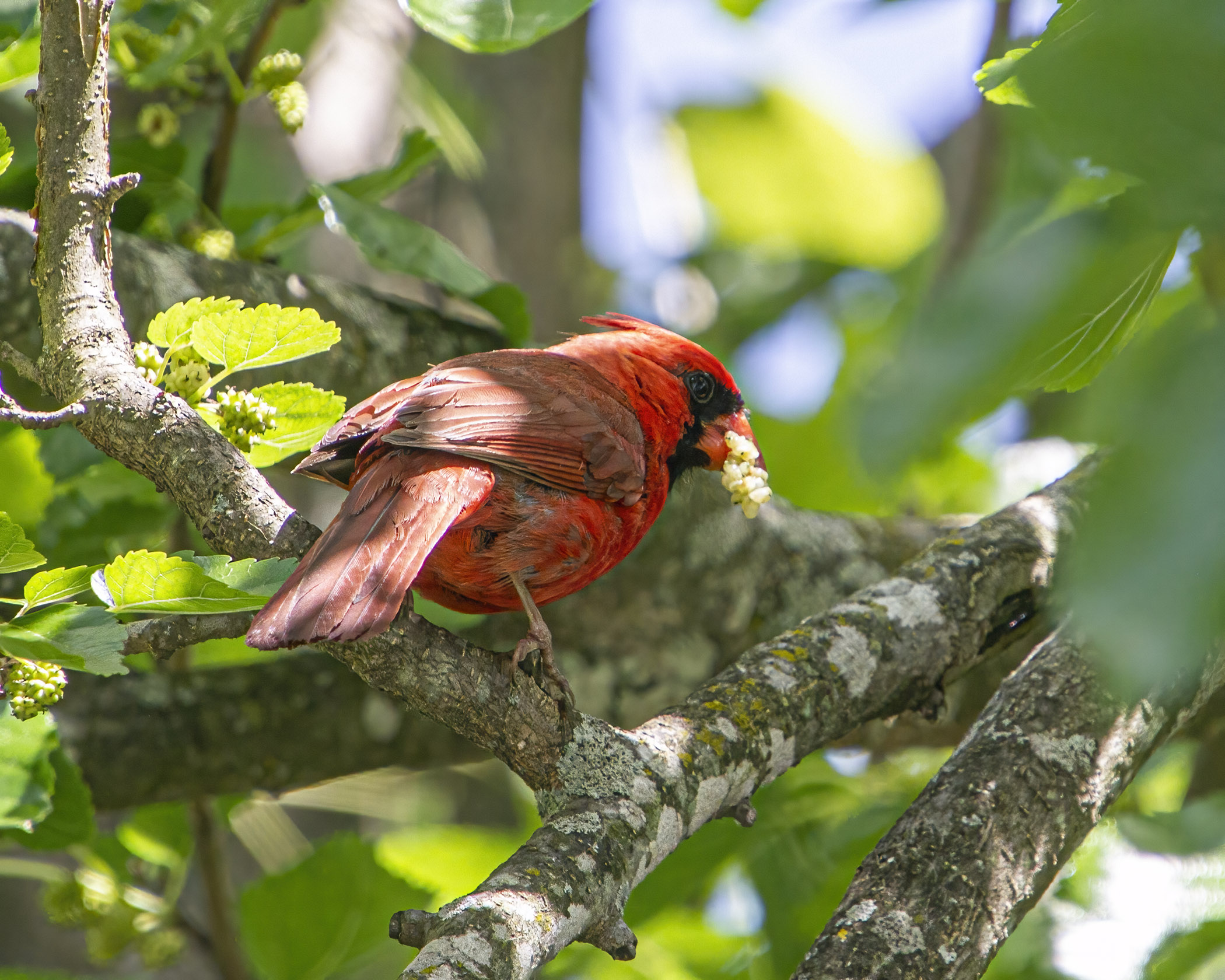
Later that same day I spotted an equally bright red male Northern Cardinal (Cardinalis cardinalis) that seemed quite pleased with whatever treat it had found. I think it may be plant material, but I can’t exclude the possibility that it is some kind of insect.

From a photography perspective, it is really helpful when a bird is this boldly colored and makes no effort to blend in with its surroundings, especially at this time of the year when there are so many leaves on the trees.

House Finch

Northern Cardinal

© Michael Q. Powell. All rights reserved.
Read Full Post »

Photography does not have to be complicated. Sometimes all it takes is a well-executed image of a common subject in a simple composition.

If I were working as a portrait photographer for humans, I could choose an appropriate backdrop and set up studio lighting. I could instruct subjects on poses and position them carefully, shooting a variety of poses so that I would have multiple shots from which to choose the best ones. If I did not like a particular expression in a shot, I could reshoot the portrait until both the client and I were happy.

Life is much different for a wildlife photographer. I have to work with the available light and environment. Subjects are often skittish and uncooperative. I often have only a single chance to get a shot and may not get a second chance.

I feel blessed when things work out and I am able to capture simple portraits, like this one of a male Northern Cardinal (Cardinalis cardinalis) that I photographed last Thursday at Occoquan Bay National Wildlife Refuge. I took multiple shots of this cardinal when I spotted his bright red feathers, but in almost every one of them, the cardinal was looking away. Finally, the cardinal looked toward me for a brief moment and I was able to get the shot.

It is certainly not a perfect shot, but it is a pleasing little portrait of this handsome bird and I am happy that I was able to capture the moment. For me, photography is primarily about capturing and sharing the beauty that surrounds us, a beauty that too often we ignore, because it is uncomplicated and unspectacular. As the old Shaker folk song reminds us, “Tis a gift to be simple.”

Northern Cardinal

© Michael Q. Powell. All rights reserved.
Read Full Post »

I am not sure exactly what this male Northern Cardinal (Cardinalis cardinalis) was doing on Thursday at Occoquan Bay National Wildlife Refuge when I captured this image. Perhaps he was trying to nibble on a bud on the branch on which he was perched—it was definitely too cold for there to be bugs out in the open. Whatever the case, I love the way that the cardinal extended his wings to maintain his balance.

The acrobatic moves of the cardinal and my shooting angle from below combined to distort the shape of his body, making it look almost cartoonish. All in all, this image makes me smile and I hope that it has the same effect on you.

Northern Cardinal

© Michael Q. Powell. All rights reserved.

Read Full Post »

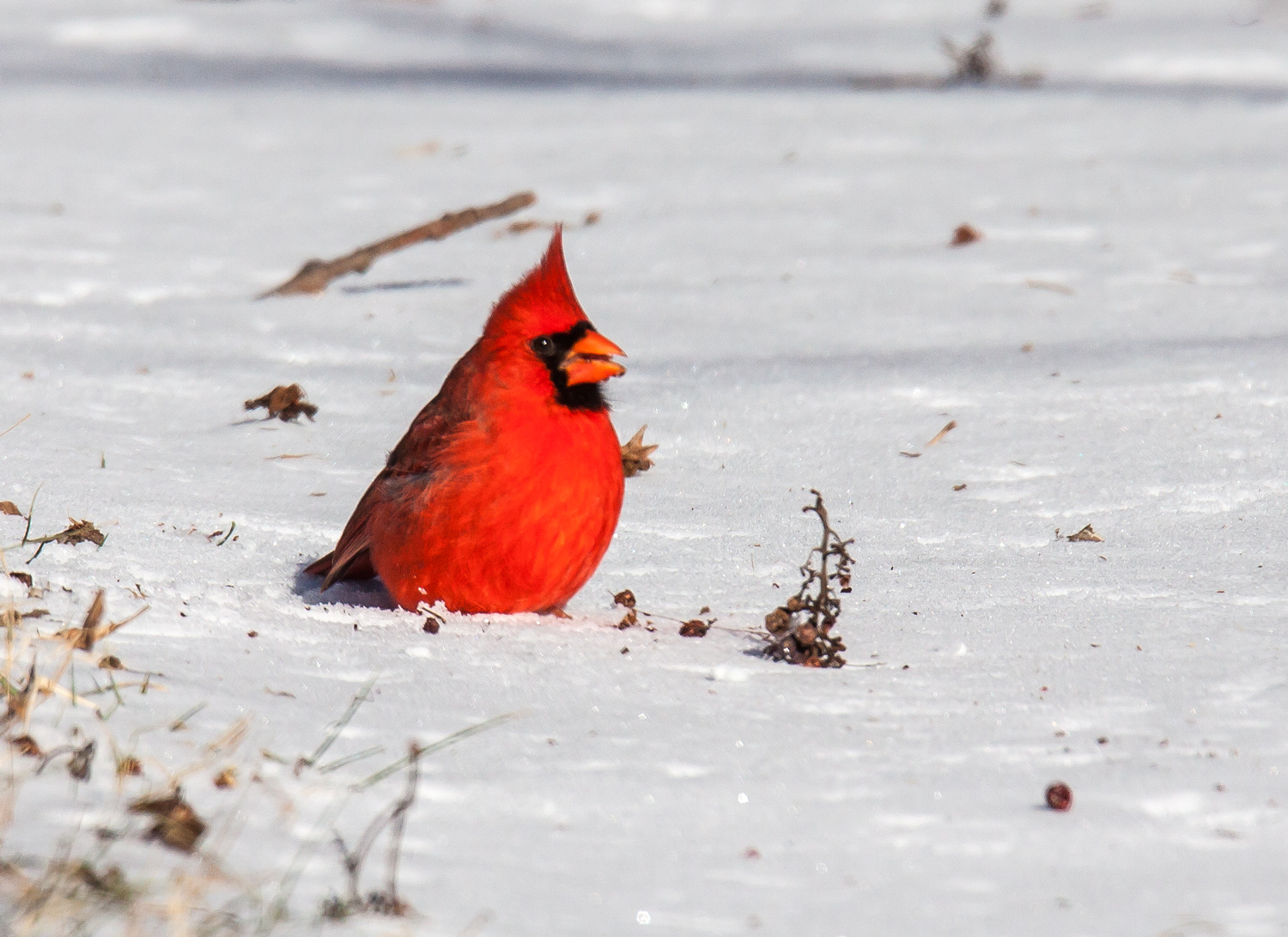
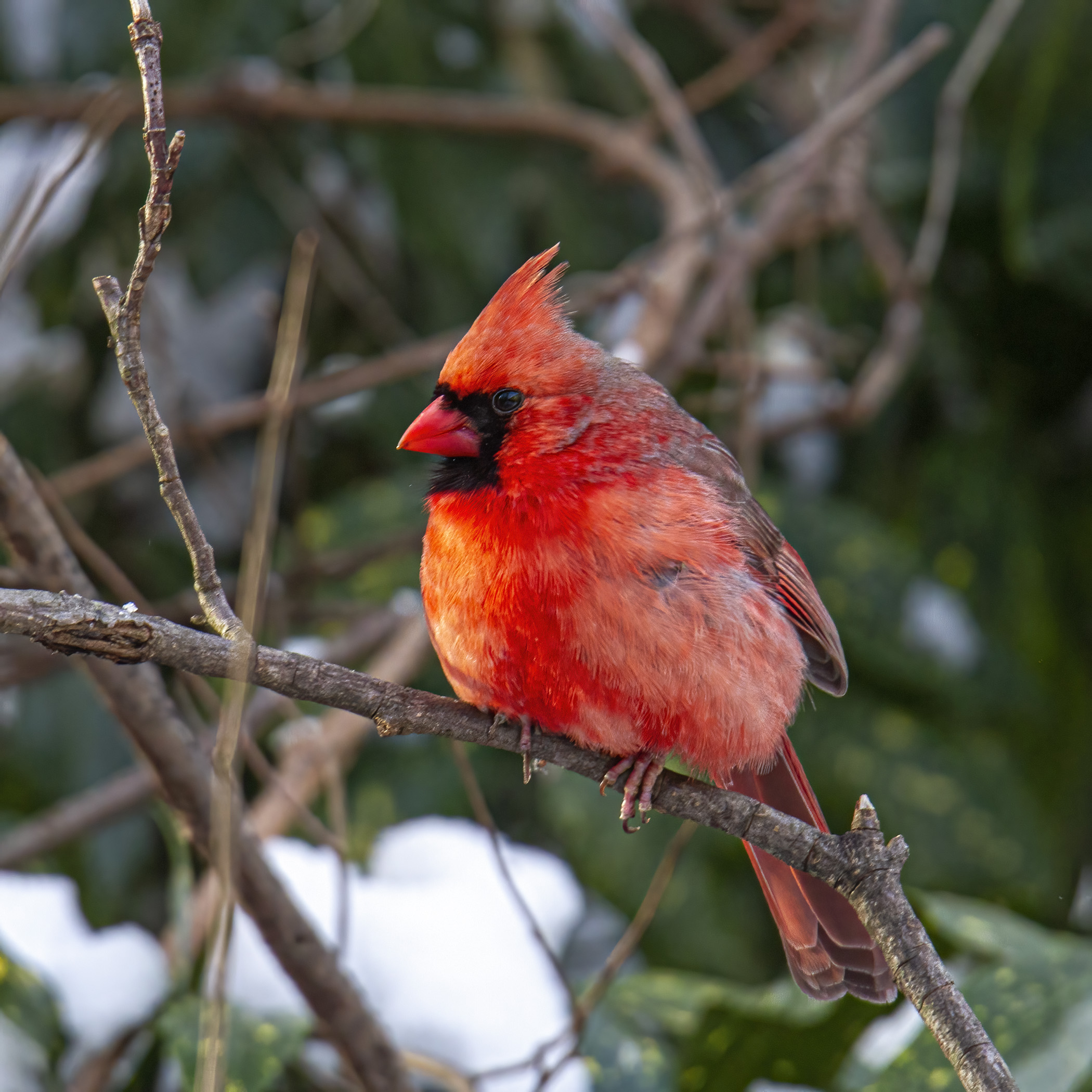
There is something iconic about a photo of a Northern Cardinal (Cardinalis cardinalis) in the snow and every time that we have a snow storm I try to capture images of these bright red birds. Fortunately I did not have to travel far to find some cardinals—I captured all three of these images in the suburban townhouse community in which I live.

Given the bright color their plumage, it is not hard to spot male cardinals, but they tend to be pretty active and don’t sit still for very long, so I had to react quickly when I managed to get an unobstructed view of one. I tried to frame my photos so there was at least a little bit of snow visible in the shot and more or less succeeded in doing so.

The weather forecasters predict that we will have some more snow tomorrow, so I will probably spend a little more time getting acquainted with my neighborhood birds this weekend.

Northern Cardinal

Northern Cardinal

Northern Cardinal

© Michael Q. Powell. All rights reserved.


Read Full Post »

An industrious male Northern Cardinal (Cardinalis cardinalis) was foraging for food last Saturday at Occoquan Bay National Wildlife Refuge and gave me a quick sidewards glance to determine if I was a potential threat. Deciding that I posed no danger, the cardinal resumed its search for food.

Cardinals are one of my favorite birds, especially during the winter season where the world turns mostly monochromatic. My spirits are always lifted when I see the bright red plumage of a male cardinal.

Northern Cardinal

© Michael Q. Powell. All rights reserved.

Read Full Post »

Luck often plays a role in my wildlife photography. This past Friday at Occoquan Bay National Wildlife Refuge, this male Northern Cardinal (Cardinalis cardinalis) was perched when I initially pressed the shutter release on my camera. A split second later, the cardinal took off and I captured this fun image as he flew right towards me.

I often shoot in short bursts, which helps explain how I managed to get this shot. The shutter speed was only 1/250 of a second and that is why the wings are blurred. Amazingly the head, which is the most important element in most wildlife shots, is in relatively sharp focus, especially considering the fact that I took the shot from a long distance away—my EXIF data indicate that I took the shot at 483mm, near the long end of my 150-600mm telephoto zoom lens.

Luck by itself, of course, does not guarantee good photos, nor does having expensive gear—I am fond of saying that patience and persistence are the most critical requirements for getting good shots. I have to be out as often as I can and remain constantly prepared to react appropriately to whatever fortunate circumstances in which I find myself. In that sense, I have to make my own luck.

Northern Cardinal

© Michael Q. Powell. All rights reserved.


Read Full Post »

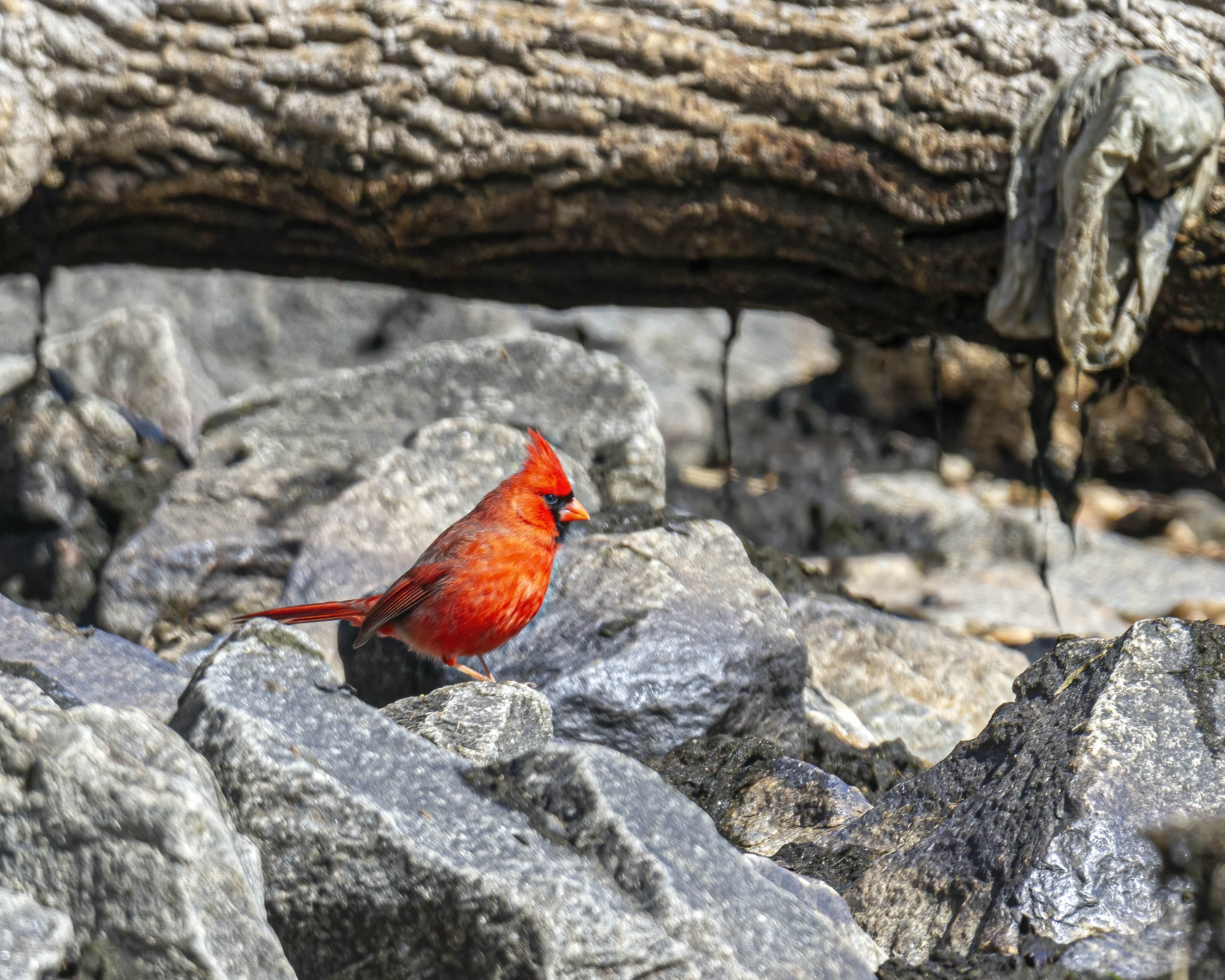
It is always fun to photograph familiar subjects in an unexpected environment. This past week I spotted a male Northern Cardinal (Cardinalis cardinalis) amidst the rocks and other debris at the edge of the water at Occoquan Bay National Wildlife Refuge rather than in the vegetation where I normally see cardinals.

I was delighted to be able to capture a series of images as the cardinal moved about on the rocks and eventually made his way to the water. He dipped his head to take a drink, but his face was completely hidden from view, so I was not able to capture that moment.

On the whole, though, I really like the balance I was able to achieve in showing both the primary subject and the environment in which I found him—the brightness of the cardinal’s red body definitely helped him to stand out from the somewhat cluttered background and foreground despite the fact that he filled only a small part of the frame.

Northern Cardinal

Northern Cardinal

Northern Cardinal

Northern Cardinal

© Michael Q. Powell. All rights reserved.
Read Full Post »

Some birds blend in so well with their surroundings that it is hard to spot them. That is definitely not the case with the male Northern Cardinal (Cardinalis cardinalis), whose bright red feathers announce his presence in even the most cluttered environment.

Last week at Occoquan Bay National Wildlife Refuge, I spotted this cardinal as he flew across the trail on which I was walking. Normally cardinals bury themselves in dense vegetation at ground level and it is tough to get a clear view of them. On this occasion, the cardinal perched on a fallen branch and briefly posed for me.

The first two images show off the cardinal’s beautiful red feathers really well, but the final photo is probably my favorite of the three. I love the way that the cardinal cocked his head to the side as he looked right at me—my dog used to look at me sometimes in the same pose with a similar mixture of puzzlement, curiosity, and amusement.

Northern Cardinal

Northern Cardinal

Northern Cardinal

© Michael Q. Powell. All rights reserved.
 

Read Full Post »

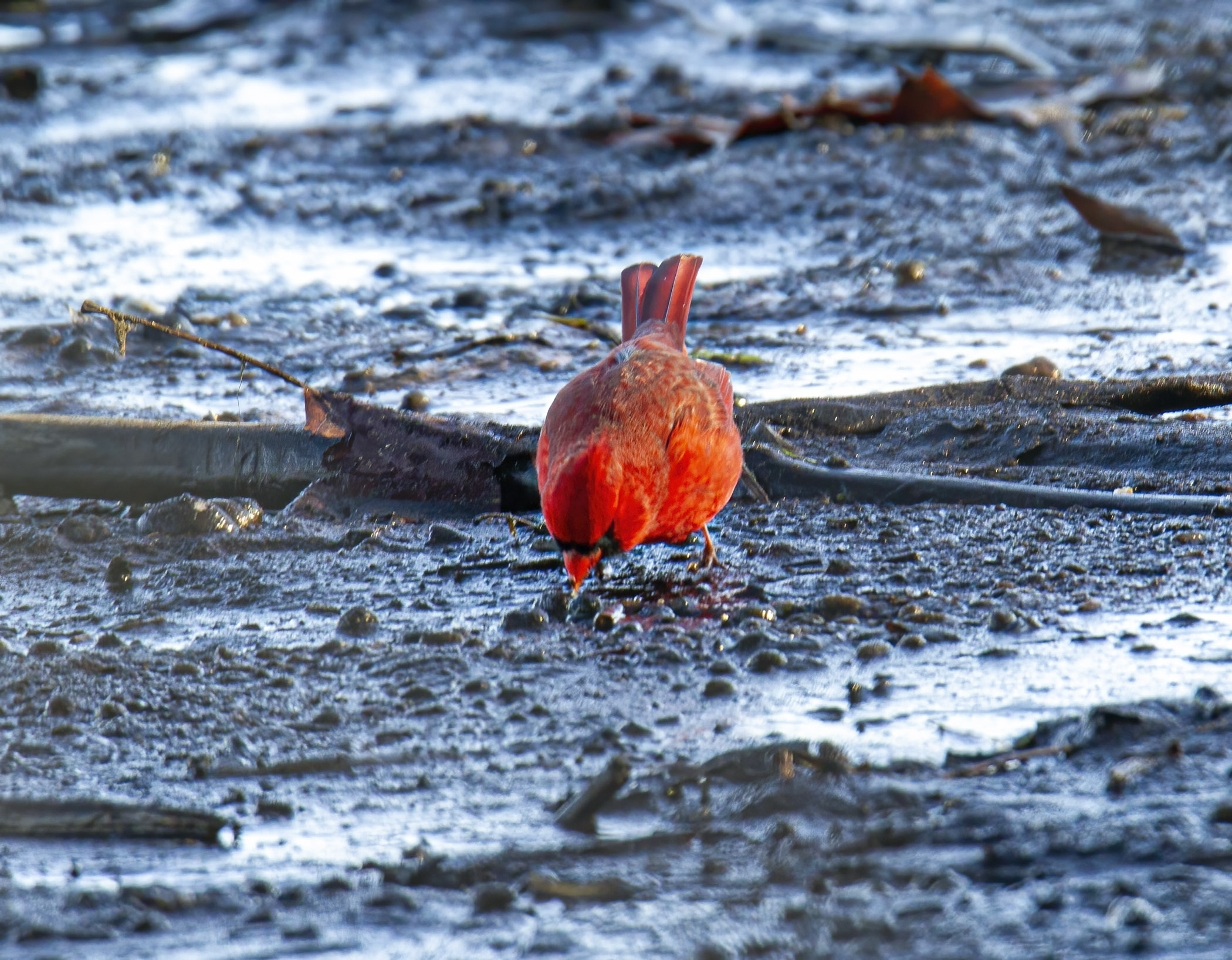
I love the quirky, almost abstract feel of this image of a Northern Cardinal (Cardinalis cardinalis) that I captured last Tuesday at Occoquan Bay National Wildlife Refuge. The cardinal was foraging at water’s edge in the debris left behind by the receding tide.

One of the things that I most like about this shot is the contrast between the warmth of the color of the cardinal and the cool colors of the background. That contrast really helps the cardinal to “pop,” although male cardinals stand out in almost any circumstance during the winter, when gray tones seem to dominate and bright colors are exceedingly rare.

Northern Cardinal

© Michael Q. Powell. All rights reserved.

Read Full Post »

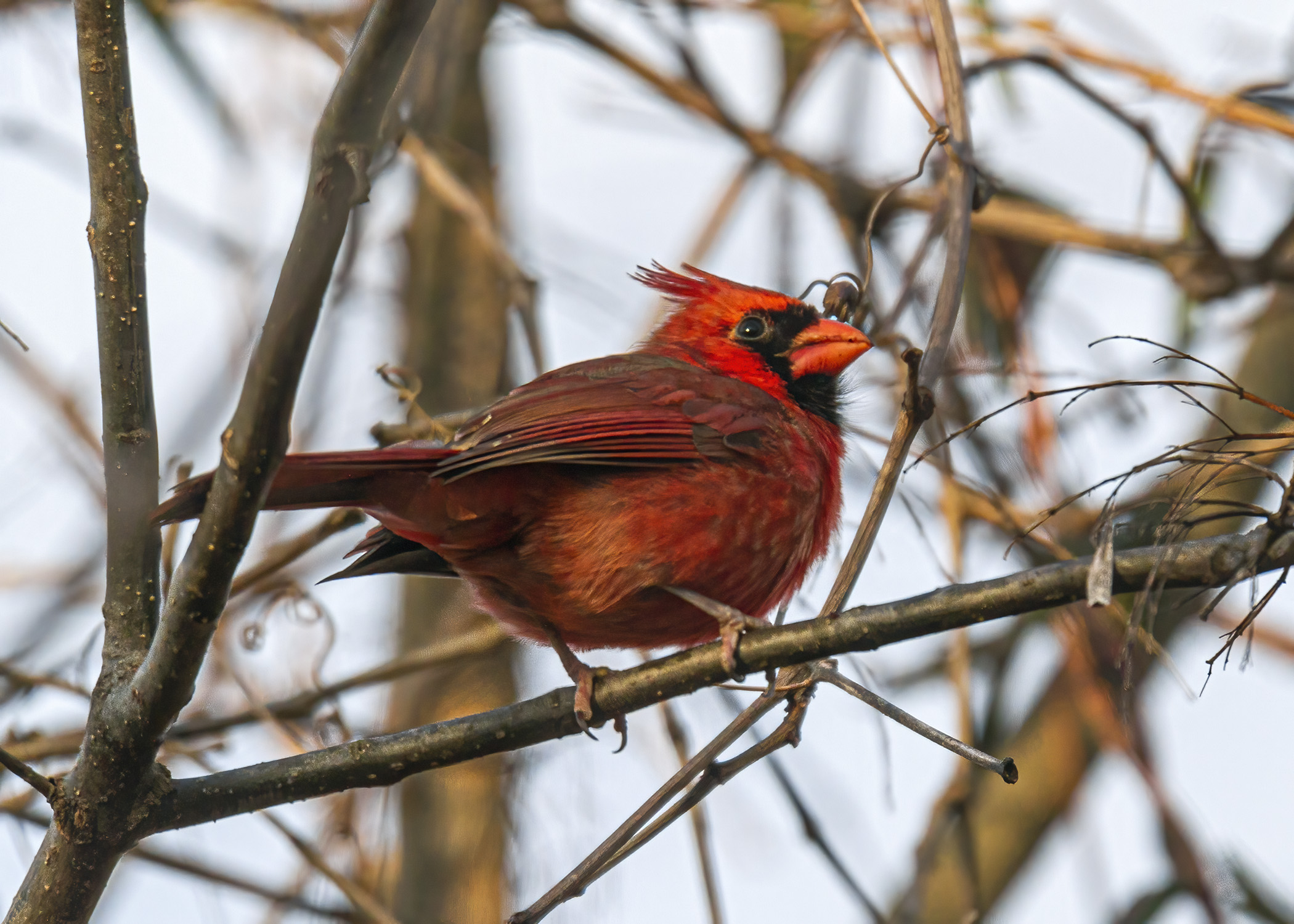
When the weather gets really cold, many small birds fluff up their feathers to try to retain as much of their body heat as possible. As a result, a lot of them look rounder than usual, like this handsome male Northern Cardinal (Cardinalis cardinalis) that I spotted last week at Occoquan Bay National Wildlife Refuge.

Some birds have duller plumage during non-breeding times of the year, like the winter, but male cardinals shine bright throughout the year. Even though they often forage in deep vegetation, it is pretty easy to spot a male Northern Cardinal, though it is often a challenge to get a clear shot of one.

I had been following this one for quite a while when he finally popped out into the open and perched on a branch. Although he was facing me when I took the shot, he seemed to be keeping his eye on something to the side. If you look closely at the time of the little branch to the side of the cardinal, you may notice that it has a pointed red tip, an almost perfect match for the cardinal’s crested head.

Northern Cardinal

© Michael Q. Powell. All rights reserved.


Read Full Post »

There are signs that spring is on the way, but progress is slow and the bright spring blossoms and flowers have not yet appeared. The grey of winter continue to dominate, so it is especially energizing to spot brilliant colors, like those of this male Northern Cardinal (Cardinalis cardinalis) at Occoquan Bay National Wildlife Refuge.

I am more than ready for the return of spring as February comes to a close. It won’t be long, I am sure, before I see my first crocuses and daffodils—I am keeping my eyes open for them.

Northern Cardinal

© Michael Q. Powell. All rights reserved.
Read Full Post »

Is it better to stand out and be seen or to blend in and remain invisible? As with so many life questions, the answer to my simple query is complicated and depends on your personality, priorities, and perspectives.

The male Northern Cardinal (Cardinalis cardinalis) takes a bold approach—with his brilliant red plumage, it is almost impossible for him to hide. He want to be seen and often perches in the open. Perhaps that helps him to attract a mate, but does it also make him more visible to those that could do him harm? Is there a risk associated with being bold?

The sparrow in the second image, which I think is a Song Sparrow (Melospiza melodia), takes an almost opposite approach—you almost can’t see it, especially when it is buried in the underbrush. Its nondescript coloration allows it to blend in? Does this bird feel more vulnerable? Is self-protection its primary motivation? Must it rely on non-visual factors, like its singing, to stand out?

What about you? How do you live your life? For most of my life, I have tended to favor conformity and security—I lived like the sparrow, fearful of standing out. Over the last decade of so, however, I have increasingly decided that the opinions of others don’t matter much anymore. I am now striving to live my life in an unapologetically authentic way and I am much more willing to put myself out there as visibly as the male cardinal.

Be bold today and be yourself. As the old proverb says, “you might as well be yourself—everyone else is already taken.”

Northern Cardinal

Song Sparrow

© Michael Q. Powell. All rights reserved.
 

Read Full Post »

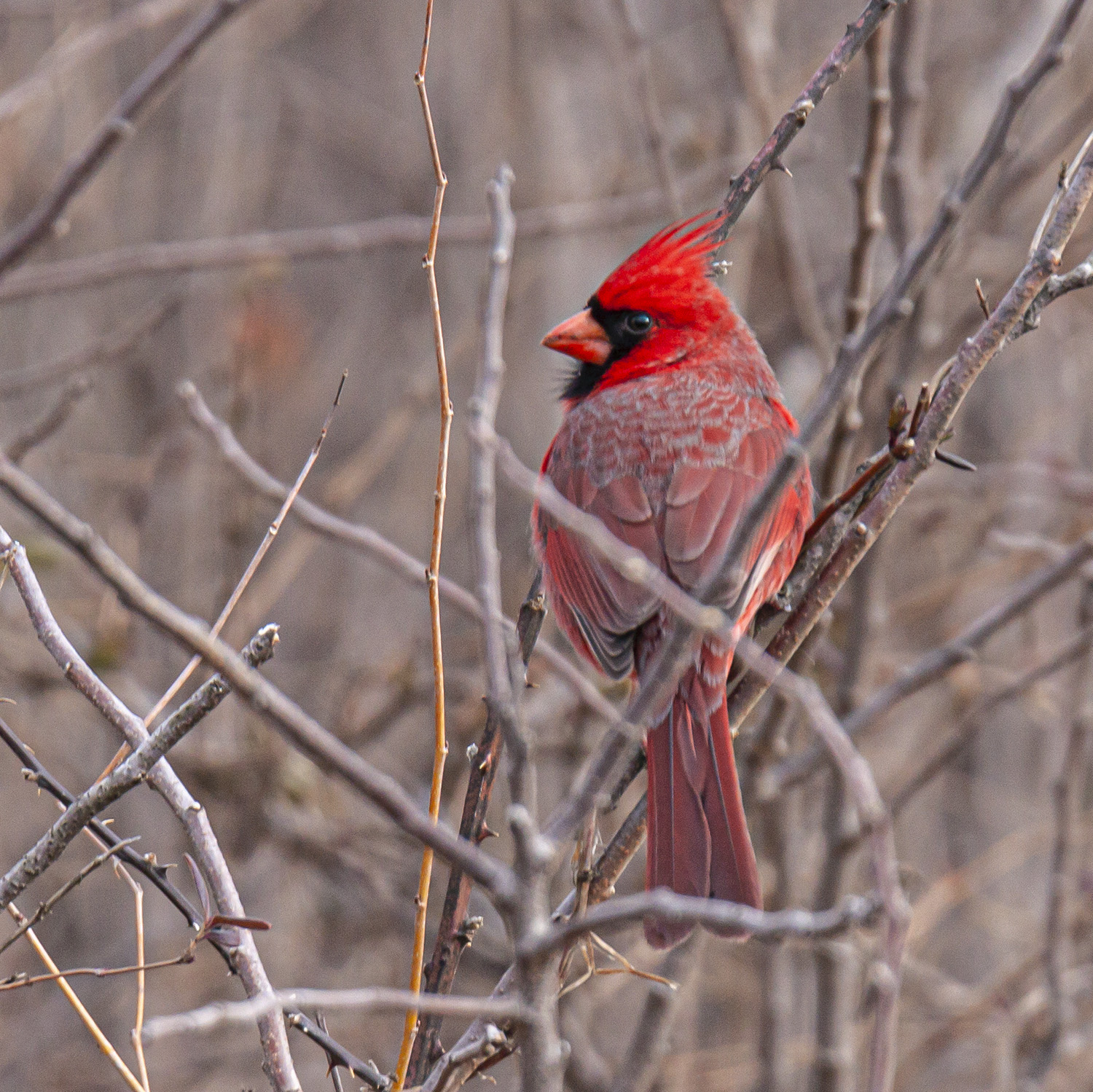
I couldn’t help but feel that this male Northern Cardinal (Cardinalis cardinalis) was irritated with me when he glared sideways at me as he momentarily ceased his pecking at water’s edge on Tuesday at Occoquan Bay National Wildlife Refuge. On the other hand, he might have simply been trying to pose in a way that minimized his double chin, about which he was very self-conscious. Have I committed a cardinal sin in my initial assessment?

What do you think? Have a wonderful weekend.

Northern Cardinal

© Michael Q. Powell. All rights reserved.

Read Full Post »

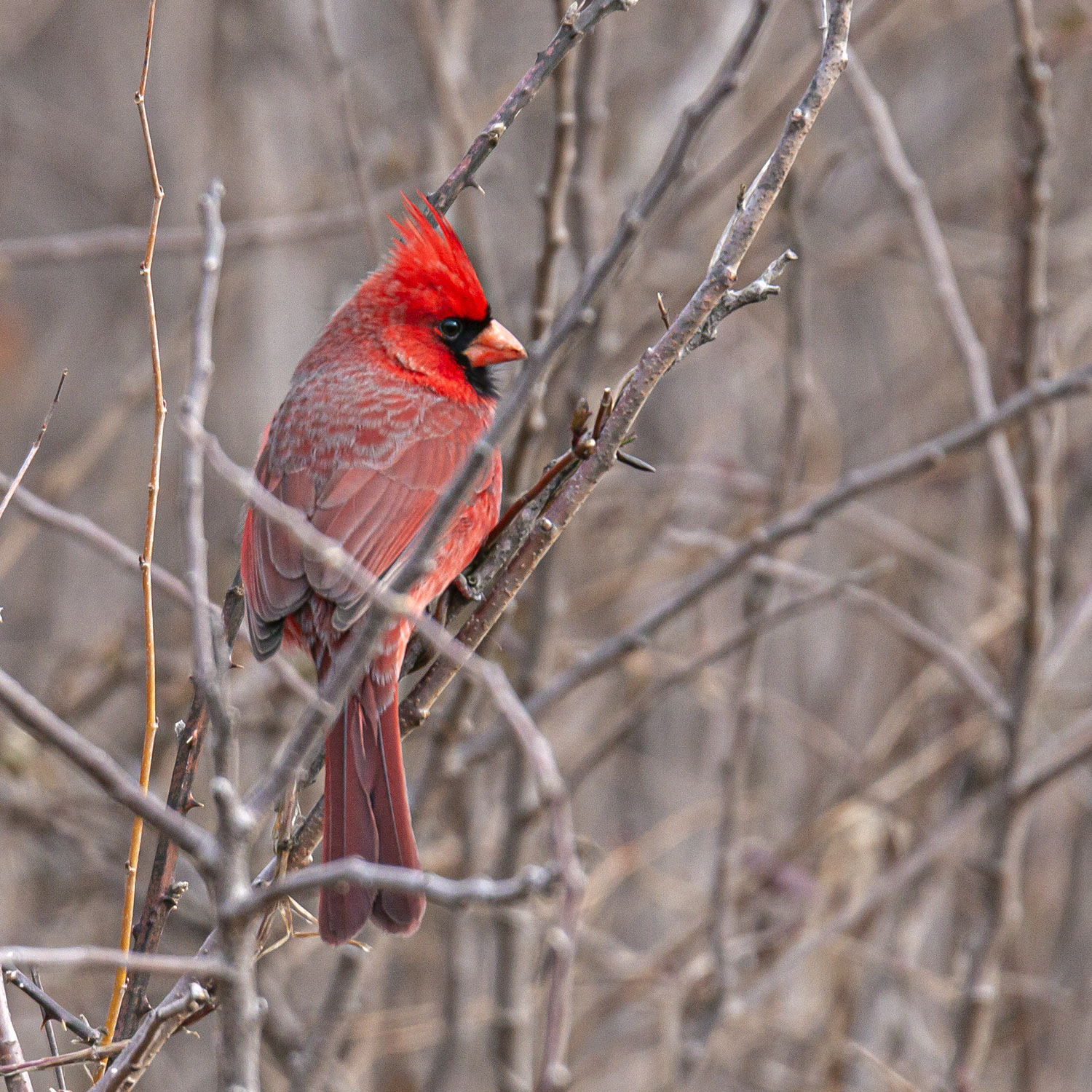
As the days become colder and the landscape turns monochromatic, I am always happy to spot the bright red plumage of a male Northern Cardinal (Cardinalis cardinalis), like this one that I photographed on Monday at Occoquan Bay National Wildlife Refuge.

Northern Cardinal

© Michael Q. Powell. All rights reserved.

Read Full Post »

Do male Northern Cardinals (Cardinalis cardinalis) know that they are bright red in color? When I spooked one of them yesterday morning at Occoquan Bay National Wildlife Refuge, he flew to a nearby field and perched in the midst of a mass of vegetation.

Did he think that he was hidden from me? Obviously he was not—his red coloration makes it almost impossible for him to blend in. I couldn’t help but think of a quotation that is attributed to Dr. Seuss, “Why fit in when you were born to stand out?” That’s probably a good question for all of us—as you can probably guess, I am somewhat of a non-conformist.


Northern Cardinal

Northern Cardinal

© Michael Q. Powell. All rights reserved.

Read Full Post »

Last month I received a curious question from Cindy Dyer, my good friend and photography mentor—she asked me if I had any good winter images. In addition to being an amazing photographer, Cindy works as a graphic designer. The editor with whom she works on Hearing Life Magazine, the official magazine of the Hearing Loss Association of America, wanted a winter-related full-page original image for the January/February 2020 issue.

She knew that she did not have many snow images, but figured that I would. I gave her some options, and she chose this shot of a male Northern Cardinal (Cardinalis cardinalis) that I photographed in my neighborhood after a snowstorm last January. The editor loved this image as cardinals hold special significance to her—her late sister loved them—and added the quotation from Vincent Van Gogh, one of my favorite artists.

I was curious about the context of the quotation and learned from vangoghletters.org that it was from a letter that Vincent Van Gogh wrote to his brother Theo from London in January 1874. Here is the paragraph of that letter than contains the quotation, “Things are going well for me here, I have a wonderful home and it’s a great pleasure for me to observe London and the English way of life and the English themselves, and I also have nature and art and poetry, and if that isn’t enough, what is?” As I read the letter in its entirety, I was equally struck by Van Gogh’s commentary about nature and art, “Always continue walking a lot and loving nature, for that’s the real way to learn to understand art better and better. Painters understand nature and love it, and teach us to see.”

I am always thrilled to see one of my images in print and I was excited yesterday when I finally received a printed copy of the magazine. One of my goals this year is to have more of my photos printed—I have a few of my favorites hanging on the wall already, but still have room for more of them. If you are interested in seeing the original posting in which this image appeared, click on this link to Cardinal in the snow.


Northern Cardinal

© Michael Q. Powell. All rights reserved.

Read Full Post »

It is normally hard for a male Northern Cardinal (Cardinalis cardinalis) to camouflage itself, but it seemed to blend in pretty well with the brilliant red leaves of these sumac plants last week at Occoquan Bay National Wildlife Refuge.

Northern Cardinal

© Michael Q. Powell. All rights reserved.
 

Read Full Post »

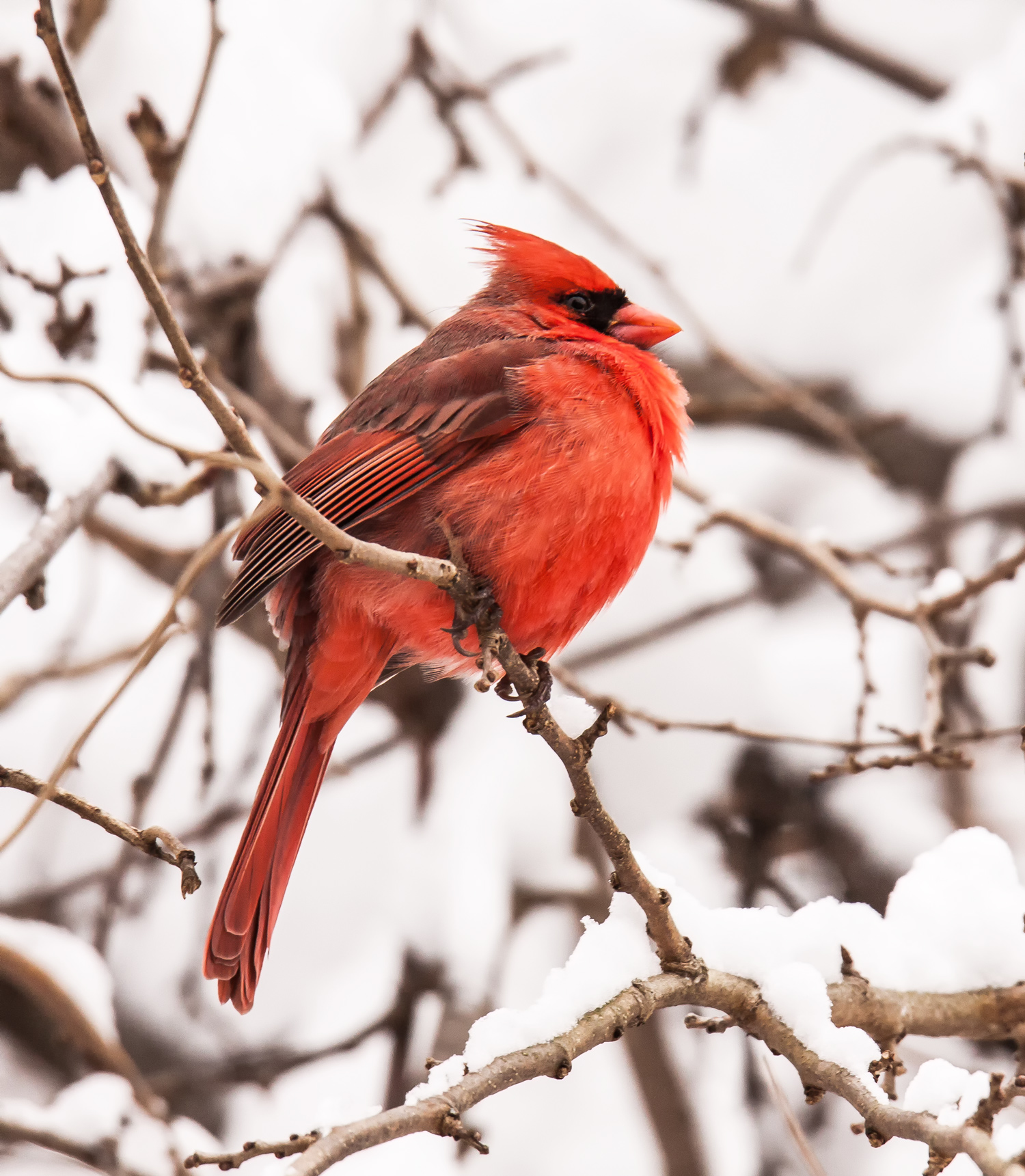
Images of a bright red cardinal in the brilliant white snow—some might view such shots as a bit cliché, but I view them instead as iconic. I ventured out into my neighborhood earlier this week after the snow had stopped falling and was thrilled to find a small group of Northern Cardinals (Cardinalis cardinalis). They spent most of their time buried in the branches, but eventually I was able to capture some unobstructed images of some male cardinals.

Although I like the details of the second shot, the first shot really draws me in by presenting a better depiction of the snowy environment. In some parts of the country this is a typical winter scene, but here in Northern Virginia, this is the biggest snow storm we have had since 2016, so it was pretty unusual to have this kind of photo opportunity.

Northern Cardinal

Northern Cardinal

© Michael Q. Powell. All rights reserved.

Read Full Post »

I love male Northern Cardinals in the winter. They add such a wonderful pop of bright color on a cloudy day, like yesterday when I took this shot, or on a snowy day like today (when I hope to see one in my neighborhood).

I spotted this Northern Cardinal (Cardinalis cardinalis) while exploring Occoquan Bay National Wildlife Refuge, my current favorite spot for walking about with my camera. We have already had about 6 inches (10 cm) of snow and more is falling, so I probably will not make it out of the neighborhood today. The streets are not yet clear and people in this area tend to drive even more crazily than normal when there is snow.

I took a number of shots of the cardinal while he was perched in a distant tree. Although he remained relatively stationary, he kept changing his tail position, so I decided to include shots with different “poses.”

Northern cardinal

Northern Cardinal

Northern Cardinal

© Michael Q. Powell. All rights reserved.
Read Full Post »

Sunshine and bright colors have been in short supply during the month of November. We have already broken the all-time record for rainfall in November in our area and will break the record for rainfall in a year if we have one more inch (25mm) of rain by 31 December.

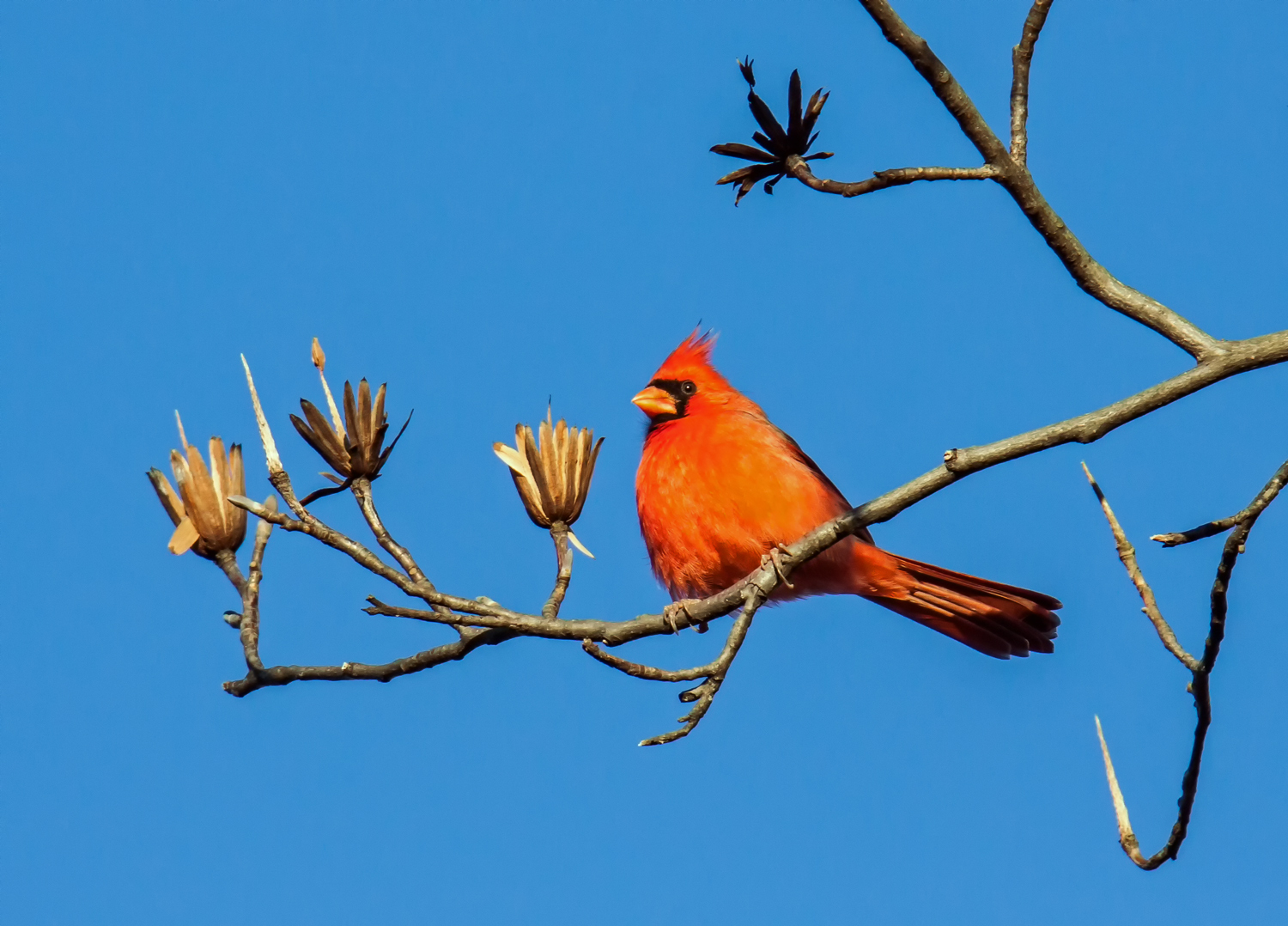
I was therefore absolutely thrilled when I spotted this bright red male Northern Cardinal (Cardinalis cardinalis) high in a tree at Occoquan Bay National Wildlife Refuge earlier this week. Unlike so many other birds that try to blend in with their surroundings, the cardinal seems bold and self-assured—it is not at all hard to spot them, though they often bury themselves in the middle of bushes, so getting an unobstructed shot can be quite a challenge.

Comparatively speaking, this cardinal was cooperative and posed for a short while before finally taking off. His head was in constant motion, but eventually I was able to capture an image with the head in a decent position. Even with human subjects, I find it tough to shoot a portrait in which the head and eyes are in a natural and pleasing pose.

Northern Cardinal

© Michael Q. Powell. All rights reserved.

Read Full Post »

I never get tired of taking photos of ordinary birds, like this male Northern Cardinal (Cardinalis cardinalis) that I spotted yesterday Initially the cardinal turned his head slight and peeked at me over his shoulder.  Eventually he ended up giving me a better view, though it did seem like he was either shy or coy.

Northern Cardinal

Northern Cardinal

© Michael Q. Powell. All rights reserved.

Read Full Post »

As this male Northern Cardinal (Cardinalis cardinalis) stared at me Monday from within a bush, I couldn’t help but wonder if he thought he was camouflaged. It is hard to hide that bright red color.

Northern Cardinal

© Michael Q. Powell. All rights reserved.

Read Full Post »

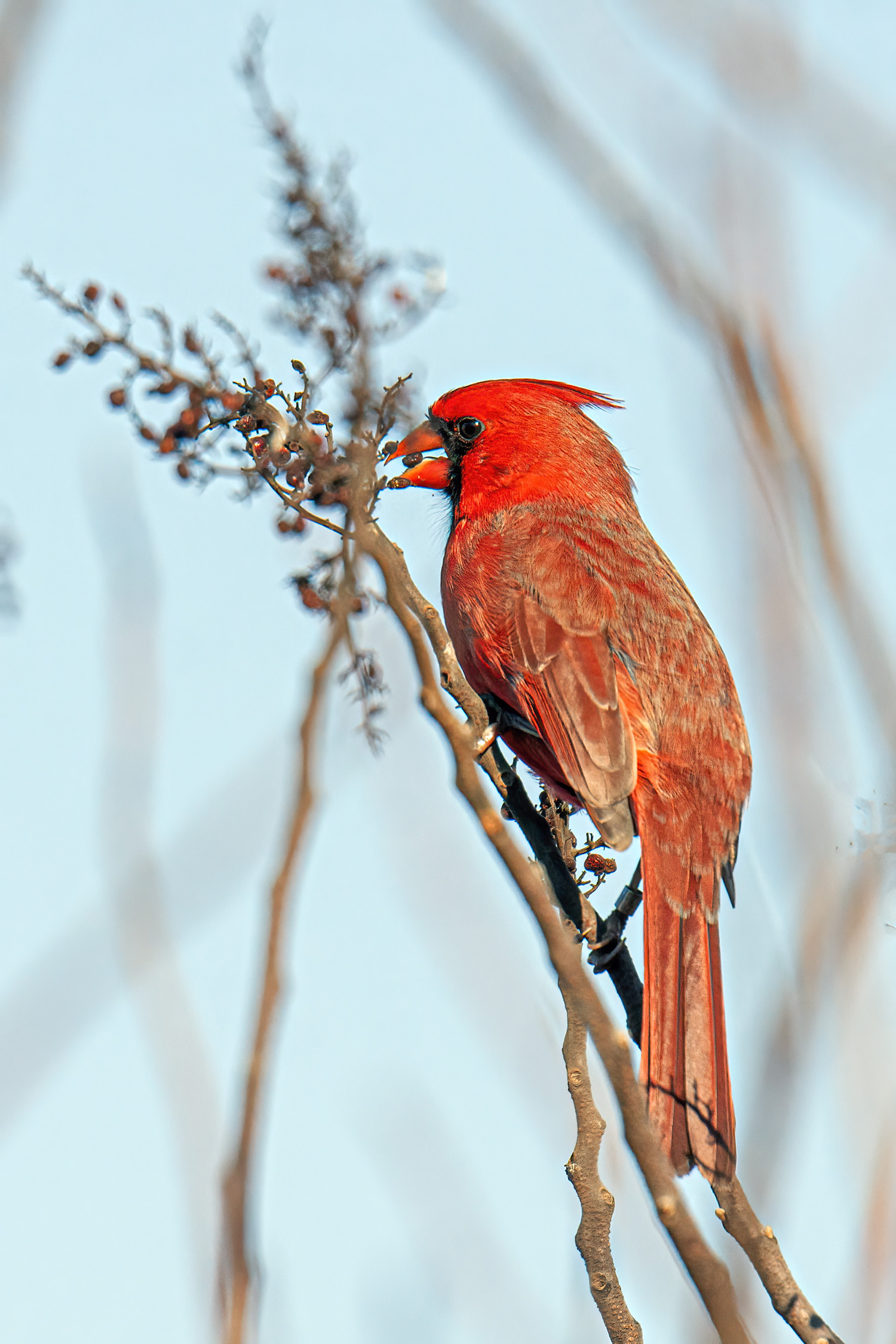
The berries looked dried up and unappetizing to me, but to the male Northern Cardinal (Cardinalis cardinalis) that I spotted last Friday at Occoquan Bay National Wildlife Refuge, they provided much needed nourishment on a frigid winter day.

Northern Cardinal

© Michael Q. Powell. All rights reserved.

Read Full Post »

It is always a joy to see the bright red color of a male Northern Cardinal (Cardinalis cardinalis), especially during the winter, when the world seems almost monochromatic. I spotted this one yesterday at Occoquan Bay National Wildlife Refuge as he pecked about in the drifted snow. We have had only a small amount of snow, but the weather has remained steadfastly below freezing, so it has stayed with us for an extended period of time.

Northern Cardinal

© Michael Q. Powell. All rights reserved.
Read Full Post »

The days have now gotten shorter—with today marking the Winter Solstice—and bright colors have largely disappeared from the natural landscape. It is therefore a special joy to see the bright red color of a male Northern Cardinal (Cardinalis cardinalis) at this time of the year. Unlike many birds that molt into a dull plumage during the winter, male cardinals continue to shine brightly and offer welcome relief from the dullness of the landscape.

I spotted this handsome cardinal this past Monday at Occoquan Bay National Wildlife Refuge as he turned to the early morning sun and basked briefly in its warmth and light.

Northern Cardinal

© Michael Q. Powell. All rights reserved.
Read Full Post »

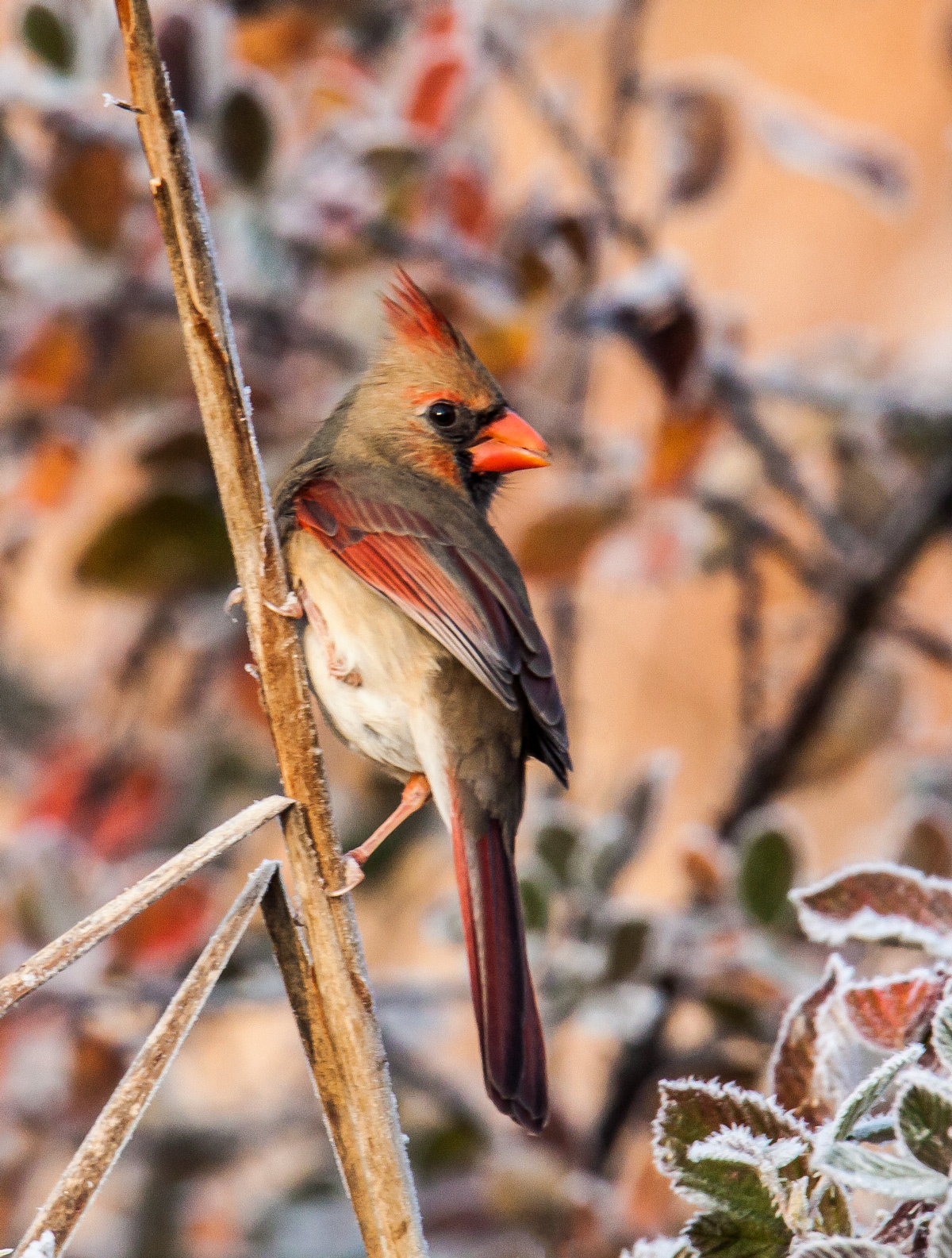
I love Northern Cardinals (Cardinalis cardinalis). The bright red of the male cardinal helps to lift my spirits throughout the winter when the world seems almost monochromatic. In terms of beauty, though, the more subdued coloration of the female cardinal is arguably even more impressive.

This past weekend I encountered several cardinals as I was exploring the frosty fields of Huntley Meadows Park in the early morning hours. I was focused on some sparrows in a patch of vegetation when suddenly a female cardinal flew in. I quickly adjusted my focus—I was focusing manually at that moment—and tried to steady my breathing as I took the first shot below just before she flew away.

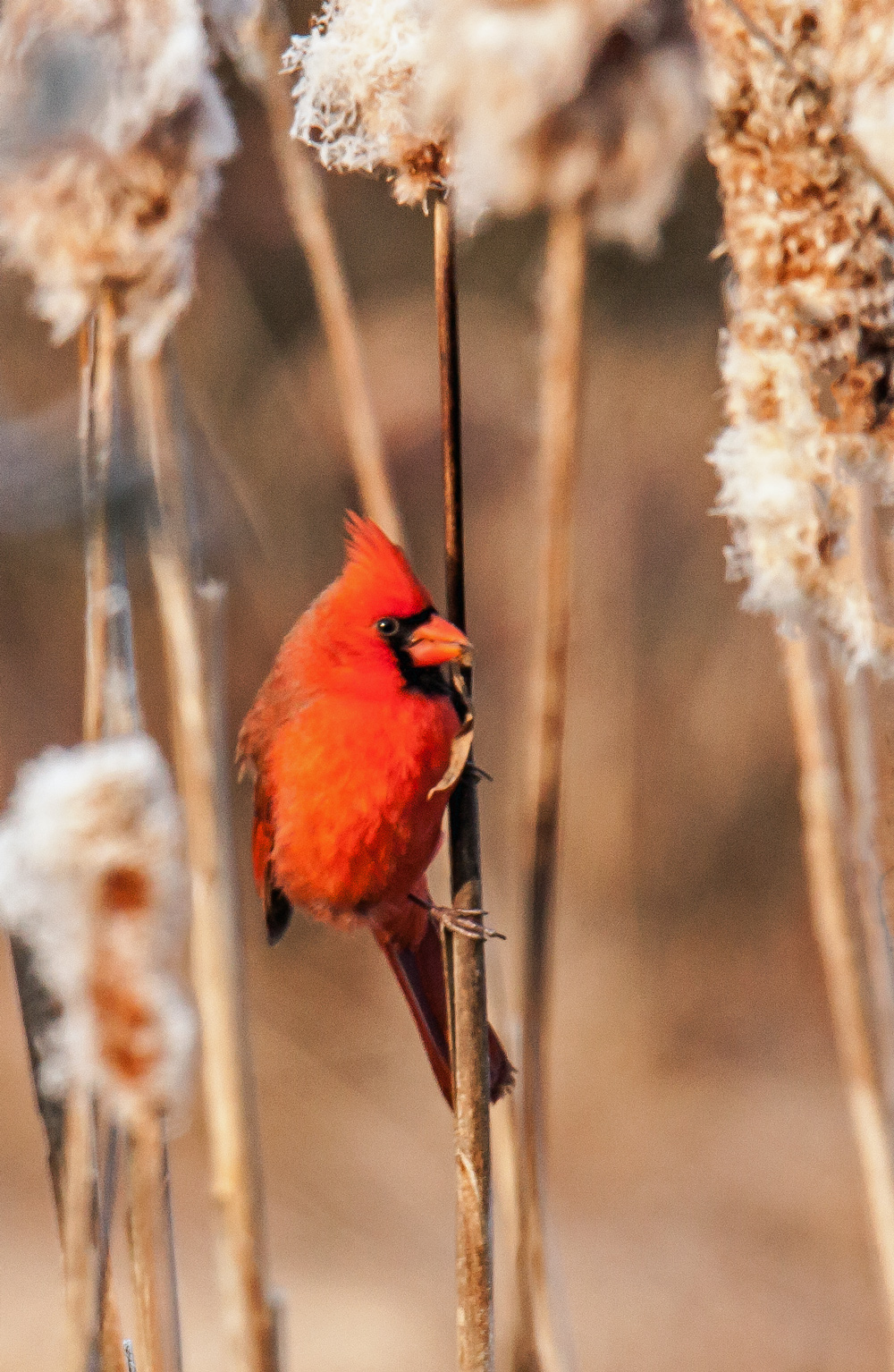
A little while later, I caught sight of some movement out of the corner of my eyes in a stand of cattails. The red of a male cardinal is pretty hard to camouflage, so it was easy to spot him, but I was a little surprised by his pose. Somehow it looked more like the pose of a blackbird than that of a cardinal. Even though I was pretty far away, the cardinal seemed to be intently staring at me and didn’t seem too happy about my presence.

Cardinals are common where I live, but I never grow tired of photographing such ordinary subjects, seeking to discover and share the extraordinary that can often be found in the ordinary.

Northern Cardinal

northern cardinal

© Michael Q. Powell. All rights reserved.

Read Full Post »

Like a runner at the starting blocks, this male Northern Cardinal (Cardinalis cardinalis) was tensed as he prepared to push off from the top of a dead tree yesterday morning at Huntley Meadows Park.

What a beautiful way to start the spring.

Northern Cardinal

© Michael Q. Powell. All rights reserved.

Read Full Post »

Early yesterday morning there was a coating of ice on much of the water at Huntley Meadows Park. Northern Cardinals (Cardinalis cardinalis) were taking advantage of this new surface to forage for seeds in the lower parts of the vegetation growing out of the frozen water.

The bright red one is immediately identifiable as a male. The other one looks like it could be a female or an adolescent male. As is often the case with birds, male cardinals start off looking like females before they acquire their adult plumage. I’m leaning towards it being a female because of the color of the bill—with younger cardinals, the bill is often dusky rather than bright orange.

Northern Cardinal

Northern Cardinal

Northern Cardinal

© Michael Q. Powell. All rights reserved.


Read Full Post »

A bright red male Northern Cardinal (Cardinalis cardinalis) was buried in the bushes on Monday at Huntley Meadows Park. No matter how hard I tried, I couldn’t get an unobstructed shot. I attempted to will the cardinal to move to a new spot and amazingly it flew to a perch on the upper railing of the observation deck and posed for me.

Maybe telepathy works!

Northern Cardinal

Northern Cardinal

Northern Cardinal

© Michael Q. Powell. All rights reserved.
Read Full Post »

Older Posts »