Feeds:
Posts
Comments

Posts Tagged ‘Jackson Miles Abbott Wetland Refuge’

Some folks are a bit shocked when I post photos of mating insects, so here is a more discreet look at a damselfly couple in tandem that I encountered last week at Jackson Miles Abbott Wetland Refuge. Somehow I can’t help but think of the old doo wop song “Silhouettes,” which recounts the story of a man who sees two silhouettes on a shade. He thinks his girlfriend is kissing another guy, only to find out that he is at the wrong house.

I may have heard the original version by The Rays that came out in 1957, but suspect I actually recall the cover version done by Herman’s Hermits that came out in 1965. In case you have never heard the song or are simply feeling nostalgic, here is a link to YouTube for the original version and a link to the cover by Herman’s Hermits.

damselflies

© Michael Q. Powell. All rights reserved.

Read Full Post »

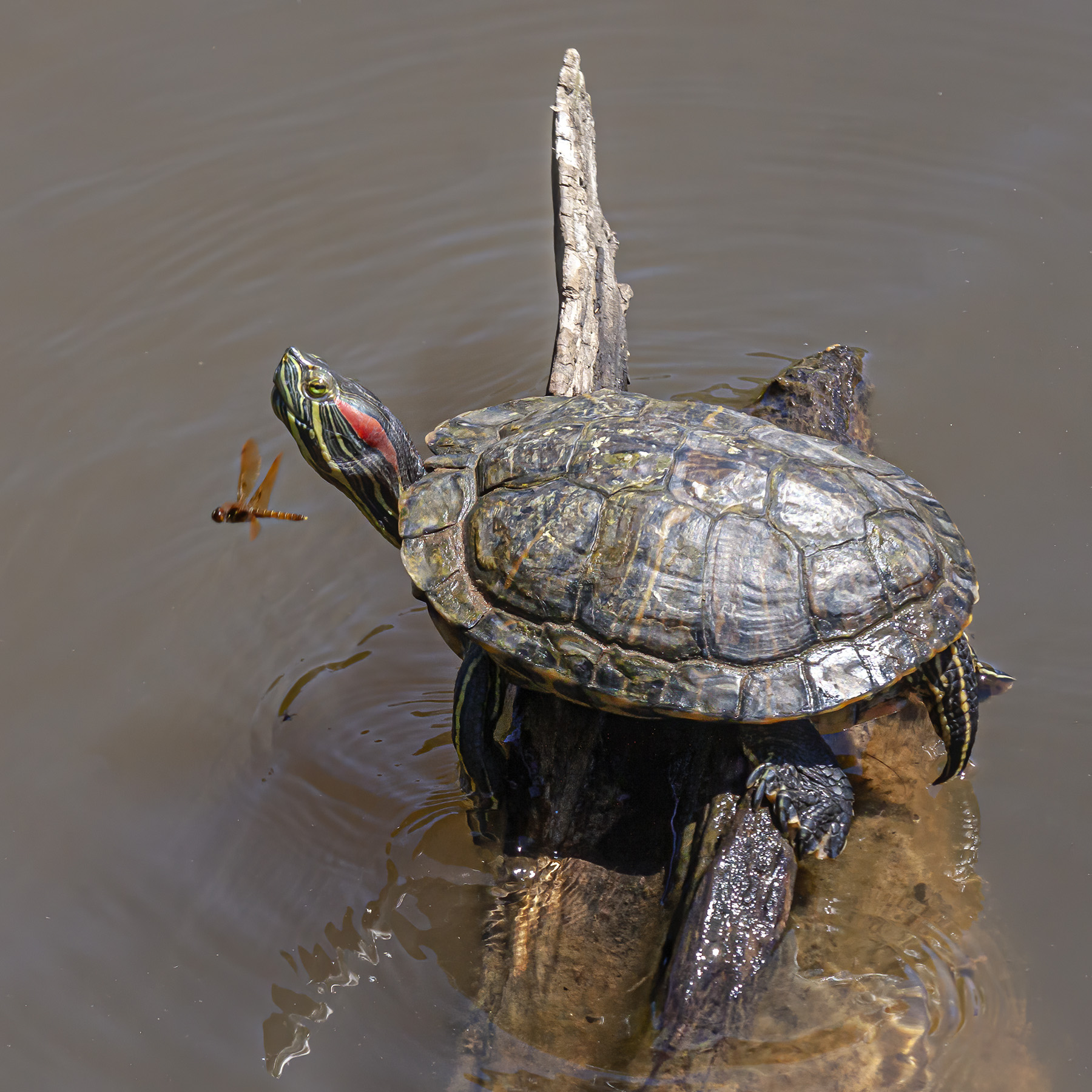
Most of the time Red-eared Slider turtles (Trachemys scripta elegans) slide into the water as soon as they detect my presence. Yesterday, however, this turtle seemed to be in such a deep meditative state that it remained in place when I approached it at Jackson Miles Abbott Wetland Refuge. The turtle was even impassive to repeated buzzings by several Eastern Amberwing dragonflies, some of which flew within inches of its face.

I was hoping to get some a shot of a dragonfly landing on the turtle’s shell, but was content to capture this image with both the turtle and a passing dragonfly.

Red-eared Turtle

© Michael Q. Powell. All rights reserved.

Read Full Post »

Every year I enjoy taking photos of dragonflies perching on a piece of rusted rebar that sticks a few inches out of the water of a small pond at Jackson Miles Abbott Wetland Refuge. I have seen dragonflies of several species use this particular perch, but photographically speaking my favorite is probably a male Eastern Amberwing dragonfly (Perithemis tenera) like the one in this photo from last Friday—the orange-rust colors of the dragonfly and its perch are complementary and soften what might otherwise be a jarring juxtaposition of the natural and man-made worlds.

You can’t see it really well, but there is a spider, probably a long-jawed spider, visible onthe lower portion of the rebar. I don’t know for sure if that spider could capture the dragonfly, but it is a potentially dangerous situation for the dragonfly and in the past I have photographed several dragonflies that had fallen prey to spiders.

Eastern Amberwing

© Michael Q. Powell. All rights reserved.


Read Full Post »

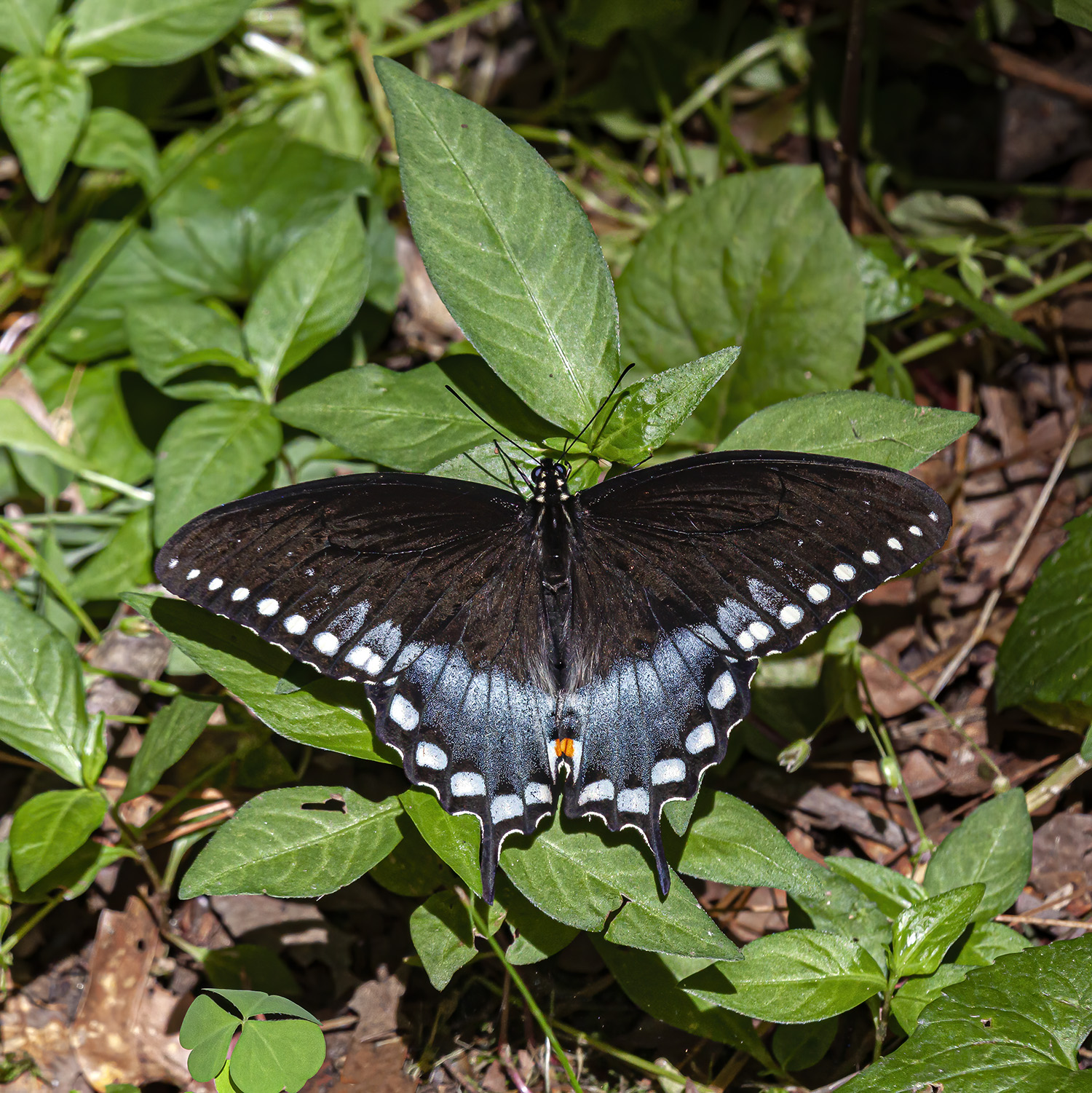
We have a number of different dark swallowtail butterflies in the area in which I live, which can make identification a little tricky. I spotted this beautiful butterfly last Friday at Jackson Miles Abbott Wetland Refuge and believe that it is a Spicebush Swallowtail butterfly (Papilio troilus). The perfect condition of its wings suggest to me that it has emerged quite recently—as we move deeper into summer, I often spot butterflies with tattered wings.

Spicebush Swallowtail

© Michael Q. Powell. All rights reserved.


Read Full Post »

Last week I spotted my first Eastern Amberwing dragonflies (Perithemis tenera) of the season at Jackson Miles Abbott Wetland Refuge. These distinctively colored dragonflies are a frequent sight throughout the summer as they buzz about over the waters of ponds. Eastern Amberwings are small, even by dragonfly standards, with a total length of less than an inch (25 mm) and are considered to be a wasp mimic. According to Wikipedia, “The Eastern Amberwing dragonfly is one of the only types of dragonfly that actively mimics a wasp. The yellow and brown stripes on its abdomen encourage predators to stay away. When perched, they will wiggle their abdomen and wings in a wasp-like fashion to deter other animals from eating it.”

My second and third shots are portraits of perched male Eastern Amberwing dragonflies that were carefully composed and sharp, but my favorite image of the day is the dynamic shot of two dragonflies in flight. It may not be obvious what is going on in the photo, so let me explain. After mating, the female in the upper left corner is getting ready to deposit her eggs in the water, while the male in the lower right corner hovers in the air, ready to keep any rivals from interfering with the process.

Eastern Amberwing

Eastern Amberwing

Eastern Amberwing

© Michael Q. Powell. All rights reserved.

Read Full Post »

Names can sometimes be misleading. There is a genus of damselflies, consisting of 35 species, called American bluets. As the common name “bluet” suggests, most members of the genus are primarily blue in color. One notable exception is the adult male Orange Bluet (Enallagma signatum) that often does not appear to have even a speck of blue on its body.

I spotted this little guy last Friday at Jackson Miles Abbott Wetland Refuge and was a bit shocked by his bright red eyes when I looked through the viewfinder of the camera. The male Orange Bluet was perched at the extreme end of some vegetation overhanging a pond.

I would have liked to have gotten a shot in which more of its body was in focus, but I did not want to risk falling in the water, which looked to be pretty deep at that spot. As I look at the photo now, I realize that the soft focus of the body may actually be a good thing, because it draws a viewer’s attention even more to the eyes of the handsome little damselfly.

orange bluet

© Michael Q. Powell. All rights reserved.

Read Full Post »

On Friday, temperatures in my area soared to 84 degrees (29 degrees C), which I thought might trigger the emergence of new dragonflies. However, when I arrived at Jackson Miles Abbott Wetland Refuge, a nearby park with a small pond, the only dragonflies that I could find were a half-dozen Common Baskettail dragonflies (Epitheca cynosura) patrolling over various parts of the pond.

I walked around the perimeter of the pond multiple times, searching in vain in the undergrowth and in the vegetation at water’s edge. Periodically I stopped and attempted to photograph the dragonflies in flight. Their flight paths were somewhat predictable, which gave me hope, but the dragonflies varied their distances from the shore and changed their altitude unexpectedly.

Here are a few of my favorite shots from the photo excursion. As a frame of reference, Common Baskettail dragonflies are about 1.6 inches (41 mm) in length, so I think you can appreciate the challenge of photographing one on the fly.

Common Baskettail

Common Baskettail

Common Baskettail

© Michael Q. Powell. All rights reserved.

Read Full Post »

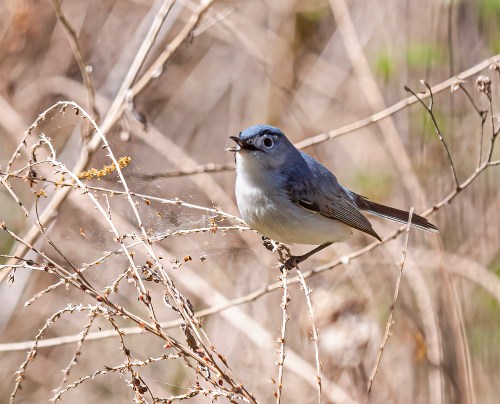
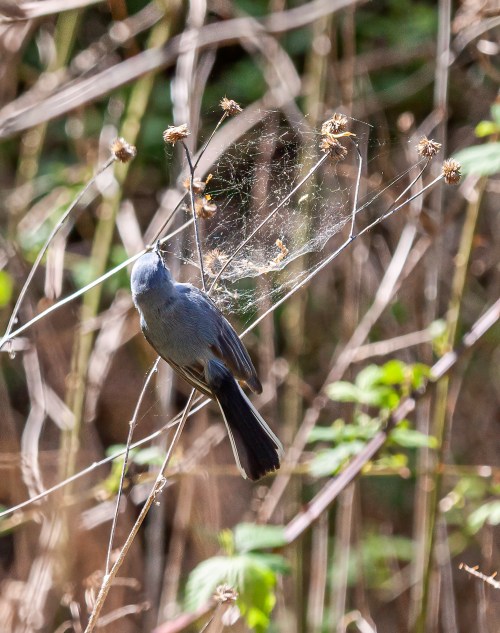
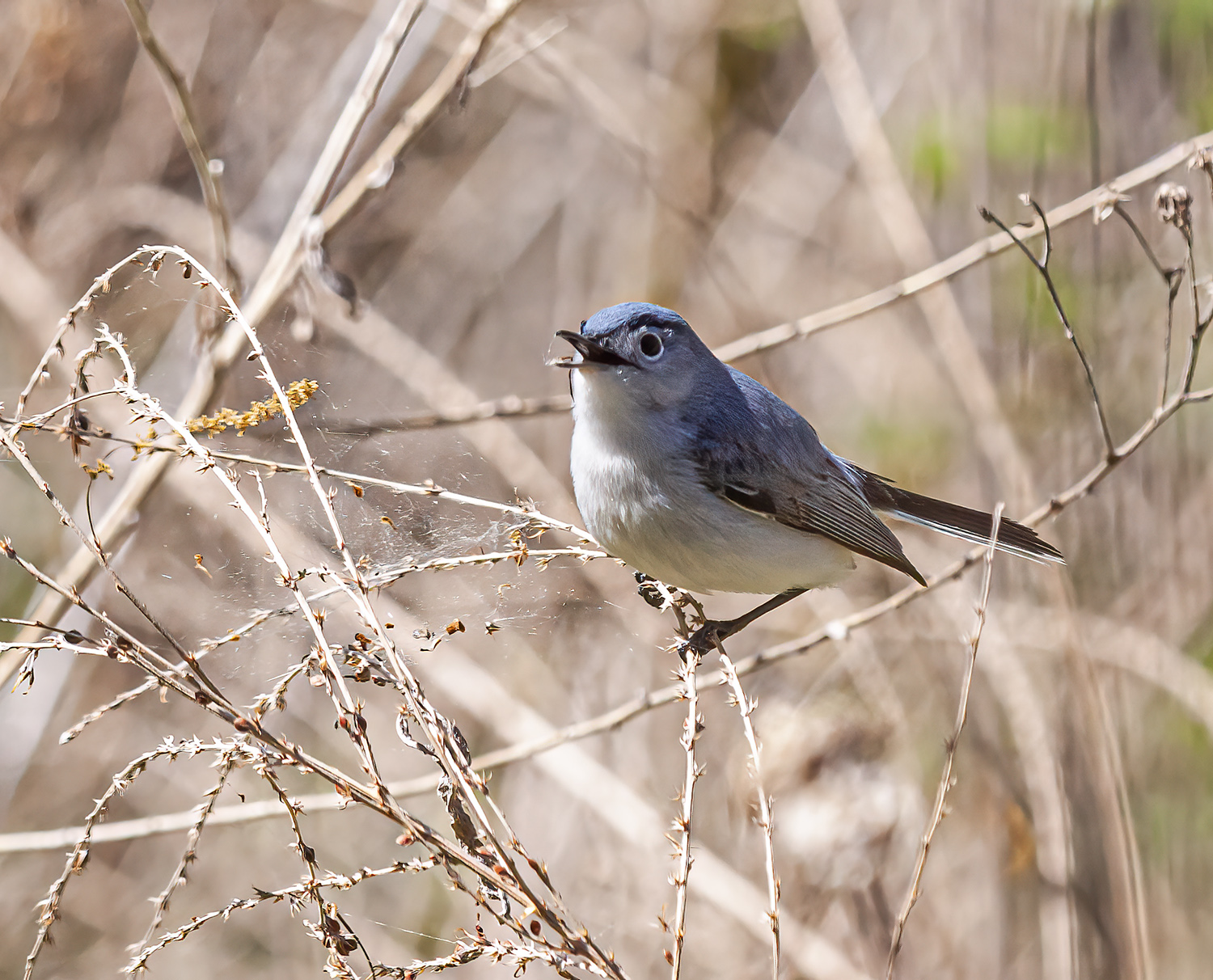
As I was searching in a small field of eye-height vegetation for dragonflies last Wednesday at Jackson Miles Abbott Wetland Refuge, my eyes detected a flash of blue and white and I realized that a bird had joined me in the field. I was shocked to see that it was a male Blue-gray Gnatcatcher (Polioptila caerulea). During my previous encounters with a Blue-gray Gnatcatcher, the bird has always been moving about in the foliage high in a tree.

I sprung into action and managed to get some decent shots of this tiny bird, despite the fact that I was shooting with my 180mm macro lens, the one that I generally use for the macro shots of insects that you see on this blog. The coolest image, I think, is the first one and it was mostly a matter of luck. I had just taken the second shot below when the gnatcatcher took off and I instinctively pressed the shutter release and captured a fun action shot.

So what was the gnatcatcher doing at ground level? As I was was processing my images I noticed that there were old spider webs in most of them. It is most obvious in the final photo, but if you click on the other images, you will see webs to the left of the bird in the penultimate shot (and in its mouth, I think), and also to the right of the bird and a little lower in the second shot (and possibly in the corner of its mouth).

Why would they be messing with spider webs? According to the Cornell Lab of Ornithology website, Blue-gray Gnatcatcher pairs use spiderwebs and lichens to build small, neat nests on top of tree branches and may build up to seven nests in a breeding season.  The website also notes that breeding males have a black V above their foreheads extending above their eyes, which you can see quite clearly in the second shot. I wonder if breeding season is begining

I have not spotted any gnatcatcher nests yet this year, but two years ago in late May I took some shots of a nest at the same refuge that show the amazing construction abilities of these little birds. Check out the posting called Baby gnatcatchers? by clicking on the title of the posting or clicking here. The nests are fascinating to examine.

Blue-gray Gnatcatcher

Blue-gray Gnatcatcher

Blue-gray Gnatcatcher

Blue-gray Gnatcatcher

© Michael Q. Powell. All rights reserved.

Read Full Post »

I finally photographed my first damselflies of the spring on Wednesday during during a brief visit to Jackson Miles Abbott Wetland Refuge. I spotted the female Eastern Forktail damselfly (Ischnura verticalis) in the first image as she perched on a log in a mini-wetland area adjacent to a small pond. In addition to capturing the damselfly itself, I am really happy with the way that the texture of the bark and the interplay of the light and shadows turned out in the shot.

The second shot shows a male Fragile Forktail damselfly (Ischnura posita), one of the few damselflies that I am able to identify with a relatively high degree of confidence. On males of this species (and most females too), the shoulder stripe is interrupted and looks like an exclamation point. I like the way that the muted colors of the dried-out vegetation on which this damselfly was perched  help to make its colors stand out and draw a viewer’s eyes to the main subject.

I will almost certainly get more and better shots of damselflies in the upcoming months, but there is something special about stopping for a moment to celebrate images of my first damselflies each year.

Eastern Forktail

Fragile Forktail

© Michael Q. Powell. All rights reserved.

Read Full Post »
Yesterday I was excited to spot several tiny Eastern Tailed-Blue butterflies (Everes comyntas) during a brief visit to Jackson Miles Abbott Wetland Refuge. What was particularly striking was that these delicate butterflies were perched with their wings partially open, revealing a spectacular blue color. I maneuver to position myself almost directly above one perched close to the ground, waited for it to open its wings fully, and captured this shot.

If you click on this image, you can get a better look at the marvelous details of this male Eastern-Tailed Blue, including the tiny “tails” and the little orange chevrons at the bottom of the hind wings. I was struck by the apparent asymmetry of the butterfly’s wings—the right wings look bigger than those on the left—but wonder if that is simply a consequence of the angle at which I took the shot or perhaps the wings were not fully open and were at slightly different angles.

Eastern Tailed-Blue

© Michael Q. Powell. All rights reserved.

Read Full Post »

Most of the time when I see spiders, it is because I spot their webs first.  Some spiders, though, rely exclusively on speed to capture unsuspecting prey, like this Six-spotted Fishing Spider (Dolomedes triton) that I spotted on Monday at Jackson Miles Abbott Wetland Refuge.

Fishing spiders sit at the edge of the water with some of their long legs fully extended. When they sense vibrations of a potential prey on the surface of the water, fishing spiders can walk on the water to seize insects, vertebrates, tadpoles and occasionally small fish or even dive underwater up to 7.1 inches (18 cm), according to Wikipedia.

When I first spotted this fishing spider, it was perched on a semi-submerged log, as shown in the second image below. The spider somehow sensed my presence and ran towards some vegetation at the edge of the water. I was able to maneuver to a position from which I was looking almost directly down at the spider and captured the first image which makes the spider look rather large and menacing, which is why I selected the photo as the featured image.

six-spotted fishing spider


six-spotted fishing spider

© Michael Q. Powell. All rights reserved.

Read Full Post »
I love ladybugs and was thrilled to spot this one on Monday at Jackson Miles Abbott Wetland Refuge. When I posted this photo on Facebook, one viewer noted that this is a Multicolored Asian Lady Beetle (Harmonia axyridis), a non-native species that has become the most common species in the United States since it was deliberately introduced into the country in 1916 in an attempt to control the spread of aphids.

How can you tell a native ladybug from the Asian ladybug? Several sources on-line note that the Asian ladybug has a white marking behind its head in the openings of what looks like a black M, as you can see on the ladybug in my photo. If you are interested in learning more about the differences, check out this fascinating article at thespruce.com, The Differences Between Ladybugs and Asian Lady Beetles.

Whether native or not, this ladybug in my eyes is beautiful. If you want to see something really cool, click on the photo and check out the details on the ladybug’s front foot. I never knew that ladybugs have two tiny toes.


ladybug

© Michael Q. Powell. All rights reserved.

Read Full Post »

I have not yet seen any large spiders this spring, but I have run across a few long-jawed spiders. The bodies of long-jawed orb weaver spiders of the Tetragnathidae family tend to be thin and they have extremely long legs of varying lengths. Most often I find them on vegetation overhanging the water, which in this case was a small pond at Jackson Miles Abbott Wetland Refuge.

long-jawed spider

© Michael Q. Powell. All rights reserved.


Read Full Post »

As our weather continues to warm up, more and more creatures are reappearing, like this Spotted Turtle (Clemmys guttata) that I spotted yesterday at Jackson Miles Abbott Wetland Refuge. As you can see from the photo, the turtle was on dry land, in a wooded area with pine trees, rather than in the water like most of the other turtles that I saw yesterday.

Spotted Turtles are relatively small, about 3.5 – 4.5 inches in length (9 – 11.5 cm), according to the Virginia Herpetological Society website. The website also notes that this species is seen primarily in the early spring, but seldom beyond the month of June. Spotted Turtles enter into a state of dormancy (technically it is “aestivation”) during the warmest months under vegetation and during the coldest months under mud. During those periods they are inactive and their metabolism rate is lower, but their physiological state can be rapidly reversed, and they can quickly return to a normal state.

Spotted Turtle

© Michael Q. Powell. All rights reserved.


Read Full Post »

Many people associate the color red with autumn because of the brilliant foliage that the season brings forth in places like New England. For me, though, red is an autumn color because of the bright red dragonflies that remain active in October and November (and sometimes even later in the year).

Yes, I continue to chase dragonflies as we move deeper and deeper into autumn. I spotted this handsome male Autumn Meadowhawk dragonfly(Sympetrum vicinum) last Wednesday at Jackson Miles Abbott Wetland Refuge in nearby Fort Belvoir, Virginia. Many of the Autumn Meadowhawks that I saw earlier this fall were females, which have a much more subdued coloration. There is nothing subdued about this male, which made it pretty easy to spot him, especially when he perched on a small stump at knee-level. You do have to pay attention to find them, however, because Autumn Meadowhawks are only about 1.3 inches (33 mm) in length.

Autumn Meadowhawk

© Michael Q. Powell. All rights reserved.

Read Full Post »

A sharp-eyed fellow photographer spotted this Northern Rough Green Snake (Opheodrys aestivus) at eye level in a tree at Jackson Miles Abbott Wetland Refuge this past Wednesday as we both were searching for dragonflies. The sun was shining brightly and I suspect the snake was basking in its warm on a relatively cool day. I managed to capture a few shots of this colorful snake before it silently slithered away.

Northern Rough Green Snake

Northern Rough Green Snake

© Michael Q. Powell. All rights reserved.

Read Full Post »
As I was looking at a small patch of purple aster flowers yesterday at Jackson Miles Abbott Wetland Refuge, I noticed that the center of one of them was a different color than all of the rest. I moved closer and was thrilled to see this very cool-looking White-banded Crab Spider (Misumenoides formosipes) nestled in among the petals of the flower. This kind of spider does not build a web, but patiently perches, waiting to pursue passing prey.

crab spider

crab spider

© Michael Q. Powell. All rights reserved.

Read Full Post »

I guess that the main subject of this image is the tiny male Eastern Amberwing dragonfly (Perithemis tenera), but I must confess that I was equally drawn to the curving shapes of the branches sticking out of the water during my recent trip to Jackson Miles Abbott Wetland Refuge. Normally I try to fill as much of my frame with my primary subject by using a zoom lens or by moving closer, but in this case I actually moved back in order to be able to capture more of the vegetation.

I really like the way that the warm amber color of the aptly named Eastern Amberwing stands out against the muted tones of the rest of the image. The style of this image is different from most of my shots (assuming that I have an identifiable style), but I enjoy mixing it up from time to time by shooting from different angle or distances.

Eastern Amberwing

© Michael Q. Powell. All rights reserved.

Read Full Post »

Great Blue Skimmer dragonflies (Libellula vibrans) are really common, but I enjoy photographing them anyways, like this grizzled male that I spotted earlier this week at Jackson Miles Abbott Wetland Refuge. The curling vines of the plant on which this dragonfly chose to perch add some additional visual interest to these photos.

I must confess that ordinary blue dragonflies have a special place in my heart, because my very first blog posting on July 7, 2012 featured a photo of a Blue Dasher, another common species. My photography skills and my knowledge about dragonflies have increased significantly since that time, though I am still quite proud of that initial photo that started me on this long journey into photography.


blue dasher

Blue Dasher

© Michael Q. Powell. All rights reserved.

Read Full Post »

How do spiders decide where to place their webs? Is there some special secret that is passed on from generation to generation about optimal web placement for capturing prey? I know that human fisherman and trappers look for specific conditions and wonder if it is the same with spiders.

Whatever the case, this Black and Yellow Garden Spider (Argiope aurantia) appears to have mastered her trapping skills and looks to have caught both a female Common Whitetail dragonfly (Plathemis lydia) and what I think is some kind of female grasshopper. I am not really sure about the latter victim, but that is what I believe the green-colored object is in the image.

Often I see the webs of this kind of spider in fairly thick vegetation, but this web was hanging in mid-air about six feet high at the edge of a small pond last weekend at Jackson Miles Abbott Wetland Refuge. The murky grayness in the upper right portion of the image is the water of the pond. In the left hand side you can see some of the web strands that tenuously connected the web to some nearby vegetation. This spider would not have one any contests for the beauty of its web, but there is no arguing with its success in capturing prey.

argiope aurantia

© Michael Q. Powell. All rights reserved.

Read Full Post »

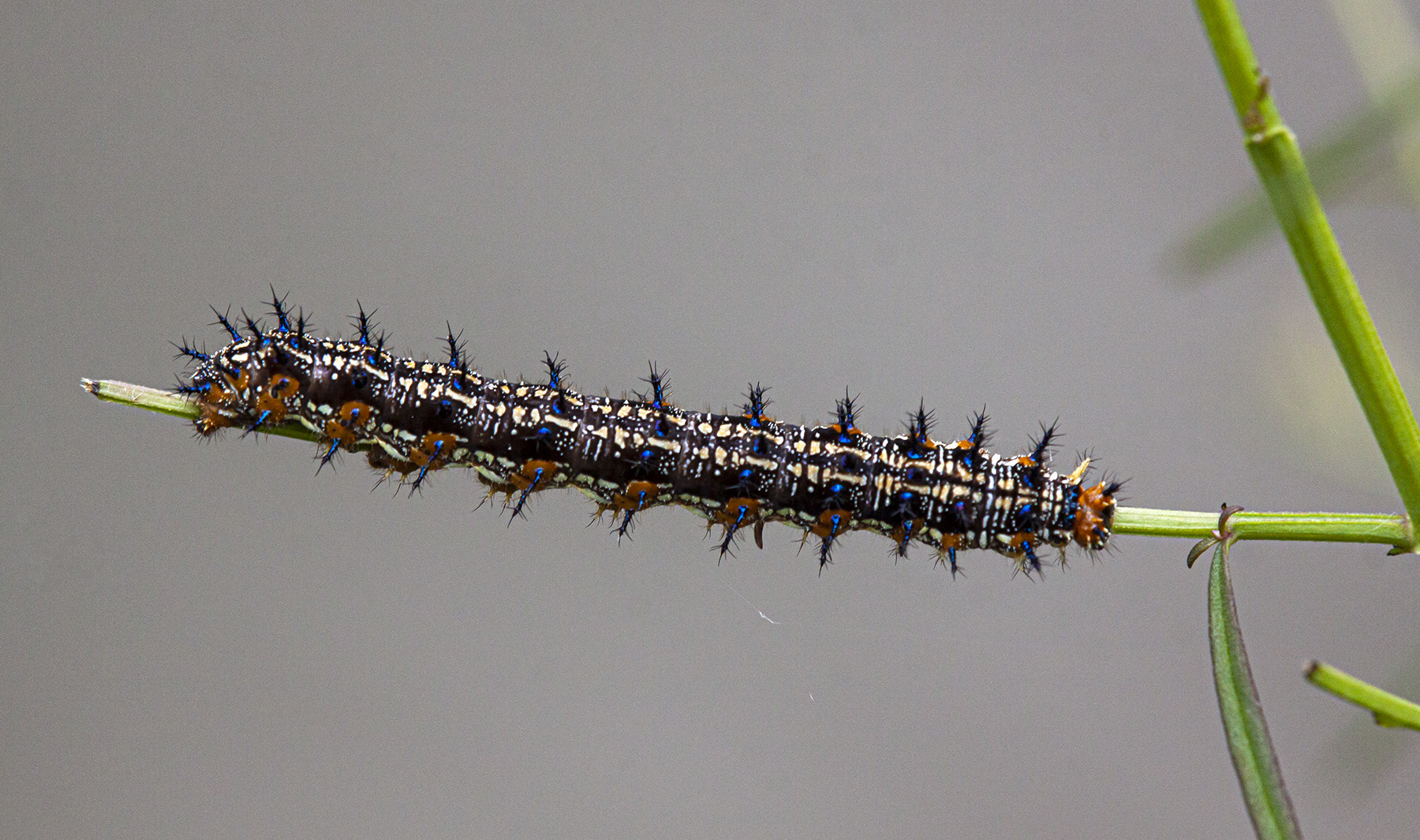
Yesterday I spotted this amazing looking caterpillar alongside a pond at Jackson Miles Abbott Wetland Refuge. I have not yet been able to identify it, but I was really struck by the stunning blue dots and the prickly spikes that run the length of the caterpillar’s body. Often these types of spikes are an indication of a venomous stinging caterpillar, so I kept my distance as I was taking this shot. Click on the image if you want to get a closer look at the wonderful details of the caterpillar.

UPDATE: Several helpful folks have weighed in and have identified this as a Common Buckeye caterpillar (Junonia coenia). Thanks for the help.

caterpillar

© Michael Q. Powell. All rights reserved.

Read Full Post »
Some people see spiders as creepy and others see them as cool. I am definitely in the latter category and was happy to spot this Black and Yellow Garden Spider (Argiope aurantia) during a recent trip to Jackson Miles Abbott Wetland Refuge.

I love the zigzag pattern that is a distinctive characteristic of the webs constructed by this species of spider and was thrilled that I managed to capture the zigzag in this shot. This spider is pretty common and has a lot of different common names including zigzag spider, writing spider, yellow garden spider, and golden garden spider. Zigzag Spiders can get to be pretty big and I have seen them capture large prey including, alas, dragonflies. It is amazing to see how fast the spider is able to wrap up its captured prey in web material. In case you have never witnessed the process, here’s a link to a 2017 posting that shows a spider wrapping up a freshly caught damselfly.

zigzag spider

© Michael Q. Powell. All rights reserved.

Read Full Post »

As many of you know, I love trying to capture images of dragonflies in flight. This Slaty Skimmer dragonfly (Libellula incesta) cooperated by periodically hovering a bit during a recent trip that I made to Jackson Miles Abbott Wetland Refuge. The first two images show you some of the details of the dragonfly’s body, including the way it tucks in its legs when in flight, and the final image gives you a wider view of the environment in which I was shooting.

Slaty Skimmer

slaty skimmer

slaty skimmer

© Michael Q. Powell. All rights reserved.

Read Full Post »

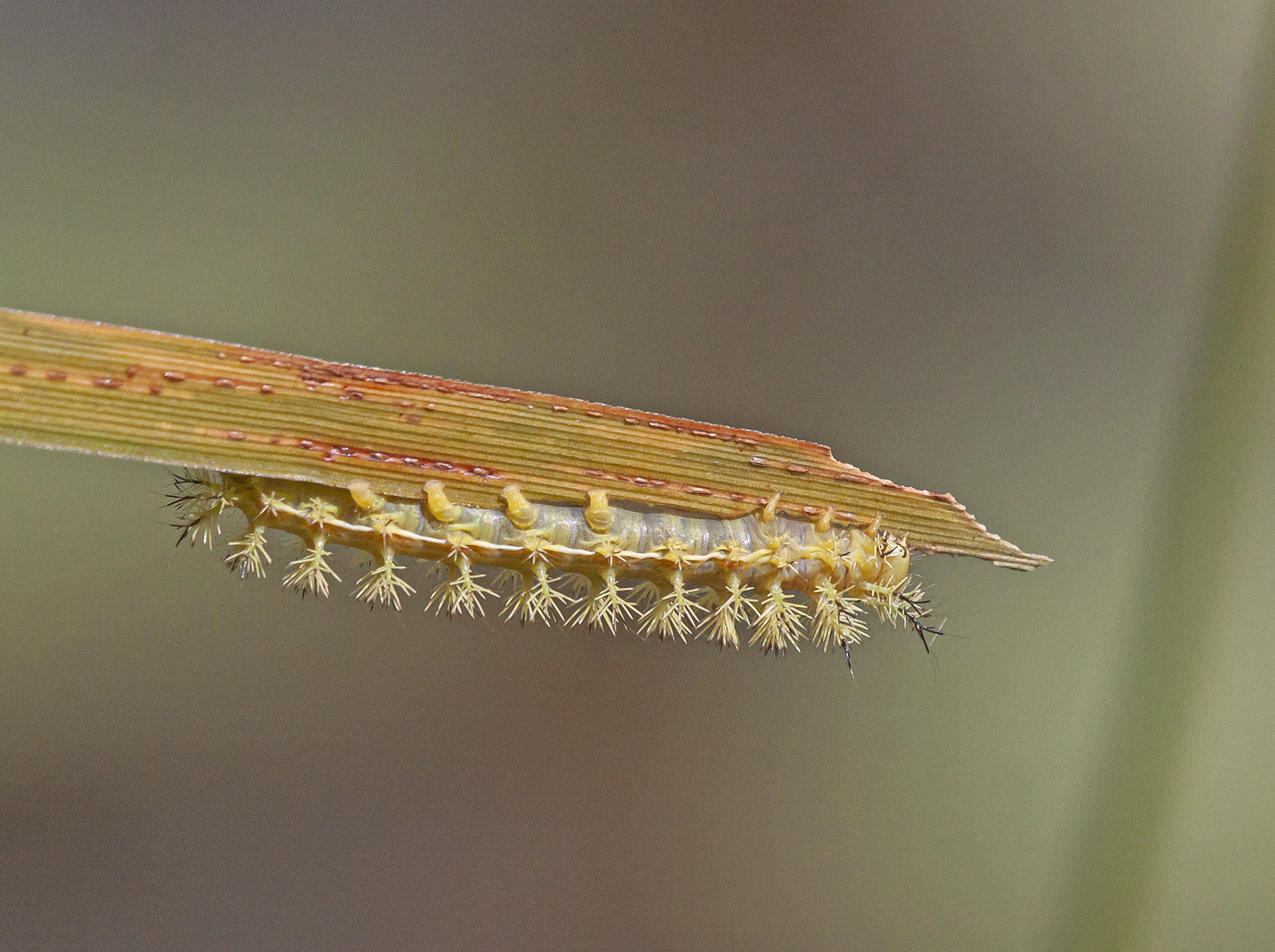
I spotted this strange looking caterpillar recently while exploring Jackson Miles Abbott Wetland Refuge. I was intrigued by all of the tufted spines sticking out of its back—I am pretty sure that it is upside down in this photo. Over the years, I have learned that it is best to avoid spiny caterpillars, because many of them are poisonous.

I sent a copy of a photo of this caterpillar to the helpful folks at bugguide.net and one of the viewers there suggested that this is an Eastern Buck Moth caterpillar (Hemileuca maia). I have not yet been able to get a confirmed identification, but according to Wikipedia, the caterpillars of this species are, “covered in hollow spines that are attached to a poison sac. The poison can cause symptoms ranging from itching and burning sensations to nausea.”

Fortunately I kept my distance when I captured this image with my long macro lens. I have no desire for a close encounter with a spiny caterpillar.

Eastern Buck Moth

© Michael Q. Powell. All rights reserved.

Read Full Post »

As I was searching for butterflies last week at Jackson Miles Abbott Wetland Refuge, a flash of brilliant yellow suddenly crossed my field of view. It took a moment for me to figure out what it was and then I realized that several American Goldfinches (Spinus tristis) were diving into a field of Black-eyed Susan wildflowers (Rudbeckia hirta).

I waited for a long time, hoping in vain that the goldfinches would perch in the open on the flowers nearest me, but mostly they stayed buried deep in the vegetation. Here are a couple of long-distance shots that give you a sense of my experience with these colorful little birds.


American Goldfinch

American Goldfinch

© Michael Q. Powell. All rights reserved.

Read Full Post »

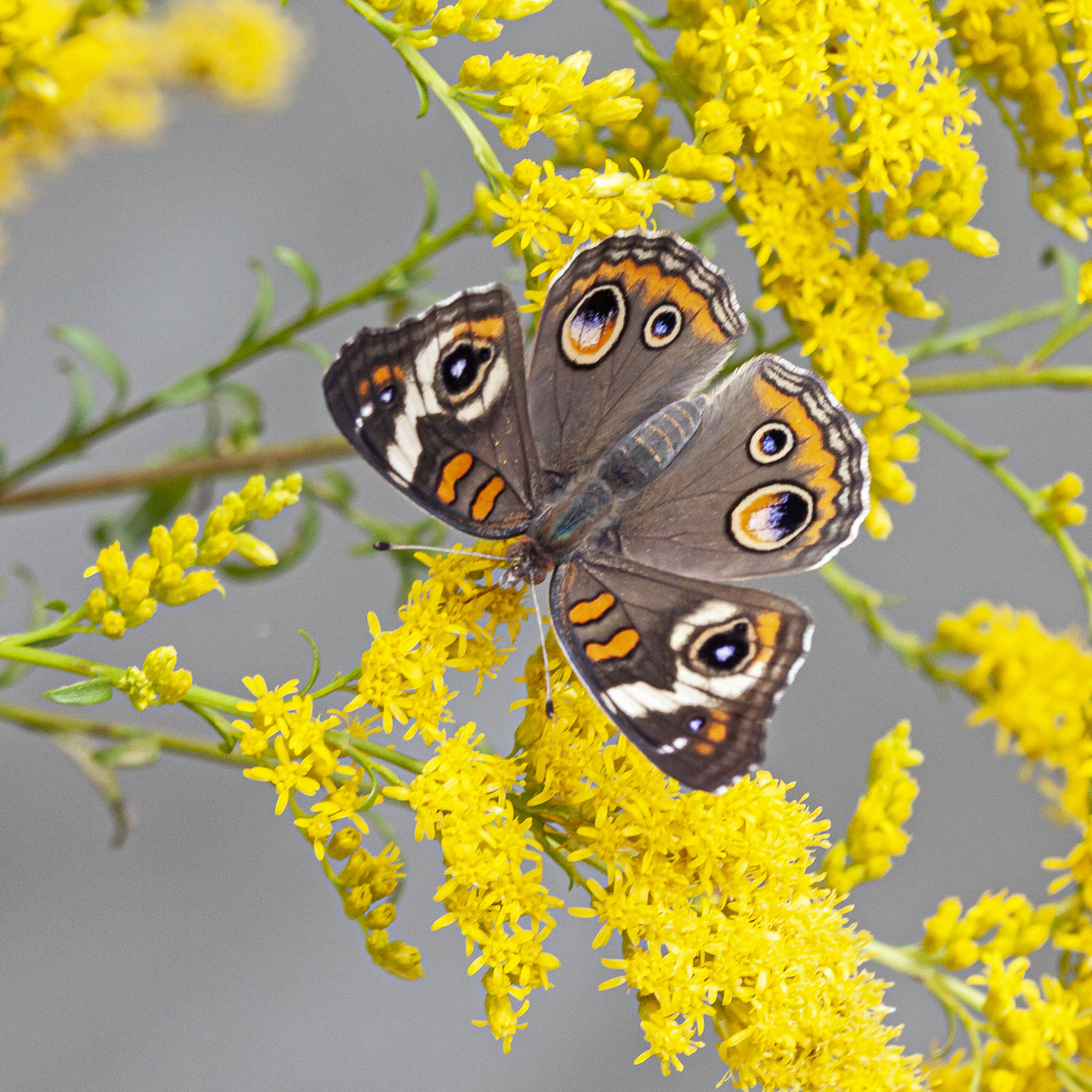
On Wednesday I spotted this colorful Common Buckeye butterfly (Junonia coenia) perched on some goldenrod at Jackson Miles Abbott Wetland Refuge. The fact that the butterfly was facing downward gives this image an abstract feel that I really like. My mind does not immediately register that this is a butterfly and instead focuses on the wonderful shapes and colors.

Common Buckeye

© Michael Q. Powell. All rights reserved.

Read Full Post »

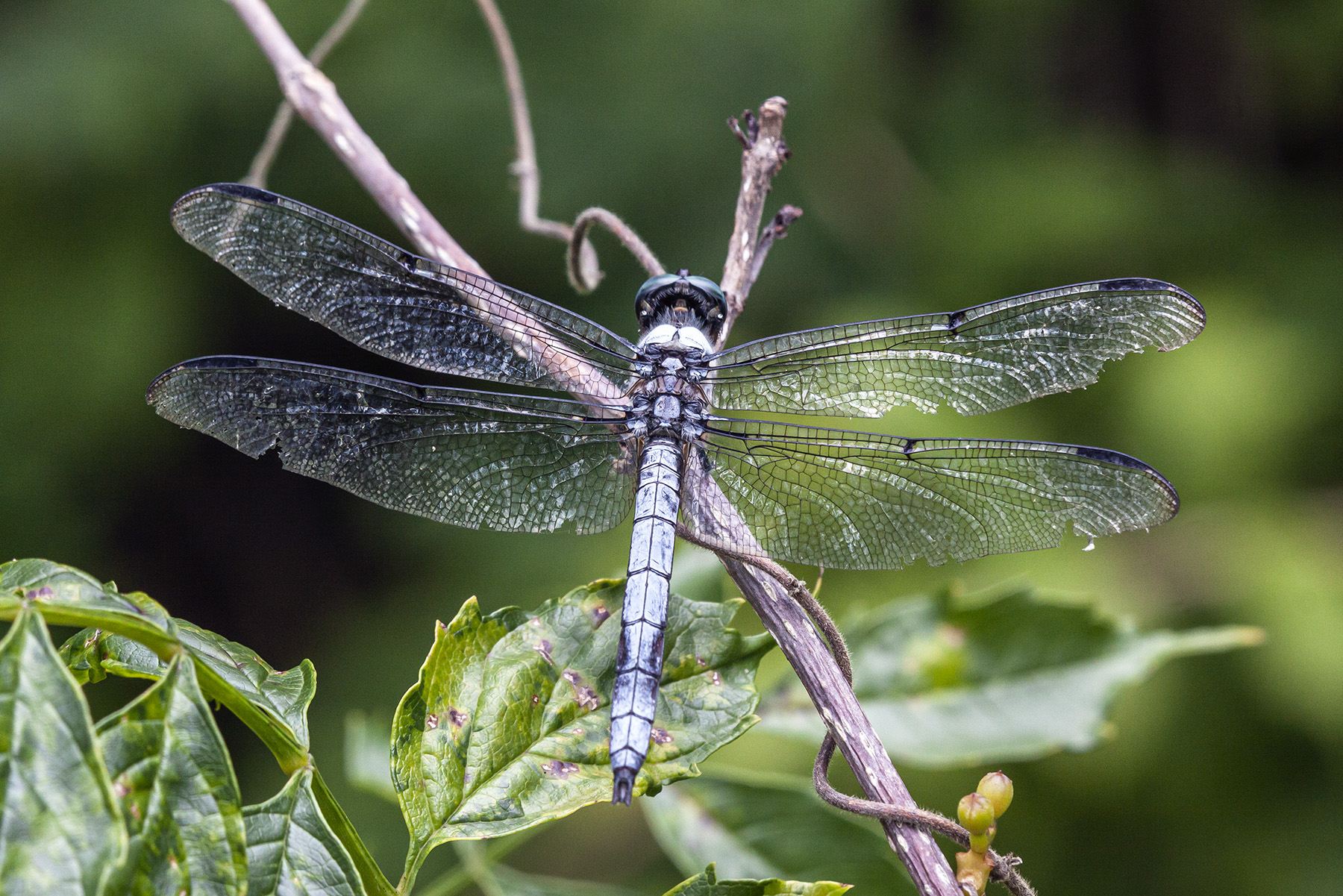
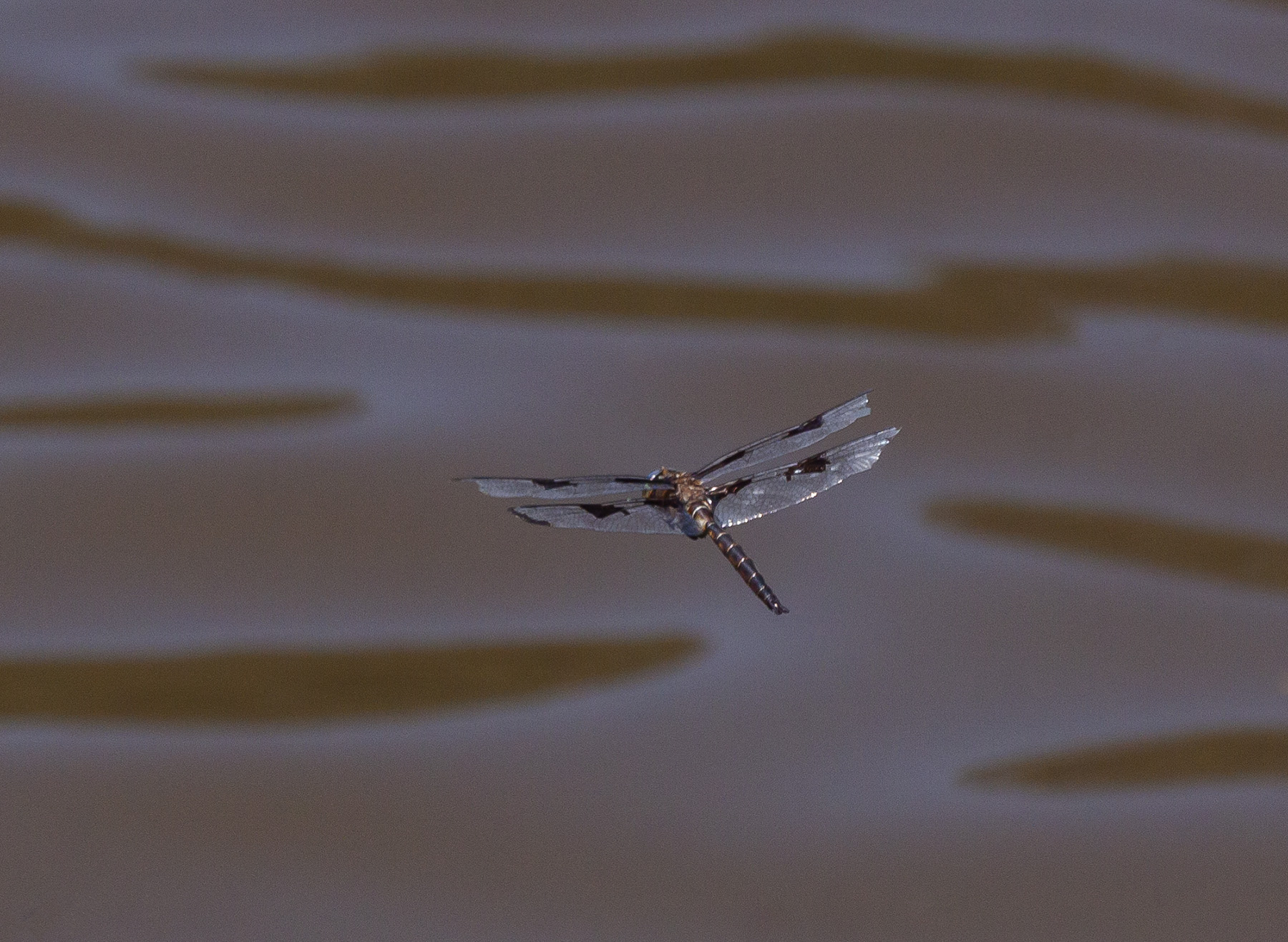
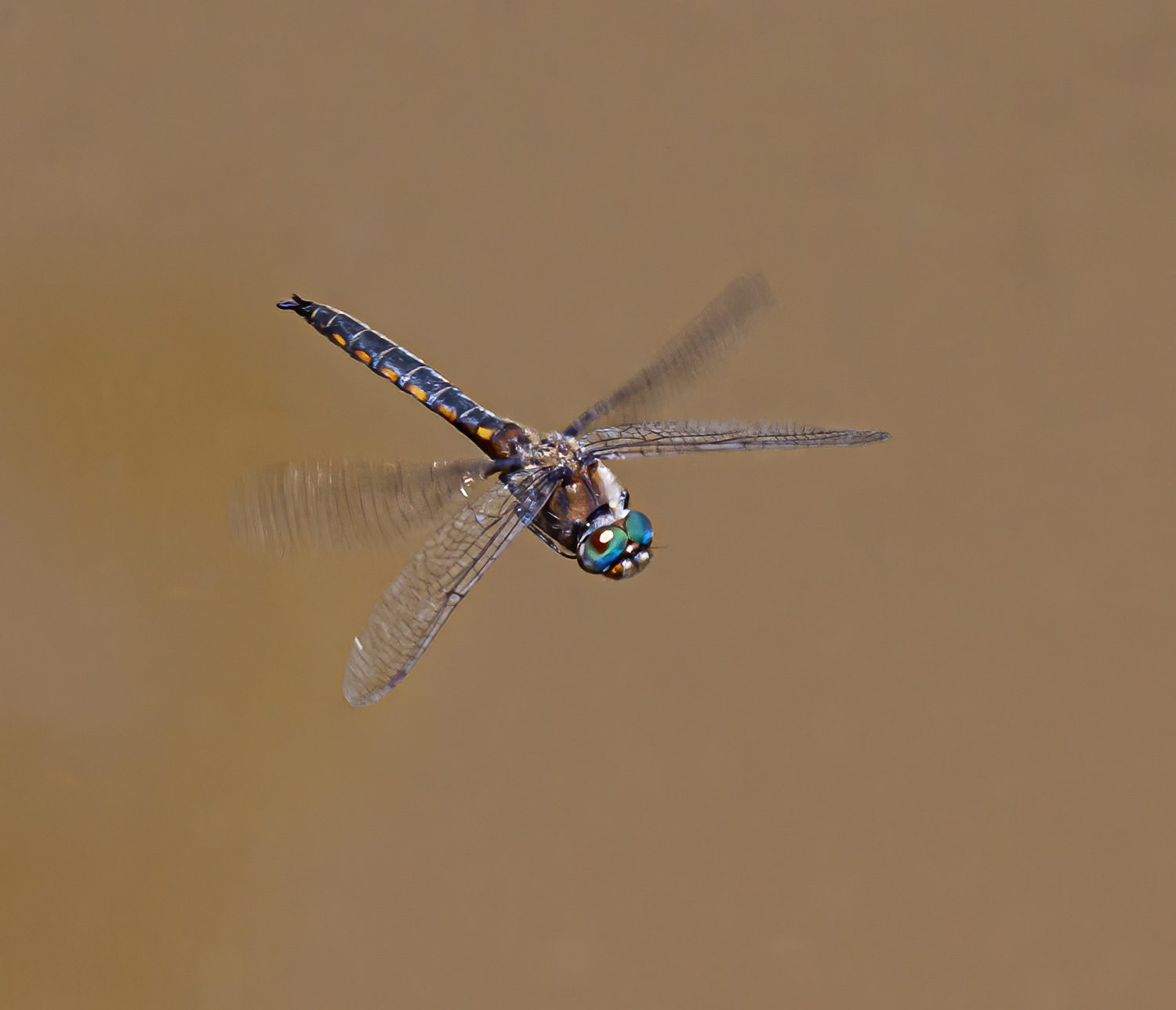
Life can be tough and can wear you down if you are a prince, at least if you are a Prince Baskettail dragonfly (Epitheca princeps). Last Saturday I spent a pretty good amount of time observing Prince Baskettails patrolling a pond at Jackson Miles Abbott Wetland Refuge.

As I am wont to do, I tried to photograph them in flight and managed to get a few shots in focus. As I reviewed the images, I couldn’t help but notice that the wings of all of the dragonflies were worn down and/or damaged. I am used to seeing such damage with dragonflies that fly through thickets and heavy vegetation, but I was a little surprised to see it with dragonflies that seem to spend most of the time flying over open water.

As we move deeper into summer, I am certain to encounter more and more dragonflies with damaged wings. I am always amazed to see that such dragonflies are still capable of amazing aerial acrobatics despite their physical limitations—somehow they manage.

Prince Baskettail

Prince Baskettail

Prince Baskettail

© Michael Q. Powell. All rights reserved.

Read Full Post »

Last Saturday I spotted this Pearl Crescent butterfly (Phyciodes tharos) on what looks to be a Black-eyed Susan flower (Rudbeckia hirta) at Jackson Miles Abbott Wetland Refuge. Initially the butterfly’s wings were open, which made for an ok shot. When the butterfly partially closed its wings, however, the light coming from the back helped to illuminate one wing like a stained glass window.

It is amazing how a slight change in the position of a subject can radically change the feel of an image—that is one of the reason why I like to shoot in short bursts, hoping to capture a variety of poses in a short period of time.

Pearl Crescent

© Michael Q. Powell. All rights reserved.


Read Full Post »

Normally a dragonfly’s abdomen is straight. Occasionally, though, I encounter one with an abdomen that has a noticeable curve, like this male Eastern Pondhawk dragonfly (Erythemis simplicicollis) that I spotted yesterday at Jackson Miles Abbott Wetland Refuge. (For those of you not familiar with dragonfly anatomy, the upper portion of the body is the thorax and the lower two-thirds is the abdomen.)

I suspect that the curvature was the result of a problem that occurred when the dragonfly was first emerging. It does not seem to have any effect on his ability to fly or to catch prey, but it might pose a problem when he attempts to mate.

Eastern Pondhawk

© Michael Q. Powell. All rights reserved.

Read Full Post »

During the hot, humid days of mid-summer, I often hear the sounds of birds, but rarely see them. Although I may be out in the blazing sun, most of the birds seem to use common sense and take shelter in the shade of the trees.

Last week as I was exploring Jackson Miles Abbott Wetland Refuge, I heard the unmistakable call of a kingfisher and caught a glimpse of it skimming across the water of a small pond. I was a bit surprised when it chose briefly to perch in a small tree overhanging the water. I was a long way away, but had a clear line of sight and captured this image of the female Belted Kingfisher (Megaceryle alcyon). I can tell that it is a female because I can see a reddish-colored band across its chest that the male lacks.

Many of you know that I photograph birds more frequently during the winter months, when insects disappear and the lack of foliage makes it easier to spot the birds. Throughout the year, however, I try to be ready in case a bird decides to be cooperative and poses for me.

Belted Kingfisher

© Michael Q. Powell. All rights reserved.

Read Full Post »

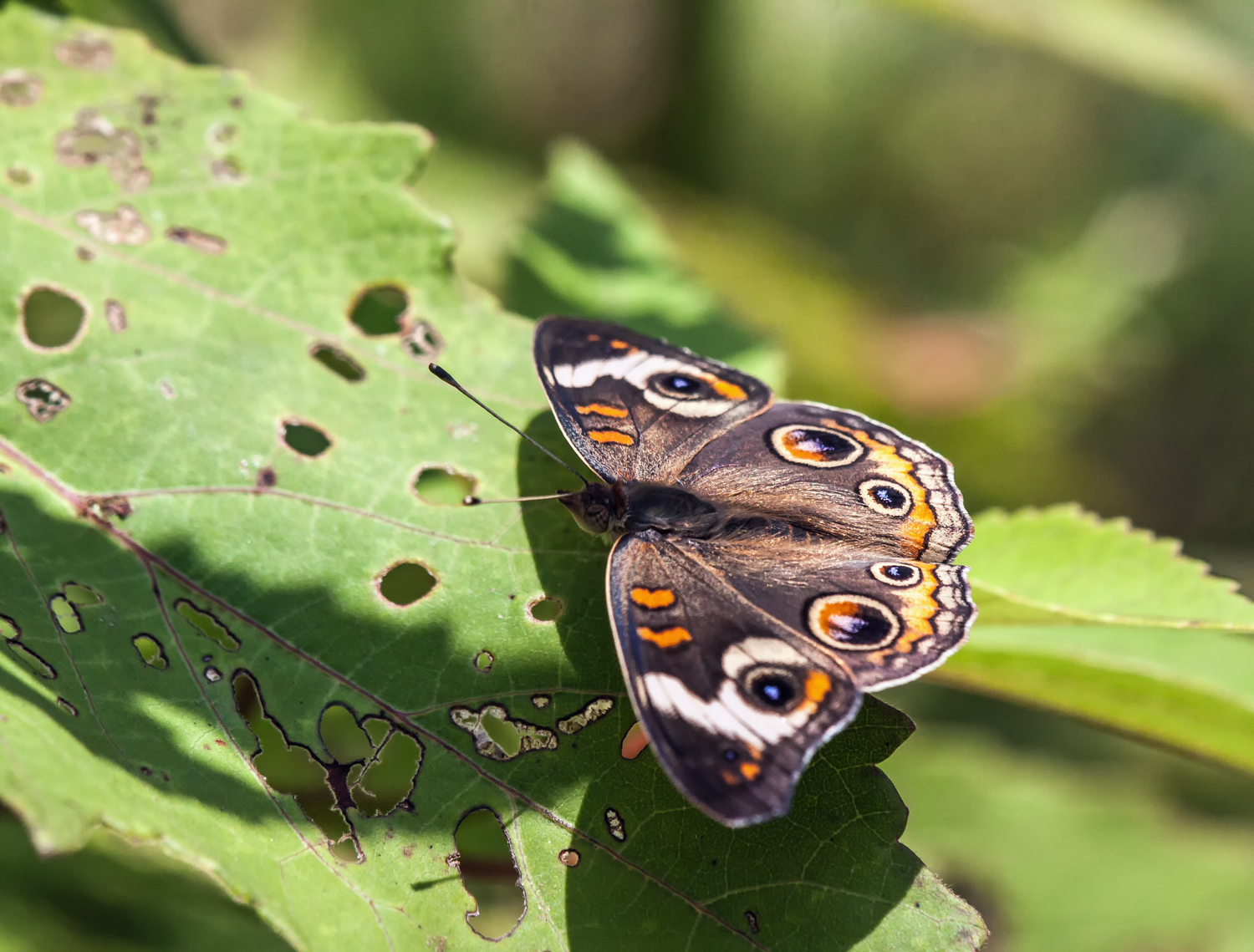
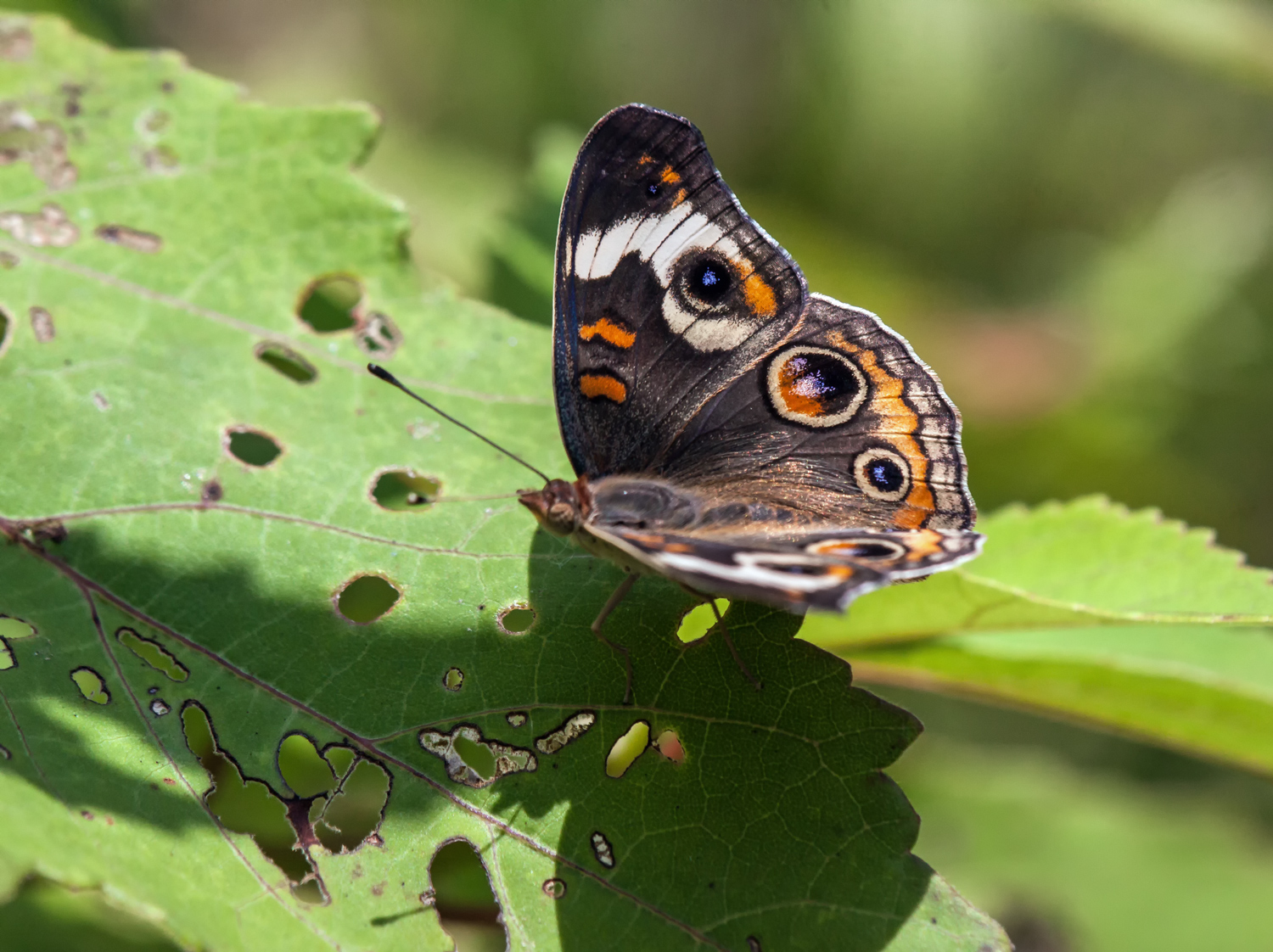
One of the real joys of the summer is having the chance to see colorful butterflies, like this Common Buckeye butterfly (Junonia coenia) that I observed last week at Jackson Miles Abbott Wetland Refuge. I am not sure what creature has been munching on the vegetation on which the butterfly is perched, but I really like the way that the holes in leaves mirror the circular shapes of the butterfly’s eye spots.

Common Buckeye

Common Buckeye


© Michael Q. Powell. All rights reserved.

Read Full Post »

« Newer Posts - Older Posts »