Feeds:
Posts
Comments

Posts Tagged ‘iPhone 11’

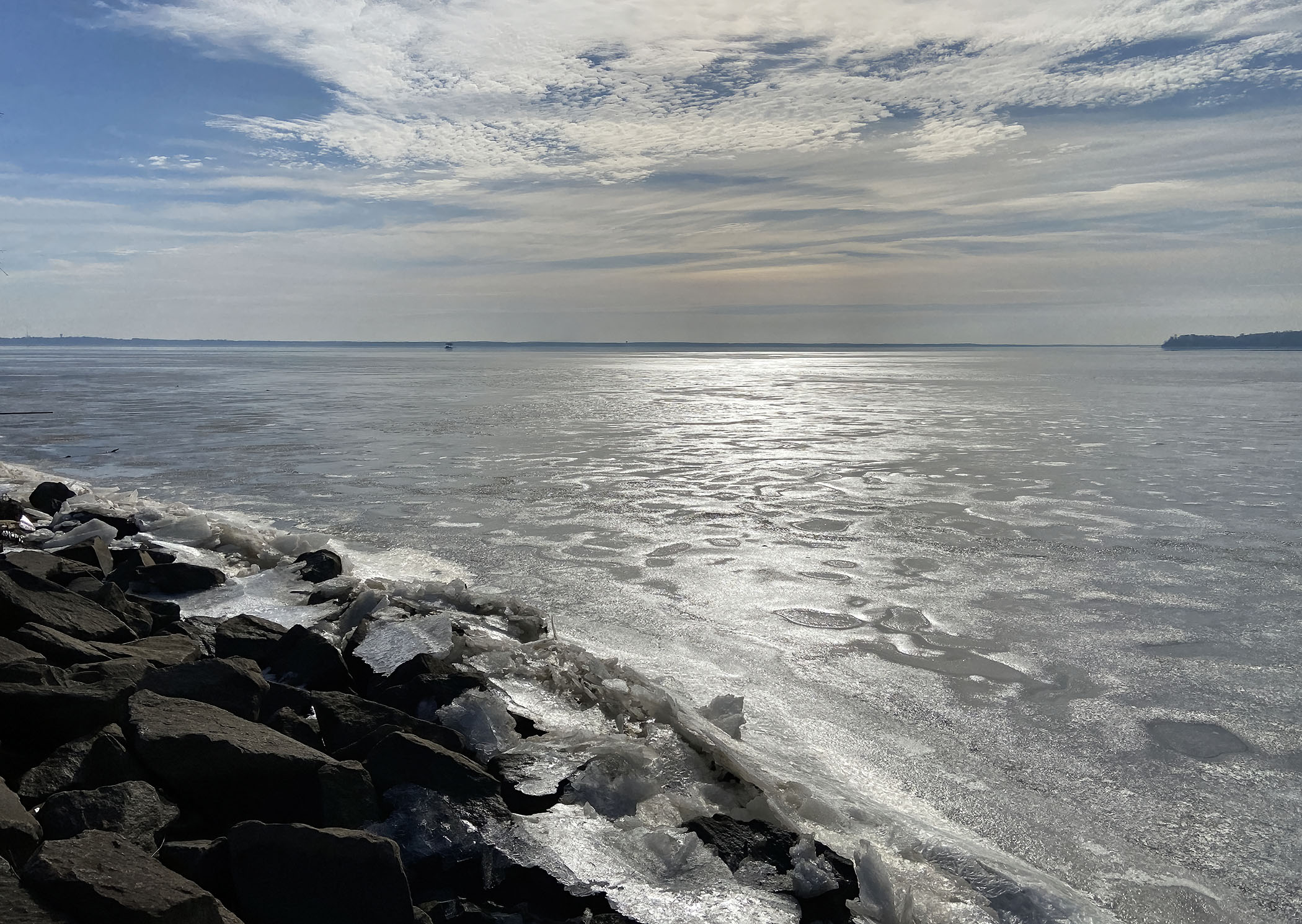
Although the weather was a bit warmer yesterday (18 December), there was still plenty of ice in the frigid waters off of the shores of Occoquan Bay National Wildlife Refuge. For many of us here in the United States, winter does not officially begin until this Sunday, the 21st of December, but we have already had two snow storms with measurable accumulation and some periods of sub-freezing temperatures.

With rain in the forecast for the following couple of days, I ventured out yesterday to my favorite local wildlife refuge with my camera, looking primarily for birds.I did not have a huge amount of success in capturing images of these birds, but it was enjoyable nonetheless to be outdoors in the relatively comfortable temperatures of a beautiful December day.

I was happy that I remembered to take some landscape style shots with my iPhone to document the day—when I am carrying around my camera with a long telephoto zoom lens, I often forget to take some wide-angle shots like these ones.

frozen waters

frozen waters

© Michael Q. Powell. All rights reserved.


Read Full Post »

On Saturday I attended a wonderful Pride Fair celebration in the City of Alexandria, Virginia on the plaza right outside of City Hall. Various civic, business, religious, and governmental groups and organizations were represented in the booths and there was a friendly, chill vibe, with lots of families attending.

Unlike the Washington D.C. Pride celebration earlier this month that I also attended that was a bit more militant, political and commercialized, this felt really supportive and comfortable. It was cool to see the face painting and balloon animals for children and I personally participated in filling in a community coloring page, using crayons for the first time in a lot of years. People were invariably friendly and reflected the widely shared sentiment that “all are welcome.”

The official Pride Month (June) is coming to an end, but I am hoping that we can continue to support and respect each other in our words and in our actions. We do not have to agree on all points, but I am hoping that we can turn aside the wings of hate and negativity that threaten to engulf us all. I am reminded of the quotation attributed to Saint Francis of Assisi that was on the inside door of a church that I used to attend, “Preach the Gospel at all times. Use words if necessary.”

Alexandria Pride

Alexandria Pride

Alexandria Pride

Alexandria Pride

© Michael Q. Powell. All rights reserved.


Read Full Post »

It is always a challenge to shoot directly into the sun. You never quite know what kind of sun flares will make their way into you photo or how much your subject will become a silhouette. Still I can’t help but attempt to capture a photo whenever the opportunity presents itself.

My gamble paid off last week when I captured this cool image of an American Bison (Bison bison) last week at Theodore Roosevelt National Park in Medora, North Dakota. It was just after sunrise and the sun was still quite low on the horizon, creating a distorted, elongated shadow of the bison. You can see only a few details of this magnificent animal, but the shape of the profile of the bison makes it easy to identify the primary subject.

Luck plays often plays a significant role when it comes to wildlife photography, but I can’t help but think of the old adage, usually attributed to Wayne Gretzky, “You miss 100 % of the shots that you don’t take.” While I am not a fan of the “spray and pray” approach to photography, I do think it is worthwhile to take a shot whenever something catches your eye—sometimes you will be pleasantly surprised by the results.

© Michael Q. Powell. All rights reserved.

Read Full Post »

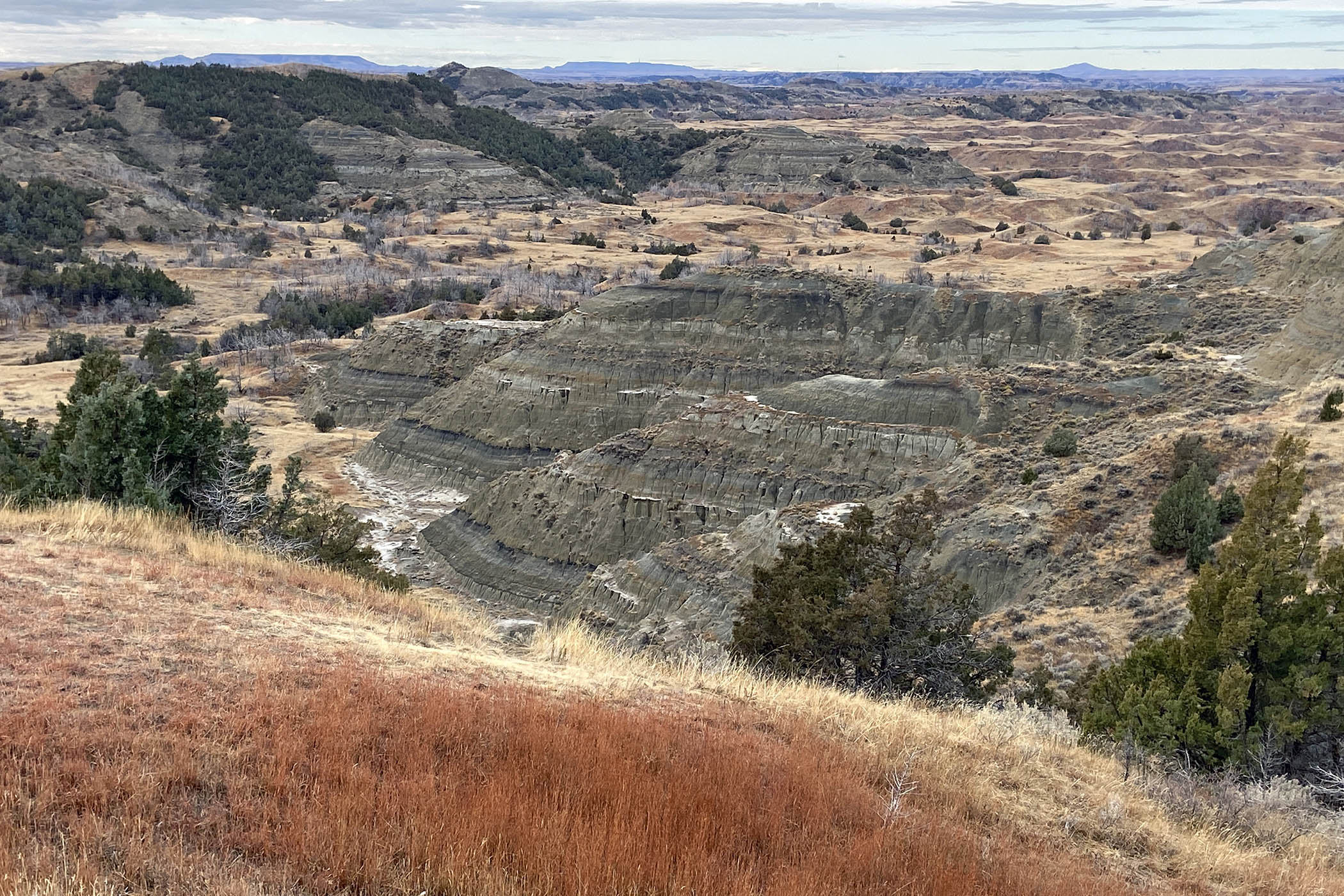
After a frigid night camping at Theodore Roosevelt National Park in North Dakota, I awoke early Tuesday morning to catch the sunrise. It was not super spectacular, but I was able to capture some of the color as the sun rose over the mountains.

When the sun was a little higher in the sky, I was able to get a better view of the spectacular landscape with incredible rock formations, as you can see in the final photo. I encourage you to click on that photo to get an enlarged view of the details of the landscape. In this part of the country, these terrain features are referred to as “buttes,” though it is not always clear exactly what make a “butte” a “butte,” rather than a “hill” or “mountain.” No matter what you call them, these terrain features are breath-taking.

sunrise in North Dakota

sunrise in North Dakota

buttes in North Dakota

© Michael Q. Powell. All rights reserved.

Read Full Post »

I got up early to catch the sunrise at Theodore Roosevelt National Park in South Dakota on 13 October during a road trip to visit family. I had spent the previous night tent camping in the park where temperatures dropped down into the 20’s (about minus 3 degrees C). I was warm enough in my little tent, though its outer surface was covered with frost when I first woke up.

It was dark when I started to drive slowly along the roads in the national park, but gradually the rising sun began to illuminate the spectacular landscape with its warm light. Here a couple of images that I was able to capture with my iPhone 11, which did a good job in somewhat difficult lighting conditions.

sunrise in South Dakota

© Michael Q. Powell. All rights reserved.


Read Full Post »

Today in the United States we are commemorating Memorial Day, a day set aside to honor, mourn, and remember those who died while serving our country, especially in the armed forces. As some of you know, I spent 20 years in the U.S. Army and I personally feel a sense of  gratitude to those who gave what Lincoln so poignantly called “the last full measure of devotion” in his address at Gettysburg in 1863. He challenged his listeners and continues to challenge us with these words, “It is for us the living, rather, to be dedicated here to the unfinished work which they who fought here have thus far so nobly advanced.”

A little over a week ago I spent the weekend at a retreat at Shrine Mont in Orkney Springs, Virginia with a group from my church, St. Martin de Porres Episcopal Church. I was mostly unplugged all weekend in order to be more fully engaged with others and with the beautiful mountain setting. With my iPhone, though, I captured these images that give you a small sense of the beauty and serenity of Shrine Mont, including the outdoor cathedral that I visited each day in the early morning hours and at which we celebrated Pentecost Sunday with several other churches. Repeatedly throughout the weekend, I was captured by a sense of introspection and contemplation.

The third photo shows an extract from The Sermon to the Birds attributed to St. Francis of Assisi. Here is the full text, “My little sisters, the birds, much bounden are ye unto God, your creator, and always in every place ought ye to praise him, for that he hath given you liberty to fly about everywhere, and hath also given you double and triple raiment; moreover he preserved your seed in the ark of Noah, that your race might not perish out of the world; still more are ye beholden to him for the element of the air which he hath appointed for you; beyond all this, ye sow not, neither do you reap; and God feedeth you, and giveth you the streams and fountains for your drink; the mountains and valleys for your refuge and the high trees whereon to make your nests; and because ye know not how to spin or sow, God clotheth you, you and your children; wherefore your creator loveth you much, seeing that he hath bestowed on you so many benefits; and therefore, my little sisters, beware of the sin of ingratitude, and study always to give praises unto God.”

Today is a day set aside for us be thankful, an attitude which I believe we should cultivate every day and not just on special holidays. I can’t help but think of the Bible verses (Thessalonians 5:16-18) that say, “Rejoice always, pray continually, and give thanks in all circumstances.” Not long ago I heard a sermon that has prompted me to look at that verse in a new way—the pastor reminded us that the verse says to give thanks in all circumstances, not for all circumstances. We definitely cannot control our circumstances, no matter how hard we try, but we can control our response to those circumstances.

Shrine Mont

shrine mont

Shrine Mont

shrine mont

© Michael Q. Powell. All rights reserved.


Read Full Post »

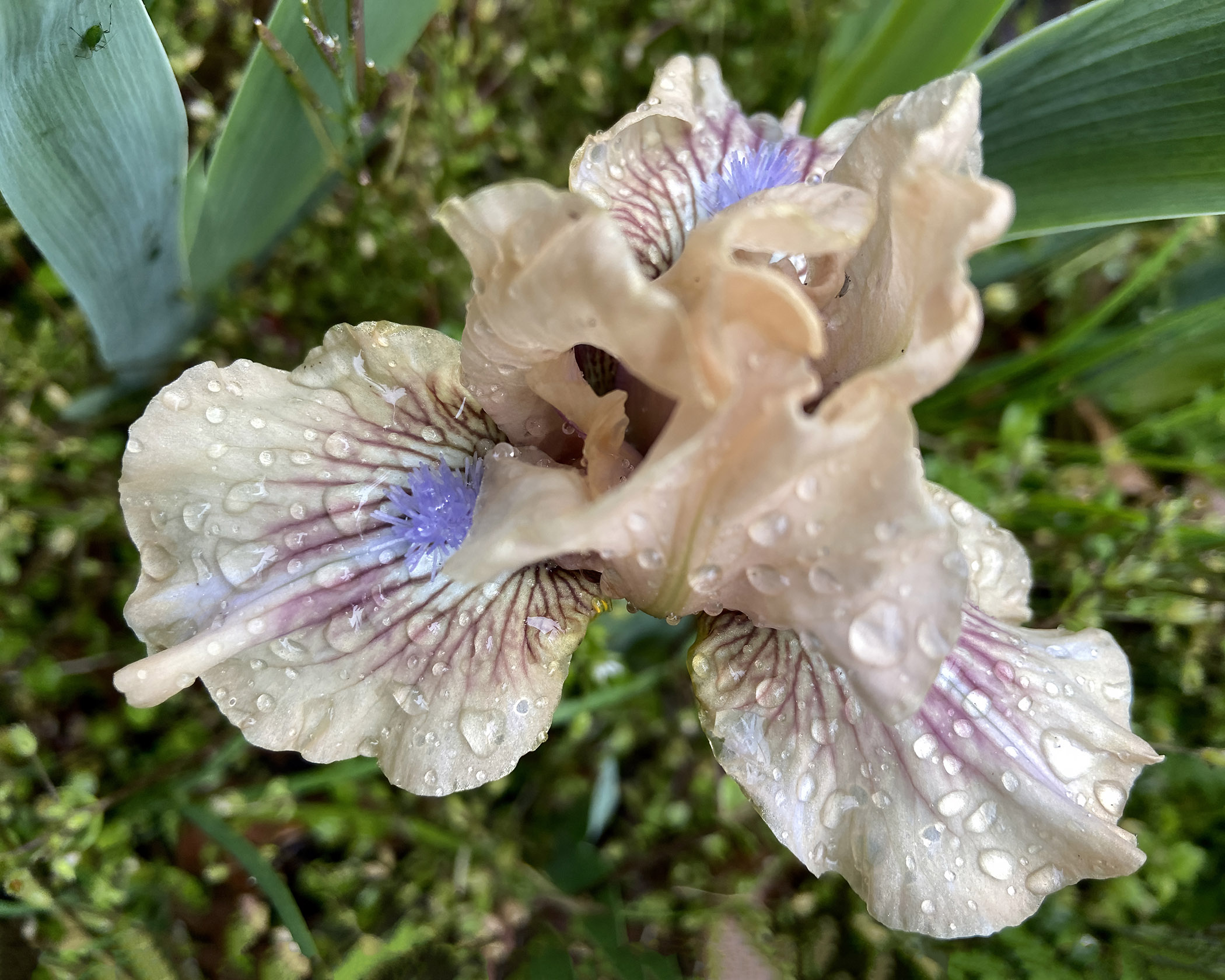
As I was preparing to go out to lunch yesterday with my dear friend and photography mentor Cindy Dyer, she glanced down at her garden and noticed that an iris was already in bloom, the first one of the spring. I suspect that this is some kind of dwarf iris, because it was nestled low in the vegetation and was only about six inches (15 cm) tall.

I thought about cropping the photo a little tighter, but wanted to retain the bug that is in the upper left corner of the image. As you might guess, I did not notice the little insect when I captured the photo with my iPhone. Cindy likes to call these “bonus bugs”—it is amazing how often I discover these “bonus bugs” in my photos when reviewing them on my computer.

Cindy has planted a wide variety of irises in her garden, so this is a sneak preview of the amazing beauty that is yet to come. I don’t know the name of this iris variety, but love the lavender color of its “beard.”

iris

© Michael Q. Powell. All rights reserved.

Read Full Post »

When does spring begin? Many of us in the Northern Hemisphere measure the seasons using the astronomical calendar and this year spring begins on the 19th of March, i.e. the vernal equinox. For those who use the meteorological calendar, however, spring began on the 1st of March.

I generally use something other than a calendar when I measure the change of seasons. I feel the beginning of spring when the weather starts to warm up and the daylight begins to linger a bit longer. I can feel nature stirring, preparing for new life in the animal and plant kingdoms.

One of the signs of spring that I look for is the emergence of early spring flowers. This weekend I am cat sitting for my friend Cindy and her husband Michael, who are out of town on a trip to Texas. Cindy, my photography mentor and fellow photographer, has a wonderful garden that I have featured in this blog numerous times. The last couple of weeks I have checked out her garden, waiting patiently for the first flowers to appear.

I was delighted on Thursday to see that a tiny purple crocus was blooming amid all of the leaf clutter. It was only a single bloom, but it somehow filled my heart with joy and excitement. For me, spring has begun.

crocus

crocus

© Michael Q. Powell. All rights reserved.


Read Full Post »

Nature moves in seasonal cycles, constantly changing as plants and creatures appear and disappear. At this time of the year I begin to look for signs of spring. The calendar tells me that I have another month to wait, but nature does not always follow the manmade calendar.

As I was walking to a craft store on Saturday I was delighted to spot this solitary daffodil poking out of the ground, already in bloom. I snapped this quick photo with my iPhone to record the moment, my first daffodil of 2024.

Whenever I record the “first” photo of any subject, whether it is a completely new one or the reappearance of a familiar one, I am happy to capture whatever photo I can. Later, when I have a second chance, I will worry more about artistry and technique. At that first moment, I am content to immerse myself in joy and wonder—the photo is of secondary concern.

daffodil

© Michael Q. Powell. All rights reserved.

Read Full Post »

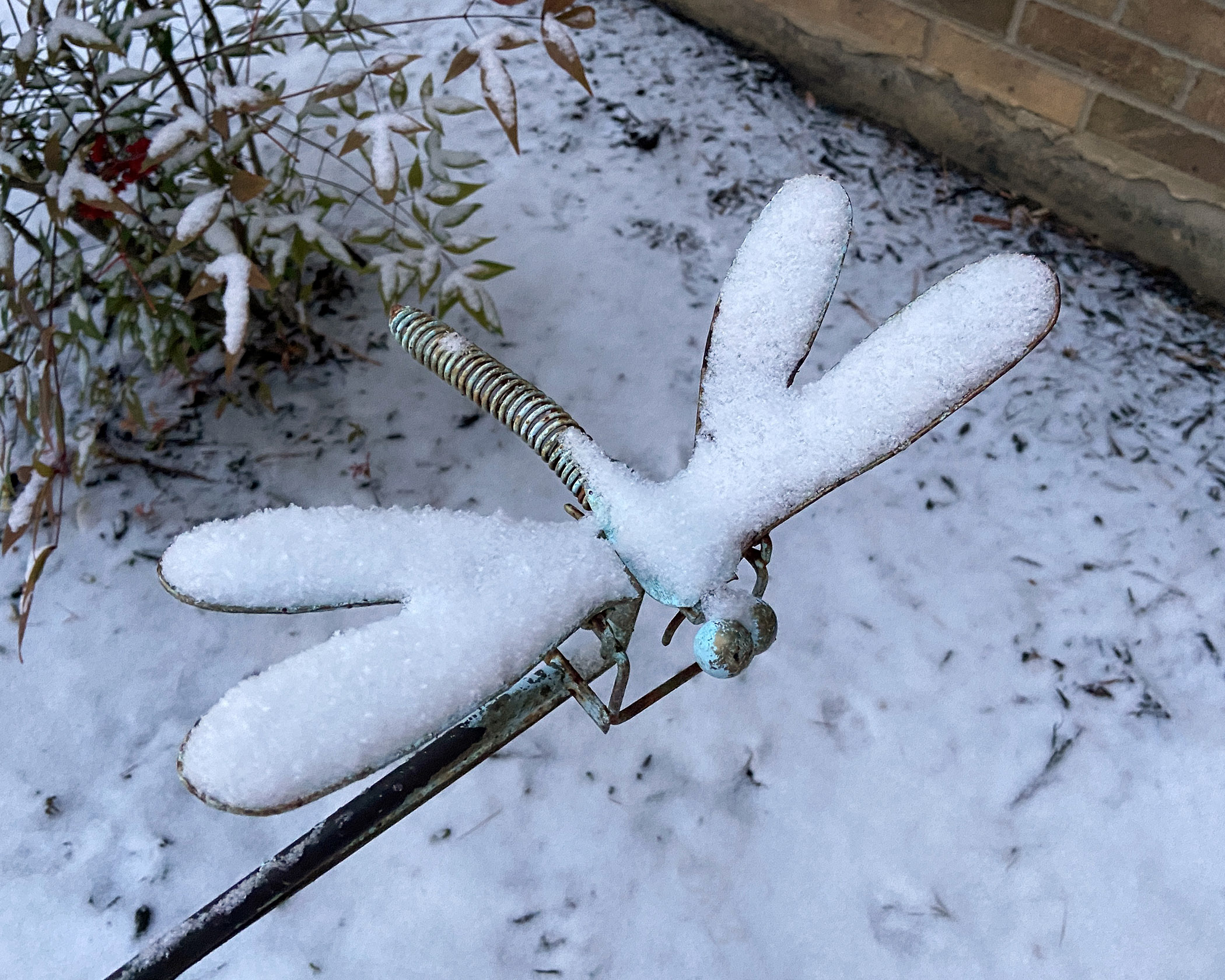
I have not been paying much attention to weather forecasts, so I was pleasantly surprised this morning to wake up to world covered with a dusting of snow. Normally this small amount of snow would not be newsworthy, but we have been in a snow drought for quite some time in my area. It has been two years since we last had an accumulation of two inches (50 mm) of snow in a single storm and for the entire winter last year we had a total of only about a half an inch (13 mm).

I probably did not need to do so, but I got out my snow shovel and cleared my steps and the sidewalk in front of my house.  I don’t really plan to drive anywhere, but I brushed the snow off of my car to keep it from freezing into any icy crust. Many of you know that I drive an orange KIA Soul and the final photo shows my BLESS MY license plate inside of a frame that says SOUL. I like this positive message and frequently get thumbs-up signs of approval from my fellow drivers.

Weather forecasters predict that we could get another 2 to 4 inches (50-100 mm) later today. I grew up in New England and that amount of snow would be a minor annoyance, but here in the Washington D.C. area, it will paralyze the area, undoubtedly resulting in numerous accidents and delayed school openings or even closures tomorrow. Some of the effects may be mitigated by the fact that today is a federal holiday, Martin Luther King Jr. Day, so traffic congestion should be lighter than usual, which will allow road crews to more effective clear and treat the roads.

Snowy dragonfly

Snowy lamppost

Snowy soul

© Michael Q. Powell. All rights reserved.


Read Full Post »

Yesterday I welcomed the sunrise at Occoquan Bay National Wildlife Refuge, the first time that I have tried to photograph a sunrise in a long time. There are electric gates at this refuge and I arrived at 7:00 a.m., just after they had slid open. Sunrise was officially at 7:26, so I had to hustle to make it down to the water’s edge in time to see the sun begin to move above the horizon. It was cold, only 37 degrees (3 degrees C), so I made sure to zip up my coat and raise its hood.

I arrived in time and played around with the panorama feature on my iPhone to capture the second image below before the sun was visible. My panning was not quite steady, but I like the wide view that I was able to capture.

The first shot, also taken with my iPhone, shows the sun just after it had risen above the water. I really like the reflection of the sunlight in the water and the movement of the water that is visible in the image.

sunrise

sunrise

© Michael Q. Powell. All rights reserved.

Read Full Post »

I trudged the trails at Occoquan Bay National Wildlife Refuge yesterday for quite some time—my iPhone indicates that I walked 12,213 steps. The weather was cool and there was partial sunshine, so it was quite pleasant. I was able to take a lot of photos, but have not had a chance to sort through them yet to see how they came out. I might have gotten decent shots of a pair of eagles and maybe of two chattering kingfishers.

Today, though, I am in a reflective, somewhat mood, so rather than post a wildlife photo, I decided to post a landscape (or may more accurately it is a seascape) photo that I captured late in the afternoon, when the skies clouded over. It was still well before sunset, but there was a little color in the sky. I love the texture of the clouds and the reflections of the light in the water and the images does a pretty good job in capturing the mood of the moment.

As most of you know, I do not take landscape photos very often, but I am trying more and more to shoot a variety of shots that reflect not only what is going on in front of the lens, but also what is going on around me and in my head.

winter sky

© Michael Q. Powell. All rights reserved.

Read Full Post »

The sun was so low at 3:15 in the afternoon last Friday that I cast a really long shadow as I wandered the trails at Occoquan Bay National Wildlife Refuge with my camera and telephoto zoom lens attached to a monopod. This is my favorite type of selfie, a genre of photos that I do not feel compelled to share daily, unlike several of my younger friends.

Happy Solstice Day! Astronomically speaking, today marks the beginning of winter in the northern hemisphere and of summer in the southern hemisphere. In the north, it is the shortest day and the longest night of the year while in the south it is the longest day and the shortest night of the year. Time moves slowly at this time of the year—the time of sunrise doesn’t change much over the next month, but gradually the time of sunset gets a tiny bit later.

I look forward to days when I see long shadows, for it means the sun is shining. For much of winter the sky is grey here, so moments of light are a welcome reprieve.

shadow

© Michael Q. Powell. All rights reserved.

Read Full Post »

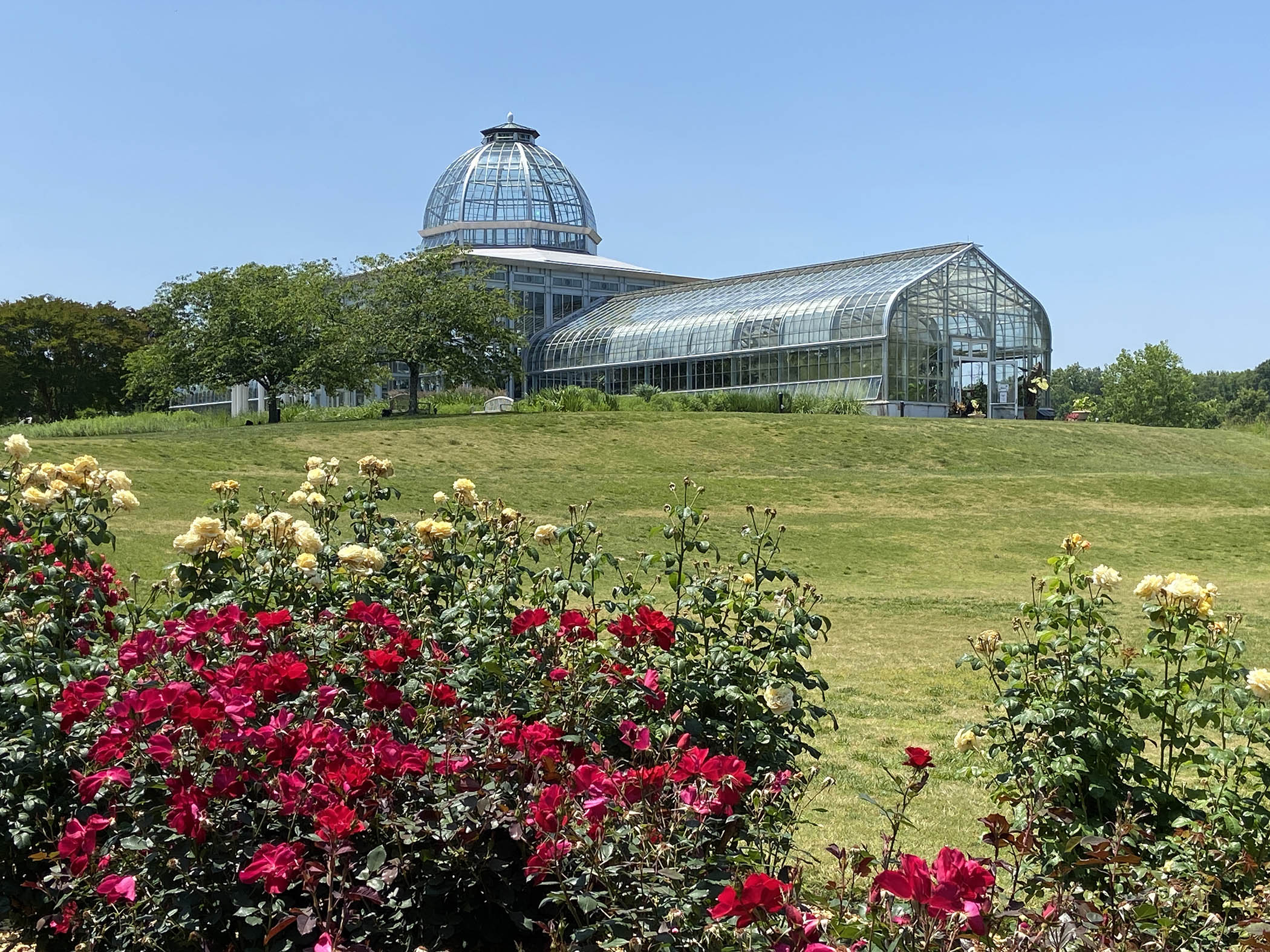
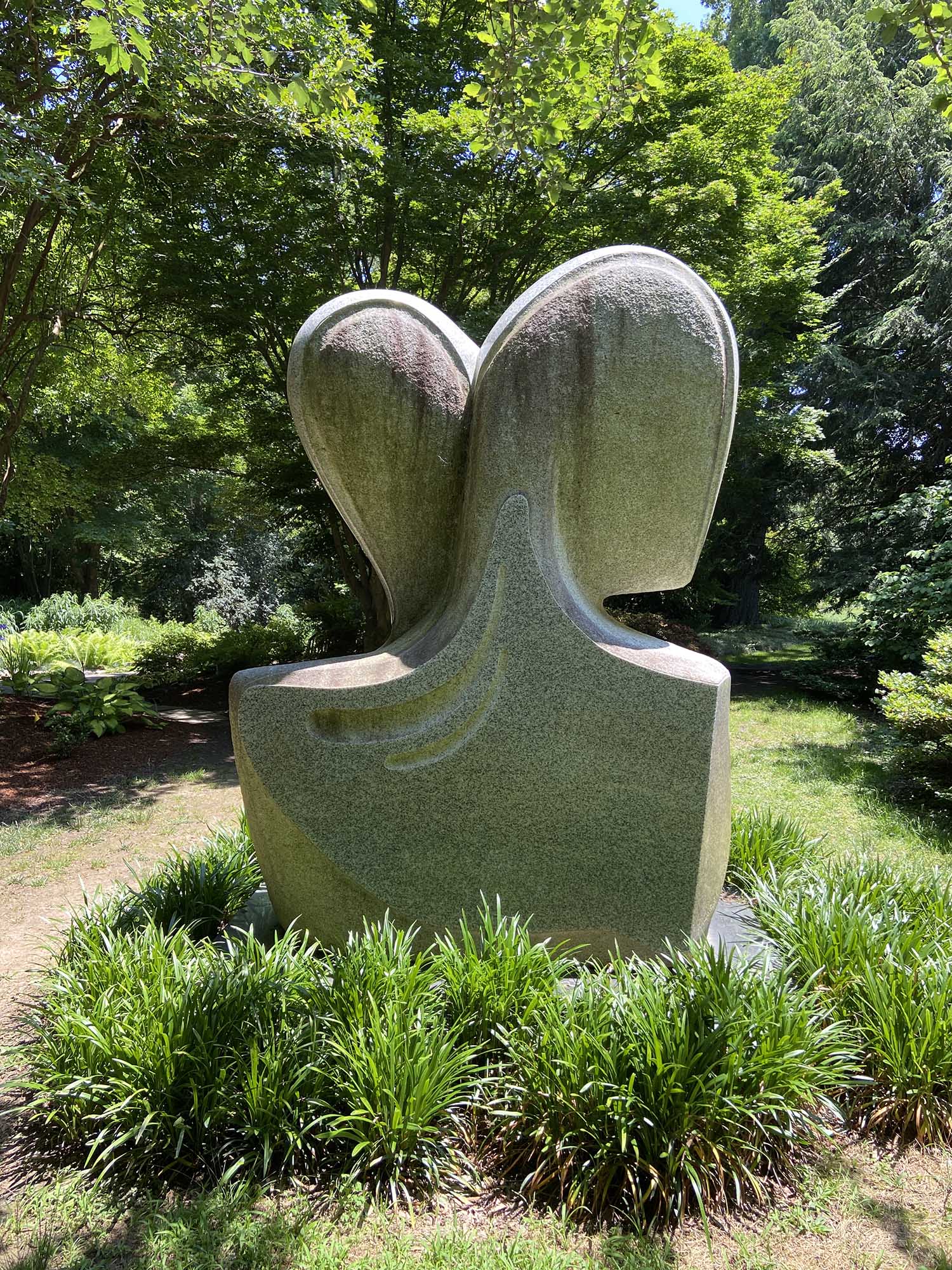
Earlier this month I made a trip to Lewis Ginter Botanical Garden, an amazing garden located outside of Richmond, Virginia, with my dear friend and photography mentor Cindy Dyer. Although I spent a lot of time enjoying the beauty of the flowers, I periodically paused to capture images with my iPhone of some of the structures and art through the garden that captured my attention.

Normally I try to get close to my subjects using either a telephoto or macro lens. In this case, however, I was focused on capturing more of the “big picture” and the wide angle of the iPhone was perfect for doing so.

The sculptures in the second, fourth, and sixth images are part of a special exhibition called “Incanto: An Oasis of Lyrical Sculpture” by sculptor Kate Raudenbush and poetry by Sha Michele. Please check out this link for an explanation of the significance and meaning of these sculptures and the two others that make up the exhibition. “Five intricately designed, allegorical sculptures accompanied by poetry invite a journey of self-discovery and connection with others and the natural world.”

Lewis Ginter Botanical Garden

Lewis Ginter Botanical Garden

Lewis Ginter Botanical Garden

Lewis Ginter Botanical Garden

Lewis Ginter Botanical Garden

Lewis Ginter Botanical Garden

© Michael Q. Powell. All rights reserved.


Read Full Post »

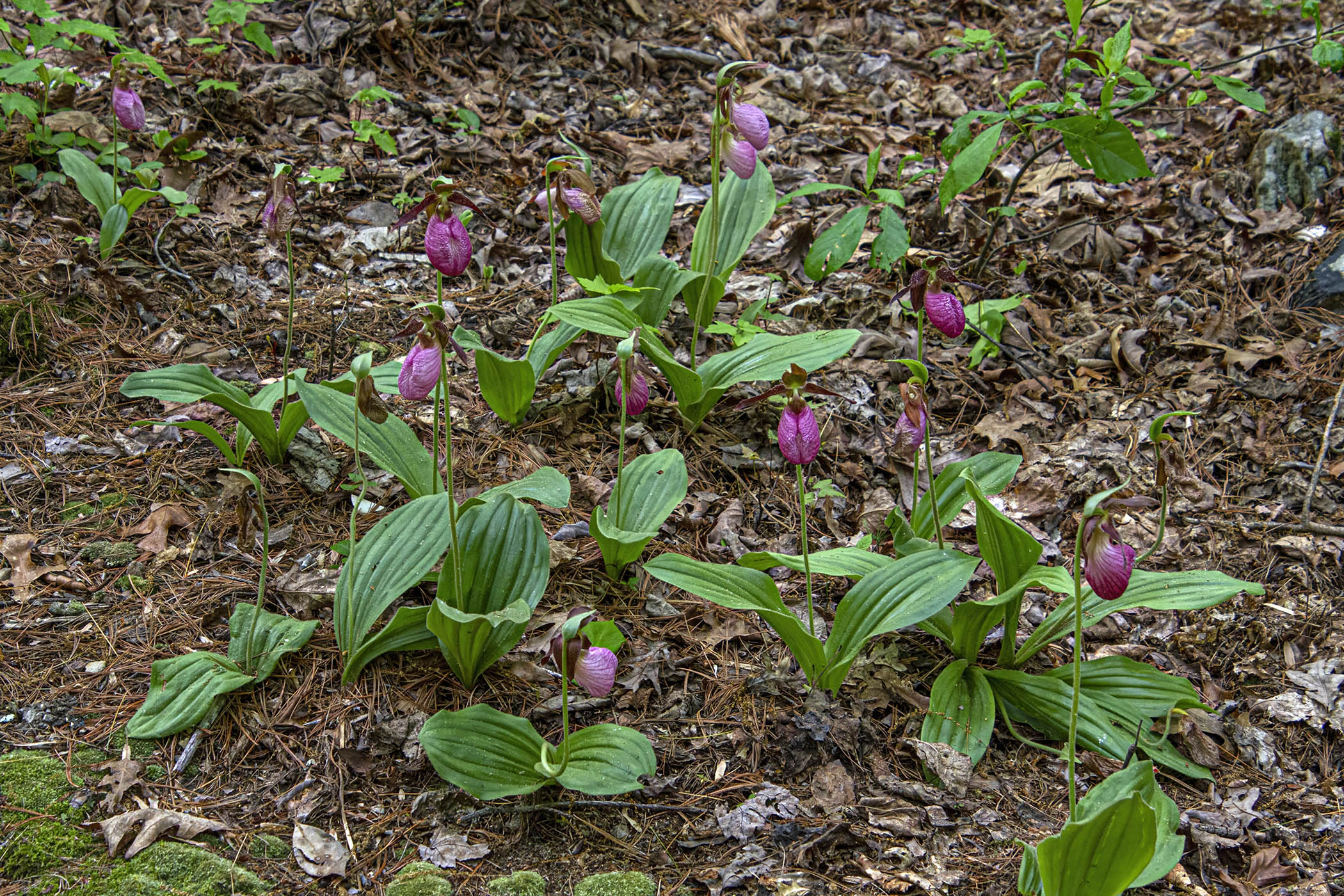
I was happy this past weekend to see that Pink Lady’s Slipper orchids (Cypripedium acaule) were still in bloom in Orkney Springs, Virginia during my recent church retreat at Shrine Mont. Last year at about the same time of the year I spotted a few of them and was successful in finding some when I searched that same general location. The retreat center is located in a mountainous and cooler area of the state, which means that the growing season for flowers is a little behind my area, where the lady’s slippers faded a few weeks ago.

At first I spotted only a few of these fragile little flowers, but eventually I came upon a large patch of almost a dozen of them, as you can see in the final photo. It was a bit of a challenge for me to compose photos of flowers, because I am so used to taking pictures of wildlife. I have to admit, though, that I enjoyed having the luxury of taking my time to compose my shots—with wildlife I often have to react quickly to capture a fleeting moment, so composition is not usually my top priority.

Pink Lady's Slipper

Pink Lady's Slipper

Pink Lady's Slipper

Pink Lady's Slipper

© Michael Q. Powell. All rights reserved.

Read Full Post »

Recently I have featured a number of photos of Bald Eagles (Haliaeetus leucocephalus) and their nests. Some of the photos make it look like I am close to the nests, but in fact I took the photos from quite a distance away with a telephoto zoom lens. In mid-December each year, the authorities at Occoquan Bay National Wildlife Refuge put up barriers to keep people from disturbing the nesting eagles.

The first photo below shows one of the barriers. The tallest tree to the left of the road is where the eagle nest is located. If you read yesterday’s posting entitled Three eagle nests, you make recognize the nest as the one in the sycamore tree in the third photo.

This year, a sign was posted at each of the barriers that explains the potential negative impact of the close presence of humans on the eagles. Hopefully these signs will help deter visitors from walking past the barriers. I have been told that in past years trespassers have in fact been apprehended and have paid hefty fines.

bald eagle

Bald Eagle

© Michael Q. Powell. All rights reserved.

Read Full Post »

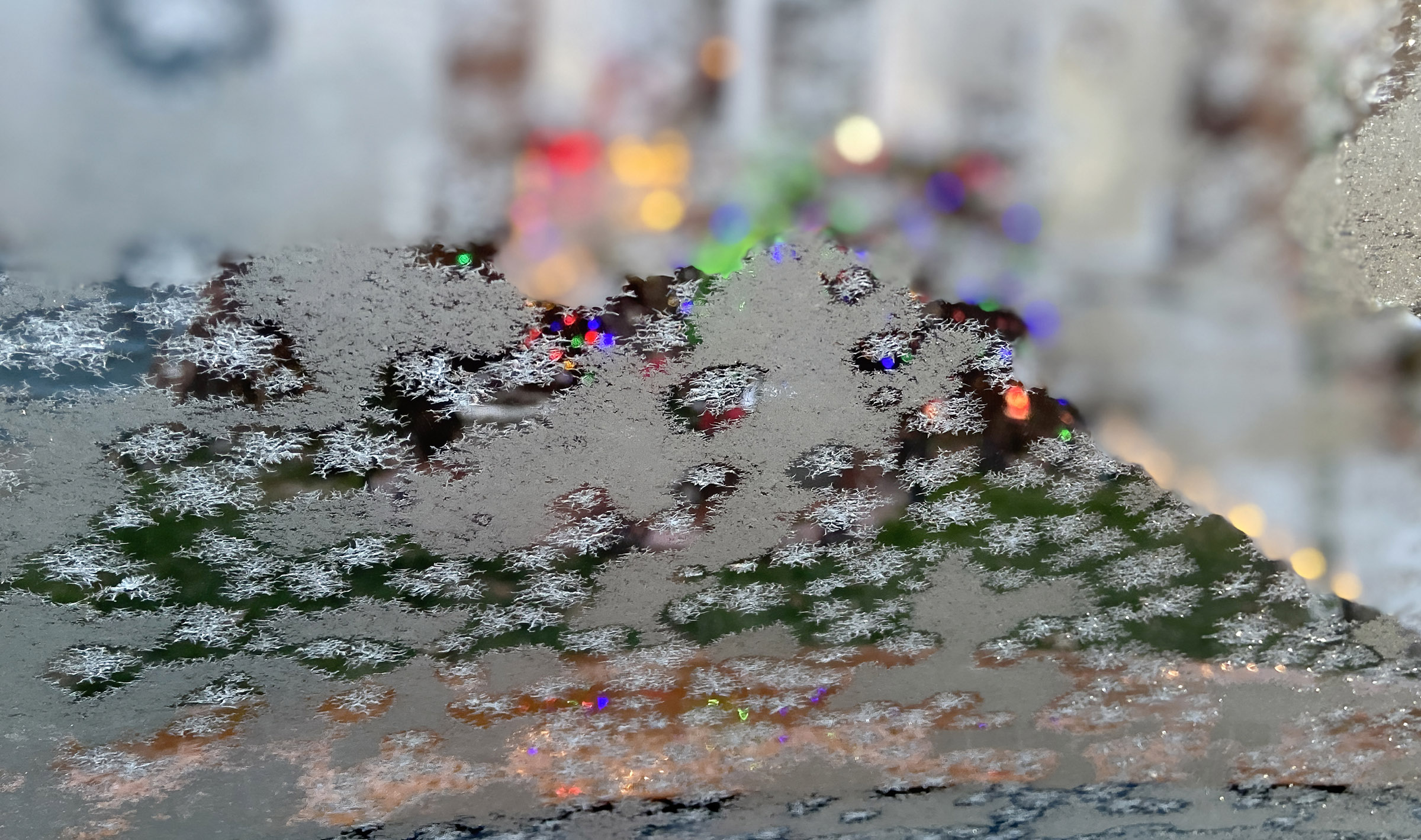
Early yesterday morning, my car’s windshield was covered with starbursts of frost. As I sat in the driver’s seat, I had this magical view of the Christmas lights on my neighbor’s house. I captured the moment with my iPhone—then I cleared the windshield.

Today is the day of the solstice, the day that some of us in the Northern Hemisphere count as the first day of winter. According to the Farmer’s Almanac, “It’s the astronomical moment when the Sun reaches the Tropic of Capricorn, we have our shortest day and longest night of the year in the Northern Hemisphere in terms of daylight.” Like much of the United States, we are in for a spell of frigid weather, though I doubt that we will see any snow before Christmas.

It felt appropriate to mark this day with this frosty image. I was preparing to head out to my favorite Wildlife Refuge yesterday morning when I took this shot and will be featuring some of the birds that I encountered once I have finished reviewing my shots.

frost

© Michael Q. Powell. All rights reserved.

Read Full Post »

I am now safely back in Virginia after my 1534 mile (2468 km) drive home from Texas. My time in Texas was wonderful, especially the wedding that I attended, but unfortunately I contracted COVID shortly thereafter. As a result, I extended my time in Texas by several days as I recovered from my symptoms that were mercifully mild and short in duration. In addition to the initial two Pfizer shots, I have had three booster shots, including the new “bivalent” version, which I believe helped to mitigate the effect of the virus.

Thankfully I was not alone and was dogsitting for the happy couple’s two delightful dogs, who helped to keep me company during my five day isolation. I love the long shadows of the early morning and late afternoon and captured this first image one morning when I was walking Oscar, their English Spaniel—this is my favorite kind of “selfie” shot. Freckles, their Cocker Spaniel, requires shorter walks because of an injury and was waiting our return at home, where I captured the second image. As was the case with treats, I decided that I had better give the two dogs equal treatment in this blog posting. 🙂

For the record, a photo of Freckles first appeared in the blog in February 2013, when she was only a year old, in a posting entitled “Dogsitting on a Saturday night.” The couple adopted Oscar, who is also about ten years old, two years ago and this is his first appearance in the blog.

I will probably be taking it a bit easy for the next week or so, but I am sure that I will find some interesting recent photos of my adventures in nature to share with you all.

Oscar

Freckles

© Michael Q. Powell. All rights reserved.

Read Full Post »

On Thursday I visited Shenandoah National Park with a friend and we drove a section of Skyline Drive to see the colorful fall foliage. I love the patchwork pattern of colors that we observed on the slopes of the  mountains. The predominant color seemed to be a bright rusty orange, with only small patches of bright yellow and red. In some directions, the sky was hazy, so the successive layers of mountains gradually faded out, as you can see in the final photo.

My blog posting schedule will be a little erratic during the next two to three weeks. I will be driving from Virginia to Texas for a wedding and don’t expect that I will be doing any posting on the days when I will be traveling. I hope that I will be able to do a few postings while I am in Texas—I will be just outside of Austin for about a week or maybe a little longer.

Shenandoah National Park

Shenandoah National Park

Shenandoah National Park

© Michael Q. Powell. All rights reserved.


Read Full Post »

Usually when I am taking a photograph, I have a specific subject. Sometimes, though, I try to capture something that is harder to describe, like the effects of light or of an atmospheric condition.

Last Monday I visited Occoquan Bay National Wildlife Refuge in the early morning and was fascinated by the mist hanging over the water that was gradually starting to dissipate as the sun rose higher in the sky. I really like the way that the first image turned out when I pointed my camera towards the water and the land forms in the distance.

Looking in another direction, I saw some Canada Geese, most of which appear to be sleeping and were partially shrouded by the mist. In the distance I could see a bit of fall color, which was reflected in the water.

Turning to the land, I couldn’t help but notice the beautiful rays of early morning light that were piercing through the foliage and the mist. It was tough to capture the effect, but hopefully the final photo gives you a sense of what I was seeing and feeling.

These are definitely not the typical kinds of photos that I take, but I was inspired by the conditions of the moment to try some different approaches and am content with the results.

misty morning

misty morning

misty morning

© Michael Q. Powell. All rights reserved.

Read Full Post »

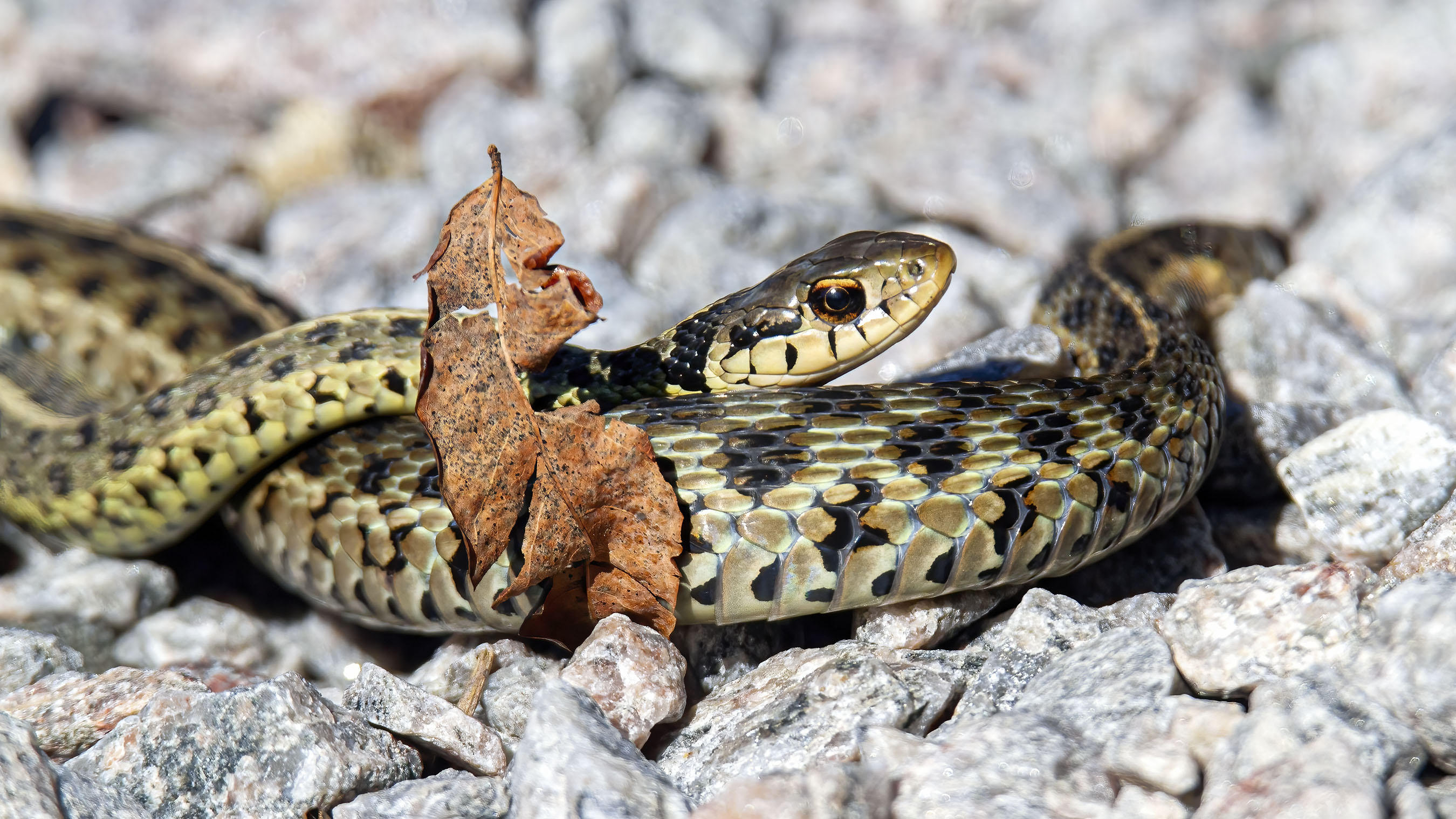
On Monday at Occoquan Bay National Wildlife Refuge I stumbled upon a pair of Eastern Garter Snakes (Thamnophis sirtalis sirtalis). Their bodies were intertwined and were undulating. Now I do not know much about the mating practices of snakes, but I assume that was what they were doing.

I got down really low to take the first shot, which gives a close-up view of the head of one of the snakes that appears to be smiling—I believe that this one, which is clearly the smaller of the two, is the male snake.

According to an article by Sue Pike, “Garter snakes bear live young instead of laying eggs. In fact, in most live-bearing snakes, the females are considerably larger than the males. Since a larger female can carry more babies, and larger litter size mean a greater chance of survival for some of the offspring; natural selection will favor larger females. Females also tend to be more bulky and less active than males since they need to conserve their energy for reproduction. Males tend to be skinnier, more active and smaller than the females because, in the wild, their excess energy is used to chase females.”

The second shot shows the bodies of the two snakes when I came upon them—they look almost like they were braided together. I encourage you to click on the image to get a closer look at the beautiful patterns on the bodies of these snakes.

As I was making a little video of the two snakes, they were joined by a third garter snake. This snake, which I think is another male, slithered along the entire length of the intertwined bodies, looking for an opening. Somehow I thought the new snake would be more aggressive, but he was actually quite gentle. He ended up with his body stretched out as part of the intricate braid.

I have embedded the one-minute-long YouTube video at the end of this posting. In the video you can see the undulating bodies of the two snakes and the arrival and subsequent actions of the third snake. If you cannot see the embedded video, you can use this link  (https://www.youtube.com/watch?v=bgKIKLVeOVg) to access it directly on YouTube.

mating garter snakes

mating garter snakes

© Michael Q. Powell. All rights reserved.


Read Full Post »

Yesterday afternoon at Potomac Episcopal, a loose confederation of four local Episcopal churches that has worshipped together since the start of the pandemic, we had a special Blessing of the Animals service in celebration of The Feast of Francis of Assisi. We held the service indoors in the parish hall at St. Mark’s Episcopal Church in Alexandria, one of the four churches, because of the rain caused by the remnants of hurricane Ian.

There were about 25 dogs and two cats that participated in the service. Participants also brought photos of pets and representations of pets that could not be present (including a parrot and some aquatic turtles) as well as mementos of pets who have died during the past year.

These are a few of the many photos that I took during the event that we uploaded to a Shutterfly website for viewing by all participant. Although we did not have music, we had a chorus of dogs barking throughout the short service, as you can hear in a video clip that I recorded. I have embedded at the end of this posting the YouTube version of that eight minute video that includes prayers and readings in celebration of the animals. It can also be found by clicking this link.

One of my favorite parts of the service was entitled “Litany of Thanks for Animals in the Life Cycle of Earth,” the text of which I have included below.

“We thank you, Lord, for the gift of animals in our lives. We thank you for animals that comfort us, delight us and give us companionship. We thank you for dogs and cats, birds and hamsters, guinea pigs and fish.

We thank you, Lord for the gift of animals.

We also thank you, Lord, for animals that give us wool and feathers to keep us warm. We thank you for the animals that give us milk, cheese and eggs to help us grow and keep us healthy. We thank you for horses, donkeys and oxen that work hard on farms throughout the world.

We thank you, Lord for the gift of animals.

We thank you, Lord, for animals that eat plants and fertilize the soil, making it richer and more fertile for new growth and new life. We give thanks for the gift of insects, bees, and butterflies, who pollinate fruit and vegetable plants for us to eat and flowers to give us joy.

We thank you, Lord for the gift of animals.

We thank you, Lord, for being our Good Shepherd, for seeking us when we are lost, for showing us water to quench our thirst, and for leading us to green pastures. Help us to share our blessings with others and to help others have clean water and green pastures to feed and nourish their families, too. In Christ’s name,

Amen.

Blessing of the Animals

Blessing of the Animals

Blessing of the Animals

© Michael Q. Powell. All rights reserved.


Read Full Post »

As many of you probably realize, I generally do not spend much time photographing landscapes and focus primarily on insects, in the warmer months, and birds, in the colder months. This past Wednesday, however, I was absolutely captivated by the clouds and tried to capture them in both landscape and seascape images at Occoquan Bay National Wildlife Refuge. I used my Canon 7D for the first two images and shot the panorama in the final shot with my iPhone 11.

As I look at these images, I can’t help but think that I should keep my eyes open more often for opportunities to take landscape shots. Last year I managed to capture some of the fall foliage in Virginia when I traveled to Shenandoah National Park and I may try to do so again later this month. There is a chance, though, that I will miss the peak color, because I will be driving to Austin, Texas near the end of the month for a wedding.

Occoquan Bay National Wildlife Refuge

Occoquan Bay National Wildlife Refuge

Occoquan Bay National Wildlife Refuge

© Michael Q. Powell. All rights reserved.

Read Full Post »

Throughout most of the summer I have seen very few large butterflies. Recently, though, I have been seeing them in greater numbers. I do not know if this is somehow linked to the blooming of the thistle plants, but I have spotted numerous butterflies in patches of this plant during recent visits to Occoquan Bay National Wildlife Refuge.

Last week I spotted this beautiful Eastern Tiger Swallowtail butterfly (Papilio glaucus) high atop a plant and I captured the first image with the sky in the background. The second image is linked to a short video I captured yesterday of a Monarch butterfly (Danaus plexippus). Most of the time I tend to associate Monarchs with milkweed, but this one sure seemed to be enjoying the thistle flower. Before long, it should begin its migration and perhaps this was part of the fueling process.

I am still experimenting with taking short videos with my iPhone and once again posted the video to YouTube. I have started a little channel on YouTube and have already posted a number of short clips, primarily of butterflies, bison, and butterflies, some of them with music tracks as accompaniment—I inserted some copyright free piano music, for example, in the Monarch video below. I have also experimented with some slightly longer compilations of clips with voiceover narration. Check out my channel Mike Powell if you are at all curious to see and hear what I have done so far.

Eastern Tiger Swallowtail

© Michael Q. Powell. All rights reserved.


Read Full Post »

I am still learning to take videos with my iPhone 11. During my recent road trip, I convinced myself that it could be used with large subjects like bison and wild horses. I wasn’t sure, however, if it could be used effectively with the small subjects that I enjoy photographing.

Yesterday I visited Occoquan Bay National Wildlife Refuge, my favorite local wildlife photography spot, and kept my iPhone in my front pants pocket—normally I keep it in my backpack, which it is much less accessible. I was still using my Canon 7D with the Tamron 18-400mm zoom lens most of the time, but I made a conscious effort to look for subjects that I could also film with my iPhone.

I was astonished when I encountered a relatively cooperative Zebra Swallowtail butterfly (Eurytides marcellus). Normally these butterflies are extremely skittish and it is a challenge to get a photo of one, even with a long telephoto lens. How could I make a video of one when I would have to be really close to it?

The first video, which is hosted in YouTube, is a short clip I was able to capture of a Zebra Swallowtail. I added a piano track as accompaniment to enhance the experience.

The second video features an Eastern Tiger Swallowtail butterfly (Papilio glaucus) feeding on a colorful thistle plant. This video was a bit easier to capture, because the butterfly was perched much higher and was really preoccupied. I was therefore able to frame the video much better. Once again I added piano music to the video, using the copyright free music available in the YouTube Studio.

As I mentioned in a previous posting, I have chosen to embed YouTube links to the videos rather than place them directly in my blog, where they would count against the blog’s data limits. In order to have an image appear for this posting in the Reader section of WordPress, I have reprised an image of a Zebra Swallowtail that was in a May 2022 posting.

I am having fun playing with videos and think they give a slightly different perspective to my normal blog postings.  What do you think? Do you enjoy these kinds of short video clips?

Zebra Swallowtail

© Michael Q. Powell. All rights reserved.

Read Full Post »

Do you shoot selfies? Generally I am not a fan of selfies, at least not in the way that some people use (and overuse) them on social media—I am not that much in love with my own face. Still, I am not totally against them. I remember times in the past, when I was shooting with a film camera, when I would ask someone to take a picture of me in front of some well-known site or monument.

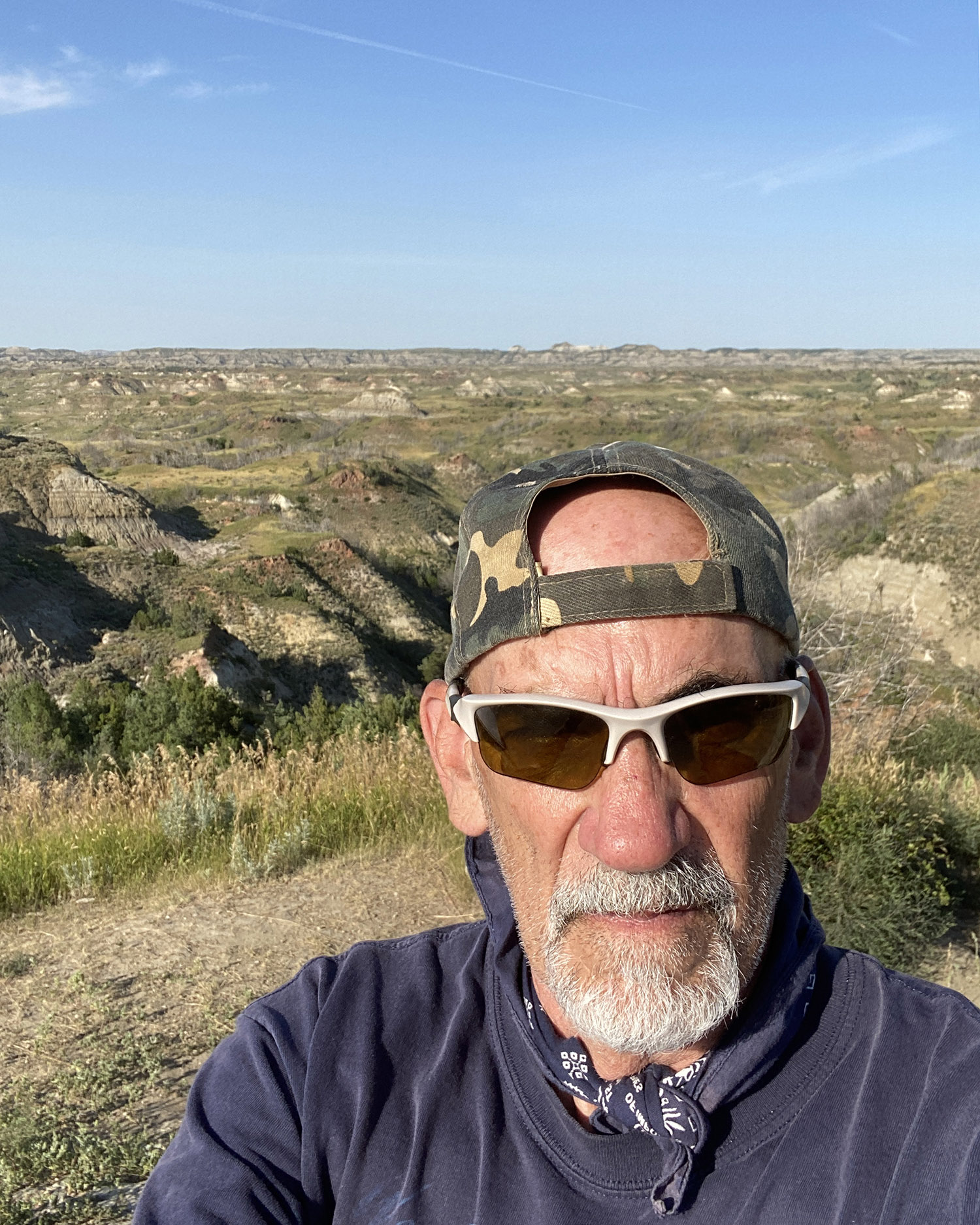
When I do want to insert myself into the frame, I try to do so in a creative way. When I was recently in the badlands of North Dakota, for example, I decided I wanted to try to create a selfie that conveyed a “bad boy” vibe. I really am a nice guy, so I wasn’t sure that I could pull off the look and was pleasantly surprised with the result. Some of my friends say the shot makes me look like I had just stepped off of a Harley.

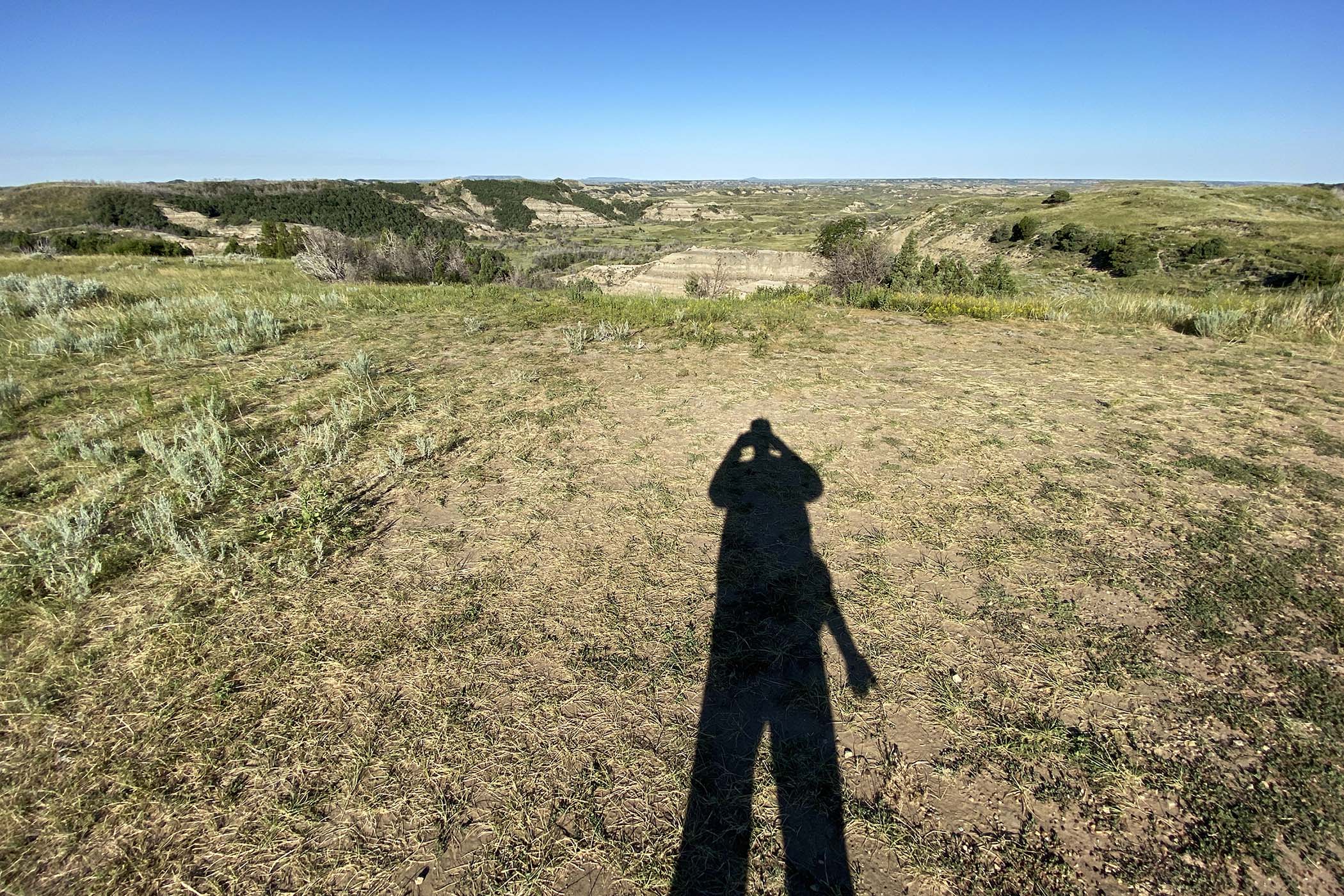
I love to take photos just after sunrise and just before sunset when the sun is so low that it creates elongated shadows of me that are perhaps my favorite type of selfie, a selfie without a face. They always remind me of the famous sculptures of Alberto Giacometti, like Walking Man. I took the second photo with my iPhone in the early morning of 28 July as I stared out at the vast expanse of North Dakota badlands at Theodore Roosevelt National Park.

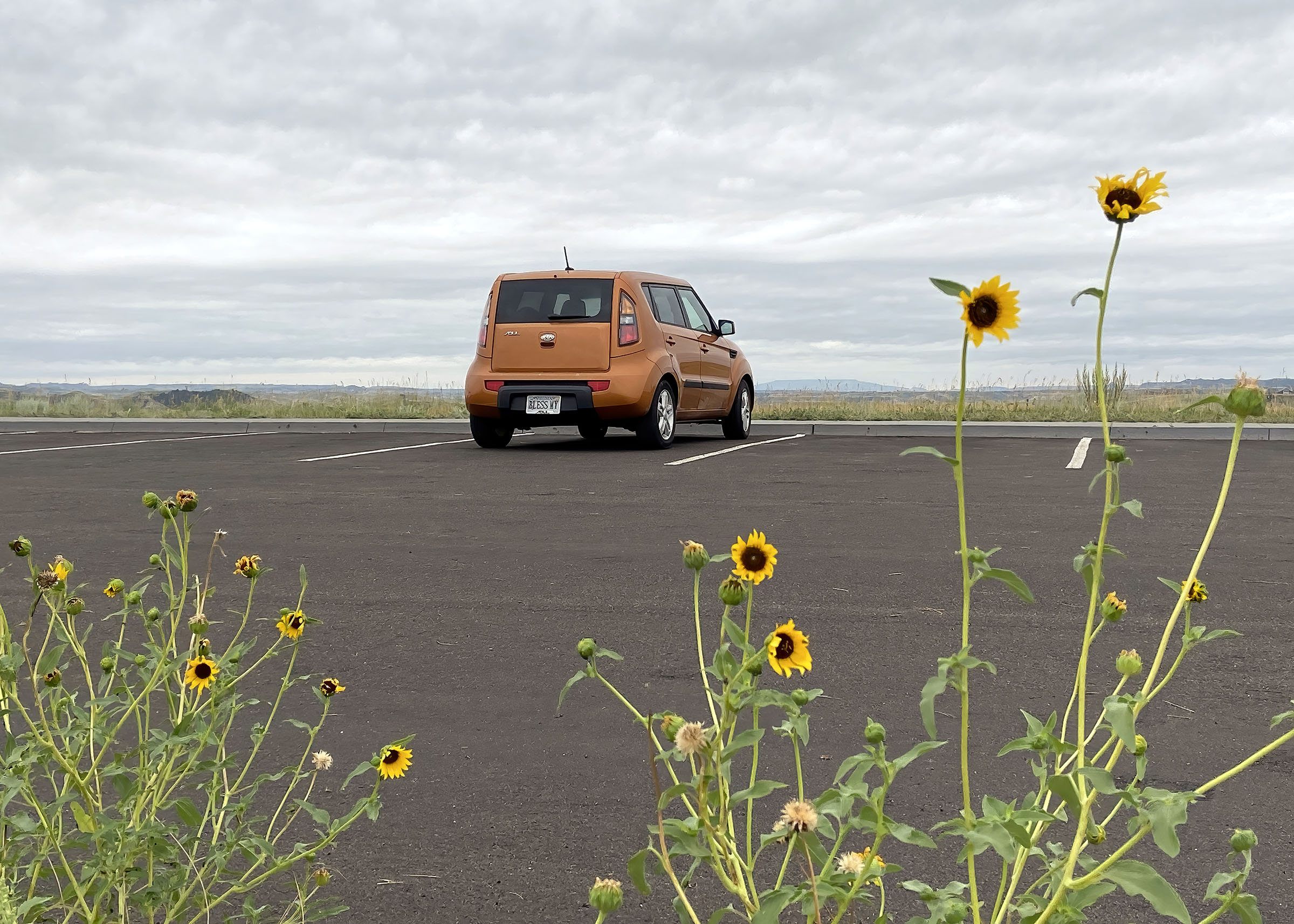
The final photo is an unusual kind of selfie, a selfie without a face or a body. My orange KIA Soul is a representation of me, a kind of symbolic representation of who I am. I sometimes describe my car as practical, economical, and a little quirky, descriptors that apply equally well to me.

bad boy in badlands

elongated shadow

KIA Soul

© Michael Q. Powell. All rights reserved.

Read Full Post »

When I tell people that I camped for several nights at Theodore Roosevelt National Park in Medora, North Dakota during my recently completed road trip, they have widely varying mental pictures about what that looked like. Some imagine that I was towing a recreational vehicle (RV) filled with all of the comforts of home and that I used hookups for electricity and water.

The truth, though, was that my form of camping was more akin to backpacking than to RV life. I carried with me a very small tent that I have owned for more than 30 years and more or less slept on the ground. I initially used the tent when I did some bike camping when I was stationed in South Korea in the late 1980’s during my service in the US Army. Before I left for my trip, I practiced setting the tent up in front of my house to reacquaint myself with it and to make sure I still had all of the component pieces.

Cottonwood Campground lies within the confines of the South Unit of this national park—there are two parts of the park that are separated by 75 miles (120 km)—and has relatively primitive campsites. RV’s are permitted, but most of the sites are pretty small and there are no hookups. Seasonally there are flush toilets available, a welcome surprise for me, and vault toilets during the off-season. There are no showers, but potable water is available. Because I have the lifetime Senior National Parks Pass, I had to pay only $7.00 per night for my site and I stayed two nights each time that I was there.

Half of the sites are by reservation while all remaining sites are first come, first served. I showed up without reservations on both my westward and eastward legs of the trip and was able to find a site both times without problem in the tenting area of the campground. In fact, I stayed in the exact same spot each time. I liked this spot because it was at the end of a row of spots, so I had a neighbor on only one side.

The first photo shows my view looking out from inside of my tent, with some buttes visible in the distance. The second image gives you a better view of the tent itself. It is taller at the front and has a vestibule area where I could store some gear. Importantly, there is netting to help keep the bugs out. I was not bothered by mosquitos, but there were a lot of grasshoppers and some flies from time to time.

The third shot shows the rest of my site that included a picnic table and a grill. In the photo you can see that I had a small cooler and I also had a water jug that held six gallons (23 liters)—many parts of the United States had been experiencing heat waves and I wanted to make sure that I had plenty of water in case I was stranded. You can also see my orange KIA Soul. I think that this was the only KIA Soul that I spotted when driving through North Dakota and Montana—most of the local folks seemed to be driving pickup trucks or large SUV’s.

I did not have a proper sleeping mat, but used a thick yoga mat, which did provide some cushioning from the hard ground. I had a blanket, sheet and pillow with me too and a sleeping bag. I did not think that I would need the sleeping bag, but the first night that I camped out, temperatures dropped to 44 degrees (7 degrees C), and I was able to snuggle up inside the sleeping bag.

In terms of cooking, I used a little camp stove with a propane/butane canister. The fourth photo shows my little setup as I boiled water to make instant oatmeal and instant coffee for breakfast one morning. I also had several boxes of granola bars on which I snacked throughout the day.

The final two photos shows views from the campsite. On the morning when it was cold, fog and mist were hanging over the Little Missouri River, which flowed very close to our location, and the surrounding area. The final shots shows the glow of the moon, which was almost full, just before it rose over the buttes in the distance. The lights in the right hand side of the image came from a row of cars that were heading in the direction of the park’s exit.

I hope you enjoyed my little tour of my modest camping setup. When I began my trip, I had no specific plans for camping, but brought along the gear so that I could do so if the right situation presented itself. I was really happy to find this gem of a National Park and would gladly return there in the future.

Camping in North Dakota

Camping in North Dakota

Camping in North Dakota

Camping in North Dakota

Camping in North Dakota

Camping in North Dakota

© Michael Q. Powell. All rights reserved.

Read Full Post »
What is the best way to convey a sense of the massive expanse of the badlands in North Dakota? That was the dilemma that faced me last week as I stood at the Skyline Vista observation point in Theodore Roosevelt National Park. Would a single photo suffice? What about a panorama shot? Perhaps a video might work?

An informational sign at Skyline Vista noted that, “They may look like mountains, but landforms in the badlands are buttes. Mountains form when land is thrust upwards. This process has not taken place in the badlands. Buttes form as erosion removes surrounding material. Rainwater, creeks, and the river are constantly eroding the badlands, leaving behind fantastically shaped buttes.”

My initial instincts pushed me to try a couple of traditional approaches. In the first image, I composed a shot with the flowers in the foreground to add some visual interest, rather then focusing attention simply on the buttes. In the second image, I tried to use the curving highway as a compositional element.

I then switched to considering methods that took advantage of the capabilities of the iPhone 11 with which I was shooting at that moment. I used the iPhone’s pano mode to create the third image and really liked the wide view that it provided of the badlands. In my final attempt, I filmed a short video in which I panned across the horizon, holding my phone vertically that I posted to YouTube (https://www.youtube.com/shorts/mTxPxVPlQVE) and have embedded below. The video provides an even wider view than the panoramic shot.

Is there a “best” way to show this rugged landscape? I would be hard pressed to say that any of the methods that I used was the “best”—each shows a slightly difference sense of what it was like for me to be at that observation point. Many of the other people that I observed simply took a single shot and returned to their cars and drove away. I personally think it is much more enjoyable to “work” a subject and look for creative ways to capture its beauty.

Skyline Vista

Skyline Vista

Skyline Vista

© Michael Q. Powell. All rights reserved.


Read Full Post »

Until quite recently, I had never tried to create videos with my iPhone and still have not tried to do so with my DSLR camera. I guess that I am a little old-fashioned and think of a phone as primarily a device for making phone calls and a camera as a device for taking still photos. I am gradually changing to using my phone for texting and during my recently completed road trip, I played around with taking short videos with my iPhone. Maybe it is possible to teach an old dog new tricks.

The change was prompted in part by the fact that I had to radically change my shooting habits when visiting Theodore Roosevelt National Park in North Dakota. I camped out at the park for two nights when I was headed westward towards Seattle and another two nights on my return trip eastward to Virginia. At that park, I got used to seeing large creatures like American Bison (Bison bison) at close-range and photographing them from inside my car. Suddenly it dawned on me that videos would be an effective way of capturing some of that action. In addition to bison, I also had several encounters with wild horses that I was able to document in videos.

As you probably noticed, the first image is not a video—I inserted it so that an image would show up as a thumbnail in the “Reader” feed for those who view my postings in that way. The still photo shows a large bull moving down the recently repaved roads of the park. At that time they had not yet painted lines on the road, so I had to pay a lot of attention while driving, given that many of the roads were full of curves and and in some cases there were steep drop-offs. I do not think that the bison cared about the lack of lines—as far as I was concerned, they owned the roads and always had right-of-way.

The first video shows one of the huge male bisons that I encountered on the roads at the national park. I was safely inside of my car when I took this video, though I must confess that this bull bison looked to be almost as big as my KIA Soul and may have outweighed it.

The second and third videos show bands of wild horses that I encountered at separate locations in the park. I was particularly impressed by the beauty of these horses and it was cool to capture them in action.

I was not sure how to present videos here in WordPress, but I think it works to post them to YouTube first and then to embed a link to that posting here. In this way, the videos do not count against my data allowance on my WordPress plan.

I definitely need to improve on my skills as a videographer, but I am happy with these initial results. The sound quality is still a problem, because it was often windy and the video also includes some extraneous conversation. I may have to learn to do voiceovers for the videos or to add some music to them.

So what do you think? These little clips are definitely a change from my normal content, but I thought it would be a fun way to share some of my experiences more directly with all of you. As you probably noticed, the first image is not a video—I inserted it so that an image would show up as a thumbnail in the “Reader” feed for those who view my postings in that way.

American Bison

Here is the YouTube link for the first video.

Here is the YouTube link for the second video.

Here is the YouTube link for the final video.

© Michael Q. Powell. All rights reserved.


Read Full Post »

I don’t take selfies very often, but decided to make an exception on Saturday when I was seated on Dege Peak (elevation 6982 ft (2128 m)) with Mount Rainier prominently behind me. I must confess, though, that I started my hike at 6100 feet (1859 m), so it is not all that impressive, though my iPhone indicates that I climbed the equivalent of 54 floors that day.

On previous visits to Mount Rainier, I have always entered at the Nisqually entrance that allows you to go as far as the Paradise Visitor Center, which is located at an elevation of 5400 ft (1645 m). It is the most easily accessible entrance and is therefore crowded most of the time.

During Saturday’s trip, I entered the park via the Sunrise entrance, which is located 60 miles (97 km) from the Nisqually entrance. The Sunrise entrance is open only from the beginning of July, when the snow is finally cleared, to early September. The Sunrise visitor center, located at an elevation of 6400 feet (1950 m), is the highest point you can access by car in the park.

I never did make it to the visitor center parking lot, which was crowded. Instead I stopped at a parking area at 6100 feet (1859 m) and hiked along the Sourdough Ridge Trail that took me up even higher than the visitor center. The views were spectacular and I was alone most of the time.

The second image shows one of those amazing views of Mount Rainier from that trail. I felt like I was looking straight across at the snow-covered mountain, although in actuality the peak of Mt Rainier was much higher at an elevation of 14,411 ft (4392 m).

I captured the final image of Sunrise Lake by looking back in the direction that I had hiked. The beautiful little lake was located just below Sunrise Point, where my car was parked.

Mt Rainier

Mt Rainier


Sunrise Lake

© Michael Q. Powell. All rights reserved.

Read Full Post »

Older Posts »