Feeds:
Posts
Comments

Posts Tagged ‘Huntley Meadows Park’

The last few years I haven’t seen many Monarch butterflies (Danaus plexippus) and I have read reports of their declining numbers. I was therefore pretty excited when I spotted one yesterday at Huntley Meadows Park. As I approached, the Monarch got spooked and flew up into a tree. Fortunately I was shooting with my long telephoto zoom lens and I managed to get this somewhat unusual shot of the beautiful butterfly.

Monarch butterfly


© Michael Q. Powell. All rights reserved.

Read Full Post »

I spotted this beautiful little butterfly while wandering through the woods at Huntley Meadows Park this morning. I think it might be an Appalachian Brown (Satyrodes appalachia), although there are a surprisingly large number of brown butterflies with eyespots, which complicates identification.

The woods were pretty dark in the area in which I first spotted the butterfly. However, luck was with me and the butterfly landed on a log that was in the sunlight. I tried to get as low as I could to get this shot, which is why you see the green moss in the foreground.

Update: One of my Facebook readers pointed out that this is probably a Northern Pearly-eye (Enodia anthedon), not an Appalachian Brown. My butterfly identification definitely need some more work.

Appalachian Brown


© Michael Q. Powell. All rights reserved.

Read Full Post »

Blue Dashers (Pachydiplax longipennis) are one of my favorite summer dragonflies. I spotted this one recently at Huntley Meadows Park, perched on the railing of an observation deck in the obelisk pose.

The dragonfly was pretty cooperative and I was able to try few different angles and shooting positions. Although I had my camera’s aperture set to f/10, you can see that the depth of field was relatively shallow and I tried to take advantage of that to isolate the subject and the specific rail on which it was perched.

Blue Dasher

Blue Dasher

Blue Dasher

© Michael Q. Powell. All rights reserved.

Read Full Post »

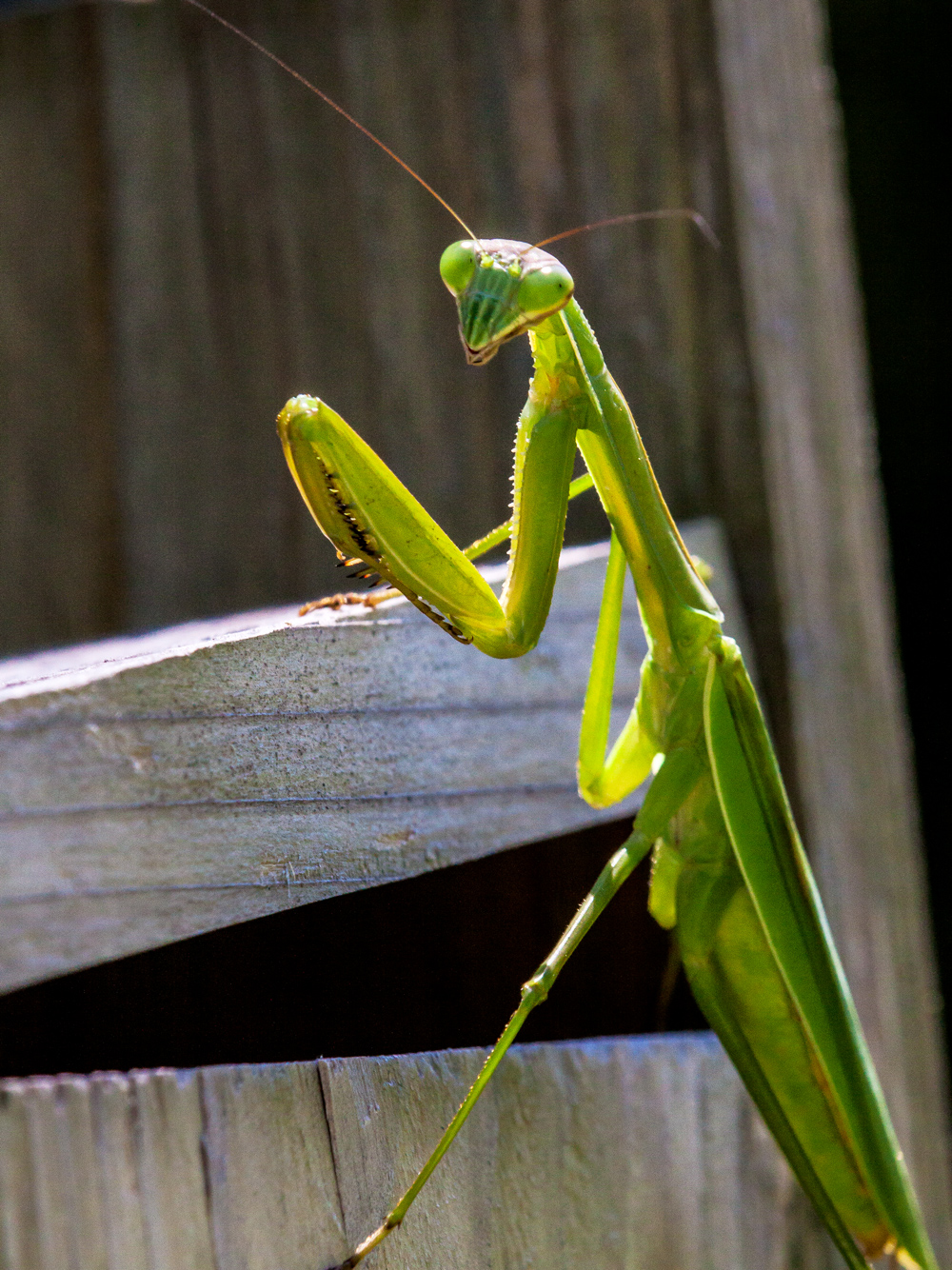
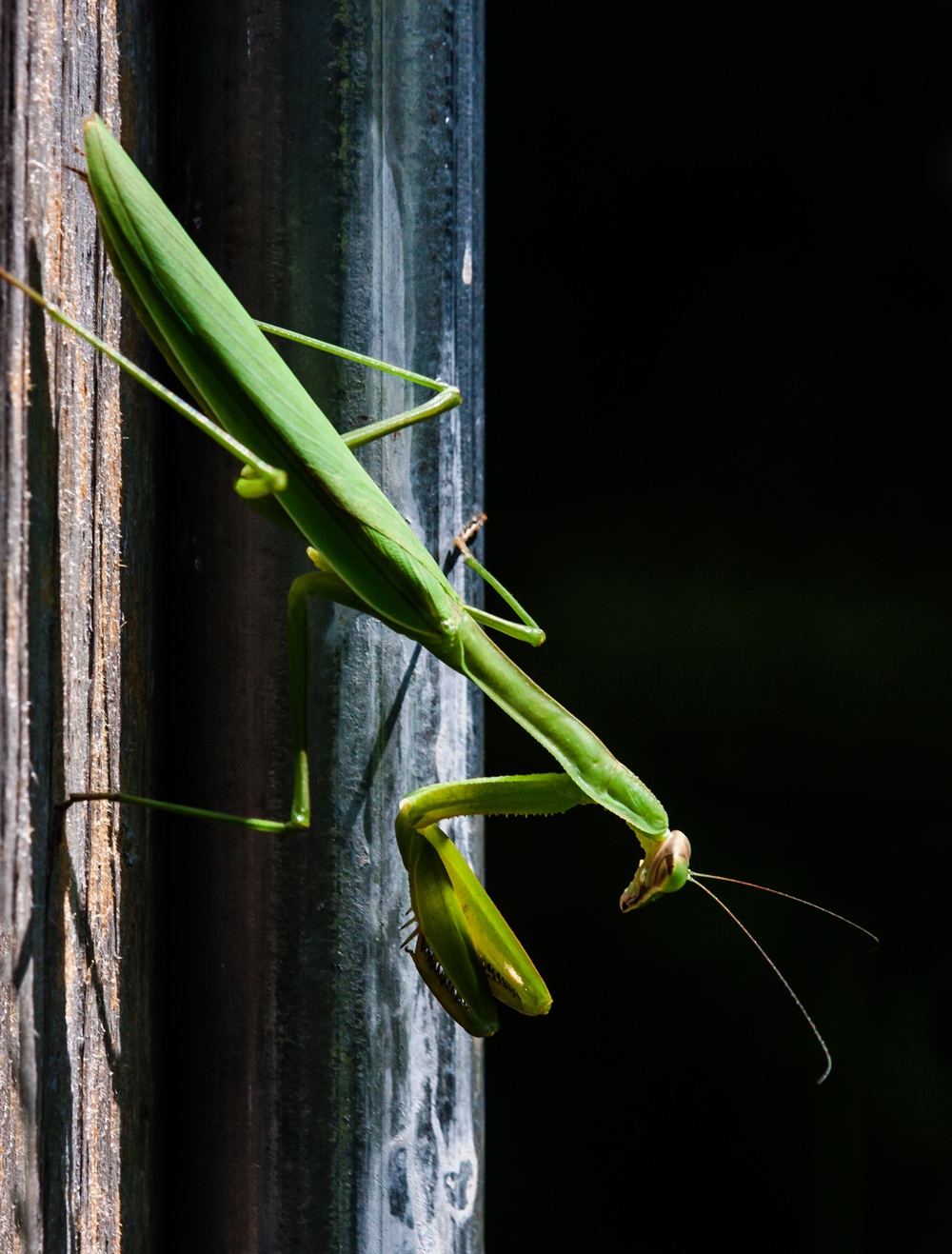
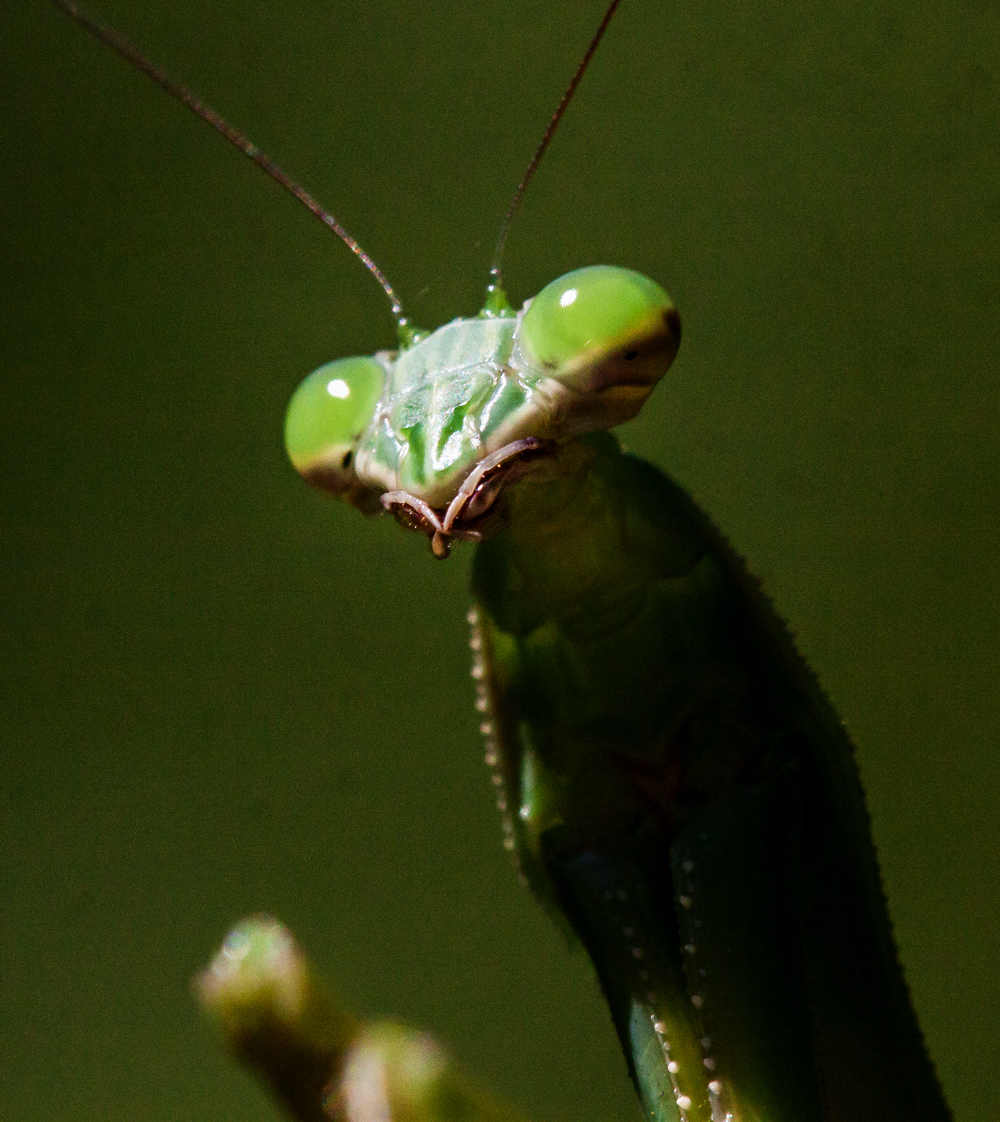
I spotted this Praying Mantis on Saturday at Huntley Meadows Park as it was crawling about on a nesting box for birds in one of the remote areas of the park. I am pretty confident that the nesting box, which was used by Tree Swallows earlier in the year, was no longer in active use—otherwise the mantis probably would not have survived for long. I was struck by the size of the insect, which seemed to be about six inches (15 cm) in length.

I think this may be a Mantis religiosa, one of the more common types of mantises, though Wikipedia notes that there are over 2400 species worldwide, so I could easily be incorrect in my identification.

Praying Mantis

Praying Mantis

Praying Mantis

© Michael Q. Powell. All rights reserved.

Read Full Post »

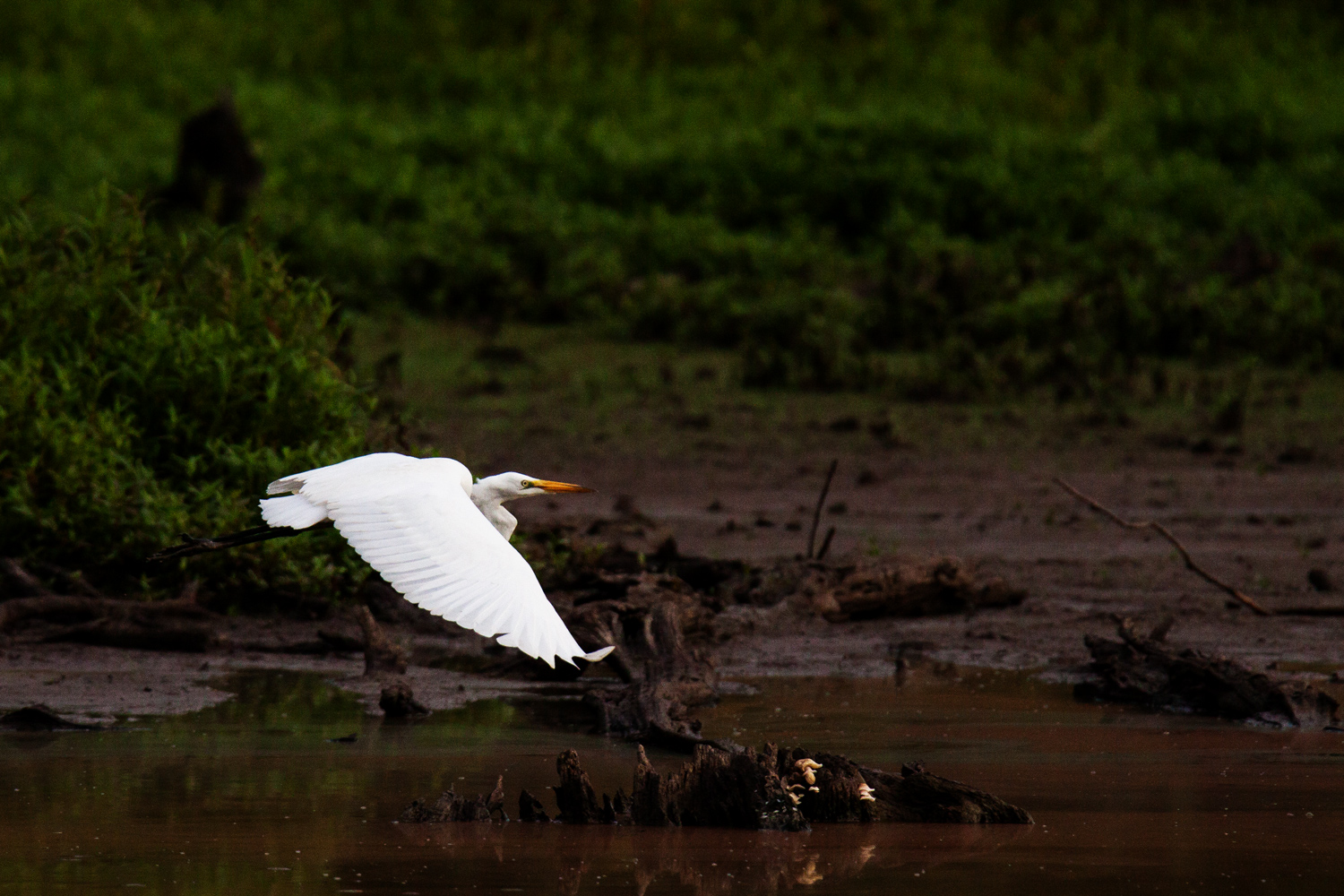
This Great Egret (Ardea alba) seemed to be trying to minimize energy expenditure in the heat as it flew low and slowly from one location to another part of Huntley Meadows Park. The recent extreme heat must be tough on many of the inhabitants of the park—temperatures yesterday soared to 101 degrees (38 degrees C) in the Washington D.C. area, a new record for the date.

I have a tendency to crop my images to emphasize the subject, but I took these shots at pretty long range and like the way that they give you a sense of the environment at my favorite marshland park.

Great Egret

© Michael Q. Powell. All rights reserved.

Read Full Post »

Yesterday afternoon at Huntley Meadows Park I captured this image of a female dragonfly as she hovered over the water, periodically dipping the tip of her abdomen into the water to lay eggs (and generate ripples).

hovering dragonfly

© Michael Q. Powell. All rights reserved.

Read Full Post »

Although I enjoy watching the Great Egrets and Great Blue Herons at Huntley Meadows Park, the much smaller Green Herons (Butorides virescens) are my favorites. Green Herons just seem to have an amazing amount of personality packed in their compact bodies.

I think they deserve to have a “Great” in their name too.

Green Heron

© Michael Q. Powell. All rights reserved.

Read Full Post »

Hot, humid summer days may be a little tough on us, but butterflies seem to love them. I captured this shot of a spectacular Eastern Tiger Swallowtail (Papilio glaucus) this past weekend at Huntley Meadows Park as it sipped nectar from what I think is Joe-Pye weed (g. Eutrochium). (I am a bit uncertain about the plant identification and wonder if it might instead be a kind of milkweed, but “Joe Pye” rhymes with butterfly and sounds cooler, so I’ll go with that as a possible identification.)

Unlike many butterflies that I see at this time of the year whose wings are tattered and torn, this butterfly seemed to be in perfect condition. The sun was shining brightly when I took these shots and I was really afraid of blowing out the highlights of this lightly-c0lored butterfly. I switched the metering on my camera to spot metering and was able to get a good exposure of the butterfly and the background went really dark, adding a bit of drama to the images.

Eastern Tiger Swallowtail

Eastern Tiger Swallowtail

Eastern Tiger Swallowtail

© Michael Q. Powell. All rights reserved.

Read Full Post »

A Northern Cardinal (Cardinalis cardinalis) that I spotted on Saturday at Huntley Meadows Park seemed to be in an awkward feather phase that gave him an almost clown-like appearance.

I suspect that the cardinal feels as self-conscious as the average human male going through puberty.

Northern Cardinal


© Michael Q. Powell. All rights reserved.

Read Full Post »

A Great Egret (Ardea alba) and a Great Blue Heron (Ardea herodias) started goofing around yesterday at Huntley Meadows Park when I was trying to take their photo together—I think they are great friends. They looked like they were posing for a selfie.

I cropped the image to a square to make it easier for them to post to their Instagram pages.

great friends


© Michael Q. Powell. All rights reserved.

Read Full Post »

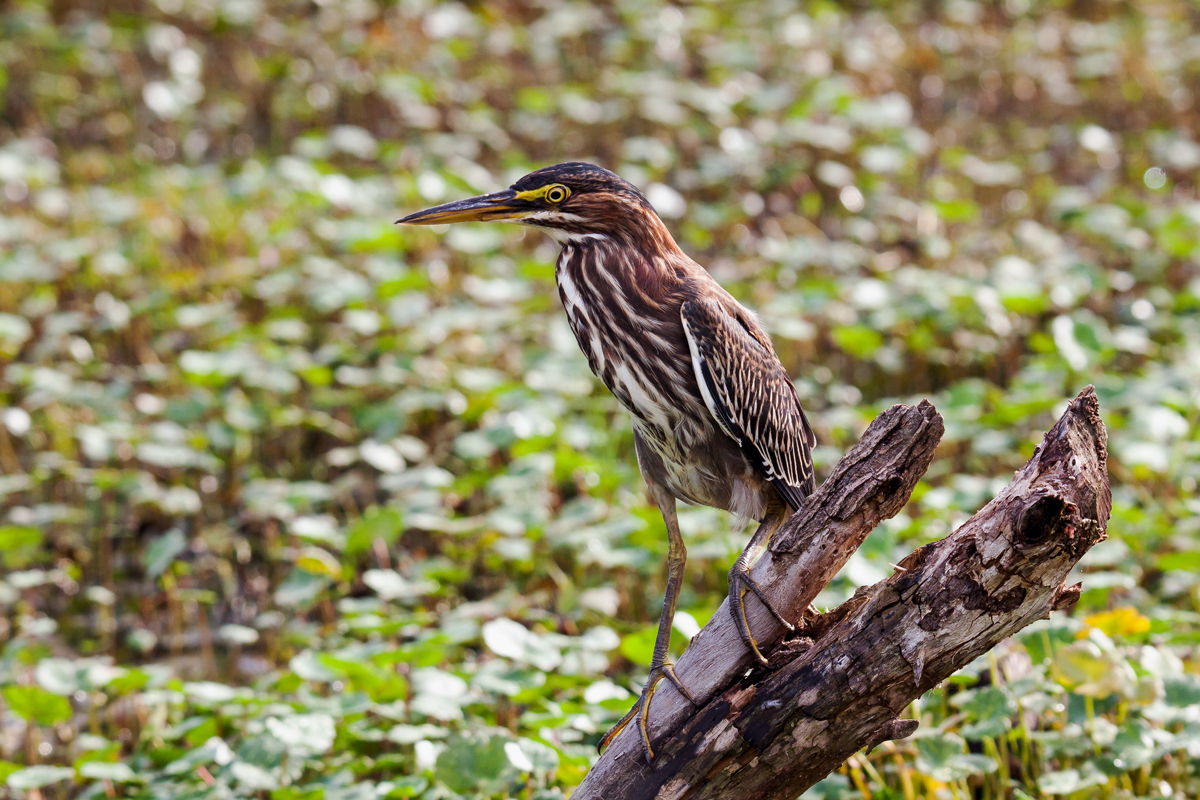
A Green Heron (Butorides virescens) was perched this morning on the raised edge of the boardwalk at Huntley Meadows Park, peering down into the murky water. Apparently the heron didn’t like what it saw, for it turned abruptly and decided to cross the boardwalk. I captured this shot as the heron was taking its first tentative step in the new direction.

Green Heron

© Michael Q. Powell. All rights reserved.

Read Full Post »

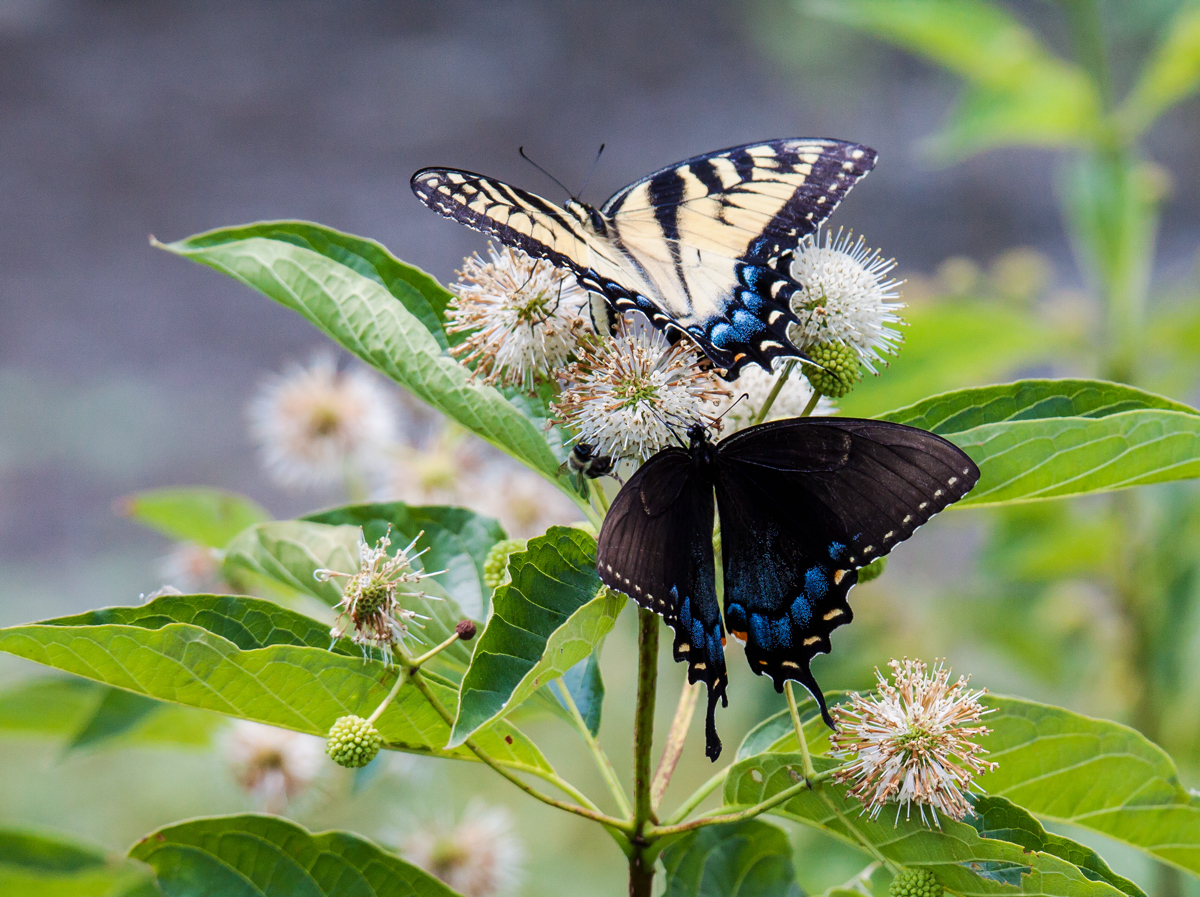
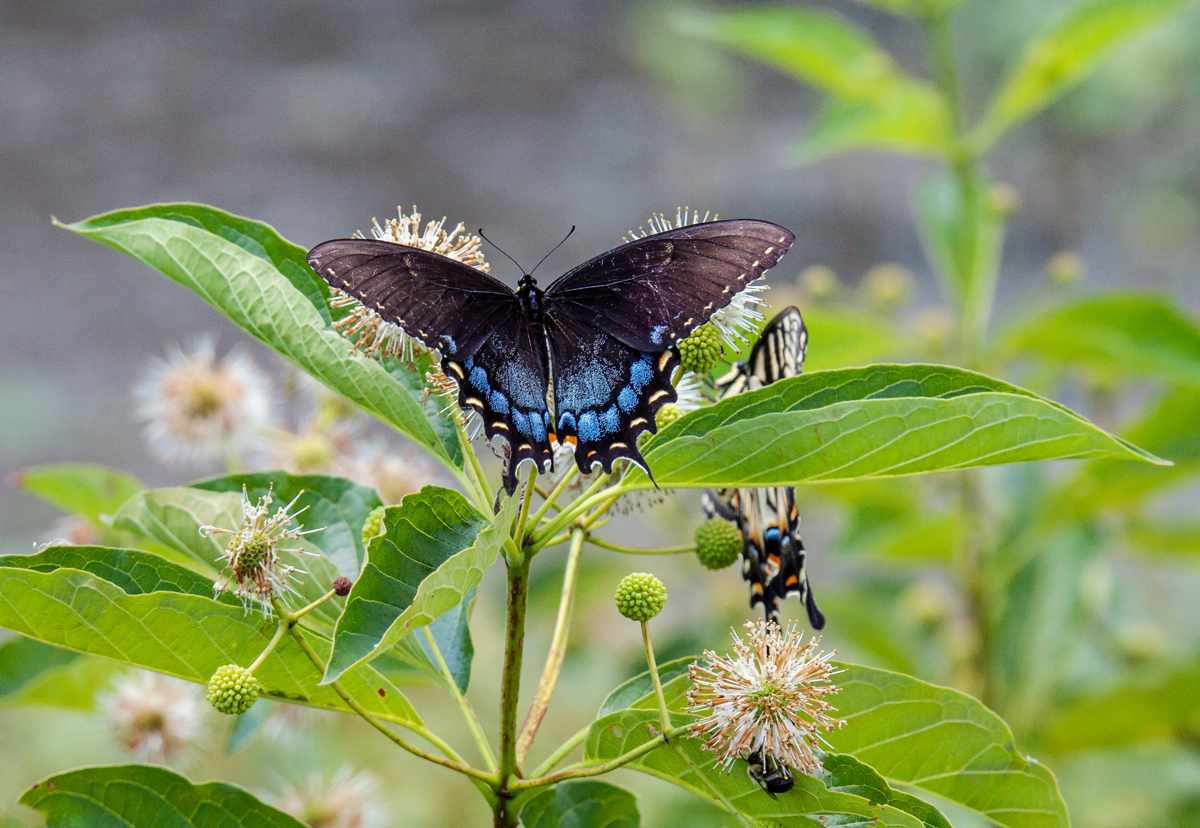
Eastern Tiger Swallowtail butterflies (Papilio glaucus) were really busy on the buttonbushes (Cephalanthus occidentalis) at Huntley Meadows Park recently, including what looks to be a dark morph female. Females of this species are dimorphic—there are both yellow morphs and dark morphs—but males are only yellow.

If you look closely at the second image you’ll see that I managed to capture a “bonus bug.” a bee that is also feeding on the buttonbush. My photography mentor likes to use the term “bonus bug” to refer to insects  in our photos whose presence was unknown at the time the photos were taken.

Eastern Tiger Swallowtail

Eastern Tiger Swallowtail

© Michael Q. Powell. All rights reserved.

Read Full Post »

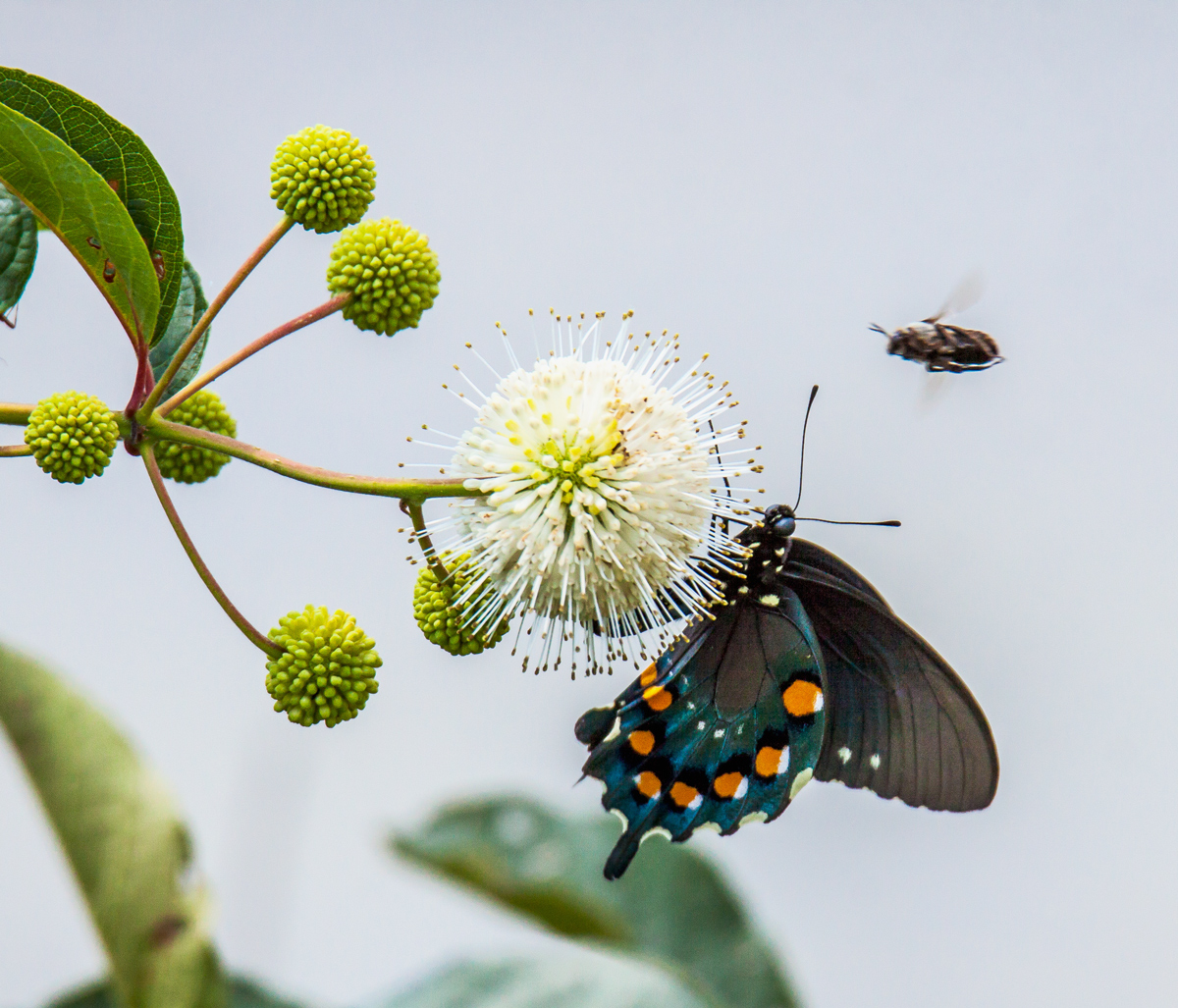
Butterflies were really active this past Monday at Huntley Meadows Park, especially around the buttonbushes (Cephalanthus occidentalis). A dark swallowtail butterfly caught my eye and my mind raced to remember how to distinguish among the various dark swallowtails. Fortunately I had enough presence of mind to capture some images, knowing I could search different resources when I got home.

I’m pretty confident that the butterfly in question is a Pipevine Swallowtail (Battus philenor). One of its distinguishing characteristics is a single row of orange spots in the shape of a C. As I was searching the internet, I came across a wonderful posting by Louisana Naturalist that has side-by-side photos of four different dark swallowtails —the Black Swallowtail, the dark morph of the female Eastern Tiger Swallowtail, the Spicebush Swallowtail, and the Pipevine Swallowtail.

As I was trying to get a shot of this butterfly, which was in constant motion, another insect decided to photobomb us. I think it is a bee and I am including a photo of the photobombing insect just for fun.

Pipevine Swallowtail

Pipevine Swallowtail

© Michael Q. Powell. All rights reserved.

Read Full Post »

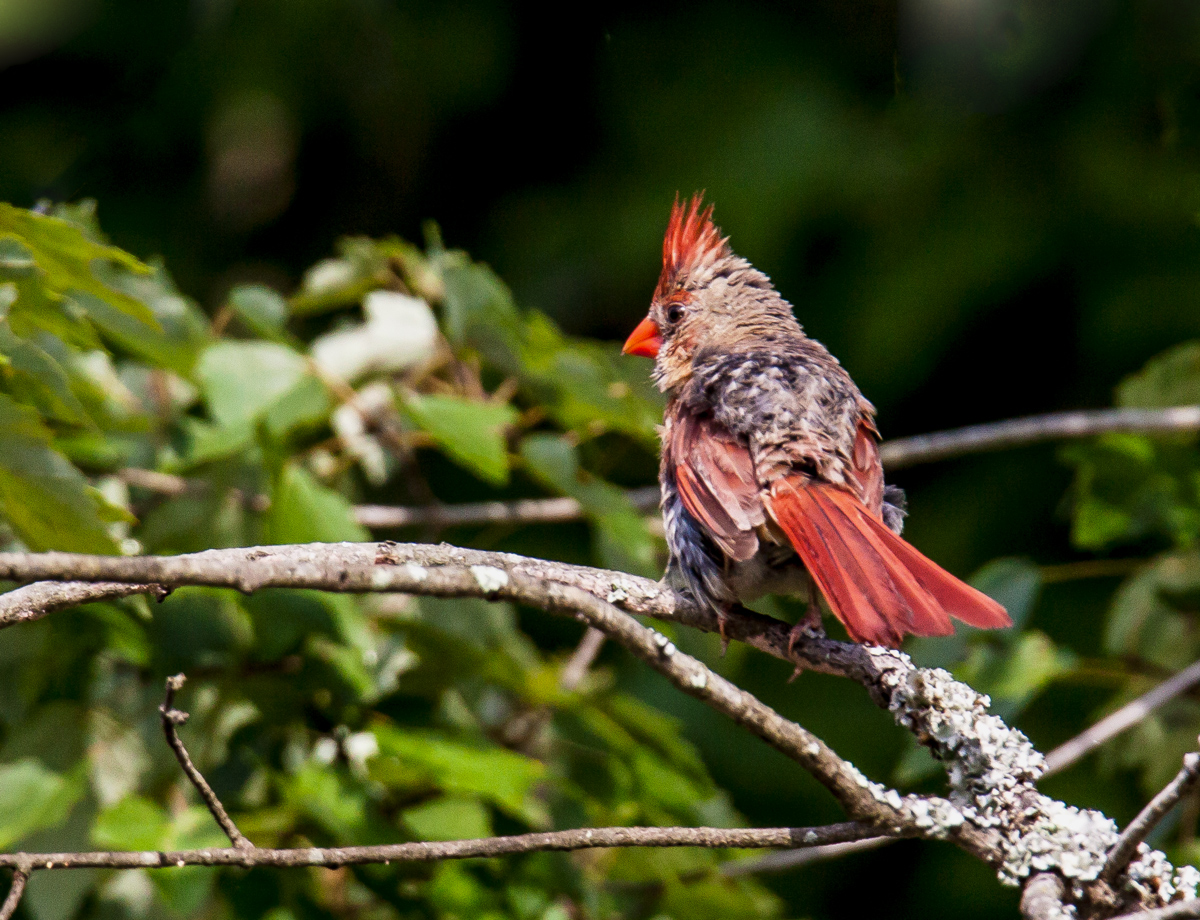
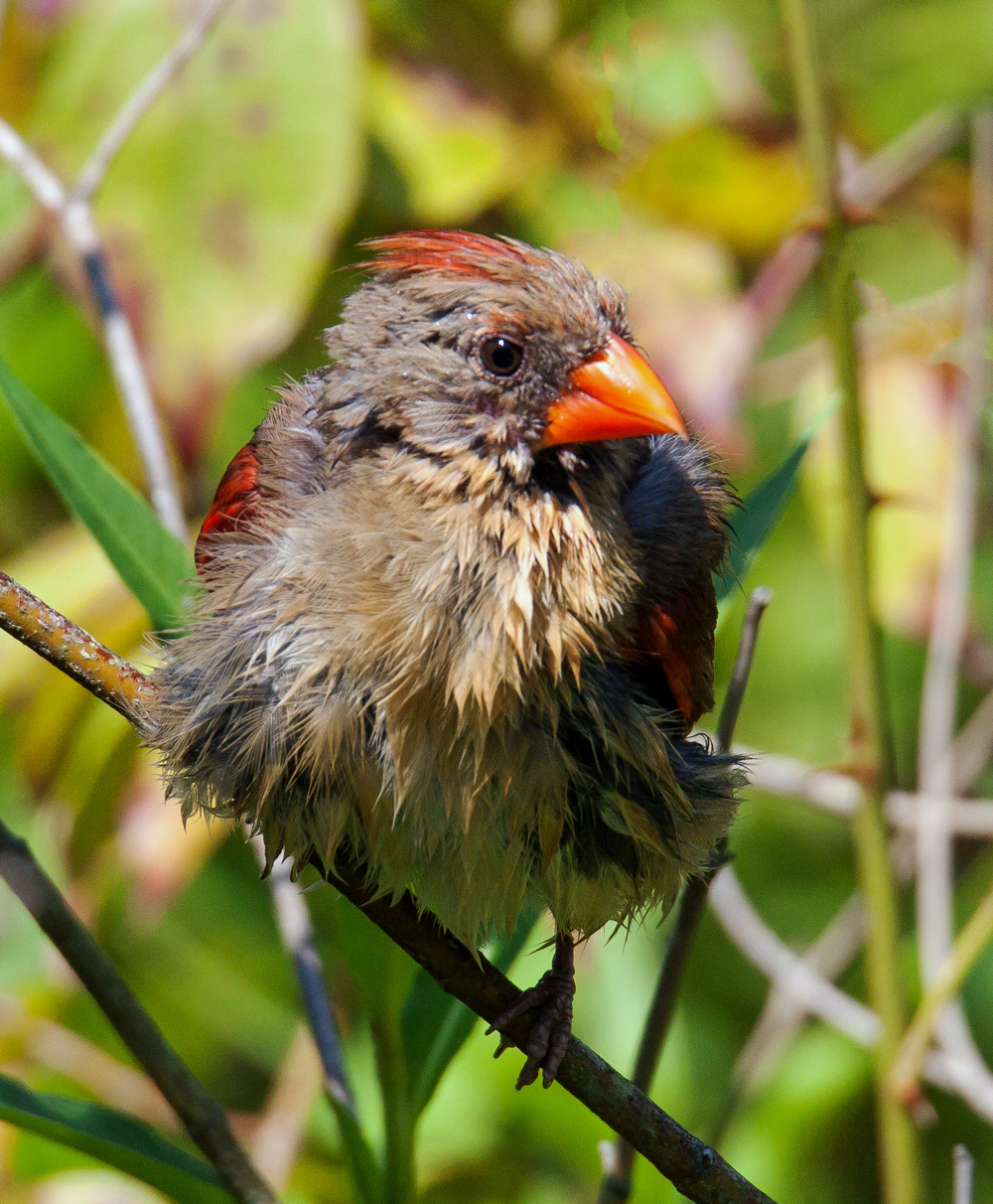
How do birds manage to survive the unbearable heat of summer? Monday, on a day when temperatures soared to 100 degrees (38 degrees C), I spotted this Northern Cardinal (Cardinalis cardinalis) at Huntley Meadows Park. It was sitting in the shade and looked like it had fluffed up its feathers or was drying off after a dip in the pond in an effort to stay cool.

I was the crazy one standing in the sun.

Northern Cardinal

Northern Cardinal

© Michael Q. Powell. All rights reserved.

Read Full Post »

What do you want to be when you grow up? I wonder if these ducklings were dreaming of growing to be as big as a Great Blue Heron (Ardea herodias) when they swam toward its reflection yesterday at Huntley Meadows Park.

growing up

© Michael Q. Powell. All rights reserved.

Read Full Post »

Yesterday I spotted this spectacular female Swamp Darner dragonfly (Epiaeschna heros) at Huntley Meadows Park. At almost 3 1/2 inches long (90 mm), Swamp Darners are one of the largest dragonflies in our area.

It was a rare treat for me to capture shots of one perching—usually I see them only in flight. Like most darners, Swamp Darners hand vertically from vegetation, often low to the ground. I was fortunate to see this beautiful dragonfly fly to the perch and it remained there long enough for me to maneuver into position for a clear shot with my long zoom lens. I actually had to pull back from the maximum 600mm focal length of the lens in order to be able to fit the dragonfly’s entire body in the frame.

If you want to get a higher-resolution look at some of the wonderful details of this dragonfly, including the amazing colors of its eyes, be sure to click on the image.

Swamp Darner

© Michael Q. Powell. All rights reserved.

Read Full Post »

I love the colorful patterns on the wings of a Halloween Pennant dragonfly (Celithemis eponina), but rarely have the chance to see one. Therefore, I was pretty excited when I spotted one from a distance last week at Huntley Meadows Park, my favorite marshland location for nature photography.

I moved a little closer to get some initial shots with my Tamron 150-600mm lens fully extended. Generally I use my long zoom for birds more often than for dragonflies.  In this case, however, the lens turned out to be a better choice than my macro lens, because the dragonfly flew away when I took a couple of steps toward it and I never saw it again.

Most of the Halloween Pennant dragonflies that I have observed in the past have had wings that were more amber-colored than those of this individual, but the wing pattern is so distinctive that I am pretty sure about my identification. In addition to the wonderful wings, I was really struck by the length and two-toned color of this dragonfly’s legs.

Halloween Pennant

© Michael Q. Powell. All rights reserved.

Read Full Post »

Ebony Jewelwing damselflies (Calopteryx maculata) like to hide in the shadows, but they really do sparkle like jewels when the light hits them right.

I spotted the beautiful female damselfly in the first photo this past weekend at Huntley Meadows Park—only females have white spots on their wings. I really like the way that the tones of the background complement the colors of the damselfly.

Ebony Jewelwing

I captured this shot of a male Ebony Jewelwing damselfly only a few minutes later. The lighting was brighter and the stance seems almost confrontational, which gives this image a totally different feel from that of the female.

Ebony Jewelwing

I’ll leave it to others to make broader inferences about the mysteries of the fairer gender versus the in-your-face directness of the average male.

© Michael Q. Powell. All rights reserved.

Read Full Post »

Early yesterday morning, an immature Little Blue Heron (Egretta caerulea) flew up to the top of a nearby tree as I slowly approached it on the boardwalk at Huntley Meadows Park. From its elevated perch, the beautiful little bird seemed to be surveying the landscape, contemplating the start of a new day.

At this time of the year there are quite a few large white wading birds at my favorite marshland park. I think that most of them are Great Egrets (Ardea alba), but the coloration and shape of the bill of the bird in this photo suggest to me that this is a Little Blue Heron. When Little Blue Herons are mature, they are a dark grayish blue and would never be mistaken for Great Egrets, but when they are young, the feathers of a Little Blue Heron are all white.

Little Blue Heron

© Michael Q. Powell. All rights reserved.

Read Full Post »

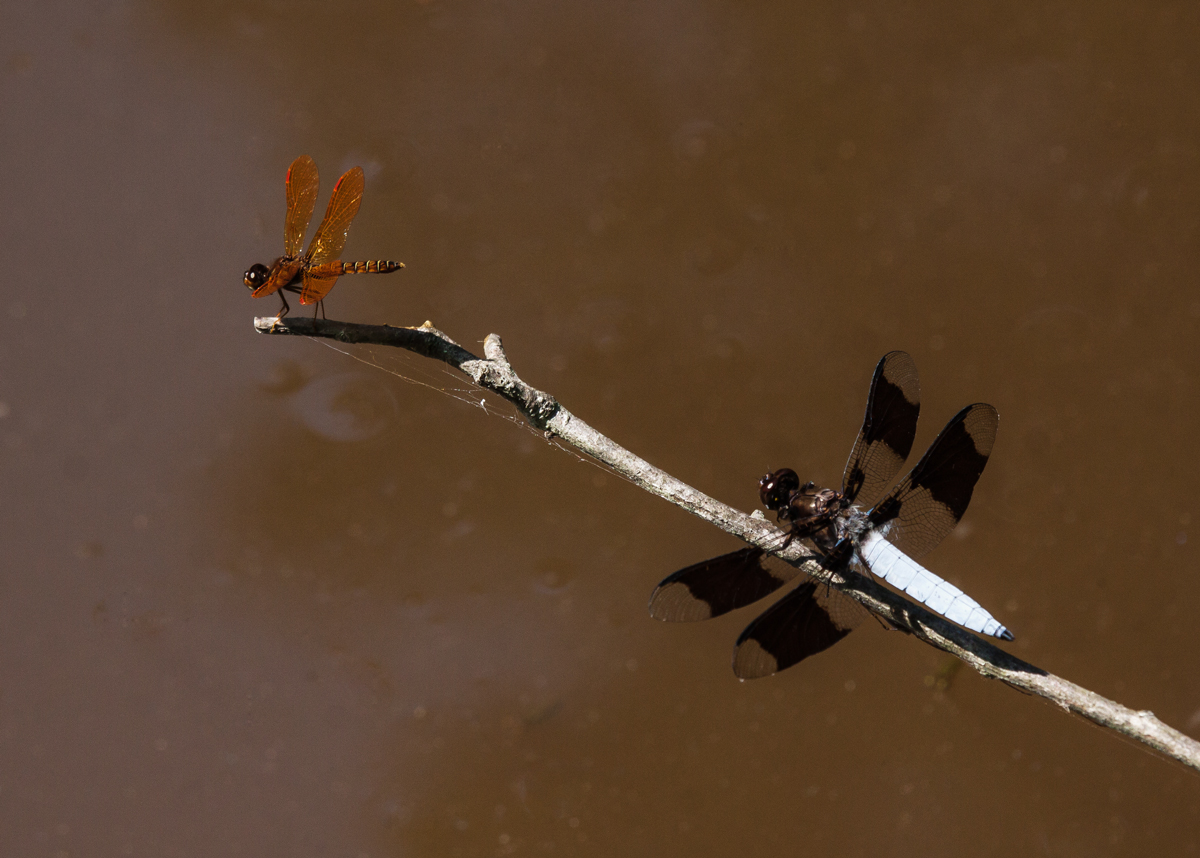
Despite their differences in size and appearance, the Eastern Amberwing (Perithemis tenera) and the Common Whitetail (Plathemis lydia) dragonflies were able to co-exist peacefully and both were able to enjoy the same perch this morning at Huntley Meadows Park.

Why is it so hard for us to do the same?

coexist1_8Jul_blog

© Michael Q. Powell. All rights reserved.

Read Full Post »

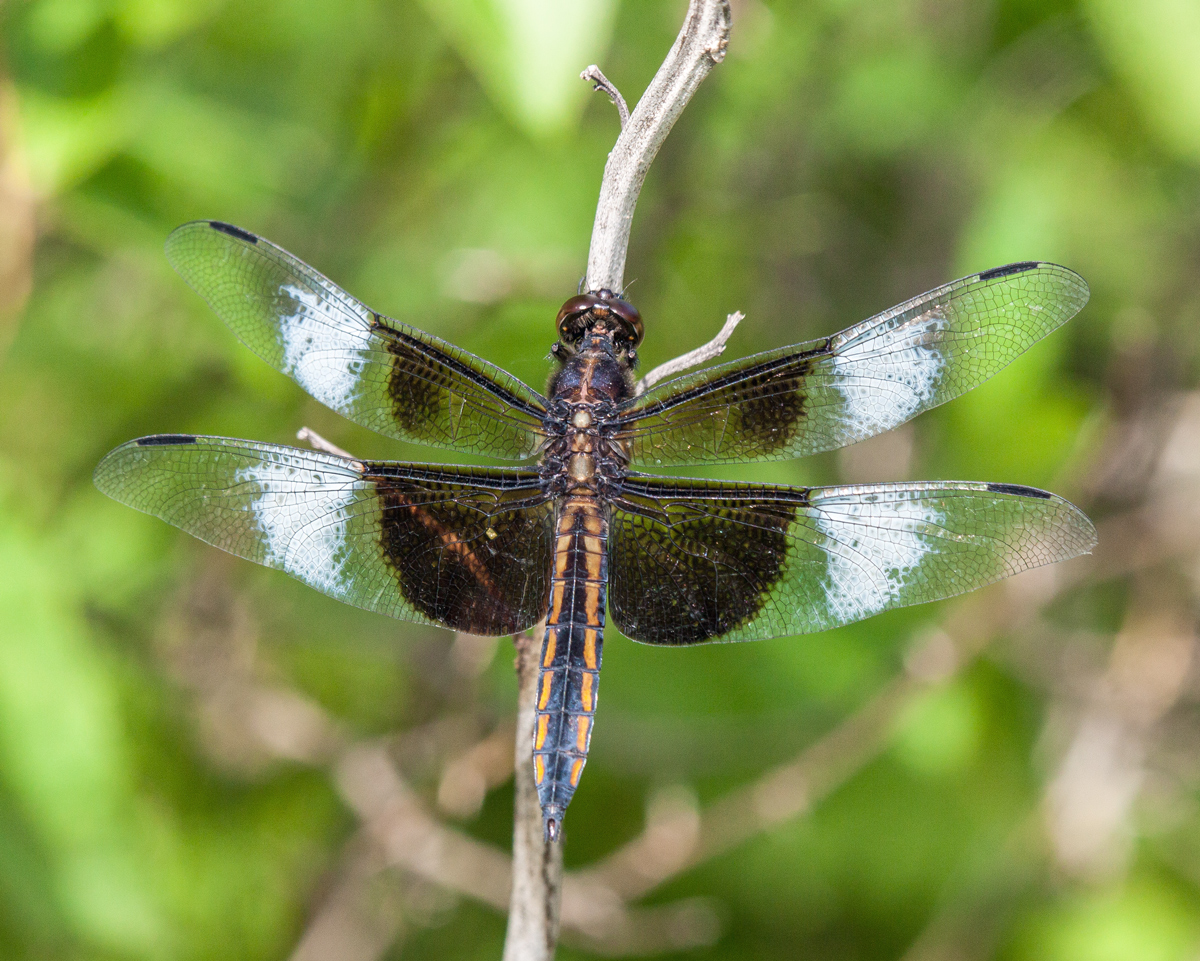
What is a Widow Skimmer? It sounds like a con artist who preys on rich older women, but it actually is a beautifully patterned dragonfly, like this juvenile male that I spotted recently at Huntley Meadows Park.
Why is it called a “widow?” According to bugguide.net, the species name of the Widow Skimmer (Libellula luctuosa) “means sorrowful or mournful, perhaps because the wings of both male and female seem to be draped in mourning crepe.” Only the male has white patches on its wings, so it’spretty easy to identify the dragonfly in the image as a male. Adult males have blue bodies and juvenile males and females have yellow and brown bodies.
Sometimes I wish that the identification of dragonfly species were this easy all of the time, but real life is generally much more complicated.
Widow Skimmer
© Michael Q. Powell. All rights reserved.

Read Full Post »

Purple Milkweed (Asclepias purpurascens) is in bloom in multiple locations at Huntley Meadows Park and the butterflies are loving it, including this Silver-spotted Skipper (Epargyreus clarus) that I spotted this past Monday.
Generally I have trouble identifying little skipper butterflies and Wikipedia notes that there are more than 3500 species of skippers worldwide.  The Silver-spotted Skipper, though, is pretty easy to identify, given its distinctive colors and markings.
There are several species of milkweed in my favorite marshland park and I have noticed more Purple Milkweed this year than in the past. This is really good news, because Purple Milkweed is considered to S2 (“imperiled”) in the Commonwealth of Virginia, according to the 2016 plant list of the Virginia Department of Conservation and Recreation.
Silver-spotted Skipper

© Michael Q. Powell. All rights reserved.

Read Full Post »

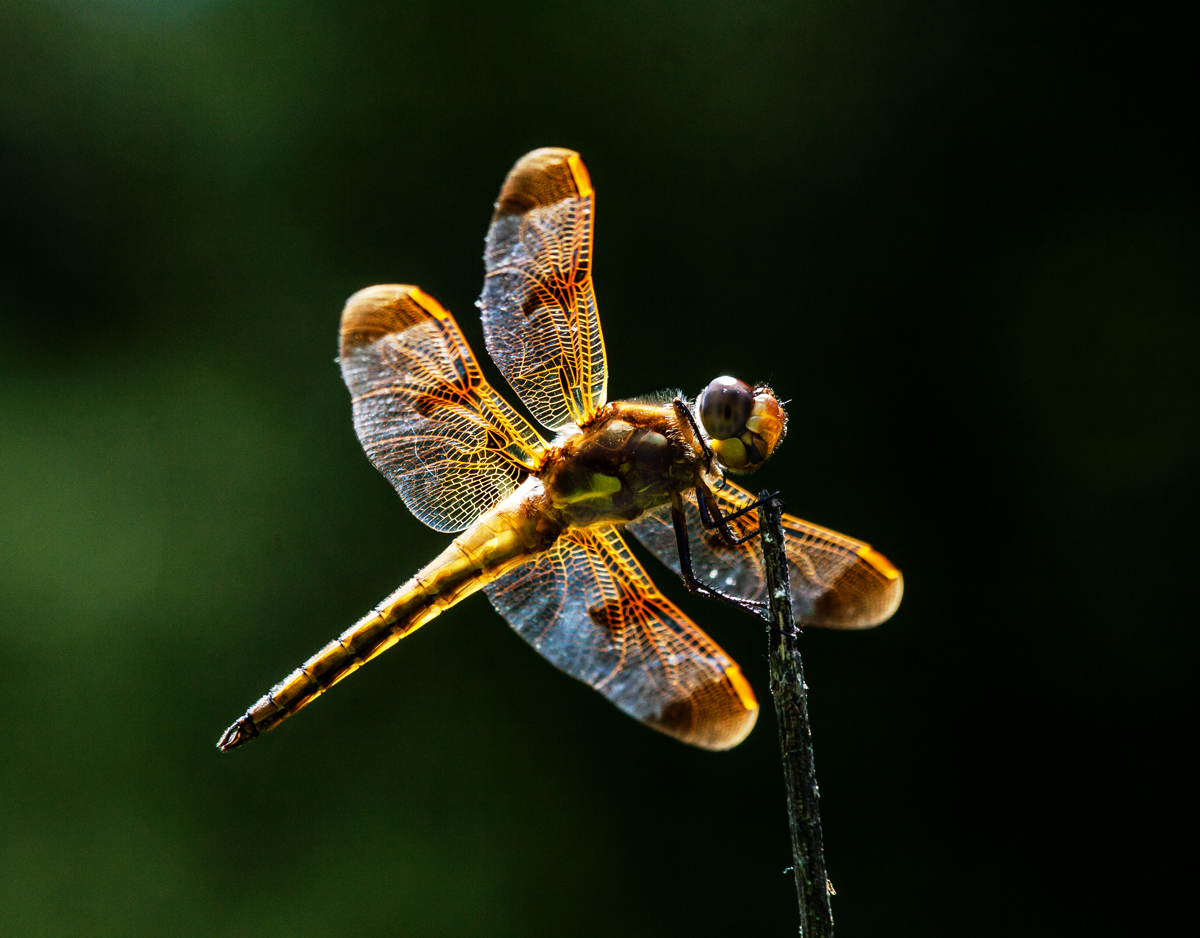
The sunlight shining through from behind helped to highlight the beautiful colors and patterns of this Painted Skimmer dragonfly (Libellula semifasciata) at Huntley Meadows Park this past Monday. Although I usually try to get more even lighting in my shots, I really like the way that this directional lighting has created areas of brightness and shadow, which seems to add a bit of drama to the image.

Painted Skimmer
© Michael Q. Powell. All rights reserved.

Read Full Post »

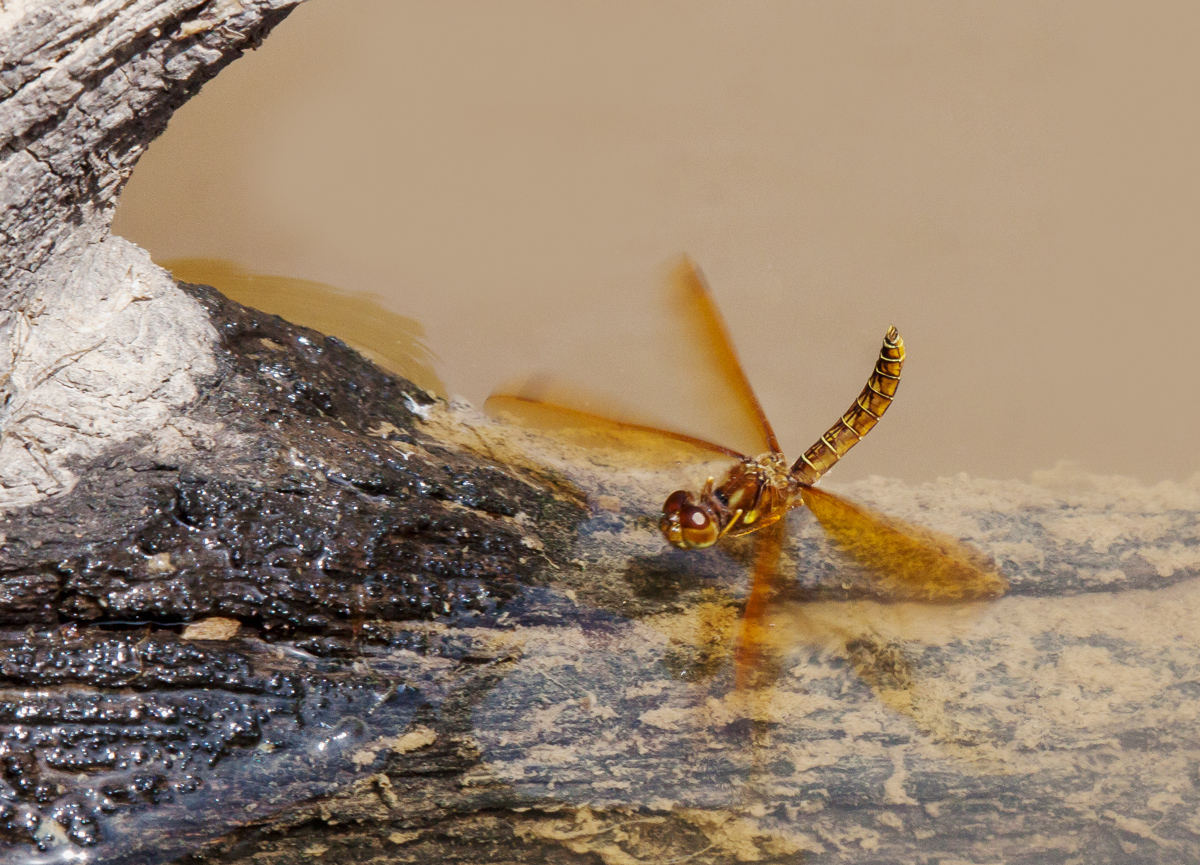
When I first spotted a tiny Eastern Amberwing dragonfly (Perithemis tenera) flying low over the water and flexing yesterday at Huntley Meadows Park, I assumed that it was a female depositing eggs into the water. As I continued to watch (and try to get shots) a couple of things became clear—it was a male, not a female, and he was pointing his abdomen up into the air, not down into the water. What was he doing?

Apparently this is courting behavior and he was trying to impress a lady that he had spotted. There is a fascinating description of this process in a blog posting by the University of Wisconsin Milwaukee Field station that I highly recommend. Here is an extract from that posting.

“A male flies low over the water, patrolling a territory about 20 feet wide of choice egg-laying turf (weedy aquatic sites) and defending it vigorously – darting out at intruders and displaying with those spectacular wings. When a female approaches, he follows and courts her, swaying back and forth, abdomen raised. If she’s agreeable, she follows him home. He hovers over his territory while she evaluates it, and if she likes it, she gets him along with it.”

As the third photo shows, his courting behavior was successful. After they mated, she deposited the eggs into the water and he returned to his perch, ready to chase off rivals and attract more female dragonflies. (In case you are not familiar with this dragonfly species, the Eastern Amberwing is one of the smallest dragonflies in the United States, with a body length of just under one inch (25 mm).

Eastern Amberwing


Eastern Amberwing

Eastern Amberwing

Eastern Amberwing

© Michael Q. Powell. All rights reserved.

Read Full Post »

Females are a real mystery to me, especially when it comes to dragonflies. At this time of the year I see a lot of different dragonflies and I have featured a number of the colorful males over the past few weeks. They are relatively easy to identify when they are mature—immature males, however, often have the same coloration as females.

The challenge with females, particularly a number of the members of the Skimmer family, is that they all look pretty much the same.  This past Friday I photographed this beautiful female dragonfly and I love the two-toned coloration of her eyes. After consulting with my local dragonfly expert Walter Sanford, I have concluded that she is probably a Great Blue Skimmer (Libellula vibrans), though she doesn’t have a spot of blue on her

Great Blue Skimmer

© Michael Q. Powell. All rights reserved.

Read Full Post »

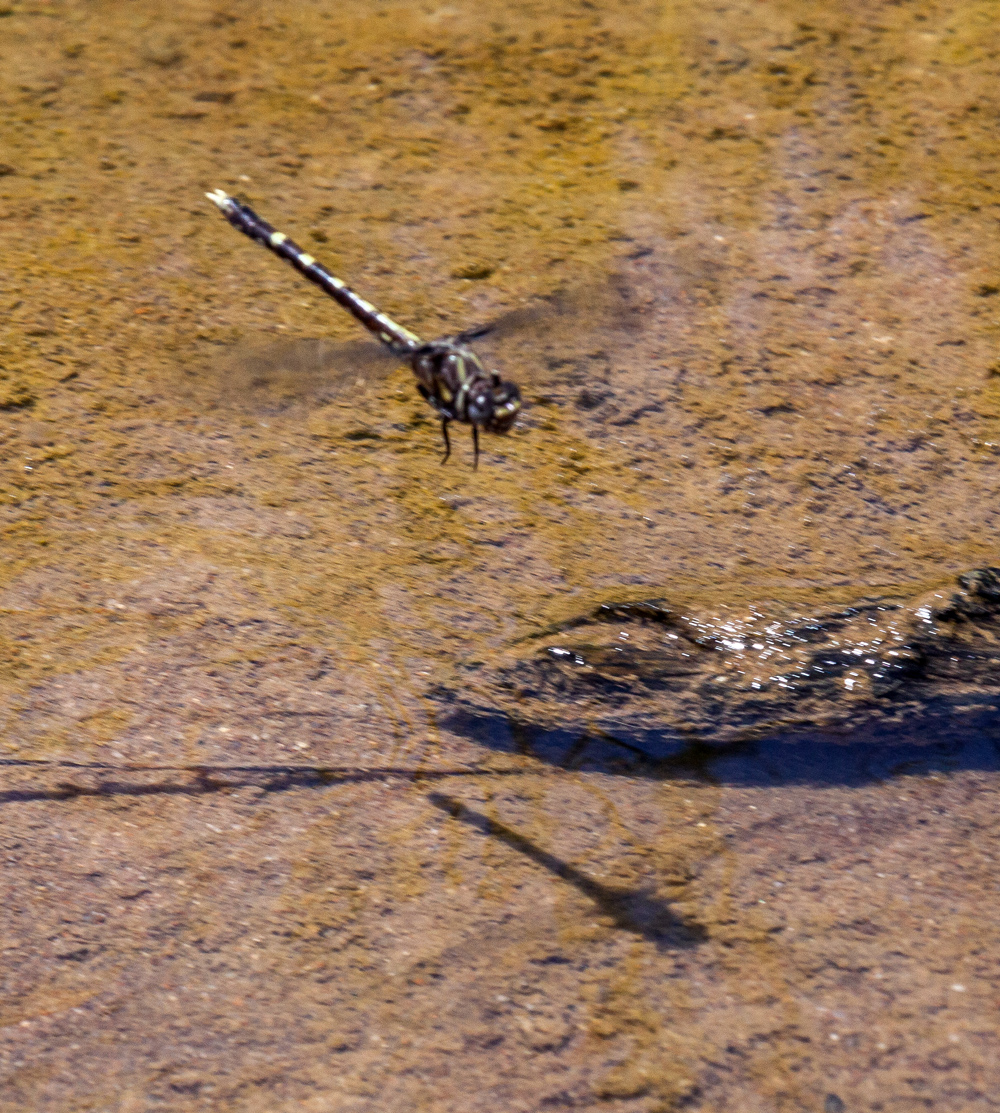
If you want a real photography challenge, try to get shots of dragonflies while they are in flight. Dragonflies are so small and generally move so quickly that it’s tough for the camera’s focusing system to lock onto them. On some occasions, dragonflies will hover for a few second or will follow the same route repeatedly and it’s slightly easier in those situations to capture images of the dragonfly.

Yesterday I spotted a dragonfly flying low over a slow-moving stream with its legs dangling. I have previously seen Common Sanddragons (Progomphus obscurus) on the sandy banks of this stream, but I had never seen a sanddragon act this way before. Most of the times that I have managed to get shots of dragonflies in flight, they have their legs tucked in, presumably to make themselves more aerodynamic. Initially I thought the dragonfly was coming in for a landing, but it flew around for a little while with the dangling legs.

What was this dragonfly doing? I don’t know for sure, but I wonder if perhaps this is a female dragonfly who was looking for a place in the water to deposit her eggs. Some dragonfly species deposit their eggs in vegetation and others will do so in the water.

I took these shots with my 180mm macro lens using auto focus.  I am happy that they are more or less in focus and show some of the details of the dragonfly. I like too the way that I was able to capture the dragonfly’s shadow as it was cast onto the water.

Common Sanddragon

Common Sanddragon

© Michael Q. Powell. All rights reserved.

Read Full Post »

I love the speckled blue eyes of the male Great Blue Skimmer dragonfly (Libellula vibrans), like this spectacular specimen I spotted Monday at Huntley Meadows Park in Alexandria, Virginia.

Great Blue Skimmer

Great Blue Skimmer

© Michael Q. Powell. All rights reserved.

Read Full Post »

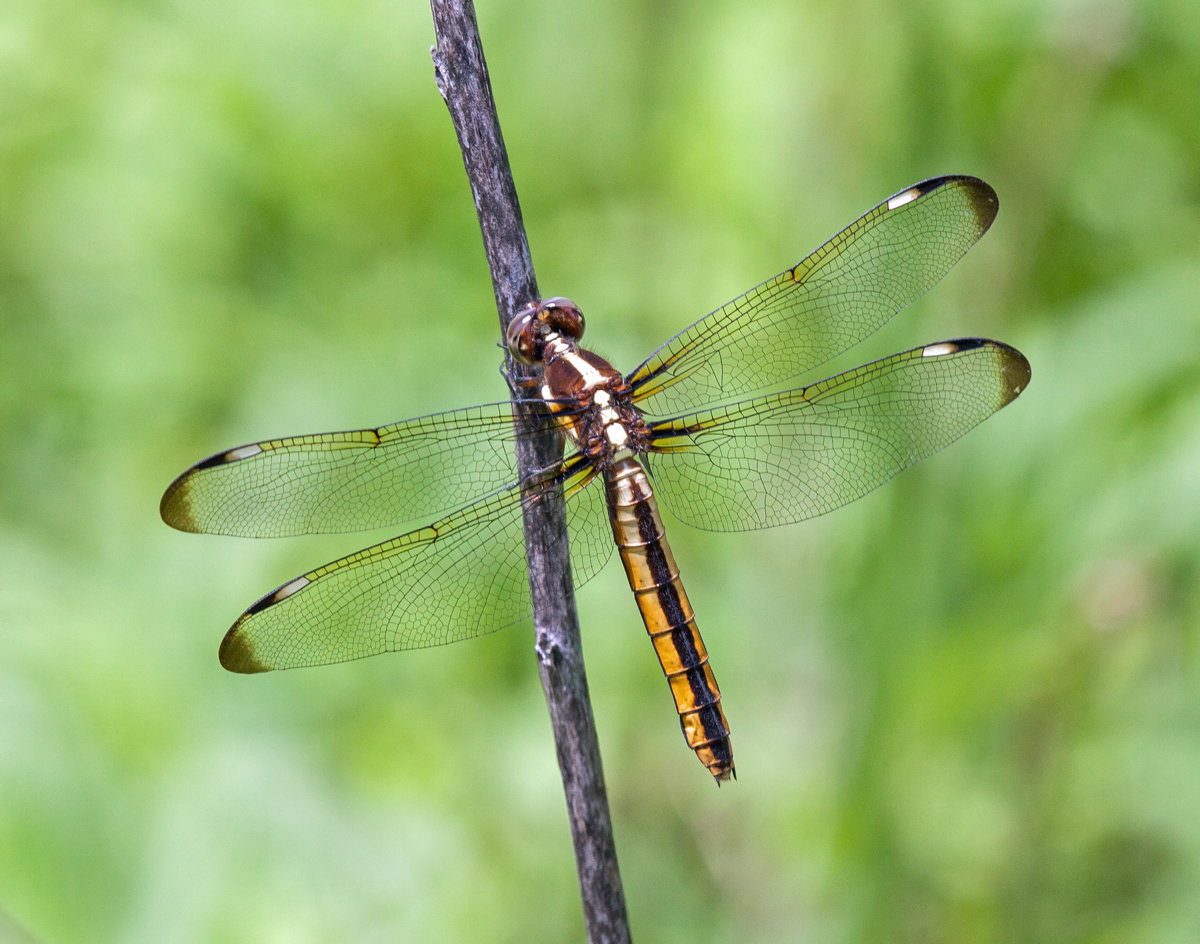
I love it when there are unique characteristics that help in identifying species. In the case of dragonflies, the Spangled Skimmer (Libellula cyanea) is the only dragonfly in our area that has both black and white stigma on the leading edge of its wings. It was therefore relatively easy to identify this beautiful female dragonfly when I spotted it this past Monday at Huntley Meadows Park and she cooperated by perching for a moment so that I could capture this image.

Spangled Skimmer

© Michael Q. Powell. All rights reserved.

Read Full Post »

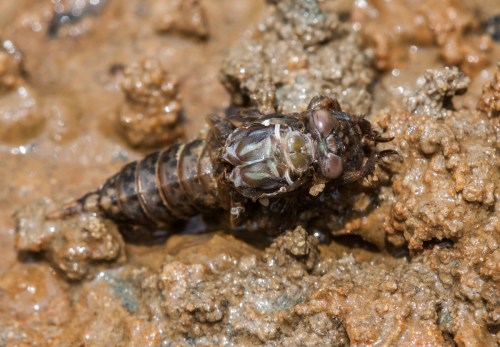
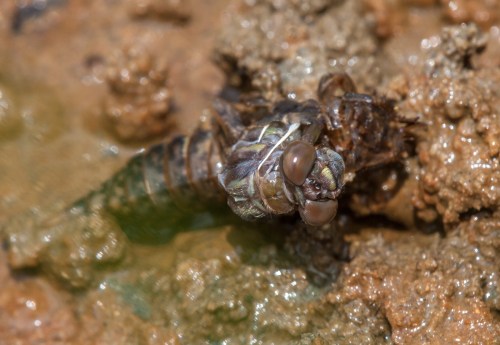
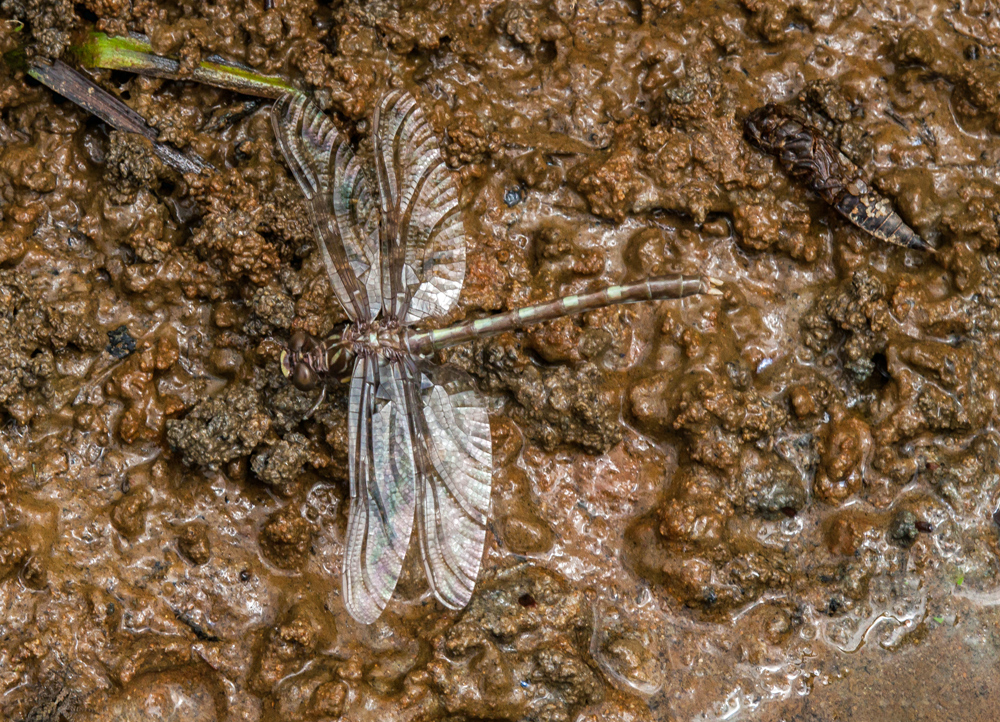
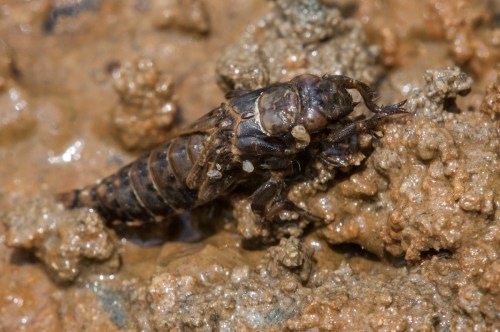
When I noted in a recent posting called Transformation, that I had not yet witnessed the remarkable metamorphosis of a dragonfly, I never suspected that only a few day later I would somehow manage to observe such a transformation of a Common Sanddragon dragonfly (Progomphus obscurus) from start to finish at relatively close range.

Nymphs of this species of dragonfly crawl out of the water onto a sandy beach to begin the process and I knew of the bank of a stream where this had been taking place over the past week or so, having observed there newly emerged teneral dragonflies and the discarded exoskeletons known as exuviae. However, what were the chances that I would be able to be at the right location at precisely the right time? I figured the odds were about the same as winning the lottery.

Last Friday around noon I spotted several exuviae in the sand as I was walking along that section of the stream. I bent down, picked them up, and placed them in the palm of my hand in order to get a good look at them. Having spotted Unicorn Clubtails in this location along with Common Sanddragons, I wondered if these was a way to tell which species of dragonfly had emerged from a given exuvia. As I continued to walk, I suddenly became aware that something was crawling around in my hand—one of my presumed exuviae was in fact a live nymph.

I experienced an initial moment of shock, but realized pretty quickly that I needed to get the nymph back onto the sand. If I had been thinking a little more clearly, I might have chosen a spot that optimized my chances for capturing good images, but instead I selected a location where I could see another exuvia and gently placed the nymph there.

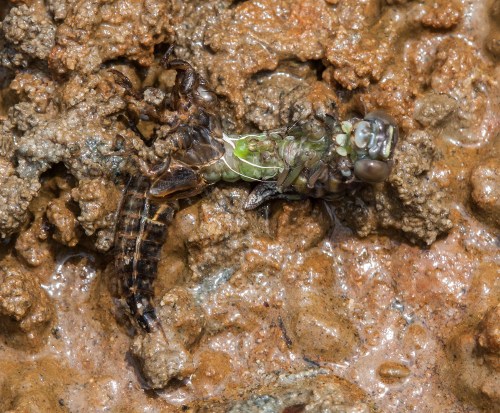
I placed my eye to the viewfinder of my camera and began to wait and to watch. Within a very short period of time I began to see signs of movement in the thorax area of the nymph, just behind the eyes, and before long the head of the dragonfly appeared as it began to pull its body out of the soon-to-be-discarded shell. It took about eight minutes for the body to be entirely free of the exoskeleton.

The dragonfly changed positions so that it could extend its abdomen and begin the process of extending its wings, which at this stage were merely nubs. Over the next twenty minutes or so, the wings and the abdomen grew larger and larger. My original shooting position was no longer optimal, so I ended up standing in the stream to get a view of what was happening. The water was about six to eight inches deep (15 to 20 cm) and my non-waterproof boots were quickly soaked. As I crouched to get as close as I could to the eye level of the dragonfly, I suddenly realized that the seat of my pants was getting wetter.

Twenty seven minutes after the process had started, the wings of the newly emerged dragonfly snapped open to the familiar position of dragonfly wings. At this moment they were very clear and obviously very fragile and I experienced a moment of concern for the vulnerable dragonfly when a slight wind kicked up. Fortunately, though, I had chosen a somewhat sheltered position and the dragonfly was safe. The wings continued to harden and six minutes later the dragonfly flew off to some nearby vegetation to begin its new life.

I took a lot of photos of the process of metamorphosis and it was hard to choose which ones to post. In the caption area of each of them,I have indicated the time at which the photo was taken. The transformation began at 12:19 and the dragonfly flew away at 12:52.

Fellow dragonfly enthusiast and photographer Walter Sanford witnessed the emergence of a Common Sanddragon at a nearby, but different location on 1 June and did a blog posting on it today. Be sure to check out his posting for some great photos and a detailed explanation of what is happening within the dragonfly’s body as it undergoes this dramatic metamorphosis.
Common Sanddragon

12:19 indications of first movement

Common Sanddragon

12:21 head starts to become visible


Common Sanddragon

12:22 dragonfly starts to pull out of shell

Common Sanddragon

12:22 body of dragonfly starts to be visible

Common Sanddragon

12:23 body significantly out of shell

Common Sanddragon

12:24 side view of dragonfly pulling body out of shell
Common Sanddragon

12:25 struggling to get abdomen out of shell

Common Sanddragon

12:27 body completely freed

Common Sanddragon

12:27 straightening the abdomen

Common Sanddragon

12:28 starting to extend wings

Common Sanddragon

12:29 continuing to extend wings

Common Sanddragon

12:31 wings extended

Common Sanddragon

12:40 wings reach final length

Common Sanddragon

12:48 wings fully opened

Common Sanddragon

12:52 close-up of newly emerged dragonfly

© Michael Q. Powell. All rights reserved.


Read Full Post »

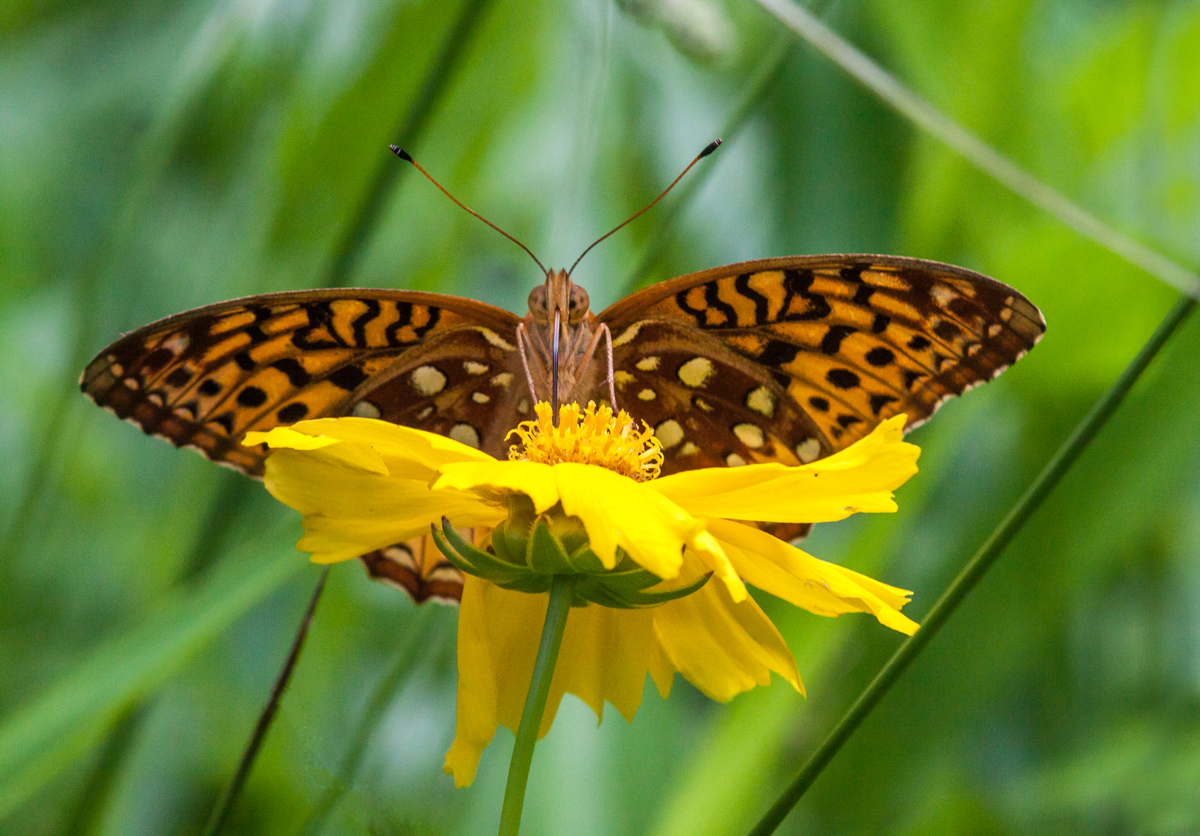
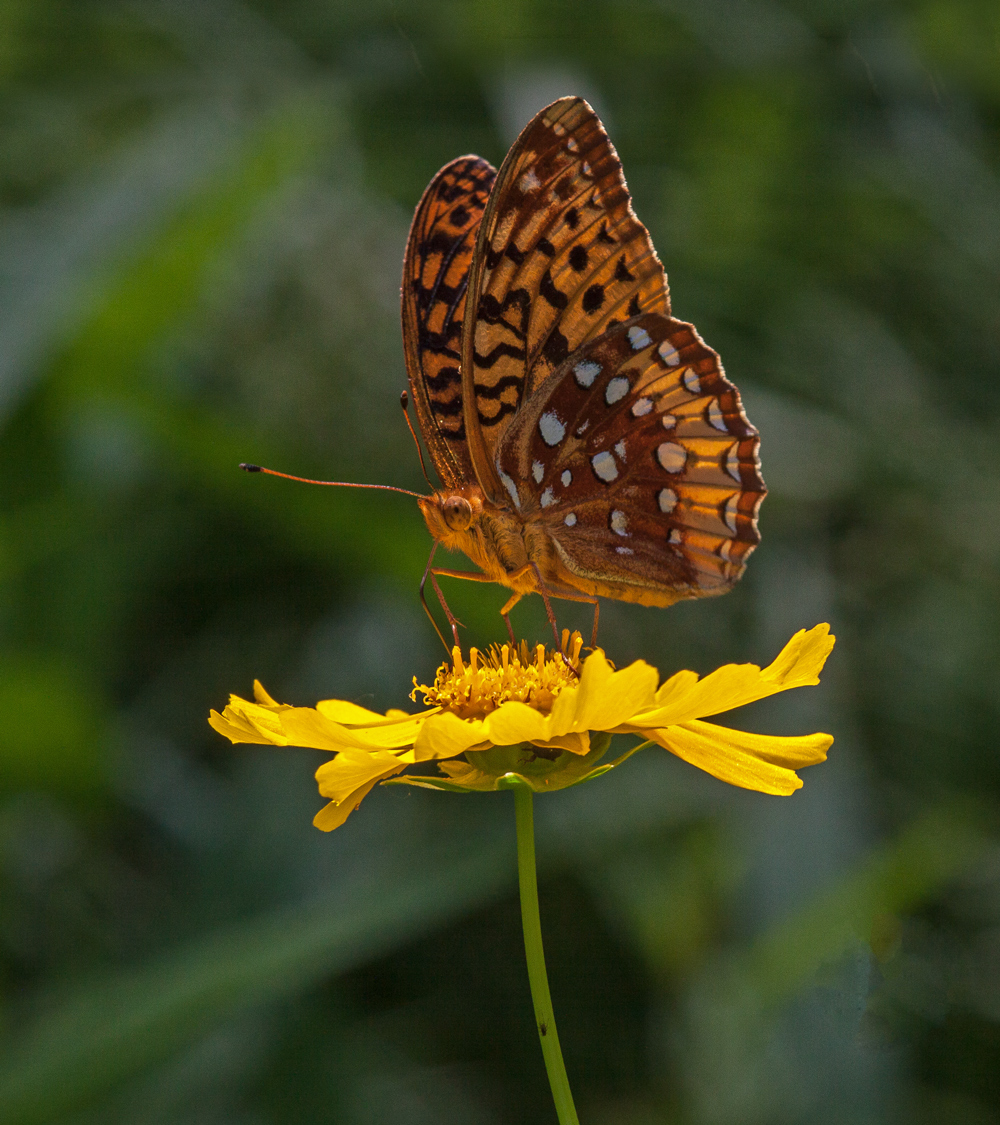
Spring is a time for chasing butterflies. This past week there seems to have been an explosion of Great Spangled Fritillary (Speyeria cybele) butterflies and I saw them at multiple locations yesterday as I trekked about in Huntley Meadows Park. The butterflies were very active, stopping for only short periods of time at flowers before moving on to the next one. My chasing behavior was impeded somewhat by the tall vegetation that has grown up in the fields, thanks to the large amount of rain that we had in May.

One of my favorite approaches with butterflies is to try to get at eye level with then and a few times yesterday I was able to get the kind of shot that I really like.

Great Spangled Fritillary

Great Spangled Fritillary

© Michael Q. Powell. All rights reserved.

Read Full Post »

Where do you go to find sanddragons? Although it sounds like a trick question, the correct response is the obvious one—you generally find Common Sanddragon dragonflies (Progomphus obscurus) perched on the sandy bank of a stream. Sometimes Common Sanddragons will perch almost flat on the sand, but often they will raise their abdomens up, sometimes assuming the obelisk position, in which the tip of the abdomen is pointing almost straight up. Why do they do this? The most frequent explanation for this behavior that I have seen is that it is a method of thermoregulation. The dragonfly keeps from overheating by reducing the amount of its body that is directly exposed to the sun.

Common Sanddragon

Common Sanddragon

© Michael Q. Powell. All rights reserved.

Read Full Post »

« Newer Posts - Older Posts »