Feeds:
Posts
Comments

Posts Tagged ‘green spring gardens’

Some people claim that the camera adds ten pounds, and that seems to be the case with this female Northern Cardinal. Maybe it’s just the angle or she had fluffed up her feathers for better insulation, but it sure looks to me like she has been fattening herself up for the winter. In fact, you probably noticed that I caught her in mid-bite. I’m not sure what she is eating, but there are lots of colorful berries in the background from which to choose.

Some people claim that they eat like a bird—I hope they don’t mean they eat like this particular bird.

Cardinal in mid-bite

© Michael Q. Powell. All rights reserved.

Read Full Post »

Yesterday I returned to my photographic roots at Green Spring Gardens, a county-run historic park, to shoot flowers and bugs, the subjects I started with six months ago when Cindy Dyer, my mentor and muse, helped me get serious about my photography. It was cloudy and cool (about 47 degrees F (8.3 degrees C) and I didn’t expect to see many insects active. There was quite a variety of flowers blooming, including many that have been present all summer. Perhaps when we have a hard freeze, some of them will die off, but for now they provide a blast of bright color that contrasts with the now fading fall foliage.

Bee in early November

I was surprised when I encountered this bee, the only one that I saw all day. It seemed to be moving slowly in the colder weather, but was industriously working on this purple flower. Judging from its relatively hairless abdomen, I think that this might be a carpenter bee rather than a bumblebee, though I am not completely sure about the identification.

I have always mentally associated bees with spring, but now, as I look more closely at nature, I realize that I have to question all of my previous assumptions. That’s probably a good thing for me to do regularly, and not just in my photography.

Bee working in the cold

© Michael Q. Powell. All rights reserved.

Read Full Post »

I was going over some photos from earlier this month and came across these photos of a Monarch butterfly. I remember how excited I was when I shot them and decided to share a few of them. Early in the summer I took lots of photos of swallowtails, but I longed to photograph a Monarch butterfly. The first few that I saw flew away before I could raise my camera. Eventually, I managed to get some decent shots, but my pulse still quickens whenever I see a Monarch. Other insects may be cool or interesting or unusual, but for me there is nothing that really matches the beauty and elegance of a Monarch butterfly.

© Michael Q. Powell. All rights reserved.

Read Full Post »

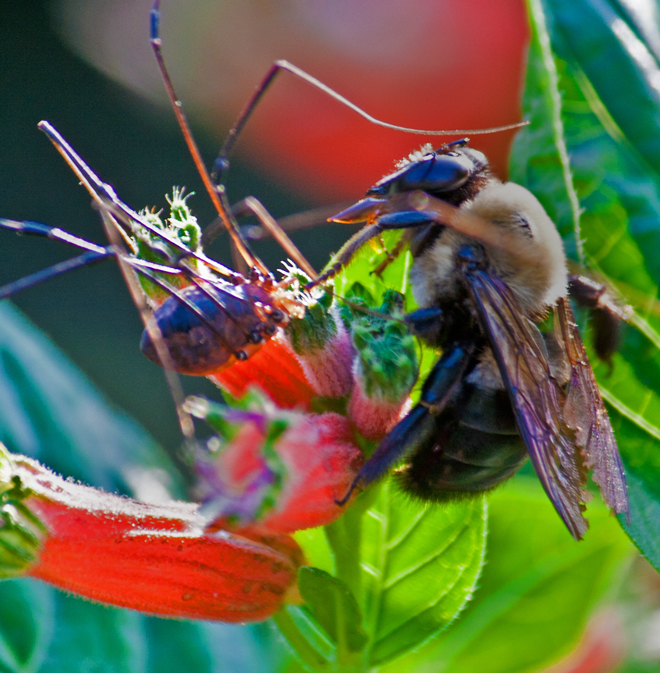
I am always fascinated whenever I happen to capture two different insects in a single image, especially when they appear to be interacting. A bee flew onto a flowering plant and appears to be having a conversation with a daddy longlegs (aka harvestman) that was already there. Does one of them look at the other as a potential prey? Are they sharing information? Is one asking the other out on a date?

Can you hear me now?

Insect interaction

© Michael Q. Powell. All rights reserved.

Read Full Post »

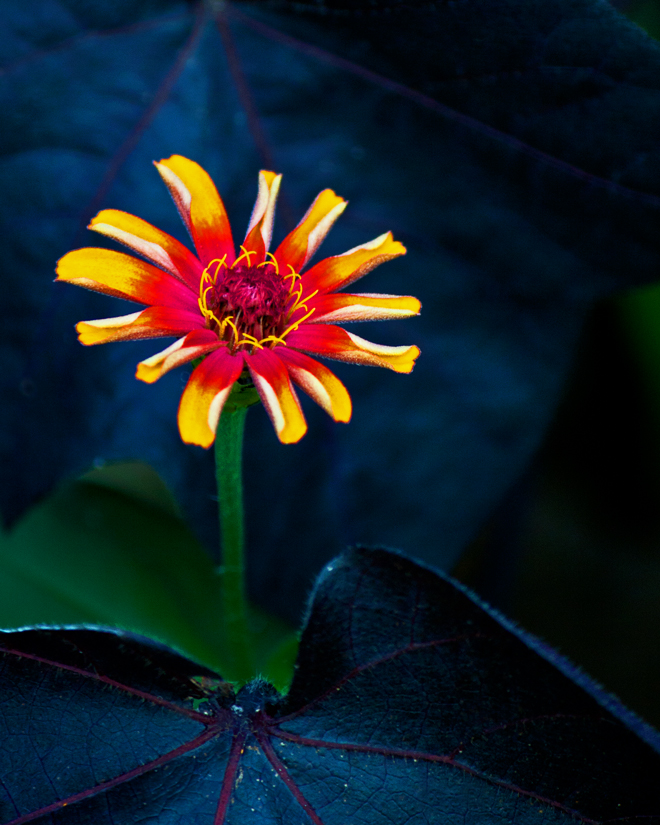
Some words are just fun to say out loud. How can you not smile when you repeat the words “Zowie Zinnia?”

I think that is the correct name for this colorful little flower, which helps to brighten up the gloomy weather that has descended on us the last few days. Zowies usually have much more showy displays, but I like the way that the colors and shape of this young plant are set off against the backdrop of the dark green leaves.

“Zowie!”—it sounds like something Robin would say to Batman (and of course it would need to be punctuated with an exclamation point).

Zowie Zinnia

© Michael Q. Powell. All rights reserved.

Read Full Post »

This is another shot of the Great Blue Heron (Ardea herodias) who was so cooperative today in permitting me to get close to him. In this shot, his eyes are fixed intently on the water, which unfortunately was covered with some combination of algae and duckweed. There was virtually no way for him to spot any potential prey below the surface of the water. His body seems coiled, ready to strike at a moment’s notice. He remained in this position for quite some time, but eventually he relaxed and gave up the hunt. Later, he moved to the other small pond and was equally unsuccessful there.

Focused blue heron (click for a higher resolution view)

© Michael Q. Powell. All rights reserved.

Read Full Post »

I was lucky today. Normally when I have tried to photograph Great Blue Herons (Ardea herodias), I have had to do so at the maximum range of my telephoto zoom lens and even then would have to crop the image significantly. The result has been that my photos have not been as sharp or detailed as I would have liked.

Today was different. I was walking around the little ponds at Green Spring Gardens, a county-run historical park where I had previously taken photos of a green heron, when I startled a Great Blue Heron who had been perched in a tree. He flew off high into a tree across the pond and remained there as I followed him and tried to take some photos. I have not yet looked at those photos, but suspect that they are a little distorted, given that I was shooting almost straight up.

It started to drizzle a bit. When all of the other visitors left, the heron flew down from the tree and landed no more than 30 feet from me. He wandered along the water’s edge, periodically entering the water and staring intently at its surface, probably searching for something to eat. I cautiously approached him and he let me get with fifteen feet or so of him and I even circled around him trying to get a decent angle and background for a shot. How close was I? At times I could not use the full range of my 55-250mm lens if I wanted to capture his whole body.

Here is one of my initial favorite shots. I shot it with the lens extended to 194mm with settings of f9.0, 1/200 sec, ISO 400, and an exposure compensation of -.67. Other than a little sharpening and a little cropping, this is the way the image came out of the camera.

Indeed, I was lucky today to encounter an unusually cooperative Great Blue Heron.

Cooperative Great Blue Heron

© Michael Q. Powell. All rights reserved.

Read Full Post »

The day was winding down as I retraced my steps back to entrance of Green Spring Gardens, when I caught a glimpse of a Spotted Cucumber beetle (Diabrotica undecimpunctata). My initial instinct was to switch from my 55-250mm telephoto zoom lens  to my 100mm macro lens so that I could fill the frame with this colorful little insect on a single flower.

I was tired and a little impatient, so I decided to photograph the beetle with the “wrong” lens. In retrospect, I am happy that I made that decision, because I ended up with an image that I really like. Yes, the beetle is still there, but the shape and positions of individual buds of the flower are what make this image stand out for me.

What did I learn? I realize that I need to consciously question my initial instincts and consider shooting a usual subject in an unusual way. I can’t always rely on fatigue to be the causative factor for a good result.

Spotted Cucumber beetle on red flower

© Michael Q. Powell. All rights reserved.

Read Full Post »

Yesterday I went out to a local garden with the monster Mamiya 500mm telephoto lens mated to a Nikon D300 to see if I could get some reasonably focused shots. A few days ago I did a posting outlining my initial difficulties in mastering the requirements of shooting in a totally manual mode and I wanted to see if things would be a little easier for me.

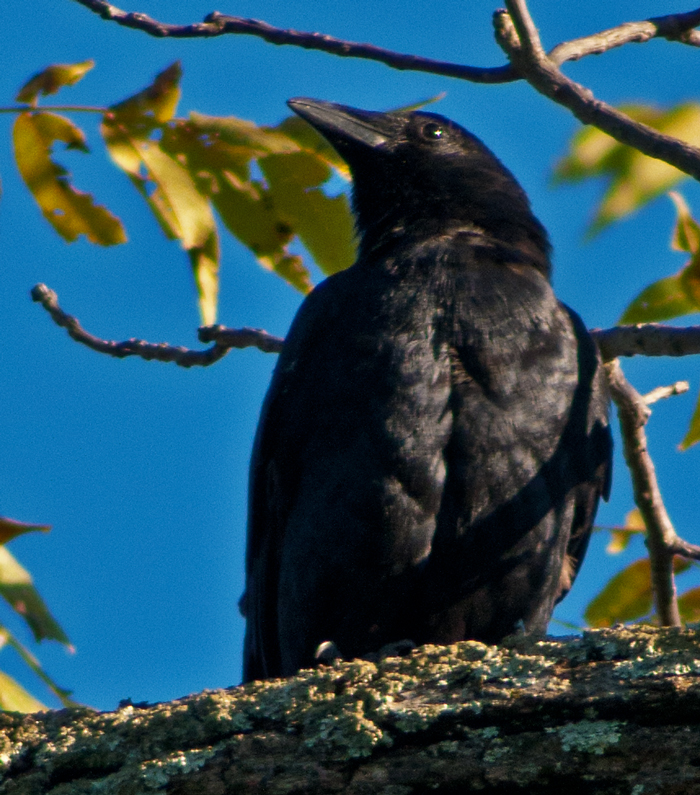
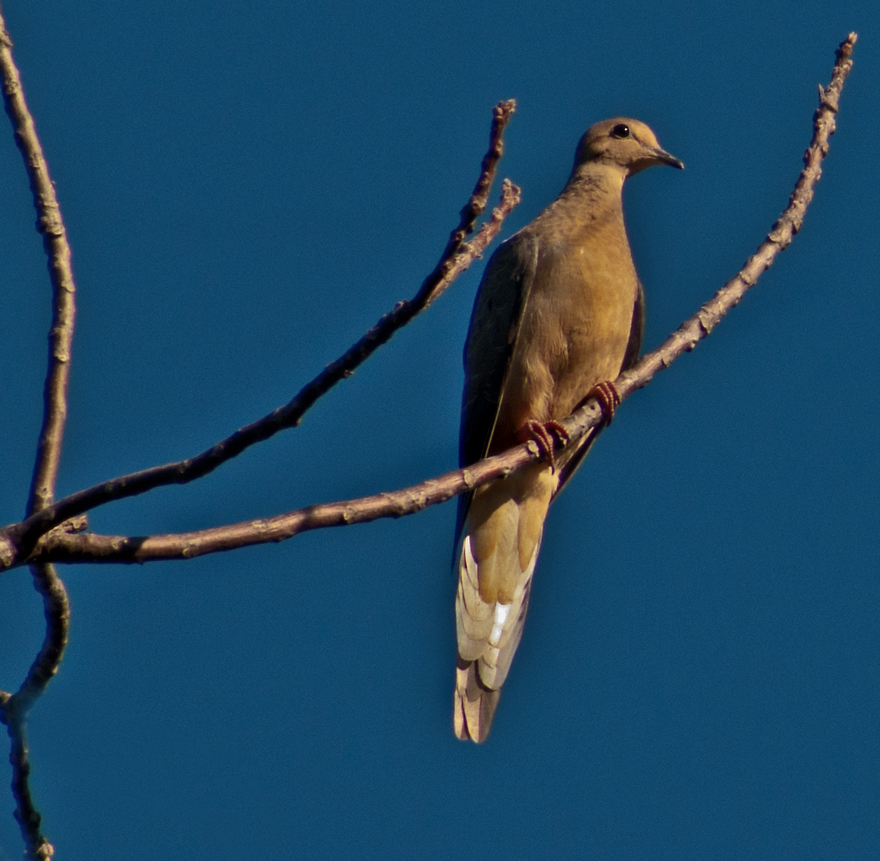
It was once again a lot of fun experimenting and I tried taking shots of a wide variety of subjects, including soccer-playing kids, flowers (yes, flowers with a 500mm lens), and a rabbit. Other than the rabbit, I had only limited success. The real test for me, though, was whether I could capture some shots of birds. I noticed a couple of birds perched high up in a tree in a relatively open area and I was able to set up my tripod on the grass and began to make a few exposures. The birds were far enough away that they were not distracted by the sound of the shutter and they stayed in place as I made adjustments. Here are some of my best shots of a crow (I cropped him so you can see the details, including the catch light in his eye) and a mourning dove. I am also including a shot of a bird that almost got away. He flew away just as I tripped the shutter and ended up in the lower left hand corner of the image in an unusual position. I decided also to post a shot of a rabbit that seems to have some personality. In this garden setting, it was the wildest animal to be found.

I have satisfied myself that it is possible to get some good images with this setup, although it requires both patiience and persistence. Is it worth the additional aggravation? My friend, Cindy Dyer, for whom I am testing this configuration will have to make that call for herself.

Close-up of a crow

Mourning dove

The one that almost got away

Rabbit on the grass

© Michael Q. Powell. All rights reserved.

Read Full Post »

I was at a local garden when I happened to hear this bird singing. My bird identification skills are so weak at this point that I won’t even hazard a guess about what kind of bird he is (I seem to be wrong more than I am right, with the exception of really common birds like robins and cardinals). His song was pleasant, however, and his brown eyes were captivating. He was perched up high enough that the sky provided a clear background and the green leaves and bright red berries added some interest and color in the foreground, although they partially hide his body. I like the way the shot turned out and it required only a minimum amount of cropping.

I finally managed to get a decent bird image in relatively good focus. What happened? I’m learning that I need plenty of light with the camera and lenses that I have to get an optimal image and I need to avoid the extreme end of my telephoto zoom and aperture range too.  Most of all, I need to be really lucky.

© Michael Q. Powell. All rights reserved.

Read Full Post »

The weathermen say that is is going to rain almost all day today. That is good news, because we have had a really dry summer. It means, however, that the colors of the day are more likely to be drab and subdued.

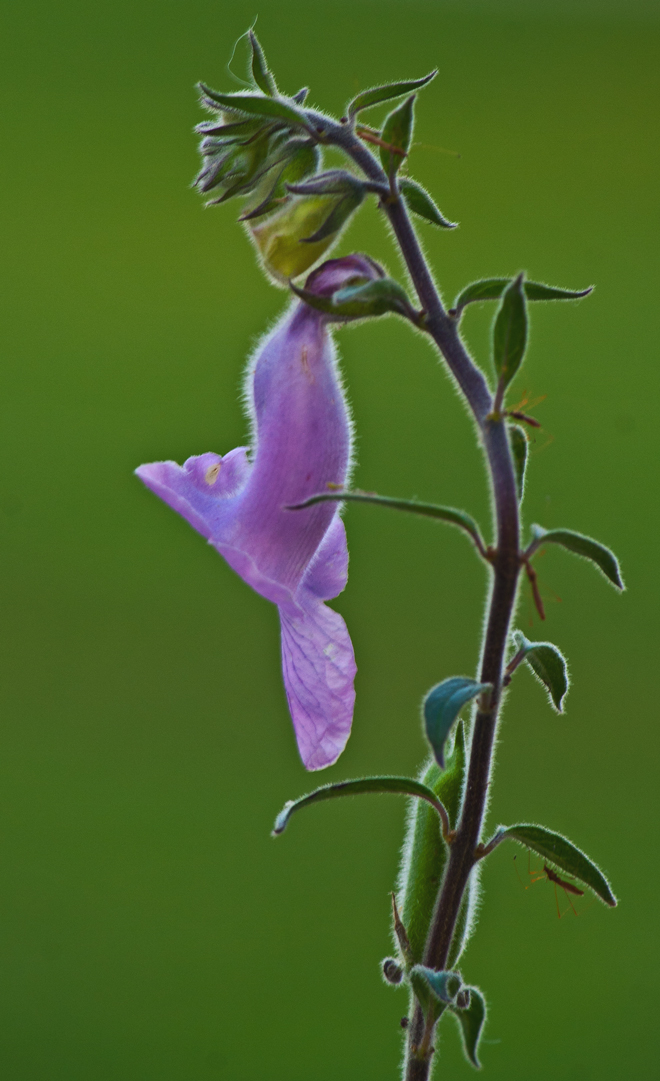
This weekend I visited Green Spring Gardens, a county-run, historical park, and was excited to see that new flowers are blooming as we move into fall. It is well-documented that I have trouble identifying my photographic subjects and flowers are no exception. I don’t know the name of this pink flower that I photographed, but I like the way the image turned out. The composition is simple and graphic and the fuzz on the leaves and the blossom cause them to glow a little.

It is my hope that this dash of pink will help to counteract the blues that sometimes creep in on rainy days. The Carpenters were not necessarily correct when they sang, “Rainy days and Mondays always get me down.”

Pink flower

© Michael Q. Powell. All rights reserved.

Read Full Post »

The weather is getting cooler and it’s getting darker earlier, but it’s nice to see that there are still lots of insects around to photograph. Here’s a recent shot of a bee, still busily at work in mid-September.

Bee in mid-September

© Michael Q. Powell. All rights reserved.

Read Full Post »

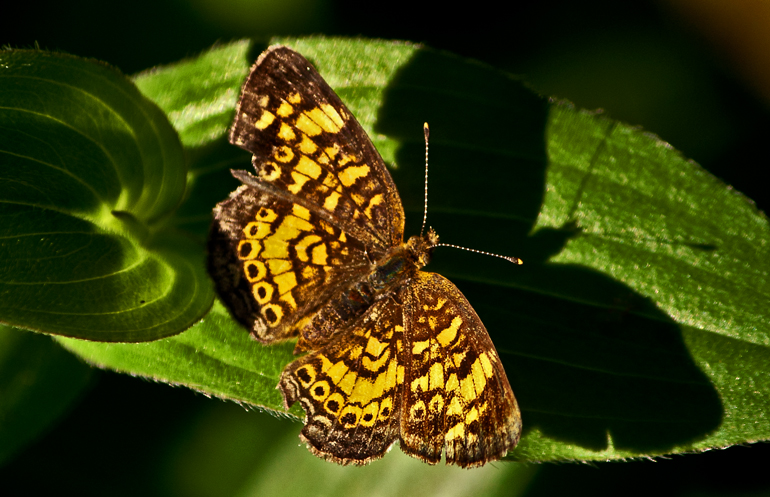
The sunlight was pretty bright late this afternoon, casting dark shadows everywhere, and I was not at all confident that I would get any decent shots. A butterfly flew into view in a partially shaded area, where he perched on a leaf. He was pretty cooperative as he kept his wings open as I made a few adjustments to my camera.

I like the interplay of light and shadows in the image below, even if the colors are somewhat muted and some of the highlights are a little blown out. I probably should admit that I love shadows almost all of the time—me and my shadows.

Butterfly shadow (click for higher resolution)

© Michael Q. Powell. All rights reserved.

Read Full Post »

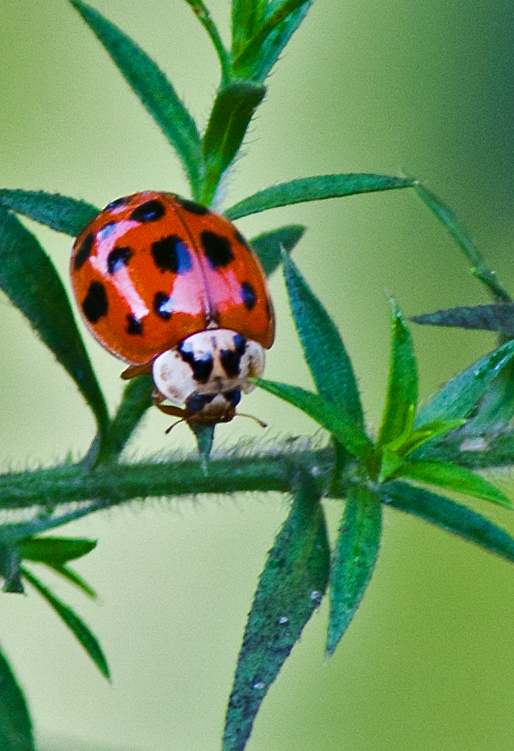
There is something about a ladybug that makes me smile. I don’t know if ladybugs trigger happy memories of my childhood, or if the bold patterns and bright colors simply appeal to my aesthetic sensibility. All I know is that I am happy when I encounter them and I am thrilled when I manage to capture their beauty in an image.

My photography mentor, Cindy Dyer, used to comment that a photo expedition was not a success for me if it did not include ladybug shots. By that modest standard, my photo shoot on Friday afternoon—just hours after a 8-hour transatlantic flight—was a definite success.

Sunday Lady

© Michael Q. Powell. All rights reserved.

Read Full Post »

I took this photo on an Eastern Amberwing dragonfly (Perithemis tenera)) about a week ago when I was shooting at Green Spring Gardens in Alexandria, VA with my good friend and photographic mentor, Cindy Dyer.

Cindy is always encouraging me to upgrade my photograph equipment. For comparison purposes, she put the Nikon D300 that she was using into my hands and had me shoot with  it for a few minutes. It was equipped with a Tamron 180mm macro lens that gave it a pretty impressive reach for the dragonflies that we were shooting. It’s interesting that I was able to use my Compact Flash memory card, which was formatted in my Canon, in her Nikon and the Canon photos and the Nikon photos peacefully coexisted in separate folders on the memory card.

I was especially happy that I got a decent shot of the Eastern Amberwing dragonfly. This type of dragonfly is very beautiful, but it’s very small and elusive. BugGuide notes that this dragonfly is normally about 21-24mm long (in case you’ve forgotten, 25.4mm is equal to an inch).

I’m probably going to remain a Canon guy, but I can definitely hear the Siren call of that 180mm macro lens, which comes in a Canon version too.

Eastern Amberwing dragonfly

© Michael Q. Powell. All rights reserved.

Read Full Post »

I love to shoot photos after the rain (and sometimes even during the rain). The rain somehow transforms the world, adding drops of water to some surfaces when the water beads up and darkening others when the water is absorbed. Sometimes the weight of the accumulated water even causes shapes to change. That seems to have been the case with this lotus flower. The petals now hang down to the side, revealing the beautiful green seed pod. The glistening raindrops add to the distinctive look as does the yellow fringe hanging from the center.

I like the new-look lotus flower—it’s almost like it has had an extreme make-over, flower-style.

Lotus flower after the rain

© Michael Q. Powell. All rights reserved.

Read Full Post »

Have you ever gone through your photos so quickly that you missed your best shot?

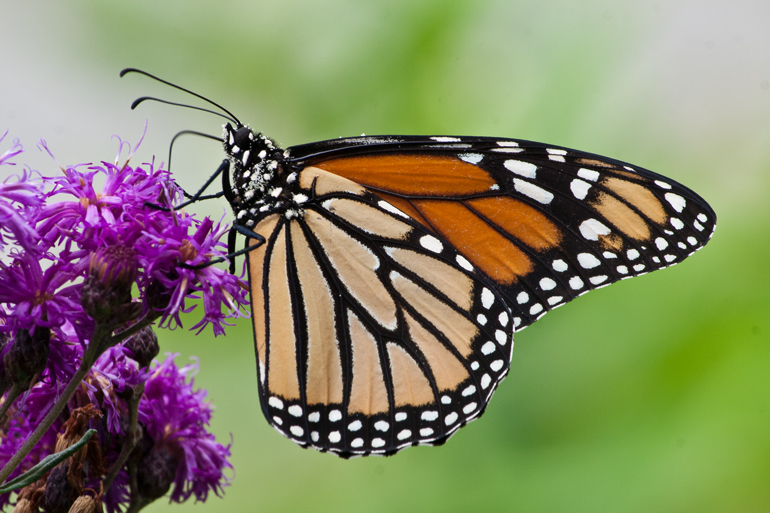
Earlier this week I was really excited because I had finally gotten some shots of Monarch butterflies and I posted a number of photos of them. As I looked over my photos from Monday again this evening, I saw a shot that surprised me. It surprised me because it was really good and it surprised me because I missed it the first time.

Other than using unsharp mask, this is the image that came out of my camera without any cropping at all. (Naturally I downsized the resolution for the blog.) I like the composition, I like the focus, and I like the background.

It doesn’t take much to make me happy.

Monarch butterfly (click for higher resolution)

© Michael Q. Powell. All rights reserved.

Read Full Post »

Here’s a shot from this past Monday of a Clouded Sulphur butterfly (Colias philodice) at Green Spring Gardens in Alexandria, VA.

Clouded Sulphur butterfly

© Michael Q. Powell. All rights reserved.

Read Full Post »

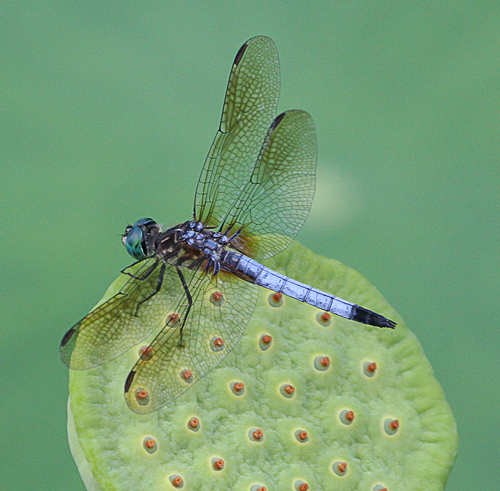
I finally managed to get a shot of a Blue Dasher dragonfly (Pachydiplax longipennis) on a lotus flower bud this past weekend. Previously I had photographed Blue Dashers on various plants and stalks and other things, but I have always thought that it would be especially cool to get on perched on the tip of a lotus bud.

It’s nice sometimes to have your wishes fulfilled and, yes, I think the photo met my expectations.

Blue Dasher dragonfly on lotus bud

© Michael Q. Powell. All rights reserved.

Read Full Post »

All this summer I have been waiting and hoping that I would have a chance to see lots of Monarch butterflies (Danaus plexippus). There is something so classically beautiful about the Monarch, from the white-dotted body to the gorgeous orange and black. So far this summer I had seen only an occasional Monarch.

Today, however, my wishes finally came true and I saw quite a few Monarch butterflies at Green Spring Gardens in Alexandria, VA. That does not necessarily mean that I had an easy time getting good shots of the Monarch, because the Monarchs today did not seem to like to linger very long on a flower. Consequently, more of my shots were rushed than I would have preferred.

Here is an assortment of my shots from today. None of them is spectacular, but I nonetheless am pleased I was able to capture some of the majesty of the Monarch in my images.

© Michael Q. Powell. All rights reserved.

Read Full Post »

I am never sure if it’s appropriate to post photos of mating insects, but decided to overlook my inhibitions and post this unusual photo of a pair of mating Eastern Amberwing dragonflies (Perithemis tenera).

Normally I have trouble getting good shots of these dragonflies because of their small size. According to BugGuide, their total length typically is 21-24 mm long (about 3/4-1 inch). In addition, they always seem to land on plants that away from the shoreline (unlike the Blue Dasher dragonflies that seem to like the plants at the very edge of the water).

This past Friday I was photographing dragonflies with Cindy Dyer at a local garden (Green Spring Gardens in Alexandria, VA) when this pair dropped from the sky and landed on a lily pad right in front of me. I happened to be shooting with a telephoto zoom so I had to back up a little to try to get a picture in focus. For those who are technically-minded, the exposure was shot at f11, 1/50 second, ISO 400, at 179mm of a 55-250mm zoom lens.

The photo is not perfectly sharp, but it gives an interesting view into the mating habits of Eastern Amberwing dragonflies. I don’t know my dragonfly anatomy very well, so it took some research to figure out who is who in this photo. The female is the one with the brown spots on her wings and she is holding on to the male’s tail. I think I’ll stop my description there and leave the rest to your imagination.

One thing that this photo taught me is that dragonflies are a whole lot more flexible and gymnastic than I realized!

Mating Eastern Amberwing dragonflies (click for a higher resolution view)

© Michael Q. Powell. All rights reserved.

Read Full Post »

I took this shot of a Red Admiral butterfly (Vanessa atalanta) at Green Spring Gardens in Alexandria, VA on 17 August 2012. It was a little surprising to me that the butterfly chose such a shriveled up, dead leaf as the place to stop, rather than a flower or bush. In a lot of ways, though, I like the simpler setting. It allows me to focus on the beauty of the butterfly without any competing attention from a colorful flower.

The colors and patterns of the Red Admiral butterfly would look good on a necktie. The colors are bright, but not gaudy, and the abstract patterns convey a sense of sophistication.

Red Admiral butterfly (Vanessa atalanta)

© Michael Q. Powell. All rights reserved.

Read Full Post »

Sometimes when I open my images on my computer I am pleasantly surprised. I was going through my images from yesterday afternoon and came upon this one.

Click on the image for greater resolution and details

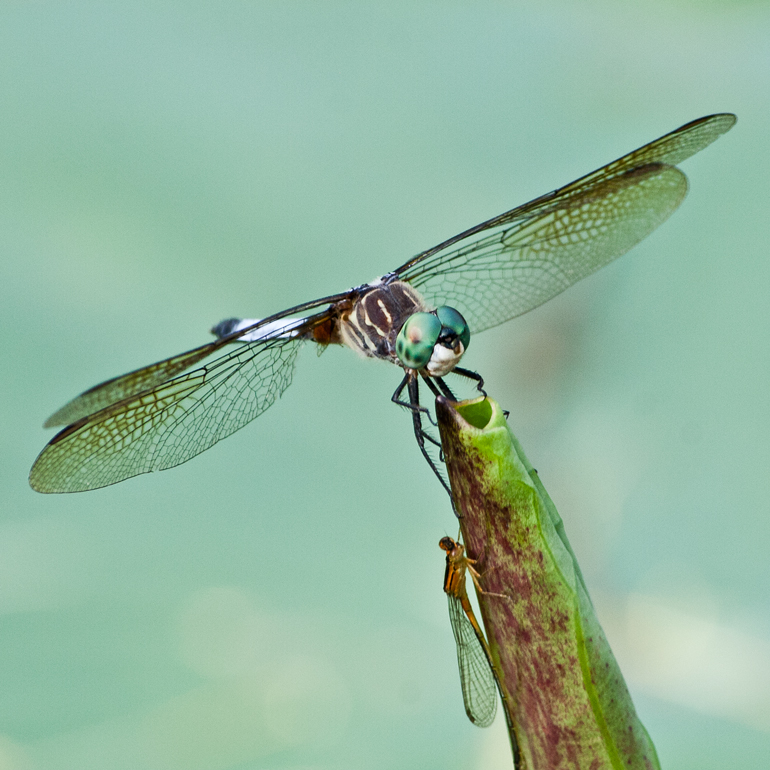
I had been focusing on shooting dragonflies that had stopped to pose on various objects. In this case I am certain that I was looking at the Blue Dasher dragonfly (Pachydiplax longipennis) perched on the rolled-up leaf of a lotus plant and never noticed the damselfly in the photo. The damselfly appears to be scaling the leaf, ready to do battle with the dragonfly. The dragonfly seems to be looking down with a little concern, wondering who is trying to challenge his position. When I compare the relative sizes of the two insects, I can’t help but think of the Biblical story of the boy David taking on the giant Goliath. In this case it would essentially be a family feud, since both dragonflies and damselflies are part of the Odonata family.

It’s a lesson to me to check my images carefully when I process them—there may be all kinds of hidden treasures waiting to be discovered.

© Michael Q. Powell. All rights reserved.

Read Full Post »

My friend and photography mentor Cindy Dyer and I went out yesterday to photograph dragonflies at Green Spring Gardens in Alexandria, VA, a local garden that is my favorite place to go when the urge to shoot some photos overwhelms me. We were often taking photos side by side. I was really beneficial for me to watch how Cindy, an experienced professional, approached the  photographic task, what things drew her attention, and the way in which she composed her shots. At one point I even got to put my memory card into her camera, a Nikon D300 with a Tamron 180mm macro lens, and shoot for a while. It was definitely a big change from my Canon Rebel XT with a 55-250mm telephoto with which I was shooting at the time. Her set-up was a lot heavier but had a much brighter, bigger viewfinder, and faster focusing.

We were both excited when one Blue Dasher dragonfly (Pachydiplax longipennis), the most common dragonfly that we saw all day, decided to use a lotus seed pod as his home base. He would periodically fly away, but always seemed to come back to the seed pod. She and I were both able to get shots of this dragonfly against the backdrop of a lotus leaf. The light colored circular object you can see is the center of that leaf. I love the crimped edges of this particular pod—it reminds me of a home-made pie crust.

This photo came out so good that I though it probably had been shot with her camera. However, when I checked out the RAW file information I realized it was from my camera. For those who might wonder about the exposure, it was shot at f11, 1/125 sec, ISO 800, at 163mm of the 55-250mm zoom lens. If you are interested in checking out Cindy’s comparable shot (her’s is even sharper) as well as some other wonderful shots she’s taken of dragonflies the last couple of days, check out her blog postings.

Blue Dasher dragonfly on a lotus seed pod

© Michael Q. Powell. All rights reserved.

Read Full Post »

Yesterday I was at a nearby pond photographing mostly dragonflies. After shooting them I decided to make a quick walk around the pond (it’s only a small man-made pond) to see what other subjects I could find. I managed to find a colorful butterfly, a small green heron, and some lotus flowers that I will post later, assuming the photos came out ok.

The subject that really caught my attention, though, was a frog. Really? Yes, really.

I was leaning over the green-colored pond water, gazing at a distant dragonfly when I happened to glance down to my right. There, almost camouflaged in what my friends say is duckweed, was a semi-submerged frog. I was able to get my camera’s lens down pretty low and got in close and captured an image I really like. The frog’s gold-ringed eyes shine out clearly amidst all of the individual particles of duckweed that cover much of his expressionless face.

There are a couple of blades of grass that were partially blocking my view to the frog but they blurred out and are not really much of a problem.  After I took some shots, though, I decided to try to carefully remove one of those offending blades. As I made the effort,  the frog, who had remained motionless up to then, literally leaped into action. He sprung powerfully into the air and skipped across the surface of the water, like a rock throw by a dad showing his son how to skip rocks.

I was so startled by his sudden motion that I almost fell over into the water. Later in the day I did end up getting wet when I belatedly noticed that one foot was planted in the water while I was intently focusing on composing a shot. I guess that’s the price of being a photographer.

Hiding frog

© Michael Q. Powell. All rights reserved.

Read Full Post »

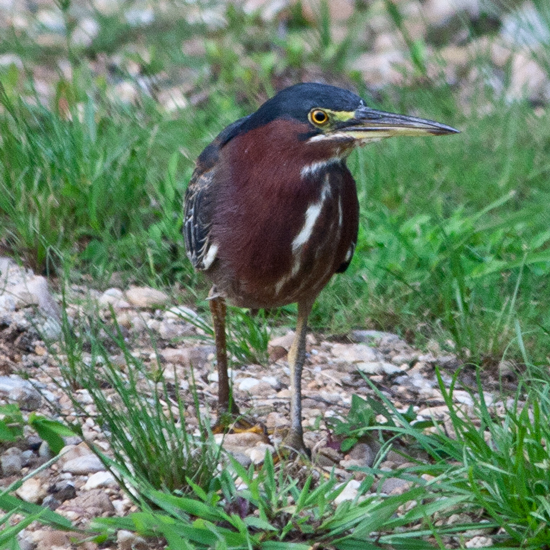
After I got home from work today I rushed to a nearby garden to get in a few shots before the light disappeared totally. I was happy to spot a green heron (I’ve photographed them before at the pond area of this garden) and managed to take a photo of him that I really like. The green heron is standing the edge of a rocky cliff and appears to be keeping watch.  (In reality it’s more like a rock wall).

Green Heron Sentinel

I decided to add one other photo of the green heron that I managed to take before he flew across the little pond to the rock wall. It is a little more of an unposed shot than the first one, which almost looks staged, and captures him in his more natural environment.

Candid shot of a green heron

© Michael Q. Powell. All rights reserved.

Read Full Post »

The subject is simple and familiar, a bee and a flower. My eye was drawn, however, to the way this bee had latched on to the entire center of this flower in a full-bodied bee hug. The X-shape of the splayed legs and the radiating petals combine to produce a graphic effect that goes beyond the literal subject matter.

© Michael Q. Powell. All rights reserved.

Read Full Post »

It may sound like a new summer beverage sensation, but the title is meant to be literal.

I captured this shot of a green heron  just as the rain was beginning to fall this afternoon. I was at the same pond at a local garden where I had previously seen a juvenile green heron (and that was right after the rain). Maybe green herons like to come out to play in the rain—I’ll have to remember that in the future.

There really wasn’t enough light for a high quality image, but I think that I managed to capture the unique look and style of the green heron.

(I also got some photos of a juvenile green heron this afternoon but I’ll save them for another posting.)

© Michael Q. Powell. All rights reserved.

Read Full Post »

Is it really possible to find inspiration and motivation in an insect?

Take a really close look at this photo of an male Eastern Tiger Swallowtail butterfly (Papilio glaucus).

Do you see the delicate beauty of his colors and shapes or are your eyes drawn immediately to his infirmity? His wings are virtually shredded and there is a large portion of one of them missing.

Somehow, despite all of those limitations, he can still fly. He can defy gravity and the laws of aerodynamics.

I don’t know how he does it, but he is able to overcome adversity.  Some of the lyrics of the song “Defying Gravity” from the musical “Wicked” come into my head as I think about it.

“I’m through accepting limits ’cause someone says they’re so. Some things I cannot change but til I try I’ll never know….I’d sooner buy defying gravity. Kiss me goodbye I’m defying gravity and you can’t pull me down.”

Inspiration and motivation can come from many places, I would posit, even from insects.

Take these broken wings and learn to fly…

© Michael Q. Powell. All rights reserved.

Read Full Post »

I came across this tiny damselfly yesterday when I was visiting a local garden in the late afternoon. Initially I spotted her when she was flying and I was thrilled when she chose to land in a spot where I could photograph her. I apologize to the experts for not identifying the type but I find it impossible to identify damselflies (and even dragonflies are not easy).

Damselflies are particularly challenging for me to photograph because they are so long and skinny. If I photograph them from the side, the eye is often out of focus and if I try to shoot head-on, depth of field is an issue.

I ended up with a photo that I shot from above and to the side. Somehow I managed to reduce the composition to the damselfly, the branch to which she is clinging, and a couple of leaves.

I find special beauty in that kind of simplicity in nature and in my photography.

Unidentified damselfly

© Michael Q. Powell. All rights reserved.

Read Full Post »

I have always been fascinated by light and shadows.

Shadows often hide or mask details of a subject, although they also may reveal elements of a subject that might otherwise be concealed. Sometimes shadows are an accurate reflection of the subject (like a silhouette), but other times they distort reality. Shadows intrigue me too because they often pick up characteristics of the surfaces on which they are cast in addition to those of the subject.

My musings on shadows were prompted by this photo of an unidentified wasp (I think it is some kind of wasp) that I shot yesterday morning. The wasp was back lit by the morning sun, causing a hidden part of his body to be revealed in the shadow.

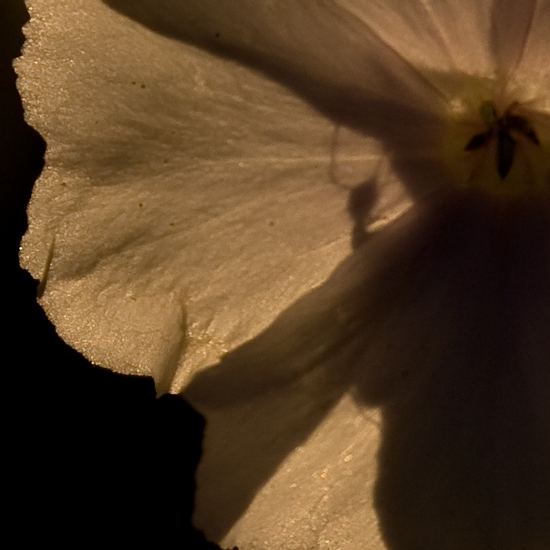
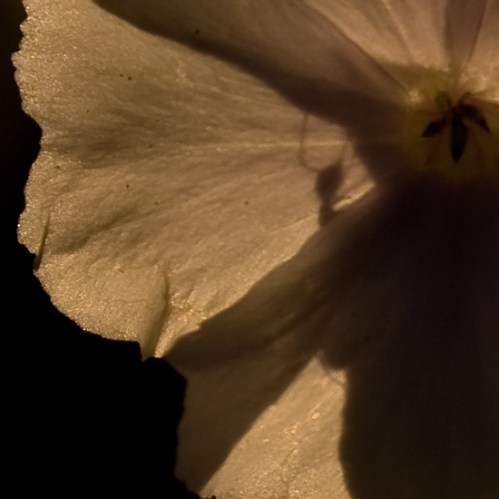
A few months ago I decided to photograph the morning light coming through a small flower in my neighbor’s garden. As I getting ready to shoot, an ant started walking across the back of the flower. It’s not a technically good shot but I like the effect that was produced by the ant’s shadow.
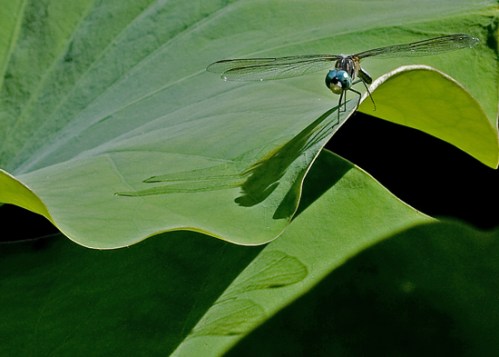
Folks who follow this blog know that I love dragonflies. In early June I took some photos of dragonflies on a sunny day, resulting in lots of shadows. The dragonfly’s shadow makes me think of the position of a person hang gliding and it even looks like the dragonfly is wearing a little helmet.

The undulating surfaces on which the shadow falls really make a difference in the shape of the shadow. I especially like how the shadows of the wings fall on a separate leaf from the shadow of the main body. The shadows of the leaves themselves make this image even more interesting for me.
In this final photo a dragonfly literally is casting a long shadow. The distortion caused by the angle of the sunlight causes his legs to appear much longer and I find that this dragonfly looks much more menacing than is typical of a dragonfly.

Can a dragonfly actually look menacing?

© Michael Q. Powell. All rights reserved.

Read Full Post »
« Newer Posts - Older Posts »