Feeds:
Posts
Comments

Posts Tagged ‘Great Blue Heron’

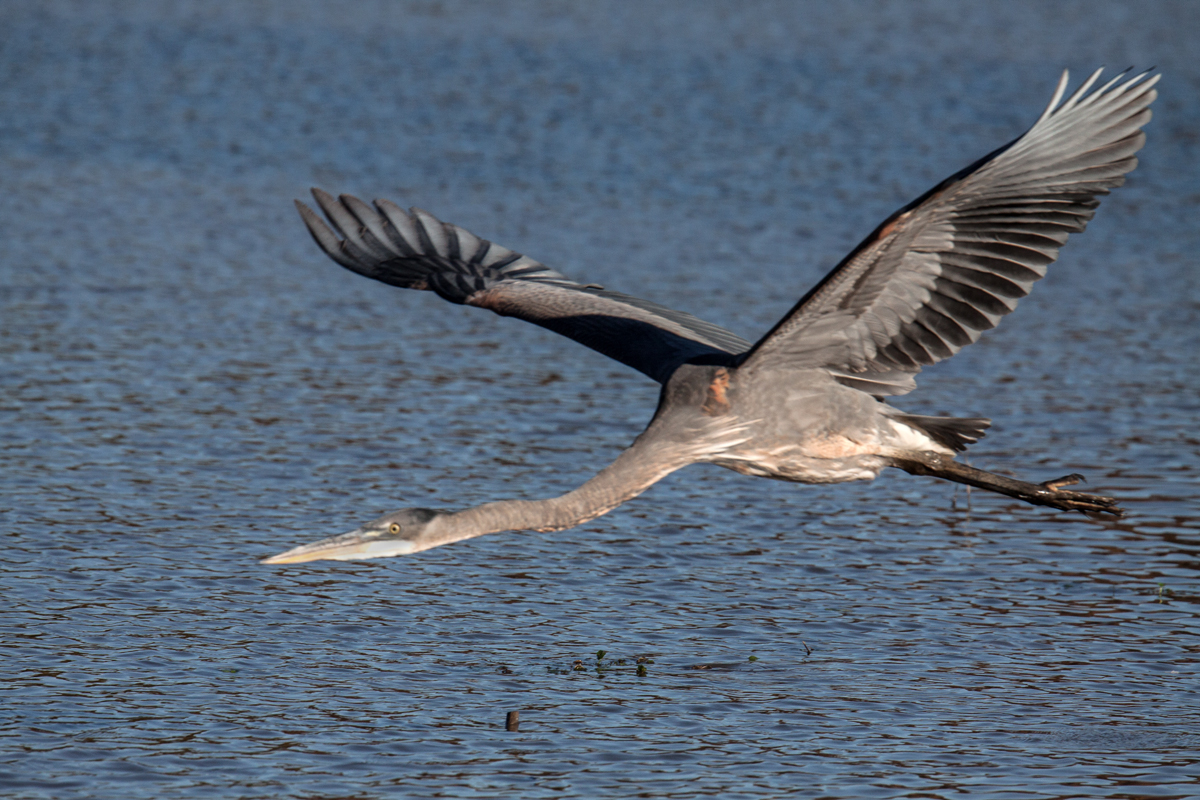
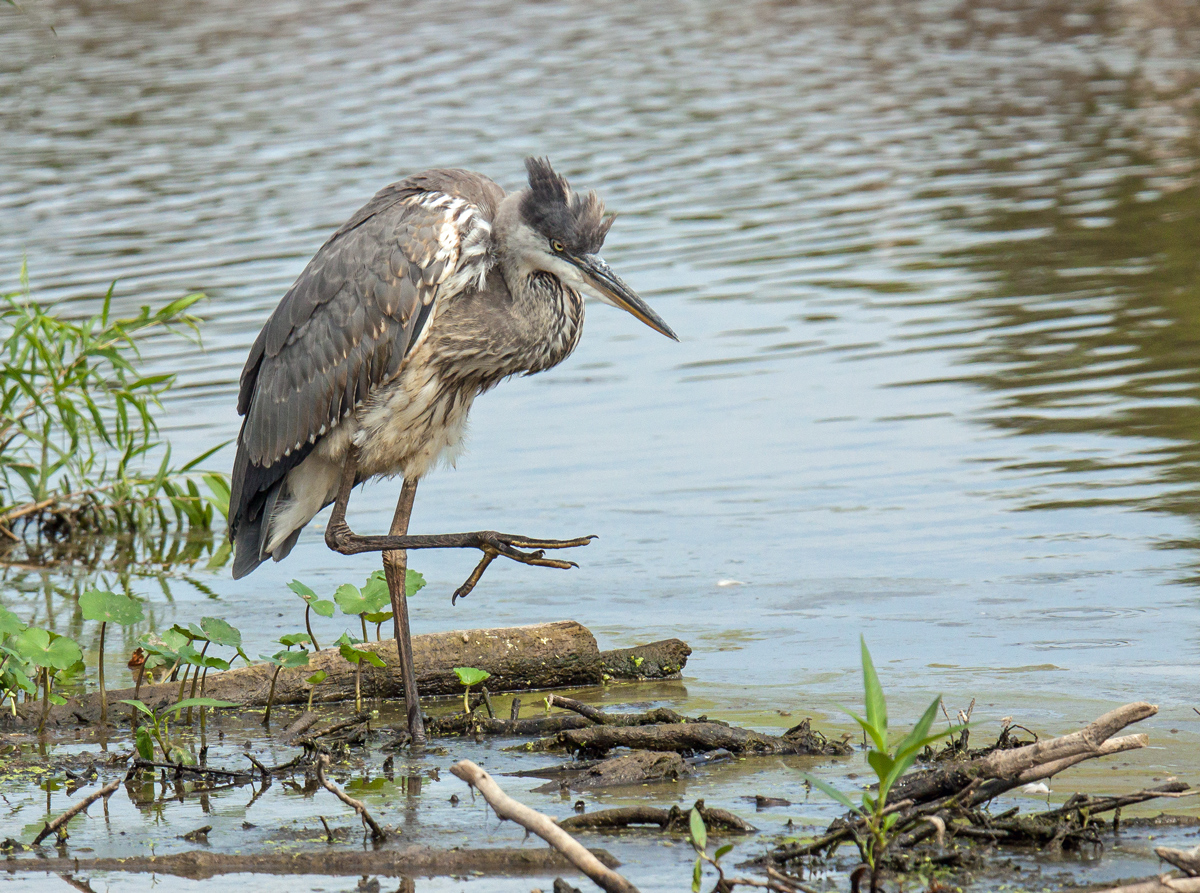
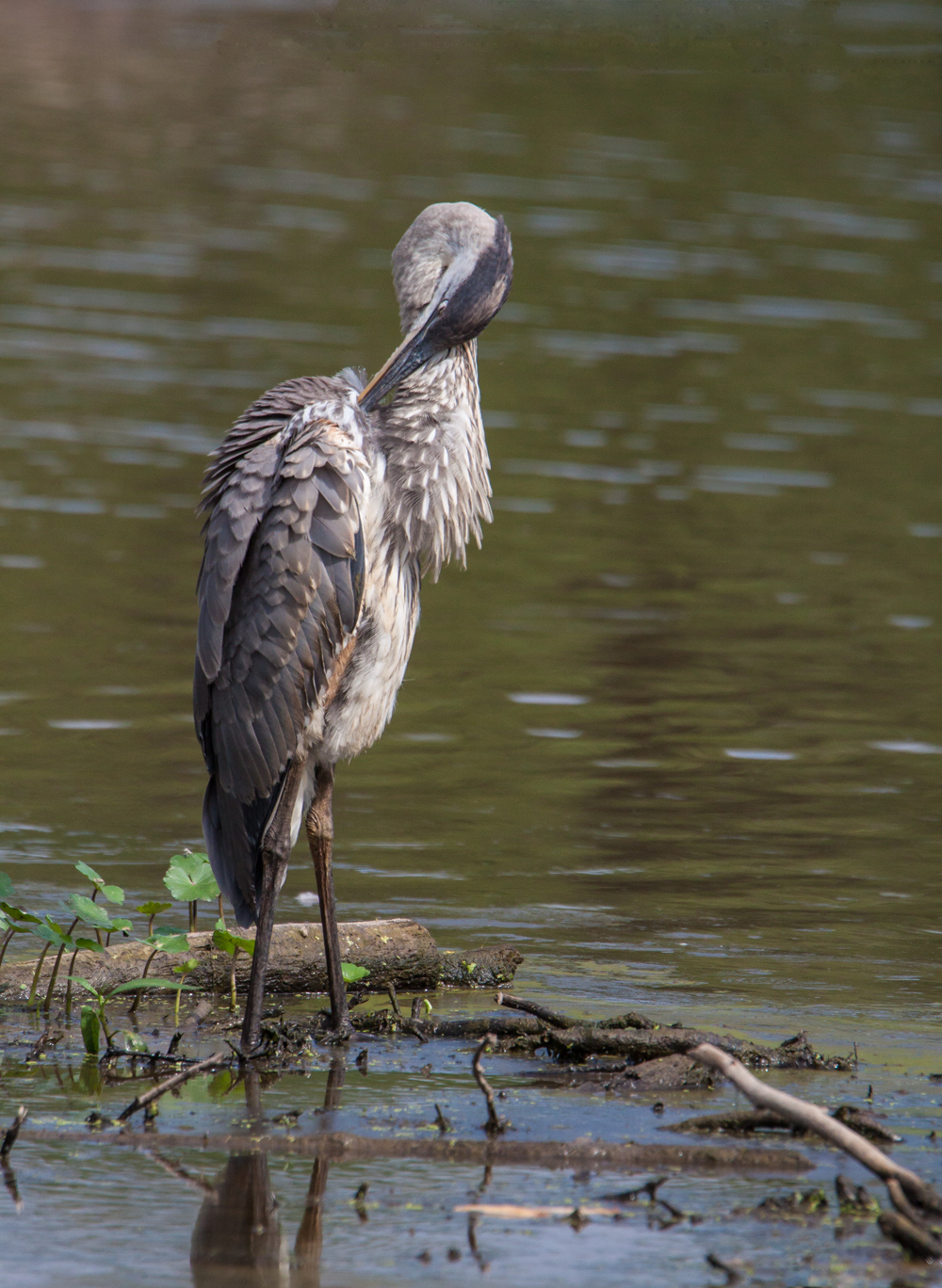
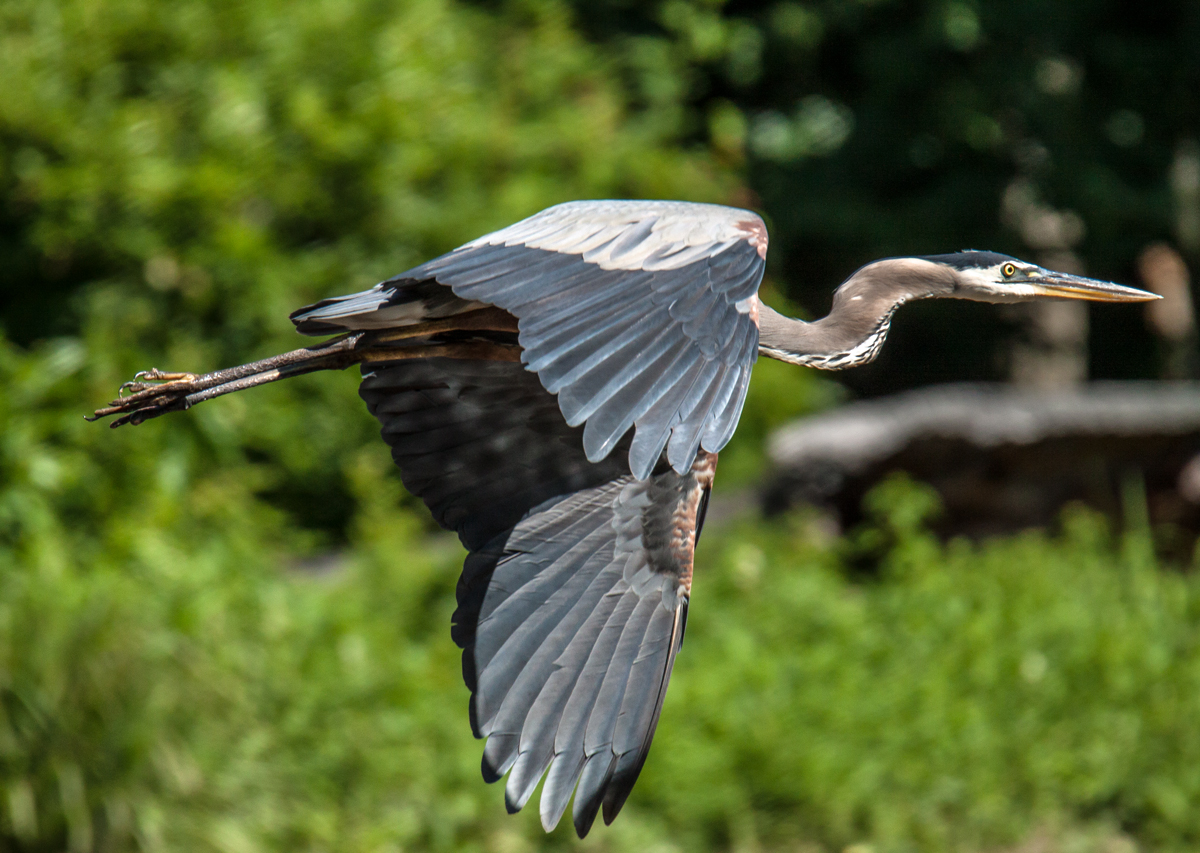
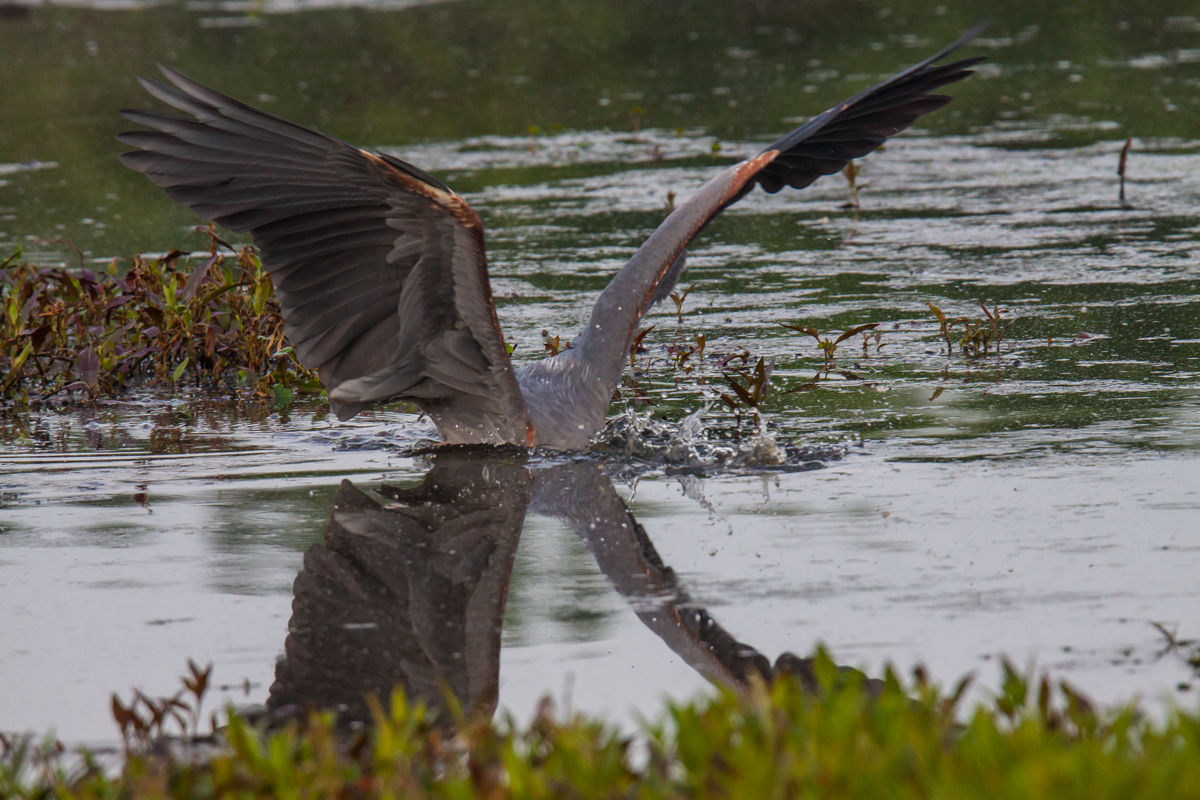
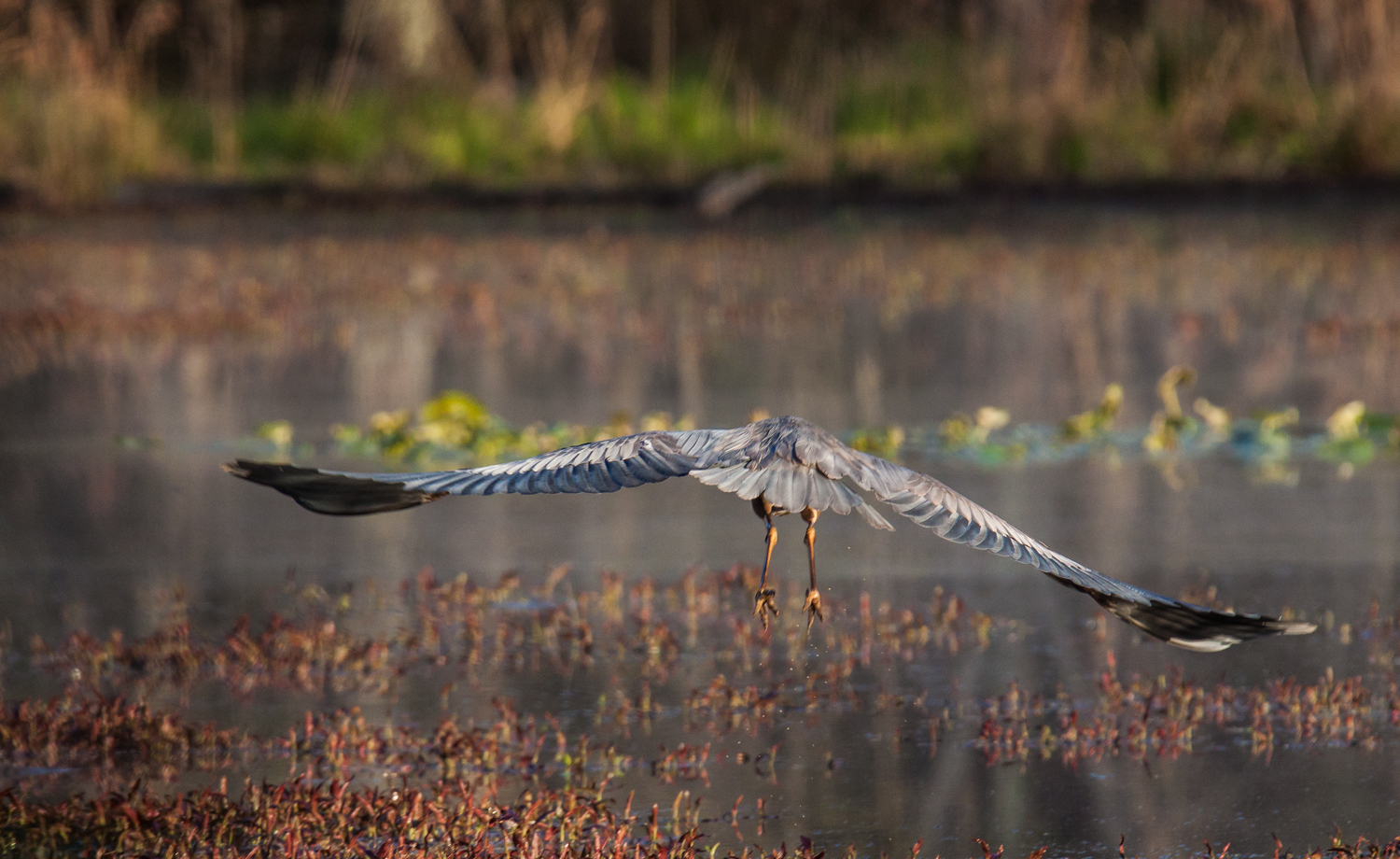
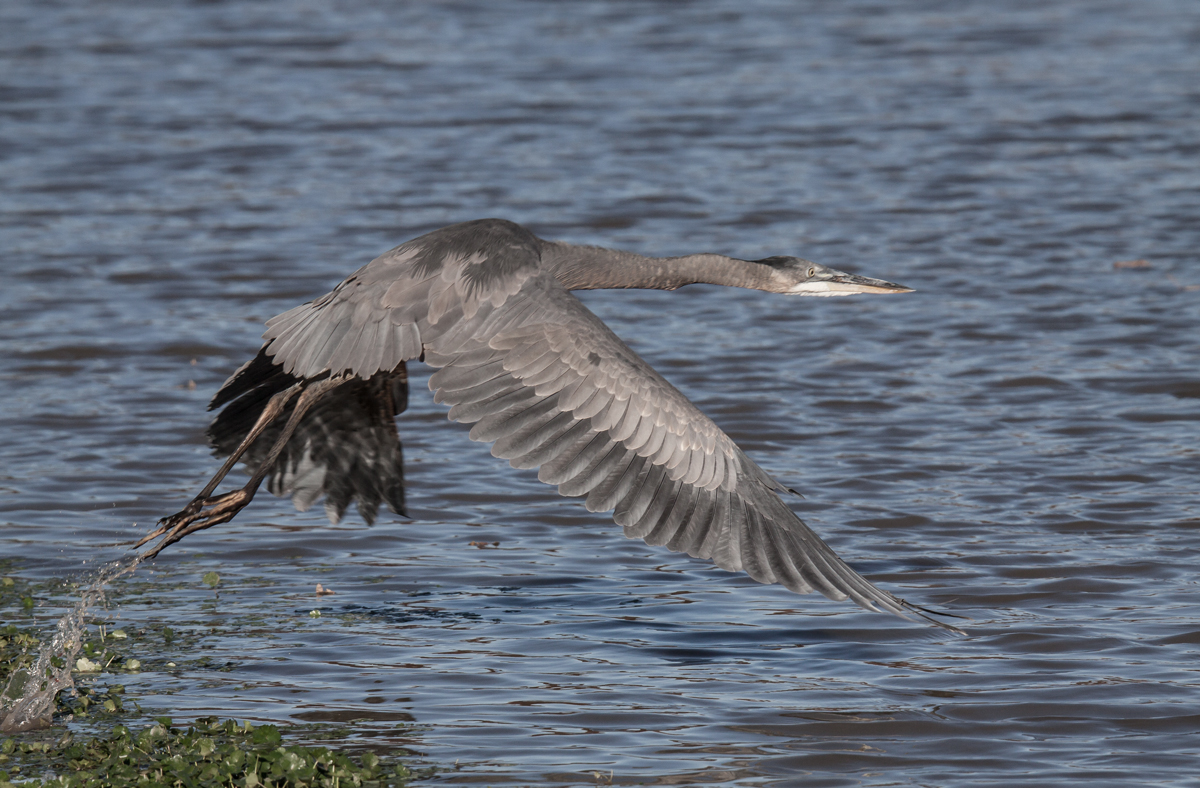
I’ve probably photographed a Great Blue Heron (Ardea herodias) taking off dozens of times, but this is the first time when I captured the bird flying directly away from me. This perspective makes the wingspan of the heron even more impressive  than usual.

I’ve managed to violate one of the main rules of bird photography by not ensuring that the eye was in focus (or even visible in this case), but I think that it helps to focus the viewers attention on the movement and shapes of the wings of the heron in this sequence of images.

Great Blue Heron

Great Blue Heron

Great Blue Heron

Great Blue Heron

© Michael Q. Powell. All rights reserved.


Read Full Post »

Do you find yourself shooting the same subjects with the same lens all of the time? Sometimes it’s fun to try to try to photograph a subject with the “wrong” lens.

Conventional wisdom tells me to use a telephoto lens to photo birds, a macro lens to photograph insects, and a wide-angle lens to photograph landscapes. Following that wisdom, I had my macro lens on my camera this past weekend when I traveled with some friends to Meadowlark Botanical Gardens in Vienna, Virginia, where I anticipated that I would be shooting flowers and insects.

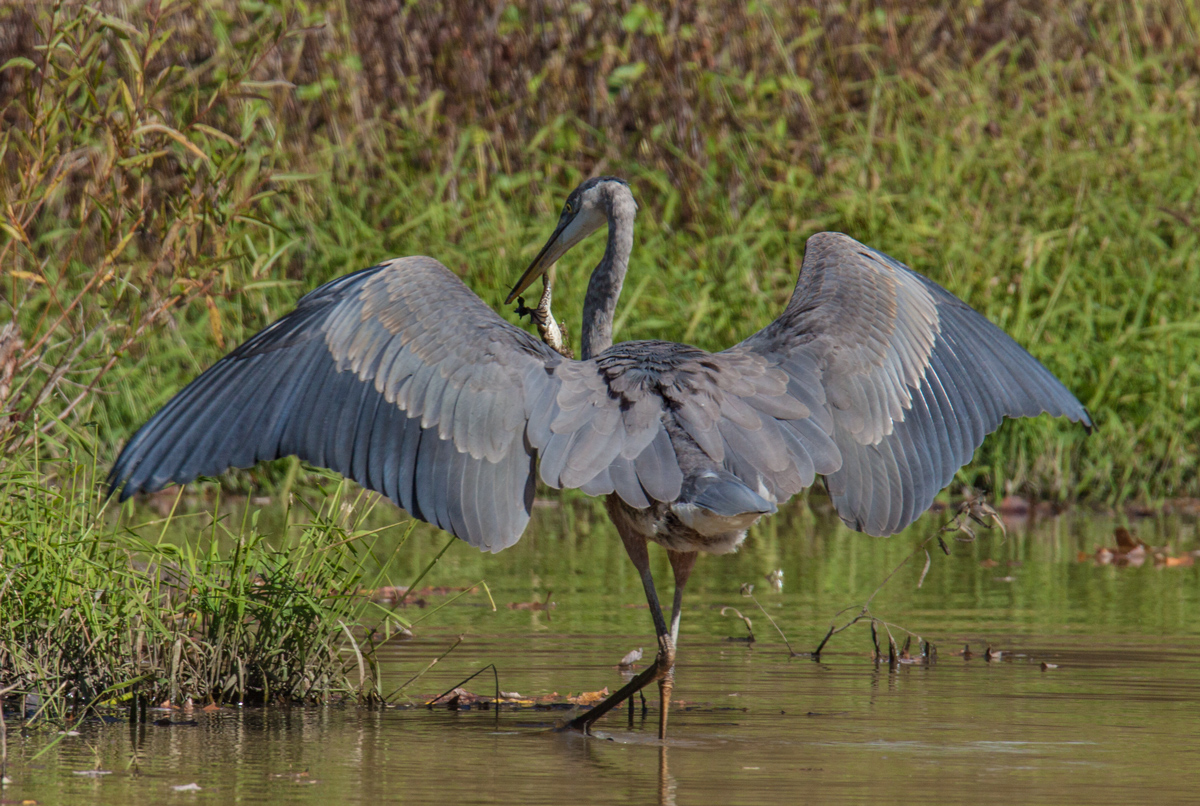
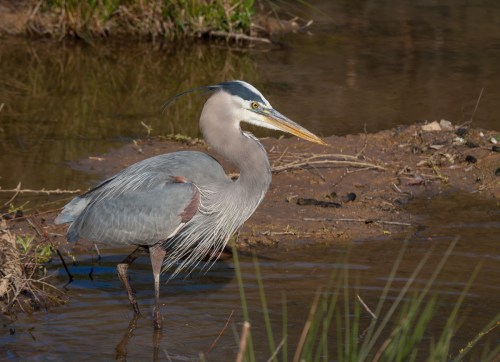
As I was walking around a small pond, hoping in vain to spot some dragonflies, I suddenly came upon a Great Blue Heron (Ardea herodias). From a distance, vegetation at the water’s edge had blocked the heron from view. With the heron right in front of me, I had two choices—I could try to change to the 70-300mm lens that I had in my camera bag to gain some additional reach or I could make do with my macro lens. I chose the latter option.

My macro lens is a 180mm Tamron lens. It is slow and noisy when focusing at close distances, but when I pay attention to my technique, I have taken some pretty good macro shots with it. How would it do with a bird? I have gotten used to photographing birds with a 150-600mm Tamron lens that has a built-in image stabilization system and, obviously, lets me zoom in and out. My macro lens lacks both of these capabilities, so I really did not know how well it would fare, particularly when I tried to capture some in-flight shots of the heron—I was pretty sure the heron would be spooked by my presence and I proved to be right.

Well, I ended up following the heron around for quite a while and captured images of it at several locations, including in the air. It worked out remarkably well. In some ways, it was even more enjoyable shooting with a prime lens than with a zoom lens, because I could concentrate better on tracking and framing the subject—my decision process was simplified when I had to zoom with my feet.

I particularly like the first photo below. The lighting at that moment was very unusual and the colors are so vivid that a friend asked me if I had used some kind of art filter. With the exception of a few minor tweaks in post-processing, however, the image looks like it did when I first looked at it on the back of my camera.

So what did I learn? I have a greater appreciation of the capabilities of my macro lens and realize that I can use it for more than just macro shots. I think that I also appreciate better the experience of shooting with a prime lens—I think my zoom lenses sometimes make me a bit lazy and sloppy.

I look forward to trying to shoot some more little experiments like this of thinking outside of the box and shooting more subjects with the “wrong” lens.
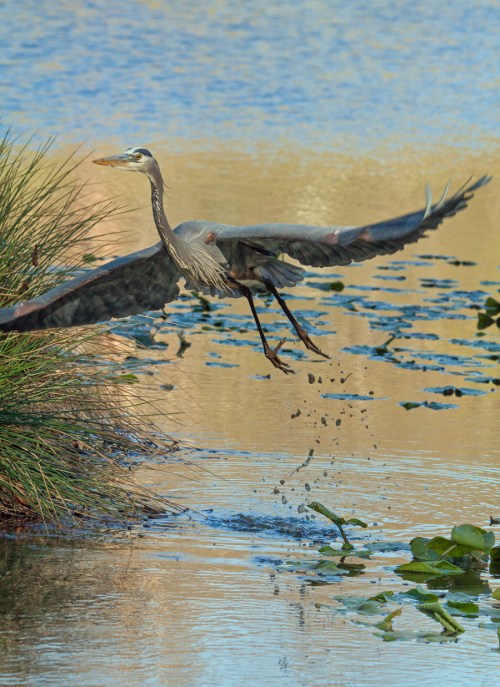
Great Blue Heron

Great Blue Heron

Great Blue Heron

Great Blue Heron

© Michael Q. Powell. All rights reserved.

Read Full Post »

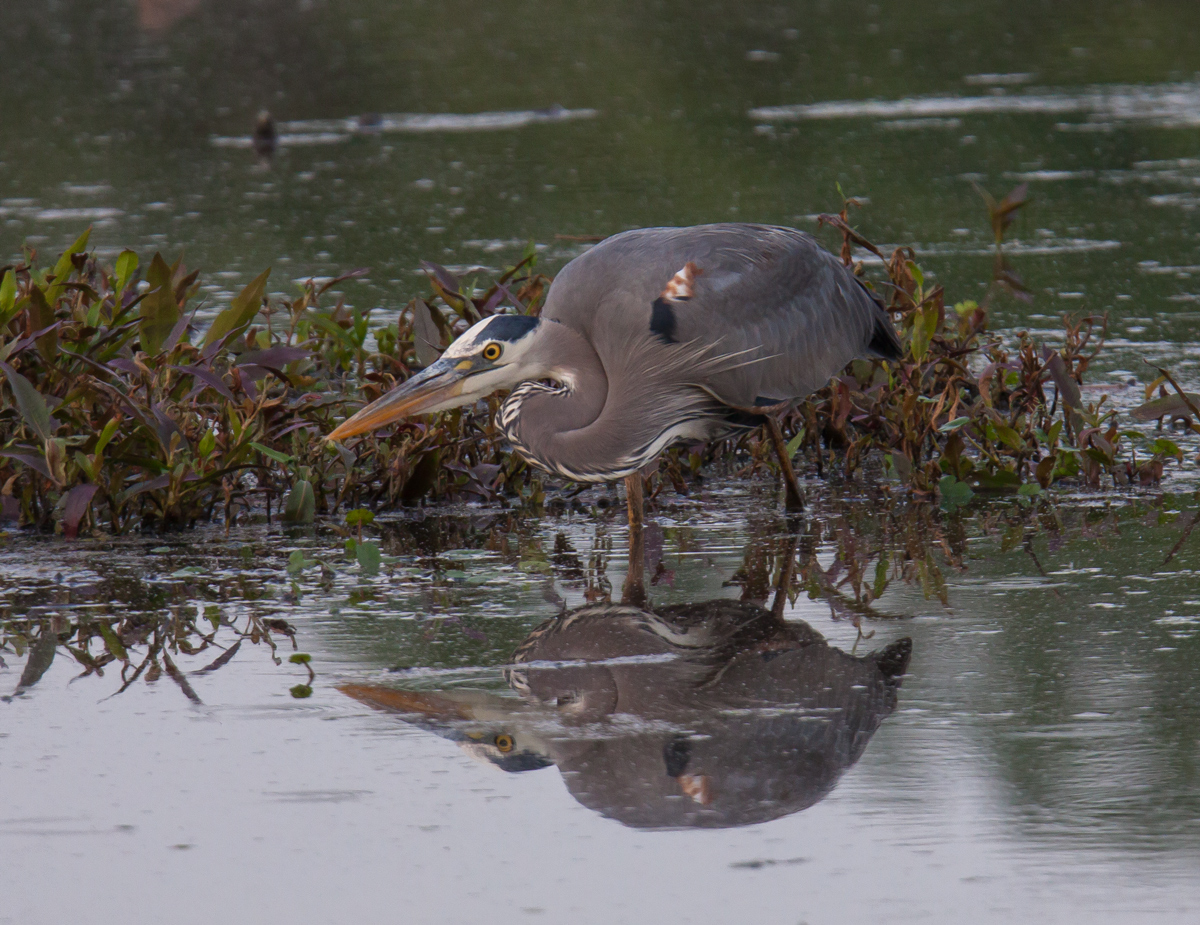
Yesterday when a Great Blue Heron at Meadowlark Botanical Gardens in Vienna, Virginia turned and intently stared at me, its look conveyed a definite sense of stern disapproval.
I went to the gardens with some friends with the intent of photographing flowers, but my attention was hijacked by this very photogenic Great Blue Heron (Ardea herodias). Despite the fact that I was shooting with my macro lens, I managed to get some wonderful shots of the heron, including some in-flight shots, that I will post later. I loved the look in the heron’s eyes and its pose so much that I decided to post this image immediately.
Great Blue Heron

© Michael Q. Powell. All rights reserved.


Read Full Post »
Great Blue Herons (Ardea herodias) are one of my favorite birds, in part because they are with us the entire year. Even during the snowy days of winter, I would occasionally see one of them.

Now that spring is here, there are many more birds at Huntley Meadows Park, but I am always happy to see one of the faithful Great Blue Herons, like this one that flew by me yesterday morning.

Great Blue Heron

© Michael Q. Powell. All rights reserved.

Read Full Post »
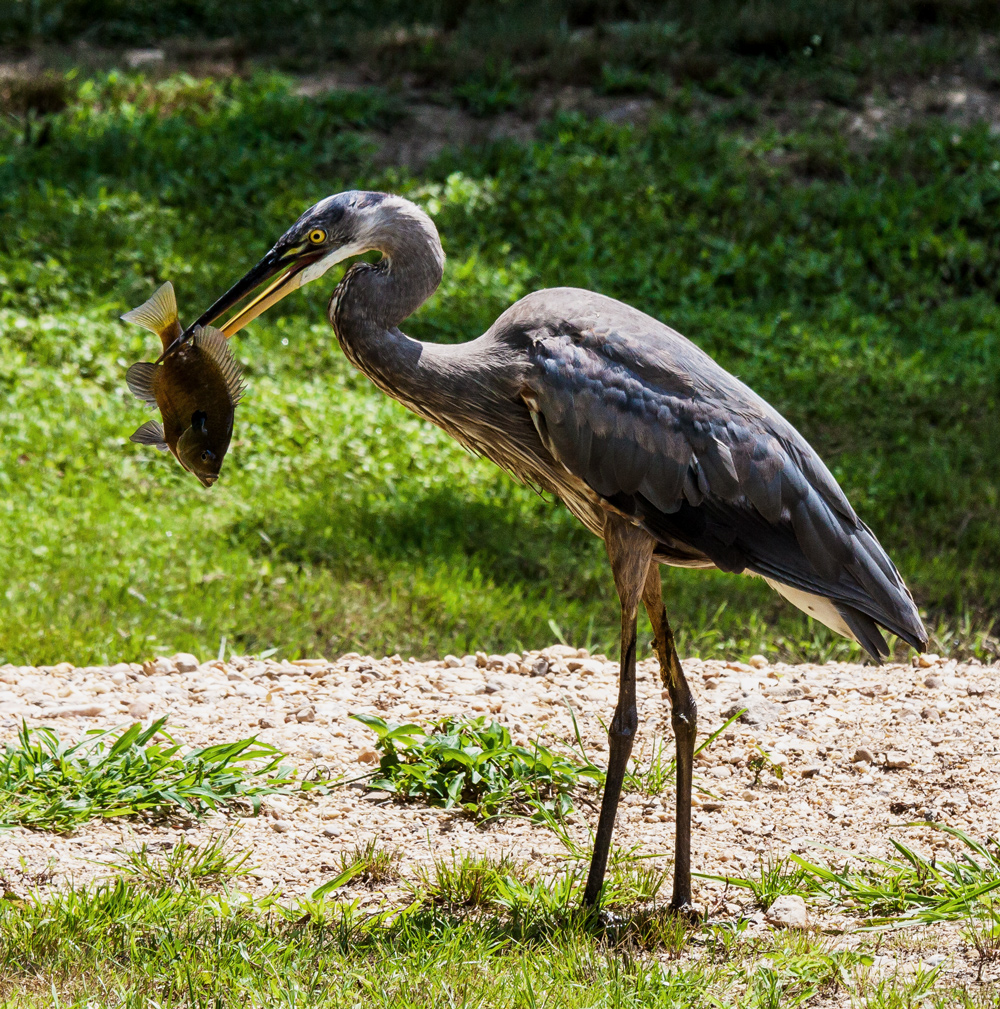
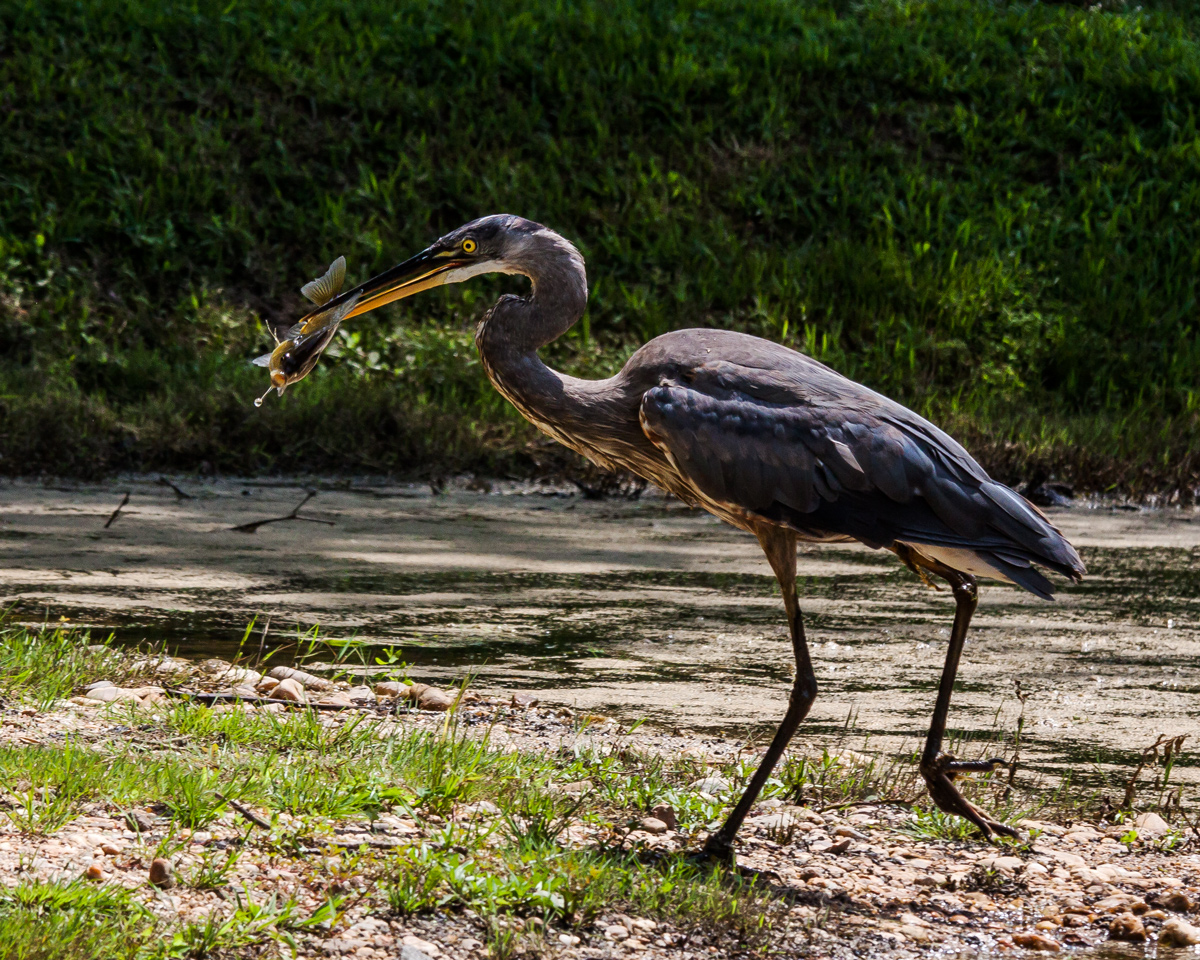
Sometimes a Great Blue Heron’s catch is big enough for a main course, but sometimes it’s only an appetizer. The good news is that appetizers are really easy for a Great Blue Heron (Ardea herodias) to swallow.

I included the second photo, which sequentially was taken before the first one, because I like the expression on the heron’s face. The heron seems to be both amused and embarrassed at the small size of the fish.

It’s obvious, though, that the heron does not have a catch-and-release policy if the fish is not of a certain minimum size.

Great Blue Heron

Great Blue Heron

© Michael Q. Powell. All rights reserved.

Read Full Post »

I awoke this morning thinking I would see snow on the ground again, but it seems to have turned into rain. This photo of a Great Blue Heron (Ardea herodias) and its modest catch reminds me of how snowy it was a mere two weeks ago in our area.

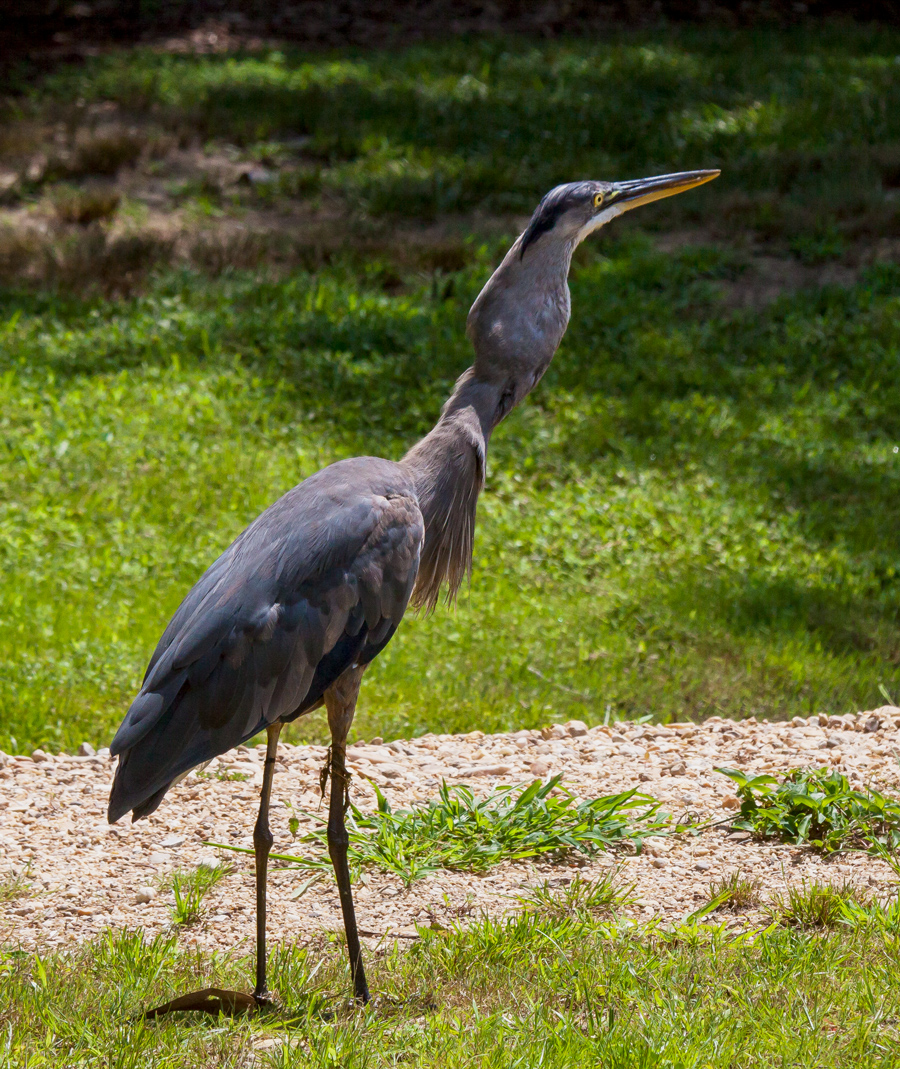
It’s interesting to me to see how the unusual angle of view and the low perspective make the heron’s bill seem unusually elongated and its long neck appears to be really short. The distorted perspective of the image may cause some viewers to look a second time at the photo to mentally reconfirm that this indeed is a Great Blue Heron.

I think that most photographers would agree that it is a good thing when viewers take a second look at their images or examine them more closely.

Great Blue Heron

Michael Q. Powell. All rights reserved.


Read Full Post »

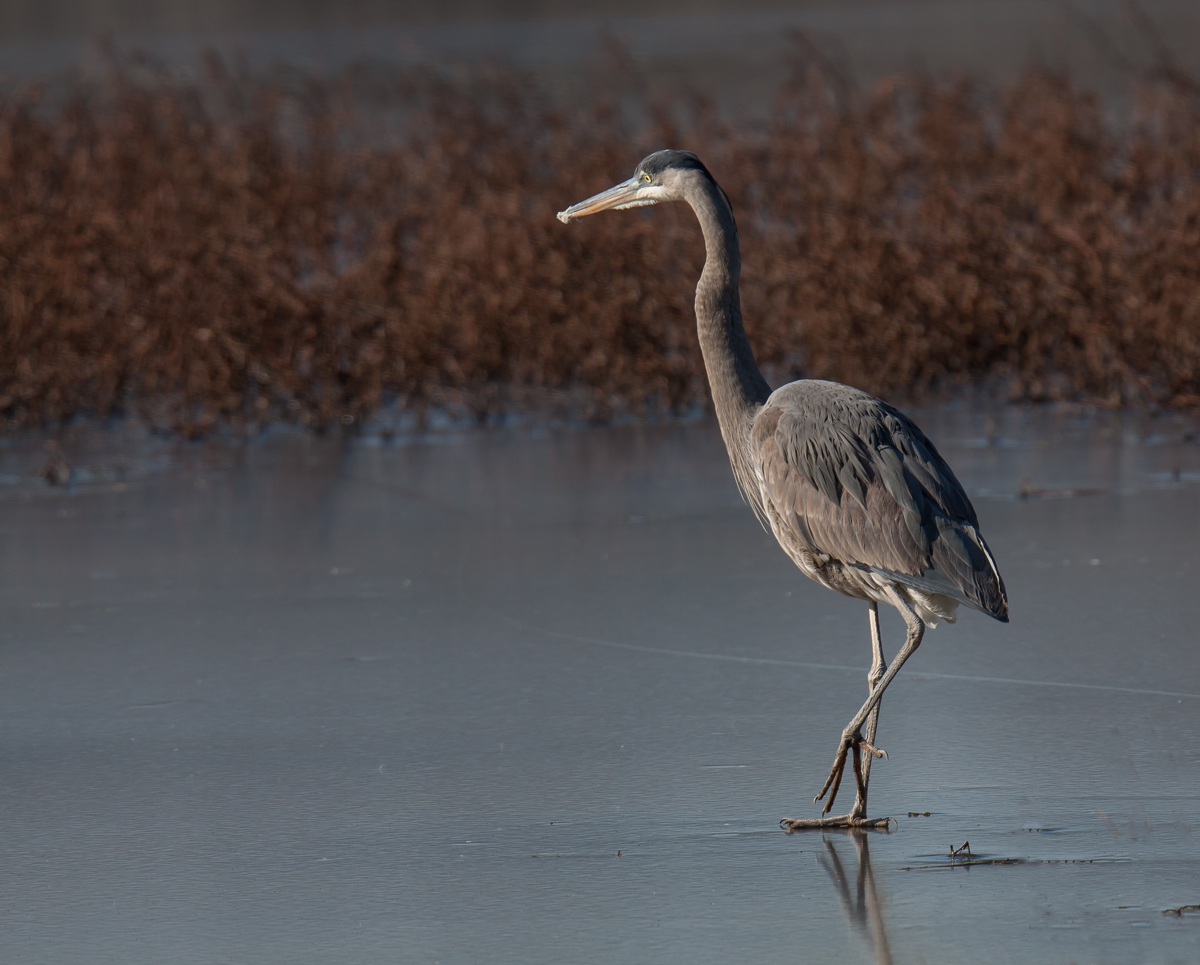
Yesterday I came upon this Great Blue Heron (Ardea herodias) in one of the back areas of Huntley Meadows Park during my first visit there in a week. There was an area of open water in an ice-covered pind and I watched the heron catch several fish. I’m still going through my photos and may post some shots of his catches later. For now, I’ll leave you with this image of the heron walking toward the edge of the water.

Although the park was technically open throughout this recent snowstorm, the gate at the entrance to the parking area was closed. A Facebook posting from a friend yesterday morning noted that the parking lot was being plowed and I immediately headed out to my favorite park. Wednesday is normally a work day for me, but I had decided to take the day off to avoid a commute that promised to be hellish.

The park is still covered with lots of snow, including the boardwalk, but was passable with some effort. In some places, there is a narrow packed snow path where others have walked. My favorite places, though, were literally off of the beaten path and I found myself wading through a foot of wet slushy snow to get to them. The only other tracks I saw in these areas were those of animals.

I’d love to return to the park today, but will probably have to go to work instead with what could be a hellish commute. Local schools have finally decided to call it quits for the entire week after several days of announcing daily closures. Even the federal government is opening with a three-hour delay today.

I feel so much more energized now after having the chance to get out in the wild yesterday with my camera. I guess that I hadn’t realized how much I had missed the experience and how important nature photography had become in my life.

Great Blue Heron

Michael Q. Powell. All rights reserved.

Read Full Post »
The sun was just coming up, illuminating the clouds with soft light and color, when a Great Blue Heron (Ardea herodias) flew slowly across the sky, ready to start his day at another location.

It was a magical beginning to a beautiful day.

Great Blue Heron

Great Blue Heron

Great Blue Heron

© Michael Q. Powell. All rights reserved.

Read Full Post »
In the stillness of the early morning hours, the line between reality and reflections is blurred and beauty is simply magnified.

The Great Blue Heron (Ardea herodias) is very recognizable in the first image, but as you progress through the three images, the central focus starts to shift away from the heron. In the final image, the heron has become merely one element of a larger, almost abstract composition.

Great Blue Heron

Great Blue Heron

Great Blue Heron

© Michael Q. Powell. All rights reserved.

Read Full Post »
On a sunny day in late October, I was admiring the beautiful fall colors at Huntley Meadows Park and thought that it would be really cool if a Great Blue Heron (Ardea herodias) would pose for me in the colorful foliage.

Then it happened.

Wishes sometime come true.

Great Blue Heron

© Michael Q. Powell. All rights reserved.

Read Full Post »

The egrets and green herons have gone south for the winter, but the Great Blue Herons (Ardea herodias) at Huntley Meadows Park continue to provide me with lots of photo opportunities.

Great Blue Herons present an unusual challenge to me—they are so long and wide when in flight that I actual have to remember to zoom out when photographing them in order to fit them in the frame.  Like most wildlife photographers, I usually am complaining about needing more reach and spend most of my time shooting with the lens almost fully extended.

In this first shot, I was able to anticipate the action and captured the heron’s takeoff almost exactly the way you see it. In the second shot, however, I slightly misjudged the speed of the heron and almost cut off the wings and the feet. As you can see, the light was beautiful and I was happy to be able to capture a lot of beautiful wing details.

Before long migrating ducks should be arriving and you should be relieved from steady diet of heron photos with which I have been populating my postings recently.

Great Blue Heron

Great Blue Heron

© Michael Q. Powell. All rights reserved.

Read Full Post »

A Great Blue Heron (Ardea herodias) is so big that it’s difficult to imagine one hiding itself effectively. Yet when this heron settled in among the branches of a tree, I was amazed to see how well it blended in with its surroundings. The heron was so effectively camouflaged that others who walked by did not even notice this large bird until I pointed it out to them and some of them still had difficulty picking it out.

As some of you have undoubtedly noticed, I love alliteration. I somehow can’t smile when I pronounce the title I chose for this posting.  It somehow brings to mind one of the scenes in “My Fair Lady,” with the phrase, “In Hertford, Hereford and Hampshire, hurricanes hardly happen” repeated as Professor Higgins, Colonel Pickering, and Eliza sing “The Rain in Spain.” (Here’s a link to the YouTube film clip of this scene.)

Great Blue Heron

© Michael Q. Powell. All rights reserved.

Read Full Post »

WARNING: This encounter did not turn out well for the frog. This past Saturday I spotted a Great Blue Heron (Ardea herodias) in the shallow water at the edge of a beaver pond at my favorite marshland. I watched and waited, knowing full well that a heron’s patience when fishing generally exceeds my own.

Suddenly the heron thrust its bill into the water with such force that it had to extend its wings for stability. Surely, I thought, the heron had just caught a massive fish.  When I caught a glimpse of the catch, however, I realized that it was not a fish—it was a frog. The heron’s grip on the frog looked to be a little problematic, for the heron had snagged the frog by its legs.

Now I realize that in some cultures, frog legs are considered to be a delicacy, but I was pretty confident that the heron was not going to settle for just the legs. The challenge for the heron was to reposition the frog without losing it. One added complication was that the frog appeared to be struggling, trying desperately to extricate itself from the heron’s tight grip.

Moving to the edge of the pond, the heron bent down and pinned the frog against the ground as it grasped the frog around its upper torso. Only then did the heron return to its original upright position, knowing that the frog’s fate was now sealed. With small movements of its head, the heron slowly repositioned the frog until it was in a heads-first position.

All of the sudden, the heron tilted its head back  and swallowed and the frog was gone so quickly that I was unable to capture its last moment.

Apparently the frog was just an appetizer, for I saw the heron catch a fish a short time later, but that may be the subject of a future post.

Great Blue Heron

The initial strike

Great Blue Heron

Hanging by the legs

Great Blue Heron

Grabbing the torso

Great Blue Heron

The beginning of the end

Great Blue Heron

Almost in position

Great Blue Heron

Ready for a big gulp

© Michael Q. Powell. All rights reserved.

Read Full Post »

In the early light of the dawn, I captured this solitary Great Blue Heron (Ardea herodias) in deep reflection, contemplating the start of a new day.

There is nothing really complex about this image, but I like the way that it conveys the mood of that moment, a moment when the world seemed to be totally tranquil, uncluttered by the hustle and bustle of everyday life.

I love the early morning.

Great Blue Heron

© Michael Q. Powell. All rights reserved.

Read Full Post »
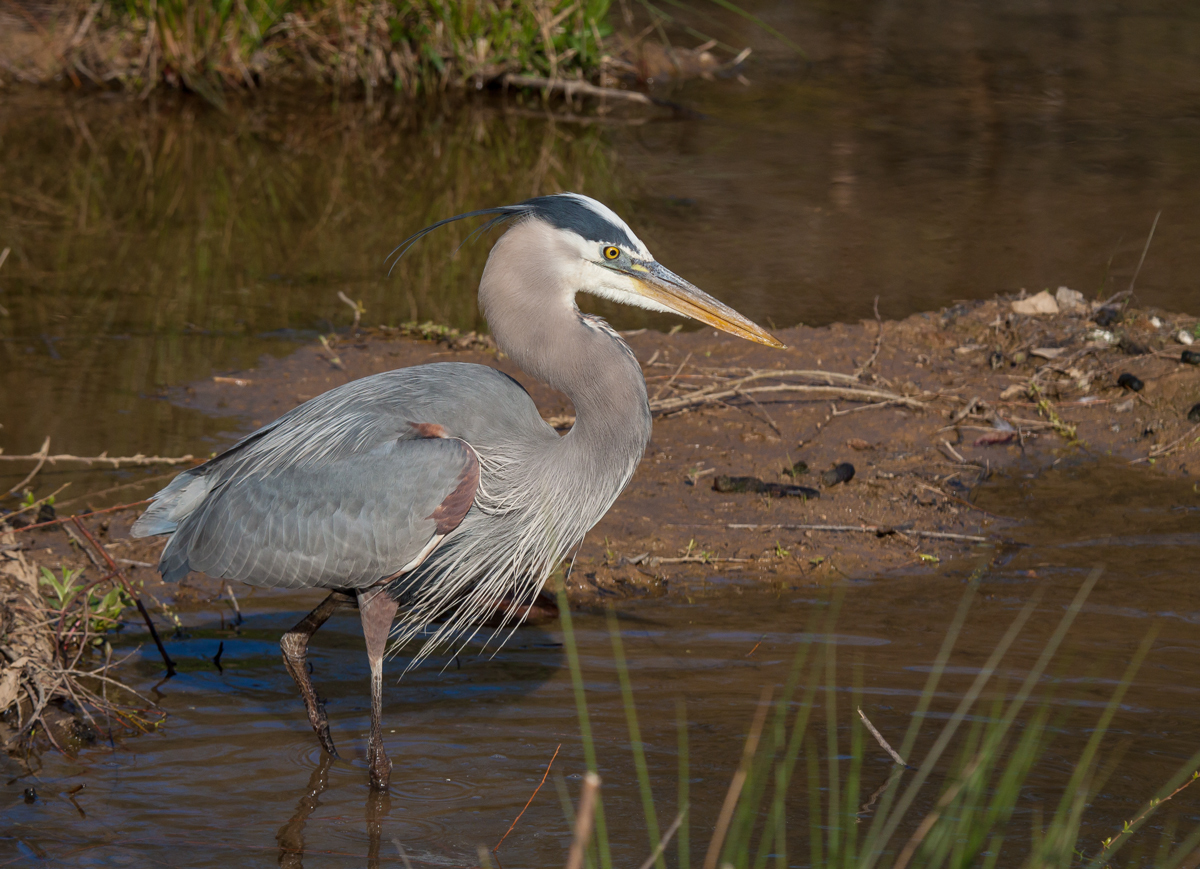
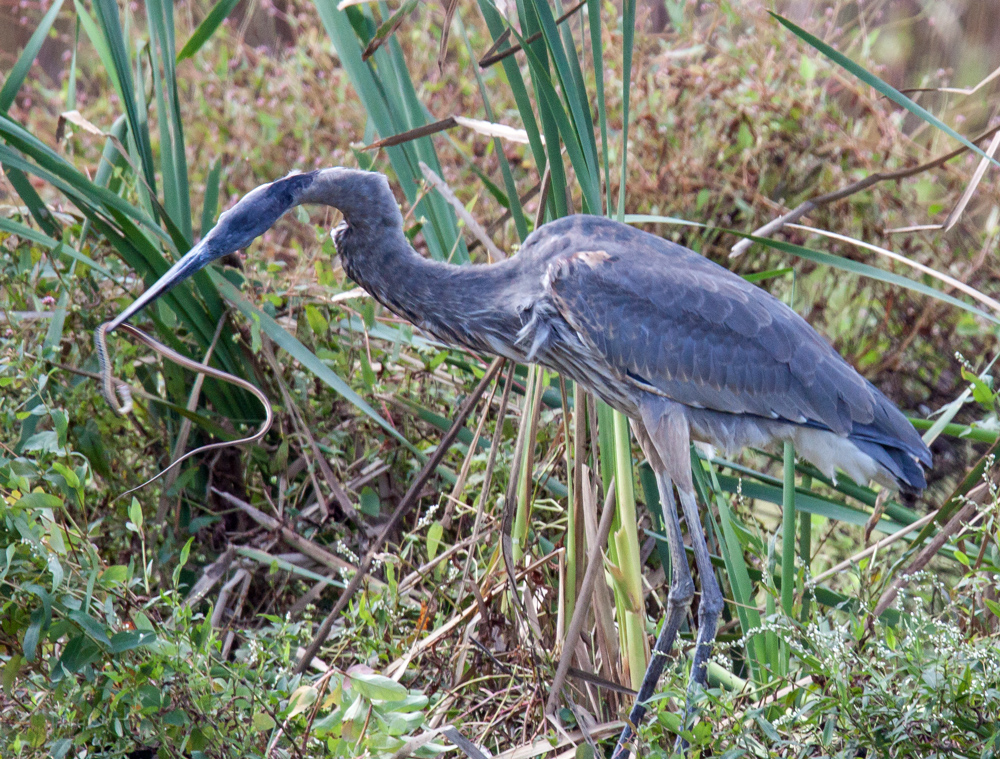
A snake struggled mightily when snagged by a Great Blue Heron (Ardea herodias). The heron looked a little confused by the actions of its prey and seemed to be having trouble figuring out how to grip the snake. I was a bit far away when I took these shots so I couldn’t tell for sure, but it looked to me that the heron eventually dropped the snake and the snake escaped into the thick vegetation.

Great Blue Heron

Great Blue Heron

Great Blue Heron

Great Blue Heron

© Michael Q. Powell. All rights reserved.

Read Full Post »

The sky was completely overcast early yesterday morning and most of the birds seemed to be sleeping in. One notable exception was this Great Blue Heron (Ardea herodias).

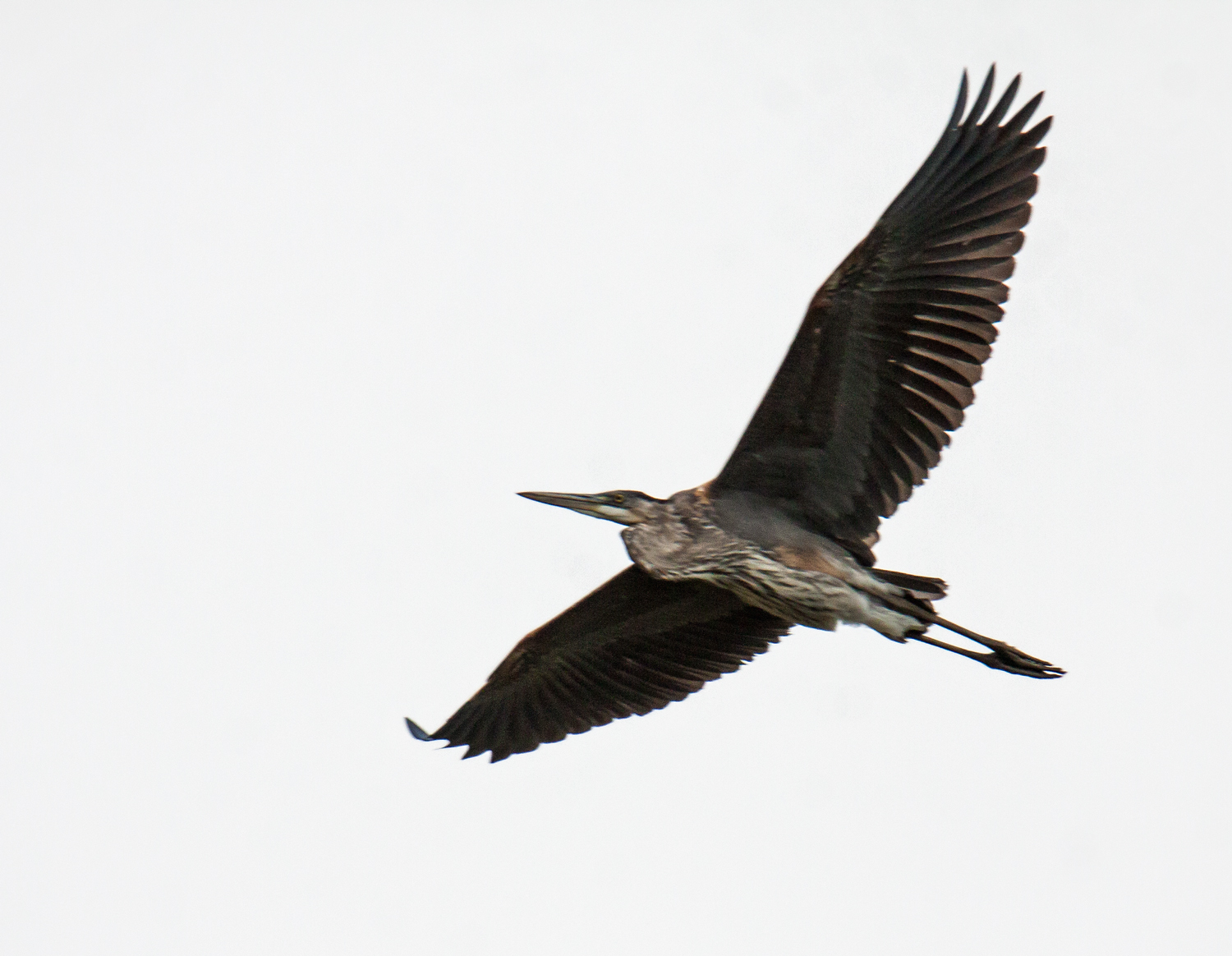
I spotted him in the distance flying in my direction at a pretty good speed. Normally Great Blue Herons seem to fly at a leisurely pace, but this one appeared to be in a hurry. Although the heron looked beautiful when its wings were fully extended, as in the first image, the heron appeared menacing—almost like a predator—when he was flying straight at me with legs extended.

As the Great Blue Heron flew overhead, I was treated to a great view of the underside of its body and wings, an angle of view that I rarely see, given that herons are usually flying away from me when I spot them.

I am on the fence about whether I like the white sky or not as a background. It is certainly uncluttered, but it seems a bit unnatural, almost like I was posing the bird in a studio setting.

Great Blue Heron

Great Blue Heron

Great Blue Heron

© Michael Q. Powell. All rights reserved.

Read Full Post »

The blooming Swamp Rose Mallows (Hibiscus moscheutos) at Huntley Meadows Park helped provide a beautiful backdrop for this Great Blue Heron (Ardea herodias) that I spotted there last Saturday.

Great Blue Heron

© Michael Q. Powell. All rights reserved.

Read Full Post »

I never tire of watching Great Blue Herons (Ardea herodias) and catching them in fun and unusual poses.

Great Blue Heron

Great Blue Heron

Great Blue Heron


© Michael Q. Powell. All rights reserved


Read Full Post »

I was concentrating so intently on tracking this Great Blue Heron (Ardea herodias) in flight on Monday that I didn’t realize he was so close to me that I actually should have zoomed out a bit—the heron barely fit within the viewfinder.

Fill the frame with your subject? I can’t remember the last time that I was able to do so with a bird as the subject.

Great Blue Heron

© Michael Q. Powell. All rights reserved.

Read Full Post »

Shortly after dawn one morning last week, I encountered a Great Blue Heron (Ardea herodias) that seemed to be pensively contemplating the new day. He glanced in my direction as I took a few shots, but remained in place as I continued on my way, both of us lost in our thoughts.

Great Blue Heron

Michael Q. Powell. All rights reserved.

Read Full Post »
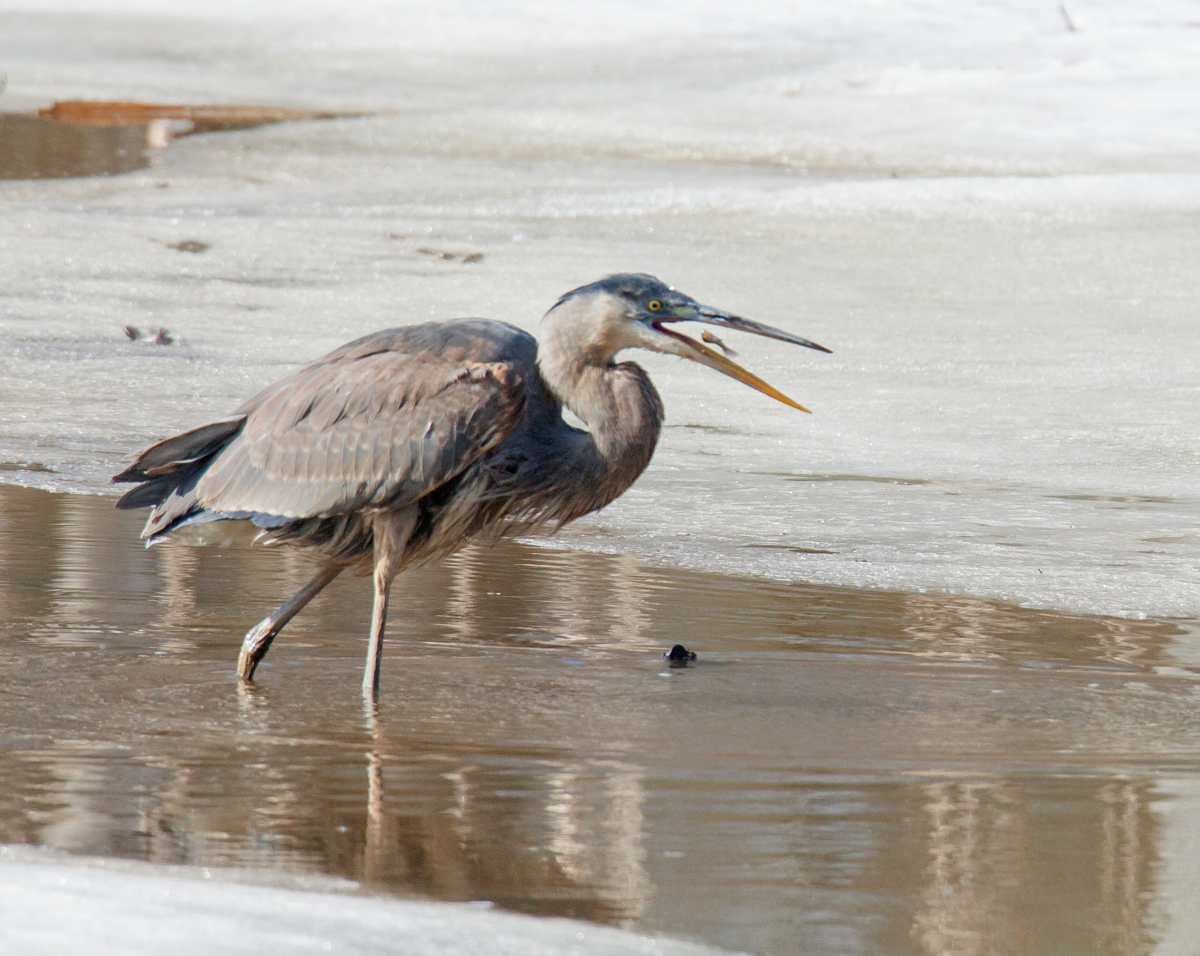
I am thrilled that I was able to get a shot of a Great Blue Heron triumphantly holding a freshly caught fish and I followed my initial instinct to post that photo. However, I also managed to capture a sequence of shots of the action that led to that culminating moment that I really like that I thought would be fun to share.

In this first shot, the heron has just made the strike and has plunged its head deep into the water. I am not sure why the heron extended its impressive wings like this, but suspect it was either to generate greater force or to maintain stability.

Great Blue Heron

When I first spotted the Great Blue Heron (Ardea herodias), it was obviously focused on finding a fish. When it bent over like this, I suspected that the heron had already spotted one and was tracking it.

Great Blue Heron

Suddenly the heron turned to the side and made the strike that I showed in the first shot. Some of the herons that I have observed in the past have been amazing in their ability to catch fish, but I have seen others, especially the young ones, that would strike repeatedly at branches and floating leaves. As a result, I knew that success was not guarantee and I waited to see how the heron had done. In this next shot, the heron’s head is just starting to reemerge from the water. At that moment it certainly knew if it had a fish in its grasp, but I still was in the dark.

Great Blue Heron

At last the heron lifted its head a bit more and I could see that indeed it had caught a fish. I really like this shot shows the little vortex that was created in the water as the fish is pulled up into the air.

Great Blue Heron

Now, after the fact, it’s easy for me to sit back and analyze what the heron was doing. During the brief moments when I was taking the shots, it was all I could do to concentrate on keeping the heron centered in the viewfinder and hoping that the buffer in my camera would not fill up too quickly as I fired away in burst mode.

© Michael Q. Powell. All rights reserved.


Read Full Post »
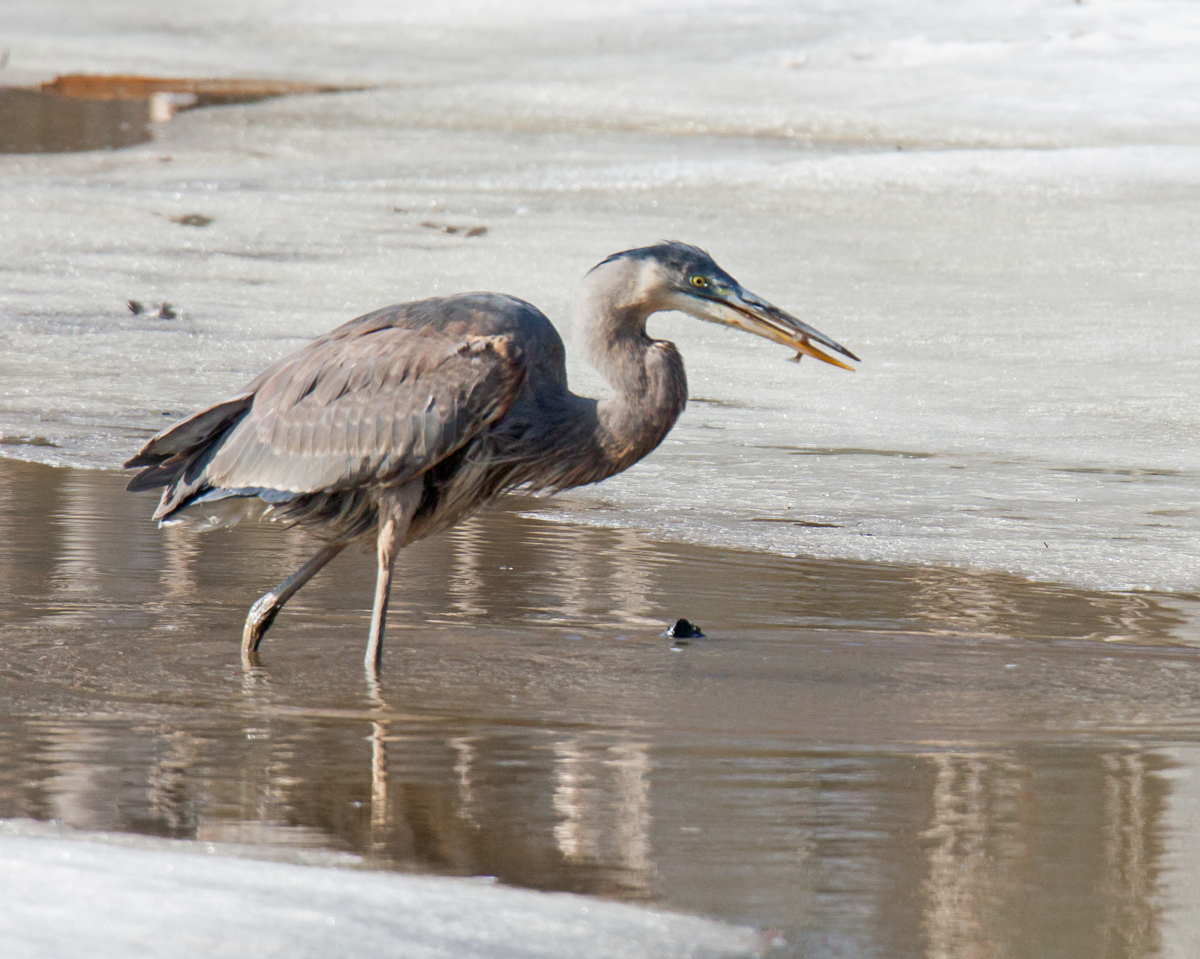
Early one morning last week at Huntley Meadows Park, I watched and waited as a Great Blue Heron (Ardea herodias) sought to catch some breakfast. He was successful and I left the scene equally satisfied when I captured this image.

Great Blue Heron

© Michael Q. Powell. All rights reserved.

Read Full Post »

I love the morning light as it gradually illuminates different parts of the natural world. This Great Blue Heron (Ardea herodias) had turned its head toward the rising sun and the light was shining on its white face while other parts of its body were still hidden in the shadows.

In the limited light, I used a pretty slow shutter speed (1/80 sec) to keep from having to raise my ISO too high and I was able to get reasonably sharp shots when the heron was stationary. However, when the heron took off, I had a substantial amount of motion blur, as you can see in the final two shots.

I usually lead my postings with my favorite shot, but I had real trouble with this posting trying to decided which one to use. Should I choose one of the sharpest shots or should I go with one of the “artsy” blurred ones? I like different aspects of all four of these images and vacillated for quite some time before deciding to lead with the shot of the heron with his head tilted at an interesting angle.

Did I make a good choice?

Great Blue Heron


Great Blue HeronGreat Blue HeronGreat Blue Heron

© Michael Q. Powell. All rights reserved.


Read Full Post »

Most of the time I try to fill the frame of my camera with my wildlife subjects, but sometimes it’s nice when they are part of a larger landscape, like this shot of a Great Blue Heron (Ardea herodias) in the rain from last Friday.

Great Blue Heron

© Michael Q. Powell. All rights reserved.

Read Full Post »
Even in Northern Virginia, where temperature are relatively mild, winter must be difficult for Great Blue Herons, because many of their favorite ponds freeze over from time to time and fishing is not possible. After a recent period of temperatures above freezing, the ice melted and I was happy to see a heron return to a familiar location at my local marshland park.

I encountered this Great Blue Heron (Ardea herodias) early on a Saturday and had an extended period of time with this photogenic bird. The heron seemed to be willing to pose for me and gave me a number of different looks.

At times, as you can see in the final shot, the heron would look straight at me with apparent curiosity. After I had taken my shots, I moved along the boardwalk, leaving the heron to continue in his efforts to catch something to eat for breakfast.

Great Blue Heron

Great Blue Heron

Great Blue Heron

Great Blue Heron

© Michael Q. Powell. All rights reserved.

Read Full Post »

This Great Blue Heron (Ardea herodias) seemed a little confused when the ponds froze over at my local marshland park and appeared to be trying to stalk fish that he may or may not have been able to see through the ice.

heron3_ice_blog

heron1_ice_blog


© Michael Q. Powell. All rights reserved.

Read Full Post »

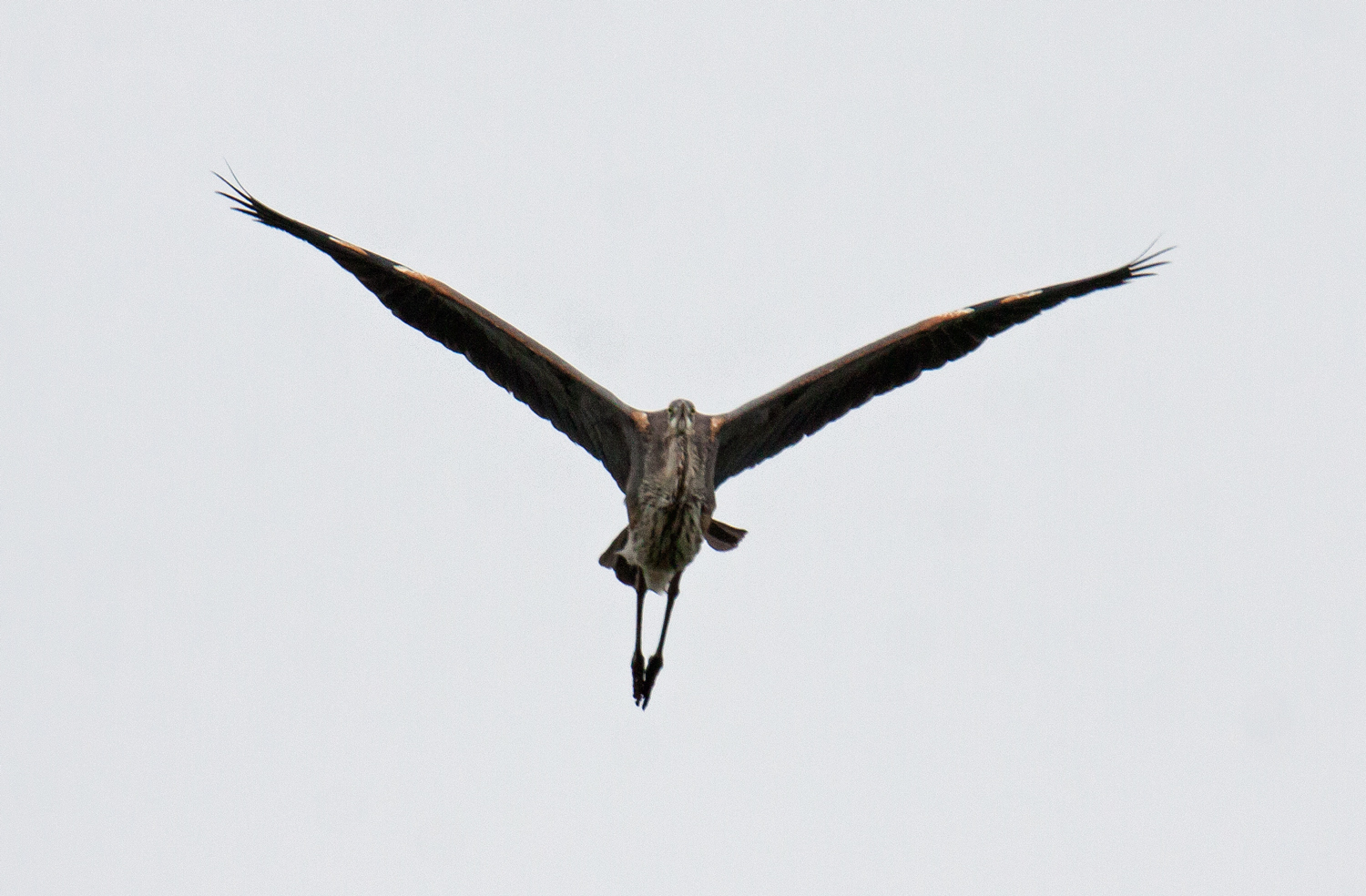
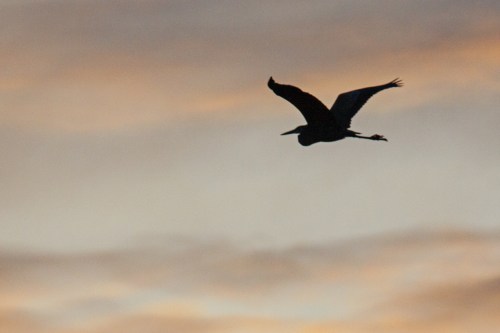
Can you identify the bird in the first photo? There is an almost abstract quality to the image that I really like that focuses on the bird’s wide wingspan more than on the identity of the bird. The unusual viewing angle, looking forward from his extended feet, enhances that effect.

As you can see in the second photos (and as you probably easily guessed), this was a Great Blue Heron (Ardea herodias). Yesterday, a blustery but sunny day, I came across this heron at my local marshland park as he tried in vain to catch some lunch. Without much warning, he took off just after I snapped the second photo, perhaps to find a better fishing spot, and I was able to capture the more unusual view that I have shown as the first image.

Great Blue HeronGreat Blue Heron

© Michael Q. Powell. All rights reserved.


Read Full Post »

As you contemplate the promises and possibilities of the new year that has just begun, are you more like the pensive Great Blue Heron in the first image or the intensely focused heron in the second photo? (For the record, the Great Blue Heron (Ardea herodias) in both photos is actually the same one that I photographed last weekend at a local water retention pond.)

I’m more like the first heron—I am full of optimism and hope, but don’t have specific plans or resolutions.

Best wishes to all of you for a healthy, prosperous, and blessed new year.

Great Blue Heron

Great Blue Heron

© Michael Q. Powell. All rights reserved.


Read Full Post »

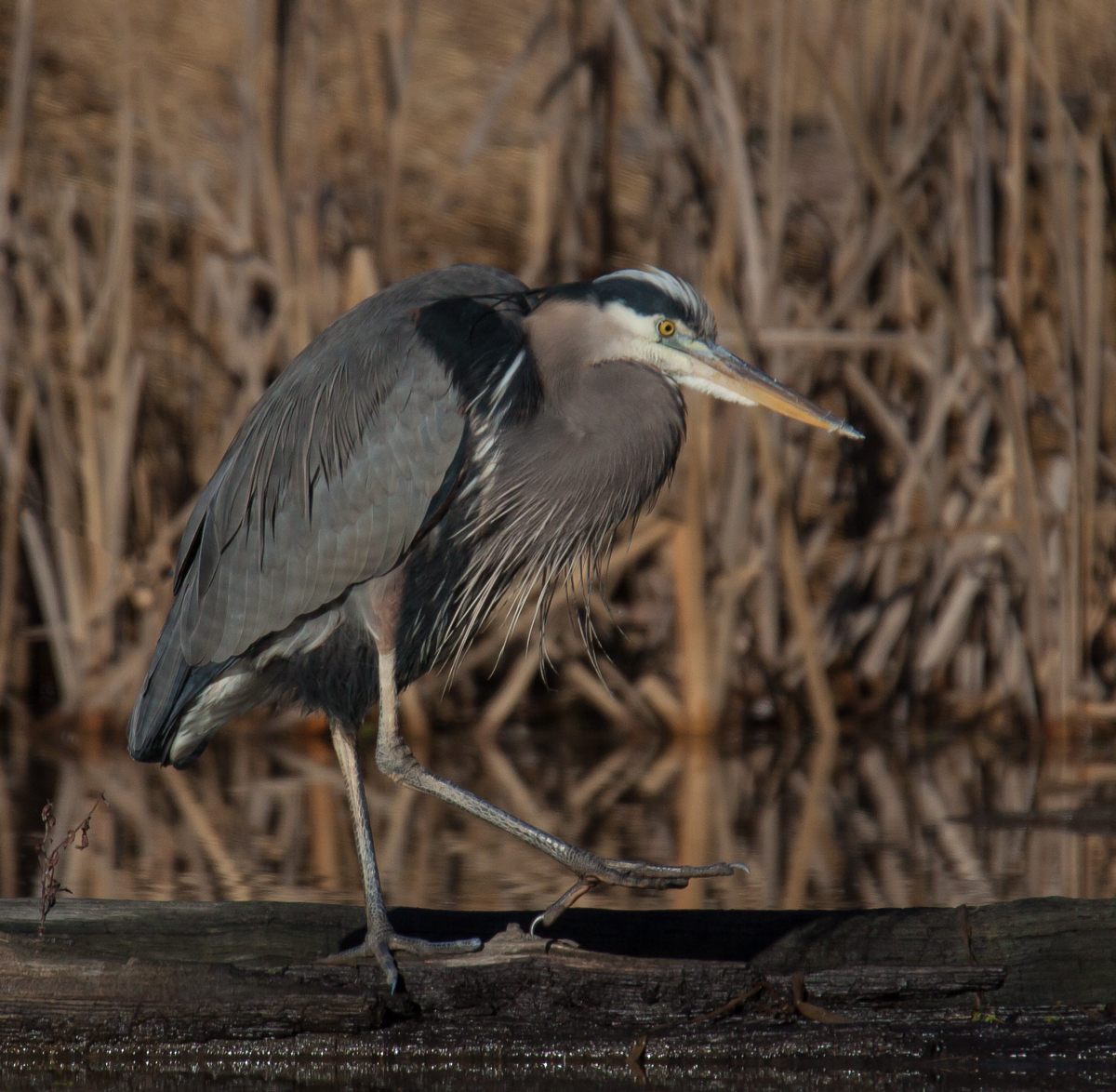
Yesterday at my local marshland park, this Great Blue Heron (Ardea herodias) seemed to be dancing—I think he was rocking to the sounds of “Walk This Way” by Aerosmith.

Great Blue Heron

Great Blue Heron

© Michael Q. Powell. All rights reserved.

Read Full Post »

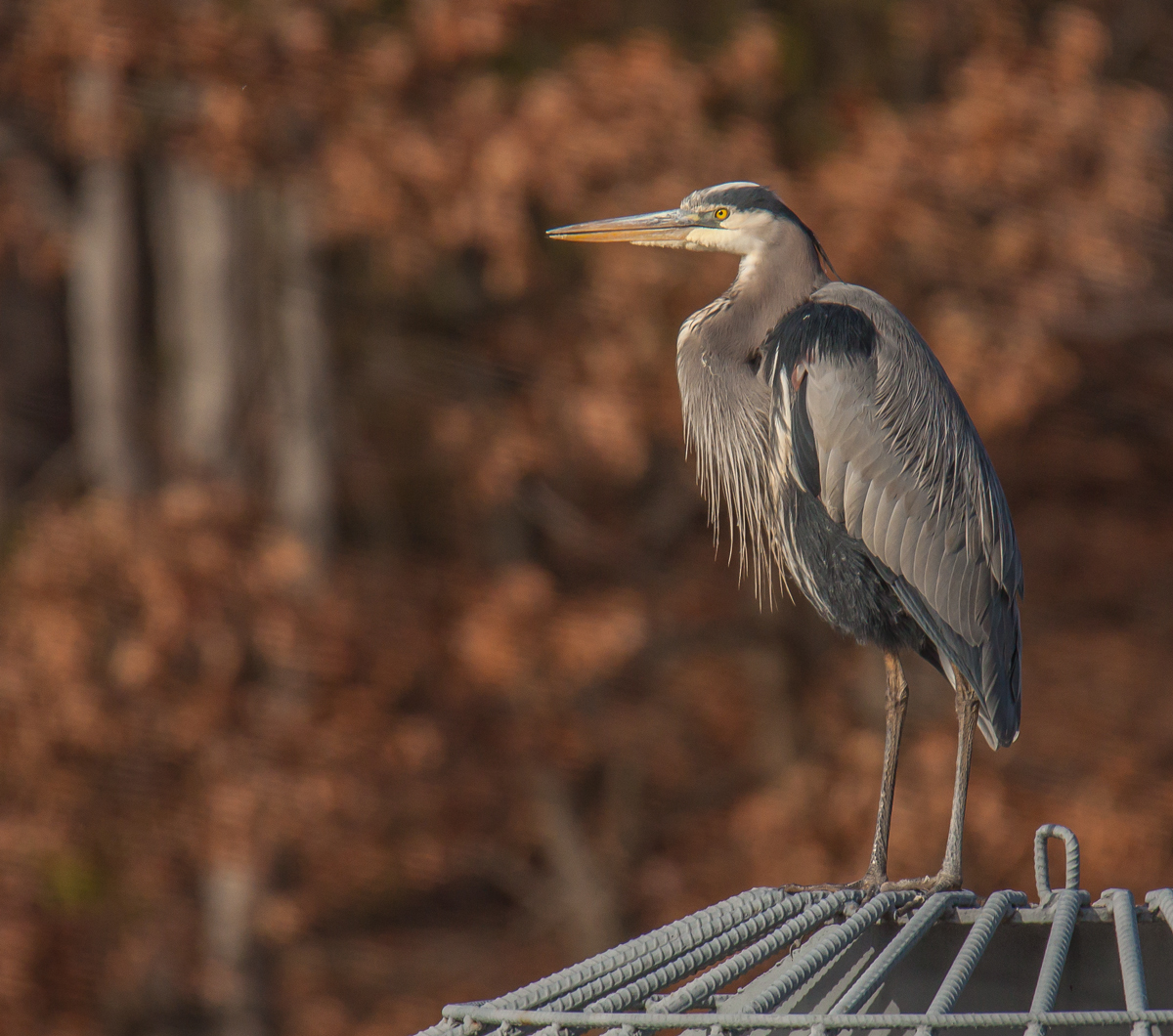
The mind can sometimes make strange associations. From the moment that I saw the pose of the Great Blue Heron (Ardea herodias) in this image, I couldn’t help but think that it looked like the kind of dragon that you see in movies and in children’s cartoons.

I took this shot in mid-December, while I was walking along the boardwalk in the familiar confines of my local marshland park. The heron had been fishing in the shallow waters of a former beaver pond to the left and decided to move to the water on the other side of the boardwalk. Rather than fly directly to the new location, the heron decided to hop up onto the surface of the boardwalk.

I posted a somewhat similar photo on 9 December, but I like this one better—the pose is more interesting, the focus is a little sharper, and the colors of the heron are more vibrant. Herons are a relatively commonplace bird in the locations I visit, but I never tire of trying to capture images of these fascinating creatures.

Does the heron remind you of a dragon? As children, we had no trouble believing in magical creatures, but, alas, most of us lost that capacity as we grew into adults.

It brings to mind a quote from one of my favorite books, Le Petit Prince by Antoine de Saint Exupéry, “Les grandes personnes ne comprennent jamais rien toutes seules, et c’est fatigant, pour les enfants, de toujours et toujours leur donner des explications.” (Grown-ups never understand anything by themselves, and it is tiring for children to be always having to explain things to them).

A dragon? Why not?

Great Blue Heron

© Michael Q. Powell. All rights reserved.

Read Full Post »

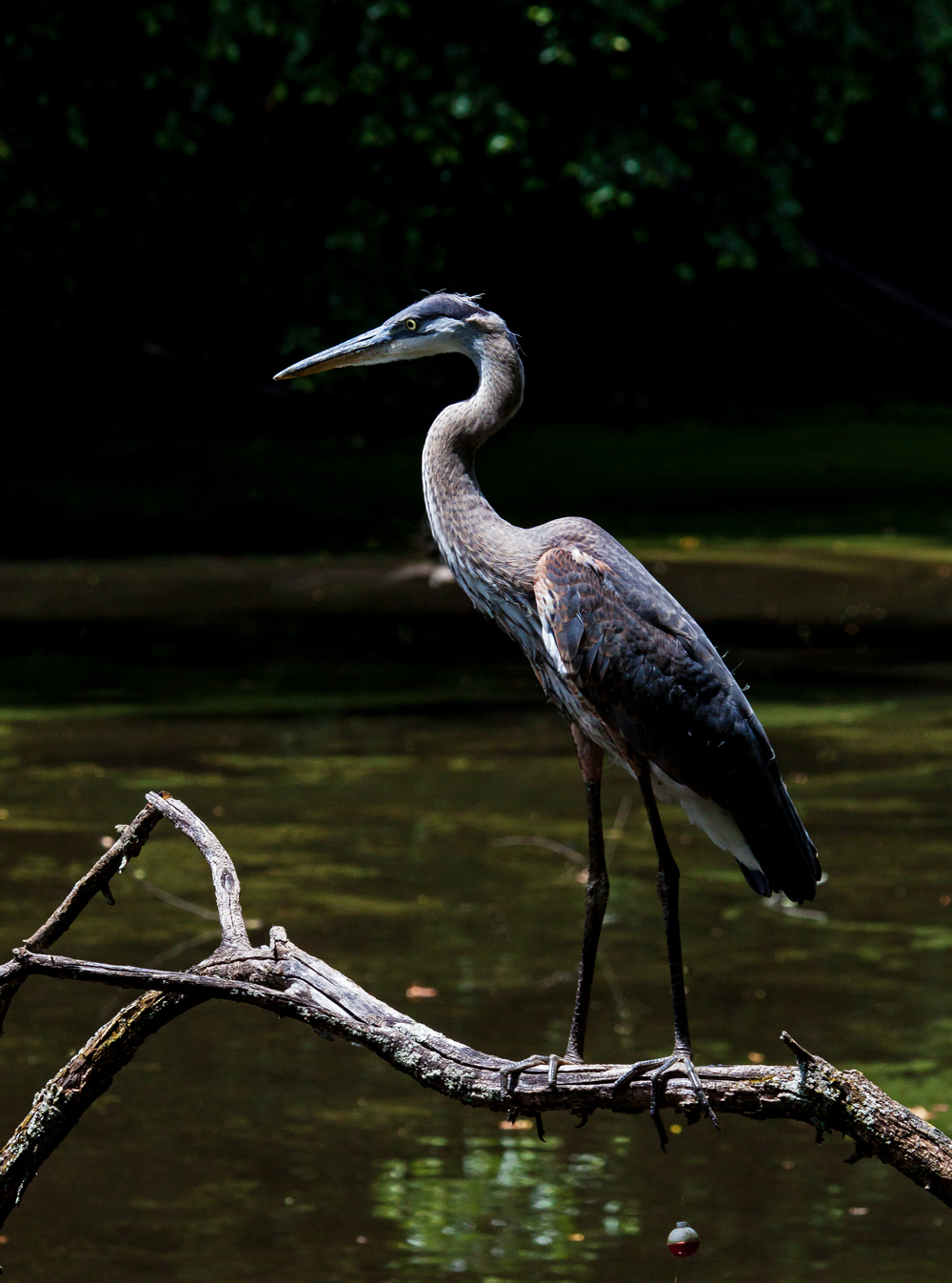
One of the Great Blue Herons (Ardea herodias) that has been hanging around the boardwalk at my local marshland park was amazingly cooperative yesterday morning and posed for this portrait. I think the white background was caused by the very cloudy sky—it makes the shot look almost like it was taken in a studio setting.

I really like the way that you can see the wispy feathers on the top of the heron’s head. I can’t help but notice, though, that this heron has the same kind of growth pattern on the top of his head as I do.

I wonder if he would consider shaving his head (and I really hope that he does not opt for a comb-over hairstyle a bit later in life).

Is there a Hair Club for herons?

Great Blue Heron

© Michael Q. Powell. All rights reserved.

Read Full Post »
« Newer Posts - Older Posts »