Feeds:
Posts
Comments

Posts Tagged ‘geometry’

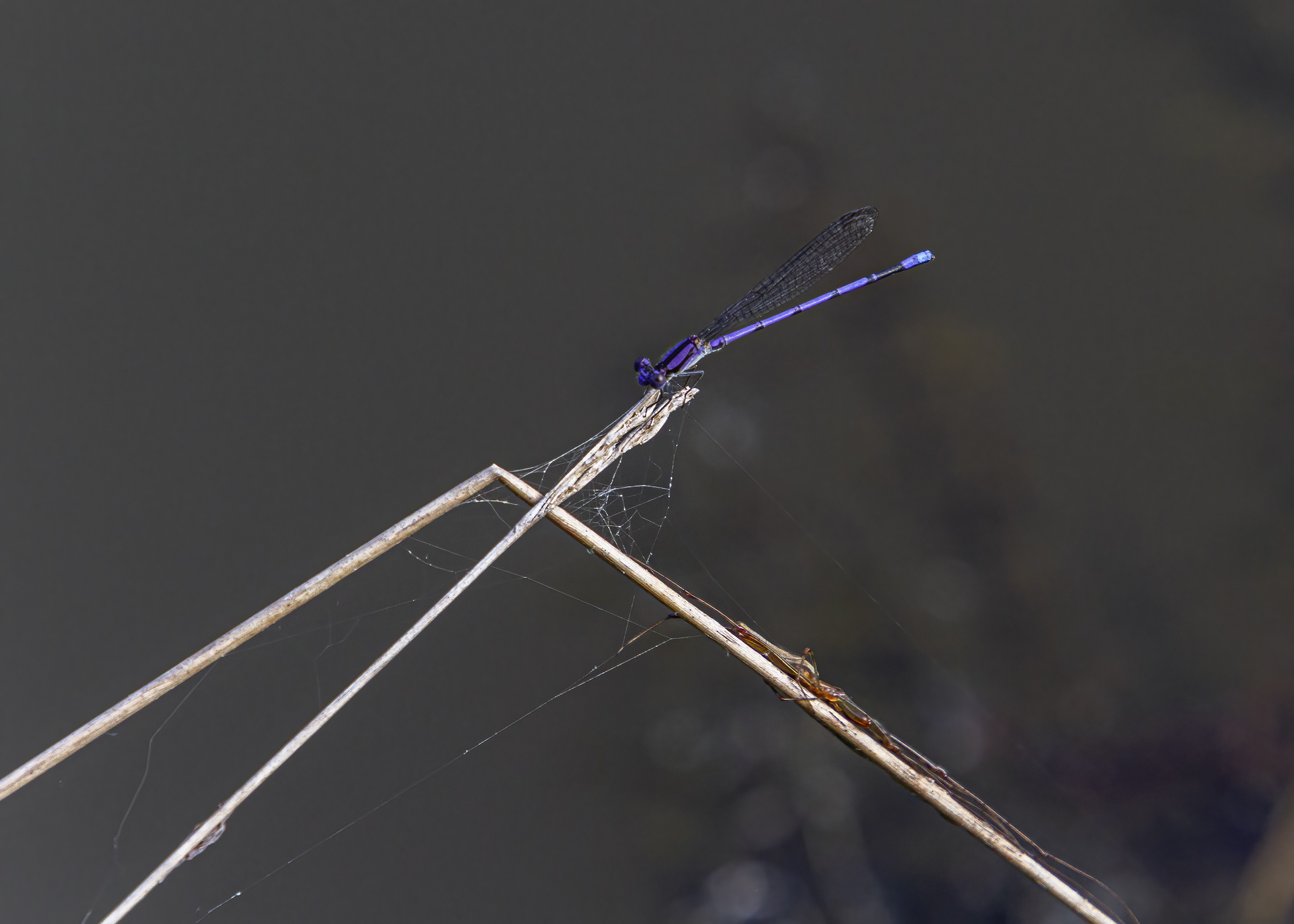
Do you have a favorite damselfly? I have had the opportunity to photograph some pretty spectacular damselflies, but I am irresistibly attracted to the unique coloration of the Violet Dancer damselfly (Argia fumipennis violacea), a subspecies of the Variable Dancer damselfly (Argia fumipennis). In fact the banner photo for my blog page includes a photo of a beautiful Violet Dancer, so my fondness for this species is not exactly a secret.

Maybe I am a little weird for having a favorite damselfly. If that is what you think, perhaps you have forgotten what it is like to view the world as a child as I try to do. Years ago I remember reading a Reader’s Digest article that included the following Tweet, “I like having conversations with kids. Grown-ups never ask me what my third favorite reptile is.” That Tweet (or whatever they are called now) captured my feelings really well

I spotted this colorful little damselfly last Friday (26 September) as I was exploring a small pond at Jackson Miles Abbott Wetland Refuge. I was a little surprised, but very much delighted to see the Violet Dancer so late in the season.

I did not dare lean over the edge of the pond for fear of falling in, but I really like the long distance shot that I was able to capture. The simple lines of the vegetation and the dark pond waters help to draw the viewer’s eyes to the Violet Dancer, even though it occupies only a small portion of the frame.

As I get older I find that I care less and less about what others think about me. Dare to be weird today!
violet dancer

© Michael Q. Powell. All rights reserved.

Read Full Post »

Different dragonfly species rest in varying positions. Some of them hang vertically, but most of them perch at somewhat of an acute angle. Last week when I spotted this male Swift Setwing dragonfly (Dythemis velox), I was struck by the degree to which its rigid position reminded me of the diagrams of a right angle in my geometry textbook when I was a schoolboy—the dragonfly and the plant stem seemed to form an almost perfect 90 degree angle. One unusual thing about Swift Setwing dragonfly is the way that it holds its wings forward when perched and not straight out as most dragonflies do. Perhaps it helps to counterbalance the effects of gravity and helps it hold its abdomen so high for so long.

Swift Setwing

© Michael Q. Powell. All rights reserved.

Read Full Post »

I love the way that a small amount of snow brings out geometric shapes that might otherwise be hidden from view, like these sinuous curves at the edge of the marsh. The iced-over water has a darker tone that contrasts with the white of the snow and gives this photo an abstract quality that I really like. The texture of the wood in the foreground and its angular line add another element of contrast.

This shot is somewhat atypical for me in that it does not contain living creatures and is not a close-up—some days shapes and patterns and light and geometry are sufficient to attract my attention.

geometry_blog© Michael Q. Powell. All rights reserved

Read Full Post »

One frosty morning this past weekend as I was was walking on a bike path, searching for a subject to photograph, I spotted a Mourning Dove (Zenaida macroura) sitting on a bush. The bird’s small head and long tail made it pretty easy for me to identify. I snapped off a couple of shots before the dove flew away. Following the bird in its flight, I watched as it gently took a spot on some powerlines, where several small, noisy birds already were perched.

I like the contrasts in the photo I took at that moment. The two small birds are shadowy and full of sharp edges, suggesting a kind of nervous, frenetic energy. The dove is larger, softer, and brighter and radiates a sense of gentleness and peace, undisturbed by the outside world. The parallel lines of the wires provide a man-made geometric structure for the natural elements and the sky provides a gradient-like backdrop to the entire scene.

Morning Mourning Dove

© Michael Q. Powell. All rights reserved.

Read Full Post »