Feeds:
Posts
Comments

Posts Tagged ‘Didymops transversa’

How do you capture a shot of a dragonfly perched at an angle on a fallen branch? That was my dilemma last week at Accotink Bay Wildlife Refuge when I caught a view of a flying dragonfly out of the corner of my eye and saw it land.

My first reaction was to stop and then to slowly bring my camera up to my eye to capture a shot before the dragonfly flew away. I was still a good distance away from the dragonfly but thanks to my telephoto lens I could see that it was a Stream Cruiser dragonfly (Didymops transversa). The final photo shows my initial view of the dragonfly. It is a little hard to tell, but the fallen branch was not very far off of the ground.

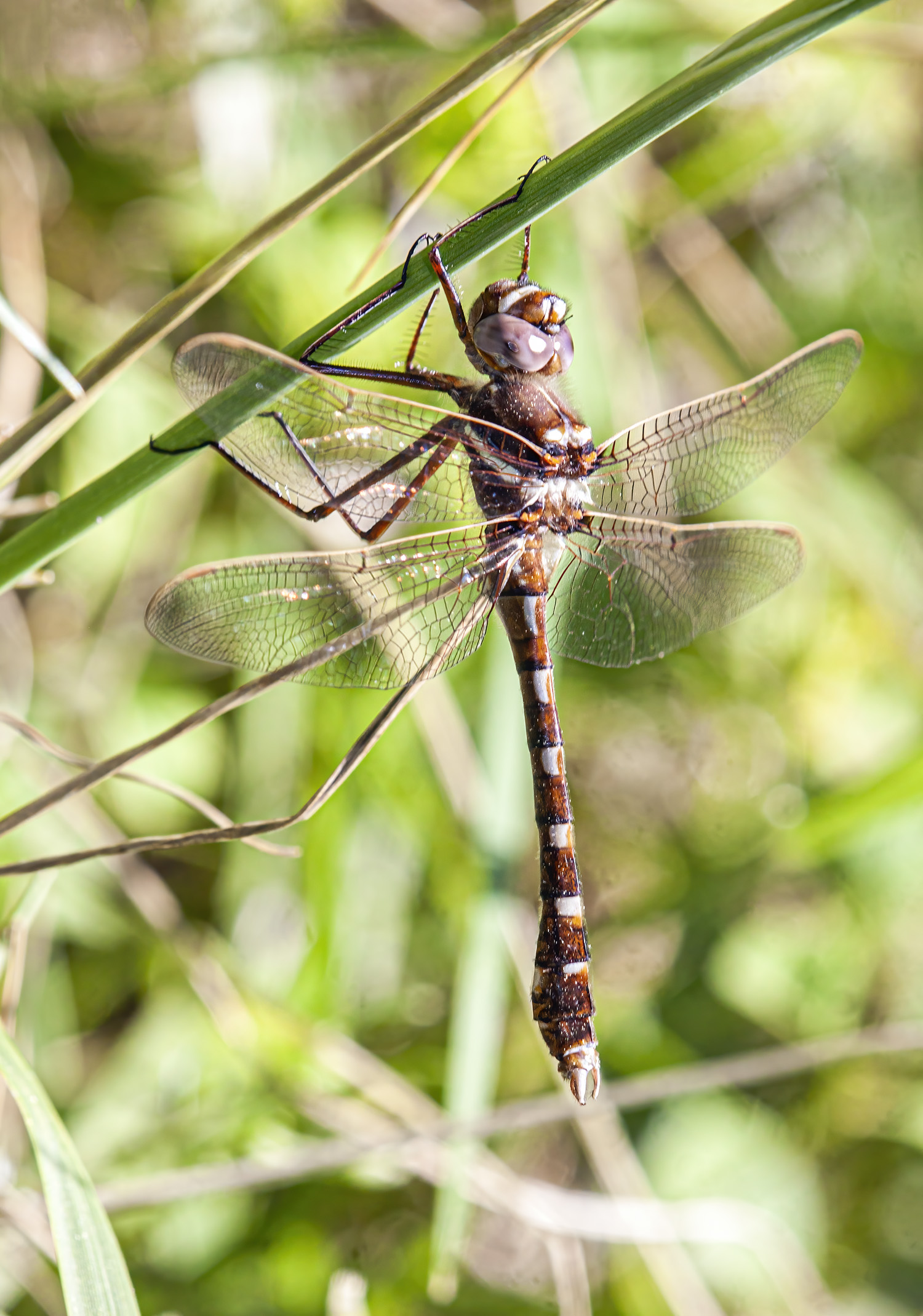
Stream Cruisers are long and skinny and a little tough to fit into a photo taken in landscape mode. I moved closer to the dragonfly, knelt down, and circled around a bit to capture the middle image. By getting closer to my subject and altering my shooting angle, I was able to blur out the background better. I still was not quite satisfied with the photo, though, because it conveyed the mistaken impression that the cruiser was perching horizontally.

I circled around some more and decided to take some shots in portrait mode. I held my camera at an angle, trying to match the angle at which the dragonfly was perched, in order to have its entire body in focus. This first shot below, one of the last ones I took, was my favorite. The background is blurred and almost all of the details on the cruiser are pretty sharp.

I realize that the image makes it look like the cruiser was hanging perfectly vertically, which was not exactly true, but the image looks pretty natural to me. Wildlife photographers make a whole series of creative choices that help them to create images that reflect their personal vision of  “reality” in front of their cameras, a kind of subjective reality.

One of my favorite quotations about photography comes from noted photographer Dorothea Lange, who said, “The camera is an instrument that teaches people how to see without a camera.” My photos provide some insight into the way that I view the world. Welcome to my world!

Stream Cruiser

Stream Cruiser

Stream Cruiser

© Michael Q. Powell. All rights reserved.

Read Full Post »

Dragonfly season has definitely begun. I spotted several Stream Cruiser dragonflies (Didymops transversa) on Wednesday this week while I was exploring several creeks in Prince William Park here in Virginia. Stream Cruisers are pretty easy to identify, with a single stripe on their thoraxes, pale-colored tips of their abdomens, and long, thin legs. They tend to perch at an angle or to hang vertically.

Stream Cruisers are one of the earliest dragonfly species to appear each spring and it was exciting to spot them. They tend to be habitat specialists and are generally found near forest streams with good flow and rocks.

Stream Cruiser

Stream Cruiser

Stream Cruiser

© Michael Q. Powell. All rights reserved.


Read Full Post »

On Monday I was happy to spot my first Stream Cruiser dragonfly (Didymops transversa) of 2024 in a field of ferns adjacent to a creek in Prince William County. Check out the length of those back legs. Wow!

I do not see Stream Cruisers at most of the usual locations where I search for dragonflies, because they can be found only in specific habitats. According to the Dragonflies of Northern Virginia website, “Stream Cruisers are habitat specialists. Look for them in stable, small to medium, forest streams, with good flow and rocks. The best place to find them is hunting in sunlit meadows near their wood-land waterways.”

Stream Cruiser

© Michael Q. Powell. All rights reserved.

Read Full Post »

Different dragonfly species perch in different ways. Some perch high and some perch low; some perch horizontally, others perch at an angle, and others hang vertically.  I am always intrigued to look at the way a dragonfly is perched and, in particular, to see how the dragonfly is using its legs.

Last week I was delighted to spot a male Stream Cruiser (Didymops transversa) while I was exploring the edge of a creek in Prince William County, Virginia. The Steam Cruiser was perched low in the vegetation at an angle. Stream Cruisers have such long legs that they look somewhat uncomfortable when they are perching.

If you click on the image below, you can get a closer look at the dragonfly’s legs. The dragonfly does not seem to be using its front legs at all to perch and appears to be relying almost exclusively on its middle set of legs. The back set of legs look to be amazing long and are probably more useful for capturing prey than for perching.

Stream Cruiser

© Michael Q. Powell. All rights reserved.

Read Full Post »

It is almost impossible, but I can’t help but try to capture images of dragonflies in flight. It is arguably the most difficult challenge of my ability to use my camera and also of my patience. None of the dragonflies in these photos flew close to the shores of the streams that I was exploring in Prince William County, Virginia, and I was using only a modest telephoto lens that I was focusing manually—the autofocus on my Tamron 180mm macro lens is relatively slow and could not focus on the dragonflies as they zoomed on by.

Last Wednesday I photographed the dragonfly in the first photo as it was patrolling over a creek. I believe that it is a Uhler’s Sundragon dragonfly (Helocordulia uhleri), which is about 1.8 inches (46 mm) in length. The dragonfly was not exactly following a pattern, but I was able to track it as it flew all around a small section of the creek.

The dragonfly in the second image may also be a Uhler’s Sundragon, though I am less confident of this identification. I really like the fact that the eyes of the dragonfly are in shart focus. It is probably just my imagination, but this dragonfly seemed to glance up at me and smile as it flew on by. In this photo, as in the first one, you really have a sense of the environment in which I found the dragonfly.

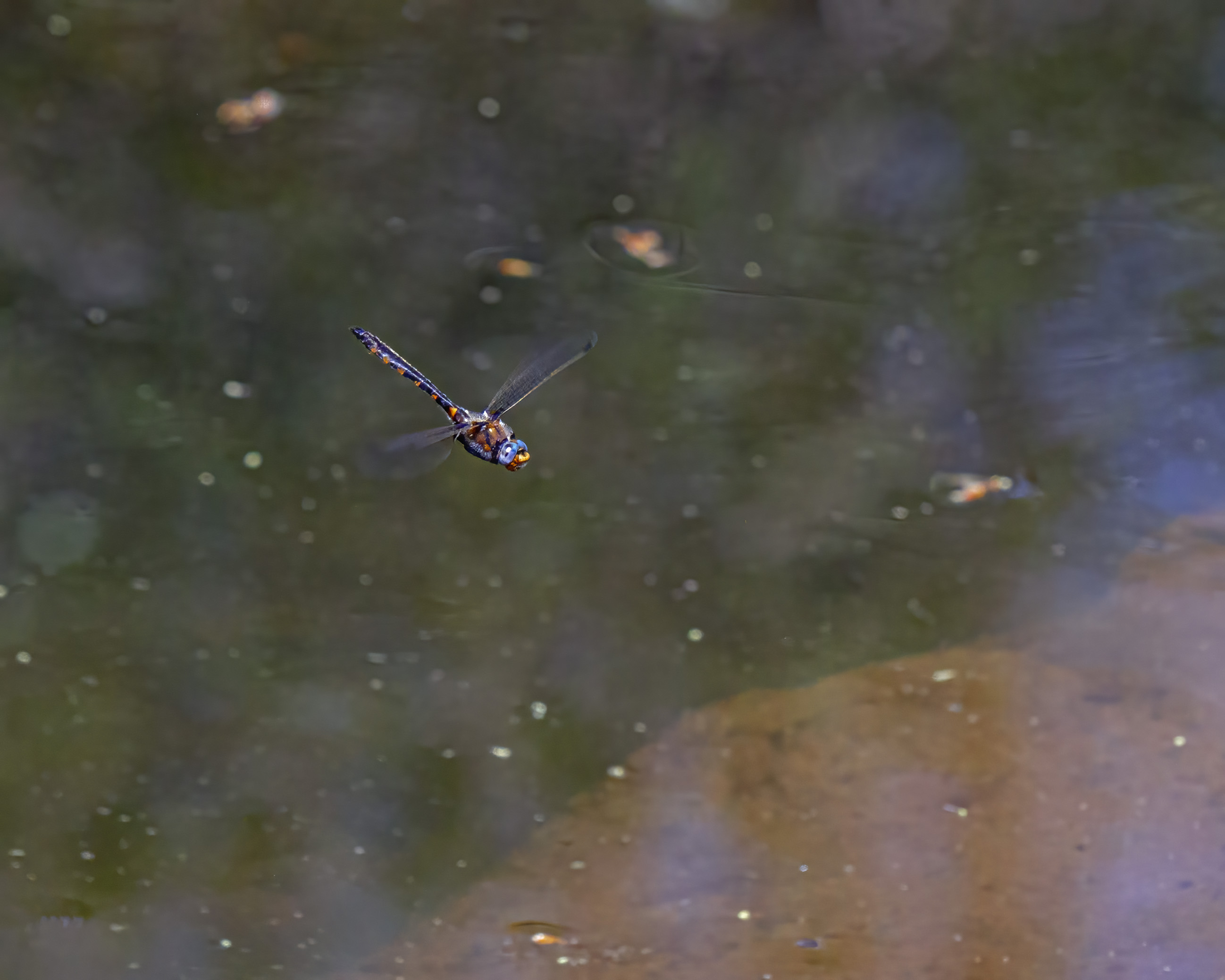
I captured the final image on Friday as I was exploring a different creek in Prince William County. The dragonfly in this photo was much larger than the ones in the other photos and was flying much faster and seemed to be conducting patrols over a much longer stretch of the creek. All the image was not completely sharp, I captured enough details to be able to identify it as male Stream Cruiser (Didymops transversa) dragonfly, a species that is about 2.2 inches (56 mm) in length.

Last year I did a short video on YouTube called Impossible Shots? Dragonflies in Flight in which I talked about one of my forays into the field and highlighted my approach to photographing dragonflies. Check it out if you want to see some more shots of dragonflies in flight or if you simply want to hear my voice and see my face. I included a link to the video in the title of the video (which should appear in color and underlined) and am also going to try to paste it into the end of posting, so you don’t have to go to YouTube to watch it. I am still just dabbling in video, but want to try to do more of it this year.

Uhler's Sundragon

Uhler's Sundragon

Stream Cruiser

© Michael Q. Powell. All rights reserved.

Read Full Post »

Last Monday I was really excited to spot several male Stream Cruiser dragonflies (Didymops transversa), one of the early spring dragonflies that heretofore had eluded me this season. Stream Cruisers are habitat specialist, according to the Dragonflies of Northern Virginia website, and prefer “stable, small to medium, forest streams, with good flow and rocks. The best place to find them is hunting in sunlit meadows near their woodland waterways.”  That is am accurate description of the spot where I photographed these Stream Cruisers alongside a stream in Prince William County, Virginia.

I love the overall look of a Stream Cruiser, with its distinctive green eyes, its colorful markings, and its long, gangly legs. If you look closely at the first image, you can see that the dragonfly is holding onto both sides of the forked branch with its long legs. I marvel too at the way that the Stream Cruiser is hanging in the second and third images—the pose looks awkward and precarious, but somehow the acrobatic position worked for the dragonfly.

Stream Cruiser

Stream Cruiser

Stream Cruiser

© Michael Q. Powell. All rights reserved.


Read Full Post »

As I was wandering about on Friday in Prince William County, a dragonfly zoomed by me and perched on some nearby vegetation. At the time I took the shots, I had no idea what it was because of the poor lighting. I was able to capture a few images and when I opened them on my computer I was delighted to discover that I had photographed a beautiful female Stream Cruiser dragonfly (Didymops transversa).

This was the first live Stream Cruiser dragonfly that I have photographed this spring. A week earlier I stumbled upon a Stream Cruiser that had had some unspecified problem in emerging and was dead, as shown in the second photo. Dragonflies are extremely vulnerable when they are emerging and unfavorable weather conditions and predators  almost certainly lower their survival rate. Given the magnitude of their remarkable metamorphosis, it seems remarkable to me that any of them can survive.

My experience with the Stream Cruiser in the first photo reminds me of the importance of being constantly vigilant. I was walking down a hill, headed towards a stream, when I glanced to the side and saw the flying dragonfly. I made a quick 180 degree turn and tracked the dragonfly as it landed. I took two steps forward and and had time to snap off only a few photos and that was it.

Fortunately I had my camera settings were somewhat appropriate and I was able to react quickly. As is often the case with wildlife photography, those two factors were key to capturing a shot. If the circumstances had been different, I might have been able to get a better image, but I am pretty happy with the image I captured. Needless to say, success is not guaranteed—I have plenty of stories from that day of the ones that got away.

Stream Cruiser

Stream Cruiser

© Michael Q. Powell. All rights reserved.
Read Full Post »

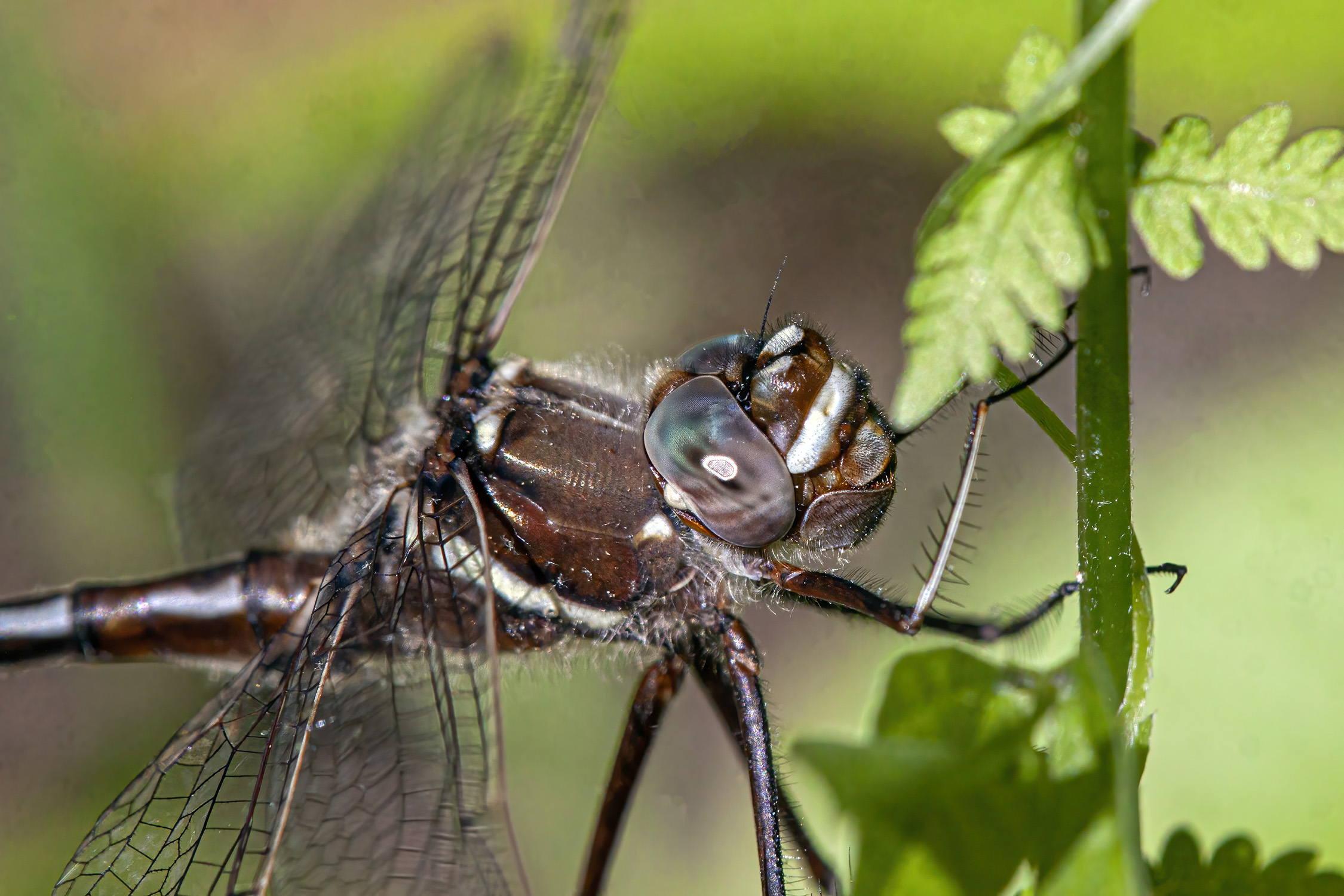
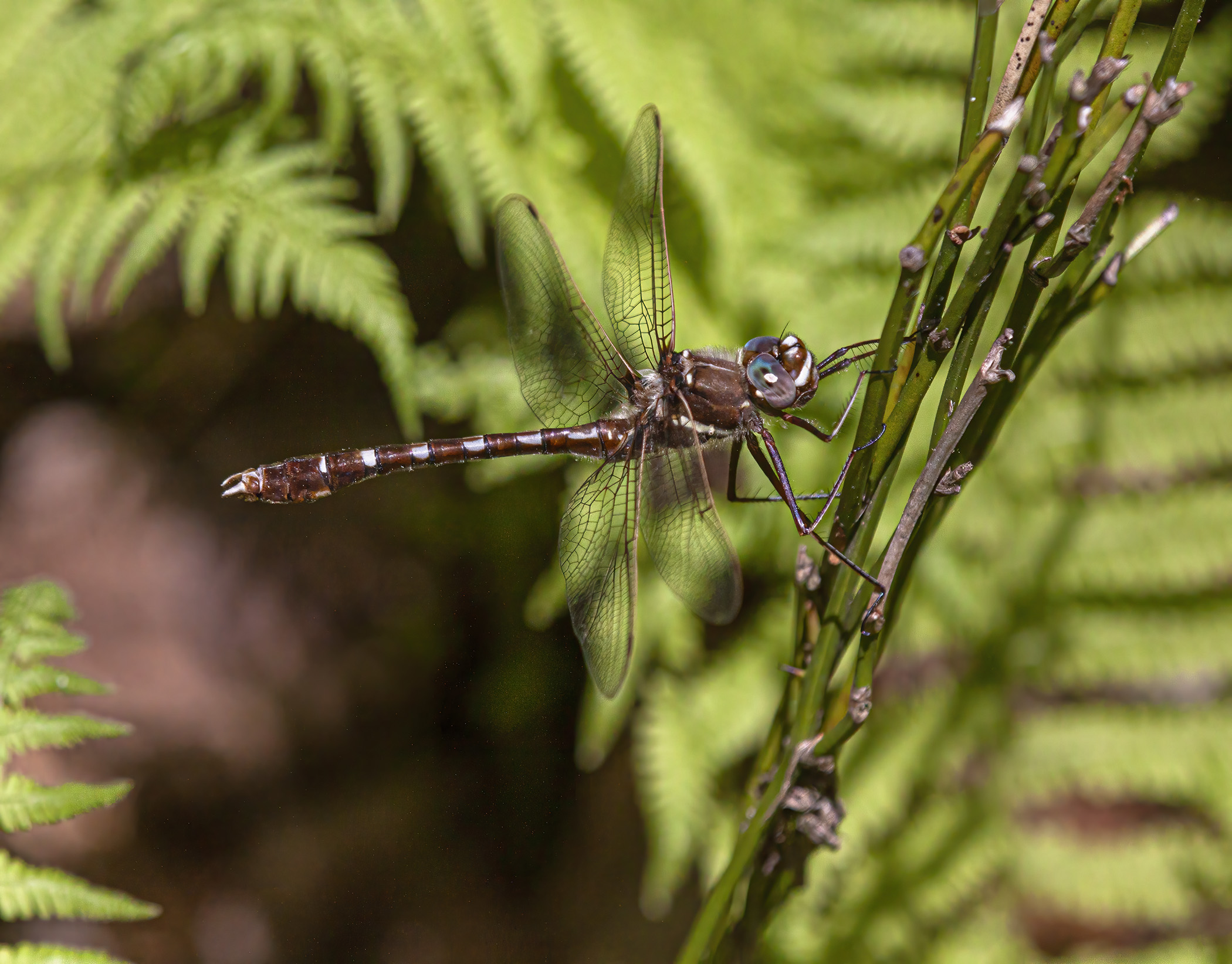
Can a dragonfly smile? I seemed to detect a cocky little smile when I moved in close for this shot of a handsome male Stream Cruiser (Didymops transversa) last Thursday in Prince William County. The macro view also allowed me to appreciate the beauty of his two-toned eyes and to note the curious-looking “chin strap.”

The second shot shows the entire body of the Stream Cruiser, a medium-sized dragonfly that is about 2.2 inches (56 mm) in length. The image also gives you a sense of the environment in which I spotted him—a large expanse of interrupted ferns adjacent to a stream.

Stream Cruiser

Stream Cruiser

© Michael Q. Powell. All rights reserved.

Read Full Post »

Last week I was delighted to spot several more Stream Cruiser dragonflies (Didymops transversa) while wandering about in Prince William County. This handsome male Stream Cruiser  looked like he could have starred in the well-known “got milk?” publicity campaign in the United States that featured photos of celebrities with milk mustaches and was designed to make milk more interesting and to emphasize its wholesomeness.

The print campaign with the the milk mustaches was started by the Milk Processor Education Program (MilkPEP) as a follow-on to a very popular series of television commercials in which people went to extraordinary lengths to make sure they did not run out of milk, according to this Fast Company article about the history of the Got milk? campaign.

Celebrities almost literally lined up to participate in this campaign and famous photographer Annie Leibovitz photographed more than 180 of the advertisements, according to the aforementioned article. One of the few requirements for participation in the campaign was that the celebrities had be milk-drinkers—I think they might have waived that requirement for Kermit the Frog—which was a problem for Whoopi Goldberg, who is lactose-intolerant. However, she was featured when the campaign ran an advertisement for lactose-free milk.

I don’t drink very much milk these days, but have fond memories of growing up with milk in my cereal bowl each morning. Got milk?

Stream Cruiser

© Michael Q. Powell. All rights reserved.

Read Full Post »

I have been having a really successful spring season in photographing dragonflies. Shaking off some of the winter doldrums, I have spent endless hours this month tramping about in a variety of habitats searching for these magical little creatures. I feel like I am now sprinting to the finish of a marathon on this final day of April

I was amazed to spot Stream Cruisers (Didymops transversa) on Monday at Occoquan Regional Park. I have seen Stream Cruiser dragonflies before, but never at this location. I was able to get shots of both a male (in the first photo) and a female (in the second photo). You can easily see the difference, I think, between the two genders, especially at the ends of their abdomens (the “tail”). Both of them, though, have the same long legs that always make their perching positions seem. a little awkward.

Earlier this spring, I spotted a large exuvia, the discarded exoskeleton of a dragonfly that has emerged, that my friend and fellow dragonfly enthusiast Walter Sanford was able to identify as being from a Stream Cruiser. I have included a photo of that exuvia as a final photo to give you a sense of the shape of the final stage of the water-dwelling nymph before it crawled onto dry land and began its metamorphosis to a new and exciting stage of its life as a dragonfly.

Stream Cruiser

Stream Cruiser

Stream Cruiser exuvia

© Michael Q. Powell. All rights reserved.

Read Full Post »

On Thursday I was excited to spot these two Stream Cruiser dragonflies (Didymops transversa), one female and one male, in a sunny area adjacent to a creek that I was exploring in Prince William County, Virginia. Authorities have closed the park that I was visiting to vehicular traffic, so I had to hike in to reach my target area, which took over an hour and a half each way.

It was the end of a long and tiring day and I had already begun the trek back to my car. By 4:00 in the afternoon, much of the trail along the creek was in the shade. Periodically, though, I would pass patches of sunlit vegetation and I stopped to explore them, knowing that many dragonflies like to bask in the sunlight. I was searching one such spot when my eyes detected a dragonfly in flight. I was able to track the dragonfly in the air and to see it land. The male Stream Cruiser (shown in the second photo below) perched at an odd angle on some low-hanging vegetation, but I managed to get a shot of it before it took off again.

I decided to stay in that spot and wait and after a while another dragonfly flew by, landing this time much higher in the vegetation. Initially I thought that it might be the same dragonfly that I had already photographed, but when I got closer, I could see that the second one (shown in the first photo below) was a female. The female Stream Cruiser chose to perch about chest-high, so I was able to get a much better angle for this shot than for the first one and compose the image more carefully.

This experience is a good reminder for me to stay alert at all times when I have my camera in my hands until I am actually back to my car. I had not even been thinking of Stream Cruisers, a species that I have seen only a couple of times previously, when I decided to make this trip. However, I was ready when this opportunity unexpectedly presented itself to me.

I cringe a little sometimes when well-meaning folks see my photos and say, “You are so lucky.” Yes, I have more than my share of good fortune, but it often takes hours and hours of effort for a decisive moment to arrive and even then I have to be quick enough and skillful enough to get a shot. Rather than going to the trouble to explain all of that, though, I will usually nod my head and agree that I was lucky to get my shots.


Stream Cruiser

Stream Cruiser

© Michael Q. Powell. All rights reserved.


Read Full Post »

On the same day that I saw the Common Whitetail dragonfly that I featured yesterday in my blog posting, I was thrilled to have the chance to photograph an uncommon dragonfly, a male Stream Cruiser (Didymops transversa). I had never before seen a Stream Cruiser, but local dragonfly expert and fellow photographer Walter Sanford had observed them in the past at Accotink Bay Wildlife Refuge and offered to guide me.

It’s somewhat of an understatement to say that Stream Cruisers are hard to spot. The are not very big (about 2.2 inches (56-60mm) in length), they are skittish, and they often perch on the stems of low vegetation. During the hours that we searched for them, I observed a couple of probable Stream Cruisers in the air, but lost them in the blur of the vegetation and never saw a single one land. Walter saw the first one of the day, a female, and posted an awesome photograph of the beautiful dragonfly in a blog posting yesterday. Unfortunately for me, I was unable to make it to the dragonfly’s location before she flew away. Walter spotted a few more Stream Cruisers during the day, but each time I couldn’t get there quickly enough to see one.

I was beginning to think that I was going to end up empty-handed for the day when Walter called out that he had spotted a male perched in the underbrush. This Stream Cruiser was cooperative enough to stay perched as I rushed to try to get a shot. I had my Tamron 180mm macro lens on my camera at that moment. The dragonfly and the stem on which it was perched were so small in the viewfinder that my camera’s autofocus would not lock on my subject, so I had to resort to focusing manually. Dragonflies have so many fine details that it is really hard to tell when they are in focus. This image was the best I could get after cropping the initial shot quite a bit.

Stream Cruiser

I decided to push my luck and see if I could get a better shot with my Tamron 150-600mm lens that I use primarily to photograph birds. Amazingly the dragonfly stayed put while I changed lenses. Once again I had to focus manually, which is an even bigger problem with this lens, because the focus ring is located really close to the lens mount. It’s hard to hold the camera steady and focus manually at the same time.

Here’s an image that I shot at 600mm. I managed to get the eye pretty sharp and to capture some of the details of the dragonfly’s incredibly long legs, but the depth of field was so shallow that the abdomen is out of focus. Normally I will try to move around the subject to be as parallel as I can be, but in this case I stayed fixed at one spot and remained as immobile as I could.

Stream Cruiser

It is really nice to start off this dragonfly season with a new species. If you want to learn more about the Stream Cruiser dragonfly, check out this page from the Dragonflies of Northern Virginia website (and stay tuned for Walter’s shots of this dragonfly that should appear tomorrow morning in his blog).

© Michael Q. Powell. All rights reserved.


Read Full Post »