Feeds:
Posts
Comments

Posts Tagged ‘Danaus plexippus’

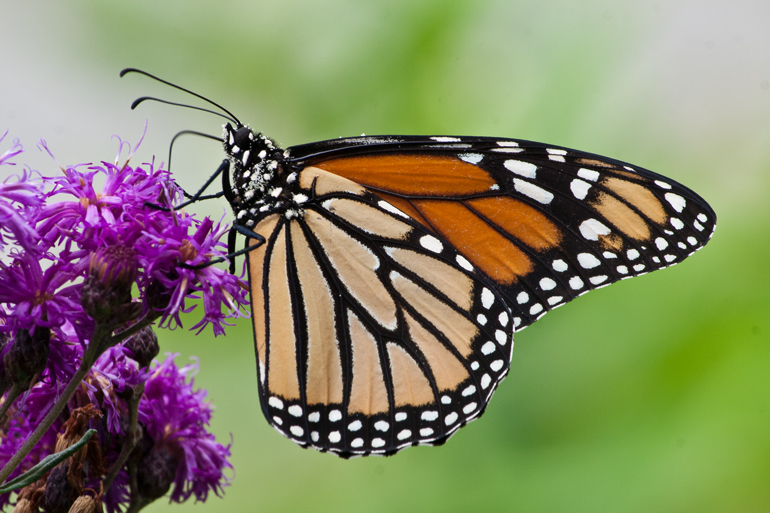
The incessant rain and cooler weather since my return from Brussels make it feel like it’s already autumn. Like this Monarch butterfly (Danaus plexippus) at Occoquan Bay National Wildlife Refuge, however, I am not quite ready to cease sipping the sweet nectar of summer.

I captured this image on 31 August, the day before my departure for my recent overseas trip. The combination of rainy weather can jet lag have so far kept me from venturing out with my camera, but I hope to do so this coming week.

monarch butterfly

© Michael Q. Powell. All rights reserved

Read Full Post »

There were lots of flowers in bloom yesterday at Green Spring Gardens, a historic county-run garden not far from where I live. One of my favorites was the Zowie Zinnia and a Monarch butterfly (Danaus plexippus) seemed to like it a lot too.

I was at the garden with my dear friend and photography mentor, Cindy Dyer, and her husband. We were all taking a break at one point and I told Cindy that I was going to return to a patch of Zowie Zinnias to see if I could get a shot of a butterfly landing on one. We both recalled a photo that she took in 2010 (check out her blog posting) when an Easter Tiger Swallowtail butterfly appeared out of nowhere and landed on one of the two Zowie Zinnias that she was focusing on with her camera on a tripod.

Imagine her surprise when a couple of minutes later I returned with this photo. She grabbed her camera and went to the patch of zinnia, but, alas, the butterflies were not as cooperative for her as they had been for me.

Monarch butterfly and Zowie Zinnia

© Michael Q. Powell. All rights reserved.

Read Full Post »

I am always excited to see Monarch butterflies (Danaus plexippus). Over the years there have been numerous reports of this species becoming endangered, primarily because of the loss of habitat. Some years, I have spotted only a few Monarch during an entire summer. This year I have been fortunate enough to see them at several of the locations that I frequent.

I spotted this spectacular Monarch butterfly yesterday while visiting Meadowlark Botanical Gardens in nearby Vienna, Virginia with some fellow photographers. Each of us has a different style of shooting and preferred subjects and we usually shoot separately. It is always a lot of fun when we reassemble after shooting and share our photos and experiences with each other over dinner at a restaurant.

Monarch butterfly

© Michael Q. Powell. All rights reserved.

Read Full Post »

Whenever I see a patch of milkweed I will usually stop and and watch and wait. Milkweed attracts such a colorful cast of insect characters that it reminds me a little of the Mos Eisley Cantina in the original Star Wars movie.

My patience was rewarded this past Saturday at Occoquan Bay National Wildlife Refuge when a Monarch Butterfly (Danaus plexippus) stopped by for a visit and I was able to capture this image.

Monarch butterfly

© Michael Q. Powell. All rights reserved.

Read Full Post »

Early Monday morning at Occoquan Bay National Wildlife Refuge I spotted my first Monarch Butterfly (Danaus plexippus) of the spring. It seemed really skittish and flew up into the trees. I was happy to be able to capture this image from an unusual angle—it is not often that I photograph a butterfly while aiming my camera in an upwards direction.

Some years I see only a few Monarchs and I read quite often about their threatened habitats. I am therefore excigted each time that I am blessed to see one of these beautiful butterflies.

Monarch butterfly

© Michael Q. Powell. All rights reserved.


Read Full Post »

I was thrilled this morning at Occoquan Bay National Wildlife Refuge to see that there are still quite a few Monarch butterflies (Danaus plexippus) in our area, including this beauty that I was able to photograph as it was feeding on a thistle plant.

monarch butterfly

© Michael Q. Powell. All rights reserved.

Read Full Post »

The beautiful Monarch Butterfly (Danaus plexippus) is often featured in conservation efforts that focus on its dwindling numbers and shrinking habitat. It was therefore a little disconcerting to stumble upon a Monarch that had been ensnared in the web of a Black and Yellow Garden Spider (Argiope aurantia) during a visit this past weekend to Occoquan Bay National Wildlife Refuge.

I have no idea how long the butterfly had been in the web, but it appeared to be totally immobilized. Spiders like this one, known also as Yellow Garden Spiders or Writing Spiders, kill their prey by injecting venom and often wrap them up in web material for later consumption.

I considered cropping this image to focus more attention on the spider and the butterfly, but ultimately decided that I liked the context provided by the elements of the spider’s web and the murky, out-of-focus background.


spider and Monarch

© Michael Q. Powell. All rights reserved


Read Full Post »

Although I tend to associate Monarch butterflies (Danaus plexippus) with milkweed, this Monarch was hungrily feeding on Queen Anne’s lace (Daucus carota) this past weekend at Huntley Meadows Park. I am not sure why, but I have seen significantly more Monarch butterflies this summer than in the past few years.

Monarch butterfly

© Michael Q. Powell. All rights reserved

Read Full Post »

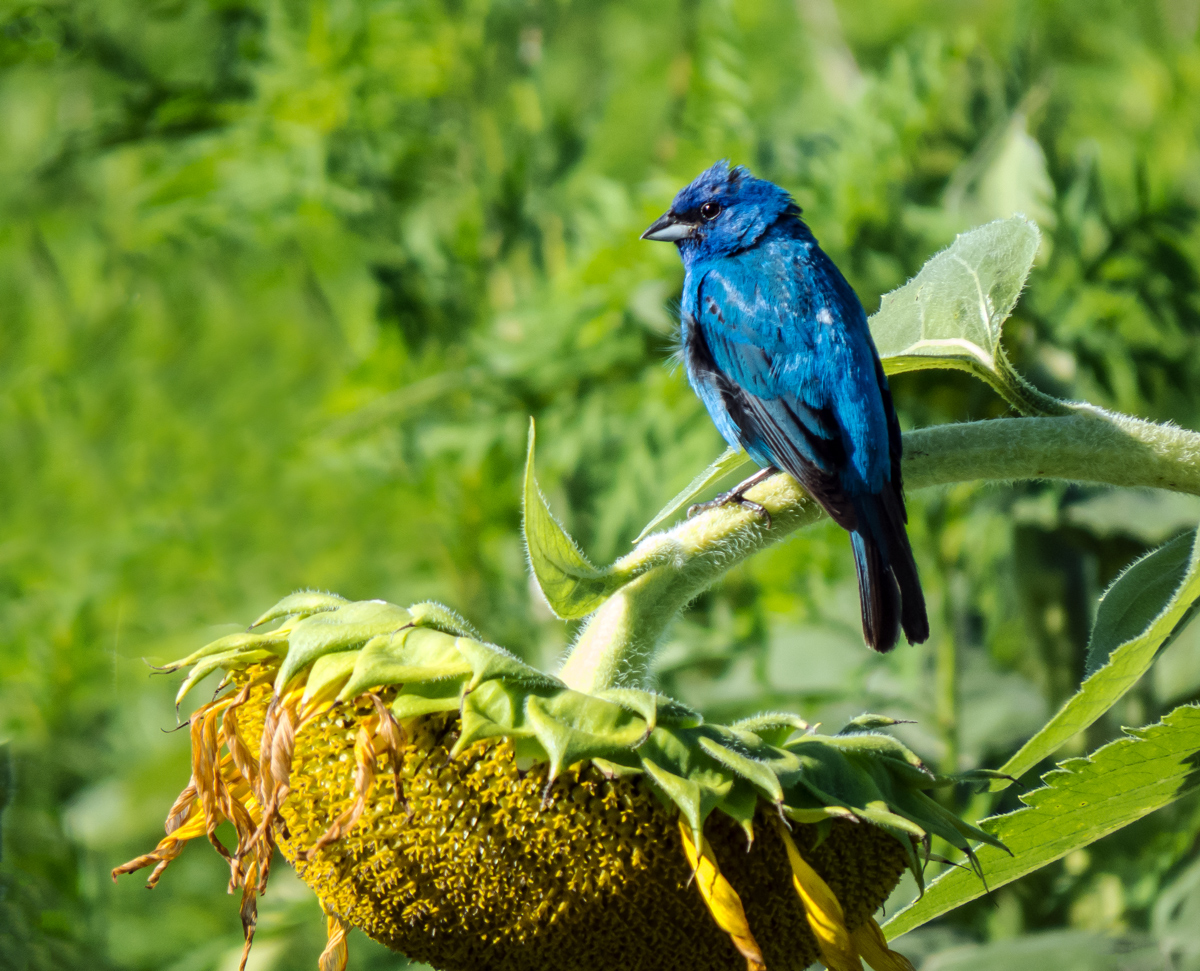
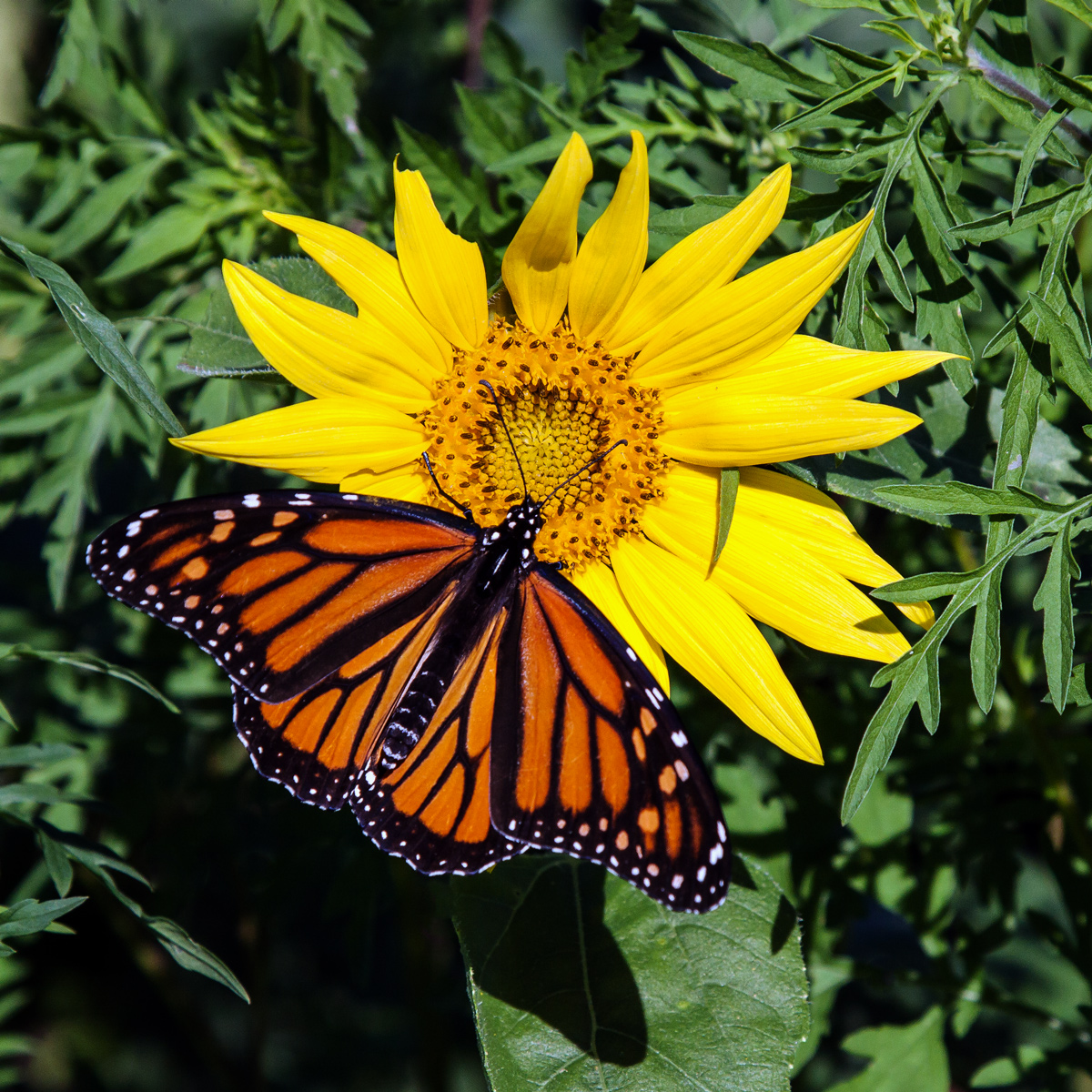
In the first sunflower field that we visited yesterday morning at McKee-Beshers Wildlife Management Area, many of the sunflowers were drooping because of the weight of their seeds. They may not have been very photogenic, but the birds and butterflies seemed to love them, like this Indigo Bunting (Passerina cyanea) and this Monarch butterfly (Danaus plexippus) that I spotted among the sunflowers.

Several photographer friends and I made the trip to the sunflower fields in Poolesville, Maryland, hoping to see endless rows of tall sunflowers. According to its website, McKee-Beshers has 30 acres of sunflowers planted in nine different fields. I think that the sunflowers may have been a little past their prime and appeared to be a little stunted in size, compared to some past years.

It was tricky to figure out what kind of gear to bring on a trek like this. I ended up using my super zoom Canon SX50 to photograph the Indigo Bunting, which was a first sighting for me of this beautiful bird, and my Canon 24-105mm lens on my normal Canon 50D DSLR for the butterfly. I had both of the cameras with me at all times, which gave me a pretty good amount of flexibility. I’ve seen some photographers walk around with two DSLR bodies, but that seems like a lot of weight to carry around, especially when you are moving through vegetation as I was doing as I waded through the rows of sunflowers.

I did take shot shots of the sunflowers  and I’ll post some of them eventually. Folks who know me, though, are probably not surprised that my first instinct was to post images of birds and butterflies, rather than ones of the flowers alone.

Indigo Bunting

Monarch butterfly

© Michael Q. Powell. All rights reserved

Read Full Post »

The last few years it has been pretty rare for me to see a Monarch Butterfly (Danaus plexippus). Most of the time when I thought I had spotted one, it turned out to be a similar-looking Viceroy Butterfly.

I was therefore really excited when I spotted a Monarch Butterfly fluttering about in a clump of what I think is some kind of milkweed during a brief trip to Kenilworth Aquatic Garden this past weekend. The butterfly seemed to be unusually skittish—it would perch for only a split second and then take off again. When it would decide to perch for a slightly longer period of time, inevitably it would bury itself among the vegetation, making a clear shot almost impossible.

I waited and waited and finally was able to get this almost unobstructed shot of the spectacular butterfly. Even in America we celebrate this kind of Monarch.

Monarch Butterfly

© Michael Q. Powell. All rights reserved.

Read Full Post »

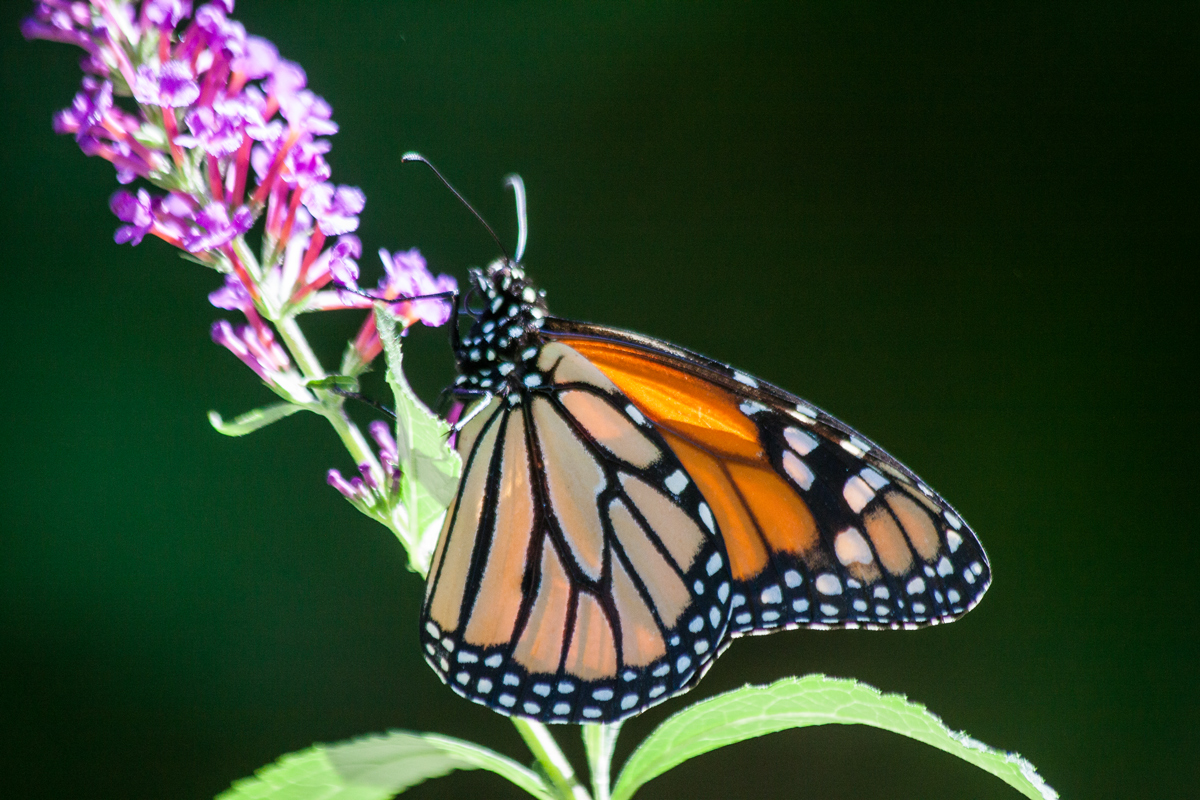
The sun was shining through the wings of this Monarch butterfly (Danaus plexippus) from behind, making the butterfly glow like a stained glass window on Friday at Green Spring Gardens.
Monarch butterfly

© Michael Q. Powell. All rights reserved

Read Full Post »

The last few years I haven’t seen many Monarch butterflies (Danaus plexippus) and I have read reports of their declining numbers. I was therefore pretty excited when I spotted one yesterday at Huntley Meadows Park. As I approached, the Monarch got spooked and flew up into a tree. Fortunately I was shooting with my long telephoto zoom lens and I managed to get this somewhat unusual shot of the beautiful butterfly.

Monarch butterfly


© Michael Q. Powell. All rights reserved.

Read Full Post »

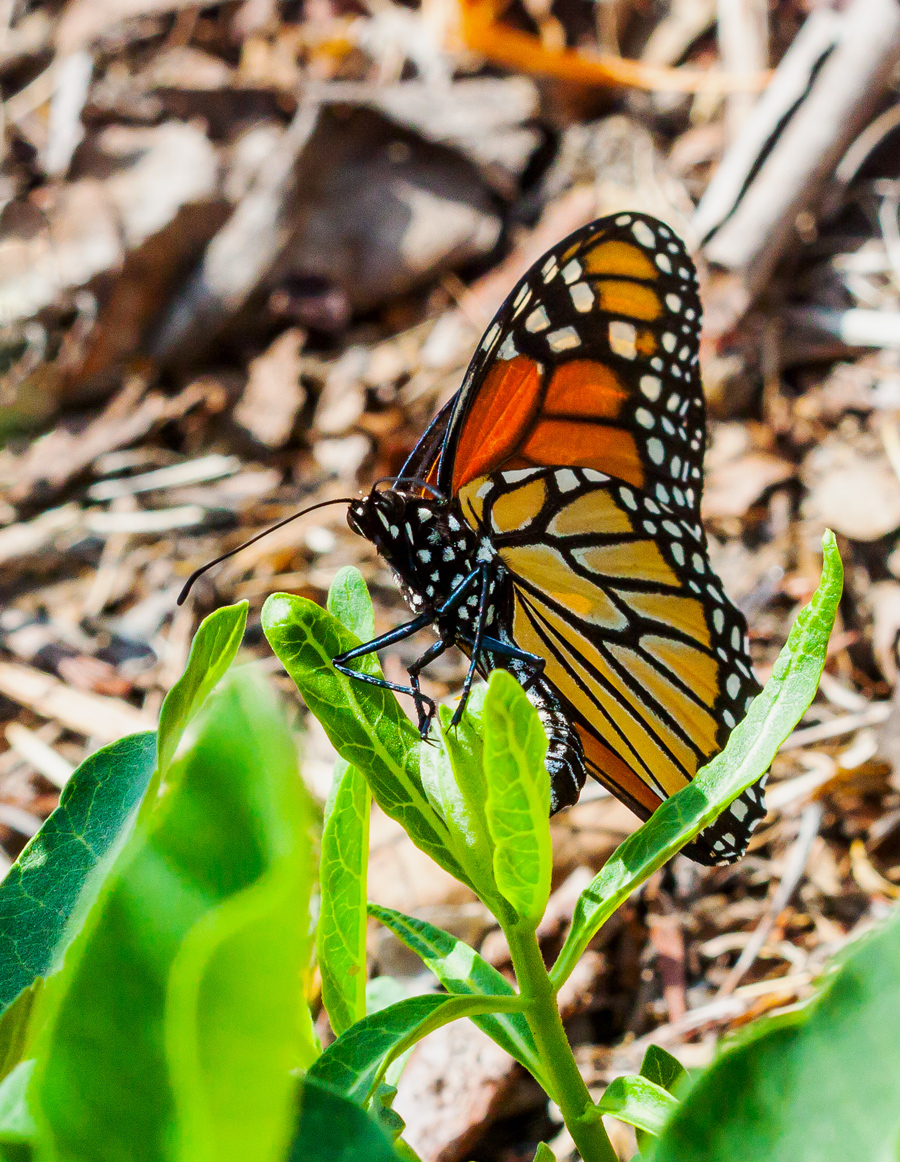
I was beginning to think that another year would go by without seeing a Monarch butterfly (Danaus plexippus) when yesterday I spotted one of them in the most unlikely of places—in the mulched plants at the back of the hotel where I am staying in Woburn, Massachusetts.

After a grueling eleven-hour ride from Northern Virginia, I arrived at the hotel yesterday afternoon ready to relax. Unfortunately, I was told that my room would not be ready for at least an hour. I grabbed my camera and decided to walk around the grounds of the hotel, which is adjacent to a small canal, to see what there might be to photograph.

As I was walking, I caught sight of an orange-and-black butterfly that kept landing momentarily on the low plants, never staying still long enough for me to get a good shot (I was shooting with a 100mm macro lens). I kept chasing and eventually got some shots. It has been such a  long time since I last saw a Monarch that any photo at all is a bonus, so it doesn’t bother me that these are far from being great shots.

My excitement at seeing a Monarch is tempered a bit by the fact that I did not get the right angle to conclusively exclude the possibility that this is a Viceroy butterfly. If that were to turn out to be the case, I’ll be out again chasing butterflies in search of the first Monarch of the season.

Monarch butterfly

Monarch butterfly


© Michael Q. Powell. All rights reserved.

Read Full Post »

My favorite marshland park is abloom with yellow flowers. This past Friday, I spotted a Monarch butterfly (Danaus plexippus) at the edge of a meadow feeding on one of those flowers. I thought the Monarchs had flown south for the season already, but was delighted to see they are still around.

I tried to frame the image so that there would be yellow flowers in the background and the results were even better than I had anticipated.

Yellow seems to be a happy color and somehow I can’t help but smile when I look at this image. I hope that it has the same effect on all of you.

Monarch butterfly

© Michael Q. Powell. All rights reserved.


Read Full Post »

I haven’t seen very many Monarch Butterflies (Danaus plexippus) the last few years, so I was thrilled when I spotted this one yesterday at the outdoor butterfly garden at the National Zoo.

I chased after it as it flew from plant to plant, hoping that it would come to rest withing range of my camera. Once the Monarch had landed I circled around until I was on the same plane as the butterfly and got this shot. Fortunately I was close enough that I was able to fill the frame with the beautiful Monarch and a small amount of the flower on which it was feeding—this is an uncropped image.

It was midday and the lighting was a little harsh, but it did help illuminate the wing from an angle and showcase the butterfly’s spectacular colors.

I did take some photos of some of the animals at the National Zoo, which I will present in another posting, but thought I’d start with the Monarch Butterfly, an unexpected bonus of my brief visit to the zoo.

Monarch butterfly

© Michael Q. Powell. All rights reserved.

Read Full Post »

I don’t know if this Monarch butterfly (Danaus plexippus) migrated from the south or was a refugee from the indoor butterfly garden, but I was sure happy to see it this past Saturday at Lewis Ginter Botanical Garden outside of Richmond, Virginia. Monarch butterflies have been pretty scarce in this area the last couple of years.

Monarch butterfly

© Michael Q. Powell. All rights reserved.

Read Full Post »

The few Monarch butterflies (Danaus plexippus) that I observed earlier this season were all in gardens, so I was especially happy when I spotted one this past weekend in the wild, feeding on some Swamp Milkweed (Asclepias incarnata) at my local marsh.

The little patch of Swamp Milkweed was a pretty good distance away, so I had to use the long end of my 70-300mm zoom for these shots. It looks like many of the flowers of the milkweed had not yet opened, but the butterfly obviously found it to be attractive enough to stop for a moment.

Monarch Butterfly Huntley MeadowsMonarch Butterfly Swamp Milkweed

© Michael Q. Powell. All rights reserved.

Read Full Post »

Within minutes of my arrival at a garden in Maryland, I was able to photograph my first Monarch butterfly of the summer, but was also “treated” to the sight of the fattest, hairiest fly that I have ever seen, a true case of a beauty and a beast.

Brookside Gardens is a beautiful spot for photographing flowers and insects in Wheaton, Maryland in the suburban Washington, D.C. area. In one section of the garden, there is a section specifically planted to attract butterflies and it was in that area that I saw the Monarch butterfly (Danaus plexippus) along with more numerous Eastern Swallowtail butterflies.

I didn’t see a single Monarch butterfly last summer and feared that I might not see one this summer either, because of habitat issues in Mexico and the severe winter we experienced. I was therefore thrilled when I first caught sight of a Monarch and chased after them throughout the day at the garden.

monarch1_blog

My moment of joy was interrupted when I was buzzed by a very large fly. When it landed, I was startled to see that it was really plump and really hairy. Of course, beauty is in the eye of the beholder, but it would be tough to consider this beast to a a beauty. I poked around the internet in an attempt to identify this fly and it appears to belong to the genus Juriniopsis, though I can’t identify a specific species.

fly1_fat_blog

I continue to be fascinated by insects and at this time of the year you can usually find me chasing after them with my trusty macro lens, giving equal time to the beauties and to the beasts.

© Michael Q. Powell. All rights reserved

Read Full Post »

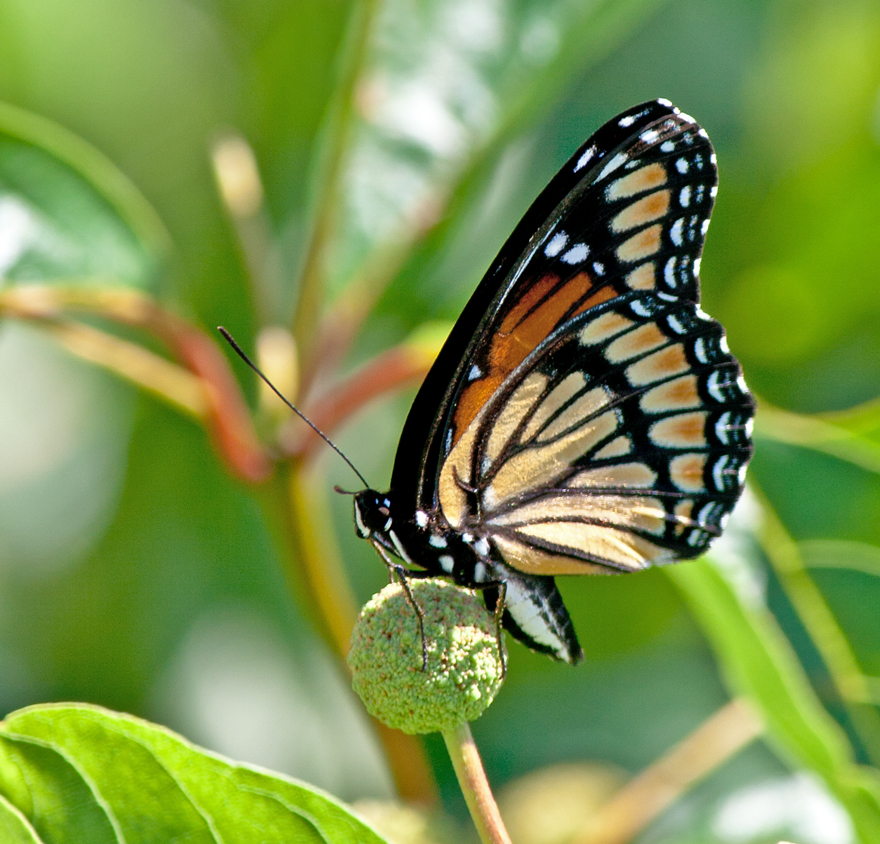
I haven’t seen a huge number of butterflies this summer, so I was happy to see a colorful butterfly this past weekend, which I believe is a Monarch butterfly (Danaus plexippus).

UPDATE: My tentative identification as a Monarch was not correct. Thanks to Jeremy Sell at The Life of Your Time for his help in identifying this as a Viceroy butterfly (Limenitis archippus archippus).

monarch_blog

© Michael Q. Powell. All rights reserved

Read Full Post »

We continue to fade to brown, with only muted color changes as the leaves begin to fall from the tree. As if to compensate for the lack of spectacular foliage, brightly colored flowers are still blooming. I managed to get some shots of equally colorful insects interacting with yellow flowers. When I see Monarch butterflies (Danaus plexxipus), they are usually in the midst of blooming flowers, but I was surprised to also see a shiny red ladybug near the center of a yellow flower.

Monarch butterfly on yellow flower

Ladybug on yellow flower

© Michael Q. Powell. All rights reserved.

Read Full Post »

Growing up in New England, I used to love this time of the year, when the fall foliage featured brilliant displays of red, orange, and yellow. I now live outside of Washington, D.C. and somehow the colors don’t seem as intense (and the colors change a lot later in the fall season). Sometimes, it seems that we simply fade to brown.

I was thrilled earlier this week to find relief from the fading fall colors when a flash of bright orange grabbed my attention. Somehow I thought it was too late in the season and that the weather was too cool for butterflies, but I was wrong. A Monarch butterfly, in all of his brilliant glory, was busily at work, flitting from flower to flower.

This fall I probably will not see the amazing oranges and yellow leaves of my childhood memories. The presence of  those same fall colors in the wings of a butterfly, however, help to trigger those memories. Isn’t it amazing how certain sights, sounds, colors, or smells can transport us back to a different time and a different place?

Monarch butterfly in mid-September

© Michael Q. Powell. All rights reserved.

Read Full Post »

If you ever get invited to dinner by a Monarch caterpillar, you know what will be on the menu—milkweed. Monarch caterpillars consume amazing quantities of milkweed (and nothing else), growing over 2,000 times their original mass during this 14-day phase of their lives, according to Rick Steinau.

Almost everything you read emphasizes that milkweed is toxic to humans (and to animals), but scienceviews.com notes that native peoples all over the United States and southern Canada used milkweed for fiber, food, and medicine. The article warns that milkweed may be toxic “when taken internally without sufficient preparation.” It is especially fascinating to read of the medicinal uses of the plant. It was used to treat backaches and bee stings, to induce postpartum milk flow, and to deal with a variety of stomach problems. The Meskwaki tribe, according to the article cited above, even used milkweed as a contraceptive, that worked by producing temporary sterility.

Milkweed, however, contains cardiac glycosides that are poisonous to humans and livestock, but also may account for its medicinal effect.  Symptoms of poisoning by the cardiac glycosides include dullness, weakness, bloating, inability to stand or walk, high body temperature, rapid and weak pulse, difficulty breathing, dilated pupils, spasms, and coma. (It sounds a lot like being in love!)

I don’t care how well Monarch caterpillars can prepare milkweed, if they invite me over for dinner, I think I’ll probably refrain from eating and just watch them eat (as I did this past weekend). I love Monarch butterflies in all their forms. Nevertheless, I would take my cue from the artist Meat Loaf, who sang, “I would do anything for love, but I won’t do that.”

Monarch caterpillar feeding on milkweed

© Michael Q. Powell. All rights reserved.

Read Full Post »

I love examining milkweed plants, because I always find interesting insects there to photograph. Yesterday I spotted a tiny caterpillar on a milkweed leaf that I was pretty sure was a Monarch butterfly-to-be (Danaus plexippus). The colored stripes were very similar to the one whose photo I previously posted, but this one was significantly smaller.

I decided to do some research on the life cycle of the Monarch to try to find out why this caterpillar was so small. The website butterflybushes.com has a wonderful article on the development of the Monarch. I learned that the larva is so small when it hatches that it can barely be seen, but it then consumes its body weight in milkweed leaves daily (Don’t try that at home!). During the 9-14 day larval stage, the caterpillar sheds its skin five times. Obviously this little guy is in a much earlier stage of development than the previous one, who was probably about ready to move to the pupal stage.

Here are a couple of shots of the little Monarch caterpillar that I took with my Canon 100mm macro lens.

Tiny Monarch caterpillar at rest

Tiny Monarch caterpillar eating milkweed

© Michael Q. Powell. All rights reserved.

Read Full Post »

Have you ever gone through your photos so quickly that you missed your best shot?

Earlier this week I was really excited because I had finally gotten some shots of Monarch butterflies and I posted a number of photos of them. As I looked over my photos from Monday again this evening, I saw a shot that surprised me. It surprised me because it was really good and it surprised me because I missed it the first time.

Other than using unsharp mask, this is the image that came out of my camera without any cropping at all. (Naturally I downsized the resolution for the blog.) I like the composition, I like the focus, and I like the background.

It doesn’t take much to make me happy.

Monarch butterfly (click for higher resolution)

© Michael Q. Powell. All rights reserved.

Read Full Post »

All this summer I have been waiting and hoping that I would have a chance to see lots of Monarch butterflies (Danaus plexippus). There is something so classically beautiful about the Monarch, from the white-dotted body to the gorgeous orange and black. So far this summer I had seen only an occasional Monarch.

Today, however, my wishes finally came true and I saw quite a few Monarch butterflies at Green Spring Gardens in Alexandria, VA. That does not necessarily mean that I had an easy time getting good shots of the Monarch, because the Monarchs today did not seem to like to linger very long on a flower. Consequently, more of my shots were rushed than I would have preferred.

Here is an assortment of my shots from today. None of them is spectacular, but I nonetheless am pleased I was able to capture some of the majesty of the Monarch in my images.

© Michael Q. Powell. All rights reserved.

Read Full Post »

Monarch butterfly (Danaus plexippus) feeding on a marigold flower at Green Spring Gardens, Alexandria, VA on 6 August 2012.

Click on the photo for greater color and clarity

© Michael Q. Powell. All rights reserved.

Read Full Post »

« Newer Posts