Feeds:
Posts
Comments

Posts Tagged ‘Canon Rebel XT’

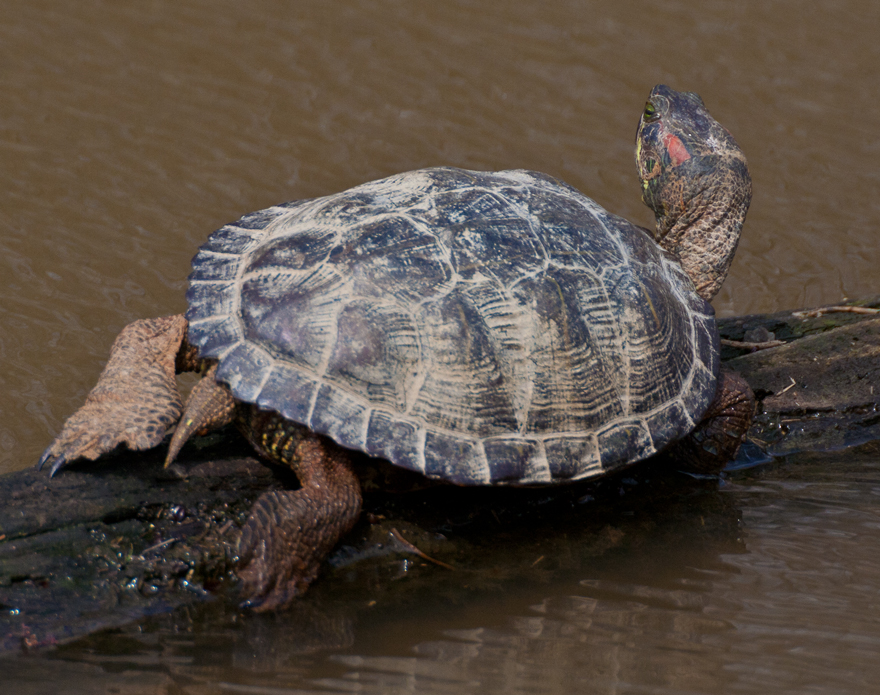
A warm day this past weekend brought out the turtles in my local marsh, who lined up on logs to bask in the sun. On some logs as many as a dozen turtles of all sizes were crowded together, but somehow this big Red-eared Slider turtle (Trachemys scripta elegans) managed to get a log all to himself.

In the first photo, he seemed a little annoyed when the sun disappeared behind the clouds, but he quickly resumed his zen-like pose in the second shot, when the sun reappeared.

turtle2_blogturtle1_blog

Michael Q. Powell. All rights reserved

Read Full Post »

We had a foggy start to one of the weekend mornings and I traveled to my local marshland park with the hope (but no real expectation) of seeing some spider webs. When I arrived at the park, the ground was covered in places with funnel webs, but that was not really what I was looking for.

As I walked along, I suddenly came upon this modestly-sized web. It is not really ornate and is broken in places, but I was thrilled to find it nonetheless. I did not see any spiders, but the web is clear evidence that they are around.

It’s only a matter of time now before I post a shot of a spider!

web2_blog

Michael Q. Powell. All rights reserved

Read Full Post »

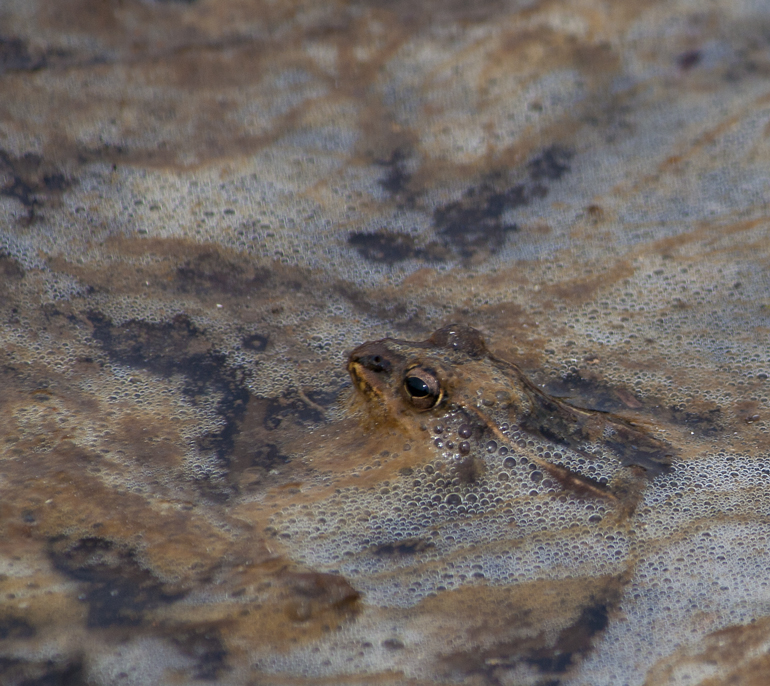
I have been hearing the sound of frogs for weeks, but I rarely catch a glimpse of one and was happy to spot this Southern Leopard frog (Lithobates sphenocephalus) on Monday.

I really like the view from the front, with the frog surrounded by little bubbles, his eyes reflecting in the water. The second view, however, lets you see better the positioning of his legs.

The frogs are active now and I even saw a pair of intertwined snakes. Spring is here in full force in Northern Viriginia.

Frog1_blogfrog2_blog

Michael Q. Powell. All rights reserved

Read Full Post »

I am not sure what the other Canada Goose said or did, but this goose was clearly an angry bird yesterday. He seemed to put his whole body into the expression of his strong feelings, from the tip of this tongue to the tip of his tail.

Do they have a goose in the game Angry Birds?  If not, perhaps they should.

goose_tongue_blog

Michael Q. Powell. All rights reserved

Read Full Post »

One of my fellow photographers identified some newly arrived birds as Tree Swallows (Tachycineta bicolor) and yesterday I spotted them checking out the nesting boxes at my local marsh. I felt like they could have used a real estate agent to point out the advantages of the different styles of houses available. The first one has the charm of a log cabin and the second one has enhanced security features to discourage intruders. I don’t think that the swallows have made their decision yet—for now they seemed to be checking out the neighborhood.

swallow1_blogswallow2_blogswallow3_blogMichael Q. Powell. All rights reserved

Read Full Post »

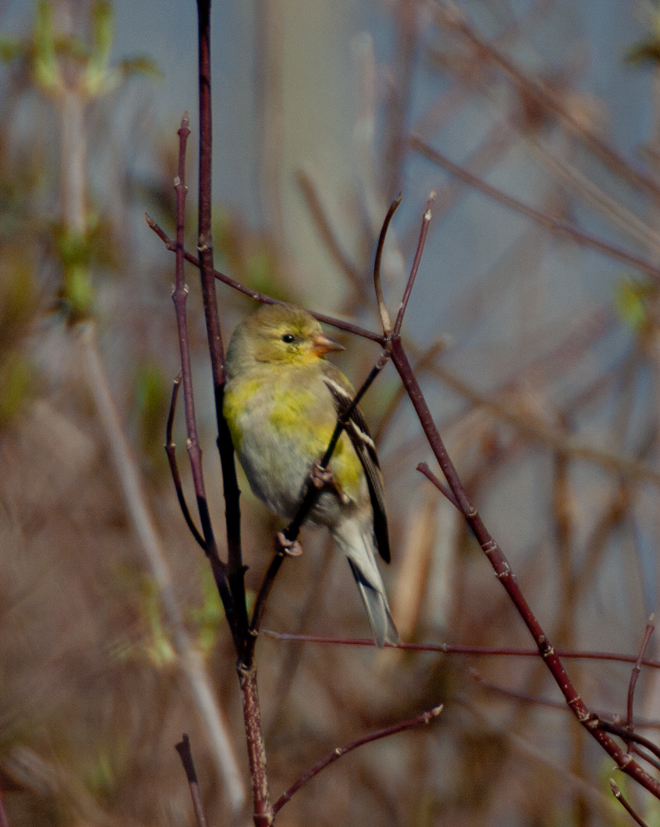
I was thrilled today to see the brilliant yellow color of the American Goldfinch (Spinus tristis)—it almost looked like they had gotten dressed-up for Easter yesterday.

Although range maps indicate that American Goldfinches are in our area year-round, I haven’t seen one in a really long time. There is still not much vegetation on the trees and bushes, so the bright color of the goldfinches stood out. However, the goldfinches spent almost all of their time in the center of bushes and it was hard to get an unobstructed shot.

I am looking forward to more and more bright colors as we move deeper into spring. (I probably should mention that I drive an orange-colored car, which may say something about my attitude toward bright colors.)

goldfinch2_bloggoldfinch1_blog

Michael Q. Powell. All rights reserved

Read Full Post »

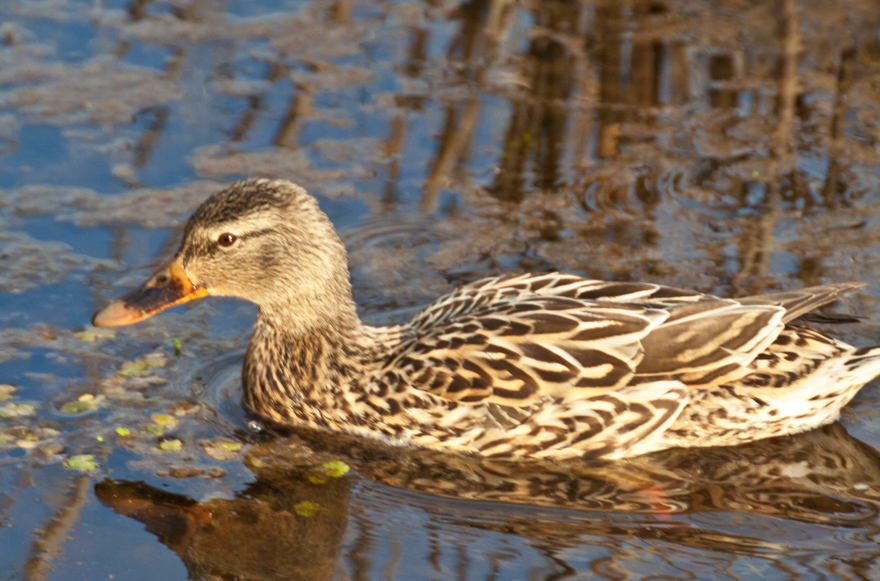
Do you ever find yourself in such beautiful light that you are almost desperate to find a suitable subject? Saturday morning, for a brief period, the rays of the sun were producing wonderful light and incredible reflections in the water of my local marsh, reminding me of some of my favorite Monet paintings.

I looked all around and finally spied this male mallard duck and his mate and they became my models. They didn’t take instructions very well and wouldn’t stay still in one place for very long, but I was able to get some shots that I like.

mallard1_blogmallard2_blog

Michael Q. Powell. All rights reserved

Read Full Post »

I am old enough to remember the 1977 Captain and Tenille hit song “Muskrat Love,” but inexperienced enough with muskrats not to know if the one that I photographed yesterday is a male or female.

I’ve had the chance to get photos of muskrats in the past, but the muskrat has always been swimming in the water or had been a long way away. Yesterday I came across this as he was eating no more than six to eight feet from where I was standing.

I had my long telephoto on my camera and had to back way down from the 400mm end of the zoom to get this frame-filling shot. I should have been able to get more good shots, but I didn’t notice at the time that my shutter speed was approximately 1/100 of a second and most of my images are blurred. It’s ironic that I had the chance for a close-up at a moment when I had replaced my image-stabilized lens for one with greater reach (but no stabilization).

Still, I got a pretty good shot that captured many of the muskrat’s details, so I am content (until the next time).

muskrat1_blog

Michael Q. Powell. All rights reserved

Read Full Post »

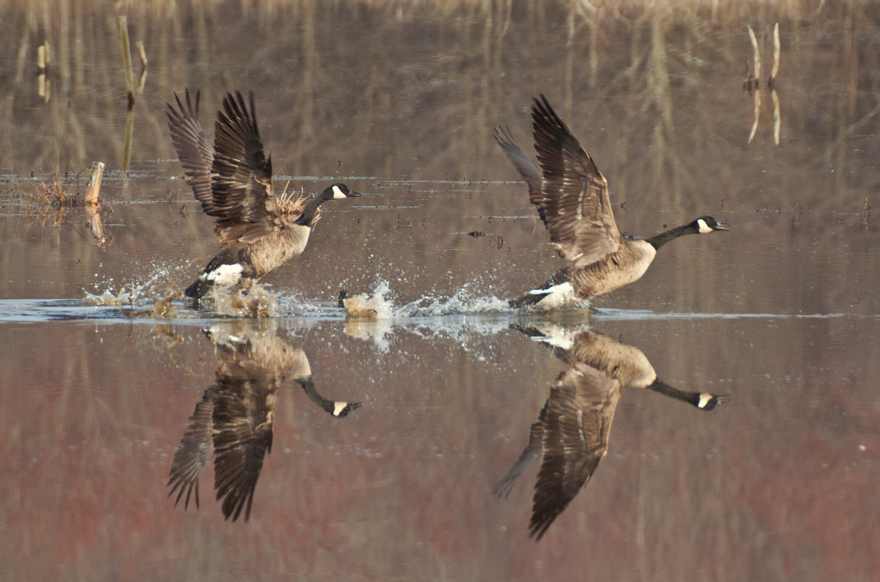
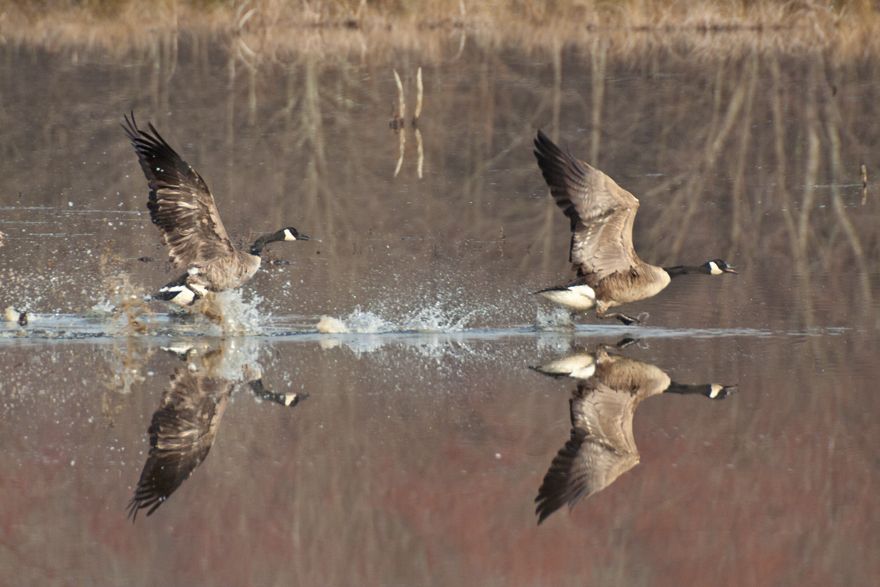
At a moment when the lighting was particularly beautiful yesterday morning, I sensed that the pair of geese was getting ready to take off from the pond. I readied myself and somehow my timing, composition, and focus clicked together with my shutter.

I ended up with some images that required almost no adjustments or cropping. I was particularly happy, because I have been experiencing difficulties capturing motion with my newest lens, a Sigma 135-400mm telephoto zoom.

Luck played a big role too, since I had no control over the way that the geese would move their wings (though I guessed correctly the direction in which they would take off).

geese_takeoff_bloggeese_takeoff2_blog

Michael Q. Powell. All rights reserved

Read Full Post »

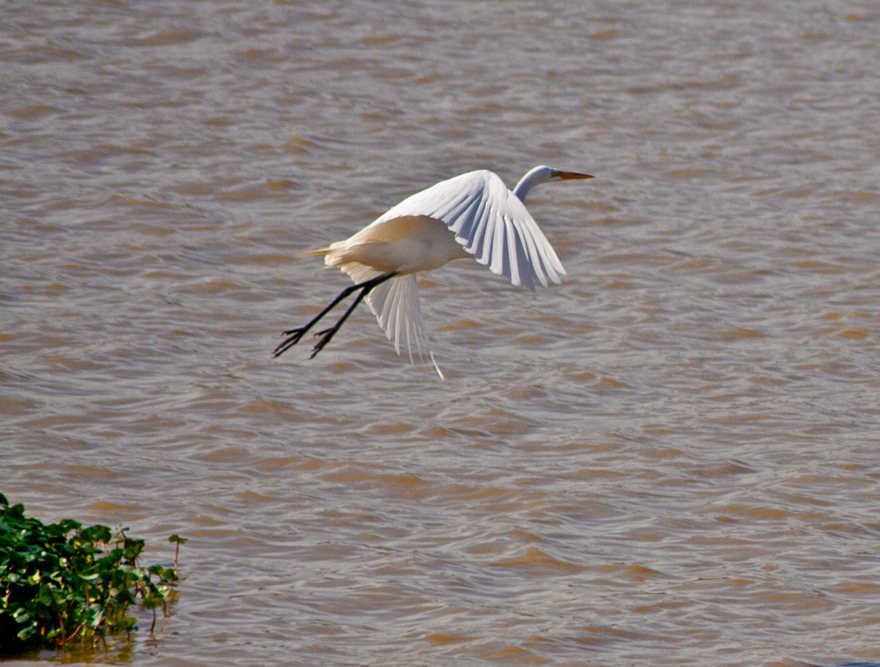
What was the mission that prompted this Great Egret to launch himself into the air?  His mission, it seems, was to continue to harass a Great Blue Heron that he had previous forced out of a prime fishing spot. As you can see from the second photo onward, the egret headed straight for the heron and only at the last minute did he veer off. (I may post some photos later of the initial encounter, but I especially like these in-flight photos.)

I took this series of photos a couple of weeks ago, when I was in Augusta, Georgia, at the Phinizy Swamp Nature Park.

takeoff_blogattack_blogattack2_blogattack3_blogattack4_blog

Michael Q. Powell. All rights reserved

Read Full Post »

Yesterday while walking along the banks of Cameron Run, a tributary stream of the Potomac River, I encountered this unknown insect. I have been so starved for insects (photographically-speaking, not literally) that I decided I had to try to photograph it.

The insect was pretty small and would fly (or hop) when I approached, so I decided to give it a shot with the lens that was on my camera, a 135-400mm telephoto zoom. I was pleasantly surprised with the resulting photo, which almost looks like it was shot with a macro lens.

I will try to identify this little insect, but am happy with the shot and am now convinced that spring is here if insects are reappearing.

insect_blog

Michael Q. Powell. All rights reserved

Read Full Post »

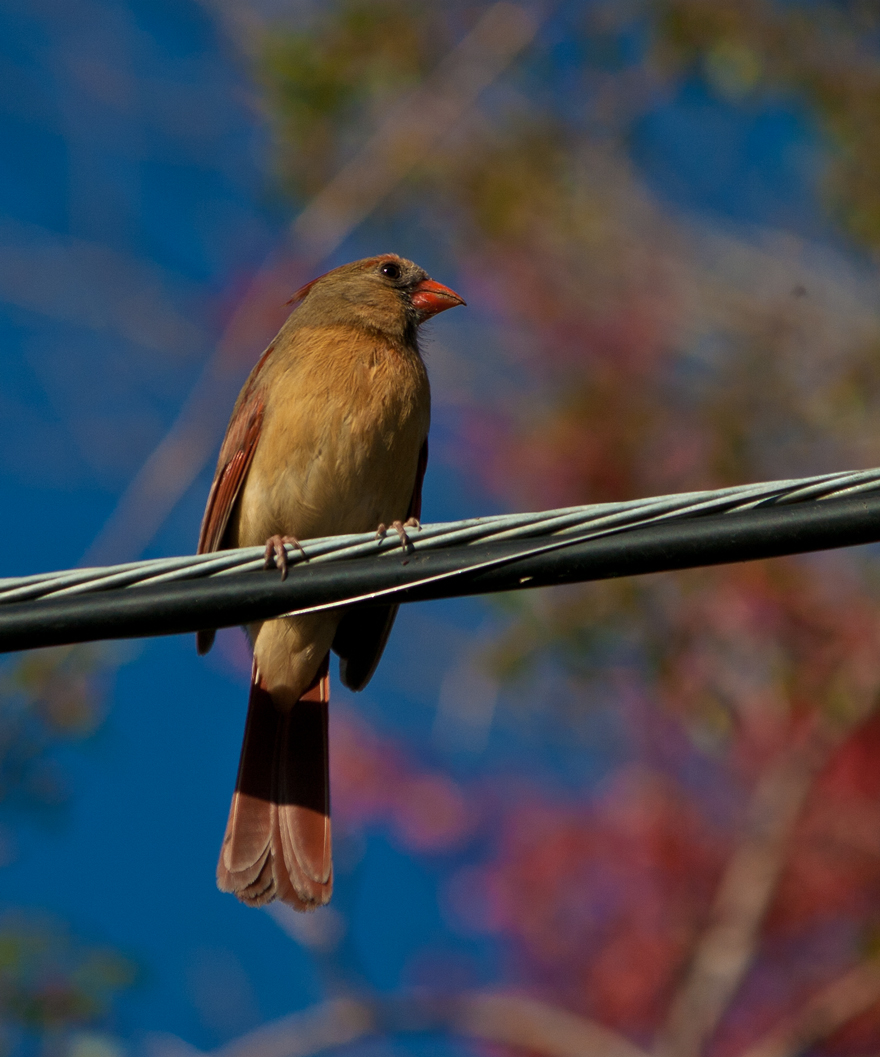
The setting and the perspective were not completely natural, but somehow I ended up with an image of a female Northern Cardinal (Cardinalis cardinalis) that I really like.

I ran across this cardinal almost two weeks ago when I was just starting my exploration of the Phinizy Swamp Nature Park in Augusta, Georgia. She was perched almost directly overhead on a wire and seemed to be warming herself in the rays of the morning sun. It was the start of a beautiful sunny day and already the skies were blue.

Georgia was already well into spring and you can see some of beautiful colors of the flowering trees in the blurred background. I managed to get the facial area of the cardinal in pretty sharp focus, which contrasts nicely with the background.

It won’t be long before we have flowering trees in Northern Virginia, where I live, but at least we have daffodils in bloom to remind us that spring is finally here.

cardinal_wire_blog

Michael Q. Powell. All rights reserved

Read Full Post »

I am finally posting some more photos of the Nine-banded Armadillo (Dasypus novemcinctus) that I spotted a couple of weeks ago when visiting the Phinizy Swamp Nature Park in Augusta, GA.

Previously, I posted a photo of the armadillo standing on his hind legs, but I thought it would be interesting to post some additional shots of the armadillo in action.

I grew up in New England, so the armadillo qualifies as an exotic animal for me, although there are probably folks in Texas and elsewhere that view armadillos as pests. I am completely fascinated by the texture of his shell, particularly the tail, and tried to highlight it in the photos.

The armadillo spent most of its time rooting about in the grass and most often his head was not visible, which was a challenge for photos. Even when I moved relatively close, the armadillo seemed so focused on what he was doing (or so near-sighted), that he paid no attention to me.

I actually had two mini-encounters with him. The first time, he scurried pretty back to the swampy field from which he had emerged when he sensed my presence. I retreated from the immediate area and returned to find him in the same location. This time, after getting his fill of insects (or whatever else he was eating), he lumbered back to the swampy field.

So far, there are no armadillos in my neighborhood in Northern Virginia, but Wikipedia notes the armadillo’s rapid expansion northward, primarily because of the lack of natural predators within the United States, little desire on the part of Americans to hunt or eat the armadillo, and the animals’ high reproductive rate. Eventually, armadillos are predicted to reach as far north as Ohio, Pennsylvania, and New Jersey.

As I studied up a bit on armadillos, I learned that armadillos can contract (and pass on) leprosy (yikes!), so you won’t see me handling any armadillos. Additionally, Nine-banded Armadillos have an unusual reproductive system, in which four genetically identical offspring are born, the only mammals in which polyembryony is reliably manifested, according to Wikipedia. This trait makes them particularly suited for certain types of scientific and medical tests that need consistent biological and genetic makeup in the test subjects.

armadillo5_blog

armadillo1_blogarmadillo4_blogarmadillo2_blog

armadillo3_blog

Michael Q. Powell. All rights reserved

Read Full Post »
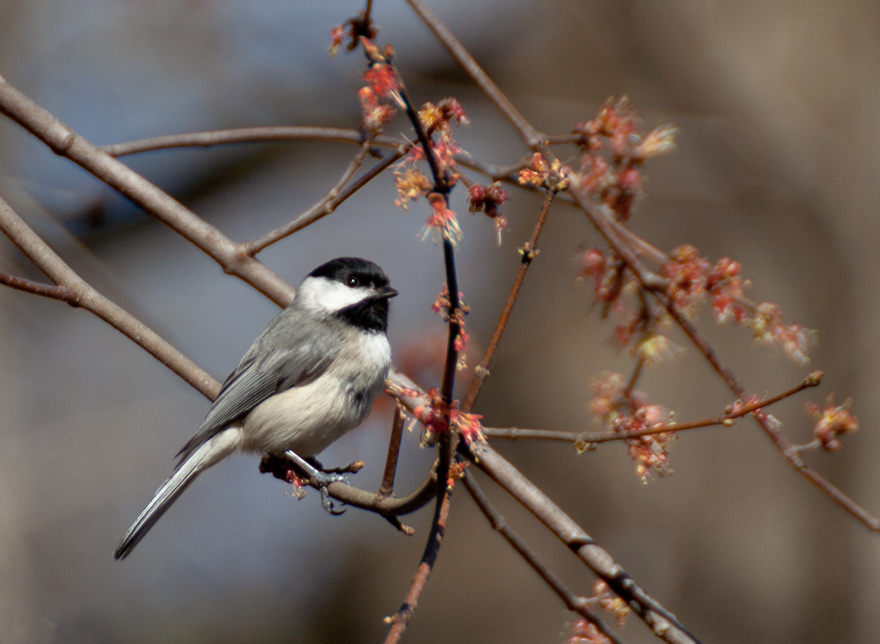
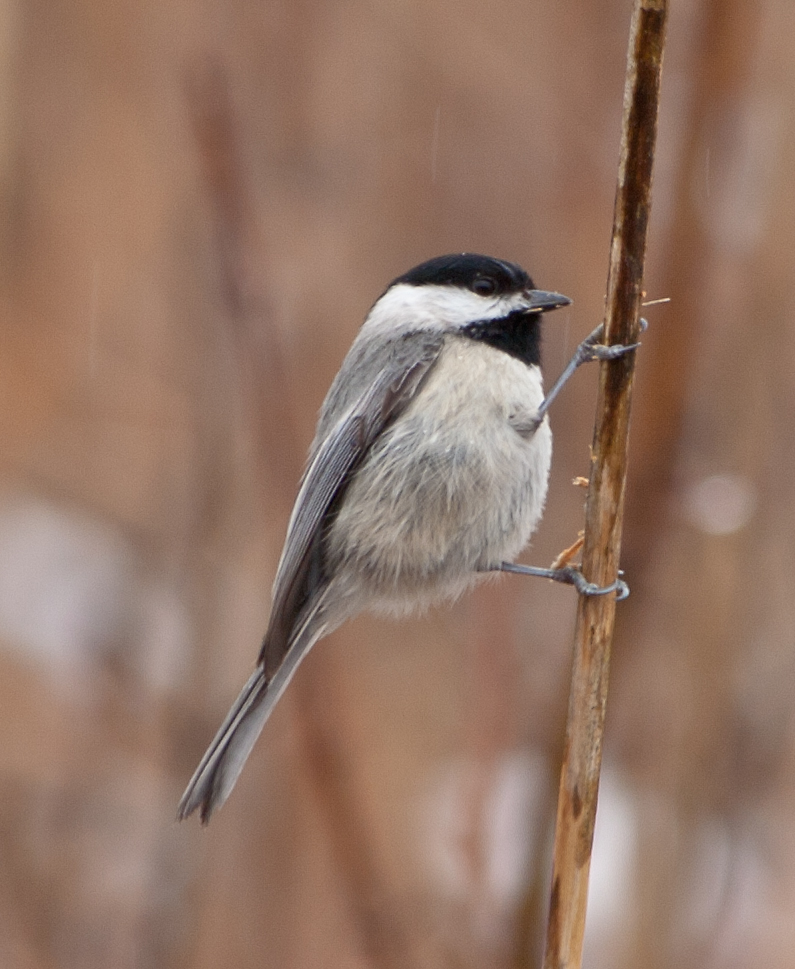
A fellow photographer informed me this past weekend that the little bird that I was preparing to photograph was not a Black-capped Chickadee—it was a Carolina Chickadee.

I am a neophyte when it comes to bird identification, but I confess to being confused. I have been trying to photograph this bird for months and have been calling it a Black-capped Chickadee (Poecile atricapillus) in my postings. To my eyes, it looked like the photographs I’ve seen others post of the Black-eyed Chickadee.

I turned to the Cornell Lab of Ornithology website, my favorite resource for bird identification, to try to resolved this conundrum. The site confirmed that the Black-capped Chickadee and the Carolina Chickadee (Poecile carolinensis) look a lot alike, but the two species probably diverged more than 250,000 years ago.

There are some differences between the two in the edging of the wings and the bib and the songs are different too, but apparently the range is one of the most critical factors, since the ranges of these two species don’t overlap much. I appear to be within the range of the Carolina Chickadee, but Virginia seems to be near the northernmost edge of the range, so I can’t exclude the possibility that I will run into a Black-capped Chickadee.

Here are a couple of my favorite chickadee photos. The first one was taken a couple of weeks ago with my recently acquired 135-400mm lens. It did a pretty good job in capturing some of the details of the chickadee in the tree. The second one was taken this past Monday with my 55-250mm lens. I managed to get a little closer to the chickadee that was clutching a stalk in the cattail field and was able to isolate the background a little.

I got started watching and photographing birds this past fall, probably after many birds had left the area. I can’t wait to see what new ones (for me) show up this spring.

chickadee_blogchickadee2_blog

Michael Q. Powell. All rights reserved

Read Full Post »

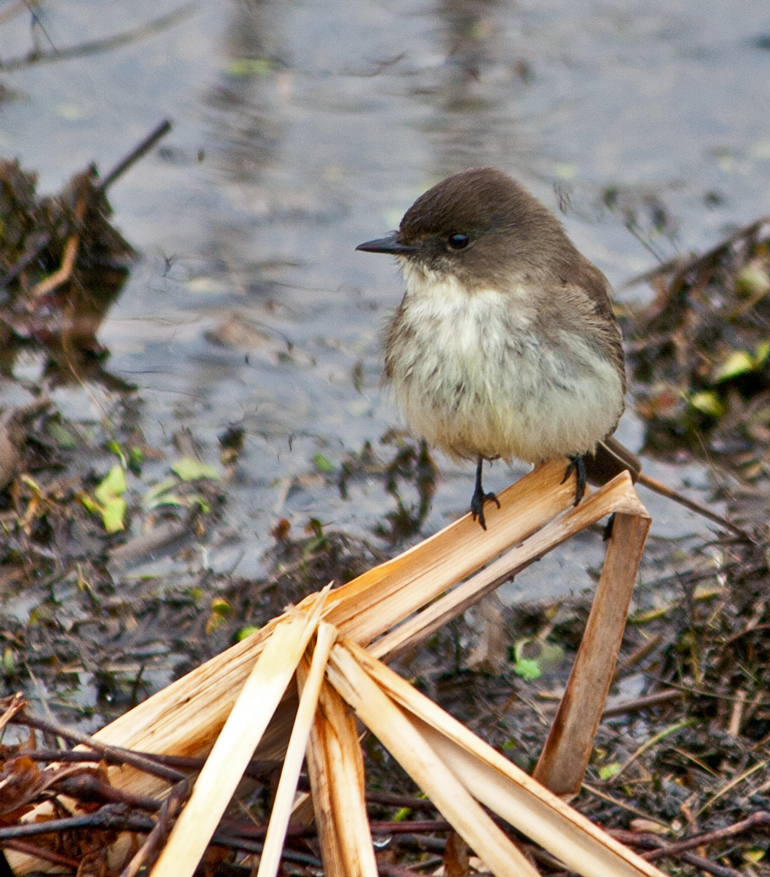
Yesterday I spotted a little grayish-brown bird that I have never seen before and I have concluded that it is probably an Eastern Phoebe (Sayornis phoebe).

I am getting a little better in figuring out how to identify birds, but this is a case where I had to depend exclusively on color and size to begin my search, without any real idea of what it could be. The colors are about right and the bill shape seems to fit. Information on the internet suggests too that they are one of the earliest birds to return in the spring.

I hope that more experienced birders will correct me if my identification is incorrect. Whatever the case, though, I like the way this image came out—it helped when the bird hopped up onto the bent stalk, a pose which makes it stand out from the somewhat clutter ground-level background.

littlebird1_blog

Michael Q. Powell. All rights reserved

Read Full Post »

Have you ever tried to take photos with an umbrella in one hand and your camera in the other? Mixed snow and rain fell during most of today and things were pretty quiet in the marsh today. I walked along the slushy boardwalk with an open umbrella, trying desperately to find something to photograph.

I was surprised to come across an American Coot (Fulica americana) for the first time in the park, although I saw lots of them earlier in the month when I was visiting in Georgia. This coot was by himself—I didn’t see any other coots and he was not hanging out with ducks either.

coot_blog

Michael Q. Powell. All rights reserved

Read Full Post »

This past weekend I was fortunate enough to see a female Hooded Merganser duck (Lophodytes cucullatus) again enter a nesting box at my local marshland park. If you want to see some photos of my first such incident, check out my previous posting.

It is proving to be quite a challenge to capture this fascinating encounter in photographs, even with my camera trained on the nesting box. I think I get my best shots when the female chooses to land on the box prior to entering it. At that moment, the subject is relatively stationary and I can refocus my camera on the duck itself, and not on the box. When she flies into and out of the box, my camera and lens have trouble maintaining focus and stopping the action, even at exposures of 1/1000 and greater.

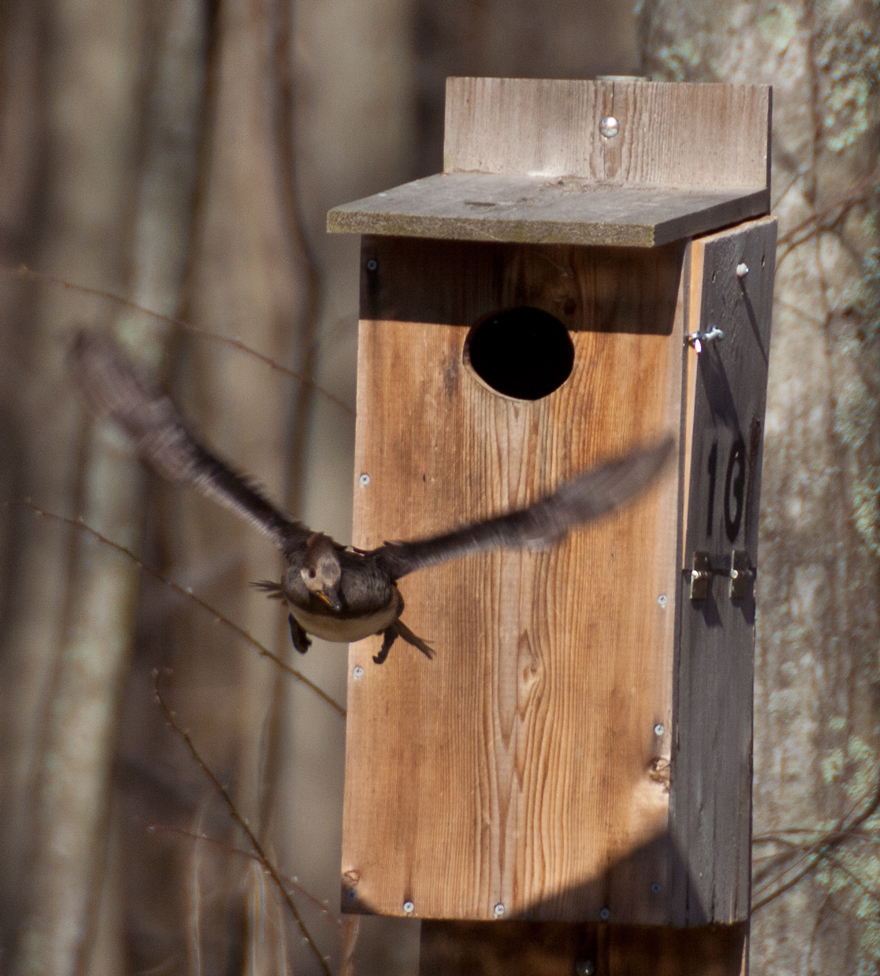
She paused a moment when exiting and I was able to get a shot with her head sticking out of the nesting box. I also got a photo of her flying out of the box, which is pretty blurry, but I thought the shadow was pretty cool.

The last two shots are aspirational shots for me—they give you an idea of what I am trying to shoot, even if I have not yet been able to do so successfully.

box2a_blogbox2b_blogbox2d_blogbox2c_blog

Michael Q. Powell. All rights reserved

Read Full Post »

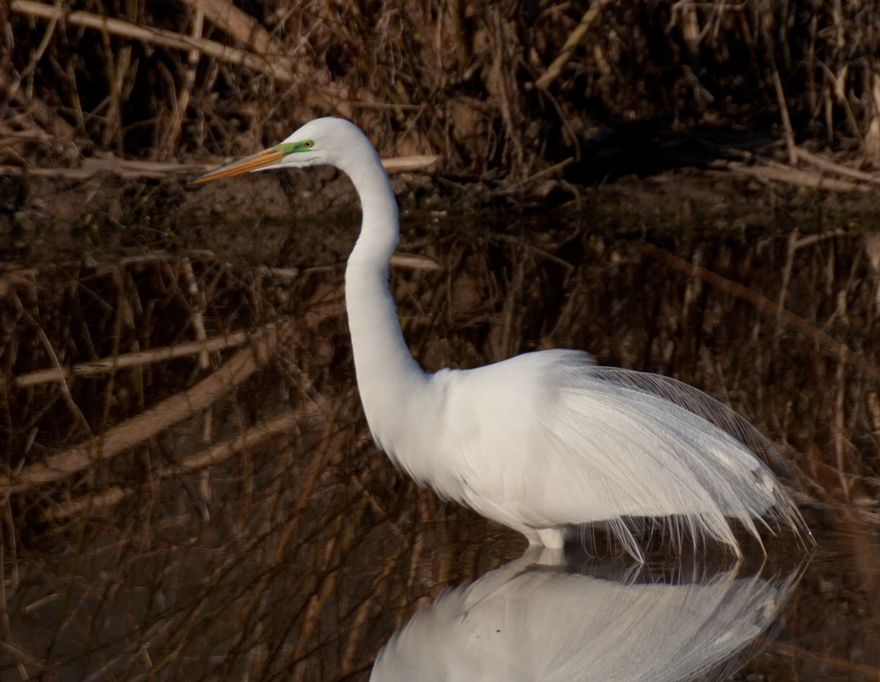
I was thrilled yesterday to see a Great Egret (Ardea alba) at my local marshland park for the first time in months. Unlike the Great Blue Herons, which stayed with us all winter, the Great Egrets flew south when the weather grew cold.

This egret was standing and fishing in a small pool of water near the boardwalk that runs through the marsh, undeterred by the crowd of photographers busily snapping away. I was a late arrival to the encounter and missed seeing the egret catch a frog, but I was happy that I was managed to get some good shots.

Egrets are always beautiful, but the wispy plumes they have at this time of year are especially spectacular. Normally I have problems with blowing out the highlights when I try to photograph egrets, but I think that the closeness of the bird helped me to get a decent exposure.

I can’t wait to see what other surprises are in store for me as we move into spring.

egret2_blogegret1_blog

Michael Q. Powell. All rights reserved

Read Full Post »

Progress toward spring seems to have slowed down and frost has reappeared in the morning, though we have been spared the heavy snows that have fallen in other parts of the country.

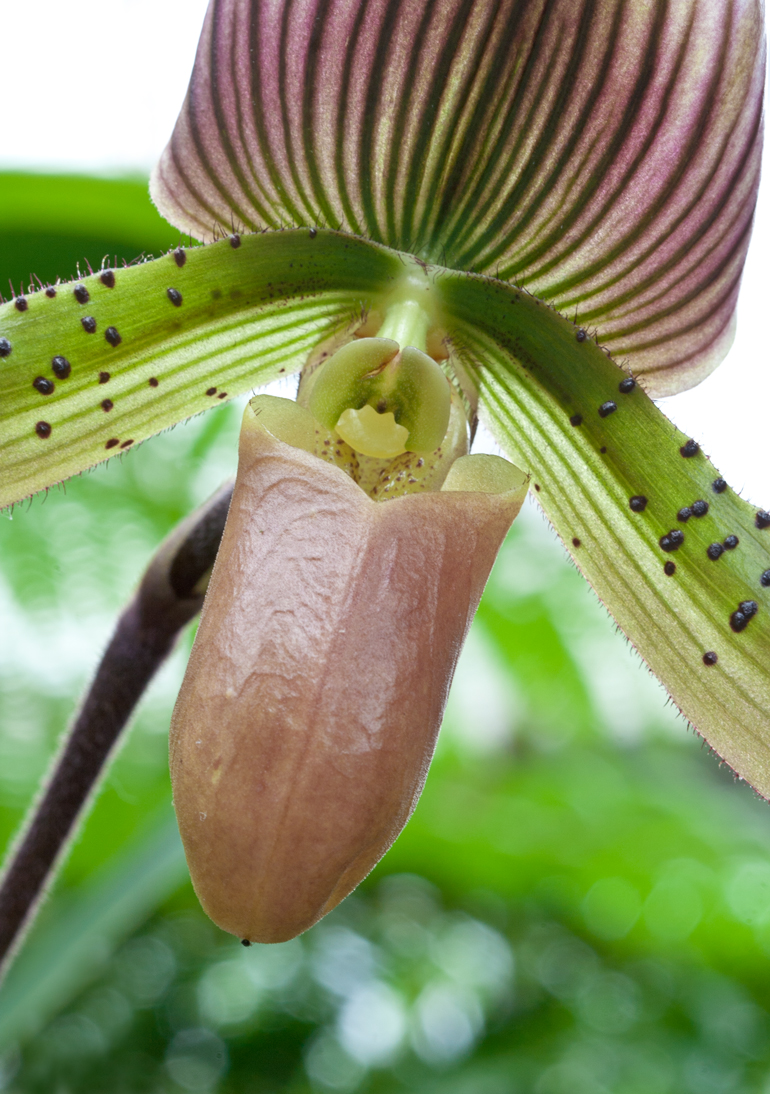
As a reminder of the colorful growth that is to come, I decided to share a few images of one of my favorite orchids—a Lady’s Slipper orchid—from the orchid exhibition that I visited at Lewis Ginter Botanical Gardens in Richmond, VA earlier this month. I was really intrigued by the “pouch” portion of the flower and tried to highlight it in close-up photos, which I took with my camera on a tripod and settings of ISO 100, f16, and .6 seconds.

As I think about spring, I feel like a little kid on a trip, who keeps asking his parents, “Are we there yet?” Despite what the calendar may indicate, we are not there yet, and the answer to the question “When?” is likely to be the indefinite “Soon” that parents are wont to use in a response to the child.

Slipper1_blogslipper2_blog

Michael Q. Powell. All rights reserved

Read Full Post »

This male Hooded Merganser duck (Lophodytes cucullatus) flew away when his mate entered the nesting box (as shown in my posting yesterday), but I was able to get these shots when he was swimming around beforehand.

I am also including a shot from earlier this month when a male was displaying for a female. He would periodically throw back his head back and make the strangest sound, almost like a frog. The sound is so unusual that you may enjoy checking it out at the Cornell Lab of Ornithology site, where you should click on the button that says “Male display.”

male1_blogmale2_blog

Merganser_singing1_blog

Michael Q. Powell. All rights reserved

Read Full Post »

There is just something about this Red-winged Blackbird that makes me laugh. Perhaps it is his whimsical little half-smile or the way that he has cocked his head. Maybe it is the way that his feathers stick out like a little boy’s cowlick or the glint in his eyes or the way he is perched on the cattail. All of these features give him an almost comical look that I really enjoy.

blackbird1_blog

Michael Q. Powell. All rights reserved

Read Full Post »

I have often wondered if birds actually used the nesting boxes scattered throughout my local marshland park and yesterday I got a definitive response when I saw two female Hooded Merganser ducks separately go into one of the boxes.

As I was looking across the beaver pond, one of my favorite spots for taking photos, a Hooded Merganser (Lophodytes cucullatus) couple flew by and landed in the water. They were out of the reach of my lens at that moment, but a fellow photographer alerted me to the fact that the couple had been using a nesting box that was somewhat closer to where I was standing.

I set up my tripod and trained my 135-400 telephoto lens on the nesting box and waited.  Eventually the couple swam behind a cattail patch and came into view near the box. Without warning, the female lifted off and flew straight into the box. It happened so fast that I was not able to get off a shot. A short while later, the male took off.

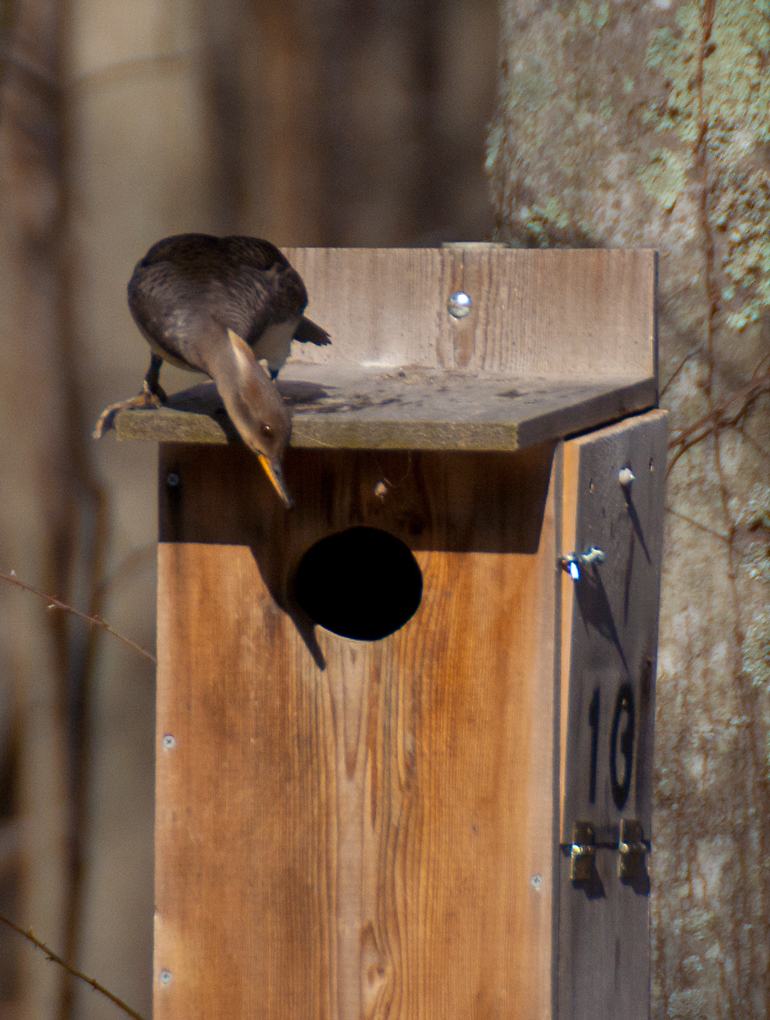
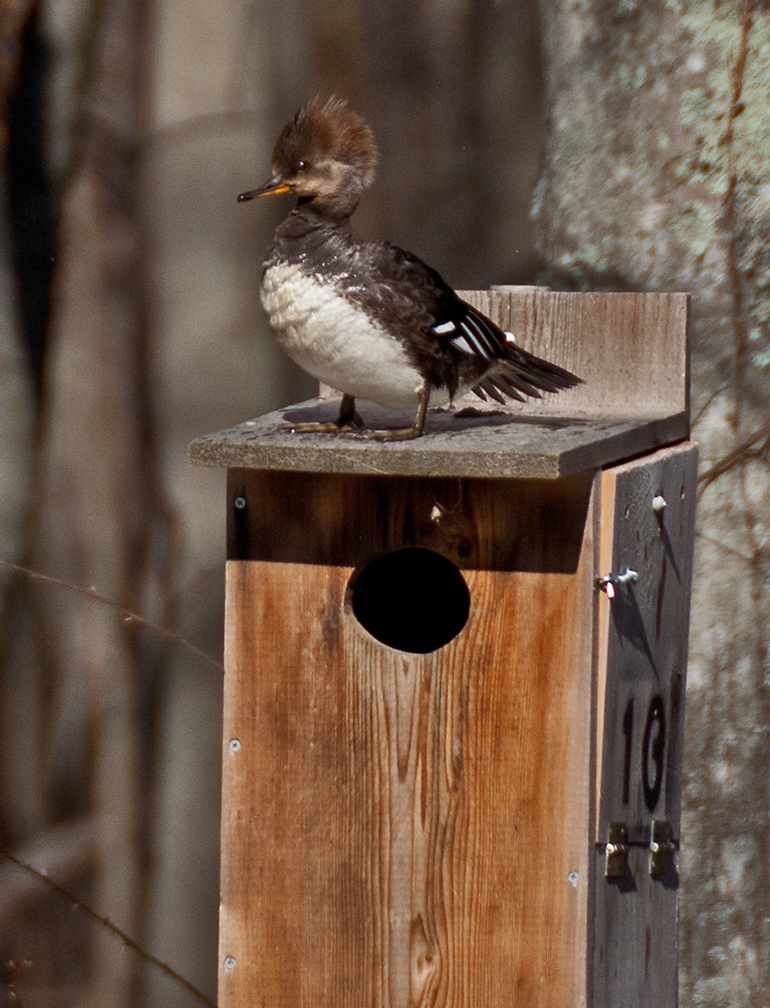
I continued to wait, confident that the female would eventually have to emerge through the hole in the nesting box. As I was watching and waiting, a bird landed on the roof of the nesting box, as you can see in the second photo. I did not immediately realize that it was another female Hooded Merganser, but I had the presence of mind to take some shots.

She seemed uncertain about whether or not she should go into the box and tried to peer into it, as you see in the first photo. Satisfying herself that everything was ok, she flew into the box, which by now was getting a little crowded. My photos of the entry were completely blurry.

I waited some more and eventually one of the females flew out and I managed to get the third shot. I was hoping that she would linger with her head sticking out of the box before she started flying, but that didn’t happen. I waited for about 45 minutes longer for the second female to exit the box and finally my patience gave out.

The incubation period for the eggs that the female presumably is laying in the box is about a month, so I will keep returning to this location, and with a little luck will be able to see some ducklings.

merganser2_blogmerganser1_blogmerganser3_blog

Michael Q. Powell. All rights reserved

Read Full Post »

Yesterday I decided to take some close-up shots of some of the turtles sunning themselves at my local marsh.

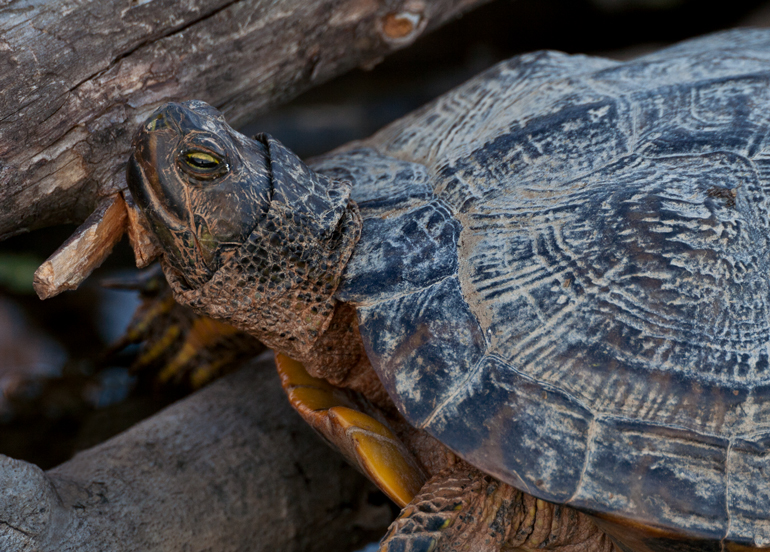
I am pretty sure that the first one is a painted turtle, but I am not sure if the turtle in the second photo is a different species. I was intrigued by the contrast between the clean, bright colors of the first turtle and the muddy, muted colors of the second one. The turtles were pretty cooperative and let me get close enough to fill the frame of my camera.

It’s not quite warm enough for humans to be sunbathing, but now that spring is officially here, it won’t be long.

turtle1_blogturtle2_blog

Michael Q. Powell. All rights reserved

Read Full Post »
I was really struck by the unusual poses of these Black Vultures (Coragyps atratus) that I encountered while walking along the canal path in Augusta, GA. The only other time that I saw Black Vultures in a tree, they were roosting and looked large and menacing.

These two vultures look like they have adopted a hawk’s approach to hunting by perching on a tree and waiting,  rather than by circling endlessly in the skies as other vultures do.

Vultures_blog

© Michael Q. Powell. All rights reserved

Read Full Post »

Walking along the Augusta Canal for a final time yesterday morning before returning home, I encountered this spider, hanging in the air from a concrete supports of an overpass, and took shots of him without a flash and with one. After being starved for insects over the winter (photographically speaking), I was thrilled to have a chance to photograph one.

I probably should have taken out my macro lens, which I had with me in my bag, but opted instead to shoot with the 55-250mm zoom lens that was on my camera. It was still relatively early in the morning and the the spider was mostly in the shade, so lights was an issue. I upped the ISO to 800, but still needed an exposure of 1/8 of a second at f/9. Fortunately I had my tripod with me, so I used that to get a relatively sharp shot. I shot with the zoom at 250mm and used manual focus.

The first image was with natural light and the second one was taken using the camera’s built-in flash. The light coming from behind the spider in the first shot helps to illuminate the spider’s legs, which look almost translucent. The flash in the second photo reveals some additional details of the spider, although it did add some reflections, because I did not have a diffuser for the flash.

Which one do you prefer?

spider1_blogspider2_blog

© Michael Q. Powell. All rights reserved

Read Full Post »
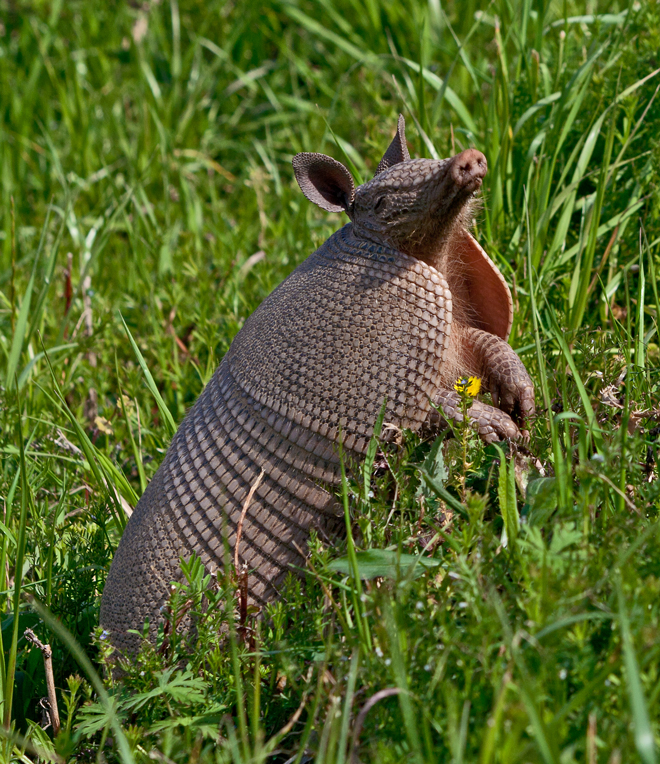
Today I visited the Phinizy Swamp Nature Park in Augusta, GA, hoping that I might see an alligator. Although I did not spot an alligator, I did encounter this Nine-banded Armadillo (Dasypus novemcinctus) in the Park. (You can actually count the nine bands).

Initially the armadillo was rooting about in the grass and he startled me a bit when he stood up. I was close to ground level and was looking through my telephoto lens, which made the movement seem a little threatening.

I was surprised to see an armadillo in Georgia—I tend to associate them with places like Texas and Oklahoma—but apparently their range is expanding. Information on the internet suggests that armadillos are mostly nocturnal and come out around dusk. I have no idea why this one chose to be out in the middle of the day.

I may post some other photos of the armadillo, but I thought that this pose was unusual enough to justify posting an image immediately.

armadillo_standing1_blog

© Michael Q. Powell. All rights reserved

Read Full Post »

Savannah Rapids is the starting point of the Augusta Canal, which was built in 1845 as a source of power, water and transportation for Augusta, Georgia. The Canal was designated a National Heritage Area by Congress in 1996 and now serves primarily as a recreational area. (Click on this link for more details on the history of the canal, which served an important role for the Confederacy during the Civil War.)

On a beautiful morning, I walked along the raised tow path for several miles, with the canal on one side and the Savannah River on the other. The trees were starting to bud and even to flower and even to flower on a day that got up to 75 degrees (24 degrees C). Spanish moss was growing on many of the trees, giving them a look that seemed exotic to me.

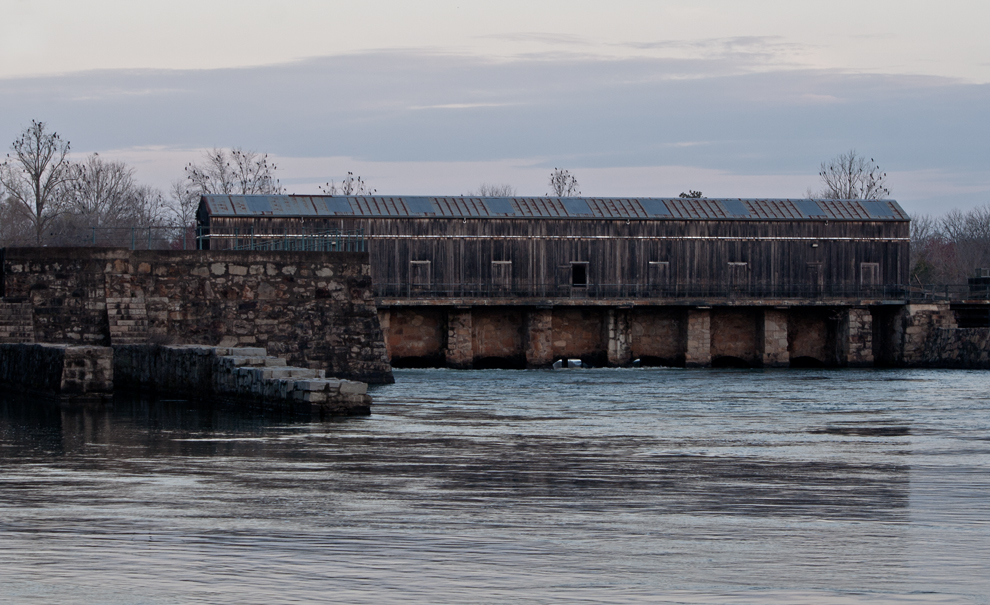
Here are a few photos I took of the structures associated with managing the flow of the water in the canal. I love the weathered wood and stone and the interplay of light and shadows and reflections.

Savannah_rapids1_bloglock_blogpillars_blog

© Michael Q. Powell. All rights reserved

Read Full Post »
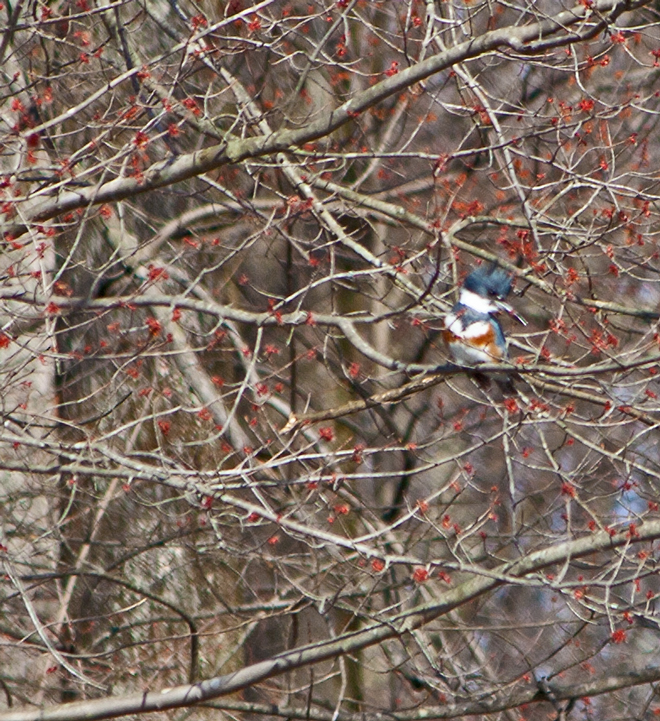
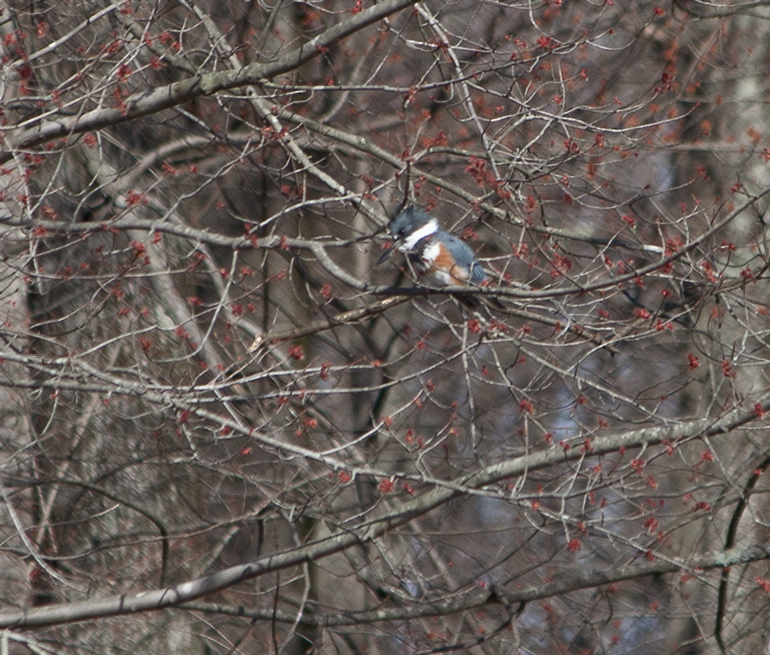
As I was standing next to the beaver lodge at my local marsh, I heard the unmistakable call of a Belted Kingfisher (Megaceryle alcyon), a sound I had never heard before at that location. After you have heard its sound, described by the Cornell Lab of Ornithology as a “strident, mechanical rattle,” you can’t help but remember it.

I was a bit surprised to see a kingfisher at that location, because kingfishers usually prefer clear waters, so they can see their prey. The water in the beaver pond is somewhat muddy, but perhaps it is teeming with new life.

I watched  for a while as the female Belted Kingfisher (females have orange chest stripe and males don’t) changed positions several times in the tree, perhaps hoping to get a better view of the water. Eventually she dove into the water, but I was unable to tell if she was successful in catching something before she flew away.

The kingfisher was across the pond from me, so the photos are not perfectly sharp, but they do show some of the different positions of this fascinating bird as she gazed intently at the water.

  kingfisher3_blog

kingfisher1_blog

kingfisher2_blog

© Michael Q. Powell. All rights reserved

Read Full Post »
Most of the turtles that I have seen on recent sunny days have climbed out of the water entirely to bask in the sun, but this Eastern Painted Turtle (Chrysemys picta picta) seems to have taken a more tentative approach.

Although he seems poised for a quick reentry into the water, he seemed undisturbed when I approached him to take this photo. The angle of the photo provides a view of the turtle’s torso that I rarely see, and as you can probably tell, I got down pretty low to get the shot.

 I was surprised by the amount of red on his body and the length of his claws. When I saw the claws, I decided not to go for an extreme close-up shot. I can only imagine the newspaper headline, “Wildlife photographer mauled by killer turtle.”

turtle1_blog

© Michael Q. Powell. All rights reserved

Read Full Post »
I remember my parents telling me when I was young that robins are a sign of the imminent arrival of spring and that association remains strong in my mind to this day.

I am now seeing increasingly large numbers of robins and other birds. Flowers are starting to pop up all over, crocuses, daffodils, and others. The air is alive with a sense of joyous expectation, of new growth.

Whenever I see a robin, I instinctively pause and look around for more signs of spring. Life gets so busy that it is useful for me to have reminders that push me outside of the cares of my daily life and cause me to take a closer look at the beauty of nature.

robin_blog

© Michael Q. Powell. All rights reserved

Read Full Post »

Have you ever watched a frog as he was croaking?

Apparently he closes his mouth and nostrils, squeezes his lungs, and his vocal sacs expand, looking a lot like a bubblegum bubble.

Southern Leopard Frogs (Lithobates sphenocephalus) have a vocal sac on either side of their head, although some other frogs have only a single sac under their chin,

Here’s a shot I took on Monday of one as he was croaking. You can see the vocal sac bubble pretty wellif you look closely at the side of the head nearest the camera.

croaking1_blog

I am including this additional frog photo, because I really like the way that the bubbles surround his head.

bubbles1_blog

© Michael Q. Powell. All rights reserved

Read Full Post »
« Newer Posts - Older Posts »