Feeds:
Posts
Comments

Posts Tagged ‘birds in flight’

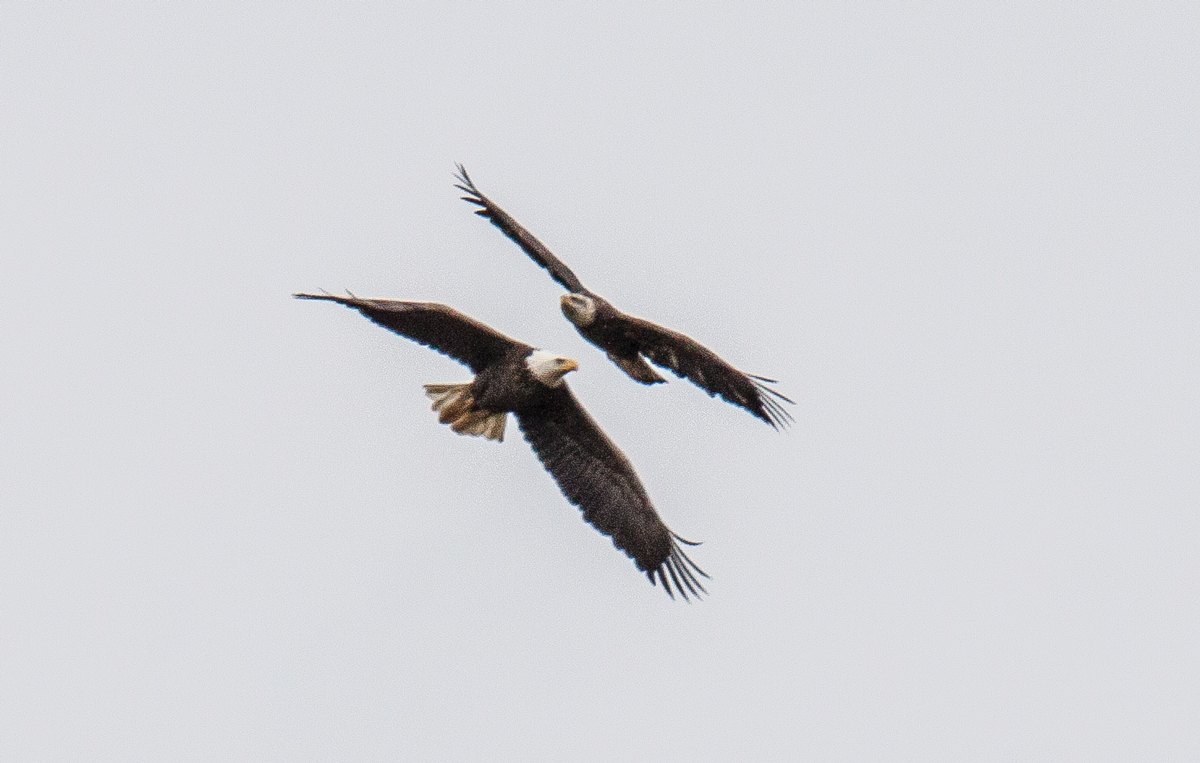
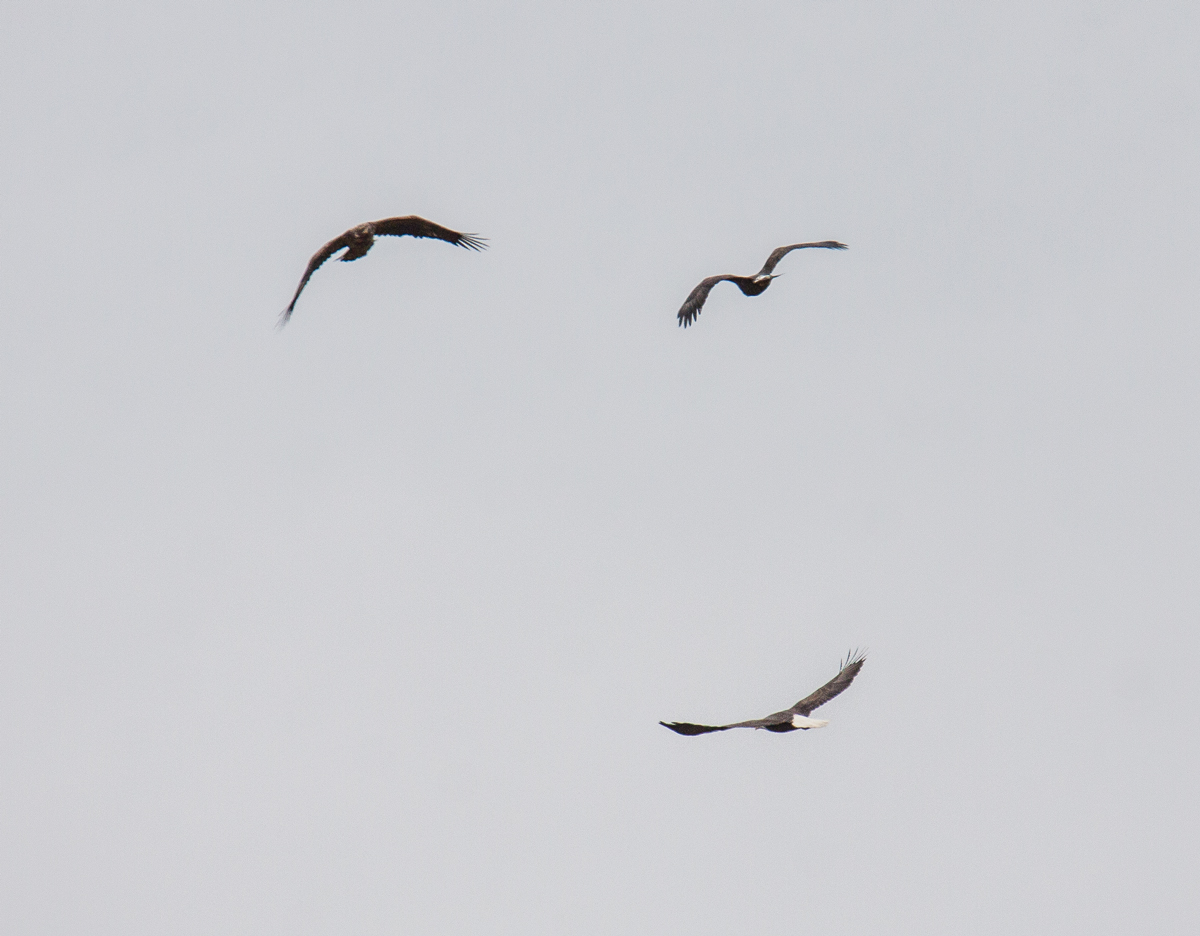
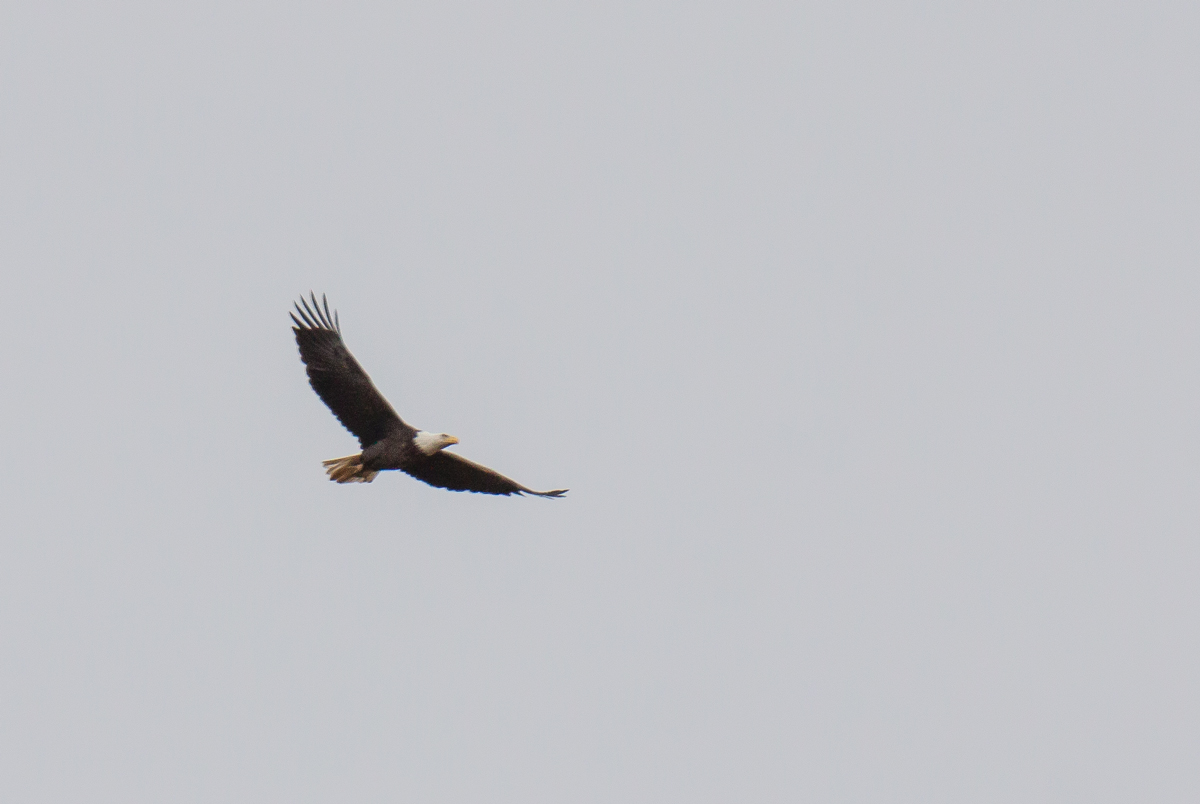
The sky was overcast yesterday morning, the day of the Winter Solstice, but my spirits soared when I caught sight of a Bald Eagle (Haliaeetus leucocephalus) high in the air over Huntley Meadows Park.

I was thrilled to be able to capture a sequence of shots that shows the eagle initially coming right at me and then gradually circling to a position that gave me a side view.

bald eagle

Bald Eagle

Bald Eagle

Bald Eagle

Bald Eagle

Bald Eagle

© Michael Q. Powell. All rights reserved.


Read Full Post »

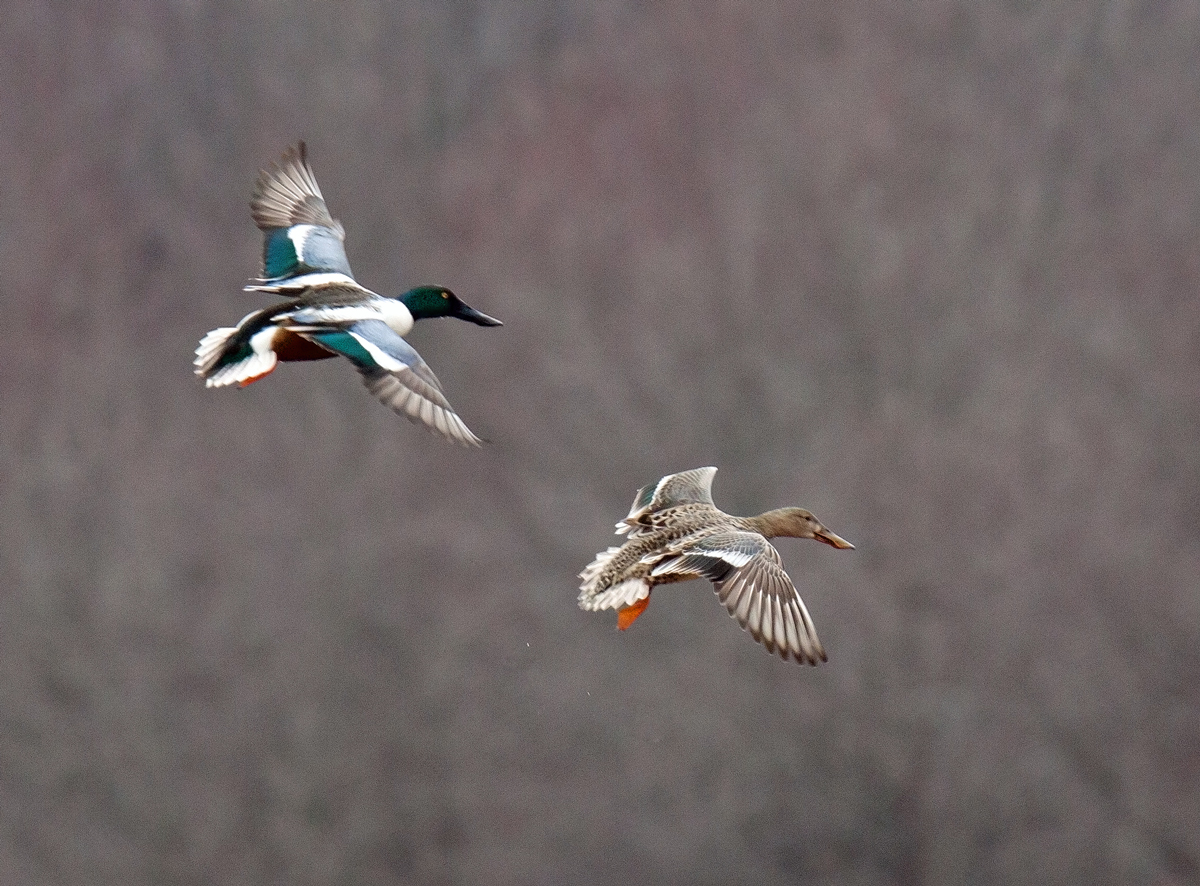
After a week and a half overseas in an urban environment, it was nice Friday to get back to the wildlife of Huntley Meadows Park, where I saw this Northern Shoveler couple preparing to make a landing.

I accidentally spooked the Northern Shovelers (Anas clypeata) when I was approaching the area in which they were foraging for food. I first caught sight of them when they took to the air. Although they flew only a short distance away, I was able to react quickly enough to track them and get a few in-flight shots that show their beautiful coloration.

Northern Shoveler

Northern Shoveler

© Michael Q. Powell. All rights reserved.


Read Full Post »

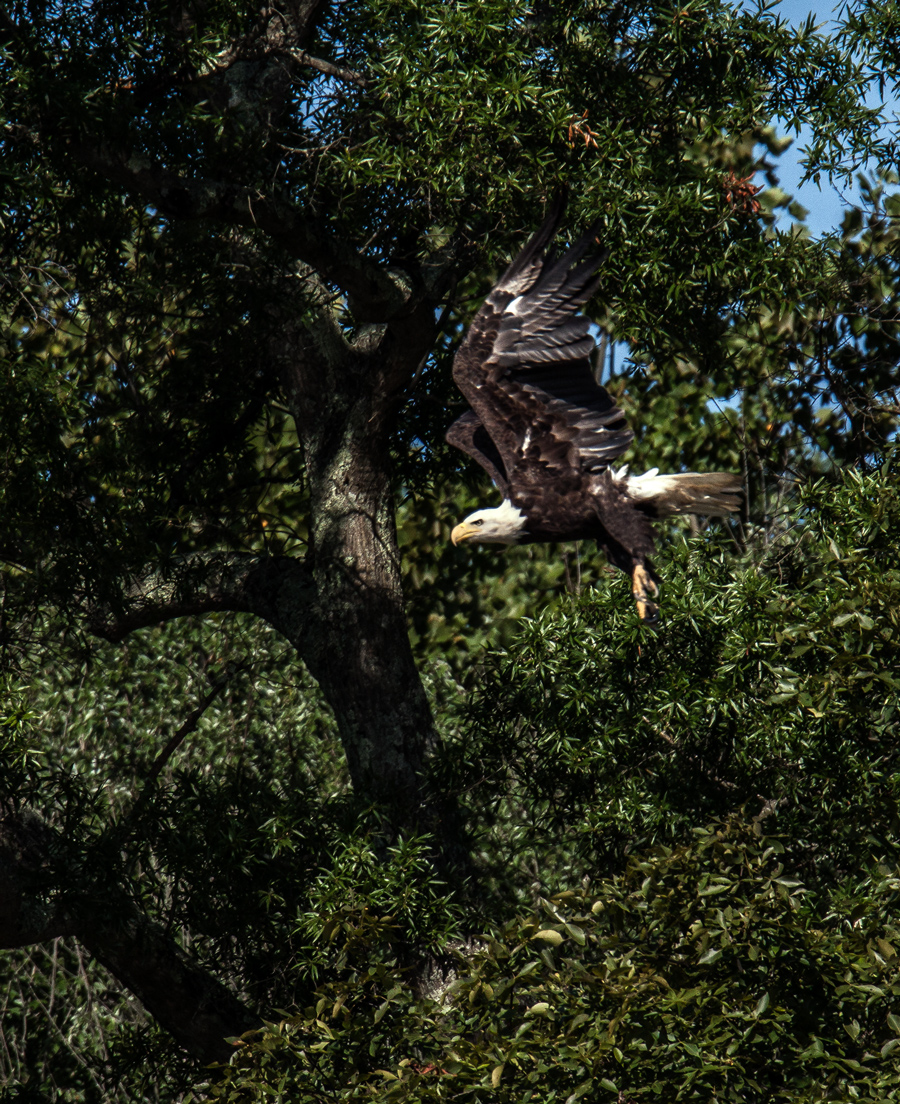
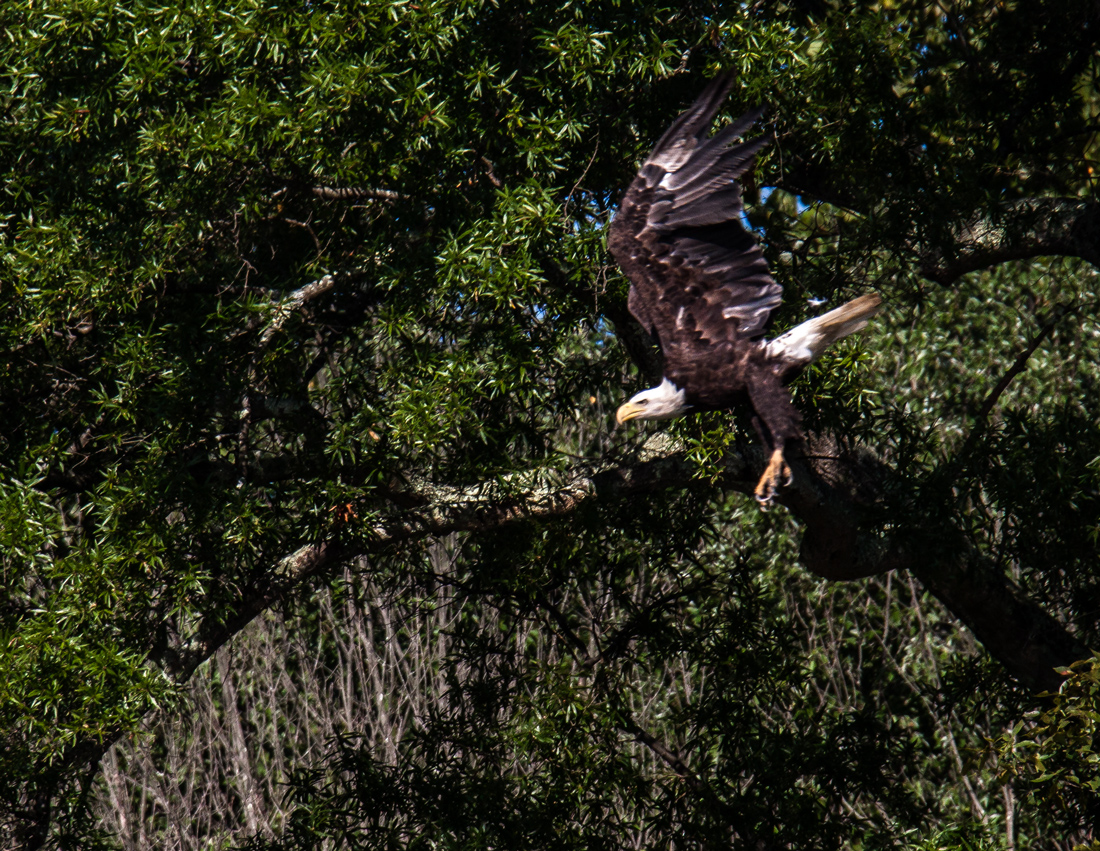
As I was wandering about yesterday in a remote area of my favorite park, the sharp eyes of a younger fellow photographer permitted him to spot a Bald Eagle (Haliaeetus leucocephalus) in a distant tree. The eagle’s even keener vision meant that it spotted us too and shortly thereafter departed.

In a shot of the eagle flying away, I noticed that the eagle seems to be carrying something. However, when I zoomed in on the next shot I took, in which I managed to cut off the eagle’s wings, it looks like the eagle’s left foot is dark and withered and is very different from the yellow right foot.

Am I seeing things? Is this an injury or merely an optical illusion?

Bald Eagle

Bald Eagle

© Michael Q. Powell. All rights reserved.

Read Full Post »

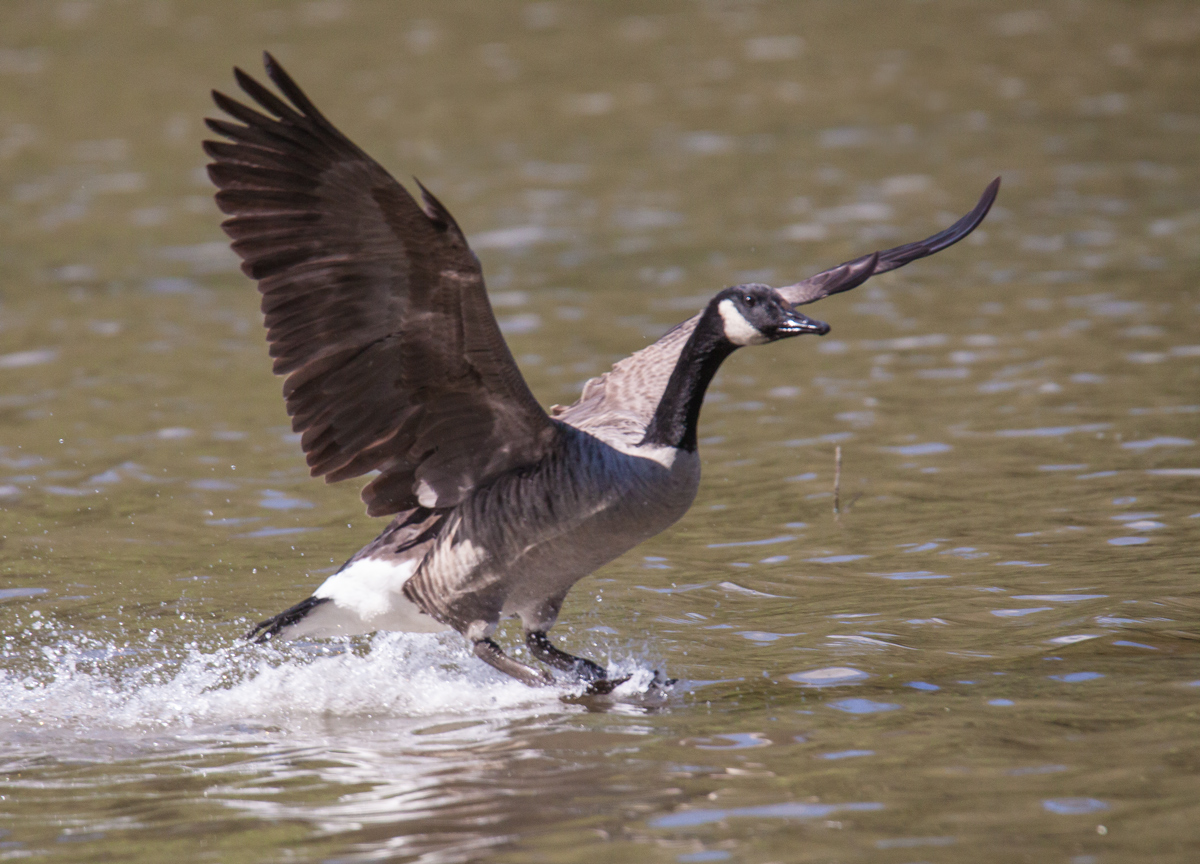
How do you capture a sense of motion in an image? One of my favorite methods, panning, involves tracking a moving subject with the camera set at a slow shutter speed. The results can be a bit unpredictable, but are usually fun, like these images of a Canada Goose (Branta canadensis) coming in for a landing this past weekend.

In this case, the shutter speed ended up being 1/60 of a second. I was shooting in aperture priority, but knew that the shutter speed would be slow, because of the limited light early in the morning. With my telephoto zoom extended to about 550mm, I concentrated on trying to do a smooth pan handheld. My biggest challenge turned out to be keeping the goose centered in the frame.

None of these images are perfect, which is typical of most of my panning efforts, but there are elements of each of them that I really like. Photos like these remind me that it’s ok sometimes to have photos that are not perfectly in focus.

If you haven’t tried this technique, I highly recommend it, especially if you like “artsy” images.

Canada Goose

Canada Goose

Canada Goose

© Michael Q. Powell. All rights reserved.


Read Full Post »

The sun was just coming up, illuminating the clouds with soft light and color, when a Great Blue Heron (Ardea herodias) flew slowly across the sky, ready to start his day at another location.

It was a magical beginning to a beautiful day.

Great Blue Heron

Great Blue Heron

Great Blue Heron

© Michael Q. Powell. All rights reserved.

Read Full Post »

Facebook reminded me earlier today that exactly two years ago I posted a photo of a Red-headed Woodpecker and as soon as I saw it, I realized that it is an almost perfect companion to the photo that I posted yesterday.  Yesterday’s image showed the flight feathers of a Red-headed Woodpecker (Melanerpes erythrocephalus) from underneath and the earlier image shows them from above.

Here is the posting in its entirety from December 1, 2013:

I suspect that I may qualify as a stalker, because I spent over thirty minutes on Friday sitting on a fallen tree, observing every movement of a juvenile Red-headed Woodpecker (Melanerpes erythrocephalus) high in the oak trees.

The small branches and the shadows made it almost impossible to get a clear shot of the little bird, but they did not keep me from trying. I was really fortunate to get this shot of the woodpecker as it took off from one of its perches with an acorn in its mouth and gave me a glimpse of its beautifully-patterned wings. As I understand it, when the Red-Headed Woodpecker becomes an adult, its wings will be pure black and white, so I am glad that I was able to get the shot of the black dots.

After I posted this photo, I noticed that there is a least one acorn jammed into a crack in the bark just above the top edge of the bird’s tail, mostly likely a snack that it has cached for future consumption.

woodpecker_flying_blog

© Michael Q. Powell. All rights reserved.

Read Full Post »

Can you spot perched birds at a distance or do you need them to move in order for you to see them? Generally I need some movement for me to pick them out and it has been sometimes frustrating in the past not to be able to see birds that are almost right in front of me.

Yesterday morning, however, I managed to spot a Juvenile Bald Eagle (Haliaeetus leucocephalus) that was perched in a distant tree. Actually, I didn’t know initially that it was a Bald Eagle and I wasn’t even sure that it was a bird. I was scanning the trees on the other side of a small pond with my telephoto zoom lens extended to 600mm when I noticed a dark shape among the branches. I took a quick shot and zoomed in on the screen on my camera and was thrilled to see that it was some kind of raptor. This shot gives you an idea of what I was seeing.

Bald Eagle

It was early morning and there were a lot of clouds, but periodically the sun would break through and illuminate the scene. I made a few adjustments to my camera and, of course, that is when the eagle took off. The eagle initially flew in the direction it is facing and my shots became a hopeless mess of branches that were in focus and an eagle that was not in focus.

Suddenly the eagle began to change directions and gradually started to head back in my direction, flying a bit closer to me. I was finally able to get some in-flight shots that are pretty much in focus, although they did require some cropping.

Bald Eagle

Bald Eagle

Bald Eagle

As the eagle flew away, I was able to get this final shot. The eagle’s face is mostly hidden, but there is something that I really like about the wing position and details and the way that some of the clouds are visible in the sky.

Bald Eagle

© Michael Q. Powell. All rights reserved.

Read Full Post »

My eyes are unavoidably drawn to large birds in the sky. For me, it doesn’t really matter if it is a hawk, an osprey, or an eagle or, in this case, “only” a Black Vulture (Coragyps atratus) that I saw last week at Huntley Meadows Park. They are all impressive birds.

This bird was one of four Black Vultures that were circling overhead as I wandered through a remote area of my favorite marshland park. I love to watch these vultures as they soar through the sky searching for the scent of something dead to eat.

Where I live, we have both Black Vultures and Turkey Vultures. Most of the time, they are easy to tell apart, because the white patterns on the wings are different and their heads have different colors. As you can see in the photos, the Black Vulture has a black head, whereas the Turkey Vulture has a red head.

When vultures are circling around me like this, I follow the advice that was given to me several years ago and make sure I move from time to time. I wouldn’t want one of the vultures to think that I was dead.

Black Vulture

Black Vulture

Black Vulture

Black Vulture

© Michael Q. Powell. All rights reserved.

Read Full Post »

Wouldn’t it to be great to be able to soar high in the sky like a hawk, liberated from the cares of our daily lives? Of course, hawks have their own share of problems, like the pesky crows and blackbirds that mercilessly harass them.

I think the hawk in the photos is a Red-shouldered Hawk (Buteo lineatus), the same one, in fact, that I featured making a hasty landing in a tree. There were several small birds chasing after the hawk, though I was only able to capture one close to the hawk.

Red-shouldered Hawk

Red-shouldered Hawk

© Michael Q. Powell. All rights reserved.

Read Full Post »

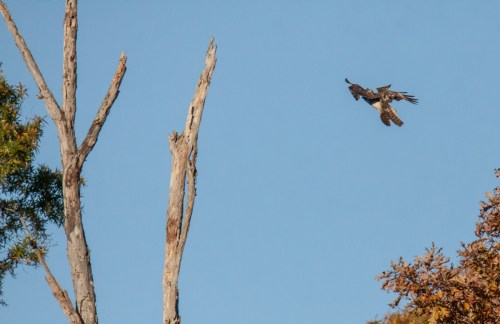
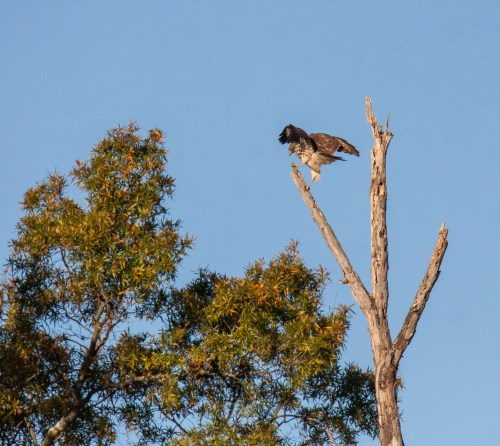
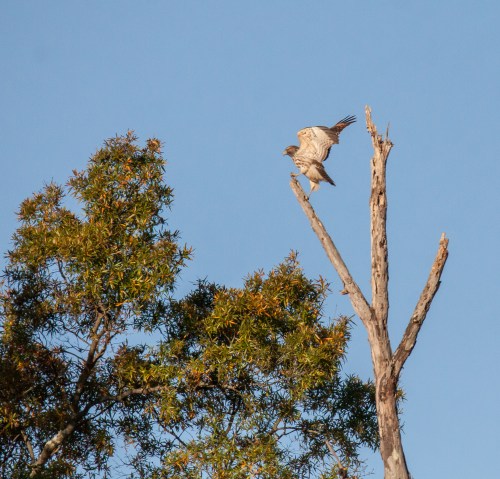
The hawk was moving really fast when it apparently spotted a perch that it liked. In an amazingly short distance, the hawk was able to slow down and really stuck the landing.  If I were a judge, though, I would have to deduct some points for the break in his form as he slowed down—it certainly did not look very elegant.

For most of these shots of the hawk, which I think is a Red-shouldered Hawk (Buteo lineatus), I was shooting at a higher ISO than I prefer in order to keep the shutter speed high. The results are a little grainy, particularly because I had to a fairly substantial crop, given that I was shooting across a small pond and the tree on which the hawk was perched was pretty far away. In the final shot, when the hawk was stationary, I was able to lower the ISO and there is a bit more fine detail.

Red-shouldered Hawk

Full speed ahead

Red-shouldered Hawk

Trying to slow down

Red-shouldered Hawk

Sticking the landing I

Red-shouldered Hawk

Sticking the landing II

Red-shouldered Hawk

Adjusting the position

Red-shouldered Hawk

Surveying the area

© Michael Q. Powell. All rights reserved.

Read Full Post »

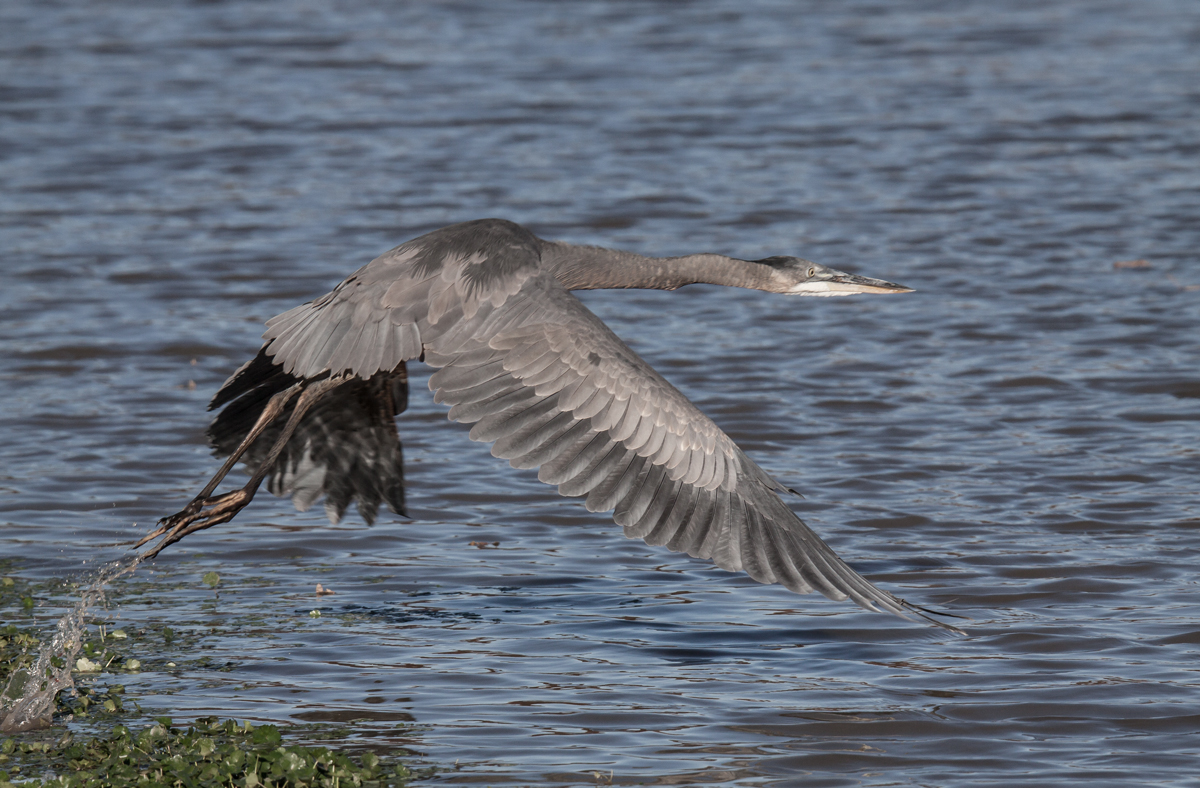
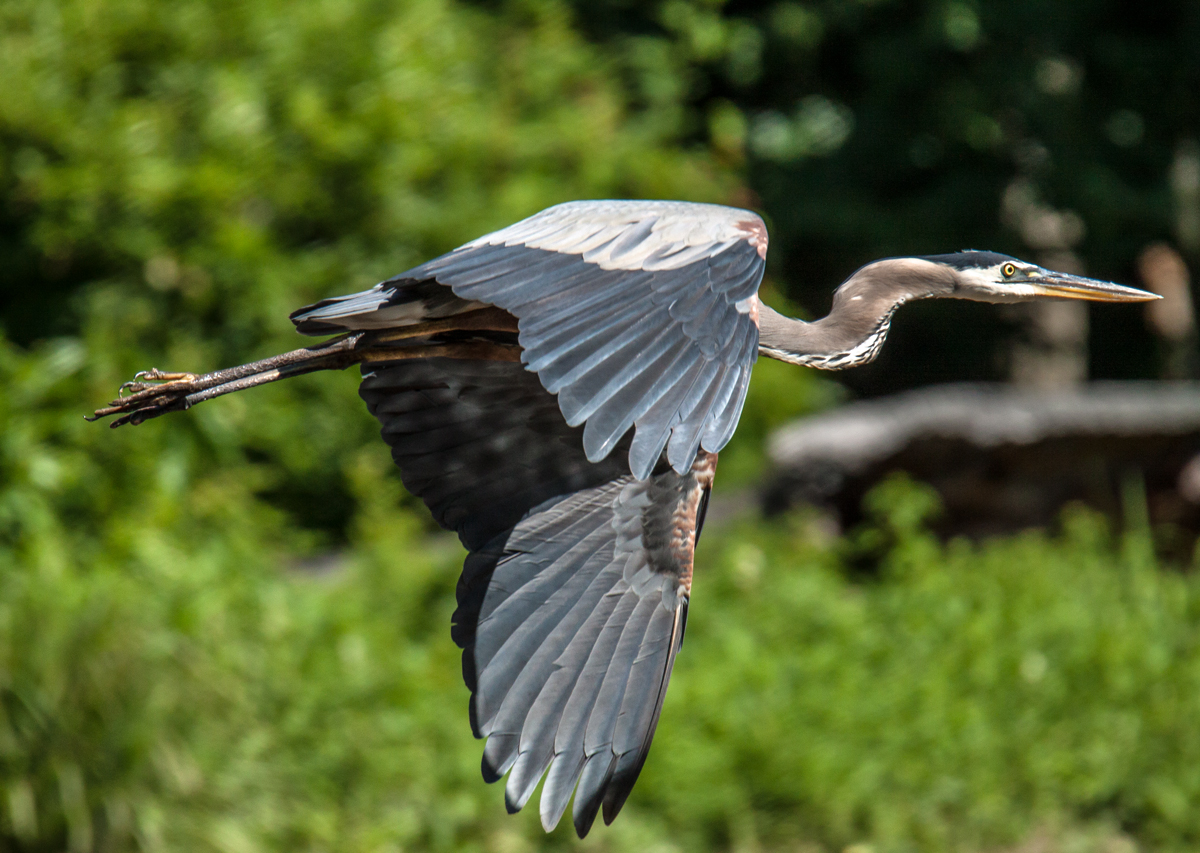
The egrets and green herons have gone south for the winter, but the Great Blue Herons (Ardea herodias) at Huntley Meadows Park continue to provide me with lots of photo opportunities.

Great Blue Herons present an unusual challenge to me—they are so long and wide when in flight that I actual have to remember to zoom out when photographing them in order to fit them in the frame.  Like most wildlife photographers, I usually am complaining about needing more reach and spend most of my time shooting with the lens almost fully extended.

In this first shot, I was able to anticipate the action and captured the heron’s takeoff almost exactly the way you see it. In the second shot, however, I slightly misjudged the speed of the heron and almost cut off the wings and the feet. As you can see, the light was beautiful and I was happy to be able to capture a lot of beautiful wing details.

Before long migrating ducks should be arriving and you should be relieved from steady diet of heron photos with which I have been populating my postings recently.

Great Blue Heron

Great Blue Heron

© Michael Q. Powell. All rights reserved.

Read Full Post »

This past weekend I inadvertently spooked a small flock of little Wood Ducks (Aix sponsa) while wandering about Huntley Meadows Park, but managed to get some shots of them as they flew away through the trees.

I just love the combination of the colorful birds in flight and the autumn foliage.

Wood Duck

Wood Duck

Wood Duck

Wood Duck

© Michael Q. Powell. All rights reserved.

Read Full Post »

It was cool and cloudy yesterday at Huntley Meadows Park, but my spirits were brightened considerably when I saw three Bald Eagles (Haliaeetus leucocephalus) soaring briefly over the park. It looked to be two adults and one juvenile, perhaps a family on a Saturday outing.

The eagles were pretty far away and I had my telephoto zoom lens extended as far as it could go as I attempted to track the flying eagles. Occasionally two of them or even all three would come into the frame for a split second, but then they would be soaring off into different parts of the sky.

I’m including an assortment of shots to give you a sense of the experience. I consider any day that I spot a Bald Eagle and get recognizable shots of it to be a wonderful day.

Bald Eagle

Bald Eagle

Bald Eagle

Bald Eagle

Bald Eagle

© Michael Q. Powell. All rights reserved.

Read Full Post »
The loud screams of a hawk rang out for extended periods of time during one of my trips to Huntley Meadows Park this past weekend. I couldn’t tell for sure if it was a single hawk or more than one, but the screams seemed to be those of a  Red-shouldered Hawk (Buteo lineatus). (You can hear the distinctive sound of this hawk by following this link to the Cornell Lab of Ornithology.)

The calls seemed to be coming from deep in the woods, but eventually a hawk flew overhead. The light was good enough that I was able to capture a pretty good amount of the beautiful details of this impressive-looking raptor, including the one feather at the tip of the wings that seems a bit frayed.

I think this is a juvenile Red-shouldered Hawk, perhaps the one that was making the calls that I had heard a bit earlier. As always, I welcome any corrections in my identification from more experienced birders.

UPDATE: One of my Facebook readers weighed in and noted that this is a juvenile Red-tailed Hawk.

Red-shouldered Hawk

© Michael Q. Powell. All rights reserved.

Read Full Post »

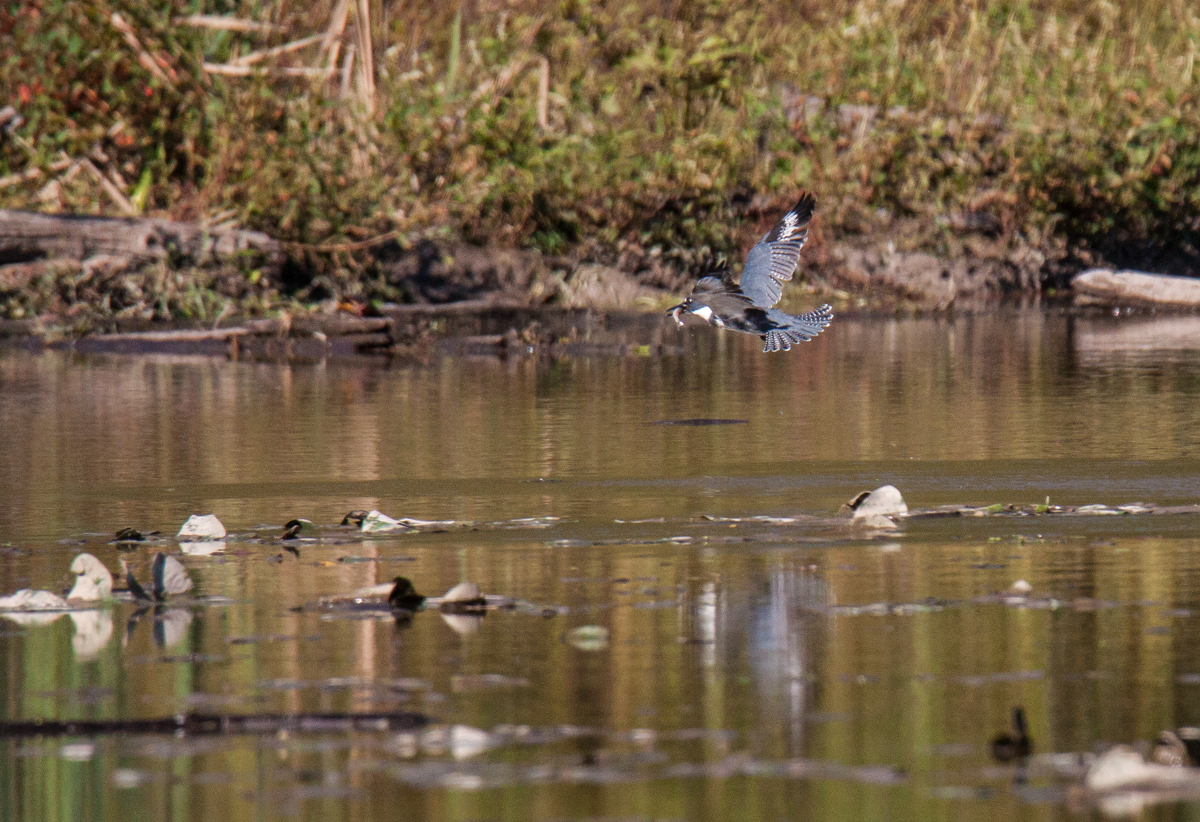
When I spotted a male Belted Kingfisher (Megaceryle alcyon) yesterday, I was really happy, because I have not seen a male in several years. He was pretty far away and I having a hard time getting a sharp shot, so I decided to switch to manual focus.

Just after I had switched, the kingfisher made a long shallow dive off of the rotten tree on which he was perched. Instinctively I tried to track the fast-moving bird as I frantically tried to focus. Not surprisingly, most of my shots were out of focus, but one came out pretty well. It shows the kingfisher just above the surface of the water with what appears to be a fish in his mouth. (You may want to click on the image to get a better look at the kingfisher.)

Belted Kingfisher

A bit later in the day, I took this shot of the male Belted Kingfisher on the same perch that he had been on earlier. He seemed to be in a good mood and almost looked like he was singing. Unlike the female, which has both a chestnut and a blue stripe or her chest, the male Belted Kingfisher has only the blue stripe.

Belted Kingfisher

The kingfisher was happy and I was overjoyed with my shots. It was a wonderful day.

© Michael Q. Powell. All rights reserved.

Read Full Post »

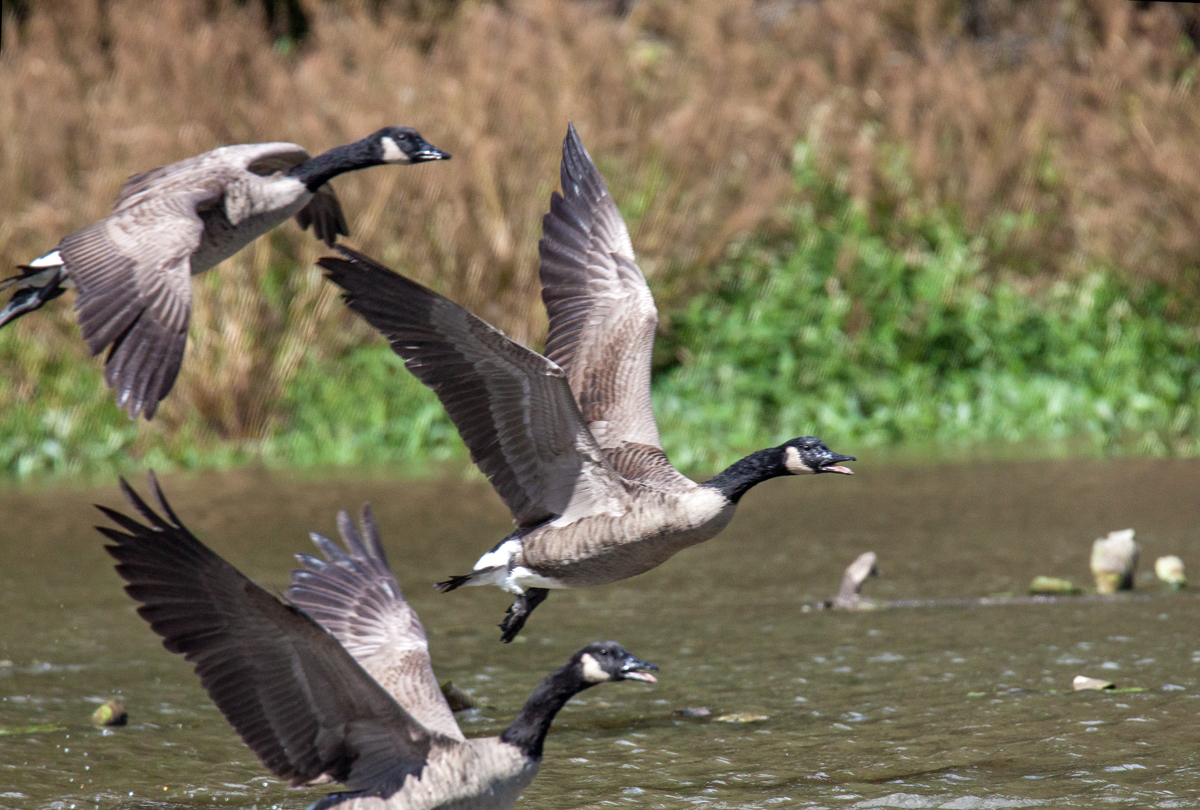
Canada Geese (Branta canadensis) are our constant companions at my favorite marshland park throughout the fall and the winter as the geese migrate south or choose to overwinter at the park. Several small flocks flew in yesterday, accompanied by the usual amount of honking and splashing to announce their arrival.

Folks at the park either love the geese or hate them (because of the mess they make). I enjoy seeing them and they provide me with lots of practice subjects to hone my skills in capturing birds in flight. Their interactions with each other are also fun to watch.

Canada Geese

Canada Geese

Canada Geese

© Michael Q. Powell. All rights reserved.

Read Full Post »

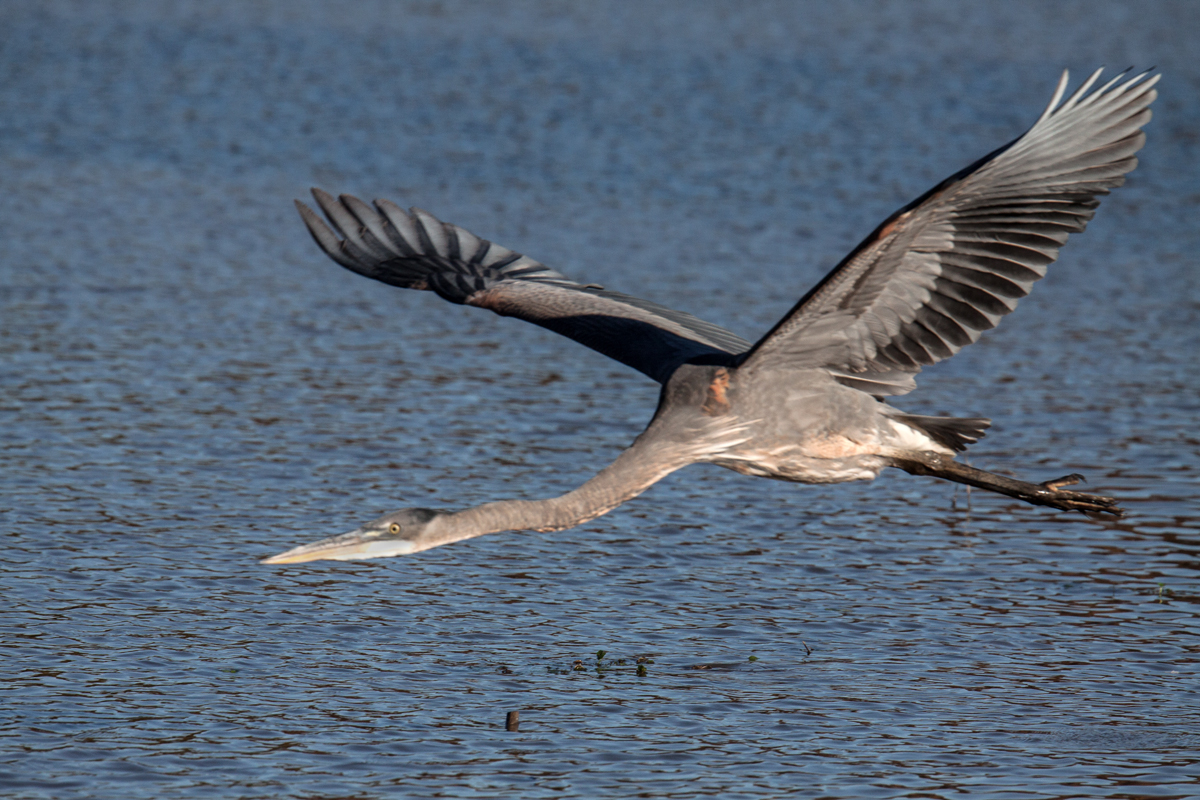
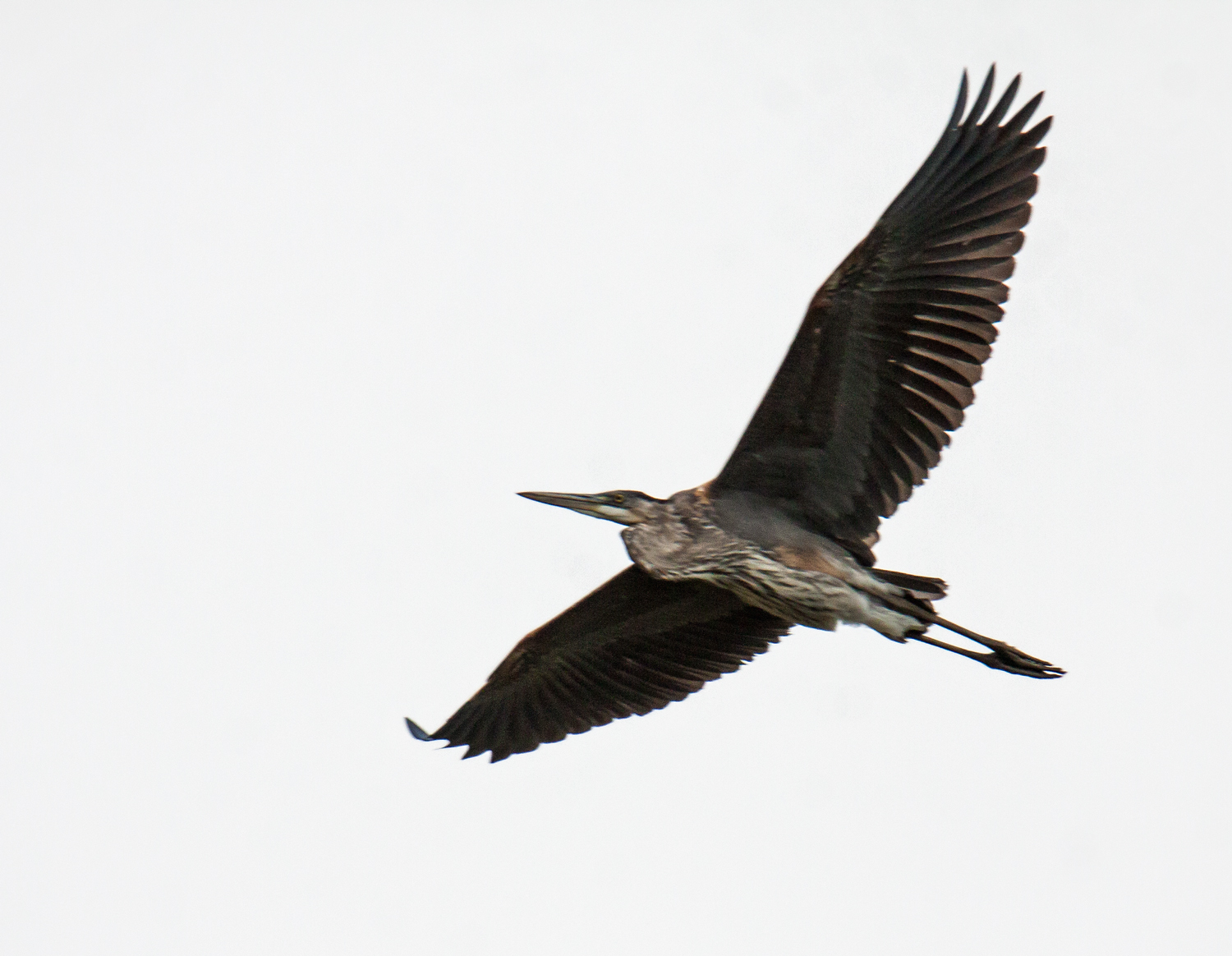
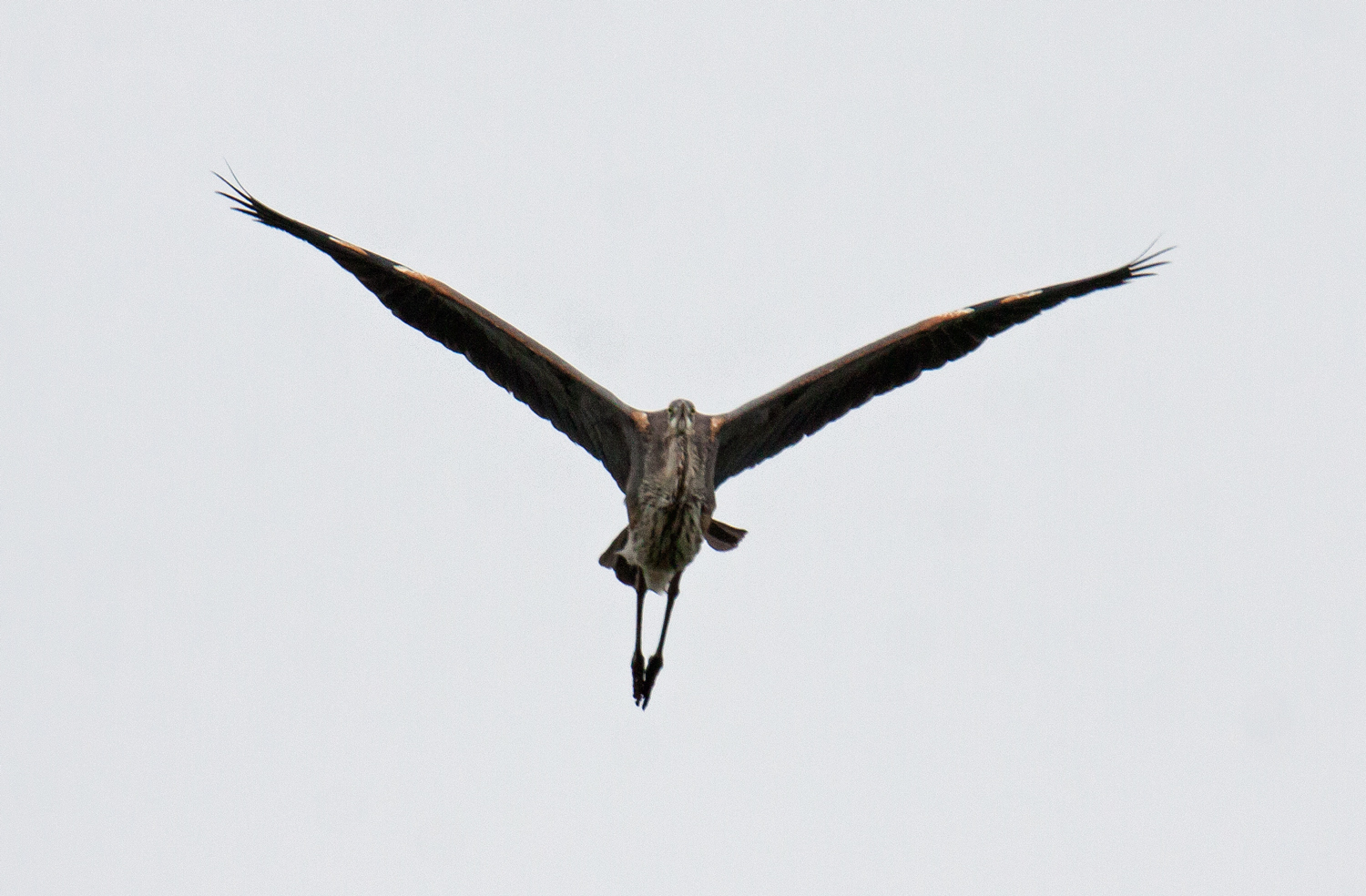
The sky was completely overcast early yesterday morning and most of the birds seemed to be sleeping in. One notable exception was this Great Blue Heron (Ardea herodias).

I spotted him in the distance flying in my direction at a pretty good speed. Normally Great Blue Herons seem to fly at a leisurely pace, but this one appeared to be in a hurry. Although the heron looked beautiful when its wings were fully extended, as in the first image, the heron appeared menacing—almost like a predator—when he was flying straight at me with legs extended.

As the Great Blue Heron flew overhead, I was treated to a great view of the underside of its body and wings, an angle of view that I rarely see, given that herons are usually flying away from me when I spot them.

I am on the fence about whether I like the white sky or not as a background. It is certainly uncluttered, but it seems a bit unnatural, almost like I was posing the bird in a studio setting.

Great Blue Heron

Great Blue Heron

Great Blue Heron

© Michael Q. Powell. All rights reserved.

Read Full Post »

When watching birds, I usually have my camera’s zoom lens fully extended. On rare occasions I am actually zoomed in a little too closely, as was the case when I took the shot of a Great Egret (Ardea alba) this past Monday at Huntley Meadows Park.

Despite the clipped wings, I love the details and the beautiful arc of the feathers of its wings as this stunning bird takes to the air.

Great Egret

© Michael Q. Powell. All rights reserved.

Read Full Post »

Walking down one of the informal trails at Huntley Meadows Park this past Friday, I spotted a dark shape in a distant tree. The moment that I got my camera focused on what turned out to be a bald eagle, it took off.

My camera settings were not optimal, but I somehow managed to capture some images of the eagle in flight as it flew away. The final shot in this posting shows my initial view of the eagle, just seconds before he took to the air.

As I have noted before, it’s a wonderful day for me whenever I see a Bald Eagle (Haliaeetus leucocephalus) and especially so when I am able to photograph this majestic bird.

Bald Eagle

Bald Eagle

Bald Eagle

© Michael Q. Powell. All rights reserved.

Read Full Post »

The blooming Swamp Rose Mallows (Hibiscus moscheutos) at Huntley Meadows Park helped provide a beautiful backdrop for this Great Blue Heron (Ardea herodias) that I spotted there last Saturday.

Great Blue Heron

© Michael Q. Powell. All rights reserved.

Read Full Post »
How do you capture the details of a pure white bird as it flies in an out of the light? That was my challenge this past weekend when I tried to photograph Great Egrets (Ardea alba) at my local marshland park.

Many of my past shots of egrets have been unsuccessful, usually because they are overexposed and the highlights and details are blown out. I’ve tried using exposure compensation with only minimum success.

This time, I remembered to switch to spot metering and had greater success. Sure, the backgrounds are a bit underexposed, but I think that the darkness helps the highlight the beauty of the egret.

Great Egrets seem a little awkward when in the water, but when they take to the air, it’s like watching a ballet.

Great Egret

Great Egret

Great Egret

© Michael Q. Powell. All rights reserved.

Read Full Post »

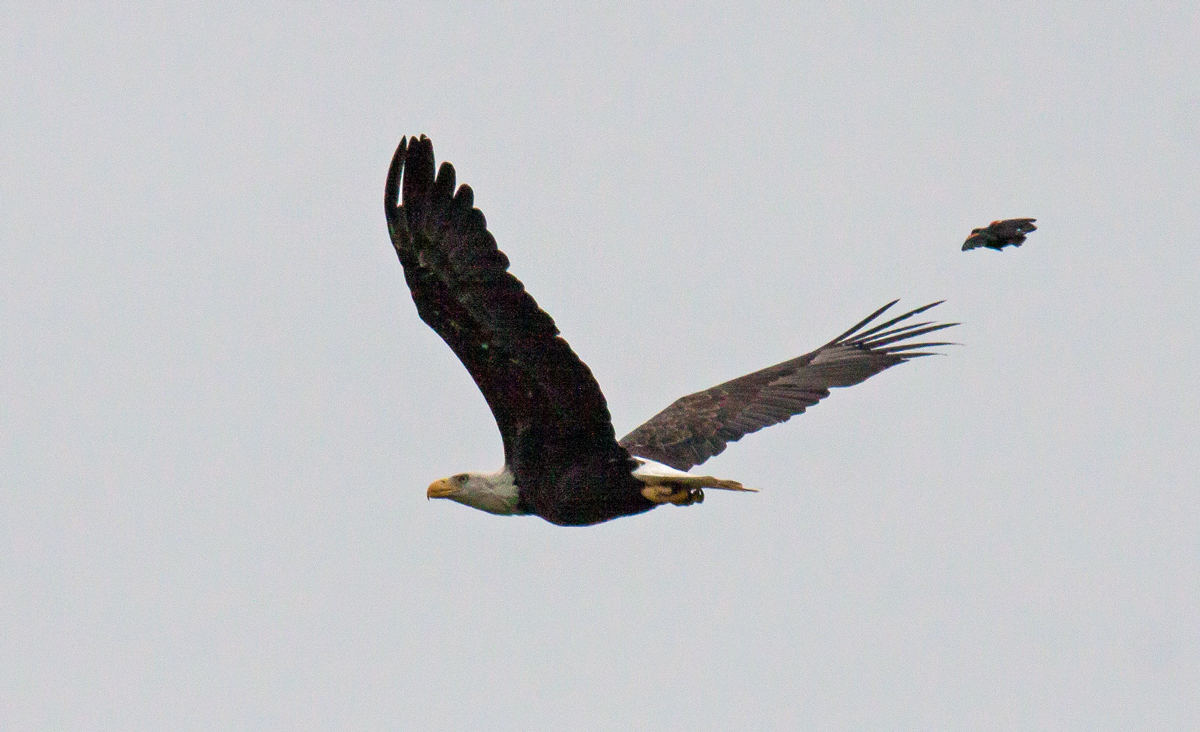
The Red-winged Blackbird (Agelaius phoeniceus) was either really brave or really foolish chasing a Bald Eagle (Haliaeetus leucocephalus) across the sky early yesterday morning at Huntley Meadows Park in Alexandria, Virginia.

Bald Eagle chase

I did manage to get a few other shots (below) in which the eagle’s wings are in more photogenic positions, but the blackbird is farther away from the eagle in each of them.

Bald Eagle chase

Bald Eagle chase

© Michael Q. Powell. All rights reserved

Read Full Post »

I was concentrating so intently on tracking this Great Blue Heron (Ardea herodias) in flight on Monday that I didn’t realize he was so close to me that I actually should have zoomed out a bit—the heron barely fit within the viewfinder.

Fill the frame with your subject? I can’t remember the last time that I was able to do so with a bird as the subject.

Great Blue Heron

© Michael Q. Powell. All rights reserved.

Read Full Post »

In the early morning hours above Huntley Meadows Park, all kinds of birds are flying about, like this immature Bald Eagle (Haliaeetus leucocephalus) that I spotted yesterday.

A year ago, I probably would have guessed that this was a hawk, but my identification skills have improved somewhat and I can tell this is an eagle. Given that it takes about five years for a Bald Eagle to mature, I’d guess that this one is about two to three years old, though I defer to more expert birdwatchers on this point.

As you can probably tell, the eagle was moving from right to left as I tracked it over the treetops. I was shooting over a small pond at a pretty good distance in early morning light that was not yet bright, so my ISO was cranked up a bit. I especially like the shots that include the trees. Although I will try to photograph an eagle every time I see one, I think it is a nice extra when I manage to include part of the surroundings in the shot.

Bald EagleBald EagleBald Eagle

© Michael Q. Powell. All rights reserved.

Read Full Post »

I was late in reacting when the Bald Eagle (Haliaeetus leucocephalus) took off from its perch and I was pretty sure that I had not gotten any decent shots of its departure. Consequently, I skimmed quickly through the shots during my initial review and none of them jumped out at me.

After I had done this morning’s posting, I had a few minutes before I had to depart for work and decided to review the images again. I was surprised to find this shot of the young eagle in flight, shortly after he had pushed off from the tree. It’s reasonably sharp and the wings are in a decent position, so I decided to post the photo as a complement to the first image that showed the eagle completing a difficult landing.

Bald Eagle

© Michael Q. Powell. All rights reserved.

Read Full Post »

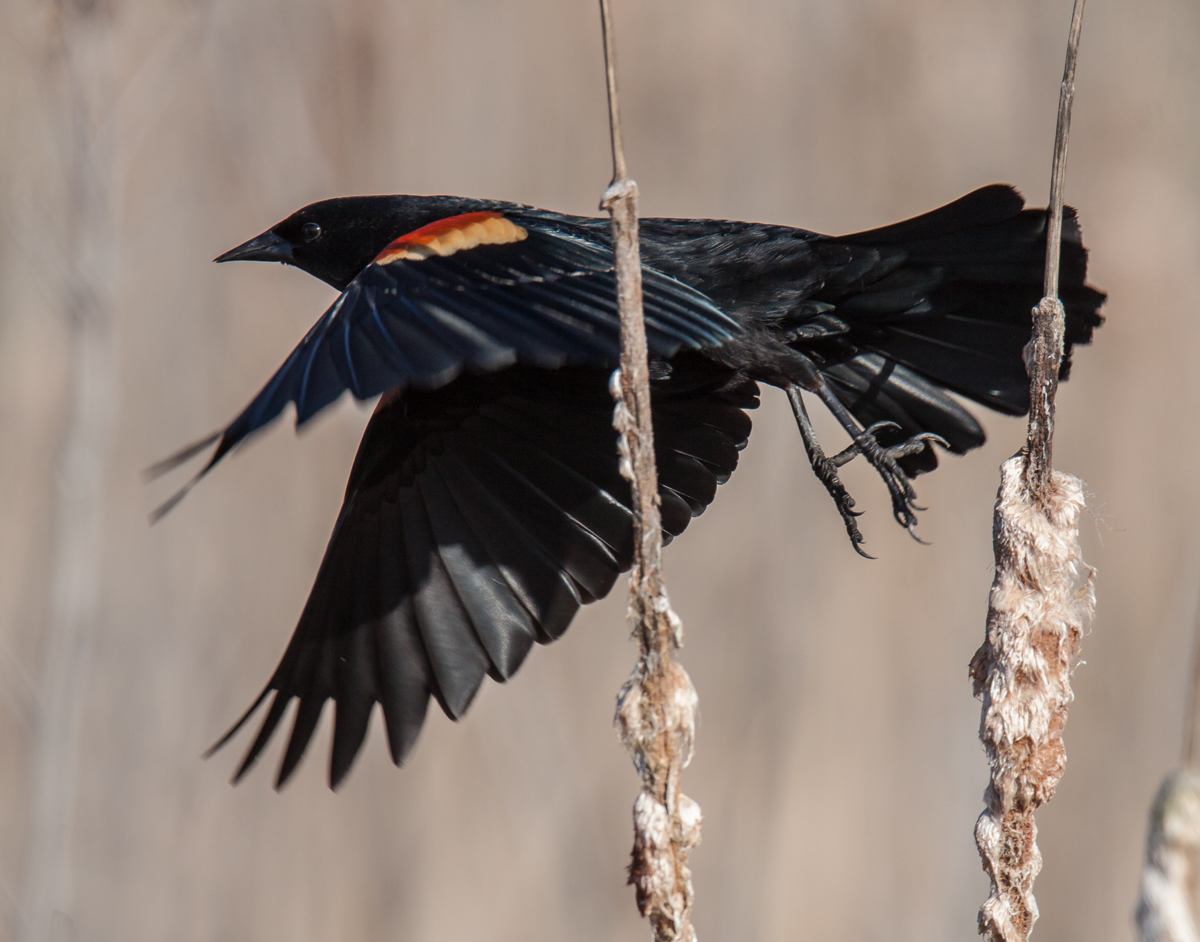
Sometimes accidents are good. I certainly didn’t expect this male Red-winged Blackbird (Agelaius phoeniceus) to move when I pressed my camera’s shutter release, but I managed to catch the bird in a much more interesting pose than the one I was originally trying to capture.

Red-winged Blackbird

© Michael Q. Powell. All rights reserved.

Read Full Post »

In some of my photos, the ospreys (Pandion haliaetus) look really majestic, but in these two shots, the osprey looks almost like a cartoon caricature to me.

Osprey

osprey

© Michael Q. Powell. All rights reserved.

Read Full Post »
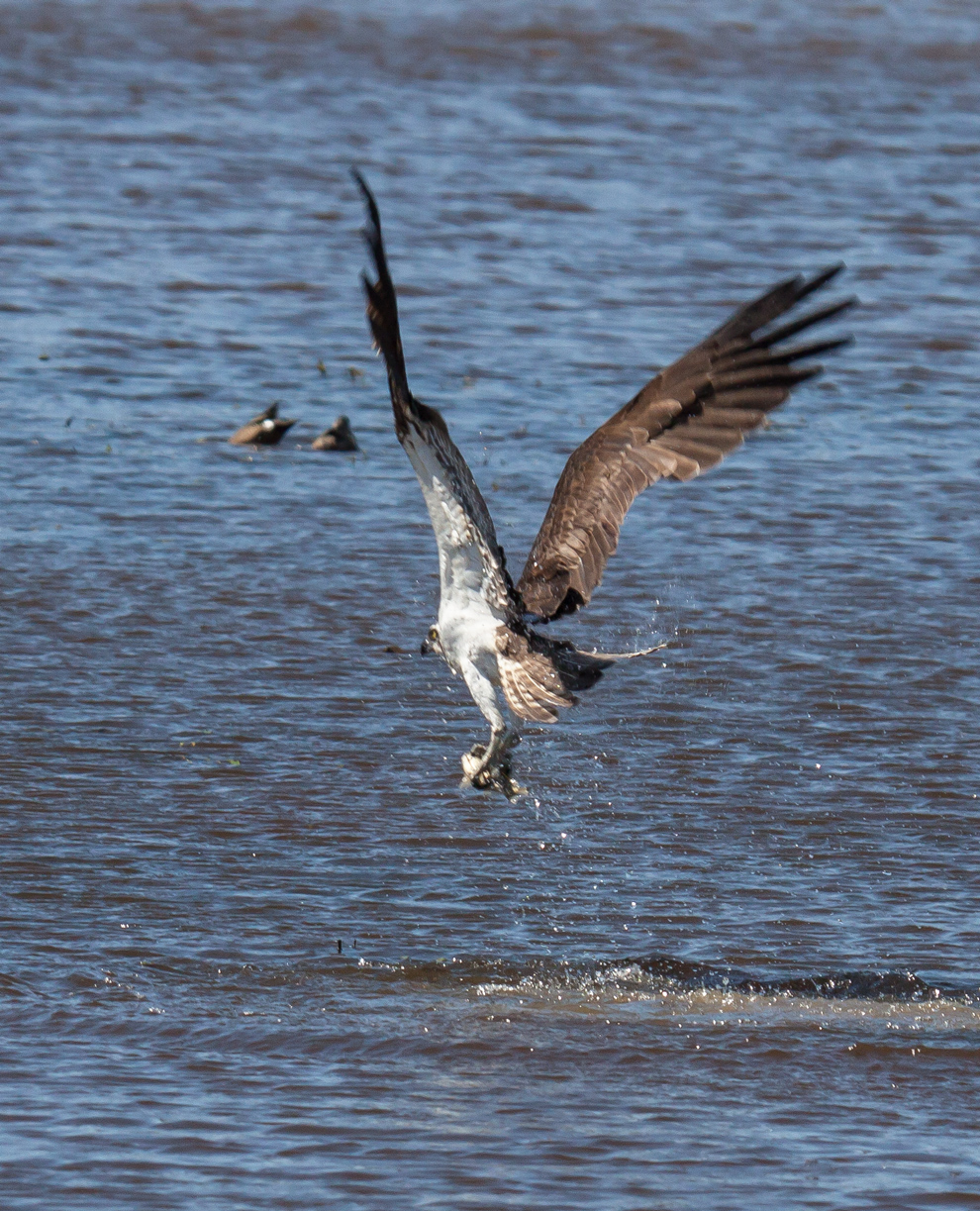
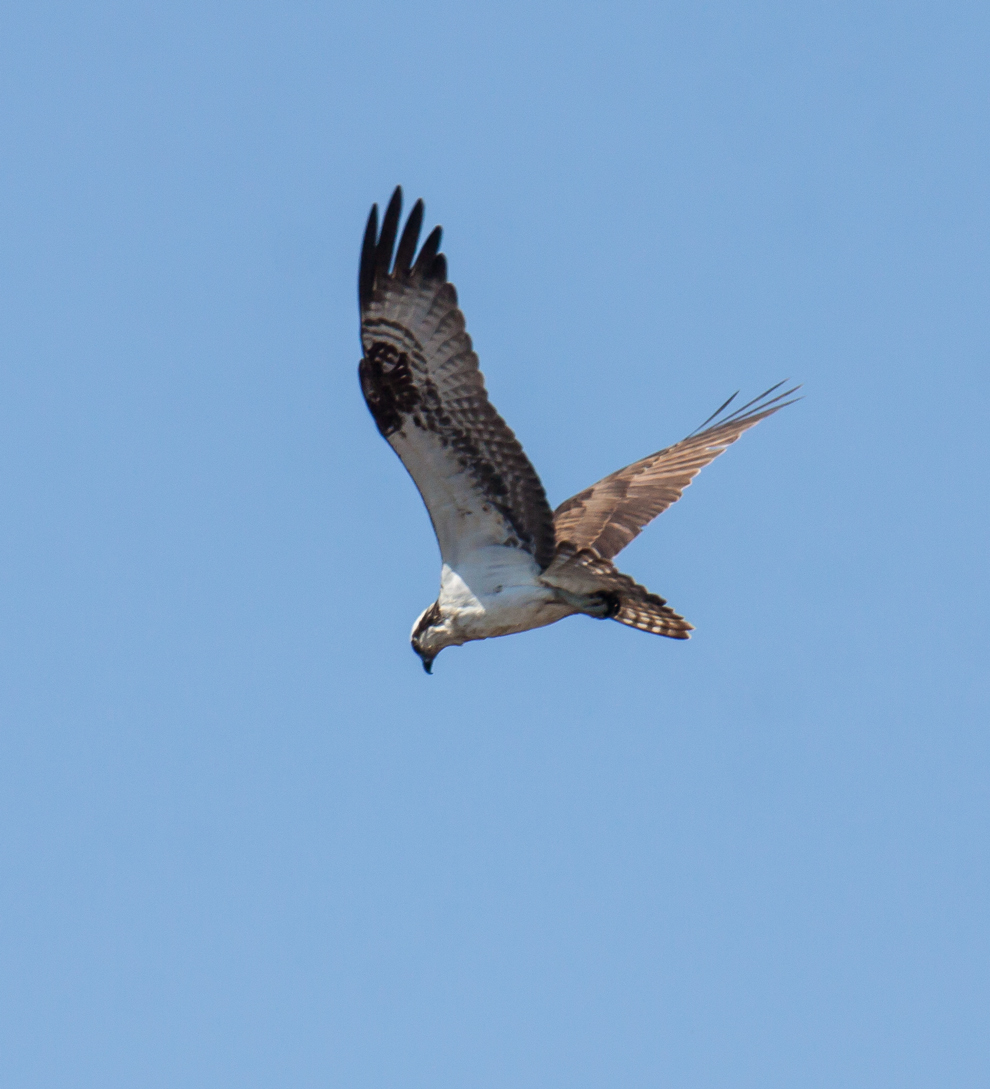
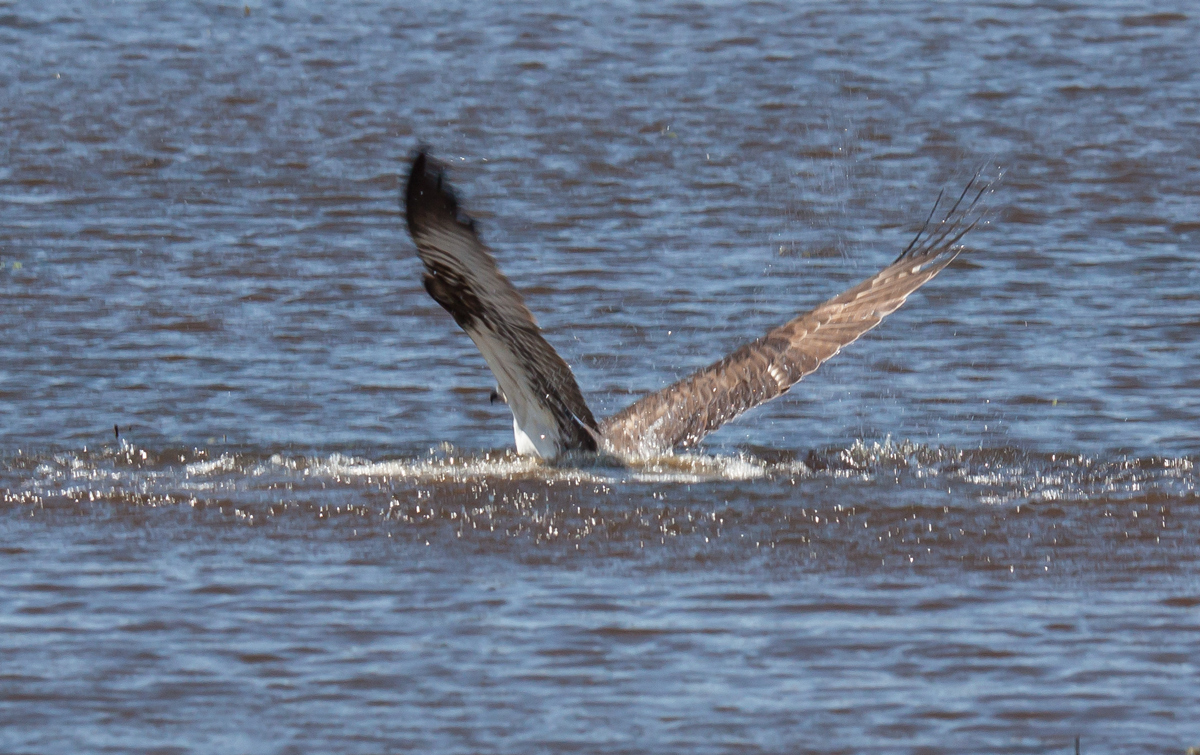
Earlier this week I watched a pair of Ospreys (Pandion haliaetus) at my local marsh circling about in search of a meal and captured a sequence of shots of a successful effort. I have previously seen ospreys flying with fish in their talons, but I had never actually seen an osprey catch a fish.

The first shot, my favorite, shows the osprey flying away with its prize, just after it plucked the fish out of the water. Initially the osprey spotted the fish (photo 2) and arrested its forward motion to prepare to dive (photo 3). I tried to track the osprey as it dove, but it dropped so quickly that all I got in the frame was the tail end of the bird. It looks like ospreys dive head first toward the water and then at the last minute bring their legs forward so that they hit the water feet first.

The fourth photo gives you an idea of how forcefully the osprey hit the water. It made a loud splash and much of its body looks to be submerged. The final shot shows the osprey emerging from the water, using its impressive wings to generate an amazing amount of power.

OspreyOspreyOspreyOspreyOsprey

© Michael Q. Powell. All rights reserved.

Read Full Post »

Eventually the Osprey (Pandion haliaetus) that I featured yesterday decided to fly away, with its modest fish still tightly clutched in its talons. I thought that the bird was going to consume the fish while perched, but perhaps the osprey prefers to lunch in privacy or needs to share the prize with its mate.

Osprey

© Michael Q. Powell. All rights reserved.

Read Full Post »

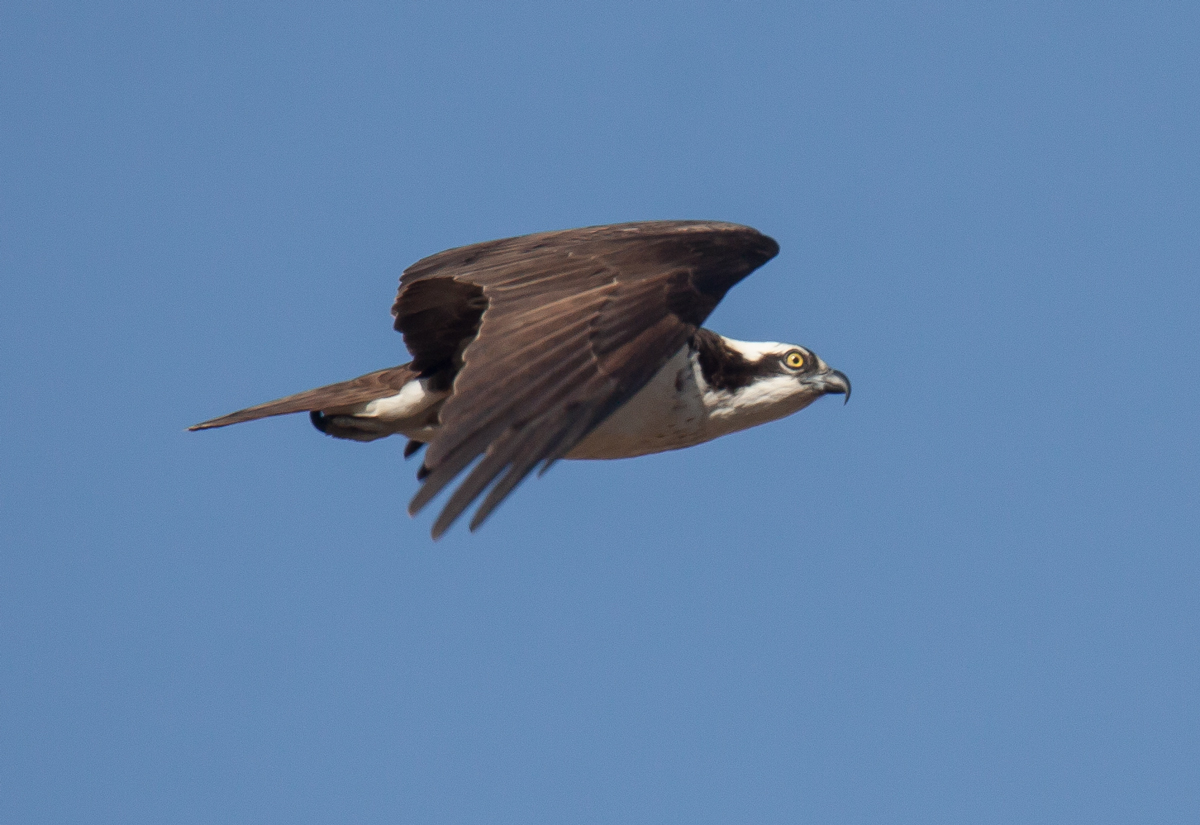
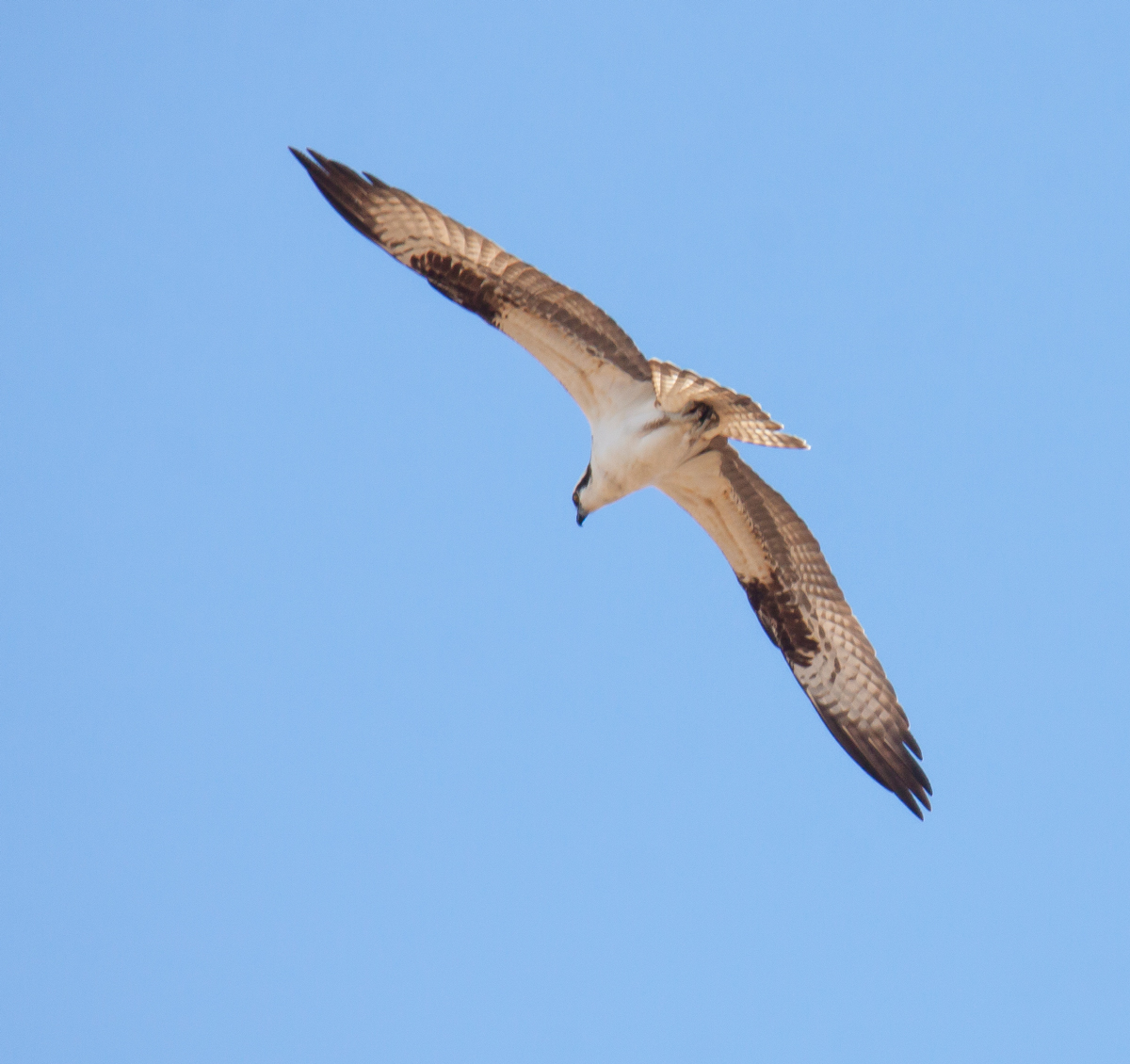
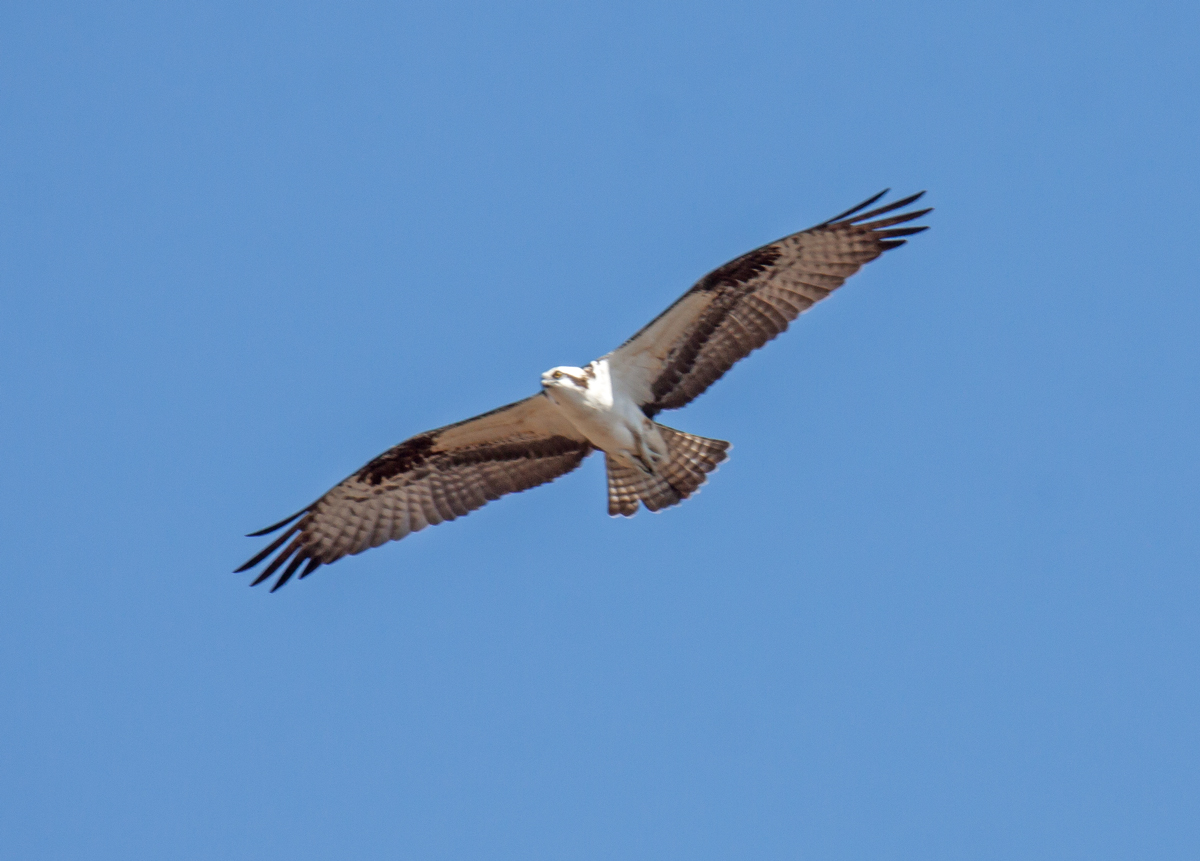
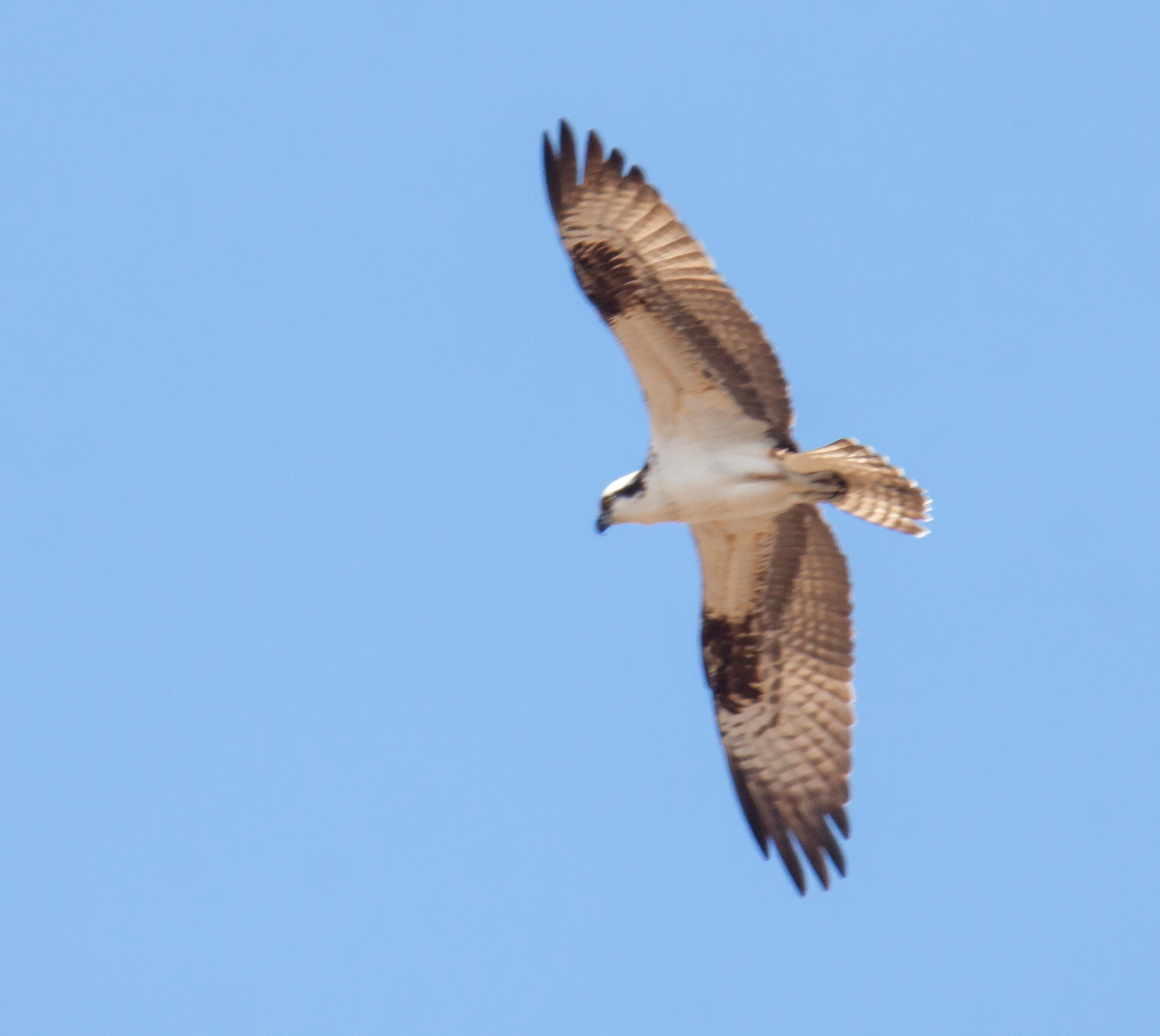
I was surprised this past Monday to see that Ospreys (Pandion haliaetus) have already returned to our area. I don’t often see ospreys at my local marshland park and was somewhat shocked to look up into the sky and see one soaring high above me. Actually I thought it was a hawk at first and then concluded that it must be a bald eagle, because of the white head. It was only when I looked more closely at the photos that I realized that it was an osprey.

In the past I have taken some closer shots of ospreys and on those occasions I was struck by the amazing yellow eyes and the incredible talons. This time, however, I was struck by the surprisingly wide wingspread of the osprey. The sunlight was coming from the right direction to illuminate and highlight the bird’s wing feathers.

There are a number of locations in our area where ospreys generally nest and I guess that it is not too early to check them out. Somehow I thought the ospreys wouldn’t be back here for another month or so, but I confess that this is not one of the birds that I have kept track of very closely in the past.

OspreyOspreyOsprey

© Michael Q. Powell. All rights reserved.

Read Full Post »

I felt like a goalie in a penalty shot situation, waiting for my opponent to act. Would he go to the right or to the left, go high or go low? Could I react quickly enough to capture the shot? Time seemed to stand still as I waited and watched.

In this case, my “opponent” was a Red-shouldered Hawk (Buteo lineatus) perched in a tree at my local marshland park. Once I spotted the hawk, I slowly moved as close as I could get, walking quietly on the boardwalk. The hawk was facing in the opposite direction, so my initial shots showed the details of the back of its head. Scanning the area, the hawk periodically looked to the sides and I managed to get some profile shots, the second and third shots below.

Finally, the hawk took off, diving quickly to my left. I reacted and managed to get a few shots of the hawk in mid-air.  Although my  trigger finger reacted well, I didn’t move the lens fast enough and failed to keep the hawk centered in the frame. I barely managed to capture the entire body of the hawk in the photo below and the composition of the shot is less than optimal. However, I like the overall feel of the image and the fact that you can see details like the underside of the tail feathers and the talons.

Red-shouldered Hawk

Red-shouldered Hawk

Red-shouldered Hawk

© Michael Q. Powell. All rights reserved.

Read Full Post »

« Newer Posts - Older Posts »