Feeds:
Posts
Comments

Posts Tagged ‘Alexandria VA’

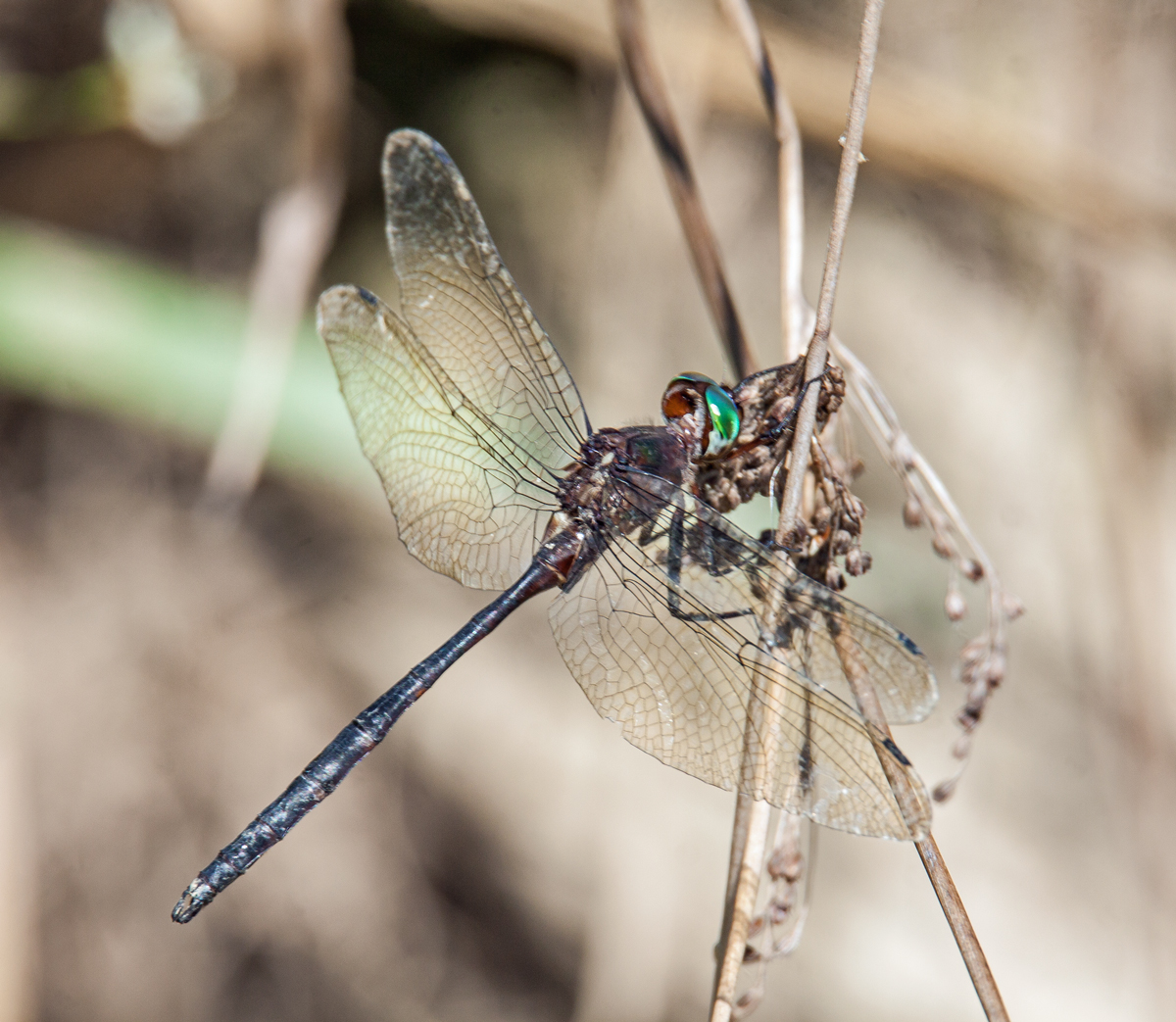
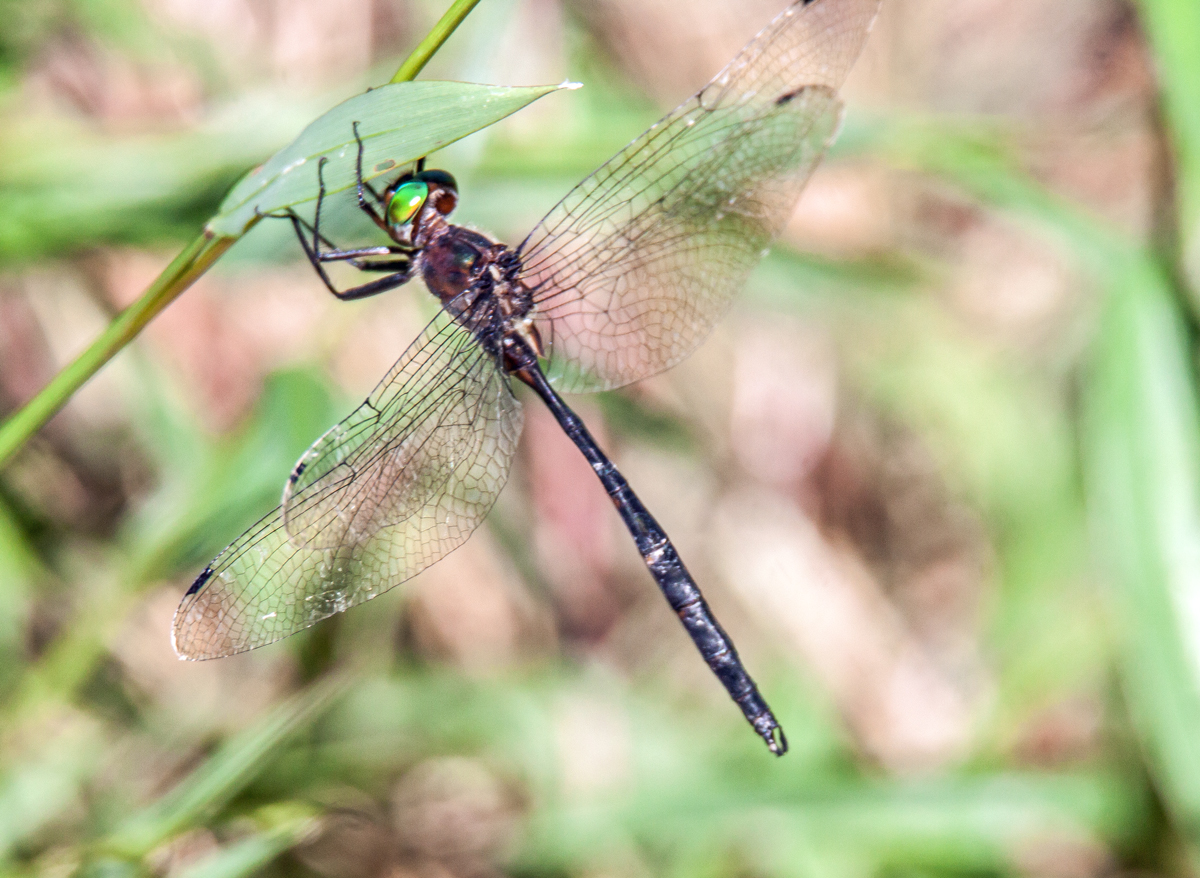
Unlike Pumpkin Spice, Mocha Emerald is not a fall Starbucks flavor—it is a cool-looking dragonfly species that I was excited to spot yesterday at my favorite marshland park.

Mocha Emerald

Every other time that I have observed a Mocha Emerald (Somatochlora linearis), the dragonfly has been perched in the shadows, so I was surprised yesterday to see one in full daylight. This Mocha Emerald, which looks to be a male seemed to be patrolling a stretch of a small stream. Occasionally it would stop to rest and perch vertically on vegetation sticking out low from the bank of the stream.

Getting a decent shot of the Mocha Emerald was quite a challenge. My camera’s auto focus had trouble fixing focus on the dragonfly’s long thin body so I had to focus manually; there was a breeze that was blowing that caused the dragonfly to swing in and out of my field of view as I looked through the viewfinder; and the background tended to be really cluttered.

The first shot is my favorite, because I was able to isolate the dragonfly by hanging over the stream (and almost falling in), although the other shots show some of the details of its body better.

Maybe there should be a Mocha Emerald latte, perhaps for Saint Patrick’s Day—I would be thrilled if it supplanted the green beer that still makes an appearance at some locations.
Mocha Emerald

Mocha Emerald

Mocha Emerald

© Michael Q. Powell. All rights reserved.

Read Full Post »

My favorite marshland park is abloom with yellow flowers. This past Friday, I spotted a Monarch butterfly (Danaus plexippus) at the edge of a meadow feeding on one of those flowers. I thought the Monarchs had flown south for the season already, but was delighted to see they are still around.

I tried to frame the image so that there would be yellow flowers in the background and the results were even better than I had anticipated.

Yellow seems to be a happy color and somehow I can’t help but smile when I look at this image. I hope that it has the same effect on all of you.

Monarch butterfly

© Michael Q. Powell. All rights reserved.


Read Full Post »

“Blue eyes
Baby’s got blue eyes
Like a deep blue sea
On a blue blue day”

Somehow the words to the old Elton John song come to mind when I gaze into the stunning blue eyes of this Blue-faced Meadowhawk (Sympetrum ambiguum). This dragonfly was unusually cooperative and let me move in to take this close-up portrait with my macro lens.

Blue-faced Meadowhawk

If you have never heard “Blue Eyes” or just want a blast from the past, here’s a link to a YouTube video of Elton John performing the song.

© Michael Q. Powell. All rights reserved.


Read Full Post »

As I was walking back home last night from the metro station, I was struck by the light that was bouncing all around a highway underpass as cars passed by, creating an abstract world of beautiful shapes and lines.

I really had no idea what kind of settings to use on my camera, but after a few quick tests I settled on ISO 2500 and f/9, which gave me exposures between one and two seconds. I rested my camera on a railing to steady it and pointed my camera in the general direction of the underpass.

Those who follow this blog regularly know that I have recently been experimenting with different approachs and subjects for my photography, which normally focuses primarily on wildlife and nature. Oh, I still enjoy that photography immensely, but it’s been fun and challenging to try some new things too.

I am quite pleased with some the nighttime images that I was able to capture, which are a pretty good reflection of what I was seeing and feeling.

underpass

underpass

underpass

© Michael Q. Powell. All rights reserved.

Read Full Post »

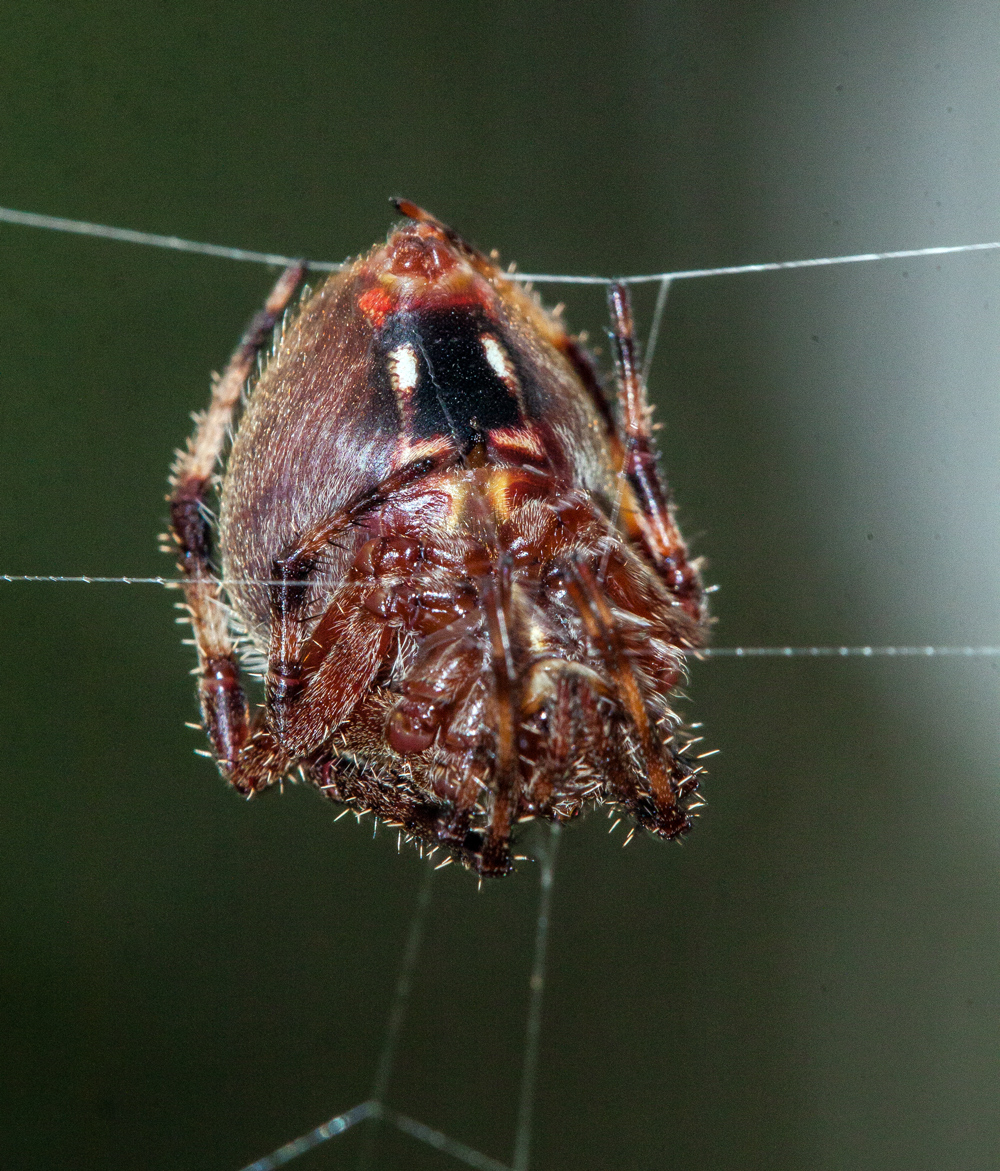
I first caught sight of this spider yesterday when I almost walked into it—it was hanging in mid-air at eye level across a path and we were less than a foot apart when I encountered it.

Initially the spider scampered up a bit and then seemed to run out of web and came to a stop, giving me some time to change to my macro lens. The spider, which I think is a kind of orb weaver (Neoscona crucifera) that is sometimes called a barn spider, was about seven feet off the ground by this time, so it was quite a challenge getting a stable shooting position. I raised the ISO and used the pop-up flash and managed to get some reasonably sharp images.

These are my favorite two images. I really like the detail in the first shot, but like the background and angle of view more in the second shot. Which one is better? I vacillate in trying to decide, so included them both.

orbweaver spider

orbweaver spider

© Michael Q. Powell. All rights reserved.

Read Full Post »

I’m back from a brief overseas trip and it’s time to switch back from shooting in urban surroundings to my more typical nature images. In the meantime, here’s a shot of a beautiful Eastern Tiger Swallowtail (Papilio glaucus) from a pre-trip visit to Huntley Meadows Park in Alexandria, Virginia.

Eastern Tiger Swallowtail

© Michael Q. Powell. All rights reserved.
Read Full Post »

Late in the summer, there is a great abundance of flying and crawling insects—they are everywhere. I enjoy photographing many of them and generally I will try to identify my subjects when I post their photos.

In this case, however, I didn’t get a close enough view or a sharp enough shot of this cool-looking insect for me to be confident in any identification. (Alas, the photo is clear enough for me to realize that I need to clean my camera’s sensor, for I can see a bunch of stops in the beautiful background of what is often called “sensor dust.”)

Still, I really like the insect’s pose at the top of the vegetation, a pose that somehow brings to mind the “King of the World” moment in the movie Titanic.

bug

© Michael Q. Powell. All rights reserved.

Read Full Post »

As we move closer and closer to the end of the summer, many of the butterflies are starting to show the effects of time, with faded colors and missing pieces of their wings. Yet somehow, at least in my eyes, their beauty is undiminished, like this Viceroy butterfly (Limenitis archippus) that I spotted this past week at my favorite local marshland park.

viceroy butterfly

© Michael Q. Powell. All rights reserved.

Read Full Post »

When watching birds, I usually have my camera’s zoom lens fully extended. On rare occasions I am actually zoomed in a little too closely, as was the case when I took the shot of a Great Egret (Ardea alba) this past Monday at Huntley Meadows Park.

Despite the clipped wings, I love the details and the beautiful arc of the feathers of its wings as this stunning bird takes to the air.

Great Egret

© Michael Q. Powell. All rights reserved.

Read Full Post »

What signs do you look for that point to the change of seasons? Throughout most of my life, the changing colors of the fall foliage have been the primary indicator of the end of summer and the beginning of autumn.

The last few years, however, I have become increasingly sensitive to seasonal changes in the dragonfly population as I have increasingly focused my attention and my camera lens on these fascinating and colorful aerial acrobats. Summer is prime time for many dragonfly species, but certain species show up much later in the season and stay with us throughout much of the autumn days.

One of these late-arriving species is the Blue-faced Meadowhawk (Sympetrum ambiguum) and I was thrilled yesterday to spot a male of this species at Huntley Meadows Park, the marshland where I take a lot of my wildlife photos. This is my first spotting of a Blue-faced Meadowhawk this season and I suspect it won’t be long before I also start seeing his “cousin,” the Autumn Meadowhawk (Sympetrum vicinum).

I particularly like the bright red color and bold pattern of this dragonfly’s body and its beautiful turquoise face. Although I may vacillate a bit from time to time, I think this is the most beautiful dragonfly species that I have ever encountered. What do you think?

Blue-faced Meadowhawk

© Michael Q. Powell. All rights reserved.

Read Full Post »

There were lots of other available thistle plants yesterday at Huntley Meadows Park, but an Eastern Tiger Swallowtail (Papilio glaucus) and a Great Spangled Fritillary (Speyeria cybele) kept jockeying for position on this single flower, each seemingly determined to gain the upper hand.

Who knew that butterflies were so competitive?

Competitive butterflies

© Michael Q. Powell. All rights reserved.

Read Full Post »

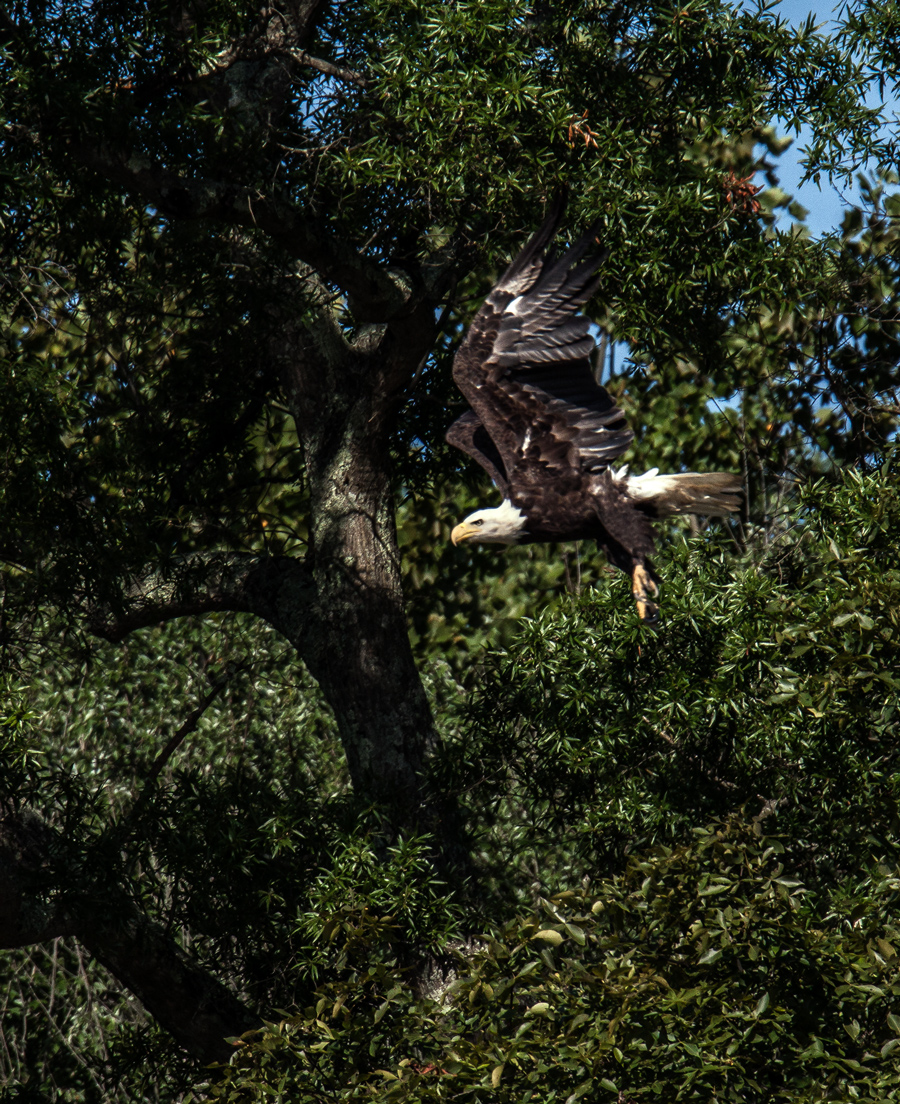
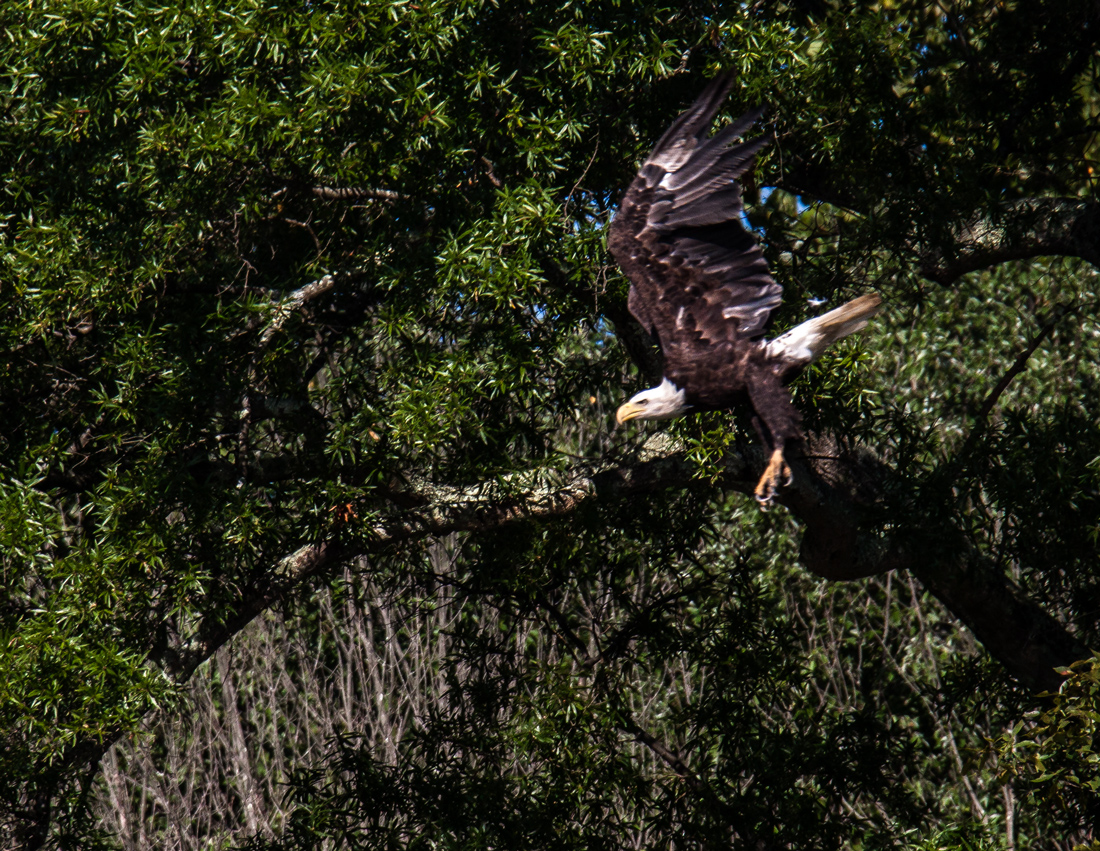
Walking down one of the informal trails at Huntley Meadows Park this past Friday, I spotted a dark shape in a distant tree. The moment that I got my camera focused on what turned out to be a bald eagle, it took off.

My camera settings were not optimal, but I somehow managed to capture some images of the eagle in flight as it flew away. The final shot in this posting shows my initial view of the eagle, just seconds before he took to the air.

As I have noted before, it’s a wonderful day for me whenever I see a Bald Eagle (Haliaeetus leucocephalus) and especially so when I am able to photograph this majestic bird.

Bald Eagle

Bald Eagle

Bald Eagle

© Michael Q. Powell. All rights reserved.

Read Full Post »

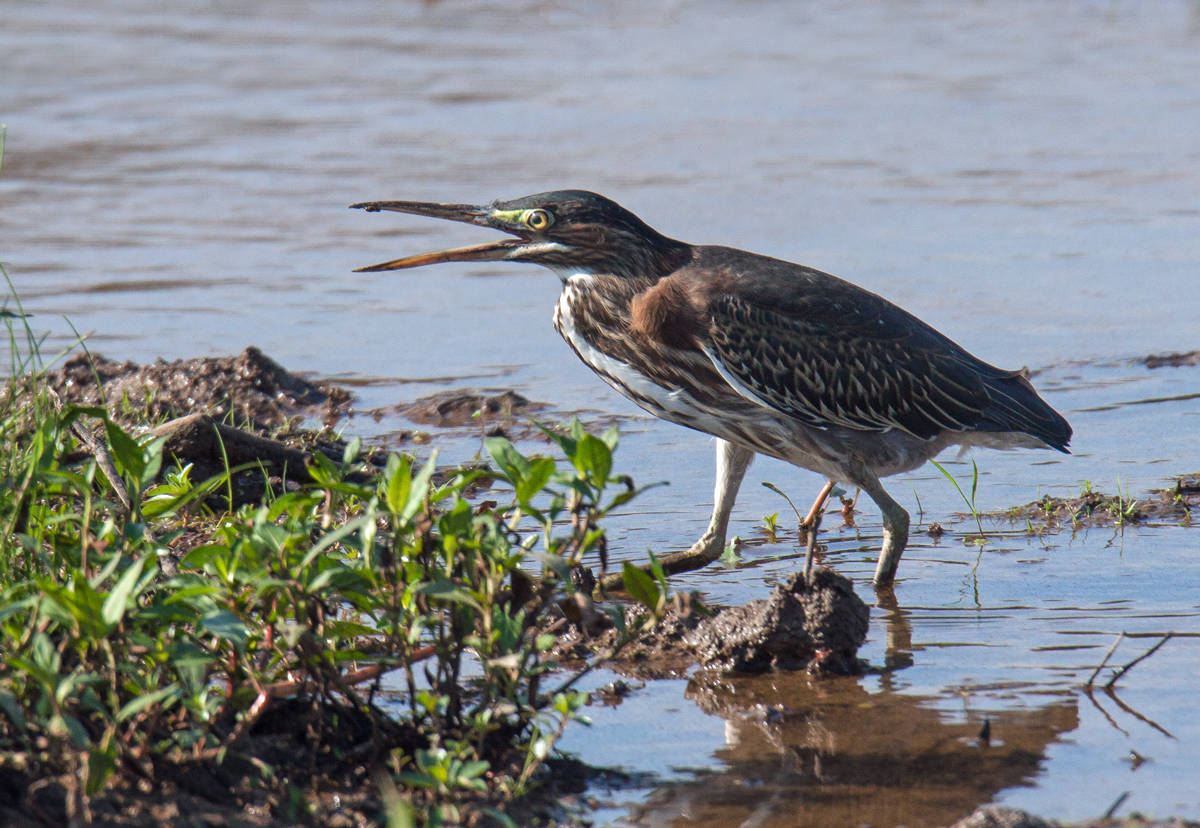
Do herons laugh? Herons remind me of many people in the Washington D.C. area—they are serious, focused, and driven. How do herons relieve their stress?

Yesterday morning I was observing a Green Heron (Butorides virescens) at my local marshland park. Suddenly he opened his mouth wide in a huge smile and appeared to be laughing.

I am not sure what prompted his actions, but I couldn’t help but smile. Laughter, after all, is contagious.

Green Heron

© Michael Q. Powell. All rights reserved.

Read Full Post »

It had been quite a while since I had last seen a Yellow Garden Spider (Argiope aurantia), so I was pretty excited to see one during a visit this past weekend to Dyke Marsh Wildlife Preserve, a tidal wetlands park along the Potomac River in Virginia.

The spider must have sensed my presence too, because she began to oscillate the entire web vigorously. I had to wait for her to settle down before attempting to get some shots. I was on an elevated boardwalk and the spider was considerably below the level of my feet. As a result, I had somewhat limited options for framing my shots, though I was able to photograph the spider from a couple of different angles, and was not able to get really close to the spider.

I was happy that I managed to capture the really cool zigzag portion of the spider’s web, a distinctive characteristic of this particular species.

Argiope spider

Argiope spider

© Michael Q. Powell. All rights reserved.
Read Full Post »

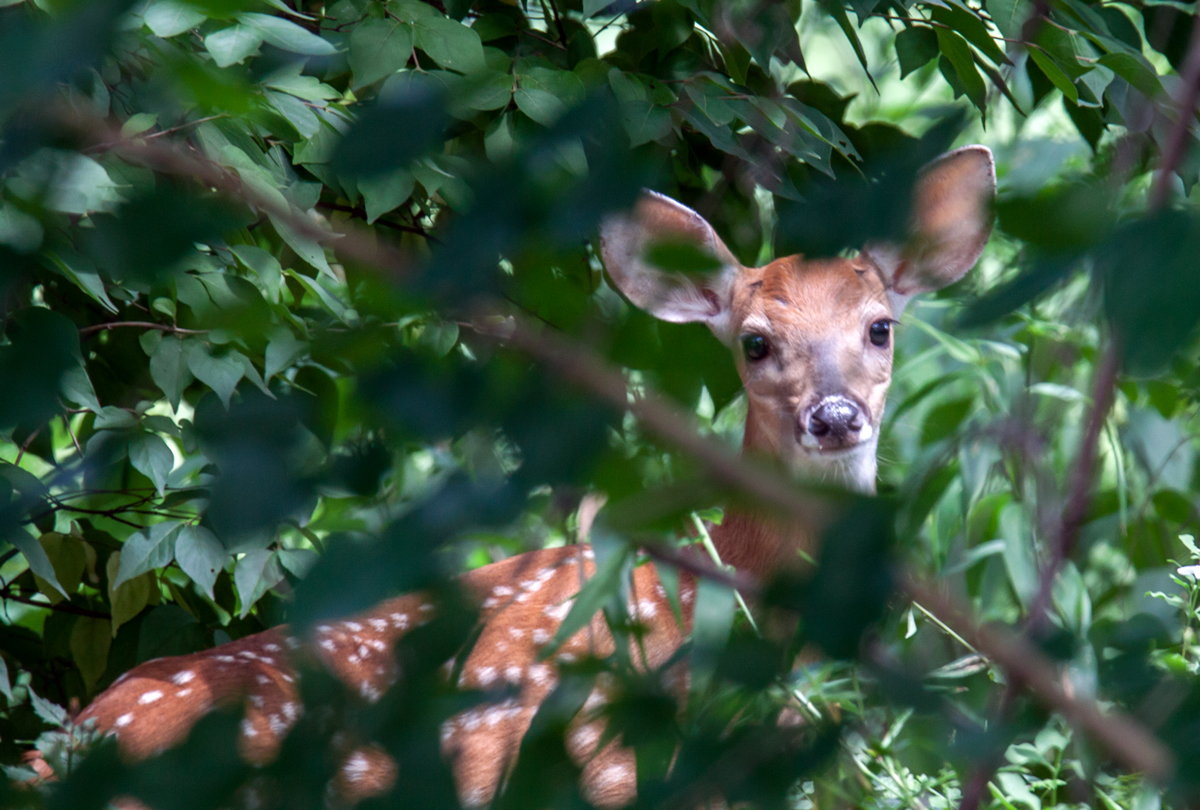
To post or not to post? For over a week, I have gone back and forth in my mind, trying to decide if I should post this image. Most of my deliberation has centered around the indisputable fact that significant parts of the main subject, a young White-tailed deer (Odocoileus virginianus), are obscured by the leaves and branches. Does the foliage add to the image or detract from it?

Ultimately, I decided that the emotional impact of the fawn’s gentle eyes, staring out at me from behind the curtain of leaves, trumped all other consideration. The leaves actually help to draw attention to those eyes, with their unbelievably long lashes.

What makes a good photo? I think a lot about that question as I go over my images. How heavily do I weigh technical and creative considerations? Most of the time, as was the case here, I’ll decide with my heart.

fawn

© Michael Q. Powell. All rights reserved.
Read Full Post »

A group of small birds was foraging in the shallow waters of a stream and I approached them quietly, hoping to get close enough to isolate one of them with my camera. They seemed to be in constant motion and I followed them, waiting and hoping. Finally they stopped for a moment and I crouched low and took this shot of what I believe to be a Least Sandpiper (Calidris minutilla).

I thought about cropping the image a little so that the bird would not be quite as centered, but I decided that I like the ripples in the left corner too much to cut them off. What you see in this posting, therefore, is the framing as the image came out of the camera.

Least Sandpiper

© Michael Q. Powell. All rights reserved.

Read Full Post »

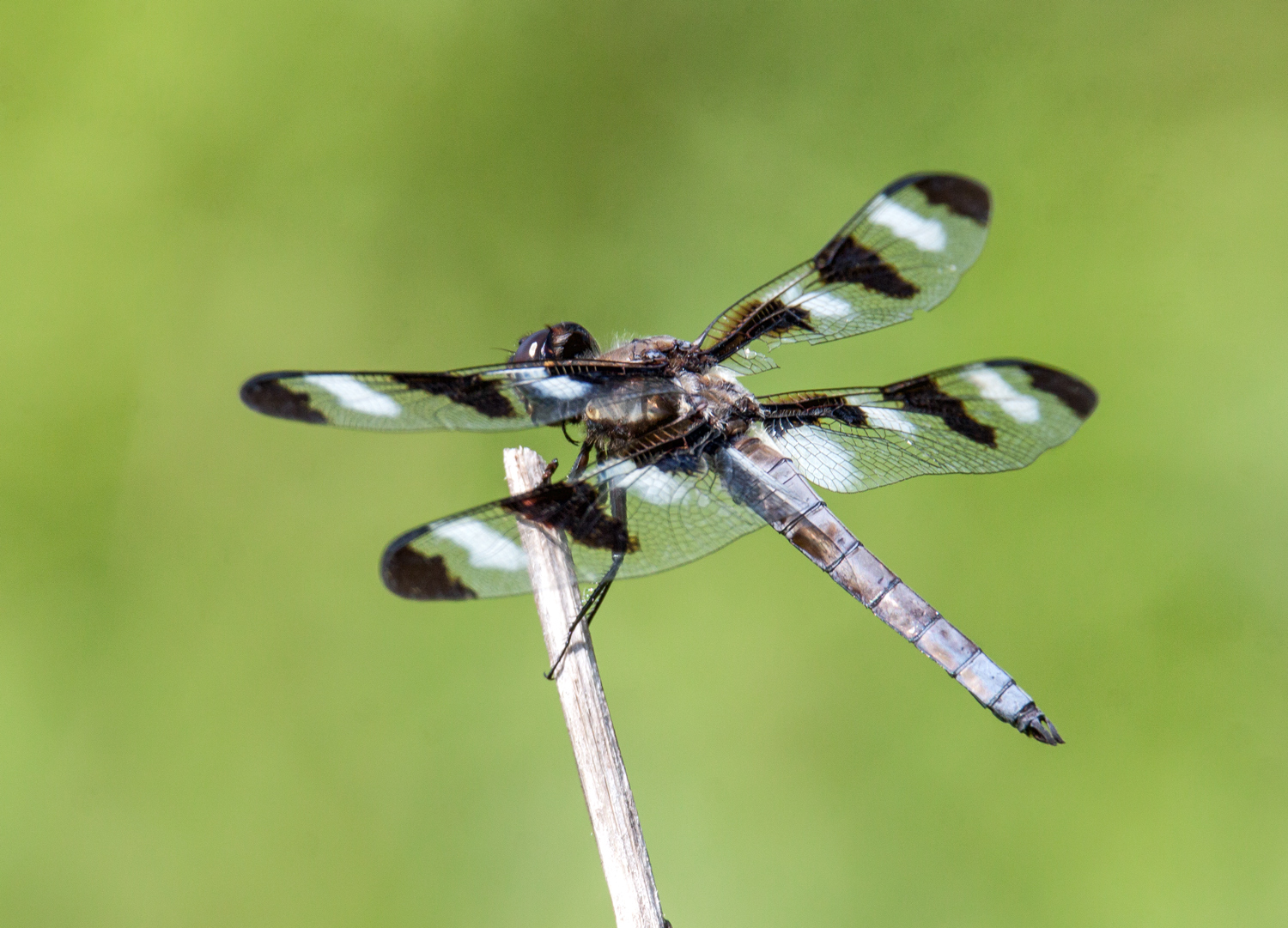
I tend to focus on the realism of close-up details in most of my dragonfly shots, but sometimes the dragonfly seems almost abstract, a mix of colors, shapes, and patterns, like this male Twelve-spotted Skimmer (Libellula pulchella) that I encountered the past Friday.

For those readers who may not be familiar with this boldly-patterned dragonfly species, I am also including a more “traditional” shot of the same Twelve-spotted Skimmer.

Twelve-spotted Skimmer

Twelve-spotted Skimmer

© Michael Q. Powell. All rights reserved.
Read Full Post »

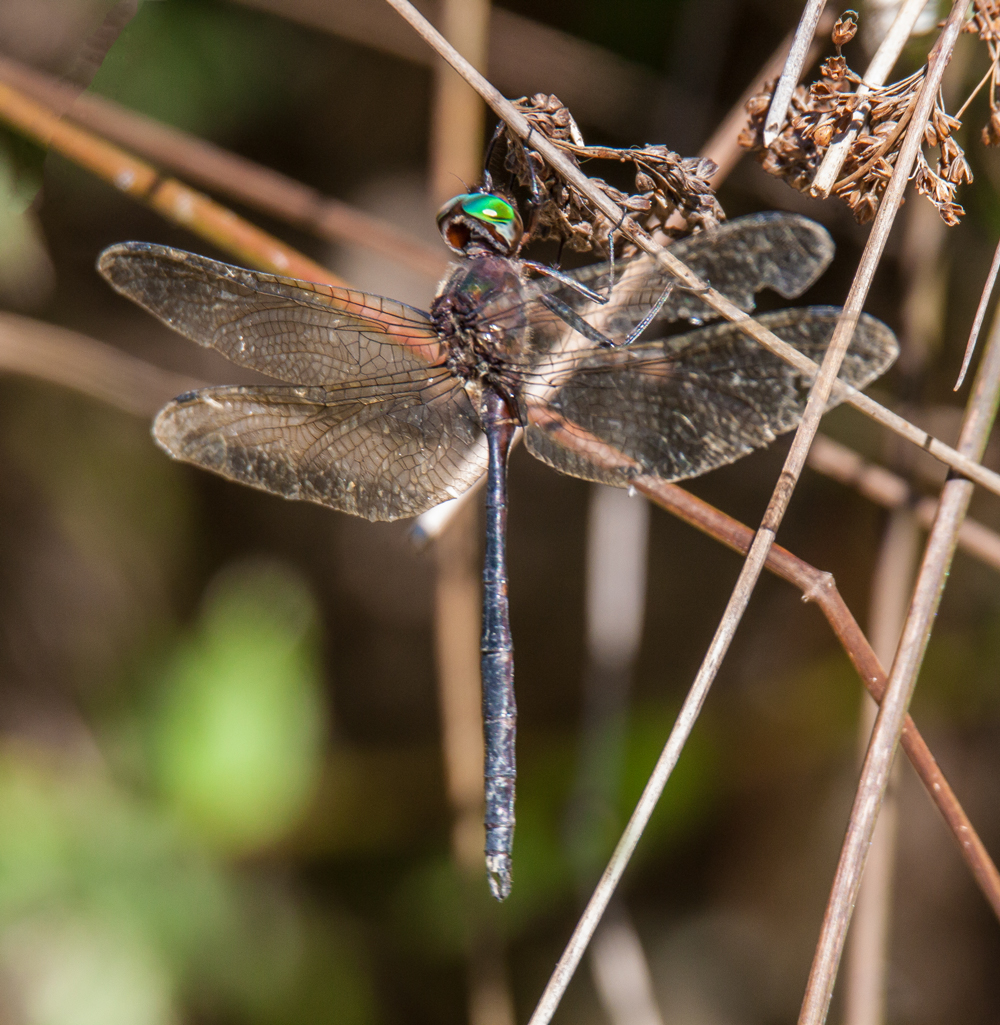
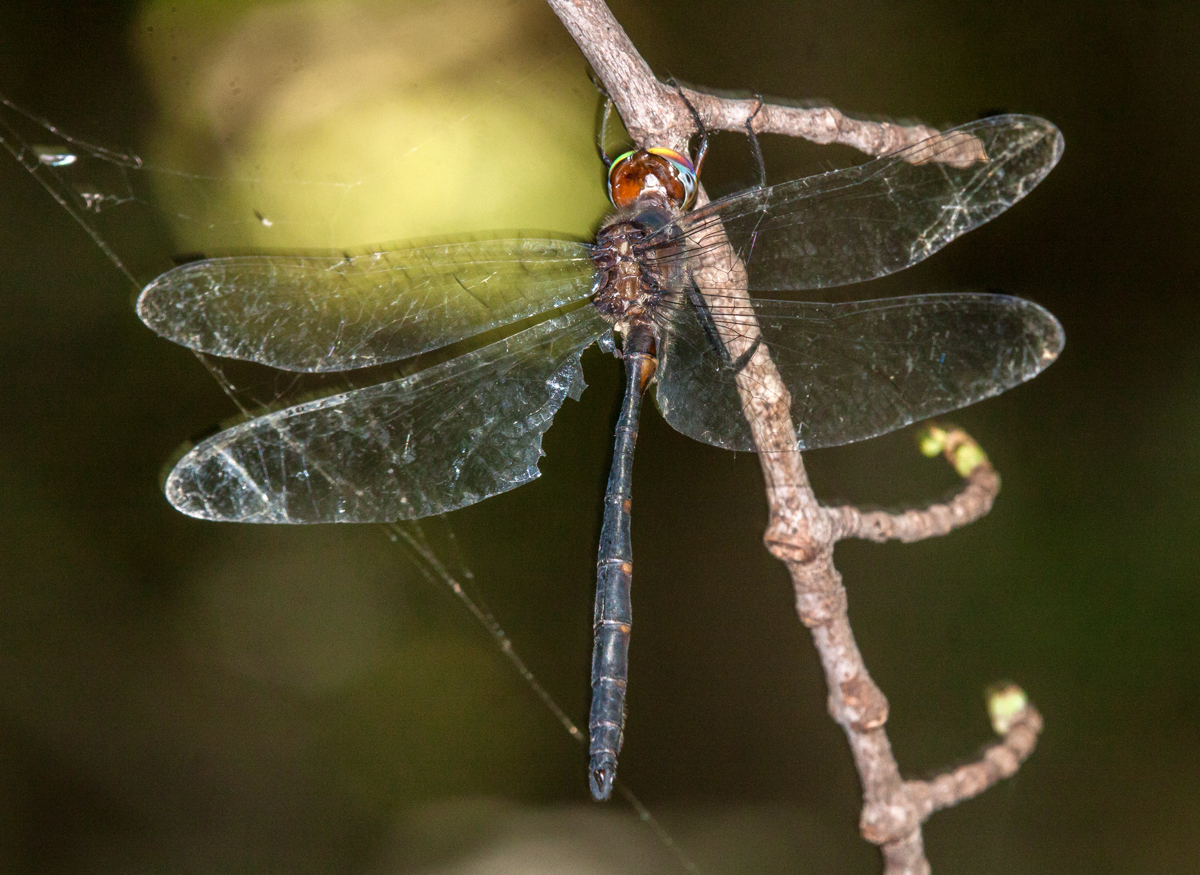
Most dragonflies appear to like the sunlight, but this Mocha Emerald dragonfly (Somatochlora linearis) that I encountered yesterday seemed to prefer the heavy shade, which made it a bit of a challenge to photograph.

I was walking along a small stream, moving in an out of patches of sunlight when I first spotted the dragonfly. I had my long telephoto lens on my camera and took some initial shots, which turned out blurry—there didn’t seem to be enough light for my camera’s autofocus to function well. I quickly set up my tripod and tried to focus manually, but that didn’t work out too well either.

Fortunately, the dragonfly seemed oblivious to my actions. I switched to my 180mm macro and moved in closer and finally was able to see well enough to focus. Because of the limited amount of light, I had the ISO cranked up to 1600 and used the pop-up flash.

As I moved about trying to get a better angle, I slid twice down the slippery bank of the stream into the shallow water and somehow managed to lose one of the little rubber feet of my tripod, but managed to get a couple of decent shots of this shadow-dwelling dragonfly.

Mocha Emerald

Mocha Emerald

© Michael Q. Powell. All rights reserved.

Read Full Post »

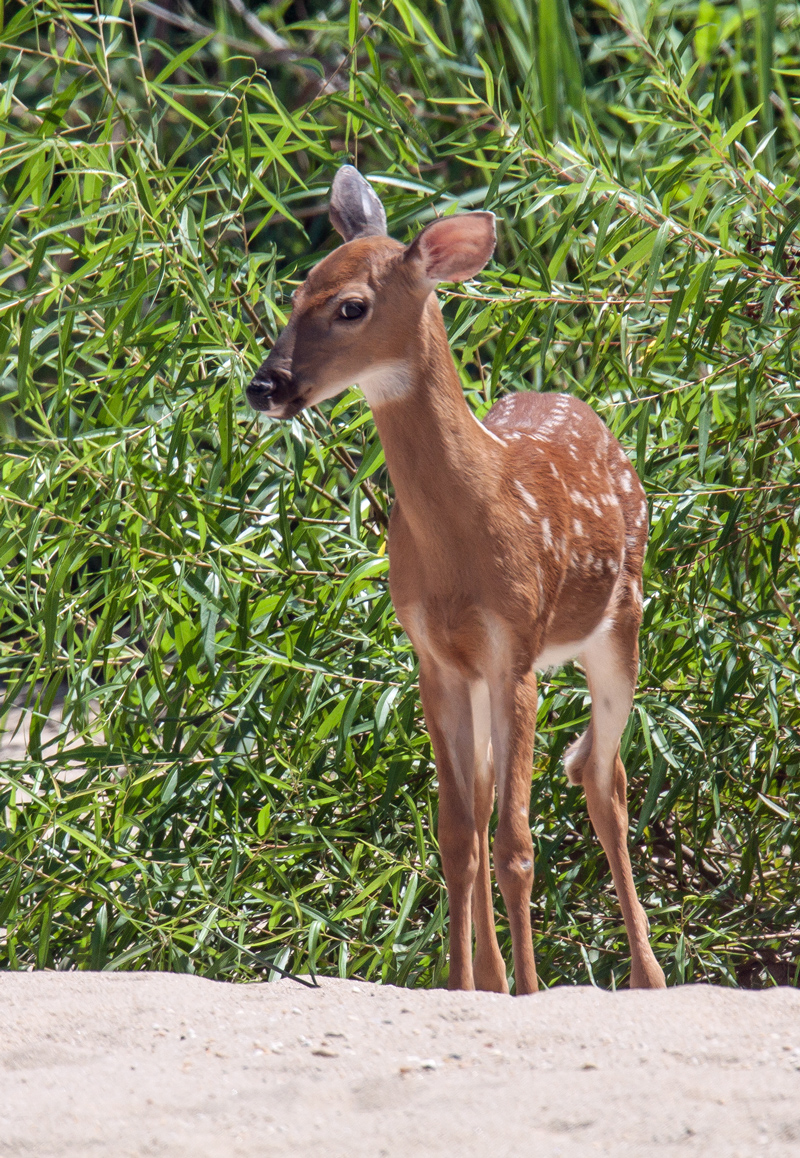
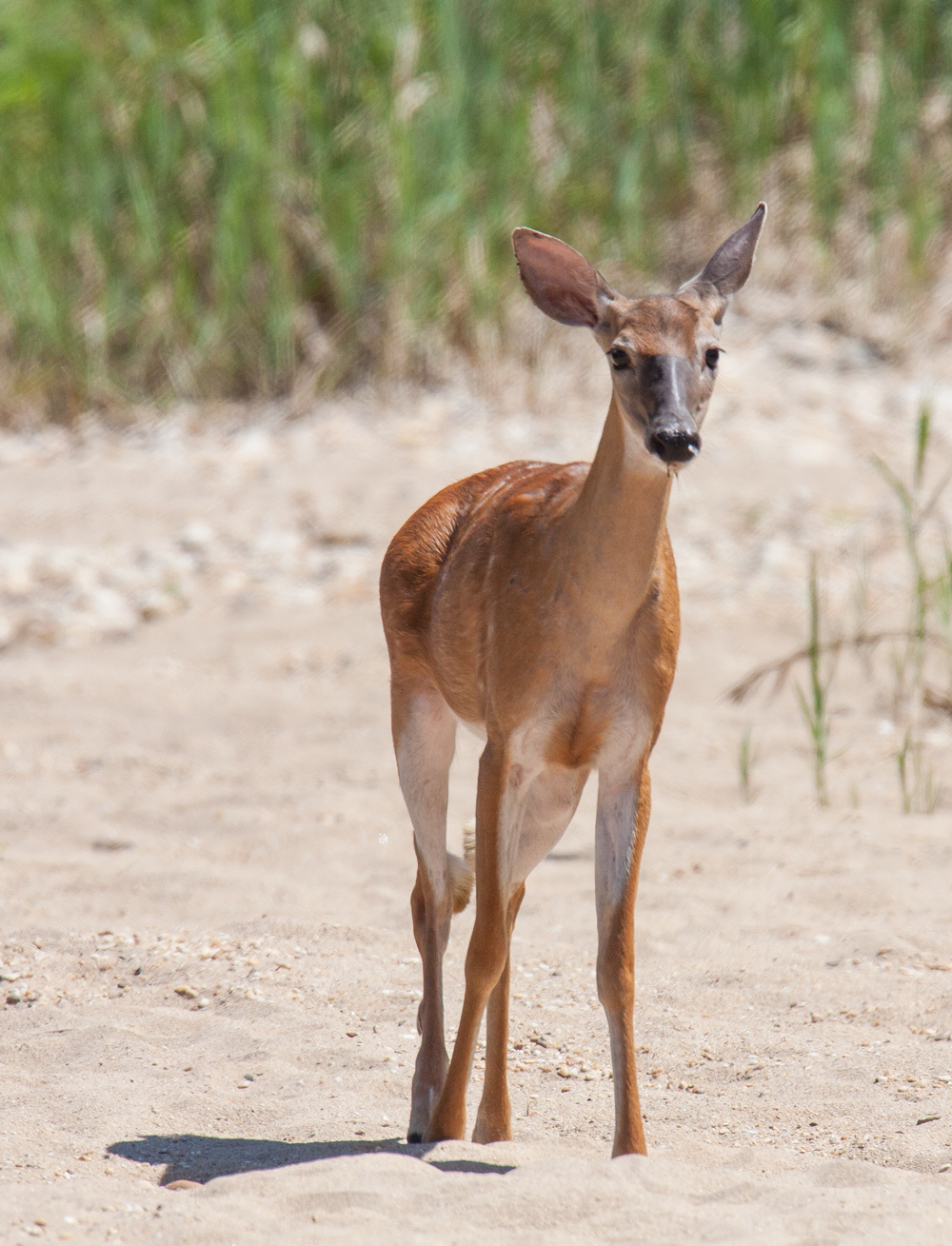
Last weekend I encountered an adorable family of White-tailed Deer (Odocoileus virginianus) while walking along a sandy area of Holmes Run, a stream not far from where I live that eventually flows into the Potomac River.

I had unobstructed views of the deer and was able to get some shots with my telephoto zoom without scaring them away. Unfortunately, the loud sounds of a passing freight train caused them to turn and run into the brush as I was trying to get shots from additional angles.

Still, I am happy with my results and think the sand adds a different look to my normal shots of deer in vegetation.

White-tailed deer

White-tailed deer

White-tailed deer

White-tailed deer

© Michael Q. Powell. All rights reserved.

Read Full Post »

I love looking at the world through my macro lens and finding beauty on a tiny scale, like this gorgeous green bee that I spotted this past weekend in the garden of my neighbors.

I am not certain of the exact identification of this bee, but I think it is part of the genus Agapostemon that includes a variety of green sweat bees.


green bee

© Michael Q. Powell. All rights reserved.
Read Full Post »

I can understand how an adept female Red-winged Blackbird (Agelaius phoeniceus) can catch one dragonfly, but how in the world did this one manage to catch two at once?

I can’t tell for certain, but the dragonflies in the bird’s mouth look to be female Common Whitetails (Plathemis lydia) or possibly immature males, which look like the females. The wings seem to be very transparent, so it’s possible too that these may be newly emerged dragonflies—when they first transition from the water nymph stage into dragonflies, they are very vulnerable.

Red-winged Blackbird

© Michael Q. Powell. All rights reserved.

Read Full Post »

Yesterday as I was watching some Ruby-throated Hummingbirds (Archilochus colubris) buzzing around some distant trumpet flowers at Huntley Meadows Park, one of them suddenly flew closer to a small patch of cardinal flowers (Lobelia cardinalis).  The shutter speed was too slow to stop the action completely, but you can see how perfectly the hummingbird’s bill fits into the long tubular flower that is too narrow for most bees to reach.

Hummingbirds fly really fast, so I wasn’t too surprised that there was a lot of motion blur in my shots. I was a bit shocked, however, to see that my shutter speed had fallen to 1/100 of a second for these shots, which is, of course, way too slow for the subject, particularly because I was shooting with my zoom lens at 600mm handheld. When I was focusing on the sitting hummingbird that I included as the final shot here, there was considerably more light and the subject was stationary and I did not make any adjustments when the hummingbird flew to a darker area with the cardinal flowers.

If you look closely at the shot of the perched hummingbird, you may notice that it has tiny feet. According to the Cornell Lab of Ornithology website, “The extremely short legs of the Ruby-throated Hummingbird prevent it from walking or hopping. The best it can do is shuffle along a perch. Nevertheless, it scratches its head and neck by raising its foot up and over its wing.”

Ruby-throated Hummingbird

Ruby-throated Hummingbird

Ruby-throated Hummingbird

© Michael Q. Powell. All rights reserved.


Read Full Post »

It violates one of the basic rules of photography to have your subject in the center of an image, but for both of these shots of a male Widow Skimmer dragonfly (Libellula luctuosa), that’s precisely what I did.

In the first image, the blade of grass that bisects the image helps to emphasize the symmetric patterns on the wings of the Widow Skimmer.

Widow Skimmer

In the second image, I was so fascinated by the geometric lines of the grass and their varying degrees of sharpness that I did not want to crop them at all, so I left the Widow Skimmer more or less in the center.

Widow Skimmer

When it comes to my photography, I tend to look at “rules” as general guidelines that apply in many—but not all—situations. That approach helps me to remain centered and flexible.

© Michael Q. Powell. All rights reserved.
Read Full Post »

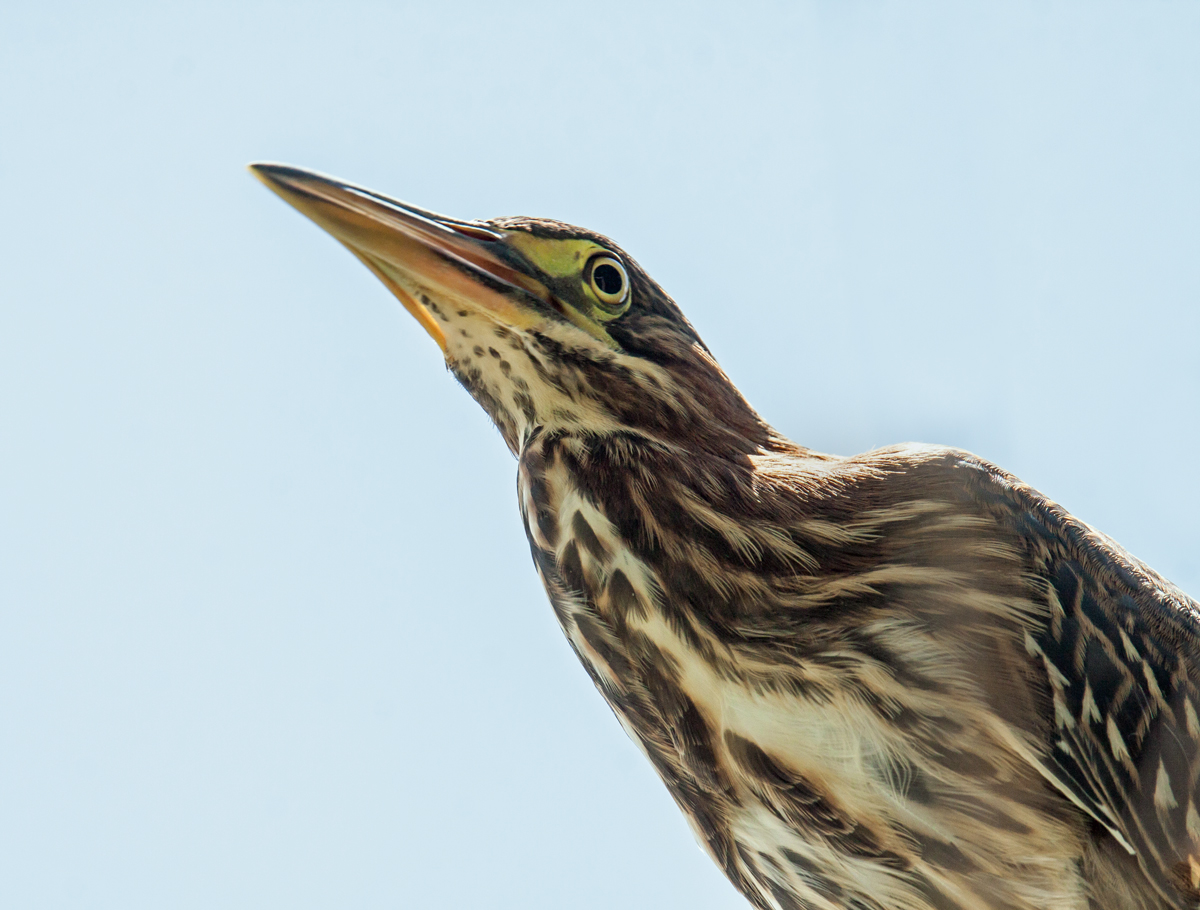
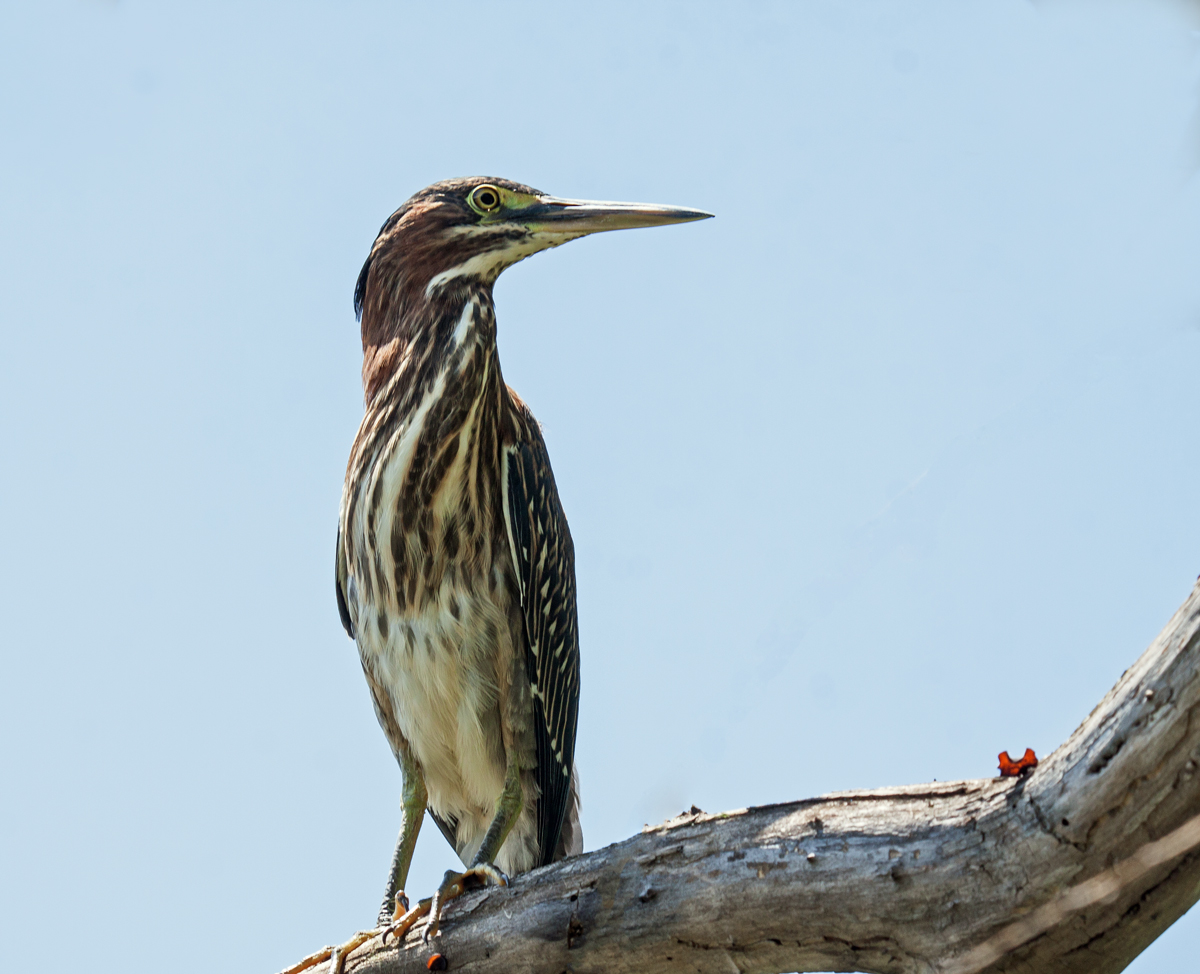
Yesterday as I was exploring Ben Brennan Park, a suburban park in Alexandria, Virginia with a pond, I spotted a young Green Heron (Butorides virescens) in a tree. I took some initial shots and then was able to creep up to the tree and shoot almost directly up.

I have taken numerous photos of Green Herons, but this is the first time that I’ve ever taken a shot showing the underside of the bill. I love to shoot familiar subjects hoping to see them from new perspectives or engaging in interesting behavior.

Green Heron

Green Heron

Green Heron

heron4_up_blog

© Michael Q. Powell. All rights reserved.

Read Full Post »

Tracking a moving bird as it weaves its way in and of vegetation is a real challenge for a photographer and it seems almost miraculous when you manage to get any shots in focus. My skills were definitely tested last weekend when I spotted a female Ruby-throated Hummingbird (Archilochus colubris)  in a patch of trumpet vine (Campsis radicans) at my local marshland park.

I did manage to get a few clear shots in which there were no branches between me and the hummingbird, but mostly I tried to find little windows among the branches through which I could get a view of a part of the bird. I was standing on a boardwalk when I took these shots, so there was not much room for to maneuver to get better angles of view. Additionally, the trumpet vines were a pretty good distance away, so I had to crank out my telephoto zoom and even then had to crop the images.

I don’t often see hummingbirds, so I was happy to capture some shots of this beautiful bird as it flitted from flower to flower.

Ruby-throated Hummingbird

Ruby-throated Hummingbird

Ruby-throated Hummingbird

Ruby-throated Hummingbird

Ruby-throated Hummingbird

© Michael Q. Powell. All rights reserved.
Read Full Post »

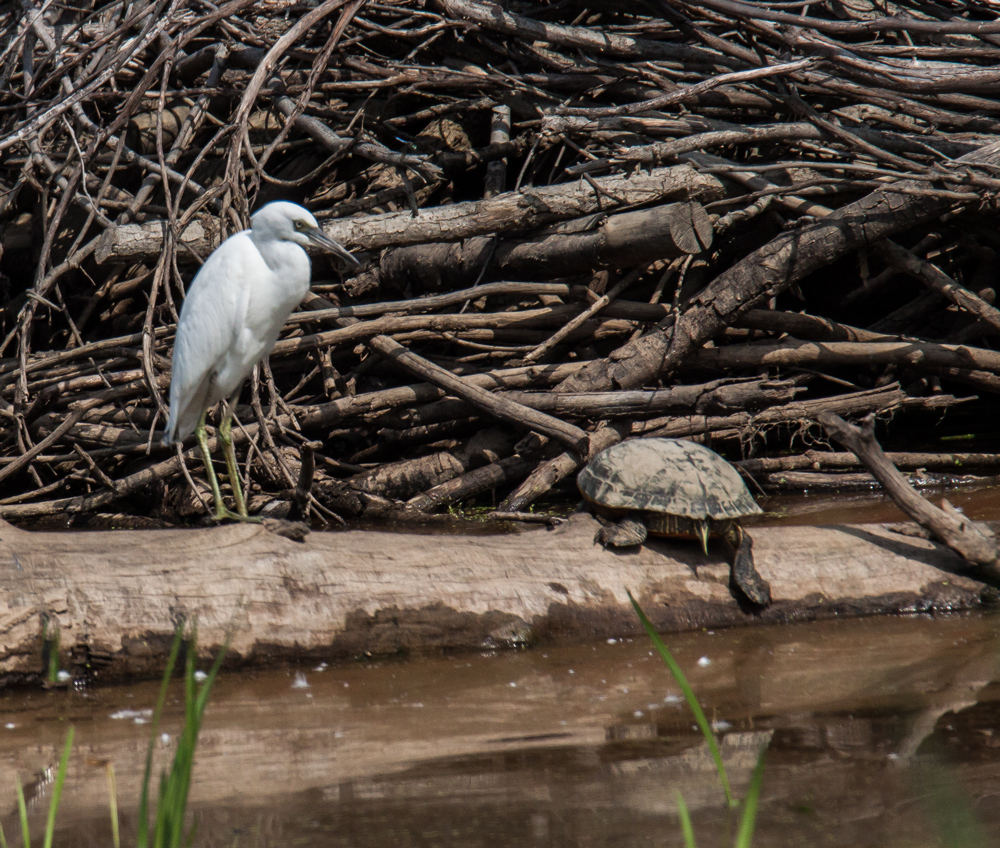
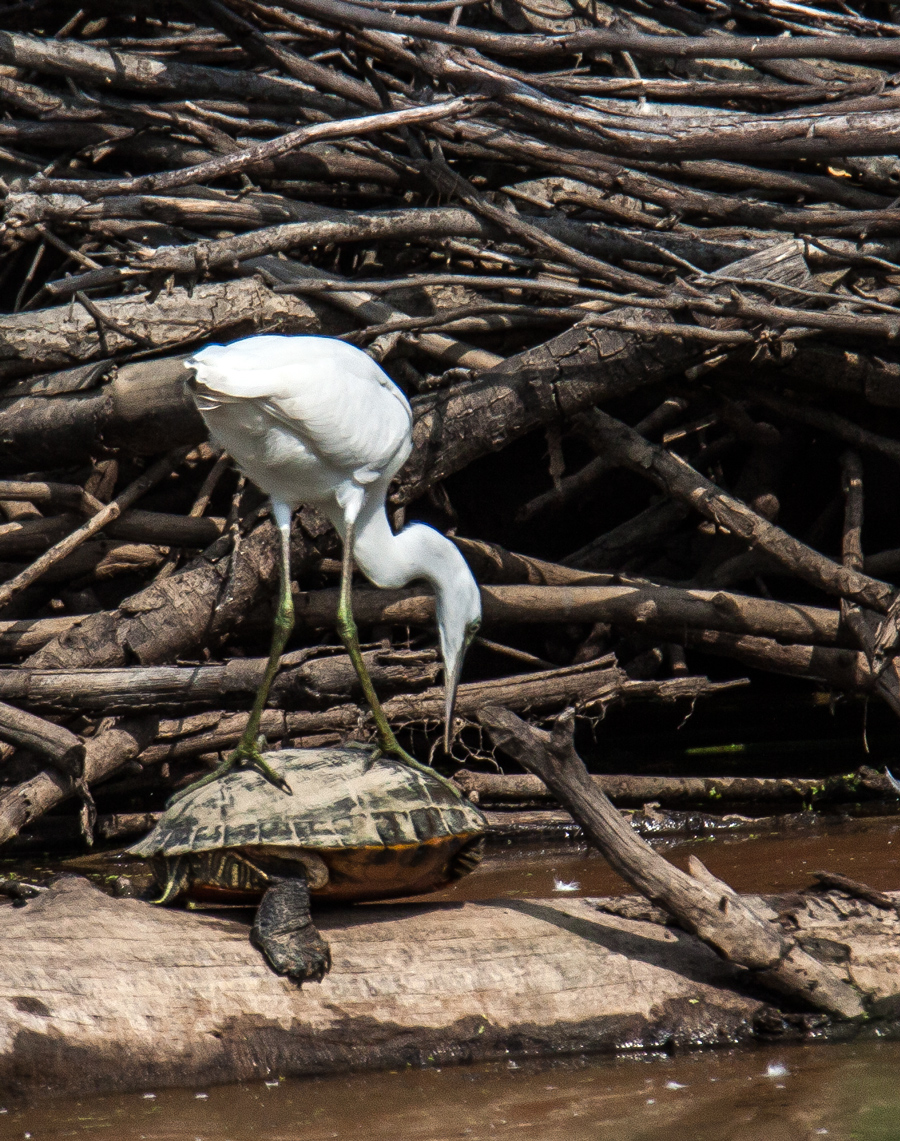
As I watched through my telephoto lens last Friday, one of the juvenile Little Blue Herons (Egretta caerulea) at Huntley Meadows Park became increasingly curious about the turtle with whom it was sharing a log. The heron moved closer and closer and finally jumped on top of the turtle. I was shocked to see the heron then put its face mere inches from that of the turtle.

This past month, a group of four or more juvenile Little Blue Herons has taken up residence at my local marshland park. When I first saw them, I assumed they were Great Egrets, because of the bright white coloration. However, the bills are a different color than those of the egrets. I am hoping that the Little Blue Herons hang around long enough for us to see them change into the blue color for which they are named.

I managed to take a series of shots of the encounter between the heron and the turtle. I initially thought it was a snapping turtle, but one of the folks who saw a photo I posted on Facebook thinks it might be a slider of some sort, a Red-eared Slider (Trachemys scripta elegans), I would guess after taking a closer look at the second image.

Little Blue Heron

Initially the heron eyed the turtle from a distance.

Little Blue Heron

Then he decided to get a closer look.

Little Blue Heron

Feeling bold, he placed one foot on the turtle…

Little Blue Heron

…and jumped on top of the turtle.

Little Blue Heron

His curiosity still not yet satisfied, the heron leaned in for a face-to-face encounter. (Note that the turtle has retracted one of its front legs.)

© Michael Q. Powell. All rights reserved.

Read Full Post »

Chasing after beautiful butterflies on a sunny summer day—it doesn’t get much better than that. I don’t know plants very well, but this appears to be some kind of thistle. I photographed this Eastern Tiger Swallowtail (Papilio glaucus) last Saturday at Huntley Meadows Park in Alexandria, Virginia.

Eastern Tiger Swallowtail

© Michael Q. Powell. All rights reserved.

Read Full Post »

The blooming Swamp Rose Mallows (Hibiscus moscheutos) at Huntley Meadows Park helped provide a beautiful backdrop for this Great Blue Heron (Ardea herodias) that I spotted there last Saturday.

Great Blue Heron

© Michael Q. Powell. All rights reserved.
Read Full Post »

How do you capture the details of a pure white bird as it flies in an out of the light? That was my challenge this past weekend when I tried to photograph Great Egrets (Ardea alba) at my local marshland park.

Many of my past shots of egrets have been unsuccessful, usually because they are overexposed and the highlights and details are blown out. I’ve tried using exposure compensation with only minimum success.

This time, I remembered to switch to spot metering and had greater success. Sure, the backgrounds are a bit underexposed, but I think that the darkness helps the highlight the beauty of the egret.

Great Egrets seem a little awkward when in the water, but when they take to the air, it’s like watching a ballet.

Great Egret

Great Egret

Great Egret

© Michael Q. Powell. All rights reserved.
Read Full Post »

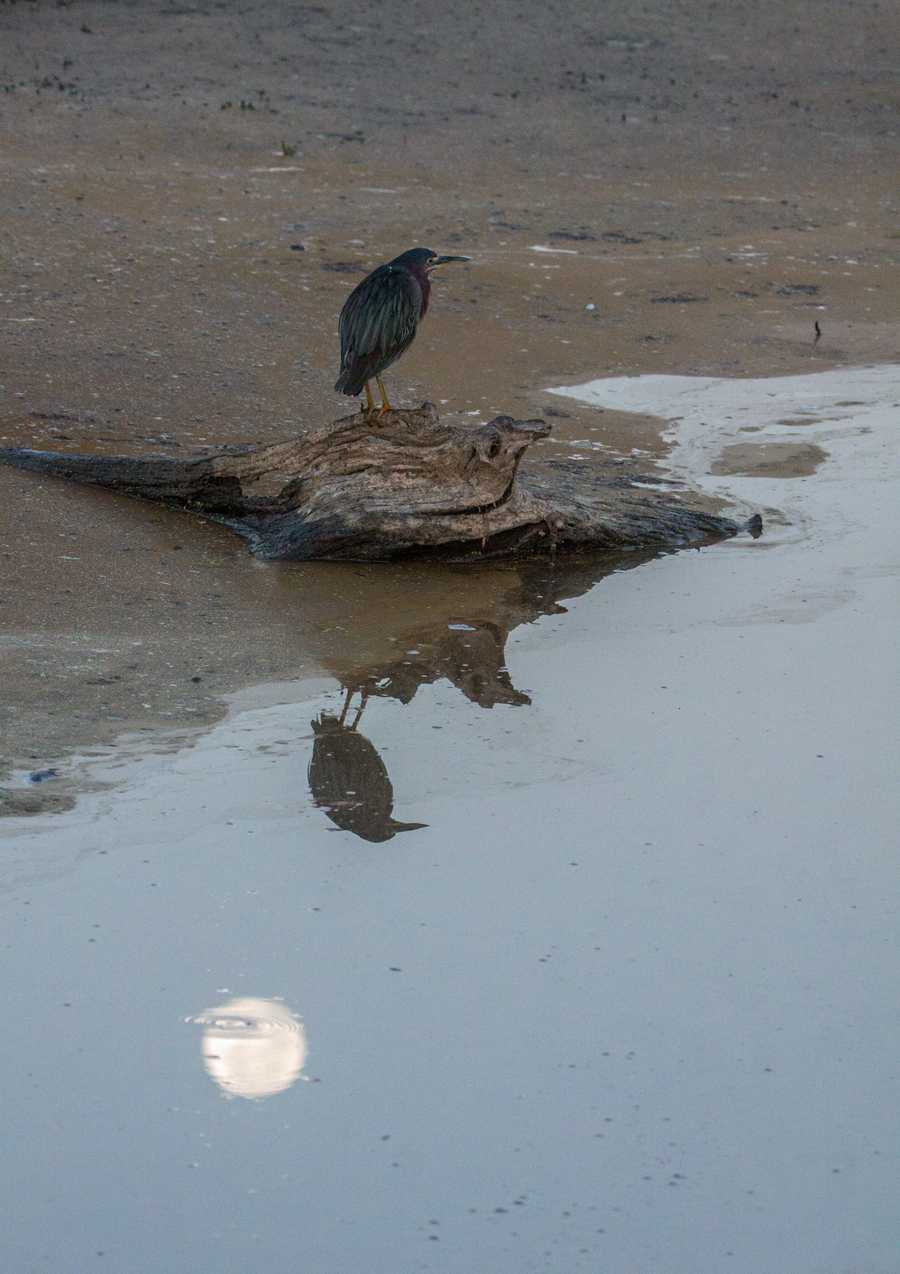
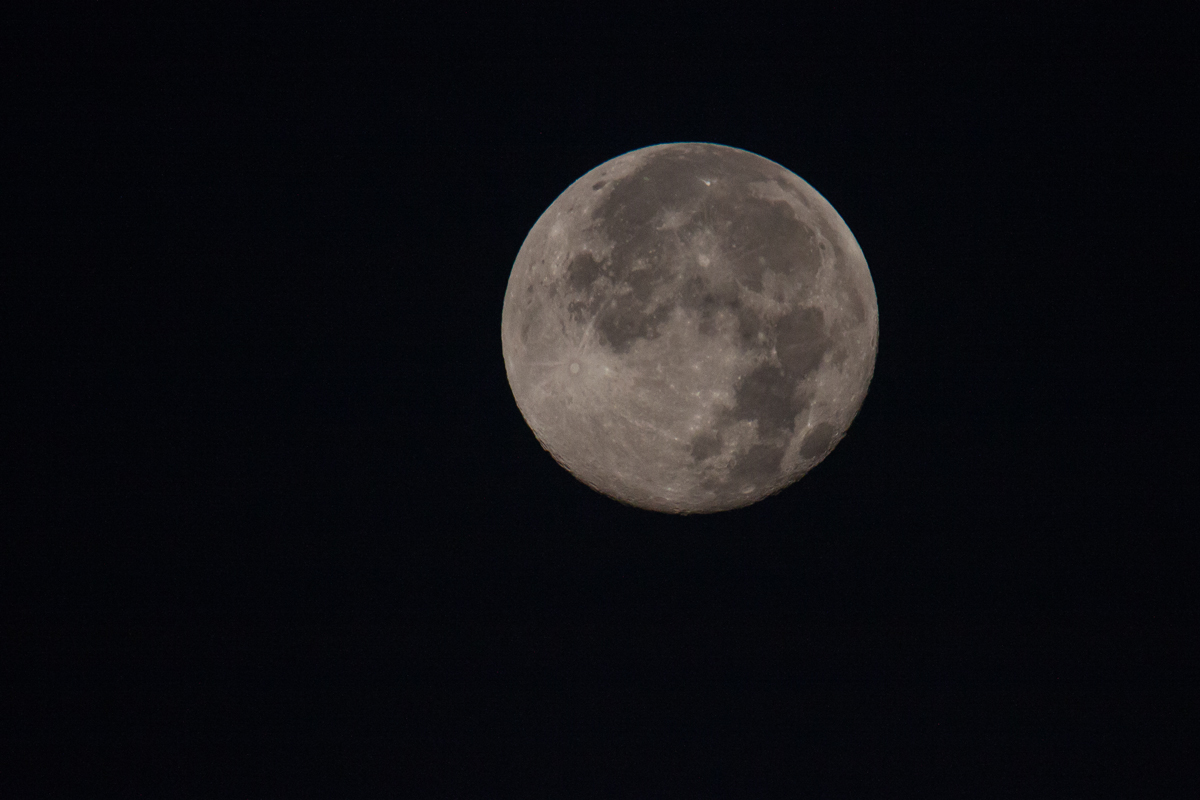
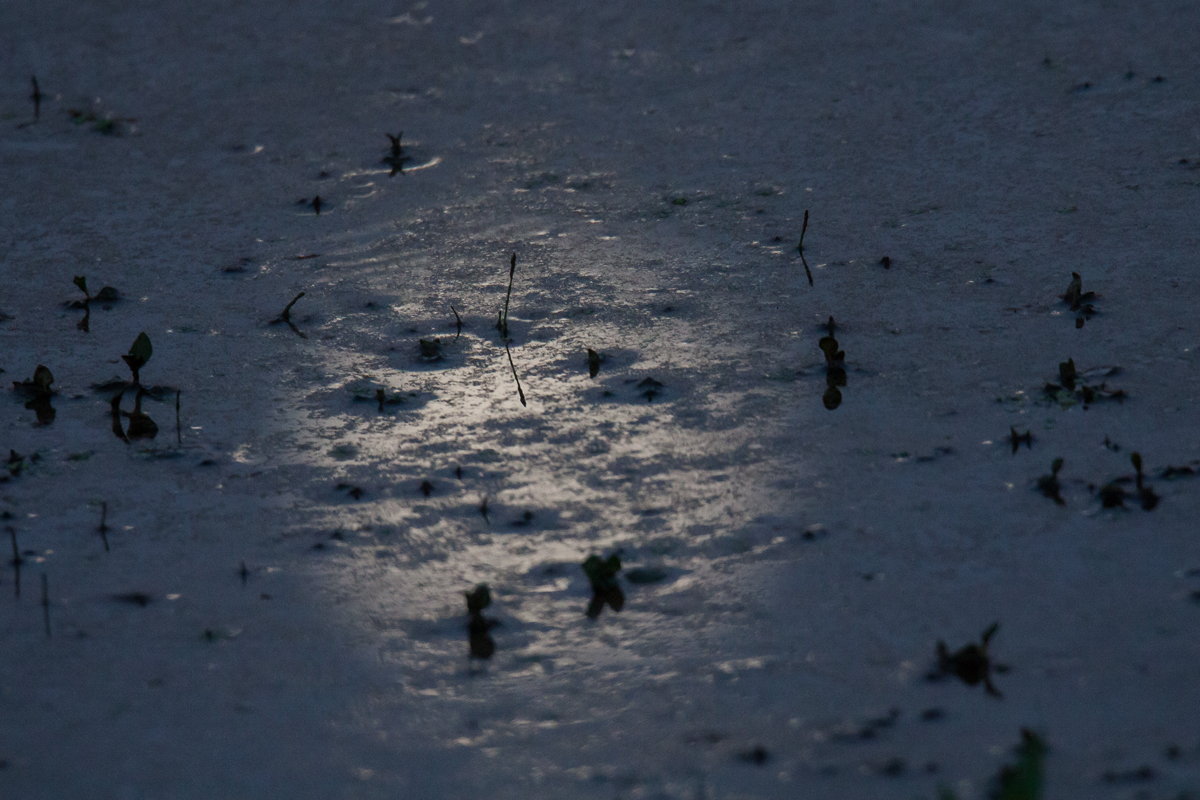
The full moon was bright and beautiful early yesterday morning, when I arrived at Huntley Meadows Park as the sun was just beginning to rise.

I struggled a little, trying to figure out the best way to capture the moon. Should I show the moon against the black night sky? Should I show merely its reflection? Should I show it as an element of a larger composition?

Here are some of my attempts to show the full moon in the predawn light at my local marsh.

Green Heron

Green Heron in the moonlight

Full moon in the night sky

Full moon in the night sky

reflections of a full moon

Reflections of a full moon

full moon

Moon over the marsh


© Michael Q. Powell. All rights reserved.

Read Full Post »

The Green Heron (Butorides virescens) was mostly in the shadows yesterday as I observed him at the edge of a small stream. When he bent down, his face was briefly illuminated and I managed to capture this action portrait with a fascinating interplay of light and darkness.

Green Heron

© Michael Q. Powell. All rights reserved.

Read Full Post »

« Newer Posts - Older Posts »