Feeds:
Posts
Comments

Archive for the ‘Nature’ Category

As we move to colder temperatures, I am taking fewer photos of insects and more of birds, like this cool-looking House Finch that I spotted last Wednesday at Occoquan Bay National Wildlife Refuge. From a distance, I though that this perched bird might be a sparrow, judging from its basic coloration. When I got a little closer, I could see the conical-shaped bill and reddish tinge on the bird’s head and breast, so I immediately was able to tell that it was definitely not a sparrow.

At first glance, the two photos may look identical, but if you look closely, you’ll see that the bird’s head is in a different position in each image. Although the second image is a better profile shot, the birds’s face is in the shadows. In the first image, the bird had turned its head a little bit and the light was shining more directly on its face and produced a nice catchlight in its eye.

When I am taking photos of birds, I usually shoot in short bursts, because even perched birds around a lot and each movement may result in a different expression and pose.

House Finch

House Finch

© Michael Q. Powell. All rights reserved.

Read Full Post »

Last Friday at Occoquan Bay National Wildlife Refuge I captured this fun little image of a Yellow-rumped Warbler (Setophaga coronata) in mid-air as it hopped to a new position on a tree with colorful fall foliage. I am pretty sure that the warbler was stationary when I clicked off a short burst of shots and luck played a big role in me being able to capture this moment. Yellow-rumped Warbler

© Michael Q. Powell. All rights reserved.

Read Full Post »

As I was walking along on one of the trails at Occoquan Bay National Wildlife Refuge last Friday, I noticed a large spider coming in my direction at a pretty good clip. I gave the spider plenty of space, but managed to capture this image of what I believe is a Wolf Spider with my long telephoto lens.

Wolf spiders belong to the family Lycosidae and are among the most common spider species found around the world. According to an article entitled “Wolf Spider: Friend or Foe?” wolf spiders “are keen hunters that chase or pounce on prey like wolves rather than spin a web and wait for a meal. Unlike wolves hunting as packs, wolf spiders generally live and hunt alone. Hunting occurs both day and night.”

wolf spider

© Michael Q. Powell. All rights reserved.

Read Full Post »

Autumn Meadowhawk dragonflies (Sympetrum vicinum) love to perch on the ground and at this time of the year the ground is covered with fallen leaves in many places. Most of those leaves are brown, which makes for pretty good shots, but I am always hoping that an Autumn Meadowhawk will choose to perch on a more colorful red or yellow leaf. Last Wednesday at Occoquan Bay National Wildlife Refuge, I was fortunate when one of these colorful little dragonflies landed on a yellow leaf and I captured the first image.

Although the second and third images feature brown leaves, I love the textures and shapes of those leaves. I also like the way that the drabness of the leaves helps the bright red of the dragonfly’s body really stand out.

At this time of the year, most of my photographic subjects are likely to be birds, so I tend to walk around with my Tamron 150-600mm telephoto zoom lens on my camera. Although a long telephoto lens my not be my first choice for photographing such a small subject—an Autumn Meadowhawk is about 1.3 inches (33 mm) in length—I can get pretty good results if I am really careful in steadying the lens and paying attention to the focus point. All three of these images, for example, were shot with the lens fully extended to 600mm.

Autumn Meadowhawk

Autumn Meadowhawk

Autumn Meadowhawk

© Michael Q. Powell. All rights reserved.


Read Full Post »

I almost never get an unobstructed view of a warbler. Most of the time I see them flitting about in the foliage, making it difficult to get a clear shot of one. If I am lucky, I manage to capture an image, like the final one, when the warbler pokes its head out of the brush for a moment.

Last Wednesday at Occoquan Bay National Wildlife Refuge, I was shocked and delighted when I was able to take a series of unobstructed shots of a Yellow-rumped Warbler (Setophaga coronata) as it was feeding on some poison ivy berries. The first three images shows some moments from that encounter.

As I look at these four images, I am strangely drawn most to the final one. Despite the clutter of the branches in that shot, the warbler stand out—the branches serve as a kind of frame for the central subject. Now I really do like the way that the first two images capture the action of the bird and the way the third shot provides the best view of the perching warbler, but someone the environmental shot appeals to me most this morning as I am composing this posting. What do you think?

Yellow-rumped Warbler

Yellow-rumped Warbler

Yellow-rumped Warbler

Yellow-rumped Warbler

© Michael Q. Powell. All rights reserved.

Read Full Post »

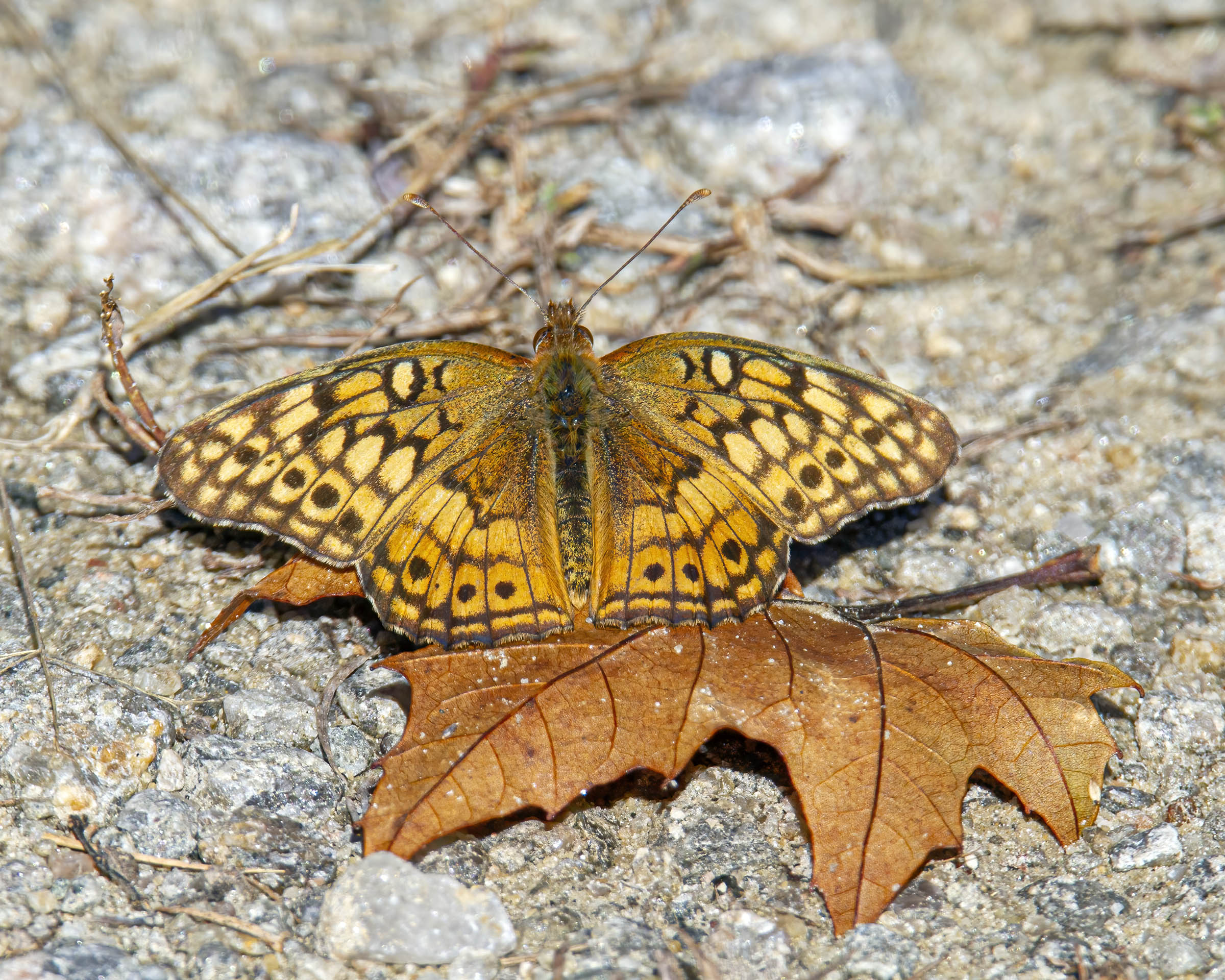
I chased this orange butterfly for quite some time on Wednesday at Occoquan Bay National Wildlife Refuge and was delighted when it chose to land on top of a fallen leaf. The warm oranges and browns of the butterfly are a wonderful match for the autumn season and the fallen down leaves that now litter the landscape.

I could not immediately identify the butterfly, but when I got home I was able to determine that it is a Variegated Fritillary butterfly (Euptoieta claudia). My car windshield was covered with frost yesterday morning—autumn is definitely here and I suspect that my insect sightings will be decreasing sharply soon.

Variegated Fritillary

© Michael Q. Powell. All rights reserved.


Read Full Post »

I couldn’t get very close to this Belted Kingfisher (Megaceryle alcyon) at Occoquan Bay National Wildlife Refuge last week, but I was happy to get a few long-distance shots before it flew away. Kingfishers are incredibly skittish and often my first indication of the presence of one is when I see or hear it flying away from me.

Generally I prefer to photograph birds that are perched on natural objects, but in this case I really like the geometric shape of the wooden structure that was sticking out of the water. Considering that I took these shots from a long way off, I was happy to be able to capture some of the grain of the wood and the bolt that held the boards to the post. I think this might have been part of a former duck blind, though it is hard to know for sure where it came from.

I am hoping to see this kingfisher again and perhaps will manage to get some closer shots the next time. Like most wildlife photographers, I am always thinking of my next shots, confident that I can capture better images on future outings.

Belted Kingfisher


Belted Kingfisher

© Michael Q. Powell. All rights reserved.

Read Full Post »

I was concentrating so intently on photographing the large eagle nest at Occoquan Bay National Wildlife Refuge last Wednesday that I almost missed the Bald Eagle (Haliaeetus leucocephalus) that was sitting in the nest. This nest is really deep and during nesting season it is hard to tell if one or more of the eagles are inside of it. The nesting season ended quite some time ago, so I definitely did not expect to see the nest occupied at this time of the year.

The second shot is the one that I was intending to capture. I liked the way that the red leaves were creeping up the side of the trees holding the nest and that was what I was I was photographing. If you look really carefully, you can just see a bit of the yellow beak of the eagle stick out from behind the leftmost tree, but I did not notice it at the time I took the shot.

After I had taken a few shots, I continued on the trail a half dozen steps, seeking to photograph the nest from a different angle. It was only then that I spotted a bit of bright white that turned out to be the eagle’s head. The eagle was hidden really well, but appeared have positioned itself so as to be able to keep an eye on what was happening around it.

I captured a series of images, but the eagle’s head was blocked by the nest and/or the leaves in most of them. Fortunately, the eagle was moving its head from side to side and eventually I managed to capture a shot in which we can see the eagle’s eye pretty clearly.

Quite often in my wildlife photography, I detect the subject only because of its movement, but in this case, the subject was stationary and it was the difference in color of the eagle’s head that allowed me to spot it. As you can probably guess, my eyes are moving constantly when I am out with my camera, searching high and low, near and far, and left to right for potential subjects to photograph.

eagle nest

eagle nest

© Michael Q. Powell. All rights reserved.


Read Full Post »

Last Wednesday I spotted this beautiful little Eastern Comma butterfly (Polygonia interrogationis) at Occoquan Bay National Wildlife Refuge. It struck me that the butterfly’s colors are a perfect match for this autumn season.

I really like this image. When I posted in on my Facebook page, the word “contrast” keep coming up in the comments of my viewers. Some noted the contrast in colors, while others commented on the contrast in textures. I think that the downward-facing pose of the butterfly and the rather unusual shape of its wings also causes people to pause for a moment as their brains try to process what they are seeing.

Years ago I remember reading a post by a fellow blogger, Lyle Krahn, who used the term “stopping power.” Although he was referring to subjects that you found interesting enough that you would stop to take a photo, I think that it applies equally well to viewers. What makes a photo compelling enough that a viewer will stop and examine it, rather than simply scrolling on to the next posting?

We are constantly inundated with visual images that compete for our attention, but so often they affect us only superficially. It is my challenge as a photographer to capture and/or create images that help you to see the world in a different, deeper way, that prompt you to slow down and experience the beauty that surrounds you.

As noted American photographer Dorothea Lange stated, ““The camera is an instrument that teaches people how to see without a camera.”

Eastern Comma

© Michael Q. Powell. All rights reserved.

Read Full Post »

I was thrilled to spot this Blue-faced Meadowhawk dragonfly (Sympetrum ambiguum), one of my favorite species, this past Wednesday at Occoquan Bay National Wildlife Refuge. The dragonfly was cooperative and let me get pretty close with my Tamron 180mm macro lens and capture some of the amazing details of this colorful dragonfly, like its tiny feet and the little hairs on its legs.

I personally find the combination of the bright red body and the blue eyes to be stunningly irresistible and I look forward to spotting this species each autumn. If you click on either of the two images, you will be able to see some of the individual facets that make up the compound eyes. I have always wondered what it would be like to see the world through the eyes of a dragonfly.

I really like the description of a dragonfly’s sight that I found in a fascinating article by a writer called GrrlScientist that I encourage you to read. She wrote,

“Each compound eye is comprised of several thousand elements known as facets or ommatidia. These ommatidia contain light sensitive opsin proteins, thereby functioning as the visual sensing element in the compound eye. But unlike humans, day-flying dragonfly species have four or five different opsins, allowing them to see colors that are beyond human visual capabilities, such as ultraviolet (UV) light. Together, these thousands of ommatidia produce a mosaic of “pictures” but how this visual mosaic is integrated in the insect brain is still not known.”

I had to search hard to find this dragonfly and it was the only one of its species that I saw that day. At this time of the year few dragonflies are still flying. However, I am not ready to call it quits for the dragonfly season, though the end is drawing near.


Blue-faced Meadowhawk

Blue-faced Meadowhawk

© Michael Q. Powell. All rights reserved.
 

Read Full Post »

It looks like all of the summer dragonflies are gone. During three treks with my camera this week, I have not spotted any of the species that were common during the summer.

Fortunately, there are a few autumn species that hang on long after the summer species are gone. This week I was pleased to see some Autumn Meadowhawk dragonflies (Sympetrum vicinum), which in the past have been present as late as December.

The dragonfly in the first photo is a male Autumn Meadowhawk that I photographed yesterday at Jackson Miles Abbott Wetland Refuge. Each year when I see them I are struck by their small size—they are only about 1.3 inches (33mm) in length. Mature males are a bright reddish-orange in color and have beautiful brown eyes, a perfect color combination for the season.

Female Autumn Meadowhawks are less conspicuous and have a two-toned tan and red coloration. I spotted the female in the second photo on Wednesday at Occoquan Bay National Wildlife Refuge. Generally I see a lot more male Autumn Meadowhawks than females, so I was happy to be able to photograph this one, which also happened to be my first Autumn Meadowhawk of the season.

Autumn Meadowhawk

Autumn Meadowhawk

© Michael Q. Powell. All rights reserved.


Read Full Post »

Warblers in the fall tend to be pretty drab, compared to those that pass through in the spring in their bright breeding plumage. However, the colorful fall foliage more than makes up for the birds’ lack of color when I am lucky enough to get clear shots of these little beauties.

On Monday I spotted quite a few Yellow-rumped Warblers (Setophaga coronata) at Occoquan Bay National Wildlife Refuge . Unlike most other warblers that are in our area for only a short period of time as they migrate, Yellow-rumped Warblers overwinter with us, according to a conversation I had in the past with a birder. I have photographed them, for example, in mid-January.

These three images show different types of autumn color. The first photo is full of bright pops of cheerful colors. The second one isolates a single color of the foliage and features a warbler feeding on what I believe are poison ivy berries. The final photo provides a more somber take on the autumn colors, evoking in me a wistful sense of the passing of the summer season.

I was quite happy with these shots of the warblers, especially considering my relative lack of success in the past, when I have often heard warblers singing, but have rarely been able to capture images of them.

Yellow-rumped Warbler

Yellow-rumped Warbler

Yellow-rumped Warbler

© Michael Q. Powell. All rights reserved.


Read Full Post »

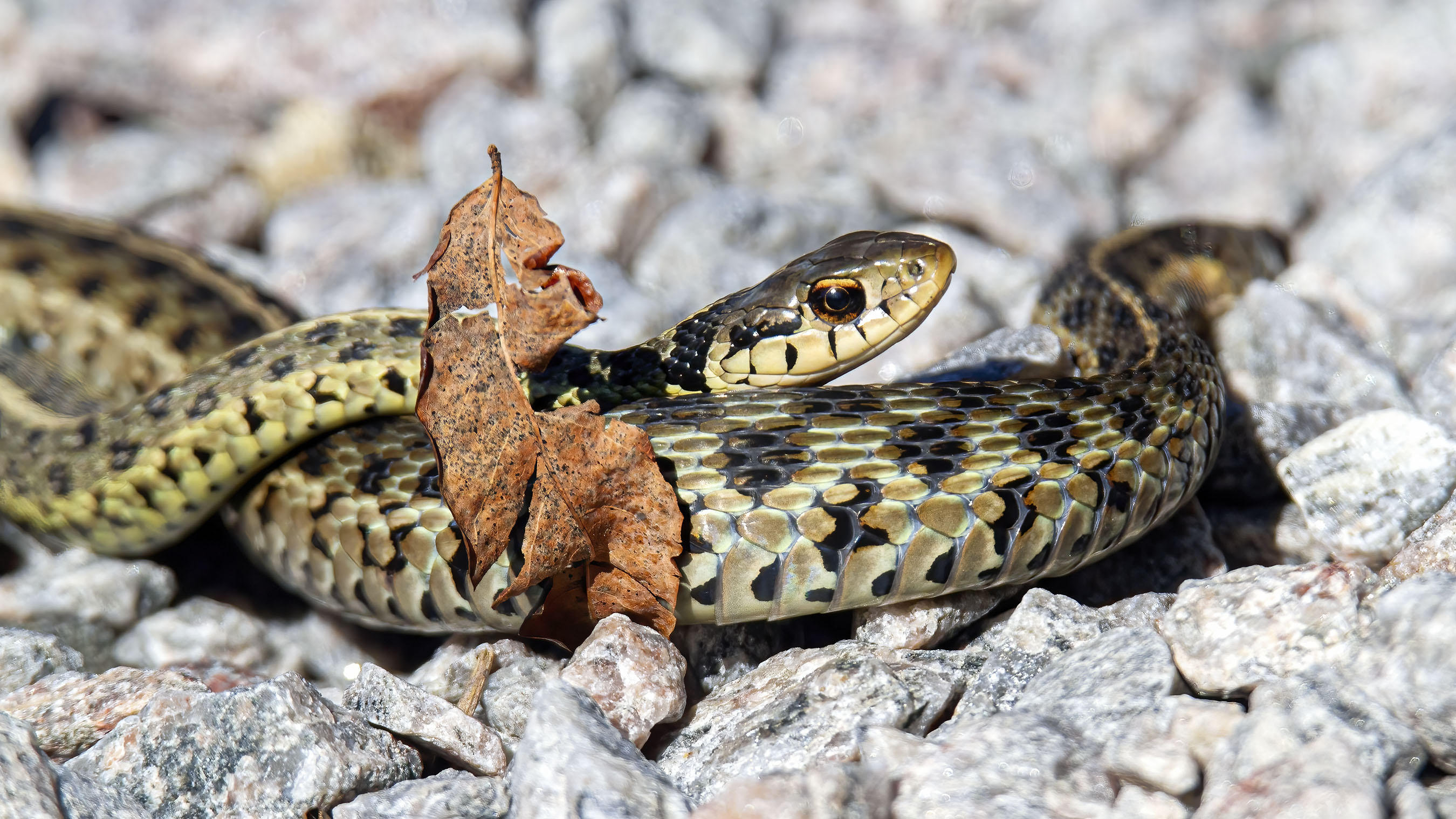
On Monday at Occoquan Bay National Wildlife Refuge I stumbled upon a pair of Eastern Garter Snakes (Thamnophis sirtalis sirtalis). Their bodies were intertwined and were undulating. Now I do not know much about the mating practices of snakes, but I assume that was what they were doing.

I got down really low to take the first shot, which gives a close-up view of the head of one of the snakes that appears to be smiling—I believe that this one, which is clearly the smaller of the two, is the male snake.

According to an article by Sue Pike, “Garter snakes bear live young instead of laying eggs. In fact, in most live-bearing snakes, the females are considerably larger than the males. Since a larger female can carry more babies, and larger litter size mean a greater chance of survival for some of the offspring; natural selection will favor larger females. Females also tend to be more bulky and less active than males since they need to conserve their energy for reproduction. Males tend to be skinnier, more active and smaller than the females because, in the wild, their excess energy is used to chase females.”

The second shot shows the bodies of the two snakes when I came upon them—they look almost like they were braided together. I encourage you to click on the image to get a closer look at the beautiful patterns on the bodies of these snakes.

As I was making a little video of the two snakes, they were joined by a third garter snake. This snake, which I think is another male, slithered along the entire length of the intertwined bodies, looking for an opening. Somehow I thought the new snake would be more aggressive, but he was actually quite gentle. He ended up with his body stretched out as part of the intricate braid.

I have embedded the one-minute-long YouTube video at the end of this posting. In the video you can see the undulating bodies of the two snakes and the arrival and subsequent actions of the third snake. If you cannot see the embedded video, you can use this link  (https://www.youtube.com/watch?v=bgKIKLVeOVg) to access it directly on YouTube.

mating garter snakes

mating garter snakes

© Michael Q. Powell. All rights reserved.


Read Full Post »

I love to watch Great Blue Herons (Ardea herodias). Most of the time when I see them, they are standing motionless in the water, watching and waiting for prey to come within range. We both stand there, waiting for a decisive moment when the heron will strike.

When I spotted this heron last Friday, he was in shallow water, water that was much to shallow for it to be able to catch a large fish. The heron was hunched over and was making multiple strikes, but I could not tell if they were successful. From the angle at which I was shooting, the heron’s bill looked cartoonishly long and its body seemed much more compact and squat than normal.

Finally, as you can see in the second photo, the heron caught something big enough for me to see. The heron flipped the little fish into the air and I managed to capture the moment when the fish was in mid-air, just before the heron gulped it down. The positioning of the heron and the direction of the light made the heron’s mouth look a bit like that of a mini-pelican.

Later that same day I spotted a Great Blue Heron standing in some colorful vegetation that hid its lower body. Unlike the first heron that seemed to be having fun, this second heron seemed to be stern and intense as it surveyed the marshland. I really like the way that the vegetation in both the foreground and the background was blurred, which draws the viewer’s attention directly to the heron.


Great Blue Heron

Great Blue Heron

Great Blue Heron

© Michael Q. Powell. All rights reserved.


Read Full Post »

Perspective and timing really matter. In the first photo, the Black Swallowtail (Papilio polyxenes) is immediately recognizable as a butterfly. When the butterfly opened its wings wider and I took the second shot, however, I captured an image that forces viewers to pause for a second to process what their eyes are seeing. We are so used to seeing butterflies with wings fully visible that we may not immediately recognize a butterfly when the angle of the shot causes the wings to virtually disappear. The final image is a more “normal” view of the butterfly on a different perch.

I spotted this Black Swallowtail butterfly last Friday as I was wandering about at Occoquan Bay National Wildlife Refuge. Dragonflies were pretty scarce that day, so it was nice to see so many butterflies still flying. That day was nice and warm, but since then our temperatures have been lower than average—it is currently 40 degrees (4 degrees C) as I write this posting at 5:30 in the morning and today’s high is forecast to be about 65 degrees (18 degrees C). Autumn has definitely arrived.

Black Swallowtail

Black Swallowtail

Black Swallowtail

© Michael Q. Powell. All rights reserved.

Read Full Post »

This past Friday I was delighted to spot this Question Mark butterfly (Polygonia interrogationis) during a visit to Occoquan Bay National Wildlife Refuge. Although these butterflies are with us the entire year—they overwinter as adults—I do not see them all that often. Question Mark butterflies (and their “cousins,” the Eastern Comma butterflies) hang out mostly in the woods, where their drab coloration helps them to blend in with the bark and the dried leaves of the trees, as you can see in the second photo.

I was particularly happy with the first shot, because it lets you see both the drab outer wing and the gorgeous orange and black of the inner wing. I was shooting with my Tamron 150-600mm, which is sometimes a little soft at the long end of the zoom, but managed to capture a good amount of detail nonetheless.

The butterfly’s warm orange coloration seems to be a perfect match for the season, as displays of pumpkins have start to appear.

Question Mark

Question Mark

© Michael Q. Powell. All rights reserved.

Read Full Post »

The colors of the fall foliage in my area of Northern Virginia are not very impressive. Generally we fade gradually from green to brown and then the leaves fall off of the trees. Fortunately, though, pops of bright color periodically remind me of the colors that I would see when I was growing up in New England.

It is still a bit early for those colors to appear, but I did notice a few traces of autumn color when I was out with my camera this week. Mostly it was individual colorful leaves, but I did notice a few trees as I gazed across the pond at Huntley Meadows Park that had jumped ahead of their compatriots and were already showing their blazing red autumn color.

Autumn is my favorite time of the year, especially the early days of autumn.

autumn color

autumn color

autumn color

© Michael Q. Powell. All rights reserved.

Read Full Post »

When I went out with my camera on Wednesday, it was cool and cloudy, but fortunately the rain had stopped falling. I was not optimistic that I would see a lot of wildlife, but it felt good to get out of the house and to spend some time in nature.

Most dragonflies prefer warm weather and become inactive when it is cool, so I did not expect to see many during my walk. I was thrilled therefore when I spotted this male Common Whitetail dragonfly (Plathemis lydia). I watched as he was flying and saw him land low in the vegetation, just off of the ground.

The background in this shot is really busy, but somehow the dragonfly really stands out. It’s kind of a fun little photo of one of the few remaining dragonflies as we move through October.

Common Whitetail

© Michael Q. Powell. All rights reserved.

Read Full Post »

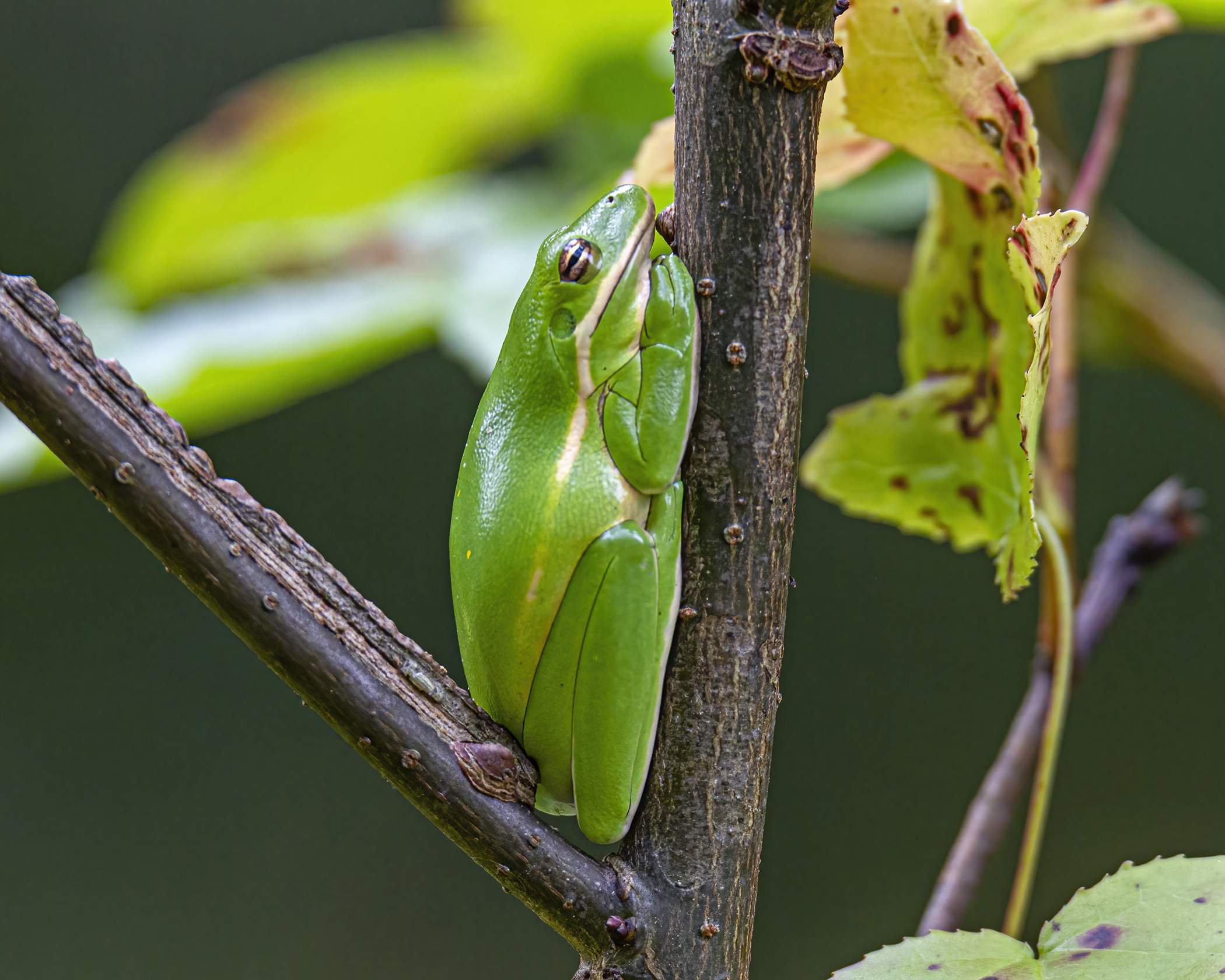
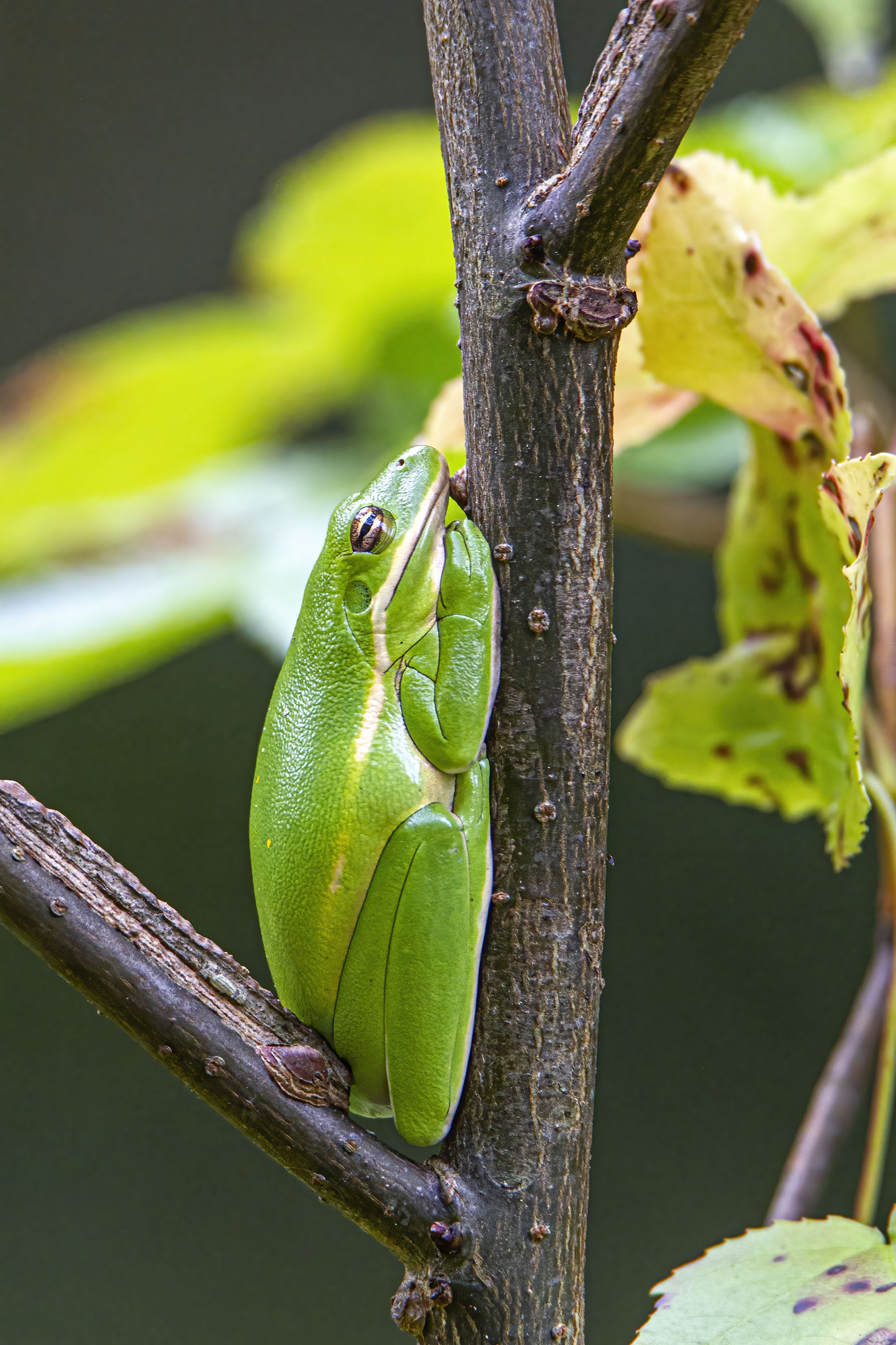
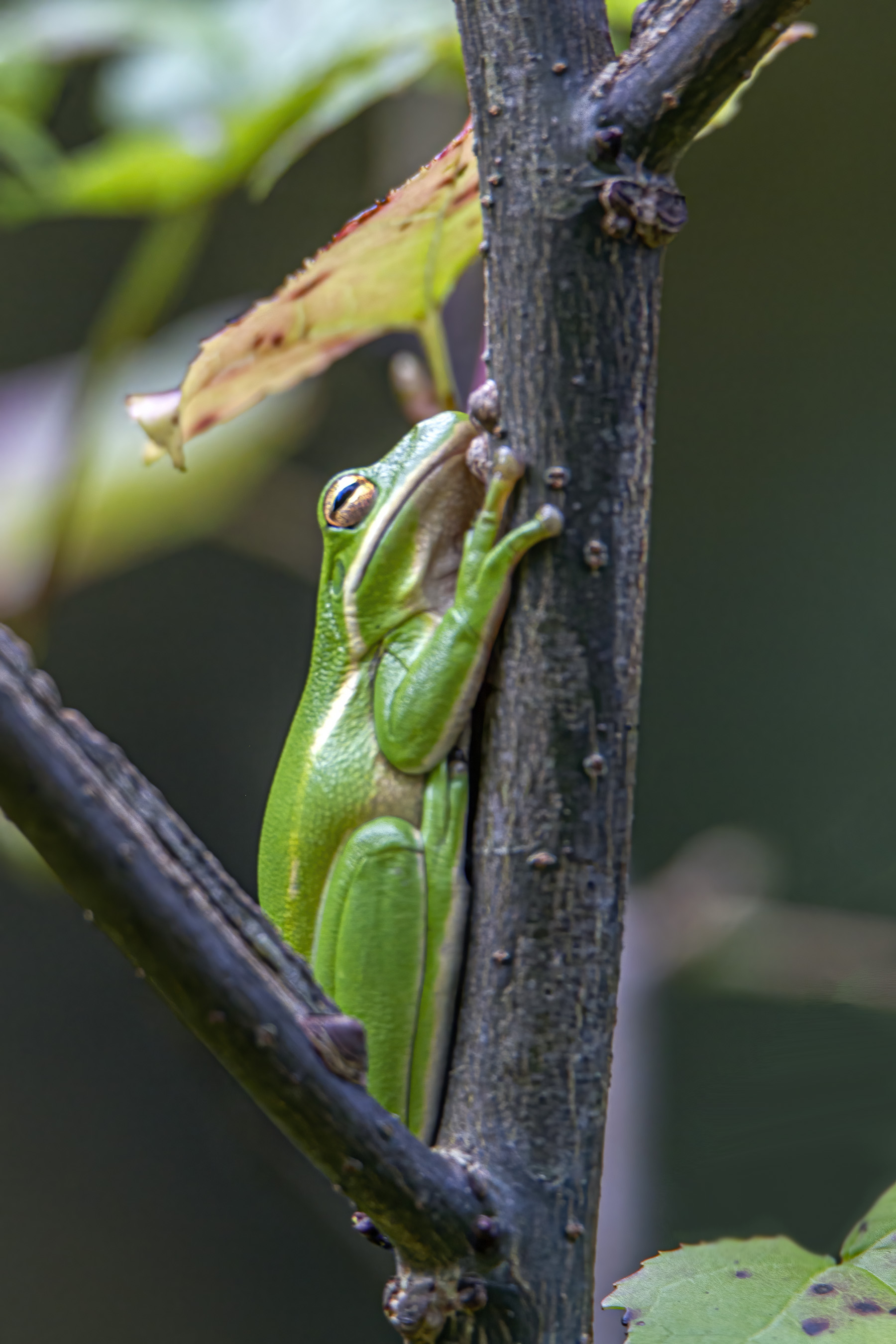
Most of the time when I am lucky enough to spot a Green Tree Frog (Hyla cinerea), the frog appears to be sleeping. Why is that the case? Many frogs spend their time in the water and have an easy way to regulate their body temperatures. Tree Frogs probably need to avoid direct sunlight and I suspect they are more active earlier and later during the day.

Yesterday afternoon the rain finally stopped and the skies were gradually clearing, so I decided to go out with my camera. I spotted this tree frog when I was walking along one of the trails at Huntley Meadows Park, a nearby marshland park that I have avoided the last few years because it tends to be overcrowded. The frog was perched in the crotch of a small tree just off of the trail.

When I first saw the tree frog, it had its front feet tucked under its head and appeared to be dozing, as you can see in the first two photos. I experimented with slightly different angles and formats and can’t decide if I like the landscape format of the first photo or the portrait format of the second one.

Later in the day I passed the frog again and it seemed to be a little more alert. The frog had pulled one of its feet out from under its head and appeared to be daydreaming.

When I returned home from my outing, I decided to take a cue from the frog and took a short nap.


Green Tree Frog

Green Tree Frog

Green Tree Frog

© Michael Q. Powell. All rights reserved.

Read Full Post »

At this time of the year, I sometimes complain that the leaves that are still on the trees prevent me from spotting birds. While that is definitely true for small birds like warblers, Great Blue Herons (Ardea herodias) are so big that it is hard to miss them when they are perched in a tree, even when they are partially hidden by the foliage.

Last week I was walking down one of the trails at Occoquan Bay National Wildlife Refuge when I heard the unmistakable squawk of a Great Blue Heron. It is hard to describe this distinctive sound, but the Farmer’s Almanac website did so with these words, “The Great Blue Herons “squawk” or croak has an almost prehistoric sound. If you surprise this bird as it is hunting on the water, it will squawk as it leaves, almost as if it’s annoyed by your disturbance.”

After hearing the squawk, I watched as the Great Blue Heron landed in a nearby tree. There was a good deal of foliage between me and the heron, which helped to conceal my presence, but it made it tough for me to get a clear shot of this big bird. Eventually I managed to capture some shots of the heron in a number of different poses. The background is pretty cluttered, but it helps to give you a good sense of the environment in which I found this Great Blue Heron.

Unlike Great Egrets, which migrate south for the winter, Great Blue Herons remain with us throughout the year. Do not be surprised if you see a few more heron shots in the upcoming months. As the leaves fall from the trees and many other birds depart, I suspect that I will be spending more time observing Great Blue Herons.

Great Blue Heron


Great Blue Heron

Great Blue Heron

© Michael Q. Powell. All rights reserved.

Read Full Post »

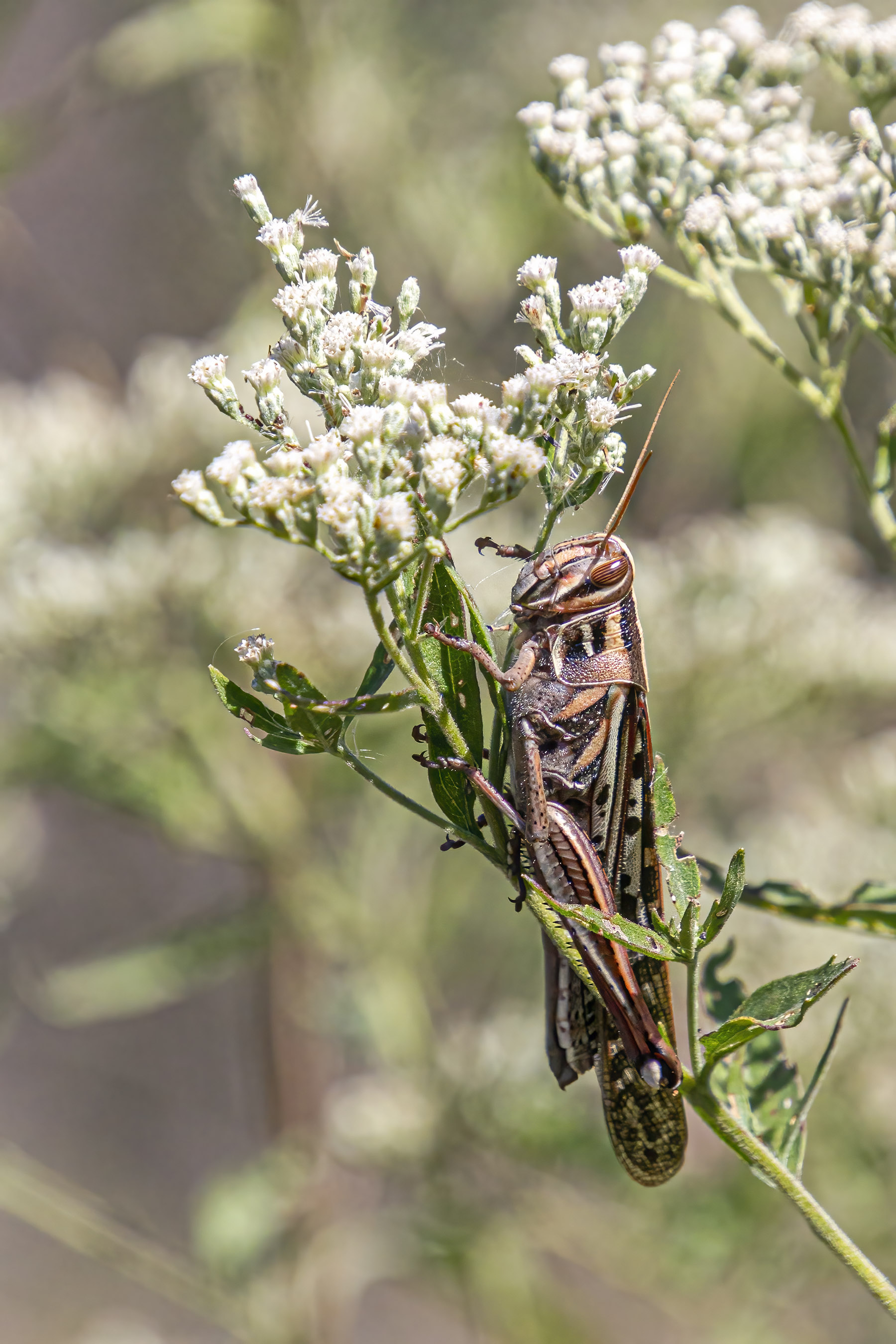
Quite often when I am walking through grassy fields, the ground in front of me seems to explode with grasshoppers arcing through the air in all directions. Last week during a visit to Occoquan Bay National Wildlife Refuge, I managed to capture images of two of them.

I am not certain of the species of the formidable looking grasshopper in the first photo. When I looked through sources on line, however, it looked most like an American Bird Grasshopper (Schistocerca americana). Grasshoppers like this always make me think of medieval knights, suited up in protective armor.

The insect in the second image is almost certainly a katydid, and not a grasshopper—the extremely long antennae are often an easy identification feature. I love the brilliant green of the katydid’s body and its matching green eyes. There are lots of different kinds of katydids and I do not know to which species “my” katydid belongs.

We have had a lot of rainy weather recently and temperatures have noticeably dropped. Today’s forecast calls for intermittent rain and a high temperature of only 50 degrees (10 degrees C). I wonder if this cool, rainy period will mark the end of the season for some of the insects that I have been photographing during the past few months.

grasshopper

katydid

© Michael Q. Powell. All rights reserved.

Read Full Post »

As many of you probably realize, I generally do not spend much time photographing landscapes and focus primarily on insects, in the warmer months, and birds, in the colder months. This past Wednesday, however, I was absolutely captivated by the clouds and tried to capture them in both landscape and seascape images at Occoquan Bay National Wildlife Refuge. I used my Canon 7D for the first two images and shot the panorama in the final shot with my iPhone 11.

As I look at these images, I can’t help but think that I should keep my eyes open more often for opportunities to take landscape shots. Last year I managed to capture some of the fall foliage in Virginia when I traveled to Shenandoah National Park and I may try to do so again later this month. There is a chance, though, that I will miss the peak color, because I will be driving to Austin, Texas near the end of the month for a wedding.

Occoquan Bay National Wildlife Refuge

Occoquan Bay National Wildlife Refuge

Occoquan Bay National Wildlife Refuge

© Michael Q. Powell. All rights reserved.

Read Full Post »

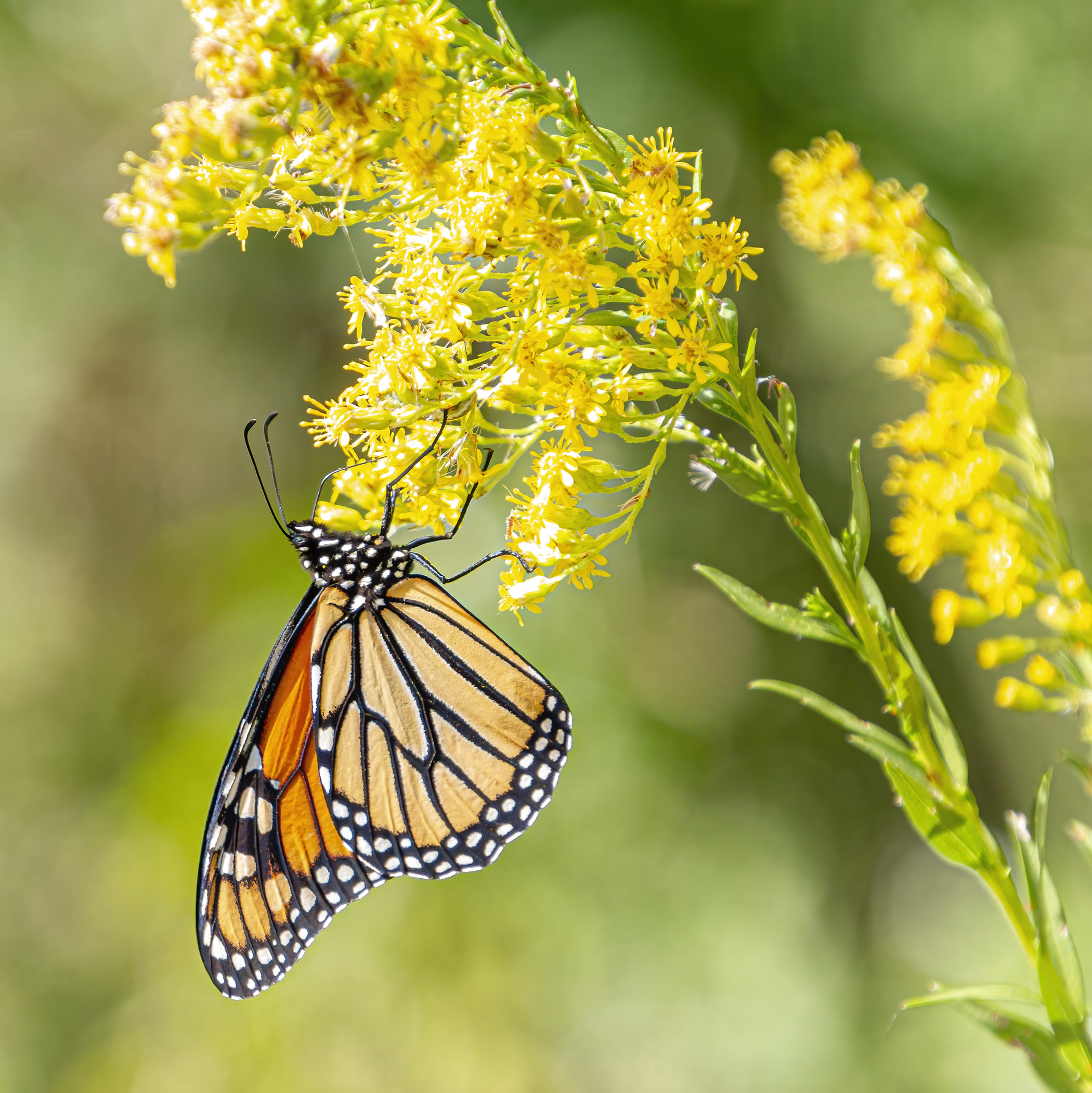
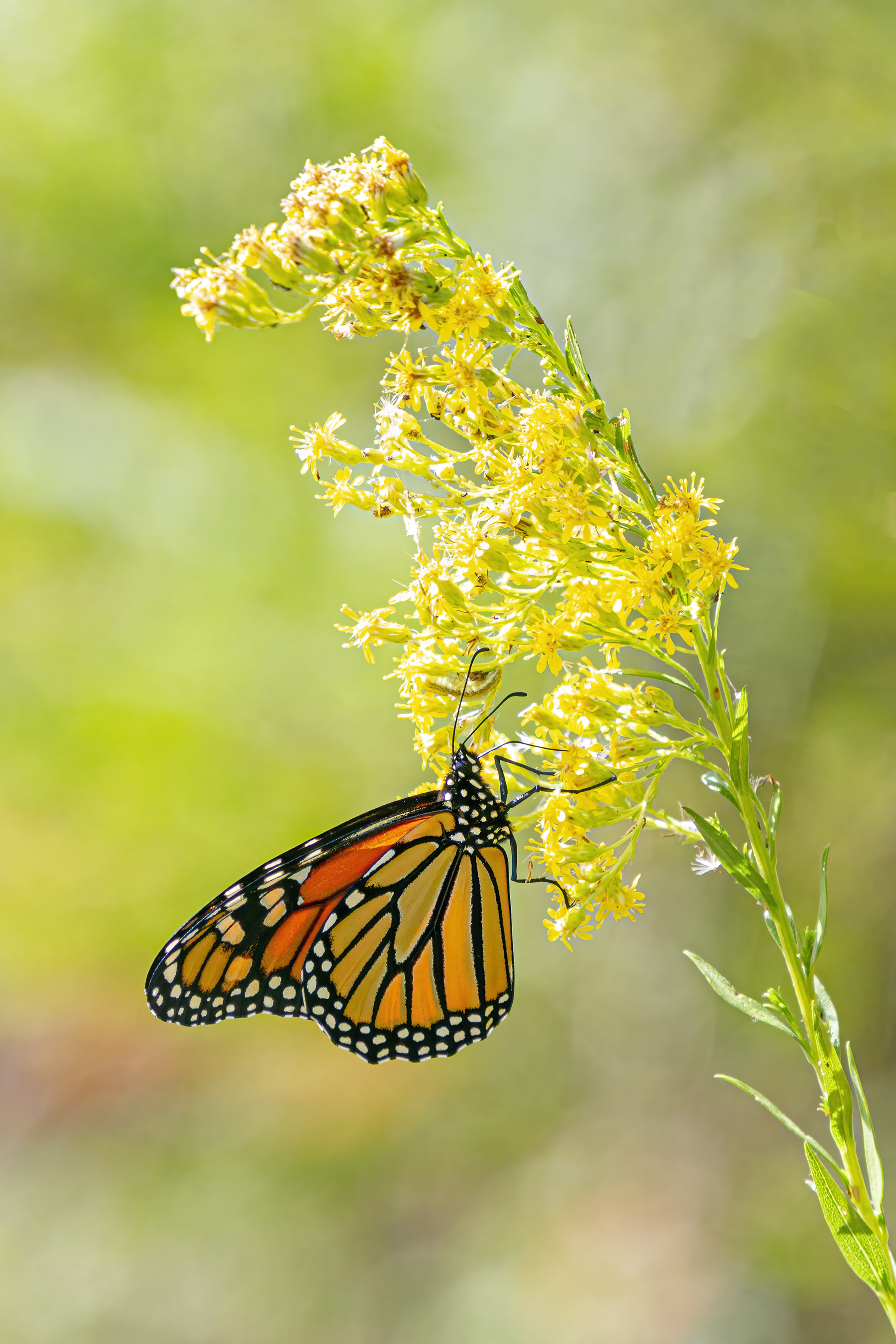
I was delighted this past Wednesday to spot several Monarch butterflies (Danaus plexippus) during a visit to Occoquan Bay National Wildlife Refuge. I often see news stories about Monarchs being threatened or becoming endangered, so I am happy whenever I see some. The ones that I saw looked to be in perfect condition—perhaps they have recently emerged and are preparing for migration.

I tried several different angles when photographing this Monarch. The first photo shows the detail of the butterfly best, but I really like the way that I was able to capture the curve of the vegetation in the second shot by shooting in a vertical format.


Monarch butterfly

Monarch butterfly

© Michael Q. Powell. All rights reserved.
Read Full Post »

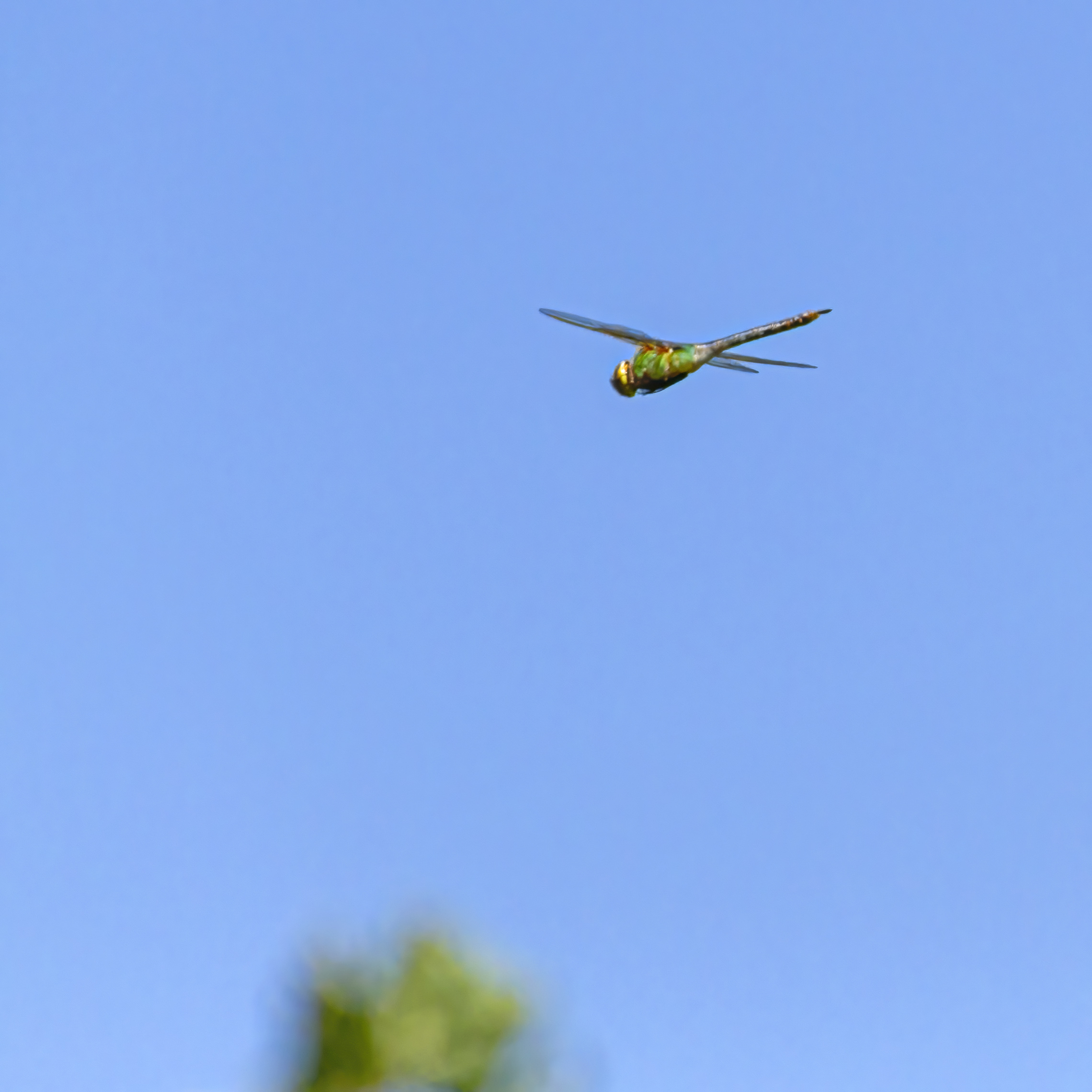
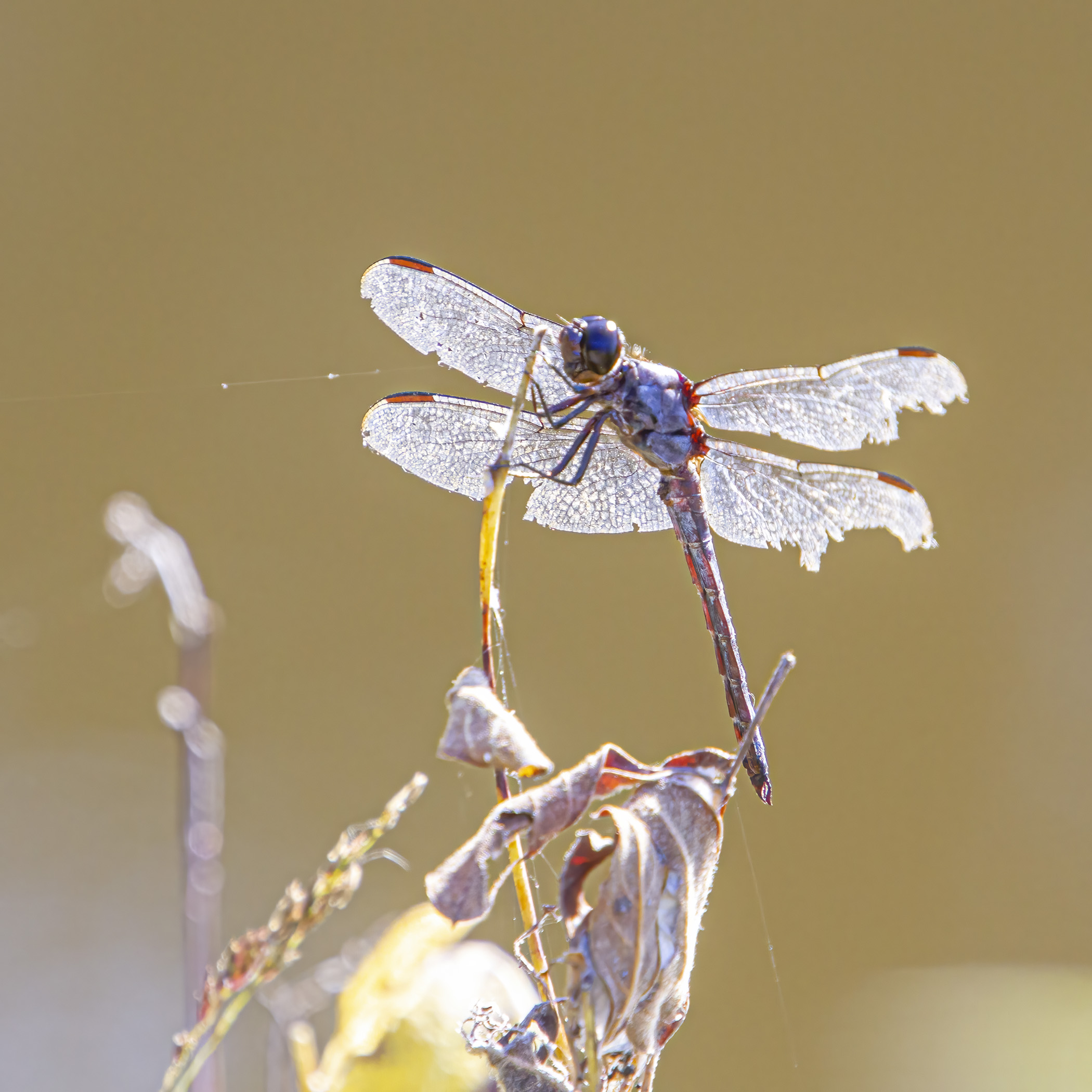
On Wednesday I spotted a small group of a half-dozen of so Common Green Darner dragonflies (Anax junius) patrolling over a large field at Occoquan Bay National Wildlife Refuge. Common Green Darners are one of few species of dragonflies that migrate. Perhaps the ones that I saw are preparing to migrate from the local area or are just stopping off on their journey southward.

It is a fun challenge to point your camera toward the sky and to try and capture photos of these colorful dragonflies as they zoom overhead. The first image is the sharpest image that I was able to capture and it provides a good look at the dragonfly. In many ways, though, I am even happier with the second and third image that include some vegetation and help to provide some context to the shots.

The migration cycle of the Common Green Darner involves three generations. I highly recommend a research article entitled “Tracking dragons: stable isotopes reveal the annual cycle of a long-distance migratory insect” that was published in 2018 in the journal Biology Letters that explains the migration cycle and has some fascinating maps and diagrams. Despite the geeky-sounding title, it is actually quite easy to read and understand.

Here is an extract from the abstract for the article, in case you do not want to read the entire article:

“Using stable-hydrogen isotope analysis of 852 wing samples from eight countries spanning 140 years, combined with 21 years of citizen science data, we determined the full annual cycle of a large migratory dragonfly, the common green darner (Anax junius). We demonstrate that darners undertake complex long-distance annual migrations governed largely by temperature that involve at least three generations. In spring, the first generation makes a long-distance northbound movement (further than 650 km) from southern to northern range limits, lays eggs and dies. A second generation emerges and returns south (further than 680 km), where they lay eggs and die. Finally, a third resident generation emerges, reproducing locally and giving rise to the cohort that migrates north the following spring. Since migration timing and nymph development are highly dependent on temperature, continued climate change could lead to fundamental changes in the biology for this and similar migratory insects.”

Wow!

Common Green Darner

Common Green Darner

Common Green Darner

© Michael Q. Powell. All rights reserved.

Read Full Post »

Yesterday I was delighted to spot another Blue-faced Meadowhawk dragonfly (Sympetrum ambiguum), one of my favorite dragonflies, while wandering the trails at Occoquan Bay National Wildlife Refuge.  The previous one that I saw earlier this month was perched high in a tree, so it was difficult for me to get a good shot of it.

The newest Blue-faced Meadowhawk, a male, was perched on the ground amid the leaf litter, which is where I usually see this species. I love the way that the fallen leaves provide an instant indication that we are now in the autumn season. The drab brown color of those leaves really helps to make the bright red and blue of this spectacular dragonfly really pop.

It was almost impossible to blur out the background completely, but I got low and carefully chose an angle that makes the clutter a bit less distracting. It turned out that this was the only Blue-faced Meadowhawk, so I was happy that I managed to get some decent shots of this one before he flew away.

Blue-faced Meadowhawk

© Michael Q. Powell. All rights reserved.


Read Full Post »

Generally I prefer to photography my wildlife subjects in natural surrounding and often try to frame my shots so that they do not include manmade elements. During a recent visit to Occoquan Bay National Wildlife Refuge, I inadvertently spooked a small bird, which looks to me to be a juvenile Eastern Bluebird (Sialia sialis), and I watched as it flew to a tall wooden post. I looked at it as a mixed blessing, because I had a clear view of the bird, even though the perch was manmade.

I captured this image when the bluebird turned its head to look at me. I really like the way that the composition of this modest little image turned out. I remember moving a bit to make sure that the sky was in the background, but hadn’t really counted on the background being as pleasantly blurred as it is. The wires and other hardware attached to the post add some additional visual interest to the foreground without being too distracting.


Eastern Bluebird

© Michael Q. Powell. All rights reserved.

Read Full Post »

As we approach the end of September, I am keeping a mental checklist of the dragonflies that I continue to see. Some species have already disappeared for the season. With other species, I see only the tattered survivors. There are a few other species that will remain with for at least another month.

Here are some shots of three of the dragonflies that I saw last Tuesday at Occoquan Bay National Wildlife Refuge. The first one is a colorful male Calico Pennant (Celithemis elisa). We are nearing the normal late date for this species, so I was particularly happy to see this dragonfly.

The second image shows a female Common Whitetail (Plathemis lydia), one of the most common dragonflies in our area. This species is always one of the first to appear in the spring and one of the last to disappear in the autumn.

The final photo shows a male Slaty Skimmer (Libellula incesta) perching in the vegetation at the edge of a pond. This species is probably the most common one that I see right now when I am visiting a pond. I thought about cropping the image a little closer, but decided I really like the pops of pinkish-purple provided by the flowers near the edge of the frame.

There are, of course, other species still around that I have featured in recent postings, such as the Russet-tipped Clubtail, the Blue-faced Meadowhawk, and the Prince Baskettail, as well as several others. I am still searching for my first Autumn Meadowhawk of the season, a small red dragonfly that is often the last species to disappear.  I have seen Autumn Meadowhawks as late as the 3rd of December. If you want a sneak preview of what an Autumn Meadowhawk looks like, check out the December 2018 blog posting of that late sighting.

Calico Pennant

Common Whitetail

Slaty Skimmer

© Michael Q. Powell. All rights reserved.

Read Full Post »

I have been playing around with video again and made a little YouTube video about some of my challenges in trying to photograph dragonflies in flight. I tried to combine some video footage captured when I was out in the field (the second shot below is a still extracted from the video) with some of my still images that you may have already seen in past blog postings. I did a voiceover with the still photos that provides some information about my camera settings and techniques as well as commentary about the location where I was shooting. The first image is the thumbnail for the video, which I included to give you an indication in the Reader about the content.

I embedded the video link at the end of this posting that you can click directly if you are viewing directly from my blog. After I posted a video this way in the past, I learned that those folks who receive the blog in their e-mail are not able to see the embedded video. If that is the case for you, here is a link that you can click that will take you to the YouTube video. The video is about eight minutes long, but I think you will find it enjoyable and informative.

I shared the video directly with one of my subscribers, Jet Eliot, who commented, “I absolutely loved your video, Mike. Your enthusiasm and expertise for dragonflies comes through beautifully. I like how upbeat you are about photographing dragonflies, and encouraging. Your voice is rich, vocabulary lovely, and diction is smooth. A complete joy to watch–I’m still smiling.” Be sure to check out her wonderful blog Jet Eliot–Travel and Wildlife Adventures for her weekly essays, photos, and anecdotes on lively, interesting places and creatures that she has befriended all over the world.

YouTube_thumbnail

In the Field

© Michael Q. Powell. All rights reserved.

Read Full Post »

Carolina Chickadees (Poecile carolinensis) are small and active, so I rarely get a clear view of one of them, especially during the times of the year when there are leaves on the trees. Last week I was happy to get some photos of this chickadee at Occoquan Bay National Wildlife Refuge as I was searching for warblers.

The leaves in the first two images and the tiny acorns in the final photo provide indications of the change in seasons. Temperatures are really dropping as we approach the end of September and the leaves are just beginning to change colors. In my area, unfortunately, the leaves mostly tend to turn brown—the fall foliage is definitely not as bright and vibrant as the colors in New England, where I was born and grew up.

Carolina Chickadee

Carolina Chickadee

Carolina Chickadee

© Michael Q. Powell. All rights reserved.

Read Full Post »

As I was looking over my photos from my visit last Wednesday to Jackson Miles Abbott Wetland Refuge, I was struck by the variety of perching styles of the dragonflies that I had photographed. The dragonfly on the left in the first photo, a Slaty Skimmer (Libellula incesta), was using the style that I see most often—he was perched horizontally with his wings extended outwards. The dragonfly on the right, a male Swift Setwing (Dythemis velox) had his abdomen raised to about a 45 degree angle and had pulled his wings forward.

In the second image, the dragonfly was perched at a slight angle as it held onto the vegetation. The coloration of this dragonfly is so faded that it is hard for me to identify its species, though I think it might be an old Great Blue Skimmer (Libellula vibrans).

In the final photo, the dragonfly is in an almost vertical position as it clings to the stalk of the vegetation. The shadows make it tough to identify this dragonfly, but I am not worried about that—I like the “artsy” feel of the photo.

This little posting barely scratches the surface of the topic of dragonfly perching behavior, but I hope it raises your awareness of the diversity in the world of dragonflies, not just in their appearances, but also in their behavior.


dragonfly perches

dragonfly perches

dragonfly perches

© Michael Q. Powell. All rights reserved.


Read Full Post »

I never realized how much the face of a Russet-tipped Clubtail dragonfly (Stylurus plagiatus) looks like the face of a human—the one in the first photo appears to have a nose, a chin, and even lips. The dragonfly was flying over the pond at Jackson Miles Abbott Wetland Refuge this past Wednesday and I watched it land in the goldenrod at the edge of the water, where I was able to capture the image.

When the Russet-tipped Clubtail was flying, it stayed in the center of the pond and did not come near to the shore, which made it tough for me to capture an in-flight shot. I was thrilled when I managed to capture a long distance shot of the dragonfly and its cool, distorted reflection in the water, as you can see in the second photo below.

As I was walking around the small pond, I inadvertently flushed another Russet-tipped Clubtail and it flew into a tree. I could see where it was perched, but the lighting was tricky, because I was shooting almost directly into the sun. I liked the interplay of the light and shadows on the leaves of the tree and the way that sunlight illuminated the “tail” (which is technically the abdomen) of the dragonfly, which made for a nice environmental portrait.

Generally I consider myself lucky if I have a single encounter with a dragonfly like this, so it felt amazing to have multiple encounters with the Russet-tipped Clubtails and multiple chances to capture some beautiful images.

Russet-tipped Clubtail

Russet-tipped Clubtail

Russet-tipped Clubtail

© Michael Q. Powell. All rights reserved.

Read Full Post »

« Newer Posts - Older Posts »