Feeds:
Posts
Comments

Archive for the ‘Nature’ Category

When dragonflies mate, they usually assume a “wheel” position, in which the male grasps the female by the back of her head and she bends her abdomen towards his thorax. The position appears to be both awkward and acrobatic, but amazingly the dragonflies are able to fly while in this position.

I was searching for dragonflies last week at Occoquan Bay National Wildlife Refuge when a pair of mating Calico Pennant dragonflies (Celithemis elisa) flew by me and landed in some nearby vegetation. Calico Pennants are some of the most spectacular dragonflies in our area, with bright colors and distinctive patches on their wings.

Feeling a bit like a voyeur, I moved a little closer to them and slowly crouched a bit to get a better angle for my shot. In the image below, you can see how the female grasps the abdomen of the male during this process.

I was happy to be able to get most of the two dragonflies in focus, which is always a challenge in situations like this.

Calico Pennant

© Michael Q. Powell. All rights reserved.

Read Full Post »

The entire East Coast of the United States is in the midst of a heat wave. Yesterday here in the Washington D.C. area we had a record high temperature for 15 July of 102 degrees (39 degrees C) with the heat index even higher. Yikes.

Following recommendations of doctors and weather forecasters, I stayed indoors for most of the day and worked on a few images that I captured last week at Occoquan Bay National Wildlife Refuge, including this shot of a Halloween Pennant dragonfly (Celithemis eponina).

Many dragonflies perch with their wings held stationary, but Halloween Pennants seem to move their wings about quite a bit to maintain their balance as they perch precariously on the very tips of tall stalks of vegetation. It is very easy to isolate the dragonfly from the background, because they are perched above all of the ground clutter, but it is a bit of a challenge to focus on the dragonfly as it is buffeted to and fro by even the slightest of breezes.

Halloween Pennant

© Michael Q. Powell. All rights reserved.

Read Full Post »

I was delighted to see some Red-winged Blackbirds (Agelaius phoeniceus) last week at Occoquan Bay National Wildlife Refuge. In the first photo, a male  Red-winged Blackbird seemed to be showing off for me as he balanced himself on a single leg, glanced in my direction, and seemed to smile. Eventually he climbed to the tip of the small branch and appeared to be complaining about something that he observed.

A short distance away I captured the final image of a female Red-winged Blackbird. As you can she, she is not black nor does she have any red on her wings, so it feels a little strange to call her a Red-winged Blackbird. Although I was not able to get very close to her, I really like the overall composition of the image and the moment of action that I was able to capture as she called out.

Red-winged Blackbird

Red-winged Blackbird

Red-winged Blackbird

© Michael Q. Powell. All rights reserved.


Read Full Post »

We have a number of different dark swallowtail butterfly species in our area and sometimes I have trouble telling them apart. Recently I have seen Black Swallowtails fairly frequently and occasionally I will see a Pipevine Swallowtail. I know that there is also a dark morph version of the Eastern Tiger Swallowtail and a Red-spotted Purple butterfly sometimes looks almost like a swallowtail.

Are you confused yet? When I spotted this cool-looking butterfly on Wednesday at Occoquan Bay National Wildlife Refuge, I was not sure what it was. Rather than endlessly speculating while in the field, I follow what I call the “Law of the Wild West”—shoot first and ask questions later—and wait to identify my subjects until after I have loaded my images onto my computer.

I have grown accustomed to using a blog posting by the Louisiana Naturalist to help identify dark swallowtails—it provides side-by-side photos of four different species. On the basis of that posting and some other research, I have concluded that “my” butterfly is probably a Spicebush Swallowtail (Papilio troilus) butterfly, a species that I don’t recall seeing the past few years.

The background of the photo is not particularly interesting, but I was patient enough to wait for the butterfly to open its wings, so you get a good look at the wonderful markings of this Spicebush Swallowtail butterfly.

Spicebush Swallowtail

© Michael Q. Powell. All rights reserved.

Read Full Post »

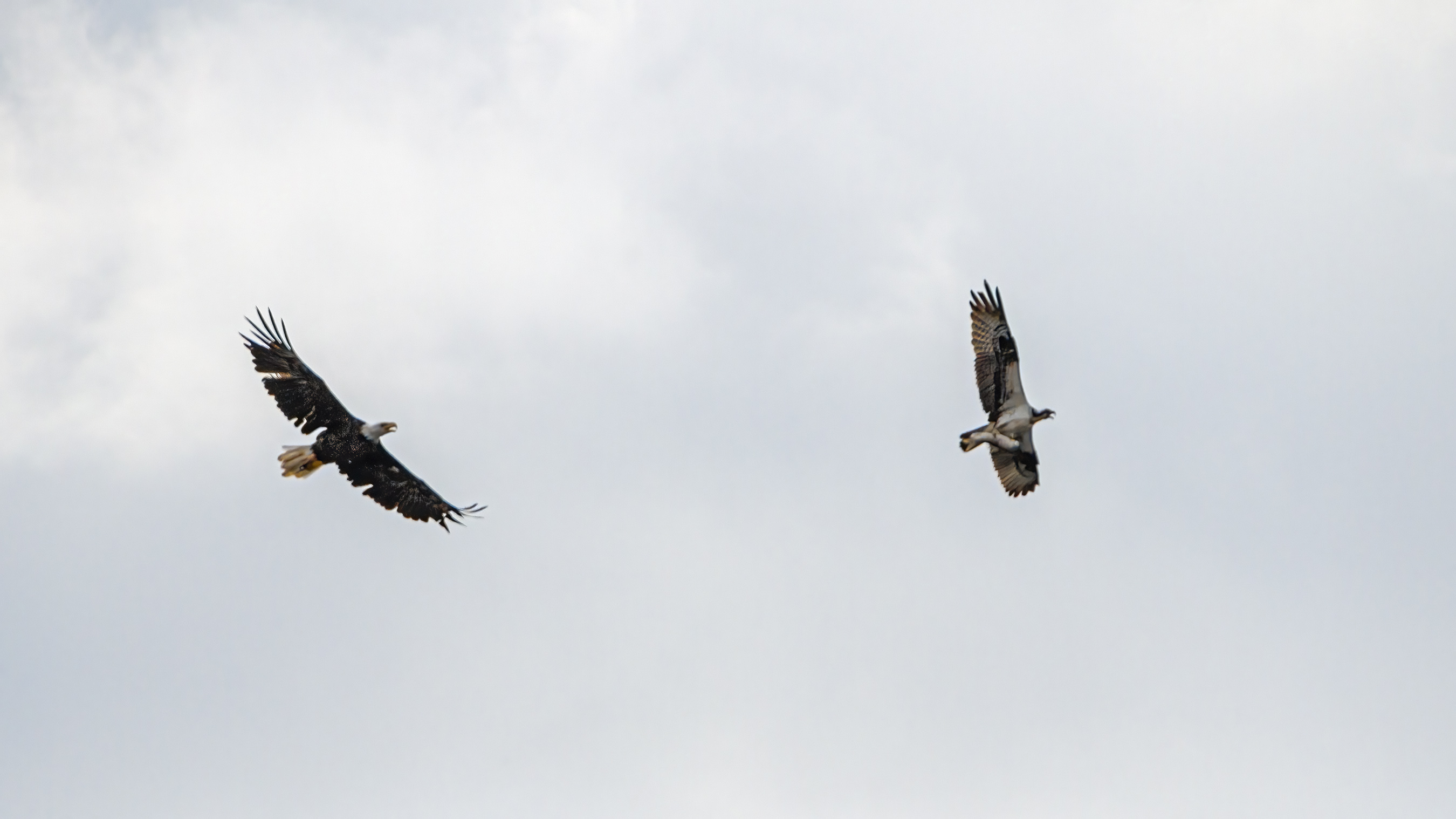
On Wednesday I watched as a Bald Eagle (Haliaeetus leucocephalus) chased an Osprey (Pandion haliaetus) high in the sky above the waters off of Occoquan Bay National Wildlife Refuge in a vain attempt to steal its freshly caught fish. I captured the second shot when the eagle flew past me after giving up on its chase.
It has been several months since I last photographed a Bald Eagle, so I was thrilled to capture these images. As most of you know, I concentrate most of my photographic attention on dragonflies and other insects during the warmer months. However, I am always alert to the possibility of photographing birds when I manage to spot them.
During the winter months I generally use a 150-600mm telephoto zoom lens that gives me a long reach, but in the summer I tend to rely on a 180mm macro lens or the 18-400mm zoom lens that I used for these shots. This lens gives me a good deal of versatility, allowing me to capture my close-in tiny subjects and some longer distance ones like these raptors in flight.
Eagle and Osprey
Bald Eagle
© Michael Q. Powell. All rights reserved.

Read Full Post »

I was a little shocked yesterday to see a Green Heron (Butorides virescens) while I was searching for dragonflies at a small pond at Occoquan Bay National Wildlife Refuge. In the past I have seen Green Herons at other locations at the refuge, but never before at this pond. Green Herons are smaller and squatter than the Great Blue Herons that I am more accustomed to seeing.

When I initially spooked the Green Heron, it flew to a mucky, shallow end of the pond, where I was able to capture the first two images. I am always amazed at the length of the neck of a Green Heron when it extends it fully—it looks so much taller and slimmer in the second shot. I also really like the floppy head feathers that sometime look like a Mohawk hairstyle.

The Green Heron eventually sensed my presence and flew to a nearby tree. The heron was partially hidden by the abundant foliage, but eventually I was able to capture the final image of it among the leaves.

It was hot and humid yesterday, so I limited my trekking to a couple of hours and drank plenty of water. Still, it was nice to get out in the wild with my camera after a week of spending most of my time indoors.

Green Heron

Green Heron

Green Heron

© Michael Q. Powell. All rights reserved.

Read Full Post »

When it comes to color theory, red and green are viewed as complementary colors, i.e. they are on the opposite sides of a color wheel. When used together, complementary colors provide a high contrast and high impact color combination—together, these colors will appear brighter and more prominent.

A week ago I was delighted to post a photo of a perched Carolina Saddlebags (Tramea carolina) dragonfly, a species that is almost always in flight when I am fortunate to spot one. A few days later, I managed to get some even better photos of a perched Carolina Saddlebags during a visit to Occoquan Bay Regional Park.

The lighting was good and the background was far enough away that it became blurry. The complementary colors of the dragonfly and the background really make these images “pop.” The interesting poses of the dragonfly draw in the viewer as well—a breeze was blowing and the dragonfly struggled a bit to maintain its hold on the tip of the vegetation on which it was perched.

It is really cool when the elements of a photograph come together like this and I am able to capture the scene in a way that is both technically and artistically pleasing. It was a good day.

Carolina Saddlebags

Carolina Saddlebags

© Michael Q. Powell. All rights reserved.

Read Full Post »

Like many guys,  I am not very good at remembering my own anniversary. In this case, though, I am not in trouble with a partner, because it is “only” the anniversary of my blog. Word Press informed me a couple of days ago that it has been 12 years since I started my blog. According to the Word Press stats, I have had 459,601 views and a total of 5,183 posts. Wow!

I am pretty sure that I never intended for the blog to become a part of my daily life for such a long period of time. Initially I thought that the blog would be merely a vehicle for showcasing the wildlife photos that I was increasingly taking. It quickly became clear, however, that I enjoyed expressing myself in my words as well as in my photos. Over the years, I have gotten accustomed to the routine of sitting down in front of the keyboard most days, picking a recent photo or a small group of them, and saying something about the images.

I have really appreciated the support and encouragement that I have received from so many readers over these last 12 years. My life has changed quite a bit over that time, but your support for the blog has been a steadying force for me. Thanks.

A special thanks goes to Cindy Dyer, my dear friend and photography mentor, who sat me down 12 years ago and walked me through the steps of starting this blog—she remains a muse for my photography and other artistic endeavors.

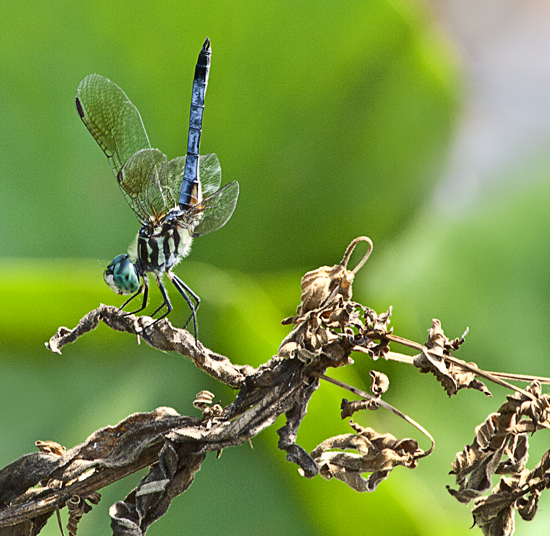
In case you are curious, I am attaching a copy of the photo of a Blue Dasher dragonfly that was featured in my very first blog posting on 7 July 2012. As you can see, I was already “hooked” on dragonflies back then.

As I get older—I will turn 70 in a few weeks—I have become increasingly aware that nothing in life is guaranteed. My hope, though, is that I will continue this blog indefinitely, sharing my photos and musings in almost daily posts. Enjoy the journey with me, dear friends.

Blog Anniversary

Blue Dasher

© Michael Q. Powell. All rights reserved.


Read Full Post »

Sometimes my photos convey the mistaken impression that dragonflies are large and are easy to find and photograph. Using telephoto and macro lenses and a stealthy approach, I try to isolate the dragonflies, so that viewers can focus on the beautiful details of these amazing aerial acrobats.

The reality though, is that most dragonflies are quite small—this male Eastern Amberwing dragonfly (Perithemis tenera) is only about one inch (25 mm) in length—and they often fly about amidst vegetation that conceals their movements.

This image gives you a sense of the vastness of the environment and some of the challenges in spotting the dragonflies. Of course, the second challenge is getting close enough to the subject without scaring it away, though in this case I was content to capture a wide-angle shot that shows this dragonfly in its preferred environment.

Eastern Amberwing

© Michael Q. Powell. All rights reserved.


Read Full Post »

Simple photographic compositions are often the most effective ones, like this image of a male Needham’s Skimmer (Libellula needhami) dragonfly that I captured last week at Occoquan Regional Park in Lorton, Virginia. All that is present in the frame is the dragonfly, the stem of the vegetation on which he is perched, and a blurred background—there is nothing extraneous or distracting. The limited color palette and the angled pose help to make the subject “pop.”

Sometimes photography can seem so complicated, but at other times it seems natural and intuitive and I am able to capture the beauty of nature without having to think consciously about what I am doing.

Needham's Skimmer

© Michael Q. Powell. All rights reserved.

Read Full Post »

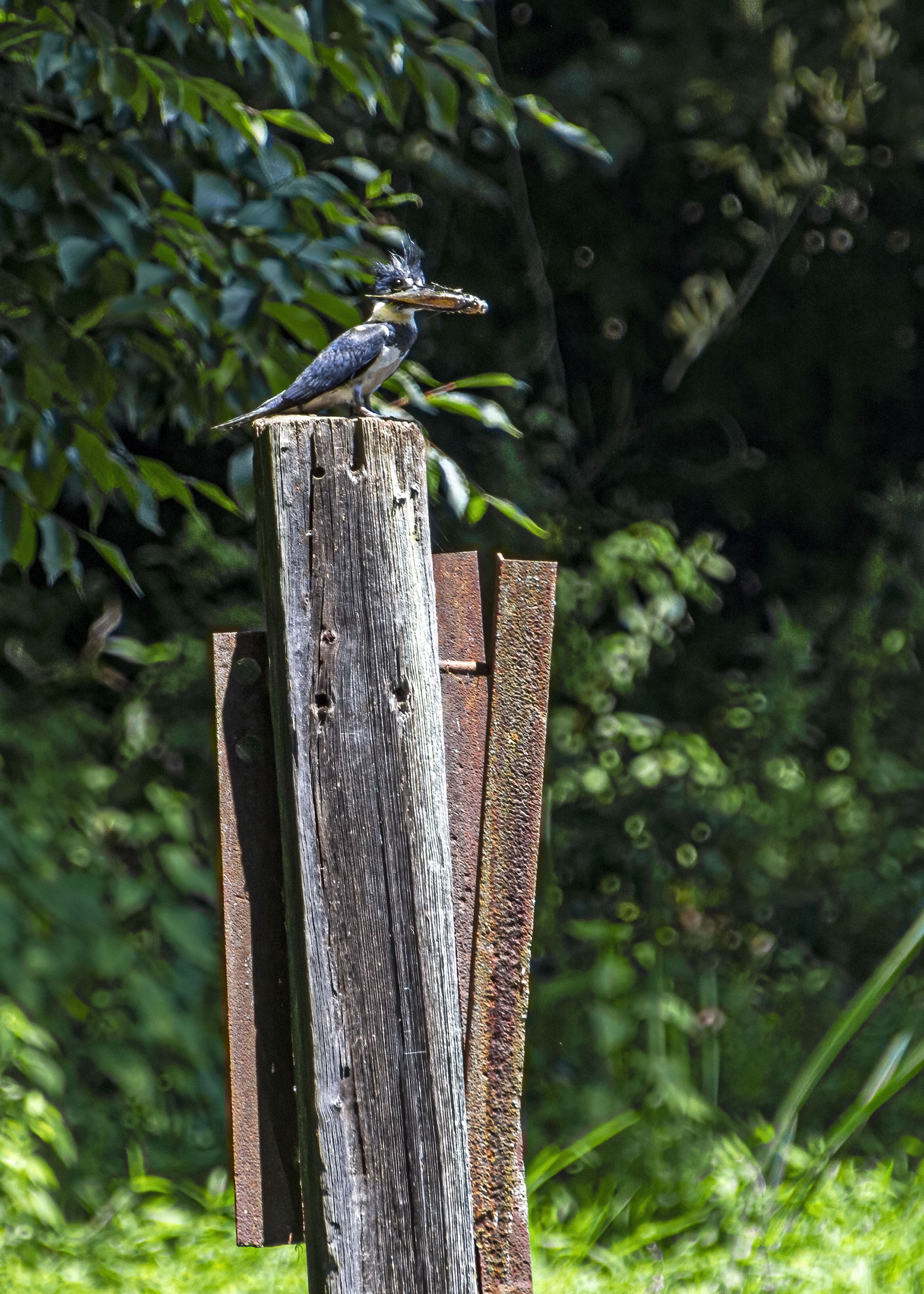
As I was searching the edge of a pond for dragonflies earlier this week I suddenly heard the unmistakable call of a Belted Kingfisher (Megaceryle alcyon). As I lifted my head, the kingfisher flew across my field of view and perched on a wooden post sticking out of the water. Even though the kingfisher was quite far away, I could see that it had a relatively large fish in its bill.

Normally a kingfisher will beat its catch against a branch to subdue it before swallowing it head-first. I was hoping to be able to see if the kingfisher would be successful in swallowing this prey—it looked too big for it to swallow in one gulp, but I have been surprised in the past when herons and cormorant have swallowed large fish.

Alas, the kingfisher flew away before I could see if it would be successful in swallowing its prey.

Belted Kingfisher

© Michael Q. Powell. All rights reserved.


Read Full Post »

I photographed this male Widow Skimmer (Libellula luctuosa) on Tuesday at Occoquan Regional Park. As I was working on the image, I noted that the dragonfly had an infestation of what look to be red water mites on at least two of its wings. You may need to click on the images to zoom in and you should be able to see some small red spherical objects that I am pretty sure are water mites.

According to Wikipedia, these water mites, likely from the genus Arrenurus, “establish an association for the purpose of transportation and nutrients, and attach to the host during the host’s transition from larva to adult.” Although these mites do not kill the dragonfly hosts, studies “show that parasitism by the mites affect the host’s longevity and fecundity by draining its tissue fluids, hampering copulation and interfering with sperm transfer.” Yikes!


Widow Skimmer

Widow Skimmer

© Michael Q. Powell. All rights reserved.


Read Full Post »

Can dragonflies smile? Although I realize that it is probably an anatomical impossibility, this female Great Blue Skimmer dragonfly (Libellula vibrans) sure did look like she was smiling at me when she posed for this little portrait last week at Occoquan Bay National Wildlife Refuge.

Great Blue Skimmers are quite common in our area during the summer and are relatively easy to identify because of their white faces.

Great Blue Skimmer

© Michael Q. Powell. All rights reserved.


Read Full Post »

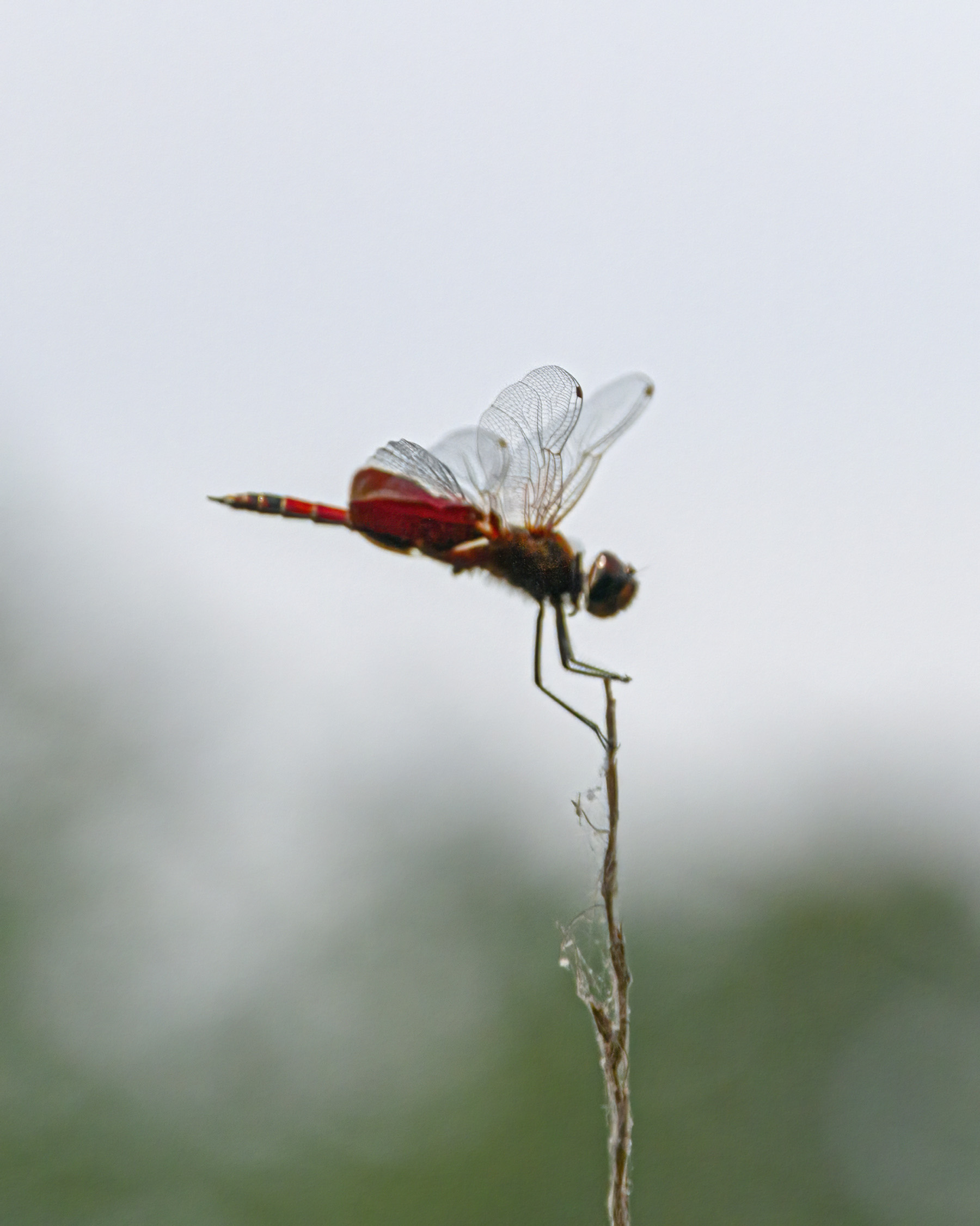
I do not see Carolina Saddlebags dragonflies (Tramea carolina) very often and when I am lucky enough to spot one, it is almost always in flight. According to the Dragonflies of Northern Virginia website, “Carolina Saddlebags appear to stick to shallow, thickly vegetated ponds and marshlands,” which is a pretty good description of the place where I spotted this one last Tuesday at Occoquan Bay National Wildlife Refuge. The same website described the Carolina Saddlebag’s flight tendencies as “Strong flier, often high, rarely perches.”

I spent some time that day watching several male Calico Pennant dragonflies, which are red and has patterned wings, as they flew around over the pond—check out yesterday’s posting to see a photo of a perched male Calico Pennant.  Suddenly a larger red dragonfly flew into view—Calico Pennants are approximately 1.3 inches (33 mm) in length, while Carolina Saddlebags are 2.0 inches (51 mm). I visually tracked the Carolina Saddlebags for a while and was able to follow it as it perched high on a stalk of vegetation in an adjacent field.

I was shooting into the light and at a sharp upward angle, which meant that I risked creating a silhouetted image of the back side of the dragonfly. I crouched a little to create a sky/trees background and waited for the dragonfly to give me a profile view. For a brief moment, my wishes came true and I captured the image below.

The image is far from perfect, but I like the way that it turned out. The focus on the dragonfly is a little soft, but I think it works well with the blurred background, creating an aesthetically pleasing little image.

Carolina Saddlebags

© Michael Q. Powell. All rights reserved.

Read Full Post »
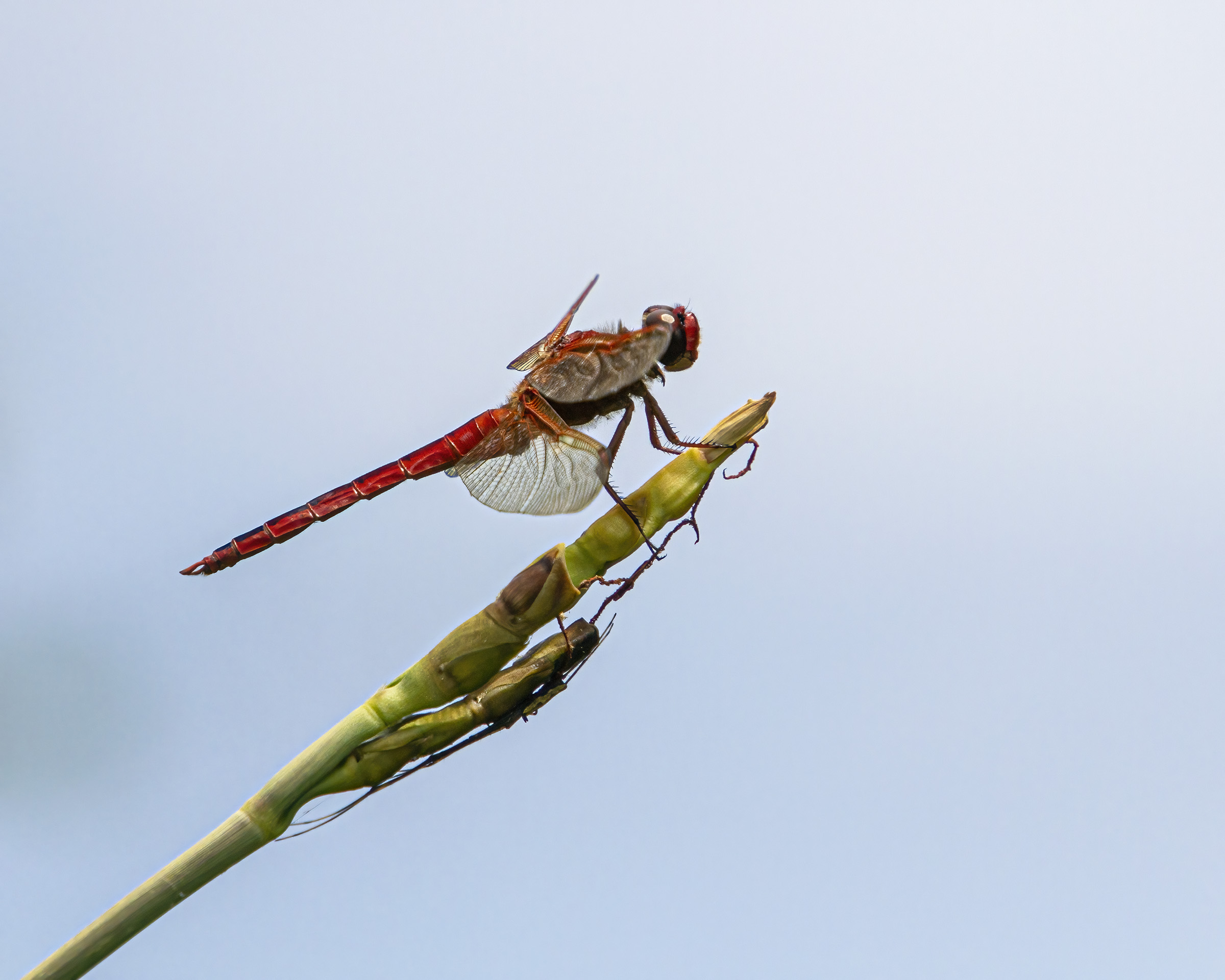
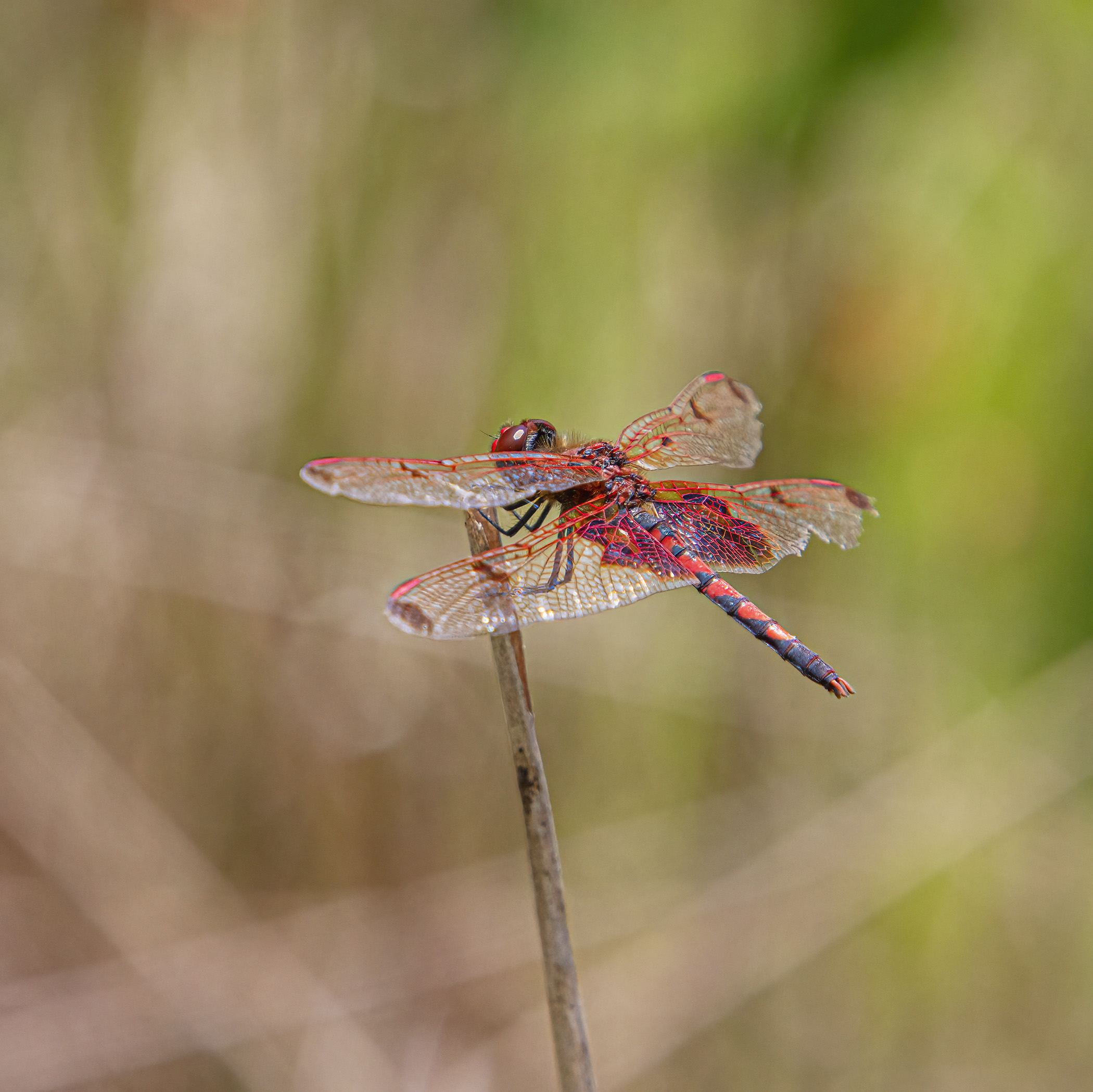
When male Calico Pennant (Celithemis elisa) dragonflies are immature, they have yellow markings on their bodies similar to those of the females. As the males mature, those markings turn bright red. I was thrilled to spot several mature male Calico Pennants last week at Occoquan Bay National Wildlife, the first adult males of this species that I have encountered this year.

The bright body markings and the prominent wing patches really make this dragonfly stand out, although they are quite small, about 1.2 inches (30 mm) in length.

Calico Pennant

Calico Pennant

© Michael Q. Powell. All rights reserved.

Read Full Post »
I spotted quite a few beautiful Zebra Swallowtail butterflies this past Tuesday at Occoquan Bay National Wildlife Refuge. The all seemed to be in constant motion, rarely perching for more than a split second and flying in unpredictable patterns.

Eventually I was able to capture a shot of a distant Zebra Swallowtail when it stopped to sip from a milkweed plant. I really like the composition of the photo, despite the fact that the main subject occupies only a small portion of the frame.

I could not help but notice that the butterfly is looking a bit tattered, with its long swallowtails already gone. Later in the season, I am sure that I will see many more butterflies and dragonflies with damage to their wings from the wear-and-tear of daily life. I am always amazed by the way that they are able to compensate and continue to survive. As I get older and slow down a bit, I try to remind myself to focus on those things that I can do and not on the ones that may be becoming increasingly challenging for me.

Zebra Swallowtail

© Michael Q. Powell. All rights reserved.

Read Full Post »

There has been a recent explosion of dragonflies at Occoquan Bay National Wildlife Refuge, my favorite location for photographing these beautiful aerial acrobats. I spotted hundreds and hundreds of dragonflies this past Tuesday as I explored the trails at the refuge.

One of the species that I encountered most frequently that day was the Needham’s Skimmer (Libellula needhami). The Dragonflies of Northern Virginia website provided a wonderful description of the Needham’s Skimmer. “This dashing summer dragonfly, a member of the king skimmer genus, makes quite a splash at the shallow, marshy wetlands it prefers. Relatively skittish, it spends more time on the wing and less time perching than other king skimmers.”

At this time of the year the males and females have a similar coloration, but as they mature the males will turn reddish-orange. The dragonfly in this photo is a female—it is easy to tell from the terminal appendages at the end of the abdomen. I love the bright yellow vein on the wings of this dragonfly, a feature that is shared by the males as well as the females of the species.

Needham's Skimmer

© Michael Q. Powell. All rights reserved.

Read Full Post »

The breeze was kicking up a bit and this Halloween Pennant dragonfly seemed to be holding on for dear life when I spotted in on Tuesday at Occoquan Bay National Wildlife Refuge. It seems to be that it would be safer and more secure to grasp the stalk a bit lower, but, like other members of the pennant family of dragonflies, this Halloween Pennant is a bit of a thrill seeker.

As the old adage, often attributed to John A. Shedd, states, “A ship in harbor is safe, but that is not what ships are built for.” Sometimes, I think, it is good for us to step out of our comfort zones, which can turn into ruts if we are not careful, and take a risk by living life on the edge, like this Halloween Pennant dragonfly.

Halloween Pennant

© Michael Q. Powell. All rights reserved.


Read Full Post »

I was excited to spot this female Unicorn Clubtail dragonfly (Arigomphus villosipes) on Tuesday at Occoquan Bay Wildlife Refuge, one of the few times that I have seen a female of this species. I am not sure if the females hang out in different areas from the males, which perch prominently on low vegetation or logs at water’s edge, or if, like some human females, they are simply playing “hard to get” and wait to meet the males on their own terms.

As noted on the excellent Dragonflies of Northern Virginia website, Unicorn Clubtails are “the only clubtail in Northern VA that prefers ponds and marshes, over streams and rivers…our only clubtail that can be found in completely still, stagnant water.” I know that is true for the males that I have featured already a couple of time this season on this blog, but is it also true for female Unicorn Clubtails?

How do you explain the behavior of females? It is one of the mysteries of life.

Unicorn Clubtail

Unicorn Clubtail

© Michael Q. Powell. All rights reserved.

Read Full Post »

After mating, many male damselflies hold on to the female as she deposits eggs in order to keep any rival males from interfering with the process. The male grasps the head of the female with the terminal appendages of his abdomen in the “tandem” position and the two linked damselflies move about from spot to spot as the female inserts eggs into floating vegetation.

Last Friday at Jackson Miles Abbott Wetland Refuge I managed to capture this image of a Slender Bluet (Enallagma traviatum) couple as the female arched her body, made a little slit in the vegetation and inserted eggs, a process known as “ovipositing.”

I am not absolutely certain I have correctly identified the damselfly species—there are a lot of bluet species—but I have made my call primarily on the basis of the markings on the abdomens of the male and the female. I intend to post this shot in a dragonfly/damselfly forum on Facebook and will update this posting if one of the experts in the group corrects my initial identification.

Slender Bluet

© Michael Q. Powell. All rights reserved.


Read Full Post »

During a short visit to Jackson Miles Abbott Wetland Refuge last Friday I spotted my first Banded Pennant dragonfly (Celithemis fasciata) of the year. Pennant dragonflies like this one often perch precariously on the very tips of vegetation, which causes them to flap about in even the slightest of breezes, like a pennant.

Banded Pennants are somewhat uncommon and in some years I have not seen a single one, so I was happy to encounter this handsome male, the only one I saw all day. As you can see in all of the photos below, the dragonfly’s upper left wing did not seem to straighten out as much as the other three wings. From what I could see, though, the dragonfly was able to fly quite well despite this injury or deformity.

Banded Pennant

Banded Pennant

Banded Pennant

© Michael Q. Powell. All rights reserved.

Read Full Post »

I was thrilled to spot my first Swift Setwing dragonfly (Dythemis velox) of the season this past Friday at Jackson Miles Abbott Wetland Refuge. These little dragonflies perch in a distinctive pose with their wings pulled forward, which looked to some scientist like the “ready-set-go” position of a sprinter and is reportedly the reason for the name of the species.

Eight years ago I spotted my first Swift Setwing dragonfly ever at this same location. This primarily southern species had never before have been documented in Fairfax County, Virginia, the county where I live, so it is kind of special for me to see them each year. (You can see details of that first sighting in my 25 June 2016 posting Swift Setwing dragonfly.)

Swift Setwings like to perch facing the water on overhanging vegetation, so it is a challenge to get a shot of one without getting my feet wet.  I had to find a little visual tunnel through the vegetation to get this shot, but I did manage to stay dry.

Swift Setwing


© Michael Q. Powell. All rights reserved.


Read Full Post »

There must be something special about this perch. One week after I photographed a Unicorn Clubtail dragonfly (Arigomphus villosipes) on a log at the edge of a small pond at Occoquan Regional Park, I  spotted another Unicorn Clubtail in the exact same spot. Perhaps it was even the same individual, hanging out in the same old places, as this wildlife photographer is wont to do.

The edge of the pond is very mucky, so I couldn’t get any closer to give you a better view of the little “horn” that sticks up between the eyes and gives rise to the name “unicorn.” You’ll have to trust me on that point or check out a 2017 blog post entitled Unicorn in Northern Virginia that includes a better view of the unicorn “horn.”

We are in the midst of a real heat wave, with daily temperatures soaring into the mid-90’s (35 degrees C), so my wildlife forays are shorter than normal. Don’t worry, I am taking it slow, seeking shade whenever possible, and carrying water with me. Forecasters predict that this heat wave will continue for at least another week.  Yikes!

Unicorn Clubtail

© Michael Q. Powell. All rights reserved.


Read Full Post »

When I spotted this Gray Petaltail dragonfly (Tachopteryx thoreyi) on Monday at Occoquan Regional Park, I could see that it was feasting on some kind of insect that it had caught, but I could not get close enough to identify the prey. Dragonflies are fierce predators that feed on a wide variety of insects, sometimes including other dragonflies or damselflies.

When I examine the image carefully I can just make out the wings and legs and possibly an eye of the victim, but that does not help me to identify it. The dragonfly was perched high on the trunk of the tree and when I tried to move closer to get a better shot, the sharp angle made it even harder to see what was going on. I was happy enough to capture this profile view of the Gray Petaltail, which would otherwise have been pretty well camouflaged by the rough bark of the tree.

Gray Petaltail

© Michael Q. Powell. All rights reserved.

Read Full Post »

Many dragonflies have transparent wings that seem to disappear when they are flying, making them look even smaller and hard to detect. Male Widow Skimmer dragonflies (Libellula luctuosa), however, have such large bi-colored patches on their wings that they look almost like butterflies when in flight, an impression heightened by the fluttering way that they fly.

I was thrilled when I spotted this male Widow Skimmer—the females of this species do not have the white wing patches—on Monday at Occoquan Regional Park. The dragonfly flew by me numerous times and I watched and waiting, hoping that it would land.  My patience eventually paid off and I was able to capture this shot that shows off its wings beautifully. This may not be the most artistic image that I have ever captured, but it is a good one to use for the purpose of identification.

One of the coolest things about photography is that it can be both scientific and artistic, allowing me to be as geeky as I want in either domain.

Widow Skimmer

© Michael Q. Powell. All rights reserved.

Read Full Post »

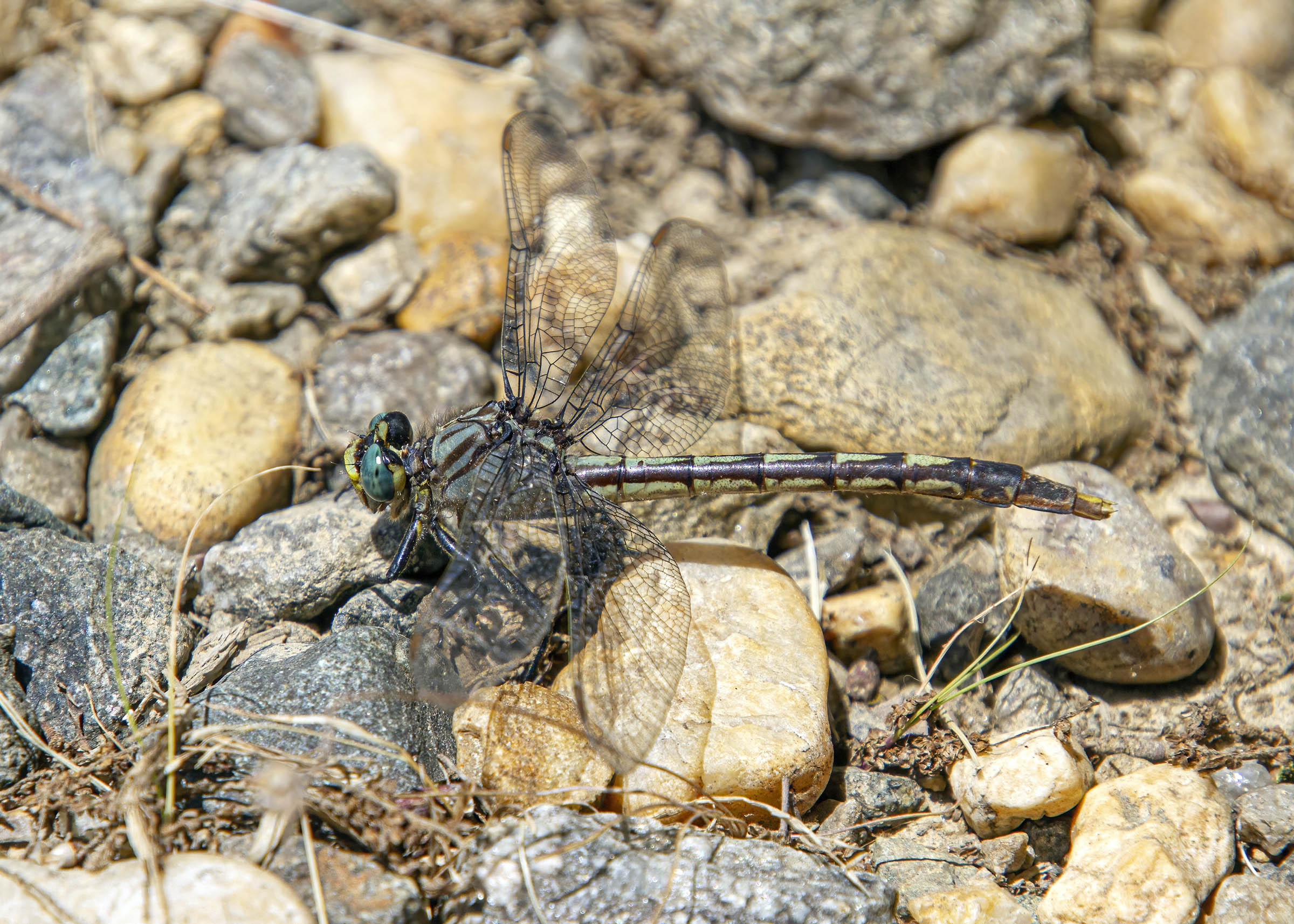
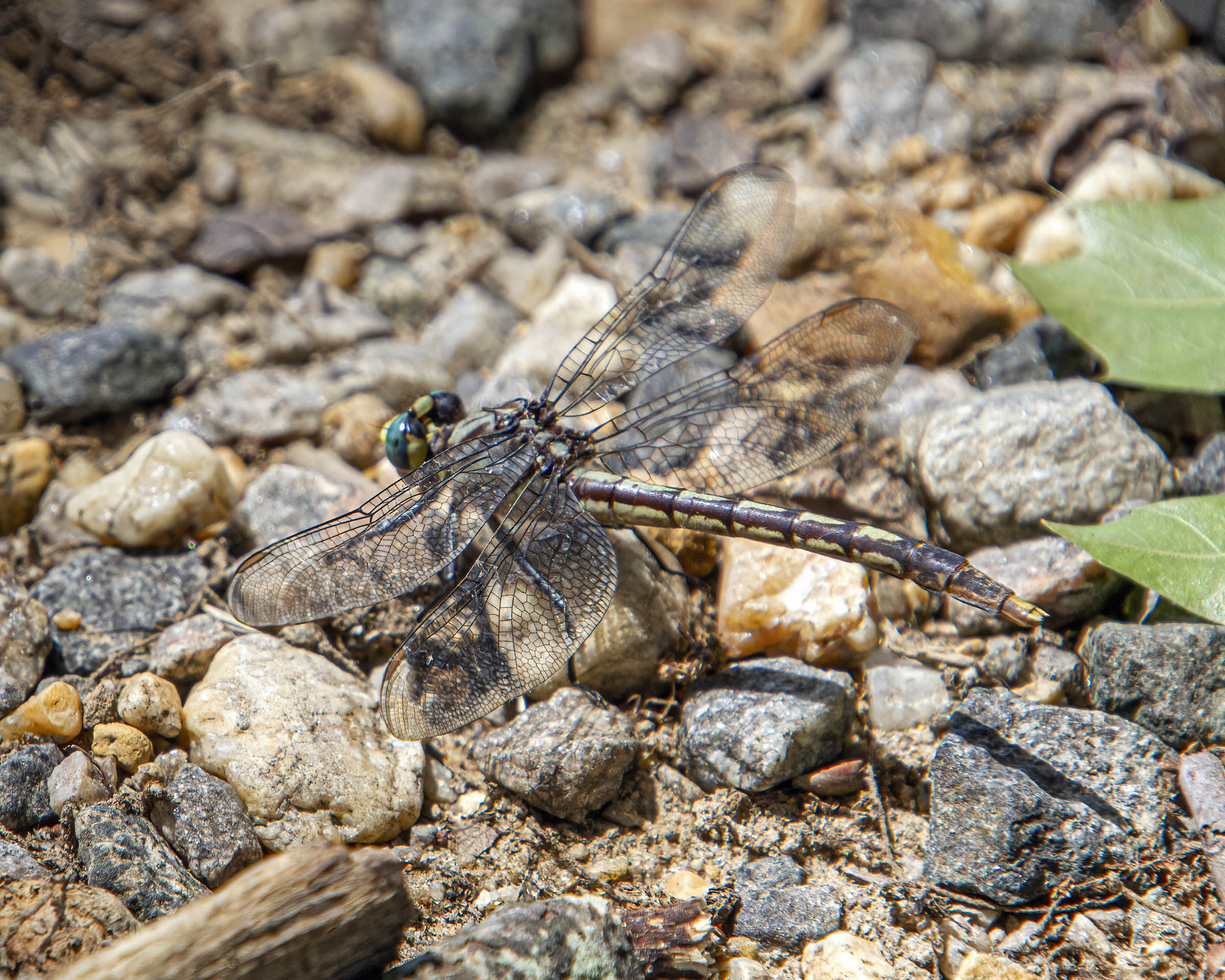
Sable Clubtail dragonflies (Stenogomphurus rogersi) are uncommon in my area. This dragonfly species is generally found only in very small numbers, has a short flight period, and requires very specific habitats, preferably a small, clean forest stream. There is only one location in my area where I have found Sable Clubtails in the past and some years I have not seen a single one.

I was therefore really excited on Monday when I spotted what I thought might be a Sable Clubtail. I was not sure of my identification, though, because this dragonfly was in a different location at the park, not along the stream where I had seen Sable Clubtails in the past.

When I returned home and examined my photos on my computer, I was shocked to see that the dragonfly was a female–I am pretty sure that all of the Sable Clubtails that I have previously seen were males. For the sake of comparison, I have added a photo of a male that was part of a posting I did on 10 June 2024 entitled Sable Clubtail dragonfly (male). If you look closely at the tip of the abdomen (the “tail”) of each dragonfly, you will see different shaped terminal appendages, which are key factors in helping to identify the gender of a dragonfly.

Different dragonfly species have different courting behaviors. In some cases, the males and females are present in the same area, but in other cases, the females remain in a different area until they are actually ready for mating. I looked through my resources and on-line to see if I could find any information about the behavior of Sable Clubtail females, but came up empty-handed.

Where do female Sable Clubtails like to hang out? With a sample size of only one, I certainly can’t come to any conclusions, but I will continue to keep my eyes open and perhaps I will encounter another one.

Sable Clubtail

Sable Clubtail

© Michael Q. Powell. All rights reserved.

Read Full Post »
How does the Google search engine work? What causes information that you post to show in the first page of Google results? There are plenty of people on-line who claim to understand the Google algorithm and are willing to sell you there services for something called Search Engine Optimization, but for most of us, Google is a bit of a mystery.

When I do a daily blog posting, I expect that most of my views for that day will be from that posting, primarily from subscribers to my blog, or maybe for postings from the previous few days. Over the past ten years, I have learned that other viewers may be drawn to my site as a result of searches using Google or other search engines. In 2023, for example, 34 percent (14,473) of my 43,661 total views came from Google searches.

In the last couple of months, however, I have noticed a rise in daily views that seems to be driven largely by an increase in Google searches. I have a modest goal for my blog of about 120 daily views and in May and June the daily views have averaged over 200. I’d like to think that my blog postings have been better than average recently, but the numbers don’t bear that out.

So far this month, 59 percent of my 4,074 views came from Google searches, including 562 views of a 2013 posting called Fuzzy White Caterpillar and 217 views of a 2019 posting called Groundhog in a tree. In the case of the latter posting, when I do a Google search of “Groundhog in a tree,” my posting shows up as the first result. Yikes!

I really don’t care that much about the number of views that my blog gets, but my analytic mind is fascinated by the data. As I have noted repeatedly in the past, I use the words and images in my blog postings to share a bit of the world as I experience it, showcasing with a sense of wonder and curiosity the amazing world in which we live, as filtered through my eyes and through my brain.

In case you are curious, this white water lily was one of several that I encountered during a recent visit to Green Spring Gardens. Somehow this simple image conveys a sense of the peace and serenity that I felt as I captured the image. My hope is that we can all experience a bit more of that peace in our daily lives.

As for Google, I am somewhat perplexed and a little amused that Google seems to like me a bit more recently and is sending additional viewers my way and suspect that it is only a passing fancy. As Andy Warhol is reported to have said, “In the future, everyone will be famous for 15 minutes.”

water lily

© Michael Q. Powell. All rights reserved.


Read Full Post »

I love the way that water lilies seem to glow, as though there were a light emanating from their centers. I photographed this pretty pink water lily during a recent visit to Green Spring Gardens, a county-run historical garden not far from where I live. Several white water lilies were also in bloom, but somehow I was drawn to the solitary pink one that was surrounded by lily pads.

Whenever I see Water Lilies in bloom, I immediately think of one of my favorite artists—Claude Monet. During the last thirty years of his life, water lilies (Nymphéas in French) were the main focus of his artistic production.

water lily

© Michael Q. Powell. All rights reserved.


Read Full Post »

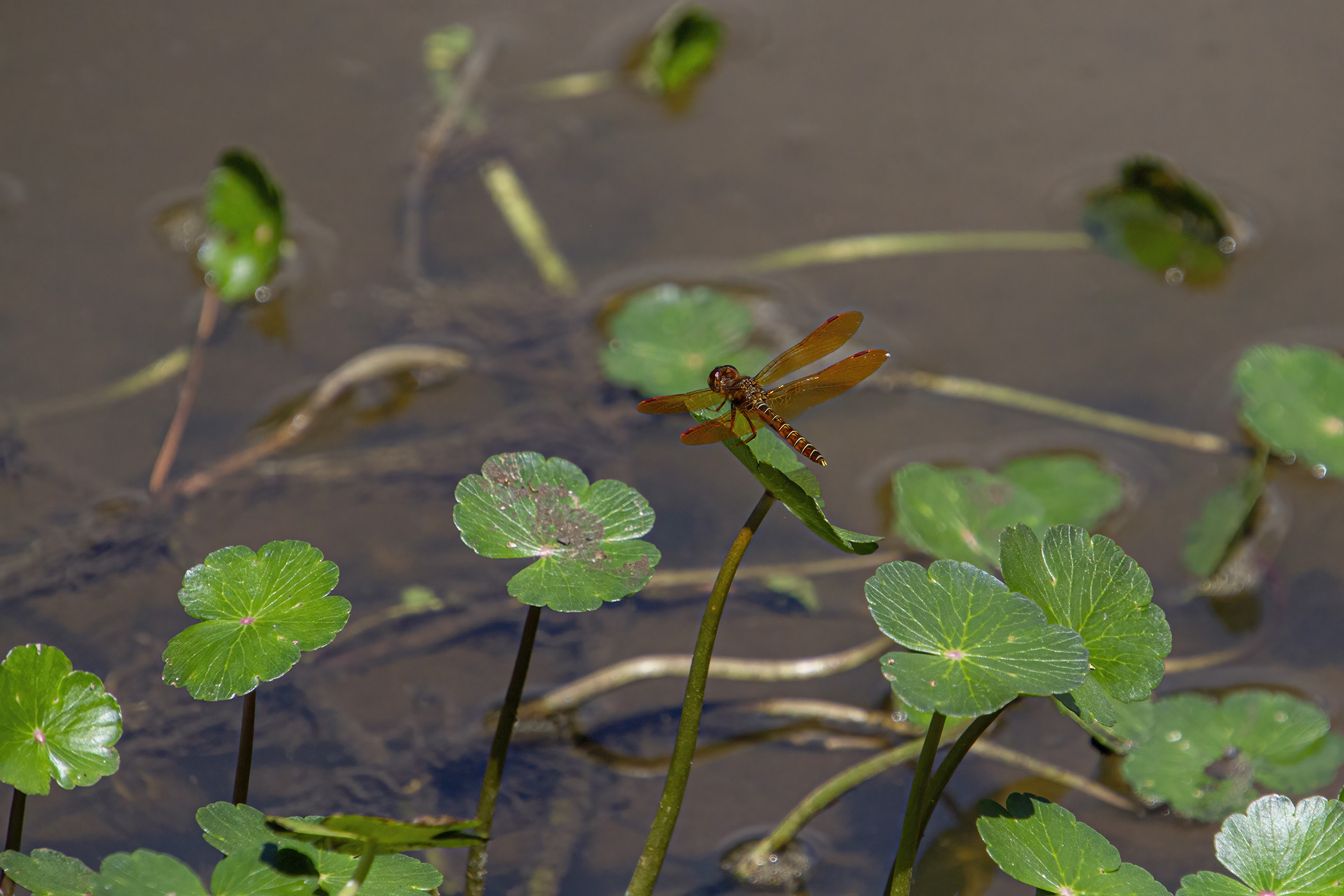
Most of the time when I spot Eastern Amberwing dragonflies (Perithemis tenera) they are busily flying about over the water, but this handsome little guy decided to rest a bit in the vegetation at the water’s edge on Thursday at Jackson Miles Abbott Wetland Refuge.

Most of the summer dragonflies have now arrived on the scene, so I may not be featuring any new species for a while. However, I am content to photograph my familiar “friends,” always hoping to capture them in different perches, activities, or lighting conditions. Each moment gives me a new chance to capture something beautiful and/or unusual. Beauty is everywhere.

Eastern Amberwing

© Michael Q. Powell. All rights reserved.

Read Full Post »

Slaty Skimmers (Libellula incesta) have now started to appear at Jackson Miles Abbott Wetland Refuge, signaling to me that summer is almost here. During the hottest months of the year, Slaty Skimmers are one of the commonly seen dragonfly species in my area, in part because they are habitat generalists—you can find them everywhere,

The greyish-blue bodies and dark eyes of the mature male Slaty Skimmers make them easy to identify. The immature members of this species, however, are a lot harder to identify, because they are similar in appearance to the young of several other species in the area. Fortunately for me, the Slaty Skimmers in these two photos, the first that I have photographed in 2024, are both mature males.

Slaty Skimmer

Slaty Skimmer

© Michael Q. Powell. All rights reserved.

Read Full Post »

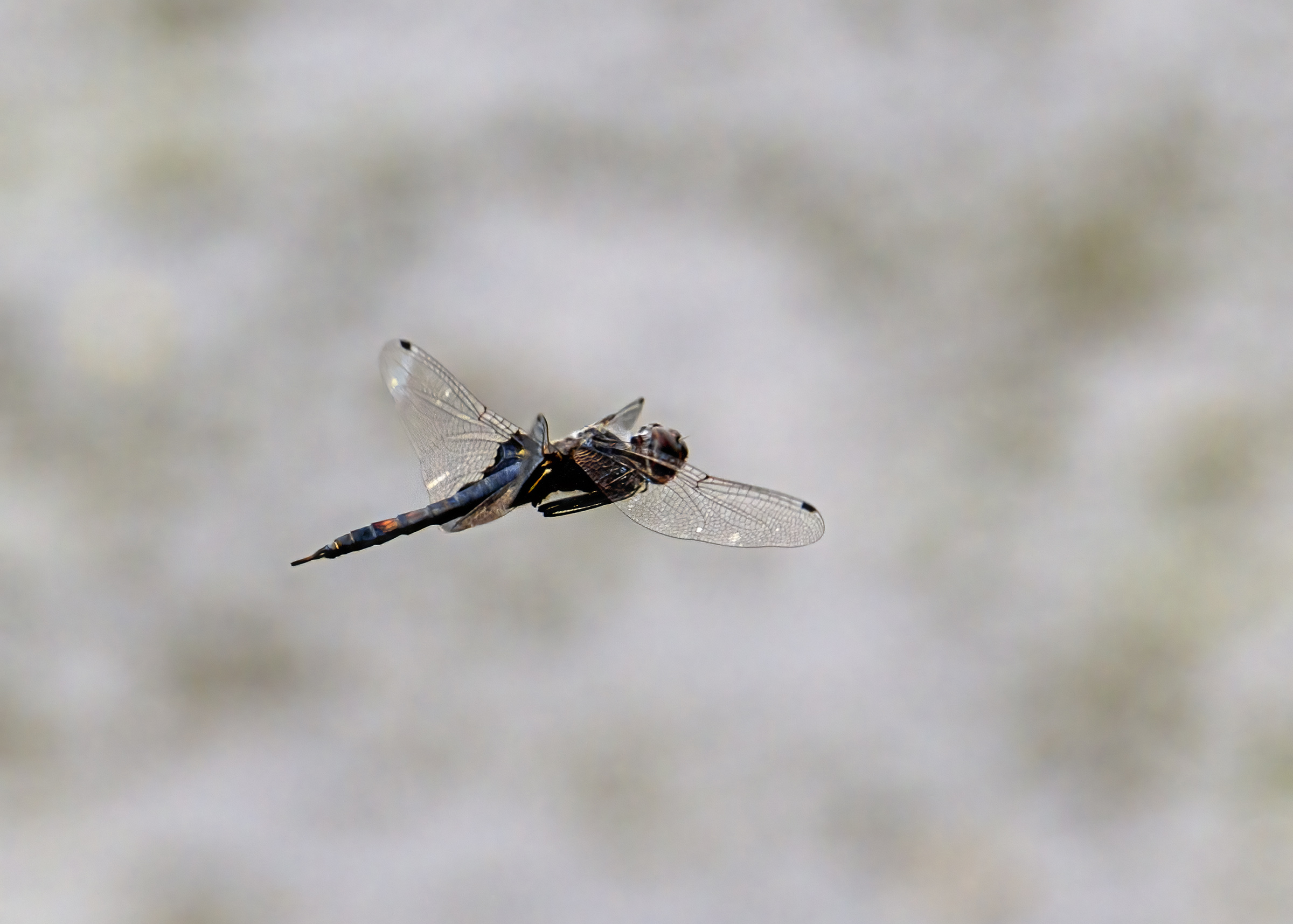
When I spotted a dragonfly patrolling over the water of a small pond yesterday at Jackson Miles Abbott Wetland Refuge, I knew almost immediately that it was a Prince Baskettail dragonfly (Epitheca princeps). How could I tell? As it flew by, I could catch glimpses of the dark patches on its wings and the Prince Baskettail is the only large dragonfly with patterned wings in our area. (Prince Baskettails are almost three inches (76 mm) in length).

Seeing the dragonfly in flight was easy, but getting a clear shot of it was a considerable challenge. I watched the dragonfly and was able to determine its approximate patrol area. When it flew into that area, I attempted to track it, sometimes using my camera’s autofocus and sometimes focusing manually. Most of my shots were out of focus or did not include the dragonfly in the frame, but I managed to get a few decent shots, with the image below being the best of the lot.

Some of my fellow wildlife photographers marvel at images like this and think that high end gear or special techniques are necessary. The reality, though, is that I use relatively modest equipment and the “secret” to my success quite often is a combination of patience, practice, and persistence.

Prince Baskettail

© Michael Q. Powell. All rights reserved.

Read Full Post »

« Newer Posts - Older Posts »