Last weekend, I took some shots of Multicolored Asian Lady Beetles (Harmonia axyridia) in the larval and pupal stage and discussed the phases of ladybug development in a post called Baby Ladybugs. Yesterday, I returned to see if I could find any fully developed ladybugs that had been in pupae the last time I encountered them. (Yes, I realize I would not be able to recognize them individually, but it’s nice to imagine that we’re gradually getting to know each other.)
So, what happened? I left the shoot thinking that I had not seen any adult ladybugs, but when I looked at some of the photos on my computer of different pupae, I was uncertain. Right outside of an empty pupa shell in one of the photos is something that looks like an adult ladybug, if I squint my eyes, tilt my head, and use a little imagination. What do you think?
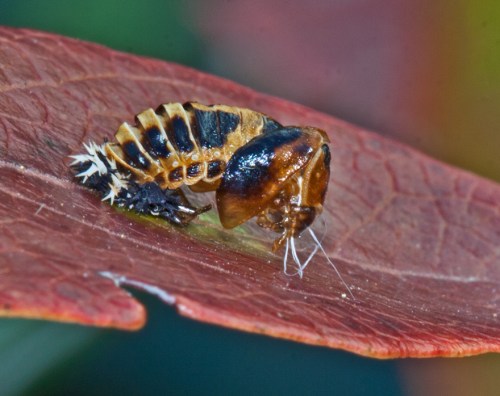
Newly emerged ladybug?
If you haven’t been following this story, let me catch you up with a couple of photos. (I feel like I’m doing an intro for a new television series, Lifestyles of the Ladybug.) Ladybugs start out as eggs and them become larvae. As they grow, they molt several times and each time they develop a new exoskeleton. Yesterday, I saw quite a few discarded skins that, at first glance, looked a lot like the larvae themselves. Here is what a ladybug larva looks like in a later phase of development. (I took some new shots of the larvae and pupae yesterday.) They are not as cute in this stage as they will become as adult ladybugs.

Ladybug larva
Once they are fully grown, the larvae enter into a pupal stage, somewhat akin to the cocoons into which caterpillars develop into butterflies. The pupae look a little bit like ladybugs themselves and are attached to leaves. While they are in this phase, the metamorphosis takes place in which they turn into ladybugs. Here is my favorite shots of a ladybug pupa.
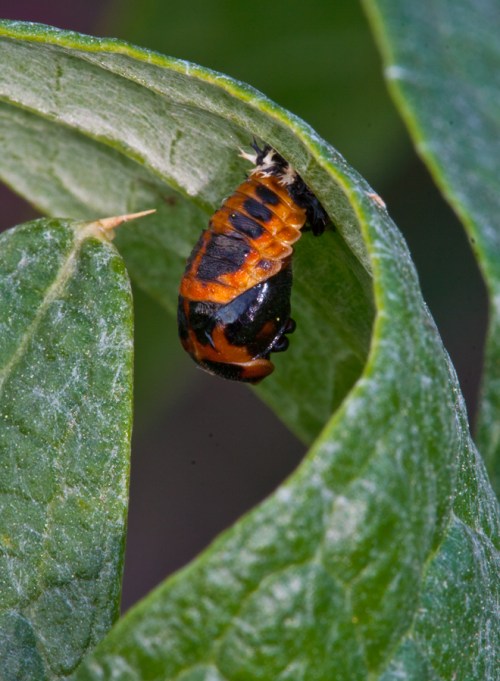
Ladybug pupa
After about five days, a ladybug emerges from the pupa. According to ladybug-life-cycle.com, “When the metamorphosis is complete, the skin of the larvae will split open and the full grown ladybug will emerge, but it still won’t look like the ladybug that you know so well. It will look soft and pink or very pale for a couple of hours until its shell becomes hard.”
Was I really lucky enough to catch the ladybug just after it had emerged from the pupa? My response is a firm, “Maybe,” but others with more experience may be able to respond more definitively. Here is one last photo of the possible new ladybug, from a slightly different angle than the first photo, to help your deliberations.
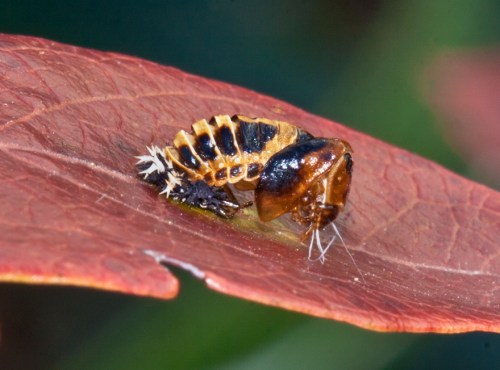
Welcome to this world
© Michael Q. Powell. All rights reserved.
Read Full Post »















 Mike Powell
A few more orchids
Posted in commentary, Flowers, Gardening, Macro Photography, Photography, tagged Canon 100mm macro lens, Canon Rebel XT, Cymbidium, Lewis Ginter Botanical Garden, Richmond VA on March 5, 2013| 6 Comments »
This past weekend, I made another trip to the orchid exhibit at Lewis Ginter Botanical Gardens in Richmond, VA, in part to hone my macro-shooting skills that have atrophied during the winter months.
I have grown accustomed to photographing birds and small mammals at the far end of my telephoto range in situations in which I don’t have much time for decision-making. If I am lucky, I am able to quickly check the direction of the light and adjust my camera’s settings, but sometimes there is insufficient time for even those rudimentary checks.
When I am shooting with my macro lens, my camera is usually attached to my tripod and, if I remember to do so, I have time to think about the exposure, the settings, and the angle before the shot. More importantly, I can look at the results and take a second shot. Birds and animals rarely give me a second chance.
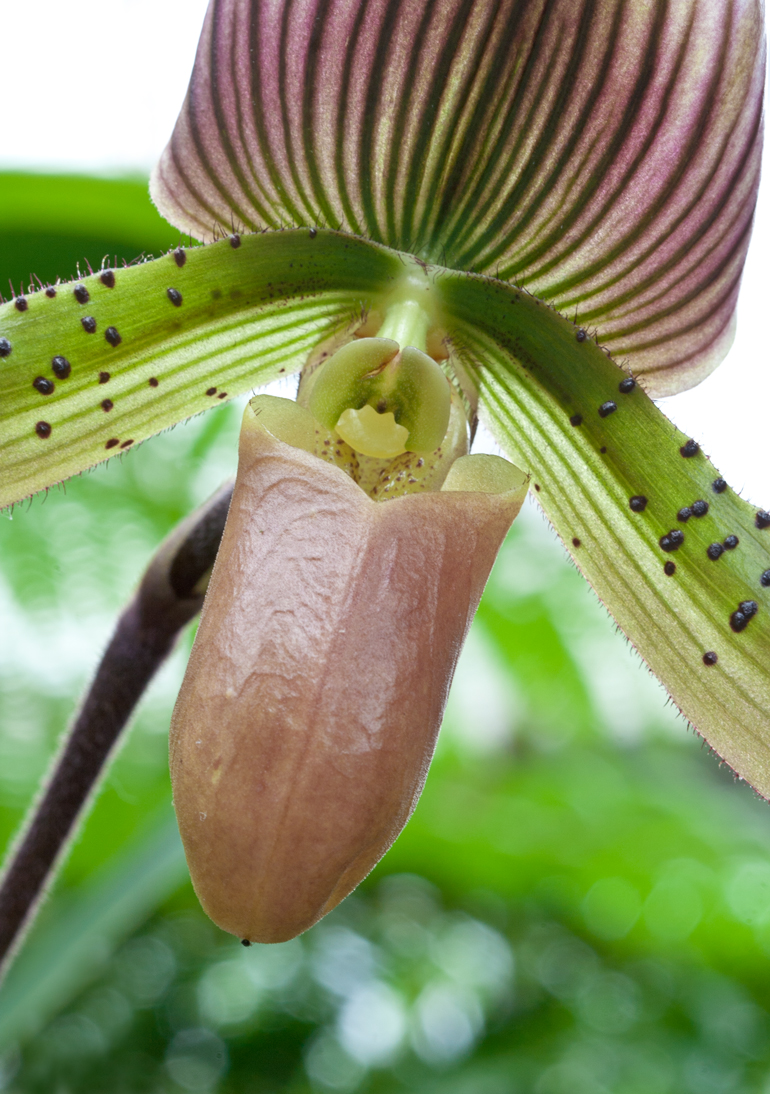
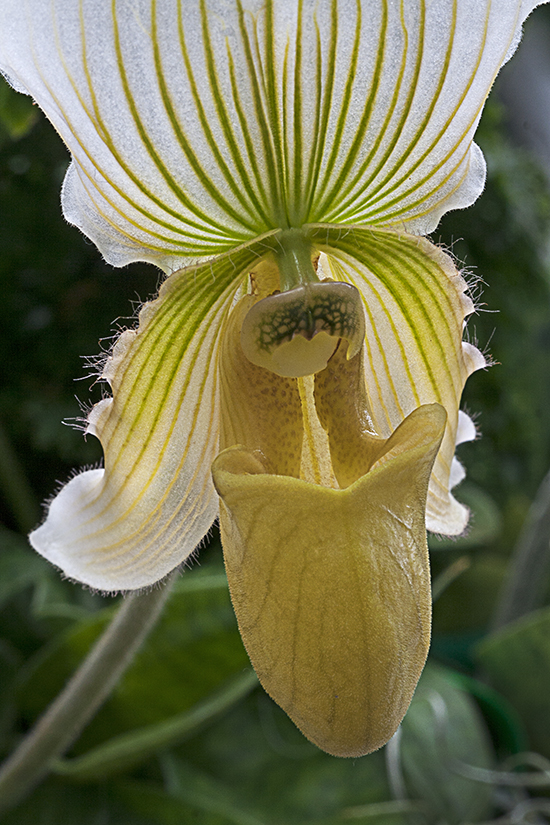
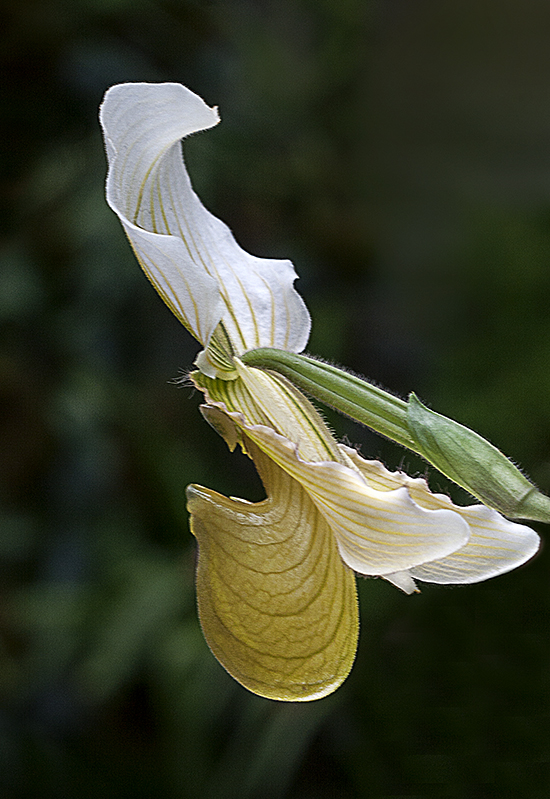
Here are shots of a couple of the orchids that at the exhibition. I don’t know the names of the orchids, but one of my Facebook friends told me that the red one is from the Cymbidium genus. As I was working on the images, I noticed that I photographed both of them from almost the same angle. Perhaps I liked that angle, but most likely I was desperately trying to get an uncluttered background and this view allowed me to minimize distractions.
I can tell I need to retrain my eyes a bit to look at the tiny details as I prepare for the insect and flower season. Baseball is not the only activity that requires spring training.
© Michael Q. Powell. All rights reserved
Share this:
Read Full Post »