Feeds:
Posts
Comments

Archive for the ‘Macro Photography’ Category

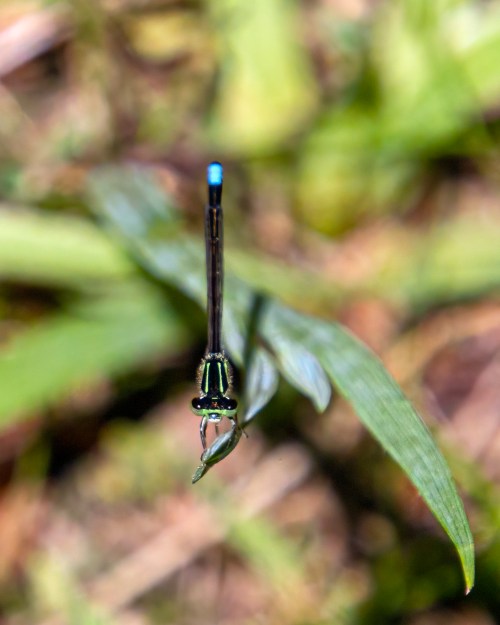
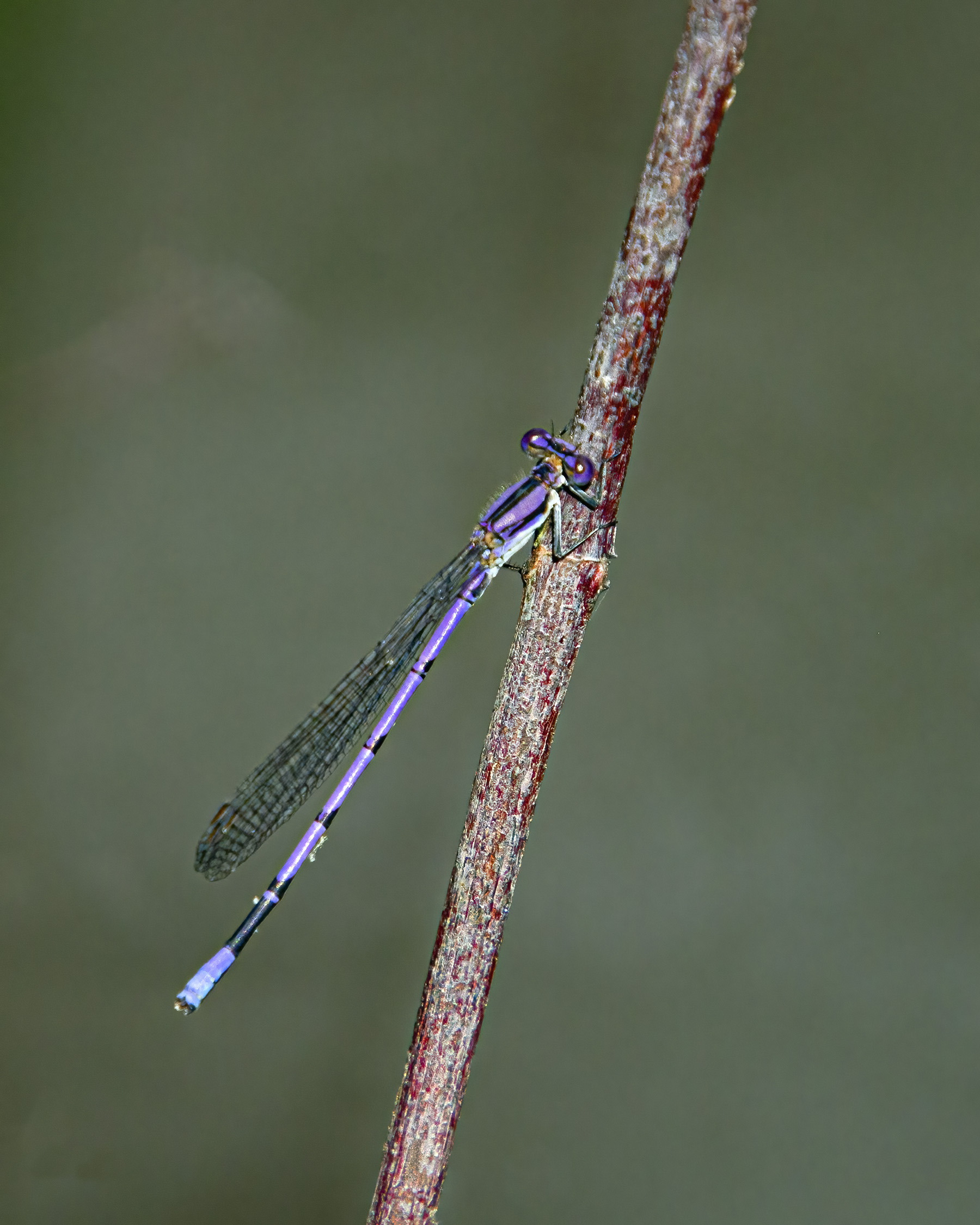
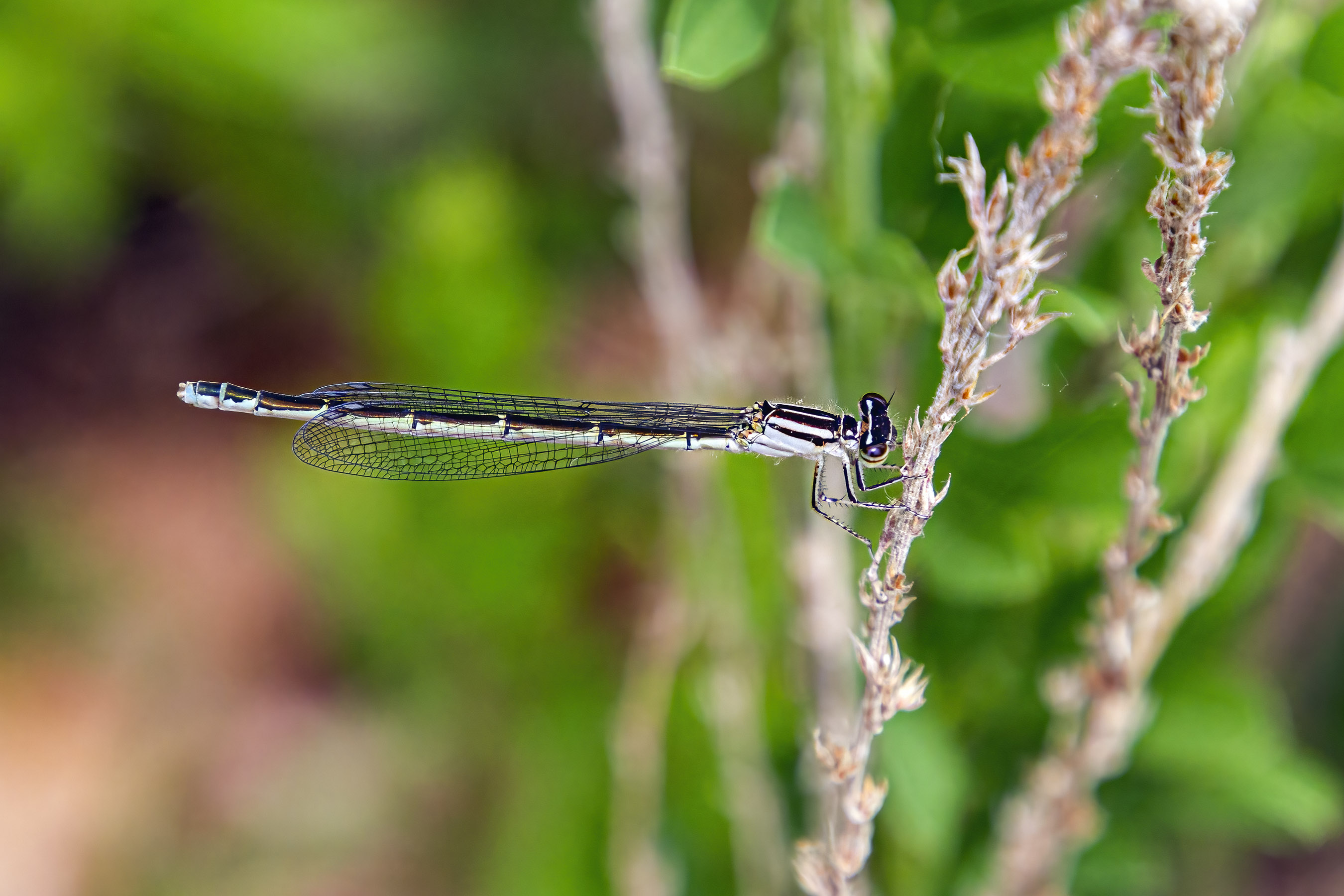
On Monday I spotted several Blue-fronted Dancer damselflies (Argia apicalis) during a visit to Jackson Miles Abbott Wetland Refuge. I don’t see this particular species of damselfly at most of my other favorite spots, so it was a nice treat to see them. According to my identification guide, Damselflies of the Northeast by Ed Lam, Blue-fronted Dancers can be found “on a wide variety of rivers and streams, occasionally lakes and ponds.”

In this case, I spotted the damselflies perched in the vegetation at the edge of a small pond (first photo) and perched on an exposed tree root a few feet from the pond (second photo). The males of this species are pretty easy to identify because their thoraxes (their “chest”) are almost completely blue, with only hairline black stripes.

Blue-fronted Dancer

Blue-fronted Dancer

© Michael Q. Powell. All rights reserved.


Read Full Post »

Last Saturday I spotted this stunning female Eastern Pondhawk dragonfly (Erythemis simplicicollis) during a visit to Occoquan Bay National Wildlife Refuge. The thorn-like projection near the tip of the abdomen that helps her to lay eggs made it immediately obvious that this was a female. The bright green coloration, distinctive black bands on her abdomen, and her green face make it almost impossible to misidentify this species.

As I was checking my blog yesterday, I came across a notice from WordPress informing me that I had started my blog 13 years ago. Wow! It’s hard to believe that I have kept this blog going for that long. According to the statistics from WordPress I have had 524,468 views of 5,417 posts since I began posting.

It is a bit of a cliché but it is absolutely true that I could not have done this without all of the support, suggestions, and encouragement. Thank you to all of you. I remember my modest expectations when I started the blog, looking simply for a place to post my wildlife and nature photographs. Over time this blog has become a kind of diary in which I have been able to express a lot of what I think and feel as I experience the beauty of the natural world. I have come to enjoy expressing myself as much in my written words as I have in my photos, reflecting on many different aspects of my life, including religion, poetry, and various artistic pursuits.

I remember deciding on the subheading for the blog some 13 years ago, calling it “My journey through photography.” Though the path has often been meandering and full of detours and distractions, that journey still continues. Once again, I thank all of you who have chosen to walk alongside me and to experience the world in part as I see it.

Female Eastern Pondhawk

© Michael Q. Powell. All rights reserved.

Read Full Post »

Shortly after waking up this morning, I walked over to my neighbor Cindy’s garden to see what was in bloom. The last time I checked, about a week ago,  there were lots of flowering day lilies, but I suspected that the recent heat had caused many of them to wilt and die. I am not sure if lilies close up at night, but I did not see any lilies in bloom in the early morning light—I was there about 6:15 today.

However, there were plenty of purple coneflowers and Shasta daisies open and I did my best to capture some their beauty with the short macro lens that I was using. I was delighted to spot a tiny insect creature crawling around on one of the daisies, as you can sort of see in the second photo. The limited light available forced me to open the aperture of the lens and created such a narrow depth of field that I could not get both the insect and the flower in focus.

Most of you know that I enjoy photographing wildlife and nature in more remote locations, but it is reassuring to know that I do not always have to travel far to find subjects—beauty is everywhere.

shasta daisy

Shasta daisy

coneflower

© Michael Q. Powell. All rights reserved.

Read Full Post »

Most of the time that I see damselflies, they are perched in the vegetation. Powdered Dancer damselflies (Argia moesta), like this one that I spotted last week at Occoquan Bay National Wildlife Refuge, however, like to perch on bare ground, emergent stones, and along trails. Immature male Powdered Dancers are tan to dark brown, turn darker with age, and becoming almost completely whitish at maturity.

The “powdered” color of this damselfly helped in to blend in almost perfectly with the sand and gravel on this trail at the wildlife refuge. If I had not seen it land, I suspect that I would have had real trouble spotting this Powdered Dancer damselfly.

Powdered Dancer

© Michael Q. Powell. All rights reserved.

Read Full Post »

When I spotted these damselflies last week I was not sure what species they were. Most of the damselflies that I had seen near this location at Occoquan Bay National Wildlife Refuge in the past were Big Bluet damselflies (Enallagma durum), but the coloration of this one was different enough that I was not confident in identifying it. I posted a photo in a Facebook group that specializes in dragonflies and damselflies and one of the experts there confirmed that this is in fact a Big Bluet.

I am happy to identify this species, but I must confess that I am even more happy with the images that I was able to capture. For all three images, I believe, I had to focus manually as I tried to compose the images, which can be a real challenge with a digital camera. When I first started taking photos back in the pre-digital age, I remember that my single-lens reflex film camera had a split prism area that you had to adjust and you knew that the subject was in focus when the two halves of the image aligned.

My telephoto lens was extended fully to 400mm, so I was a pretty good distance from the damselflies when I composed these shots. I particularly like the first image, in which the branch at the top third of the shot gradually falls out of focus, allowing the viewer to focus on the damselfly clinging to the leaf.

Big Bluet

Big Bluet

Big Bluet

© Michael Q. Powell. All rights reserved.

Read Full Post »

The colors of the False Indigo Bushes (Amorpha fruticosa) were spectacular on Monday at Occoquan Bay National Wildlife Refuge, attracting my attention as well as that of an energetic honey bee (g. Apis) whose pollen sacs were already filled to bulging. I was initially paying so much attention to focusing on the moving bee that I did not realize that my shutter speed had dropped to 1/400—I was in aperture priority mode. The first photo was a “happy accident: in which the bee’s face was in focus, but its rapidly-moving wings were a blur.

In the second shot, the bee had landed and was crawling all around the stalks of the false indigo bush. I am really happy with my snapshot of that action that captured the color and movement of my brief encounter with the honey bee.

honey bee and false indigo bush

honey bee and false indigo bush

© Michael Q. Powell. All rights reserved.

Read Full Post »

During a visit on Monday to Occoquan Bay National Wildlife Refuge, I noted that many of the summer dragonfly and damselflies are starting to appear. I was particularly delighted to spot several Big Bluet damselflies (Enallagma durum). As their name suggests, Big Bluets are relatively large damselflies, with an overall length of about 1.7 inches (43 mm).

Big Bluets tend to active and a bit skittish, so it’s a bit tough to get a decent shot of one, especially when I am shooting with a zoom lens. The auto-focus of my Tamron 18-400mm zoom often has trouble focusing on a damselfly, because their bodies are so thin and they clasp their wings together over their bodies. Consequently, I frequently end up focusing manually and it is an advantage with this lens that the minimum focusing distance is 17.7 inches (45 cm), so I can get pretty close to my subject.

I was delighted to be able to capture this beautiful image of a female Big Bluet. My focusing was spot on and the background blurred out nicely. If you look closely, you may notice that the depth of field, i.e. what was in focus, was so shallow that much of the stalk of vegetation on which the damselfly was perched was out of focus. In case you are curious, I tried to position myself so that I was on a parallel plane with the damselfly’s body to get as much of it in sharp focus as possible.

One interesting factual tidbits about Female Big Bluets is that, like several other damselfly species, they come in two different color variants. This one is the blue form and there is also an olive form. What that means is that I cannot rely exclusively on the color of the damselfly to determine its species and must also look at other features like the shapes of the eyespots and markings on the terminal appendages.

Big Bluet

© Michael Q. Powell. All rights reserved.

Read Full Post »

Last Wednesday I went on a hike in Prince William Forest Park, a National Park Service site in nearby Triangle, Virginia. Unlike the coastal plains and marshes where I spent a lot of my time in nature, Prince William Forest Park, as its name suggests, is a forested area that is full of hills and valleys with numerous creeks.

One of the highlights of my hike was seeing my first Eastern Cricket Frogs (Acris crepitans crepitans) of the season. Cricket frogs of the genus Acris are quite small (about one inch (25 mm) in length) and I often spot them at the edge of the creeks in the park. On this occasion I spotted the frog when it hopped right in front of me, though most often I hear the frogs before I see them. Cricket frogs have a distinctive call that sounds like two pebbles being clicked against each other—some scientist thought it sounded like a cricket, which accounts for the common name for the species .

Eastern Cricket Frog

© Michael Q. Powell. All rights reserved.

Read Full Post »

I was happy to spot these male Powdered Dancer damselflies (Argia moesta) on Monday at a creek in Prince William County, Virginia. Most of the damselflies that I see regularly are found at small ponds and marshy areas, but this species prefers rocky streams and rivers. Sometimes Powdered Dancers will perch in the streamside vegetation, but often they will perch flat on rocks in the water, as you can see in several of these shots.

The thoraxes of Male Powdered Dancers are mostly white due to pruinosity, i.e. they are covered by minute waxy dust particles that makes them look frosted or powdered. This phenomenon is present in some dragonflies too, most notably the male Common Whitetail dragonflies.

Powdered Dancer

Powdered Dancer

Powdered Dancer

© Michael Q. Powell. All rights reserved.


Read Full Post »

After mating, many male damselflies hold on to the female as she deposits eggs in order to keep any rival males from interfering with the process. The male grasps the head of the female with the terminal appendages of his abdomen in the “tandem” position and the two linked damselflies move about from spot to spot as the female inserts eggs into floating vegetation.

Last Friday at Jackson Miles Abbott Wetland Refuge I managed to capture this image of a Slender Bluet (Enallagma traviatum) couple as the female arched her body, made a little slit in the vegetation and inserted eggs, a process known as “ovipositing.”

I am not absolutely certain I have correctly identified the damselfly species—there are a lot of bluet species—but I have made my call primarily on the basis of the markings on the abdomens of the male and the female. I intend to post this shot in a dragonfly/damselfly forum on Facebook and will update this posting if one of the experts in the group corrects my initial identification.

Slender Bluet

© Michael Q. Powell. All rights reserved.


Read Full Post »

Yesterday at Jackson Miles Abbott Wetland Refuge I spotted some Variable Dancer damselflies (Argia fumipennis), one of my favorite damselfly species. I never fail to be shocked and delighted by the brilliant purple of eyes and body of the male of the subspecies known as the Violet Dancer (Argia fumipennis violacea). Some of you may have even noticed that I have used an image of a Violet Dancer as the banner image for the home page of my blog for a number of years.

Dancers are a genus of damselflies named for the distinctive jerky form of flight they use which contrasts with the straightforward direct flight of many other pond damselflies. I must confess that I don’t pay much attention to the way that particular damselflies fly, but instead rely primarily on their coloration to identify them,

Violet Dancer

© Michael Q. Powell. All rights reserved.

Read Full Post »

I was delighted to spot this cool-looking Brown Spiketail dragonfly (Cordulegaster bilineata) this past Wednesday at Occoquan Regional Park in Lorton, Virginia. I was hoping to get a closer shot, but the dragonfly did not hang around very long before flying away.

Fortunately I was shooting with a relatively long lens—I was at the long end of my Tamron 18-400mm zoom lens—and was able to capture a good deal of detail of the dragonfly, including its stunning two-toned compound eyes. The dragonfly appeared to be barely hanging on to the vegetation when I took this shot, which may partially account for its swift departure.

Brown Spiketail

© Michael Q. Powell. All rights reserved.

Read Full Post »

Identification guides for birds, dragonflies, and damselflies often use illustrations rather than photos? Why? It is almost impossible for a photo to show all of the key identification features of a species.

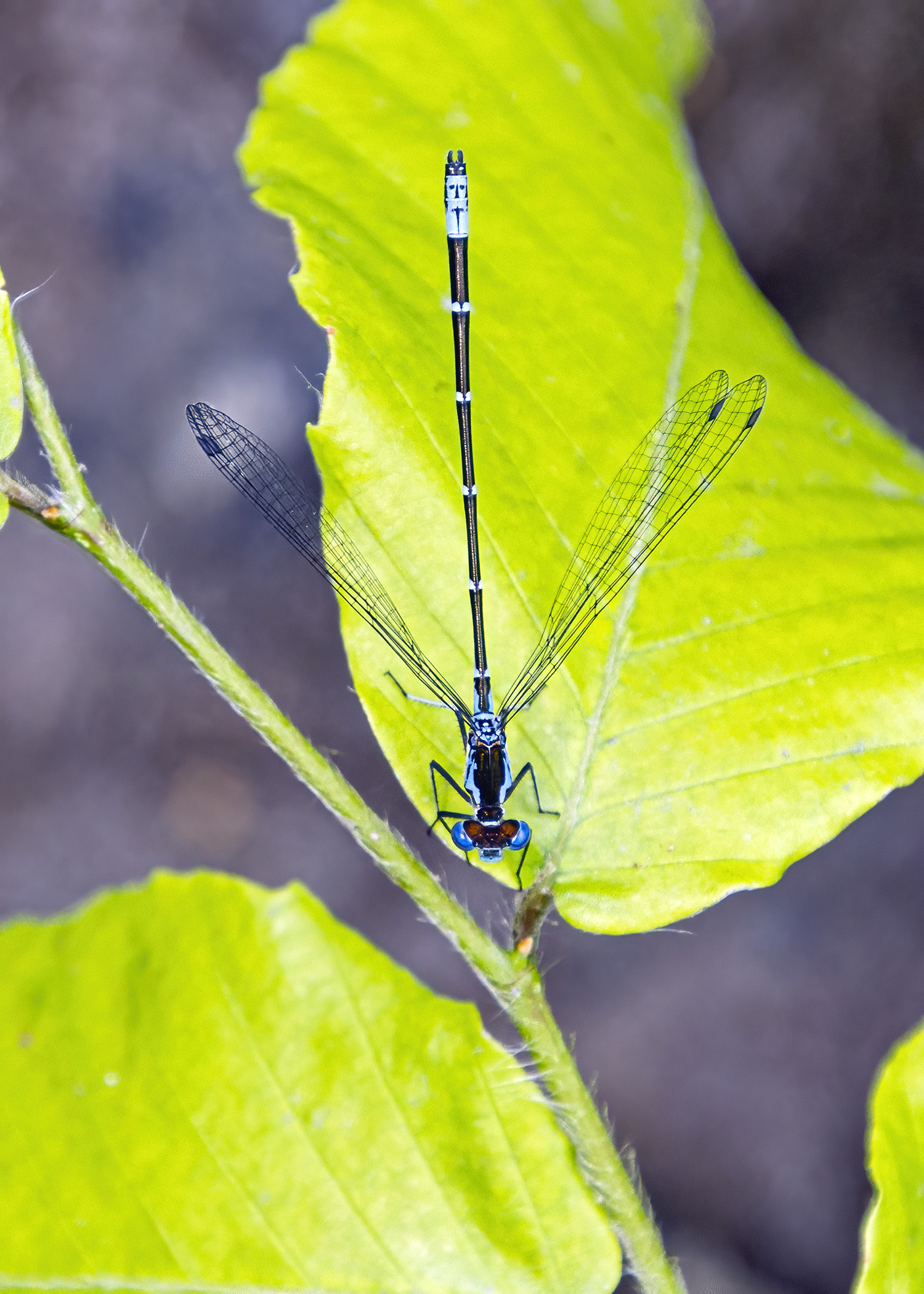
Last week, for example, I captured some wonderful photos of a male Aurora Damsel damselfly (Chromagrion conditum) at a small pond in Prince William County, Virginia. In the first photo below, I was able to capture an image from almost directly overhead that shows the markings on the tiny damselfly’s thorax and abdomen. The image also shows how this damselfly species perches with its wings partially spread, unlike most damselflies that perch with their wings closed above their bodies. The second shot shows many of the same features.

However, it is fairly uncommon to be able to capture views like those in the first two shots and they do not show what is often the key identification feature for this species. Both genders of Aurora Damsels have distinctive bright yellow patches on the sides of their thoraxes, as you can see in the third photo. You might notice that in this photo, the markings on the tip of the abdomen are much less clear than in the first two shots, but that’s not a problem, because that yellow patch immediately signals that it is an Aurora Damsel.

Whenever I can, I try to capture shots of my subjects from multiple angles. The different angles of view may help in identifying a species or may create a more aesthetically pleasing image. One of the coolest things about photography is the way in which it combines science and art—I can be as scientifically geeky or as artistically creative as I want to be.

Aurora Damsel

Chromagrion conditum

Aurora Damsel

© Michael Q. Powell. All rights reserved.


Read Full Post »

A month ago it was easy to spot the early-emerging insects, because very few of them were flying. Now, though, the air is so full of bees, flies, and other aerial creatures that it is a little harder to detect the dragonflies and damselflies that are my primary targets.

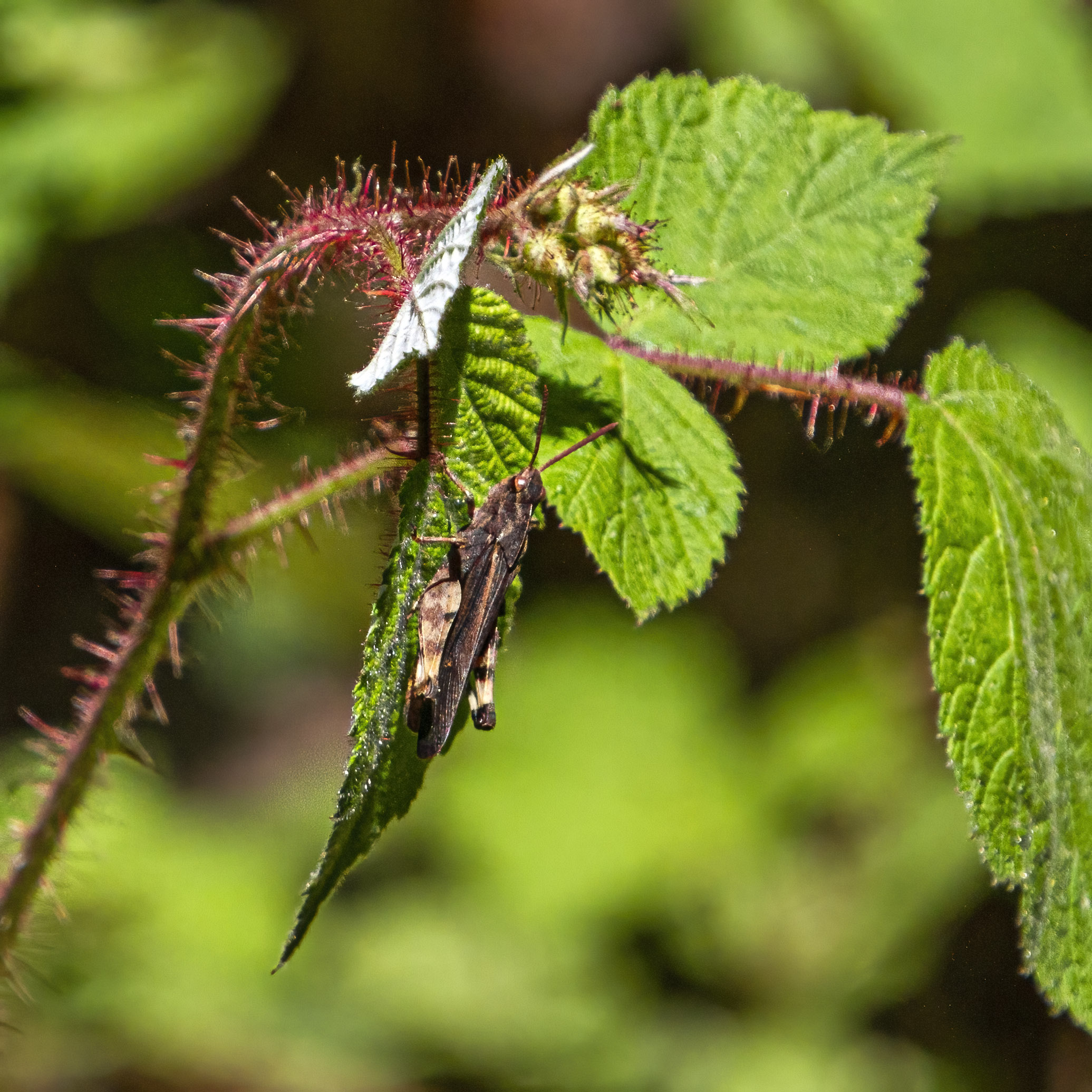
As I walk along grassy paths now, little clouds of grasshoppers burst into the air in front of me. Most of the grasshoppers jump out of sight, but occasionally one will perch on some nearby vegetation and remain immobile, hoping perhaps that I will not see him.  Last week at Occoquan Regional Park I captured a shot of one such grasshopper.

I am definitely not an expert on grasshoppers, so I had to pore over page after page of entries on the internet before I finally concluded that this might be a Green-striped Grasshopper (Chortophaga viridifasciata). Still unsure of the identification, I posted a request for help on the BugGuide website and an expert there confirmed my identification of this grasshopper.

From an aesthetic perspective, I loved the curve of the spiky stem of the plant and my initial instinct was to go for a looser crop of the image, as you can see below in the second photo. However, I realized that viewers could not see the details of the grasshopper, so I made the more zoomed-in version that you can see as the first photo below.

The two images, which are actually just different versions of the same shot, complement each other and serve different functions. The first one focuses more on the grasshopper as the primary subject, while the second one makes the environment a co-star. I like both versions.

Green-striped Grasshopper

Green-striped Grasshopper

© Michael Q. Powell. All rights reserved.

Read Full Post »

Odonata is an order of flying insects that includes dragonflies and damselflies. During the warmer months of the year I spend a lot of time hunting for dragonflies, the larger members of this group of magical creatures, but I also enjoy searching for damselflies, their smaller and more fragile “cousins.”

Damselflies, like dragonflies, come in a variety of colors and shapes. Here is a sampling of images of damselflies that I captured this past Thursday during visits to Jackson Miles Abbott Wetland Refuge and Occoquan Regional Park, both of which are located within 15 miles (24 km) of my house.

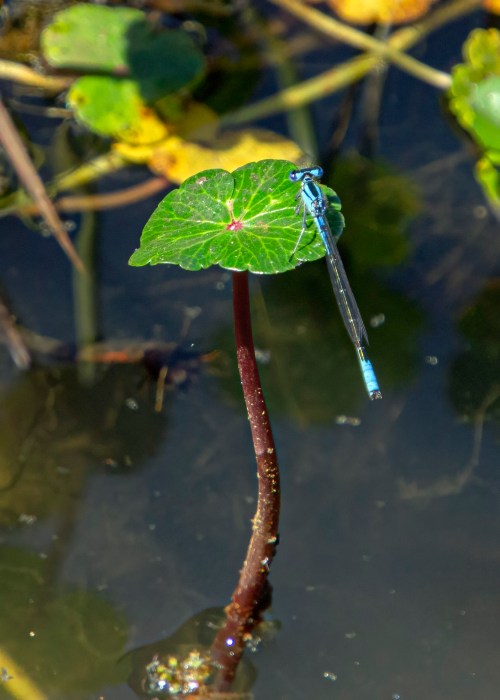
The first photo shows a Orange Bluet (Enallagma signatum). I am always amused by the name of this species, because it seems incongruous to have an orange-colored member of a genus called American Bluets. Most male bluets are, in fact, blue, but others are orange, scarlet, and burgundy and there is even a “Rainbow Bluet.”

The second image shows a male Azure Bluet (Enallagma aspersum), whose colors are closer to my mental image of a bluet. Most bluets are some combination of blue and black and it can be tricky trying to determine specific species by examining the color patterns on the body and in the eyes.

The third shot is of a male Fragile Forktail (Ischnura posita), one of the first damselflies to emerge each spring. Fragile Forktails are really tiny (about an inch (25 mm) in length, but are relatively easy to identify by their broken shoulder stripe that looks like an exclamation point.

In the final photo I was eye-to-eye with the damselfly so his abdomen is almost completely out of focus. Nonetheless enough details are visible for me to say this is almost certainly a male Eastern Forktail damselfly (Ischnura verticalis).

I like to try to vary my approach to capturing images of most subjects, including damselflies, as you can see in this little collection of photos. Sometimes, as in the first shot, I will try to isolate the subject from its background in order to focus the viewer’s complete attention on the subject. Recently, though, I have developed a preference for including more of the habitat in my shots, as in the second image, in order to give the viewer a sense of the environment in which I took the shot. When possible, I like to attempt to capture some “artsy” shots, like the final image, by using selective focus and choosing carefully my angle of view.

No matter what approach I choose with damselflies, I have to be careful not to fall into the water, where most of these dragonflies were perching. I am not always successful in keeping my feet dry.

Orange Bluet

Azure Bluet

Fragile Forktail

Eastern Forktail

© Michael Q. Powell. All rights reserved.

Read Full Post »
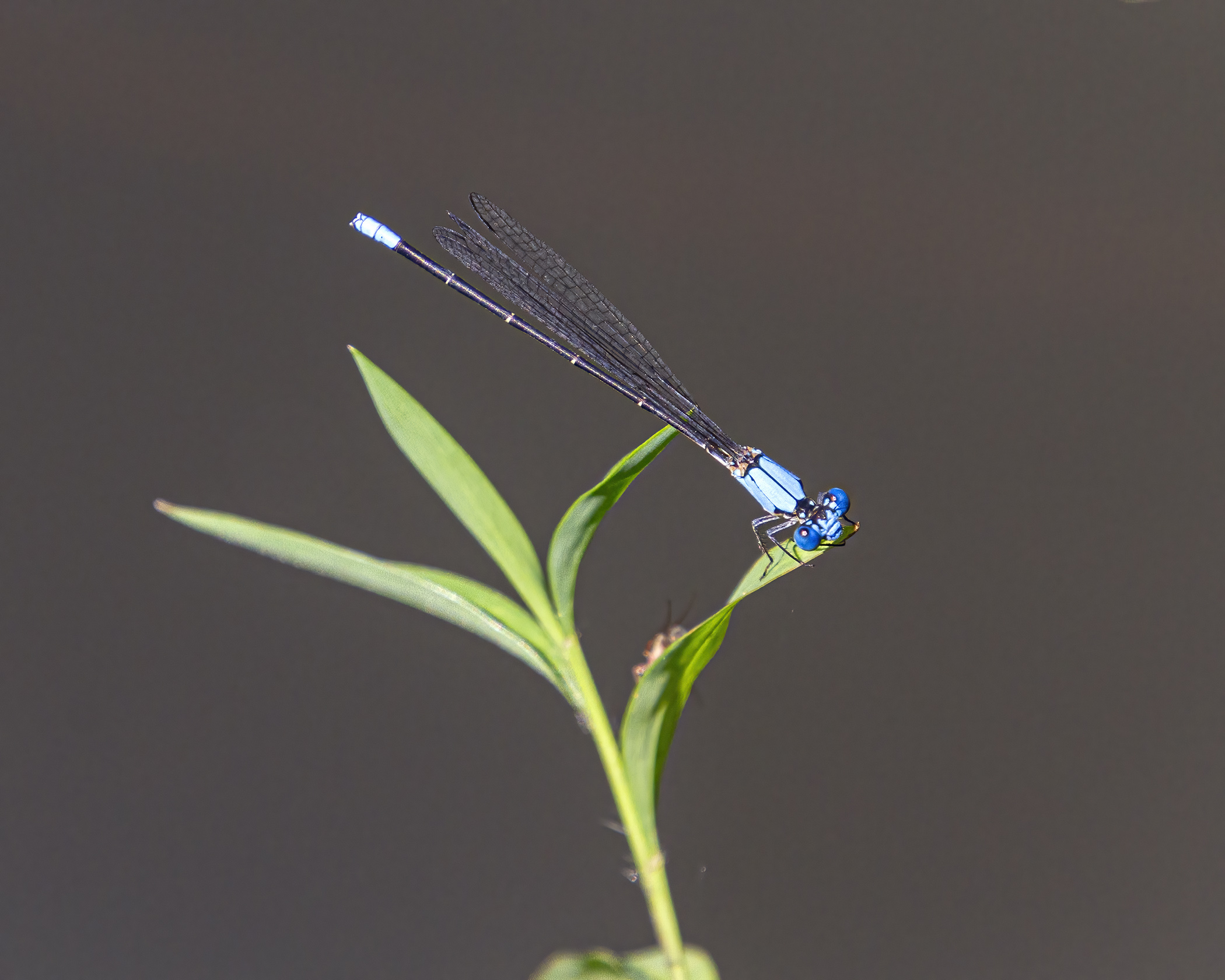
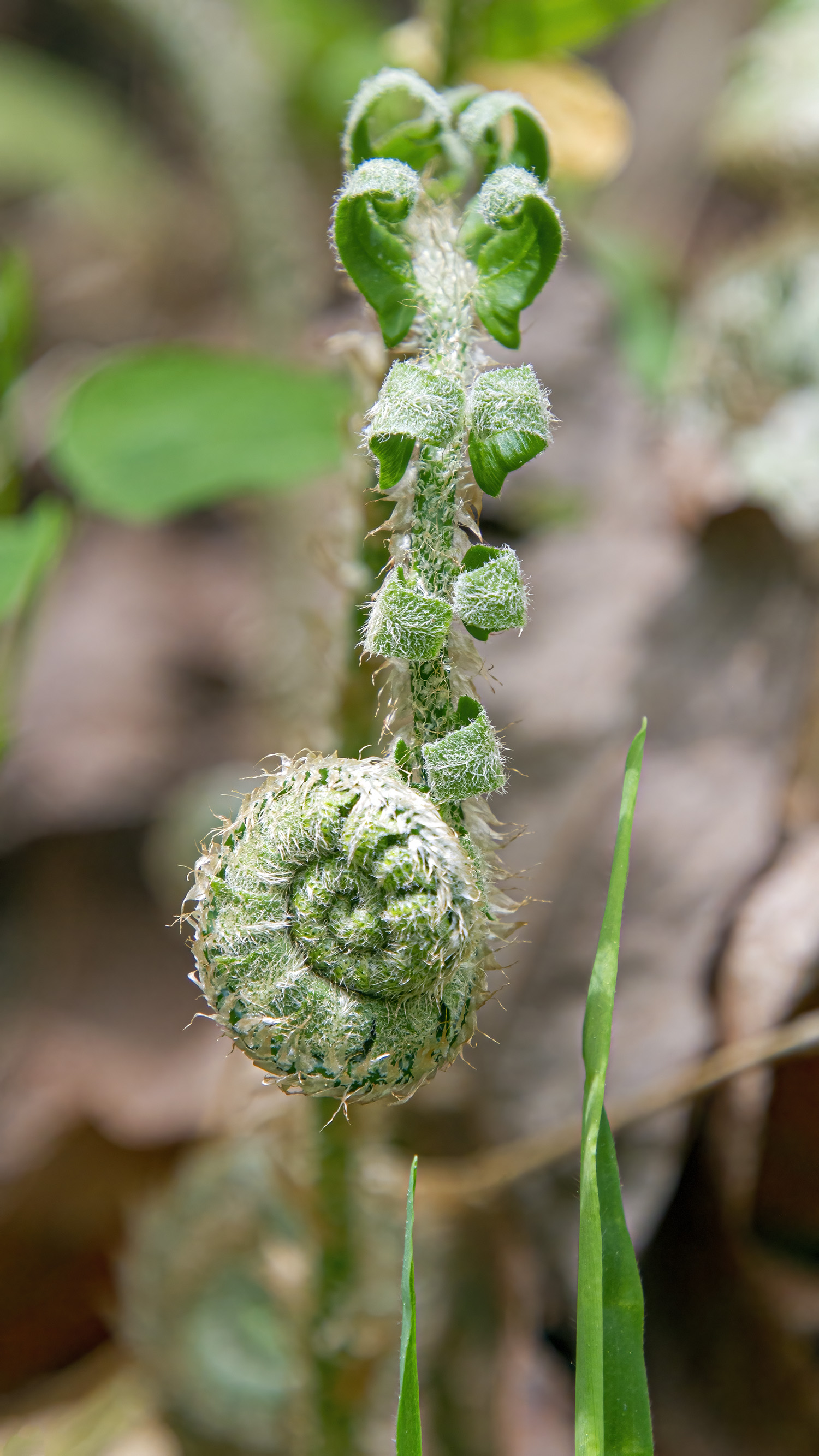
I love the spiral shape of fiddleheads, the furled fronds of fledging ferns, like these ones that I spotted last week at Prince William Forest Park. I have been told that fiddleheads are quite tasty when sautéed with garlic, olive oil, and lemon, but I have not yet tasted a fiddlehead.

fiddlehead

fiddlehead

fiddlehead

© Michael Q. Powell. All rights reserved.

Read Full Post »

One of the earliest dragonflies to appear in the spring in my area is the Blue Corporal (Ladona deplanata). Blue Corporals are relatively easy to identify because they have two stripes of their shoulders—two stripes is the traditional marking for the rank of corporal in the armed forces. When they first emerge, males and females have similar colorations, but the males turn blue as they mature.

The dragonfly in the first photo is an immature male Blue Corporal and was the first member of this species that I photographed on 10 April at Occoquan Bay National Wildlife Refuge. The shiny wings and pale markings suggest that this dragonfly was newly emerged. I believe that the dragonfly in the second photo is a female Blue Corporal, judging from her terminal appendages.

I usually try to get close-up shots of dragonflies, but when I can’t get near them, I am content to capture more “artsy” shots, like the final image below that shows a male Blue Corporal perched on some vegetation poking out of the shallow water of a pond.

Blue Corporal

Blue Corporal

Blue Corporal

© Michael Q. Powell. All rights reserved.


Read Full Post »

When this little butterfly flew by me last week at Prince William Forest Park, it looked a bit like a nondescript brown moth. However, when it landed on the ground and I was able to zoom in on it, I was amazed by its variety of colors, textures, and markings. I was pretty sure that I had never seen one like this. When I returned home, I did some searching on the internet and concluded that this is a Henry’s Elfin butterfly (Callophrys henrici).

Every time I use the butterfly’s name, I smile, because there is just something whimsical about the word “elfin.” I love the idea of magical woodland creatures that blend in so well with their surroundings that you have to look carefully to spot them.

I encourage you to click on the image to see all of this creature’s wonderful markings, including the little white stripes on its antennae and legs and the beautiful scalloped edges of its wings.

Keep your eyes open today and you too may spot some magically whimsical creatures.

Henry's Elfin

© Michael Q. Powell. All rights reserved.


Read Full Post »

Most of the insects that I have observed feeding on Virginia Spring Beauty wildflowers (Claytonia virginica) have been equally small in size. I was a bit shocked, therefore, earlier this week to spot a large Eastern Carpenter Bee (Xylocopa virginica) gathering nectar and/or pollen from a small patch of Spring Beauties at Prince William Forest Park. The bee looked to be at least twice as large as each tiny flower. Wow!

The lighting was quite good and the bee was a bit distracted, so I was able to zoom in close and capture a lot of the details of the bee. I particularly like the speckled green eyes that look like they were carved out of a semiprecious stone. You can also see the bee’s tiny feet as it grasped the edges of the flower. I encourage you to click on the photos, especially the first one, to get a better look at the bee.

carpenter bee and spring beauty

carpenter bee and spring beauty

© Michael Q. Powell. All rights reserved.

Read Full Post »

I almost fell into the pond on Wednesday at Jackson Miles Abbott Wetland Refuge when I leaned over the edge of a steep bank after detecting some movement. Fortunately I did not lose my balance and managed to get a shot of this male Fragile Forktail (Ischnura posita), my first damselfly of this season.

Fragile Forktails are almost always the first damselflies in my area to emerge and are surprisingly easy to identify—they have broken shoulder stripes that look like exclamation points. Although they are easy to identify, you have to find them first and their diminutive size (0.83 to 1.14 inches (21 to 29mm) in length) makes them quite difficult to spot.

Damselflies and dragonflies belong to the Odonata order of flying insects. Damselflies generally are more slender, have eyes placed apart, and perch with their wings folded together along their bodies when at rest. Dragonflies tend to be bulkier, have large compound eyes that touch each other, and usually perch with their wings extended when at rest.

Fragile Forktail

© Michael Q. Powell. All rights reserved.


Read Full Post »

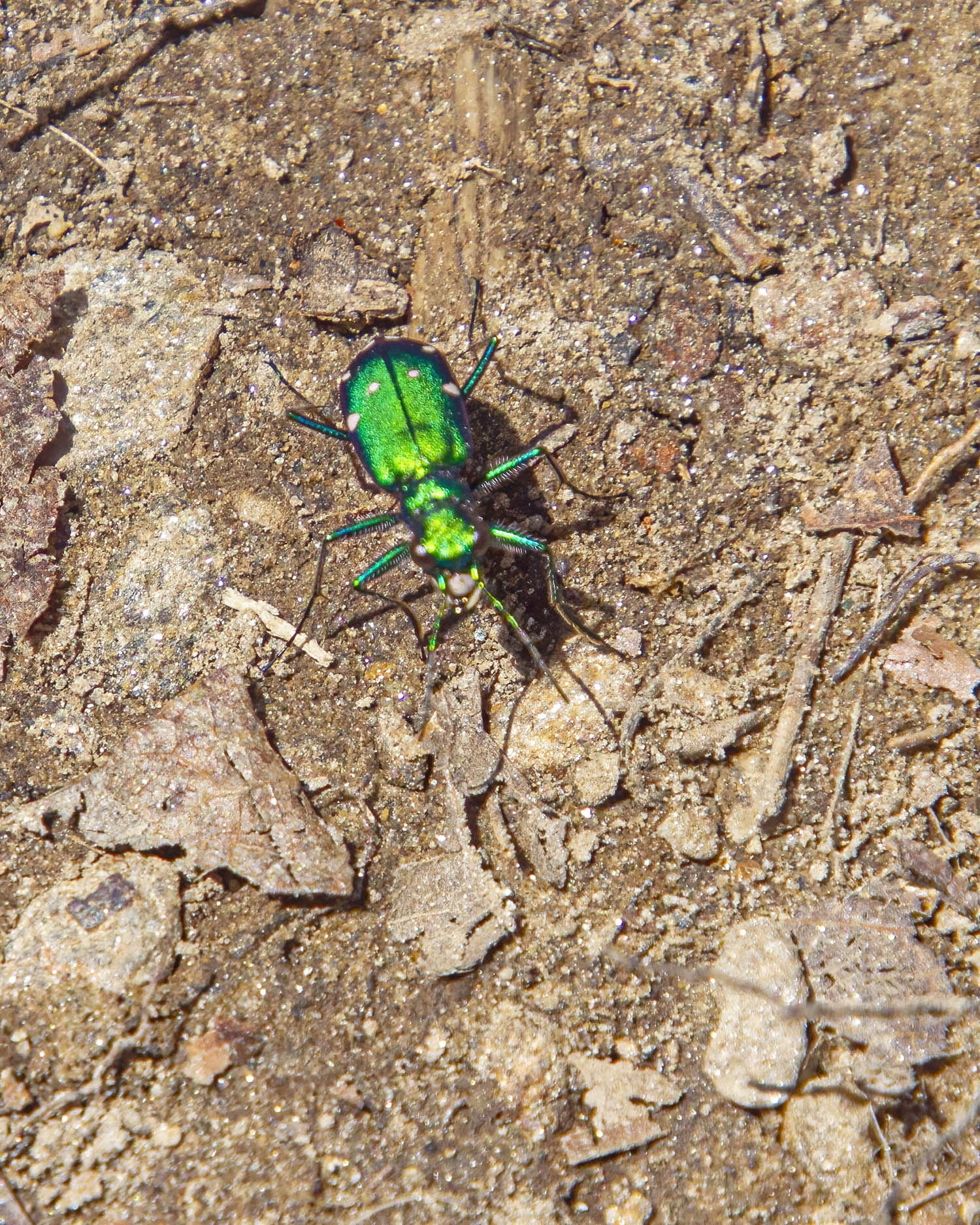
Many beetles are dark-colored and go about their business in the underbrush, unseen by human eyes. Six-spotted Tiger Beetles (Cicindela sexguttata), on the other hand, are hard to miss—their metallic-green bodies sparkle as they perch in the open, like this one that I spotted on Monday in the middle of a sun-lit forest trail in Prince William Forest Park.

The beetle’s common name refers to the six small white spots on the beetle’s metallic-green elytra (the beetle’s hardened wing cases), although the number of spots is somewhat variable. I think that I can see six spots on this beetle, but have sometimes seen as many as eight spots in the past.

As I was doing a bit of research a few years ago, I recall stumbling upon the fact that elytra is the plural form of elytron, following the the same pattern as “criterion” and its plural form “criteria.” For what it is worth, spell-check highlights elytron as an unknown word. English is a strange language.

Yesterday I came across this fun fact about tiger beetles at the University of Minnesota Department of Entomology website. “Tiger beetles’ long legs allow them to dart across the ground at high speeds. In fact, they can run so fast that their eyes can’t keep up, rendering them momentarily blind. This is why they only run short distances at a time.” Wow!

Six-spotted Tiger Beetle

© Michael Q. Powell. All rights reserved.

Read Full Post »

Many people in the United States were excited to view yesterday’s solar eclipse. I too paused for a few moments in the afternoon to view the eclipse through solar glasses that I had obtained last week during a visit to the Air and Space Museum in the Washington D.C. area.

However, I must confess that I was more excited earlier in the day when I had multiple encounters with Uhler’s Sundragons (Helocordulia uhleri), the first dragonflies that I have been able to photograph in 2024. (Some of you may recall that I searched for dragonflies last week and think that I saw one flying over a stream. However, I did not get a photo of the dragonfly, so for me that first sighting does not really “count.)

I spent several hours yesterday looking carefully at the vegetation along a creek in Prince William County, Virginia where I had spotted Uhler’s Sundragons in previous years. This species appears in limited locations in the early spring and is usually gone by early May. Unlike many of the dragonflies that I will see during the summer that are habitat generalists, Uhler’s Sundragons require a specific kind of habitat, usually a mountain stream. According to the Dragonflies of Northern Virginia website, “Uhler’s need clean, small to medium, rocky forest streams with gravelly and/or sandy substrate, and a decent flow.”

I was fortunate to be able to photograph both female and male Uhler’s Sundragons. I have alternated genders in the photos below, with the females in the odd-numbered images and the males in the even ones. One of the ways to tell the genders apart is to look at the tips of the abdomens (the “tails”) and you can see that the terminal appendages are different. The lower portion of the abdomens of the males is also somewhat enlarged, as you can see in some of the photos.

Dragonflies perch in many different ways. Some species perch horizontally and some hang vertically. Uhler’s Sundragons most often perch at an angle, as shown in the first and last photos, though sometimes they may hang vertically from the vegetation.

The dragonfly season has now opened and I look forward to many more encounters with these amazingly beautiful aerial acrobatic insects that have a magical appeal for me.

Uhler's Sundragon

Uhler's Sundragon


Uhler's Sundragon

Uhler's Sundragon

Uhler's Sundragon

Uhler's Sundragon

© Michael Q. Powell. All rights reserved.

Read Full Post »
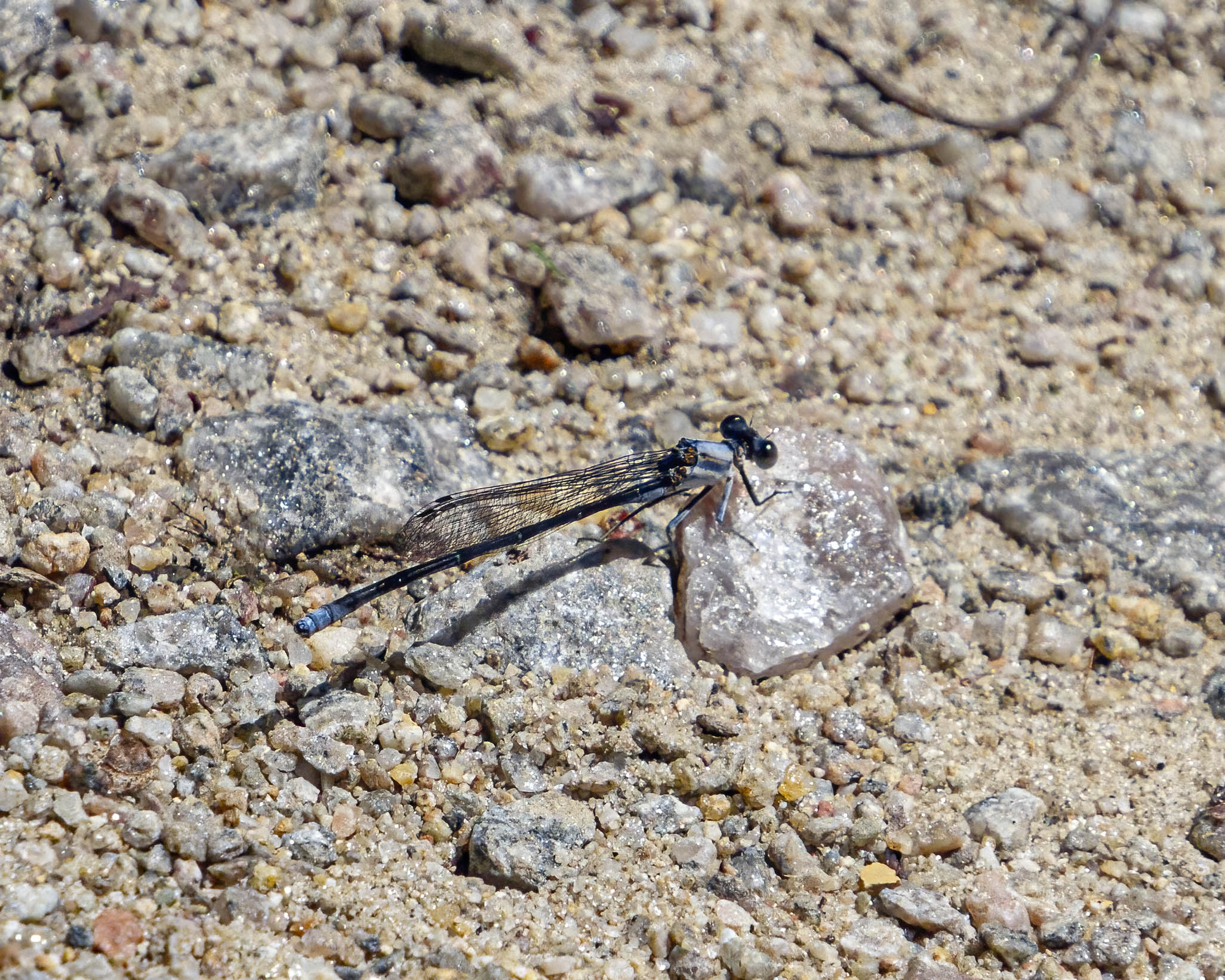
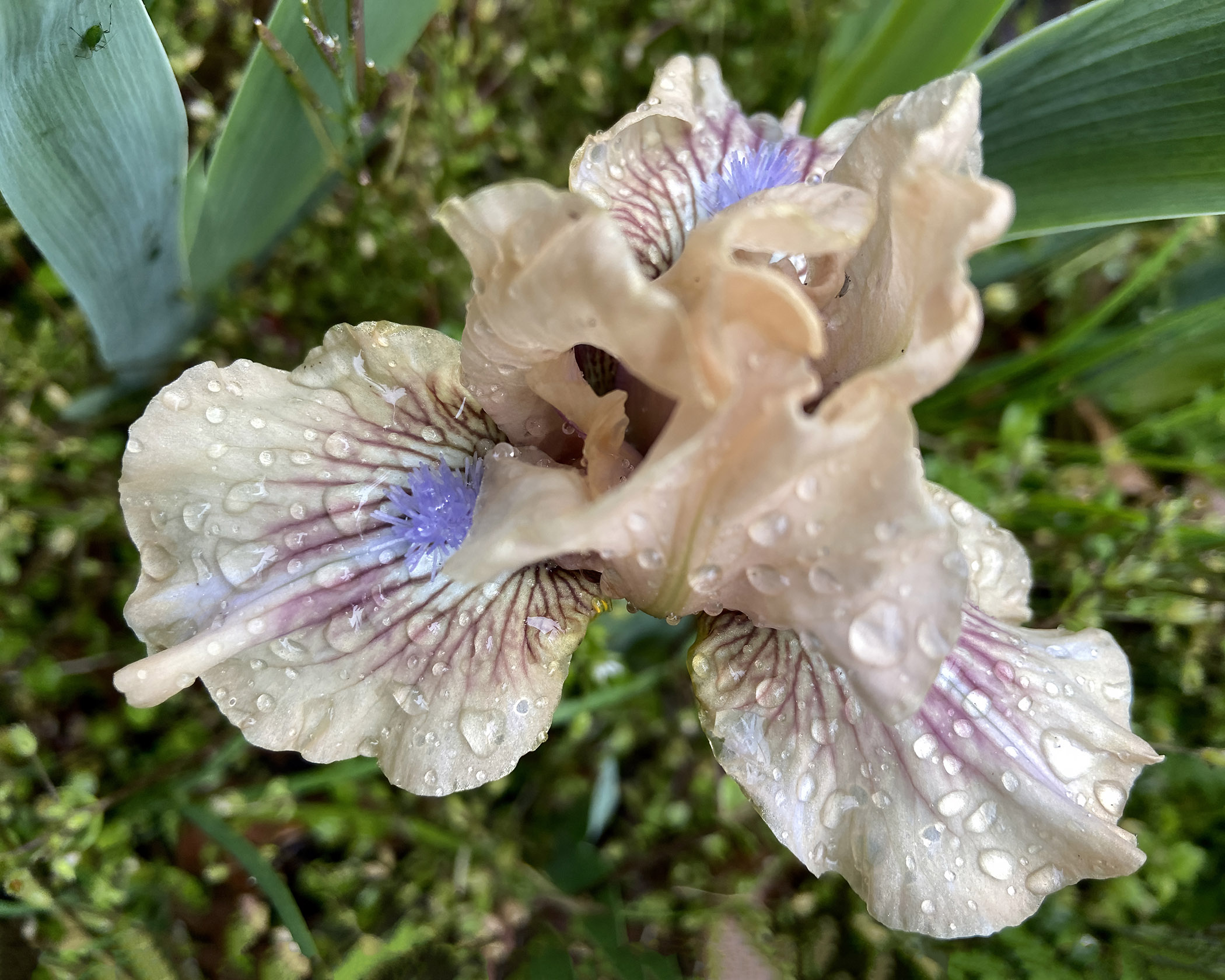
As I was preparing to go out to lunch yesterday with my dear friend and photography mentor Cindy Dyer, she glanced down at her garden and noticed that an iris was already in bloom, the first one of the spring. I suspect that this is some kind of dwarf iris, because it was nestled low in the vegetation and was only about six inches (15 cm) tall.

I thought about cropping the photo a little tighter, but wanted to retain the bug that is in the upper left corner of the image. As you might guess, I did not notice the little insect when I captured the photo with my iPhone. Cindy likes to call these “bonus bugs”—it is amazing how often I discover these “bonus bugs” in my photos when reviewing them on my computer.

Cindy has planted a wide variety of irises in her garden, so this is a sneak preview of the amazing beauty that is yet to come. I don’t know the name of this iris variety, but love the lavender color of its “beard.”

iris

© Michael Q. Powell. All rights reserved.

Read Full Post »

Each time I venture out into the forested trails of Prince William Forest Park at this time of the year I encounter different wildflowers, most of which are present for only a short period of time. This past Monday, for example, I spotted some Bloodroot plants (Sanguinaria canadensis) in bloom, my first of the season. These white flowers are a bit bigger than many of the other wildflowers that I see.

According to the Missouri Botanical Garden website, “Each [bloodroot] flower stalk produces a solitary, 2″ (50 mm) wide, 8-10 petaled, 1.5″ (38 mm) diameter, white flower with numerous yellow center stamens. Flowers open up in sun but close at night, and are very short-lived (1-2 days). Leaves continue to grow in size after bloom (sometimes to as much as 9″ (228 mm) across) and remain attractive until mid to late summer when the plant goes dormant.”

The forest floor was quite cluttered, so I decided to take this photo from directly above the bloodroot flower. I like the way that the shot emphasizes the geometric shape of the petals in an almost abstract way.

bloodroot

© Michael Q. Powell. All rights reserved.

Read Full Post »

Early spring wildflowers, like the Virginia Spring Beauty (Claytonia virginica), are an important source of food for a host of small bees and other insects. Many insects gather pollen from these flowers and in doing so help to pollinate the plants. One species, the Spring Beauty Miner Bee (Andrena erigeniae), is so specialized that it reportedly feeds only on this ephemeral flower.

According to the Bug of the Week website that featured this species in an article, “Using jaws and legs the female bees excavates a gallery in the soil, leaving a small pile of dirt near the entrance hole. This gallery can be as long as 15 centimeters and contain numerous lateral brood chambers. During the daytime she forages for pollen on flowers of spring beauties, which apparently are the sole source of food for her brood. Pollen from these blossoms is formed into balls and placed into brood chambers…As brood chambers are built and provisioned with pollen, the bee deposits a single egg on a pollen cake. During spring and early summer developing larvae consume the pollen, and later in summer they will form pupa. By late autumn development of the adult is complete and winter is spent in the adult stage within the brood chambers. Newly minted adults emerge each spring coincident with the appearance of spring beauty’s’ blossoms.” Wow!

On Monday I was fortunate to capture a shot of a Spring Beauty Miner Bee in action gathering pollen. If you look closely at the image, you will see how the tiny bee has collected pollen on its back legs.

Last year I posted an image of a Cuckoo Bee on the same kind of flower. That bee does not collect pollen. Instead it enters the nests of a host and lay eggs there, stealing resources that the host has already collected. From what I understand the cuckoo bee waits for the miner bee to leave its burrow and then lays its egg there. The offspring of the cuckoo bee eats the pollen in the burrow and then eats the larva of the miner bee. Yikes!

Spring Beauty Miner Bee

© Michael Q. Powell. All rights reserved.


Read Full Post »

As I was walking along a creek on Monday at Prince William Forest Park, several tiny frogs unexpectedly jumped out of my way. I was able to visually track one of those frogs and saw where it landed. After a single leap, the frog froze in place and I was able to slowly maneuver myself into position to capture this image.

I am pretty sure that this is a Northern Cricket Frog (Acris crepitans). A bit later in the season, I will be able to hear the cricket frog’s distinctive call, which sounds to me like two marbles being clicked together, but the frogs that I encountered that day were silent.

According to the Virginia Department of Wildlife Resources, the Northern Cricket Frog is one of the smallest frogs in Virginia, ranging from .87 inches to 1.14 inches (22-29 mm) in length. Their typical life span is four to twelve months, though sometimes they can live as long as three years. Cricket frogs hatch from their eggs in 29-90 days between July and August and metamorphosize into adults in late summer. In early autumn, the frogs burrow into the soil to hibernate until spring comes.

I was quite pleased with the amount of detail that I was able to capture in this image, from the bumpy warts of the frog’s back to the stripes on its tiny toes. My Tamron 18-400mm lens is quite versatile and is capable of providing macro-like capability in certain circumstances. I encourage you to click on this image to get a better look at the tiny cricket frog.

Northern Cricket Frog

© Michael Q. Powell. All rights reserved.

Read Full Post »

I went on a pretty long hike yesterday in Prince William Forest Park—just over 18,000 steps (7.1 miles or 11 km) according to my iPhone—and was delighted to spot this beautiful Eastern Tiger Swallowtail butterfly (Papilio glaucus), my first of the season.

When I first spotted the butterfly, it appeared to be sucking moisture and minerals from the wet soil, as you can see in the first photo. The butterfly flew to a nearby location and resumed its efforts and I was able to maneuver around to get the second image that shows the markings of the butterfly a bit better.

Personally I prefer the first photo that is more dynamic and gives a better sense of the activity of the butterfly. From a purely scientific perspective, the second one might be preferable because it shows more of the butterfly’s identification features. I am more of an artist than a scientist, though, so capturing all of the details with clinical precision is not as important to me.


Eastern Tiger Swallowtail

Eastern Tiger Swallowtail

© Michael Q. Powell. All rights reserved.

Read Full Post »

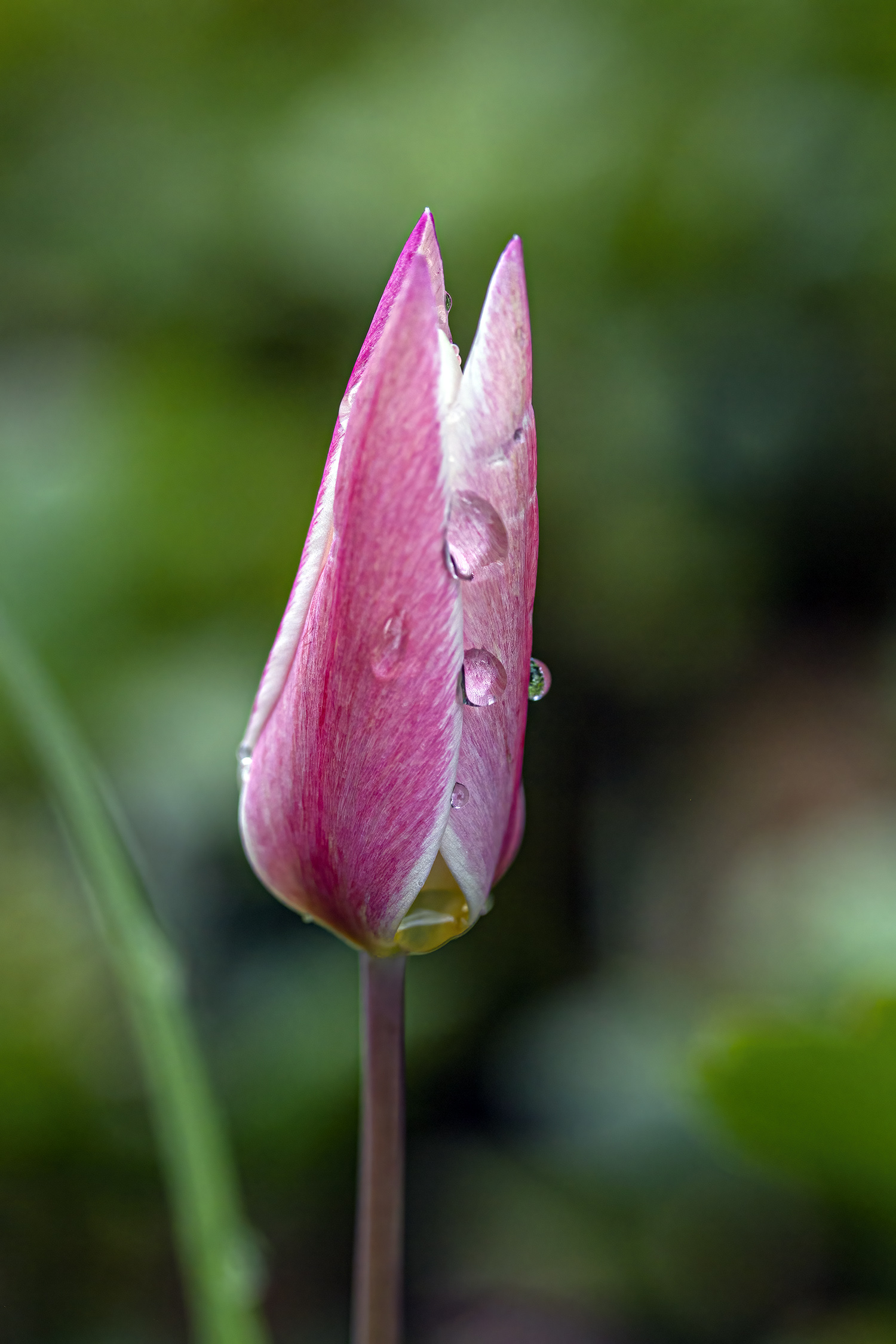
Raindrops on tulips are one of my favorite things. I photographed these different varieties of colorful tulips today in the garden of my dear friend and fellow photographer Cindy Dyer during a break in the rain.

I love spring flowers.

tulip

Lady Jane tulip

tulip

© Michael Q. Powell. All rights reserved.


Read Full Post »
I love the shape of Grape Hyacinths (g. Muscari), one of the early-appearing flowers that I look forward to each spring. The names of species sometimes do not match their appearances, but in this case the name fits perfectly—the little flowers do indeed look like a bunch of grapes.

Our recent weather has been windy, which makes it challenging to go out hunting for wildlife to photograph, because most of my potential subjects use common sense and seek shelter from the wind. As a result, I have resorted to visiting the garden of my dear friend Cindy Dyer and photographing her flowers, like this Grape Hyacinth that I spotted earlier this week.

I used a macro lens to get really close to the tiny flower to capture details, but the wind made it tough to get a sharp shot—as you get closer to a subject, the effect of any movement of the camera or the subject is magnified. On the whole, though, I like this modest portrait of one of my favorite spring flower.

Grape Hyacinth

© Michael Q. Powell. All rights reserved.

Read Full Post »

As many of you know, I do not have a garden of my own. My dear friend and photography mentor Cindy Dyer, however, lives close to me and loves to plant photogenic flowers. At this time of the year I really enjoy passing by her garden to see what has popped up.

I was delighted yesterday to see a beautiful red tulip in bloom in the middle of the garden in front of her townhouse. There was only a single tulip blooming in the midst of some hellebore plants, but it was not hard to spot. I don’t know much about tulip varieties, but think that this might be a Lady Jane tulip (Tulipa clusiana var. ‘Lady Jane‘)—I recall Cindy mentioning this variety in previous years.

I thought I would be photographing flowers close up, so I had a 60mm macro lens on my camera. This tulip, alas, was farther away than I would have liked and I did not want to step on any vegetation to get closer or to get a better angle.

I contented myself with a few shots to record this beautiful flower, my first tulip of this spring (with many more to come).

UPDATE: My memory failed me. Cindy let me know that the Lady Jane tulip is pink and white and not red like this one. I should probably have checked with her before I posted the images.

tulip

tulip

© Michael Q. Powell. All rights reserved.


Read Full Post »

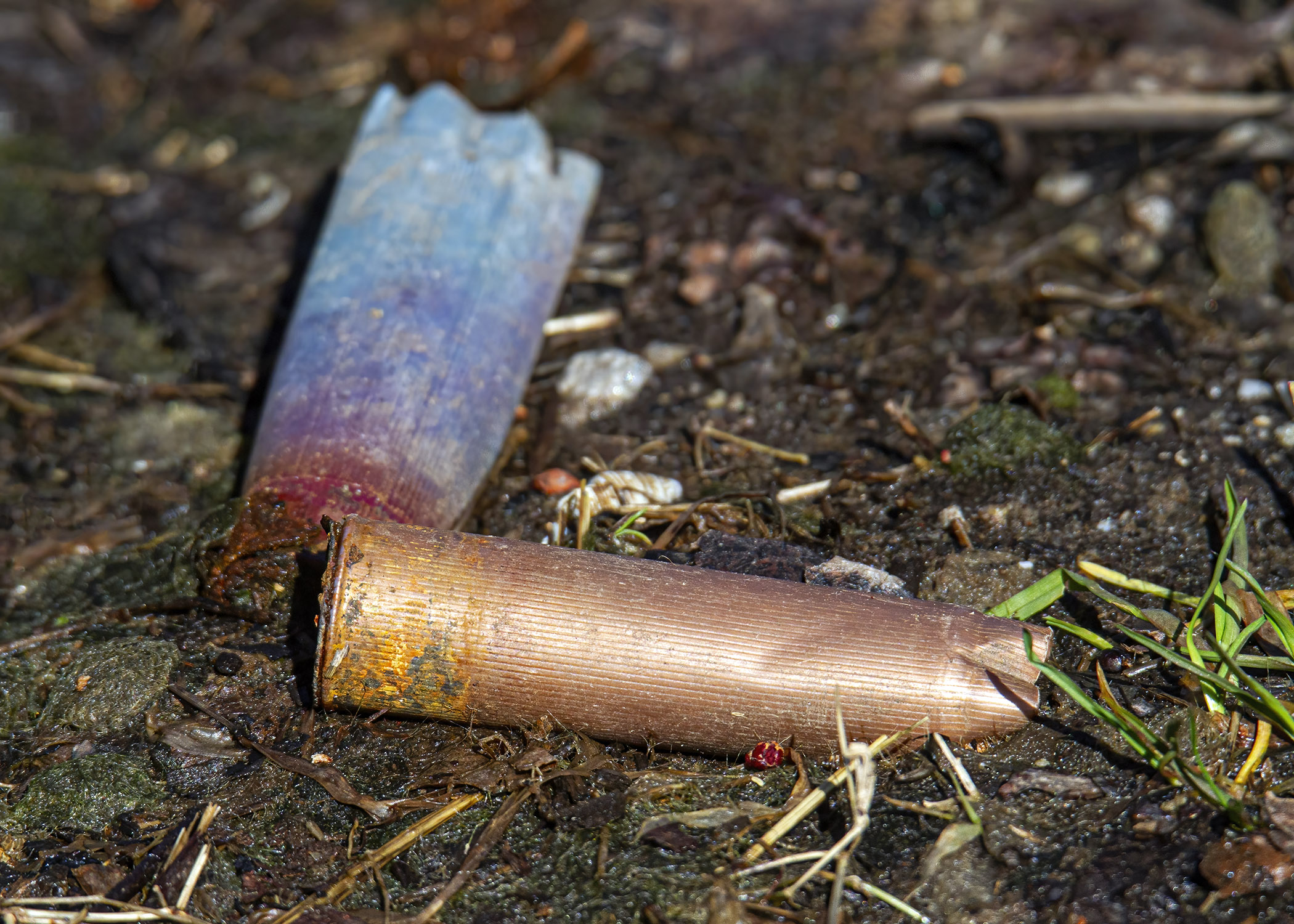
The waterside trails at Occoquan Bay National Wildlife Refuge are often flooded by tidal surges and littered with debris when the waters recede. Some of the debris, like driftwood, snail shells, and clumps of vegetation is natural, but much of it is manmade.

During a recent visit to the refuge, I was shocked to spot a different kind of shel than I am used to seeing—there were multiple used shotgun shells at one location. In some earlier postings I have noted that there are multiple duck blinds in the waters off of the wildlife refuge and during certain seasons I have seen and heard duck hunters using these blinds.

I assume that these shells floated in or were carried in by the tide from one of those duck blinds. (Do used shotgun shells float?) Hunting is definitely not permitted on the grounds of the refuge, with the exception of several days a year when the refuge is closed and deer hunting, which is part of the “deer management program,” is permitted. I am not a hunter, but recognize that there is an overabundance of white-tailed deer in our area that poses a threat to both humans on the roads and to the deer themselves, who may struggle to find food.

I tried to capture these images of the shell as artfully as possible, but the juxtaposition of the natural and manmade elements in the photos is nonetheless jarring for me, considering what the shells were designed to do.

shotgun shells

shotgun shells

© Michael Q. Powell. All rights reserved.


Read Full Post »
Older Posts »