I was thrilled to encounter Gray Petaltail dragonflies (Tachopteryx thoreyi) multiple times on 27 May as I explored a stream in Prince William County, Virginia. There are no other dragonfly species in our area that look like Gray Petaltails, so they are easy to identify if you can spot them. It is a real challenge, though, to see them because they often perch vertically on the trunks of trees where they blend in with the bark of the tree. On several occasions last Thursday, my first indication that there was a Gray Petaltail on a tree right in front of me was when it flew away.
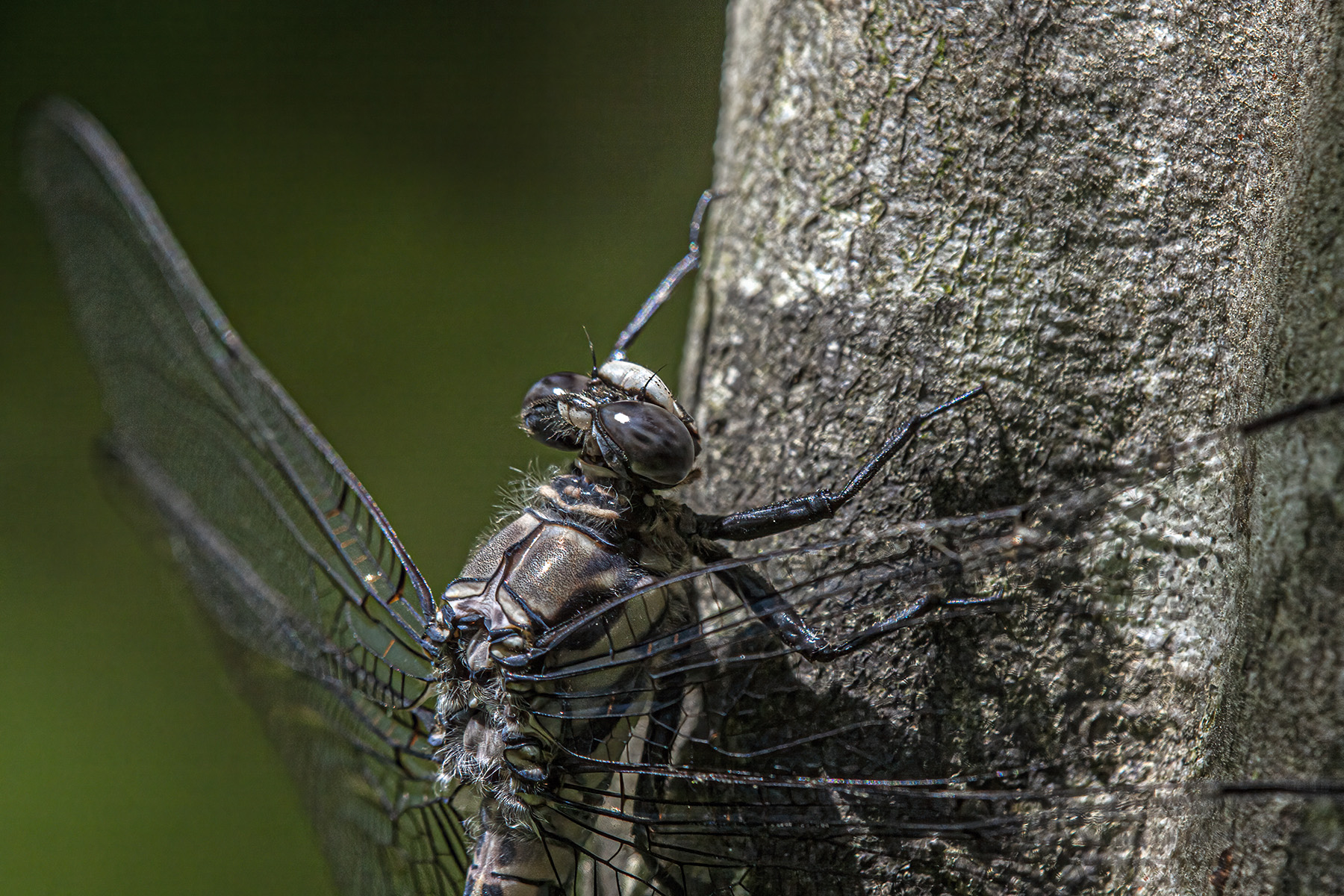
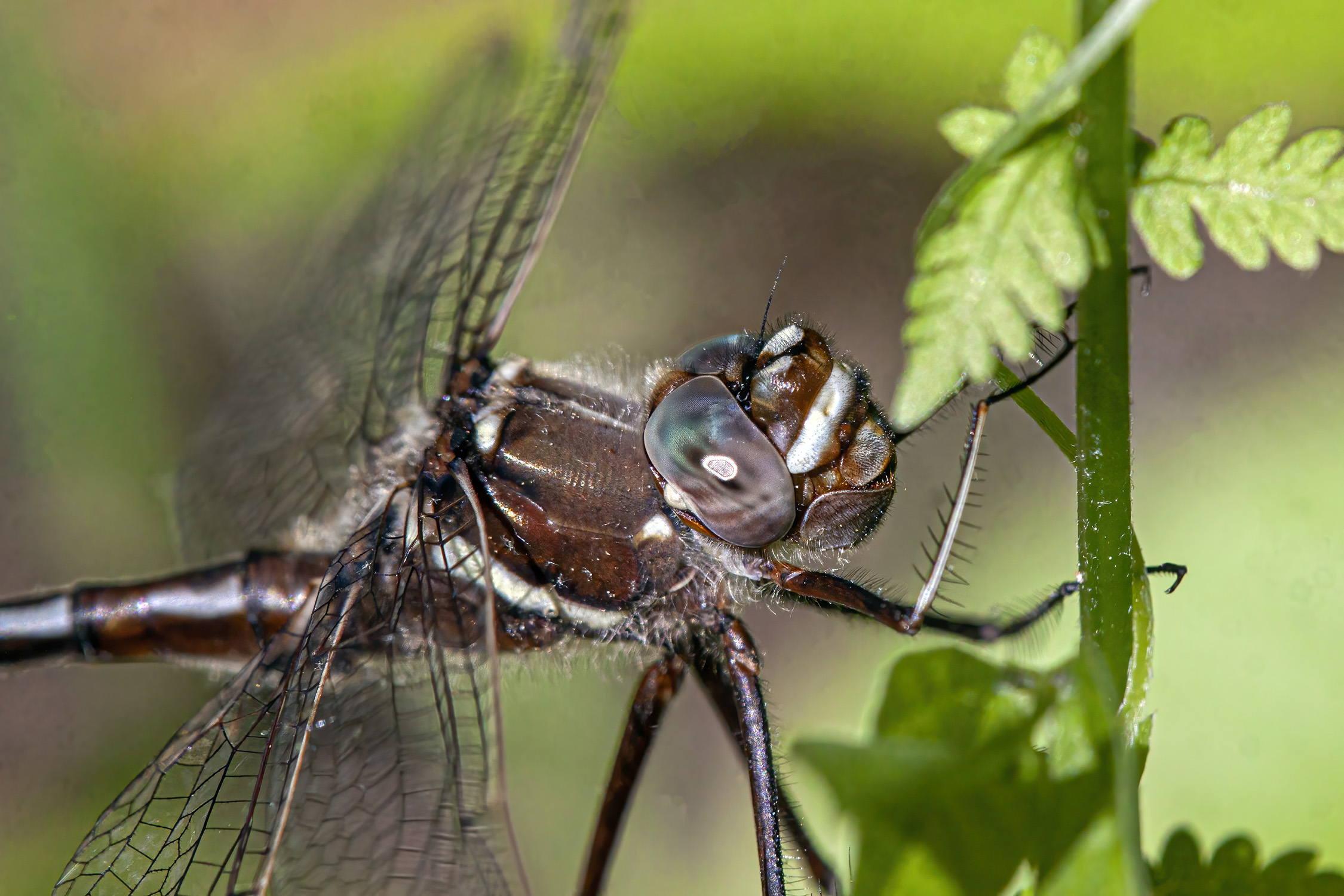
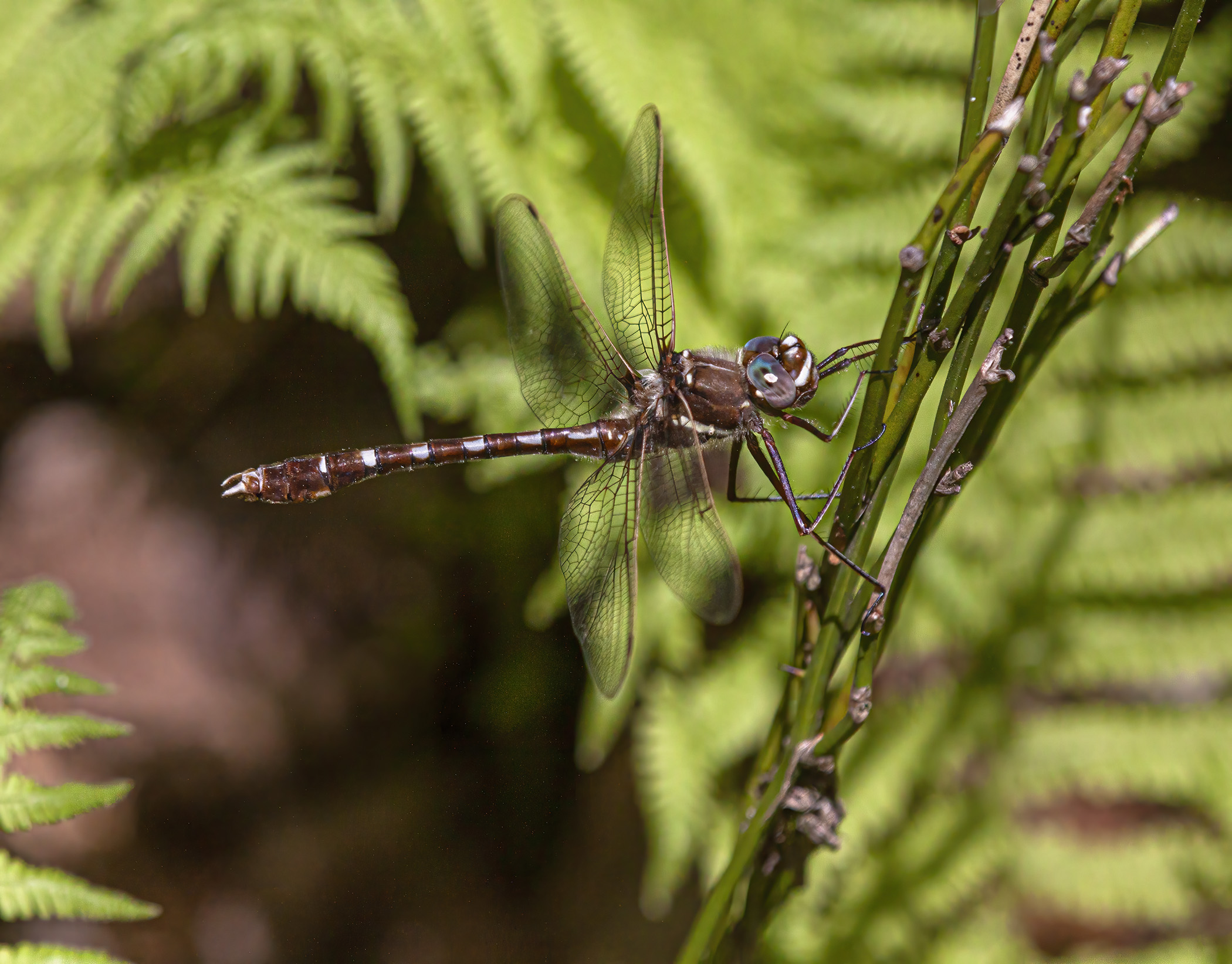
Many of the Gray Petaltails were quite skittish and I had to settle for long-distance shots, but in the case of the first image below, the dragonfly was accommodating and let me get close enough to look deeply into its stunning gray eyes. Often I would attempt to maneuver myself around for a side shot, like the second image below, to try to get a little separation of the dragonfly from the tree and allow the viewer to see its body better.
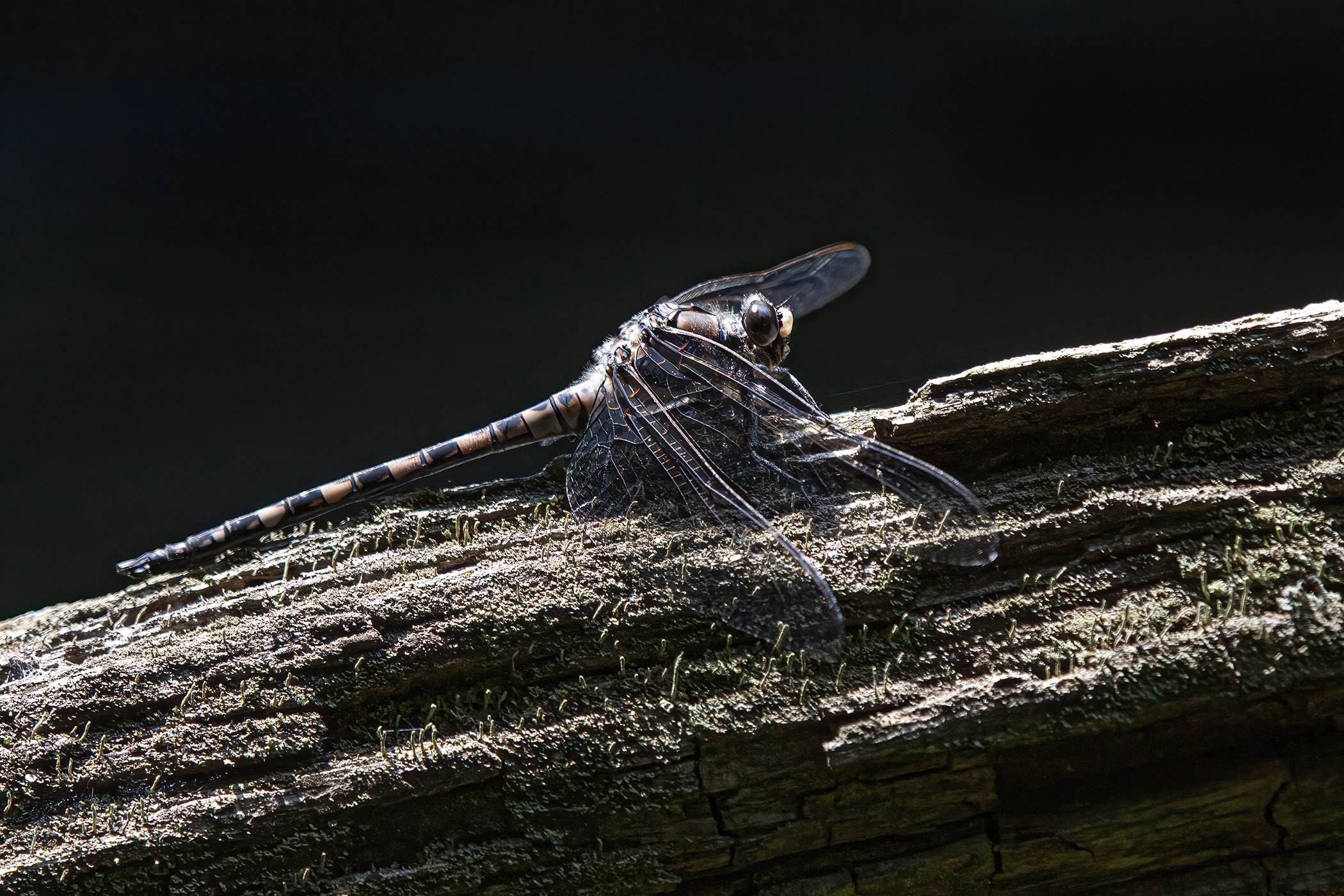
In the final photo, the Gray Petaltail was perching almost horizontally on a fallen tree. I like the way that both the lichen in the foreground and the out-of-focus ferns in the background give you an idea of the moistness of the area that I was exploring. I was often trudging through a sea of ferns that came almost up to my knees at time as I followed the path of the stream. Gray Petaltails usually originate in seepy area and I will usually scan the sunny side of trees when I am in such areas.
Gray Petaltails are unusual in a lot of different ways. I really like the list that Kevin Munroe composed for the Gray Petaltail page of the Dragonflies of Northern Virginia website:
“This wonderfully odd dragonfly stands out in several ways: 1) Their eyes, unlike most dragonflies, are widely spaced and don’t touch. Only clubtail dragonflies share this trait. 2) This is our only dragonfly with no bright colors that uses camouflage as a daily defense. 3) They spend most of their lives perched on, or vertically exploring, tree trunks. 4) Seemingly quite tame, petaltails often perch on people—perhaps they mistake us for trees. 5) They establish territories at tiny forest seeps, and their larvae can live out of water, among wet leaves on the forest floor in and around their seeps.”
I did not have a Gray Petaltail perch on me last week, but expect that it will happen sometime later this season, especially if I keep wearing gray shirts, which the Gray Petaltails seem to prefer. It was a little disconcerting the first few times that it happened, because these dragonflies are quite large, about three inches (76 mm), in length and sometimes they will perch on my head and shoulders. Now I am used to it and quite enjoy it when a dragonfly chooses to use me as a perch. In case you are curious, here is a link to a re-blog of a posting by my friend Walter Sanford entitled You look like a tree to me! with photos of a Gray Petaltail on my chest and on my shoulder.


© Michael Q. Powell. All rights reserved.
Read Full Post »













 Mike Powell