Feeds:
Posts
Comments

Archive for the ‘Insects’ Category

Recently I did a posting that featured Eastern Tiger Swallowtail butterflies (Papilio glaucus)—see Swallowtails in the forest.  None of those butterflies seemed to be involved in searching for nectar and seemed content to take in minerals and water.

Last Friday I returned to that same location in Prince William County, Virginia and discovered that the butterflies were taking advantage of the few small flowers that were blooming. In the first photo, an Eastern Tiger Swallowtail was nectaring on the small bluets (Houstonia caerulea) that are sometimes referred to as Quaker Ladies. The butterfly was so low to the ground that it looked like it was dragging its “tails.”

The butterfly in the second image is a dark morph Eastern Tiger Swallowtail female. Females of this species are dimorphic—there is a yellow variant that looks like the one in the first photo and a dark variant that looks like the one in the second image. The dark morph female was almost flat on the ground as she gathered nectar from a very short dandelion.

As more flowers begin to bloom, I am sure these butterflies will have a better selection of sources of nourishment, but the early arrivers have to make do with a really limited menu of choices.

Eastern Tiger Swallowtail

Eastern Tiger Swallowtail

© Michael Q. Powell. All rights reserved.

Read Full Post »

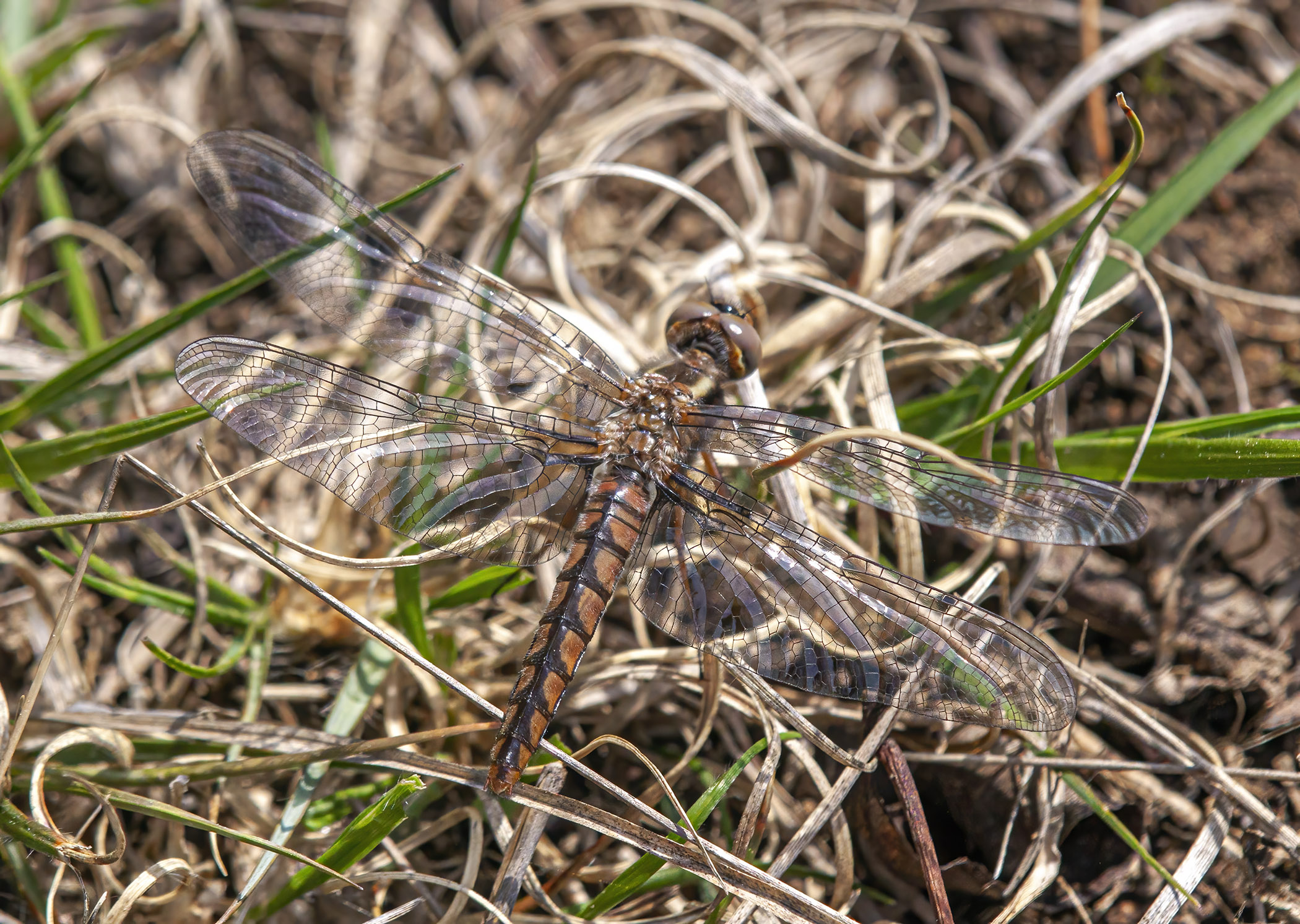
Have you ever taken a close-up look at a dragonfly’s amazing compound eyes? Dragonflies have the largest compound eyes of any insect; each containing up to 30,000 facets, and the eyes cover most of the insect’s head, resembling a motorcycle helmet. According to a wonderful article by GrrlScientist, “each facet within the compound eye points in a slightly different direction and perceives light emanating from only one particular direction in space, creating a mosaic of partially overlapping images.”

How exactly does that work? Scientists are still not sure how this visual mosaic is integrated in the dragonfly’s brain. If you can get close enough for a shot, you can actually see the individual facets, technically known as ommatidia. The first image below is a cropped image of an unusually cooperative Uhler’s Sundragon (Helocordulia uhleri) that I encountered last Friday while exploring a stream in Prince William County. If you click on the image, you can see the pattern of facets in the eyes.

The second image is an uncropped version of the first photo. I like the way that I as able to capture so many details of the dragonfly as it perched, like the spiky hairs on its legs and the stubble on its face as well as the pollen on its body.

The dragonfly in the third shot is another Uhler’s Sundragon that I spotted later in the day. From this angle, you can see the dragonfly’s tiny feet as it grasps the dried stalk of vegetation.

I love close-up images and will often try to capture them after I have taken some initial shots. When I am at close range, the angle of view is particularly important, because the depth of field is so shallow—some legs of the dragonfly, for example, will inevitably be out of focus, so I have to choose carefully what I want to be in focus.

Hand-holding and breathing techniques are also really important, because any movement will cause the fine details to be blurred. This is a bit of a challenge with the 180mm macro lens that I use because it does not have any built-in image stabilization.

Uhler's Sundragon

Uhler's Sundragon

Uhler's Sundragon

© Michael Q. Powell. All rights reserved.

Read Full Post »

I was happy to spot several Blue Corporal dragonflies (Ladona deplanata) on Wednesday at Occoquan Bay National Wildlife Refuge, my first dragonflies of the year at that location. Blue Corporals almost always perch low to the ground, which makes them a challenge to photograph, as you can see in these photos.

In our area, Blue Corporals are found most often in the coastal plain region, unlike the Uhler’s Sundragon that I featured in an earlier posting (First dragonfly of 2022) that is found at rocky forest streams. Most of the early spring dragonflies are found in specific and limited habitats, while many of the summer species can thrive in a variety of habitats.

You may have noticed that none of these Blue Corporals are blue. Adult males are bluish in color and both the male and the female have two white stripes on their thoraxes in an area that you might think of as their shoulders. In the military of the United States, the rank insignia for corporals is two stripes, which accounts for that portion of the common name for the species.

When males first emerge, however, they share the same tan coloration as the females and as they mature they turn blue. (Here’s a link to a 2018 posting called A Bluer Corporal that shows a mature male.) The dragonfly in the final photo looks to be an immature and the one in the middle photo is a female—the angle of the first photo makes it hard for me to determine its gender.

It is still really early in the dragonfly season, so I am excited every single time that I spot one. Actually my enthusiasm for dragonflies barely wanes as we get deeper into the season and the early dragonflies give way to new species.

Blue Corporal

Blue Corporal

Blue Corporal

© Michael Q. Powell. All rights reserved.

Read Full Post »

On Monday I saw a surprisingly large number of Eastern Tiger Swallowtail butterflies (Papilio glaucus) as I explored a stream in Prince William County, Virginia. I used to associate these butterflies with gardens, because that is where I had previously seen them most of the time. Over the past years, though, as I have searched for early spring dragonflies, I have gotten used to seeing these colorful butterflies alongside the streams, often congregating in groups to drink and extract minerals from puddles (see my blog post from last year called A kaleidoscope of butterflies for more information and a photo of this phenomenon).

These swallowtails seemed content to fly about continuously, searching and exploring, but rarely perching. When they did come to the ground, they often landed in patches of fallen leaves, as you can see in the second and third images. I was happy when one of the butterflies opted to perch on a fern, which made it a little easier for me to photograph it.

Eastern Tiger Swallowtail

Eastern Tiger Swallowtail

Eastern Tiger Swallowtail

© Michael Q. Powell. All rights reserved.

Read Full Post »

There are not very many insects that could be mistaken for a dragonfly, but the color and pattern on the abdomen of this crane fly made me do a double take when I spotted it from a distance on Monday in Prince William County. At that time I had not yet seen my first dragonfly of the year and was anxious to see one. An expert in a Facebook group identified this as a Crane Fly (Tipula noveboracensis).

The first image is a cropped version of the photo that allows you to focus on the wonderful patterns on the wings and the body. If you click on the image, you can see that the crane fly has antennae. The second shot is much less cropped and gives you an idea of the length of the extremely long legs of this insect.

When I am out in the winter looking for birds, I sometimes end up taking photos of odd branches or clumps of leaves, because their shapes make me think that they might be birds. I have the same “problem” with dragonflies—I am likely to photograph anything that remotely resembles a dragonfly, knowing that later I will be able to sort the images and remove the oddball results. Sometimes, as was the case here, my strange results are worth posting.

Crane Fly

Crane Fly

© Michael Q. Powell. All rights reserved.


Read Full Post »

I was delighted to spot some Virginia Bluebells (Mertensia virginica) during a trip last week to Lewis Ginter Botanical Garden. This spring ephemeral plant has beautiful bell-shaped sky-blue flowers and is native to eastern North America. The bees seemed to be equally excited to see these flowers. My photos suggest that the bees, which appear to be Carpenter Bees, were getting to the nectar through the tube of the flowers rather than through the bell.

I really like the varied shades of blues and pinks in the bluebells in different shades of development. The colors work well together, sometimes even combining to produce a lovely shade of violet.

Virginia Bluebells

Virginia Bluebells

Virginia Bluebells

© Michael Q. Powell. All rights reserved.

Read Full Post »

I finally found my first dragonfly of the season yesterday—a female Uhler’s Sundragon—while I was exploring a stream in Prince William County. Uhler’s Sundragons (Helocordulia uhleri) are considered to be rare in our area. This species requires a very specific type of habitat and has an early and very brief flight period.

So where would you find one? According to the wonderful Dragonflies of Northern Virginia website, “Uhler’s need clean, small to medium, rocky forest streams with gravelly and/or sandy substrate, and a decent flow. They can be found in sunny clearings and forest edges near their streams.”

Fortunately I have found this species at a particular stream the last several years, so that is where I headed yesterday. I searched the spots where I had found Uhler’s Sundragons in the past, but came up empty-handed. I walked along extended lengths of the stream and eventually found the one in the photograph below—it was the only dragonfly that I spotted all day.

My hike yesterday lasted 4 hours and 42 minutes and covered 7.18 miles (11.55 km), according to my GPS app. My pace was pretty slow, partly because I was scanning for dragonflies, but also because the terrain was full of ups and downs. I pasted in a chart from the GPS readout to give you an idea of the type of terrain that I covered. According to my iPhone, I walked up the equivalent of 21 floors, which explains why my legs are a little sore this morning.

As many of you know, dragonflies are my favorite subjects during the warm months—there is something almost magical about these beautiful aerial acrobats. I am therefore super excited that the 2022 dragonfly season has officially started for me.

Uhler's Sundragon

Hike 11 April 2022

© Michael Q. Powell. All rights reserved.

Read Full Post »

Yesterday I travelled with fellow photographer Cindy Dyer to Lewis Ginter Botanical Garden in Richmond, Virginia. While Cindy focused on the numerous tulips and other spring flowers that were in bloom, I immediately headed for the ponds in search of frogs, turtles, snakes, and dragonflies.

On one of my trips around a small pond I finally encounter my first damselfly of the season—a male Fragile Forktail damselfly (Ischnura posita). Most damselflies are hard to identify, but Fragile Forktails of both sexes are pretty easy to identify because both sexes have interrupted pale should stripes that look like exclamation points.

Eventually I spotted several other Fragile Forktails and was able to get some decent shots of them, despite their small size—they are a very small species with a body length of only 0.8 to 1.1 inches (21-29 mm). I was hoping to get some shots of the damselflies perched on vegetation, but in all of the photos I managed to get the damselflies were perched on rocks.

I was happy later in the to spot a Common Green Darner dragonfly in flight, but was not able to get a shot of it. From my perspective, my first dragonfly of the season does not “count” unless I am able to capture a photo of it. So this week I will be out in the wild again, seeking to capture my first dragonfly shot of the season.

Fragile Forktail

Fragile Forktail

Fragile Forktail

© Michael Q. Powell. All rights reserved.

Read Full Post »

The ground in the forest is covered with fallen leaves at this time of the year, making it really easy to spot a Six-spotted Tiger Beetle (Cicindela sexguttata). The metallic green of their bodies shines so brightly that it is almost impossible to miss them as they scurry in and out of the underbrush.

I spotted this little beauty on Monday as I searched for dragonflies in Prince William County, Virginia. After months of photographing birds, often at a great distance, my eyes are gradually readjusting to searching for small subjects at close range. In the springtime I switch to using a macro lens most of the time rather than the long telephoto zoom lens that has been my constant companion throughout the cold, dark days of winter.

I also tend to slow down my pace as I search for tiny insects, scanning for changes in colors and patterns and, most importantly, for movement. In this style of photography, I cannot afford to be in a hurry and often my patience are persistence are rewarded.

Six-spotted Tiger Beetle


Six-spotted Tiger Beetle

© Michael Q. Powell. All rights reserved.

Read Full Post »

As I was scanning my neighbor’s garden for new growth yesterday, a small bit of bright orange caught my eye. I moved closer to see what it was and was shocked to find a tiny ladybug crawling around one of the plants.

The ladybug was pretty active, moving up and down the leaf, so it was challenging to get a shot of it. Eventually, though, my patience paid off and I was able to capture this image. Later in the year photos like this will become more commonplace, but during the month of March I am overjoyed whenever I have a chance to photograph an insect.

I did not get a good look at the face of this insect, so I cannot tell if it is an Asian Lady Beetle (Harmonia axyridis) or one of the native ladybugs, which are less common in most areas. Whatever the case, there is something whimsical about ladybugs that makes me smile, so I was happy to spot this one.

ladybug

© Michael Q. Powell. All rights reserved.

Read Full Post »

I was happy on Monday to photograph my first butterfly of the year, which appears to be the appropriately named Spring Azure butterfly (Celastrina ladon). Earlier this season I have spotted several Mourning Cloak butterflies, but was not able to get a shot of any of them.

The Spring Azure butterfly is only about an inch (25 mm) in size, but has some wonderful details that I was able to capture. It is fairly nondescript in color until it opens its wings and reveals a beautiful shade of blue—you get a small glimpse of that wonderful blue in the second image.

I had to pursue this butterfly for quite a while before it finally landed. An outside observer might have have wondered what it the world I was doing, but chasing butterflies always makes me feel like a child again.

It won’t be long before I see much bigger and more colorful butterflies, but this one is special to me as the first butterfly of the spring that I was able to photograph.

Spring Azure

Spring Azure

Spring Azure

© Michael Q. Powell. All rights reserved.


Read Full Post »

It has been several months since I last saw a dragonfly and I will have to wait for a couple more months before they reappear in my area. As many of you know, dragonflies are one of my favorite subjects to photograph—there is something almost magical about these beautiful aerial acrobats.

As I was shoveling snow after a recent storm, I glanced over at the front yard of my townhouse and was struck by the beautiful patina of the dragonflies that are part of a lawn sprinkler.

The metal dragonflies reminded me of the beauty that is to come, of the new life that will burst forth when spring arrives. Those thoughts filled me with hope and happiness and help to sustain me through the often bleak days of the winter.

dragonfly

© Michael Q. Powell. All rights reserved.

Read Full Post »

Yesterday I featured my five most-viewed posts in 2021, all of which were published in previous years. Today I decided to show you photos from my five most-viewed posts in 2021 that were actually written in 2021. In many ways, these photos are a better representation of my me and my blog than yesterday’s set of images.

What do I mean? As I noted yesterday, most of the views for my older posts probably came from someone doing a Google search for a particular subject or combination of words. My posts popped up in their results because of the words in the posts themselves and the keywords that I have associated with the posts. I like the way that my posts take on a life of their own after they are published, but there is a kind of randomness to the process.

Most of my views for the postings below almost certainly came from folks who currently follow my blog and viewed the posts within the first few days after they were written. These viewers, many of whom I now consider my friends, are much more likely to read the entire text of the posts and to provide detailed comments. I really value that sense of engagement and the feeling of community that this process builds, which has been of even greater importance than ever during the ongoing pandemic.

In terms of the quality of the photos and the variety of the subjects, I like today’s images a lot. Many people know of my fondness for dragonflies and I am tickled to see that two images of dragonflies made the cut. Those two images (and the other three as well) show of some of the skills and creativity that I strive to apply to my photography—they are not merely documentary shots.

I encourage you to click on the titles of the individual postings to visit or re-visit the original posts. If you, you will discover that most of these postings contain a lot a lot “me”—my personal philosophy, priorities, and personality. You can see that approach in my use of titles like “Hope and happiness” and “To everything there is a season.”

I should warn you, though, that these postings might be a little longer than some of my other posts. WordPress tells me that my average post for 2021 had 204 words, and these five may be longer than that. When I sit down to write a posting, I tend to use a stream-of-consciousness style. I compose as I am thinking, letting my mind run in whatever direction it happens to go. As a result, I may ramble a bit or go off on tangents, but the results are often a direct reflection of the genuine me.

It is snowing our right now, our first snow of the season and we are forecast to get up to 10 inches (25 cm) of snow. In many ways, this is a White Christmas for us. I attend an Episcopal church and we begin our celebration on Christmas Eve, followed by the Twelve Days of Christmas, leading up to the Epiphany, when the Magi appeared. If I remember the lyrics right, today my true love should bring “ten lords a-leaping.” Hopefully my day (and yours too) will be more peaceful than that and we will all have a silent night.

Hope and happiness: 213 views, originally published—22 January 2021

Northern Cardinal

Nine year anniversary: 189 views, originally published—7 July 2021

Gray Petaltail

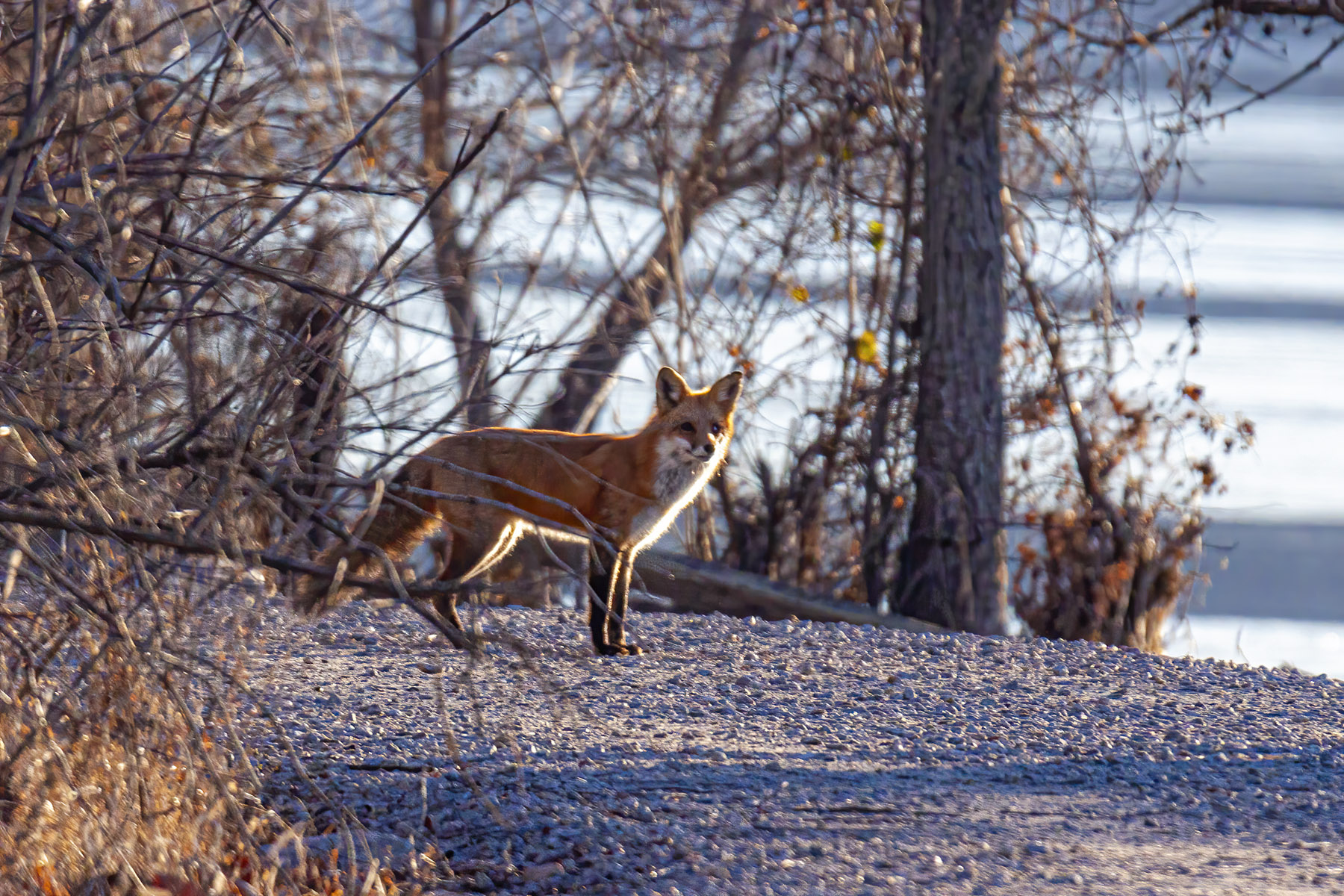
Early morning fox: 142 views, originally published—6 February 2021

Red Fox

A kaleidoscope of butterflies: 138 views, originally published—6 April 2021

Eastern Tiger Swallowtail

To everything there is a season: 134 views, originally published—11 October 2021

Great Blue Skimmer

© Michael Q. Powell. All rights reserved.


Read Full Post »

As I was walking through a grassy field on Thursday at Huntley Meadows Park, I inadvertently disturbed a grasshopper that flew to a nearby tree. It had been weeks since I had last seen a grasshopper, so I searched carefully for the insect and was happy when I managed to locate it on the trunk of the tree.

Although I carefully composed my shot, I did not have high expectations for it—it was a simple shot with a simple composition. I was stunned when I reviewed the image on my computer at how well it turned out. I love the way I was able to capture the texture of the tree bark and of the grasshopper, though I must confess that the background on the right hand side of the image may be my favorite element of the image.

One of the joys of photography for me is the discovering images like this, appealing images in which the separate components work together to create a harmonious whole. If someone had asked me when I first returned home from the shoot if I had captured any good images, I probably would have responded negatively—I would have been wrong.

Have a wonderful weekend.

grasshopper

© Michael Q. Powell. All rights reserved.

Read Full Post »

As I noted in a recent posting, there appear to be only two active dragonfly species remaining in my area—Wandering Gliders and Autumn Meadowhawks (Sympetrum vicinum). Today I decided to feature some shots of Autumn Meadowhawk dragonflies that I spotted last week during a visit to Huntley Meadows Park, a local marshland refuge.

Quite often Autumn Meadowhawks perch flat on the ground which makes it easy for me to get shots of them. However, those shots tend to be relatively uninteresting from an artistic point of view. I am always on the lookout for those dragonflies that choose more photogenic perches, especially those that include colorful fall foliage.

I was quite fortunate that the Autumn Meadowhawks were cooperative last week in helping me to capture images that matched my “artistic vision,” which does not always happen in wildlife photography. Wildlife photography has so many variables over which I have little or not control, including the weather, the lighting, the environment, and the subjects themselves. Success is certainly not guaranteed, but I have found that patience, persistence, knowledge, and a bit of skill can often help to tip the odds a bit in my favor.

Autumn Meadowhawk

Autumn Meadowhawk

Autumn Meadowhawk

© Michael Q. Powell. All rights reserved.


Read Full Post »

Throughout this autumn season I have frequently seen large wasp-like insects as I have explored Occoquan Bay National Wildlife Refuge. Often I would catch a glimpse of red color as one flew by and I would think that it was an Autumn Meadowhawk dragonfly, which has a bright red body. Once I got a better look at my target, I could easily see that it was not a dragonfly.

What was it? Earlier this month I finally get a decent photo of the insect and began my search to identify it. I have come to the conclusion that it is probably a European Hornet (Vespa crabro). As the name suggests, this species originated in Europe and was first reported in North America about 1840 in New York. SInce then it has spread to most of the eastern United States, according to an article by North Carolina State University.

The first thing I noticed about European Hornets is that they are big, over an inch (25 mm) in length for workers and 1. 5 inches (38 mm) for queens. Fortunately they do not appear to be very aggressive, so I have never had to worry about being stung by one, although I must admit that I keep a healthy distance from them. In fact, I took the photo below with my telephoto zoom lens fully extended to its maximum focal length of 600 mm.

In the fall all of the workers die and the only individuals that survive are fertilized queens. The queens overwinter in protected places, such as under the bark of fallen trees, and construct new nests the following spring.

European Hornet

© Michael Q. Powell. All rights reserved.

Read Full Post »

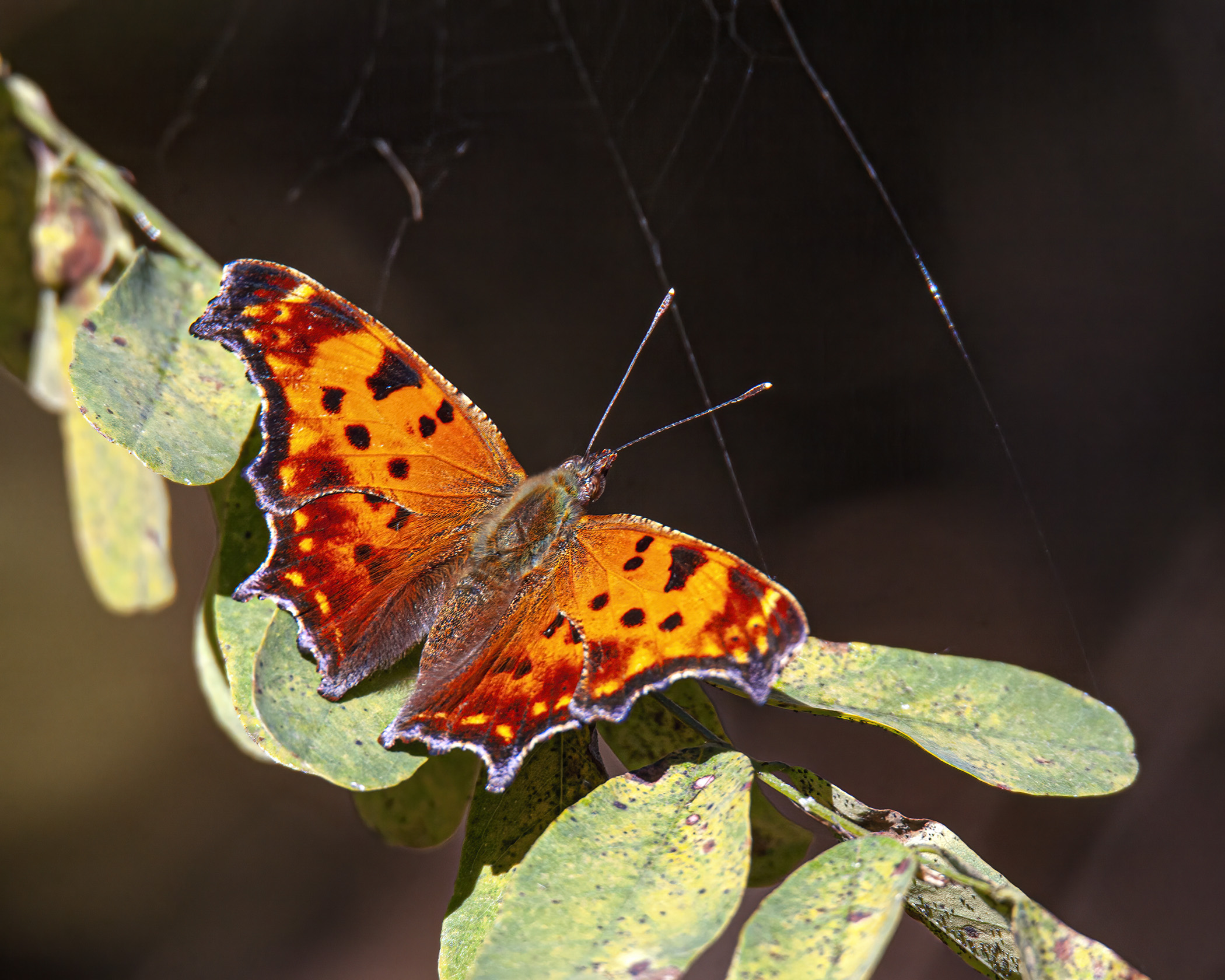
I am happy to see that some butterflies are still with us as we move deeper into November. Eastern Comma butterflies (Polygonia interrogationis), like the one in first photo, overwinter as adults, rather than as eggs or pupae as most butterflies do, so there is a chance that I will continue to see them for a while longer if the weather does not get too bad.

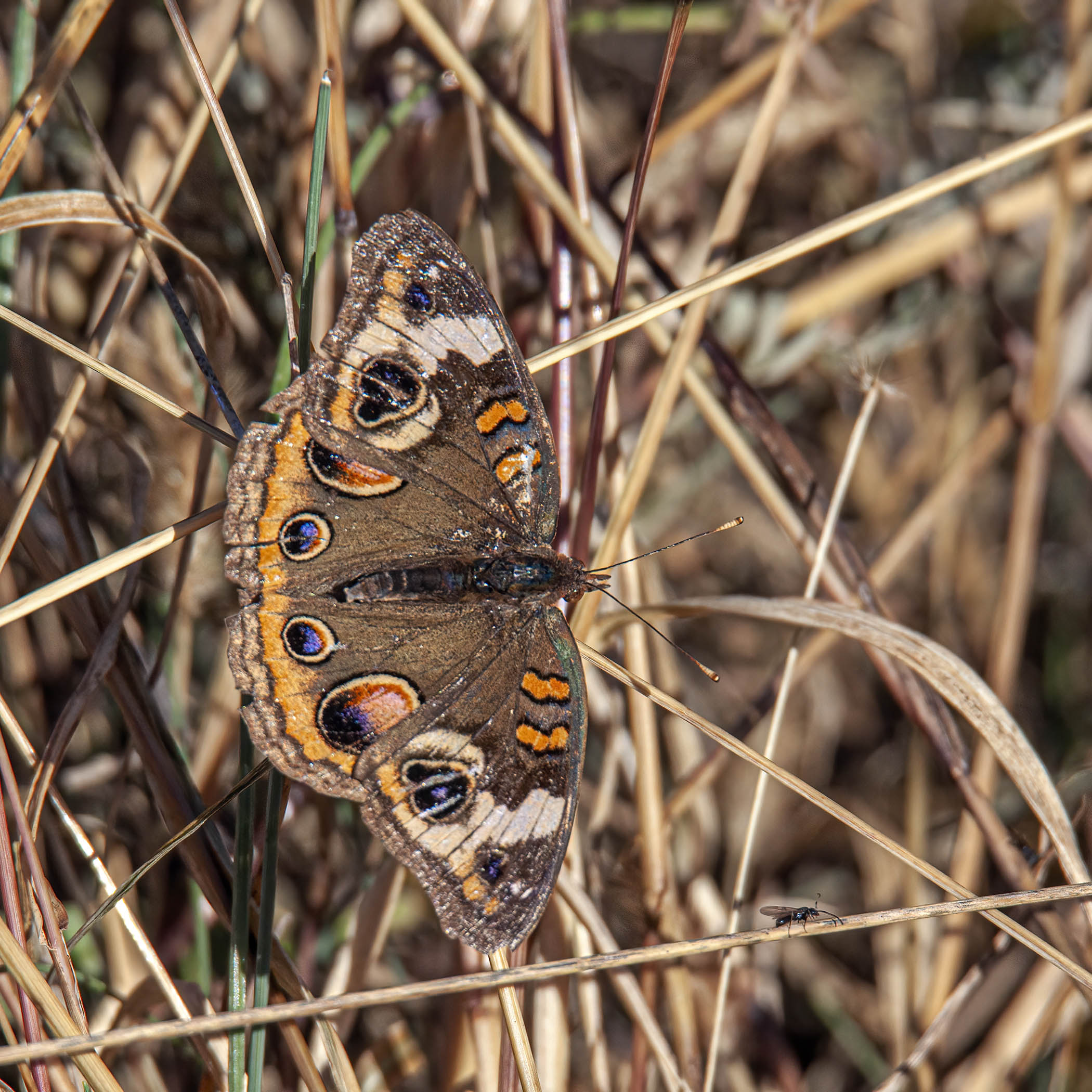
Common Buckeyes (Junonia coenia), like the one in the second photo, cannot tolerate cold temperatures. Some of them, according to Wikipedia, migrate to the south for the winter and then return when the weather warms up in the spring.

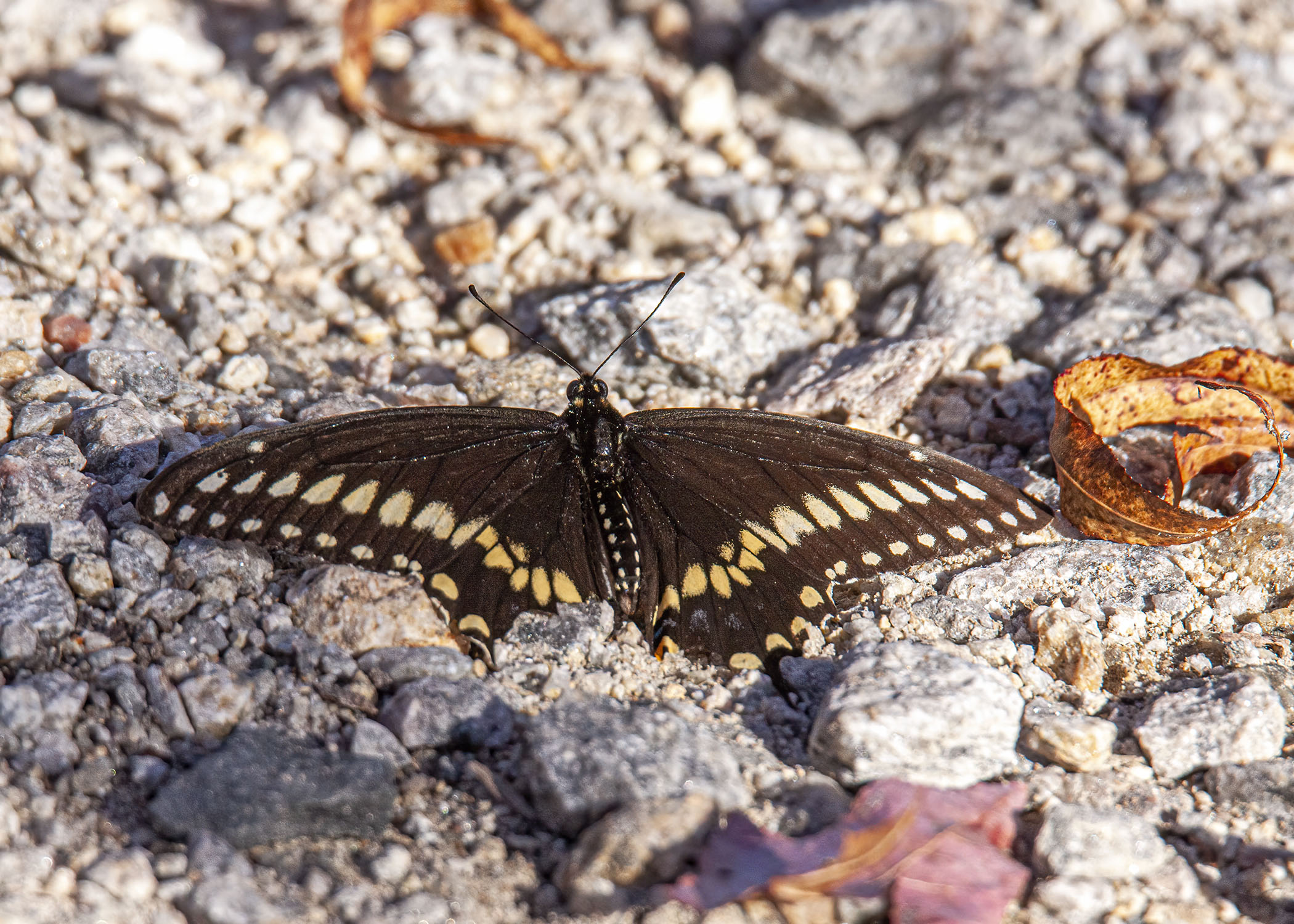
I was most surprised this week to spot the Black Swallowtail (Papilio polyxenes) in the final photo—it had been a month or so since I had last seen a Black Swallowtail. This species spends the winter in the chrysalis stage, and adults emerge in the spring to seek out host plants.

We are nearing the end of the butterfly season, but I am delighted to share my walks in nature with these fragile little creatures for a little while longer.

Eastern Comma

Common Buckeye

Black Swallowtail


© Michael Q. Powell. All rights reserved.


Read Full Post »

My dragonfly season is slowing winding down. During the month of November, I have seen only two species of dragonflies—Wandering Gliders (Pantala flavescens) and Autumn Meadowhawks (Sympetrum vicinum), but I have had multiple encounters with each species. Autumn Meadowhawks are usually the last dragonflies standing each year and there is a chance that I will see one in December.

Wandering Gliders, on the other hand, may disappear from the scene at any moment, so I am especially delighted whenever I spot one flying about, patrolling back and forth over a field. If I am lucky, I will see it perch on some vegetation when it comes down to earth for a rest and I will have a chance to get a shot. I took the first shot this past Tuesday, 9 November, at Occoquan Bay National Wildlife Refuge at a moment when I had my macro lens on my camera. I really like the way that I was able to capture the intricate patterns on the dragonfly’s body.

The two final photos are of a Wandering Glider that I spotted on the 1st of November. It is probably hard for you to tell, but I took these shots with my long telephoto zoom lens, which still managed to capture an amazing amount of detail, especially in the wings in the last image. I encourage you to click on the images to get a better look at those details.

It is raining today and the ground is littered with fallen leaves. As the trees are laid bare, I will have a better chance to spot some of the birds that I have been hearing recently, but have not seen.

For now, though, I am enjoying the waning moments of the season with my magical little dragonfly friends. Their time is not over until it is over.

Wandering Glider

Wandering Glider

Wandering Glider

© Michael Q. Powell. All rights reserved.

Read Full Post »

I love milkweed plants—their shape and texture fascinate me at all stages of of their development. I photographed this milkweed plant last Thursday at Occoquan Bay National Wildlife Refuge, a plant that most might describe as past its prime—I would call it beautiful.

If you look carefully at the photo, you will see several red Large Milkweed Bugs (Oncopeltus fasciatus) crawling about on the plant. It is always worthwhile to examine milkweed plants carefully, because a fascinating variety of insects feed on milkweed or use it as part of their habitat.

milkweed

© Michael Q. Powell. All rights reserved.

Read Full Post »

I am still on the lookout for summer dragonfly stragglers and survivors. There are certain dragonfly species that I expect to see during the autumn, but there are also a few particularly hard individuals from the summer species that are managing to hang on. Over the past week and a half I have spotted one Great Blue Skimmer (Libellula vibrans), one Eastern Pondhawk (Erythemis simplicicollis), and one Blue Dasher (Pachydiplax longipennis), as shown in the photos below.

It is interesting to note that all three of these dragonflies appear to be females. I wonder if female dragonflies tend to outlive their male counterparts, as is the case with humans.

I went looking for dragonflies today, after several frosty nights, and did not see a single dragonfly. The daytime temperature was only about 52 degrees (11 degrees C), which is a bit cold for dragonfly activity. Temperatures are forecast to rise to 68 degrees (20 degrees C) early next week and I anticipate that I will see a few dragonflies then.


Great Blue Skimmer

Eastern Pondhawk

Blue Dasher

© Michael Q. Powell. All rights reserved.

Read Full Post »

I really do not expect to find any damselflies this late in the season, so I was both surprised and delighted to spot several Familiar Bluets (Enallagma civile) last Thursday at Occoquan Bay National Wildlife Refuge. As many of you may recall, damselflies are the smaller “cousins” of dragonflies—together they make up the order of insects known as odonata. Damselflies have eyes farther apart than dragonflies and generally perch with their wings held closed above them, unlike dragonflies that extend their wings when perching.

The damselfly in the first photo is a female Familiar Bluet. The brown, nondescript color is fairly typical for female damselflies, which tend to be less colorful than their male counterparts. In order to determine the species, I have to look at the pattern of stripes on the thorax (the “shoulders”) and the abdomen (the “tail”) and the color and size of the eye spots.

The damselfly in the second photo is a male Familiar Bluet. Like most other male bluets, this damselfly’s body is covered in patterns of black and blue. I often have trouble distinguishing between the different species of bluets, but once again the eye spots, shoulder stripes, and the specific color pattern are key factors that I look for in trying to come up with an identification.

I am not sure if these damselflies are unusually late or if I simply was not looking for them as hard in previous years. At this time of the year I spend a lot of time looking up at the distant trees for indications of bird activity and I may not have been paying as much attention to the vegetation at my feet.

Temperatures have dropped close to the freezing mark the last couple of nights and I fear that the frosty weather may hasten the demise of these beautiful little creatures. If so, these may well be the last damselflies that I will see until next spring. Au revoir, mes petits amis.

Familiar Bluet

Familiar Bluet

© Michael Q. Powell. All rights reserved.


Read Full Post »

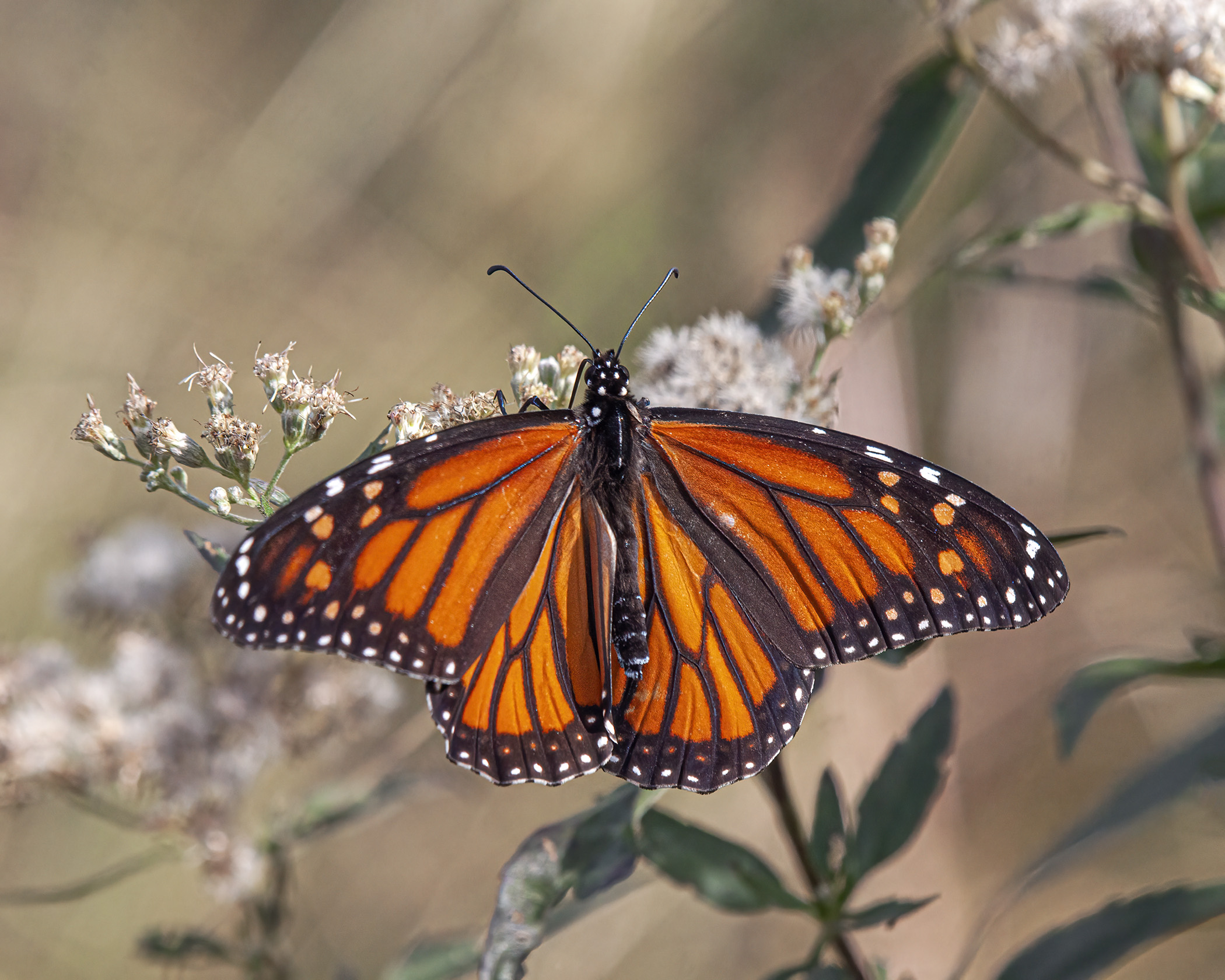
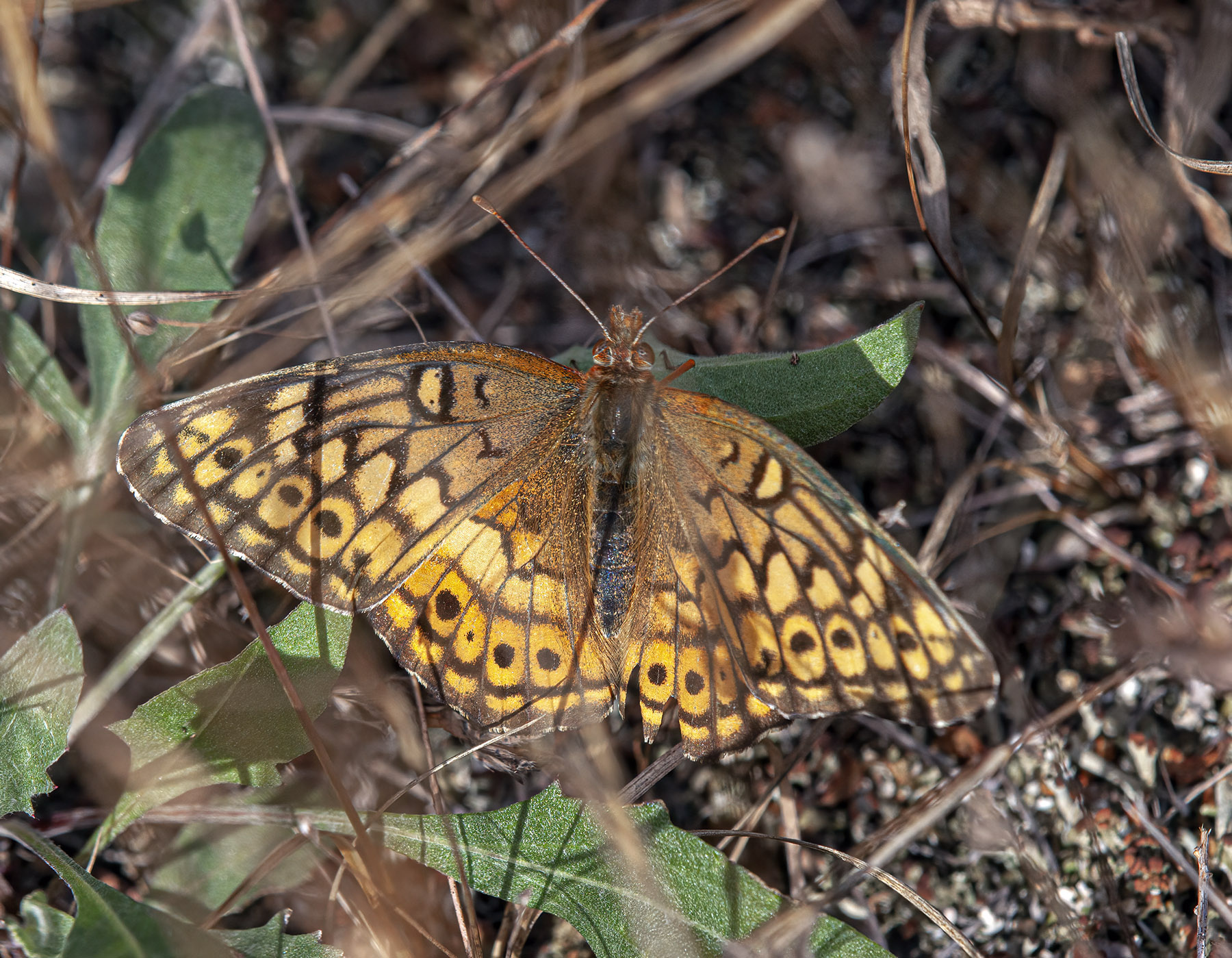
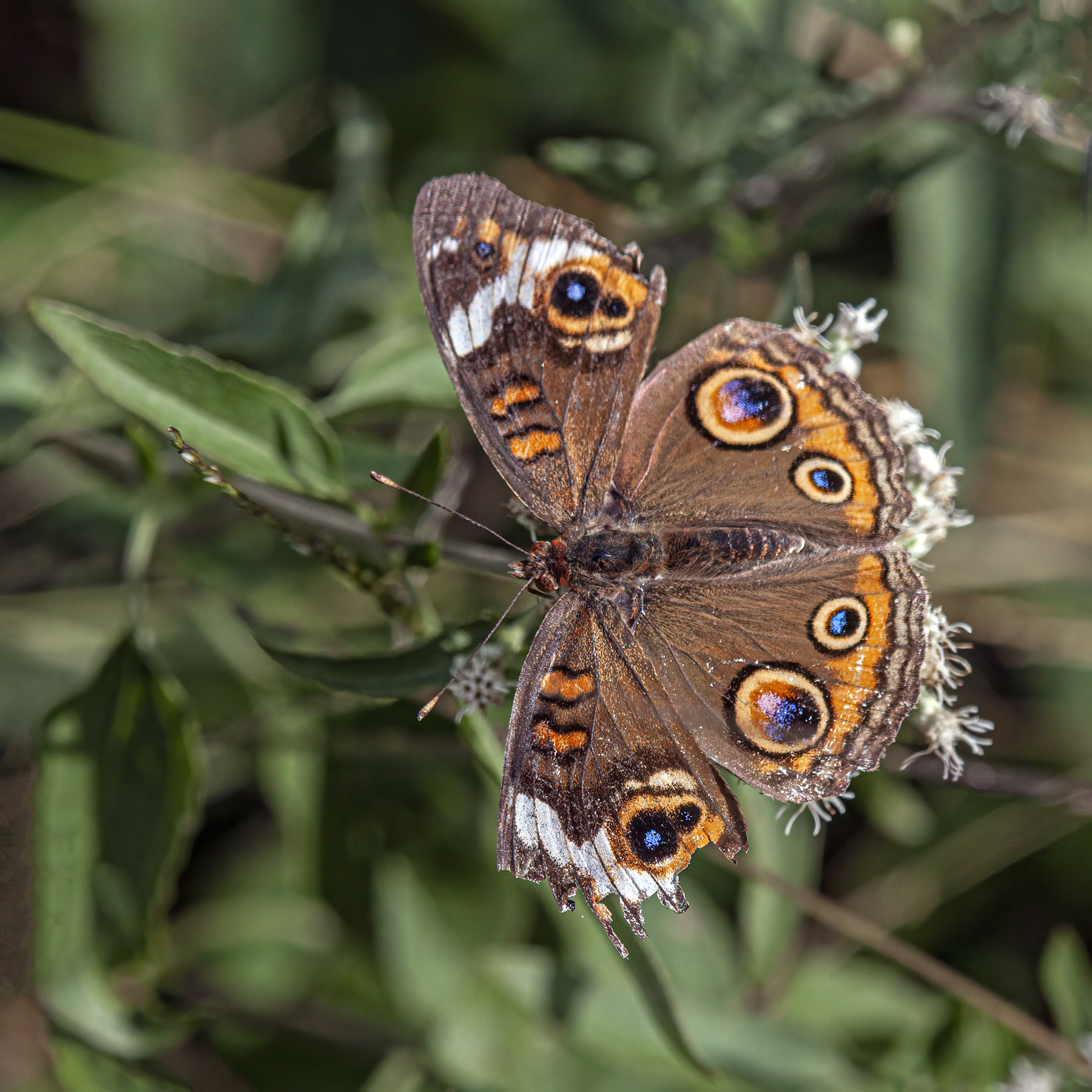
I am shocked and delighted by the number of butterflies that I continue to see at the end of October, despite the cooling temperatures and decreasing number of hours of daylight. Last Thursday, 28 October, I spotted a Monarch butterfly (Danaus plexippus) and multiple Variegated Fritillaries (Euptoieta claudia) and Common Buckeyes (Junonia coenia).

The dominant browns and oranges in the color palette of these butterflies seems to be a perfect reflection of the autumn season, when the colors in nature seem more muted than they were during the spring and the summer. For me, though, there is an inner warmth and comfort in these colors, like the feel of a well-worn flannel shirt or the taste of an autumn soup.

Monarch

Variegated Fritillary

Common Buckeye

© Michael Q. Powell. All rights reserved.


Read Full Post »

Here’s a couple of looks at an enormous praying mantis that I photographed on Thursday at Occoquan Bay National Wildlife Refuge. I was walking towards the parking lot at the end of a day of shooting when I passed a couple of fellow photographers who asked me if I wanted to photograph a praying mantis. I think that praying mantises are pretty cool, so of course I was quite happy to have them show me where it was.

I had never seen such a large praying mantis—I estimate that this one was about 5 inches (127 mm) in length. It was a challenge to find a shooting angle that allowed me to get most of this insect’s long angular body in focus. However, the mantis was cooperative and stayed in place until I was able to get some shots that I liked.

I am pretty sure that this is a Chinese Praying Mantis (Tenodera sinensis), a non-native species that is much larger and more aggressive than the native species. I did a little research about mantises in the United States and apparently there are a variety of views about the degree to which the non-native species are “invasive,” i.e. that cause environmental harm.

When I posted a photograph on Facebook, several readers commented that it looked like “my” mantis was about ready to lay her eggs. I had not initially considered that possibility, but it certainly does look like the mantis has a swollen abdomen. Female mantises generally lay their eggs in the fall in a protective sac structure called a “ootheca” and then she dies. The nymphs hatch in the spring when the weather warms up again.

Nature is amazing!

Chinese Praying Mantis

Chinese Praying Mantis

© Michael Q. Powell. All rights reserved.

Read Full Post »

When I went out with my camera on Tuesday, I made sure to carry both my 150-600mm telephoto zoom lens, my preferred lens in the cold months, and my 180mm macro lens, my lens of choice during the warm months. As you may have noticed, I have started photographing more birds during the month of October than in previous months, so I really need the additional reach afforded by the long lens. However, I also know that there is a good chance that I will see some dragonflies, and the macro lens helps me get certain photos that are just not possible with other lenses.

I spent most of my time that day trying to photograph little birds, like sparrows and goldfinches. In the early afternoon, though, I changed lenses when I spotted some Autumn Meadowhawk dragonflies (Sympetrum vicinum) basking in the sun on the wooden rails of a split-rail fence. I have learned in the past that Autumn Meadowhawks are often willing to let me move in close for shots and sometimes they will even perch on me—the perfect scenario for me to use my beloved macro lens.

In the first photo, I was so close to the dragonfly that I was balancing the lens hood on the edge of the rail on which the dragonfly was perched. As you can see, the depth of field was pretty shallow and most of the body is blurry. I am ok with that, because the eyes are in relatively sharp focus—I encourage you to click on the image to see some of the amazing details that I was able to capture, include the hairy “stubble” on the dragonfly’s face.

The second shot gives you a better overall view of the body of a male Autumn Meadowhawk. The bright red color of of its body really stands out again the backdrop of the brown fallen leaves and the gray gravel.

We will soon be moving forward to a new month. I am hopeful that November will include additional encounters with these colorful little Autumn Meadowhawk dragonflies.

Autumn Meadowhawk

Autumn Meadowhawk

© Michael Q. Powell. All rights reserved.

Read Full Post »
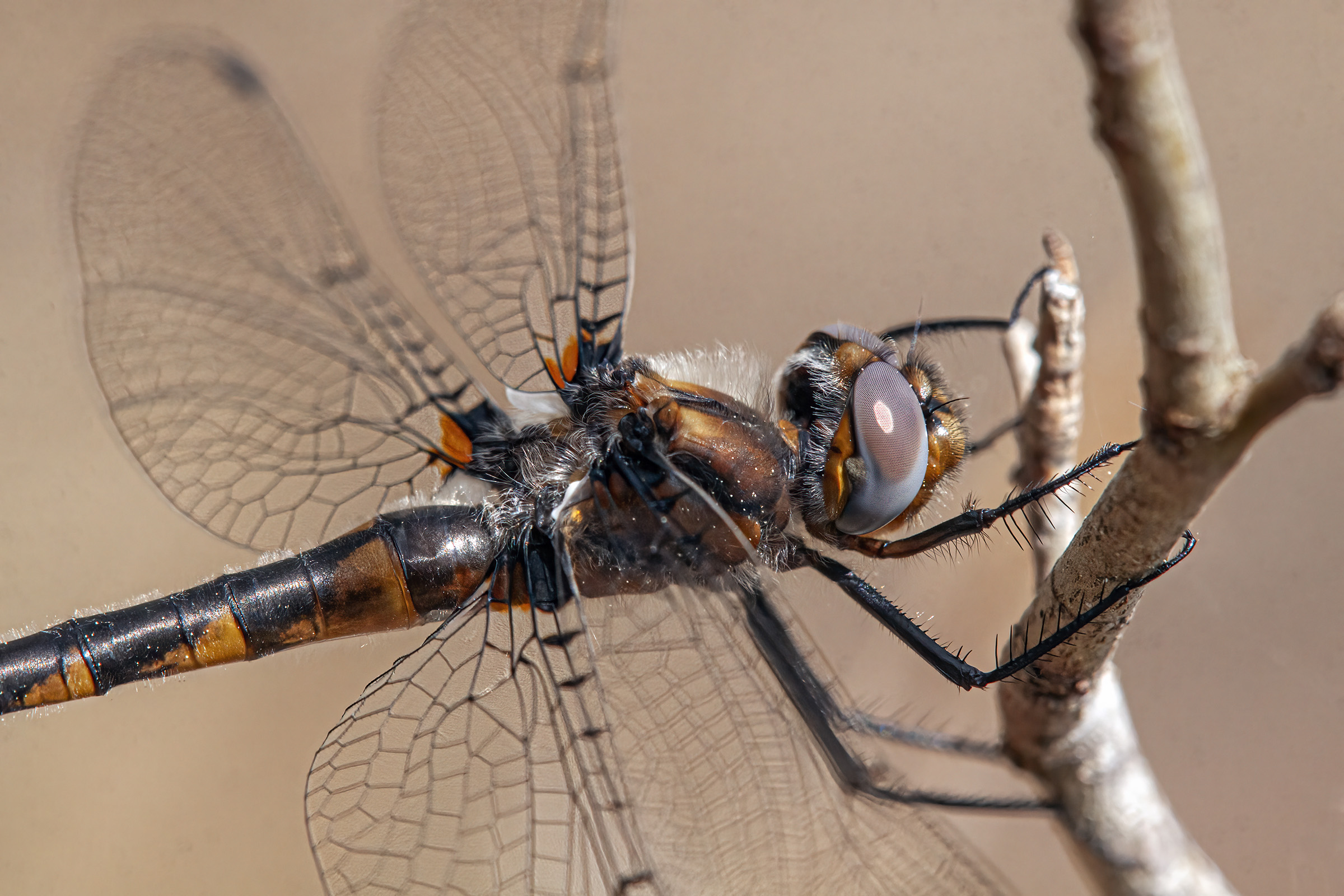
There are not very many dragonflies flying around this late in the season, so I was happy to spot this Wandering Glider (Pantala flavescens) last Thursday at Occoquan Bay National Wildlife Refuge. I was even more thrilled when it perched within range of my long telephoto zoom lens and I was able to get the first shot below. The dragonfly was perched really look to the ground in a grassy field and it was a challenge to frame a shot where my view was not blocked by the tall grass.

What could possibly be better than getting a shot of an elusive dragonfly like a Wandering Glider? How about capturing two of them in a single photo? My first thought when I spotted the two Wandering Gliders together last Monday at the same refuge was that they were trying to hook up—I think that one of them is a male and one a female. The hook-up did not happen, at least not while I was observing them.

The weather forecast for this week shows lots of clouds and rain and cooler temperatures. None of those conditions are particularly hospitable to dragonflies, so I suspect that the population will continue to drop as members of some species die off and others, like these Wandering Gliders, migrate to locations with more favorable conditions.

Wandering Glider

Wandering Glider

© Michael Q. Powell. All rights reserved.

Read Full Post »

Common Whitetails (Plathemis lydia) are among the first dragonflies to appear in the spring and one of the last to disappear in the autumn. I spotted this handsome male Common Whitetail last week at Occoquan Bay National Wildlife Refuge.

I love taking photos of everyday species, ones that may be ignored by many others. I like what Kevin Munroe wrote about Common Whitetails on his wonderful website Dragonflies of Northern Virginia:

“Dragonfly geeks like myself tend to turn our noses up at the ubiquitous and ever-present whitetail – but thank goodness for them! Often seen in large numbers, almost swarm-like, they’re essential members of the urban and suburban food chain. There they are, eating mosquitos (both as larvae and adults) in our urban parks where few other dragonflies can help us out. And literally everything eats them: praying mantids, birds, frogs, raccoons, fish, spiders.”

You may not be as much of a dragonfly enthusiast as I am, but I am sure that you can find equally beautiful and fascinating things in your immediate surroundings, if you take the time to seek and savor them—beauty is everywhere.

Common Whitetail

© Michael Q. Powell. All rights reserved.

Read Full Post »

I have been amazingly fortunate this dragonfly season in being able to capture images of dragonflies that rarely perch. My luck continued on Monday when a Black Saddlebags dragonfly (Tramea lacerata) that I was observing as it patrolled high in the air came down to earth and perched within range of my long telephoto lens while I was exploring at Occoquan Bay National Wildlife Refuge.

Black Saddlebags are one of a handful of dragonflies that migrate in the late summer/early fall. On this particular occasion, the Black Saddlebags appeared to be part of a small swarm that also included at least a half-dozen Wandering Gliders and a Common Green Darner.

Black Saddlebags dragonflies are relatively large—about 2.2 inches (56 mm)—and are pretty each to identify, thanks to the distinctive dark patches on their hind wings that are visible when they are flying overhead. I encourage you to click on each of the images to get a better look at the wonderful details of this dragonfly, including its two-toned eyes and colorful markings on its wings and abdomen.

Black Saddlebags

Black Saddlebags

© Michael Q. Powell. All rights reserved.

Read Full Post »
What marks the arrival of autumn for you? Is it the colorful fall foliage or perhaps the shortening of the daylight hours and the arrival of cooler weather? For me, the reappearance of Autumn Meadowhawk dragonflies (Sympetrum vicinum) is one of the surest signs of the change in the seasons.

It seems like I have had to wait longer this year than in the past, but I am finally starting to see these small reddish-orange dragonflies as I walk the trails at Occoquan Bay National Wildlife Refuge. On Monday I spotted my first male Autumn Meadowhawks of the season, as shown in the first two photos below. The coloration of the males is startlingly bright, but you actually have to look hard to spot them, because they are only 1.3 inches (33 mm) long and often perch on low vegetation or on the ground itself.

The final image showcases the two-toned look of a female Autumn Meadowhawk. She seems to be glancing over at me and smiling, confident in her radiant beauty, her warm coloration a beautiful reflection of the autumn season.

Autumn Meadowhawk

Autumn Meadowhawk

Autumn Meadowhawk

© Michael Q. Powell. All rights reserved.


Read Full Post »

The weather is turning cooler, but there are still some hardy dragonflies around, like this beautiful female Autumn Meadowhawk (Sympetrum vicinum) that I spotted last Thursday at Occoquan Bay National Wildlife Refuge, perched high on a branch as she basked in the autumn sunshine.

Most of the time when I see an Autumn Meadowhawk it is perched on the ground, so it was a treat to see this one on an elevated perch that gave me a really good look at the shape of her tiny body—Autumn Meadowhawks are only about 1.3 inches (33 mm) in length. This dragonfly species is generally the last one that I see each year and several years I have seen Autumn Meadowhawks in December. From my perspective, the dragonfly season is still far from being over.

Autumn Meadowhawk

© Michael Q. Powell. All rights reserved.

Read Full Post »

Most people are familiar with the words, “To everything there is a season and a time to every purpose under heaven.” Perhaps they have heard them read in a church, where they would be identified as coming from the third chapter of Ecclesiastes in the Bible. For folks of my generation, it is ever more likely that they would be associated with the words of a song by Pete Seeger made popular by the Byrds in the 1960’s.

Recently I have been really conscious of the changing seasons, of the never ending cycle of life and death. I have seen this phenomenon in nature and I have been very sensitive to it in other parts of my life.

Some of you may have noticed that I have not made a blog posting in several days, after more than a year of posting every day. I have spent the last few days in Massachusetts with my family celebrating the life and mourning the death of one of my younger brothers who died a week ago of lung cancer.

So often we think of growing older with grace and beauty, like the female Great Blue Skimmer dragonfly (Libellula vibrans) pictured below, thinking that we can somehow live forever. In fact, our days are numbered—life is so precious and yet so fragile. Celebrate life and love freely.

“To every thing there is a season, and a time to every purpose under the heaven
A time to be born, and a time to die; a time to plant, and a time to pluck up that which is planted;
A time to kill, and a time to heal; a time to break down, and a time to build up;
A time to weep, and a time to laugh; a time to mourn, and a time to dance;
A time to cast away stones, and a time to gather stones together; a time to embrace, and a time to refrain from embracing;
A time to get, and a time to lose; a time to keep, and a time to cast away;
A time to rend, and a time to sew; a time to keep silence, and a time to speak;
A time to love, and a time to hate; a time of war, and a time of peace.”


Great Blue Skimmer

Great Blue Skimmer

© Michael Q. Powell. All rights reserved.


Read Full Post »

I was ecstatic on Monday at Occoquan Bay National Wildlife Refuge to finally capture some images of Fine-lined Emerald dragonflies (Somatochlora filosa), a species for which I have been searching repeatedly this past month. Fine-lined Emeralds are one of several species that appear in the autumn, just as the number of most species of dragonflies is beginning to drop precipitously. I had spotted what I think were Fine-lined Emeralds several times earlier in September, but for me the sighting does not really “count” if I am not able to take a photograph.

Fine-lined Emeralds like to spend a lot of time patrolling, and a lesser amount of time perching. Unlike many of species that fly about high in the air, this species often flies at at somewhere between knee and eye-level.

On this day I spotted at least two individuals patrolling along one of the trails that runs parallel to the water. I alternated between chasing after the dragonflies and waiting for them to return—the patrol routes seem to be of a fixed length and the dragonflies would do a U-turn when they reached the end and fly back where they had been.

The dragonfly in the first two images is the same individual with a damaged rear wing, while the one in the final photo seems to be a different individual with an intact wing. I love the beautiful green eyes of this species, a characteristic they share with other members of the Emerald family. Those eyes seem to glow when the dragonfly is flying right at you.

If you look closely at the abdomen of the dragonflies, you can see the thin white/golden lines that I thought were responsible for the “fine-lined” portion of the name of this dragonfly species. However, a sharp-eyed fellow dragonfly enthusiast gently reminded me, after he read my initial posting, that the fine white stripes on the sides of the thorax (the “chest”) are responsible for the “fine-lined” name—you can see them best in the middle photo. I checked my identification guide and he is correct. Humility comes with the territory when it comes to identifying wildlife species.

Fine-lined Emerald

Fine-lined Emerald

Fine-lined Emerald

© Michael Q. Powell. All rights reserved.

Read Full Post »

« Newer Posts - Older Posts »