Feeds:
Posts
Comments

Archive for the ‘dragonfly’ Category

I don’t often see dragonflies perch on flowers, so I was delighted when this female Blue Dasher (Pachydiplax longipennis) decided to rest for a moment on an aster plant in bloom last week at Jackson Miles Abbott Wetland Refuge.

I decided not to crop this photo to show the dragonfly better, because I really like the sweep of bright color on the left side of the image and the more muted out-of-focus colors on the right side. I am growing to love this type of environmental portrait, which goes against my normal approach of trying to fill as much of the frame as possible with my primary subject.

Blue Dasher

© Michael Q. Powell. All rights reserved.

Read Full Post »

Do you prefer to live your life widely or deeply? That is a curious question, but it is one that affects the way that many of us approach our photography and our lives in general. Let me reframe the question. Are you always seeking to visit new places to see new things, i.e. living “widely”, or would you rather spend your time in familiar locations with familiar subjects, going back to the same places repeatedly, i.e. living “deeply?”

As you may have guessed, I tend to put myself in the second category. I like to observe the seasonal changes at a few local areas, watching for new species to arrive and to depart (or disappear), observing the changes in the flora and the fauna, and discovering favorite spots for my photography. I am not really consumed by a need or desire to add to my “life list” of birds or insects that I have seen, though I do enjoy visiting other locations.

All of these thoughts were percolating in my brain on Wednesday when I visited Jackson Miles Abbott Wetland Refuge to see which dragonflies were still present. I was particularly delighted to spot several Swift Setwing dragonflies (Dythemis velox). In June 2016 at this same refuge, I first photographed a Swift Setwing—a primarily southern species that had never before have been spotted in Fairfax County, the county where I live—and each year since I have eagerly returned to learn more about the species. For more details on my initial sighting, check out my 2016  blog posting Swift Setwing dragonfly.

It is always tough to frame shots of Swift Setwings, because they like to perch on vegetation that overhangs the water and they face the water. The sun was shining brightly and I was happy to capture a couple of images in which the dragonfly appears to be perching among the clouds. I did try to get down low, but I think the background is a reflection of the sky in the water of the pond and not the sky itself.

For the second image, I was far away from the dragonfly. I couldn’t get a clear shot of the Swift Setwing, so I chose to use some vegetation blocking my view as a framing element in the foreground. I like the way that the image turned out.

Swift Setwing

Swift Setwing

© Michael Q. Powell. All rights reserved.

Read Full Post »

From a distance, many dragonflies are hard to identify. However, the wing markings on a male Twelve-spotted Skimmer dragonfly (Libellula pulchella) are so distinctive that I could identify this dragonfly immediately when I spotted it yesterday in the marshland at Jackson Miles Abbott Wetland Refuge.

If you take the time to count all of the spots on the wings of the dragonfly, you come up with a number much higher than 12. Why then is it called a Twelve-spotted Skimmer? Someone decided that it was best to count only the dark spots, because only the males generally have the white spots. It is a rare case when gender equality seems to have factored into the name of a species—normally species’ names are based on the characteristics of the male.

Twelve-spotted Skimmer

© Michael Q. Powell. All rights reserved.

Read Full Post »

The clock is ticking as we move towards the end of the dragonfly season and I see a lot of mating dragonflies that appear to be driven by the biological imperative of ensuring the perpetuation of their species. Late in August I observed this pair of Blue Dasher dragonflies (Pachydiplax longipennis) at Occoquan Regional Park in the mating position that is sometimes referred to as “the wheel.”

When mating is completed, the female, the lower dragonfly in the photo, will may lay 500 or more eggs by flying low over the water usually near a heavily vegetated pond edge and repeatedly tapping her abdomen to the surface. Once the eggs hatch, the life cycle of a dragonfly larva begins as a nymph that live underwater and eat smaller aquatic insects. The nymphs, also referred to as naiads, live underwater for up to two years and shed their exoskeletons six or more times.

According to an article in Cambridge Day, “When a naiad is ready to metamorphose into an adult dragonfly, it swims to the surface at night. There, it lifts its head out of the water as its body adapts to breathing air, then climbs a plant stem out of the water, where its skin splits behind its head and the adult dragonfly emerges. The adult swallows air to plump up its body and pumps hemolymph, the bloodlike substance of insects, into its wings.”

For more information about the life cycle of Blue Dasher dragonflies, check out these postings at Life on CSG Pond and at Cambridge Day.

Blue Dasher

© Michael Q. Powell. All rights reserved.


Read Full Post »

As we flip the pages of our monthly calendars from August to September, it is not unusual for me to encounter dragonflies with tattered wings. For many of these dragonflies, it has been a long, tough summer and they will only be with us for a few more weeks or perhaps a month or two. Despite the damage to their wings, the dragonflies appear to be fully capable of flight—somehow they are able to compensate for their infirmities.

I spotted this Great Blue Skimmer dragonfly (Libellula vibrans) this past Monday at Jackson Miles Abbott Wetland Refuge. It is a little tough to tell in this image, but several of the wings showed wear-and-tear. The shredded appearance of the vegetation is a perfect complement to this late season dragonfly—they both speak to me of the inexorable passage of time and the inevitable changes in our appearance and capabilities brought on the aging process.

Great Blue Skimmer

© Michael Q. Powell. All rights reserved.

Read Full Post »

I do not see Carolina Saddlebags dragonflies (Tramea carolina) very often and when I am lucky enough to spot one, it is usually in flight. According to the Dragonflies of Northern Virginia website, “Carolina Saddlebags appear to stick to shallow, thickly vegetated ponds and marshlands,” which is a pretty good description of the place where I spotted this one last Saturday at Occoquan Bay National Wildlife Refuge. The same website described the Carolina Saddlebag’s flight tendencies as “Strong flier, often high, rarely perches.”

I had been watching several Calico Pennant dragonflies, another species that is red and has patterned wings, as they flew around over the pond when suddenly a somewhat larger red dragonfly flew into view—Calico Pennants are approximately 1.3 inches (33 mm) in length, while Carolina Saddlebags are 2.0 inches (51 mm). I visually tracked the Carolina Saddlebags and was able to follow it as it perched high on a stalk of vegetation in an adjacent field.

I moved slowly and stealthily, but did not have room for maneuver to compose a few shots. The lighting was best when from the angle at which I captured the first shot and you can see some of the details and markings on the dragonfly’s body. In the second image, you get a better look at the “saddlebags,” the reddish-brown patches on the rear wings, but most of the body is silhouetted.

For the third shot, I changed the height of my shooting angle to make the background a bit more interesting than the sky. The blurry greenish background in the image was some distant trees. As you may have noticed, the dragonfly’s position in the second and third images is almost the same

Carolina Sadddlebags

Carolina Sadddlebags

Carolina Sadddlebags

© Michael Q. Powell. All rights reserved.

Read Full Post »

Calico Pennant dragonflies (Celithemis elisa) often remind me of pole vaulters. They hold on to a long, narrow “pole” at the very end and flex it, as though they were trying to propel themselves over a bar. I spotted this handsome male Calico Pennant last Saturday at Occoquan Bay National Wildlife Refuge, one of the few local spots where I encounter this spectacular species.

This will probably be my last blog posting this week. I will be driving from Virginia to Massachusetts later today to deal with some family issues and will return home this coming weekend, when I hope to resume my habit of posting nature and wildlife photos almost daily.

Calico Pennant

© Michael Q. Powell. All rights reserved.


Read Full Post »

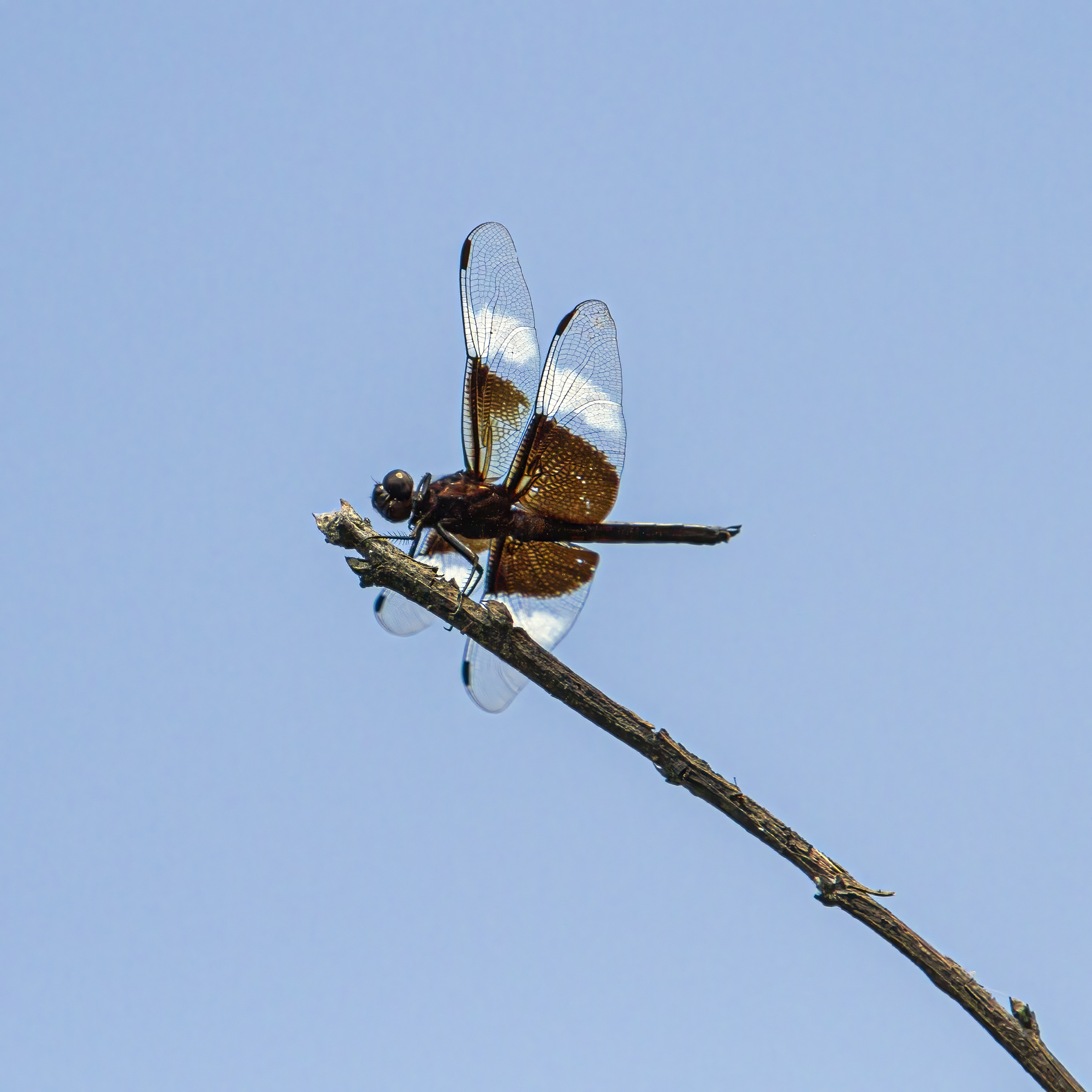
I spotted this handsome male Widow Skimmer dragonfly (Libellula luctuosa) this past Saturday at Occoquan Bay National Wildlife Refuge. Only the males of this species have white patches on their wings—the females have only the dark patches.

The Latin name for this species includes the word “luctuosa,” which means “sorrowful” or “mournful.” Apparently someone thought that the dark patches on the wings of dragonflies of this species looked like the kind of mourning crepe veils that traditionally widows were supposed to wear up to four years to show their grief.

I think that I have been reading too many warnings about people taking advantage of older people, because the name “Widow Skimmer” initially conjured up visions of young gigolos chasing after rich old ladies in Florida who have lost their husbands.

Widow Skimmer

© Michael Q. Powell. All rights reserved.

Read Full Post »

Last Monday I spotted this striking female Halloween Pennant dragonfly (Celithemis eponina) perched high in the eastern gamagrass (Tripsacum dactyloides) at Occoquan Bay National Wildlife Refuge. It was somewhat unusual for me to have a chance to photograph a dragonfly above eye level and I did my best to isolate the subject against the pale blue sky.

I really like the minimalism of this composition.  The color and texture of the gamagrass add some visual interest to the image without distracting the viewer from the primary subject.

Halloween Pennant

© Michael Q. Powell. All rights reserved.

Read Full Post »

When I am writing a blog posting with multiple photos, I will usually lead with the “best” photo. Most of the time I have a clear favorite image, but today I struggled a bit in trying to decide which image of a Calico Pennant (Celithemis elisa) was the “best” one. I was delighted on Monday at Occoquan Bay National Wildlife Refuge to have multiple opportunities to photograph male Calico Pennants, which are among the most striking dragonflies that I encounter, thanks to their bold coloration and wonderfully patterned wings.

From a technical perspective, the first image could be considered the “best.” The background is pleasantly blurred and virtually all of the dragonfly’s features are in sharp focus. Graphically this image stands out, even when viewed as a thumbnail on a cell phone.

The background in the second image is considerably more cluttered than in the first image. However, I think the color contrast between the bright red of the dragonfly and the pinkish-purple colors in the background makes it easy to see the primary subject. The vegetation helps to provide the viewer with a sense of the environment in which I photographed the dragonfly.

The third image was the most challenging to capture. Several Calico Pennants were flying around over the waters of a pond and I was thrilled to capture this in-flight shot, my first such photo of this species. Most of the other dragonflies that I have photographed as they were flying were considerably larger—a Calico Pennant is only about 1.3 inches (33 mm) in length—and it took a lot of persistence and concentration to get this shot.

The final shot was a lucky one. I was focused on the perched dragonfly and reacted quickly when it took off. From an artistic perspective, I really like this image. The mottled colors of the pond works well as a backdrop for the action and the contrast between the muddy brown and the bright red of the dragonfly makes the subject “pop.” I love the texture of the branch and the branch helps to lead the viewer’s eyes to the dragonfly. Finally, the dragonfly’s wing patterns are displayed beautifully as I managed to capture a moment when they were fully extended.

I don’t know if it is possible for me to state definitively which one of these images is the “best”—I like each of them for different reasons. Is there one that stands out to you more than the others? I’d welcome your views on this question.

Calico Pennant

Calico Pennant

Calico Pennant

Calico Pennant

© Michael Q. Powell. All rights reserved.

Read Full Post »

Female Eastern Pondhawk dragonflies (Erythemis simplicicollis) are quite easy to spot when they are out in the open—they are bright emerald green in color and have distinctive black stripes on their abdomens. When they land in a grassy area, however, they virtually disappear from sight, thanks to their almost perfect camouflage.

During a recent visit to Jackson Miles Abbott Wetland Refuge, I spotted this Eastern Pondhawk while it was flying and watch it land on this fallen branch. If I had not seen the dragonfly land and it had remained still on its perch, I doubt that I would have detected its presence.

Eastern Pondhawk

© Michael Q. Powell. All rights reserved.

Read Full Post »

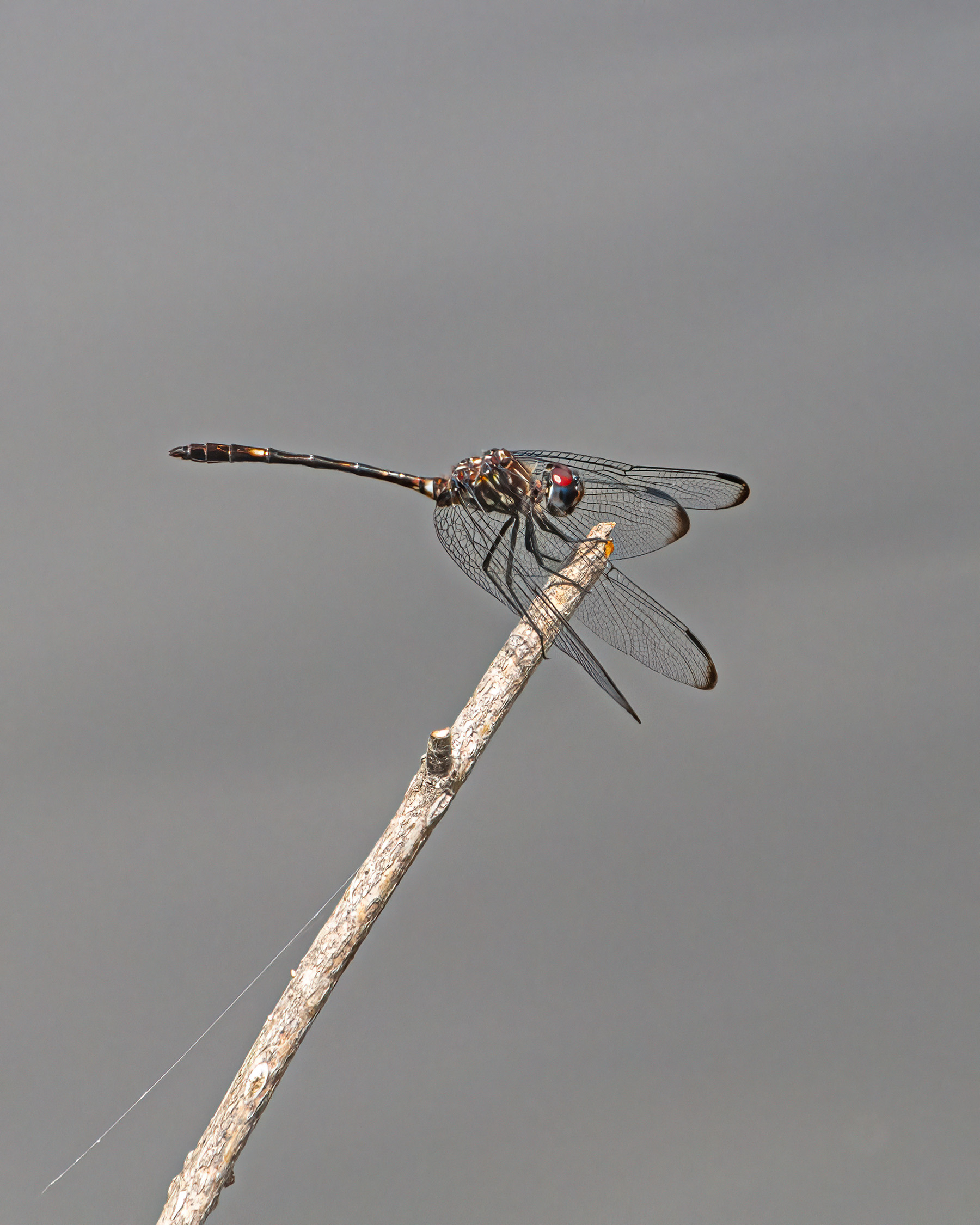
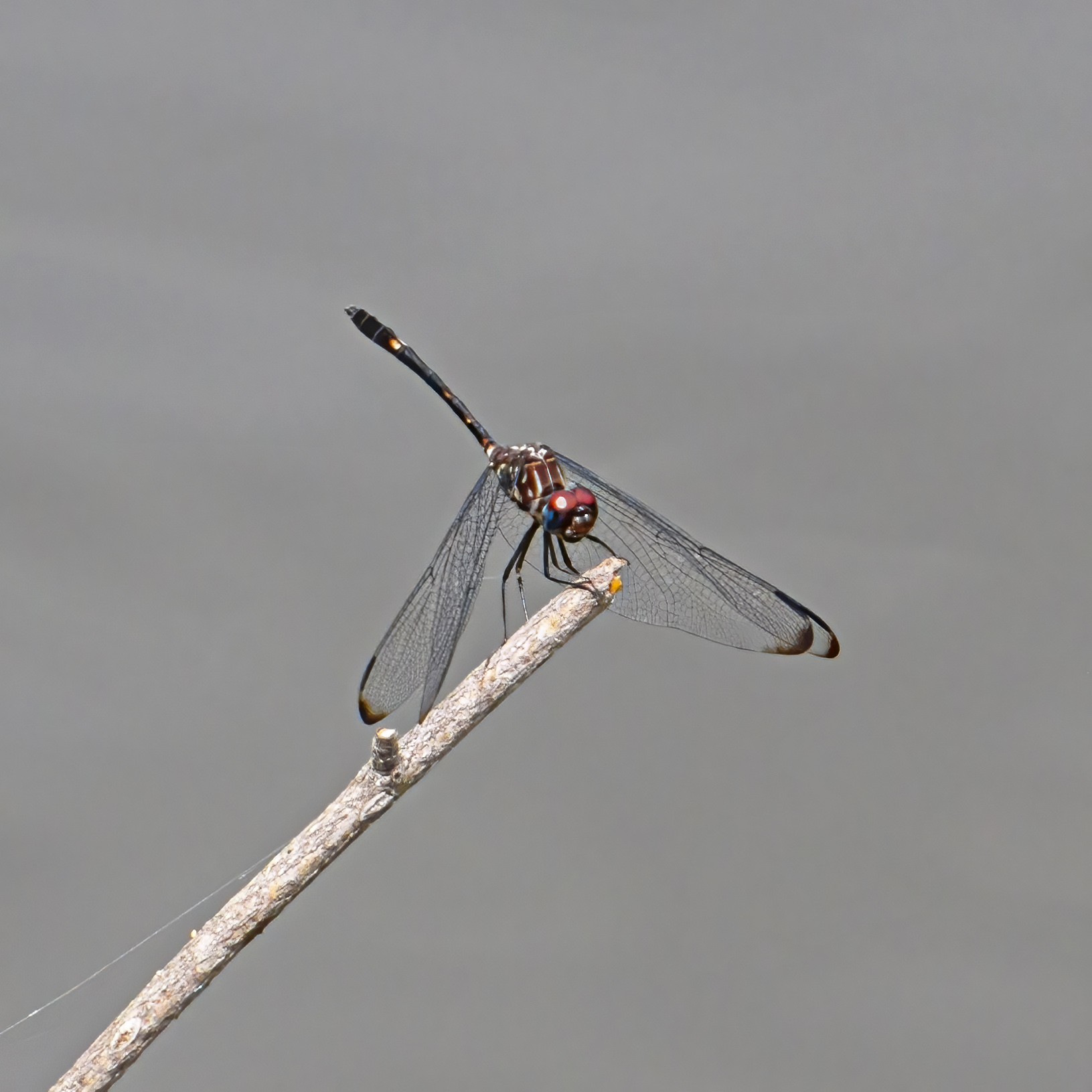
One of the most common dragonflies that I see at this time of the year is the Slaty Skimmer (Libellula incesta). Male Slaty Skimmers have dark bodies and dark eyes and are pretty easy to identify. Slaty Skimmers tend to perch on bare stalks and one of my challenges in photographing them is to try to frame my shots so that the background is interesting.

Here are three images in which I tried to use a bit of my creativity in the way that I composed the shots by including some of the vegetation, as in the first and second shots, or by focusing on lines and angles, as in the final photo.

I am making another trip this week to Massachusetts and Maine to deal with some family issues, so this may be my last blog post of the week. I am planning to return on Saturday, so perhaps there will be a new posting on Sunday morning.

Slaty Skimmer

Slaty Skimmer

Slaty Skimmer

© Michael Q. Powell. All rights reserved.


Read Full Post »

I was intrigued by the varying wing positions of this Banded Pennant dragonfly (Celithemis fasciata) that I spotted last week at Jackson Miles Abbott Wetland Refuge. There was a bit of a breeze and this little dragonfly was doing its best to hold on to the vegetation by adjusting its wings.

Although each wing can function independently from the others, it appeared that the dragonfly mostly moved them in pairs. I was particularly struck in the first photo by the way that the front wings of the Banded Pennant were tilted forward, while its back wings were held flat horizontally.

Banded Pennant

Banded Pennant

Banded Pennant

© Michael Q. Powell. All rights reserved.


Read Full Post »

I was happy to see that at least a few Swift Setwing dragonflies (Dythemis velox) were still around this past Friday at Jackson Miles Abbott Wetland Refuge. We are gradually moving to a time of the summer when some dragonfly species decrease in numbers or disappear. Fortunately, a few fall species will appear soon to take their places.

Swift Setwing

© Michael Q. Powell. All rights reserved.

Read Full Post »

Yesterday I had the chance to test my skill and my patience as I tried to capture images of dragonflies in flight at Jackson Miles Abbott Wetland Refuge. I believe they are a Royal River Cruiser (Macromia taeniolata), a Prince Baskettail (Epitheca cynosura), and a Russet-tipped Clubtail (Stylurus plagiatus), members of three different families of dragonflies.

The Royal River Cruiser is the most uncommon of these three species—I have only seen one a few times and this is the first time that I have gotten a decent shot of one. Cruisers are large dragonflies with large eyes and long legs that generally fly up and down streams or rivers or along lake shores. I did not expect to see one at the small pond at this refuge, but there is an adjacent wetland and a small stream, so maybe the dragonfly made a detour in its patrol over those areas. This dragonfly followed the shore of the pond and flew fast in a single direction.

The Prince Baskettail is the most common of the three dragonflies and I have featured in-flight shots of this species multiple times. The Prince Baskettail appears to have a portion of the shoreline as its territory and it flies back and forth, giving me multiple opportunities to get a shot. This dragonfly has amazing stamina and rarely seems to rest—in ten years of observing dragonflies, I have seen a perched Prince Baskettail only a couple of times.

The Russet-tipped Clubtail is a dragonfly that appears in the late summer and I usually spot one when it is hanging from the vegetation. This one was the first sighting for me of the species this season. Although the dragonfly never came close to the shore, the distinctive color of its “tail” made it easy for me to identify it, even when it was flying.

In case any of you are curious, I captured all of these images with my Canon 7D DSLR and my Tamron 18-400mm zoom lens. Sometimes I focus manually when trying to photographing dragonflies in flight, but I believe I used my camera’s autofocus for these shots with a group of nine focus points in the center selected.

Royal River Cruiser

Prince Baskettail

Russet-tipped Clubtail

© Michael Q. Powell. All rights reserved.


Read Full Post »

On Tuesday I was thrilled to spot the distinctive color and patterns of a Halloween Pennant (Celithemis eponina) dragonfly as I was exploring a field adjacent to a creek in Prince William County, Virginia. The Halloween Pennant’s wings are orange in color with dark brown bands, the Halloween inspiration for its common name.

Like other “pennant” dragonflies, Halloween Pennants like to perch at the tips of plants, as you can see in these images, which causes them to wave like pennants in even the slightest breezes. I love the way the photos how the dragonfly uses its three sets of legs to grasp the vegetation, ensuring that it can hold on even when the wind is blowing hard.

Halloween Pennant

Halloween Pennant

Halloween Pennant

© Michael Q. Powell. All rights reserved.

Read Full Post »

I spotted this cool-looking dragonfly yesterday when it flew to a hanging perch in some shaded vegetation along a creek in Prince William County. I was walking along a trail parallel to the creek and was primarily looking towards the water. Out of the corner of my eye, I detected some movement and spotted where the dragonfly had landed.

A couple of things immediately stood out to me. The dragonfly was hanging vertically, which meant that it was probably not one of the more common skimmers that I am used to seeing at this time of the year. I noted too that the dragonfly was long and skinny and, realizing that my camera was going to have trouble focusing on the dragonfly, I switched to manual focusing. I was able to snap off only a couple of shots before the dragonfly flew away and despite my efforts to relocate it, I was not able to find the dragonfly again.

When I looked on the back of my camera at the images that I had captured, I was not able to identify the dragonfly. When I returned home, I looked through my dragonfly guides and determined that it was a Fawn Darner dragonfly (Boyeria vinosa), a new species for me. Some experts in a Facebook dragonfly group confirmed my identification.

According to the Dragonflies of Northern Virginia website, “Unlike most other darners, and in fact most dragonflies, Fawns shun open, sunny areas. They spend the day hiding in dense, shady underbrush, hanging from the branches of shrubs and young trees. Around 4PM they start venturing out to patrol their shady, forest streams, peaking from about 6PM-8PM.” I encountered the Fawn Darner around midday, so I may have been disturbing its resting period.

Wildlife and nature photographers use many different approaches. Some of them go out to researched locations with a goal of seeing specific species—they are very targeted in their tactics. Others, like me, are opportunistic photographers who wander about, ready to react to whatever they encounter. Although I do love to spot species that are new to me, as was the case with this Fawn Darner, such encounters tend to be almost serendipitous—I tend to stumble upon new species.

Fawn Darner

© Michael Q. Powell. All rights reserved.

Read Full Post »

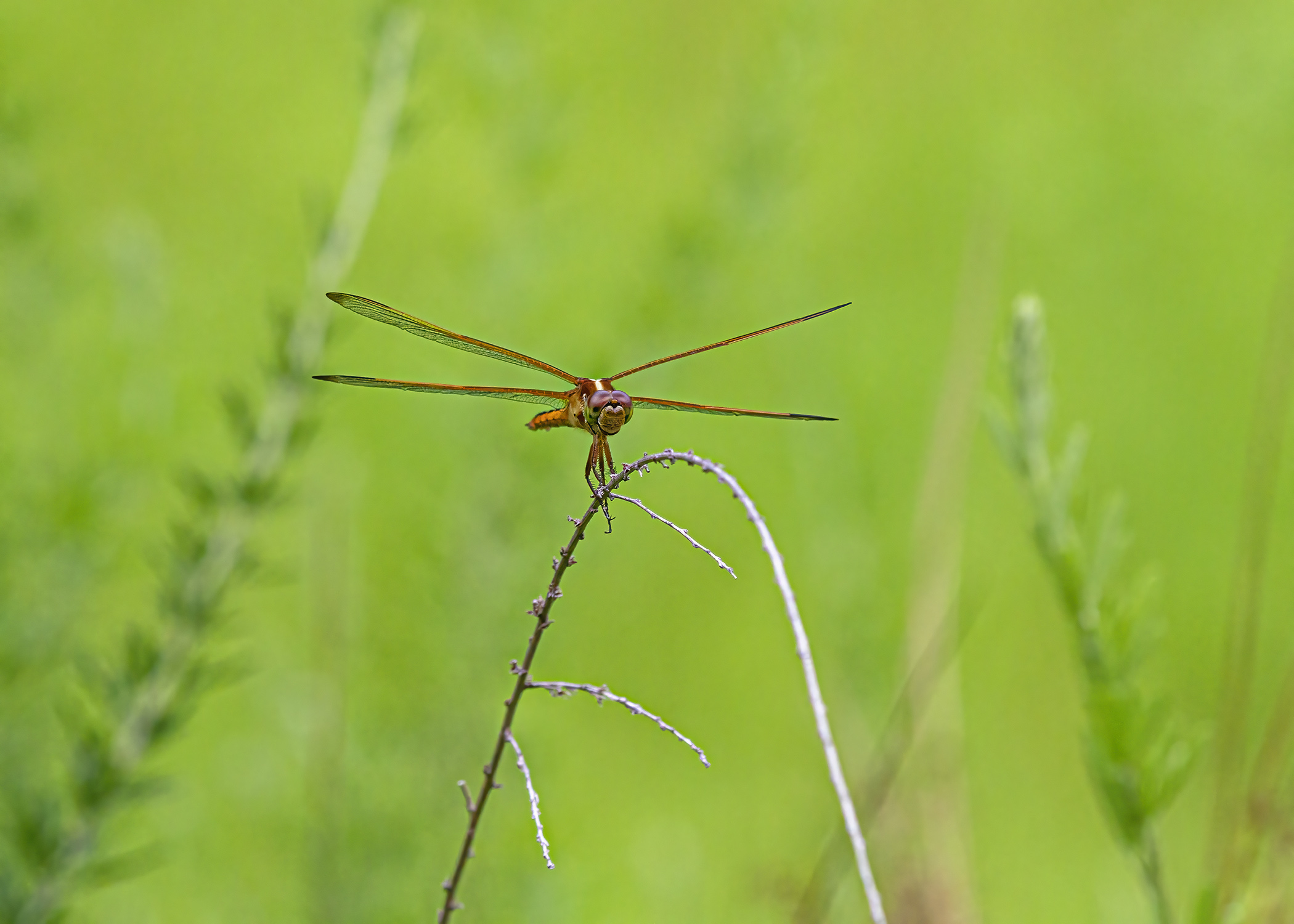
Last Saturday morning at Occoquan Bay National Wildlife Refuge I was delighted to spot this male Needham’s Skimmer (Libellula needhami), one of the most brightly colored dragonflies in our area. In addition to its beautiful reddish-orange color, this dragonfly has stunning gold accents on the front edges of each of its wings.

Needham's Skimmer

© Michael Q. Powell. All rights reserved.

Read Full Post »
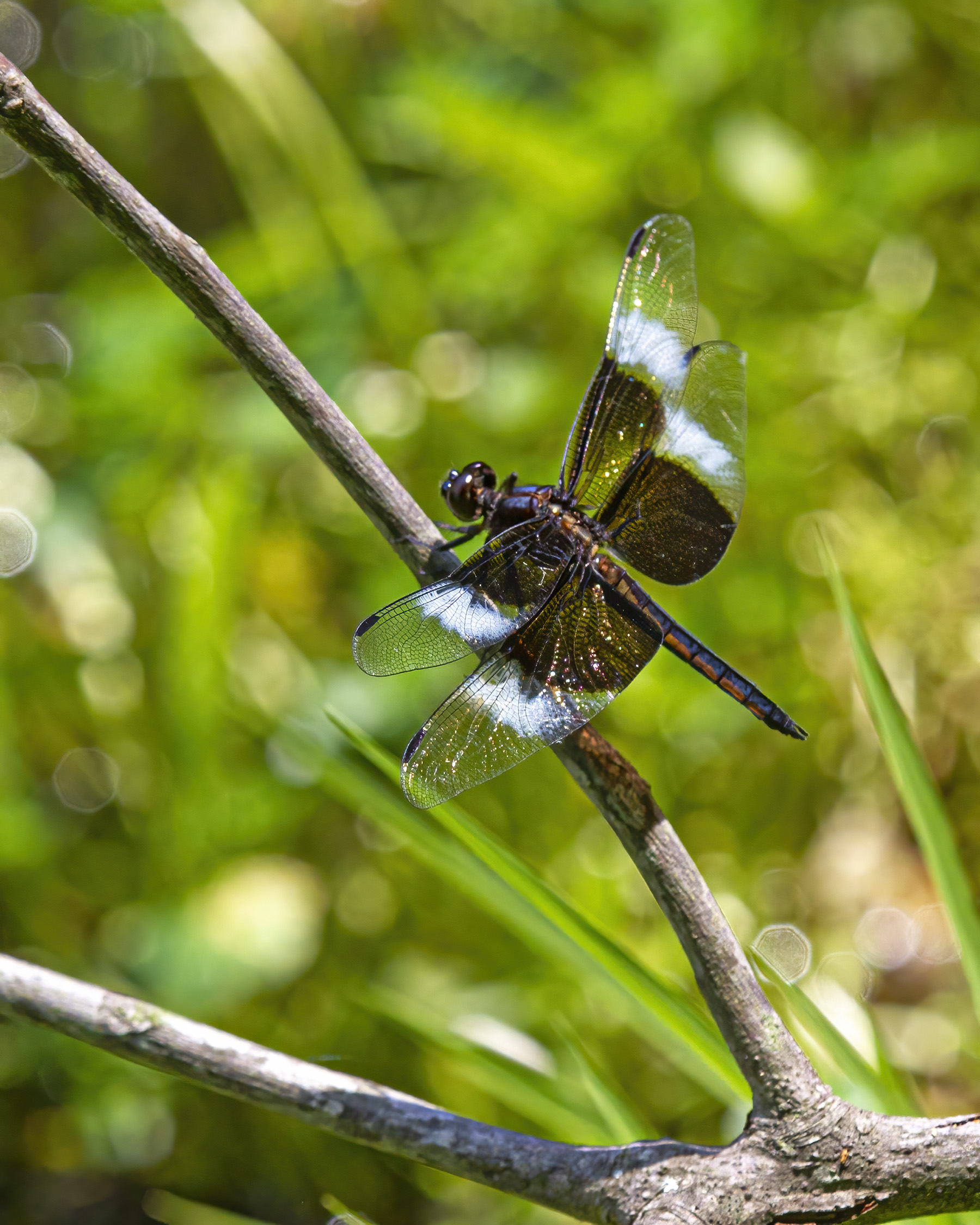
Here’s a shot of a handsome male Widow Skimmer dragonfly (Libellula luctuosa) that I spotted this past Monday at Jackson Miles Abbott Wetland Refuge. The Widow Skimmer is one of only a few dragonfly species that I have encountered that has both white and brown markings on its wings. (the male Twelve-spotted Skimmer dragonfly is the only other one that immediately comes to mind and you can see what one looks like in my 31 May 2021 posting entitled Twelve-spotted Skimmer.

Backgrounds are always tricky when photographing insects perched in highly vegetated areas. I think the stalks of vegetation are blurred enough in the first image that they do not draw attention away from the main subject. I think, in fact, the the green and tan lines add some visual interest to the image that would be lacking if the entire background were a solid color. The background in the second image is a bit busier, but you get a much better view of the dragonfly’s wing patterns—wildlife photography is often a matter of compromise in which “perfection” is often unachievable.

Widow Skimmer

Widow Skimmer

© Michael Q. Powell. All rights reserved.


Read Full Post »
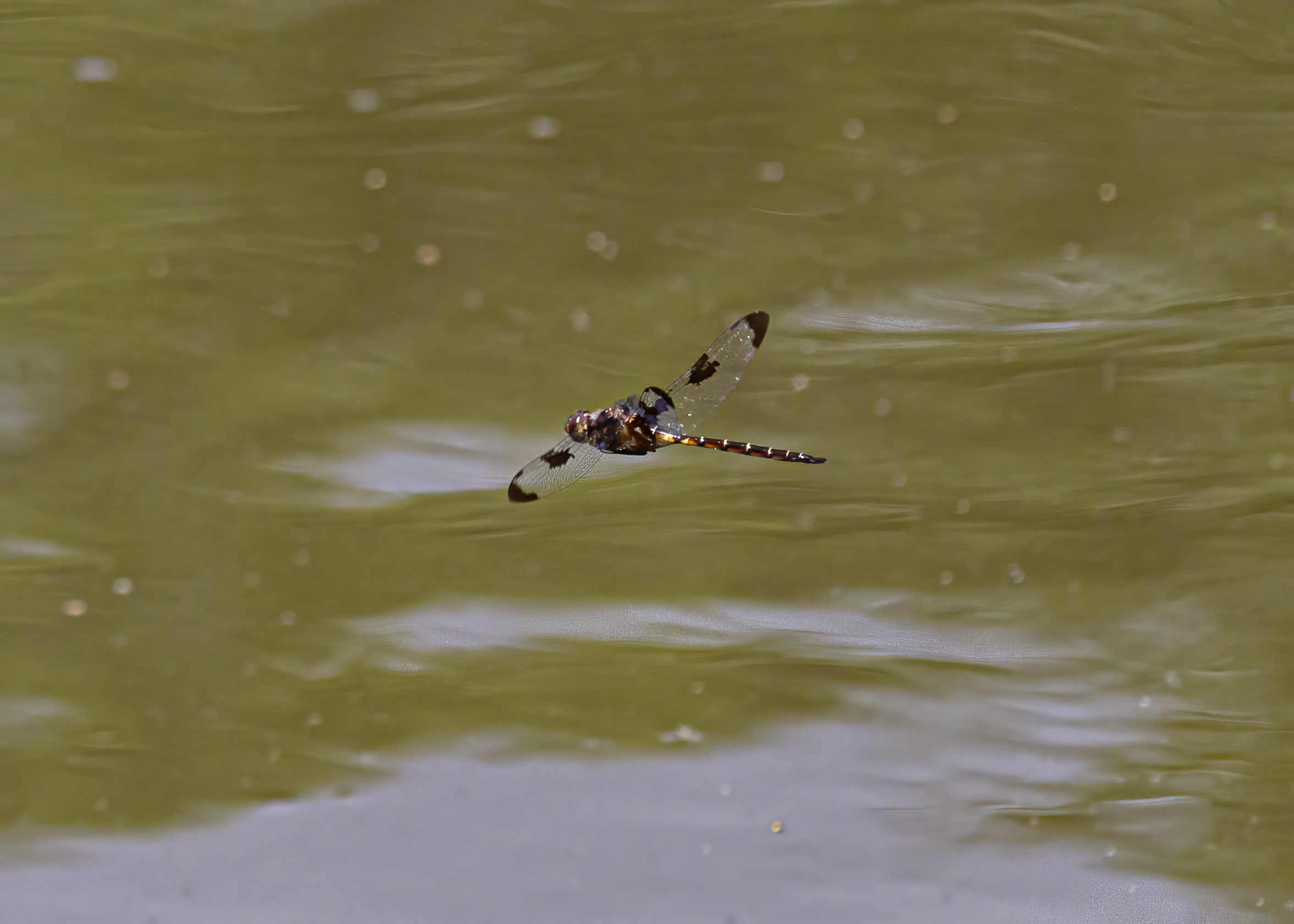
On Monday I spent several hours at Jackson Miles Abbott Wetland Refuge, focusing my attention primarily on trying to capture shots of Prince Baskettail dragonflies (Epitheca cynosura) in flight. There appeared to be several of them patrolling over the waters of the small pond and I managed to find some good vantage points that gave me unobstructed views of them as they passed by.

One of the locations where I spotted a Prince Baskettail included some lily pads and I decided to try to include them in the shots to give a sense of the environment. The downside of this approach, though, was that it made it even harder to keep my camera’s focus on the dragonfly—the camera kept trying to focus on the background. I was persistent, however, and managed to get a few good shots, as you can see in the first three images below.

I took the final image at a different spot where there were no lily pads. This shot is undoubtedly the sharpest one of today’s photos. Although you can’t see much of the environment in the image, the ripples in the water do add some visual interest.

I couldn’t help but notice that the dragonfly in the final photo had its legs in a lower position than normally—generally a Prince Baskettail flies with its legs held tightly against its thorax to present the most aerodynamic profile. I know that some dragonfly species catch prey on the fly with their legs extended like a basket and wonder if that was what this dragonfly was attempting to do.

Prince Baskettail

Prince Baskettail

Prince Baskettail

Prince Baskettail

© Michael Q. Powell. All rights reserved.


Read Full Post »

Eastern Amberwing (Perithemis tenera) dragonflies are the smallest dragonflies in my area at less than an inch (25 mm) in length, but are quite common. I often spot the distinctive amber wings of the males as they fly low over the waters of many ponds. Females of this species, however, do not have amber wings—they have brown patches on their wings—and I rarely see them.

According to the Dragonflies of Northern Virginia website, female Eastern Amberwings are often found far from water, in meadows among summer wildflowers. “They’re probably hunting even smaller visitors to these summer blooms like midges, flower flies and tiny bees. They also share their colorful perches with hornets and other wasps. Perhaps, this is how their mimicry behavior evolved, and may explain why females appear to practice it more than males.”

On Monday I was thrilled to spot this female while I was exploring a pond at Jackson Miles Abbott Wetland Refuge. I am not sure if she had ventured down to the pond to mate, but whatever the case I was happy to capture some shots of her as she buzzed about the vegetation surrounding the pond. I love her two-toned eyes and the beautiful markings on her body.

Eastern Amberwing

Eastern Amberwing

Eastern Amberwing

© Michael Q. Powell. All rights reserved.

Read Full Post »

I was excited to spot several Swift Setwing dragonflies (Dythemis velox) last Saturday along the edges of the pond at Jackson Miles Abbott Wetland Refuge. This species gets its name from the way that the way the Swift Setwings perch with their wings forward and abdomens up, like the “ready, set, go” position of a runner at a track meet.

The Swift Setwing is primarily a southern species that may never before have been spotted in Fairfax County, Virginia, the county where I live, until June 2016, when I spotted one at the same wetland refuge. (See my 25 June 2016 blog posting for details on my first sighting of the species.) Every year since then, I have excitedly looked forward to seeing these little dragonflies—it is pretty clear by now that there is an established breeding population at this pond. This is the only location where I have seen Swift Setwings, though I heard from a friend that they may have also been found at another local spot.

I am driving up to Massachusetts and Maine on Tuesday to handle some family issues and suspect that I will not be posting a blog until my return late on Saturday. After then I hope to return to my normal schedule of doing a blog posting almost every day.

Swift Setwing

Swift Setwing

Swift Setwing

© Michael Q. Powell. All rights reserved.


Read Full Post »

During the summer, most of my dragonfly photos tend to be variations of the stereotypical “dragonfly on a stick.” I am always on the lookout, though, for more interesting or photogenic perching places and behaviors.

The first shot shows a male Eastern Amberwing dragonfly (Perithemis tenera) perched on the end of a piece of rebar that sticks out of the water near a small fishing dock at Jackson Miles Abbott Wetland Refuge. Generally I try to avoid having manmade objects in my nature photos, but in this case I really like the juxtaposition of the natural and manmade elements in this shot. The warm tones of the amber wings contrast nicely with the cooler rust color of the rebar and the lines on the rebar are mirrored by those on the dragonfly’s body. Almost every year I return to this spot to capture a similar image, though each encounter is unique in its own way.

The second image shows another male Eastern Amberwing perched on a large rock jutting out from the water. I couldn’t get close to the dragonfly so I took the opposite approach and zoomed out to capture the dragonfly’s reflection (as well as the amber shadow it was casting on the rock). I really like the contrast between the diminutive size of the dragonfly and the large jagged rock—it seems almost like a visual metaphor for life’s challenges.

These two shots are examples of how I try, when possible, to visualize a shot before I take it. Frequently, though, I am forced to react instantaneously to a given situation, with a primary goal of keeping my subject within the frame and hopefully in focus. It’s a weird mental juggling act to simultaneously attempt to think creatively, instinctively, instinctively, and analytically—that’s wildlife photography in a nutshell.

Eastern Amberwing

Eastern Amberwing

© Michael Q. Powell. All rights reserved.


Read Full Post »

There is only one local location where I have found Banded Pennant dragonflies (Celithemis fasciata) in the past and in some years I have not seen a single one there. I was hopeful that I would see some on Thursday when I returned to Jackson Miles Abbott Wetland Refuge and my hopes were rewarded. Not only did I spot several Banded Pennants, but they were cooperative in choosing some photogenic perching locations for me.

Like other pennant dragonflies, Banded Pennants like to perch on the very tips of vegetation, which causes them to flap around a bit in the slightest breeze, like a pennant. I love the patterned wings of Banded Pennants, which cause them to stand out from several other small blue dragonflies that I saw that day. As you can see from the photos, the Banded Pennants mostly perched on plants overhanging the water or on vegetation growing out of the water.

At the last minute I decided to add the final photo, despite the fact that the dragonfly occupies only a small part of the frame. I really like the reflections of the plants in the water and did not want to zoom in and lose them. I also like the way that the image shows a Banded Pennant zooming low over the water in between the plants. If you look closely you can see the way that the dragonfly has tucked in its legs in order to be a bit more aerodynamic when flying.

Banded Pennant

Banded Pennant

Banded Pennant

Banded Pennant

© Michael Q. Powell. All rights reserved.


Read Full Post »

Yesterday I visited Jackson Miles Abbott Wetland Refuge and spent a lot of my time there trying to get shots of dragonflies in flight. The dragonflies were not very cooperative and kept their distance most of the time, but eventually I managed to get a few decent shots. What was especially cool was that I captured images of dragonflies from three different families—Skimmer, Darner, and Emerald.

The first photo shows a Banded Pennant (Celithemis fasciata), a Skimmer, as he was flying toward me. Banded Pennants are pretty small at about 1.3 inches (33 mm) in length, so I was pretty thrilled to capture this shot as he was flying toward me. This was actually the first time that I had seen a Banded Skimmer this season.

The second photo shows a Cyrano Darner (Nasiaeschna pentacantha). Despite the fact that I took the shot from a long distance away, you can still see the prominent “nose” that is supposedly reminiscent of the long nose of literary character Cyrano de Bergerac.

The last two photos show Prince Baskettails (Epitheca cynosura) that are members of the Emerald family. Prince Baskettails, which are about 2.9 inches (74 mm) are quite easy to identify, because they are the only large dragonfly in our area with patterned wings. I had more opportunities with this species that with the others, because several Prince Baskettails were flying repetitive patrols only various parts of the pond and passed by me multiple times. Although it is a little easier to focus on a dragonfly in flight when the background is clear, I think it is even cooler when I manage to include reflections in the water in a photo, as was the case with the reflections of the branches in the final photo.

Banded Pennant

Cyrano Darner

Prince Baskettail

Prince Baskettail

© Michael Q. Powell. All rights reserved.


Read Full Post »

I love the abstract feel of this image that I captured last week at Occoquan Regional Park. The shapes and colors in the photo are much more important than the details of the subject, which I think is a Needham’s Skimmer dragonfly (Libellula needhami). From this angle, dragonflies often remind me of the biplanes of World War One, like the Sopwith Camel that was sometimes featured in Snoopy comic strips.

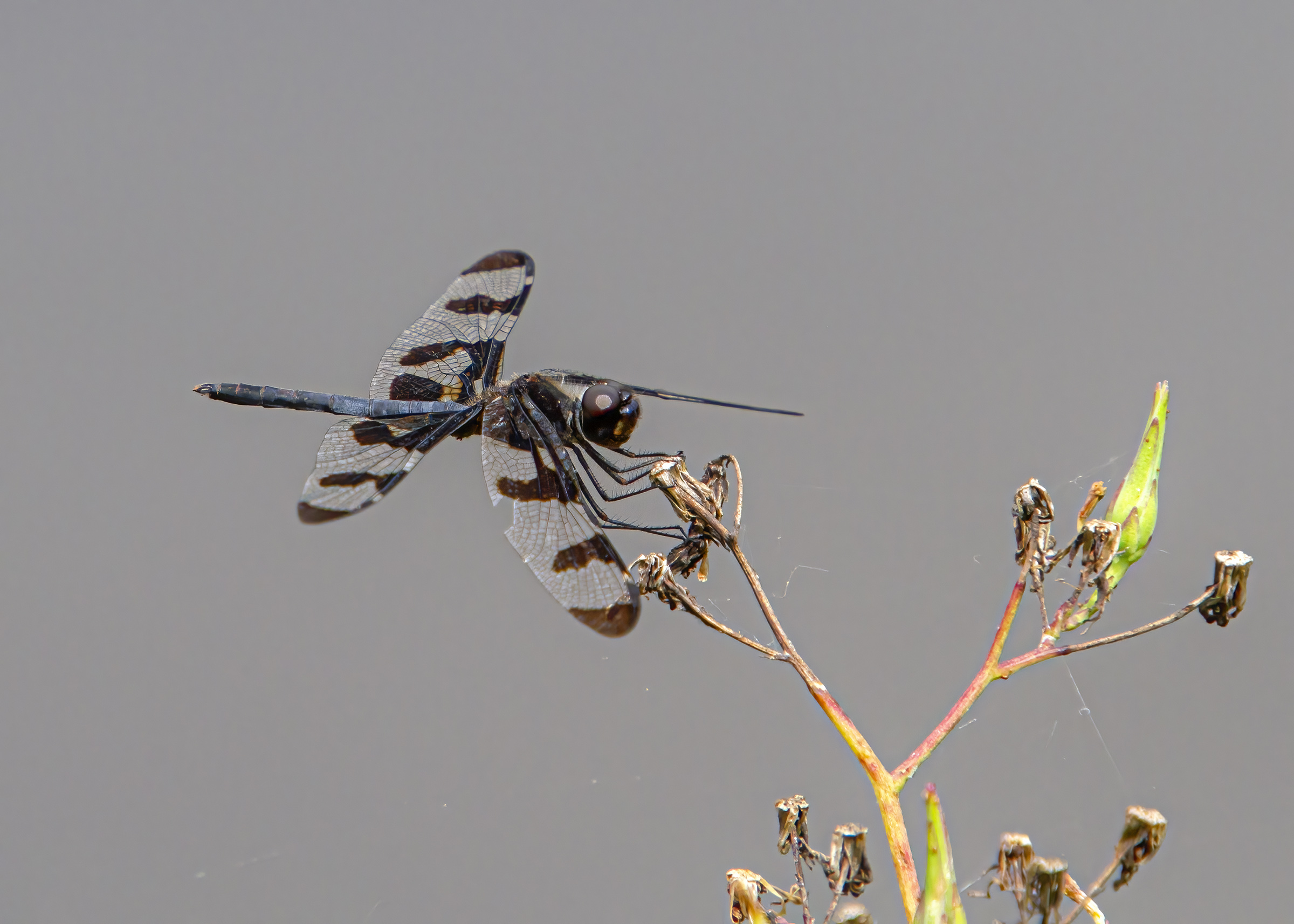
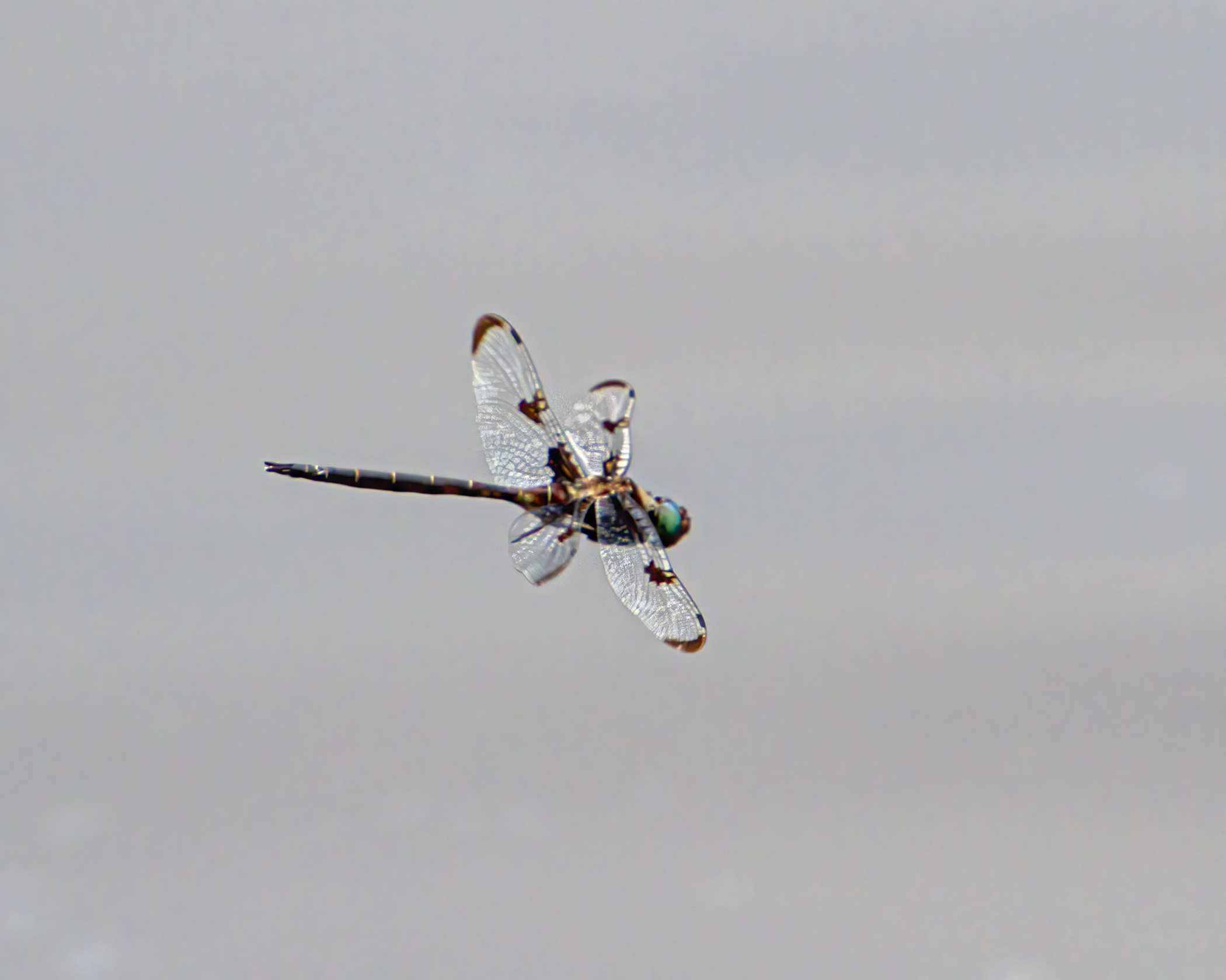
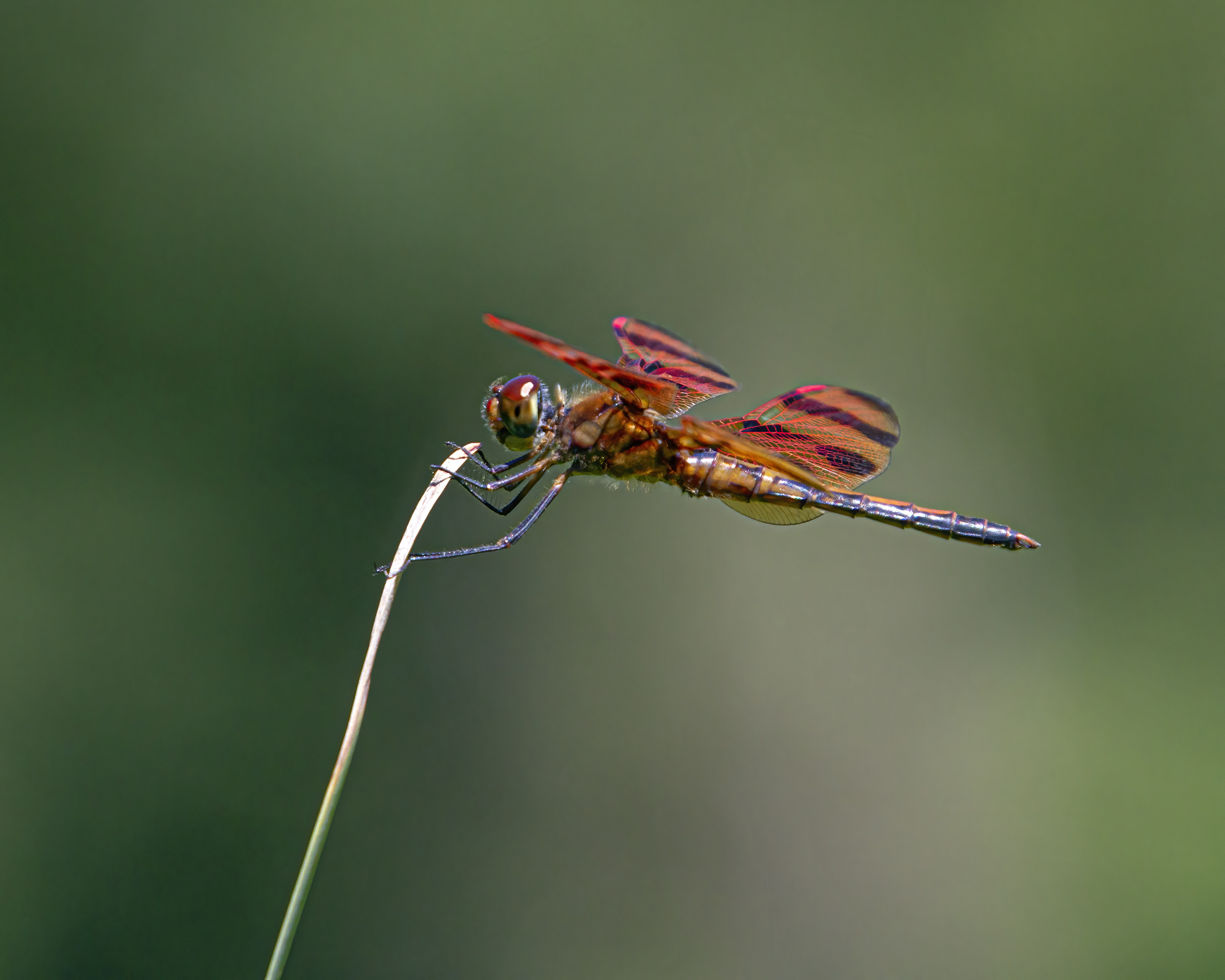
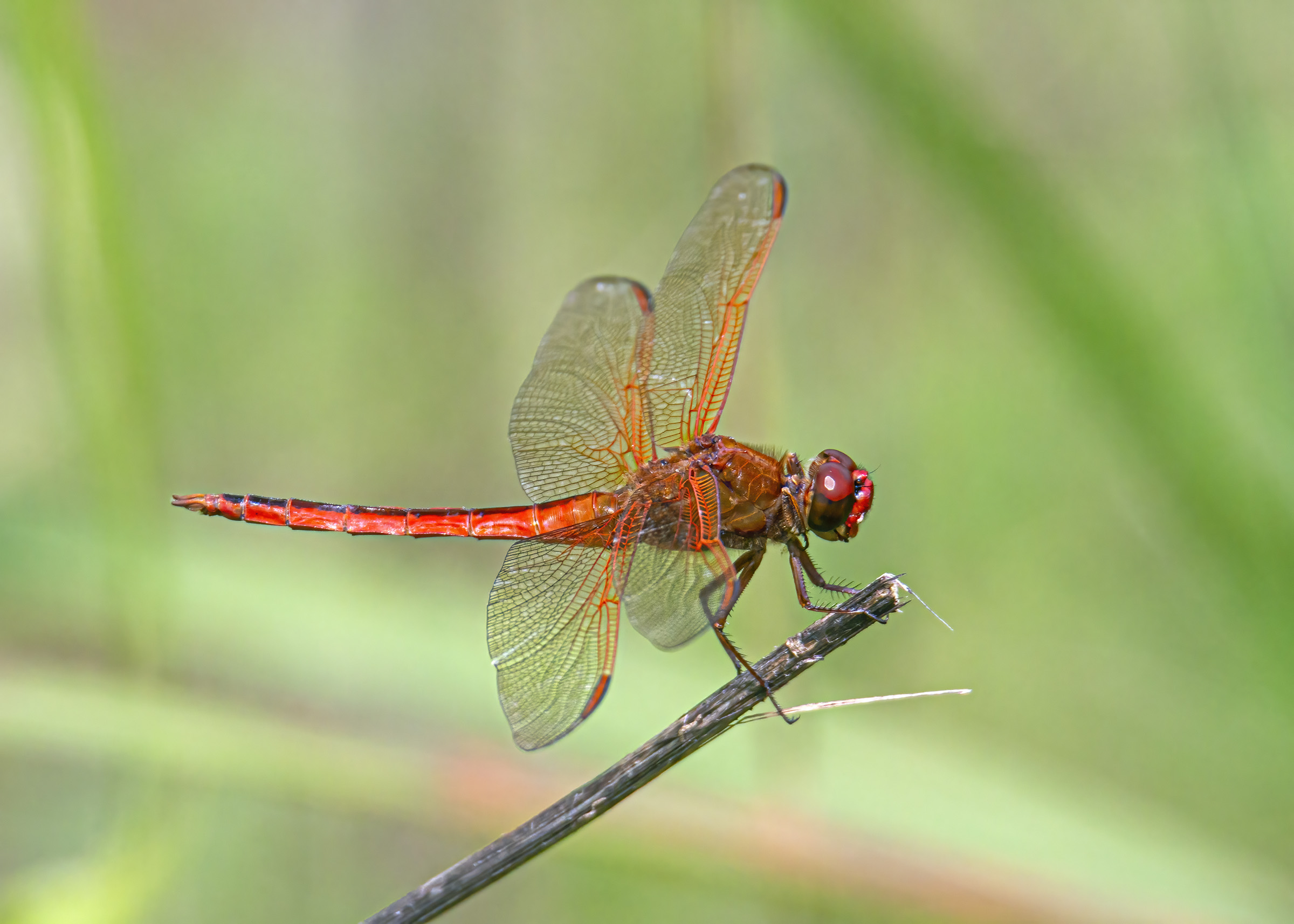
Photography allows for such a wide range of approaches to express myself creatively. I can be geeky and technical, as I usually am, striving to capture the minute details of my often tiny subjects or I can be as “artsy” as I choose, focusing on capturing and creating moods or feelings with the basic elements of light and darkness, of colors, lines, and shapes.

Professional photographer’s are sometimes advised to create a signature style and to stick with it. I am proudly an amateur, who captures images for love—the root word in “amateur”—and I defiantly refuse to stick to a single style. My photos and words help you to see the world through my eyes and hopefully my unbounded curiosity and enthusiasm about the world are evident in my postings. If you meet me in person, you’ll see that the “me” in my postings is not a social media persona—it is genuinely who I am.

Needham's Skimmer

© Michael Q. Powell. All rights reserved.

Read Full Post »

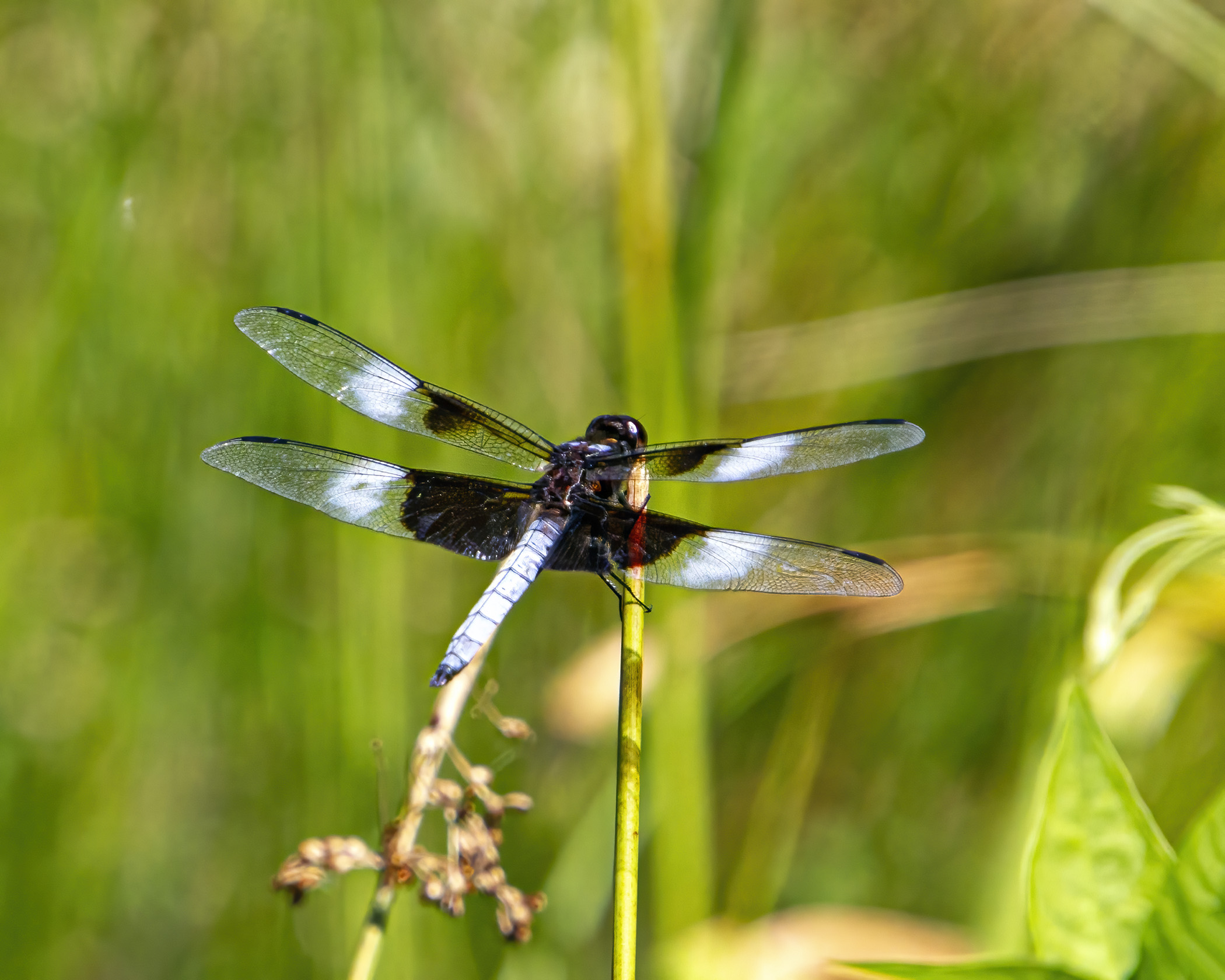
I love the distinctive wing markings on male Widow Skimmer dragonflies, one of only a few dragonfly species that I have encountered with both light and dark patches on their wings. I spotted this handsome male Widow Skimmer last week during a brief visit to Occoquan Regional Park in Lorton, Virginia.

One of the cool things about this dragonfly is that it looks almost like a butterfly when it is flying. With most dragonflies, the transparent wings seem to almost disappear when they are flying, but with the male Widow Skimmer, the wings are much more visible when the dragonfly is in motion.

Widow Skimmer

© Michael Q. Powell. All rights reserved.

Read Full Post »
I was thrilled on Wednesday to photograph my first Common Sanddragon dragonfly (Progomphus obscurus) of the year as he was enjoying a sandy beach near Wickford Park in Alexandria, Virginia. Unlike most dragonflies that prefer to perch on vegetation, Common Sanddragons are usually found perched flat on the sunny, sandy sections of shallow creeks.

According to the Dragonflies of Northern Virginia website, “Despite its name, this species is rare in Northern VA. In other parts of the country, where clean, sunny, shallow creeks with plenty of sandy/gravely banks are common, so too are Common Sanddragons. Our urban waterways are too influenced by stormwater, flowing fast and unchecked off impervious surfaces (roads, parking lots, roofs, etc.). This creates deeply incised, eroded banks and streambeds, with excess silt, unstable flows.”

This species is special to me because I was the first person to document its presence at Huntley Meadows Park, a county-run marshland park where I used to do a lot of my photography before it became overcrowded with photographers. Check out my June 2014 blog posting New dragonfly species in the park for the details of how I stumbled upon this “new” species.

Common Sanddragons are also special to me because in June 2016 I was lucky enough to observe and document the thirty minute metamorphosis of a water-dwelling nymph into a Common Sanddragon dragonfly. I had been collecting some discarded exoskeletons of already emerged dragonflies on a sandy bank of a stream when suddenly I felt one moving in my hand. I quickly placed it on the sand and was able to photograph the dragonfly as it was emerging. It was a remarkable encounter and I encourage you to check out my blog posting Metamorphosis of a dragonfly.

Nothing quite that exciting happened during my most recent encounter. I was able to capture some images of the dragonfly on various parts of the “beach” where I initially spotted him. He was pretty skittish and flew away multiple times, but kept returning to the same general are of the creek, sometimes choosing the sandy areas and sometimes opting for the more rocky spots. I particularly like the first photo that has a mixture of rocks and sand and has some green algae that matches the stunning eyes of this Common Sanddragon.


Common Sanddragon

Common Sanddragon

Common Sanddragon

© Michael Q. Powell. All rights reserved.

Read Full Post »

On Monday I was thrilled to spot this Prince Baskettail dragonfly (Epitheca cynosura) flying patrols over the small pond at Jackson Miles Abbott Wetland Refuge. Previously I had spotted Common Baskettails doing the same thing at this location—see my recent posting Common Baskettails in flight—but they seem to have been supplanted by the Prince Baskettails. How do you tell them apart? Although they are both part of the Emerald family, only Prince Baskettails have patterned wings, as you can see in these photos.

I really like the description of this species on the Dragonflies of Northern Virginia website:

“This sleek, elegant dragonfly could in fact be called King Baskettail, as it is the largest member of the Emerald family. There are seven families of dragonflies in the US–Emeralds are known for their glowing green eyes (hence the family name), and their endless, acrobatic flight. Like other members of this family, Prince Baskettails rarely land and can spend many hours in ceaseless flight. Look for this powerful flier making long, repeated, low patrols over open water habitats such as lakes, ponds, canals, and sluggish river sections.”

As a result of the repeated patrols, I was able to track the dragonfly as it flew by me and capture these images. The dragonfly did not get really close to the bank on which I was standing, so my autofocus would not detect my subject and I had to resort to focusing manually. I am pretty happy with the results and I encourage you to click on the images to see the beautiful markings on the body of this Prince Baskettail dragonfly.

Prince Baskettail

Prince Baskettail

Prince Baskettail

© Michael Q. Powell. All rights reserved.

Read Full Post »

Although Blue Dashers (Pachydiplax longipennis) are among the most common dragonflies in my area during the summer, they are very special to me. I remember visiting a photography show by my dear friend Cindy Dyer in 2012, I believe, and marveling at the photos that she had taken of Blue Dasher dragonflies. I decided that I wanted to be able to take photos like hers of these beautiful creatures.

I went out on numerous occasions and she taught me a lot about both the creative and technical sides of photography. She also served as a muse to me, encouraging me and gently pushing me along my path. She had a well-established blog and decided that I needed one too, so on 7 July 2012, she sat me down I created my blog. My first blog posting on the same day was entitled Blue Dasher dragonfly and it featured a male Blue Dasher dragonfly in the obelisk position, similar to the pose of the dragonfly in the final photo in today’s post. That’s one of the main reasons why Blue Dashers are so special to me.

I spotted these Blue Dashers, all of which are males, on Monday during a brief visit to Jackson Miles Abbott Wetland Refuge. Each of the three photos represents a different approach I used in attempting to capture the”feel” of my encounters with these dragonflies. The first image shows the details of colors and patterns of the body quite well. The second image gives you a sense of their environment. The final photo focuses on the obelisk pose that is believed to be a form of thermoregulation—by raising its abdomen the dragonfly reduces its exposure to the direct sunlight on hot days.

Some days I will post only a single photo, but most often I enjoy posting a small set of photos that complement each other and provide different perspectives on the living creatures that I love to photograph. Beauty is everywhere.


Blue Dasher

Blue Dasher

Blue Dasher

© Michael Q. Powell. All rights reserved.

Read Full Post »

During a recent visit to Jackson Miles Abbott Wetland Refuge I was delighted to spot a female Eastern Amberwing dragonfly (Perithemis tenera) as she was depositing her eggs in the vegetation in a small pond. Initially she would hover for a moment, as you can see in the first image, and then dip the tip of her abdomen straight downwards to release some eggs, as shown in the second image. The dragonfly repeated this process multiple times at this spot before moving on to other spots.

I have observed this process multiple times, but have rarely been able to photograph it. Eastern Amberwings are the smallest dragonflies in my area and are only about an inch (25 mm) in length, so they are a challenge to photograph. Fortunately when the female is ovipositing, she hovers a bit, which gives me time to focus on her. Sharp-eyed viewers may have noticed that the wings of this dragonfly have patterns, but are not amber in color—only male Eastern Amberwings have amber wings.

Eastern Amberwing

Eastern Amberwing

© Michael Q. Powell. All rights reserved.


Read Full Post »
« Newer Posts - Older Posts »