Feeds:
Posts
Comments

Archive for the ‘dragonfly’ Category

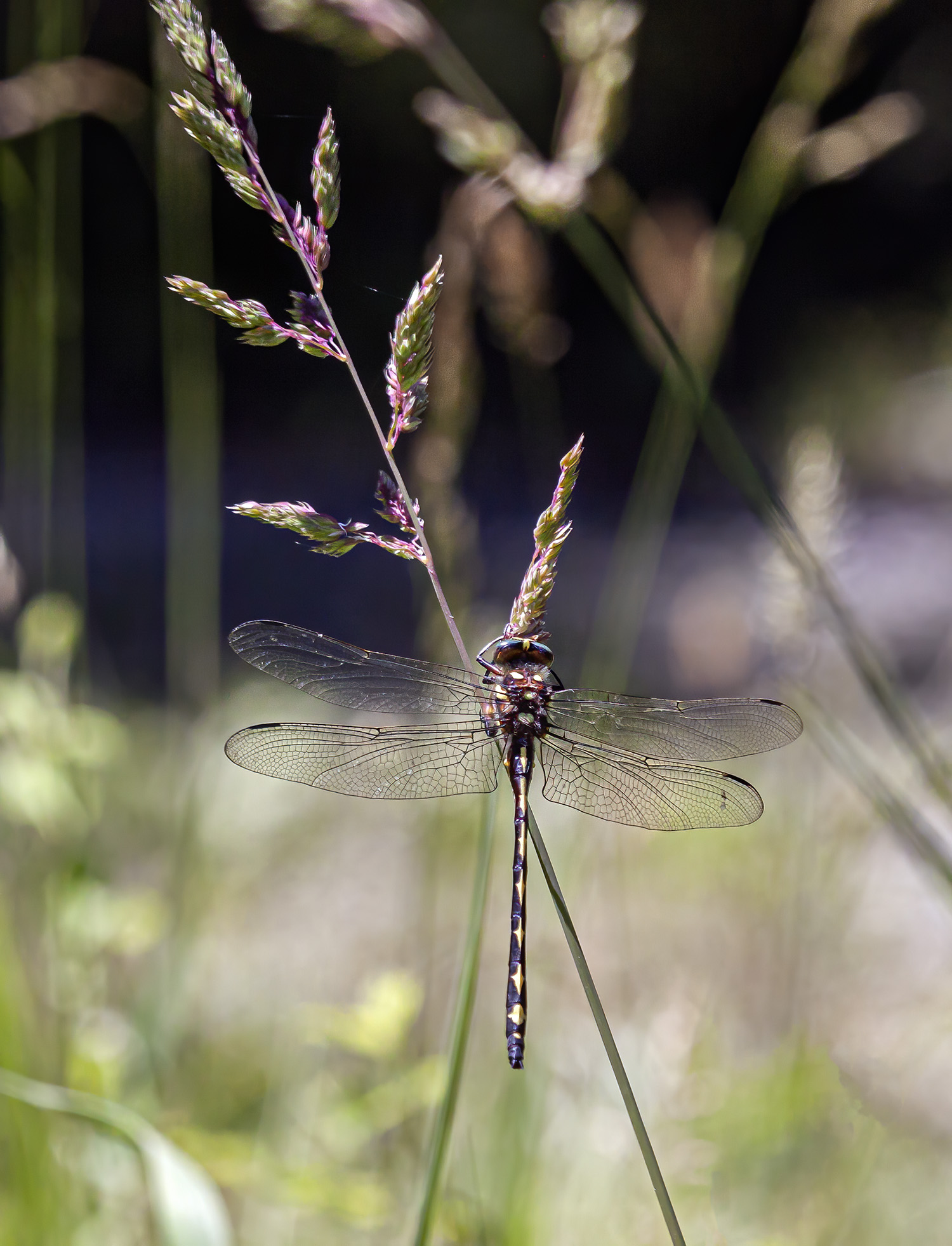
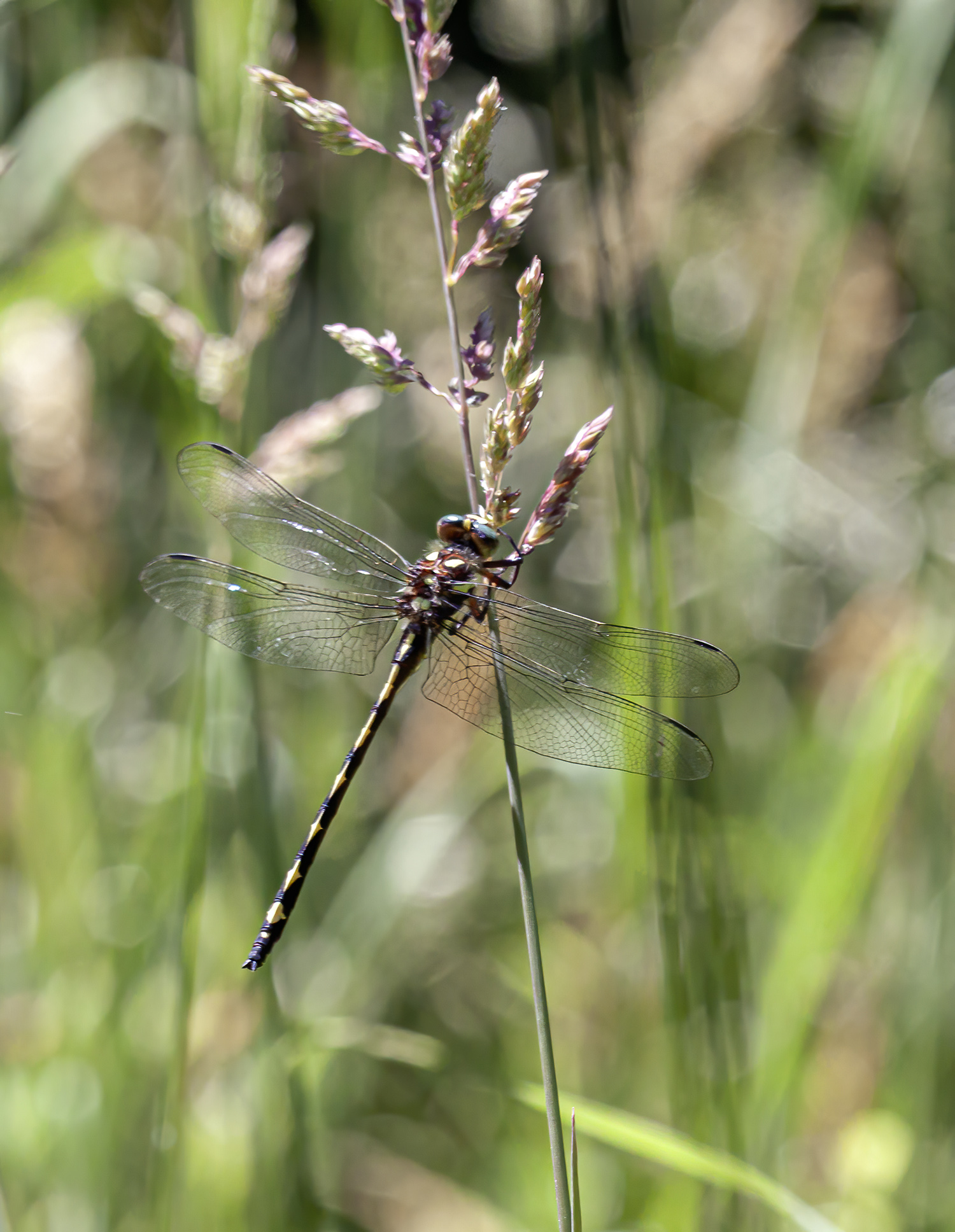
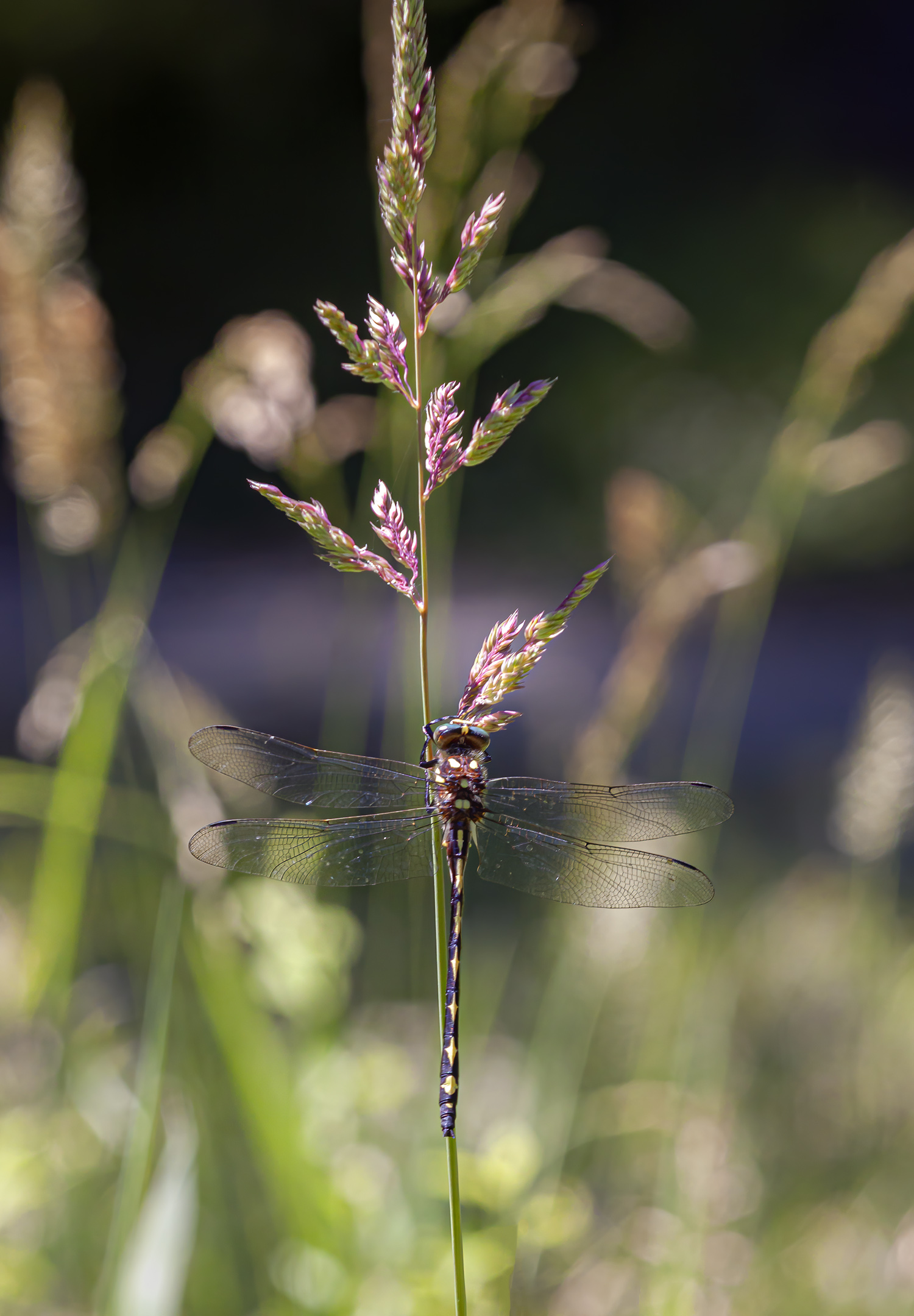
Gray Petaltail dragonflies (Tachopteryx thoreyi) are one of the friendliest and tamest dragonfly species that I have encountered. If you hang around with them often enough, they are almost certain to land on you, particularly if you are wearing gray clothing that somehow reminds them of a tree. It is a little hard not to flinch when one of these relatively large dragonflies (3 inches (75 mm) in length) perches on your head or shoulder.

Gray Petaltails will also let you get pretty close to them when they are perched on trees. Quite frequently, though, they are perched above eye level, so being that close does not allow you to capture close-up images. This past Saturday when I was hunting for dragonflies with my friend Walter Sanford, we spotted a Gray Petaltail perched on a fallen branch that was at knee level. After we had both taken some shots, Walter challenged me to see how close I could get to the dragonfly to capture images with my macro lens.

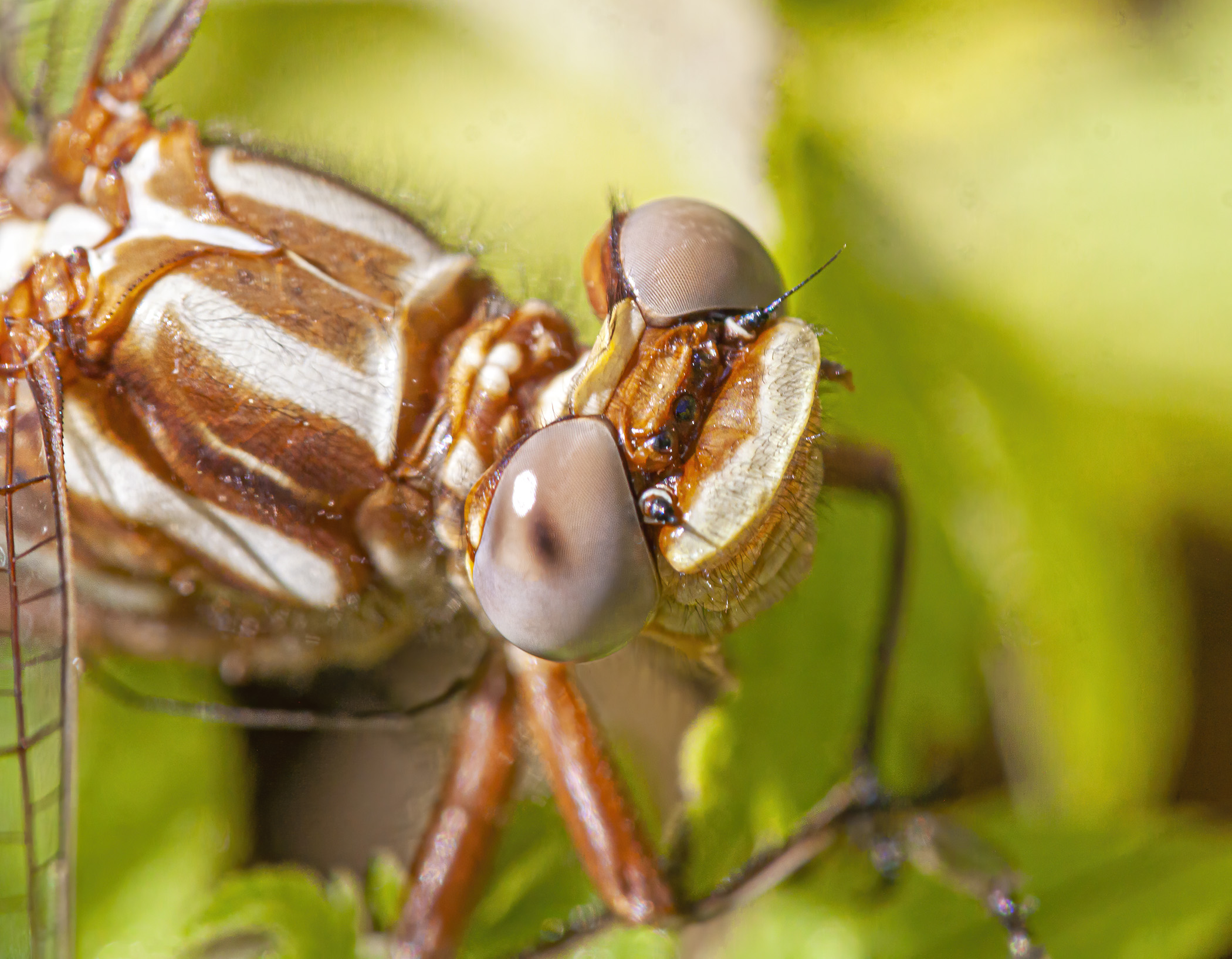
The first shot shows one of my attempts to get a head-on shot. It is very cool to look another creature straight in the eyes, but it is rare that one will permit you to do so, especially at such close range. It seemed clear to me that the dragonfly was quite aware of my presence, but did not consider me to be a threat.

I took the second shot from the side as I moved even closer to my subject. I was trying my best to capture some of the details of the dragonfly’s eye that was nearest to me and was not concerned that most of the rest of its head was out of focus. If you double-click on the image, you can see some of the ommatidia, the individual optical units that make up a dragonfly’s amazing multi-faceted compound eyes.

If you want to learn more about dragonfly eyes, check out a wonderful article at medium.com entitled  “30,000 Facets Give Dragonflies A Different Perspective: The Big Compound Eye In The Sky“. Scientists, for example, know that the thousands of ommatidia produce a mosaic of “pictures,” but how exactly this visual mosaic is integrated in the insect brain is still not known.

Gray Petaltail

Gray Petaltail

© Michael Q. Powell. All rights reserved.

Read Full Post »

Yesterday I posted a photo of a male Common Whitetail dragonfly that was hovering in the air to fight off rivals and protect the female with which he had mated as she deposited her eggs in the water, a practice know as hover guarding. In some dragonfly species, the male will remain attached to the female throughout the entire process of oviposition, a process known as contact guarding. In other dragonfly species, the female is entirely on her own to deposit the eggs.

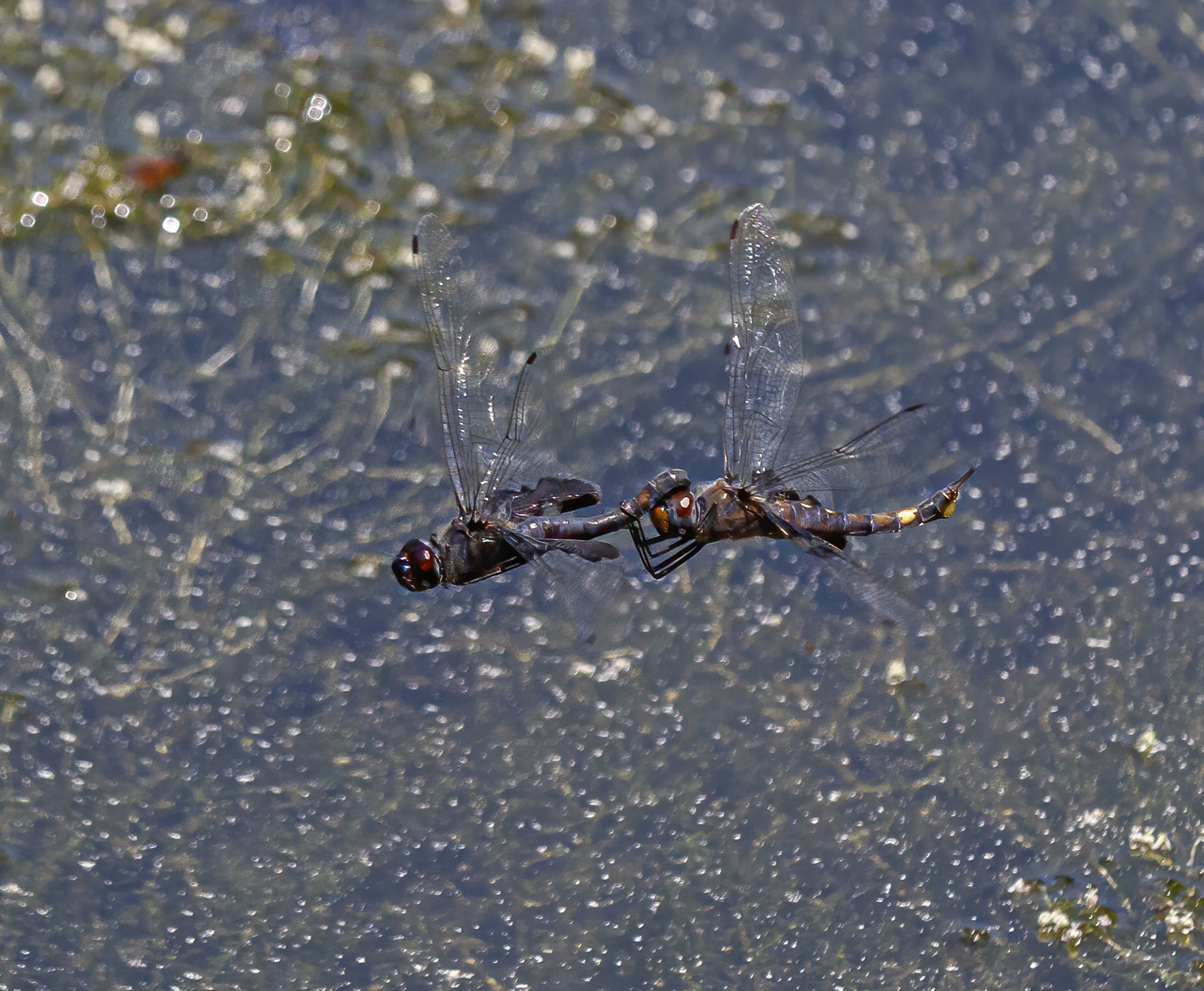
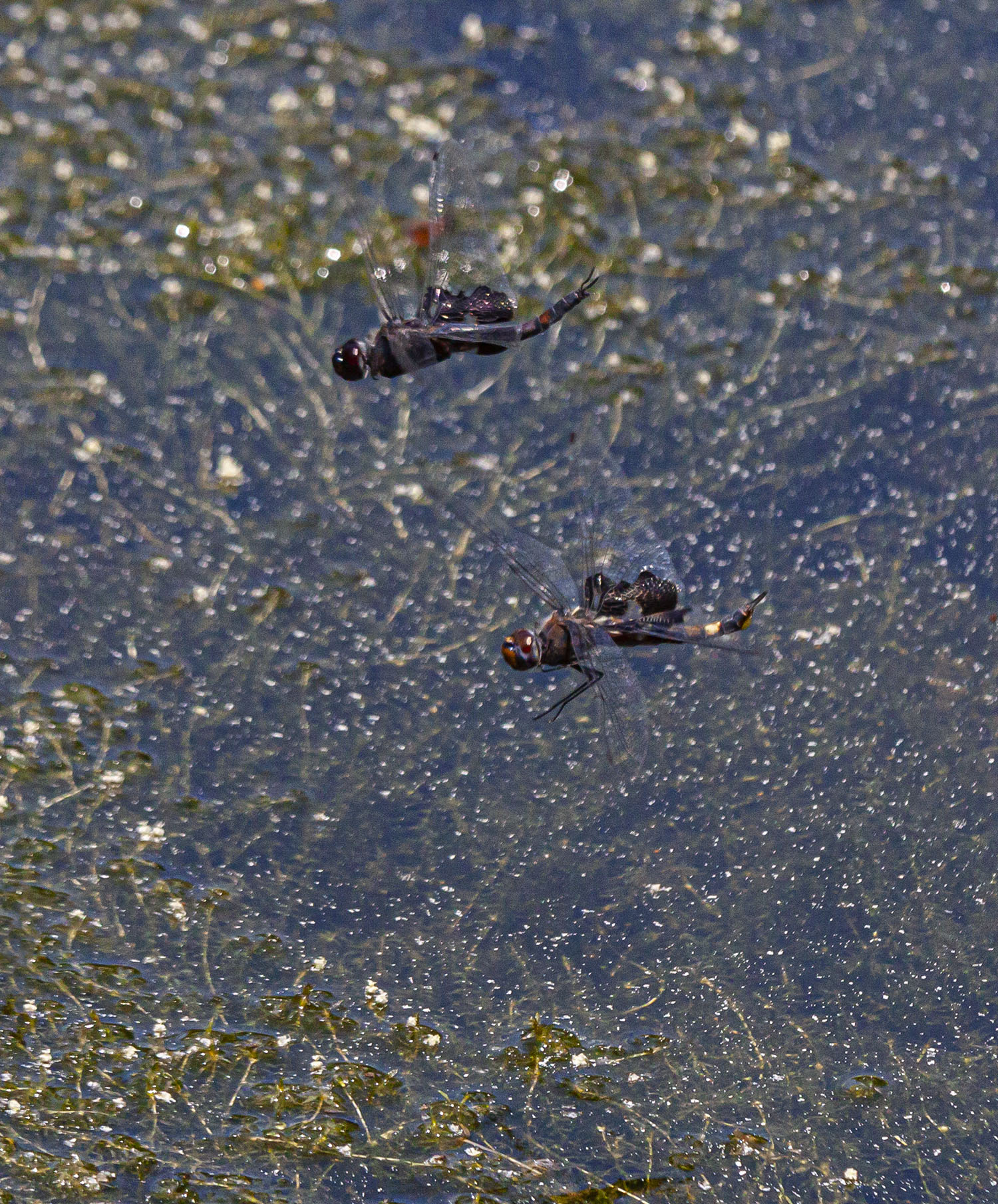
Black Saddlebags dragonflies (Tramea lacerata) use a different technique for guarding that I like to call “release and catch.” After mating is completed, the male and female Black Saddlebags fly together over the water in a tandem position, with the male in the front. At certain moments, for reasons that I cannot determine, the male releases the female and she drops down to the water and taps it to release one or more eggs. As she rises up out of the water, the male catches the female and reattaches the tip of his abdomen to the back of her head. They continue to fly in tandem and repeat this cycle multiple times.

On Saturday I was fortunate to be able to capture this sequence of shots that documents the entire process. Most of the time these dragonflies chose spots that were too far away for me to photograph them, but in this case they flew a bit closer to the edge of the pond where I was standing. As you probably suspect, I had to crop in a good amount to highlight the action for you, given that I was shooting with my trusty 180mm macro lens, which has a more limited reach than the lens that I use when photographing birds.

Black Saddlebags

Black Saddlebags

Black Saddlebags

Black Saddlebags

Black Saddlebags

© Michael Q. Powell. All rights reserved.

Read Full Post »

What is the most common dragonfly where you live? Over the last few weeks I have noticed more and more dragonflies at the ponds and marshes that I visit, an indication that many of the summer dragonfly species have emerged. Here in Northern Virginia, the most common dragonfly is probably the appropriately named Common Whitetail dragonfly (Plathemis lydia). This species is one of the first to appear in the spring and one of the last to disappear in the fall. They are easy to identify and are such habitat generalists that they can be found almost anywhere.

Many of you know that I will often spend lots of time looking for rare dragonfly species, but I try not to take for granted the more common ones that many people (and photographers) ignore. The first image shows a male Common Whitetail that was hovering for a moment as he kept watch over a female as she deposited eggs in the water.

The second image is a portrait of a male Common Whitetail as he perched on some vegetation overhanging the water. If you look at the angle at which I took the shot, you can probably guess that I was at risk of falling into the water when I took the shot. The final shot is a portrait of a beautiful female Common Whitetail. When they are young, males have a similar coloration on their bodies as the females, but the wing patterns are different. You can also tell the genders apart by looking at the tip of the abdomen (the “tail”) where the terminal appendages are sexually differentiated.

As is often the case for species saddled with the name “common,” Common Whitetail dragonflies are uncommonly beautiful.

Common Whitetail

Common Whitetail

Common Whitetail

© Michael Q. Powell. All rights reserved.
Read Full Post »

Every year I enjoy taking photos of dragonflies perching on a piece of rusted rebar that sticks a few inches out of the water of a small pond at Jackson Miles Abbott Wetland Refuge. I have seen dragonflies of several species use this particular perch, but photographically speaking my favorite is probably a male Eastern Amberwing dragonfly (Perithemis tenera) like the one in this photo from last Friday—the orange-rust colors of the dragonfly and its perch are complementary and soften what might otherwise be a jarring juxtaposition of the natural and man-made worlds.

You can’t see it really well, but there is a spider, probably a long-jawed spider, visible onthe lower portion of the rebar. I don’t know for sure if that spider could capture the dragonfly, but it is a potentially dangerous situation for the dragonfly and in the past I have photographed several dragonflies that had fallen prey to spiders.

Eastern Amberwing

© Michael Q. Powell. All rights reserved.
 

Read Full Post »

Last week I spotted my first Eastern Amberwing dragonflies (Perithemis tenera) of the season at Jackson Miles Abbott Wetland Refuge. These distinctively colored dragonflies are a frequent sight throughout the summer as they buzz about over the waters of ponds. Eastern Amberwings are small, even by dragonfly standards, with a total length of less than an inch (25 mm) and are considered to be a wasp mimic. According to Wikipedia, “The Eastern Amberwing dragonfly is one of the only types of dragonfly that actively mimics a wasp. The yellow and brown stripes on its abdomen encourage predators to stay away. When perched, they will wiggle their abdomen and wings in a wasp-like fashion to deter other animals from eating it.”

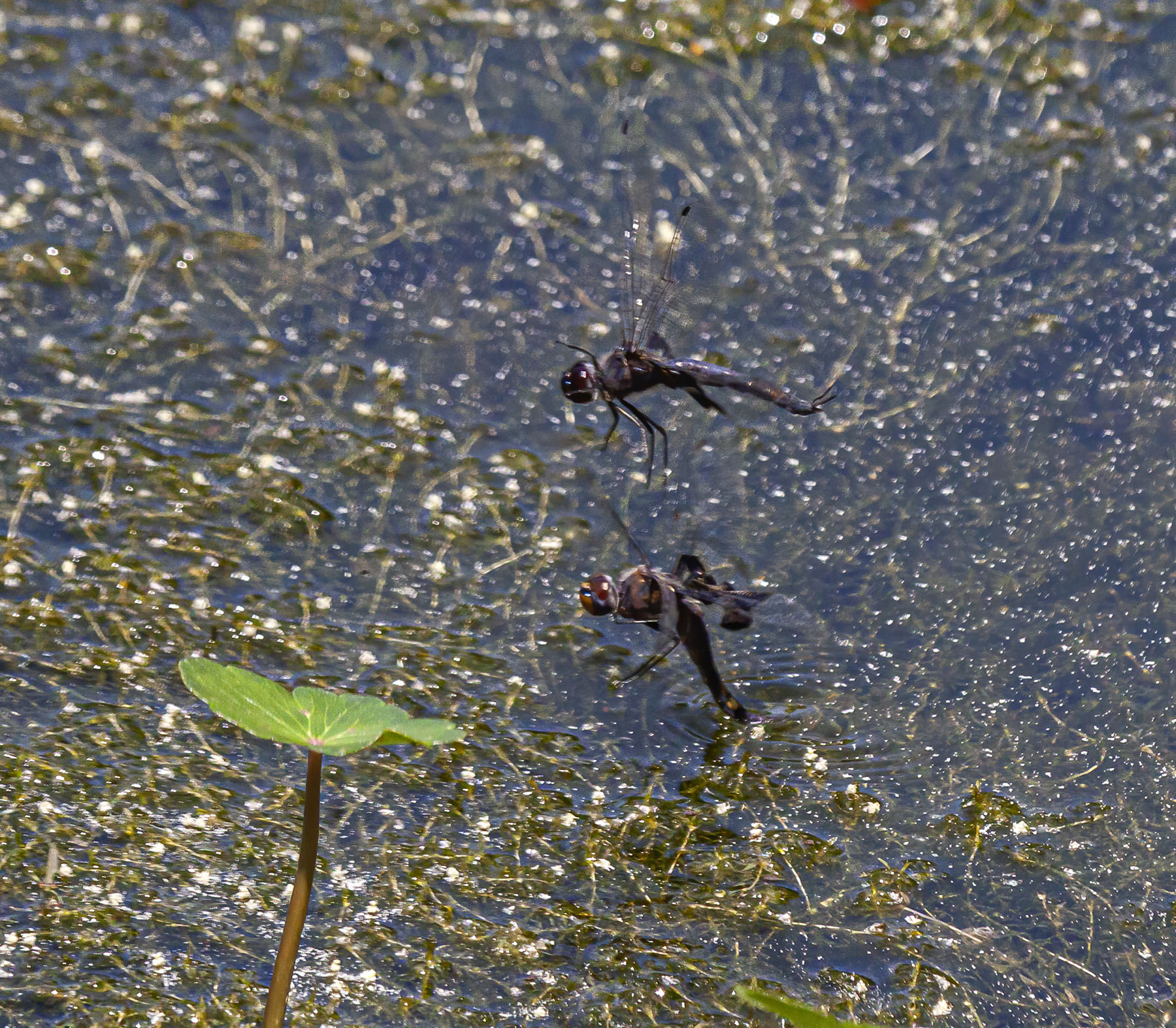
My second and third shots are portraits of perched male Eastern Amberwing dragonflies that were carefully composed and sharp, but my favorite image of the day is the dynamic shot of two dragonflies in flight. It may not be obvious what is going on in the photo, so let me explain. After mating, the female in the upper left corner is getting ready to deposit her eggs in the water, while the male in the lower right corner hovers in the air, ready to keep any rivals from interfering with the process.

Eastern Amberwing

Eastern Amberwing

Eastern Amberwing

© Michael Q. Powell. All rights reserved.
Read Full Post »

Dragonflies have been around for a long time, with fossils showing dragonfly-like creatures that date back to the Jurassic period, more than 150 million years ago. It is generally believed that dragonflies of the Petaluridae family, including the Gray Petaltail (Tachopteryx thoreyi) most closely resemble those ancient species.

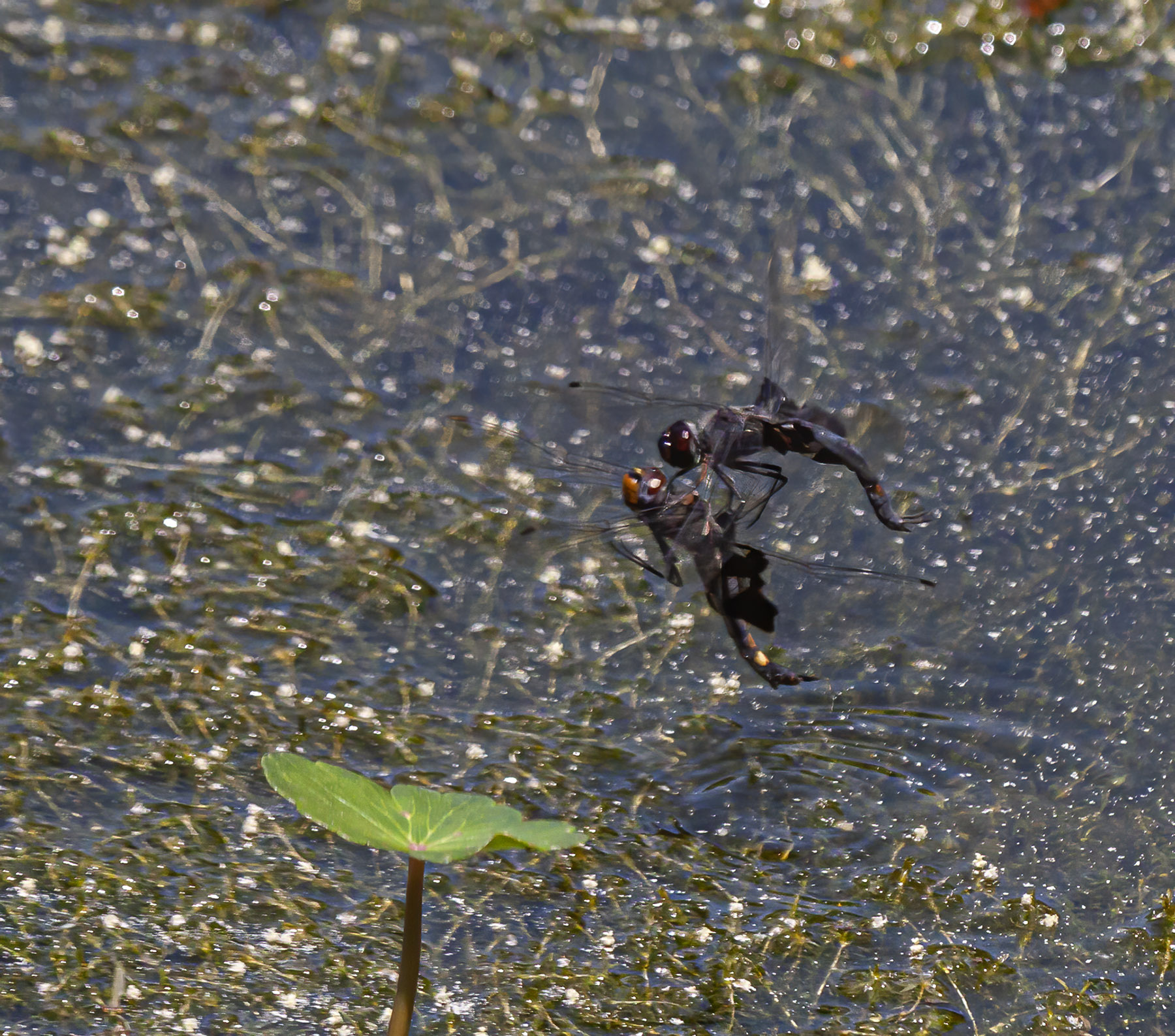
I was thrilled to find several Gray Petaltails this past Monday at Occoquan Regional Park, about 20 miles (32 km) from where I live. Most of the time Gray Petaltails perch vertically, flat against tree trunks at eye level or higher. The first photo is a little deceptive, because it makes it look like it is easy to spot these rather large dragonflies (three inches (76 mm) in length). However, in my experience it is rare to see a Gray Petaltail on a smooth-barked tree. When they perch on trees with coarser bark, these dragonflies almost melt into the trees. You get a hint of how this camouflage works in the second image below.

The final image shows a more typical scenario. From a distance, I saw a Gray Petaltail land on a tree. When I snapped the photo, though, I could not see the dragonfly, even though I knew exactly where it was. Can you see the Gray Petaltail in the final photo? I think that my post processing may have made it a little easier to spot, but the dull color and pattern of the dragonfly help it to blend in with the light and shadows on the tree trunk.

Gray Petaltail

Gray Petaltail

Gray Petaltail

© Michael Q. Powell. All rights reserved.
Read Full Post »

Most of you know that I love to photograph dragonflies. In a recent posting, I thought I was featuring photos of a Cobra Clubtail dragonfly, but it turns out that it was a Splendid Clubtail dragonfly. Here is Walter Sanford’s behind the scenes account of the initial misidentification of the dragonfly, with photos showing the differences between the two species, and how experts determined that we had made an error. His posting provides some fascinating insights into the complications sometimes associated with making an identification of a species (and why it is important to photograph subjects from multiple angles, if possible).

Be sure to click on the “View original post link” if you are using the WordPress Reader to read Walter’s complete posting on his blog or go directly to his posting by using this link.

waltersanford's avatarwalter sanford's photoblog

A Splendid Clubtail dragonfly (Gomphurus lineatifrons) was spotted during a photowalk with Michael Powell at an undisclosed location in Fairfax County, Virginia USA. Easy for me to say now. As it turns out, my initial identification was incorrect.

The first photo I took of the dragonfly — the record shot — is shown below. Notice the pattern of yellow lateral marks/spots on its abdomen. Also notice the yellow blotch on the side of abdominal segment eight (S8) extends onto the club flange, as shown in the full-size version of the image. (Thanks to Michael Boatwright, founder and administrator of the Virginia Odonata Facebook group, for sharing these key field marks for Splendid.)

26 MAY 2020 | Fairfax County, VA | Splendid Clubtail (female)

In contrast, the pattern of yellow lateral marks/spots on the abdomen of a female Cobra Clubtail (Gomphurus vastus), shown below, looks…

View original post 449 more words

Read Full Post »

On Tuesday I spotted this handsome male Spangled Skimmer dragonfly (Libellula cyanea) at Occoquan Regional Park. This species is fairly easy to identify because of the “spangles,” the little white patches on the leading edges of the wings, often referred to as stigmata or pterostigmata. Most other species have darker colored stigmata or none at all.

If you use the meteorological calendar, summer started on the first of June. For most of us, though, who use the astronomical calendar, we have a few weeks to wait until the summer begins on the 20th of June. No matter how you calculate summer, I have noticed a lot more of the summer dragonfly species during my most recent outings. If things work out well, June could be a great month for dragonfly hunting, with the possibility of seeing some of the remaining spring species, plus the new summer ones.

spangled skimmer

© Michael Q. Powell. All rights reserved.


Read Full Post »

On Tuesday morning I was thrilled to spot this female Umber Shadowdragon dragonfly (Neurocordulia obsoleta) while exploring in Fairfax County, Virginia with my friend and fellow dragonfly enthusiast Walter Sanford. We were searching for perched dragonflies in a sunlight field with vegetation that was often waist-high and occasionally as tall as I am. One of my aspirational goals is to be able to photograph a dragonfly covered with drops of morning dew.

I was attracted to a stalk of vegetation when I spotted a cicada perched at eye-level. As I was looking into the cicada’s bright red eyes, I noticed that there was an exuvia, the discarded exoskeleton from which a cicada had recently emerged, a bit lower on the plant.  I looked downward and was shocked to see a dragonfly hanging from the underside of the broad leafy stalk of the vegetation, using it like an umbrella to shade itself from the sun.

I did not know what kind of dragonfly it was, but suspecting that it might be something unusual, I stopped dead in my tracks and called out to my friend Walter. I bent a little bit from the knees and captured a few shots, but was afraid to move any more than that for fear of spooking the dragonfly—the wings are clipped in the photo because I was using my macro lens, which does not zoom, which meant I would have had to back up to capture a shot of the entire dragonfly. Unfortunately, as Walter was approaching, the dragonfly took off, spooked perhaps by my efforts to point out its location, and Walter was not able to get a shot of it.

When I got home, I was able to identify the dragonfly as an Umber Shadowdragon, a species that I had never seen before and about which I knew very little. Kevin Munroe, who created the wonderful website Dragonflies of Northern Virginia, described this species in almost poetic language: “The name alone creates images of a shadowy creature, mysterious and unique. It also sent me to a dictionary to look up “umber”. It turns out to be a clay pigment containing iron oxides that have an attractive red to golden brown coloring, originally found in the hills of Umbria, Italy. Even better, “umber” comes from the Latin word umbra, which means shadow. So the name means, Shadow Shadowdragon. This species certainly lives up to its enigmatic name – it does in fact only show itself among shadows, waiting to leave its high, leafy haunts until after 8:00 PM (2000 hours) on summer evenings. It can even be as late as 8:30 before they start their river patrols. Listen for that brief period when the day-singing cicada and nighttime katydids are both calling; the changing of the guard between light and dark. That’s when shadowdragons make their appearance and will often fly into early night, cruising fast and low, just above the river’s surface.”

I feel like I was really, really lucky to spot this dragonfly in broad daylight. The nocturnal habits of this species are such that most sources indicate that it is not even known if this species is rare or if it is common. If you are interested in learning more fascinating information about this species, be sure to check out this page of the website referenced above. I also highly recommend that you double click on the image to get a better look at the amazing details of this beautiful dragonfly, including the rows of little golden dots on the leading edges of its wings.

Umber Shadowdragon

© Michael Q. Powell. All rights reserved.

Read Full Post »

Generally when I spot a Black Saddlebags dragonfly (Tramea lacerata), it is flying. The distinctive dark blotches, which some scientist decided look like saddlebags, are visible even when the dragonfly is in the air. Some dragonflies spend most of their time perching, while others spend most of their time flying—the Black Saddlebags is in the latter category. I was therefore quite excited when I saw this one land in the low vegetation last Thursday at Occoquan Regional Park.

When a subject is this close to the ground, the background is almost inevitably going to be cluttered. In an effort to soften the potential distraction, I opened up the aperture to f/6.3 and tried to shoot almost directly down on the subject. I like the resulting image that has most of the dragonfly in sharp focus and most of the background a bit blurry.


Black Saddlebags

© Michael Q. Powell. All rights reserved.

Read Full Post »

On Tuesday I spotted this beautiful female Calico Pennant dragonfly (Celithemis elisa) during a visit to Occoquan Bay National Wildlife Refuge.  I always love to see the wonderfully patterned wings of this dragonfly species and the first shot provides a good view of the wing details, especially if you click on the image to enlarge it.

In the second image, I focused primarily on the dragonfly’s head and body and the wings are mostly out of focus. I love the way that you can see the dragonfly’s tiny feet and the tenuous grasp they have on the fuzzy plant stem from which the dragonfly is hanging.

Calico Pennant

calico pennant

© Michael Q. Powell. All rights reserved.

Read Full Post »

I wasn’t sure if Uhler’s Sundragon dragonflies (Helocordulia uhleri) would still be around when I set out exploring in Prince William County earlier this month. This species of dragonfly is one of the first to appear in the spring and generally is flying for only a month or so. I had spotted several females on the third of April—see my posting Female Uhler’s Sundragons for details and photos—so I knew that the clock was ticking.

I scoured all of the locations where I had seen them in the past and was about to give up hope when some movement low in the vegetation caught my eye. I was excited to see that it was a Uhler’s Sundragon, my target species. As I tried to control my racing heart and slow down my breathing, I maneuvered into position and was able to capture this image of a handsome male Uhler’s Sundragon. As it turned out,  this dragonfly was the only one of its species that I would see that day and I have not seen one since. In this case, though, one was more than enough.

Uhler's Sundragon

© Michael Q. Powell. All rights reserved.

Read Full Post »

On Friday, temperatures in my area soared to 84 degrees (29 degrees C), which I thought might trigger the emergence of new dragonflies. However, when I arrived at Jackson Miles Abbott Wetland Refuge, a nearby park with a small pond, the only dragonflies that I could find were a half-dozen Common Baskettail dragonflies (Epitheca cynosura) patrolling over various parts of the pond.

I walked around the perimeter of the pond multiple times, searching in vain in the undergrowth and in the vegetation at water’s edge. Periodically I stopped and attempted to photograph the dragonflies in flight. Their flight paths were somewhat predictable, which gave me hope, but the dragonflies varied their distances from the shore and changed their altitude unexpectedly.

Here are a few of my favorite shots from the photo excursion. As a frame of reference, Common Baskettail dragonflies are about 1.6 inches (41 mm) in length, so I think you can appreciate the challenge of photographing one on the fly.

Common Baskettail

Common Baskettail

Common Baskettail

© Michael Q. Powell. All rights reserved.

Read Full Post »

During a recent dragonfly hunting trip with my friend and fellow dragonfly enthusiast Walter Sanford, I was thrilled when we stumbled upon several Springtime Darner dragonflies (Basiaeschna janata). As their name suggests, they are in flight early in the dragonfly season and are gone well before many of the summer dragonfly species arrive.

I first spotted one flying low over the vegetation in an overgrown field. It dropped down into the vegetation, but I was fortunately to be able to find where it was perched. As you can see in the first photo, Springtime Darners perch vertically, making it hard to see them amid all of the nearby stalks and stems. The female in the first photo was relatively cooperative and I was able to position myself well enough to have most of her body in focus. I encourage you to click on the image to see all of the wonderful details and colors of this beautiful dragonfly.

Although we had several more encounters with Springtimes Darners, all of those individuals were very skittish and it was tough to get any good shots. I included the second shot below because it shows really well the body of a male Springtime Darner, although the head is a bit out of focus because of the way he was perched.

Walter also did a blog posting on our encounter with these beautiful dragonflies. Be sure to check it out at this link and you will find more information about this dragonfly species and his photos and “take” on our dragonfly adventure.


Springtime Darner

Springtime Darner

© Michael Q. Powell. All rights reserved.

Read Full Post »

On Thursday I was excited to spot these two Stream Cruiser dragonflies (Didymops transversa), one female and one male, in a sunny area adjacent to a creek that I was exploring in Prince William County, Virginia. Authorities have closed the park that I was visiting to vehicular traffic, so I had to hike in to reach my target area, which took over an hour and a half each way.

It was the end of a long and tiring day and I had already begun the trek back to my car. By 4:00 in the afternoon, much of the trail along the creek was in the shade. Periodically, though, I would pass patches of sunlit vegetation and I stopped to explore them, knowing that many dragonflies like to bask in the sunlight. I was searching one such spot when my eyes detected a dragonfly in flight. I was able to track the dragonfly in the air and to see it land. The male Stream Cruiser (shown in the second photo below) perched at an odd angle on some low-hanging vegetation, but I managed to get a shot of it before it took off again.

I decided to stay in that spot and wait and after a while another dragonfly flew by, landing this time much higher in the vegetation. Initially I thought that it might be the same dragonfly that I had already photographed, but when I got closer, I could see that the second one (shown in the first photo below) was a female. The female Stream Cruiser chose to perch about chest-high, so I was able to get a much better angle for this shot than for the first one and compose the image more carefully.

This experience is a good reminder for me to stay alert at all times when I have my camera in my hands until I am actually back to my car. I had not even been thinking of Stream Cruisers, a species that I have seen only a couple of times previously, when I decided to make this trip. However, I was ready when this opportunity unexpectedly presented itself to me.

I cringe a little sometimes when well-meaning folks see my photos and say, “You are so lucky.” Yes, I have more than my share of good fortune, but it often takes hours and hours of effort for a decisive moment to arrive and even then I have to be quick enough and skillful enough to get a shot. Rather than going to the trouble to explain all of that, though, I will usually nod my head and agree that I was lucky to get my shots.


Stream Cruiser

Stream Cruiser

© Michael Q. Powell. All rights reserved.


Read Full Post »

How close can you get to a dragonfly when trying to photograph it? As with most things in life, the vexing answer is that  “it depends.” In my experience, some dragonfly species tend to be more skittish than others and will fly away for good at the first indication of your presence. Other species will fly away, but return to the same perch a short time later. Occasionally I will encounter a dragonfly that remains in place and permits me to get as close as I want, although I still have to pay close attention to where I place my feet, so that I do not disturb its perch, and to the location of the sun, so that I do not cast my shadow on the dragonfly.

Last Saturday I went hunting for dragonflies with my friend and fellow dragonfly enthusiast Walter Sanford at a remote location in Fairfax County, Virginia, the county in which we live. Under normal circumstances, we probably would have made multiple excursions together by this time of the year, but this was our first trip of the season.

The first dragonfly that we encountered was a female Ashy Clubtail dragonfly (Phanogomphus lividus) and she proved to be remarkably cooperative. Why? I think that the dragonfly was a little distracted because she was in the process of consuming a cranefly. In some of my photos I could see remnants of the legs, wings, and other body parts of the victim.

The three photos show in inverse chronological order how I started out photographing the entire body of the dragonfly and them moved in closer and closer. Each of shows some pretty remarkable details of the dragonfly’s anatomy and it is definitely worth clicking on them to get a better look. For example, the third photo shows the beautiful coloration of the body; the second shot shows the spines on the legs and the hook-like tips of the feet; and the first image draws your attention to the dragonfly’s amazing compound eyes.

I took all of the photos below handheld with my Canon 50D DSLR and Tamron 180mm macro lens. My partner in this adventure used totally different gear and his approach to capturing images was definitely not the same as mine. In the past Walter and I have done companion postings on our respective blogs when we have taken photos together and we decided to continue the tradition.

Walter and I have different backgrounds, writing styles, and shooting styles and it has always been fascinating to contrast our “takes.” Even though we were shooting the same subject under the same conditions, I can almost guarantee that the images we post will be quite different. Be sure to check out Walter’s blog at waltersanford.wordpress.com for all kinds of wonderful postings, mostly about dragonflies.

I will include a link to his posting on our encounter with this Ashy Clubtail dragonfly after I publish this posting—I have not yet seen how he described our adventures.

UPDATE: Here, as promised, is a link to Walter’s posting about our encounter with this female Ashy Clubtail dragonfly.

Ashy Clubtail

Ashy Clubtail

Ashy Clubtail

© Michael Q. Powell. All rights reserved.


Read Full Post »

At this time of the year there are still so few dragonflies around that I will try to photograph almost every single one that I see. Sometimes that involves photographing them when they are flying, as I showed in a posting earlier today. At other times, I am forced to shoot them when they are a long way away, as was this case with the male Common Whitetail dragonfly (Plathemis lydia) in the photo below.

I had already made one loop around Occoquan Bay National Wildlife Refuge looking primarily for insects and decided to switch to my telephoto zoom lens and focus on looking for birds during a second loop. When I was walking past a small pond, however, I spotted the dragonfly flying over the water. I could tell that it was a Common Whitetail, a species that perches fairly often, so I decided to see if it would land.

Eventually the dragonfly perched atop some thick vegetation not far from the water’s edge. Unfortunately the area between the two of us was marshy and there was no way that I could get any closer. Even with the lens cranked out to its longest length (600mm), the dragonfly filled only a small portion of the frame.

I decided to try to treat the shot like a landscape and include the water of the pond in the background and the curling stem on which the dragonfly was perched in the foreground. I am pretty happy with the way the shot turned out, a kind of environmental portrait of the Common Whitetail dragonfly.

Common Whitetail

© Michael Q. Powell. All rights reserved.


Read Full Post »

Do you like to challenge yourself? I like to try to photograph moving subjects. It is not easy, even when it is a large bird like a Great Blue Heron (Ardea herodias), but it is even more difficult when it is a small dragonfly, like this Common Baskettail (Epitheca cynosura) that I photographed last Wednesday at Ococoquan Bay National Wildlife Refuge.

The dragonfly was patrolling over a small pond and at certain moments would hover for a split second before continuing. It took quite a few attempts, but eventually I was able to capture this image, which is cropped from a much larger image that came out of my camera.

Different photographers use different techniques to capture shots of flying dragonflies. I personally use my 180mm macro lens and focus manually, because the autofocus on the lens is notoriously slow and has trouble achieving focus with such a small subject. Every year I try this same challenge, often multiple times, so with a little luck and a lot of patience and persistence, I hope to be able to do more postings of dragonflies in flight in the upcoming months.

Common Baskettail

© Michael Q. Powell. All rights reserved.

Read Full Post »

One of the earliest dragonflies to emerge in the spring in our area is the Blue Corporal (Ladona deplanata). Adult males are bluish in color and both the male and the female have two white stripes on their thoraxes in an area that you might think of as their shoulders. In the military of the United States, the rank insignia for corporals is two stripes, which accounts for that portion of the common name for the species.

The dragonfly in the first photo is a female Blue Corporal. She will remain that tan color for her entire life. If you look closely at the very tip of her abdomen (the “tail”) and compare it with the same area of the dragonfly in the second image, you can probably see some physiological differences. This is often the best way to tell the gender of a dragonfly.

The dragonfly in the second photo is a newly emerged male Blue Corporal, a stage known as teneral. During this stage, the wings are very clear and shiny and are very fragile. As the male matures, he will gradually turn bluish in color. His corporal stripes may turn light blue and eventually fade away.

You probably noted that the male Blue Corporal is perched flat on the ground—this is the most frequent perching position for this species. I was a little surprised that the female in the first photo was perching vertically a few inches above the ground, but I am not complaining, because it gave me a better chance to get a photo of her wings.

It is still a bit early in the season for dragonflies, so I was really happy to spot these two on Wednesday at Occoquan Bay National Wildlife Refuge. The refuge is still open and there were a number of other cars in the parking lot when I arrived. All of the other visitors, though, seemed to be either birding or walking in other areas of the refuge, leaving me the chance to muck about at the edge of a small pond all by myself, safely distanced from human contact.

Blue Corporal

Blue Corporal

© Michael Q. Powell. All rights reserved.


Read Full Post »

When they are mating, many dragonflies adopt a very conspicuous heart-shaped “wheel” position, like this pair of Common Green Darner dragonflies (Anax junius) that I spotted last week at Occoquan Bay National Wildlife Refuge. The process begins when the male, in this case the dragonfly with the blue abdomen, grabs a female by the back of her neck with claspers at the end of his abdomen that fit into species-specific grooves in the female. The two dragonflies are then hooked together, often for extended periods of time.

I couldn’t help but notice the sharp thorns on the branch that these dragonflies had selected for their encounter. Yikes—that is living life on the edge. After I took some photos, feeling a little like a voyeur, I decided to give the couple some privacy. When I circled back a short time time later, the dragonflies were gone, presumably having done their part to perpetuate the species.

common green darner

© Michael Q. Powell. All rights reserved.


Read Full Post »

It is still really early in the dragonfly season in my area, so each one that I am fortunate enough to spot is special to me. I was therefore thrilled to photograph this male Common Baskettail dragonfly (Epitheca cynosura) on Monday as it was hanging vertically from the leaves of a small tree at Occoquan Bay National Wildlife Refuge. If you double-click on the image, you can see the dragonfly’s tiny feet with which it is clinging to the leaf.

Most of the times in the past when I have seen members of this species, they have been flying out of reach of my camera. According to the Dragonflies of Northern Virginia website, Common Baskettails are hard to spot because they are small with mostly clear wings and spend much of their time hovering high over clearings, making them “probably our least seen “common” dragonfly.”

Common Baskettail

© Michael Q. Powell. All rights reserved.


Read Full Post »

I felt like I had hit the jackpot last Friday when I finally spotted several Uhler’s Sundragon dragonflies (Helocordulia uhleri) while exploring a stream in Prince William County, Virginia. Uhler’s Sundragons are a scarce and seldom seen dragonfly species with a brief and early flight period. There is a very active Virginia dragonfly group in Facebook that posts sightings and photos and it appears that my sightings of this species were the first in our state for 2020.

Last year I was able to do some reconnaissance of an area where this species had been spotted in previous years using information shared with me by fellow dragonfly fanatic and blogger Walter Sanford. Eventually I found and photographed some Uhler’s Sanddragons and he and I were able to spot them again several times.

This species generally is found in a specific type of habitat—”Clean, sandy or gravely forest streams with a mix of riffles and pools,” according to the excellent Dragonflies of Northern Virginia website. So Friday I scoured the locations where had spotted them last year and it was in one such location that I spotted the Ashy Clubtail and Common Green Darner that I featured recently in my posting First dragonflies of the season. I looked for Uhler’s Sundragons there but came up empty-handed.

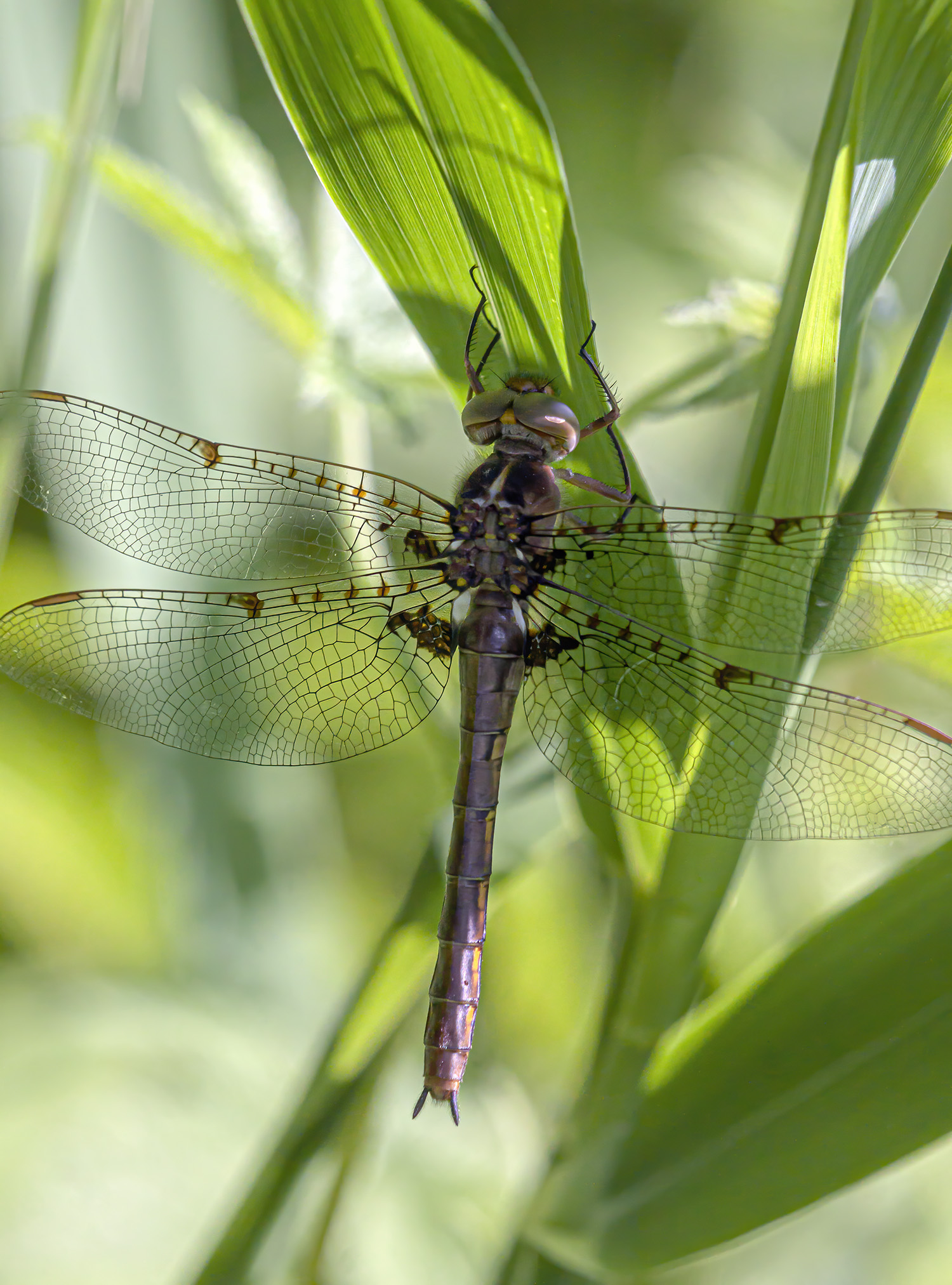
It was at a second spot that I finally spotted one as it flew through the air and landed on a piece of vegetation. There is not much flying this early in the season and I could tell from the way that it perched that it was probably my target species. I think I was shaking a little bit and certainly my heart rate had accelerated, but I managed to get a shot of that one (the middle shot below), before it flew away. A few minutes later, I had another spotting and captured the last shot below—it might have been the same dragonfly or a different one.

Part of my long walk back took me along another stretch of the same stream and I was absolutely thrilled when I spotted yet another Uhler’s Sundragon and captured my favorite shot of the day, the first one below. It turns out that all of the Uhler’s Sundragons that I photographed were females. I am not sure if the males were all out patrolling or were simply in other locations.

Many of the locations where I might normally search for dragonflies are closed and some of the others are potentially crowded, so I am not willing to go there. As you can see from my recent postings, I am staying really close to home most of the time, with trips like this one to remote locations being a rare exception.

Uhler's Sundragon

Uhler's Sundragon

Uhler's Sundragon

© Michael Q. Powell. All rights reserved.
Read Full Post »

Last Friday I photographed my first dragonflies of the spring, a male Common Green Darner (Anax junius) and a female Ashy Clubtail (Phanogomphus lividus). The Common Green Darner is probably a migratory dragonfly that is just passing through as it heads north—we do have local-born members of this species, but it is too early for them to have emerged.

The Ashy Clubtail, which was actually the first dragonfly that I photographed, almost certainly emerged locally. When a dragonfly emerges, its wings are really shiny and the wings of this Ashy Clubtail were definitely sparkling in the sunlight. According to the local flight calendar, the Ashy Clubtail is one of the earliest dragonflies in our area to emerge, but I have never seen one this early before.

As you can see, I captured the images of both of these dragonflies when they were perched flat on the ground. There were dry leaves all around, which made a stealthy approach almost impossible and focusing on the dragonfly was a bit of a challenge.

Common Green Darner

Ashy Clubtail

© Michael Q. Powell. All rights reserved.

Read Full Post »

It is not yet dragonfly season, so I have no new photos of these amazing aerial acrobats. However, when I was searching for some other photos yesterday, I came across these images that I had worked up last May and had never posted. I sometimes get so focused on getting new photos that I forget about the older ones, which is why I usually try to do postings as soon as I can after a sighting.

Arrowhead Spiketails (Cordulegaster obliqua) are pretty uncommon in my area, but I was familiar with their appearance because I had seen one only a few days earlier when exploring a different location with fellow blogger and dragonfly enthusiast Walter Sanford (for more information on the earlier sighting, see my May 27, 2019 posting Female Arrowhead Spiketail dragonfly)

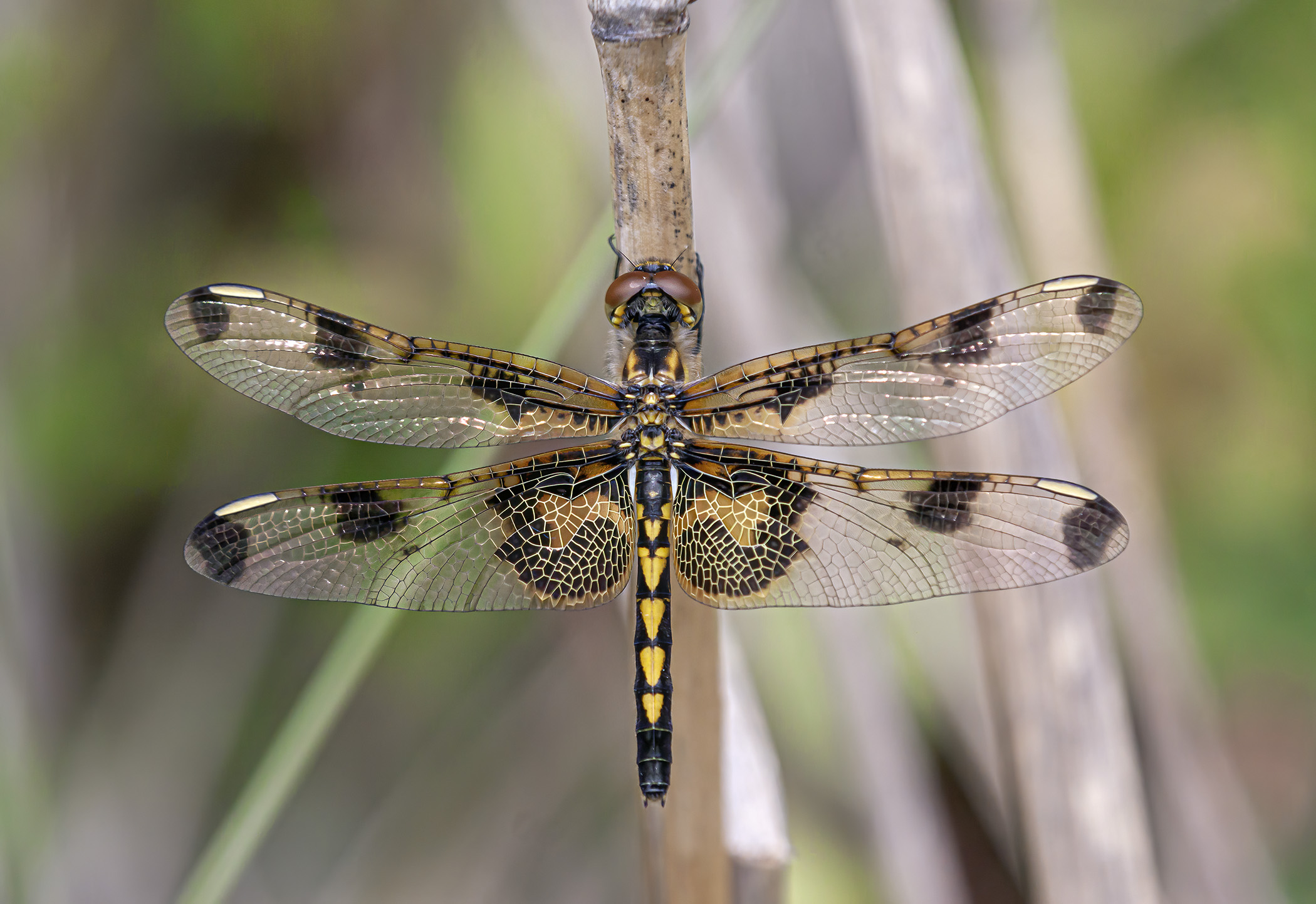
I spotted this dragonfly in the air as I was walking along a trail at Occoquan Regional Park and watched it land on some nearby vegetation. As I approached, it was easy for me to see the distinctive arrowhead pattern of the abdomen for which this species is named. Like other spiketails, Arrowhead Spiketails perch by hanging vertically or at an angle. This particular dragonfly, which happens to be a male, was quite cooperative and let me get close enough to get the portrait-style shot that you see as the second image below.

It will be at least two months before some of the early dragonfly species start to appear in our area. Unlike many summer species that are habitat generalists and are numerous for months on end, spring dragonfly species tend to be found in small numbers in very specific habitats for a limited period of time. Hopefully this posting—a flashback to last May—is a preview of coming attractions.

Arrowhead Spiketail

Arrowhead Spiketail

© Michael Q. Powell. All rights reserved.
Read Full Post »

A week ago I did a retrospective posting on some of my favorite photos from the first half of 2019 and alerted readers that a second posting would appear “in the next few days.” Here at last is part two—click here if you missed the first installment. As was the case in the initial posting, I went through my postings month by month and selected two photos for each month. I have provided a link to the individual postings in the captions of the photos to make it easier for interested readers to see the images in the context of the original postings, which often include additional photos and explanatory information.

If you look carefully at the dates, you may notice that I did not include any photos from November in this posting. As many of you may recall, I was in Paris for three weeks in November. After my first posting, one reader suggested that I do a separate posting for Paris, rather than be forced to select two photos from the many that I posted of my adventures in Paris. I decided to follow that recommendation, so hopefully there will be  a third and final posting of my look back at 2019 sometime “soon.”


Sable Clubtail

Sable Clubtail dragonfly, July 6, 2019 Sable Clubtail

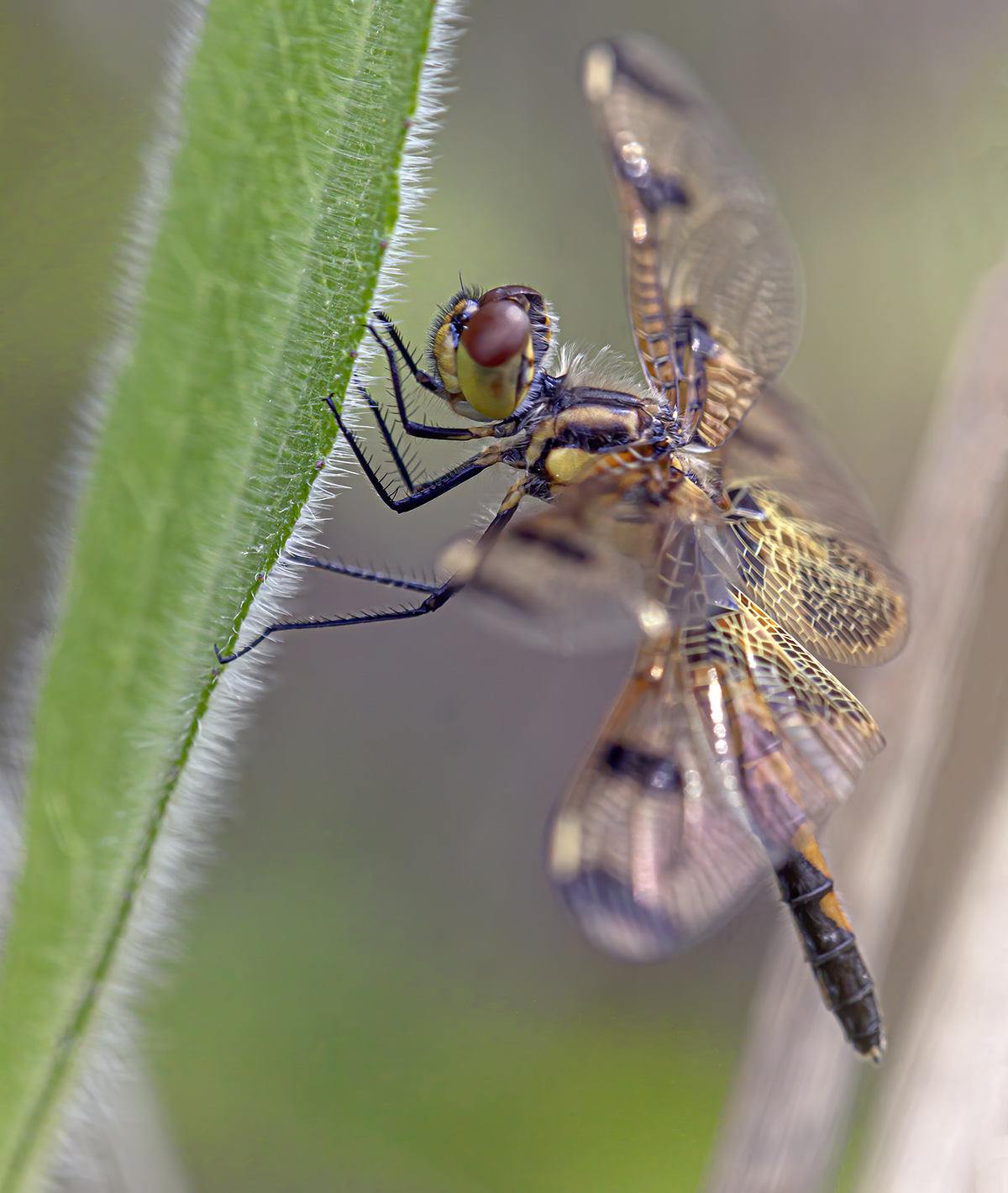
Halloween Pennant

Halloween Pennant dragonfly July 31, 2019 Perching Halloween Pennant

Osprey

Osprey, August 3, 2019, No sushi for me

Eastern Ringtail

Eastern Ringtail dragonfly, August 5, 2019 Getting down with an Eastern Ringtail


crab spider

Crab spider, September 7, 2019, White-banded Crab Spider

Handsome Meadow Katydid

Handsome Meadow Katydid September 10, 2019 My favorite insect?


Blue-faced Meadowhawk

Blue-faced Meadowhawk dragonfly, October 2, 2019 Blue-faced Meadowhawk in October

Bald Eagle

Bald Eagle October 16, 2019 Bald Eagle Takeoff

Hooded Merganser duck December 7, 2019 Hoodie Season

Pied-billed Grebe

Pied-billed Grebe December 24, 2019 Portrait of a Pied-billed Grebe


© Michael Q. Powell. All rights reserved.
Read Full Post »

At the end of each year I am faced with a decision about whether to do a review of the year and/or select my favorite photos. Some years I have done a selection based on the number of views received; some years I have chosen my personal favorites; and some years I have opted to do no yearly retrospective whatsoever.

This year I went through my postings month by month and selected two photos for each month. Rather than give an explanation for each selection, I have provided links to the postings themselves to make it easier for interested readers to see the images in the context of the original postings that often include additional photos and explanatory information.

This has been a rewarding year for me in so many ways and I have had a lot of wonderful experiences capturing images. Thanks so much to all of you for your support and encouragement. Stay tuned for part two, which should appear in the next few days.


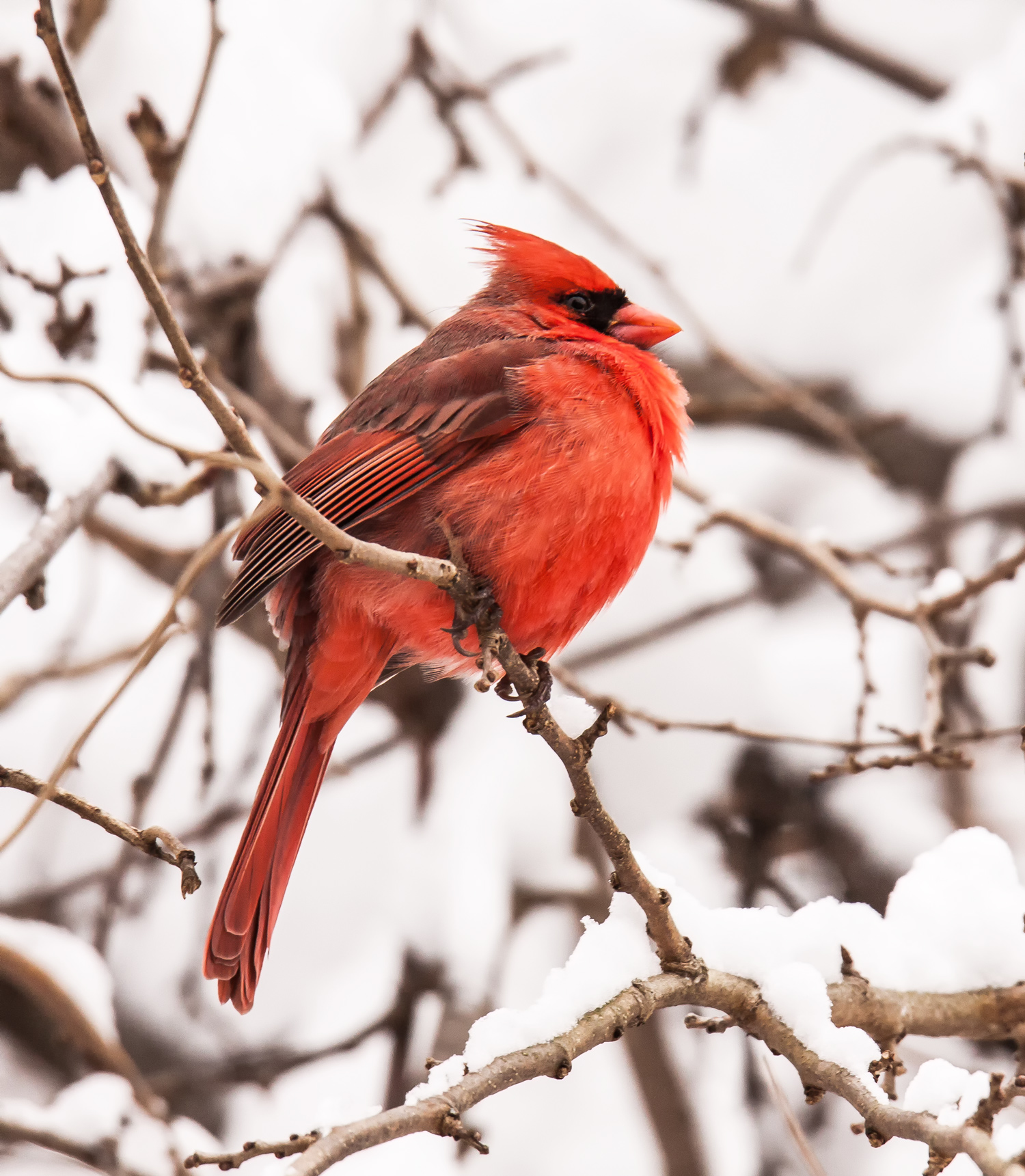
Northern Cardinal

January 16, 2019 Cardinal in the snow (https://michaelqpowell.com/2019/01/16/cardinal-in-the-snow-3/


winter sunrise

February 4, 2019 Reflected sunrise colors (https://michaelqpowell.com/2019/02/04/reflected-sunrise-colors/)


mountains in Germany

February 22, 2019 Mountain views in Germany (https://michaelqpowell.com/2019/02/22/mountain-views-in-germany/)


Northern Mockingbird

March 30, 2019 Mockingbird seeking seeds (https://michaelqpowell.com/2019/03/30/mockingbird-seeking-seeds/)


Uhler's Sundragon

April 12, 2019 Uhler’s Sundragon dragonfly (https://michaelqpowell.com/2019/04/12/uhlers-sundragon-dragonfly/)


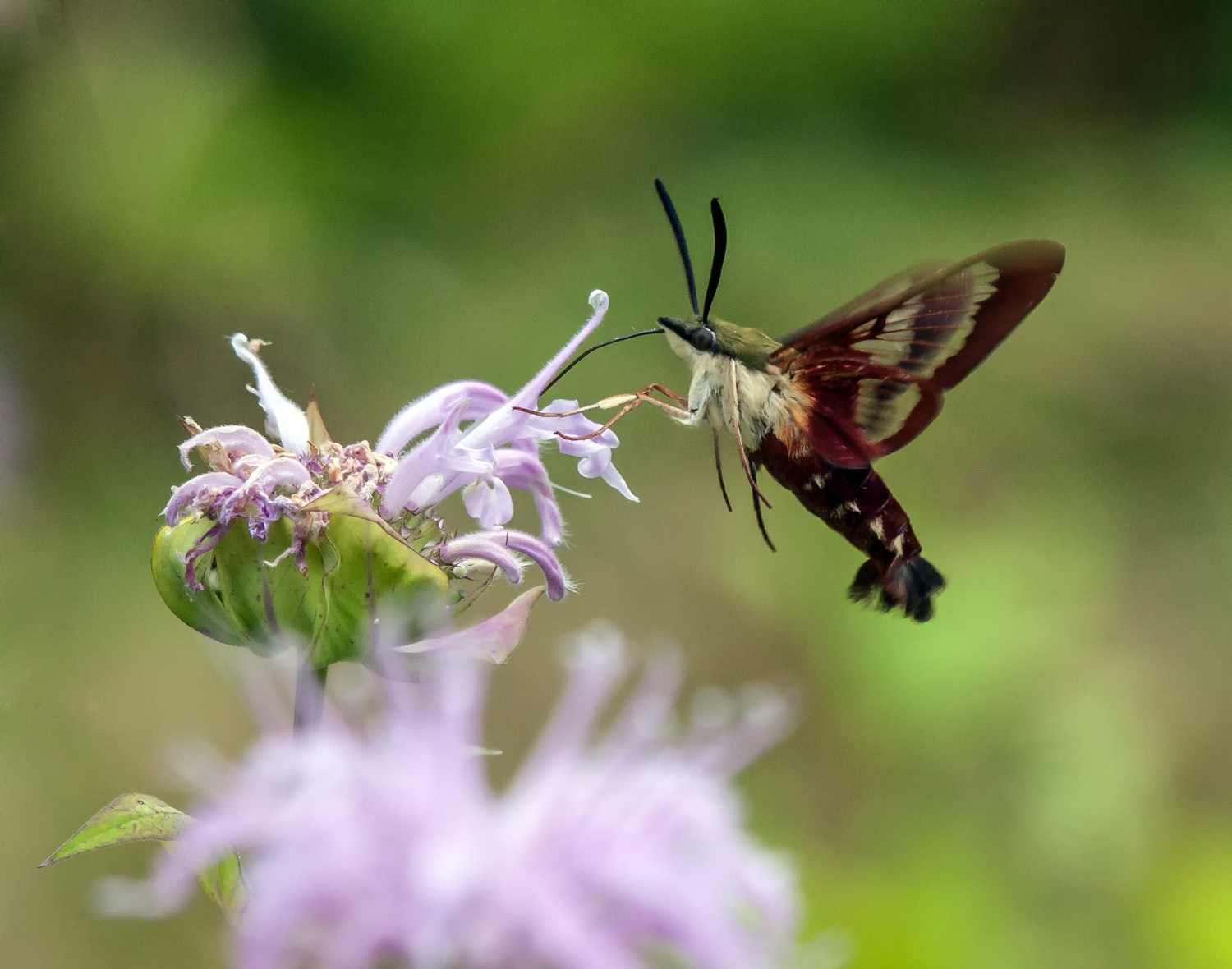
Hummingbird Clearwing Moth

June 24, 2019 Hummingbird Moth (the posting was on 2 July, but the photo was taken on June 24) (https://michaelqpowell.com/2019/07/02/hummingbird-moth/)

© Michael Q. Powell. All rights reserved.


Read Full Post »

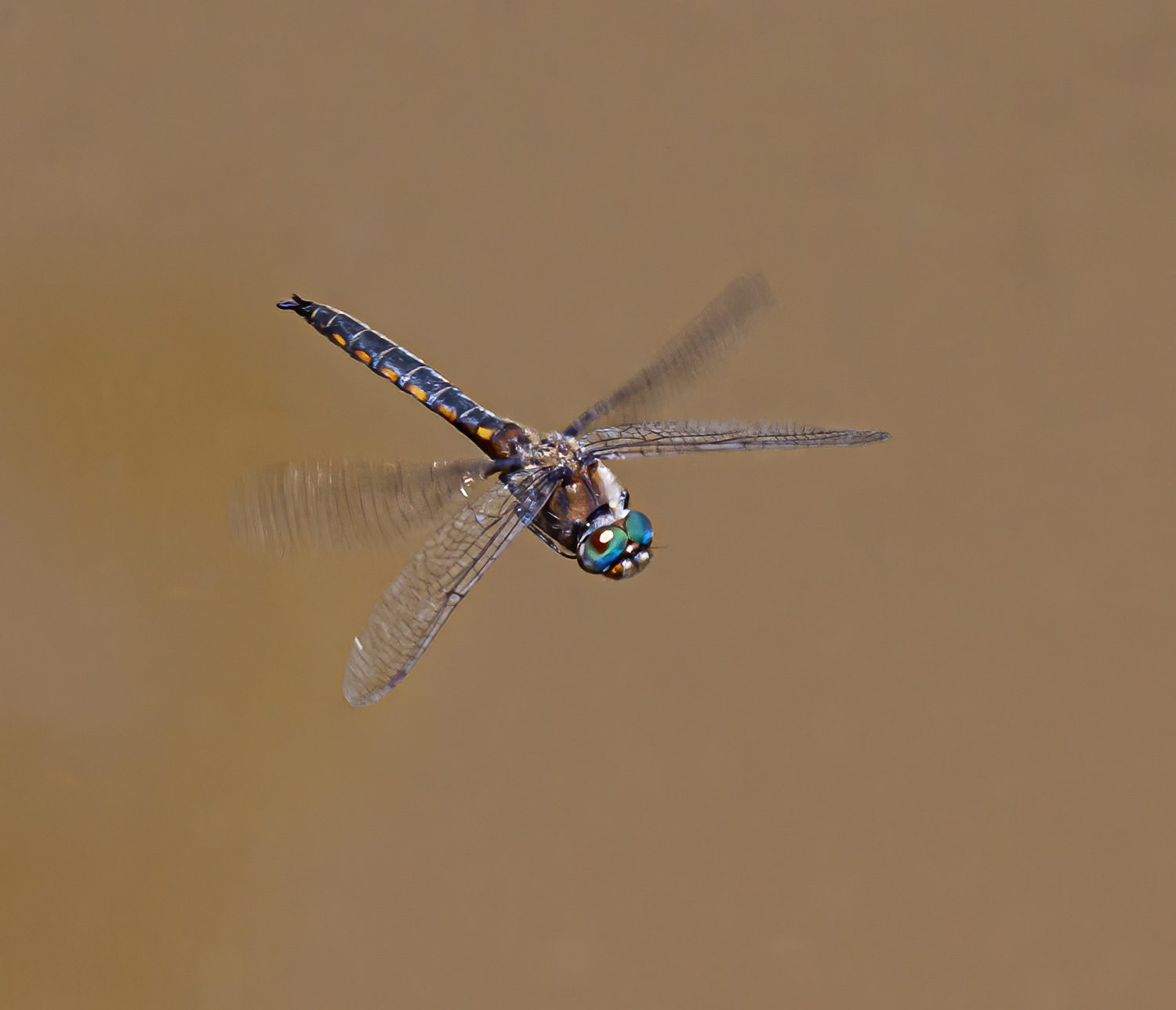
As I was going through my photos again from last week I came upon this image of an Autumn Meadowhawk dragonfly (Sympetrum vicinum) that I had spotted at Occoquan Bay National Wildlife Refuge. I already posted another shot of this dragonfly species from that day, but I like this shot even more, because it shows some of the details of the leaves on which the little red dragonfly was perched. I think the leaves help to give a better sense of the environment and emphasize the “autumn” in the name of the species.

Autumn Meadowhawk

© Michael Q. Powell. All rights reserved.
Read Full Post »

I was thrilled yesterday to spot almost a dozen Autumn Meadowhawk (Sympetrum vicinum) dragonflies at Occoquan Bay National Wildlife Refuge. These hardy little red dragonflies are always the last ones of the season and they often hang on until December. In some years they have even been spotted in early January.

When I explored the exact same area on Wednesday, I did not see a single one of these dragonflies. Why? Wednesday was heavily overcase, but yesterday the sun was shining brightly. Every single Autumn Meadowhawk that I saw was basking in the sun, perched on fallen leaves or logs. The sun seems to warm them up enough so that they can fly a bit, though I wonder if they manage to find anything to eat, given that there are almost no other insects flying.

So this year’s dragonfly season continues for at least a little while longer. As I search in the trees for birds, I will continue to look down as well, hopeful of spotting one of these beautiful aerial acrobats.

Autumn Meadowhawk

Autumn Meadowhawk

© Michael Q. Powell. All rights reserved.

Read Full Post »

Many people associate the color red with autumn because of the brilliant foliage that the season brings forth in places like New England. For me, though, red is an autumn color because of the bright red dragonflies that remain active in October and November (and sometimes even later in the year).

Yes, I continue to chase dragonflies as we move deeper and deeper into autumn. I spotted this handsome male Autumn Meadowhawk dragonfly(Sympetrum vicinum) last Wednesday at Jackson Miles Abbott Wetland Refuge in nearby Fort Belvoir, Virginia. Many of the Autumn Meadowhawks that I saw earlier this fall were females, which have a much more subdued coloration. There is nothing subdued about this male, which made it pretty easy to spot him, especially when he perched on a small stump at knee-level. You do have to pay attention to find them, however, because Autumn Meadowhawks are only about 1.3 inches (33 mm) in length.

Autumn Meadowhawk

© Michael Q. Powell. All rights reserved.

Read Full Post »

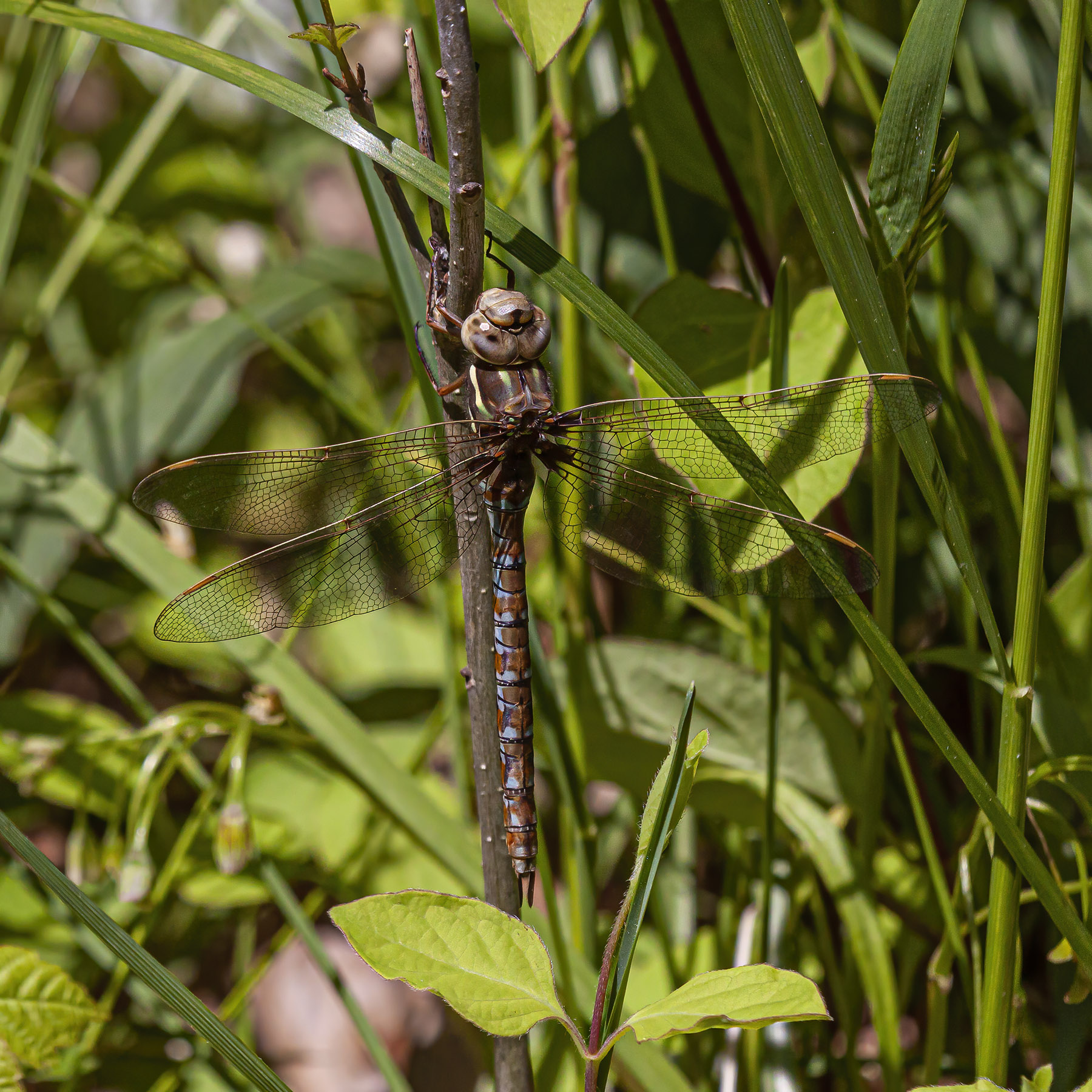
Wandering Gliders (Pantala flavescens) are the most widespread dragonfly species in the world and are found on all continents except Antarctica. I was thrilled on Tuesday when one stopped wandering for a moment at Occoquan Bay National Wildlife Refuge and I was able to capture this image. According to Wikipedia, individual Wandering Gliders can fly more than 3730 miles (6000 km)—one of the farthest known migrations of all insect species.

Wandering Glider

© Michael Q. Powell. All rights reserved.
Read Full Post »

Most of my dragonflies have disappeared for the season. I will still occasionally spot a few survivors of the summer species, but their numbers are dwindling in the cooler autumn weather. One notable exception is the aptly named Autumn Meadowhawk dragonfly (Sympetrum vicinum). On Tuesday I spotted a good number of Autumn Meadowhawks while exploring Occoquan Bay National Wildlife Refuge and captured these images with my long telephoto zoom lens—it is a bit of a challenge to focus on such a small subject with a lens zoomed out to 600mm.

In the area in which I live, Autumn Meadowhawks remain with us throughout October and November. I have personally spotted some in December and have heard of other sightings in early January.

Autumn Meadowhawk

Autumn Meadowhawk

Autumn Meadowhawk

© Michael Q. Powell. All rights reserved.

Read Full Post »

« Newer Posts - Older Posts »