Feeds:
Posts
Comments

Archive for the ‘Butterflies’ Category

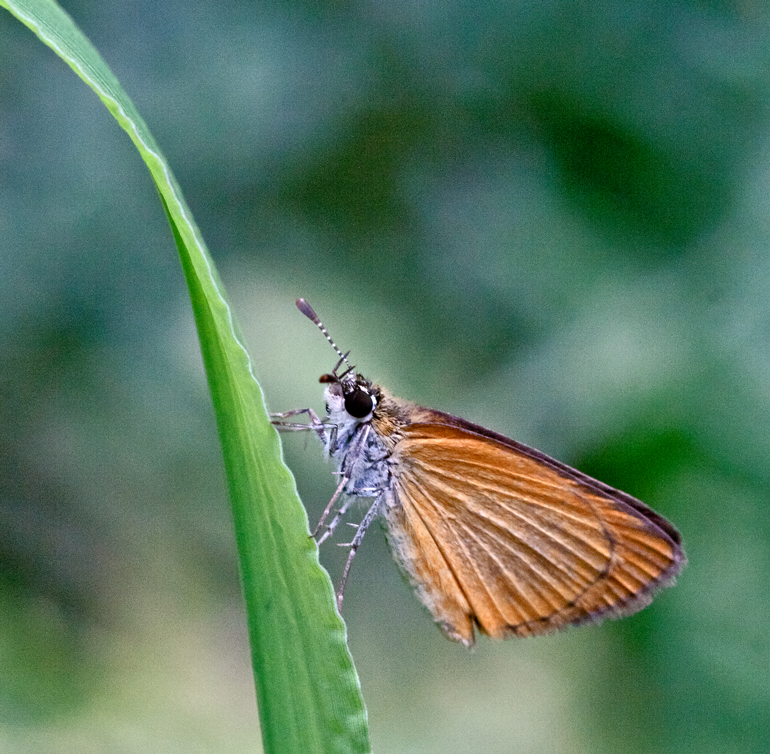
Can you name the most recognized Skipper in North America?  According to Wikipedia, it’s the Silver-spotted Skipper butterfly (Epargyreus clarus), shown here clinging to a Buttonbush (Cephalanthus occidentalis) in a shot I took recently at my local marshland park.

I love the spiky look of the Buttonbush and it seems to attract a lot of butterflies. The skipper’s colors may be a little drab, but I am happy that it is easy to identify, given that there are over 3500 different species of skippers, according to a different article in Wikipedia.

spotted_skipper_blog

© Michael Q. Powell. All rights reserved
Read Full Post »

This Great Spangled Fritillary butterfly (Speyeria cybele) was so cooperative that I was able to get amazingly close to it with my 100mm macro lens and photograph it from some unusual angles.

This is the third (and final) posting from this session with the Fritilary (I love saying the butterfly’s name) and I realize that I have moved in a kind of progression. My first posting showed the butterfly from a “normal” perspective. Then I shifted to a somewhat unusual perspective in the second posting by shooting from below the butterfly.

In these final shots, I tried to get eye-to-eye with the fritillary. In the first image, I was almost directly over the butterfly and managed to capture some wonderful details. Who knew the butterfly would be so hairy? In the second shot, I tried to put myself on the same level as the Fritillary as it got nectar from a beautiful white cone flower. If you want to see the photos in greater resolution, click on the images.

fritillary5A_blogfritillary6_blog

© Michael Q. Powell. All rights reserved

Read Full Post »

I am always amazed that butterflies can fly with wings that are severely damaged. This morning I encountered this beautiful female Eastern Tiger Swallowtail butterfly (Papilio glaucus) that had suffered some major damage to the area where the wings attach to the body. Despite the tears to the wings, the butterfly seemed unhindered in its flight and was busily at work, flying from bush to bush.

wounded_blog

© Michael Q. Powell. All rights reserved

Read Full Post »

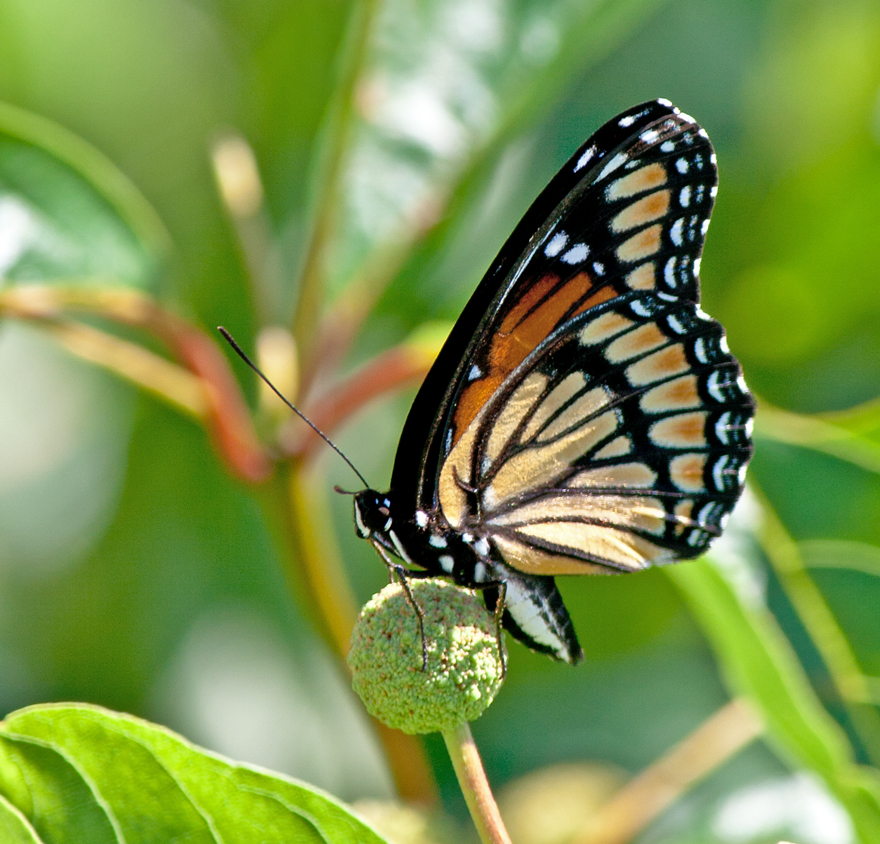
I haven’t seen a huge number of butterflies this summer, so I was happy to see a colorful butterfly this past weekend, which I believe is a Monarch butterfly (Danaus plexippus).

UPDATE: My tentative identification as a Monarch was not correct. Thanks to Jeremy Sell at The Life of Your Time for his help in identifying this as a Viceroy butterfly (Limenitis archippus archippus).

monarch_blog

© Michael Q. Powell. All rights reserved
Read Full Post »

It was fun chasing this Great Spangled Fritillary butterfly (Speyeria cybele) around my neighbors’ garden as it moved from flower to flower. I tried to capture it from different perspectives and got some artsy looking shots that I really like.

fritillary1_blog

fritillary3_blog

© Michael Q. Powell. All rights reserved
Read Full Post »

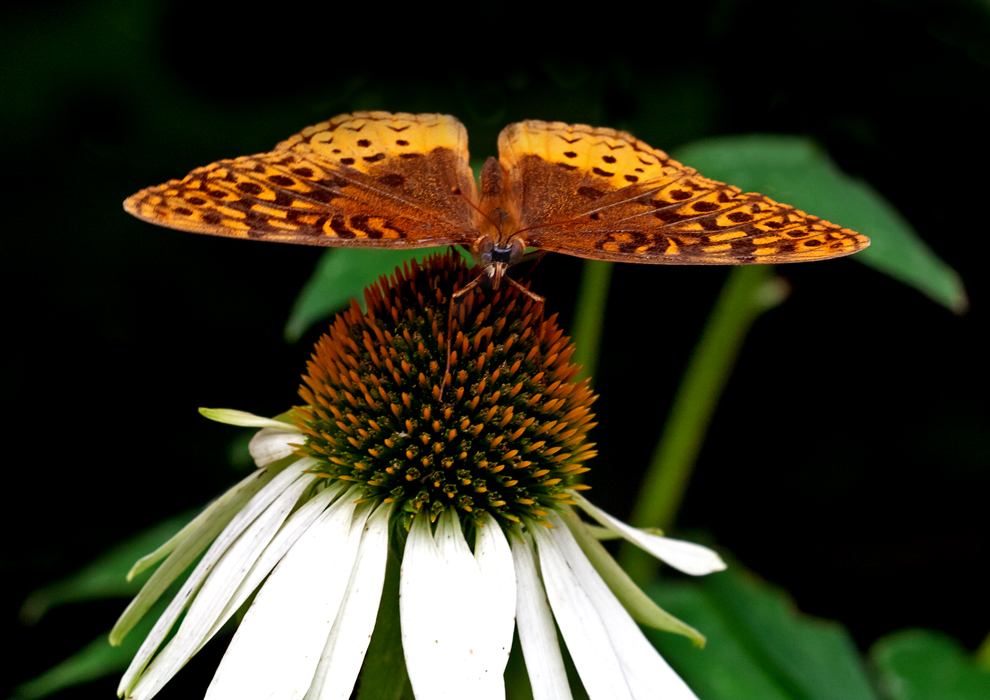
I continue to be amazed at the insects that visit my neighbors’ garden and yesterday I was thrilled to see this Great Spangled Fritillary butterfly (Speyeria cybele). The beautiful butterfly moved around a lot among the flowers and even returned after flying away, which gave me time to change lenses.

I took this shot of the butterfly on a cone flower with my 100mm macro lens. I wanted take the photograph at eye-level with the butterfly, but initially the background was too cluttered and there was too much light coming from the back, which caused the butterfly to be shadowy.  I decided to use my pop-up flash, suspecting that the background would go black and the detail of the butterfly would be revealed, which is what happened.

The result looks a little bit artificial, but I like the effect that I managed to achieve. I am working on a couple more images of the butterfly taken in natural light, so you may see it again soon.

fritillary2_crop_blog

© Michael Q. Powell. All rights reserved
Read Full Post »

During my trip last weekend to Kenilworth Aquatic Gardens, I used a Nikon D7000 with a Tamron 180mm macro lens to take some shots while my fellow photographer, Cindy Dyer, relaxed in the shade on a hot, steamy day.

I use a Canon, so it was not immediately obvious to me where the controls were for various functions on the Nikon.  I didn’t really have much time to poke around in the menus, so I just shot. I knew that the camera was set for aperture priority, but I didn’t realize until later that it was set at f/20.  What that meant was that the two shots that I am posting here were shot at 1/100 and 1/80 of a second respectively. I am a little surprised that they came out relatively sharp, because the Tamron lens is pretty heavy and is not a VR lens.

The subject matter is pretty familiar for folks who follow my blog—a Cabbage White butterfly (Pieris rapae) and a Blue Dasher dragonfly (Pachydiplax longipennis). I like the way that both images turned out, with beautiful backgrounds.

Did the Nikon set-up make a difference? It was nice shooting with a camera with a bigger and brighter viewfinder than my Canon Rebel XT, but that is more a function of shooting with a much newer camera. What was especially nice, though, was shooting with a 180mm macro lens. The lens felt comfortable and gave sharp results, even if focusing was a bit slow when it had to move through the full range in autofocus mode.

I probably am not ready to go over to the dark side and embrace a Nikon—in my experience it seemed that the Nikon was different from my Canon, but not necessarily better. I may consider, however, the Tamron 180mm macro lens. I love my Canon 100mm macro lens, but sometimes it would be nice to have that little extra reach and still be able to get true macro results.

Cabbage White lorezBlue Dasher lorez

© Michael Q. Powell. All rights reserved

Read Full Post »

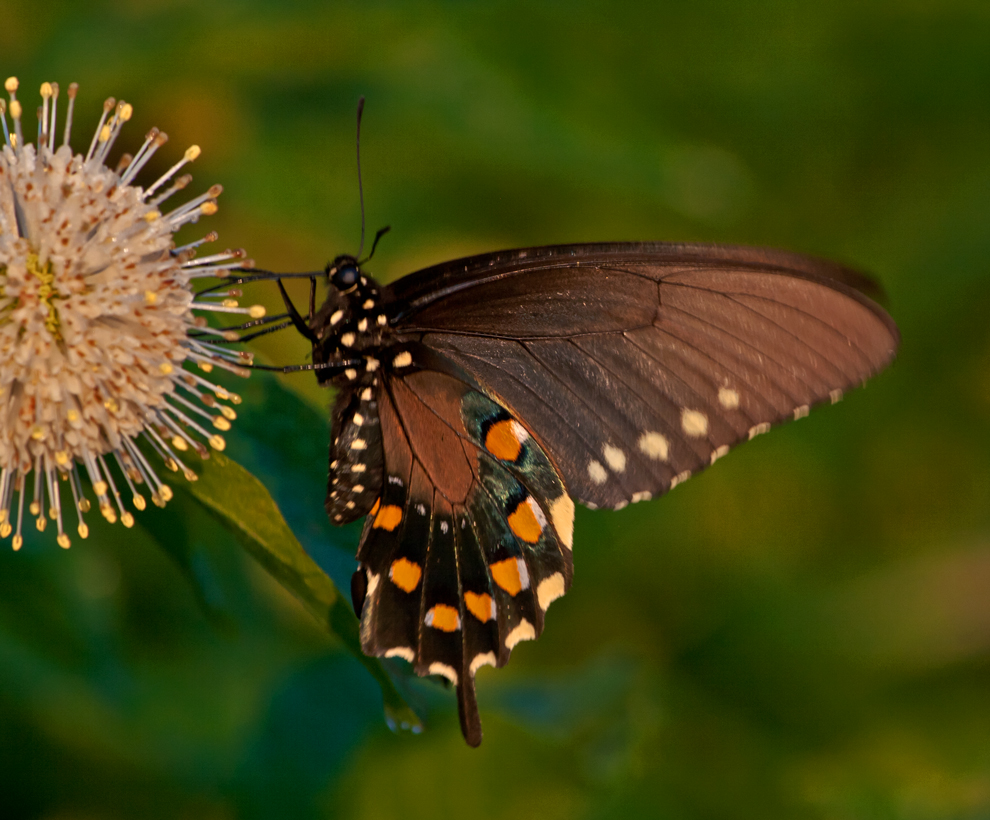
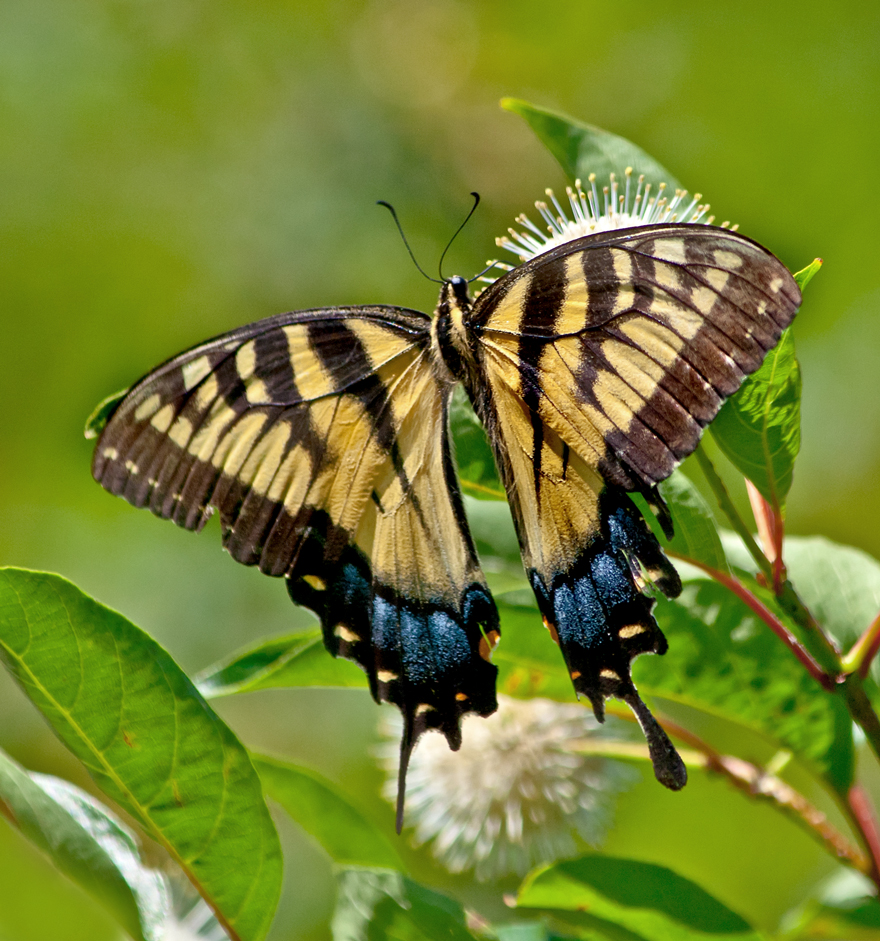
I have not yet seen many colorful butterflies this summer, so I was thrilled this past weekend when I observed a female Eastern Tiger Swallowtail butterfly (Papilio glaucus) feeding on a Buttonbush (Cephalanthus occidentalis) and managed to get a couple of good shots.

The first image has a dreamy quality and a softness that I like, with a background that is almost pastel. The body of the butterfly is clearly visible, with its proboscis fully extended.

In the second shot, the colors are more vivid and the butterfly’s head is obscured. However, the wings are open wide and in a beautiful position.

My favorite is the first one. Is there one that you prefer?

swallowtail_blogswallowtail2_blog

© Michael Q. Powell. All rights reserved

Read Full Post »

Cabbage White butterflies (Pieris rapae) may look very ordinary at first glance, but when you look more closely, you find that they have amazingly beautiful, green speckled eyes.

cabbage_A_blog

© Michael Q. Powell. All rights reserved

Read Full Post »

The little skipper butterfly found a dandelion to be particularly appealing and I like this simple image that captured their brief encounter.

dandy_skipperA_blog

Michael Q. Powell. All rights reserved

Read Full Post »

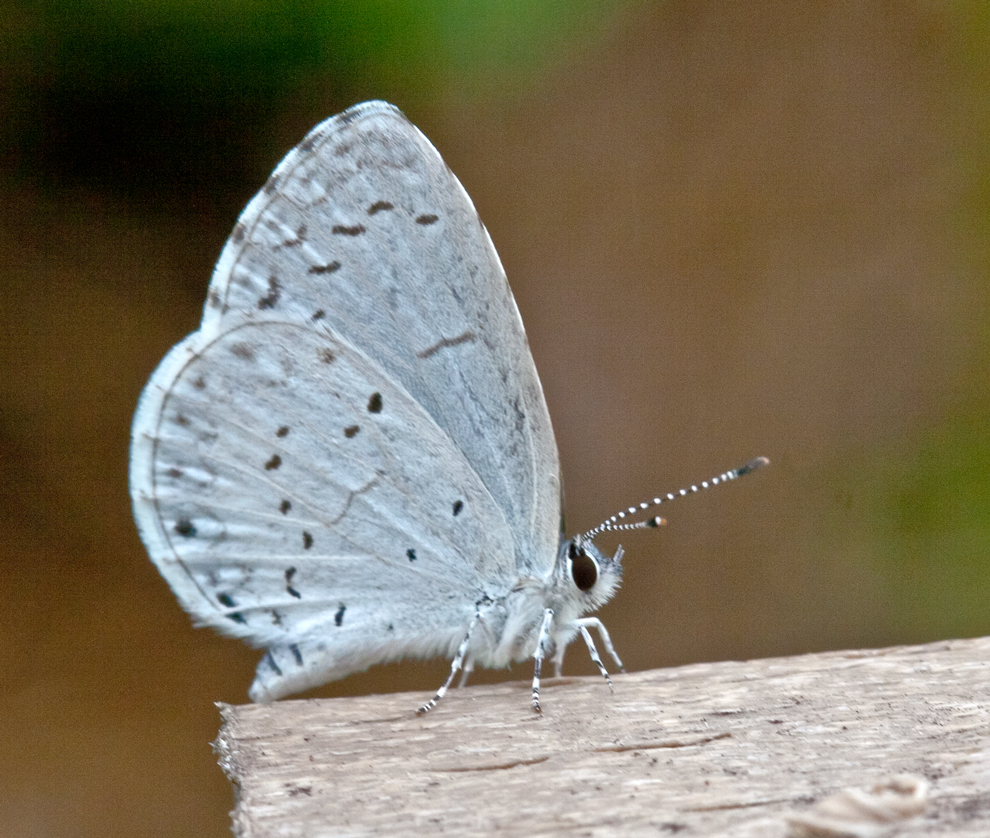
This past weekend I chased around this little butterfly—which I think may be a Summer Azure butterfly (Celastrina neglecta)—for quite some time until it finally landed.

This butterfly was really tiny, with a wing span of only about an inch (2.5 cm), so it was hard to get close enough to get a decent shot without spooking it. It took flight a couple of times, but landed nearby so I could continue the hunt.

It is always fun to photography the larger, more colorful butterflies like the Eastern Swallowtail or the Monarch, but I find that these little butterflies have a simple beautiful of their own.

little_white1_blog

Michael Q. Powell. All rights reserved

Read Full Post »

One of my neighbors, fellow blogger Cindy Dyer, now has lavender blooming in her garden. It smells wonderful and this Cabbage White butterfly (Pieris rapae) seemed to be really enjoying it earlier this afternoon.

cabbage1_blog

Michael Q. Powell. All rights reserved

Read Full Post »

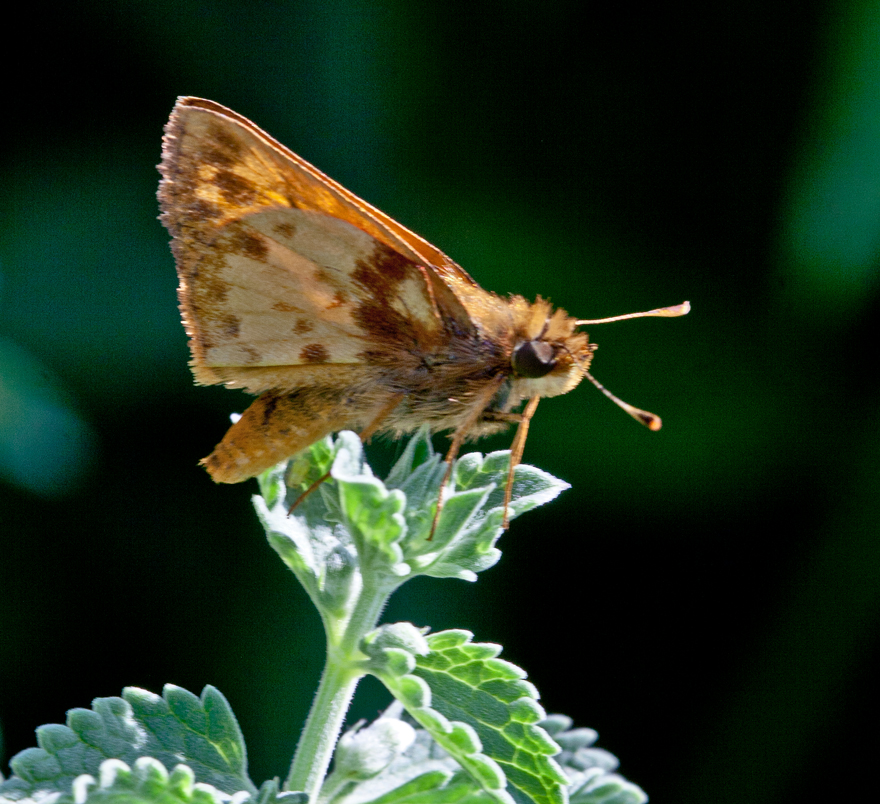
I have trouble identifying a lot of my photographic subjects, but skipper butterflies are among the toughest. Wikipedia says that are more than 3500 recognized species of skippers worldwide, so I don’t feel too bad about my difficulties.

As I perused photos on the internet, I came across a few shot of butterflies that looked at lot like the one that I photographed, and on that basis I am going to tentatively identify it as a Fiery Skipper (Hylephila phyleus).

I like the way in which the skipper was lit and he stayed perched long enough to permit to use my macro lens.

skipper_blog

Michael Q. Powell. All rights reserved

Read Full Post »

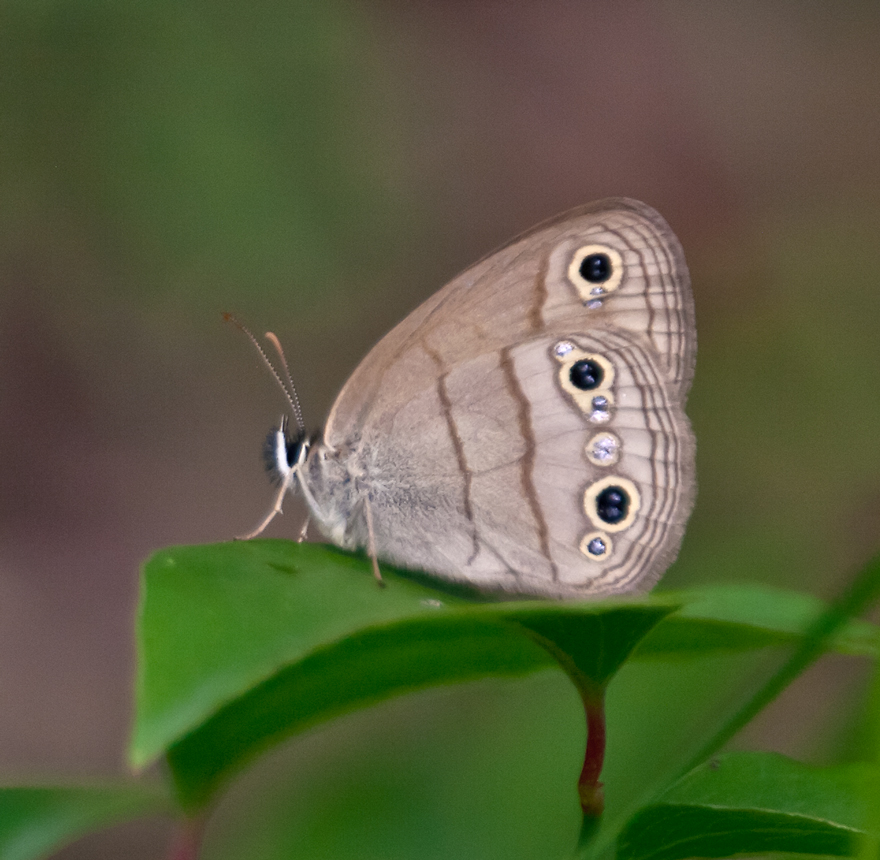
I have been seeing little brown butterflies (or moths) flitting about in the woods recently, but have not gotten a good look at any of them, so I was thrilled when a Little Wood Satyr butterfly (Megisto cymela) landed on a nearby leaf this past Monday and remained long enough for me to get some shots.

I am not a hundred percent certain of my identification, because there are a lot of similar butterflies and the distinctions seem pretty subtle to me at the moment. Please let me know if you can identify this little butterfly with greater precision.

This is another photo in which I took the time to use my tripod and to focus carefully, shooting at a focal length just short of 400mm. The focus is a little soft, particularly for the leaf, but I think that it helps to give the image a kind of dreamy feel, though it’s a little early for a midsummer night’s dream.

brown1_blog

Michael Q. Powell. All rights reserved

Read Full Post »

I was thrilled yesterday when I spotted this Red-spotted Purple butterfly (Limenitis arthemis astyanax), which brought to mind the two things that bothered me about this butterfly last year when I first encountered it.

The first thing is that the name makes no sense at all—there is not purple at all in the Red-spotted Purple butterfly. Secondly, I recalled that it was almost impossible to get a photogenic background with this butterfly. Bugguide notes that adult butterflies of this type take moisture from mud puddles, rotten fruit and animal feces and last year I always found them in the latter situation. I guess I should be happy that the background for these photos was a concrete path!

I took these shots with my telephoto zoom at close to 400mm and realize the limitations of the lens for this type of shot. Most significantly, I couldn’t get close enough to be able to frame this better and the size of the lens limited my agility, the more so because I had it on a tripod. Still, I am happy to capture colors like this that always help to brighten my day.

butterfly2_blogbutterfly1_blogbutterfly3_blog

Michael Q. Powell. All rights reserved

Read Full Post »

« Newer Posts