Feeds:
Posts
Comments

Archive for the ‘Birds’ Category

I was thrilled on Friday morning to spot this Wood Duck mother (Aix sponsa) with thirteen little ducklings (if I counted right) at my favorite marshland park, Huntley Meadows Park. A few days ago, one of my fellow photographers was able to capture some shots of the moment when some newly fledged wood duck babies were called out of the nesting box by their mother and dropped into the water below. I suspect this is the same family, although I have been told that there are plenty of eggs in some of the other nesting boxes, so there may a lot more baby ducks soon.

I hope that all of the cute little ducklings can remain safe, but I remember with a tinge of sadness the experience of past years when I watched the number of babies decrease over time. The environment is hostile for these vulnerable little ones, with water snakes and snapping turtles as well as hawks and other birds of prey.  It has to be tough on the mother duck to try to keep them together and out of danger and it seems like she has to raise them on her own—the father duck does not seem to participate in the process.

Wood Duck babies

Wood Duck babies

© Michael Q. Powell. All rights reserved.

Read Full Post »

In the early morning, I am particularly sensitive to shapes and sounds. I saw and heard this bird calling from atop a dead tree on Monday at Huntley Meadows Park and assumed I would capture only its silhouette. It was a nice bonus that its light-colored eye was shining brightly despite the limited light.

What kind of bird is it? Perhaps it’s a Rusty Blackbird, judging from the color of the eye, though there are really not enough details to make a good call. Identification seems less important to me than normally, because this image is mostly about mood and composition for me. The wonderful texture of the weathered wood and the sense of joy that radiates for the bird prompted me to post this image after initially rejecting it.

Some days I am drawn to my simple graphic images, and I guess that today is one of those days.

shining eye

© Michael Q. Powell. All rights reserved.

Read Full Post »

I love the distinctive look of the male Hooded Merganser duck (Lophodytes cucullatus) and it was a real treat to watch this one last weekend as he foraged in the vegetation at Huntley Meadows Park. Normally these small ducks are so skittish they fly away as soon as they sense my presence.

Hooded Merganser

© Michael Q. Powell. All rights reserved.


Read Full Post »

I spotted this Hooded Merganser couple (Lophodytes cucullatus) last Friday at Huntley Meadows Park enjoying a few quiet moments together.

The male duck has a wide-eyed goofy look on his face that makes me think of a teenager who has fallen in love. He worked up the courage to ask the cute girl on a date and she actually said yes. She’s playing it cool, but he can hardly contain his excitement.

It’s springtime and love is in the air.

Hooded Merganser

© Michael Q. Powell. All rights reserved.

Read Full Post »

I am not sure why, but this male Red-winged Blackbird (Agelaius phoeniceus) was acting differently this past weekend. Rather than standing tall and singing out loudly, as is normally the case, he was instead hunched over and making a more gentle peeping sound.

Was he in pain or distress? Was this simply a different way of communication? It’s overwhelming sometimes to consider how little I know about the behavior of the subjects that I try to photograph, despite the fact that I am learning all of the time.

From a photographic perspective, I really like the geometric. almost abstract shape of the blackbird in this image.

Red-winged Blackbird

© Michael Q. Powell. All rights reserved.
Read Full Post »

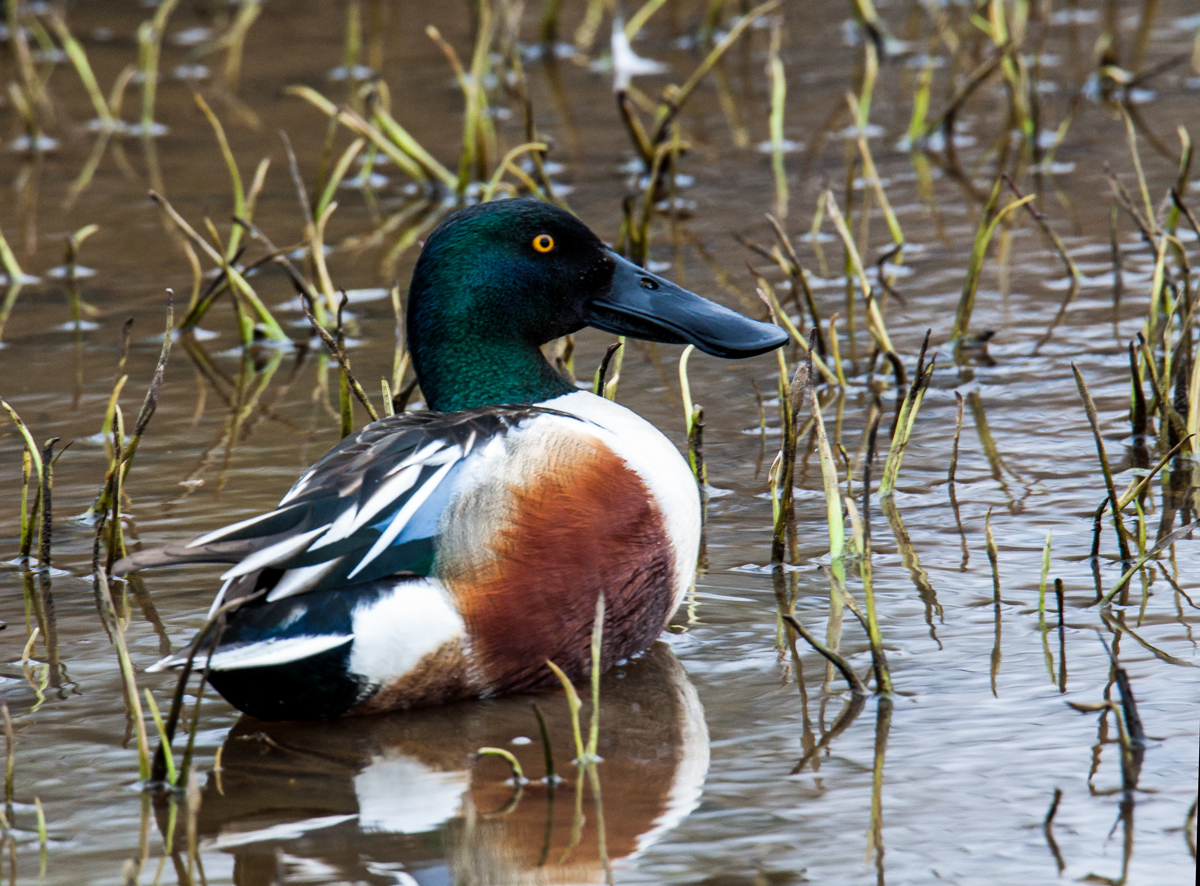
With new vegetation springing up near the edges of the ponds at Huntley Meadows Park, some of the ducks are now hanging out within range of my camera rather than in the middle of the pond. This past weekend I was able to capture the unusual beauty of this male Northern Shoveler (Anas clypeata).

No matter how many times I have seen it, I never fail to be amazed at the disproportionately long bill of the Northern Shovelers. They look to me like they were drawn by the cartoonists at Disney, who deliberated exaggerated their features for comic effect.

It wouldn’t surprise me to see Northern Shovelers in a Disney feature film at some point in time.

Northern Shoveler

© Michael Q. Powell. All rights reserved.

Read Full Post »

Great Blue Herons (Ardea herodias) are one of my favorite birds, in part because they are with us the entire year. Even during the snowy days of winter, I would occasionally see one of them.

Now that spring is here, there are many more birds at Huntley Meadows Park, but I am always happy to see one of the faithful Great Blue Herons, like this one that flew by me yesterday morning.

Great Blue Heron

© Michael Q. Powell. All rights reserved.
Read Full Post »

I keep trying without much success to get a close shot of a Belted Kingfisher, but they are very skittish and always seem to be perched on the opposite bank of the stream or pond from where I am standing.

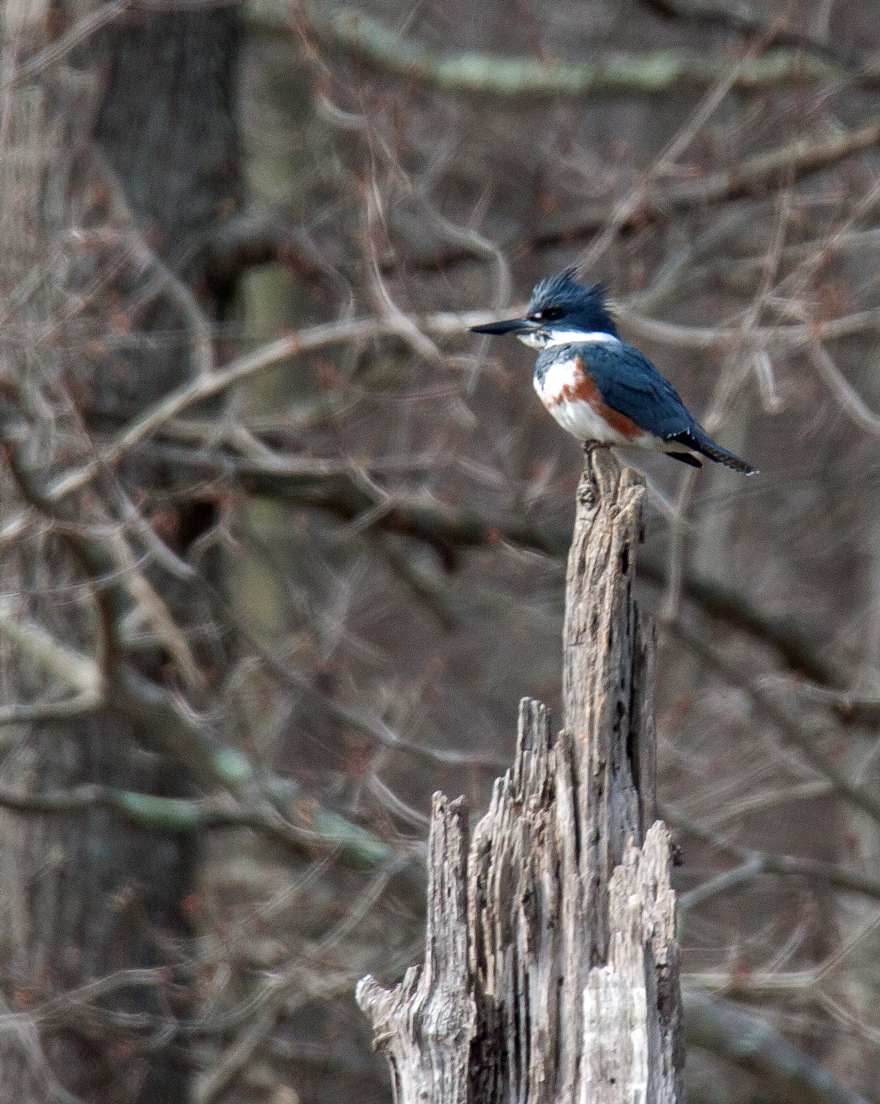
This past weekend I was happy to get a clear (albeit distant) look at this beautiful female Belted Kingfisher (Megaceryle alcyon) at my favorite marshland park. The kingfisher seemed to be taking a break from fishing and spent most of her time looking to the left and to the right rather than down at the water.

I’ve spotted a kingfisher before on this perch, but can’t get any closer from this side of the pond. Occasionally I will trek to the other side of the pond and hope that eventually I will be able to sneak closer to this elusive bird from that direction.

Belted Kingfisher

Belted Kingfisher

© Michael Q. Powell. All rights reserved.

Read Full Post »

I heard this Wood Duck couple take off at Huntley Meadows Park this past weekend before I actually saw them. Wood Ducks (Aix sponsa), especially the female, make a distinctive shrieking noise when disturbed and when taking flight. (Check out this page from the Cornell Lab of Ornithology website to hear some of the sounds made by Wood Ducks.)

Normally Wood Ducks fly away from me and I often don’t even get to see them before they disappear in the distance. This time, however, the birds flew across my field of vision and I was able to capture this long-distance shot as they passed me. I really like the way that we get a glimpse of the beautiful colors on the inside part of the wings of these striking ducks.

Wood Duck

© Michael Q. Powell. All rights reserved.

Read Full Post »

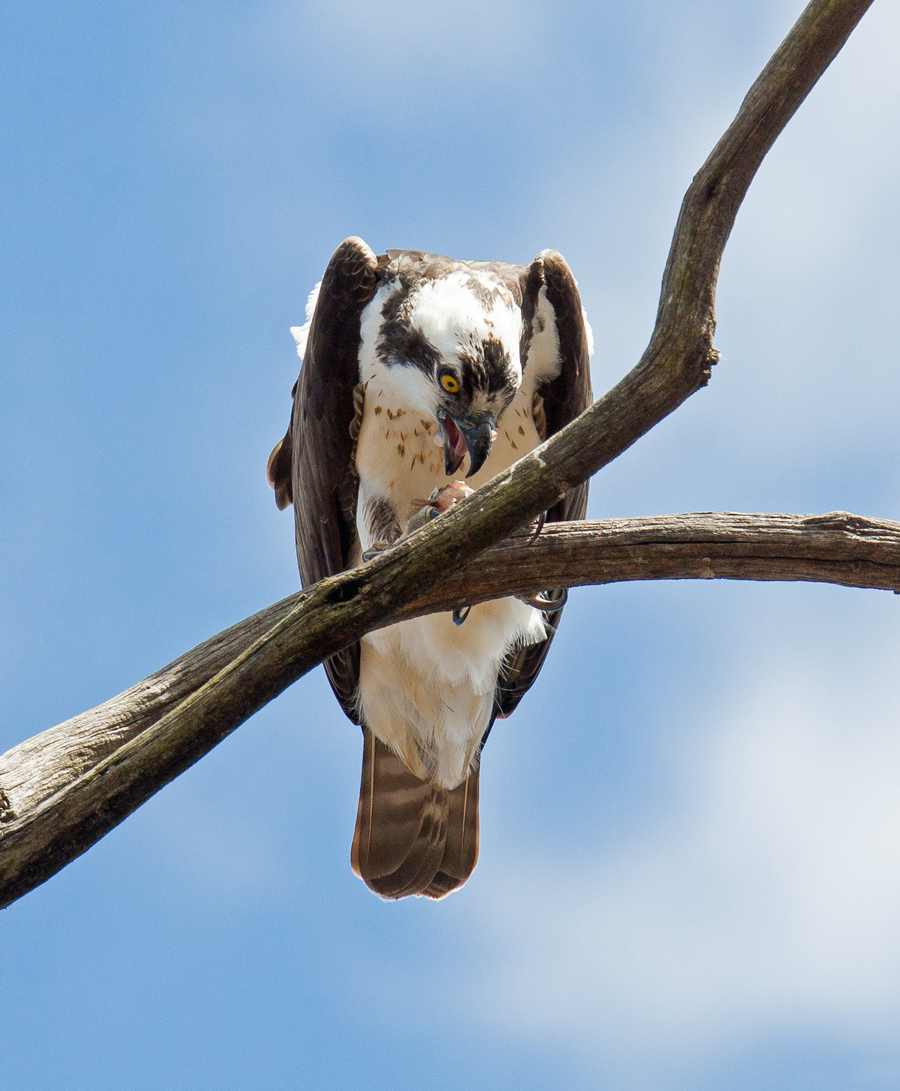
Yesterday afternoon I came upon this Osprey (Pandion haliaetus) at Huntley Meadows Park as it was enjoying a freshly caught fish. The osprey was perched in an exposed dead tree and I had a front row seat as it consumed its lunch. Despite taking what looked to be pretty small bites, the osprey downed the fish in a matter of minutes.

I managed to take quite a few shots of the osprey, which seemed so focused on its food that it tolerated my presence almost directly below the tree. I am still going through those photos and may do another posting later, but wanted to post one of my initial favorites.

Osprey

© Michael Q. Powell. All rights reserved.
Read Full Post »

Happy Easter (and best wishes to those not celebrating this holiday). This has been a really busy and special Holy Week for me and I am getting ready now to go to a sunrise Easter service.

I spotted this pretty little Eastern Bluebird (Sialia sialis) yesterday during a daylong trek around Huntley Meadows Park.

Happy Easter!

Eastern Bluebird

© Michael Q. Powell. All rights reserved.

Read Full Post »

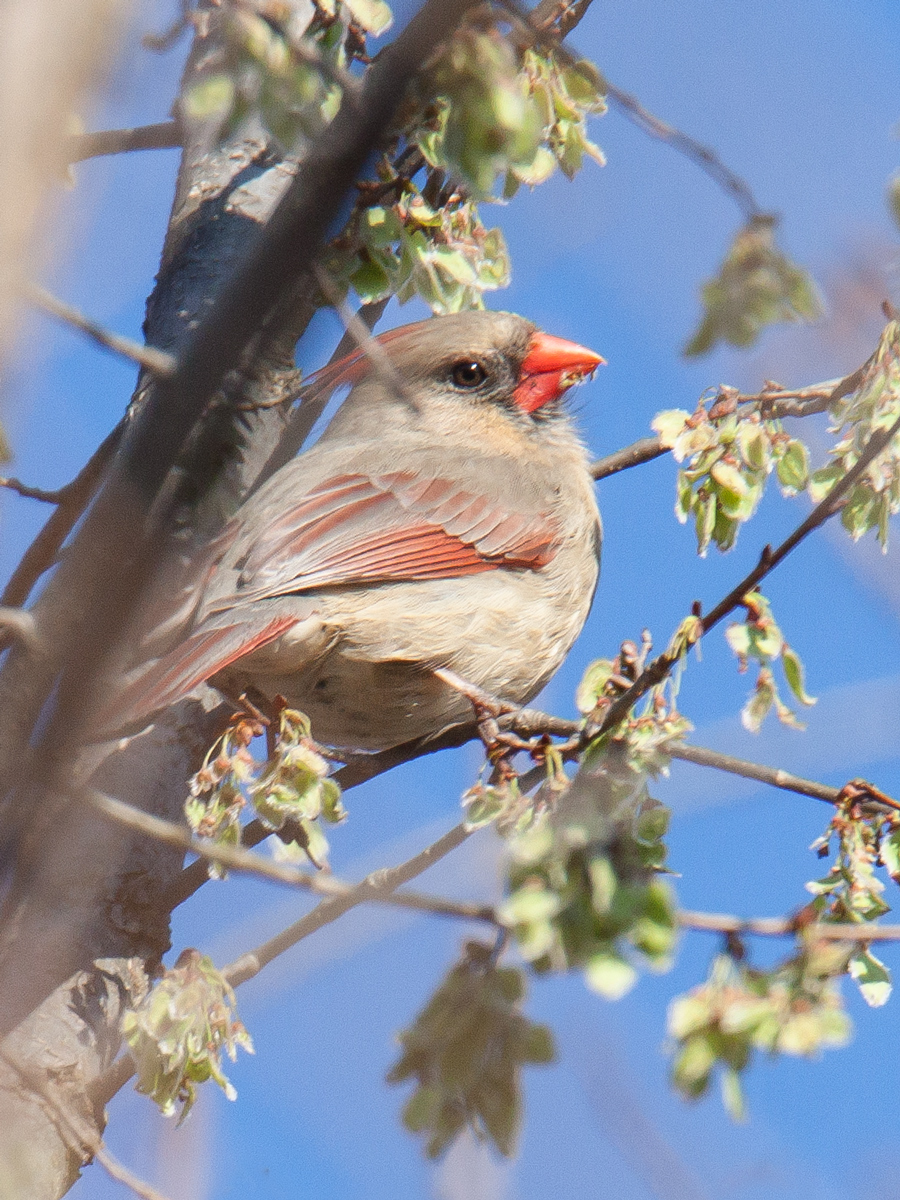
Now that springtime leaves and blossoms are reappearing, birds in the trees are getting harder for me to spot. Earlier this week I was happy to find this semi-hidden female Northern Cardinal (Cardinalis cardinalis) at Huntley Meadows Park.

One of my friends asserts that female cardinals are more beautiful than their more boldly-colored male counterparts—it’s hard to disagree with him.

Northern Cardinal

© Michael Q. Powell. All rights reserved.
Read Full Post »

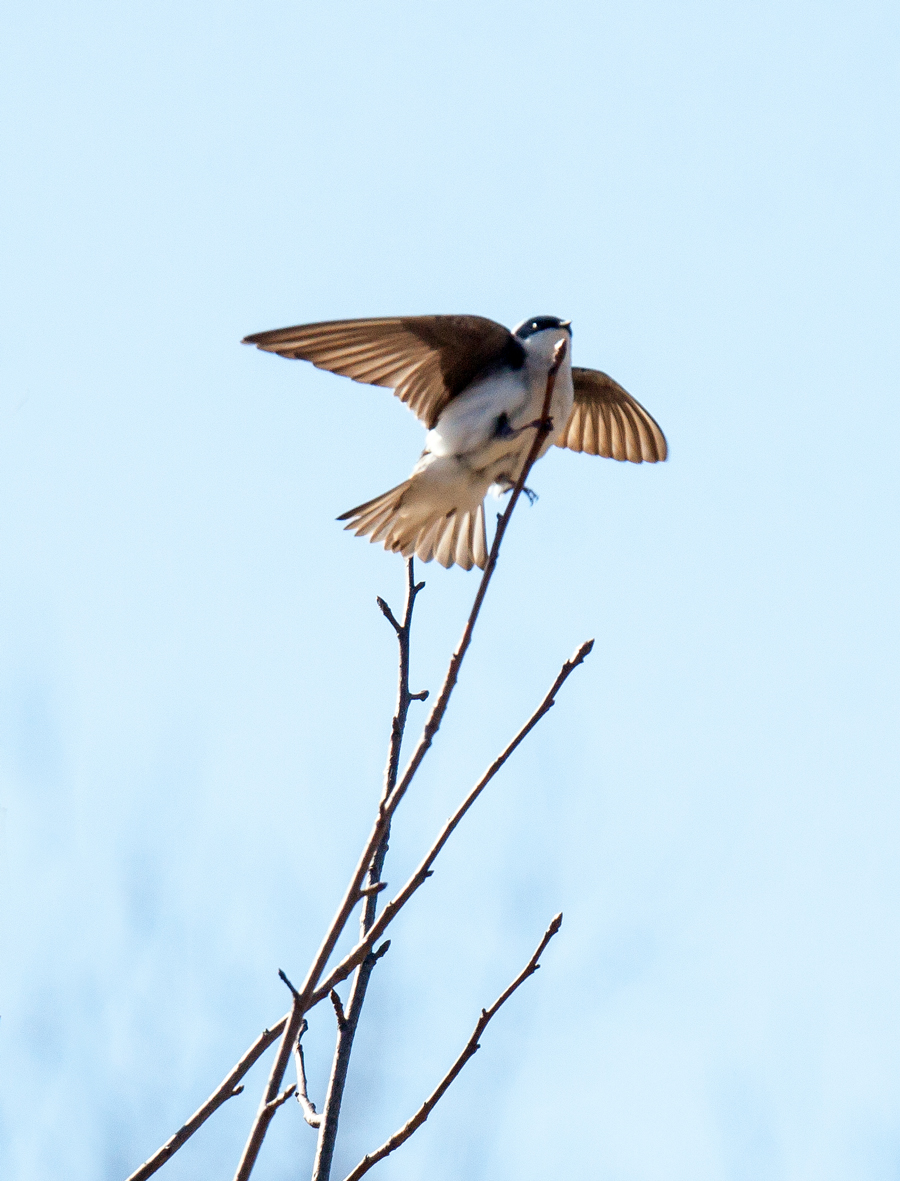
The winds were blowing hard at Huntley Meadows Park on Monday and I watched as a Tree Swallow (Tachycineta bicolor) struggled to stay on its perch high in a tree. The determined little bird kept changing wing positions in an effort to maintain stability.

Eventually, however, the swallow lost the battle and appeared to be blown off of its perch.

Tree Swallow

Tree Swallow

Tree Swallow

Tree Swallow

© Michael Q. Powell. All rights reserved.
Read Full Post »

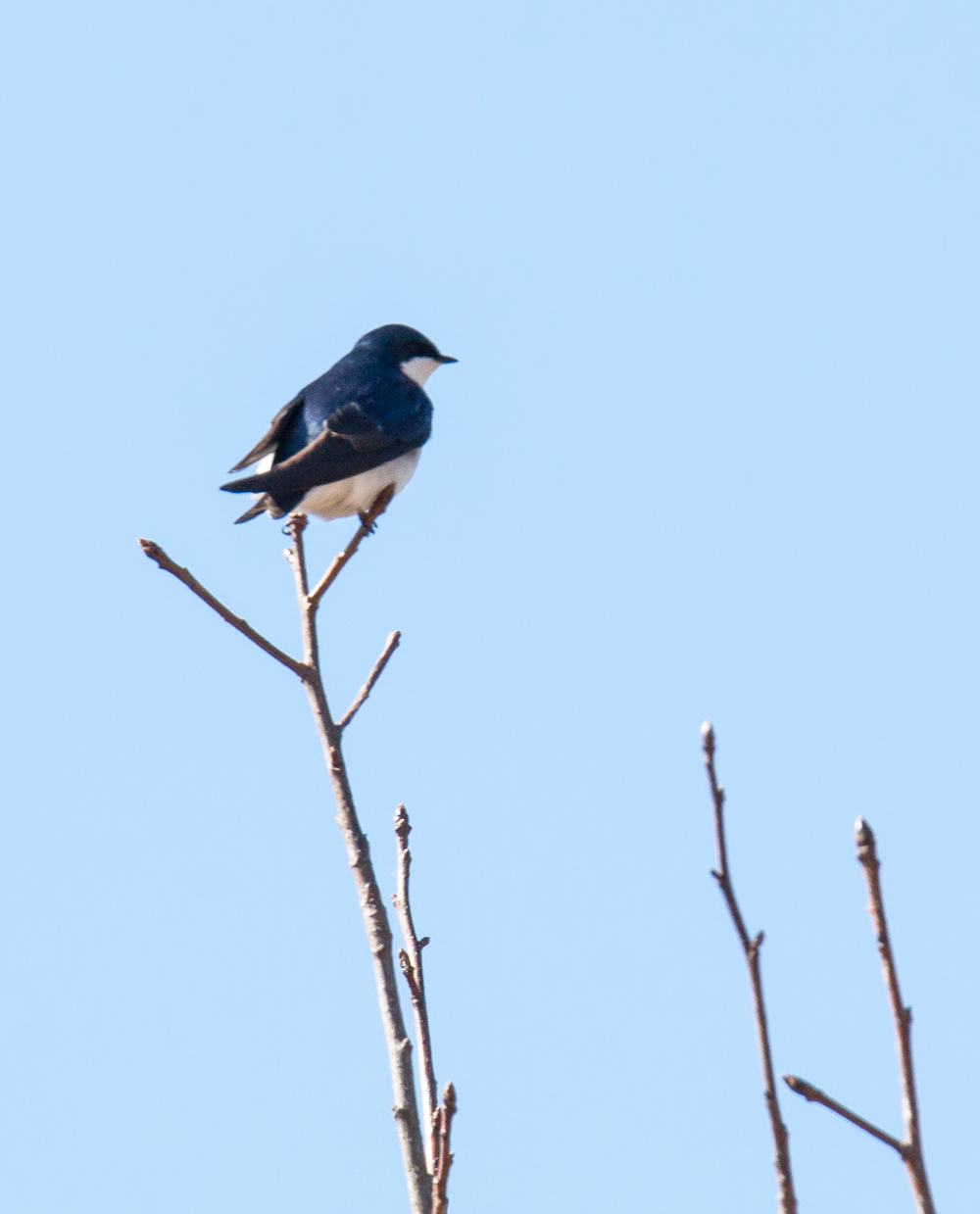
Tree Swallows (Tachycineta bicolor) have moved into at least some of the nesting boxes at Huntley Meadows Park as they get ready for babies. The accommodations are spacious and comfortable, but the views are undoubtedly much better from high atop the trees.

Strange as it sounds, it is unusual for me to get shots of Tree Swallows in a tree. Normally they are zooming about in the air when I see them and it seems rare for them to stop for a rest. They seem to weigh almost nothing, so they can perch on the flimsiest of branches at the very top of trees. As I learned earlier this week when observing them, however, those perches can become pretty precarious when the wind starts to blow, but that’s a story for another posting.

Tree Swallow

Tree Swallow

© Michael Q. Powell. All rights reserved.

Read Full Post »

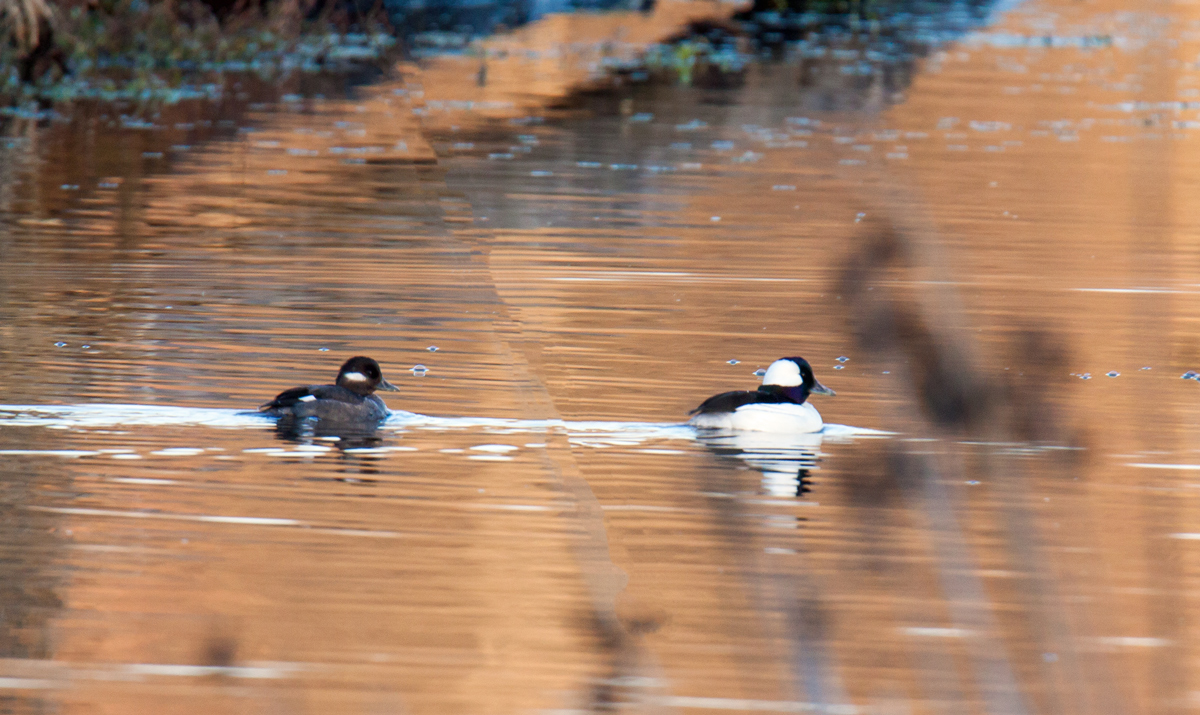
The early morning light was a beautiful golden orange yesterday morning at Huntley Meadows Park and I was thrilled when I spotted a pair of Pied-billed Grebes (Podilymbus podiceps) and a Bufflehead couple (Bucephala albeola), two species of water birds that I rarely have encountered there.

I took these shots from a pretty good distance away, so I initially wasn’t sure what kind of birds they were. WhenI took a quick look afterwards at a couple of the images, the shapes and markings of these birds were so different from the usual birds that I knew I needed to do a little research. Fortunately they were not hard to find in my identification guide.

Somehow I can’t help but smile when I speak aloud the names of these two birds—they seem a little silly and slightly pejorative, though not overtly rude. I can imagine a grizzled cowboy confronting another and saying, “You’re nothing but a pied-billed grebe,” and the other cowboy responding, “And, you, you’re a bufflehead.” (My favorite bird name that makes a great cowboy cuss word, though, has to be the yellow-bellied sapsucker.)

Pied-billed Grebe

Bufflehead

© Michael Q. Powell. All rights reserved.


Read Full Post »

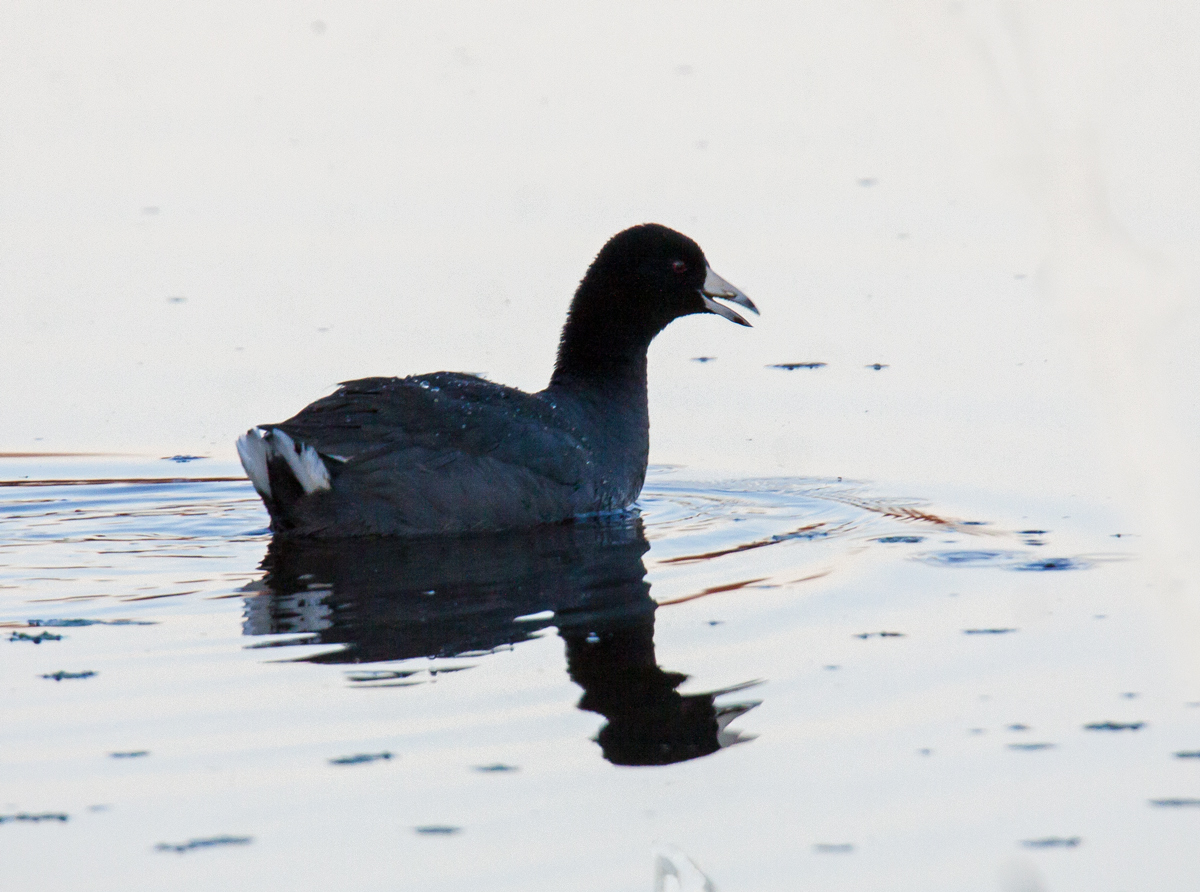
As the early morning sun reflected on the water in pale shades of pink and blue last Friday at Huntley Meadows Park, this American Coot (Fulica americana) looked unusually happy as he foraged in the vegetation, occasionally glancing in my direction with a smile on his face.

It must have been a young coot—we all know that old coots are crotchety and don’t like to be bothered by others.

American Coot

American Coot

© Michael Q. Powell. All rights reserved.


Read Full Post »

Early yesterday morning, a fellow photographer pointed out some foraging water birds in the distance and I was fortunate to get a shot of some Blue-winged Teal ducks (Anas discors), a species of small dabbling ducks that I see only rarely. I love the bold white facial markings of the male Blue-winged Teal during breeding season.

One of the big advantages of going out early in the morning to take photos is that I am able to see some birds and animals that are more concealed later in the day. Blue-winged Teals, for example, tend to forage at the edges of ponds, where they are almost impossible to spot, but early in the morning they were in relatively open water. The downside, of course, is that there is not much light so early in the day, so it’s hard to get images with sharp focus and good contrast.

We are definitely in bird migration season in my area and it’s always exciting to see what birds will show up next. The trees are starting to put out buds now and soon there will be leaves, which will made it more and more difficult to the birds when I hear them singing—I have more of a fighting chance of getting a shot when the birds are in the water.


Blue-winged Teal

© Michael Q. Powell. All rights reserved.

Read Full Post »

In a field full of cattails, this male Red-winged Blackbird (Agelaius phoeniceus) at Huntley Meadows Park chose to perch on a man-made structure, a weather-monitoring station.

I really like the juxtaposition of the natural and industrial elements in the simple composition of this image and its limited palette of colors.

Red-winged Blackbird

© Michael Q. Powell. All rights reserved.
Read Full Post »

As I was preparing to leave work yesterday, one of my co-workers reminded me to wear something green today to celebrate St. Patrick’s Day. Some people go a little crazy on this day, drinking green beer and consuming food that has been dyed to an unnaturally bright shade of green.

To celebrate the day, I thought I’d reprise a few photos of some of my favorite green creatures, including the Common Green Darner (Anax junius), the Green Heron (Butorides virescens), a green metallic bee, and little green frogs. If you are viewing the images in the blog itself (and not the Reader), click on any one of the photos to see a larger image in slide-show mode.

For those of you also celebrating St. Patrick’s Day, be safe and have fun.

© Michael Q. Powell. All rights reserved.

Read Full Post »

This colorful male Wood Duck (Aix sponsa) was standing tall yesterday as he kept watch over a nesting box at Huntley Meadows Park. I kept watch for a while myself, hoping to photograph a female entering or exiting the box, but came up empty-handed.

It’s breeding time and all of the animals and birds seem to be looking for mates and preparing for the arrival of babies. At least some of the Hooded Mergansers and Wood Ducks use the nesting boxes at various locations throughout the park. Tree Swallows also use nesting boxes, although those boxes are much smaller than the ones used by the ducks.

I don’t know if this male Wood Duck is guarding eggs that have already been laid in the box or is merely helping to reserve the box for use by his partner. In the past I have spent extended periods of time waiting for the arrival and departure of female ducks at nesting boxes. I find it amazing that the females are able to arrest their forward momentum and enter the box through a hole that is a tight fit.

Wood Duck

© Michael Q. Powell. All rights reserved.
Read Full Post »

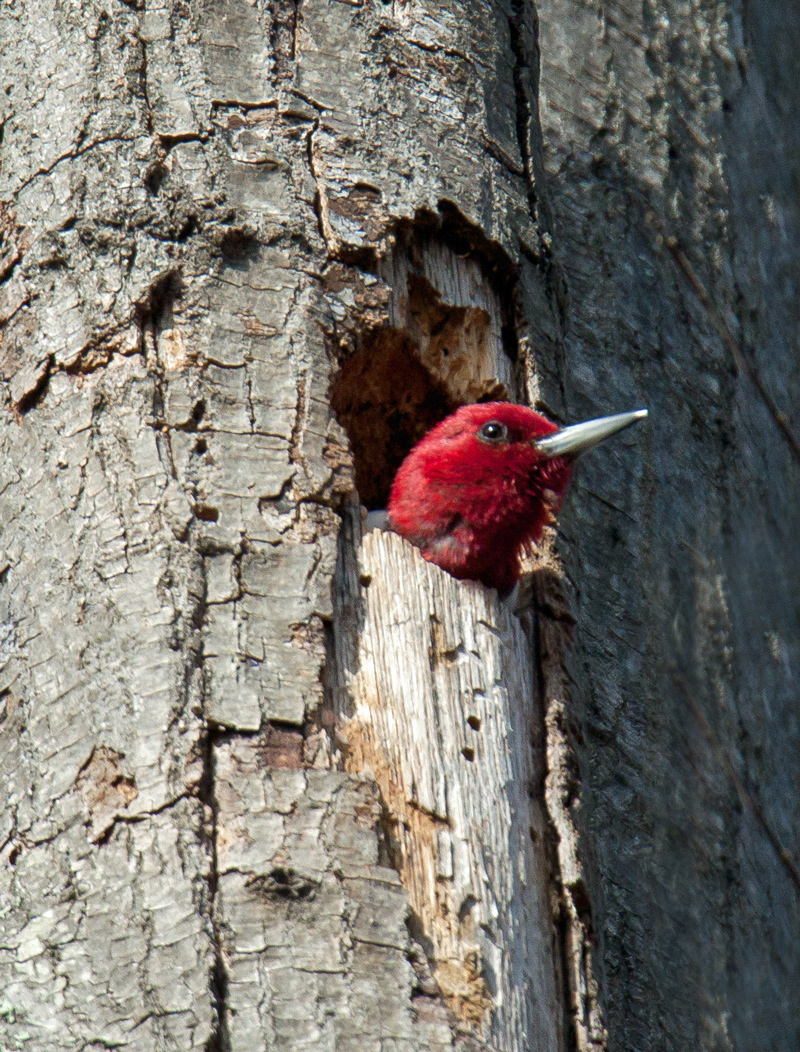
Woodpeckers are amazingly energetic, but I guess they too sometimes need to take a break. On Monday I saw a Red-headed Woodpecker (Melanerpes erythrocephalus) hard at work on a cavity at Huntley Meadows Park. Eventually the woodpecker climbed inside the cavity and, after looking around a bit, appeared to close its eyes to take a little nap.

Red-headed Woodpecker

Red-headed Woodpecker

Red-headed Woodpecker

© Michael Q. Powell. All rights reserved.
Read Full Post »

I love the serene beauty of the early morning. The light is soft, often tinged with pastel shades of pink and orange, and colors are especially saturated. The water is frequently still and mirror-like, providing for the possibility of perfect reflections.

On Monday I spotted this male Northern Shoveler (Anas clypeata) as he slowly made his way across one of the ponds at Huntley Meadows Park. The special characteristics of the post-dawn period made this striking bird even more spectacular than normal.

This photo is a visual response to those who occasionally ask me why I enjoy getting up so early in the morning—words are not necessary.

Northern Shoveler

© Michael Q. Powell. All rights reserved.

Read Full Post »

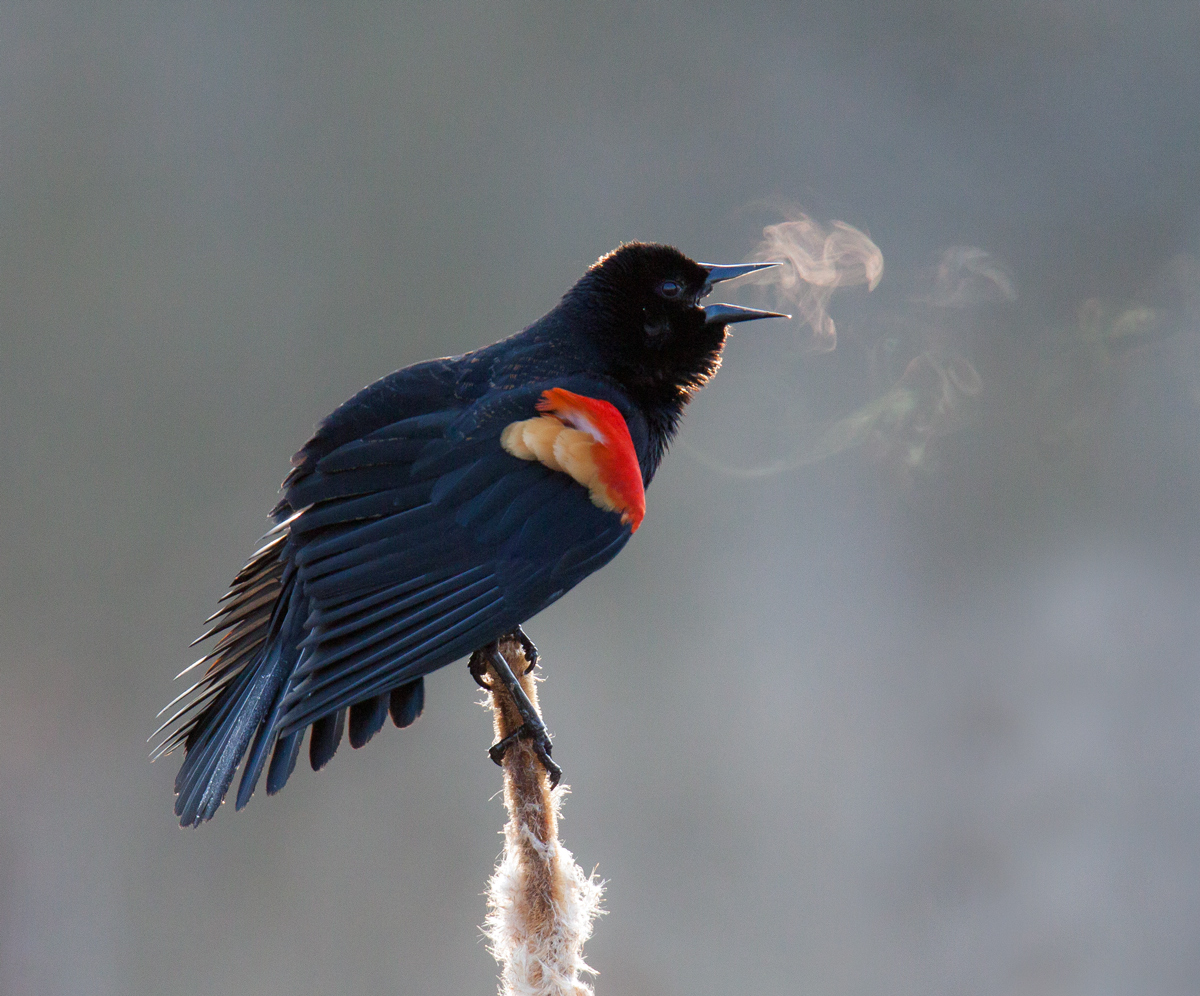
It was so cold yesterday morning at Huntley Meadows Park that the breath of a Red-winged Blackbird (Agelaius phoeniceus) was visible as he sang out from atop a cattail.

Spring is definitely in the air and potentially record high temperatures are forecast for later in the week. However, it was right about at the freezing level when I arrived at the local marshland park where I spent so much of my free time wandering with my camera in hand.

I’ve photographed Red-winged Blackbirds lots of times, but I rarely pass up an opportunity to shoot them again—I just never know when I may capture an unusual moment. The sun had risen and light was starting to reach the cattails. I turned toward the light when I heard a blackbird call out.

As I zoomed in on the bird, I was amazed to see that the blackbird’s breath was visible as he forcibly exhaled when singing. In the still morning air the visible breath swirled about and the bird looked like a smoker getting his early morning nicotine fix.

I was fascinated by the differing patterns of the condensation as the blackbird moved his head or body position and was thrilled to be able to capture several different views of the blackbird’s visible song.

As I went to bed last night, I noticed that the counter for my blog was right at a hundred thousand views. Thanks to so many of you for helping me to reach this milestone and for encouraging me and supporting me as I journey on into photography.

Red-winged Blackbird

Red-winged Blackbird

Red-winged Blackbird

© Michael Q. Powell. All rights reserved.


Read Full Post »

Recently I posted a photo of a Bald Eagle (Haliaeetus leucocephalus) arriving at a perch with talons extended. Here’s what the same eagle looked like when it eventually left the perch. I love sense of power that the eagle is able to convey when it extends its mighty wings. (The second photo, taken a split-second before the first one, shows the eagle as it was preparing to take off,)

Note that the eagle has a band around his left leg. I wonder how many of the eagles I see at Huntley Meadows Park are banded. I can recall only one other time when I could see a band, but must admit that most of my eagle shots do not have enough detail to be able to tell if a band is present.

Bald Eagle

eagle2_5Mar_blog

© Michael Q. Powell. All rights reserved.

Read Full Post »

A Bald Eagle (Haliaeetus leucocephalus) was preparing to land in a tree yesterday morning at Huntley Meadows Park and had its talons fully extended. With perfect form, the eagle was able to stick and hold the landing.

The judges all gave the eagle a perfect score of 10 for the routine.

Bald Eagle

© Michael Q. Powell. All rights reserved.

Read Full Post »

Yesterday morning I had a portrait session with a male Northern Cardinal (Cardinalis cardinalis) who wanted to update his presence on social media. Nowadays, he said, it takes more to attract a mate than merely putting on displays and singing loudly and he wanted to set himself apart from his rivals.

We tried a number of different poses in an effort to give him an artsy, mysterious look that would simultaneously suggest vulnerability and passion. We even tried a full-body portrait, because he knows that some of the lady cardinals are interested in more than just his handsome face.

Northern Cardinal

Northern Cardinal

Northern Cardinal

Northern Cardinal

© Michael Q. Powell. All rights reserved.


Read Full Post »

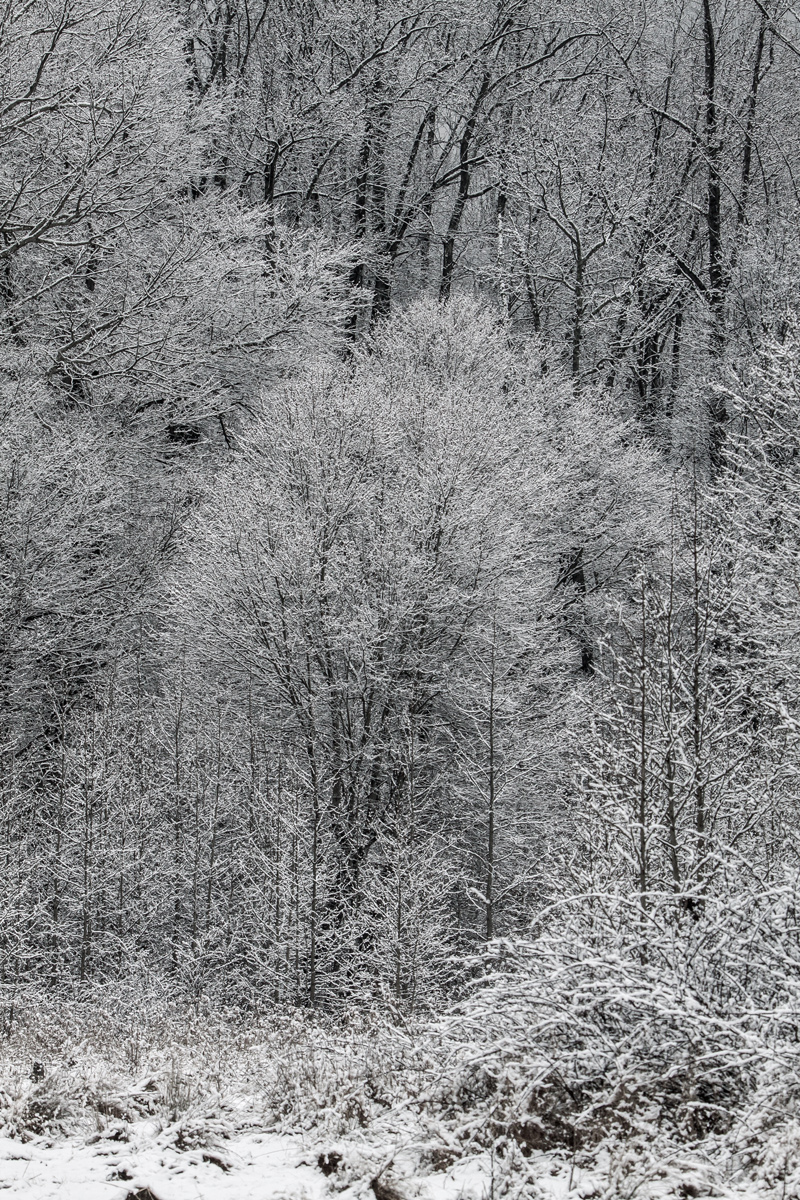
Coated in a layer of snow, the landscape yesterday morning at Huntley Meadows Park was devoid of color, transformed into a study of black and white.

snowscape

Partially hidden behind a branch, this Bald Eagle (Haliaeetus leucocephalus) was almost invisible in a distant snow-covered tree.

Bald Eagle

This was almost a perfect snowfall—the accumulation of an inch or two (2-5 cm) was just enough to create a beautiful snowscape without inhibiting travel on the roads.

© Michael Q. Powell. All rights reserved.

Read Full Post »

My heartbeat definitely accelerates when a Bald Eagle (Haliaeetus leucocephalus) flaps its wings and heads straight in my direction, as one did again this past Monday morning. I don’t know why the eagle chose to fly toward me, since I am pretty sure that it was aware of my presence and could have flown away. Perhaps the eagle was simply curious and wanted to check me out.

Eventually the eagle did pull up and fly past me, without getting as close as it might seem from the images. Some readers have asked me if I was near an eagle nest when I posted similar photos in the past. I have seen eagles multiple times in the same general location and suspect there might be a nest nearby, but so far have not located one.

Bald Eagle

Bald Eagle

Bald Eagle

© Michael Q. Powell. All rights reserved.


Read Full Post »

Do dabbling ducks double date? It sure looked like that was the case earlier this week when I spotted a Mallard (Anas platyrhynchos) couple and a Hooded Merganser (Lophodytes cucullatus) couple swimming away from a larger group of mostly mallards for a few quiet moments together. I grew up in a family with eight siblings, so I can really understand their pursuit of peace and privacy. 

It’s almost springtime and many of the birds are searching for mates. Usually it’s the males that put on elaborate displayes, but I think the female “Hoodie” here was the one that went all out to impress her date with an elaborate hairstyle.

duck dating

© Michael Q. Powell. All rights reserved.

Read Full Post »

There were a lot of Canada Geese (Branta canadensis) coming and going at Huntley Meadows Park early yesterday morning. This one was descending rapidly and coming in so fast that it looked like the goose was going to land right on me.

Canada Goose

© Michael Q. Powell. All rights reserved.

Read Full Post »

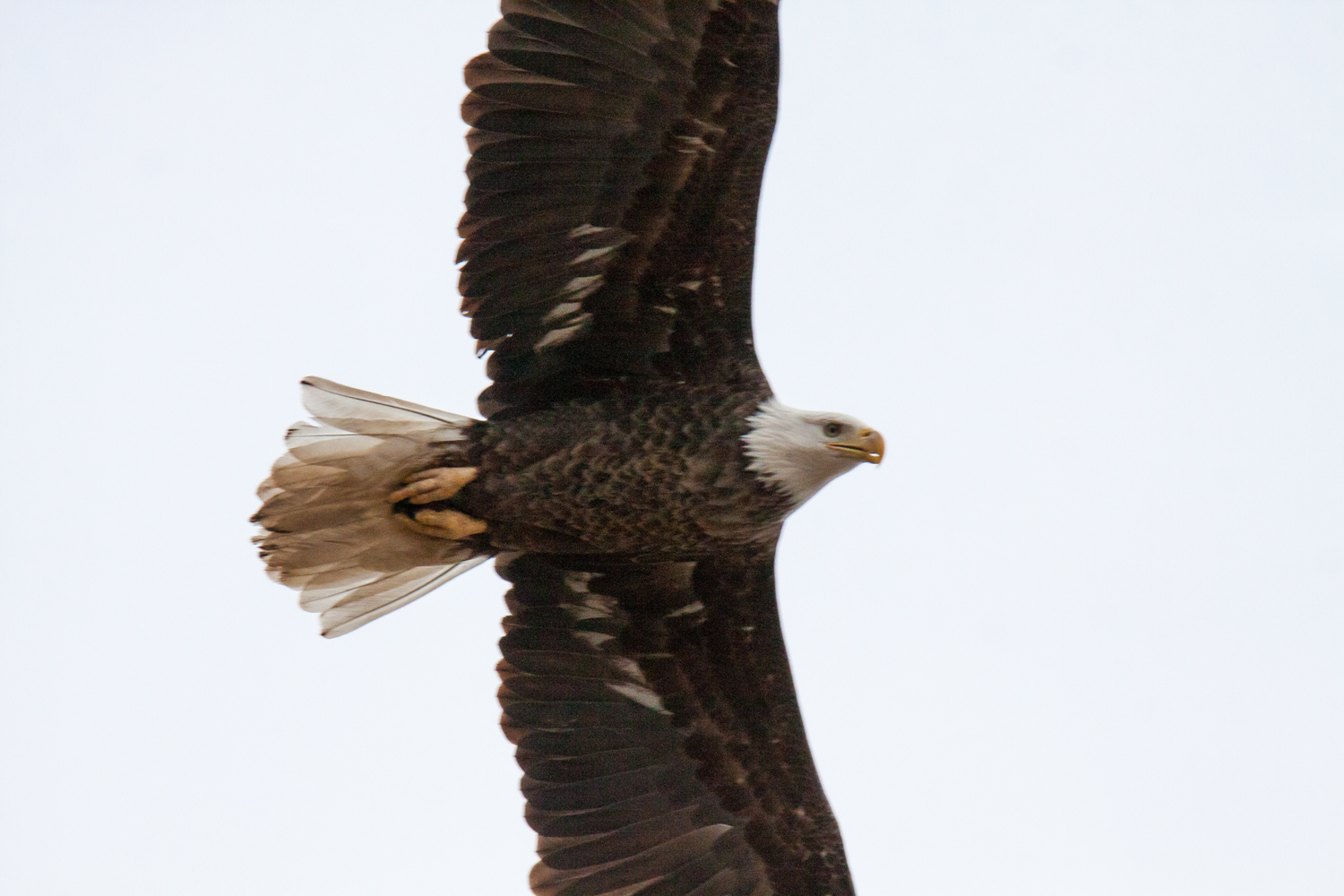
I didn’t see where this Bald Eagle (Haliaeetus leucocephalus) came from early yesterday morning at Huntley Meadows Park, but suddenly it was overhead at a relatively low altitude. I zoomed back a bit on my telephoto lens, but the eagle still more than filled the frame. At that close range, tracking was difficult and I had trouble keeping the eagle in the viewfinder (I think adrenaline might have been a factor too).

Incredibly, the first shot is an uncropped image. It was shot handheld at 483mm on my crop sensor Canon 50D camera with my trusty Tamron 150-600mm lens. The lighting was not that great, so I was shooting at ISO 1600, which resulted in a somewhat grainy image.

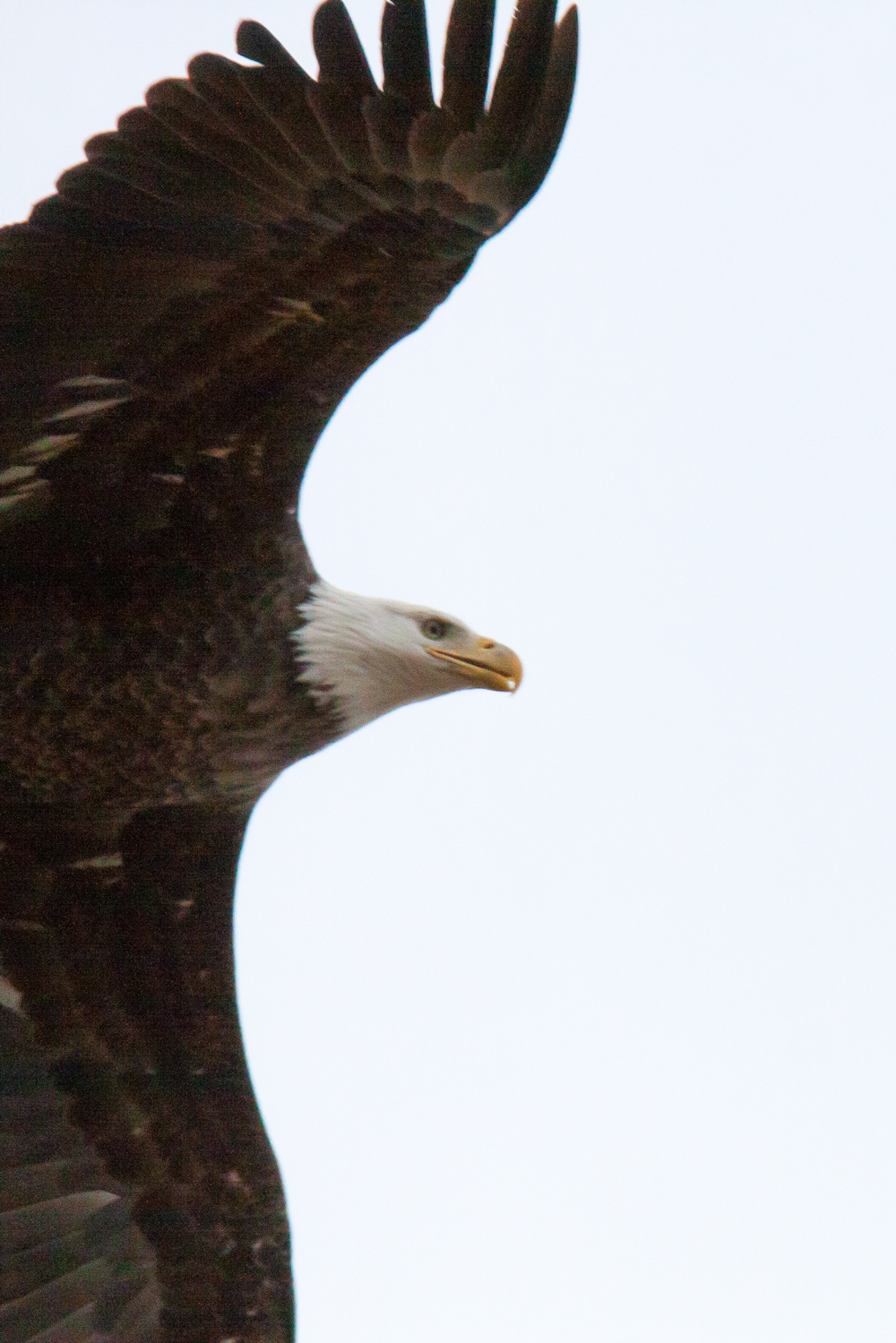
The second shot is one in which I got a bit ahead of the eagle in tracking it and chopped off its body. I liked the eagle’s expression so I cropped off the wide expanse of white sky to the right, turning the image from landscape mode to portrait mode, but otherwise left the framing untouched.

If someone had told me before yesterday that I could fill the frame of an image with a bald eagle in flight, I almost certainly would have laughed at them. Reality continues to amaze me.


Bald Eagle

Bald Eagle

© Michael Q. Powell. All rights reserved.

Read Full Post »

« Newer Posts - Older Posts »