Feeds:
Posts
Comments

Archive for the ‘Birds’ Category

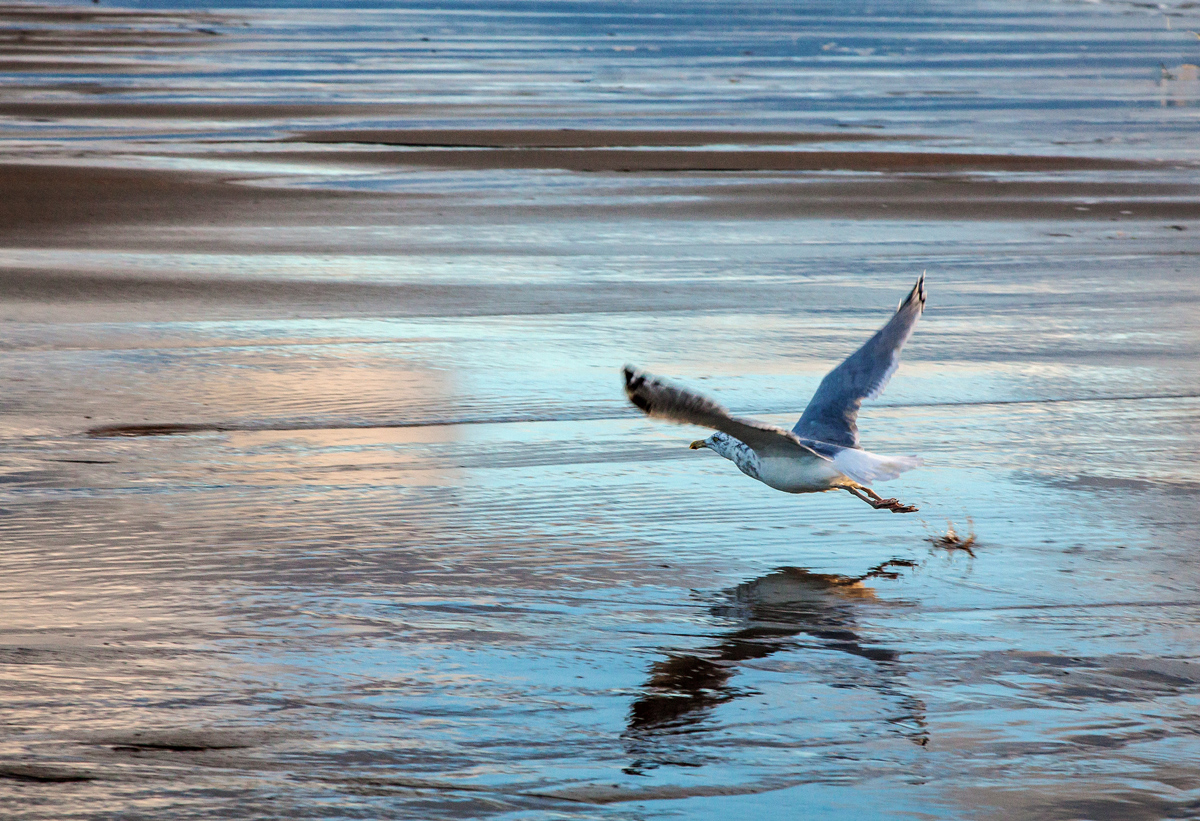
A walk along the beach early Halloween morning in Ocean Park, Maine helped to refresh my mind, my body, and my spirit. I had made a quick trip to Maine for a family emergency and was feeling really stressed. The peace and power of the ocean had an amazing therapeutic effect on me.

The tourists are now almost gone from this vacation area south of Portland and the beach was mostly deserted except for me, some shore birds and an occasional dog walker.

gull at dawn

shorebirds at dawn

© Michael Q. Powell. All rights reserved.

Read Full Post »

I never get tired of watching the Great Blue Herons (Ardea herodias) at Huntley Meadows Park. Quite often they ignore me and focus intently on catching a fish. I marvel at their patience and persistence.

During one recent encounter, though, I had eye-to-eye contact with a heron. The heron looked right at me and seemed to be sending a distinct warning message that it was not going to share the small fish that it had just caught.

I backed off and let the heron enjoy his fish appetizer in peace. It was gone in a quick gulp and the heron went back to work and I moved on in search of more subjects.

Great Blue Heron

© Michael Q. Powell. All rights reserved.

Read Full Post »

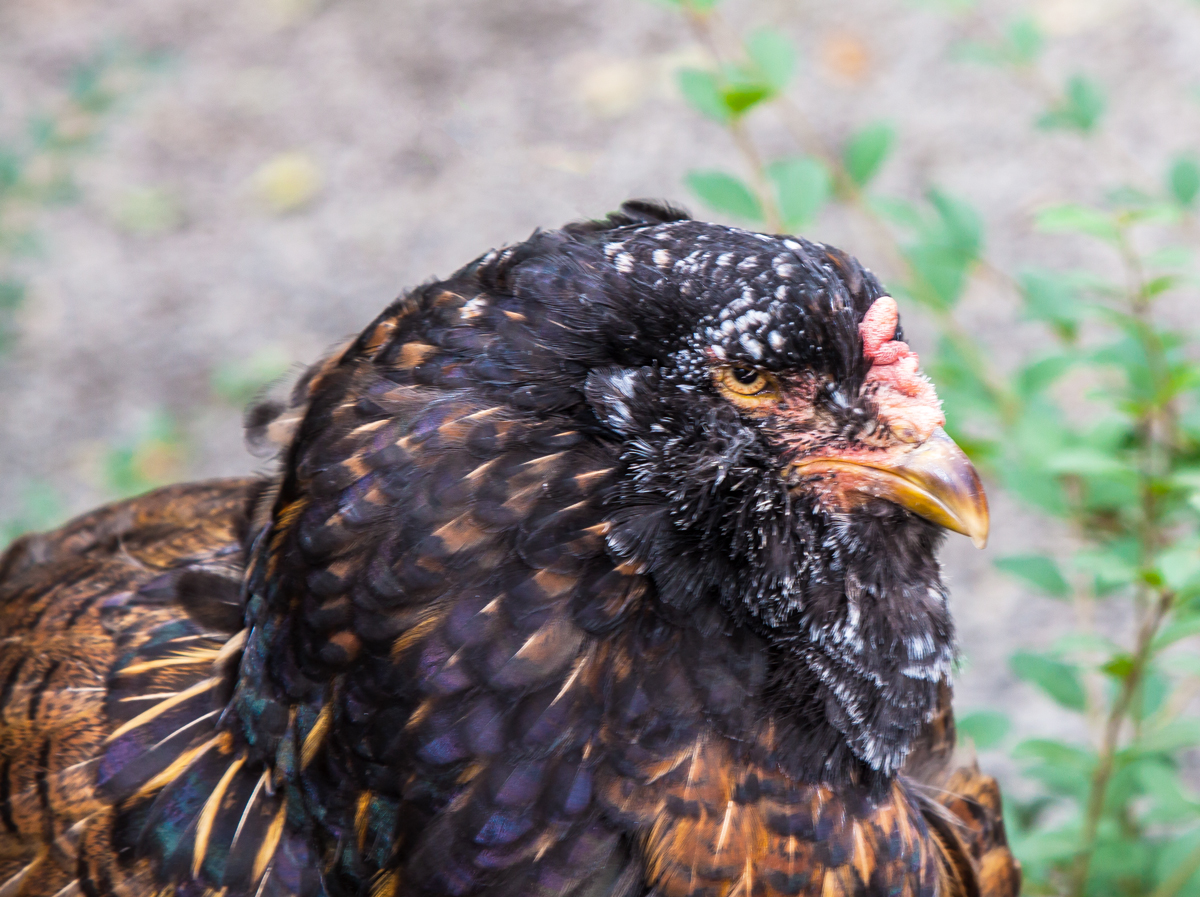
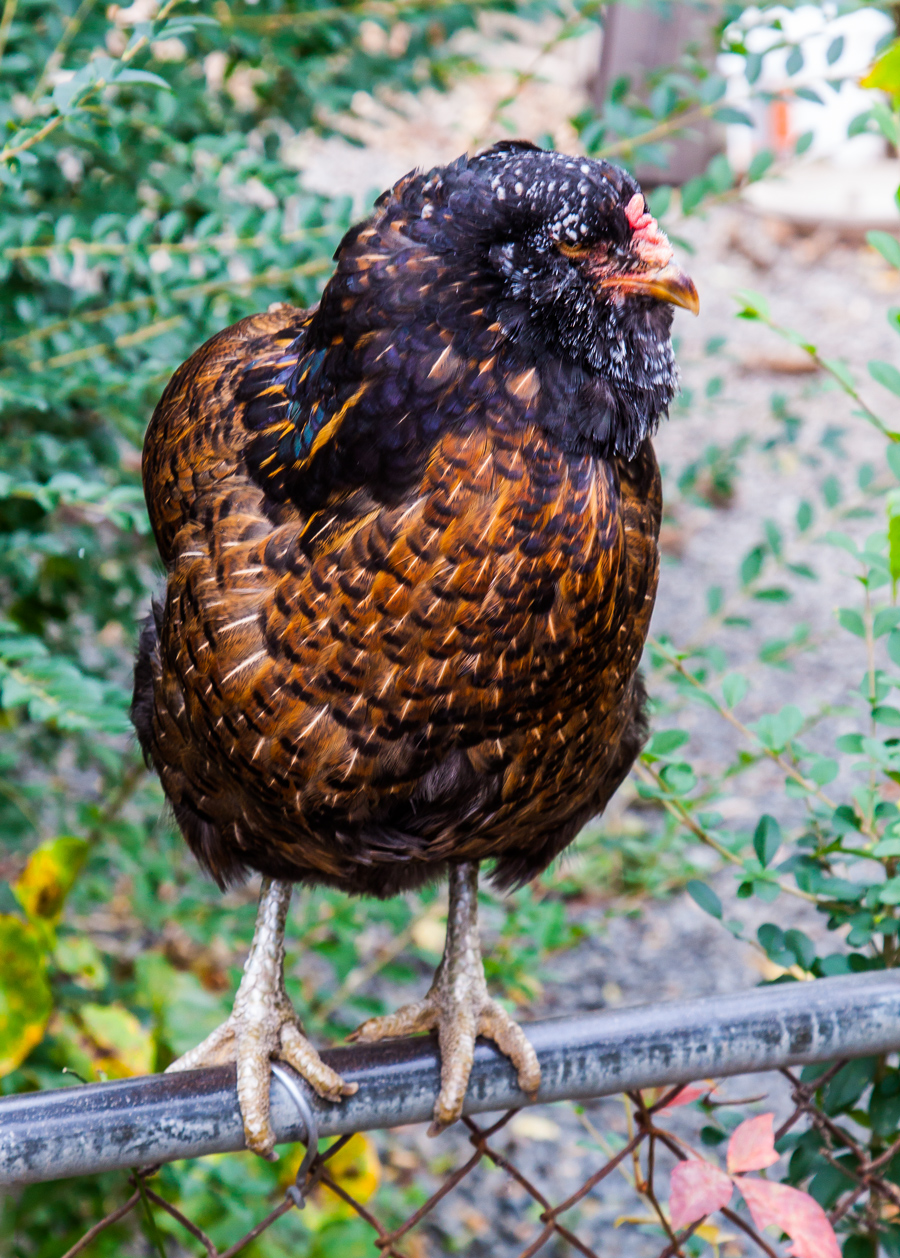
I grew up in the suburbs and don’t know much about domestic fowl, but it seems to me that this colorful bird must be some kind of funky chicken. I love the colors and the patterns in the feathers of this chicken.

I spotted this chicken during a visit to Nalls Produce Center, a wonderful location in our area to see all kinds of colorful produce and plant. While there, I also took some shots of pumpkins that I will probably feature in a posting later this week.

funky chicken

funky chicken

© Michael Q. Powell. All rights reserved.

Read Full Post »

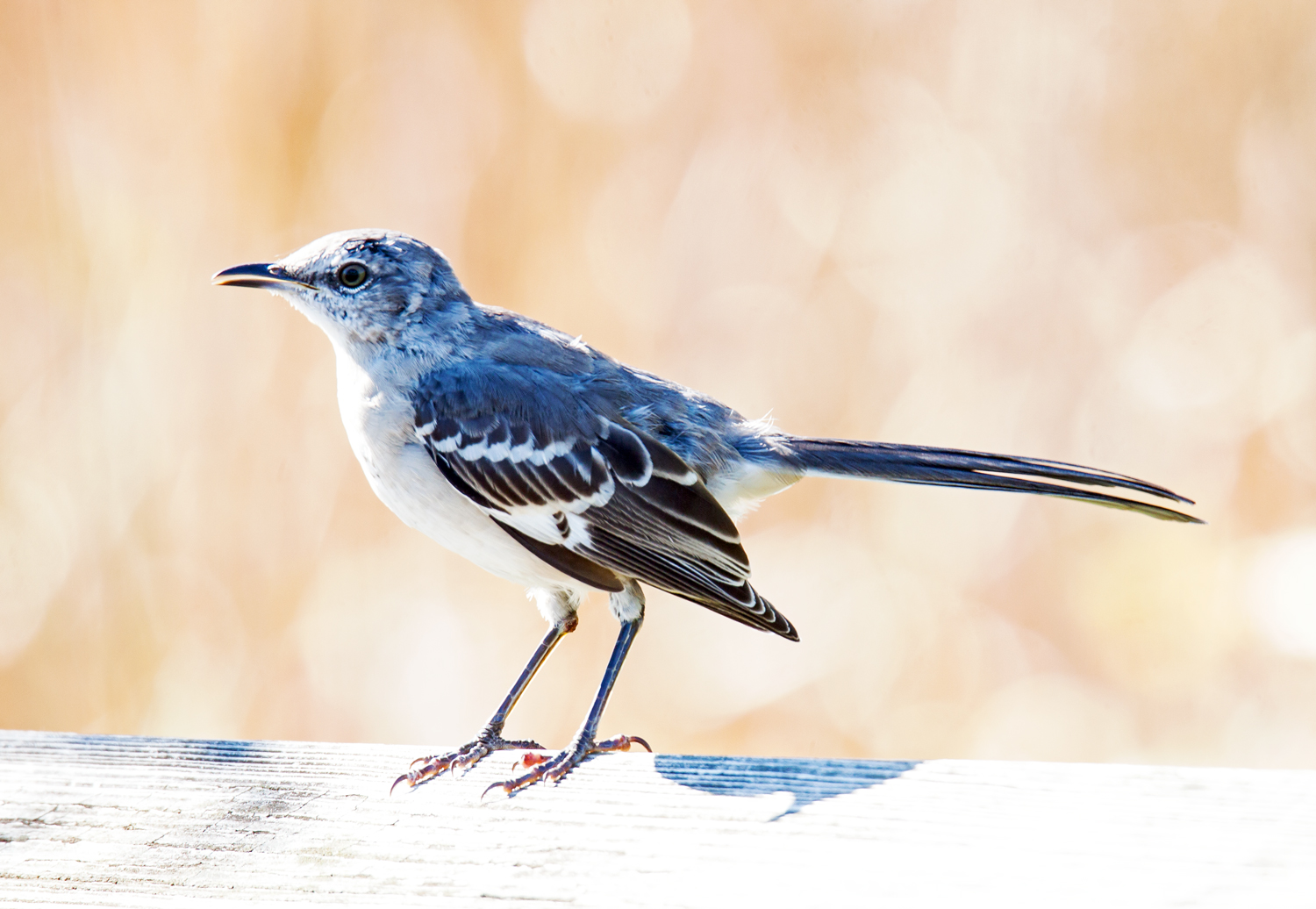
Common subjects like this Northern Mockingbird (Mimus polyglottos) have a special appeal and challenge for me. Can I photograph them in an unusual way?

The foreground and background in this image almost blend together and highlight the beauty and personality of the mockingbird. The background makes it look a bit like it was taken in a studio setting. Only the chipped paint gives away the fact that the curious bird was perched on the man-made railing of a boardwalk. I also really like the way that the color and pattern of the weathered wood almost perfectly match the bird’s feathers.

Northern Mockingbird


© Michael Q. Powell. All rights reserved.


Read Full Post »

Generally it’s best to have the sun behind you when taking photos, but sometimes you are forced to shoot almost directly into the sun. When the conditions are right you can sometimes get wonderful silhouettes, like these images of Double-crested Cormorants (Phalacrocorax auritus) that I spotted on the Potomac River near Dyke Marsh in Alexandria, Virginia this past Monday.

The shot of the perched cormorant was a conscious composition—I assessed the light and knew that I was shooting a silhouette. In the case of the flying cormorant, however, I was reacting to the movement of a bird taking off from the water and trying so hard to hard to capture focus and keep the bird in focus that I was not paying much conscious attention to the lighting.

Double-crested Cormorant

Double=crested Cormorant


Double-crested Cormorant

© Michael Q. Powell. All rights reserved.

Read Full Post »

Periodically I’d catch a glimpse of a warbler in the trees of Huntley Meadows Park last Friday, but they mostly remained hidden deep within the branches. This Yellow-rumped Warbler (Setophaga coronata), however, ventured out of the shadows just enough that I was able to get this long-distance shot of it.

Yellow-rumped Warbler

© Michael Q. Powell. All rights reserved.

Read Full Post »

Yesterday I spotted this beautiful Double-crested Cormorant (Phalacrocorax auritus) in the vegetation along the shore of the Potomac River as I explored Dyke Marsh Wildlife Preserve in Alexandria, Virginia. Although “heavy-boned” is a euphemism sometimes used for large people, it is literally true for cormorants and is one of the reasons why they ride so low in the water. Additionally, their feathers don’t shed water like those of ducks and can get waterlogged, which makes it easier to dive deeper, but requires them to dry them out periodically.

I hoped to catch a cormorant with its wings extended for drying, but none of the cormorants I saw were accommodating in that regard yesterday. I’m no psychic, but I foresee a return trip to that area in the near future.

Double-crested Cormorant

© Michael Q. Powell. All rights reserved.

Read Full Post »

At first glance I thought that this Great Blue Heron (Ardea herodias) was getting ready to swallow a flying bird, but then I realized it was “only” a small, freshly caught fish that the heron had tossed into the air last week at Huntley Meadows Park.

A split-second later, the fish had disappeared.

Great Blue Heron

© Michael Q. Powell. All rights reserved.

Read Full Post »

I am not sure if it is the cooler autumn weather or the impending winter, but all of the sudden the trees are alive with the sounds of woodpeckers. I can hear them pecking away  and calling out to each other high in the trees. Unfortunately there are still a lot of leaves on the trees, making it hard to spot these busy birds.

On Friday at Huntley Meadows Park, I did manage to get a clear view of a beautiful little Red-bellied Woodpecker (Melanerpes carolinus) feverishly  foraging in a tree. Suddenly the woodpecker turned its head in my direction as though it wanted to proudly show me the bright red fruit that it had discovered.  With the fruit firmly in its bill and a slight smile on its face, the woodpecker flew away, perhaps to cache its find for another day.

Red-bellied Woodpecker

Red-bellied Woodpecker

Red-bellied Woodpecker

© Michael Q. Powell. All rights reserved.

Read Full Post »

Bluebirds are often considered to be a symbol of happiness and I was definitely happy to spot this beautiful Eastern Bluebird (Sialia sialis) yesterday at Huntley Meadows Park. I saw bluebirds a number of times during my walk around the park on a sunny autumn day, but this was one of the only ones that was within range of my camera.

Eastern Bluebird

© Michael Q. Powell. All rights reserved.

Read Full Post »

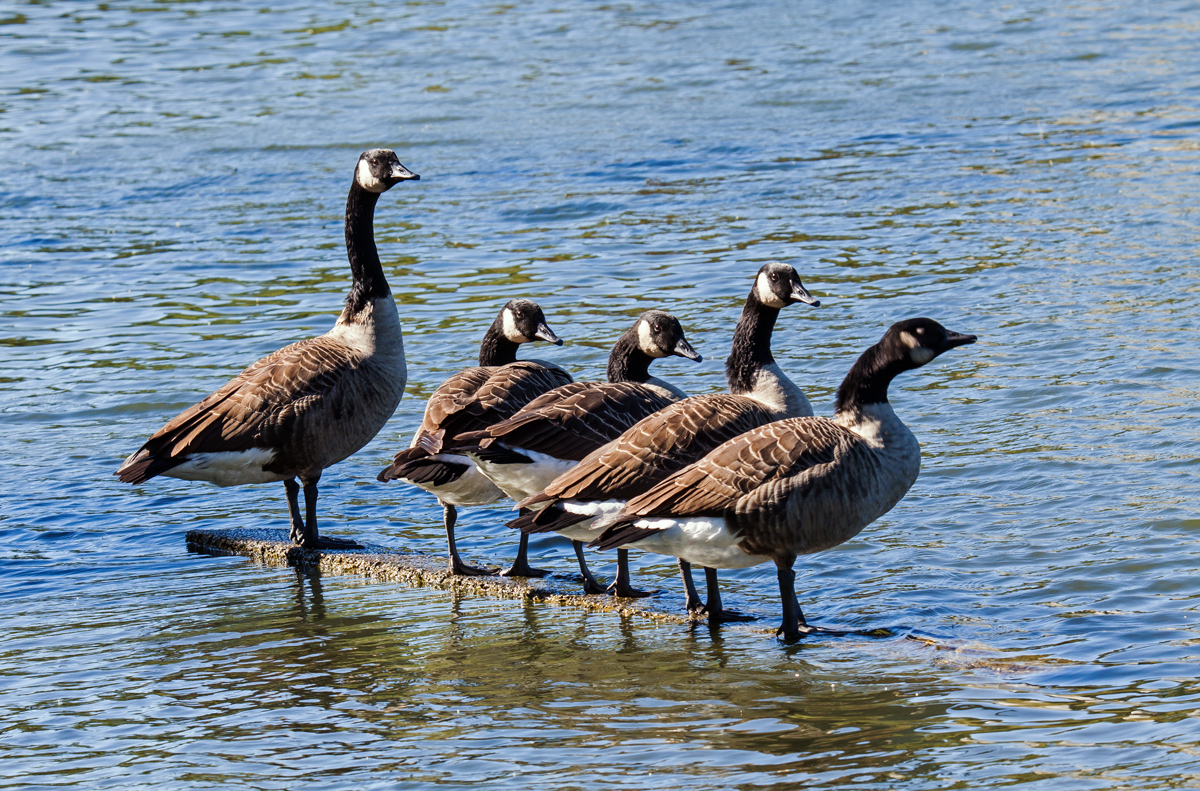
Have you ever tried to shoot a group portrait? You get everyone lined up and facing the camera, but there is always one uncooperative subject. That was certainly the case with these Canada Geese (Branta canadensis) at a little suburban pond on Monday. The gaggle of geese was preening and cleaning themselves all in a row on a on a concrete bar sticking out of the water.

Canada Geese

© Michael Q. Powell. All rights reserved.

Read Full Post »

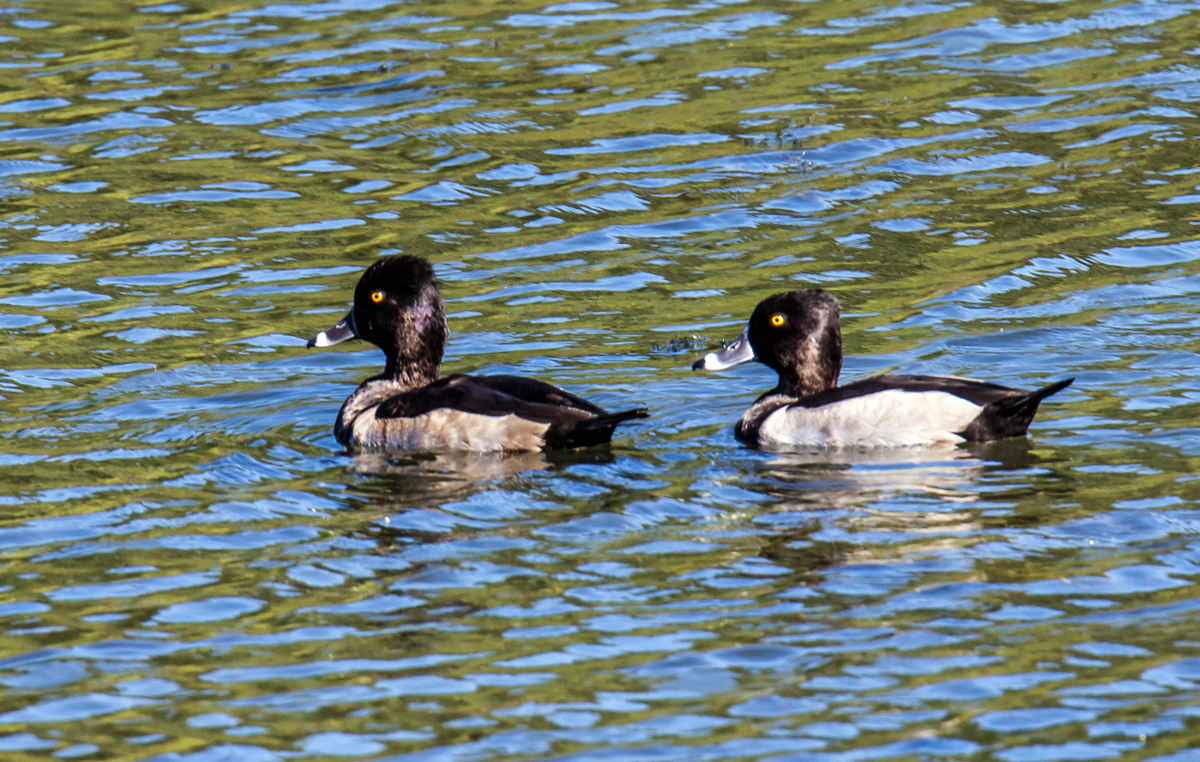
As we move deeper into fall we will be seeing more and more migrating birds in Northern Virginia, where I live . Some will just be passing through the area, but others will probably overwinter here, like these Ring-necked ducks (Aythya collaris) that I spotted yesterday at a small suburban pond less than a mile from my townhouse.

Unlike most of the ducks that I see, Ring-necked ducks are diving ducks, not dabbling ducks. As a consequence, they spend most of the time in the middle of the pond, making them a bit tough to photograph. Fortunately the sun was shining brightly yesterday, so that I was able to capture the ducks’ golden eyes even when shooting at a distance.

Ring-necked duck


© Michael Q. Powell. All rights reserved.

Read Full Post »

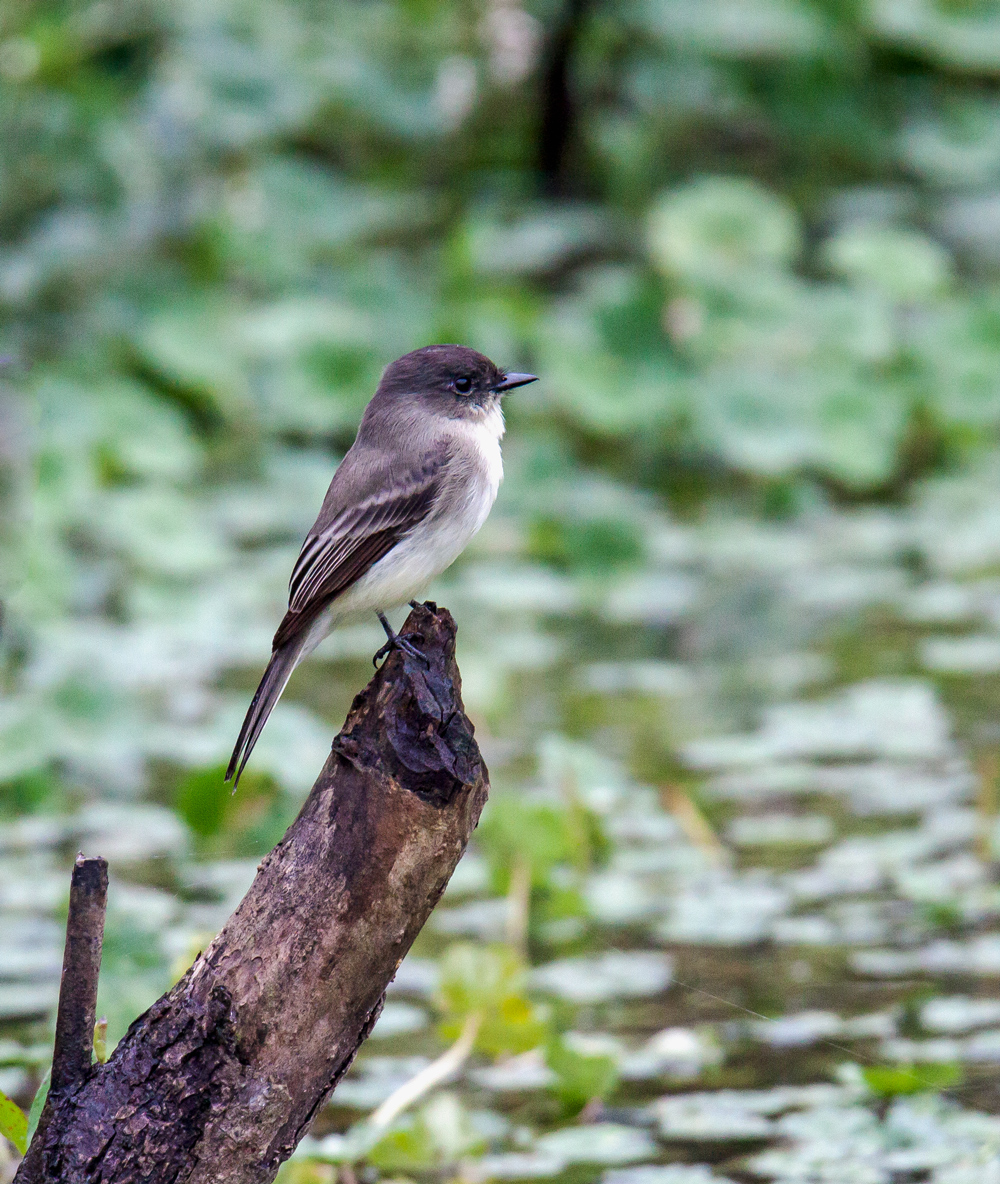
I love trying to capture images of fierce raptors and other large birds, but there is something equally gratifying about getting a glimpse of gentle little birds, like this Eastern Phoebe (Sayornis phoebe) that I spotted recently at Huntley Meadows Park. Most of the time birds like this are invisible to me, hidden among the leaves high in the trees. On the day I took this shot, however, the phoebe was perched in a sheltered area, perhaps because of the intermittent rain, and I was able to capture this simple little portrait.

Eastern Phoebe

© Michael Q. Powell. All rights reserved.

Read Full Post »

I am not sure what this Great Blue Heron (Ardea herodias) was doing when I spotted it this past weekend at Huntley Meadows Park, but it looked to be admiring its most recent manicure.

Great Blue Heron

© Michael Q. Powell. All rights reserved.

Read Full Post »

It’s probably good for the ego to have “great” in your name, like Great Blue Herons and Great Egrets. Hopefully this little bird’s self-esteem is not damaged by being called a Least Sandpiper (Calidris minutilla). I spotted this diminutive beauty last week at Huntley Meadows Park before the start of all of the recent rain. The extremely dry weather had made the water very shallow in some portions of the marsh and had attracted tiny shore birds like this one.

Least Sandpiper

© Michael Q. Powell. All rights reserved.

Read Full Post »

On a cloudy, misty afternoon yesterday at Huntley Meadows Park, this female Belted Kingfisher ( Megaceryle alcyon) couldn’t make up her mind where to perch, flying from one rotted tree to another in the marshland. I was thrilled to get this shot when she took off from one of her perches.

Belted Kingfisher

© Michael Q. Powell. All rights reserved.

Read Full Post »

“How can you just leave me standing? Alone in a world that’s so cold?…Why do we scream at each other? This is what it sounds like when hawks cry.” (Apologies to Prince for changing the words of the song “When Doves Cry.”)

On a gray, gloomy day at Huntley Meadows Park,  hawks were crying out all afternoon. One hawk would start to scream and its call would be echoed back from somewhere in the distance. Sometimes I would hear a cry from the cloud-covered sky, but I never got a glimpse of the passing hawks.

I was fortunate to be in the right place when one hawk started crying. From the cry, I knew that the hawk was nearby, but I had trouble locating it as I scanned the trees. Finally I spotted it, a juvenile Red-shouldered Hawk (Buteo lineatus). I snapped off a couple of images and then started to adjust the camera’s settings. I had barely taken the camera from my eye when the hawk took off.

The moment was gone and for a short period of time the marsh was silent.

Red-shouldered Hawk

© Michael Q. Powell. All rights reserved.

Read Full Post »

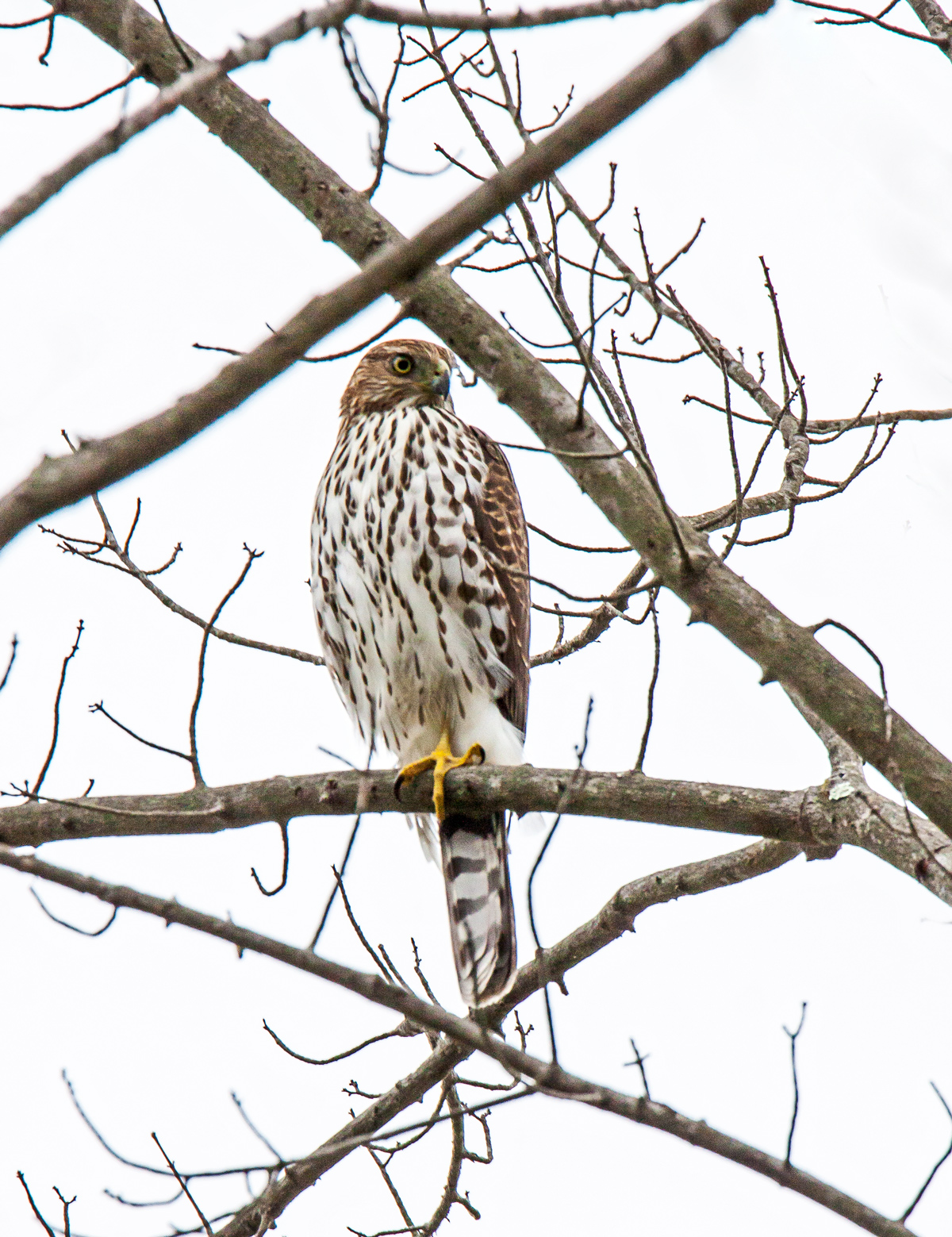
On Monday I spent a good amount of time watching this hawk in a distant tree at Huntley Meadows Park (and, alas, missed the shot when it flew away). There is something simultaneously beautiful and fierce about hawks and eagles that never fails to attract me. Clouds covered the sky for the entire day and there just wasn’t a whole lot of light to work with. That’s why this image has an almost monochromatic look, which makes the yellow color of the talons and the eye stand out even more prominently.
I think this is a Red-shouldered Hawk (Buteo  lineatus), but would welcome a correction to my identification.
Update: A Facebook friend, who is a much more experience birder than I am, has suggested that this may be a juvenile Sharp-shinned Hawk (Accipiter striatus), while others say it is probably a juvenile Cooper’s Hawk (Accipiter cooperii ). Again I am proving to be identification-challenged.
Red-shouldered Hawk

© Michael Q. Powell. All rights reserved.

Read Full Post »

Fog hung over the wetlands at Huntley Meadows Park early Friday morning, making the walk on the boardwalk a little eerie. When a spooked Great Blue Heron (Ardea herodias) took off right in front of me I was scared almost witless, but had the presence of mind to get this shot.

Great Blue Heron

Here’s a shot that I took shortly after the first one that gives you a sense of what the boardwalk looks like as it makes it way through the wetlands of my favorite marshland park.

fog2_blog

© Michael Q. Powell. All rights reserved.

Read Full Post »

Water levels are pretty low in some areas of the wetlands at my favorite marshland park, providing a perfect habitat for some visiting shore birds. On Friday at Huntley Meadows Park I spotted a number of tiny shore birds including this one that I am pretty sure is a Semipalmated Plover (Charadrius semipalmatus).

Semipalmated Plover

© Michael Q. Powell. All rights reserved.

Read Full Post »

Late Saturday afternoon I was exploring Cook Lake, a tiny urban fishing lake adjacent to a water park in Alexandria, Virginia. I accidently spooked a Great Blue Heron (Ardea herodias) that flew to a fallen tree on the shore. The lighting was beautiful and the heron struck a pose that I can only describe as heroic.

I never get tired of photographing Great Blue Herons.

Great Blue Heron

© Michael Q. Powell. All rights reserved

Read Full Post »

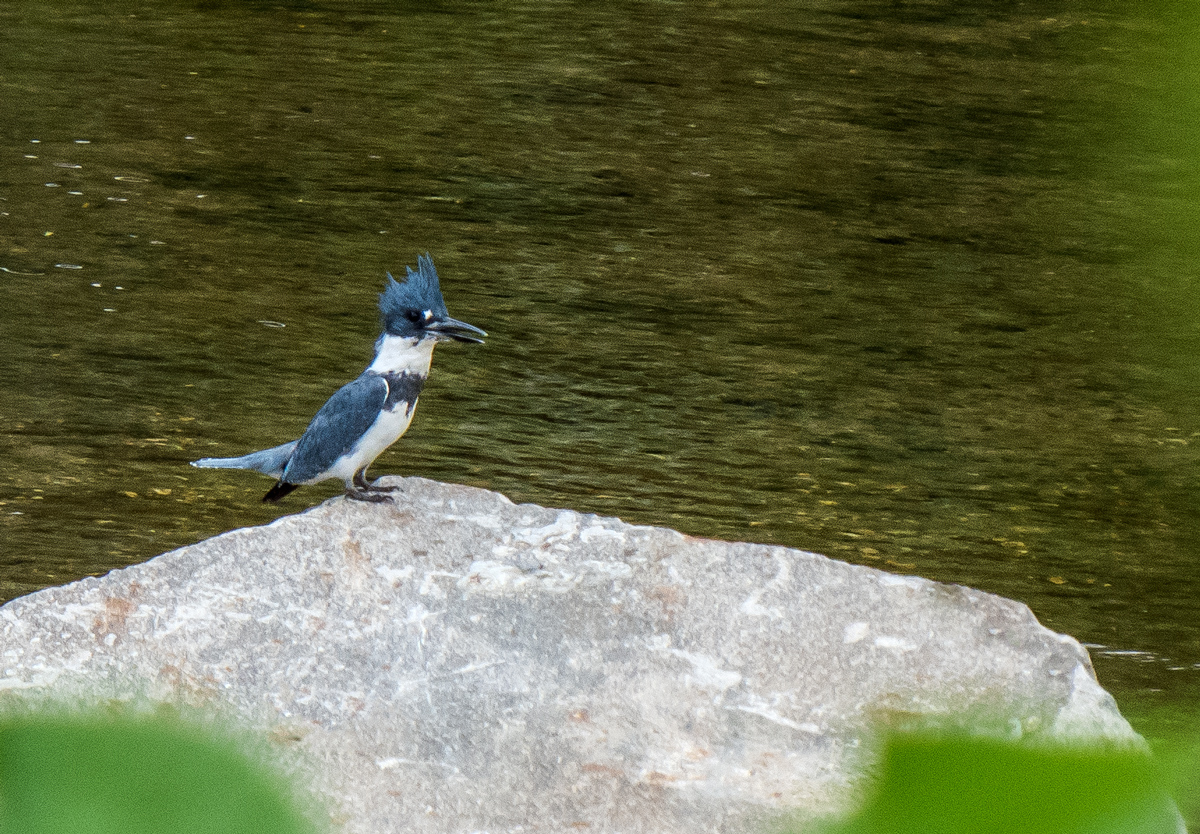
Yesterday I was on a biking/walking trail that follows Cameron Run, a tributary stream of the Potomac River, when I heard the unmistakable  rattling call of a Belted Kingfisher (Megaceryle alcyon). As I moved through the vegetation to investigate, I spotted a kingfisher perched on a rock jutting out of the water. I had my Canon SX50 zoomed out to its maximum length, but it wasn’t enough—I needed to get closer.

As I made my way slowly down a steep slope, my footing gave way and I unceremoniously slid for a short distance on my back side. No surprisingly I spooked the kingfisher. What was surprising was that the kingfisher did not fly up into the trees, but instead he flew to a more distant smaller rock that was barely bigger than he was. (You can tell that it is a male because, unlike the female, he does not have chestnut stripe across his chest.)

The kingfisher soon took to the air and was joined by another one. They proceeded to fly back and forth over a portion of the stream, calling out loudly the entire time. They didn’t actually buzz me, but they did fly in my general direction a couple of times before veering off. What was going on?

I got a somewhat blurry shot of the second kingfisher, a female, that confirmed my suspicion that this was a couple. According to the Cornell Lab of Ornithology website, “During breeding season the Belted Kingfisher pair defends a territory against other kingfishers. A territory along a stream includes just the streambed and the vegetation along it, and averages 0.6 mile long. The nest burrow is usually in a dirt bank near water. The tunnel slopes upward from the entrance, perhaps to keep water from entering the nest. Tunnel length ranges from 1 to 8 feet.”

This behavior suggests to me that there could be baby kingfishers in the area. I certainly didn’t see any babies and suspect that a nest would probably be on the opposite side of the stream from where I took these photos, an area that is more remote and inacessible.

Belted Kingfisher

Belted Kingfisher

© Michael Q. Powell. All rights reserved

Read Full Post »
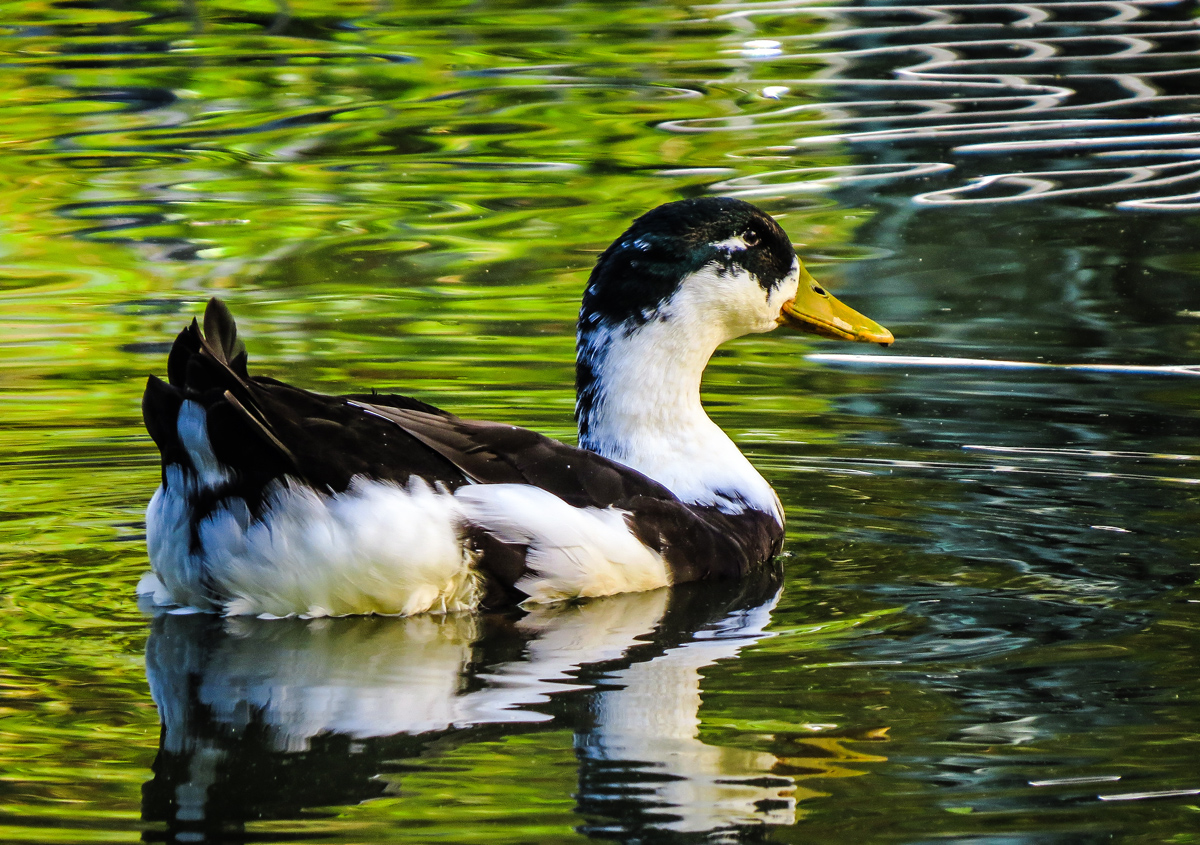
The sun was shining so brightly in Brussels one day last week that even the ducks looked to be wearing sunglasses. Although I can clearly see the eye in the white patch of feathers, my mind keeps getting tricked into thinking the eye must be hidden behind the dark lenses of the “sunglasses.”

I spotted these ducks in the same little pond adjacent to the botanical garden of Brussels where I saw the dragonflies that I wrote about in an earlier posting. These ducks sort of look like mallards, but the colors are really different, especially those of the black and white duck. Perhaps these are hybrids or domesticated ducks.

I’d welcome comments and thoughts about the identification of these ducks that were a welcome sight for me as I explored Brussels. I realize that I really miss nature and wildlife when I am in an urban setting.

duck in Brussels

Duck in Brussels

ducks in Brussels

© Michael Q. Powell. All rights reserved


Read Full Post »

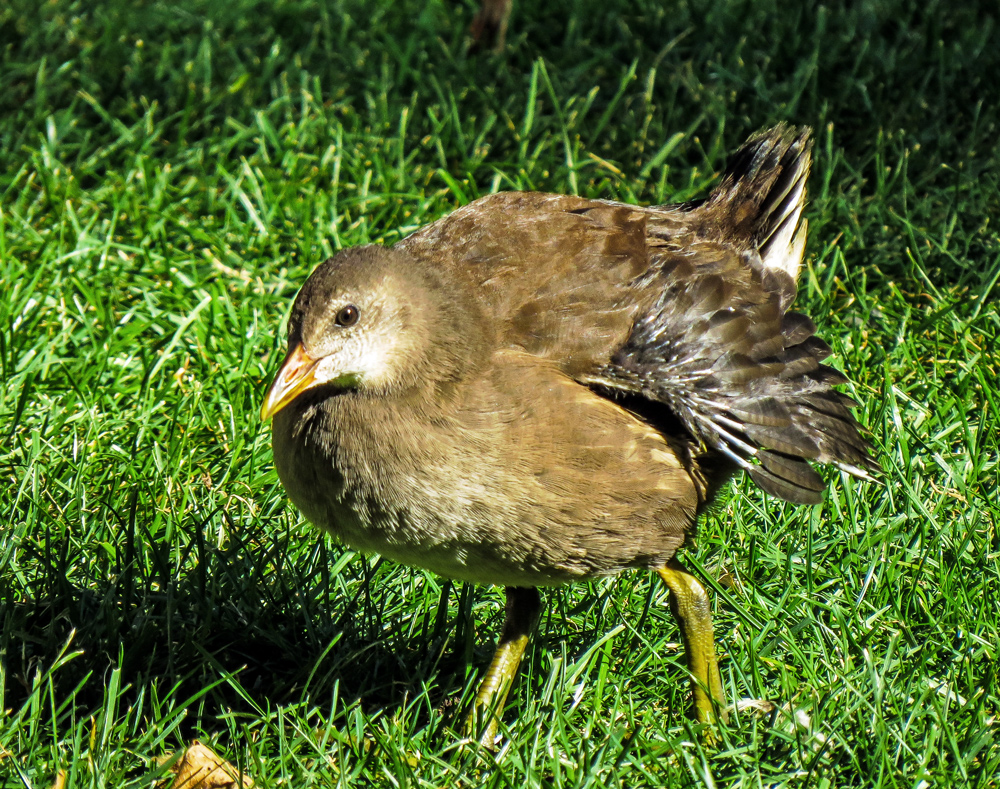
When I am traveling, all of the new species that I encounter seem rare and exotic, even if they are common in the local area. That may well be the case with these Eurasian Common Moorhens (Gallinula chloropus) that I encountered in Brussels this week. I love the way the bright colors of the adult’s bill are enhanced by the contrast with its rather drab plumage.

Eurasian Common Moorhen

Eurasian Common Moorhen

When I saw some younger birds pecking about, it didn’t immediately strike me that they might also be moorhens. When I studies my photos, however, I could see the start of the bright coloration on the bills and a similar bill shape, so I think this final photo is of an immature common moorhen.

Eurasian Common Moorhen

I took these photos with my superzoom Canon SX50 at a small pond adjacent to the botanical garden of Brussels, not far from Place Rogier in the center of the city.

© Michael Q. Powell. All rights reserved


Read Full Post »

A flash of light among the flowers caught my eye yesterday as I wandered about at Green Spring Gardens and I managed to capture this shot of a Ruby-throated Hummingbird (Archilochus colubris). I don’t see any red on its throat, so I’m guessing that it is a female or an immature male.
When I looked at the EXIF data I realized how lucky I was to get this shot, for the shutter speed used was only 1/250 of a second. That shouldn’t be fast enough to capture a hummingbird in flight and it also is not really fast enough to be shooting with at 552mm handheld with my zoom lens, even with its built-in image stabilization.
As you probably suspect, I wasn’t intentionally shooting with such a slow shutter speed. I had been shooting flowers in aperture priority mode in bright sunlight and had lowered my ISO to 250 right before I spotted the hummingbird from a distance. The hummingbird was darting in and out of the light among the flowers (I think the flower in the photo is a type of salvia flower). I knew that I would have only a limited chance to get a shot, so I aimed and shot with the existing settings.
I’m glad that I have used my Tamron 150-600mm so much this past year, because I was somehow able to rely on muscle memory and instincts to help me get this shot, though I must acknowledge that luck played a huge role too.
Ruby-throated Hummingbird
© Michael Q. Powell. All rights reserved

Read Full Post »
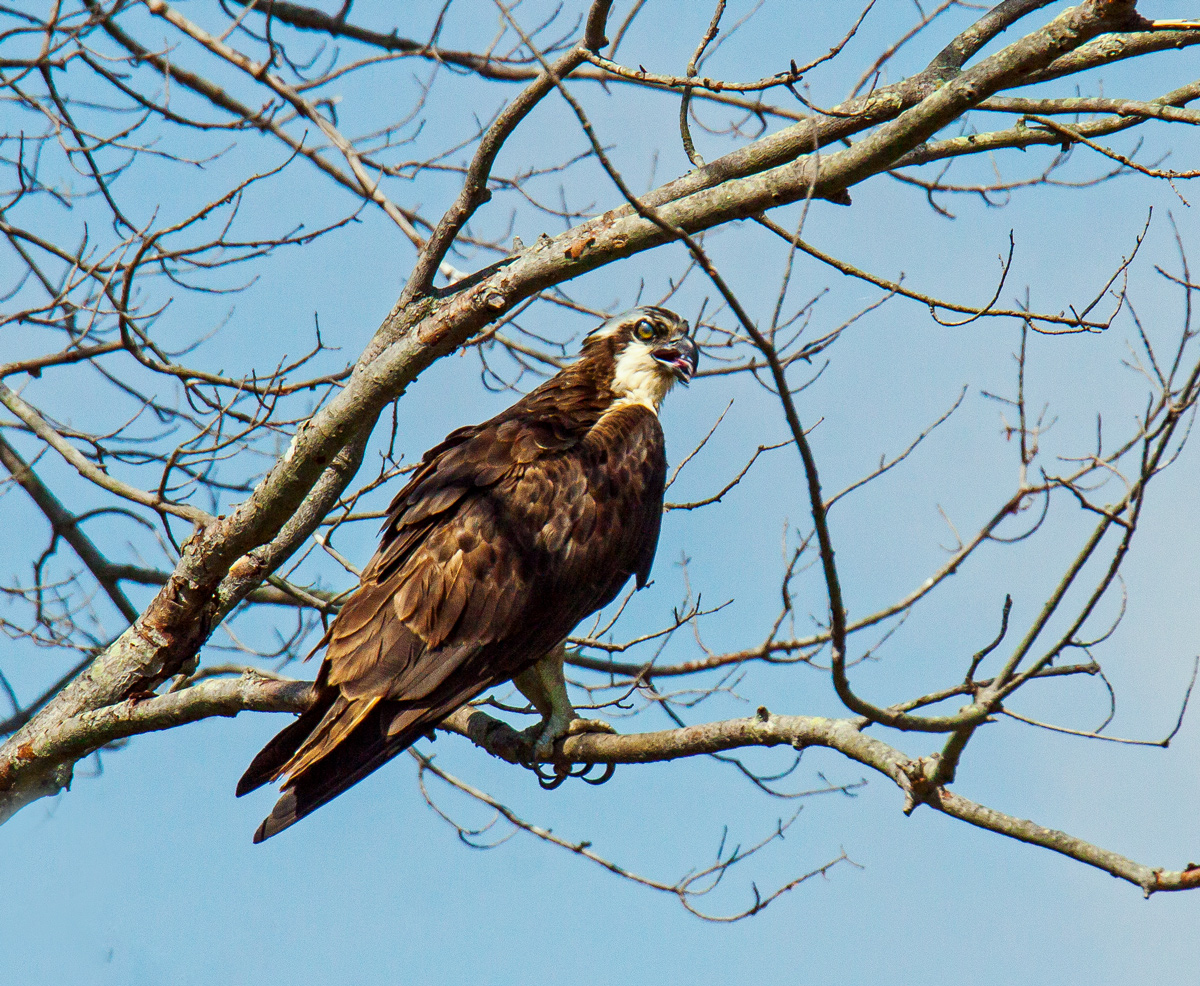
It’s hard to get an Osprey ( Pandion haliaetus) to cooperate in posing. When I asked this osprey to smile for me this past weekend at Huntley Meadows Park, this was the best look that it would give me, which looks more like a smirk than a smile to me.

Osprey

I was shooting from quite a distance away, waiting and waiting for the osprey to take flight. The osprey was in no hurry, however, and when I moved on, the osprey was still perched on the branch. I had the impression that the osprey wanted some solitude, because the osprey would periodically glare at me with this look, which suggested to me that my presence was not really welcome.

I am not sure how long the ospreys will remain with us. I have seen them off and on throughout the summer, but have never spotted a nest in the park. As we move into autumn, there will be a big turnover of birds, with some migrating south and others arriving to winter with us in Northern Virginia. Readers will probably notice too a changeover in the content of the blog postings, with fewer insects and more birds.

Osprey

© Michael Q. Powell. All rights reserved

Read Full Post »
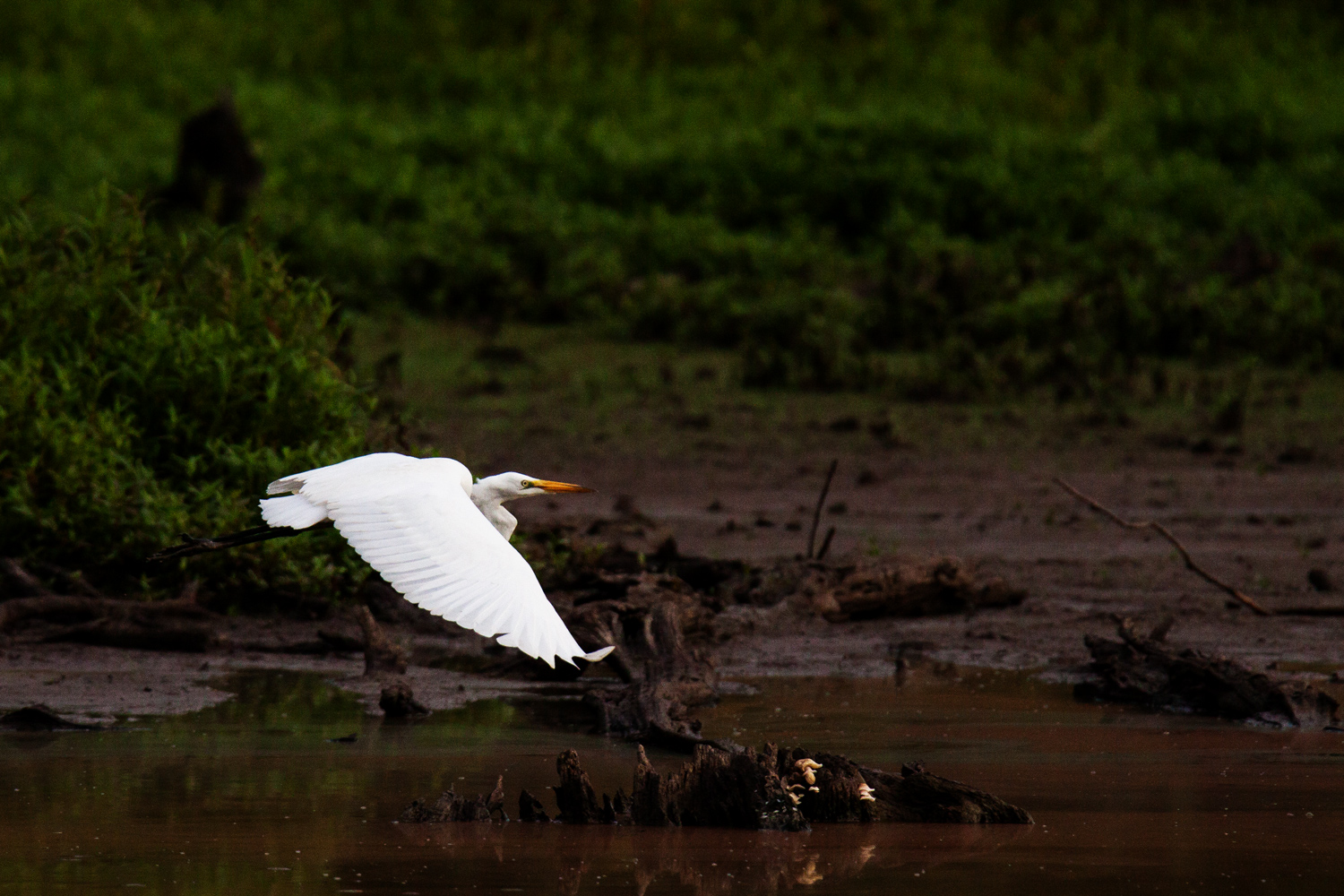
The Great Egret (Ardea alba) was beautiful in the bright sunlight. Its wingspan was impressive and its flight was graceful as it took to the air.

Yes, the takeoff indeed was great.

Great Egret

Great Egret

© Michael Q. Powell. All rights reserved.

Read Full Post »

This Great Egret (Ardea alba) seemed to be trying to minimize energy expenditure in the heat as it flew low and slowly from one location to another part of Huntley Meadows Park. The recent extreme heat must be tough on many of the inhabitants of the park—temperatures yesterday soared to 101 degrees (38 degrees C) in the Washington D.C. area, a new record for the date.

I have a tendency to crop my images to emphasize the subject, but I took these shots at pretty long range and like the way that they give you a sense of the environment at my favorite marshland park.

Great Egret

© Michael Q. Powell. All rights reserved.

Read Full Post »
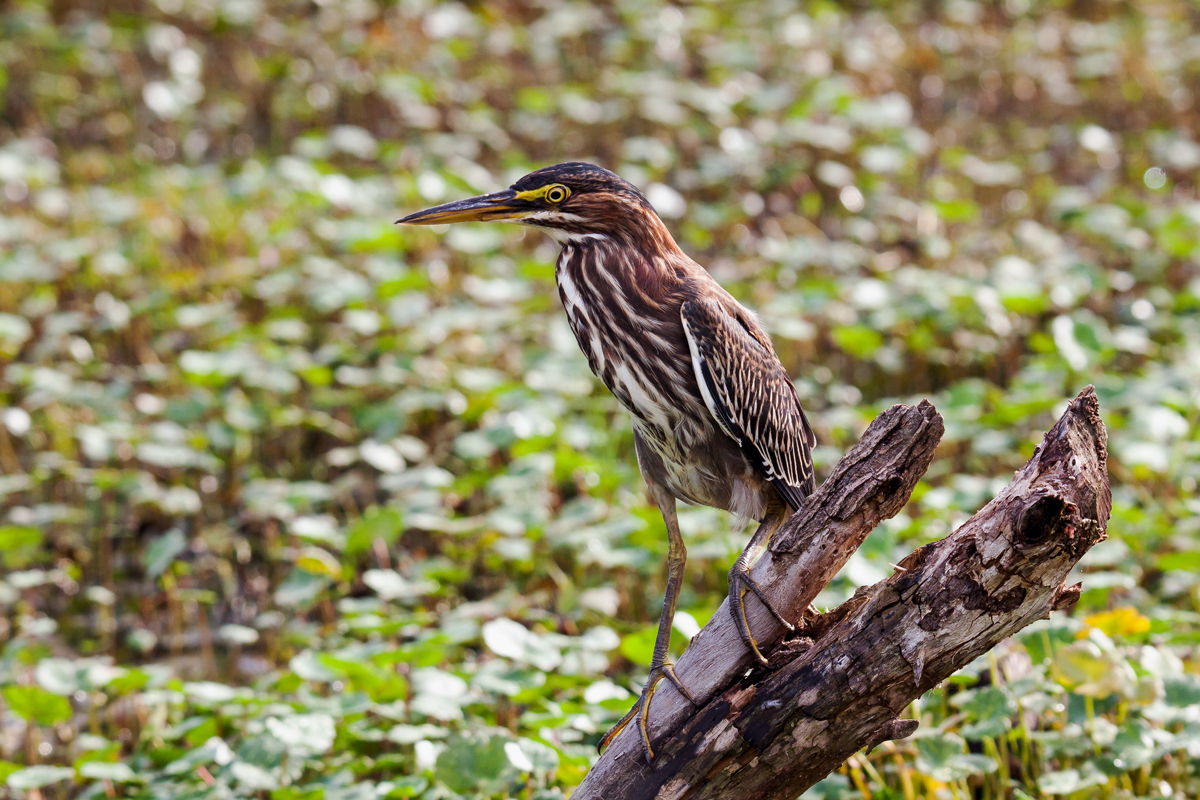
Although I enjoy watching the Great Egrets and Great Blue Herons at Huntley Meadows Park, the much smaller Green Herons (Butorides virescens) are my favorites. Green Herons just seem to have an amazing amount of personality packed in their compact bodies.

I think they deserve to have a “Great” in their name too.

Green Heron

© Michael Q. Powell. All rights reserved.

Read Full Post »

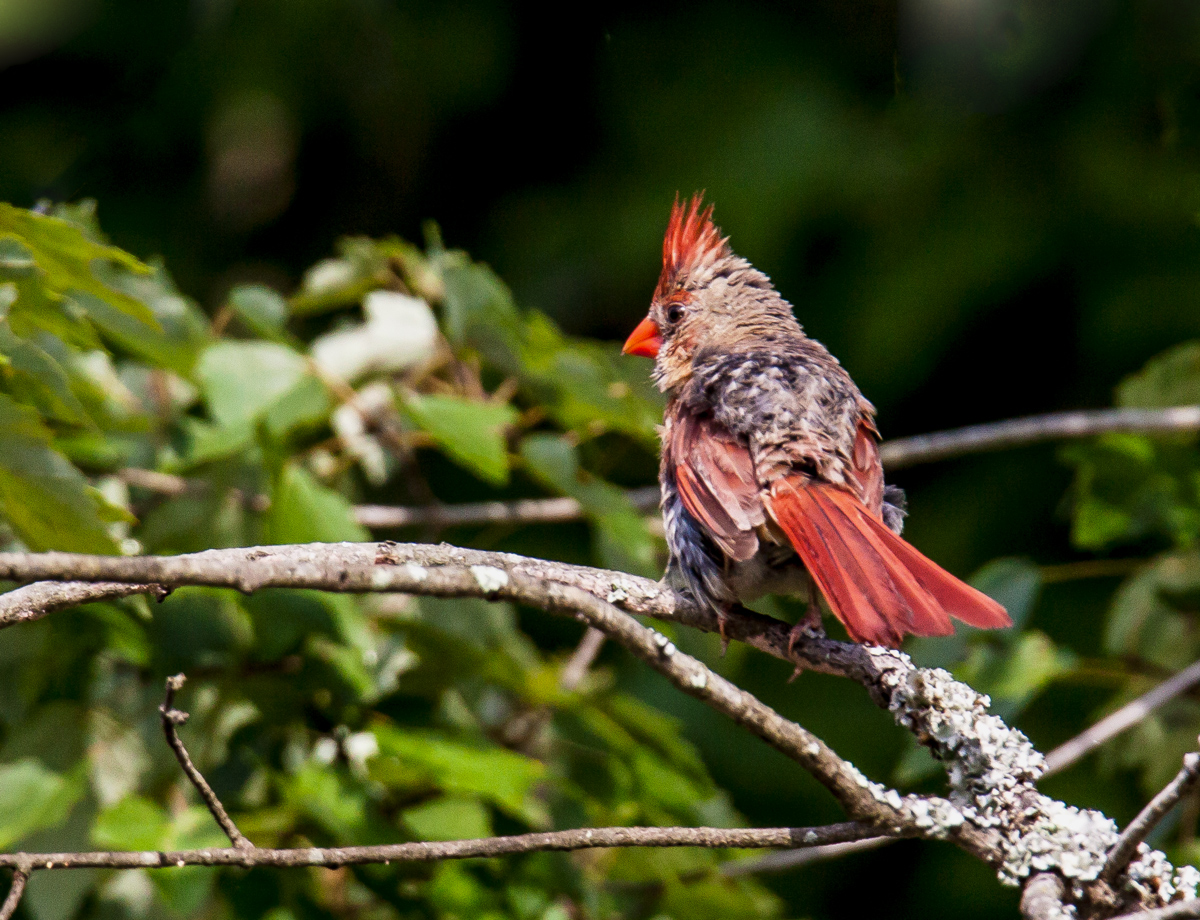
A Northern Cardinal (Cardinalis cardinalis) that I spotted on Saturday at Huntley Meadows Park seemed to be in an awkward feather phase that gave him an almost clown-like appearance.

I suspect that the cardinal feels as self-conscious as the average human male going through puberty.

Northern Cardinal


© Michael Q. Powell. All rights reserved.

Read Full Post »

A Green Heron (Butorides virescens) was perched this morning on the raised edge of the boardwalk at Huntley Meadows Park, peering down into the murky water. Apparently the heron didn’t like what it saw, for it turned abruptly and decided to cross the boardwalk. I captured this shot as the heron was taking its first tentative step in the new direction.

Green Heron

© Michael Q. Powell. All rights reserved.

Read Full Post »

« Newer Posts - Older Posts »