Feeds:
Posts
Comments

Archive for the ‘Birds’ Category

Many of the birds seemed to have sought shelter from the strong winds yesterday at Huntley Meadows Park, but this female Ring-necked Duck (Aythya collaris) went about her daily grooming routine without paying any attention to the weather conditions. She did, however, seem a little shy and struck a coy pose when I pointed my camera in her direction.

Ring-necked Duck

© Michael Q. Powell. All rights reserved.

Read Full Post »

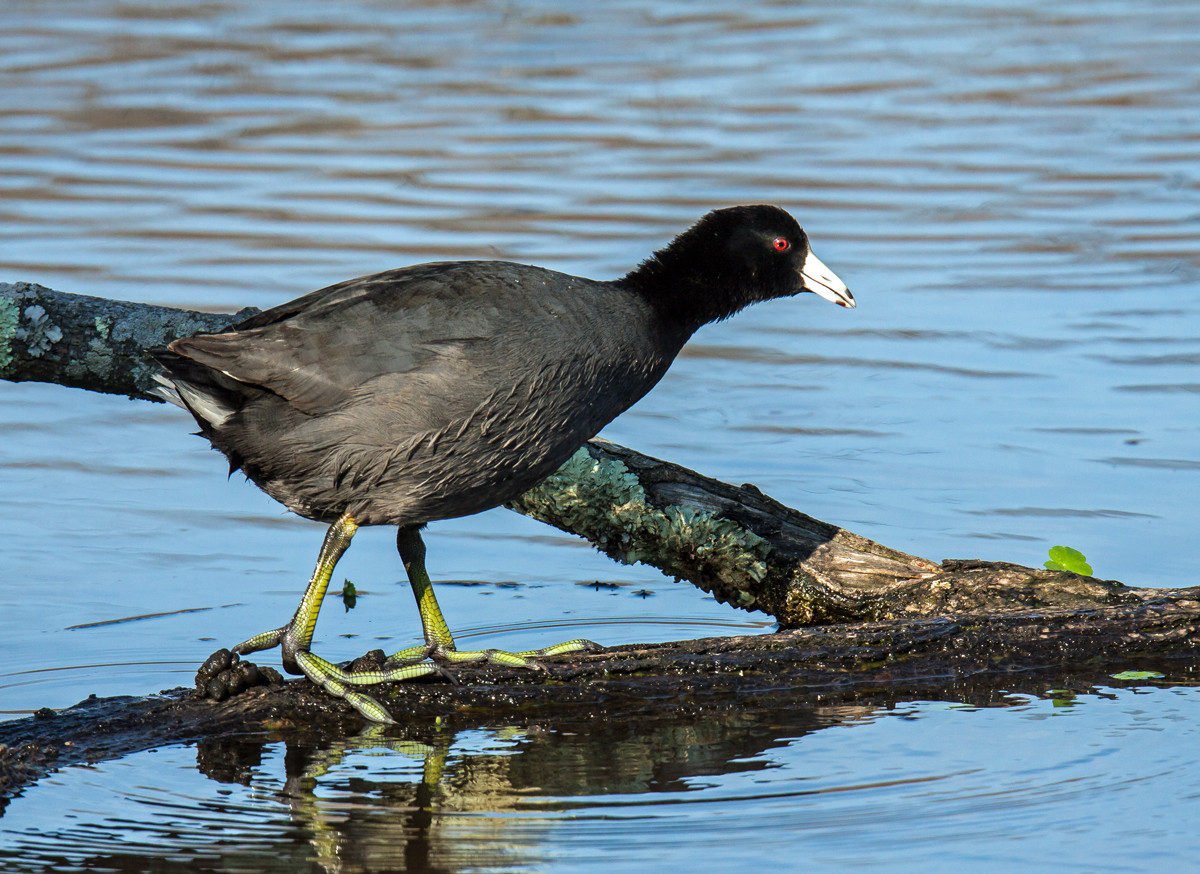
Coots look clumsy when bobbing about in the water, but amazingly they look even more awkward out of the water, like this one that I spotted Monday at Huntley Meadows Park. Their green feet, which are not webbed like those of a duck, seem disproportionately large and almost cartoonish, like the oversized Hulk hands that I have seen little kids wear at times in the past.

When I first started photographing birds, I assumed that American Coots (Fulica americana) were part of the duck family. After all, coots swam in the water, were about the same size as some ducks, and sometimes seemed to hang out with ducks.

When I did a little research, however, I learned that coots are not at all related to ducks. As the Cornell Lab of Ornithology points out, “they’re closer relatives of the gangly Sandhill Crane and the nearly invisible rails than of Mallards or teal.”

American Coot

© Michael Q. Powell. All rights reserved.

Read Full Post »

Basking in the rays of yesterday’s early morning sunlight, this female Hooded Merganser (Lophodytes cucullatus) seemed to be caught up in a moment of reverie as she contemplated the start of a new day at Huntley Meadows Park.

Hooded Merganser

© Michael Q. Powell. All rights reserved.

Read Full Post »
As I rounded the corner of one of the remote trails yesterday at Huntley Meadows Park, I stopped abruptly—a large black bird was perched low in a tree almost directly in front of me. At first I thought it might be a wild turkey, but it turned out to be a Black Vulture (Coragyps atratus).

Most of the vultures that I see are Turkey Vultures, which have red heads, and generally I see them soaring high in the sky. When this vulture became aware of my presence, it flew to a nearby tree and looked down at me. I tried not to feel paranoid, but it looked almost like it was going to dive bomb me. The vulture perched in one more tree before finally flying away.Black Vulture

Black Vulture

Black Vulture

© Michael Q. Powell. All rights reserved.


Read Full Post »

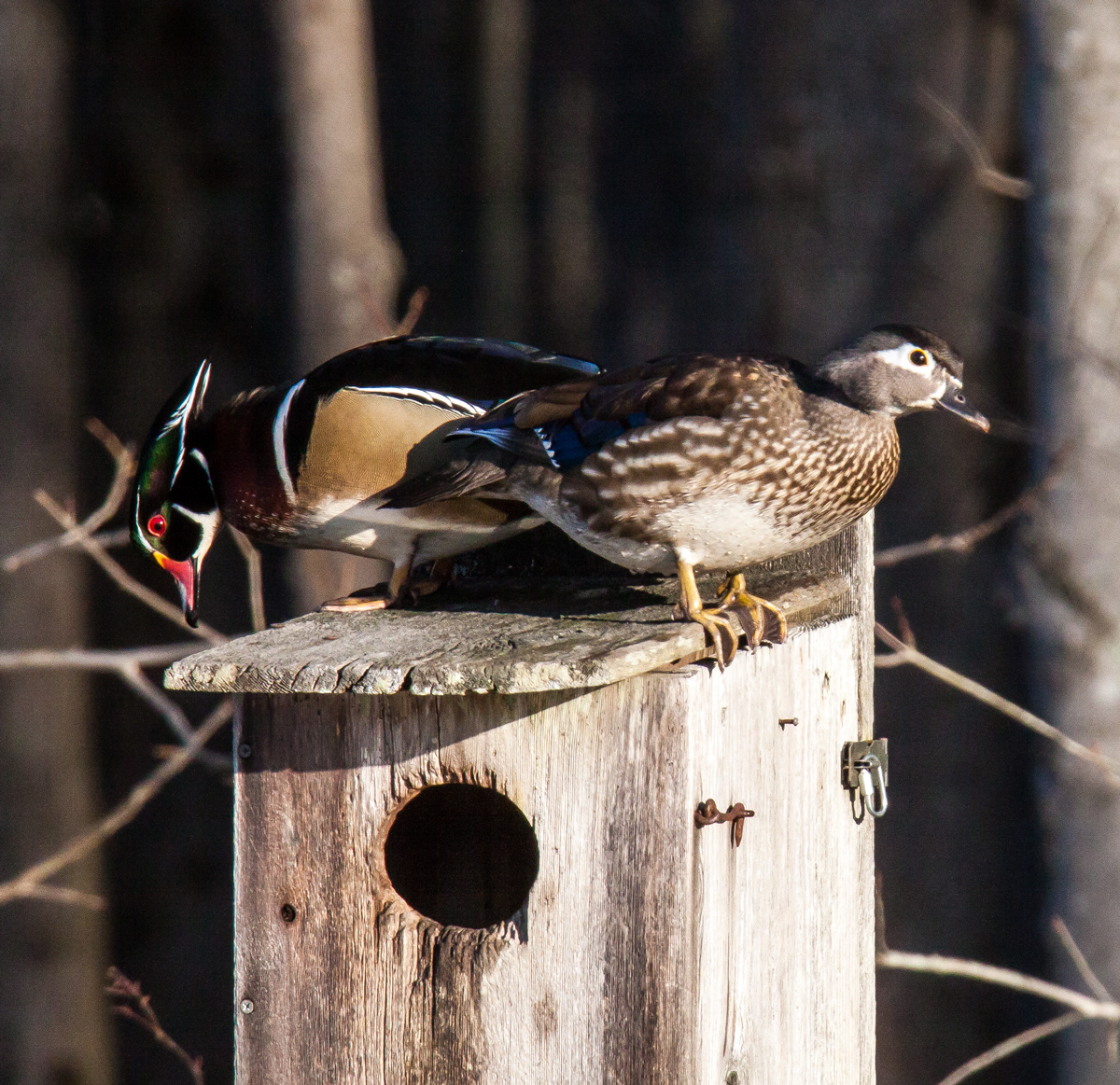
Usually it’s the female Wood Duck (Aix spionsa) who is most interested in a nesting box, but during a recent trip to Huntley Meadows Park, I spotted a male Wood Duck who also seemed pretty interested. Maybe he had been watching a lot of home improvement television shows and was thinking of the renovations he could do.

Wood Ducks

Of course, the female Wood Duck also had to check out the nesting box. After all, she is the one who has to lay the eggs inside of it. Judging from what I have seen in previous years, she will have sole responsibility for taking care of the little ducklings—the male seems to disappear after they are born.

Wood Ducks

© Michael Q. Powell. All rights reserved.

Read Full Post »

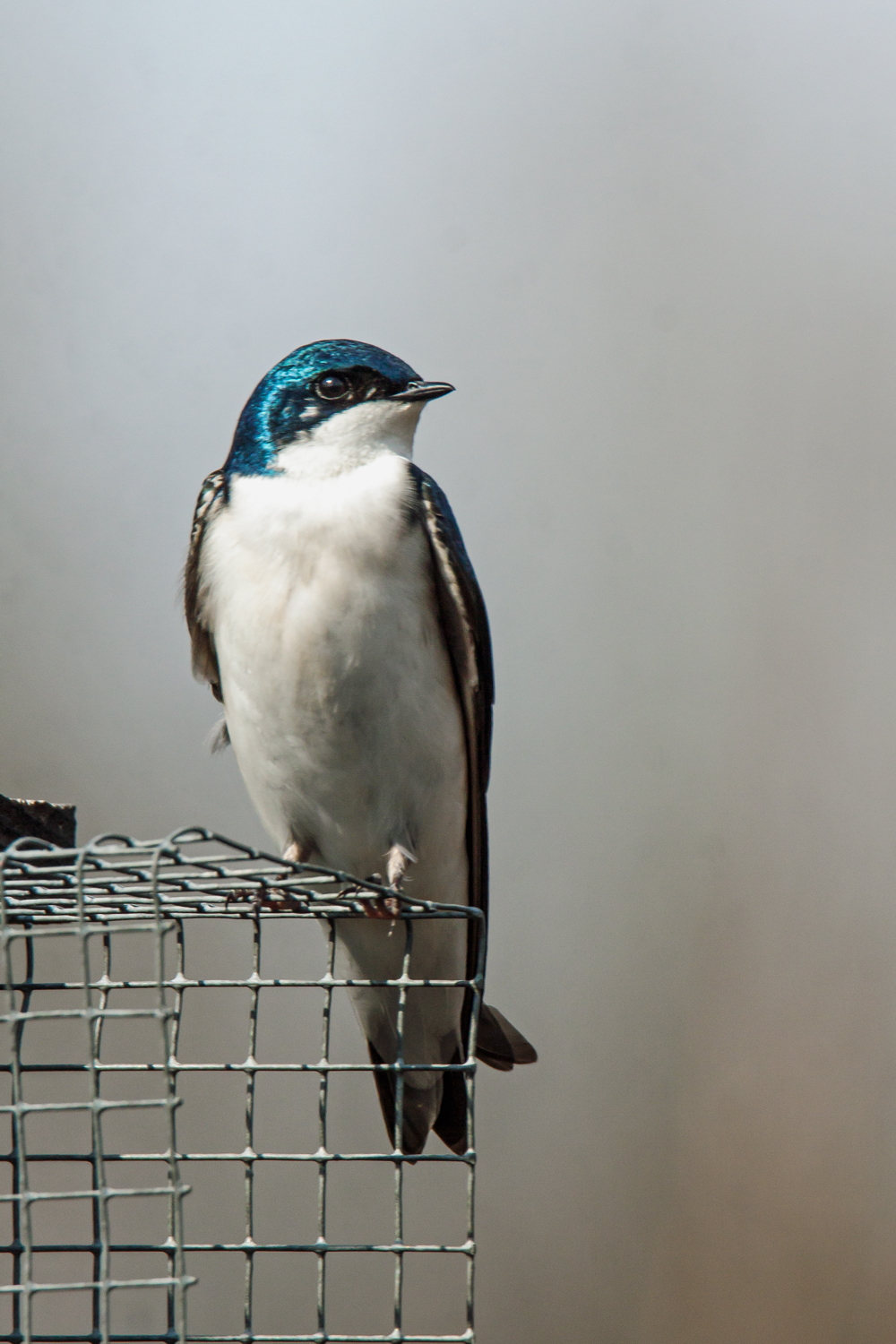
As we move deeper and deeper into spring, more birds are starting to arrive at my favorite marshland, Huntley Meadows Park. Last weekend I spotted my first Tree Swallow (Tachycineta bicolor) of the year. Actually I had spotted a few of them a bit earlier zipping around the sky, but this was the first one that I saw perched on the ground.

The Tree Swallows seem to enjoy using the nesting boxes scattered throughout the park and this one was checking out one of the boxes. I was happy also to be able to get a shot of the swallow perched in a tree—despite their names, I rarely see Tree Swallows in the trees.

Tree Swallow

Tree Swallow

Tree Swallow

© Michael Q. Powell. All rights reserved.


Read Full Post »

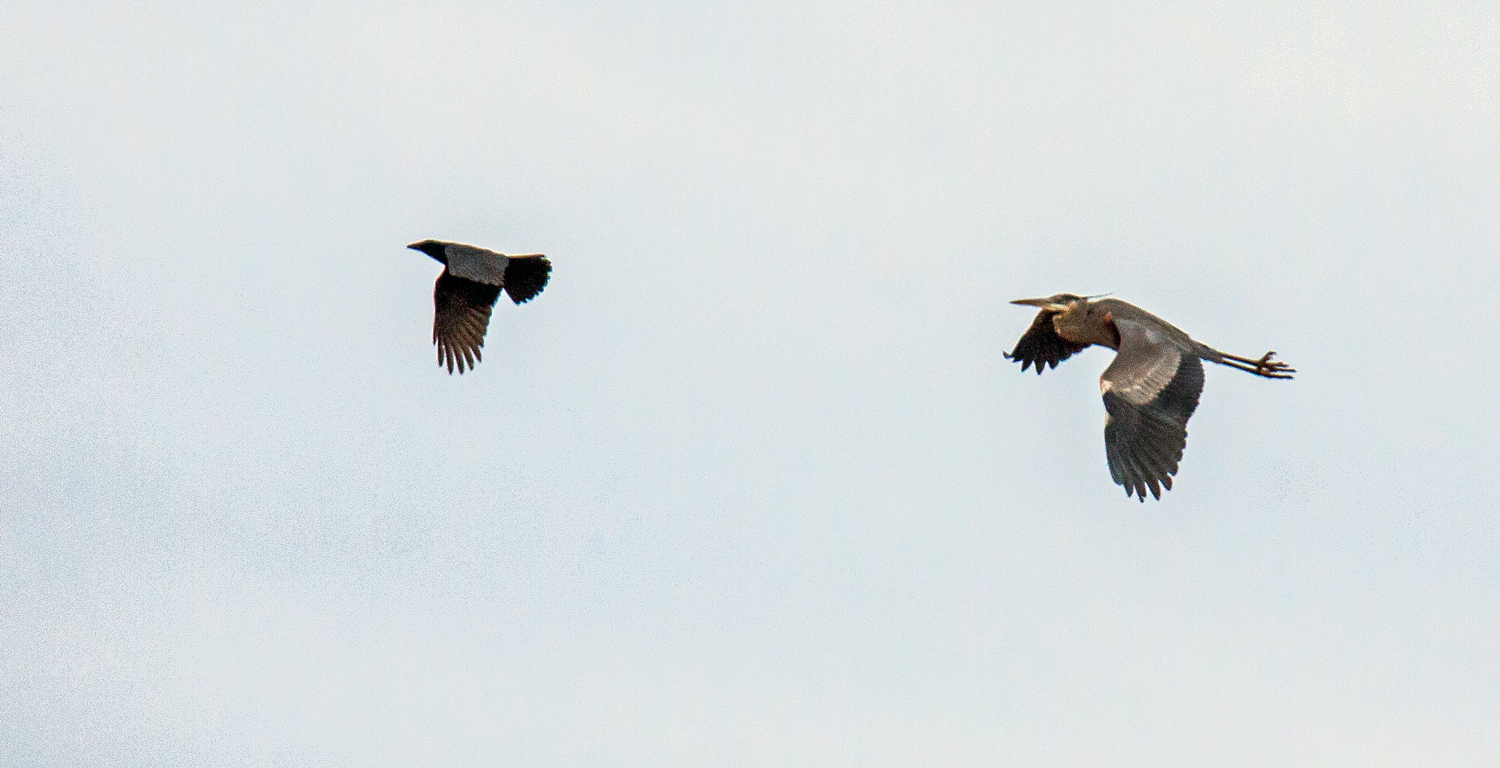
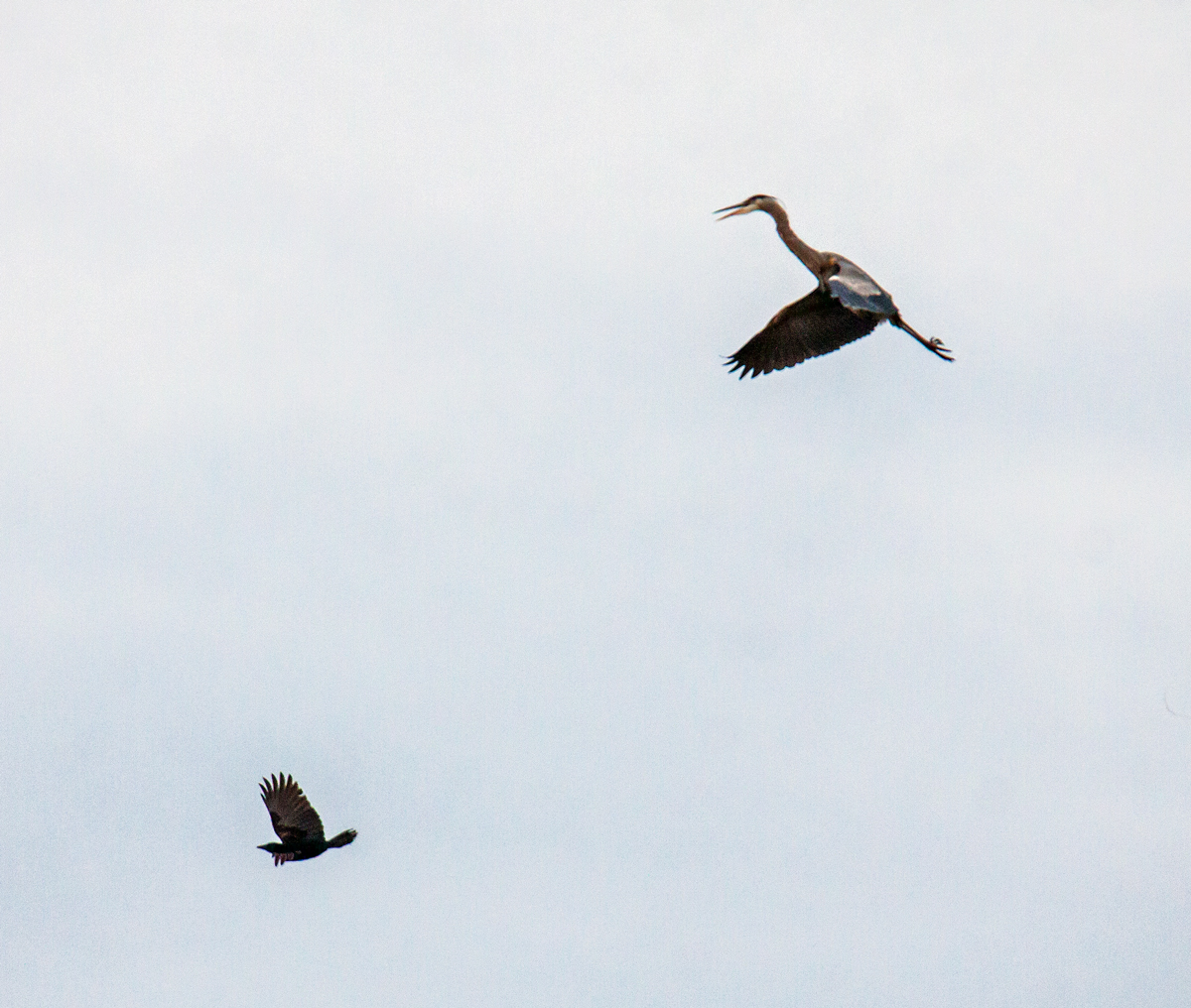
I’ve seen crows harassing hawks and eagles, but I’d never seen a crow being chased off by another bird until this past Friday at Huntley Meadows Park, when I witnessed a Great Blue Heron (Ardea herodias) flying after what appeared to be a crow. After the heron caught up and forced the crow to depart, the heron appeared to be squawking a few words of warning not to return.

heron and crow

heron and crow

heron and crow

© Michael Q. Powell. All rights reserved.

Read Full Post »

As I was making my way to the start of the boardwalk at Huntley Meadows Park early on Monday morning, a helpful birder pointed through the trees to a pair of Wood Ducks (Aix sponsa) that appeared to be seeking a nesting cavity. The female kept moving among the trees, but the male stayed still for a moment and let me get this long-distance shot.

It’s pretty unusual to see ducks in a tree and generally I know they are in the trees only when I hear them flying away. The Cornell Lab of Ornithology website notes that Wood Ducks “are one of the few duck species equipped with strong claws that can grip bark and perch on branches.” This spring I have noted Wood Ducks checking out nesting boxes at the park, but perhaps this couple prefers a more natural birthing experience (or maybe all of the nesting boxes are being used by other Wood Ducks or Hooded Mergansers).

wood duck

© Michael Q. Powell. All rights reserved.


Read Full Post »
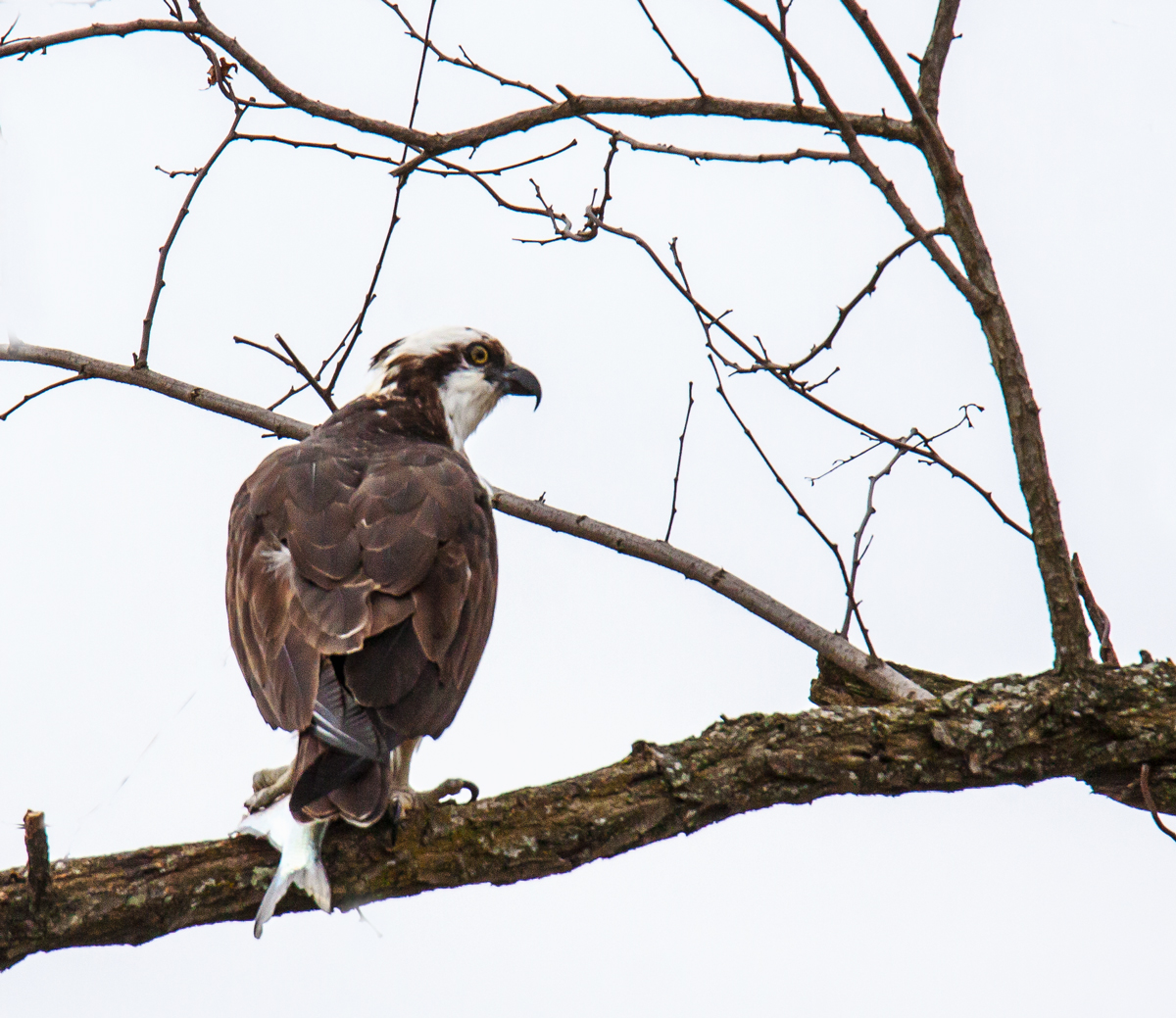
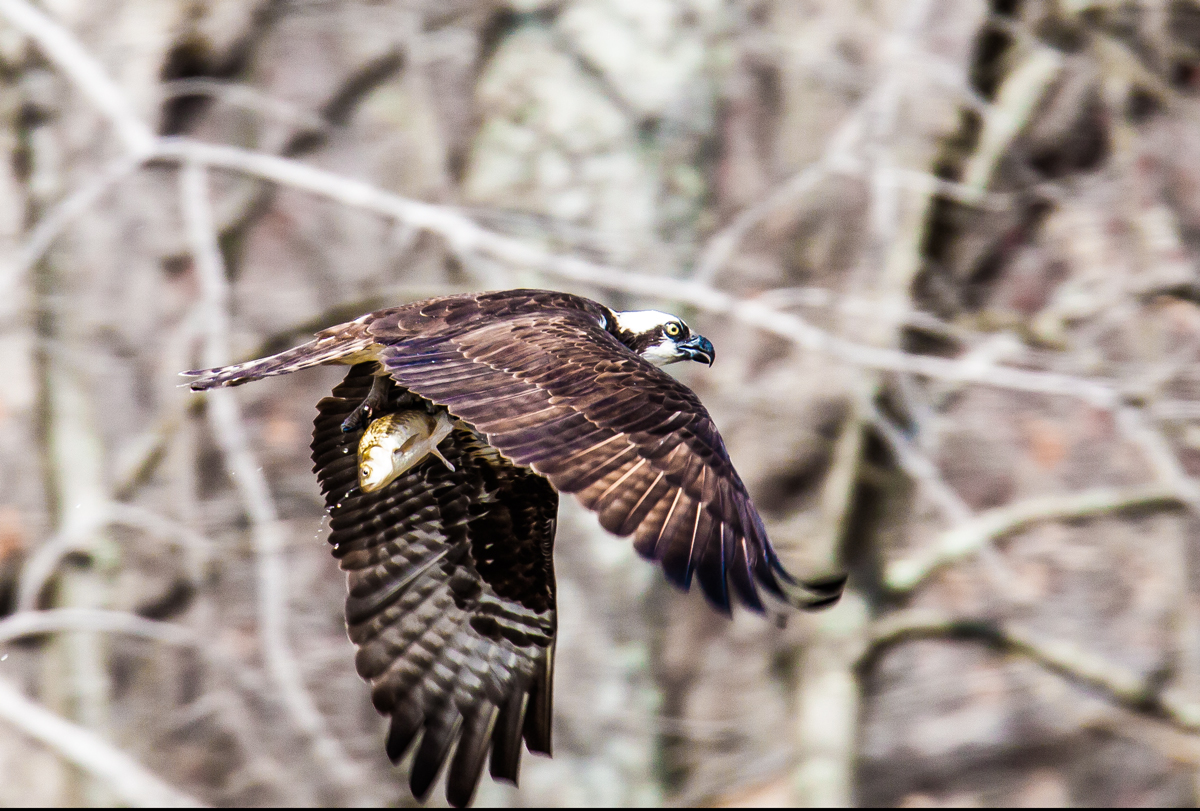
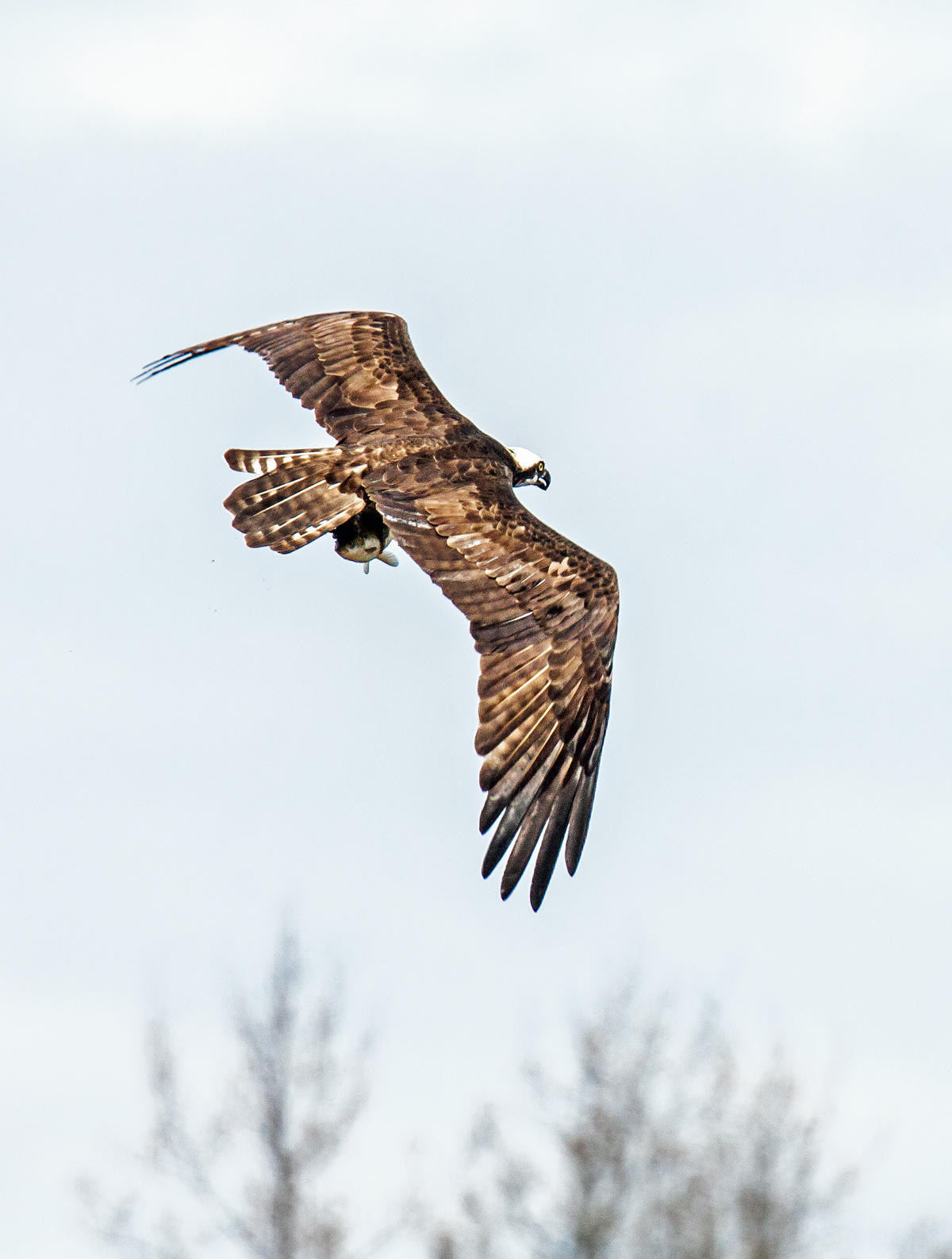
An osprey circled and circled overhead early Monday afternoon at Huntley Meadows Park and finally made a strike, pulling a good-sized fish out of the water. I captured the first shot as the osprey flew by me with its catch, which is just visible between the wings. In the second shot, the osprey was flying away over the trees.

Ospreys have recently reappeared at my favorite local marshland park and these are my first shots this spring at this location. The last couple of years they have shown up regularly enough that I wonder if there might be a nest somewhere in the park. I have wandered about in many remote areas of the park, but so far have not located a nest for the ospreys or for the bald eagles, which I also see pretty regularly in the park.

osprey

osprey

© Michael Q. Powell. All rights reserved.

Read Full Post »

This Great Blue Heron (Ardea herodias) decided to try out a new vantage point at Huntley Meadows Park on Monday and surveyed potential prey from atop the boardwalk. Although the heron looks to be contemplating diving into the water, it eventually jumped into the water feet first.

I love trying to capture birds in motion, but am happy to settle for images in which there is a kind of tension and anticipation of action, rather than a more static pose.

Great Blue Heron


© Michael Q. Powell. All rights reserved.

Read Full Post »
Like a runner at the starting blocks, this male Northern Cardinal (Cardinalis cardinalis) was tensed as he prepared to push off from the top of a dead tree yesterday morning at Huntley Meadows Park.

What a beautiful way to start the spring.

Northern Cardinal

© Michael Q. Powell. All rights reserved.

Read Full Post »

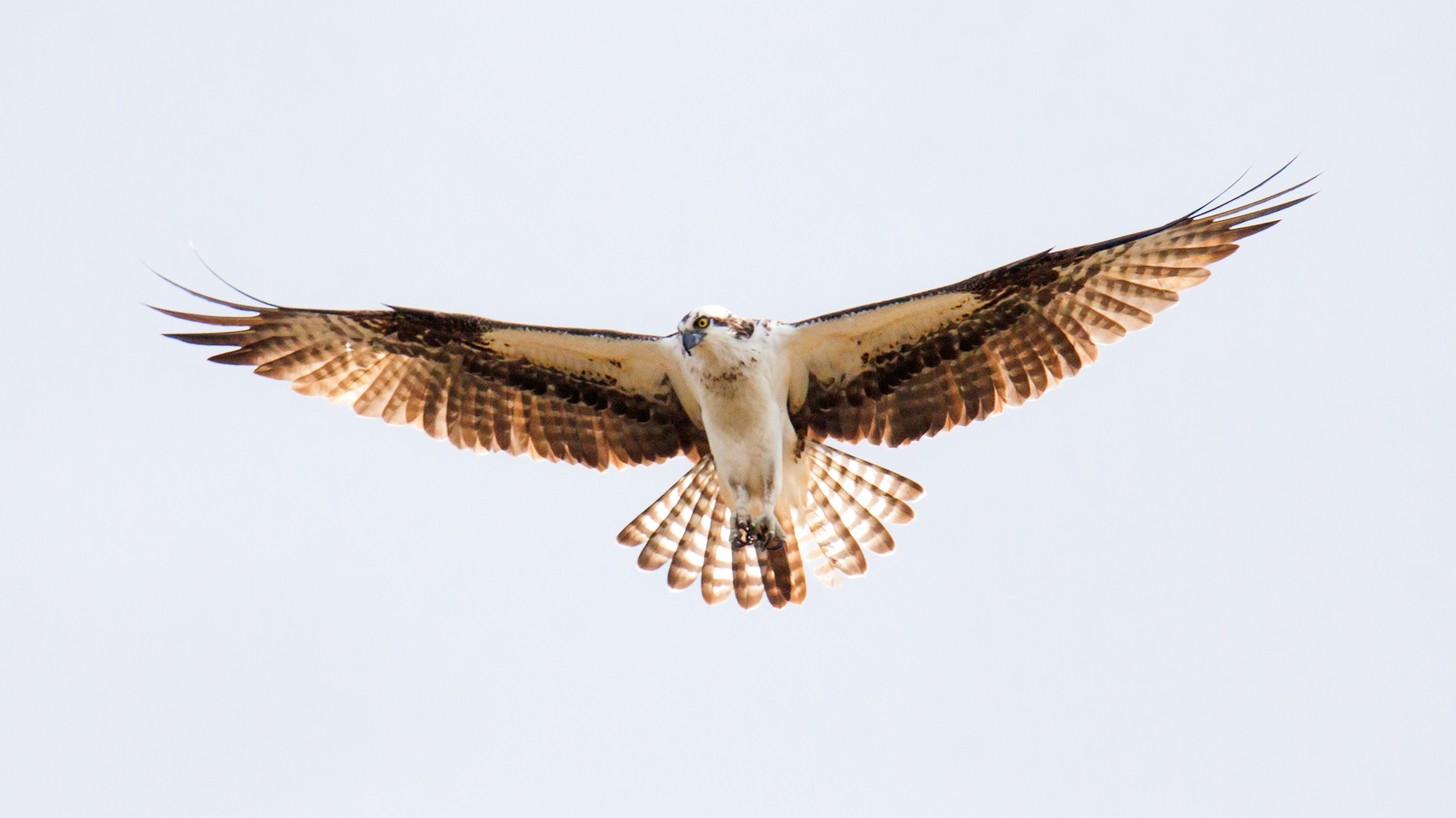
When I first spotted an Osprey (Pandion haliaetus) yesterday afternoon, it was perched at the top of a tall tree at Lake Cook in Alexandria, Virginia. Suddenly it began a series of what seemed to be warm-up, stretching exercises. The position reminds me a little of the obelisk position that some dragonflies assume to avoid excessive exposure to the sun. A short time later, the osprey took to the sky.

As I attempted to track the osprey circling overhead, I found myself shooting in radically varying lighting situations. The sky was blue, but there were large expanses of gray and white clouds. Some of the time I was also shooting directly into the sun. As a result, the two in-flight shots below look almost like they were shot on different days, when in fact they were taken only seconds apart.

osprey

osprey

osprey

© Michael Q. Powell. All rights reserved.

Read Full Post »

This Double-crested Cormorant (Phalacrocorax auritus) was focusing so intently on the water yesterdy that I thought it was stalking a fish. I was initially shocked at the size of the fish that it pulled out of the water until I realized that it was only a large leaf.

Double-crested Cormorant

The cormorant waved the leaf around proudly until it finally let go of the leaf. Obviously this bird has a policy of “catch and release.”

Double-crested Cormorant

Undeterred, the cormorant went back to fishing—I never did see him land one, but he might have been catching small fish during his dives.

Double-crested Cormorant

© Michael Q. Powell. All rights reserved.


Read Full Post »

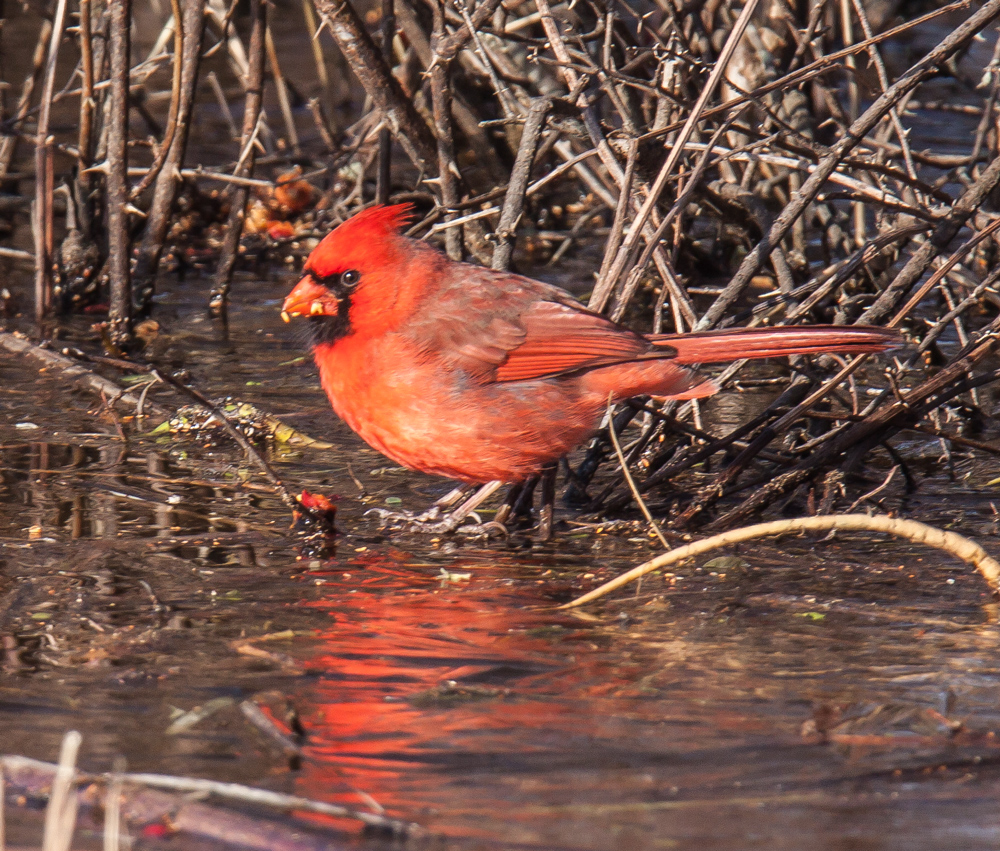
Early yesterday morning there was a coating of ice on much of the water at Huntley Meadows Park. Northern Cardinals (Cardinalis cardinalis) were taking advantage of this new surface to forage for seeds in the lower parts of the vegetation growing out of the frozen water.

The bright red one is immediately identifiable as a male. The other one looks like it could be a female or an adolescent male. As is often the case with birds, male cardinals start off looking like females before they acquire their adult plumage. I’m leaning towards it being a female because of the color of the bill—with younger cardinals, the bill is often dusky rather than bright orange.

Northern Cardinal

Northern Cardinal

Northern Cardinal

© Michael Q. Powell. All rights reserved.


Read Full Post »
Even familiar birds can look cool and different when viewed from an unusual angle. I photographed this Red-bellied Woodpecker (Melanerpes carolinus) Monday morning at Huntley Meadows Park. I was shooting almost straight up and the subject was mostly backlit and in the shadows, but I could just see the red color at the edge of the head.

As an added bonus, you can just see what appears to be the touch of red on the bird’s belly that is responsible for its name—normally you can’t see it and wonder why it is called “red-bellied.”

Red-bellied Woodpecker

© Michael Q. Powell. All rights reserved.

Read Full Post »
Do coots laugh? I don’t know for sure, but that’s certainly what this American Coot (Fulica americana) seemed to be doing when I spotted him on Monday morning at Huntley Meadows Park.

American Coot

A bit later in the day, when the direction of the light was less harsh, I saw some more coots and was able to capture an image that shows more accurately the color of the coot’s body and its eerie red eyes.

American Coot

© Michael Q. Powell. All rights reserved.

Read Full Post »

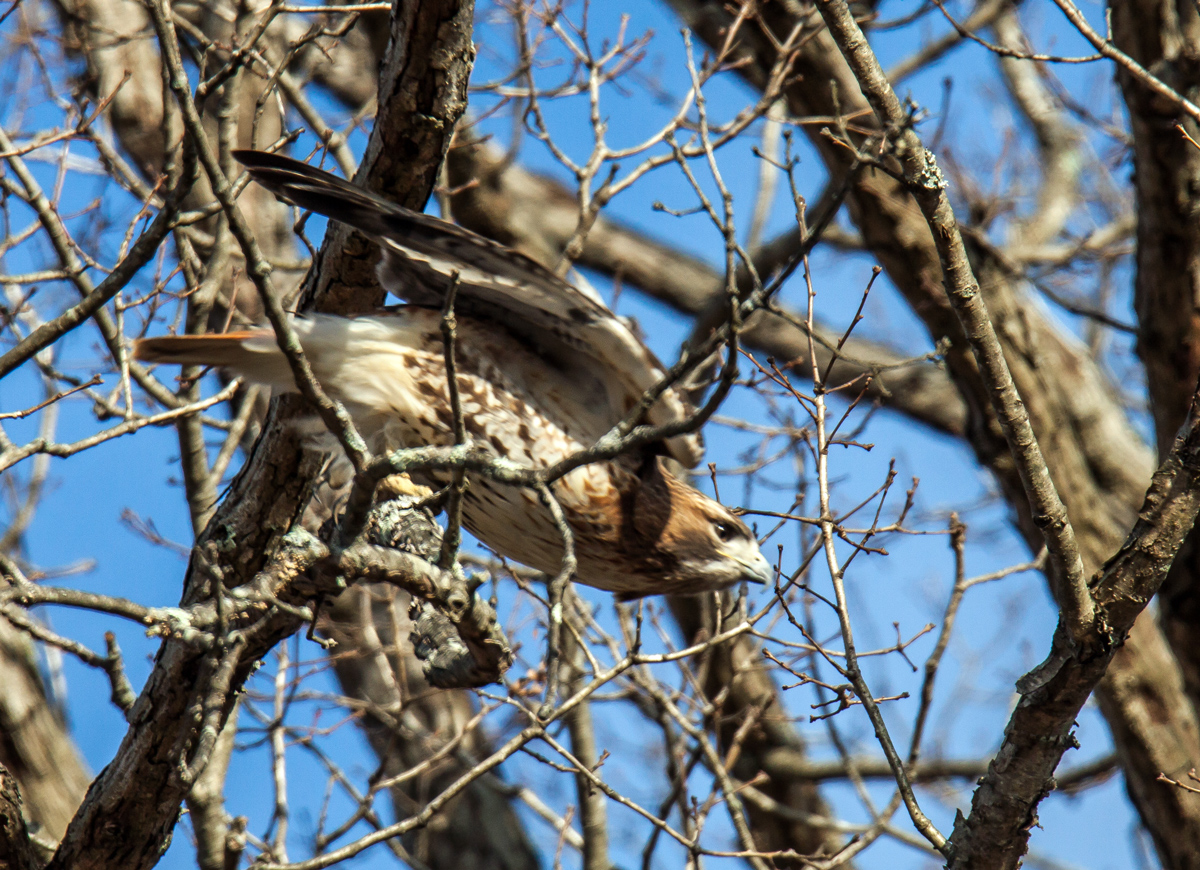
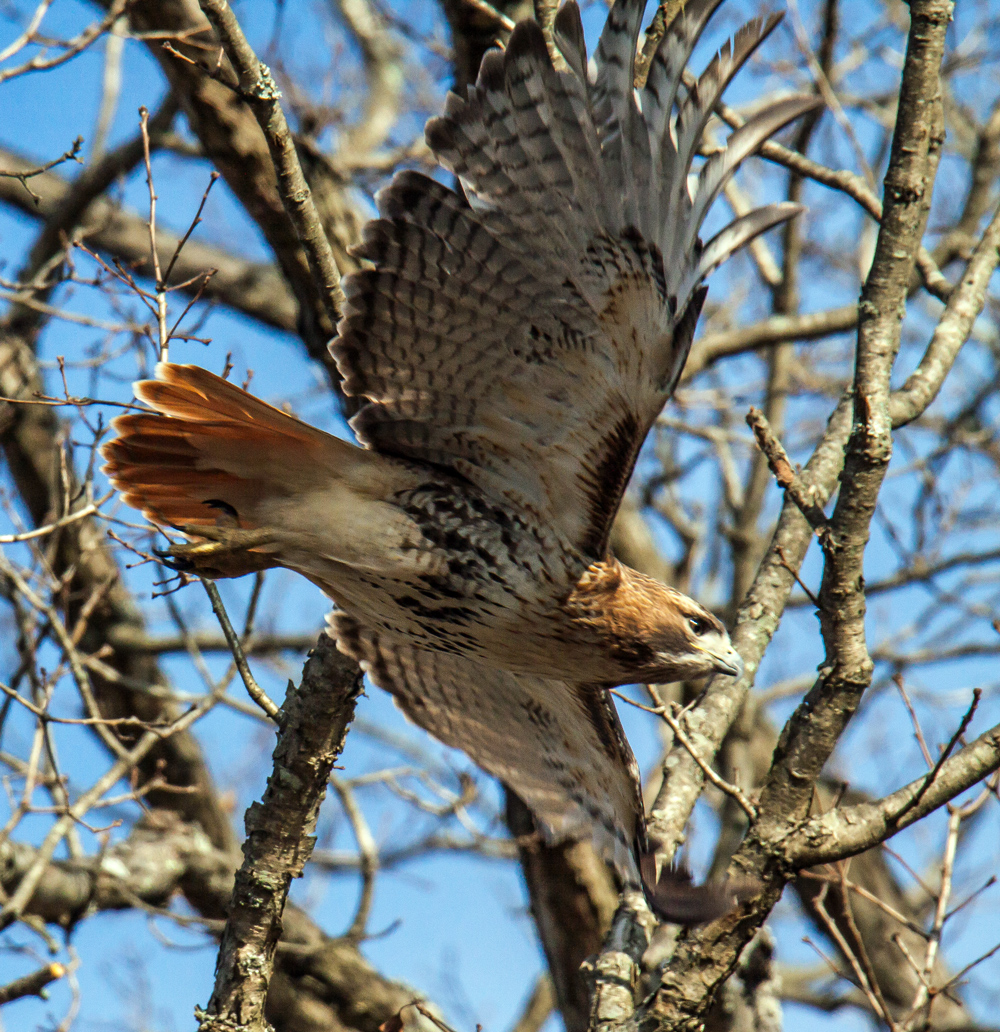
This Red-tailed Hawk (Buteo jamaicensis) seemed to be facing in the opposite direction when a sharp-eyed fellow photographer spotted it in a tree across a field. We were able to move quite a good distance across the field before the hawk became aware of our presence and took off.

Instead of flying up into the air, the hawk flew downwards initially and then flew behind the stand of trees, so I was unable to get any mid-flight shots with the sky as the background. However, I did manage to capture a sequence of shots as the hawk was getting ready to take off and also shortly after the takeoff.

Red-tailed Hawk

Red-tailed Hawk

Red-tailed Hawk

Red-tailed Hawk

Red-tailed Hawk

© Michael Q. Powell. All rights reserved.


Read Full Post »
Male Wood Ducks (Aix sponsa) are colorful and unusual looking and are one of my favorites. I spotted this one atop a nesting box at Huntley Meadows Park on Friday as he was singing in the rain. He stayed there for quite some time, periodically moving from one side of the roof to the other.

I waited and waited to see if a female Wood Duck would emerge from the box. but I never saw her. Perhaps he is keeping watch over eggs that may have been laid in the box.

Wood Duck


Wood Duck


Wood Duck

© Michael Q. Powell. All rights reserved.

Read Full Post »
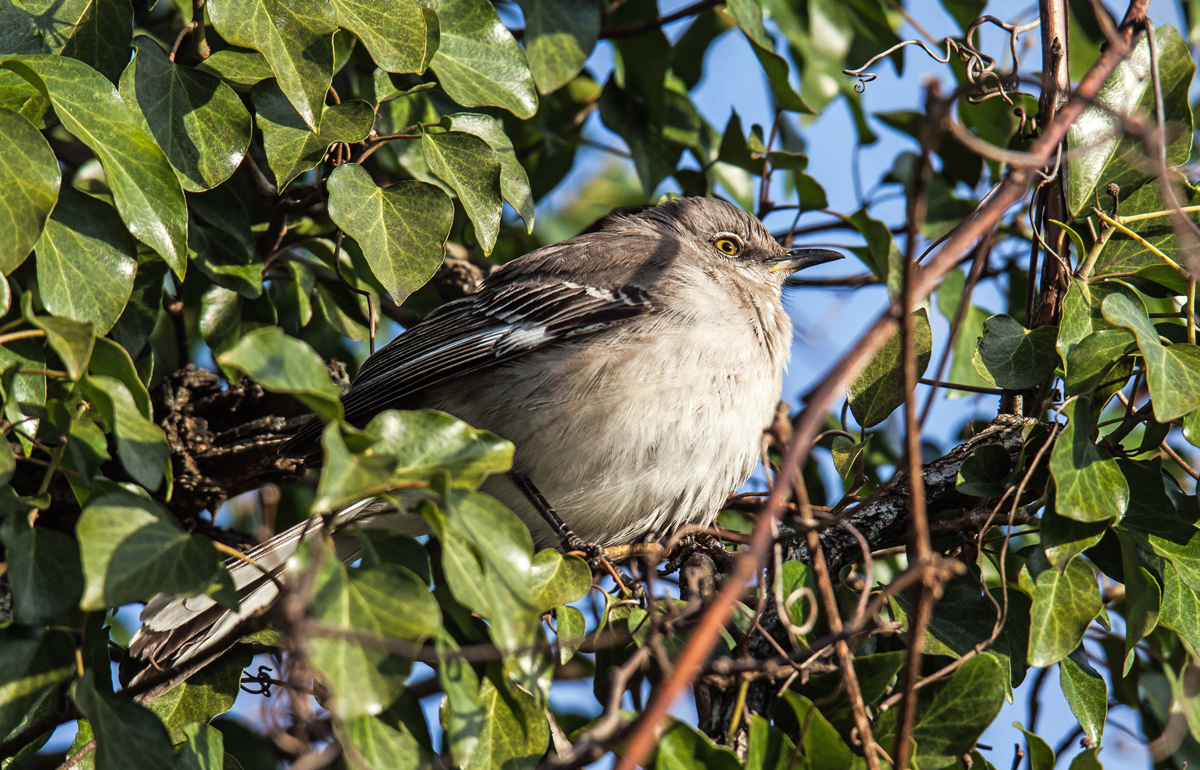
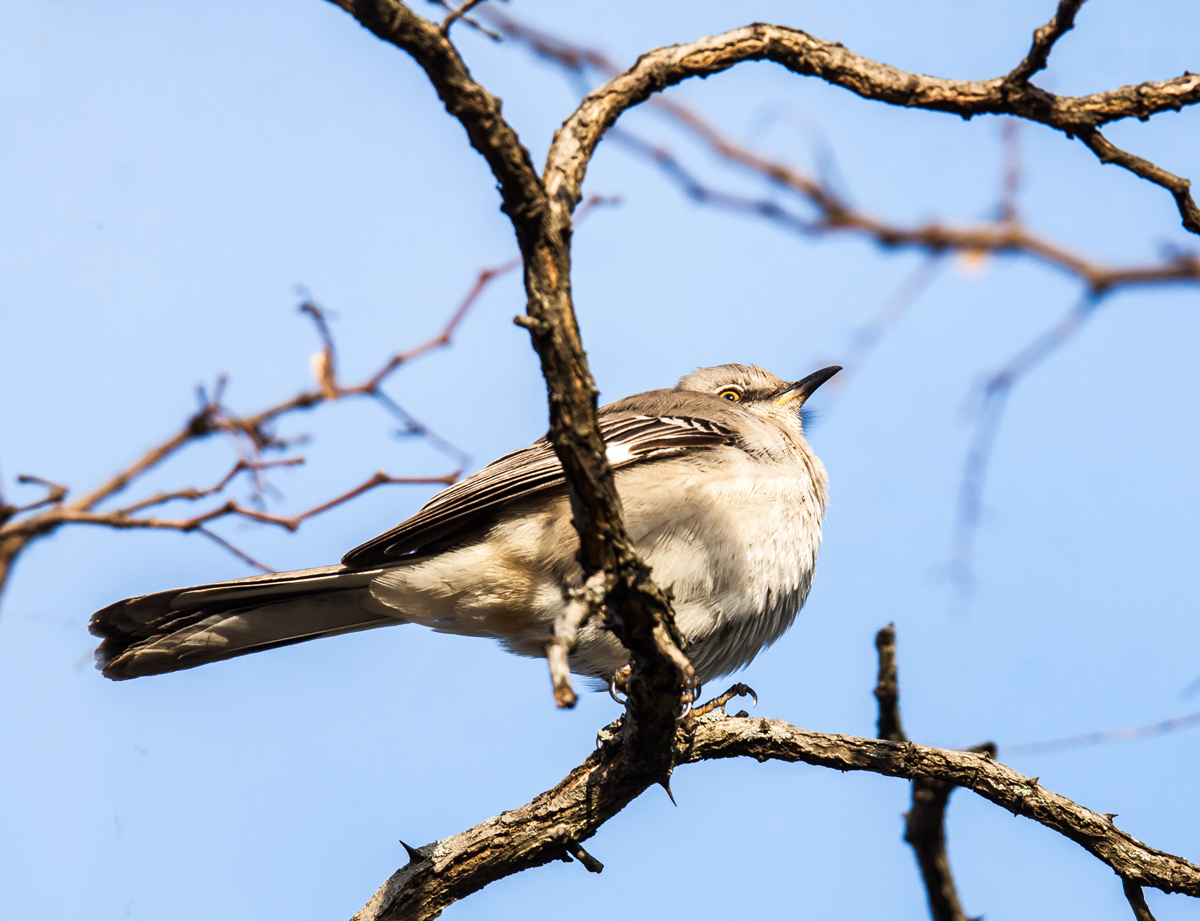
It was below freezing and windy yesterday morning when I headed out with my camera. I didn’t expect to see many birds and was a little surprised when I kept running across Northern Mockingbirds (Mimus polyglottos). They are pretty common where I live, but I just have not seen very many of them this winter.

The first one that I spotted was huddled inside a bush with its feathers all puffed up, probably in an effort to keep warm.

Northern Mockingbird

Another one seemed to be trying to warm up by facing the sun.

Northern Mockingbird

A final mockingbird seemed undeterred by the wind that was ruffling its feathers and boldly sang out a happy song, greeting the arrival of the new day.

Northern Mockingbird

© Michael Q. Powell. All rights reserved.

Read Full Post »

The Hooded Mergansers (Lophodytes cucullatus) of Huntley Meadows Park seem to spend a lot of their time in areas where they are partially hidden by the vegetation. Occasionally, though, a visual tunnel will open up briefly that lets me get a mostly unobstructed shot, like this one of a handsome male that I spotted this past Monday.

hooded merganser

© Michael Q. Powell. All rights reserved.

Read Full Post »

Hooded Mergansers (Lophodytes cucullatus) were really active yesterday at Huntley Meadows Park, including this female, who seemed to be contemplating using this nesting box to lay her eggs a little later this spring.

You might call it “thinking outside of the box”—or not.”  🙂

Hooded Merganser

Hooded Merganser

Hooded Merganser

© Michael Q. Powell. All rights reserved.

Read Full Post »

It’s so easy to overlook the ever-present, drab-colored sparrows when searching for birds to photograph. This past weekend, though, I stopped and watched one as it pecked away in the mud at Huntley Meadows Park, my favorite local marshland park. By slowing down and looking more closely, I was able to marvel in the beauty and industrious persistence of this little bird, which I believe is a Swamp Sparrow (Melospiza georgiana).

Slowing down and looking more closely—that’s probably a lesson I could probabl apply to more areas of my life than just photography.

Swamp Sparrow

Swamp Sparrow

Swamp Sparrow

© Michael Q. Powell. All rights reserved.

Read Full Post »
The wind was howling yesterday afternoon at Huntley Meadows Park, making the water really choppy and threatening to blow me off of the boardwalk. A solo American Coot (Fulica americana) was one of the few birds that attempted to navigate its way among the waves—it looked almost like a scene at the ocean’s shore.

American Coot

© Michael Q. Powell. All rights reserved.

Read Full Post »

A new alcoholic beverage? No, in this case, the title of my blog posting is literal.

When I first spotted this Double-crested Cormorant (Phalacrocorax auritus) on Monday, I thought it was wading in the water. Looking more closely, I realized it was standing on the rocks, giving us a really good view of its dark, webbed feet.

Double-crested Cormorant

© Michael Q. Powell. All rights reserved.

Read Full Post »

I inched my way forward yesterday when I spotted this bird in a tree at the edge of Lake Cook in Alexandria, Virginia. Gradually I came to see that it was an osprey (Pandion haliaetus) lunching on a fish. When I moved a few steps closer, however, it detected my presence and its reaction was quicker than mine—I couldn’t quite keep the osprey within the frame of my camera.

I have included an image of the osprey just before it took off to give you an idea of what I was seeing as I was doing my best to be stealthy. The eyesight and reactions of raptors is so good that it is really tough to get even this close. I suspect that in this case the osprey was slightly distracted because it was eating.

The osprey did not fly completely out of sight but perched in the highest branches of a tree on the other side of the small lake. There the osprey was able to continue its lunch without further interruptions.

osprey

osprey

© Michael Q. Powell. All rights reserved.

Read Full Post »

This tiny chickadee was energetically digging into a cattail last week at Huntley Meadows Park. Although it is usually recommended not to photograph subjects mid-bite (at least human ones), I like the way this shot turned out of the industrious little bird.

Judging from the range maps, this is probably a Carolina Chickadee (Poecile carolinensis), although we sometimes also get Black-capped Chickadees (Poecile atricapillus). These two types of chickadees look quite similar and I am not yet skilled in distinguishing between them.

chickadee

© Michael Q. Powell. All rights reserved.

Read Full Post »

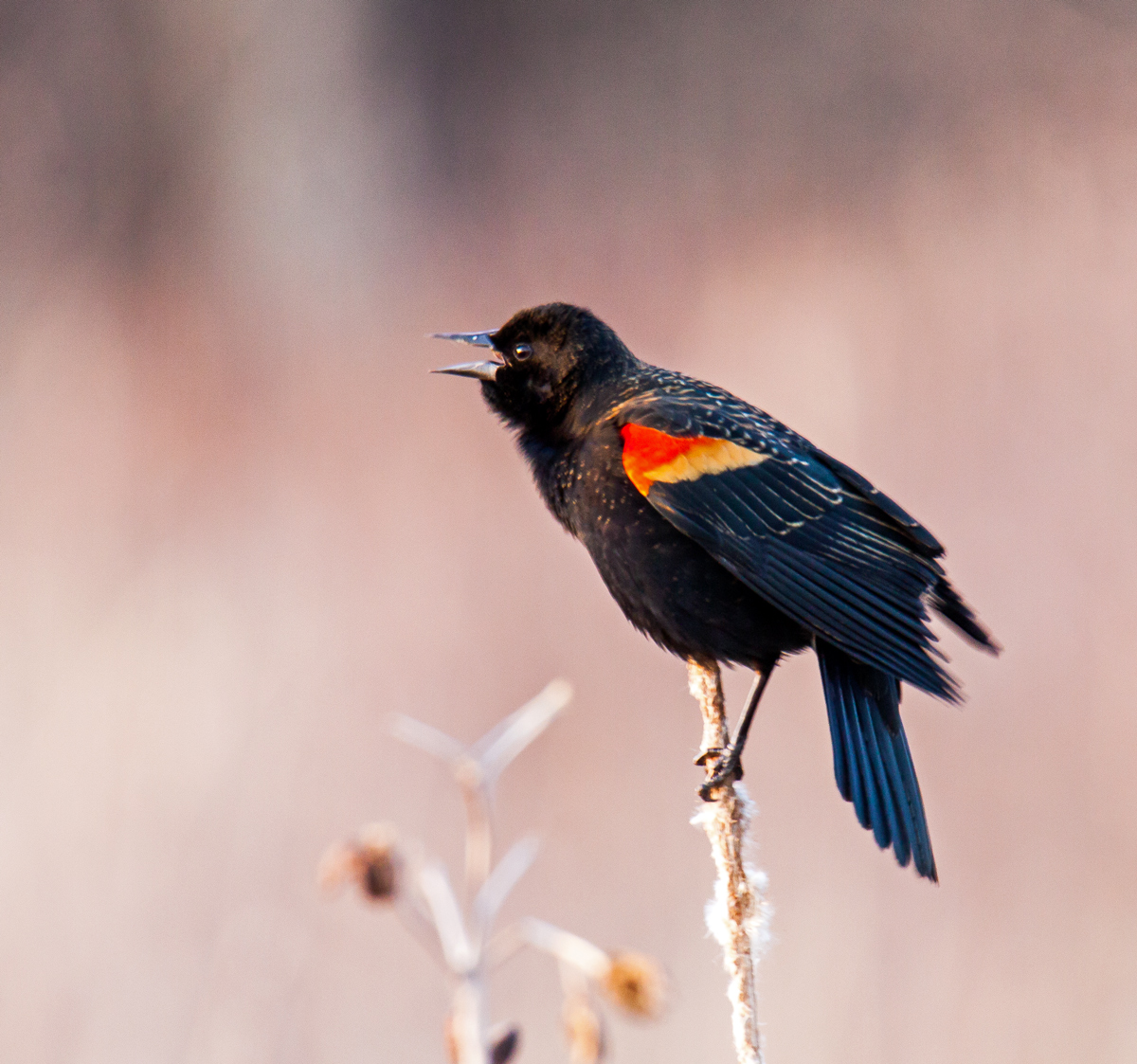
A large number of Red-winged Blackbirds (Agelaius phoeniceus) were in the trees and among the cattails yesterday afternoon at Huntley Meadows Park and their raucous calls resounded throughout the park. The males seemed to competing to see who could call out the loudest and longest, as if to say, “Can you hear me now?”

Red-winged Blackbird

Red-winged Blackbird

© Michael Q. Powell. All rights reserved.

Read Full Post »

It is hard to believe that there could possibly be any insects or other nourishment in the dried-up reeds and cattails, but this male Downy Woodpecker (Picoides pubescens) was feverishly pecking away this past Monday at Huntley Meadows Park. He was extremely focused and persistent—I hope that his efforts were eventually rewarded.

Downy Woodpecker

© Michael Q. Powell. All rights reserved.

Read Full Post »
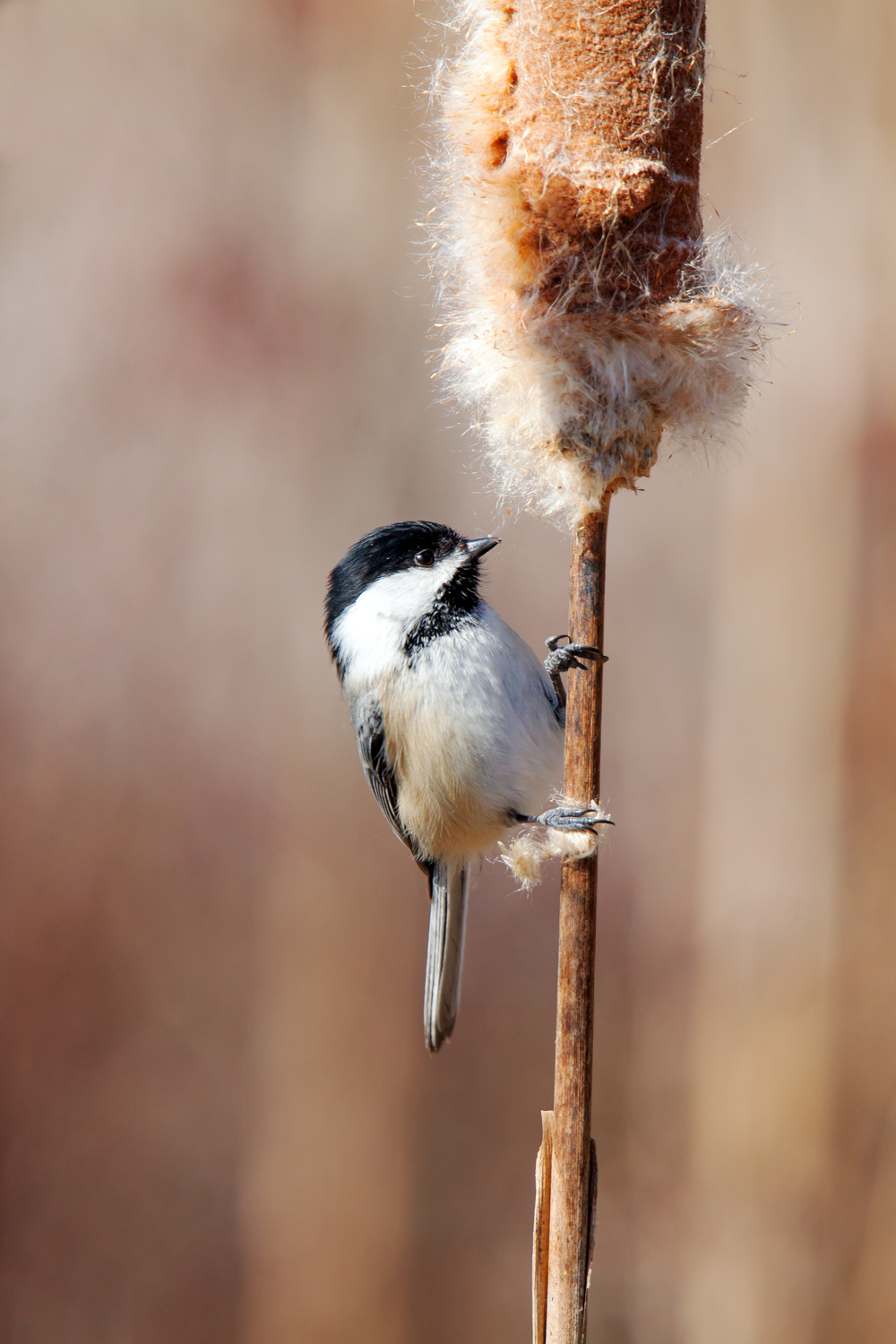
My little chickadee—spotted yesterday afternoon in the cattails at Huntley Meadows Park. In our area, most of the chickadees are Carolina Chickadees (Poecile carolinensis), but we do get some Black-capped Chickadees (Poecile atricapillus) too. The species are so similar that I am never completely sure which one I am looking at. This one, for example, looks like some of the images that I see of the Black-capped Chickadee.

When it came to presenting this image, I was a little bothered by the large amount of negative space on the left side. However, I really like the way that the image emphasizes the tallness of the cattail. The more I looked at the image, the more I grew to like the composition, so I ended up not cropping it at all.

chickadee

© Michael Q. Powell. All rights reserved.

Read Full Post »

I was thrilled when I caught an Osprey (Pandion haliaetus) in action today at Lake Cook in Alexandria, Virginia. I had seen one there a little over a week ago, so I was somewhat ready when I saw one circling overhead this afternoon. It didn’t take long for the osprey to pull out a pretty good sized fish—I think the lake is stocked with trout, though I really don’t know fish well enough to know if that is the type of fish that the osprey caught.

Although I knew that the osprey would eventually dive for a fish, I was a little slow in reacting when it finally did. In particular, I had difficulty reacquiring focus after the big splash so images like the final image below are a bit soft in focus. I was fortunate that there was a lot of sunlight and I was able to get some sharper images when the osprey flew higher in the sky.

Osprey

Osprey

Osprey

© Michael Q. Powell. All rights reserved.

Read Full Post »

Recently I posted an image of a Pied-billed Grebe (Podilymbus podiceps) that prompted one reader to comment that the grebe looked like a “poorly drawn duck.” Now I’ll admit that the shape and proportions of a grebe are a bit unusual, but I was sure that with the right angle and lighting I could manage to take a beauty portrait of this little bird. I’m not sure that I succeeded fully, but I don’t feel at all uncomfortable characterizing the bird in this image as a “pretty grebe.”

Pied-billed Grebe

© Michael Q. Powell. All rights reserved.

Read Full Post »

« Newer Posts - Older Posts »