Feeds:
Posts
Comments

Archive for the ‘Birds’ Category

We have been having so much rain this month that I have taken to carrying an umbrella with me much of the time, including when I am going out with my camera. It’s a challenge to take photos in the rain, because of the juggling required to hold a camera steady while holding an umbrella and also because there are fewer subjects to photograph—most creatures have the common sense to seek shelter when it is raining.

Here are a few photos from a walk I took this past Friday at Occoquan Bay National Wildlife Refuge. They are a different style than most of the photos that I post on this blog, but I really like the way they turned out.

In the first image an Eastern Box Turtle (Terrapene carolina) had a different way for handling the rain than the umbrella I was carrying—it simply pulled its legs and head inside of its shell. In the second image a Tree Swallow (Tachycineta bicolor) decided to brave the rain to get a breath of fresh air while perched atop a nesting box. The final photo shows a hummingbird view of a trumpet vine flower, one of its favorites. Alas, no hummingbirds were flying in the rain.

Eastern Box Turtle

Tree Swallow

trumpet vine

© Michael Q. Powell. All rights reserved.

Read Full Post »

Do you think about your photographic subjects one at a time? That’s the way that I tend to operate. One of my blogging friends, though, likes to organize photos of others around themes that transcend the boundaries of individual species. In this posting, Liz of Exploring Colour focused on the theme of Predators and Prey with photos that capture this reality of nature without becoming gruesome. Be sure to check out her other wonderful postings too that include her own photos as well of those of some other awesome photographers.

Ms. Liz's avatarExploring Colour

The reality of the natural world is that some creatures eat other creatures to survive. Nature photographers spend a lot of time outside and sometimes capture dramatic moments in the struggle for survival. Their photos and stories may shock us but we can learn so much from these encounters – animals seem capable of much more planning, strategy and applied knowledge than what most of us humans ever give them credit for.


** Click on any photo to view large-size version **

Note: Each photographer’s website/blog is listed at the bottom of this blog-post.


snake2_fish_blog

Mike Powell | Snake catches catfish | 20 July, 2017

  • Story plus 5 Photos showing the snake in various positions holding his catch, all the time in the water, until all of a sudden the snake somehow ingests the large fish and the last photo shows the snake with only the fish tail sticking out of…

View original post 409 more words

Read Full Post »

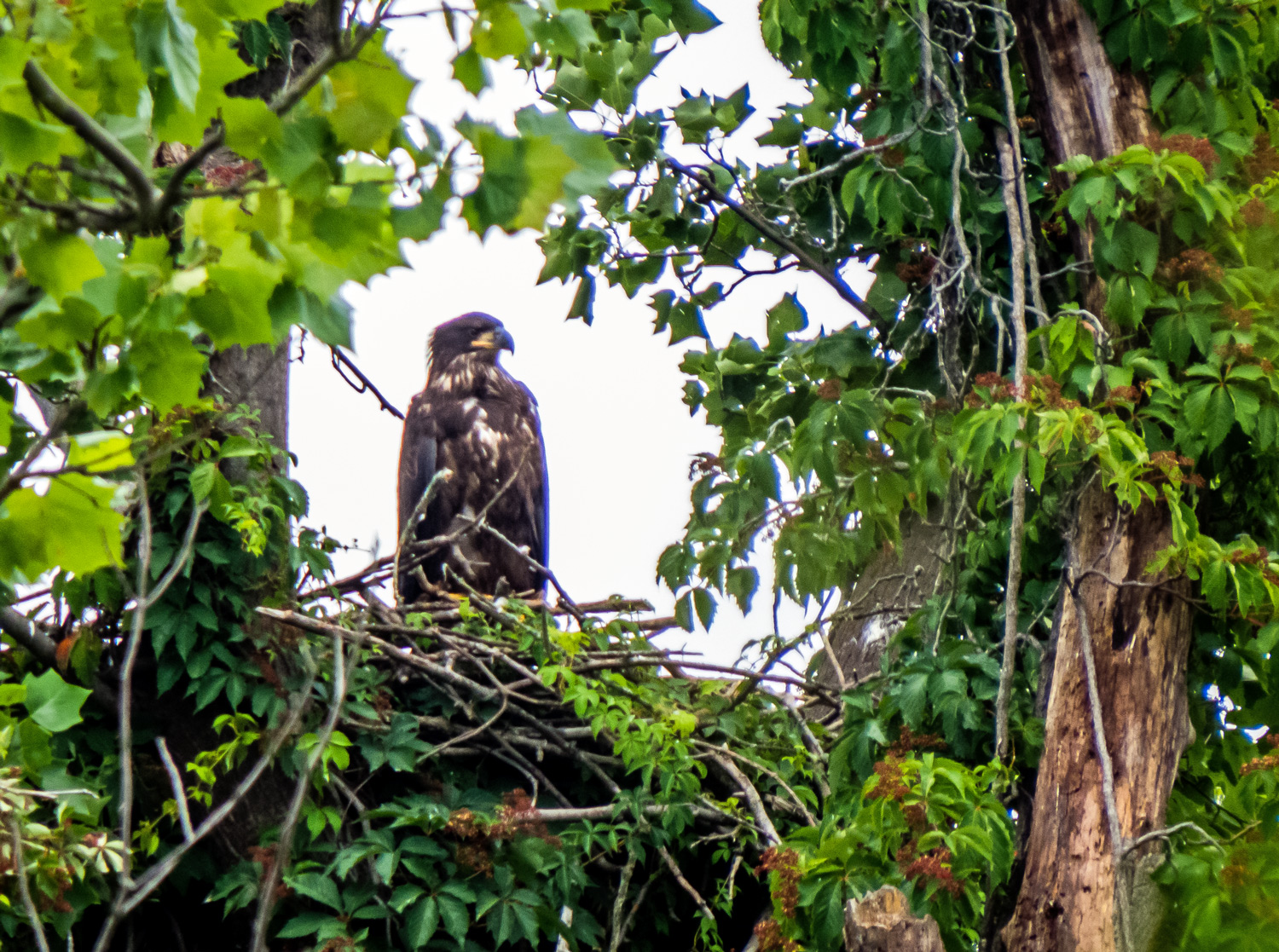
The eaglets in one of the two nests that I have been monitoring at Occoquan Bay National Wildlife Refuge appear to be almost full grown, but both of the parents were still keeping a watchful eye on them this past Saturday.

On this day I was shooting with my Canon SX50 superzoom camera and was able to zoom out and give you a sense of the relative position of the nest and the branches on which the adult Bald Eagles (Haliaeetus leucocephalus) were perched. I have featured this perch, which appears to be a favorite spot for these eagles, several times in this blog, but to the best of my knowledge this is the first time to show you the nest itself.

As you can see, the leaves have returned to the trees and it is getting harder and harder to get unobstructed shots of the eagle nest. I was hoping to get a shot of both of the eaglets, but the second one remained elusive and was hidden from view the entire time that I observed the eagles.

It would also have been nice to shoot from an angle in which the lighting was better, but essentially there was only a single location from which I had a clear visual path to the nest. I did change position for the shot of the two adults—the lighting was somewhat better, though I was still shooting through a tangle of branches. Sometimes you just have to take what you get and make the best of it.

Bald Eagle eaglet

Bald Eagle

Bald Eagle

© Michael Q. Powell. All rights reserved.

Read Full Post »

When this bird spread its wings and left them open last week at a small pond in Brussels, I instantly knew it was a cormorant. Cormorants have to frequently dry out their wings, because their feathers are not completely waterproof like some other water birds. It sounds like that would be a problem, but it actually is an advantage for them. Their waterlogged feathers help them to dive deeper, kind of like a weight belt that a deep-sea diver might wear.

It turns out that this is a Great Cormorant (Phalacrocorax carbo), a larger and somewhat darker cousin of the Double-crested Cormorants that live in our area.

Great Cormorant

Great Cormorant

© Michael Q. Powell. All rights reserved.

Read Full Post »

Although I saw Eurasian Coots (Fulica atra) a few times when I was in Brussels, Belgium this week, I was especially thrilled to spot this juvenile coot interacting with one of its parents. The color pattern on the juvenile is quite different from the adult’s, but the shape of their bills definitely shows that they are both coots.

Eurasian Coots are similar in appearance to the American Coots (Fulica americana) that I am used to seeing, though it appears to me that the white frontal shield on the “forehead” of the coot seems more prominent on the Eurasian species.

As I was thinking about the word “coot,” I realized that most people use the word only in the expression “old coot.” It made me wonder why coots are associated with a somewhat disparaging term for older men. According to an article in the Hartford Courant newspaper, “If you’ve ever seen a coot — an ungainly marsh bird that bobs its head like a hen as it swims or walks — you can see why “coot” came to denote, by the 1700’s, “a harmless, simple person,” as in “an old coot.””

I love when I have the chance to photograph the interaction between two species or two members of the same species. In this case, the eye contact and body positions tell a story that scarcely requires words.

Eurasian Coot

© Michael Q. Powell. All rights reserved.


Read Full Post »

One of the most exciting things that I have observed during this brief trip to Brussels has been a family of Mute Swans (Cygnus olor) swimming in a small pond at the Rouge-Cloître park. I have seen swans a few times before in the wild, but I had never seen baby swans. As you might expect, they are really cute. Both of the parents seemed to be very attentive to the little ones and stayed close to them at all times. The baby swans, technically known as cygnets, seemed to be very curious and energetic and interacted a lot with each other as they explored the world.

Swan babies

Swan babies

Swan babies

© Michael Q. Powell. All rights reserved.

Read Full Post »

As I was exploring the Rouge-Cloître (Red Cloister) Park in Brussels, Belgium last weekend, I could hear some excited peeping coming from a heavily-vegetated area at the edge of a pond. Peering through the reeds, I could just make out the dark shapes and brightly-colored beaks of a pair of adult Common Moorhens (Gallinula chloropus).

As I kept watching I began to see several smaller shapes and realized there were baby chicks with the parents—there were at least three chicks and possibly more. The chicks and the parents remained mostly out of sight, but occasionally I got a partial glimpse of one of them through the vegetation as they moved about and managed to snap off a few shots.

I am also including a shot of an adult moorhen that I spotted earlier in the day at another park, in case you are not familiar with this bird species. In the photo you can’t help but notice that Common Moorhens have large feet that lack the webbing that we are used to seeing in ducks.

Common Moorhen

Common Moorhen

Common Moorhen

© Michael Q. Powell. All rights reserved.


Read Full Post »

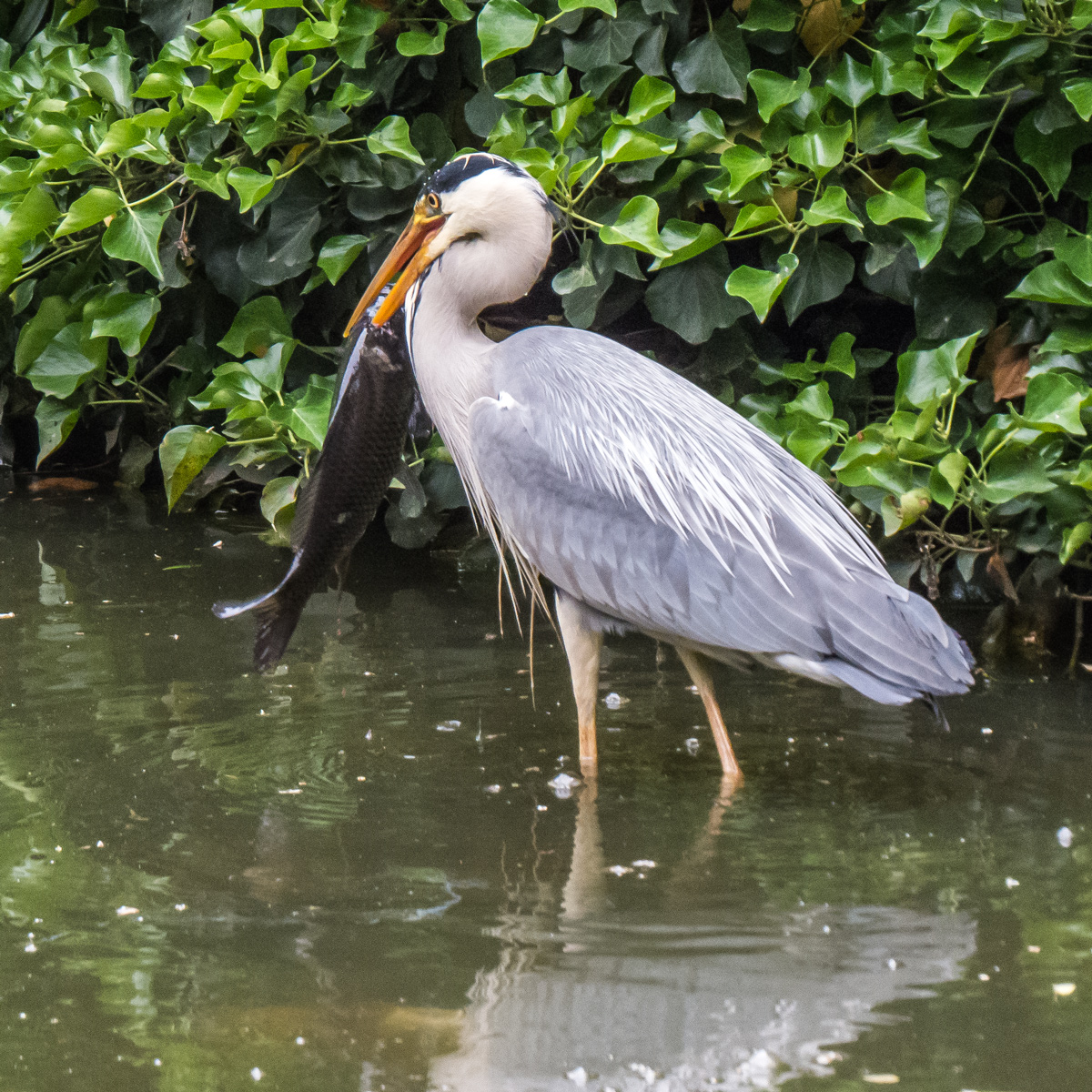
Grey Herons (Ardea cinerea), like this one that I observed at the Botanical Garden here in Brussels, look and act a lot like the familiar Great Blue Heron (Ardea herodias) of North America, but are a little smaller and slightly different colored. Shortly after it caught this big fish, the heron let it go or it somehow managed to escape—maybe they have a catch-and-release policy at this location.

Grey Heron

Grey Heron

Grey Heron

© Michael Q. Powell. All rights reserved.
Read Full Post »

Egyptian Geese (Alopochen aegyptiaca) have a look that is so unusual and distinctive that I can now recognize them almost instantaneously. I am fortunate to have the chance to travel to Brussels, Belgium a couple of times a year for work and one of my favorite places to visit here is the botanical gardens of Brussels. There is a small pond at the botanical gardens that always has an assortment of birds, and I was delighted to spot this beautiful Egyptian Goose swimming in the pond yesterday, my day of arrival in this historic city. I have seen an Egyptian Goose at this location a couple of times in the past, but the lack of surprise did not diminish at all my excitement at seeing this exotic species.

As their name suggests, Egyptian Geese are native to the Nile River area and sub-Saharan Africa, but there are now established breeding populations in parts of Europe and even in the United States. According to information in Wikipedia, Egyptian geese were considered sacred by the ancient Egyptians, and appeared in much of their artwork. They have been raised for food and extensively bred in parts of Africa since they were domesticated by the ancient Egyptians, although I suspect that they are viewed in Europe as primarily an ornamental bird.

Egyptian Goose

© Michael Q. Powell. All rights reserved.
 

Read Full Post »

I don’t know for sure if there were babies in this nest on Monday, but this adult Blue-gray Gnatcatcher (Polioptila caerulea) kept bending forward into the nest, including the moment in the first image when it had what looked to be an insect in its mouth. Was it feeding some young ones? I have seen numerous photos this spring of baby birds with wide open mouths and I have been longing to capture some images like that.

Several weeks ago I watched as two gnatcatchers worked on this nest at Jackson Miles Abbott Wetland Refuge here in Northern Virginia. I marveled at their patience and at their amazing craftsmanship. They would bring small bits of material into the nest (spider webs and lichen from what I have read) and place them carefully. Then they would rotate their bodies while sitting in the nest to compact the material.

It was a bit of a challenge to capture these shots. I was shooting upwards and there was a leafy canopy that filtered out a lot of the light. I also tried really hard not to disturb the birds, so I kept my distance, avoided using flash, and limited the time that I was shooting.

Are there babies in the nest? If they are not there now, they should be coming soon. I will be sure to check out the nest when I return to this little wetland refuge some time in the near future and maybe then I will be able to capture shots of the little ones being fed.


Blue-gray Gnatcatcher

Blue-gray Gnatcatcher


© Michael Q. Powell. All rights reserved.

Read Full Post »

I was prompted this morning to read again the challenges to all Americans found in Abraham Lincoln’s Gettysburg Address, challenges that seem so appropriate and relevant as we pause in the United States on this Memorial Day to remember the sacrifices of so many brave men and women.
 “But, in a larger sense, we can not dedicate—we can not consecrate—we can not hallow—this ground. The brave men, living and dead, who struggled here, have consecrated it, far above our poor power to add or detract. The world will little note, nor long remember what we say here, but it can never forget what they did here. It is for us the living, rather, to be dedicated here to the unfinished work which they who fought here have thus far so nobly advanced. It is rather for us to be here dedicated to the great task remaining before us—that from these honored dead we take increased devotion to that cause for which they gave the last full measure of devotion—that we here highly resolve that these dead shall not have died in vain—that this nation, under God, shall have a new birth of freedom—and that government of the people, by the people, for the people, shall not perish from the earth.”
Bald Eagle
(I captured this image of a hyper-vigilant injured Bald Eagle (Haliaeetus leucocephalus) in November 2014 shortly before it was rescued. You can learn more about the rescue and see additional images in a posting from that period entitled “Rescue of an injured Bald Eagle.”)
© Michael Q. Powell. All rights reserved.

Read Full Post »

This Bald Eagle (Haliaeetus leucocephalus) couldn’t seem to decide if it wanted to yawn or scream this past Monday at Occoquan Bay National Wildlife Refuge. Either reaction could have been a response to my presence.

Bald Eagle

© Michael Q. Powell. All rights reserved.

Read Full Post »

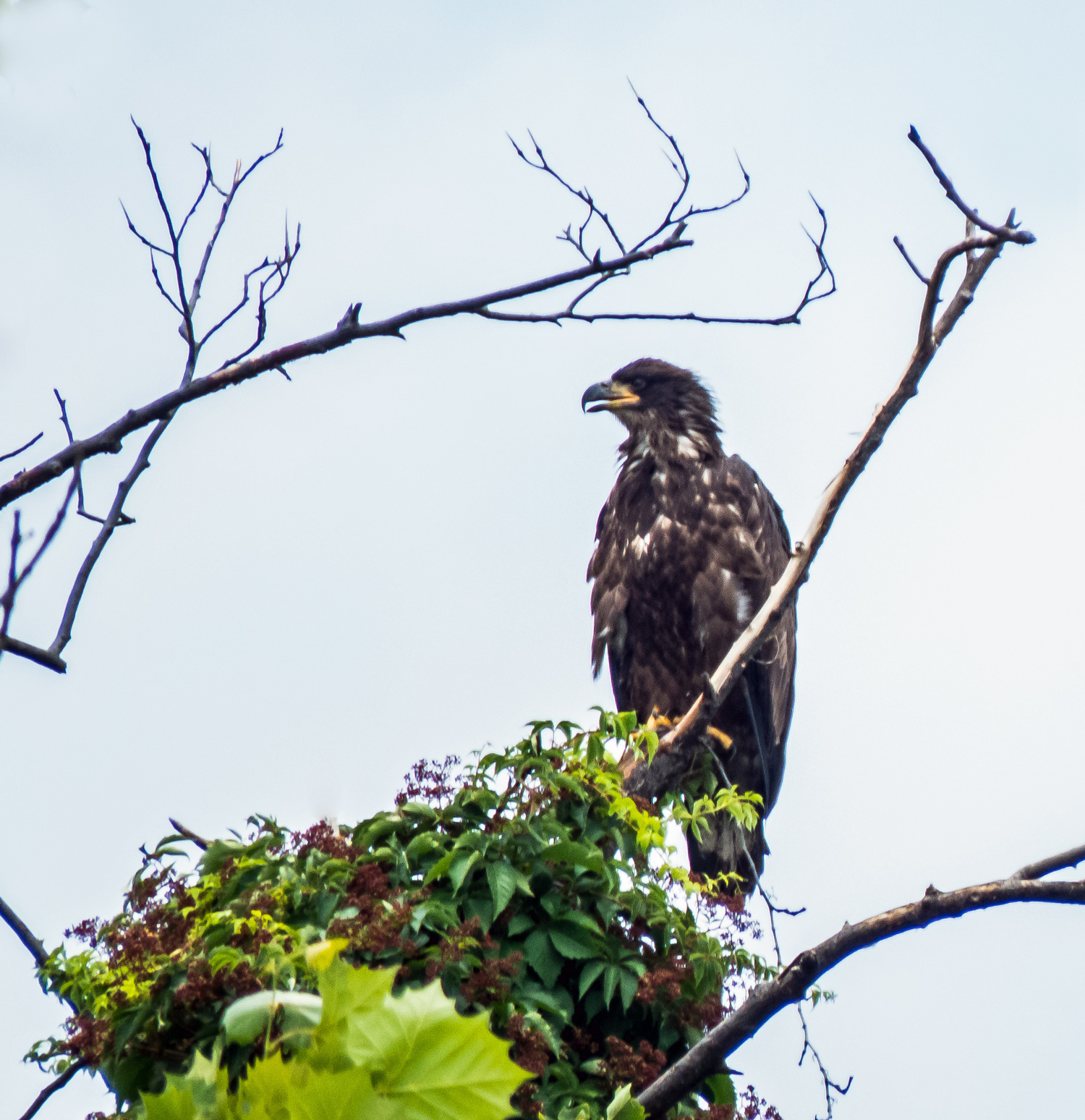
The two Bald Eagle eaglets whose development I have been following are getting really big—it looks like they are about ready to attempt to fly. In the upper left corner of the first image, you can see that one of the parents was perched just above the nest. It seems like there is no longer room for either of the parents in the nest, but at least one of them always seems to be nearby, watching over the eaglets

There is a barrier at the Occoquan Bay National Wildlife Refuge near the eagle nest that keeps people from getting close and protects the Bald Eagles (Haliaeetus leucocephalus) from human interference., From that barrier, however, I am able to see into the nest with my 150-600mm telephoto zoom lens, though the leaves on the trees are now making it quite a bit tougher to get an unobstructed shot than a  month ago. For comparison purposes, I am including a shot of the eaglets that I took three weeks earlier than the more recent image that I captured this past Monday.

Bald Eagle eaglets

Bald Eagle eaglets

© Michael Q. Powell. All rights reserved.

Read Full Post »

Cormorants are usually really skittish. Even when they are fishing far away from the shore, they will usually take off as soon as they sense my presence. When I spotted the unmistakable silhouette of a cormorant perched on the remnants of a duck blind in the waters off of Occoquan Bay National Wildlife Refuge this past Monday, I fully expected that it would fly away before I got within range to take a decent shot.

As I was approaching, I could see that it was a juvenile Double-crested Cormorant (Phalacrocorax auritus)—juveniles are paler around the neck and breast than adults and have more exposed orange skin around the bill. Perhaps this young cormorant had not yet developed a fear of humans, but whatever the reasons was, the beautiful blue-eyed bird remained in place as I took some shots from different angles and was still there when I silently moved away.


Double-crested Cormorant

© Michael Q. Powell. All rights reserved.

Read Full Post »

When I was growing up, my parents had a carved wood cuckoo clock from Germany. The bird that popped out of the clock, however, looked nothing like the Yellow-billed Cuckoos (Coccyzus americanus) that I spotted this past weekend at Occoquan Bay National Wildlife Refuge. More significantly, the cuckoos that I saw did not make the familiar cuckoo sound that was part of my childhood.

When I did a little research, I learned that the cuckoo family is quite large and spread out all over the world and that the Yellow-billed Cuckoo belongs to a different subfamily from the Common Cuckoo (Cuculus canorus) from Europe. That cuckoo is the one that makes the cuckoo sound used in all of those clocks.

Yellow-billed Cuckoo

Yellow-billed Cuckoo

Yellow-billed Cuckoo


© Michael Q. Powell. All rights reserved.


Read Full Post »

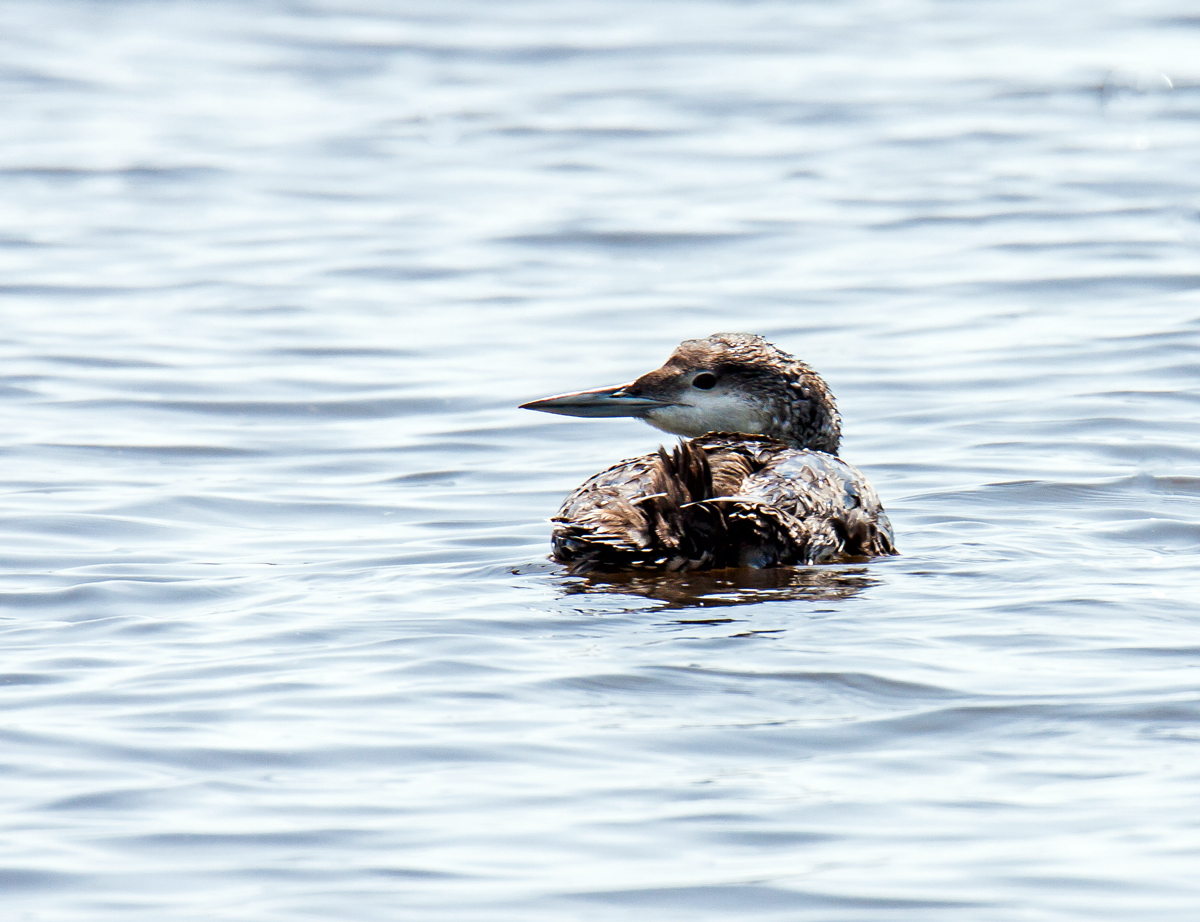
When I first saw this bird yesterday in the waters off of Occoquan Bay National Wildlife Refuge, I thought it might be some kind of grebe. The more I watched it though, the more skeptical I became of my initial identification. It seemed bigger than the grebes that I had previously seen and its bill seemed considerably longer. Additionally, it acted differently. Rather than diving, it poked its head under the water and then would swim for a bit with its head submerged.

So I did what I usually do in this kinds of situation and posted some photos in the What’s This Bird? forum on Facebook. Within a few minutes I received a chorus of responses, all indicating that this was a Common Loon (Gavia immer). I have absolutely no experience with loons, but tend to associate them with northern lakes. Mentally, I think of them as dark colored with distinctive patterns, which is true when they are in breeding plumage. It turns out that they are much more subdued in coloration when they are in non-breeding or immature plumage.

In other parts of North America, loons are a more common and popular sight than in Northern Virginia where I live. According to Wikipedia, the Common Loon is the provincial bird of Ontario, and it appears on Canadian currency, including the one-dollar “loonie” coin and the previous series of $20 bills. In 1961, it was designated the state bird of Minnesota, and appears on the Minnesota State Quarter.

Common Loon

Common Loon

Common Loon

© Michael Q. Powell. All rights reserved.


Read Full Post »

I have spotted Common Yellowthroats (Geothlypis trichas) repeatedly this spring, but, despite my best efforts, have not been able to get a close-up shot of one. They seem to like to perch in the middle of a particular field at Occoquan Bay National Wildlife Refuge and seem to taunt me from a distance with their sweet songs.

I love the distinctive black Lone Ranger-style mask of the male Common Yellowthroat that contrasts wonderfully with sunny hues of its eponymous throat. Even though I recently couldn’t get close to this yellowthroat, I managed to capture this image that has a painterly feel to it.

I’ll still be trying for a close-up of this species, but for now I am quite content with this environmental portrait of this beautiful bird.

Common Yellowthroat

© Michael Q. Powell. All rights reserved.

Read Full Post »

When I first spotted a small flock of dark-colored birds this past Monday at Occoquan Bay National Wildlife Refuge, I thought that they were blackbirds of maybe grackles. When the light illuminated them better, however, I could see that they were two-toned—their heads were brown and their bodies were black. I wasn’t sure what they were, but their distinctive color pattern made it easy to find them in my bird identification guide as Brown-headed Cowbirds (Molothrus ater).

I found the name “cowbird” to be a bit strange and wondered if perhaps they mooed like cows. After all, catbirds are reported to make sounds like those of a cat. As far as I can determine, though, they were called “cowbirds” simply because this species was often seen near cattle.

As I was poking about on the internet trying to learn more about this species, I was shocked to learn that cowbirds do not make their own nests. Where then do they lay their eggs? The Cornell Lab of Ornithology website explained this phenomenon as follows:

“The Brown-headed Cowbird is North America’s most common “brood parasite.” A female cowbird makes no nest of her own, but instead lays her eggs in the nests of other bird species, who then raise the young cowbirds. Brown-headed Cowbird lay eggs in the nests of more than 220 species of birds.”

I have not yet seen it, but apparently it is not unusual to see parents of one species busily trying to feed a baby cowbird that hatched in its nest.

The first two shots below show adult male cowbirds and the third image looks to be a juvenile cowbird or possibly a female

Brown-headed Cowbird

Brown-headed Cowbird

Brown-headed Cowbird

© Michael Q. Powell. All rights reserved.


Read Full Post »

After a series of dreary days this week, I feel the need for some brighter, more cheerful colors. Here are a couple of shots of a Yellow Warbler (Setophaga petechia) that I spotted on Monday at Occoquan Bay National Wildlife Refuge. A lot of warblers have yellow on their bodies and have long, complicated names, but this one is known simply as a “Yellow Warbler”—a straightforward name for a beautiful little bird.

Yellow Warbler

Yellow Warbler

© Michael Q. Powell. All rights reserved.

Read Full Post »

It is almost impossible to take a good portrait of a group of youngsters, irrespective of species—they are invariably energetic and inquisitive, almost incapable of simultaneously looking at the camera.

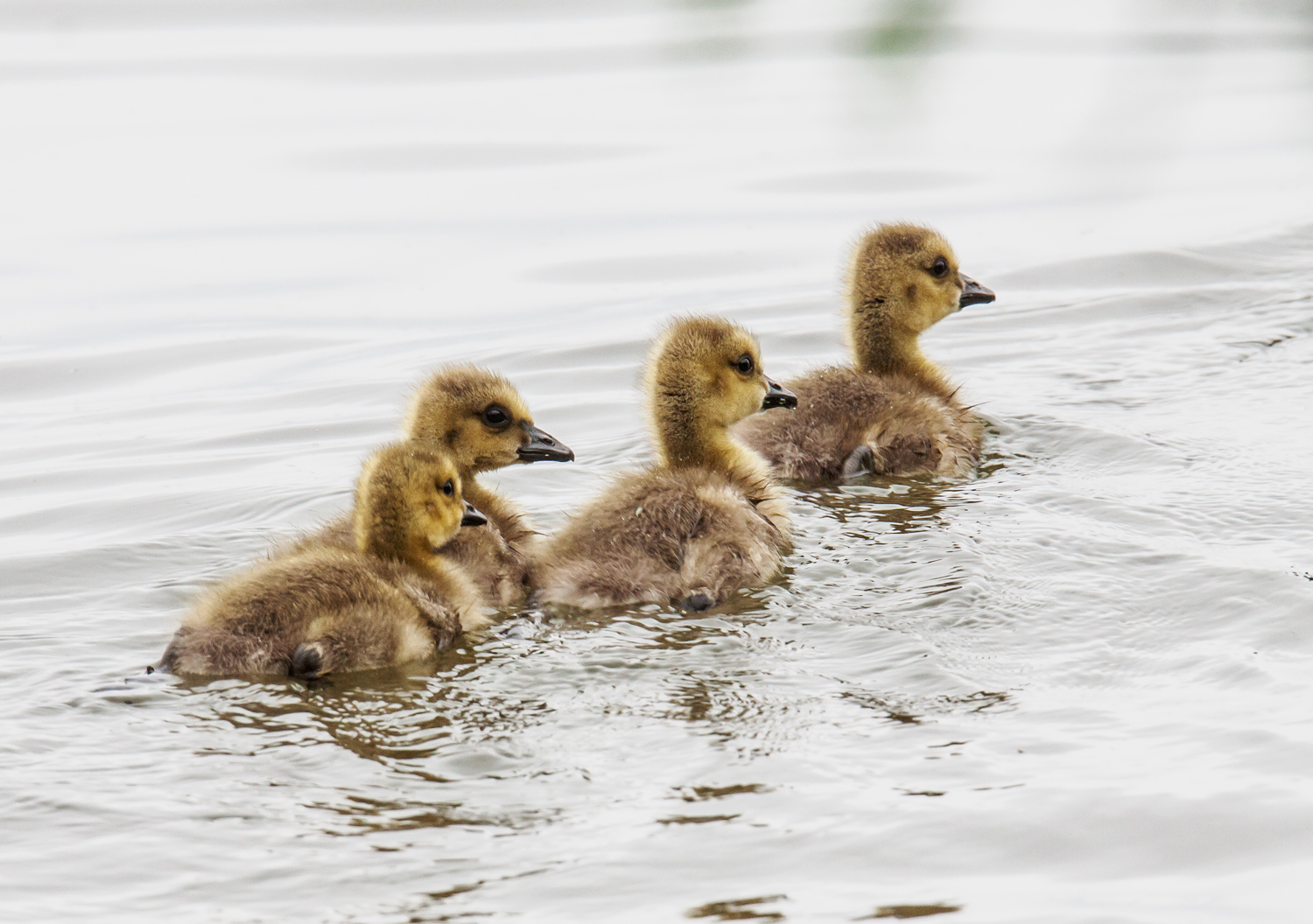
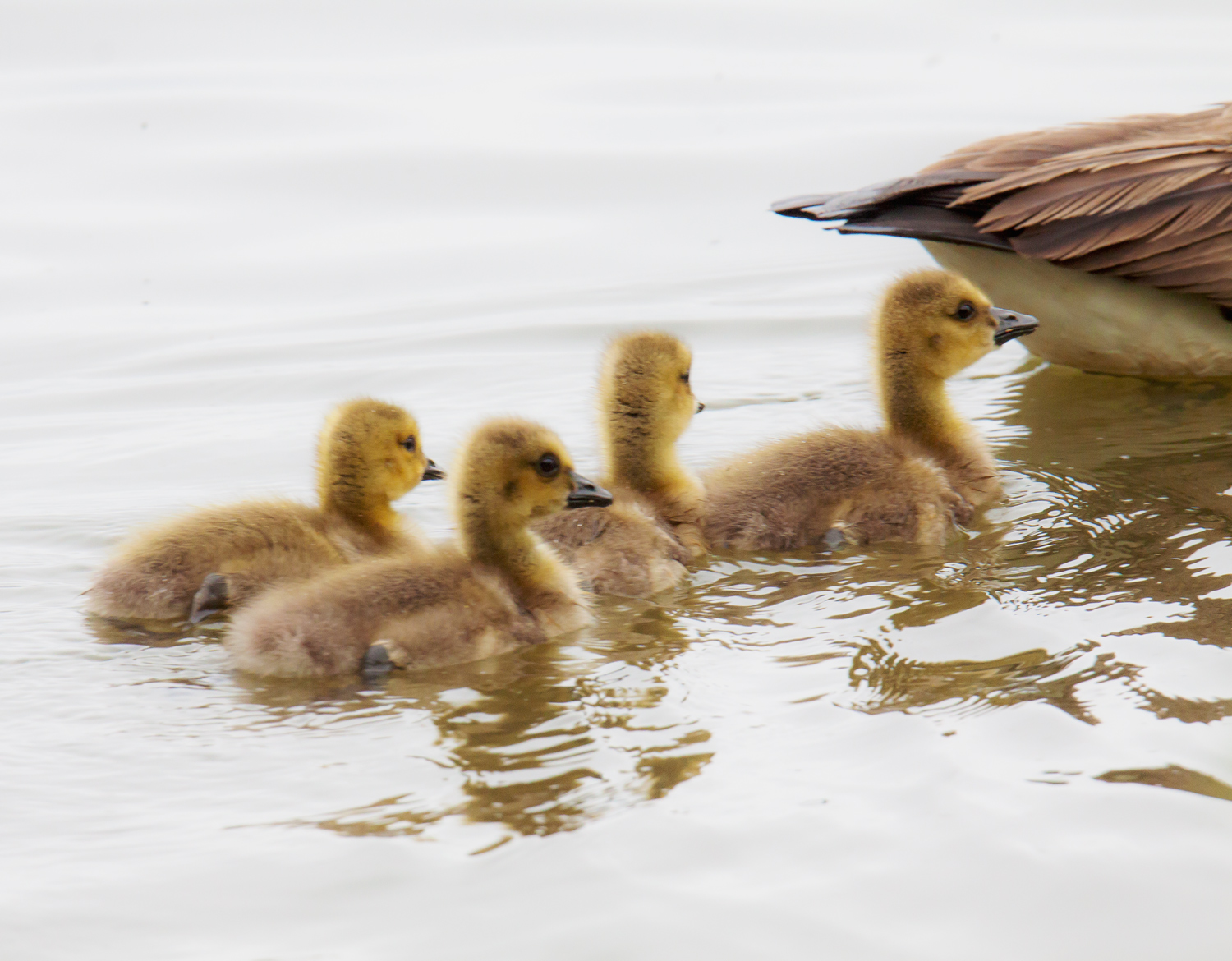
Yesterday I encountered a family of Canada Geese (Branta canadensis) as I walked down a path at Occoquan Bay National Wildlife Refuge. They too were strolling down the path, stopping to peck at the vegetation along the way. When they became aware of my presence, they slowly made their way to the water’s edge and slipped into the water.

The cute little goslings had already learned their lessons well and stayed in a tight little group right behind one of their parents. Once they had paddled a little way from shore, the babies, however, seemed to lose their focus and started to wander a bit. The adult in the rear of the little group, though, helped to bring them back into line as they silently swam away.

Canada Geese

Canada Geese

© Michael Q. Powell. All rights reserved.

Read Full Post »

When I saw a flash of bright blue this past Friday at Occoquan Bay National Wildlife Refuge, I thought for sure that it was a male Eastern Bluebird, but when I looked more closely, I was thrilled to see that it was an Indigo Bunting (Passerina cyanea). Ever since one of my youngest viewers, a four year old named Benjamin, commented that bluebirds have as much orange as blue, I have been very conscious of species that have colors associated with their names.

In the bird world, most of the species names are associated with mature males, which tend to be a lot more colorful than females. The female Indigo Bunting, for example, is not blue at all, but is brownish in color. When I was just getting started in photographing birds, I remember being confused when I was told that a sparrow-looking bird at which I was pointing my camera was a Red-winged Blackbird—it was neither black, nor did it have red wings.

Some of the photographers in my area have recently posted images of a Blue Grosbeak, another bird that has bright blue feathers. They tend to be uncommon, but I will certainly be keeping my eyes open for flashes of blue, a color that seems to be relatively rare in the world of wildlife.

Indigo Bunting

© Michael Q. Powell. All rights reserved.

Read Full Post »

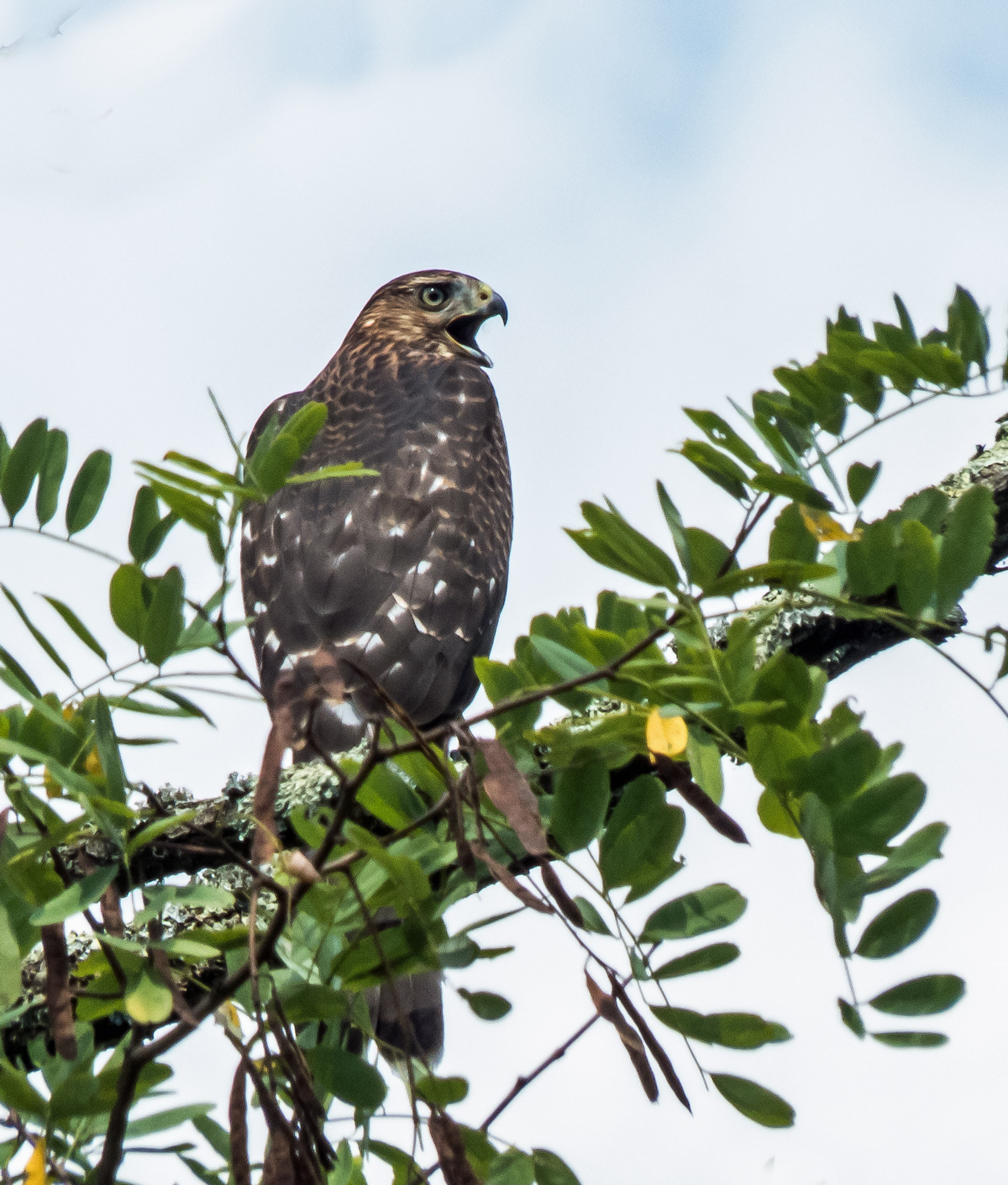
I thought that this was some kind of warbler when I saw it yesterday at Occoquan Bay National Wildlife Refuge, but some folks on the Facebook “What’s This Bird” forum  identified it for me as an immature male Orchard Oriole (Icterus spurius). I think that I was fooled by the yellow color, since most warbler have at least a touch of yellow. Now when I look more closely at the photos, I realize that the bill is shaped differently from those of warblers.

Orchard Oriole

Orchard Oriole

© Michael Q. Powell. All rights reserved.

Read Full Post »

It seems like I am increasingly spending my time trying to track small birds as they energetically flit about in a tangle of newly-emerged leaves. In their aggressive foraging for food, they rarely seem to pause and pose for me on isolated branches, so I am figuring out ways to integrate the foliage into my photos.

Here are a couple of images of Blue-gray Gnatcatchers (Polioptila caerulea) from this past weekend at Occoquan Bay National Wildlife Refuge that show not only the birds, but also a part of their environment. As I was doing a little research on this gnatcatcher on the Cornell Lab of Ornithology website, I was a bit surprised to learn that gnats do not form a significant part of the Blue-gray Gnatcatcher’s diet—they eat all kinds of insects and spiders.

Blue-gray Gnatcatcher

Blue-gray Gnatcatcher

© Michael Q. Powell. All rights reserved.

Read Full Post »

“You look like an angel…” I am not sure what was so special about that particular spot on that specific tree, but this Yellow-rumped Warbler (Setophaga coronata) used all of its aerial and acrobatic skills to peck away at it on Monday at Occoquan Bay National Wildlife Refuge. From what I could tell, the warbler held on to the branch with its feet and used its outspread wings for balance. In the second image, it looks like the warbler was using a pendulum-like motion to generate momentum.

The bird’s body positions remind me of artistic portrays of angelic beings that I have a seen in multiple museums and books and I felt blessed to have had the chance to see this relatively common bird in an unusual way.

Yellow-rumped Warbler

Yellow-rumped Warbler

© Michael Q. Powell. All rights reserved.


Read Full Post »

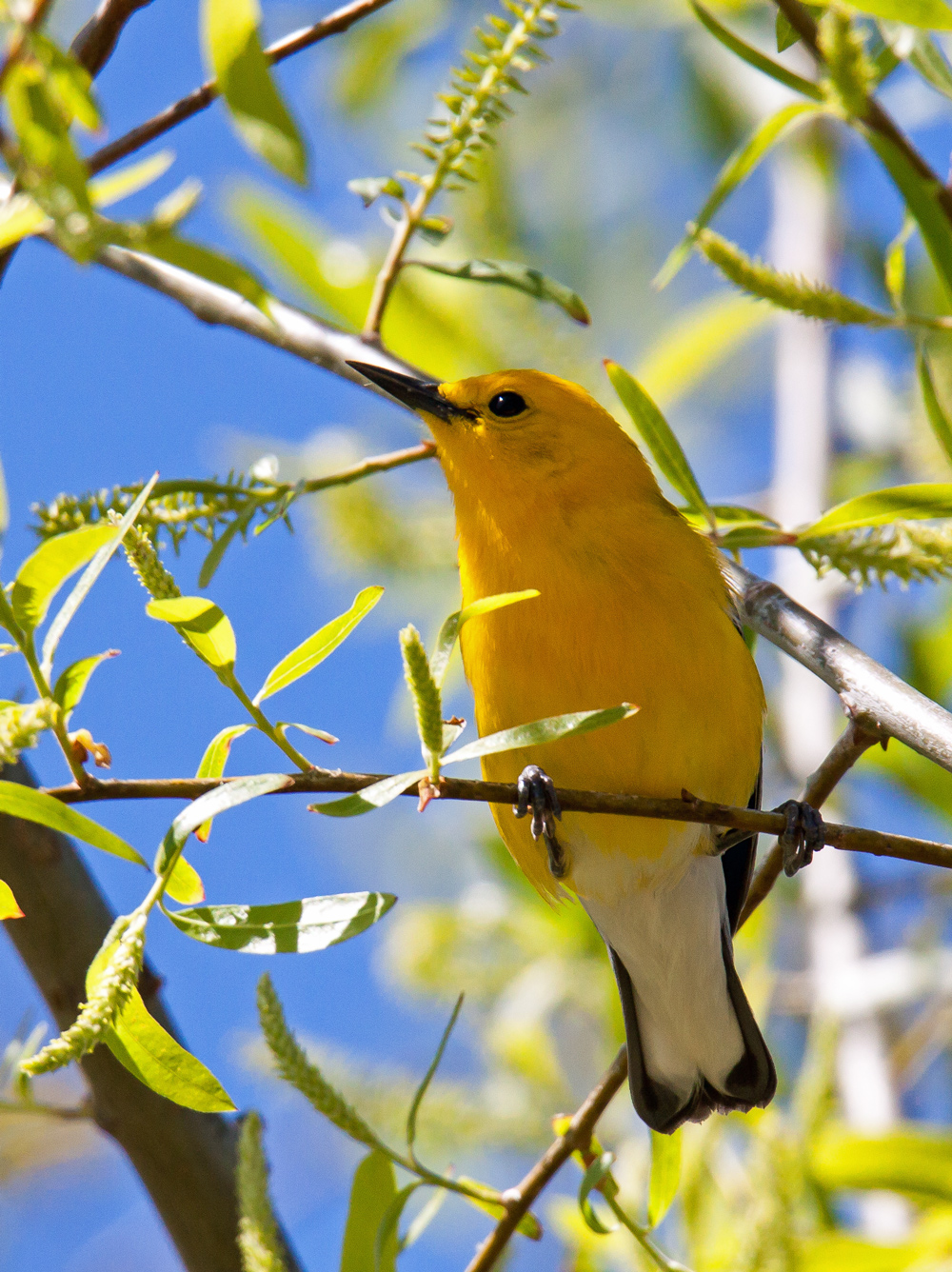
Most warblers seem to have some yellow on their bodies, but I had never before seen one with as much yellow as the Prothonotary Warbler (Protonotaria citrea) that I spotted on Monday at Occoquan Bay National Wildlife Refuge. The yellow coloration helped me in tracking the bird, although it stayed high in a tree and was in almost constant motion. Now that there are leaves on many of the trees, I’m finding it to be harder and harder to get unobstructed shots of birds.

I will definitely be trying to get some more shots of this spectacular bird, hopefully in the near future.

Prothonotary Warbler

Prothonotary Warbler

Prothonotary Warbler

© Michael Q. Powell. All rights reserved.

Read Full Post »

I was thrilled yesterday when I managed to spot a tiny Blue-gray Gnatcatcher (Polioptila caerulea) in a nest at Jackson Miles Abbott Wetland Refuge. These little birds use lichen and spiderwebs to make nests that blend in amazingly well with the trees on which they are found and it is unlikely that I would have been able to spot the nest if the bird had not been initially sitting in it.

Blue-gray Gnatcatcher

Blue-gray Gnatcatcher

Blue-gray Gnatcatcher

© Michael Q. Powell. All rights reserved.

Read Full Post »

I will be heading home soon after my brief stay in Vienna, Austria and thought I would post a few last wildlife photos that I took here. These images help reinforce to me the notion that there is always something interesting in nature to photograph, no matter where I happen to be.

The first image is an unidentified species of frog that I encountered at the edge of a pond while wandering about the Donau-Auen National Park. It reminds me of the Southern Leopard Frog that I often see at home in Northern Virginia.

frog in VIenna

The second image appears to be a Viennese Banded Snail (Cepaea vindobonensis) that I also spotted in the National Park.  I thought that it was really cool the way that it had attached itself to the vegetation.

Viennese Banded Snail

The final image shows what I believe to be a Mute Swan (Cygnus olor) that I saw at the Stadtpark (“city park”) not far from the hotel where I am staying. I always find swans to be beautiful and graceful, even when located in an urban environment.

swan in Vienna

© Michael Q. Powell. All rights reserved.

Read Full Post »

Finding birds is tough when the leaves are on the trees, but I did manage to spot this cool-looking one here in Vienna, Austria while visiting the Donau-Auen National Park. If this bird had remained quiet, there is no way that I would have been able to find it, but fortunately for me it was singing loudly.

I did a quick internet search, but so far I have not yet been able to identify it. I’d welcome identification assistance, particularly from someone with experience with European birds.

UPDATE: Thanks to the assistance of a number of viewers, I have been able to identify this bird as a Great Tit (Parus major), a widespread and common species throughout Europe, the Middle East, Central and Northern Asia, and parts of North Africa.

singing bird in Vienna
© Michael Q. Powell. All rights reserved.

Read Full Post »

Earlier this year I encountered an unfamiliar bird that turned out to be a Horned Grebe (Podiceps auritus). On-line photos showed that the bird has really cool plumage during mating season and I remember hoping that I would see one this spring.

Well, this past Friday I spotted one in the distance in the waters off of Occoquan Bay National Wildlife Refuge. The light was coming from almost in front of me and the grebe was a long way off, but I did manage to capture the sunlight glistening off of the blonde “horns” of this beautiful bird. I especially like the first shot in which you can see just a bit of the grebe’s red eyes and the feathers really do look like horns.

Horned Grebe

Horned Grebe

© Michael Q. Powell. All rights reserved.
Read Full Post »

I was thrilled yesterday morning to spot an American Kestrel (Falco sparverius) at Occoquan Bay National Wildlife Refuge. It’s pretty rare for me to see this beautiful little falcon and the lighting was good enough for me to see some of its wonderful colors and patterns. From the photos that I have seen on-line, I think this is a female—males have wings that are slate blue in color.

I was also able to watch it hunting for a little while over a distant field. A kestrel hovers in mid-air as it searches for prey below. Although the kestrel dove low a couple of times, I did not see it catch anything.

Both times that I have seen a kestrel, it has been perched in the same tree and I plan to return there regularly during my treks through the wildlife refuge.

American Kestrel

© Michael Q. Powell. All rights reserved.

Read Full Post »

I grew up in the suburbs, so even domesticated farmyard animals seem exotic to me, like this bantam rooster and Red Angus cow with her calf that I encountered last weekend in Montpelier, Virginia while I was out of town for a wedding.

I am also including an image of an American Robin (Turdus migratorius) that I also captured on the farm—I like the way that the color of the rusted barbs matches that of the robin’s breast and how their shape mirrors that of the robin’s clawed feet.

 bantam rooster
Red Angus cow
American Robin
© Michael Q. Powell. All rights reserved.

Read Full Post »

« Newer Posts - Older Posts »