Feeds:
Posts
Comments

Archive for the ‘Birds’ Category

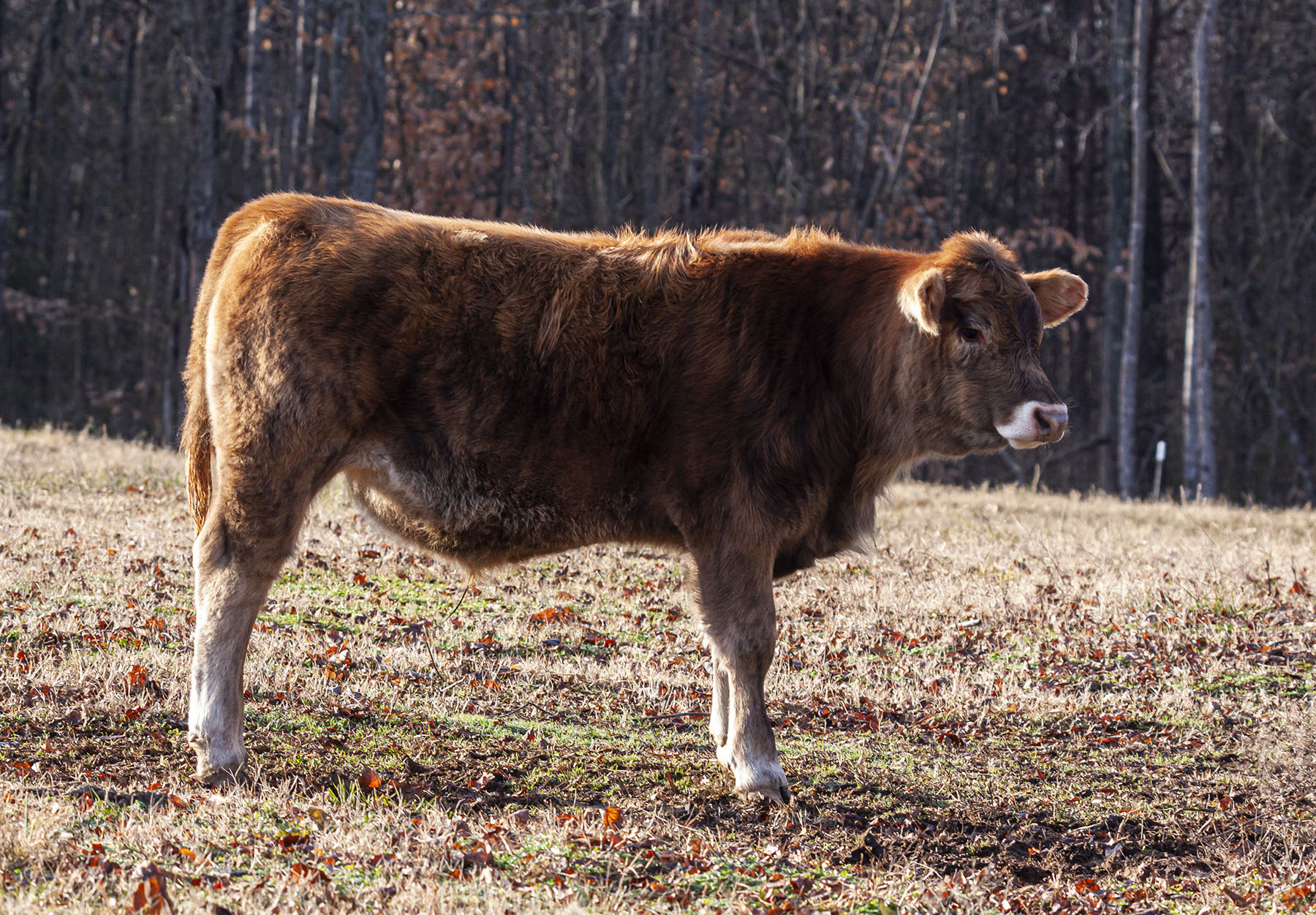
I grew up in the suburbs and have little experience with farm life. So as far as I am concerned the rooster and cows (and dogs) that I saw this past weekend can be considered “wildlife.”

My son is in the Army and is stationed in Colorado Springs, Colorado. While he was deployed to Iraq during most of this year, his German Shepherd, Katie, has been with family members on the East coast. Josh picked up Katie this past weekend and before he began the long drive to Colorado, we had a family get-together at his Granny’s farm in Montpelier, Virginia on Friday evening. I spent the evening with Josh and Granny to avoid having to drive back to Northern Virginia late in the evening.

Early Saturday morning, about 6:00, I think, I was awoken by the loud crowing of King, the bantam rooster. He crowed a dozen or more times and then was silent for about ten minutes before resuming. After spending some quiet moments observing the cows grazing in the hay pasture, I was treated to a real country breakfast, with fresh eggs from Granny’s hens, bacon, and biscuits and gravy.

It was a beautiful day, so I headed outdoors and played with the dogs for a while. The two of them, Katie and Chin, Granny’s dog, made for an interesting contrast in size as they ran around the yard, sometimes chasing a ball, but often content to just explore.

All too quickly the time came to bid farewell and I left behind the relative calm of the farm life and prepared to face a slow drive back home on what I knew would be a crowded interstate highway.

cow

Chin

Katie

© Michael Q. Powell. All rights reserved.
 

Read Full Post »

Recently I mentioned that I had spotted a pair of Bald Eagles (Haliaeetus leucocephalus) at a nearby “suburban pond” and realized that readers may have differing ideas of what such an environment looks like. The pond is man-made and serves as a storm water retention pond. A gentleman who lives nearby told me that it is 35 feet deep (1066 cm) at its deepest point. There is a path that goes around the pond, which is bounded by a complex of townhouses on one side, by roads on two sides, and by a wooded area on the final side.

Last week I captured a series of images of an eagle swooping down and pulling what I think was a small fish from that pond. I was a long way off and the focus is not as sharp as I would have liked it, but I think the photos show pretty clearly how close the pond is to a road. You can see some vehicles, traffic signs, and even the signals for a crosswalk. I really like the fact that I can see a pretty good variety of wild creatures in this pond. Initially I thought that there were only ducks and geese there, but I have also seen Great Blue Herons and Double-crested Cormorants, and now even Bald Eagles.

Perhaps you have a similar small body of water where you live. I encourage you to check it out and you may surprised to find a lot of wildlife living there.

Balg Eagle

Bald Eagle

Bald Eagle

© Michael Q. Powell. All rights reserved.


Read Full Post »

Even when they are dozing, ducks seem to be keeping an eye on me, including a male Ring-necked Duck (Aythya collaris), a male Hooded Merganser (Lophodytes cucullatus), and a male Ruddy Duck, all of which I spotted this past week floating on a local pond.


Ring-necked Duck

Hooded Merganser

Ruddy Duck

© Michael Q. Powell. All rights reserved.


Read Full Post »

Sometimes I don’t have to worry about getting my ducks in a row—they do it themselves for me. I was really struck by the beauty and grace of these ducks as I watched them glide across the water earlier this week. Mallards (Anas platyrhynchos) are the most common ducks where I live and most folks here take them for granted, barely giving them a passing glance.

I think that there is something special about rediscovering the beauty in the familiar—all that it usually requires is slowing down, putting aside distractions, and focusing on the moment with all of your senses. You will find that there is beauty surrounding you all of the time.

Mallard ducks

© Michael Q. Powell. All rights reserved.


Read Full Post »

As I was observing ducks and gulls earlier this week on a small suburban pond, most of them suddenly took the air. Instinctively I looked up, suspecting that there was a hawk or eagle overhead, and sure enough I spotted a Bald Eagle (Haliaeetus leucocephalus).

I extended my telephoto zoom lens and tried to focus on the moving bird and was a bit surprised when a second eagle flashed across the frame—it was a pair of Bald Eagles. The eagles made several passes over the pond and I was happy to be able to capture these shots, including a couple of images with both of the eagles in the same frame.

This is the first time that I have seen Bald Eagles at this location, but hopefully will not be the last time.

Bald Eagle

Bald Eagle

Bald Eagle

© Michael Q. Powell. All rights reserved.

Read Full Post »

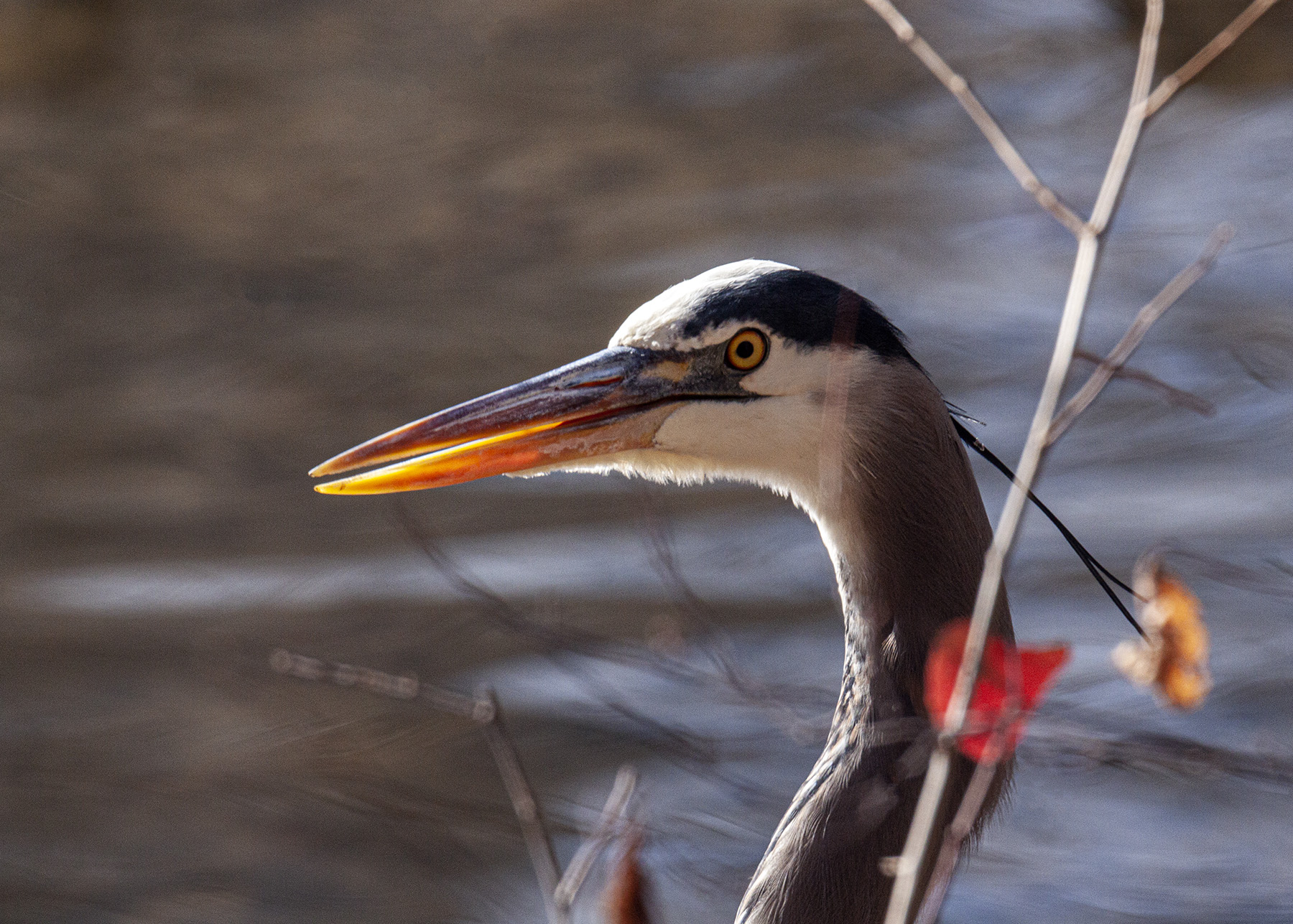
Merry Christmas to family and friends who are celebrating Christmas today and Happy Holidays to all of you scattered throughout the world. Even this Great Blue Heron (Ardea herodias) seemed to want to join me in singing earlier this week.

“And heaven and nature sing,” as the chorus to “Joy to the World” tells us, as all creatures join with the landscape to “repeat the sounding joy.”

Great Blue Heron

© Michael Q. Powell. All rights reserved.

Read Full Post »

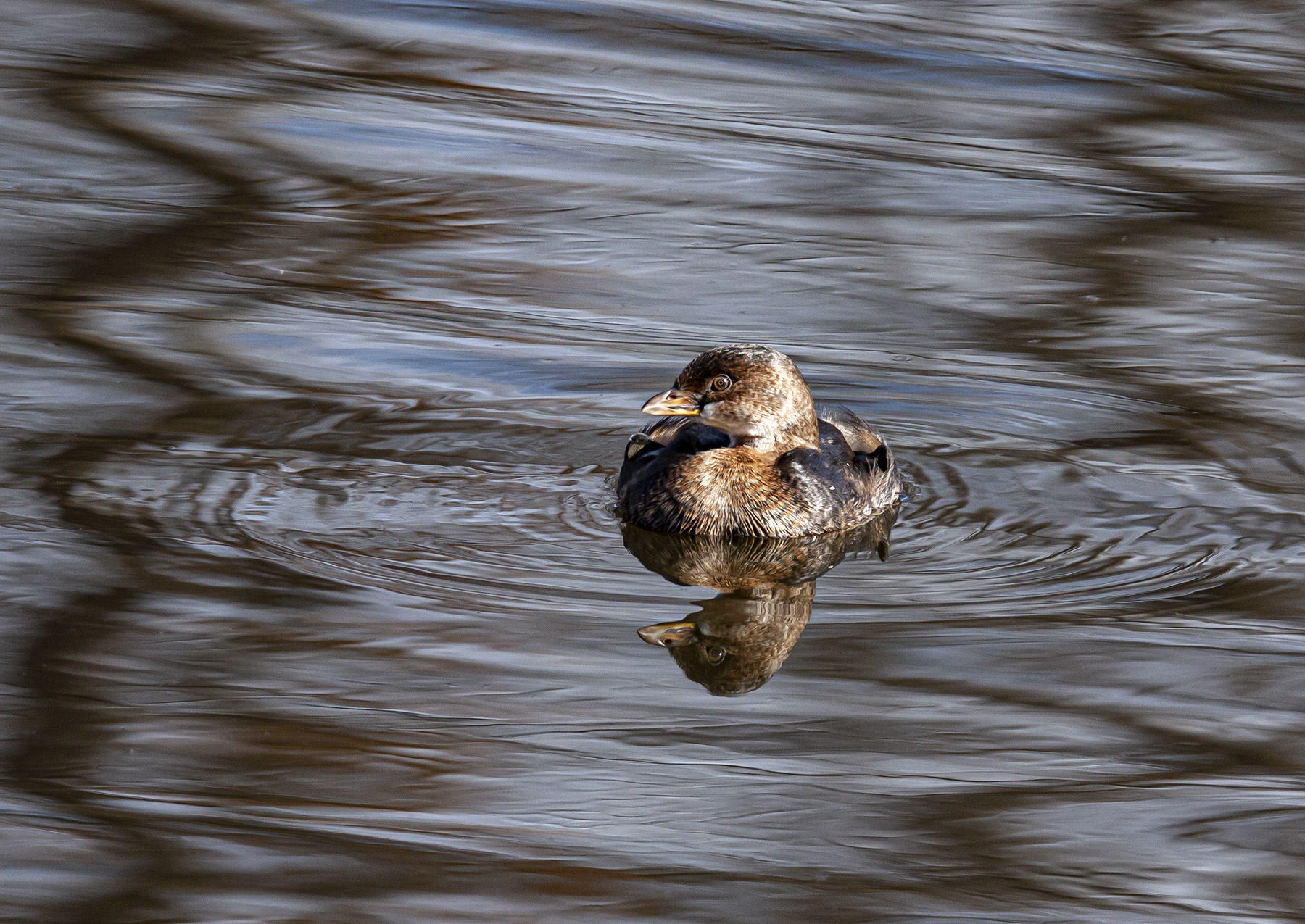
Pied-billed Grebes (Podilymbus podiceps) are small and often stay in deep waters, but I managed to capture these shots of one yesterday at a suburban pond not far from where I live. If you click on the photos, you can see the grebe’s beautiful eye coloration and the pattern on its bill.

As I was walking along the pond, I initially spotted the little grebe while it was napping. It had drifted a little closer to shore than normally, so I was pretty excited to have a chance to get some shots of this elusive bird. However, the grebe’s head was in the shadows, so I watched and waited, marveling at the patterns in the water.

I captured the second shot below shortly after the grebe started stirring and looked to one side. As it started to swim away, the lighting was almost perfect and I captured the first shot below, a wonderful little side portrait of this Pied-billed Grebe.

Pied-billed Grebe

Pied-billed Grebe

© Michael Q. Powell. All rights reserved.

Read Full Post »

It was a frigid and desolate day and ice had formed at the edges of the ponds at Occoquan Bay National Wildlife Refuge. My initial scan revealed that there were no ducks or other water birds on the surface of the water. As I looked more carefully, though, I caught sight of the familiar shape of a Great Blue Heron (Ardea herodias).

The heron was stationary, huddled on the opposite side of the pond from me. I can’t tell for sure, but it looks like the heron was standing on a single leg, with the second leg pulled up under its chest feathers in an effort to conserve body heat. Great Egrets and Green Herons leave our area and head south before the winter arrives, but Great Blue Herons remain with us throughout the cold season.

Great Blue Heron

© Michael Q. Powell. All rights reserved.

Read Full Post »

As I have gotten older, I have rediscovered the joy of taking naps. When I was a child, I seem to recall rebelling a bit against the idea of a forced midday nap, but now I look forward to them. Sunday afternoon naps have become part of my routine and now that I have retired, I sometimes indulge myself without waiting for the weekend.

Several of the Bald Eagles (Haliaeetus leucocephalus) that I spotted on Thursday at Occoquan Bay National Wildlife Refuge seemed to share my fondness for napping. In the first shot below, the Bald Eagle looked like it was just settling in for a long winter’s nap. The eagle’s head is bowed forward in the familiar position that I used during my recent transatlantic flights when drifting off to sleep. I am mildly amused by the fluffiness of the head feathers on this “bald” eagle—the head feathers remind me of the wigs worn by British barristers.

The second image shows a Bald Eagle couple. The male eagle, the smaller one to the left, appears to be alert, but his female partner seems to be asleep. Female eagles are larger than their male counterparts, but this female has magnified that size differential by a rather extreme fluffing of her feathers. (I am assuming that eagles tighten their talons while napping, so that any sudden movements while asleep do not not dislodge them from their perches.)


Bald Eagle

Bald Eagle

© Michael Q. Powell. All rights reserved.

Read Full Post »

It was cold and breezy yesterday at Occoquan Bay National Wildlife Refuge, but at least the sun was shining. Most of the birds seemed to be hiding, probably trying to stay warm, so I was particularly thrilled when I finally spotted this Bald Eagle (Haliaeetus leucocephalus) in a tree overhanging the trail on which I was walking.

The eagle appears to have spread its tail feathers a bit to provide some additional warmth for its feet, though I must confess that I have no idea if eagles actually get cold feet. I moved forward slowly, knowing that I would probably spook the eagle, but I needed to pass under the tree in which it was perched. I took the second shot when I was closer to the eagle and it seems pretty apparent that it had spotted me. Sure enough, the eagle took off a few seconds later.

After so much time overseas this past month, it was really nice to get back to the familiar surroundings of “my” wildlife refuge. Unfortunately, a major construction project has closed large sections of my favorite trail that runs along parallel to the water, so I may have to search for a different location to shoot this winter. The good news is that I am blessed to live in an area with a lot of options for wildlife photography. My goal will be to find another location that is remote enough that it is not too crowded—I generally prefer to be by myself when I am experiencing nature.

Bald Eagle

Bald Eagle

© Michael Q. Powell. All rights reserved.

Read Full Post »

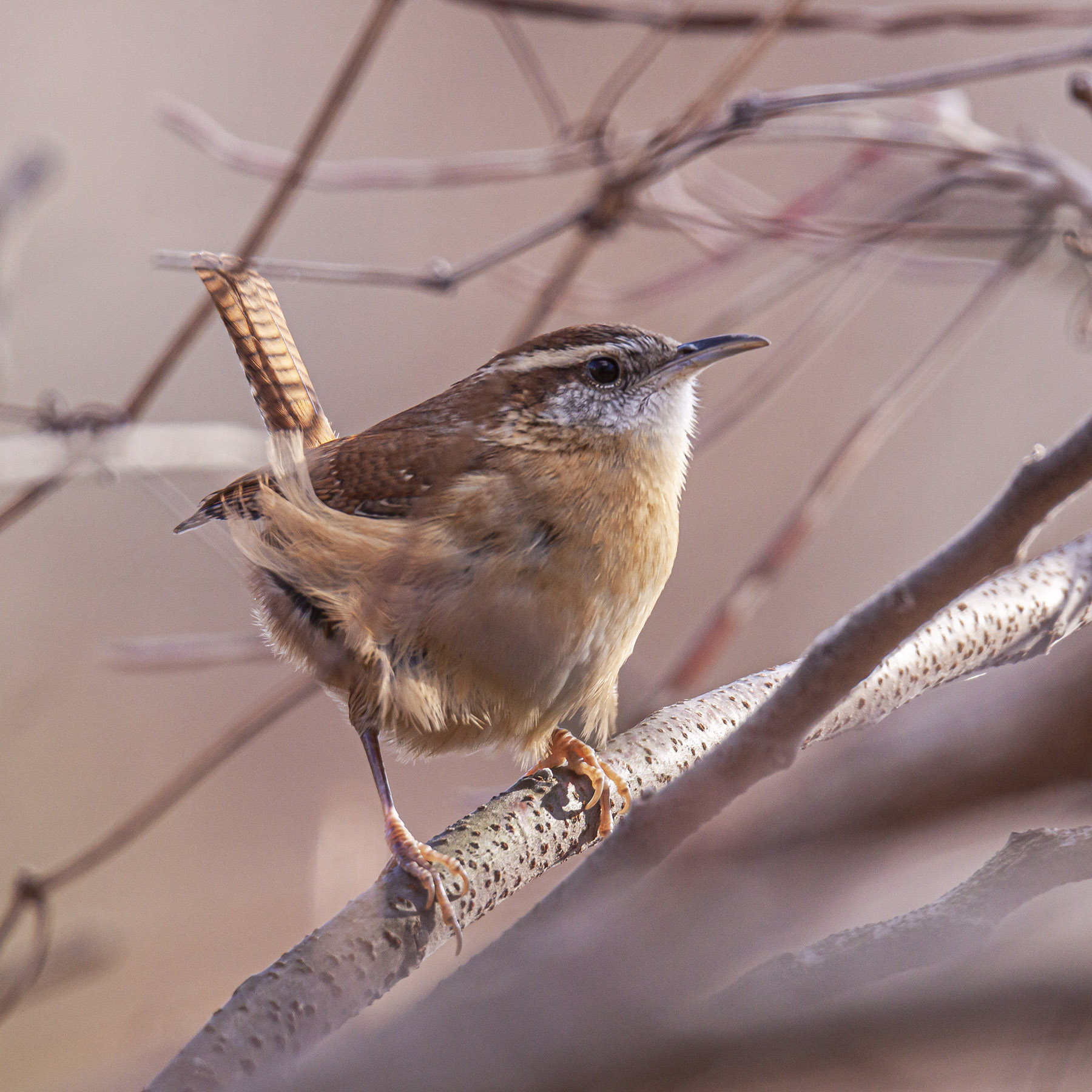
Carolina Wrens (Thryothorus ludovicianus) are usually active very close to the ground in the undergrowth. I was therefore quite surprised when one recently flew into a tree at almost eye level as I sought to track a different bird. The minimum focusing distance for my telephoto lens is almost 9 feet (270 cm) and although this little bird seemed to be really close, it was apparently a little beyond that distance.

I managed to quickly focus on the wren and capture this shot before it flew away. It is always cool when I am able to be at eye level with a bird, because I think that it tends to show the personality of a bird more than a shot from a lower or higher angle.


Carolina Wren

© Michael Q. Powell. All rights reserved.

Read Full Post »

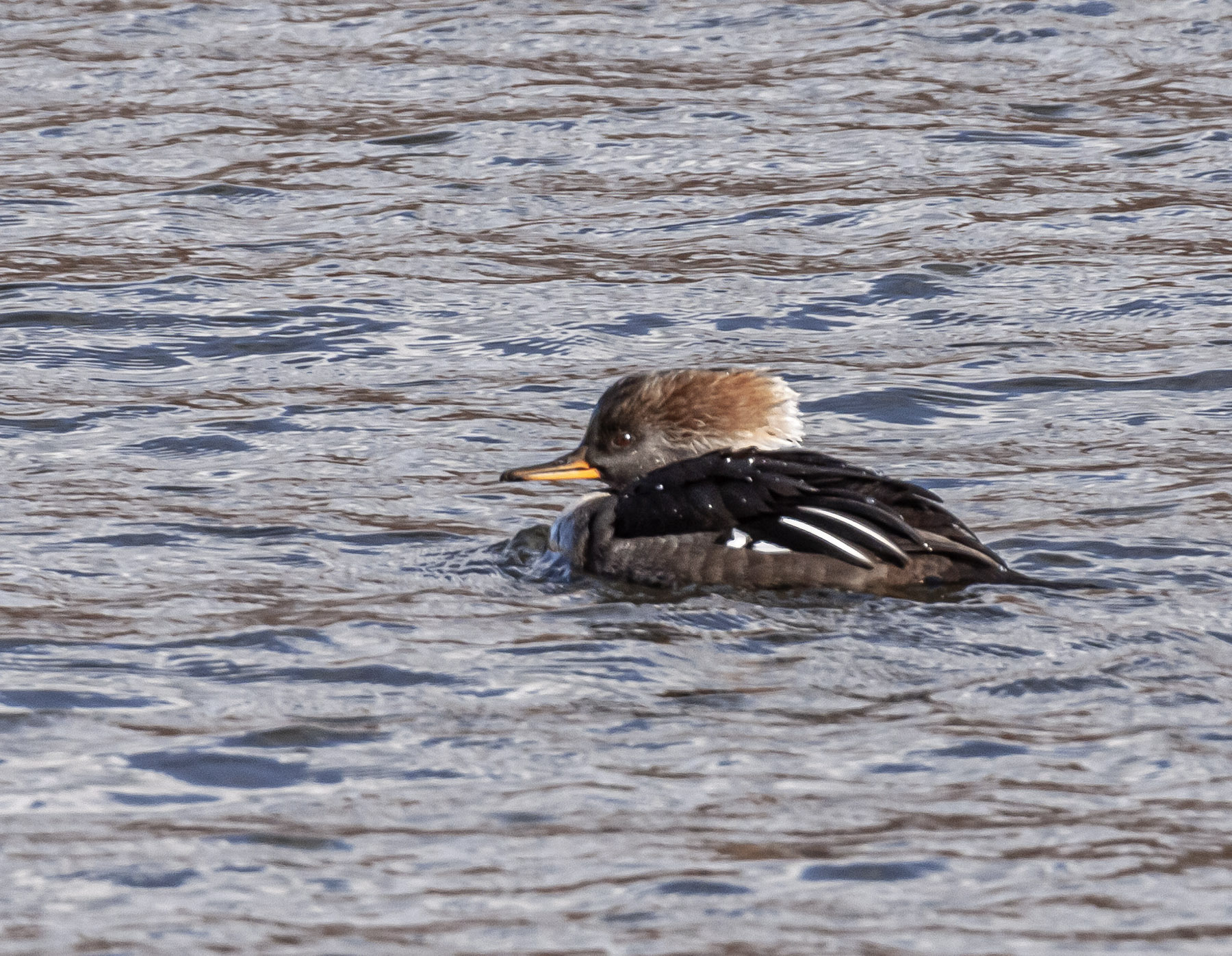
I love the “hairstyles” of the female Hooded Merganser (Lophodytes cucullatus).  Sometimes the “hair” is circular, like an Afro of the 1960’s, sometimes it is more flattened, and occasionally it has a pointed peak.

Earlier in December I tried to photograph an elusive female Hooded Merganser. She never came close to shore and seemed to always be twisting and turning. Eventually I was able to capture some shots from a distance. As you look at the images, you will undoubtedly notice how the texture and color of the water and the lighting changed as I moved to different parts of the pond.  For me, those variations add interest to shots that might look more humdrum with a more uniform background.

Hooded Merganser

Hooded Merganser


Hooded Merganser

© Michael Q. Powell. All rights reserved.

Read Full Post »

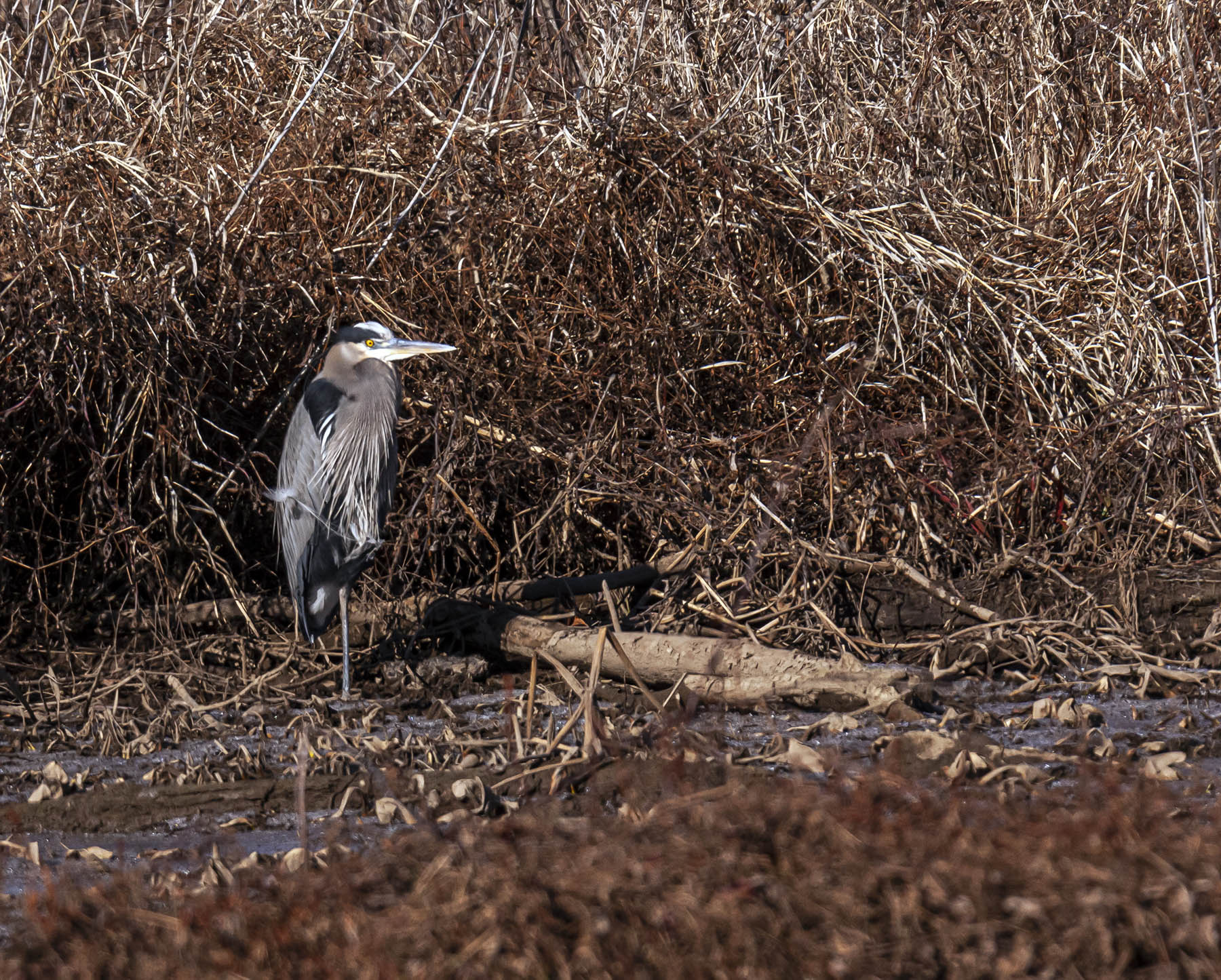
As I was walking around a pond in Northern Virginia, I spotted this Great Blue Heron (Ardea herodias) standing at the edge of the water. My view, however, was significantly obstructed by the vegetation that separated us. I moved a little closer and then started to make tiny movements up and down and from side to side, searching for a visual tunnel that would give me a clearer view of this beautiful bird.

Although I never did get a completely unobstructed shot, I really like this one. The image has kind of a whimsical feel to it, because at first glance it looks like the heron has speared the small tree and I was also quite happy with the amount of detail that I was able to capture in the feathers and in the eye.

Great Blue Heron

© Michael Q. Powell. All rights reserved.

Read Full Post »

I was going through photos that I captured earlier in December, before my brief trip to Vienna, and came upon these shots of a Hooded Merganser couple (Lophodytes cucullatus) at a small suburban pond. I observed them for quite a while and noticed that the female was busily diving into the water, while the male spent most of his time grooming himself. As a result, it was tough to capture them both in a single frame. Even when they were together, I had to react quickly, because, as you can see in the second photo, the female would often dive without any advance warning.

I love taking photos of these distinctive-looking ducks—no other ducks in my area look anything like them. With a little luck, I will continue to see them during the upcoming cold winter months and they will undoubtedly be featured again in a blog posting.

Hooded Mergansers

Hooded Mergansers

Hooded Mergansers

© Michael Q. Powell. All rights reserved.

Read Full Post »

Most of the birds that I spotted last Thursday at a small pond seemed to be part of a small flock or at least of a couple. This Double-crested Cormorant (Phalacrocorax auritus), however, appeared to be the only one of its species. It mostly hung out with a flock of gulls, floating along on the surface of the water.

I observed the cormorant off and on for over an hour and not once did it dive underwater.  Most cormorants that I have seen in the past have either been diving or drying out their wings.

Perhaps this cormorant felt the need to feel like it was part of a group, although it clearly stood out from the other members of its chosen group. I personally would agree that conformity is overrated—be yourself. (Speaking of non-conformity, be sure to check out the cormorant’s striking blue eyes.)

Double-crested Cormorant

© Michael Q. Powell. All rights reserved.


Read Full Post »

As soon as I spotted this female Bufflehead (Bucephala albeola), she started to swim away. Then all of the sudden she stopped, turned her head, and seemed to smile back at me. This image captured our shared moment together.

Bufflehead

© Michael Q. Powell. All rights reserved.


Read Full Post »

Most of the times when I see a Great Blue Heron (Ardea herodias), it is in the open water patiently waiting to catch a fish. This past Thursday, however, I initially had trouble spotting this heron—it was hunkered down among the trees at the edge of the water of a small suburban pond, probably seeking shelter on a cold and windy day. I moved close enough to get some shots and then silently moved away, being careful not to disturb the heron and force it to move from its carefully chosen spot.

Great Blue Heron

© Michael Q. Powell. All rights reserved.


Read Full Post »

Hooded Merganser ducks (Lophodytes cucullatus), often referred to as “hoodies,” are small, colorful, and very skittish. Most of the time they spot me long before I am close enough to get a shot and either take to the air immediately or swim rapidly away from me. I was really happy to spot a Hooded Merganser couple on Thursday in a suburban pond near where I live.

The little ducks mostly stayed in the deep water, out of range, but the wind was blowing and occasionally they drifted a bit closer to shore. I circled the pond three times and finally was able to capture this shot during one such drift. Alas, I was not able to capture a similarly detailed shot of the female, but I am hoping that this pond will be their winter home and that I will have more chances later this season.

Now that I have retired, “hoodies” have also become one of my favorite items of clothing. My less than full head of hair means that I get cold easily. I love to slip on the hood of a hooded sweatshirt for an additional  bit of warmth, sometimes even when I am indoors.

© Michael Q. Powell. All rights reserved.

Read Full Post »

At this time of the year several species of ducks migrate into my area and take up residence for the winter. One of the most distinctive species is the Ring-necked Duck (Aythya collaris), especially the male. Even from a distance you can notice the oddly peaked head and when you move in closer you can see the multi-colored bill and the bright yellow eyes if it is a male. As is most often the case with birds, the females are less colorful in appearance, though, as you can see from the final photo, they are quite beautiful.

I spotted a small flock of these ducks yesterday in a nearby suburban manmade pond where I have seen then annually for at least the last five years. Although Ring-necked Ducks are diving ducks, they don’t seem to require really deep water.

So where is the ring around the neck? According to the Cornell Lab of Ornithology, “This bird’s common name (and its scientific name “collaris,” too) refer to the Ring-necked Duck’s hard-to-see chestnut collar on its black neck. It’s not a good field mark to use for identifying the bird, but it jumped out to the nineteenth century biologists that described the species using dead specimens.”


Ring-necked duck

Ring-necked duck

Ring-necked duck

© Michael Q. Powell. All rights reserved.


Read Full Post »

I was shocked the first time that a friend identified little white-colored berries like those in these photos as poison ivy berries. I had no idea that poison ivy plants produced berries and, upon learning that they did, I assumed they must be poisonous. I was both right and wrong. These little berries are definitely poisonous for humans, but they are an important food source for many birds during the winter. It is amazing to me how birds that eat almost exclusively bugs during the warm months can switch to a plant-based diet in the winter, but it helps to ensure their survivability.

Last week I spotted this Ruby-crowned Kinglet (Regulus calendula) as it poked about among several clusters of poison ivy berries. The kinglet was in constant motion and was mostly in the shadows, but I was able to capture these images. I like the way that you can see some of the details of the vines wrapped around the branches and the way that the distant branches provide some shadowy forms in the background.

Ruby-crowned Kinglet

Ruby-crowned Kinglet

Ruby-crowned Kinglet

© Michael Q. Powell. All rights reserved.

Read Full Post »

At this time of the year I have to work hard to get photographs of birds. If I am lucky, I will spot a Bald Eagle or another raptor, but most of the time I walk slowly down the trails, looking and listening for small birds. I know that they are there, but even with the leaves gone from most of the trees, the birds often remain hidden from view.

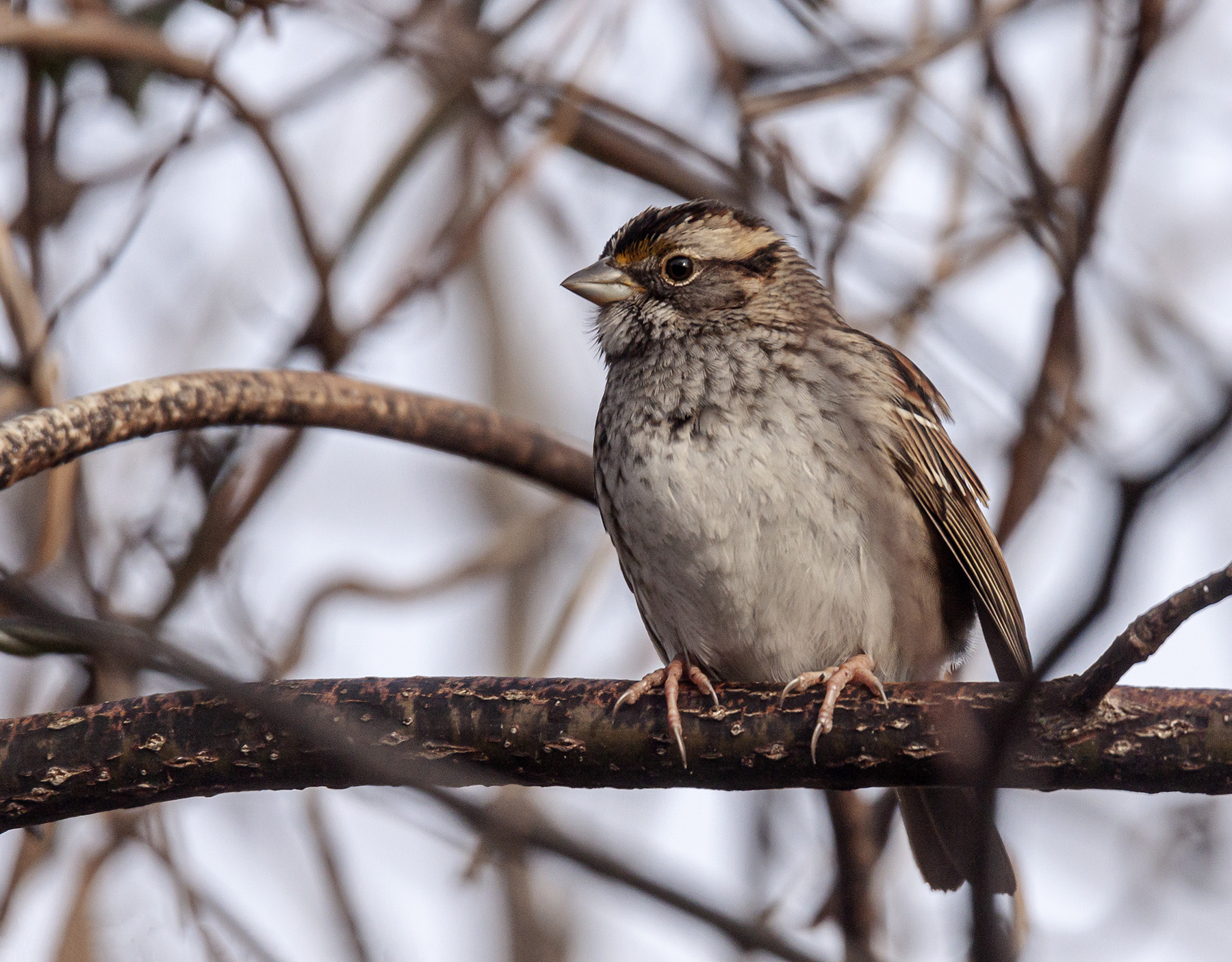
One of my favorites is the White-throated Sparrow (Zonotrichia albicollis), like this one that I spotted last week at Occoquan Bay National Wildlife Refuge. Maybe it is the effect of the season, but this sparrow always makes me think of Santa Claus. With the white “beard” and the distinctive yellow stripe over the eye, this sparrow is also relatively easy to identify, a real plus considering how many sparrow species are similar in appearance to each other.

An even smaller bird is the tiny Ruby-crowned Kinglet (Regulus calendula), which is about 4 inches in length (10 cm) and weighs only 0.2-0.3 ounces (5-10 g). This one was bouncing in and out of the vegetation so much that I thought I would never get a clear shot of it. Eventually I was more or less successful. What a sweet little bird.


White-throated Sparrow

Ruby-crowned Kinglet

© Michael Q. Powell. All rights reserved.

Read Full Post »

When it comes to woodpeckers, I often hear them before I see them. Sometimes it is a gentle tapping sound, but at other times it sounds as loud as a jackhammer.

I spotted this little Downy Woodpecker (Picoides pubescens) on Wednesday morning at Occoquan Bay National Wildlife Refuge. He was slowly making his way up the tree in a spiral pattern, stopping periodically to probe for insects. I tried to track him as he moved in and out of view and was happy to capture a few relatively unobstructed shots.

Normally, it is best to capture a subject when its eyes are looking more or less in your direction. I, however, are more attracted to the first photo below in which the little woodpecker is looking away and slightly up. Perhaps he had seen or heard something that caught his attention, but I like to think that he was taking a break in order to daydream. Perhaps he too was longing for Paris.

Woodpeckers are industrious by nature, though, so after his short pause, he was back to work, slamming his head against the unforgiving wood. It is what woodpeckers do—hopefully that does not sound like your job.

Downy woodpecker

downy woodpecker


© Michael Q. Powell. All rights reserved.

Read Full Post »

This is definitely not Paris. Yesterday, less than 24 hours after my return from my stay in Paris, I was back on the trails at Occoquan Bay National Wildlife Refuge, one of my favorite places to photograph wildlife.

It was a cloudy, blustery day and there was not a lot of wildlife active, but I did manage to capture this shot of a Bald Eagle (Haliaeetus leucocephalus). From a distance, I spotted the top of the eagle’s head as it hunkered down in a nest, presumably seeking shelter from the wind. Although I was a pretty far away, it spotted me and quickly took to the air. My vision is really good after my cataract removal surgery a couple of years ago, but when it comes to being “eagle-eyed,” I am no match for the real thing.

Bald Eagle

© Michael Q. Powell. All rights reserved.

Read Full Post »

What does it mean to be rare? It seems to me that rarity, like beauty, is in the eyes of the beholder and is often hard to quantify objectively. When I went for a walk yesterday in the Bois de Boulogne in Paris, I was hoping that I might see some birds. I already did a posting on a European Robin, arguably the most beautiful bird that I spotted during the day.

Did I see any rare birds? All of the birds that I saw were undoubtedly “common” for the locals, but they seemed rare and exotic to me, because they were new to my experience. One of the joys of traveling is having the chance to see new creatures that may share a common heritage with more familiar ones or may be totally different. For me, it is simpler to treat them all as special rather than focusing exclusively on the uncommon ones. I attempt to highlight the beauty and behavior of them all no matter how many times I may have seen them previously. Unlike some birders I know, I do not have a life list that says that I should move on to new species once I have seen a particular one—each new encounter is unique.

So what did I see? I think that I have correctly identified these species, but would welcome corrections if I am wrong. The first one was the hardest for me to identify and I learned that it is a Eurasian Jay (Garrulus glandarius)—I love the combination of colors on its body.

The second one, a Eurasian Magpie (Pica pica) seemed somewhat familiar because, even though we do not have magpies where I live, I had spotted a similar-looking American Magpie (Pica hudsonia) during a trip to Denver, Colorado a few years ago. In this encounter, I was thrilled that I was able to capture some of the iridescent shine and color on the tail feathers.

The final photo shows an energetic little Great Tit (Parus major) pecking away in all of the crevices of a tree, seeking whatever tiny morsels of food that it can find.

I will probably return to more urban subjects after a day of respite in the woods of Paris. My feet definitely enjoyed the break from the cobblestone streets and I feel refreshed from my return to nature.


Eurasian Jay

Eurasian Magpie

Great Tit

© Michael Q. Powell. All rights reserved.

Read Full Post »

Today I decided to give my feet a break from the cobblestone streets and instead went for a walk on some of the wooded trails of the Bois de Boulogne in the outskirts of Paris. The highlight of the day for me was getting this shot of a European Robin (Erithacus rubecula), known in French as a Rouge-gorge (Redbreast). There are different birds around the world that share the name “robin” and it was nice to finally have a chance to see the European one.

European Robin

© Michael Q. Powell. All rights reserved.
Read Full Post »

When I spotted this bird as I was walking along the Seine River yesterday morning, I knew immediately that it was some kind of cormorant. Unlike most water birds that float on the surface of the water, cormorants sit really low in the water with their bodies barely visible. Their long necks always make me think of a periscope coming out of a semi-submerged submarine.

Although this bird looks a lot like the Double-crested Cormorant (Phalacrocorax auritus) that I am used to seeing at home, I have determined that it is most likely a Great Cormorant (Phalacrocorax carbo). This cormorant followed a familiar pattern of behavior—it would be swimming along when without warning it would dive deeply into the water and remain underwater for a long time. It was a fun challenge trying to figure out when and where the cormorant would reappear.

Most of the time the cormorant stayed far from the banks of the river, but on one occasion it popped up right in front of me and I was able to capture this image. It was nice to be able to capture some of the orange coloration around the cormorant’s mouth, but the real prize for me was getting a clear view of its spectacular blue eyes. It is definitely worthwhile to click on the image to get a closer look at that amazing shade of blue. If you look closely at the water, you will also notice some small concentric ripples created by the falling raindrops.

When I went walking in the rain yesterday, I knew there was a good chance that I would see ducks and gulls and maybe a swan or two. Who knew there were Great Cormorants on the Seine RIver? No matter where I am, I am always thrilled by the joy of the unexpected, by those little surprises that add so much texture to life. So I choose to live my life in hopeful expectation as I scan the world for marvelous subjects to photograph, confident that they will present themselves if I keep my eyes and my heart open,

Great Cormorant

© Michael Q. Powell. All rights reserved.

Read Full Post »

Swans seem almost angelic in their beauty and I was thrilled to spot this pair of Mute Swans (Cygnus olor) yesterday as I strolled along the Seine River in Paris. I had the impression that the swans wanted to swim nearer to the middle of the river channel but were unable to do so because of the numerous boats filled with gawking tourists.

Periodically, as you can see in the second and third photo below, the swans had to deal with the waves created by the passing boats. However, they did not complain out loud—they are mute swans after all. The swan in the first image may have been signaling its displeasure, though I believe it was merely trying to dry its wings after being doused by a high wave.

Mute Swan in Paris

Mute Swan in Paris

Mute Swans in Paris

Mute Swan on the Seine

Mute Swans on the Seine

© Michael Q. Powell. All rights reserved.


Read Full Post »

I think the spiky protrusions were intended to keep birds from perching on this post along the Seine River, but somehow this gull did not get the point.

gull on the Seine

© Michael Q. Powell. All rights reserved.

Read Full Post »

I did not plan to make birding a focus of my trip to Paris, but I can’t help but take shots of them when the occasion arises. I’ve seen lots of gulls and pigeons, some mallards, and a few swans, but so far have not gotten close enough to get shots of them—I have relatively modest telephoto lenses with me on this trip.

The first image shows a crow, what I think is a Carrion Crow (Corvus corone). I am not at all certain about identifying birds in Europe, so please correct me if I am wrong. I photographed this crow and the other birds featured in this posting in the Tuileries Garden, which is located in between the Louvre and the Place de la Concorde.

The second bird is a Common Moorhen (Gallinula chloropus). Several other moorhens were swimming about in a small pond, but this one decided to boldly look for food. Perhaps it was looking for a handout from tourists.

The final birds are Common Starlings (Sturnus vulgaris). This small flock of starlings flew about from place to place. I did not detect any signals, but all of them seemed to take off and land at the same time.

If you have followed my blog for any length of time, you know that I like to photograph anything that catches my eye. Even in a place like Paris, where there appear to be famous landmarks in every direction I turn, I am just as likely to be spending time photographing these modest little birds. I think it would make me a maddening travel companion for a more normal person.

Carrion Crow

Common Moorhen

Common Starlings

© Michael Q. Powell. All rights reserved.


Read Full Post »

I seem to be having problems recently getting unobstructed views of small birds. Although the leaves are falling from the trees at an increasingly rapid rate, there are still plenty of them to block my view. I have to admit, however, that the colors and texture of the fall foliage can sometimes provide additional visual interest to a shot of a perched bird.

I spotted this Gray Catbird (Dumetella carolinensis) last week at Occoquan Bay National Wildlife Refuge. The catbird’s direct look suggests that he had spotted me too. Normally I do no photograph birds head-on like this, but in this case I like the way that it gives the catbird a comical, almost cartoonish look.

I like to shoot whatever captures my attention and have a hopeful expectation that the images will turn out ok. I have found that most often when I shoot what I like, I like what I shoot.

Gray Catbird

© Michael Q. Powell. All rights reserved.

Read Full Post »

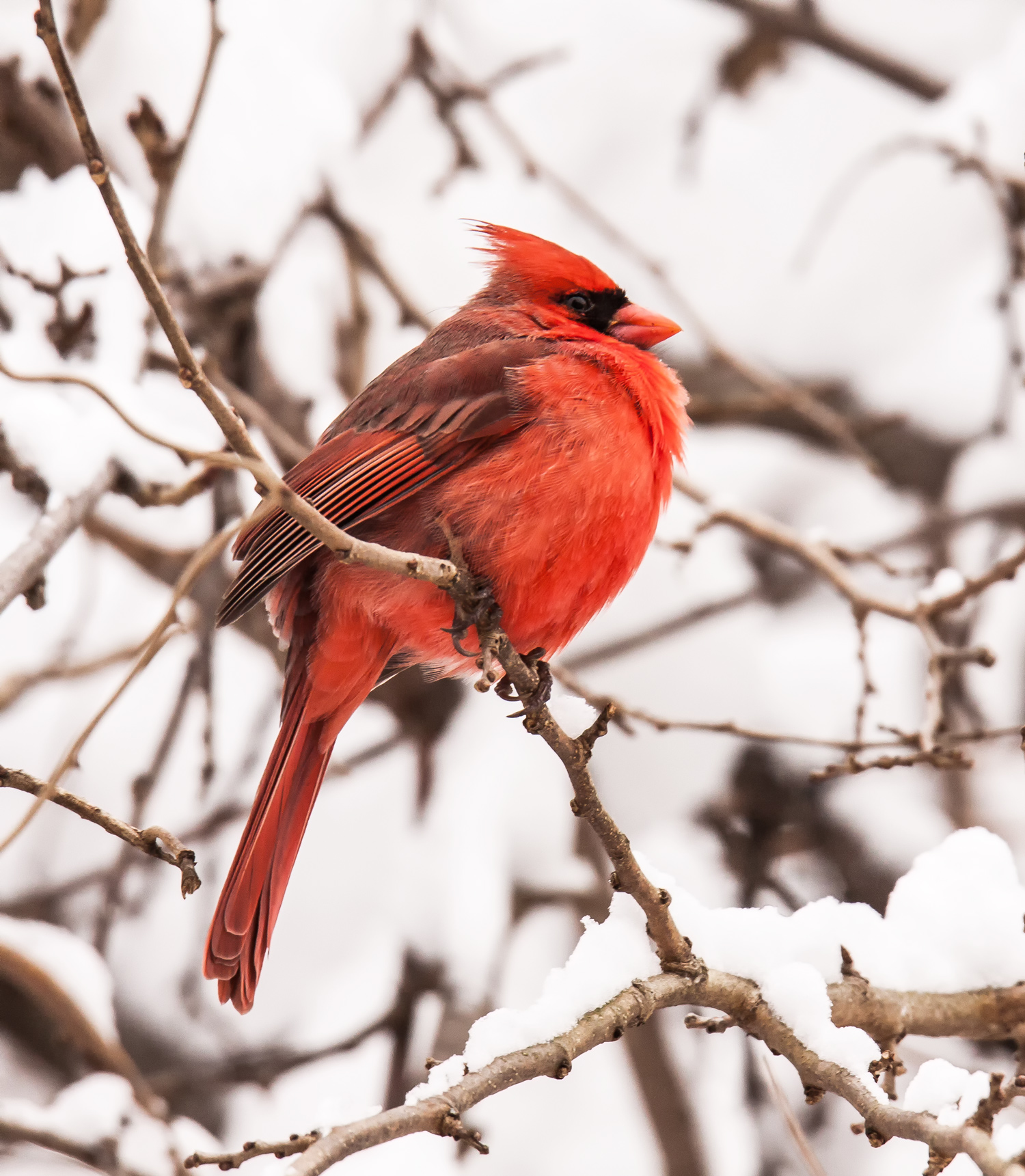
It is normally hard for a male Northern Cardinal (Cardinalis cardinalis) to camouflage itself, but it seemed to blend in pretty well with the brilliant red leaves of these sumac plants last week at Occoquan Bay National Wildlife Refuge.

Northern Cardinal

© Michael Q. Powell. All rights reserved.


Read Full Post »

« Newer Posts - Older Posts »