Feeds:
Posts
Comments

Archive for the ‘Art’ Category

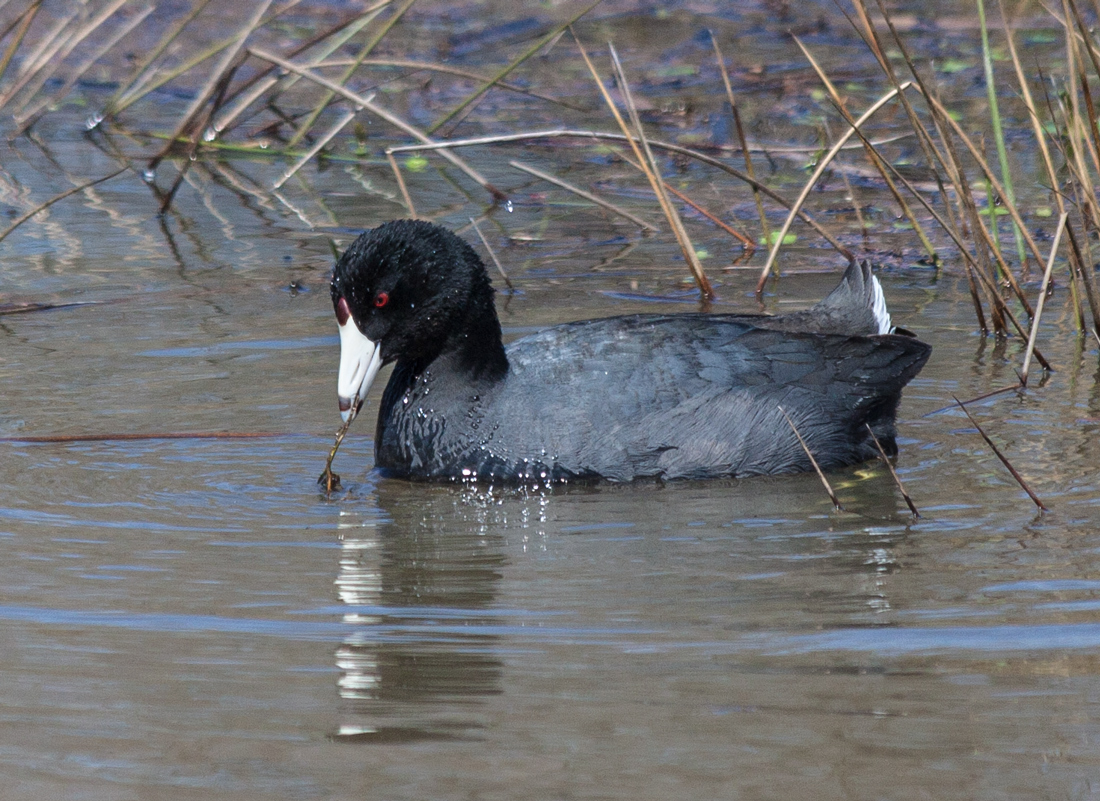
Another coot? Yes, as I was going over my recent shots of an American Coot (Fulica americana) at my local marsh one more time, I decided that I liked this image even more than the one I posted yesterday. The coot has a kind of determined look in its eye and the tilted head gives it a sense of tension, like it is exerting effort to pull that plant out of the water. Besides, I seem to be attracted to birds and animals with unusually colored eyes.

I find it tough at times to choose the best shot quickly when I have shot a series of images. Probably I need to take a little more time in reviewing the images, but I am often in too much of a hurry to find an image (or images) to post. A year ago, I felt compelled to attempt to post every single day, but I have backed off slightly and miss a day now from time to time.

Nonetheless, I still like to post images that appeal to me, which are often, but not always, my “best” shots. Sometimes the photos will merely document the experience that I want to share with readers and may not be technically great images. It’s a little selfish, perhaps, but I shoot mostly for me. Fortunately, I sense that my skills are improving and hope that the quality of the images I post tend to reflect that improvement.

coot_redeye_blog

© Michael Q. Powell. All rights reserved
Read Full Post »

Thanks to some recent rains and a major wetland restoration project at my local marsh, we seem to have a lot more American Coots (Fulica americana) than last year. Most of the time they seem to like to keep their distance. This past Monday, though, one of them drifted toward an area relatively close to where I was standing and I managed to get this shot of the coot feeding on some of the vegetation growing out of the water.coot_hungry_blog© Michael Q. Powell. All rights reserved

Read Full Post »

As I was tiptoeing my way along a tree that had fallen across a flooded area of my local marsh, I glanced down and caught sight of this turtle, submerged in the shallow water. I am no expert in identifying turtles, but it was pretty easy to identify this as a Spotted Turtle (Clemmys guttata), a species that I don’t see very often.

According to Wikipedia, the spotted turtle is federally endangered in Canada and in the United States it is considered to be vulnerable to extinction in the wild in the medium-term future, or threatened in most of its habituating states. Within Virginia, the state in which I live, the Herpetological Society is pretty grim in its prognosis, “Extinction or extirpation is possible. Populations of these species are in decline or have declined to low levels or are in a restricted range. Management action is needed to stabilize or increase populations.”

It was a bit of a challenge getting a shot of this turtle. I was standing on the trunk of a tree, so my footing was a bit precarious. The water was probably only a few inches deep, but it seemed to defeat my auto-focusing system, so I ended up focusing manually. Finally, there was a bit of glare coming off of the surface of the water, so I had to bend down to search for an angle that allowed me to minimize the glare.

I am hoping that I will see these turtles often and that Huntley Meadows Park, the place where I take a lot of my wildlife photographs, will continue to be a refuge for this species and for many other ones.


turtle_spotted_blog

© Michael Q. Powell. All rights reserved

Read Full Post »

Despite the rain yesterday, the male Red-winged Blackbirds (Agelaius phoeniceus) were singing up a storm. It seemed like their entire bodieswould expand as they prepared to call out loudly. I didn’t see any female blackbirds respond to the calls—in fact, I didn’t see any at all.

blackbird_singing2_blogblackbird_singing1_blogblackbird_singing3_blog

© Michael Q. Powell. All rights reserved

Read Full Post »

It’s springtime and love is in the air. Two tree swallows (Tachycineta bicolor) seemed intent on getting to know each other better, but kept getting buzzed by a third swallow. A couple of times, one of the swallows, which I suspect was the male, took off and chased away the potential rival.

swalow_couple2_blogswallow_couple1_blogswallow_couple3_blog

© Michael Q. Powell. All rights reserved

Read Full Post »

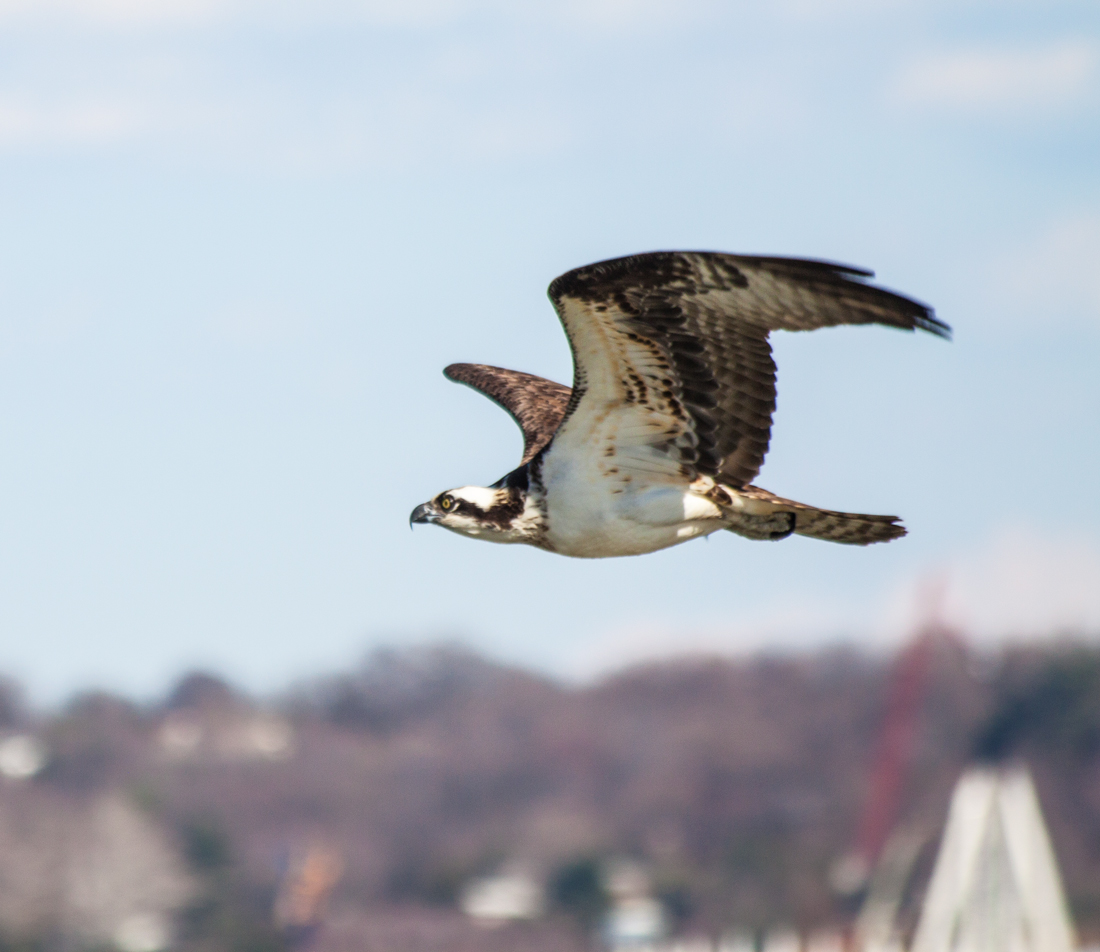
Soaring high above the earth, this Osprey (Pandion haliaetus) seemed to be relaxing, enjoying a moment of peace before getting back to the pressing  job of rebuilding the nest.

osprey_soar_blog

© Michael Q. Powell. All rights reserved

Read Full Post »

The late afternoon sunlight shining through this crocus from behind illuminated it like a natural stained glass window. I love the beauty of simple things.

crocus2_march_blog

© Michael Q. Powell. All rights reserved

Read Full Post »

Yesterday afternoon, my dear friend and fellow photographer Cindy Dyer called to alert me that there were some crocuses blooming in her garden. The lighting was wonderful and the dirt in the background provides a simple backdrop for the gorgeous colors of this little spring flower.

crocus1_march_blog

© Michael Q. Powell. All rights reserved

Read Full Post »

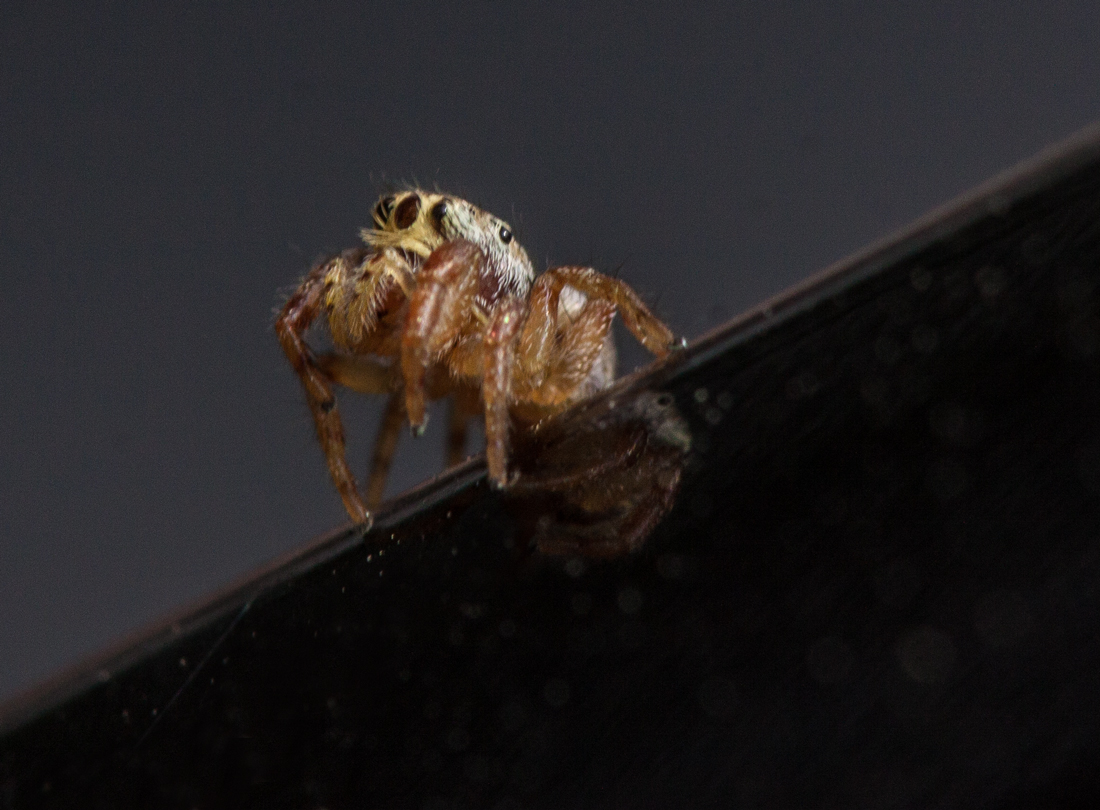
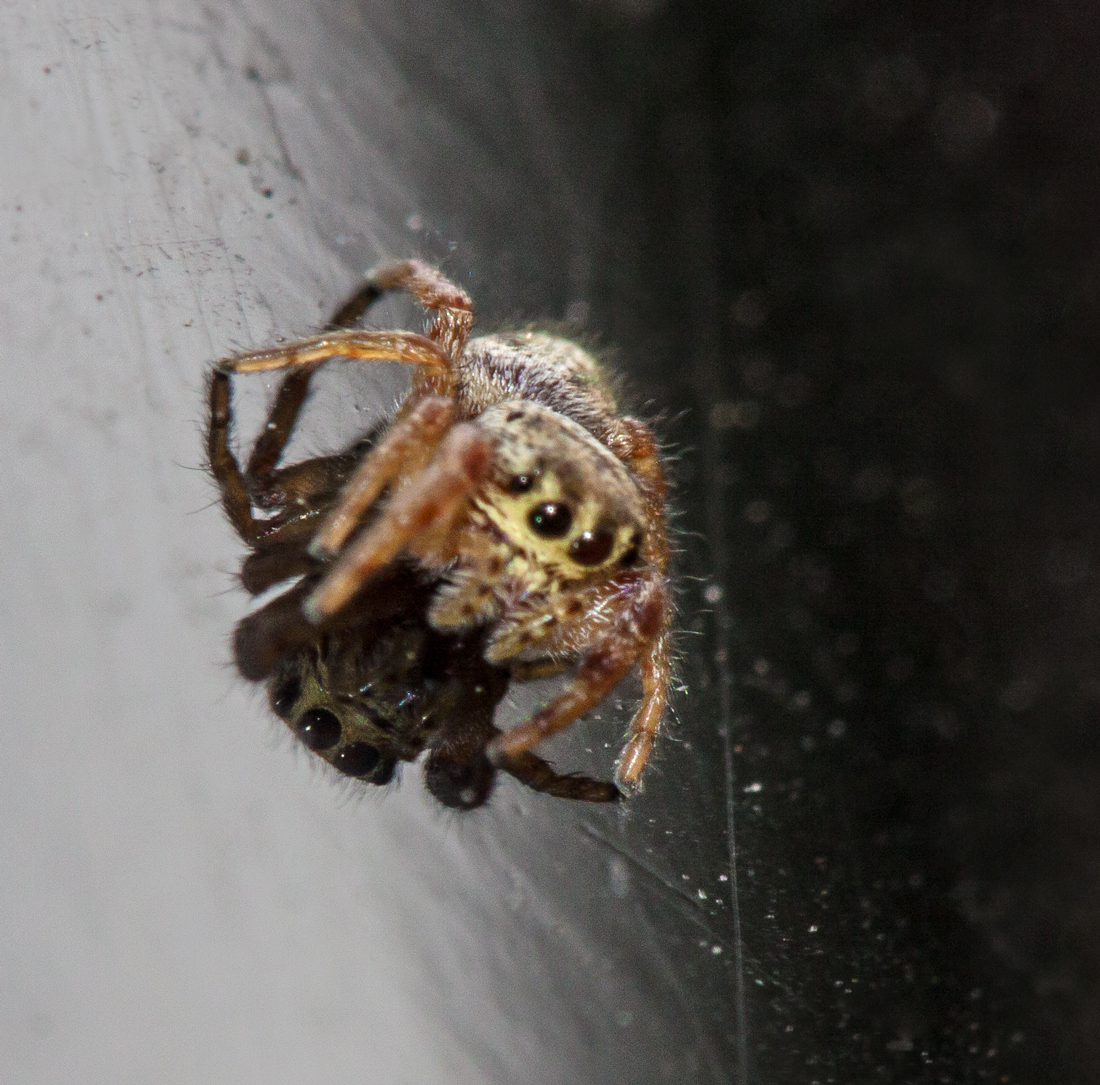
Sometimes you don’t have to travel far to get good nature photos. I noticed this colorful little jumping spider on my car yesterday when I was loading my camera gear, getting ready to go out shooting. spider4_car_blog

It was a fun challenge trying to get shots of the spider as it moved to various parts of the trim surrounding the windshield, many of which were reflective. I wasn’t sure how long the spider would hang around, so I didn’t set up my tripod and I think it would have been pretty awkward to do so.

spider1_car_blog

I am hoping that nobody snapped pictures of me as I sprawled my body across the hood of the car, trying to find a way to brace my body and get a decent shooting position. My Tamron 180mm macro lens lets me get in close, but it does not have image stabilization.

spider3_car_blogOne of the first things that I noticed when I reviewed my images was that my car is dirty. In this area, they use a lot of salt on the roads when it snows and I suspect that those little white spots are salt residue. I thought about removing them in post-processing, but decided that I like the more urban, gritty feel that they give the images (and besides, it would have been a lot of work to get rid of all of them).

spider2_car_blog

I am always thrilled when I find a jumping spider. There is something special about all of those eyes that simply fascinates me and I am particularly happy when I manage to get reflections in the eyes.

© Michael Q. Powell. All rights reserved

Read Full Post »

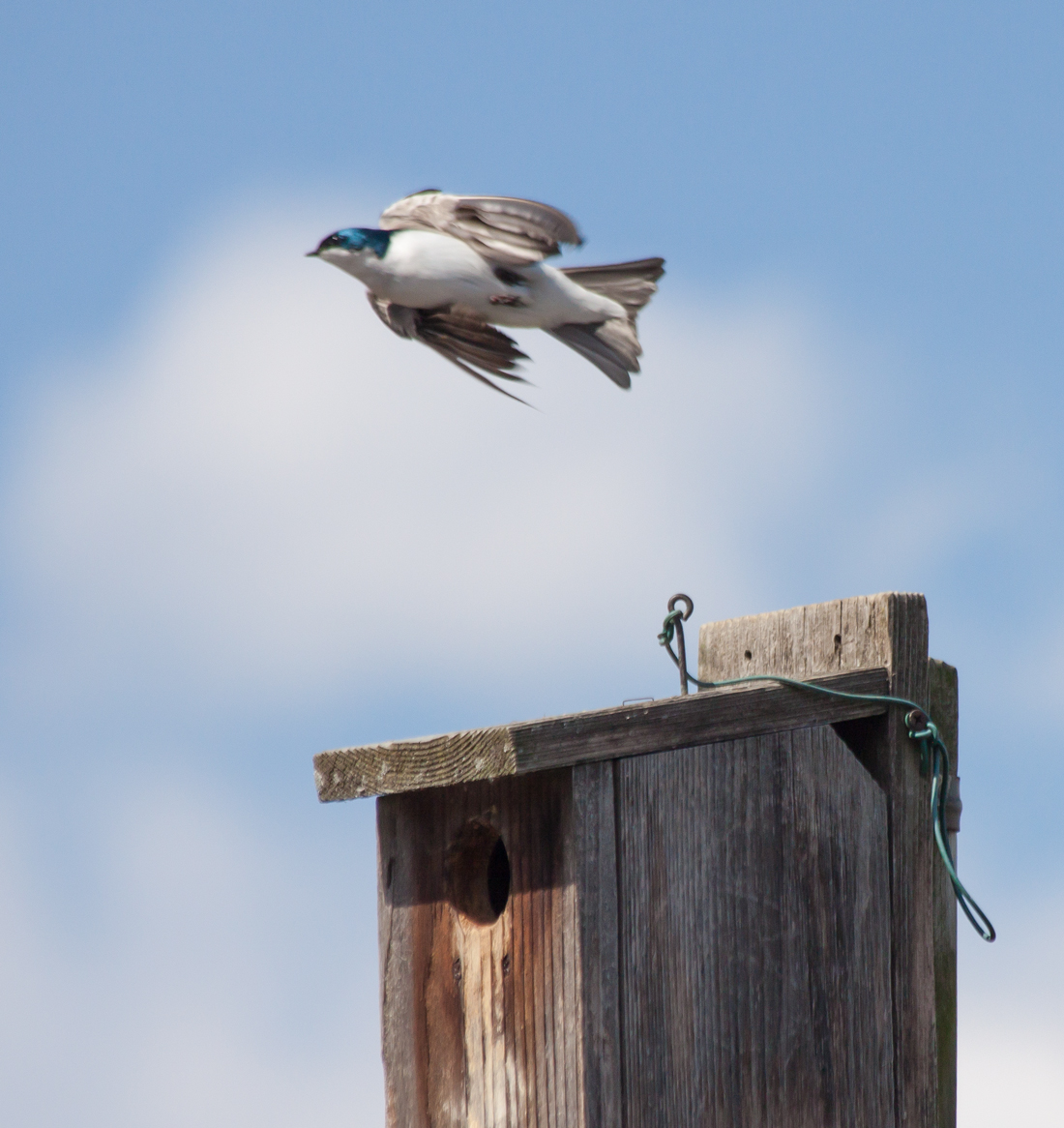
I was a little surprised to see some Tree Swallows (Tachycineta bicolor) on Saturday when I visited Dyke Marsh Wildlife Preserve, a freshwater tidal wetlands on the Potomac River. I thought it was a bit early for these little aerial acrobats to be here, given the fact that there are not yet many insects for them to catch, but they were flying about and checking out a nesting box.

Sometimes I get cool shots of birds in flight by accident, like this shot of a Tree Sparrow, which took off as I was photographing it. The angle of view is one that I have never before captured in any image.

swallow_flight_blog

Two of the swallows seemed to spend a lot of time together and I suspect that they are a breeding pair, though they were periodically buzzed by other tree swallows, which could be other potential suitors for the female. One of the swallows eventually entered the box and I suspect that the swallows are constructing a nest in it, though I didn’t see any of them actually carrying in construction material.swallow_entrance_blogIt’s a good sign for me that spring is almost here when I see birds reappearing (even as I shovel away eight or so inches of snow that have fallen in the last 24 hours).

© Michael Q. Powell. All rights reserved
Read Full Post »

Earlier this month, when the ponds were almost completely frozen over at my local marsh, I watched as some Canada Geese (Branta canadensis) zoomed across the ice at a very low altitude. It looked like they were racing each other. In the background you can see some potential spectators, but they didn’t seem to want to get caught up in a wild goose chase.

wild_goose_chase_blog

© Michael Q. Powell. All rights reserved

Read Full Post »

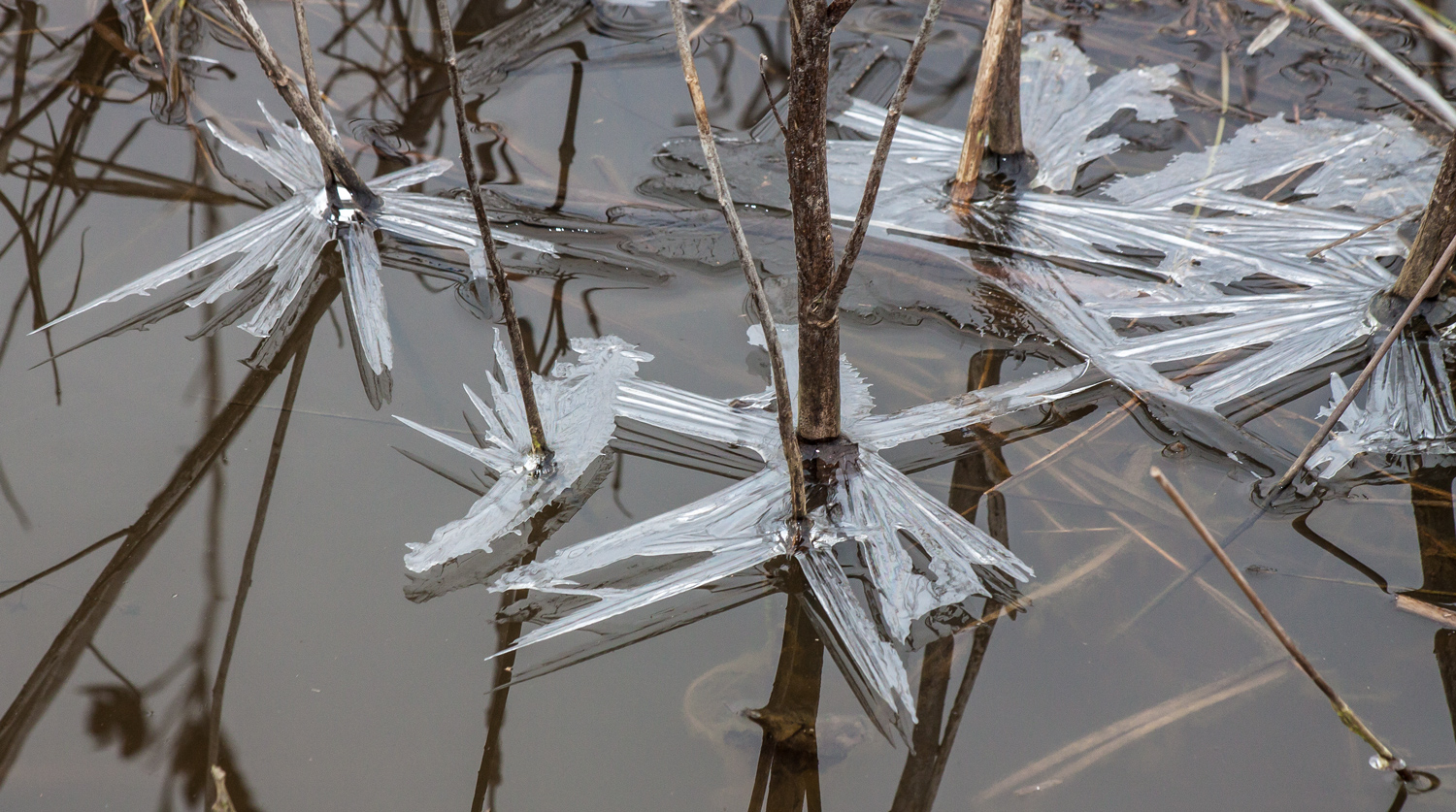
In this transitional time of the year, mornings are often frosty and ice forms in some areas of the marsh in beautiful patterns that look like crystal flowers. Spring is not far off and soon these ice flowers will be replaced by the real thing.

ice_flowers2_blogice_flowers1_blogice_flowers3_blog

© Michael Q. Powell. All rights reserved

Read Full Post »

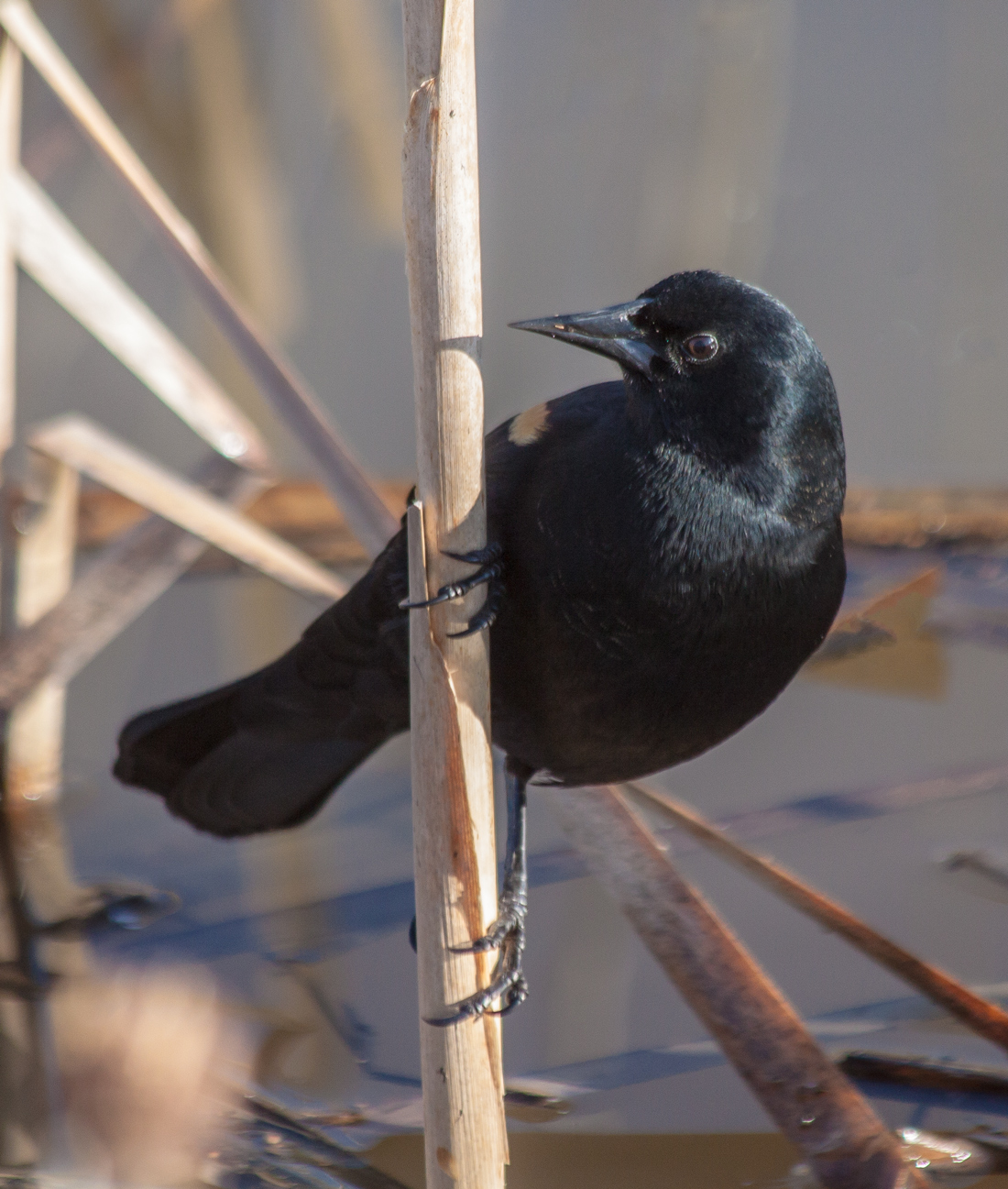
Usually I spot male Red-winged Blackbirds (Agelaius phoeniceus) perched on the top of the cattails stalks, loudly calling out, but this one decided to perch himself sidewards. It looked a little awkward, but he seemed to manage well enough as he struck a pose for me.

blackbird_hanging_blog

© Michael Q. Powell. All rights reserved

Read Full Post »

Every time that I see the outlandishly long bill and bright colors of a male Northern Shoveler (Anas clypeata), I can’t help but think that this is a cartoon duck, created by Walt Disney for a Technicolor movie. Of course, these ducks are real and the bills serve a useful function in helping them to strain the water for food.

The male shoveler is easier to spot, because of its more distinctive coloration, but I was happy to be able to get some shots of a female too as this couple moved in and out of the reeds in one of the ponds at my local marsh. According to the Cornell Lab of Ornithology, Northern Shoveler pairs are monogamous and remain together longer than pairs of other dabbling duck species.

One of the interesting things that I noted is that the feathers on the male’s head are not the solid green that I am used to seeing. They seem mottled and I wonder if this is some kind of transitional plumage as breeding season approaches.

shoveler_male_blogshoveler_female_blog

© Michael Q. Powell. All rights reserved
Read Full Post »

This past weekend it seemed like we had been invaded by a large flock of American Robins (Turdus migratorius), busily foraging in the trees and in the grass, and these words kept echoing in my mind:

“A robin feathering his nest
Has very little time to rest
While gathering his bits of twine and twig
Though quite intent in his pursuit
He has a merry tune to toot
He knows a song will move the job along.”

Folks of my generation will immediately recognize some of the lyrics of the song “A Spoonful of Sugar” from the movie Mary Poppins. In case you don’t recall the song or have never heard it, here’s a link to a clip on YouTube (http://www.youtube.com/watch?v=U8VHc49ZdP4).

The song and the movie may be seem unrealistically squeaky clean by today’s standards, but I can never get enough of its cheery optimism. It’s one of my favorite things, like silver white winters that melt into spring.

robin_twig_blog

© Michael Q. Powell. All rights reserved
Read Full Post »

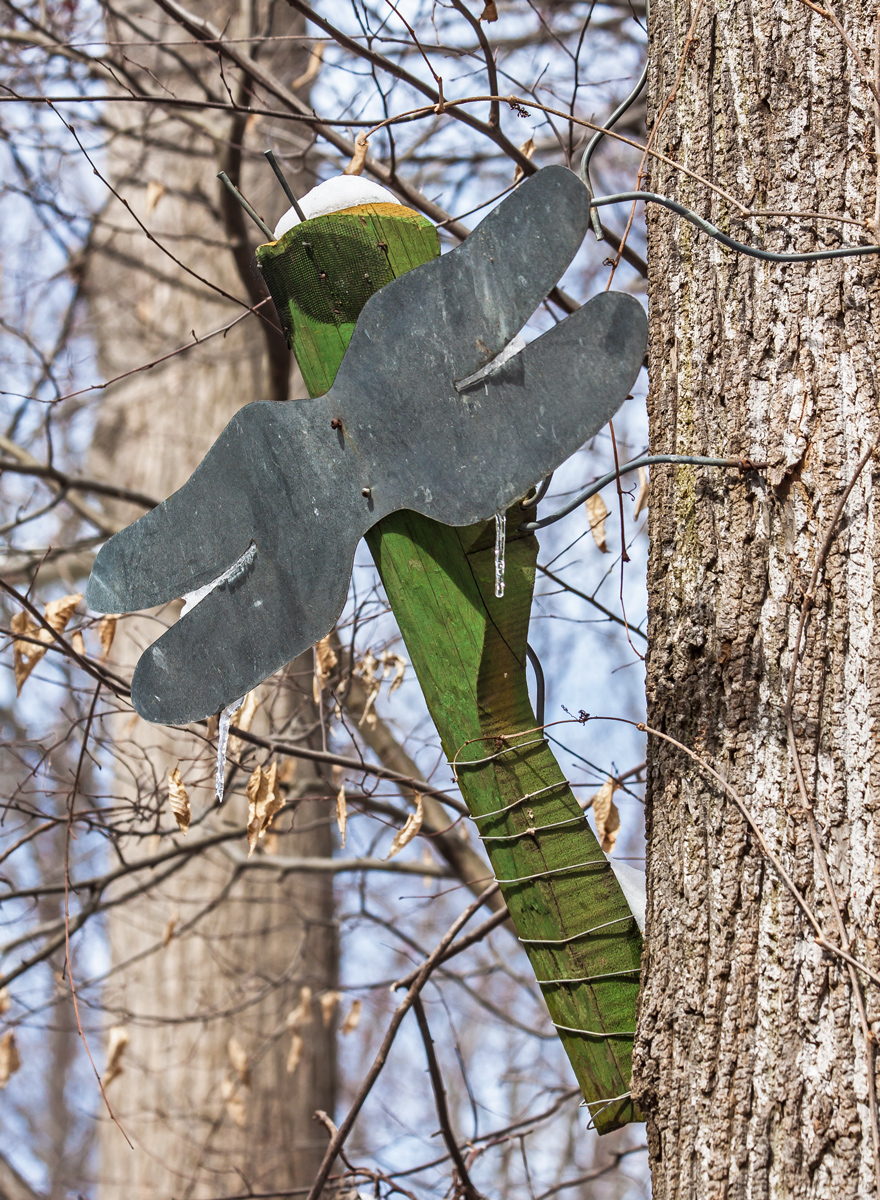
I never expected to encounter a dragonfly when I went walking in the snow in my neighborhood yesterday.

My eyes were scanning the trees for birds,  when right it front of me I detected the unmistakable shape of a dragonfly, a giant green dragonfly perched on a tree. I approached it quietly and was able to get this shot, my first shot of a dragonfly in a long time.

With snow still covering the ground and the temperatures below freezing, it’s hard to imagine that the real dragonflies will be appearing in a few short months.

dragonfly_winter_blog

© Michael Q. Powell. All rights reserved

Read Full Post »

The soundtrack to my recent visits to the marsh has been the constant cacophony of a chorus of countless cawing crows.  The crows seem to be everywhere, swooping in large groups from one grove of trees to another.

I have tried numerous times to get some shots of these American Crow (Corvus brachyrhynchos) without much success, but recently I took an image that I like. The day was cloudy and heavily overcast when photographed this crow in flight. When I started working on the image the sky turned almost white. Normally, I would not have been happy with that result, but somehow this stark background works for me for this crow.

I thought about going completely black-and-white for this image, but I like the way that some of the feathers appear to be a lighter shade of brown. Is the crow molting, perhaps?

crow_flying_blog

© Michael Q. Powell. All rights reserved
Read Full Post »

Snow sometimes causes me stress. I worry about the safety of the road conditions and how long it will take for me to get to work. I feel anxious as I shovel out my car and the sidewalk in front of my townhouse.

This statue in the garden of one of my neighbors is a visual reminder that I can adopt a different mindset. I can remain calm on the inside and indifferent to the cares of the world. The snow will melt and spring will come when it is time.

buddha_blog

© Michael Q. Powell. All rights reserved

Read Full Post »

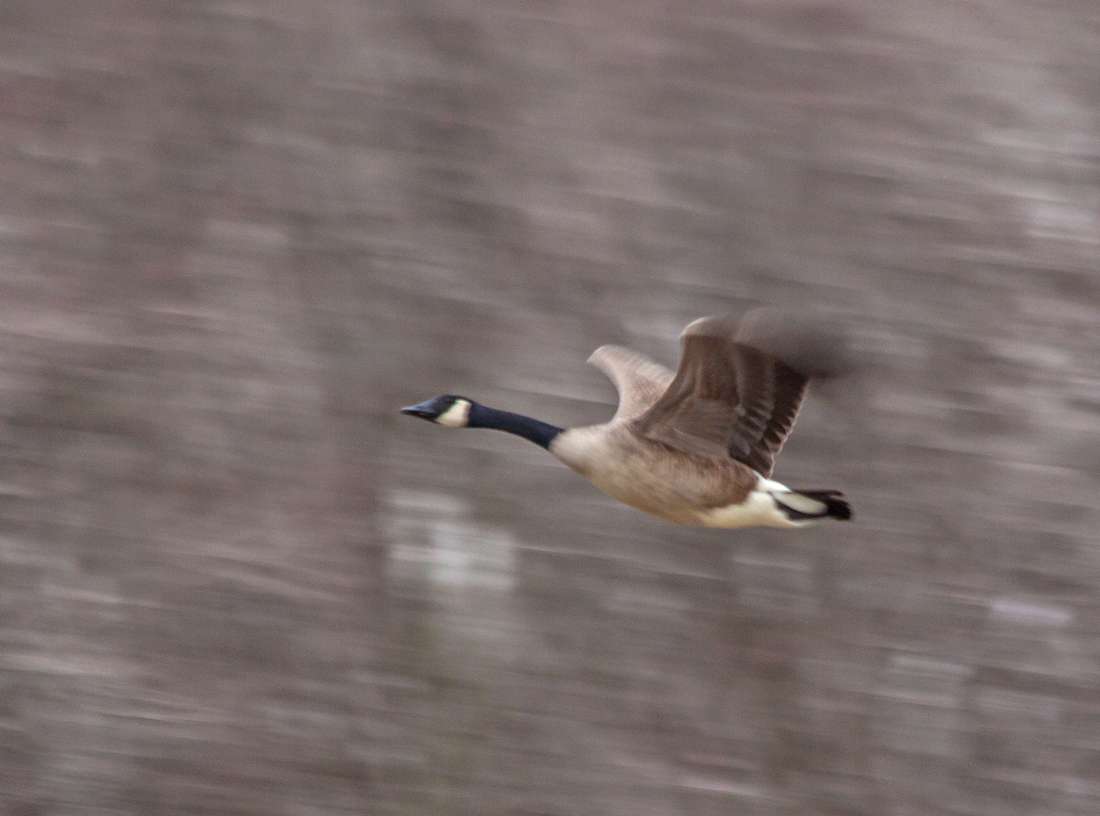
What happens if you try to photograph a bird in flight with a shutter speed of 1/100 second? Under most circumstances, you get a really blurry image. However, if you can track your subject by panning the camera, you can freeze (or in this case, almost freeze) the action and as a bonus you get a really cool background.

It was pretty early in the morning and there was not a lot of light when I took this shot. Even though my camera was at ISO 400 and f/6.3 aperture, I knew that the shutter speed was not going to be fast enough to stop the action, given that I was in aperture-priority mode. That’s the main reason that I resorted to trying this panning technique. Getting the right speed for a pan is little hit-or-miss and I never know for sure how well it will work until I look at the results.

I’m pretty happy with this result, because I managed to capture a sense of motion in a still shot, a sense that is accentuated by the motion blur of the wings, as well as by the feeling of movement in the background.

goose_pan_blog

© Michael Q. Powell. All rights reserved

Read Full Post »

As many of you know from my posting last week, I recently came upon a dead body of a Great Blue Heron (Ardea herodias)  and several of us who regularly visit this marsh have wondered if perhaps this was the young blue heron who hung around the boardwalk throughout the fall and early winter. We had previously noted that this heron was not very proficient at catching food and worried that it seemed to lack basic survival skills.

I took a lot of photos of that young heron, whom I encountered repeatedly during my early morning visits to the marsh, and decided to post a few photographs from late December and early January. I’ll never know for sure if this heron survived the winter, but these images help remind me of some of the special moments that we shared.

heron_mem3_blogheron_mem3a_blogheron_mem2_blog

© Michael Q. Powell. All rights reserved
Read Full Post »

There may not have been a lot of seeds in the dried-out marsh plants, but this little chickadee, which I am pretty sure is a Carolina Chickadee (Poecile carolinensis), seemed determined to get every last one.

chickadee_feeding_blog

© Michael Q. Powell. All rights reserved

Read Full Post »

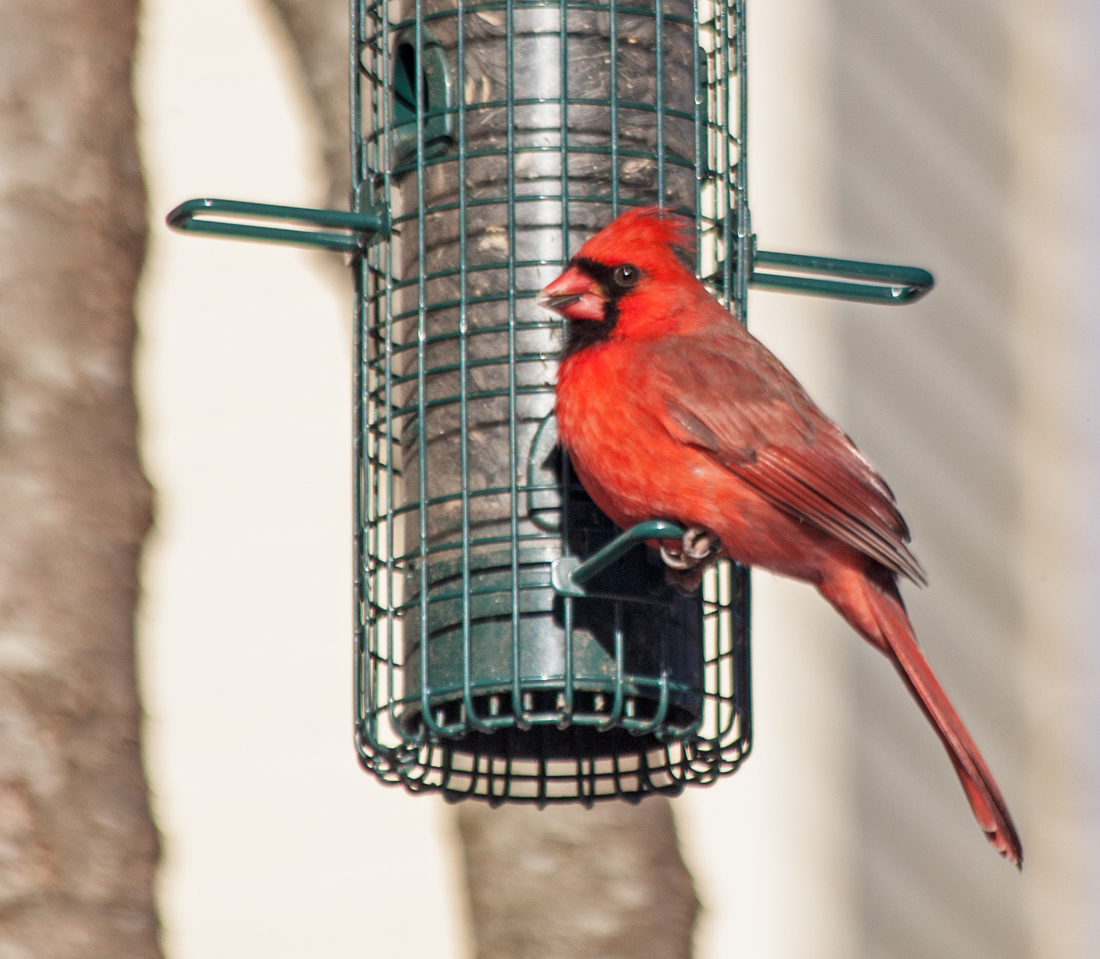
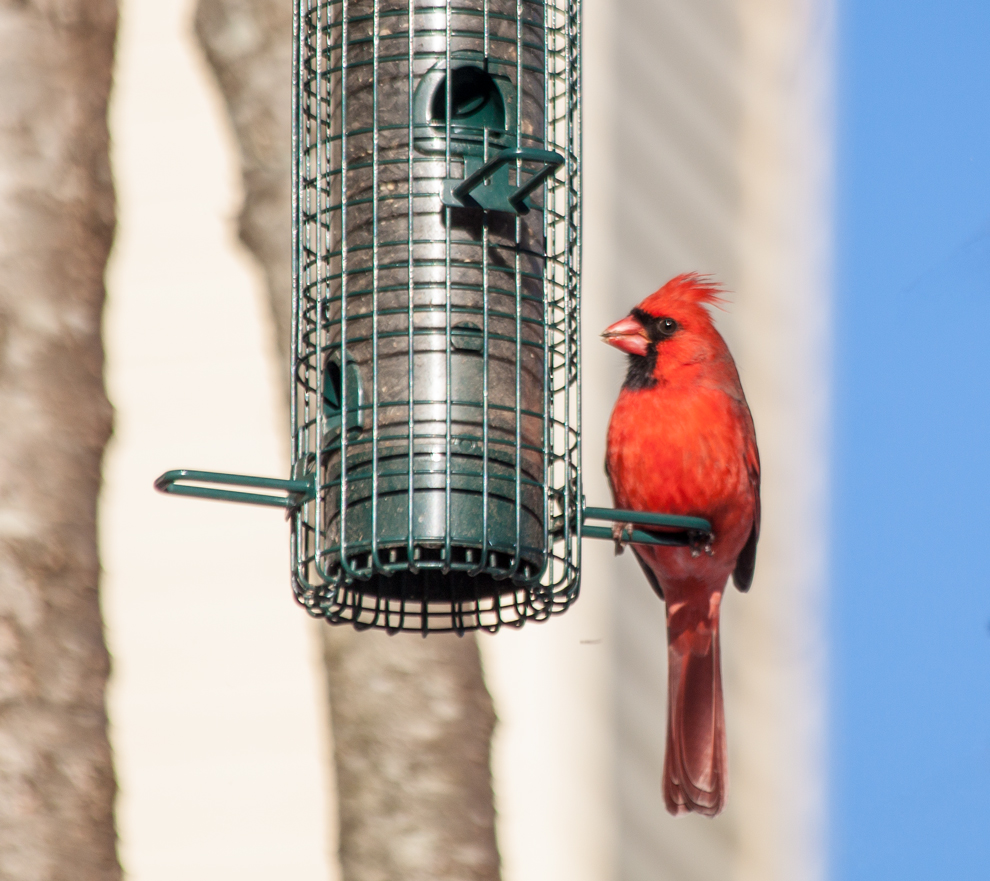
As I was walking through the snow in a wooded area behind some of the townhouses in my neighborhood, a flash or bright red caught my eye and I knew immediately that it was a male Northern Cardinal (Cardinalis cardinalis), one of my favorite birds.

I stalked him as he moved from tree to tree until he eventually landed on this feeder that was hanging from the second-story deck of one of my neighbors. I really like the industrial look of the feeder and think it adds a nice contrast to softer, less distinct feathers of the cardinal.

cardinal_feeder2_blogcardinal_feeder1_blog

© Michael Q. Powell. All rights reserved

Read Full Post »

Whenever I am at my local marsh at sunset, I am alert for ducks and geese in the air. I have a goal of catching them in silhouette against the backdrop of the colorful sky. I still haven’t gotten the shot I am looking for, but here is one of my recent attempts.

duck_sunset_blog

© Michael Q. Powell. All rights reserved
Read Full Post »

I waited for the sunset yesterday at my local marshland park and was treated to some cool effects as the last rays of the sun made their way through the trees onto the icy pond, creating some beautiful reflections.

My eye is really attuned to this effect because of a recent series of images by Stephen Pitt in his blog “Le temps d’un Soupir…” that show early morning rays of sun illuminating the forest floor. Check out his most recent posting by clicking on the name of his blog.

pre_sunset1_blog

© Michael Q. Powell. All rights reserved

Read Full Post »

Have sparrows become my favorite bird? This winter, I’ve spent more time with them than with any other birds and I’ve featured them repeatedly in my blog postings. I tend to be more at ease with the familiar and the comfortable, rather than the exotic and extreme. and sparrows fit well into my world, like this Song Sparrow (Melospiza melodia) in the snow.

Photographing these small birds is a challenge, though, because it is unusually tough to isolate them from their often cluttered background and they are in constant motion. I like the way that I was able to capture this sparrow, with the small patch of exposed grass amidst the snow. The light was pretty strong and blew out a few details in the chest feathers, but if cast an interesting shadow.

Perhaps sparrows are not my favorite birds, but we are good friends who spend a lot of time together.

sparrow_shadow_blog

© Michael Q. Powell. All rights reserved

Read Full Post »

Winter landscapes often have a stark, black-and-white look that I really enjoy, like this shot I took last week of part of the boardwalk at Huntley Meadows Park, the local marshland park where I take a lot of my wildlife images.

It was late afternoon when I took this shot, and the sun cast a golden light on part of the surface of the boardwalk (which is made of a synthetic material) and created beautiful shadows beneath it. I really like the contrast between the straight lines and geometric shape of the boardwalk and the wild, irregular shapes of the natural environment.

I often forget to look for the “big picture” in my zeal to get in closer and closer to my subject, but in this case I am happy that I took the effort to pull back and take in my surroundings.

landscape_blog

© Michael Q. Powell. All rights reserved

Read Full Post »

This past weekend, I was filled with an inexplicable urge to take some flower photos. With the exception of some clumps of snowdrops, nothing was blooming outdoors, so I slipped into the small glass-enclosed greenhouse at my local county-run garden to capture images of some of the tropical flowers there.

I was alone with the plants for an extended period of time and was able to set up my tripod and use my macro lens, which has been gathering dust the last few months. My eyes have grown accustomed to looking for birds in the distance and it was an interesting challenge to get them to focus on the smaller details of stationary objects.

I am not sure of the names of the flowers that I photographed (with the exception of the second one, which is a kind of Lady’s Slipper orchid), but my senses were satisfied temporarily with the sight and smells of these beautiful flowers.

I can’t wait for spring, when I’ll have the chance to to see more flowers (and the accompanying insects) outdoors.

pink_blogslipper_blogstars_blog

© Michael Q. Powell. All rights reserved
Read Full Post »

What’s the coolest thing that could happen to you as a photographer? All of us would like greater exposure and I was thrilled on Monday when I learned that my dear friend and photography mentor Cindy Dyer had five of her fern photos issued as stamps by the US Postal Service. They are being issued in coils of 3,000 and 10,000 stamps with a total printing of 95 million stamps. Wow! That’s broad exposure.

Check out her blog to see some of her amazing photos. Her teaching, support, and inspiration have played (and continue to play) a huge role in my evolution and development as a photographer.

cindydyer's avatarCindy Dyer's Blog

Yesterday, after more than a year in the making, my series of USPS-licensed fern photographs were released as 49 cent stamps in large coil format for business use. Special thanks to art director Phil Jordan for being so great to work with on the series! I’ll be back with more details on how we can POSSIBLY get a smaller amount than the issued 3,000 and 10,000 quantity rolls!

Read more about the stamps here: http://uspsstamps.com/stamps/ferns

Order a first-day-of-issue set within 60 days here:

http://about.usps.com/postal-bulletin/2014/pb22381/html/info_013.htm

Screen shot 2014-01-28 at 5.58.36 PM

View original post

Read Full Post »

Another photo of a chickadee? Chickadees are so common that they fade into the background to the point where we no longer notice them. Nobody would travel a great distance to see a Carolina Chickadee (Poecile carolinens) like this one and there were no throngs of curious spectators to ask me what I was photographing.

What was the attraction for me? One of my fellow bloggers, Mr. K.A. Brace, a thoughtful and insightful poet who writes in a blog called The Mirror Obscura, posted a poem today entitled “The Brilliance” that really resonated with me. In the poem, he spoke of the “brilliance of the ordinary.” I encourage you to check out this poem and other wonderful poems—one of the cool features of most of the blog postings is that they feature an audio clip of the poet reading the featured poem.

“The brilliance of the ordinary”—I love that combination of words. Children (and pets) approach life with boundless curiosity and endless fascination with the most mundane, ordinary aspects of our everyday world. I want to regain more of that childlike sense of wonder.

chickadee_winter_blog

© Michael Q. Powell. All rights reserved

Read Full Post »

Another unexpected bird that I sighted during a recent walk around my neighborhood was this American Goldfinch (Spinus tristis). I don’t think that I have seen one before during the winter—during the spring and the summer the goldfinch’s bright yellow plumage makes it easier to spot one.

I guess I need to pay more attention to the birds of the neighborhood, for it appears that more of them overwinter than I originally thought. What else is out there, waiting to be seen and photographed?

goldfinch1_blog

© Michael Q. Powell. All rights reserved

Read Full Post »

How do you convey a sense of the winter season? Do you take wide-angle shots of snow-covered mountain peaks? Do you show vast fields or forests or frozen ponds, all blanketed in white?

I didn’t really have a plan when I set out for a walk in my neighborhood after a recent storm that dumped over six inches of snow (about 15 cm) on us. The sun was shining and the snow was beautiful, though it was windy and cold. I walked for a while, taking in this uncommon view of the common scenery (we don’t get snow very often in Northern Virginia), when I caught sight of some motion out of the corner of my eye—an oak leaf was dancing across the surface of the powdery snow.

When the leaf came to rest, I hurried toward it, wanting to capture the simple beauty of this winter still life that conveyed to me a sense of the winter season.

leaf_snow_blog

© Michael Q. Powell. All rights reserved
Read Full Post »

« Newer Posts - Older Posts »